Categories
Kitchen Garden

Slow Food in Context

Fresh Kale
Fresh Kale

Weeding kale produced a peck of leaves for the kitchen. The garden plants are healthy enough I sent 12 kale seedlings reserved as replacements into town for re-distribution. They found a suitable home as I spent a couple of hours in the kitchen preparing dinner.

Yesterday was the first day in a while where life produced time to work in the garden when weather was sunny and without rain. The ground was soaked, making weeding easier. I hardly made a dent in the work, however, a garden waits for no one and there was plenty to harvest. In addition to kale, there were carrots, sweet peas and turnips.
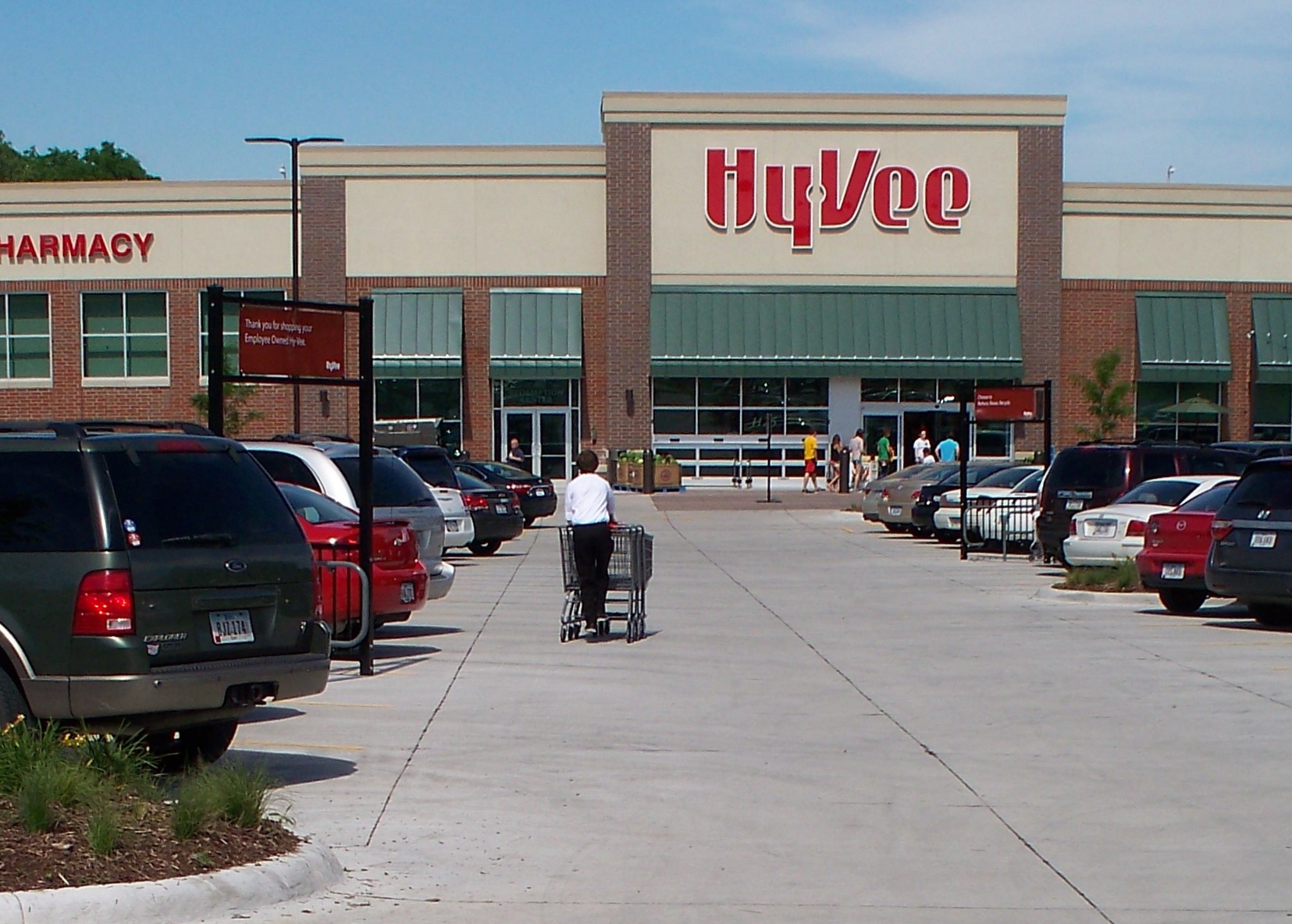
Hy-Vee North DodgeMy editor assigned a new story in the morning, so I went to Iowa City to interview the subject. On the way home, I stopped at the grand opening of the new Hy-Vee on North Dodge Street.

It was different from the store where we had shopped for more than 20 years. Expecting the latest in supermarket merchandising I was prepared—for the most part.

My shopping list included one item: a six-pack of beer for a beverage with dinner. Using the latest tactics to resist over spending, I grabbed a hand-held basket instead of a cart. I picked up one extra item, some Iowa-grown Jolly Time popcorn, which is a pantry staple and was on sale.

The produce section and bakery were just inside the front door. I stopped and took it in. The space was crammed full of people and products. About eight people were serving food samples on toothpicks. Management staff was present in abundance. It took me a while to find the regular produce section, which had a misting tube above, giving the broccoli, peppers and other items a shiny appearance, but condemning them to a shorter shelf life. I thought about the scruffy look of the produce I had just picked, and longed for another carrot just pulled from the ground.

It took me a while to find the dairy aisle, which was, of course, furthest from the front door. In all, I spent less than 15 minutes inside, and look forward to returning to evaluate the tens of thousands of items inside when there aren’t so many people.
Preliminary Plating
Preliminary Plating

At home, I put the six-pack of LaBatt Blue in the ice box and brought the garden produce upstairs. I opened a beer.

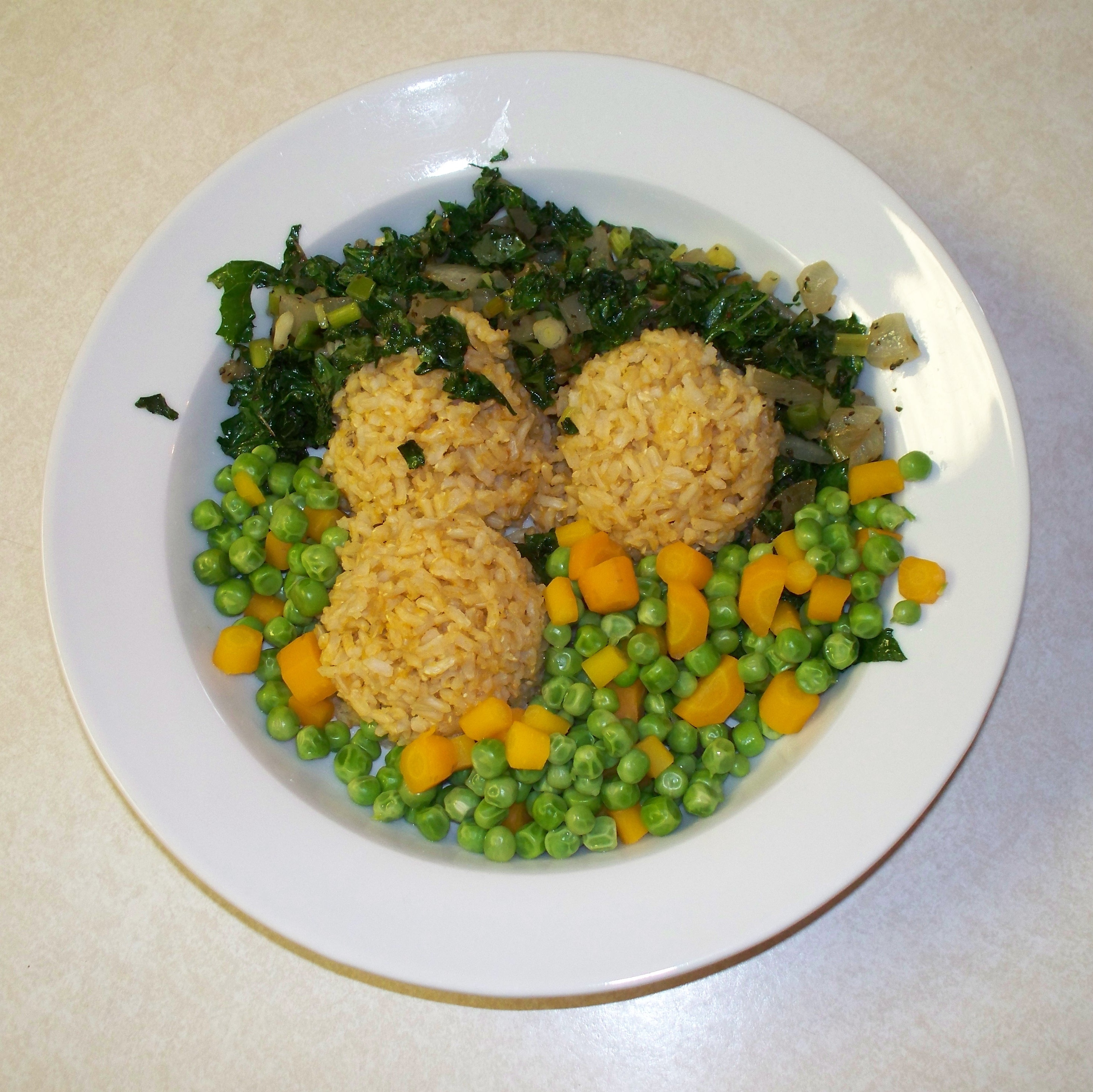
The concept was a dinner made from locally produced kale, peas, carrots and eggs. I put rice on to cook and got to work cleaning the harvest. By the time I finished, almost three hours had elapsed.

Dinner was the process of preparation—including the trip to Iowa City—and a vision of the final plating.

Final Plating
Final Plating

There were four distinct dishes: peas and carrots; kale sauteed with onions and spring garlic; brown rice cooked in vegetable broth; and eggs over easy. I plated the kale, rice and peas and carrots as above, then topped it with two eggs, sprinkled with feta cheese and a tablespoon of home made bell pepper sauce.

I covered one plate without the eggs and left it on the counter for Jacque’s dinner after work. Mine was too much to eat, so there were leftovers to be made into a breakfast burrito later in the week.

This was slow cooking. More than that, it was a life. A day of retreat from low wage work, doing things that matter. We need a slow food day in the context of busy lives—more than we understand.

Categories
Living in Society

Caucus Politics in Perspective

Caucus-goer
Caucus-goer

Conventional wisdom is there are two tickets out of Iowa after the Democratic caucuses scheduled Feb. 1, 2016—the front-runner and one other.

2008 caucus results might be used to argue there could be three, but 2016 is no 2008: two tickets is the number.

If New Hampshire ratifies the Iowa results, we will have our nominee. If the Granite State doesn’t ratify, the nominee will be decided by South Carolina. Given the current political climate, I feel very confident about this.

Democrats have five candidates who expressed interest in running for the nomination as president. Of these only three are viable—Hillary Clinton, Martin O’Malley and Bernie Sanders.

Lincoln Chafee of Rhode Island announced for president, and Jim Webb of Virginia established an exploratory committee, but they fall victims to the honored tradition, “snooze, you lose.” Neither of them capitalized on the pent up demand for Democratic political action to fill the void created by the vast and well publicized Republican field in early 2015.

Hillary leads in the early polling. While she is neither inevitable, nor seeking a crown, she has been a part of the public discussion for so long—arguably since her 1996 book, It Takes a Village—she has name recognition and a presence in American society that creates a substantial obstacle for Democratic presidential challengers to overcome. O’Malley and Sanders are doing “the Iowa work,” garnering substantial attendance at their events. Nonetheless, it seems clear they are vying for the second ticket out of Iowa.

The question is not as much whether Clinton will win the Iowa caucuses. It is whether having three contenders will generate enough interest in partisan politics to build a coalition that can win Iowa—perhaps a swing state in the general election—and win the 2016 general election. That is the uncertainty going into caucus season. I, for one, am trying to be part how that plays out.

Both the administration of elections and the electorate have changed since Bill Clinton’s first election as president in 1992. What matters more than the outcome of the caucuses (Tom Harkin and Uncommitted got the two tickets out of Iowa that year) is the redistricting processes of 2000 and 2010 that created electoral maps which relegated decisions on national elections to a comparatively small number of swing states. There is also a flight from partisan politics, as reflected in the Iowa voter registration numbers, where no preference is a larger group than either political party.

We can support or detract from the Iowa caucuses as much as we want, but campaigns have to be more about the general election than collecting caucus cards from Democratic activists. This is an advantage to Hillary Clinton’s campaign.

The Iowa Democratic Party has become reliant on national interest in the Iowa Caucuses to generate financial resources which pay for campaign offices and staff to do the party work. Prominent figures in the party have publicly said so. That’s the reason we have an interest in remaining first in the nation, and having a “competitive” caucus.

To put this into perspective, it is important to engage in politics. The most productive work we can do is talk to people we know about issues that matter. We could also debunk the myth that we are polarized, except in the non-functional congress which we have the power to change.

My take away is worry less about the outcome of the Iowa caucuses and turn our attention to winning the general election. They are related, but not the same, and that is an important distinction.

Categories
Living in Society Social Commentary

On a Murder

Apple Blossoms
Apple Blossoms

The premeditated killing of an Iowa Children’s Museum employee by a mall security guard in Coralville on Friday will have ripples in the community beyond the current news cycle. It was murder, the very definition of the word.

“In cases like this, where the shooter confesses to premeditated murder, there is a case to be made for capital punishment,” I said.

“Oh?”

“I understand you came up as a Quaker, but still,” I replied.

“I can think for myself.”

So too can we all.

Of the people I spoke to about the shooting, only one had been at the mall when shots were fired and was visibly shaken. When there is a murder in an innocuous place—to which most locals have been at one time or another—something changes. Murder becomes personal.

The movie theater gave rain checks to ticket buyers as the mall closed after the shooting—a sign of hope life could return to normal.

There will be a memorial for the victim later this morning at the mall, said the county attorney at a Saturday press conference.

Closure will be a longer time coming.

Categories
Living in Society

O’Malley in Mount Vernon in Caucus Season

Listening to Martin O'Malley in Mount Vernon
Listening to Martin O’Malley in Mount Vernon Photo Credit O’Malley Campaign

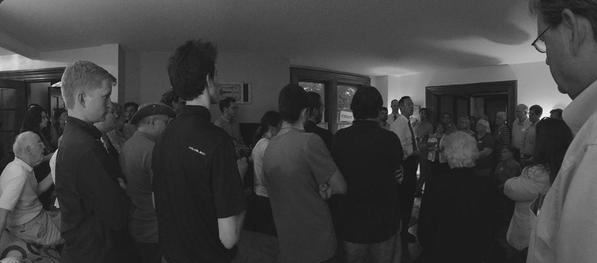
MOUNT VERNON—In his family’s modest living room, Nate Willems introduced former governor Martin O’Malley to about 75 guests on Thursday.

O’Malley announced for president May 30 and was a regular presence in Iowa during the run up to the 2014 midterm elections. Because of that, Democratic activists are sympathetic to his message and polite. Not a lot signed support cards at the end of last night’s speech. It may be too early for that.

The message was about O’Malley’s 15 years of executive public service as mayor of Baltimore, Maryland from 1999 until 2007, then as governor until January 2015. Among his twitter hashtags is #newleadership, presumably differentiating himself from the Clinton/Bush dynasties. He was concise and repeated those points during the house party.

In my April 11 post I asserted, “O’Malley is a story teller. Will we like the narrative?” That observation was borne out last night.

O’Malley stumped on core Democratic issues, similar to the April speech. It’s hard to find fault with his broad positions. On climate change, I don’t like the narrative.

An audience member asked O’Malley what he would do as president about CO2 and methane emissions. The answer to this is easy. President Obama presented the U.S. plan for reduction of greenhouse gas emissions to the United Nations Climate Change Conference, or 21st Conference of the Parties in Paris this December. The U.S. plan relies upon the Clean Power Plan advanced by the Environmental Protection Agency for most of the proposed reductions. All O’Malley had to say was, “I support the Clean Power Plan” to satisfy climate voters. He didn’t.

Instead of a simple answer, he changed the question to one about “climate change.” He enumerated 15 things he did as governor to address climate change. It was an admirable punch list, but reducing CO2 and methane emissions is not the same thing. He missed the point of the question.

His brief statement on the campaign website did not provide much depth either:

Launch a Jobs Agenda for the Climate Challenge

Clean, renewable sources of energy represent one of the biggest economic opportunities in a century. And the threat of climate change is real and immediate. We must make better choices for a more secure and independent energy future—by limiting carbon emissions, setting renewable energy targets, driving innovation, seeding new industries, and creating good local jobs.

My take away from the event is that before I sign an O’Malley card for the February caucus, I need to get beyond the superficial narrative created for the campaign. Not just about climate change, but about each of his positions. This is Iowa, so that’s possible.

Some of my regular political companions were dismissive of O’Malley last night. I’m not ready to cast aside any of the five in the game at this point.

Political Miscellany

For the first time I interacted with a candidate’s D.C. staff via twitter. I posted this message:

A DC campaign staffer sent me this email after that post:

“You should go see O’Malley! Saw your tweet. You might like him.”

I gave the staffer a shout out on twitter:

Haley Morris, O’Malley’s national press secretary, liked my tweet.

While I was at the house party, first congressional district Democratic candidate Monica Vernon called. It was very noisy, so I explained I didn’t have money to donate, and when she was still interested in talking to me, asked her to call back in an hour after the O’Malley event.

I called her and we talked about ways I could help her campaign, even though I live in the second district. Of the three Democrats in that primary, she seems to be the only one really working.

I track how many views each post gets when I am live tweeting an event. It tells me whether or not there is an audience. Curiously, the following tweet had not been viewed by anyone. Could that mean someone is moderating the twitter without us knowing and behind the scenes?

Finally, I appear in the right side of the frame of the photo above. The women who took it almost knocked a lamp over getting into position with me behind the Willems’ couch. Note my ear seems very large compared to the image of the candidate. At least with that big ear I was listening.

Categories
Environment

Finn Harries Came to Iowa

Photo Credit: @FinnHarries

Last month Finnegan Harries came to Iowa to attend the Climate Reality Leadership Corps training in Cedar Rapids. If you don’t know Harries, you should.

With his identical twin brother Jackson Harries, he co-founded Jacks Gap, a YouTube channel, which is a story telling project inspired by travel.

Finn was assigned to my mentoring group by the organizers, but the idea he could learn more from me than I him borders the absurd. I am smart enough to step out of the way and let the next generation blaze a trail to more sustainable living when they can. Finn can.

Right after our training he wrote an article in The Guardian, titled “My generation must save the planet.” Because of his unique celebrity, the post garnered more than 36,000 shares to date. Finn Harries has something to say, and it’s important to listen.

Here’s the article. I recommend you click through and read the whole thing, including the videos linked from it. Follow @FinnHarries, @JackHarries and @JacksGap on twitter and check out JacksGap.com. Don’t forget the YouTube channel.

My generation must save the planet

YouTube star says his is the first generation to grow up with climate change and the last that will be able to do anything about it – unless we act now

As architecture design students we are taught to constantly question and reimagine the way things are. We’re taught that the world we live in is not a given. It’s the result of the best efforts our ancestors could muster at that time. If it has flaws, it is up to our generation to pick up where they left off and create the world we want to see for ourselves and our children.

I’ve grown to understand that the society and culture I was born into is damaging the planet we live on at a greater scale than ever before. We put profit above people, economy above environment, progress above purpose. As a result, climate change has become the most important issue of our generation.

But it’s such a meaty, complex problem that we’re not sure how to approach it. It doesn’t seem to pose an immediate threat to our everyday lives, and most of us assume that there are surely some very clever scientists somewhere who will solve the problem for us.

I became curious. If climate change is as big a threat as I’m being told, then my work as a designer and an architect should focus on helping address the issue. I wanted to really understand, in layman terms, what it is that’s causing our climate to warm. Why is a warmer climate dangerous? And how can I make a positive difference?

I started by attending classes on sustainable design at my university. I spent a weekend in Cedar Rapids, Iowa to watch former US vice president Al Gore present his famous slide show and explain it in-depth at one of his “climate reality” workshops; I picked up a copy of Naomi Klein’s book This Changes Everything and downloaded as many climate-change related documentaries as I could get my hands on.

To continue reading on the Guardian site, click here.

Categories
Environment

We Have a Water Problem

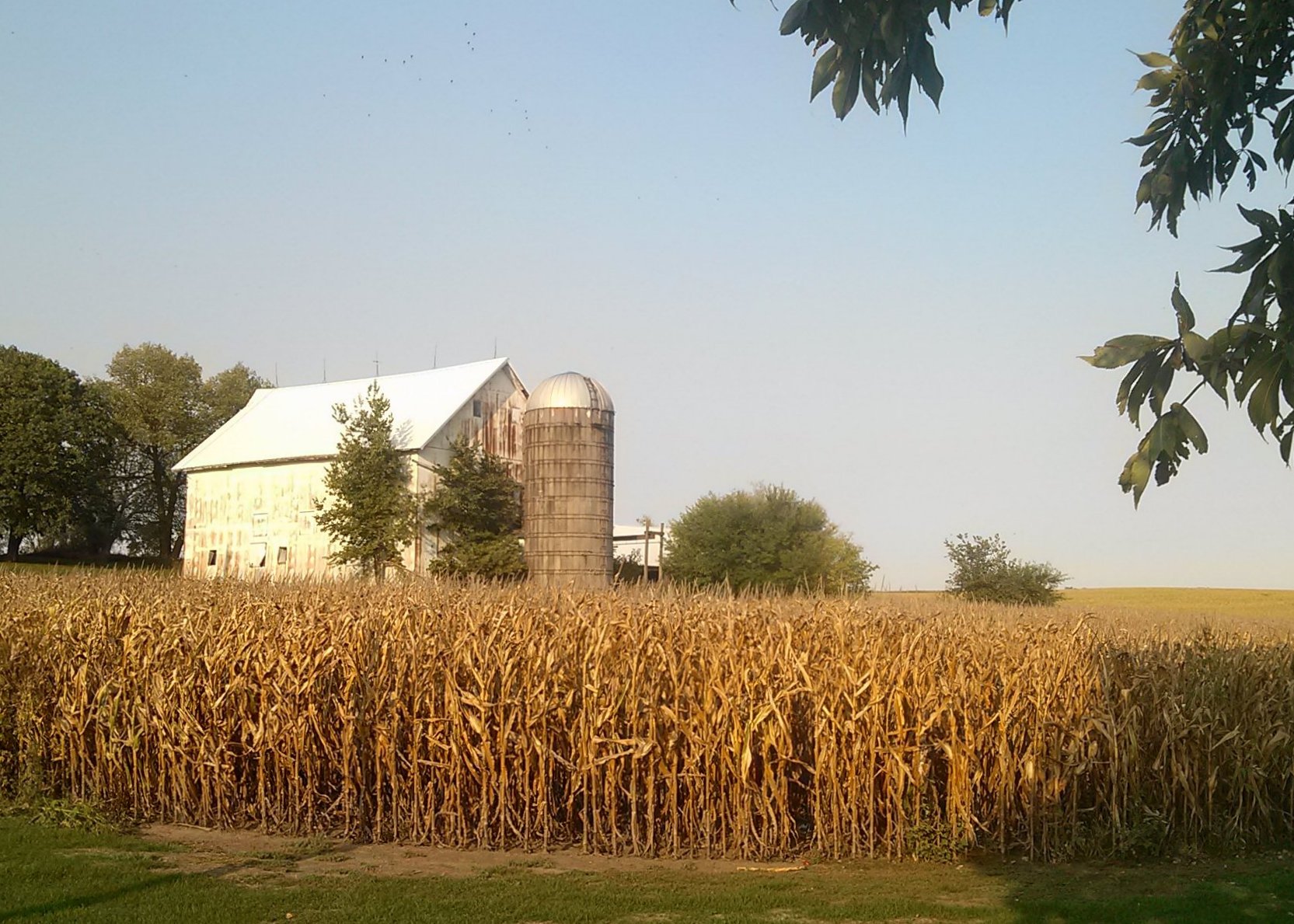
Iowa Row Crops
Iowa Row Crops

DES MOINES—”We have a water problem,” Mayor Frank Cownie said at the state convention of the League of Women Voters of Iowa on Saturday.

Like all municipalities, the Des Moines Water Works must comply with the Safe Drinking Water Act and the Environmental Protection Agency standards for maximum contaminant level in water processed and sent into its system. Peak nitrate levels in source waters have taxed the city’s ability to meet its obligations.

The problem is nitrates in the water, however, the bigger problem for Des Moines is nitrate discharge into drainage districts in Buena Vista, Calhoun and Sac Counties which feed its source.

“The current denitrification technology is outdated and cannot continue to operate with rising nitrate levels and increased customer demand.” according to the Des Moines Water Works. “Continued high nitrate concentrations will require future capital investments of $76-183 million to remove the pollutant and provide safe drinking water to a growing central Iowa.”

Nitrate runoff is an unrecognized environmental cost of farm operations. The lawsuit filed in the case asserts that the drainage districts named are point sources of nitrate runoff and should be regulated as such.

There is a lot of chatter about the lawsuit the Des Moines Water Works filed to establish a cost to people who use nitrogen fertilizer that contributes to water pollution. Here is their rationale from their website:

  • Des Moines Water Works filed a complaint in Federal District Court – Northern District of Iowa, Western Division, on March 16, 2015.
  • The complaint seeks to declare the named drainage districts are “point sources,” not exempt from regulation, and are required to have a permit under federal and Iowa law.
  • The complaint states that the drainage districts have violated and continue to be in violation of the Clean Water Act and Chapter 455B, Code of Iowa, and demands the drainage districts take all necessary actions, including ceasing all discharges of nitrate that are not authorized by an National Pollutant Discharge Elimination System (NPDES) permit.
  • In addition, damages are demanded to Des Moines Waters to compensate for the harm caused by the drainage districts unlawful discharge of nitrate, assess civil penalties, and award litigation costs and reasonable attorney fees to Des Moines Water Works as authorized by law.
  • Des Moines Water Works’ mission is to provide safe, abundant and affordable water to our customers. Des Moines Water Works is fighting for the protection of customers’ right to safe drinking water. Through this legal process, Des Moines Water Works hopes to reduce long-term health risks and unsustainable economic costs to provide safe drinking water to our customers, via permit and regulation of drainage districts as pollutant sources.
  • Continued insistence from state leaders that the voluntary approach of the Iowa Nutrient Reduction Strategy is working does not give solace to the 500,000 central Iowans who must now pay to remove pollution from their drinking water.

While this lawsuit is specific to Des Moines, there are a lot of unrecognized environmental costs in diverse business operations. Set all the partisan chatter about this issue aside and the fact remains there is a tangible cost, that someone should pay. It is a cost measured in risks to human health, environmental degradation and inadequate financial models in business.

Thanks to the Des Moines Water Works, we can begin to put a dollar figure to it.

Categories
Living in Society Social Commentary

Letter to the Solon Economist

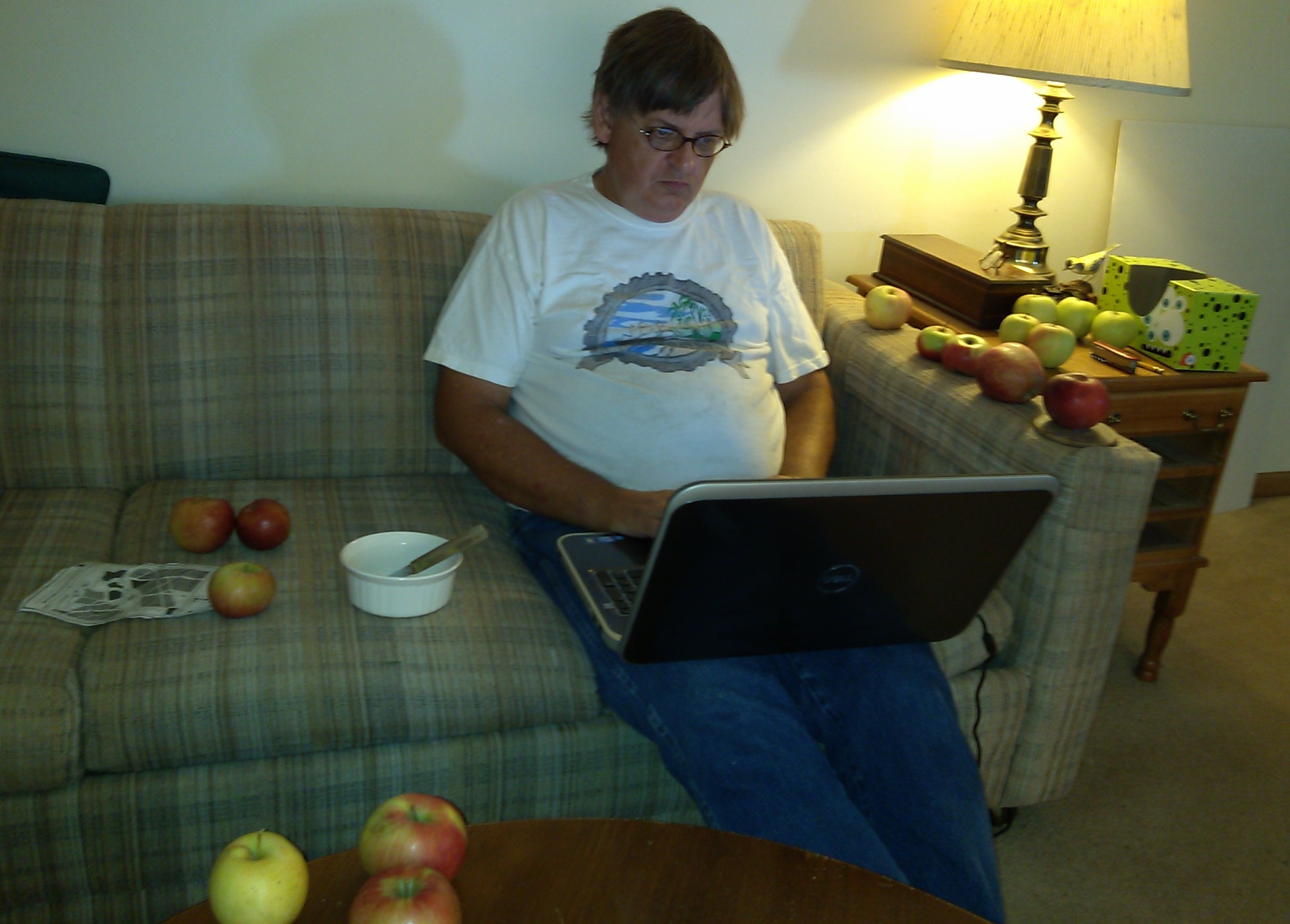
Writing About Apples

A Bloomberg/Des Moines Register poll published last week contrasted how Democrats and Republicans weigh subjects in their approach to selecting a candidate running for the 2016 nomination for president in their respective parties.

Republican likely caucus goers surveyed were most interested in the budget deficit, national defense and taxes; Democratic likely caucus goers surveyed were most interested in energy, income inequality and the nation’s infrastructure.

One of the few places the two results were close was on job creation, favored by both Republicans and Democrats 86-14. The partisans have different approaches on how best to create jobs.

This framing of Republican versus Democratic by news organizations does us a disservice. It perpetuates the lie that people are divided.

For those of us who talk a lot to people from diverse backgrounds, we can see it is simply not the case. More people want to join together and work toward a common goal than get involved with political discussions.

That is especially true in our small community where we can join a non-profit, serve on committees, volunteer at the fire department, at church, or at the library, or if we are simply celebrating a special event like our sesquicentennial, or hanging out Wednesday night for music in the bandstand. Political party preference just doesn’t matter that much.

There is data to back this up.

According to the May report of the Iowa Secretary of State, the number of no party preference active voters in Iowa House District 73 exceeds either of the main parties by a distance (with 1,492 more no party registrants than Democrats and 1,817 more no party registrants than Republicans).

My point is this: we have more in common with each other than we disagree. What matters more than partisan debate is working toward common goals.

Large news organizations may not get this, but if we look around at the familiar faces near us, we should.

Categories
Living in Society Social Commentary

Favorite Places – Linn and Market

Linn and Market Streets

I have been spending time near Linn and Market Streets in Iowa City for most of my adult life. I lived on Market Street after getting my master’s degree—my last long stint of bachelorhood before marrying in 1982.

Within a small radius, so much happened that anytime I return, the trip is imbued with memories. But for the traffic, I would stand in the intersection for hours. I mostly settle for a window seat at the nearby coffee shop for my daydreaming.

Linn and MarketOur daughter was born here, and performed the role of a dog on Gilbert Street. It was also one of the few times I remember her performing the guitar in public. We had breakfast at the Hamburg Inn No. 2 after pulling all-night security at Riverside’s Festival Theatre in City Park. Hamburg Inn No. 1 was gone by then.

“Shady streets, very old white frame houses, porch swings, lilacs, one-pump gas stations, and good neighbors…” wrote W.P. Kinsella in Shoeless Joe. “We have a drugstore with a soda fountain… It’s dark and cool and you can smell malt in the air like—a musky perfume. And they have cold lemon-Cokes in sweating glasses, a lime drink called a Green River, and just the best chocolate malts in America. It’s called Pearson’s—right out of a Norman Rockwell painting.”

Pearson’s is now the bank in the photo.

We still favor Pagliai’s Pizza and I bring home a pie from time to time when I’m near around supper time. It is one of the places that hasn’t changed much through the years.

Down the street on Jefferson the university had a portable building where students could drop off punch cards to run on the computer in the early days of programming. Who knew what computing would become?

I was briefly enrolled in James A. Van Allen’s astronomy class—a chance to learn from the legendary physicist directly. I had to drop after registering for more classes than I could handle that semester. More than any teacher I remember, he stretched the limits of my ability to learn.

After so many years of wanting to hear him, when Saul Bellow read from Something to Remember Me By at Macbride Hall, I did.

I met James Hansen, Bill Fehrman, Beau Biden, Elizabeth Edwards, and heard countless speakers—too many to list. With each visit I recall one or another who made an impression. How could I forget Toni Morrison, introduced by Paul Engle, and the bat flying around her head at Old Brick?

I bought books at Murphy Brookfield, Prairie Lights, Iowa Book and Supply, the Salvation Army, the Haunted Bookshop and at the State Historical Society. I still have most of them.

Rich with 45 years of memories, I look forward to each return to Linn and Market—for a cup of coffee, a meeting with my nearby editor, and often, just to sit and remember before a meet up with a friend or two. For me, it will always be home.

Categories
Living in Society

Enraptured in Fandom

Iowa Caucus
Iowa Caucus

We’ve seen it so many times before progressives should be used to it.

The folks at Run Warren Run, financed partly by MoveOn.org, threw in the towel and are “suspending operations,” according to the MoveOn.org website. Hard to run a campaign when Senator Elizabeth Warren said repeatedly she’s not running for president in 2016. Fanboys and fangirls are nonplussed and will literally move on.

Non-Democrat Bernie Sanders announced his Democratic presidential ambition April 30, and pent up demand for a left-leaning presidential candidate burst the scene the way @POTUS and @Caitlyn_Jenner set records for ramping up Twitter followers.

Politicos are enraptured in fandom.

The allure of candidates who fit an intellectual ideal drew me in too. In 1980 it was Ted Kennedy; in 1984, George McGovern. After that, I was busy with a career and life, and moved to Indiana where the presidential elections seemed less important than they do in Iowa. No one else generated this type of excitement, especially when we’re in it for the long term.

Make no mistake, Sanders drew reasonable crowds at his Iowa and Minnesota events. They haven’t reached the bin-buster level yet, even if the room was too small at the Robert A. Lee Recreation Center in Iowa City last Saturday, and he drew several thousand people in Minnesota on Sunday. He’s had a good campaign launch, but as Slate points out, the front runner has little reason to worry.

While Sanders confidently told Katie Kouric, “My goal is to win this election,” his election is as likely as those of Presidents Ted Kennedy and George McGovern unless he begins to ramp it up among caucus-goers who are swing voters.

There’s no talking to most fan boys and girls about this. I’ll note one of the very few political questions I’ve heard on the street and at the convenience store has been “Did you see Bernie Sanders?” There is something there.

The art of politics is partly about excitement in a campaign. The problem is people don’t seem to be able to distinguish between events in the corporate news cycle and excitement, let alone momentum (whatever that is).

Note that no 2016 Democratic candidates for president are in Iowa this week.

Yesterday’s article by Paul Waldman of The American Prospect asks the right question, “Does the Iowa Caucus Still Matter?” He correctly points out that our star was diminished by the Republicans in recent cycles. While Jimmy Carter made the most of the caucuses, his style of personal campaigning will be, if it already hasn’t been, relegated to the dustbins of history.

Fandom is not for me, any more than cosplay or being a Trekkie has been. It is a form of enthusiasm, as described by the little known theologian Monsignor Ronald Knox. Not good for the long haul, even if Bernie Sanders has devilish eyes.

Categories
Kitchen Garden

Favorite Places – My Garden

Garden Spinach
Garden Spinach

Our garden is one of my favorite places.

A mature rabbit hangs out in the thicket next door. I see it in the garden often, usually minding its own business—being a rabbit—outside the fences. This year I’ve been pushing the limits of what can be unfenced and survive.

Today, the rabbit was sitting, next to the row of carrots chewing. Luckily, it was eating clover, not the unprotected carrot tops six inches away. My fear is it’s a she and undisciplined little rabbits will ravage the garden until getting picked off by the many predators who live nearby.

Later, the rabbit came back and was eating radish leaves planted between tomato cages. I picked a leaf and ate it—sweet and refreshing. No wonder rabbits eat them. I chased it away again. It ended up munching the clover in a neighbor’s yard, then disappeared in the midday heat.

New Garden Shoes
New Garden Shoes

This is the ecology of my life—living as best I can in the found environment. It’s not a natural place. The forests are long gone, and the weather is unpredictable. The ground is already parched, and nearer sundown I’ll water the young plants so they don’t perish before being mulched.

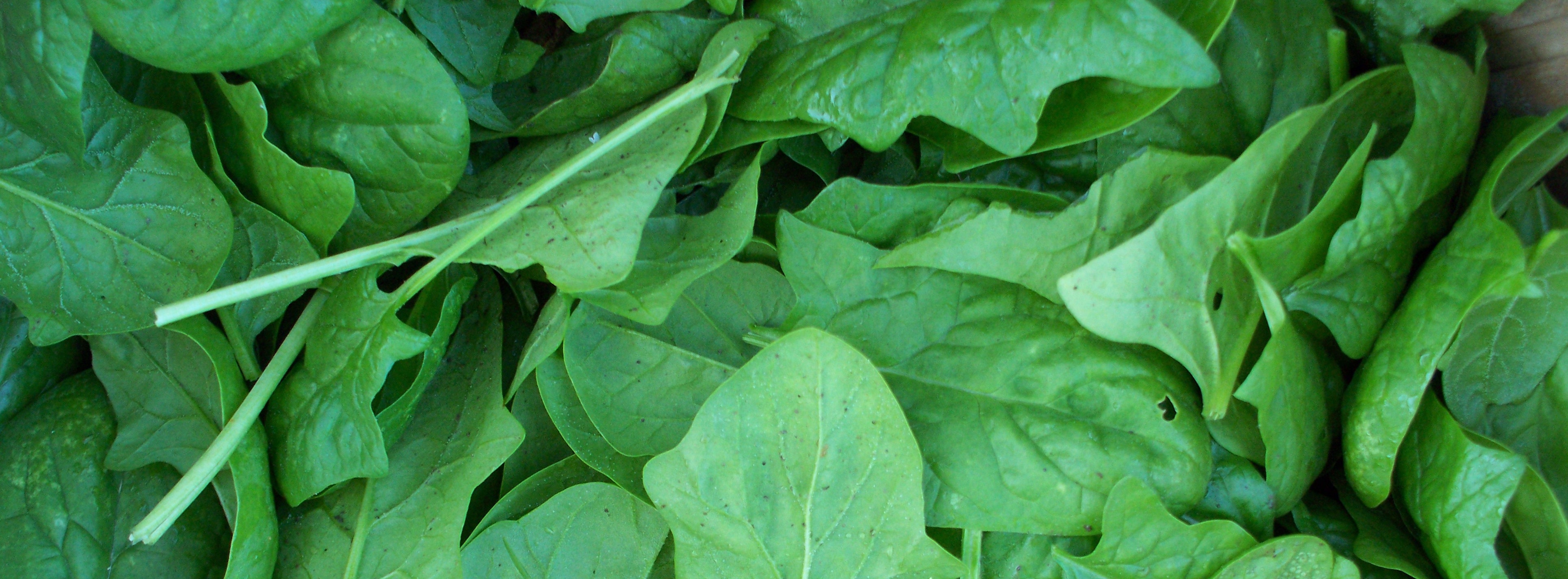
With a little management, the garden produces more food than we need, but not enough to make a business of it. The seasonality of spinach and inadequate freezer space makes gifts to friends and neighbors. The same will hold true when the kale matures, tomatoes come in, and the fall apple harvest arrives. All are parts of this ecology.

Radishes
Radishes

Here, I can forget about politics, society and culture—except maybe for agriculture. The symbiosis with this place is hard coded in me. Not coding like DNA or computer algorithms. More like a recipe made from scratch and varied with each iteration.

The truth is we all need something like this garden.

When we planned our move from Indiana we sought a place with enough of a lot to grow this large garden. We built everything on this piece of property to fit our lives. While it is not a perfect place, its lack of perfection is alluring. Suited respite from a society that does not appear to care much, if at all, about anything beyond circles of family and friends.

It is a place to gain strength for the next endeavor.