Categories
Living in Society Sustainability Work Life

Thursday Trifecta

Photo Credit - Misty Rebik
Photo Credit – Misty Rebik

Yesterday brought a truckload of news on three important issues: nuclear non-proliferation, the Iowa caucuses and local worklife.

Democrats in the U.S. Senate blocked a vote on legislation intended to derail the process of bringing the Islamic Republic of Iran into compliance with its obligations under the Nuclear Non-proliferation Treaty. By signing and ratifying the NPT Iran is entitled to a peaceful nuclear program in the areas of medicine and electricity generation as long as they comply with treaty terms. They weren’t in compliance.

How did Iran get to the point where developing a nuclear weapon became imminent? Thank the George W. Bush administration and its laissez-faire attitude toward Iran’s uranium enrichment program. Bush wouldn’t talk to Iran, or do much to enforce its obligations under the NPT. The Obama administration changed all of that, talked to Iran, and together with the P5 +1 nations forged an agreement to bring Iran into compliance.

Republicans howled that the deal was struck. Now that the political process has run its course, they shouldn’t have much to complain about. However, they do despite the administration’s cooperation with the Congress. Or as Laura Rozen, reporter for Al-Monitor posted on twitter,

In a survey of 832 likely Iowa Democratic caucus participants, Bernie Sanders closed the gap with Hillary Clinton to within the margin of error in the new Quinnipiac University poll released yesterday. People feeling “the bern” were quick to state Sanders now leads Clinton, but it’s early and one poll doesn’t mean as much as they may hope on Sept. 10.

Nonetheless, it is good news for Sanders to poll leading Clinton, even if it is within the margin of error. Already his campaign is raising money from the poll although the long odds continue to favor Clinton as the Democratic nominee. Steve Rattner of the New York Times posted the following analysis:

In a unanimous vote, the Johnson County Board of Supervisors approved an ordinance to raise the county-wide minimum wage to $10.10 by 2017. It was cause for celebration for the Center for Worker Justice of Eastern Iowa which helped organize a demonstration supporting the ordinance prior to the vote. The first $0.95 per hour increase is effective Nov. 1, although cities within the county can nullify terms of the ordinance, which they have been waiting for the county to finalize.

In the end this ordinance does little to alleviate the issues driving poverty in our county. According to Pew Research Institute, increasing the minimum wage benefits what Pew calls “near minimum wage earners,” or people who earn less than $10.10 per hour. “The near-minimum-wage workers are young (just under half are 30 or younger), mostly white (76%), and more likely to be female (54%) than male (46%). A majority (56%) have no more than a high-school education,” according to Pew.

The Iowa Policy Project uses the Economic Policy Institute data on minimum wage. Pew says 20.6 million people nationwide would be impacted by an increase in minimum wage to $10.10 per hour. EPI puts the number at 27.8 million. It is prudent to look at both numbers, but as low wage workers understand, the primary impact of public policy is on individual lives, more than broad statistics.

I favor the analysis of local author Paul Street who used the EPI family budget calculator to break down the impact of a minimum wage increase in Johnson County. He said, “considering all this, I can be forgiven, perhaps, for not showering praise on the Johnson County Supervisors for moving forward on a proposal that would raise the county’s minimum wage from $7.25 to $10.10 an hour by 2017.”

Read Street’s guest opinion in the Sept. 7 Iowa City Press Citizen here.

Thursday was not a bad day for those paying attention. I drove to the county seat to pay my property taxes. Coming straight from the garden, I wore rolled up blue jeans, sandals and a T-shirt, funding the government for another six months.

Categories
Writing

Under the Health Halo

Buy-Fresh-Buy-Local-300x115There is a big difference between working at a Community Supported Agriculture project and at the end of a gigantic retail food supply chain. I’ve recently done both and found there are inevitable problems for the former in the latter. It has to do with the health halo.

“The health halo effect refers to the act of overestimating the healthfulness of an item based on a single claim, such as being low in calories or low in fat,” according to an article in The Guardian.

Humans want a shorthand to navigating recurring life decisions, and often, after recognizing a sign, head down the path to acceptance.

I’ve witnessed multiple instances – more than I can count – of when a feature of a type of food, such as “no sugar added,” is presented, people ask the confirming question, “that means it’s healthy, right?” Consumers seem driven, at least in what they say publicly about it, to search for and purchase “healthy food.”

“The purpose of Buy Fresh Buy Local Iowa is to create a statewide marketing campaign to encourage the connections among locally grown food, the farmers who raise it, and the consumers who eat it,” according to its web site. The campaign has been largely successful.

The campaign’s success, beginning in Iowa in 2003, resulted in checking marketing off the to-do list for small-scale local growers. Hard work in a bucolic setting shielded some from the fact that when consumers seek healthy food options marketing plays a more important role than any single campaign can produce.

Buy Fresh Buy Local has not been enough to compete with vigorous marketing of “USDA organic,” “GMO Free,” “gluten free,” “100% natural,” “fat free,” “sugar free,” “no added sugar” and other healthier option campaigns of large-scale food producers. Big operators have substantial financial resources and invest a lot in advertising, including messaging about features of their products.

While the local foods movement has a recognizable marketing campaign, mega-food companies have relentlessly pursued customers with national campaigns that dominate the consumer culture of our society. They benefit from the health halo as I’ve described it, and from market dominance.

We all want to be healthy because, well… being unhealthy or sick can suck.

Today, Alice Waters will receive the 2014 National Humanities Medal for championing a holistic approach to eating and health, celebrating her integration of gardening, cooking and education. Maybe some of us want to be Alice Waters and join the slow food movement. I know I might.

Most of us don’t feel we have time for the slow food Alice Waters promotes. We look for shorthand markers along the way and settle for what we find available in the market place and in our kitchens.

If we want to eat healthy we often look for the health halo and bask in its glow long enough to make a purchase and get on to the next thing in our lives. This consumer behavior is exactly what mega food companies target in their marketing campaigns.

To “Buy Fresh Buy Local” I would add “grow your own” and “know the face of the farmer.” A CSA can make a business with a couple hundred members because of Dunbar’s number. Gaining broader acceptance in our consumer society will take more than the good idea to buy fresh and local. It will also take more than an image of saintliness.

Categories
Living in Society

Back to a Non-partisan School Board

Southwest Corner of Main at Market

Voter turnout in yesterday’s Solon school board election dropped from 834 votes in 2013 (18.4 percent of registered voters) to 281 votes (8.18 percent).

What happened? The district is moving on after a 10-year cycle of electing politicized and mostly conservative board members to finding a less political, middle ground focused on doing what’s right for district school children.

2013 was arguably the high water mark for this change when the community rallied around former Solon mayor Rick Jedlicka to ensure his place on the school board.

It is telling that there were virtually no political yard signs for school board candidates on display this year. The change from previous years indicates an emerging lack of interest in political aspects of the school board.

Adam Haluska, a former University of Iowa basketball player, and Jim Hauer, a small business owner, got the most votes, with Hauer edging incumbent Dan Coons by three votes for the second seat on the board. From a talent perspective, the race between the two winners was a tossup. The community voted for the future by electing them both.

There are issues with the school board. They spend money like they have it, but that is a complaint I have about most governmental entities. The bigger problem is how to deal with growth in the district.

Will population continue to move to communities like Solon? For the time being, new families are attracted by the perceived quality of district schools and the proximity to amenities found in nearby Cedar Rapids and Iowa City. A significant amount of new, single family home construction has taken place over the last 25 years. The housing is a bit pricey, but comfortable for a family, and not over priced in the market.

The community is centrally located to enable working in Cedar Rapids or Iowa City. A significant number of people commute to work in the Quad-Cities. It is fair to say there will be incremental growth. Accurate projections—the kind needed to plan infrastructure—are harder to come by.

With the build-out of the new middle school and the performing arts center, the district should reach caesura as the community finds its way. The task of the new school board is to finish the current construction plan and work with the newly hired school superintendent, Davis Eidahl, to set a plan for the future.

Based on yesterday’s voter turnout, most people take the idea there will be progress for granted.

Categories
Living in Society

School Board Election

Vote June 3Figuring out for whom to vote in today’s school board election has been a puzzle. I’ve voted against two of the individuals running—Dan Coons and Amber Marty—in previous elections.

At 4:39 a.m. it looks like I’ll vote for Coons and Adam Haluska.

After reading the limited information available about this race, I changed my mind about Coons. He lists among his reasons for running the idea of providing continuity while the district completes current construction projects and the newly hired superintendent becomes acclimatized to his job. There is something to be said for that.

The other pick is where the puzzle comes in.

It’s between Adam Haluska, who’s lived in the district the last five years, and Jim Hauer who has lived here eight years. Both have children in district schools.

Haluska is a financial adviser for Edward Jones, originally from Carroll. In college he played basketball for the University of Iowa and continued professionally for a couple of years. He believes the district is hiring the right people to educate its children and said he doesn’t want to make waves with drastic changes. His father worked as a high school principal.

Hauer is from West Union where he started a commercial roofing business. He has 37 years experience owning and operating the business and has attended school board meetings and workshops over the last six months. He said he believes Solon schools are on the right track.

I would like to have read Haluska had been attending school board meetings. He hasn’t, although I’m not sure there is as much benefit in that as others suggest. There is plenty of continuity on the board even if Coons doesn’t win the election. What I’m looking for is level headedness and the energy and optimism of youth. Haluska appears to have that.

I reached out to some friends about the election and barring any shockers I’ll head to town and do my civic duty after the polls open.

School board elections are important and few people are talking about it this cycle. Turnout in our community trends higher as a percentage of registered voters than the gigantic Iowa City Community School District, so I’ll look forward to reading the returns on the county auditor web site after the polls close.

Categories
Work Life

Two Things About Labor

At Sunset
At Sunset

As a child Dad would take us to the Eagles hall for a Labor Day event sponsored by his union. There were speeches and socializing, food and beverages, and one year I won a canned ham in a raffle which I proudly brought home to Mother. A lot of people attended and I got to know some of them after joining the union to work at the meat packing plant for a couple of summers while I was an undergraduate. It was an open shop, but I joined the union and still have my union retirement card.

After college, I joined the U.S. Army and was assigned to an infantry company. In the military, and in a number of government and private jobs, I was occasionally a worker, but mostly have managed people and resources over a 40-year worklife. I’ve viewed unions from multiple perspectives, with a personal stake in the union-management relationship. Two things seem most important about the changes in worklife over the years.

Work is not valued adequately. The rise of management consulting firms—that purport to help companies drive profitable growth through the effective use of compensation—have methods of assigning value to work. What they do is help companies optimize and reduce human resources costs. Private business has been working to shed people-costs for years and some believe there is an application for these skills in government as well. The growth of outsourcing, temporary job agencies and part time workers are all part of this successful-for-business movement.

What is the value of food security, a livable homelife and a strong social support network? People who do the work to provide these things are taken for granted.

Compensation is a murky endeavor at best. At a job interview in 2014, the district manager of an international service organization emphasized there were no benefits in his company which employed more than 20,000 workers. The work was part-time, and under the Patient Protection and Affordable Care Act, companies who employed people more than 30 hours per week are required to provide health insurance. The company kept employees under 30 hours per week.

The starting hourly wage was above average for the kind of work in the area. To get health insurance mandated by the ACA, people who worked there when I did often turned to the ACA health exchanges for coverage and subsidies. My policy through the exchange costs about $1,200 per month without subsidy. There are stories of much higher premiums for families. If you take the premiums divided by the number of hours worked, it amounts to a $9.89 per hour subsidy of my worklife.

Businesses have methodologies to understand the value of benefits packages. Workers often don’t. While some appreciate the fact that an employer will provide a benefits package, few workers I know put a pencil to it. The focus is almost totally on wages that can be spent and this distorts the value of working for a company. Too, it is hard to define the value of benefits like disability insurance, life insurance, paid time off, and employee appreciation days. People who focus solely on hourly wage rates often don’t understand the broader context in which wages exist in society.

It’s a personal tradition to work on Labor Day. Even when I worked for an oil company, I drove to the office on Labor Day. Besides security, I was often the only person in the high rise office building on Michigan Avenue in Chicago.

These days the jobs I work are part time and temporary. Working on Labor Day now means finding my way to a home writing table to work on a freelance article, or making a trip to the garden to pull weeds. All of this has value, just not monetary value. Maybe that’s my point.

What is the value of living a reasonably secure life? It’s a lot higher than it feels for working people.

~ Written for Blog for Iowa

Categories
Writing

Return to the Orchard

Wilson's Orchard
Wilson’s Orchard

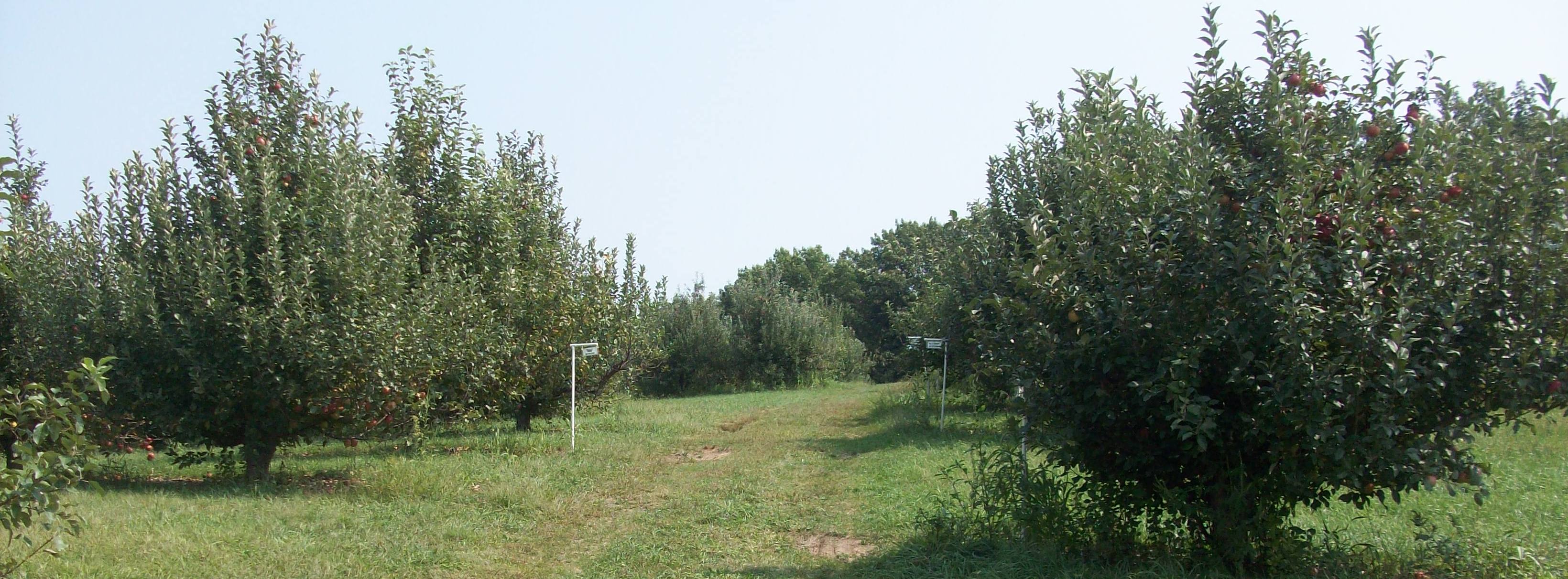
For the third year I’m working as a mapper at Wilson’s Orchard near Iowa City. It is a u-pick operation all about apples and apple culture.

In my 5-6 hour shifts guiding people through the orchard to find what’s ripe and ready to pick, I hear countless stories of why they come, their plans for the apples they pick, and their relationship with America’s second most popular fruit (regrettably bananas are number one).

I work there for the people more than pay, and yesterday spent half of what I earned on ten pounds of Honeycrisp apples, and a bag of mixed varieties to turn into apple crisp and juice. Given the fact our home trees will produce an abundance of apples this year, its not about nourishment. Once one is part of the apple culture it’s hard to get enough.

As I write this post, a pot of apples is steaming on the stove top for sauce. The goal is to use up the first pick of early apples from my trees and mix it with a quart of leftover rhubarb sauce from the spring. If all goes well, I’ll process the result in a water bath, adding more quarts for storage before heading back to the orchard and another shift.

I left the job in the warehouse to spend time with friends selling apples and apple experiences. I started work about four weeks into the season, so this year will be short, maybe six weeks. Some of the people who stop by the orchard are the same ones I saw at the warehouse—tractor ride seekers, apple eaters, and families of all kinds.

Better to spend my time with these folks than at the end of an industrial food supply chain. A place where the apples are grown not far from where they are sold.

Categories
Environment

Denial and Denali

Denali Photo Credit - Wikimedia Commons
Denali Photo Credit – Wikimedia Commons

Environmentalists are having trouble wrapping their head around a president who visited Alaska above the Arctic Circle on Wednesday to speak on the need to mitigate the causes of climate change, while at the same time on Aug. 17 approved Royal Dutch Shell’s exploration and development of oil there.

It’s not that hard because the challenge of our time is the lack of political will to take action to reduce CO2 emissions in a culture dependent upon fossil fuels. The problem is politics, not physics.

Bill McKibben expressed the sentiment concisely:

It’s no use crying Bill McKibben’s tears.

In 2014, the U.S. used 6.95 billion barrels of crude oil with 27 percent being imported, according to the U.S. Energy Information Agency. That’s 19.05 million barrels per day, including biofuels. Most of it is for gasoline, diesel, jet fuel, heating oil and liquefied petroleum gas. (The EIA explains how the oil was used here).

During President Obama’s administration the U.S. took substantial action to reduce dependence on imported oil. During the eight years of President George W. Bush, the country imported 28.6 billion barrels of oil or 3.574 billion barrels per year on average. In 2014, the U.S. imported 2.68 billion barrels or 25 percent less than the Bush average.

The rub is that in order to reduce imports, the Obama administration encouraged domestic production through an all of the above strategy that included hydraulic fracturing and increased exploration and discovery like Royal Dutch Shell had been doing in the Arctic in 2012. The strategy worked, and has been revitalized, but at what cost?

Doing nothing about global warming is not an option. The Obama administration has been and is doing something significant. As much as some would like to shut down the coal trains, end hydraulic fracturing and stop drilling for oil – leaving fossil fuels in the ground – it is only beginning to happen under Obama. Whoever is president in 2017, an “all of the above” strategy would mean quite different things with a Democrat or Republican in office.

Scientists understand the basic physics of global warming, and mostly have since the mid-1800s. As long as there is demand for fossil fuels, there is no reason to think exploration and discovery by oil companies will end any time soon. The problem with denial is not so much with political climate deniers. The physics will out, hopefully not too late.

A bigger problem is denial of our addiction to fossil fuels. Most continue to use them like there is no tomorrow. A reckoning is coming and it will take more than renaming that mountain to climb it.

~ Written for Blog for Iowa

Categories
Work Life

Wages and Private Sector Unions

Working the Garden
Working the Garden

As we approach Labor Day, the lockout of United Steel Workers at six Allegheny Technologies plants is a sad commentary on the state of affairs of public sector unions.

“Management has locked out more than 2,000 workers in an effort to extract concessions on health and retirement benefits from union members,” according to Michael Hiltzik of the Los Angeles Times.

“ATI is demanding steep increases in out-of-pocket health care expenses and the elimination of pensions for new hires, essentially creating a two-tier wage and benefit system. In addition, ATI wants to expand the use of outside contractors and impose work rule changes that would turn workers into casual laborers, with irregular and unpredictable shift times, less access to overtime pay and worse working conditions,” according to Evan Winters of the World Socialist Web Site.

It is no secret that American business has been working to shed pension and health insurance liabilities, and for the most part has been successful during the post-Reagan era. If they had their way, companies would seek to eliminate most operational liabilities from having employees by outsourcing and using temporary, part-time workers without benefits.

That the company (through a third party) is able to offer temp workers as much as $3,000 per 84-hour week without benefits – plus a guaranteed layoff if a new contract between labor and management is signed – is a demonstration of the power of capital in this capital intensive industry. The average annual wage for a USW worker at Allegheny Technologies is $90,000, which includes mandatory overtime.

If $90,000 per year plus benefits seems like a lot, the work is physically demanding, dirty, repetitive and resoundingly dull. For long-time steel workers, it is a way of life, fraught with injury and physical deterioration. On a scale of wage justice, steel workers should be at the higher end of the range.

Yet the company can, and likely would pay a premium rate to keep the plant operating, albeit at a lower rate of efficiency, until the union contract is settled – or when the temporary workers are made replacement workers. Hiltzik called it a “race to the bottom,”  and friends of labor would agree.

The union is damned if they do and damned if they don’t. On the one hand, some members believe USW leaders are too cozy with Allegheny Technologies management, according to Winters. Rank and file may or may not accept a deal presented for a vote. On the other hand, if there were no USW, management would long ago have made the changes they seek in this new contract.

In 2014, 6.6 percent of private-sector workers in the U.S. were union members, according to the Bureau of Labor Statistics. In Iowa, it is slightly higher at 6.9 percent, or 84,791 union members. As a right to work state, there are another 7,500 private-sector workers who are not union members, but work at a company where the pay and benefits are set by a union contract.

The Allegheny Technologies lockout is a case where each contract negotiation has become an opportunity to break the union, rather than to make adjustments in pay and benefits to serve both employees and the company. Because of the capital intensive nature of the steel industry, labor is required to keep plants operating. Just not workers represented by a union.

~ Written for Blog for Iowa

Categories
Living in Society Social Commentary

Letter to the Des Moines Register

Net NeutralityTo the Editor of the Des Moines Register

In her Sept. 1 Des Moines Register opinion piece, “Congress must protect net neutrality,” Clayola Brown gets it exactly wrong.

She wrote, “the FCC’s approach to net neutrality is a serious mistake,”  adding, treating the Internet as a common carrier utility could “dramatically cut back the new investments needed for the next phase of the Internet economy.”

What a bunch of bunk.

Title II protections were authorized by a bi-partisan vote of the U.S. Congress, giving the FCC authority to protect net neutrality. What the FCC did was restore these protections after millions of people urged the agency to do just that.

The rules set in February haven’t hurt investment and there’s no plausible reason to suspect they will. On the contrary, companies like Comcast, Google Fiber, Verizon and AT&T have made new investments in their Internet networks since the ruling.

For example, Comcast is rolling out new gigabit fiber services, called “Gigabit Pro” to 18 million locations.

What the FCC rules have done is provide a regulatory framework upon which Internet service providers will have to compete for business. The result has been investment in infrastructure.

As Brown asserted, “investment means jobs,” so what’s the problem?

Categories
Kitchen Garden

Taking A Break – Cooking

Rough Cut Tomato, Peppers and Onion

Thursday yielded six jars of hot sauce made from jalapeno peppers, onion, garlic and tomato, plus seven quarts of apple-rhubarb sauce. In addition, I made a quesadilla with finely diced jalapeno pepper and thinly sliced tomato, reheated a bowl of home made soup and had a bit of homemade tapioca for dessert.

The day was mostly about staying home and processing garden produce. There was a side benefit of clearing a little space in the refrigerator, as all but one jar of hot sauce was processed in a water bath. The lids sealed so the jars are ready for storage.

I hardly made a dent in the produce.

The Amish Paste, Rose, Brandywine and Beefsteak tomatoes are flavorful and abundant. Other varieties are producing as well.

The cooking hardly made a dent in the abundance.

It was the last day of my three-day holiday. Today I return to the warehouse for a final shift before changing to seasonal orchard work tomorrow. I hope to have more to say about my 18 months at the warehouse next week.

Now that the holiday is over, it’s time to generate income and figure out what’s next. I spent time preparing a studio for creative work by increasing the table space to work on things. I booked a couple of speaking engagement in October and need to prepare for those. There is never an idle moment on the prairie.

But we need to eat.