Meanwhile members of the corporate media complained it has been a long while since she gave a press conference. Republicans complained about the trip for many reasons summed up simply as “it’s Hillary Clinton so it’s bad.”
I would comment further about the complaining, and the repeated calls among Republican supporters to lock her up, but what the hell. There is nothing with which to charge her and the illusion of something being there sustains them in their time of Donald Trump.
Sadly, I revert to the commonplace: let sleeping dogs lie.
My support for Hillary Clinton hasn’t wavered this election cycle, nor will it. The rise of the World Wide Web — with its increased visibility of the human condition — has changed politics forever. I don’t know if it is good, bad or irrelevant. We know more about what people are willing to say in public and it’s a poor reflection of the homes and K-12 schools in which they came up. Hillary won’t fix these things or what ails society — what politician could? I’m not sure they need fixing.
2016 makes the need for people to get along in society crystal clear. Not just locally, but globally. We are doing a wretched job of that right now. It may be beyond humanity’s capacity to get along, even if our lives depend upon it, as some of us believe they do.
Instead of trying to say something profound, I’ll post a video: Patty Judge’s first television ad. We haven’t tuned on our TV set for a couple of years, but she’s trailing the incumbent by 8 points and needs our help.
That’s all I have to say about the 2016 campaign as summer turns to fall and communities get busy with school, the harvest, and with looking forward to next year’s hope.
I believe there is reason to hope and so should you.
School is out for Iowans who work yet remain on the margins of society.
There is no recess from the constant demand to secure basic needs of food, shelter and clothing. The add-on expenses of transportation, health care, interest on loans, and servicing addictions? It’s a question of what gets priority each week.
Last summer I wrote about two issues: how work is not valued adequately and how compensation is a murky endeavor at best. There is a third: the resilience of people who work and are poor.
This August I work four jobs writing, in retail, and on two farms. After a 25-year career in transportation and logistics, our family balance sheet looks better than most of my low-wage peers. I can afford the experience. I’m one of the few workers who keeps a balance sheet because most live paycheck to paycheck sustaining their lives with inadequate income. I don’t see how people can make it, but they do.
I’m cautious when writing about peers because my narrative is grounded in real people with lives. It is important to show respect and maintain their privacy. I won’t write about anyone with whom I am currently working unless they already are a public figure. That rules out most everyone.
A significant number of my peers are aged 14 through 18 and live at home with parents or grandparents. Their money is spent on personal expenses and they are full of confidence and hope — enough so to be inspiring. There are also spouses and significant others where the partner works a big job with benefits and their low wage income adds to the household. There are the “special people” whose stories are so different they garner attention easily.
The person living in a car with her dog, boarding her horse with a co-worker while figuring out what to do next; the woman in an abusive relationship attempting to hide bruises with makeup; the man who has trouble standing for a shift on a concrete floor yet tolerates it because he needs the income; the small-time loan shark recently arrived from Chicago who heard from friends there are jobs and cheap living in the Cedar Rapids – Iowa City corridor. These stories capture the imagination, but in my view are too “special.” I’d rather write about plain folk like myself. My takeaway is no one who works for low wages has given up and that too is inspiring.
Many of us have lives where there is more to do than time allows. We have to set priorities. Approaching Medicare age it is hard for me to keep up with everything while working fours jobs. I don’t. Mowing the lawn falls to the bottom of the list and the long grass becomes habitat for birds and small animals. The garden is producing with abundance and I struggle to preserve enough of it for winter before it goes to compost. I have trouble staying awake on my daily drive across the lakes to work in Coralville. My challenges aren’t unique. The thing is I’ve worked a big job with benefits and wouldn’t go back for anything.
Once a person accepts the decency of most people, and what we share in interests, working poor are no longer a cipher or story for journalists and social scientists. They are one of us, more than we acknowledge.
If August is no recess, life is still pretty good because there are people who behave as if the amount of money we make is less important than seeking ways to help each other get along. That is as good as it gets.
Representatives Collin Peterson and Dave Loebsack – July 2013
When I first volunteered to support Dave Loebsack for congress it was a dicey endeavor.
In 2004 I’d supported Dave Franker and he was not the best of candidates. He seemed a throw-away placed on the ballot next to Jim Leach to fill an empty slot. He was serious about his candidacy, but others were not. “Slot-man” would be a good moniker for Franker as he filled the space on the ballot and had very little real support. I was skeptical Loebsack, a Cornell College political science professor, could get elected either.
Leach lost me when he chaired the House Banking Committee’s investigation of Bill and Hillary Clinton’s real estate investments in the Whitewater Development Corporation near Flippin, Arkansas. What else was there to do but support Loebsack? I was in.
Each Tuesday I faithfully arrived to volunteer at Loebsack’s campaign office in Iowa City. What I found, through hundreds of phone calls, was people were tired of Republicans, including Leach. After a while it became clear Loebsack stood a good chance of upsetting Leach. I’m glad he did.
Ten years in, Loebsack has had his ups and downs in support among people who first elected him. While some called for a primary challenge, the only person who did challenge Loebsack, State Senator Joe Seng, ran a weird and subdued campaign and never stood a chance. As recent elections of Terry Branstad and Joni Ernst indicate, the days of Harold Hughes and Tom Harkin liberals in statewide elected office are well over until something changes in the electorate. While no politician is perfect, and other bloggers may argue the point, Loebsack has been liberal enough when it mattered most.
This year Republicans nominated their own slot-man, Coralville surgeon Chris Peters. Since his first re-election, Loebsack has faced a doctor four times and a lawyer once. It is as if Republicans believe the professional class is somehow most qualified to beat an incumbent congressman in Iowa. None of them has gained adequate traction and there is little to indicate 2016 will be their year in the Second Congressional District.
What distinguishes Chris Peters from previous Loebsack challengers is his libertarian leanings. What I mean here is his feeble attempts to participate in the populist uprising against neo-liberalism, as described recently by Martin Jacques in the Guardian.
“Populism is a movement against the status quo,” Jacques wrote. “It represents the beginnings of something new, though it is generally much clearer about what it is against than what it is for. It can be progressive or reactionary, but more usually both.”
Iowans benefit from international trade in soy, corn, beef and pork. To the extent they do, they tend to favor what Jacques describes as the “hyper-globalization era systematically stacked in favor of capital against labor.” This is the hallmark of neo-liberalism, something both Republicans and many Democrats participate in. The Trump campaign is opposed to neo-liberalism and wants to take us back to a freaky version of 1950s America in the midst of the post-World War II economic boom. That may play well among Republicans in predominantly white Iowa, however, voters have not embraced it.
Peters has not distinguished himself from the Republican pabulum about taxes, free market solutions, isolationism and school choice to his campaign’s detriment. He embraces the swill of ideas. Trump may win Iowa, and if he does, it will be because of the Republican Party of Iowa’s well-organized ground game. If one talks to Republicans rationalizing support for their 2016 presidential nominee, the argument is less about Donald Trump and more about supporting their party when party means something. Peters should latch on to the coat tails if he is anything other than a slot-man. He didn’t ask for my advice.
What enables Dave Loebsack’s re-elections is the popular appeal of his story of growing up in poverty and the importance of government programs in lifting him up. As a Congressman he appears to have followed Bob Dylan’s advice in Subterranean Homesick Blues, “Don’t wear sandals; Try to avoid scandals.” While not the most flashy member of congress, he shows up for work and attempts to serve constituents. Loebsack spends almost every weekend with constituents in the district — those who support him and those who don’t. This gives him a reliable finger on the pulse of the district, something a doctor could appreciate and any challenger would find a formidable obstacle.
Will Loebsack get re-elected? Not unless voters stand up for him again. As a seasoned campaign operative and political science professor, Loebsack knows how to manage his re-election effort. He built a political mechanism to seek insight into the district and has established relationships with movers and shakers in the Congress. (One almost tires of his stories about who he met last week in the Congressional gym). Loebsack brings a who’s who of prominent politicians to the district. Recent guests included Steny Hoyer, Deborah Wasserman Schultz, Collin Peterson, Tammy Baldwin, Tulsi Gabbard and others. This cements his relationship with many of his politically active supporters and helps build relationships he will need to get things done in the Congress.
Dave Loebsack’s chances are pretty good for election to a sixth term. My only regret is he is limited to two years at a time.
I don’t presume to know Loebsack’s plans but he has sponsored legislation restricting the revolving door from the Congress into lobbying. Expect him to follow his own bill and stay in Congress at least until full retirement age. If he seeks to remain in Congress until then, that means we’ll likely have to re-elect him in 2018.
I’m in now and will be in in 2018 if we are that lucky.
One risk of U.S. nuclear weapons deployed in NATO countries is that security may fail and bombs could fall into unknown hands.
During the recent coup attempt in Turkey, Turkish forces surrounded the U.S. Air Force base at Incirlik (where several dozen Cold War era B-61 gravity bombs are vaulted), cut off electrical power, and temporarily closed the air space around the base as they repelled the coup attempt.
“General Bekir Ercan Van, the commander of Turkey’s Incirlik airbase, which is used both by the Turkish Air Force and NATO forces, has been detained by Turkish authorities accused of complicity in the attempted coup,” according to RT News and covered by the Wall Street Journal (Paywall). “The senior Turkish military commander was arrested along with over a dozen lower ranking officers at the base. A government official has confirmed that the general has been detained.”
The bombs were secured… this time.
Is the risk of nuclear weapons deployment worth the reward? It isn’t.
During a recent heavy rain storm, water got into our basement where a box of political memorabilia was dampened. I spread the contents on the living room floor to dry, and while putting them away found half a dozen responses from U.S. Senator Chuck Grassley during my advocacy to ratify the New START Treaty with Russia signed April 8, 2010.
Grassley responded in a formulaic manner, indicating staff had written the response. In his last letter before the Senate vote, which I believe Grassley wrote, he acknowledged my advocacy and said simply he disagreed. New START was ratified without Senator Grassley’s vote.
While the existence of nuclear weapons and their deployment is said to be an apolitical defense strategy, it isn’t. As long as U.S. nuclear weapons exist and are deployed, there is a risk of a security failure after which they could fall into the wrong hands. I’m not the first to say nuclear weapons serve no practical purpose and can never be used.
If you want to learn more about what happened during the Turkish coup and what it means, here are some links to articles about it.
The H-Bombs in Turkey by Eric Schlosser, author of Command and Control, The New Yorker, News Desk July 17.
Should the U.S. Pull Its Nuclear Weapons From Turkey? by Jeffrey Lewis, director of the East Asia Nonproliferation Program at the Monterey Institute of International Studies. and Kori Schake, fellow at the Hoover Institution, July 20, The New York Times.
Turkey Arrests Incirlik Air Base Commander by Julian E. Barnes, he covers the Department of Defense and national security issues from The Wall Street Journal, The Wall Street Journal, July 17 (Paywall).
U.S. Department of Agriculture Secretary Tom Vilsack
Secretary of Agriculture Tom Vilsack scolded the University of Iowa Carver College of Medicine about opioid abuse on Friday.
The institution is not doing enough to train its soon-to-be health professionals on an opioid abuse epidemic that claims thousands of lives a year nationally, Vilsack said, according to the Cedar Rapids Gazette.
The university just got the word about its role in the opioid abuse epidemic last week. According to the article,
After Vilsack’s remarks, UI Health Care medical affairs vice president and dean of the medical college Jean Robillard told The Gazette the institution does plan to make changes in the way it teaches med students about prescribing opioids. He said the UI received information on it from the White House earlier this week.
Vilsack oversees the White House Rural Council, established by executive order on June 9, 2011 by President Obama. Opioid abuse is on a long list of maladies that impact rural communities. It is one issue among many the council hopes to address.
News media and politicians have made much of opioid abuse. Facts suggest at 28,648 (2014) annual deaths related to opioids — including heroin, hydrocodone and oxycodone — abuse is not a leading cause of death in the United States. It’s not even among the Centers for Disease Control’s top ten causes of death, with heart disease, cancer, chronic lower respiratory disease, unintentional injuries and stroke being much more prevalent.
What gives?
Fanning the embers of opioid abuse into a raging wildfire serves the interests of Big Pharma and its minions in the U.S. Congress. The opioid epidemic represents another opportunity for corporations to mold government in a way that serves their interests.
We’ve seen this before with methamphetamine abuse. Methland: The Death and Life of an American Small Town by Nick Reding makes the case that it’s less a drug’s addictive propensity than a combination of economic policy, government complicity with Big Pharma, and corporate policies that are behind the degradation of rural communities like Oelwein, Iowa, the subject of his book.
The short version is when meth had its fiery burn into the media atmosphere, corporations used it as an opportunity to control importation of key ingredients to a profitable cold medicine in a way that led to many small-scale meth lab busts in Iowa, and the rise of methamphetamine trade among Mexican drug cartels. The opportunity regarding opioids may be a little different, but why wouldn’t Big Pharma want another bite from the apple?
It is ironic that Nancy Reagan’s “Just Say No” campaign, part of the “war on drugs,” was window dressing to her husband’s economic policies that drove the underlying causes of abuse and addiction, not only in small towns, but throughout the country.
People suffer from many types of addiction and neither government nor the insurance companies that drive health care are doing much to address them. Opioid abuse is an issue, yet the bigger issue is related to the growing divide between the richest Americans and the rest of us, corporate influence in government, and a K-12 education system that inadequately prepares children to sustain themselves in a society where corporations have the upper hand.
Opioids? Schmopioids! Let’s have a conversation about appropriate school curricula, something Vilsack addressed Friday in a weird, special interest kind of way.
August’s four jobs, combined with kitchen-garden work has been a constant whirl of activity.
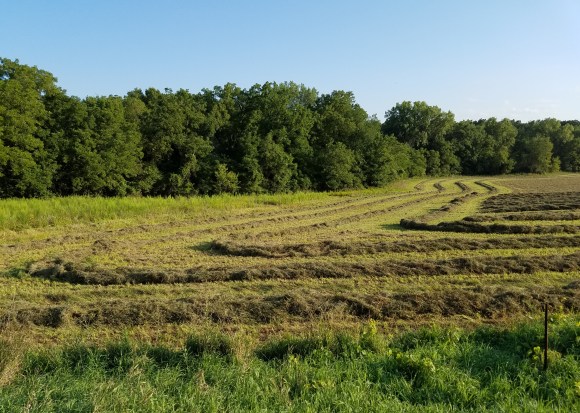
The lawn is showing my priority. It is long and tangled — a nesting place for rabbits, birds and other small creatures. It needs mowing, but when?
It has been difficult to make time for non-essential living, so here are some images of what the last week has been.
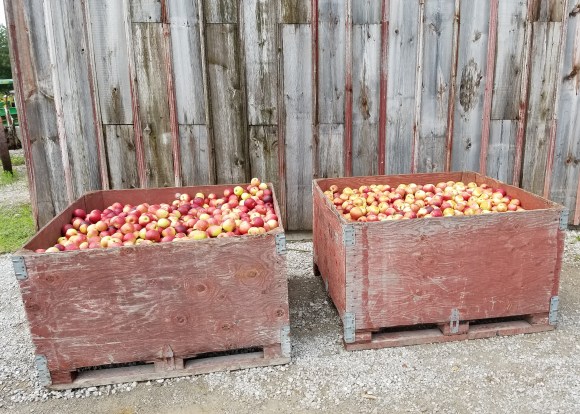
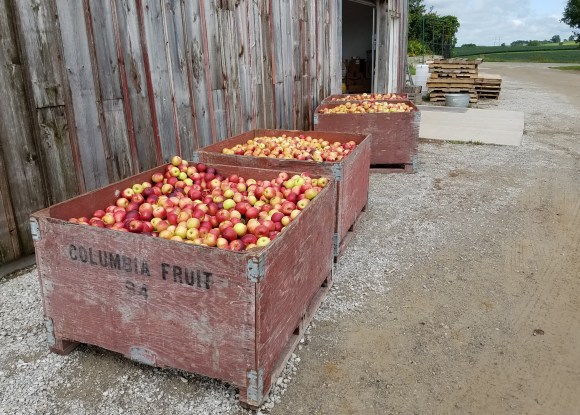
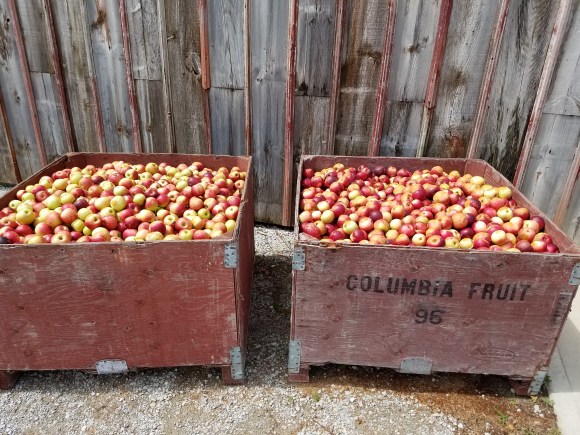
Burgundy Apples Waiting Processing into Baked Goods and Cider.Turk’s Turban Squash from the GardenSaturday Breakfast Featuring Eggplant, Turk’s Turban Squash and Pickles.Burgundy Apples
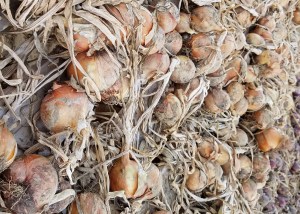
Between picture perfect onions and the compost heap lies an opportunity.
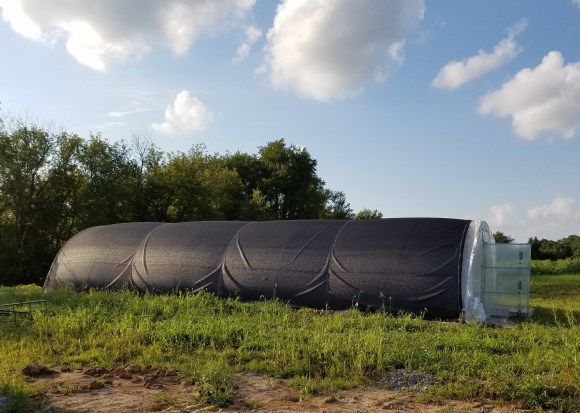
A friend grows onions using organic practices as part of a Community Supported Agriculture project. Onions are harvested from the field then dried in the greenhouse for storage. Sorting, trimming the tops and roots, and removing excess skin comes next.
As an experienced onion trimmer I work for farmers I know and trust. My compensation is an hourly rate above the current minimum wage plus all the seconds I can use. It’s a good deal, so I take it when offered. For an hour or two after a full time job at the home, farm and auto supply company, and on weekends after a shift at the orchard, I work in the onion shed.
Onion Trimming Work Station
The work is seasonal and temporary. Cognizant of potential competition from other itinerant workers, I work as quickly and as well as I can. The daily chore serves as respite from an intense schedule of lowly paid work that provides income destined mostly to corporations in exchange for stuff needed to operate the household: utilities, insurance, taxes, fuel and the like. I will have worked 100 days in a row by the November election — I’m not complaining, just sayin’.
At the end of each shift in the onion shed, I take home ten or more pounds of seconds. I remove the bad parts in our kitchen and am left with half the original amount in fresh onions. There’ no long term storage for these so they go into the ice box until used. If left on the counter, bad spots would quickly re-emerge.
Onion Shed
I made and canned the first batch of vegetable soup with three pounds of fresh onions and a bit of everything on hand from the farm and garden. By the time the onions at the farm are in storage, there will be enough canned vegetable soup put up to last until the next growing season. Soup that can make a meal.
With the concurrent harvest of tomatoes and basil from our garden, I plan to make and can pints of marinara sauce using a simple, four-part recipe of tomatoes, onions, basil and garlic. Onion trimming blocks out time from vegetable processing, and some good ones will head to the compost bin before I can get to them. I am hopeful about getting a dozen pints of marinara sauce canned.
The life of an itinerant low wage worker lies on the margin between harvest and the compost bin, That’s true for a lot of professions, not just onion trimmers. If you think about it, that’s where we all live our lives in the 99 percent of the population that isn’t wealthy.
I’m okay with working a job with friends doing work that directly impacts our family’s sustainability. It may be easier to take a big job with responsibilities and varied compensation, but I’d rather deal with the questions like whether something can be made of each onion I encounter.
The pile of second represents hope in a tangible and meaningful way. What’s life for unless that?
The sobering news of the NBC/Marist poll released last week is Hillary Clinton leading the Republican candidate in Iowa by only 4 points (41-37) among registered voters.
In Iowa electing Hillary Clinton president will not be a slam dunk.
If one lives elsewhere in the country, the news was better. Clinton leads the two-way and four-way presidential races nationally and has multiple paths to 270 electoral votes needed to win the election.
Both major candidates remain unpopular. “In Iowa, 36 percent of registered voters have a favorable view of Clinton, versus 58 percent with an unfavorable view,” wrote Mark Murray on the NBC News website. “While Trump is at 31 percent positive, 64 percent negative.”
Clinton is polling well, as she has since announcing her candidacy April 12, 2015. The election is hers to lose, and every indication is she is taking nothing for granted. What mitigates the positives is every conversation I have with voters becomes dominated by how terrible Clinton’s opponent is. He is, and if you feel that way, volunteer or donate to Clinton’s campaign, even if you don’t like her.
Of Iowa’s 1,937,225 active voters, only 615,357 (32%) were registered as Democrats on Aug. 1, 2016, according to the Iowa Secretary of State. Republicans aren’t doing much better at 649,579 (34%). Based on registrations, it should be a fair fight for either party to build a constituency to elect a candidate in Iowa.
It’s not a fair fight, one made worse by the quadrennial Iowa Caucuses. Where to begin about that?
Let’s start with the quote attributed to Albert Einstein, “The definition of insanity is doing the same thing over and over again, but expecting different results.”
Who wants to be insane? None of us who volunteer to work for political campaigns.
I want something that doesn’t exist any more. When my father canvassed for JFK before the 1960 election he used mimeographed sheets made at the union hall. There was a diagram of a generic neighborhood where he recorded the names of voters to help him (and presumably others) keep track of where the election stood. When Kennedy won, we felt our family had contributed significantly to the victory even though he did not win Iowa’s 10 electoral votes.
Deviation from this inclusive, local technique has long been a practice. I associate it mostly with Howard Dean’s 2004 campaign, although others perfected it. Targeted canvassing has been my bone of contention with the Iowa Democratic Party. The practice has broken down neighborhoods in favor of demographic dissection. It isn’t healthy for working together with neighbors to improve our lives, something that should run concurrently with politics.
It’s no secret a large percentage of people seek to avoid conversations about politics and hide their political leanings behind a no party registration. What matters more to those with whom I’ve discussed it is participation in a society in which politics plays a minor role. More engage in politics during the presidential years, but spend the rest of their time living, working and volunteering. It’s the glue that holds what’s good in society together. The current caucus process with two dozen candidates roaming the state and spreading their minority views works against the warp and weave of a just society.
I believe the Iowa caucuses have seen their best years. Jimmy Carter had the right idea after Democrats changed the nominating process in response to the 1968 Democratic National Convention in Chicago. Carter just showed up and met people, as he famously did during the Iowa State Fair. Today, politics has been co-opted by the media and the state fair is a timely example, with a dedicated political soap box sponsored by the Des Moines Register. It’s not unlike any of the other fair exhibits. The nadir of the state fair soapbox for Democrats in recent years was Democratic National Committee Chair Debbie Wasserman Schultz giving out of touch speeches.
The caucuses are getting too large, making it difficult for organizers to find appropriate venues. In our precinct it was a challenge to hold people’s attention until the delegates were selected, after which they bolted and the caucus chair couldn’t fill committee slots for the county convention. Logistics aside, the Iowa caucuses place an inappropriate emphasis on presidential politics almost two years before the election. There is more to life than who’s president. We survived Richard Nixon and Ronald Reagan. We will survive whoever the electorate picks in November.
The opportunity to change this year’s process passed with the state convention and the page turns to the 2020 presidential cycle. Political activists want Iowa to be the first caucus in the nation, but they don’t represent our best interests. They are just one more special interest looking out for themselves. Politics is much broader than the people who caucused for Senator Ted Cruz, the Republican caucus winner in Iowa.
It is time for politically active people to get involved in a way that broadens the electorate and is more inclusive. However, if they don’t heed the message, we’ll find something else to do, raising money for our favorite charities, donating garden surplus to the food bank, and advocating with our elected officials for what is right — regardless of party.
People care about who’s president, but not so much they will set everything else aside. No one wants to be the target of political canvasses. Given the opportunity neighbors will join together to resolve pressing issues, including electing a president. This year presidential politics serves more distraction than help.
This has been a summer of weird normal, especially for people who follow politics.
Given a presidential contest where many, including this author, predicted Hillary Clinton would be our next president before she announced she was running, nothing has happened to change that potential outcome. If anything, we are more confident than ever she will be our next president.
The focus has been on down ticket races… somewhat.
Last week Michael Barone of the Washington Examinerpicked Cedar County, Iowa as a bellwether of the presidential race.
“The Washington Examiner has selected 13 key counties to watch in eight target states with 114 electoral votes that have been seriously contested in recent elections,” Barone wrote. “Each county has the potential to indicate who will carry these states.”
Cedar County owes its place on this list to the fact that it has come uncannily close to mirroring the Democratic and Republican percentages of the target state of Iowa in the last seven presidential elections, never varying more than 1.3 percent from average. Thus it voted 52 to 47 percent for Obama in 2012 and 54 to 44 percent for him in 2008; it voted 50 to 49 percent for Bush in 2004; and in the exquisitely close election of 2000, it went for Al Gore over Bush by a plurality of exactly two votes.
Mirroring percentages is one thing, however, based on my personal contacts with voters in Cedar County during the 2012 election, mirroring is not relevant to current races.
The Iowa Democratic Party placed an organizer in Cedar County this cycle, and if 2012 represents the best efforts to turn out votes for President Obama, 2016 will be even better for Hillary Clinton. That also benefits state-wide candidates Dave Loebsack, and to some extent, Patty Judge. Cedar County voters are willing to split the ticket. Expect them to do so in November.
Democrats are running out of time to nominate a candidate in Iowa House District 73, which includes Cedar County. For practical purposes, the clock ran out a week or so ago.
The Iowa Secretary of State filing deadline for state and federal offices is 5 p.m. on Friday, August 19, and in order to nominate a Democratic candidate, the state party would have to call a special convention that included Muscatine, Cedar and Johnson Counties where the district is situated.
There are plenty of potential candidates, however, those who ran in recent cycles are not interested, and no one else has come forward.
While there has been talk of a write-in candidate, the handicap of not being on the ballot will be a long shot in defeating incumbent Rep. Bobby Kaufmann.
The largest group of voter registrations in Cedar County is no party. On Aug. 1, the Secretary of State reported 3,128 Democratic, 3,792 Republican, and 4,414 No Party active, registered voters. Having worked the district, I don’t put much stock in these numbers. A house candidate from either party could win the district because of no party conversions, the City of Wilton, and six precincts in more Democratic Johnson County.
What makes August part of the summer of weird normal is the lack of political talk about almost anything but the Republican nominee for president. It is normal that a lot of voters activate during presidential election years. What is weird is a combination of things including regular people cozying up to Donald Trump; people who would bleed Democratic if cut saying they won’t vote for Hillary Clinton no matter what; and controversial issues, including climate change, abortion, school funding, incarceration rates, water quality and government spending, being sidelined to watch the national political show.
Can consumers buy avocados from Mexico at the grocery store, or in prepared guacamole with impunity?
Probably not.
Last week’s article “In Mexico, high avocado prices fueling deforestation” by Associated Press author Mark Stevenson explained why.
Americans’ love for avocados and rising prices for the highly exportable fruit are fueling the deforestation of central Mexico’s pine forests as farmers rapidly expand their orchards to feed demand.
Avocado trees flourish at about the same altitude and climate as the pine and fir forests in the mountains of Michoacan, the state that produces most of Mexico’s avocados. That has led farmers to wage a cat-and-mouse campaign to avoid authorities, thinning out the forests, planting young avocado trees under the forest canopy, and then gradually cutting back the forest as the trees grow to give them more sunlight.
“Even where they aren’t visibly cutting down forest, there are avocados growing underneath (the pine boughs), and sooner or later they’ll cut down the pines completely,” said Mario Tapia Vargas, a researcher at Mexico’s National Institute for Forestry, Farming and Fisheries Research.
Why does it matter?
Deforestation plays a key role in the release of greenhouse gases. Carbon stored in trees and other vegetation is released into the atmosphere as forests are converted to avocado plantations.
With the advance of climate change, securing adequate water to produce the fruit has increasingly been an issue in avocado growing regions. A video posted by the World Bank explained the problem and how farmers are coping. It’s pretty simple. In recent years there has been less rainfall in Michoacan, desiccating the soil. Farmers divert rainwater runoff to retention ponds for use during dry months. Avocados require twice the water of pine forests they replace, depriving downstream users of an essential resource.
If that’s not enough, these particular forests are part of the Monarch butterfly wintering grounds. Deforestation impedes the butterfly’s evolved life cycle.
You may have seen one of the web ads featuring celebrity chef Pati Jinich promoting avocado use for the trade association Avocados from Mexico. Here is an example:
(Editor’s Note: Sorry, the video was deleted from the Avocados from Mexico Website)
When encountering these ads, I found Jinich endearing and her tips helpful. That is, if I were a user of avocados, something she and the trade association is trying to change with the promotion. My experience with guacamole has been a tablespoon served on the side of Mexican food with other condiments, so not much.
One doesn’t always know what to do about stories like Stevenson’s. How extensive is the deforestation problem in avocado growing regions? How will downstream users react to deprivation of water from the mountains? How are workers treated on avocado plantations? Can we live without Monarch butterflies, and will another plot of forest gone really make the difference for this pressured species?
“When we pick up a fashionable import like avocado,” Blythman wrote, “we need to be sure that it not only benefits our personal health and well being, but also that of the communities that grow it.”
The issues around deforestation are well known. To the extent avocados add to the problem users should be driven to do something.
That may be as simple as asking the server to hold the guacamole.







 Journey Home
You must be logged in to post a comment.