Categories
Living in Society

Skipping an Annual Shopping Tradition

Tools

There is not a lot of money to spend on frills at the end of each month. I wrote about this before and while we hope to pay off our outstanding consumer loan this year, an unexpected expense could complicate things. Like many people we live on the edge between financial survival and ruin.

There are broader implications than our single household.

Last year, 48 percent of household expenses were programmed. That means property taxes, water, electricity, sewer, refuse hauling, road maintenance, insurance, telephone, cable T.V., car loan payment, and broadband. There is no escaping these expenses.

Sixteen percent of expenses were food, sundries, gasoline and cash expenses. One can economize here, but all of these categories are necessary. Our food expense is lower because we regularly use produce from the garden.

The balance of our expenses (36 percent) was what I call household operating expenses. This includes clothing, household repair parts, auto repairs, health co-pays, writing expenses, gardening, donations, and anything unexpected that pops up during the year. Sometimes things break and an outside contractor is needed to make furnace, electrical or other repairs. Contractors are not cheap.

I used to go shopping when the Super Bowl was televised. It was a tradition. I’d wait until the neighborhood got quiet, start the car, and drive to the mall to walk deserted passages and browse. It was my personal equivalent of Black Friday. I’m not sure how much I spent on such shopping trips, but not much. The message was more how anti-sports I became after seeing the Iowa Hawkeyes play with coach Ray Nagle back in the day. Sports was and is a waste of time in our household, unless someone we know personally is playing.

With no money left at the end of each month, and we had to take out a loan to pay for some unexpected expenses. Shopping out of tradition doesn’t make sense with a personal loan. It is better not to buy anything extra other than what we need to get by.

I compare this with the post-war boom during the 1950s when large companies banked on a consumer society. The population boomed and people were buying new homes and equipping them with modern appliances and furnishings. The car culture took off. Today, with so much of our expenses programmed and necessary, combined with replacement items, this has to be taking sales away from merchants who once relied upon them. We bought a used car last year, and will buy a major appliance or two this year, but such purchases can’t be driving the economy, at least not in the same way. Cars and appliances are made better to last longer these days and that has to hurt replacement sales.

We are going through the house to purge stuff we don’t need. So much of what we cared about for years, isn’t anything our child wants. We have the room to store old things, although there is nothing wrong with some empty space. I keep thinking I could need, use, or repurpose. I need to let go. It is hard to get a purge started, and we are not ready to call the waste management company to arrange for a dumpster. However; that day is coming.

The Super Bowl will continue to be a non-event here. We’ll make the usual meals, yet we won’t do any shopping outside our normal stocking levels to prepare. I’ll skip a traditional shopping trip that shouldn’t have been a tradition at all. I’ll be better for that.

Categories
Writing

Writing Journals

Woman Writing Letter

Writing autobiography is an American endeavor. I studied under Albert E. Stone who was my first advisor in graduate school. He edited an edition of J. Hector de Crèvecoeur’s Letters from an American Farmer.

We Americans, especially in this century, often seem completely self-absorbed. There is a native impulse to write or tell a single, brief narrative of our life. More accurately, it is a combination of essential, defining moments and multiple, broader narratives. At the root of autobiography, we must answer the question Crèvecoeur did, “What then, is the American, this new man?”

This new man, when it comes to journaling, was typified as a woman in the 1970s when I wrote,

Traditionally, it is the girl or female of the family who writes in journals. Sometimes it seemed nothing more than a way to keep a girl busy until she gets old enough, reaches the age of child-bearing, then her true work begins.

Personal Journal, Mainz-Gonsenheim, West Germany, Dec. 12, 1976.

This tradition of female-based diary or journal writing was something I was taught in high school. All I can say in 2023 is, OMG!

Journal writing has a purpose instead of marking time. It gets the writer seated behind a desk or table with pen or keyboard in hand. In such a posture one cannot help but write something. It may be gibberish, yet once in a while it may be profound. It is only through practice one becomes a better writer. Journaling serves this purpose.

Journal writing is a form of therapy in that its performance resembles use of an addictive drug — we take it when ill and continue its use until we are well. In some diarist’s cases the illness never left. My condition of restlessness and loneliness has been with me a long time. Journal writing helps me cope.

A foundational part of autobiography is journal writing. As I work through the timeline of my current book, I find the stories I want to tell were written before, many times over, during the last 50 years. They were often written in a journal, or since 1999, in an email or since 2007 in a blog post. In living life we find certain people, places and things stand out. Those are the narratives that can find their way into a journal. The more we write these stories, the better they can become. They become part of us. In the end, who are we but the stories we tell about ourselves living in society?

I am pleased to report the draft of my book passed 100,000 words today. The journals I kept, beginning in 1974, have been especially helpful in getting this far. Writing emails and blog posts served a similar usefulness. I have been mining them both. The lesson from this story is journaling is important to being a writer. It helps us cope and provides a record in case one is needed. From time to time we must rediscover who was are. Writing in a journal helps us do that.

Categories
Writing

Listening to the Wind

Derecho Woodpile

I work a lot on winter days. Some readers may want to put air quotes around that word. What I mean is cleaning the house, washing dishes, preparing meals, doing laundry, and snow removal. I began to plant seeds in trays to grow seedlings for the garden. In winter, any type of physical activity is welcome and most of it must be done to maintain a household. As a septuagenarian in reasonably good health, I need breaks from time-to-time to sustain activity throughout the whole day. When I do rest, it is in the form of a nap or to sit quietly for a few minutes in my living room chair.

While resting, I listen to the wind.

Since we moved here there have been three major wind events. The first two were what we called “straight line” winds that damaged the house and some of the trees. The last major event was the 2020 derecho. Before these events, I paid little attention to the wind. Now it is more engaging than television, radio, or looking at the screen on my handheld mobile device. It creates a form of solitary alertness well cognizant of the consequences of strong wind.

Listening to the wind doesn’t seem like much. At a certain age it evokes memories that transform the present into something else: a sense of fear, experience, or knowledge about the hazards of living in a turbulent world. Listening to the wind is more than about resting.

When I’m at my writing table I can’t hear the wind or anything else that goes on outdoors. Well, I can hear the predawn fusillade of shotguns during hunting season. It is a quiet environment by design. If I have the space heater on, I can only hear the fan. It is the type of environment suited to concentrating on memory and the imagination. It is the setting for reading and writing.

I’ve been reading Grandmother’s letters from when I was in the military. When she wrote them, she was not much older than I am today. She had at least four heart attacks while I was gone, and fell on the street twice. She was often tired, she wrote, especially during her recovery from hospitalization or the falls. She would stop working and lay on the bed or sit in her living room. Sometimes all she got done was to prepare meals and make her bed. It’s was not unlike how I am today.

The sound of the wind takes me back to the past. While wind may be a present danger, I worry less about it because of my experiences. I know for what to listen in the wind. I become thankful for my health and presence of mind. The wind inspires me to get back to work and improve how I live.

Some days we just need to shut off the noise, take a rest, and listen to the wind.

Categories
Home Life

Friday No. 5

Rainbow. Photo by the author.

It’s the fifth Friday of 2023 and winter is here… not for long, though. The forecast through Feb. 14 is mostly for highs in the forties. While this above freezing forecast sets back my winter fruit tree pruning, I will adapt. Adaptation is what it’s about in the newest era of the climate crisis.

For the first time in nine days I ventured out of the house, off property. The trip to the wholesale club, including drive time, took 90 minutes. At this rate, the fixed cost of the car loan is about $50 per trip. If that usage continues, this vehicle will last a long time. To put it into perspective, every time I leave the house, it is expensive.

Needing a new car was an unwelcome surprise. The drive train and body of the 2002 Subaru Outback would have continued for a long time. The problem came in when repair parts for critical systems were not available because they quit making them. Since we didn’t have $20,000 sitting in the bank, we took out an auto loan and that will be paid back over five years. The car will last that long, but the car payment blocks out other spending. Welcome to the world of being a pensioner.

Spending more time at home is revealing how much upkeep owning a home involves. While we bought the best appliances we could afford, they are wearing out, in some cases after more than thirty years of use. The next challenge is how to pay about $1,200 apiece to replace the four appliances next in queue. Basically, we’ll charge them on a credit card, then pay off the balance with whatever is left of our pensions at the end of the month.

Fridays have become my indoor seeding day. Last Friday I planted stevia to grow indoors (Stevia is zone 9). Today is kale seeding in a tray of 50 blocks. The main crop kale is a combination of Winterbor and Redbor. These varieties grow easily, are tasty, and freeze well. I will also plant Scarlet, White Russian, and Dazzling Blue. The tray will be 15 each of Winterbor and Redbor, six White Russian, six Dazzling Blue, and eight Scarlet. Depending upon germination rates, this should produce enough kale to last through the season and in the freezer until spring 2024.

When spending a lot of time at home, we crave order. I’ve tried to frame a weekly order, yet it is not going well. We don’t have “weeks” in retirement when each day blends into the next. Fridays are the most settled pattern because the regular week is over and we’re heading into the weekend.

Our mind works to create structure. I end up framing a week, however imperfectly. I feel a residual cultural need to say, “Thank goodness it’s Friday.” I resist, and attempt to go my own way. There is a song about that.

Categories
Writing

Coping with Being Alone

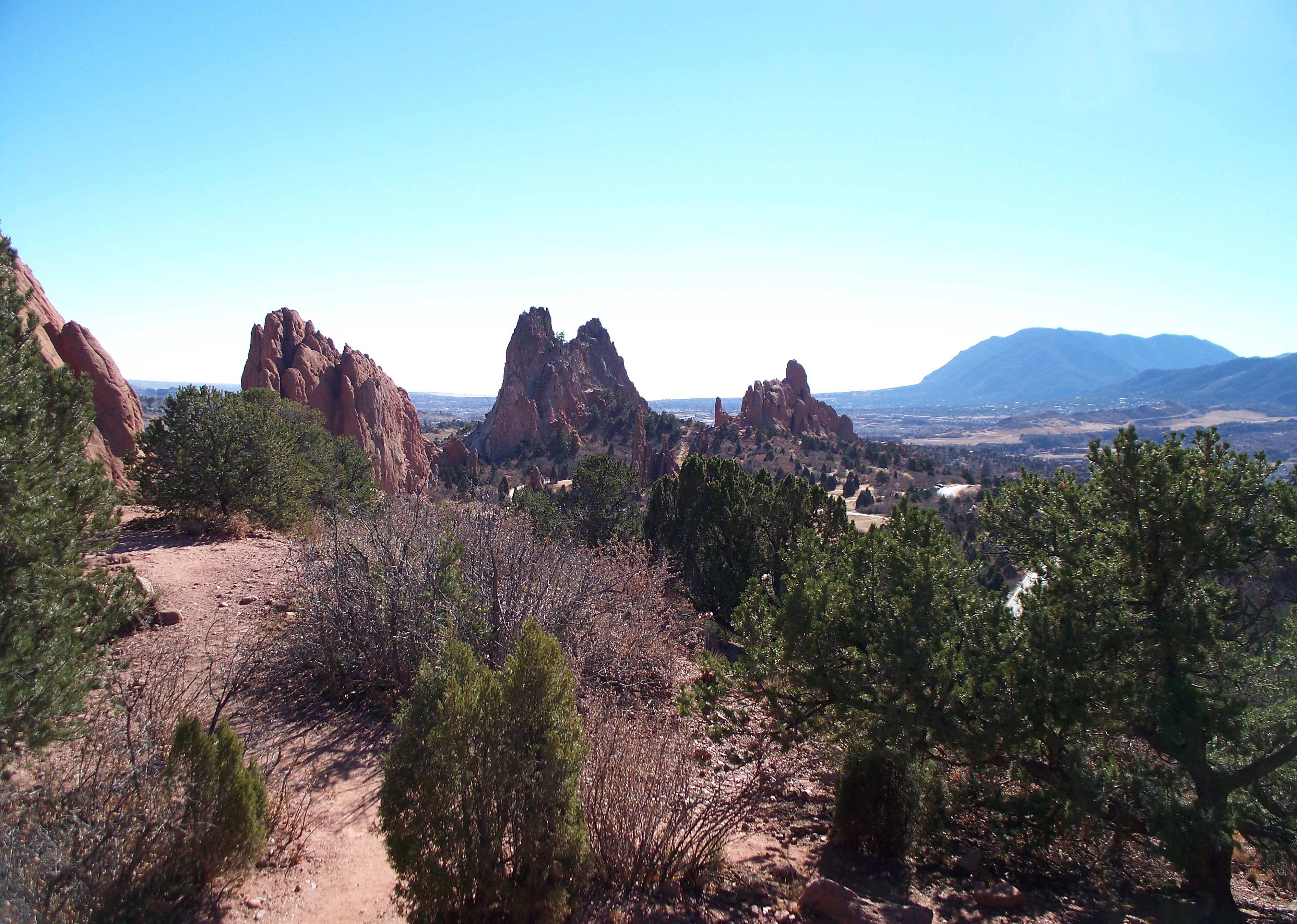
Garden of the Gods, Colorado Springs, Co. Photo by the author.

From an early age I engaged fully in whatever I was doing. When I was in high school, most of my time was spent studying and playing guitar. At university, I would walk the campus in a haze, thinking about what I read in philosophy class. In the military, battalion operations kept me constantly busy with something major happening at least every month. I was constantly busy and had little time for myself. At the time, I didn’t think socialization was needed.

Without my knowing it, full engagement served to separate me from people I knew. I found myself alone much of the time. I needed a way to discuss my life on a regular basis. To cope with this need, I took to journaling. Without others around, I found expression on pages filled with my ink. I recently re-read my early journals and found loneliness stands out as the most common theme, especially when I was living in Germany.

Today I believe a writer needs balance between life in society and putting words down in a document. It seems clear I needed more balance as a 20-something. I don’t know if balance returned, yet as a septuagenarian, being alone is possible and even likely. It is tolerable as a writer. Continuing my long-time writing habit hopefully keeps my mind engaged and helps me cope with separation from society that comes with aging.

Being alone is not without risk. The Centers for Disease Control reported about the health risks of loneliness.

Health Risks of Loneliness

Although it’s hard to measure social isolation and loneliness precisely, there is strong evidence that many adults aged 50 and older are socially isolated or lonely in ways that put their health at risk. Recent studies found that:

  • Social isolation significantly increased a person’s risk of premature death from all causes, a risk that may rival those of smoking, obesity, and physical inactivity.
  • Social isolation was associated with about a 50% increased risk of dementia.
  • Poor social relationships (characterized by social isolation or loneliness) was associated with a 29% increased risk of heart disease and a 32% increased risk of stroke.
  • Loneliness was associated with higher rates of depression, anxiety, and suicide.
  • Loneliness among heart failure patients was associated with a nearly 4 times increased risk of death, 68% increased risk of hospitalization, and 57% increased risk of emergency department visits.
Centers for Disease Control website.

While I have written dozens of journals, tens of thousands of letters and emails, and countless blog posts, it is important to tend to alone-ness. In part, it comes with the territory of aging. By being aware of the cultural phenomenon, and doing something to cope, we can avoid the risks. We may be separated from society as we age, but we are not helpless.

Categories
Writing

Food Branding

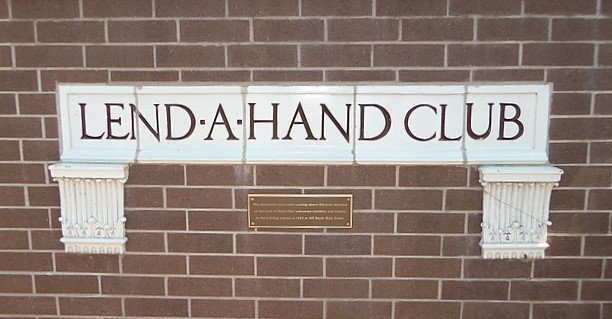
Photo Credit – Wikimedia Commons.
Davenport, Iowa
Nov. 27, 1976

Today I visited my grandmother at the Lend-A-Hand and we ate ravioli from LaSalle, Illinois. They hand pack it there and it is a treat for us whenever we get a chance to make some.

I wonder sometimes about the brand names that grace our pantry - Kraft, Nabisco, Campbell's, Carnation, Betty Crocker, Aunt Jemima, Libby's, Quaker Oats, Folgers, Post, Hershey's - and marvel at the simplicity of the containers in my grandmother's shared kitchen.

There are milk cartons with all the ladies' names on them, and bulky, shapeless packages, with the owner's names written on them, old butter dishes covered and taped shut, white and tan boxes each with only the owner's name on them. It seems fitting that the name of the consumer rather than the producer, or canner appear on the foods awaiting the pot.

Perhaps these women are not swayed by the numerous labels enticing them from the shelves of the supermarkets, maybe they have learned that a carrot is only a carrot no matter who has laid hands on it.

But food is food and when one has it, one is grateful.

Editor's Note: This passage is from my personal journal. The Lend-A-Hand Club was established in Davenport, Iowa in 1886 as a chapter of the International Order of the King's Daughters and Sons. It became an affiliate of the national network of Lend-A-Hand Clubs launched during the 1870s by Edward Everett Hale, a Unitarian minister who had risen to nationwide prominence as an abolitionist and writer for the Atlantic Monthly prior to the American Civil War. The club was a place for young women who lived and worked away from home to associate in a safe environment. 
Categories
Writing

Poems from 1976

~ July 3, 1976, Davenport, Iowa.

~ July 8, 1976, Fort Benning, Georgia.

Categories
Writing

Writing from Journals

It snowed most of Saturday and I blew the driveway once. It’s winter in Iowa. That’s what we expect. I’m waiting for three days in a row of below freezing ambient temperatures. Once that happens, I’ll prune trees for the year, especially the fruit trees. I expected to have finished that winter work, yet with a warming climate, who knows if it will even happen this year.

I’ve been posting a few poems and hope readers enjoy them. I don’t know the person who wrote some of them almost 50 years ago. Most of what I wrote as poetry wasn’t the best. A few of them seem serviceable. The rest reside in my journals and papers. Prose has been my main thing since the beginning.

I’m at a transition point in my autobiography beginning after university graduation in 1974. Before then, I did not keep a diary or journal, and the paper trail of my life was scant. After that, beginning with my trip to Europe that autumn, there is a nest of supporting documents. The paper context of my life increased dramatically each year after 1974.

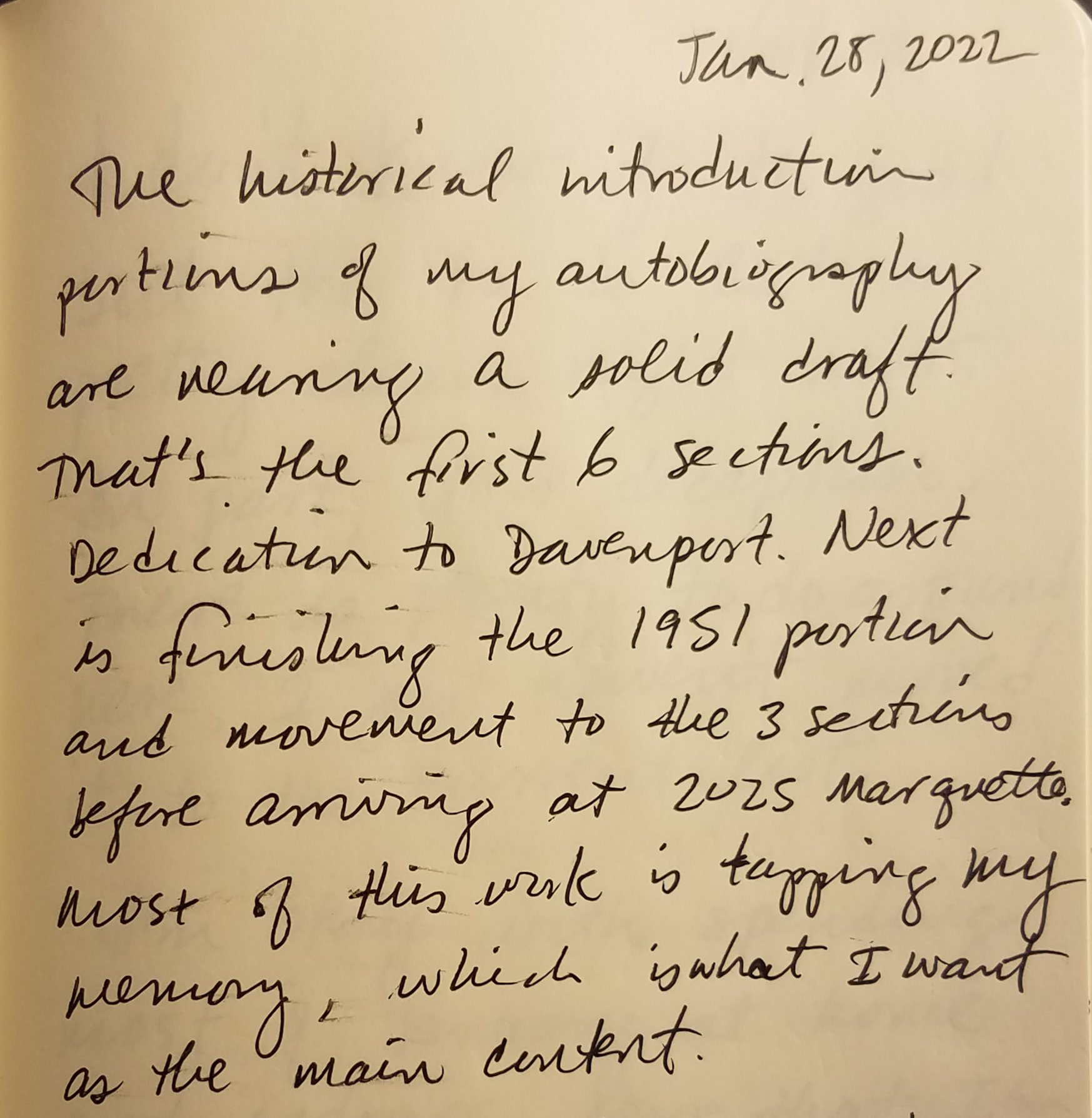
The first ten sections of the work in progress were written from memory and research into the historical record. The next 20 or so sections will benefit from journals and other papers yet to be rediscovered. These are different kinds of writing and I’m having to adjust.

I don’t want to simply print my journal. I also don’t want multiple long, sequential excerpts. The debate I have with myself is whether and how to modify old journal writing to support the current narrative. With 92,262 words and 355 double-spaced pages written one might think I’d have figured that out. I’m used to the type of writing I did in the first third, so it came easier than what’s ahead. I didn’t really think about changing how I write until I got to this point in the chronological narrative.

The next four-year section of the book is about military service. In addition to a journal, I have file folders on all the military operations I was in while stationed at Lee Barracks in Mainz-Gonsenheim, Germany. There is a whole banker’s box full of those. I also used a camera to take photos. Just in those three categories there is a lot to read, understand and assimilate. I also have artifacts like clothing, plaques, and dishes. I have a piece of a sign brought back from the West-East Germany border. It gets complicated.

Most journals are edited into the book. I can’t bear the thought of overuse of the words “that,” “the,” and “many.” Likewise, some of the sentence construction is beginner-style writing. I use the phrase “lightly edited” to describe what I’m doing when I change the source document. If the narrative is strong enough, readers will join for the journey, I believe.

My main interest in life has been in being a writer. I eschewed a university course of study that would get me a job. I didn’t know what it meant to be a creative, yet that’s what I wanted. Society falls short of offering paid work like that. Over the years, especially during my transportation career, the writer side of me was suppressed from time to time. It has always been present.

Some writers do very well. Some scratch out a living. Some work for someone else and do their writing on the side. Now that I’m living on a pension, I can focus my efforts on finishing this book and identifying the next project. As a septuagenarian, there are only so many projects that will fit in.

Categories
Writing

On Mississippi Avenue

1028 Mississippi Ave., Davenport Iowa. Provenance unknown.

My twelve-week stay at a 5,175 square foot Queen Ann Victorian that had been divided into apartments was an important turning point in my life.

Even though Fall 1975 was the first time I lived alone, there was a lot of stuff to cram into a single room with a shared bath at 1028 Mississippi Ave. in Davenport. I parked my 1961 Chevy Impala on the street, and had a telephone connected. I cleared my mind of the distractions of living in a busy, rundown neighborhood on Seventh Street. I rested, attended events and considered my future. It was calm before the storm.

I began with a journal entry on Sept. 11, 1975:

This new apartment already begins the rebirth which is so much needed by my soul at this time. The neighborhood is quite quiet and the apartment that I rent is at the end of a small hallway off the main one.

Across the street is another large house that has been subdivided into apartments and it is quite a ways away. Further up the block there is a Jewish synagogue, Temple Emmanuel. The river is about three or four blocks away.

It seems there are some well to do neighbors to the south of this building, who at this time are having a dinner party of some sort. But at the same time I believe the area is on the fringes of the poverty area mostly to the west. The wealthy area of the town, the Heights, is to the east.

The landlord’s brother lives upstairs in the attic and he mysteriously comes and goes. “Sometimes he’s there, sometimes he’s not. Ask him if you need anything,” the landlord said. Time will tell as I ask God to manifest His will. My major tasks at this time are to set up my own household for what is to be the first time. All for the honor and glory of God.”

Personal Journal, 1028 Mississippi Ave., Davenport, Iowa, Sept. 11, 1975.

The previous six years, since leaving home for university, were a period of experimentation and trial of one thing or another. If anything, my activities resulted in me being what I was and being able to live with myself.

There were things I would have liked to change, like getting off the graveyard shift at the dairy store, and better nutrition. Those things could be worked on. At the time, I felt closer to God than I had for a long time. “He gives me strength,” I wrote.

During my time there I read and wrote in my journal, attended local events, made trips to Chicago, Des Moines, and Iowa City, and prepared for the big project that felt imminent. I didn’t know what that was when I moved in. I viewed myself foremost as a writer, although I didn’t have enough income to do anything but get by.

I attended a Chaim Potok reading at Temple Emmanuel, a Mike Seeger performance at Saint Ambrose College, and heard a lecture by Philip Berrigan at the Friendly House. I was struck enough with Berrigan to write a quote about his notion of life in my journal, “exerting one’s will over this existence to make a life.” That’s what I thought I wanted to do.

I invited Mother over for dinner and made tuna and noodle casserole. It was the only prepared dish in my culinary repertory in 1975. She tolerated the meal, and we went for a walk to nearby Prospect Terrace Park. While my apartment was modest, it served as a good place to sort out my life. It was fitting my first dinner guest was Mother.

I explored my religious self during this period. In part, it was a reaction to living alone.

What are the problems that face me? It seems that the biggest one is that of faith. I believe that God is manifest in this world, something which I did not or rather suspended  belief for a while, yet I cannot come to accept the Church as his manifestation. There are others similar to me in this sort of belief, but I do not seek the approval of other people in my beliefs. That is something I have taken upon myself to bear. In this belief, I am quite alone, although I seek communication with others, it is only for the making contact with God in their souls that I do this and in behaving in ways people seem to have difficulty in understanding me. Be that as it may, I am.

Personal Journal, 1028 Mississippi Ave., Davenport, Iowa, Nov. 2, 1975.

A year earlier I considered entering the Roman Catholic priesthood, yet that seemed like a wrong path. My friends talked me out of it.

The transition at Mississippi Avenue was in part a lack of other intellectual outlets. I met with and spoke to a lot of people at the dairy store. I encountered people I’d known a long time. There was no likely relationship-building as I sold them a pack of cigarettes or gallon of milk. I was cognizant of the fact most old friends did not hold my employment at a dairy store in high regard.

I planned my next move, signed my enlistment papers on Nov. 14, 1975, and left work at the dairy store on Dec. 14. The apartment near the Mississippi River served me well

Categories
Writing

Untitled

I'm still here

     listening to the rain
     falling outside my window.

I'm still here.

~Aug. 18, 1975