Categories
Living in Society

Labor Day 2022

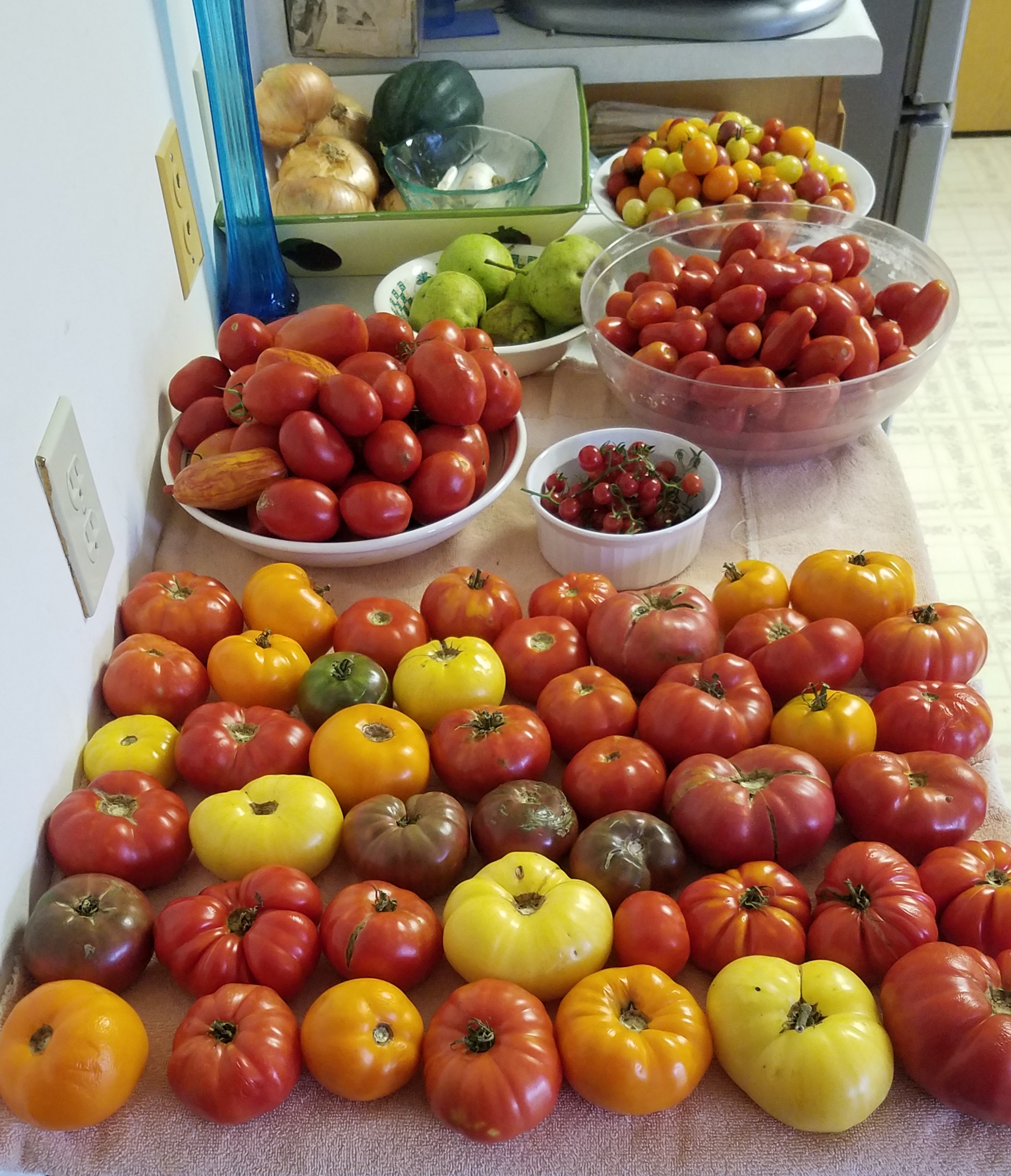
Tomatoes before processing.

Thank a union if you have today off work.

In 2021, 15.8 million wage and salary workers, 11.6 percent of the workforce, were represented by a union according to the Bureau of Labor Statistics. It is a small, yet mighty segment of the American people.

The flip side of this is 313.7 million Americans are not represented by a union. To me, that is the more significant number. Most of us have plenty of non-paid work to do.

I wrote about my relationship with unions in 2007.

I have been on just about every side of the union issue, beginning with my membership in what was then called the Amalgamated Meat Cutters and Butcher Workmen of North America in 1971 (where I hold a retirement card). I worked at the University of Iowa while AFSCME unsuccessfully tried to organize us in the early ’80s, and supervised groups of teamsters from Local 238 in Cedar Rapids, and Local 142 in Philadelphia. In Philadelphia I negotiated the contract with the local business manager. My mechanics signed cards when I ran a trucking terminal near Chicago, and ultimately decided the teamsters union was not for them. Based on this experience, I know a bit about unions.

Fair Share Ten Years Later by Paul Deaton, Jan. 15, 2007.

If you believe unions are strong in 2022, some of them are. There are high profile news stories about organizing Amazon workers and Starbucks employees. Time Magazine reported last October the number of work stoppages over contract issues had doubled. Simple facts of the American economy emerging from the coronavirus pandemic — higher corporate profits, a Democratic president who supports organized labor, and a shortage of workers — have created a pro-labor sentiment. My advice is for workers to get what they can, while they can, as this environment may not endure once corporations determine how to cope with workforce changes.

Rick Moyle, executive director of the Hawkeye Area Labor Council AFL-CIO, wrote in this morning’s Cedar Rapids Gazette we should hold elected officials accountable.

The bottom line is that we can no longer allow our elected officials to say one thing on the campaign trail and do just the opposite once elected. They bank on people forgetting the statements and promises they have made. Working people can no longer afford to be duped into partisan rhetoric and hot button topics. We must come together and hold our elected officials accountable, regardless of party affiliation.

On Labor Day Hold Politicians Accountable by Rick Moyle, Cedar Rapids Gazette, Sept. 5, 2022.

Ahead of Labor Day, AFL-CIO launched what it believes is the largest voter organizing drive in history to restore America’s promise. “All told, more than 100,000 volunteers will reach at least 7.7 million working people between now and Election Day,” according to an article at Iowa Labor News.

On June 28, 1894, Congress passed an act making the first Monday in September of each year a legal holiday. President Grover Cleveland signed it into law. Even though I retired during the pandemic, and its been many years since I carried a union card, I believe I’ll take the day off, work at home, and thank a union.

Categories
Living in Society

Processing the Intake

Bee seeking pollen in a thistle plant.

As daylight moves toward summer’s end, the amount of information available has increased dramatically. After a busy Monday, I have to stop the input and process what I’ve gained. In an ever-forward life, that’s hard to do.

In the next township over, one of the Iowa CO2 pipelines is planned to cross Johnson County. The public debate is whether private companies should be able to use eminent domain provisions of the law the way a government would to run these pipelines. If you got everyone involved in the projects – companies, government, land owners, farmers, and citizens – I’m pretty sure we could agree that these pipelines serve no useful purpose to the environment. During initial rollout of the plans, companies hardly mentioned the environmental impact of CO2 emissions on earth because there are and may be more markets for the commodity. This is mostly about being able to export Iowa ethanol to California, which has stricter air quality regulations than Iowa. Well maybe I’m wrong these folks wouldn’t agree.

In Iowa’s First Congressional District, Republican incumbent Mariannette Miller-Meeks has defined her campaign as one tapping into a mother lode of money and crazy policies in her national party. In a way this makes the race easier for Democrats as she will be out of touch with what all district residents want and need. It will be harder because of the endless well of dark money in politics agitating everything. Democrat Christina Bohannan is busy doing the work of a candidate all over the district. There is a lot to take in as I plan my engagement in the fall campaign.

I am disengaging in my position as president of our home owners association in a development with a population of about 250 people. Finding people to be on our all volunteer board has been challenging. I served on the board in three different periods since first being elected in 1994. There are real responsibilities with managing our public water system, roads, trash and recycling removal, and a separate wastewater treatment plant. We kept the board fully staffed since I returned in 2017, yet few showed interest in leading the effort. Both managing the activities and finding a replacement will take time I’d rather be spending elsewhere.

Our family decided to become home owners. We built new in 1993 and 29 years later, a lot needs attention. Lilac bushes planted in 1994 are now overgrown. Repeated straight line winds and a derecho knocked down trees and branches. We are at 12 years since last roofing the house. Major appliances need upgrade. The list of home repairs and upgrades is pretty long. We have to be ready to slow down, and that means making the house more livable as we age. We tend to avoid these projects because we don’t want to think about them and how we finance them on a fixed income. We have to get going or the to-do list will only continue to grow.

Seems like I spent a lot of my life developing game plans and this is no different. I know enough to stop the input of new projects and focus on optimizing the use of time and resources. I’ll give it until Labor Day. If planning goes on past then, it may drive me crazy.

Categories
Living in Society

Aging in America – Part I

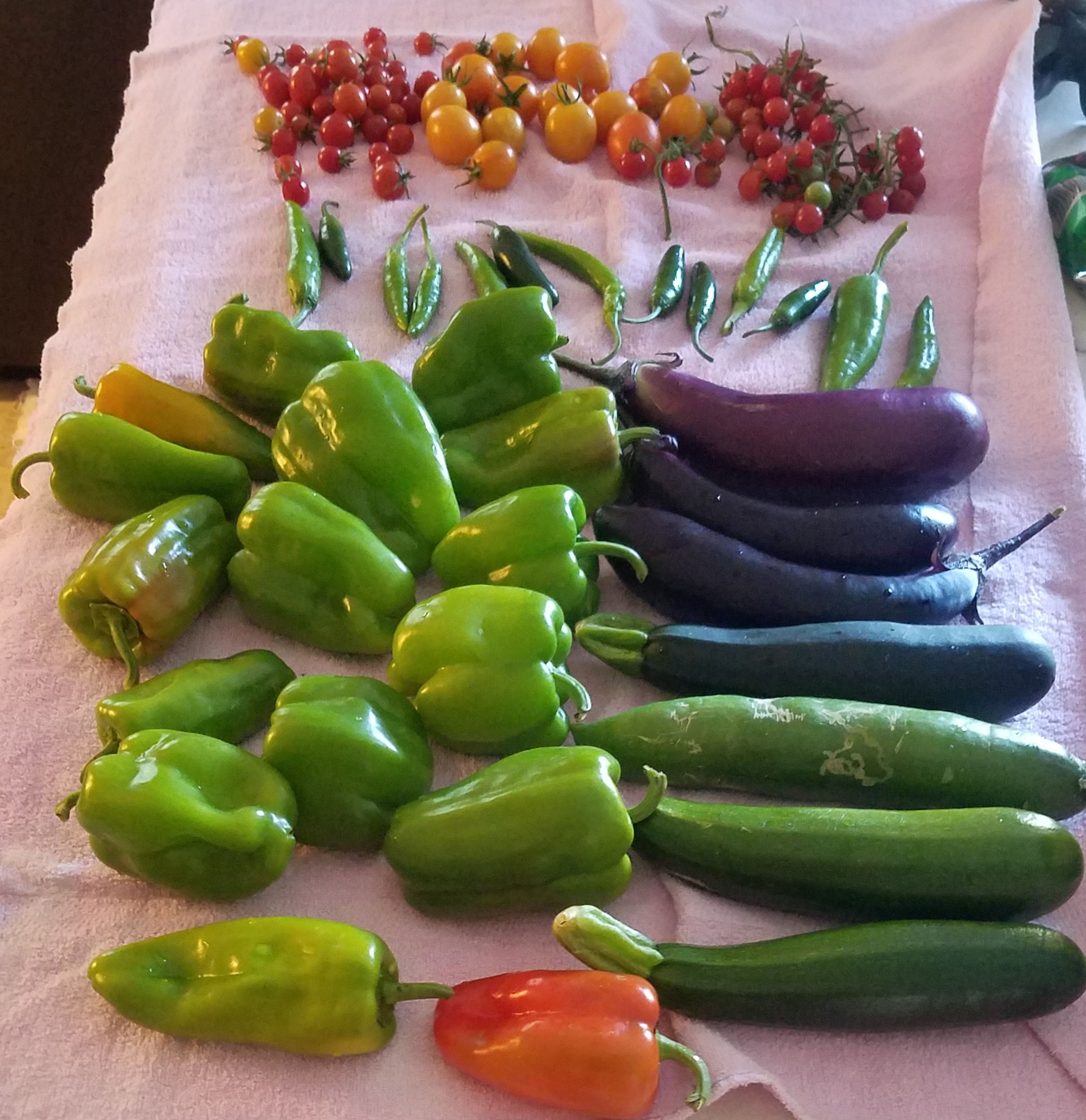
Vegetables drying on the counter after harvest, Aug. 10, 2022.

The first thing I noticed upon my April 20, 2020 retirement is nothing changed. We were entering a period of living in a global pandemic, and a main goal was to live to see the other side of it. Since then, it has become clear the coronavirus pandemic will change, yet not end.

On Feb. 3, the Iowa governor extended the state’s Public Health Disaster Emergency Proclamation regarding the coronavirus pandemic. She announced it would expire at 11:59 p.m. on Tuesday, Feb. 15. After that, “the coronavirus becomes normalized in daily, routine public health operations,” she said. Agree, or not, our lives of living with the virus continue, such normalization as has been dictated by the government has not made life like it was before we heard the words “coronavirus pandemic.”

This is the first of a series of posts I hope to write about aging in America. While my reach is not far beyond Big Grove Township, universal themes run though my life and I hope to think about and tap into them for my writing.

Since retiring during the pandemic I became a pensioner, which means there is a fixed income mostly from my Social Security pension. I feel flush with cash when the monthly check hits our bank account. That feeling diminishes rapidly until I’m waiting for the next check to hit. As long as there are no major crises, we’ll be okay.

A while back I inventoried every distinct part of my body. There were issues with every major system, and aches and pains accumulated over a lifetime of being physically active. I’m not as flexible as at age 30, yet can bend and crawl in the garden much as I have since our first small one in 1983. The frequent jogging I began during military service has turned into walking. I take a cholesterol medication which is fully paid by insurance. Everything else I do regarding inputs is completely voluntary. My frame seems sturdy, I feel healthy, and am mostly ovo-lacto vegetarian.

Most concerning is my ability to see. I wore eyeglasses since high school and now have a pair of transition lens glasses for general use and a special pair for the computer. I expect my cataracts to harden with increased age. My ophthalmologist told me they have already begun to do so. I have an ophthalmologist.

While my financial and physical condition are important, they are not my main interest here. There are questions to be addressed, if not answered:

  • What does intellectual development mean to a septuagenarian?
  • How should my diet change with aging?
  • What types of social engagement should be pursued?
  • What role will I play in Democratic politics?
  • What kind of creative output do I seek to accomplish?

It is hard to say how many posts this will take. Like with other big topics, they may not be immediately following each other. Writing about aging in America is a worthy topic, though. I will do my best to not be boring.

Categories
Living in Society

Postcard from Summer Holiday – #2

Wildflowers on the state park trail.

Entering the last week of July, the garden is coming on strong. The refrigerator is full, the freezer is getting full. There is a lot to do in our kitchen garden every day.

Last night’s dinner was what I’d call garden soup. I harvested a bin of vegetables and as I cleaned them threw bits and pieces (cauliflower leaves, broccoli stems, peas and cabbage leaves) into a soup pan along with mirepoix, bay leaves and seasonings. It was occasion to use up veggies that had been in the refrigerator a while, like wilted lettuce, zucchini, kale, green beans, kohlrabi, and sweet corn. I added a couple of cans of prepared beans, a handful each of lentils and barley. Soup like this always comes out good. I froze enough for two future dinners.

I adjusted to being on holiday. That means I am getting more sleep, exercising daily, eating well, and spending my days as productively as possible. There are naps… in the middle of the day.

Reading consisted of two books this month, Parable of the Sower by Octavia E. Butler. and Gone Girl by Gillian Flynn. I didn’t care for the violence in either of them. I started Loretta Lynn’s memoir Coal Miner’s Daughter and set aside books that require deep engagement in social or historical facts. I’ve been doing “summer reading.”

My work at Blog for Iowa turned into covering for much of the month of July. I hope readers enjoy the writing I am cross-posting here. I’ve been posting at Blog for Iowa since February 2009 and as long as the publisher continues to have an interest, so will I.

This July has been exceedingly hot. There has been good rainfall but the heat makes going outside in the afternoon oppressive. I attended an evening potluck dinner at the nearby city’s park and the breeze took away the oppressiveness. For a while it felt like summer I remember from being a grader when our home did not have air conditioning. It was a positive feeling.

I’m not back from holiday and will continue at least until Labor Day. For the moment I’m enjoying what days I can and living a life. The direction I hoped to find has been elusive yet there is time. Sometimes we need to simply drift and get our bearings.

Enjoy the rest of the summer!

Categories
Living in Society

Unemployment

State Capitol

Last night the Iowa Legislature considered and passed a bill to cut unemployment benefits in the state. Both the House and Senate approved a measure, although the chambers differ on whether there will be a one week waiting period before benefits commence. A version of the bill will pass before adjournment sine die.

I was fortunate to make it through 54 years in the workforce without filing unemployment. My work life can be characterized as stable, although I changed jobs a lot, mostly because I wanted or needed to for various reasons. Work life radically changed since the 1970s, especially after the election of Ronald Reagan as president. What Iowa Republicans are doing is wrong.

Iowa Capitol Dispatch reported last night:

If signed into law, House File 2355 will make several immediate changes for Iowans on unemployment.

Unemployment benefits will last only 16 weeks, rather than the current maximum of 26 weeks. Iowans will also have a one-week waiting period before they receive their first payment under the Senate’s version of the bill.

Unemployed Iowans may need to accept a lower-paying job sooner in the process to continue receiving unemployment benefits. Under current law, an individual would not be required to take a lower-paying job offer for the first five weeks of employment. The bill would change that, ratcheting down the definition of “acceptable” job beginning in the second week of unemployment.

Iowa Capitol Dispatch, March 23, 2022.

My decisions about filing for unemployment were a recognition of the privilege in which I came up. If I was eligible for benefits, I took pride in finding my own way without them. There was never fear of falling behind financially. When I left a job on my own, I carefully considered the consequences and made a financial plan which worked in every case. Not everyone is so lucky.

With Republican majorities in both chambers of the legislature, they can pass whatever laws they want. The Republican governor is unlikely to veto. If there is a single pattern, it is their desire to re-create what living in Iowa means. I know what it means to me. It is treating working people with respect that is anyone’s due. Obviously, Republicans don’t feel the same.

Categories
Living in Society

Boone Work Day

Cars parked behind the garage.

The detached garage near the alley was damaged when a tall pine tree broke in half during December’s straight-line winds. It wasn’t a tornado, yet might as well have been. The top part of the tree crushed the garage roof and created multiple openings for rain to fall through. Things got wet. It was packing time for my sister-in-law’s move this week.

Boone is a red flag city. There is a bustling main street with an abundance of shops and restaurants. They don’t wear face masks any longer in Boone. I didn’t see a mask other than ours during the entire visit. They vote Republican in Boone. Donald Trump won the 2020 election with 56 percent of the county’s votes. One building on the main street has a larger than life mural of him painted in red and black. Many locals do not view it as the monstrosity it is.

Boone was established in 1865 and the following year the Chicago and North Western built a railway station. The Boone & Scenic Valley Railroad survives as a tourist attraction, echoing the cultural heritage. Railroad tracks cross the main street in two places. Most locals know to drive around the crossings when a train stops. I learned how to do that during our visit.

The trip meant two days of physical work for me, organizing the garage for the movers, carrying things up from the basement, and packing the book shelves. While I did my work on Sunday, my spouse and her sister packed up the house. I needed the break from a deep winter feeling created by staying home and mostly indoors the last several months. I feel weary, yet refreshed.

We stayed overnight Saturday at one of the four motels in Boone. It was rated 3.2 stars out of five. When we returned home, the garden seedlings looked good. I watered them and they should survive. It’s time to set up the greenhouse and move them outdoors.

The physicality of preparing for a move can be handled. The emotional part is something else. Every item has to be dealt with, including projects started and not finished, photographs and artifacts from a long life, and consequences of decisions made to acquire things for home use. It didn’t take long to fill the dumpster. Add the trauma of valued artifacts damaged by rain and it can become an emotional roller coaster. We can feel upset by failures, although I found there were more positives than negatives to experience. There is hope for a future for everyone involved.

After two days of work, we didn’t finish, yet that’s the time we had. We made good progress and the work can be finished before the movers arrive.

Sometimes we need a work day away from home. It is a retreat from daily patterns that helps renew us. A work day before moving can be tiring in a good way. There is hope for a better future no matter the status of one’s life.

Categories
Living in Society

Plans for 2022

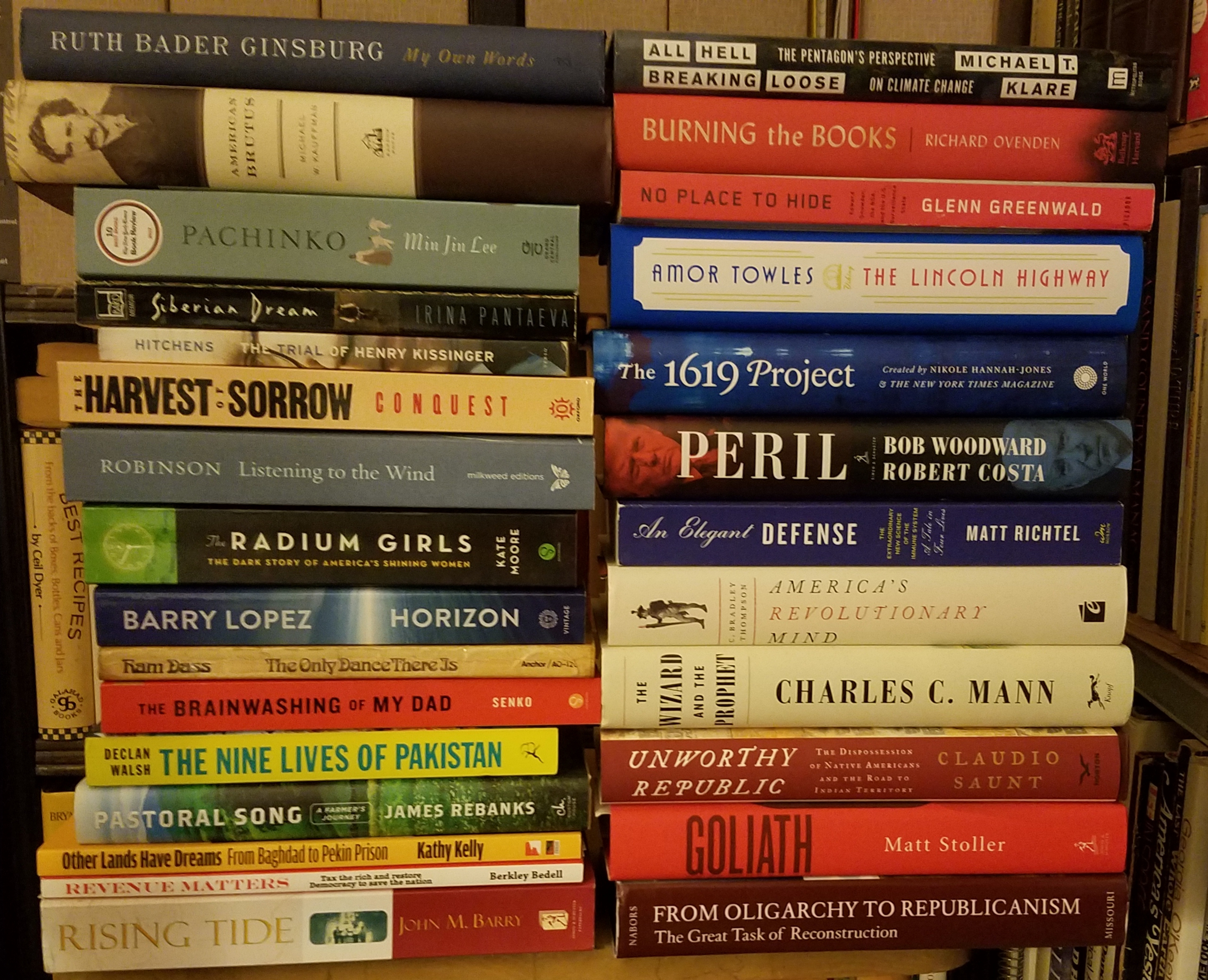
Book queue for 2022.

As long as my eyesight holds, I will continue to read books. As a newly minted septuagenarian I’ve had a discussion of eye deterioration with my ophthalmologist multiple times. When Mother’s eyesight began to fail, she converted to audio books and that’s where I’ll likely go when I can’t read anymore. For now, though, with some adjustment there is plenty to read.

About half the projected reading for 2022 was chosen when I didn’t get to a book in 2021. Going through my stacks would fill out the other half, although I have to leave room for books published in the new year. Now that I am motivated, and my vision passes muster at the eye doctor’s office, I’m enjoying reading.

I have plans besides reading books.

The time between our wedding anniversary and New Year’s Day has been traditional for reflection and consideration. This year ideas are settling without much action. To make every day count, I need a good idea of where I’m bound. First impressions are not enough by which to plan. When ideas come to mind, they ruminate. If they are any good, they persist.

I know the formats for writing in 2022. The next steps are determining topics, then schedule. That’s a lot of what occupies these quiet holidays. Rather than set goals, I’m leaving the mind open until the next project comes to me. It might be today, or maybe in the next couple of months. I know it will arrive and await patiently.

The sun rose on walkabout. Winter skies have been colorful at dawn and dusk. Around the perimeter of our property, deer and other animal tracks are frozen in the snow. It was a busy place the last 24 hours, and it shows after a snowfall. It is cold enough I won’t exercise outdoors today.

That leaves me reading, writing and working on indoors projects. It is a good life, one worth living. The rest before the storm 2022 is expected to be.

Categories
Work Life

Consumer Boycott

Classic family breakfast

Yesterday’s news was workers at Kellogg’s cereal plant in Memphis, and at plants in three other cities, rejected the company’s terms during contract negotiations. In response, the company posted this statement on its website:

The prolonged work stoppage has left us no choice but to hire permanent replacement employees in positions vacated by striking workers.

Kellogg’s website.

Long-time readers of this blog may know my beliefs about unions are complex. I’ve been on all sides of the negotiating table, from being a union employee or part of a business unit that attempted to organize a union, to being part of management of union employees or business units that attempted to organize. In my work recruiting truck drivers I once crossed an unrelated picket line in Flint, Michigan to do my work. Nonetheless, in 2021 I am sympathetic to unions, private sector unions particularly. When people called for a boycott of Kellogg’s consumer products, I wanted to help.

A challenge I have is that of the hundreds of products Kellogg’s produces and sells, only two in one brand, MorningStar Farms®, are something we regularly buy. We will stop purchasing them immediately, although there is enough already in the freezer to last for a long strike. There are plenty of other protein sources in our vegetarian diet. Kellogg’s and others in the distribution chain will lose about $20 per month in revenue from our household.

The trouble for striking workers is the company is within its rights to hire replacement workers. Whatever outrage people are able to muster, it doesn’t matter to the company’s desire to continue using their investment in these plants to produce products. For the most part, consumers are not paying attention to this labor dispute and their consumption patterns are expected to persist.

Part of the reason for a lack of attention from consumers is since the 1970s U.S. cereal sales have declined as consumers choose more protein-based breakfast options or skipped an early morning meal completely. In our household, if we buy cereal for breakfast, it is organic steel cut oats which does not come from one of the major cereal manufacturers. I typically eat oatmeal during winter. Striking workers have additional problems to face than whether or not to accept Kellogg’s contract.

Our family boycotted grapes when Cesar Chavez and Dolores Huerta called for it in the 1960s. That strike of farm workers over working conditions went on for five years. The Kellogg’s strike was called in October, with a decision to hire replacement workers this week, indicating how quickly the company is willing and able to move.

Kellogg’s operates a global supply chain in which many parts are unseen by a local plant worker. The company could easily shift cereal production to Mexico as others have done. From a global perspective this would be a minor adjustment in the supply chain.

The teeth have been removed from boycotts of consumer products. While admittedly unusual in my shopping patterns, during most trips to the store I don’t go down the aisles where Kellogg’s products are sold. As a result of the coronavirus pandemic, many people don’t browse the way they did previously while shopping. They get what they know specifically, except for in the produce department where a shopper must pay attention to quality. This behavior has implications for workers at Kellogg’s and other processed food manufacturers.

Our small outpost of support for striking Kellogg’s workers will continue as long as the strike lasts. If the company does hire replacement workers, we can move on and not purchase any of their products again. We’ll miss our recipe crumbles, yet not that much.

Editor’s Note: News the strike with Kellogg’s ended reached us Dec. 21, 2021. Happy Holidays to all.

Categories
Kitchen Garden

Back to Work

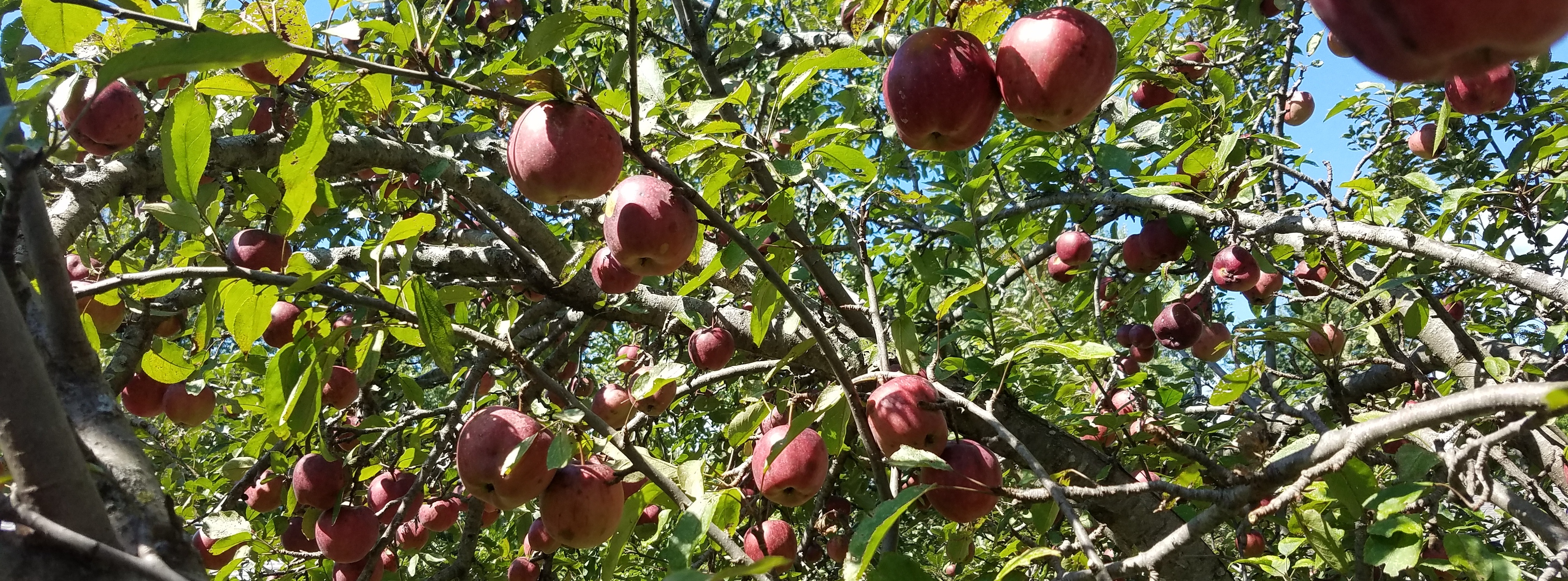
Apple tree viewed from top of a ladder.

The owner of the orchard and farm asked me to return to work as a mapper a few weeks ago. The mapper helps customers find ripe apples in the orchard during u-pick season. I first worked there in 2013 and did every year since, except for last year because of the coronavirus pandemic.

I noticed on Instagram they were already picking Viking and Pristine apples so I texted him. It is typical for me to begin work there in August.

After seven messages we determined he continued to need me and that I would go over today to fill out employee paperwork. There is a new manager of the retail barn sales operation to which this position reports. There have been other changes since 2019 as the orchard and farm expanded its offerings beyond apples. I’ll need an orientation. I haven’t worked for someone else since April 2020.

This work suits me. It is two days per week with a fixed ending date of October 31 when the last of the fall apples ripen and are picked. I earned about $2,000 in 2019. You can’t live on it yet there is a use for the income. I don’t work solely for the money any more.

While cases of COVID-19 are on the rise in Iowa and across the United States, I’ve been vaccinated and most of the work is outdoors. Hard to say what I’ll run into. In evaluating the risks I didn’t see many of them. After being at home for more than a year, I’m ready for regular human contact with apple seekers.

Working at the orchard adds a fruit element to home food processing. I checked my store of apple products and I’m still working off applesauce, apple butter, apple cider vinegar and dried apples from previous years. My three trees look to produce a big crop this year, and I’ll get some pears. I’ll mainly use apples from the orchard for varieties I don’t grow and use my own harvest to ferment more apple cider vinegar and eat fresh.

Work at the orchard fits well into my idea of a kitchen garden. With a continuing big harvest from the garden a greater portion of each day is spent cleaning and processing vegetables. Adding fruit makes sense. Working at the orchard provides a chance to discuss seasonal produce, cooking, and eating with other people interested in the same thing. By the time I get to October our pantry and freezer should be stocked and the household well-positioned for winter.

I believe I’ll be a better person for going back to work.

Categories
Living in Society

What Work Will We Do?

Working the Garden

Conventional wisdom is there is a worker shortage in Iowa.

“Companies are really at a tipping point with respect to their workforce,” Iowa Business Council Executive Director Joe Murphy said in an interview with Perry Beeman of Iowa Capitol Dispatch. “They need people more than ever.”

The surge in demand for products and services in the second year of the coronavirus pandemic notwithstanding, there is no shortage of workers. It is a shortage of jobs people want to do.

My colleague Tony Lloyd put it this way: “Can we stop saying that ‘Companies can’t find workers’ and start saying ‘Many corporate work environments are toxic. Workers weren’t thriving before the pandemic. Now they realize that life is short.’ The way you spend your time is the way you spend your life.”

Anyone who worked on a farm knows how hard physical labor can be. Factory workers are well attuned to the toll repetitive tasks take on their bodies. Retail workers figure out ways to eek out a living on low wages. People who are self-employed–housekeepers, landscaping contractors, beauticians and barbers, child care professionals, crafters and creatives–often feel one step from the debt collector with slim chances of making it. We go on working partly because we want to, yet mostly because we need income in 21st Century society.

Labor unions of the post World War II era framed what worklife can be: a 40-hour work week with paid overtime, a safe work place, vacations and holidays, health insurance, sick leave, and other perquisites. About one-quarter of all U.S. workers belonged to a union in the mid-1950s, yet only 10.8% of U.S. workers were union members in 2020. The union membership rate of public-sector workers (34.8 percent) continued to be more than five times higher than the rate of private-sector workers (6.3 percent), according to the Bureau of Labor Statistics. While we are friends of organized labor, their model has not worked for the majority of Americans in the workforce.

Most small, family-run businesses I know seek to avoid hiring people unless they must. Everyone from the owner to the dish washer pitches in to help get required daily work done. Yet small businesses have been and continue to be acquired by larger ones, or are run out of business through market competition.

American business favors a structure where management expenses are minimized, and to do that, scale is important. The bookkeeper for a $1 million dollar a year operation may stay busy, yet the better use of such labor is said to be that same bookkeeper managing a portfolio of ten or twenty such operations. To do that businesses need scale. Scale well-serves the owners of business–the richest one percent among us–but that’s where trouble came in. It was noticed during the pandemic.

Scaling business to reduce overhead costs, and taking the individual decision-making aspect out of operating a small office or outlet within a large corporation is what created the “toxic work environments” to which Lloyd referred. If there is will to do something about it, I don’t see it in public. As we answer the question, “What work will we do?” our options are limited by the corporatization of the United States.

Wouldn’t it be great to work like this:

Oh, I get by with a little help from my friends
Mm, I get high with a little help from my friends
Mm, gonna try with a little help from my friends

Sony Music Publishing or Sir Paul McCartney, who knows.

Unfortunately, even something as simple as “getting by” gets complicated. How we spend our days is made more difficult by the corporatization of worklife and the increasing divide between the richest people and the rest of us. The question remains unanswered.