Categories
Living in Society

Ukraine, Not Immigration

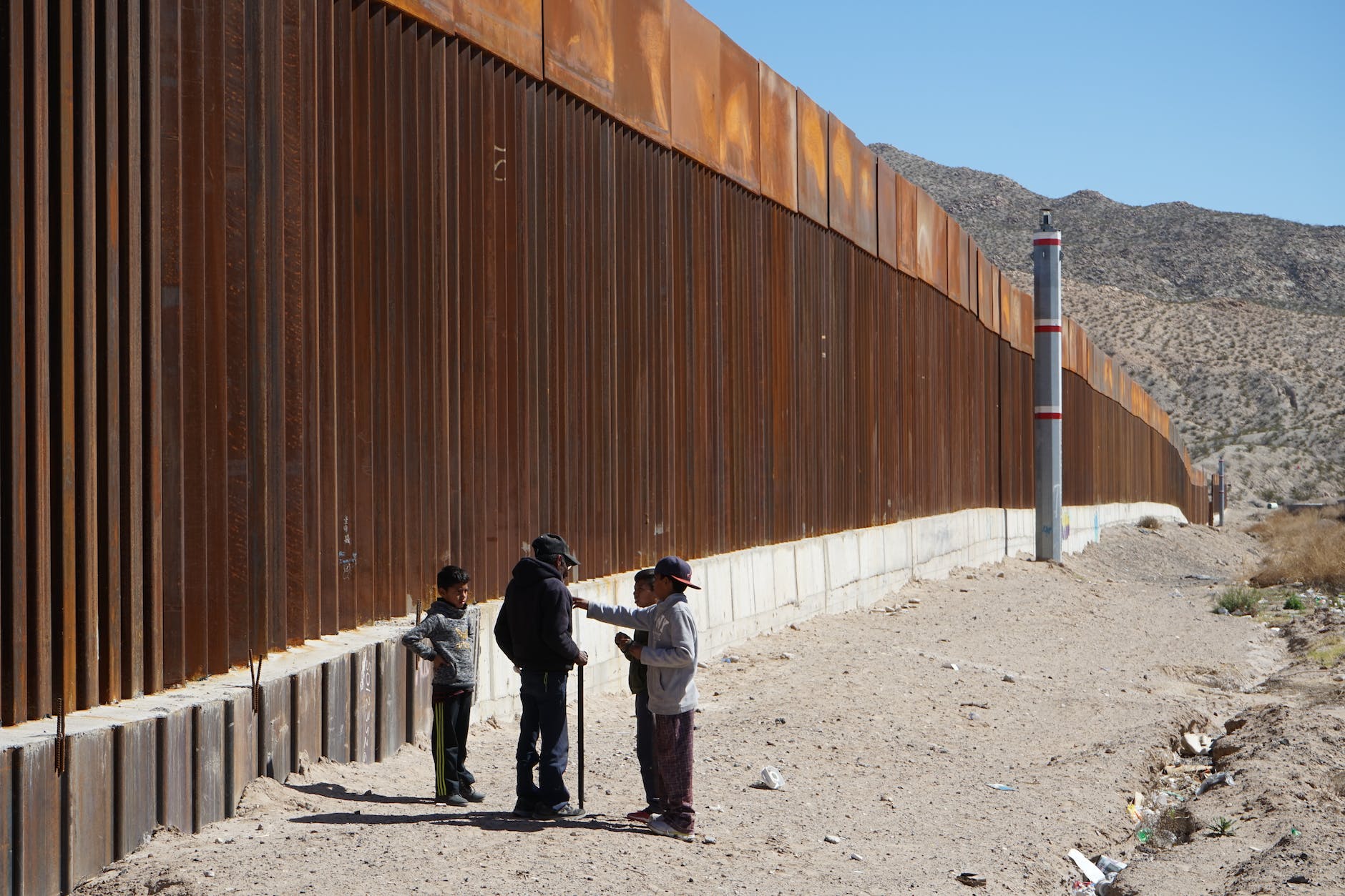
Photo by David Peinado on Pexels.com

I am a Cold War warrior. I was in the U.S. Military during the period NATO stood down Soviet forces at the West German border. Based on intelligence received from friends who spied on Soviet troops, we believed we could whip their collective asses on any given day. That was likely our youth speaking. In 2024, Russian progress in Ukraine brings me chills. Russia could win that conflict, annex Ukraine, and commit genocide on the Ukrainian population. To a Cold War warrior, those are real and concerning possibilities. They should be the same for every American.

I wrote my U.S. Senators, Chuck Grassley and Joni Ernst, about the stalled supplemental aid bill for Ukraine, Israel, Taiwan and other items. Congressional Republicans insisted on tying passage to immigration reform and when they did, the supplemental hit a logjam. After emphasizing to my senators the importance of aid to Ukraine, I wrote they should sever the immigration portion of the bill and pass it separately to free up passage of the military aid bill. I’m not the only one with this opinion.

“It’d be nice to change the status quo on the border, but if there’s not the political support to do that, then I think we should proceed with the rest of the supplemental,” Sen. John Cornyn, R-Texas, told reporters. “I don’t think we have any real choice (but to do so).” A Thursday headline in the Cedar Rapids Gazette read, “Deal on wartime aid and border security stalls in Congress.”

What is going on? Grassley spilled the beans Wednesday on NBC while answering reporter questions about a tax bill.

“Passing a tax bill that makes the president look good — mailing out checks before the election — means he could be re-elected, and then we won’t extend the 2017 tax cuts,” Grassley told a reporter.

The bill does not include checks for Americans; what it includes is a tax credit. Republicans don’t want President Biden to “look good” on any front, including by passing aid for Ukraine and immigration reform, both of which have strong bipartisan support.

It is irritating Grassley and Ernst dodged the supplemental aid issue in their response to my note. I told each of them I needed no response, that I would watch how they voted. They quickly responded with a full page of comments without mentioning Ukraine, Israel or Taiwan.

I have had reasonable interaction with both Senators Grassley and Ernst. I don’t always agree with them, yet they usually respond to my queries and if we disagree, they tell me why. They have been courteous when we interacted personally, even when disagreeing. In a red state that’s the best we can expect.

For her part, Ernst acknowledged the oversized role played by drug cartels on the southern border, and listed some legislation she introduced or sponsored to address the situation. She asserted there is a humanitarian crisis at the border. I don’t disagree, only it’s not the kind she’s talking about.

Chuck Grassley has been my Iowa U.S. Senator all the time since I married in 1982. I left the state for six years, and he was still there when I returned. I lost count of how many times I met with him or his staff.

Grassley’s approach is similar to Ernst. He lists legislation he supports to address issues at the southern border. He briefly mentioned the House Speaker’s concerns about the border bill, and accused the Biden Administration of “abusing the parole system” to enable admission to the country of large groups of people outside “established pathways.” In a self-serving way, he times the start of the border problem as beginning when Biden took office. As I wrote in my note to him, immigration has been an issue in the United States almost since he was first elected to the Senate. We seem no closer to changing it in a way that will make sense to most Americans. We’ll recognize something went right when Dreamers have a path to citizenship.

Author Tom Nichols summarized the political situation in The Atlantic.

At this moment, the United States is on the verge of failing a challenge of will and commitment, much to the delight of the neo-fascist Russian regime that has turned Ukraine’s fields and homes into an immense abattoir. President Joe Biden, most of NATO, and many other nations recognize the crisis, but the world could face a Russian victory—and an eventual escalation of Russian aggression against Europe—solely because of the ongoing drama and inane bickering within the Republican Party.

Ukraine needs American weapons, not more GOP drama by Tom Nichols. The Atlantic, January 31, 2024.

Immigration reform is a distraction from the importance of America’s leadership role in the world and our support for Ukraine. For those of us who wore a uniform and remember the wind-swept hills and plains of the Fulda Gap, it is critical we pass the current supplemental.
Categories
Living in Society

Russo-Ukraine War Continues

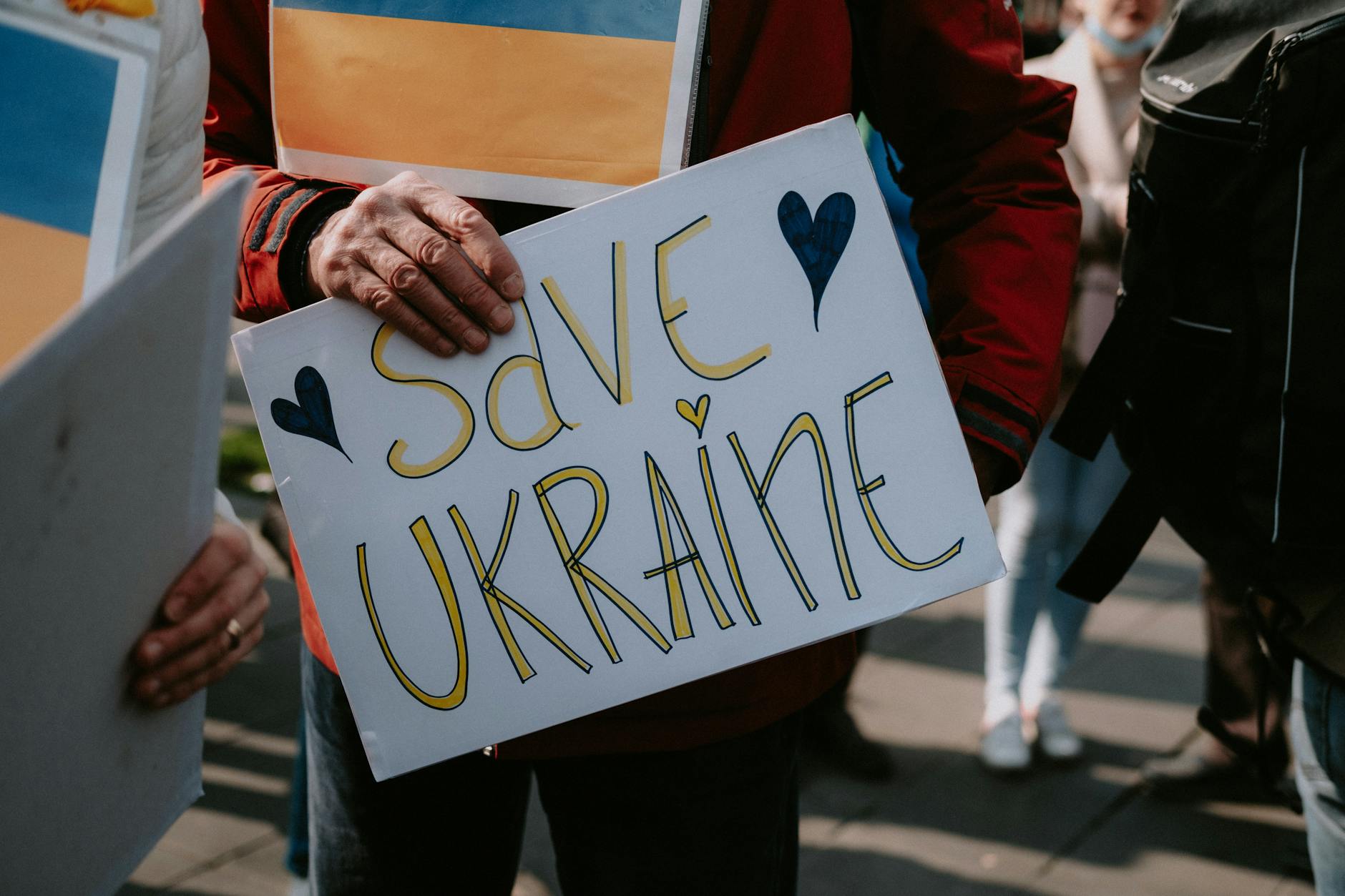
Photo by Mathias Reding on Pexels.com

We are nine, going on ten years into the Russo-Ukraine War and there’s no sign of resolution. Russia determined the Ukrainian people are part of Russia and annexed Crimea on Feb. 20, 2014. Russia now occupies one fifth of the Ukrainian land mass.

Ukrainian President Volodymyr Zelenskyy arrived in Washington, D.C. Monday as part of the Biden administration’s “last minute push to convince lawmakers to pass a supplemental funding bill, as officials warn that the money for Ukraine is running out,” wrote the Associated Press. I ask myself, “What are we doing in Ukraine?”

For a while, the Oct. 7 Hamas attack on Israel pushed Ukraine out of the news. Conflict over the failure of the long-standing idea of a two-state solution to Israeli and Palestinian claims over the Holy Land, that began after the fall of the Ottoman Empire, took the headlines. This is mostly because every person I know has an opinion on the long-standing conflict in the Middle East. It was a more current thing to talk about rather than hundreds of thousands of people dying in the Russo-Ukraine War. Historian Lawrence Wittner wrote about this on the IPPNW Peace and Health Blog.

Grinding on for nearly two years, Russia’s massive military invasion of that country has taken hundreds of thousands of lives, created millions of refugees, wrecked Ukraine’s civilian infrastructure and economy, and consumed enormous financial resources from nations around the world.

And yet, despite the Ukraine War’s vast human and economic costs, there is no sign that it is abating.  Russia and Ukraine are now bogged down in very bloody military stalemate, with about a fifth of Ukraine’s land occupied and annexed by Russia.

Lawrence Wittner, Replacing a disastrous war with a just peace, IPPNW Peace and Health Blog, Dec. 11, 2023.

Yesterday, Senate Majority Leader Chuck Schumer posted the following on Threads:

Schumer doesn’t tell half the story and it is not because of the word limit on Threads. When communicating in or to media, the Majority Leader needs to keep it simple. Surprised he hasn’t said something like “Russia bad, Ukraine good.” Maybe Schumer is right to say it like that. I am of an age I want to know more of the story.

Atlantic Monthly writer Tom Nichols wrote about communications on Monday.

President Joe Biden is trying to run for reelection on a record of policy successes. In modern American politics, this is a nonstarter: Many Americans no longer tie policy successes or failures to individual politicians. Instead, they decide what they like or don’t like and then assign blame or credit based on whom they already love or hate.

Tom Nichols, The Glare of Presidential Power, The Atlantic Daily, Dec. 11, 2023.

“Many American voters now want a superhero, not a president,” Nichols stated. What these voters don’t want is to think about is the devastation in Ukraine attributable in large part by United States support for the war.

In a Dec. 10 substack article titled, “Ukraine’s Percolating Hatred of America,” Matt Bivens, M.D. wrote:

We’re coming up on the two-year mark of this completely avoidable and utterly mismanaged disaster. The beautiful Ukrainian countryside is devastated. Enormous sums of money, and the lives of hundreds of thousands of young soldiers, have been squandered. Millions have fled Ukraine, including many of the young men. The old men — those too tied to their communities to go into hiding from the draft — are who’s left to carry on the fight.

And now, we’ll waste their lives, too.

Matt Bivens, M.D., Ukraine’s Percolating Hatred of America, The 100 Days substack, Dec. 10, 2023.

Bivens addresses the “the burden of guilt that the United States bears for this pointless tragedy.” The story he tells is appalling on multiple levels. I won’t summarize except to say it should be more widely circulated than it is on substack.

My bottom line on Ukraine is we elected people to manage the support we have provided to the country. We should support Ukraine in this fight against Russia. How much support is enough? Today that question refers to financial support Republicans are unwilling to give as the president proposed it. To me, the country elected Joe Biden and when Ukraine’s war with Russia is flagging we have a choice to make. Do we continue as we have been doing and fill the president’s order for more funds? Or do we take stock of where we are and either go all in, or move on to other pressing problems? Those are tough questions for a citizen to answer. For now, I support the president.

Categories
Living in Society

Nobel Peace Laureates Reject Nuclear Weapons

Open Letter From Nobel Peace Prize Laureates and Citizens of the World Against War and Nuclear Weapons:

We reject war and nuclear weapons. We call on all our fellow citizens of the world to join us in protecting our planet, home for all of us, from those who threaten to destroy it.

The invasion of Ukraine has created a humanitarian disaster for its people. The entire world is facing the greatest threat in history: a large-scale nuclear war, capable of destroying our civilization and causing vast ecological damage across the Earth.

We call for an immediate ceasefire and the withdrawal of all Russian military forces from Ukraine, and for all possible efforts at dialogue to prevent this ultimate disaster.

We call on Russia and NATO to explicitly renounce any use of nuclear weapons in this conflict, and we call on all countries to support the Treaty on the Prohibition of Nuclear Weapons to ensure that we never again face a similar moment of nuclear danger.

The time to ban and eliminate nuclear weapons is now. It is the only way to guarantee that the inhabitants of the planet will be safe from this existential threat.

It is either the end of nuclear weapons, or the end of us. 

We reject governance through imposition and threats, and we advocate for dialogue, coexistence and justice.

A world without nuclear weapons is necessary and possible, and together we will build it. It is urgent that we give peace a chance.

Signatories list of Nobel Peace Prize Laureates:

His Holiness The Dalai Lama (1989)
International Physicians for the Prevention of Nuclear War (1985)
International Campaign to Abolish Nuclear Weapons (2017)
Juan Manuel Santos (2016)
Kailash Satyarthi (2014)
Leymah Gbowee (2011)
Tawakkul Karman (2011)
Muhammad Yunus (2006)
David Trimble (1998)
Jody Williams (1997)
Jose Ramos-Horta (1996)
Pugwash Conference on Science and World Affairs (1995)
Óscar Arias Sánchez (1987)
Lech Walesa (1983)
American Friends Service Committee (1947)
International Peace Bureau (1910)

If you would like to join more than 780,000 other citizens of the world in signing this open letter, which will be presented to the leadership of NATO and Russia, click here.

Categories
Writing

Writer’s Week #5

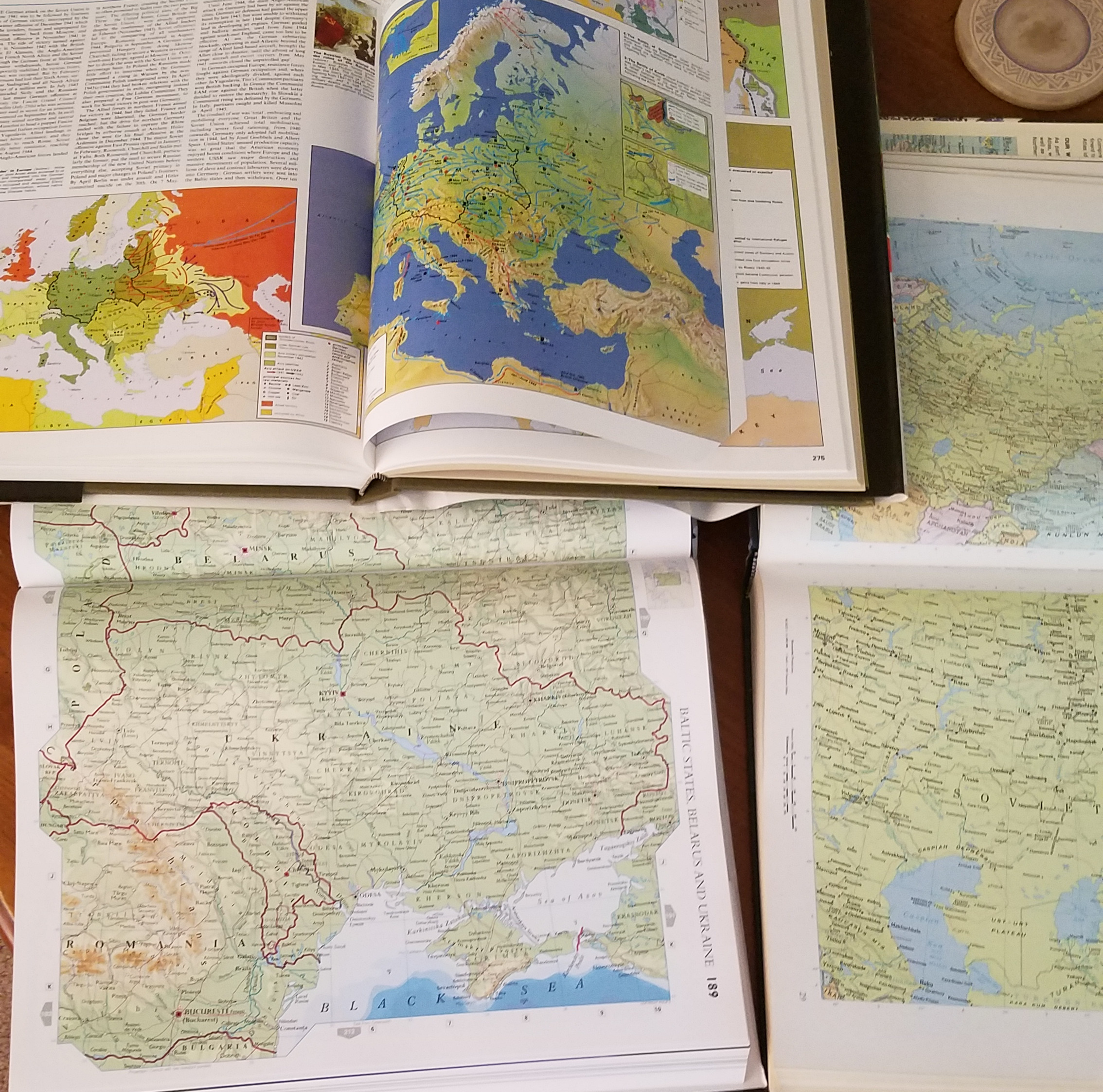
Atlases opened to Ukraine.

Every time I read the name of a new city in Ukraine, I look it up on a map. When considering the vast expanses of farm fields depicted in atlases, I wonder how Ukrainian farmers will get a crop in this spring. I also wonder about the number of war crimes the west will tolerate before doing something more substantial to stop Russian aggression. The invasion began on Feb. 24, although it is being framed as part of a war that began in 2014.

U.S. interest in Ukraine has to do with so many of its citizens being Caucasian. Also, I got to know a group of Ukrainians who were guest workers at the orchard. Many locals have Ukrainian connections. The easy access social media provides to the war (especially via Twitter) makes it real. I was barely aware of other modern genocides, like in Darfur, Rwanda, Myanmar, South Sudan, Central African Republic, Bosnia and Herzegovina, East Timor, and others. With social bias about white folks, the Ukraine conflict is getting plenty of media attention in the U.S. People here are engaged.

Following the Russia-Ukraine war takes more than a little bandwidth.

All the same, I passed 70,000 words in new writing this year. The main change over last year is the process I developed (and have written about) is working. There is much to consider in a single human life, yet time to experience it only once. As I use a chronological framing to work through the story, I’m surprised at how much I remember and how vivid those memories are.

This week I wrote about my time at the University of Iowa. A valuable resource has been the online archives of The Daily Iowan going back to 1868. I also have letters I wrote and letters written to me, my main school papers, as well as some artifacts from the period. All of these resources aid memory in production of writing that is personally meaningful.

I participated in the May 11, 1972 anti-war demonstrations to protest the Nixon administration’s mining of Haiphong Harbor in Vietnam. The tendency is to accept well published stories about what happened, suppressing our personal experience. I believe writing the story I did provides an alternative. Here’s a sample:

Newspapers reported about 1,000 demonstrators by the time they got to Dubuque Street. Some 60 patrolmen with night sticks and helmets stood side-by-side across Dubuque Street at the Park Road intersection near City Park. They deployed smoke into the approaching line of students in front of the Beta Theta Pi fraternity house.

At this point the newspaper narratives diverged. The Davenport Times-Democrat published a headline, “Patrolmen Block Sit-in Attempt.” However, a contingent of protesters returned south on Dubuque to Brown Street and we walked through neighborhoods, then into dense brush to gain access to Interstate-80. At least one person was treated for cuts from barbwire fencing as we found the way to the Interstate through a thickly wooded area. I was among the protesters clearing a path in the brush for others.

We reached Interstate 80, stopped traffic, and set a fire in the eastbound lane. As we did, a bus with Highway patrolmen arrived on the overhead crossing of Prairie Du Chien Road. They climbed down the embankment and formed a line across the eastbound lane. They charged toward us to break up the crowd and extinguish the fire.

From a draft of an autobiography in progress.

If we are not the main character in our own life’s story, then when are we? The new process helps me get a narrative down on paper. Once it is written, editing begins. By the time it is finished, the writing should be quite readable, I hope.

I’m having second thoughts about putting everything in this autobiography. There is too much previous writing I want to include. I see a second volume that is a collection of previous writing, with a section for each type of writing, including letters, poetry, newspaper articles, blog posts, journals and stories. Gleaning the best of this means reading it all. I’d better stick to my knitting and finish the chronological narrative first.

There is also a question of what to do with the images I have on hand. Part of me wants to close the interpretation of images by describing what is in them rather than publishing the image itself. That seems a useful technique. There are so many images there is likely another book with images with extended captions in them. I posted such a work on my Flickr account and it became one of the most widely read posts I made. I took it down when I exited the Yahoo platforms. There is a third book in images and the decision is whether to create it as a bound book, or to make a series of photo albums. It’s an open question.

It has been another good week of writing.

Categories
Living in Society

Price Gouging into 2022

Atlases

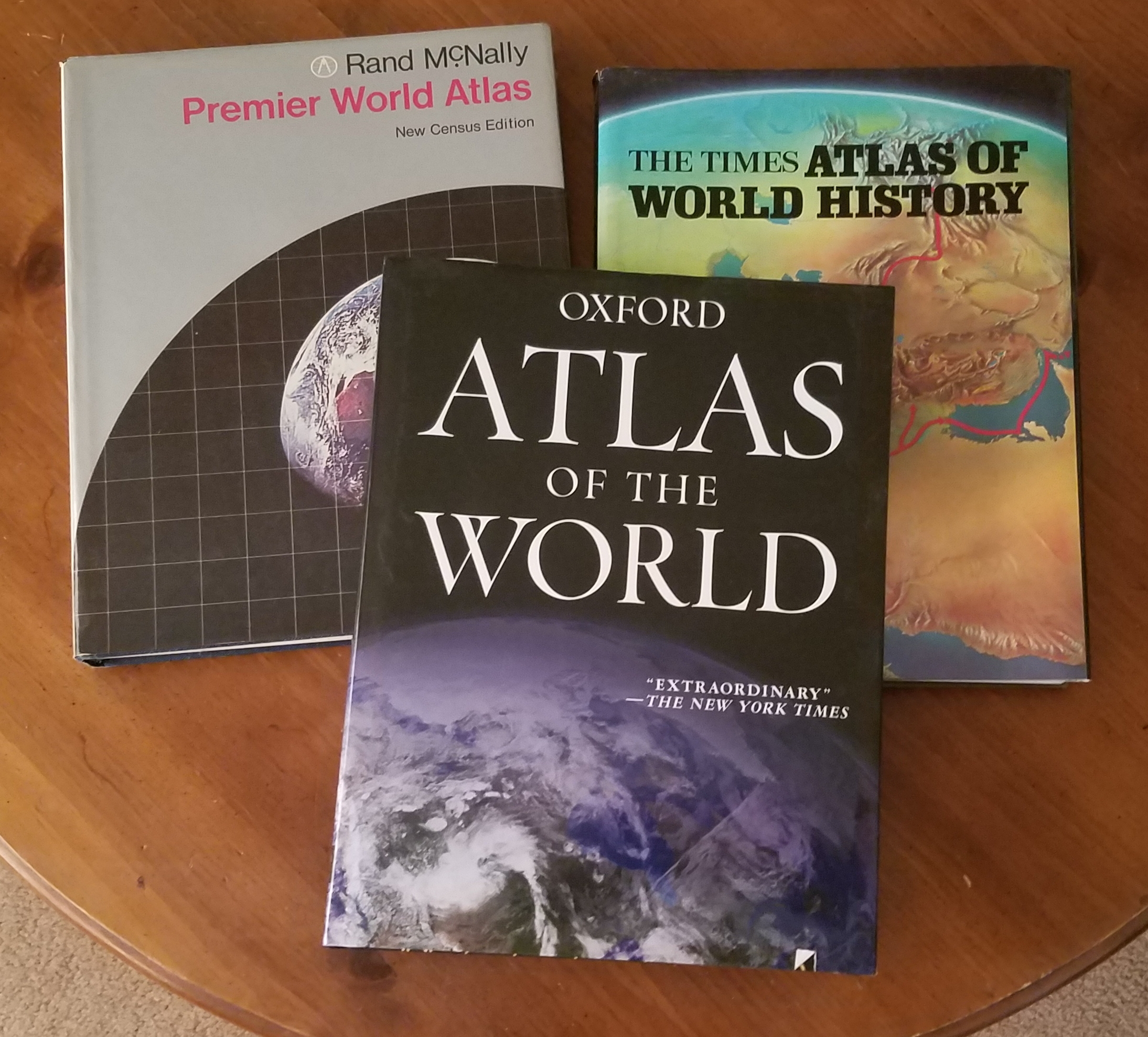
There is too much information about the Russia invasion of Ukraine to process. I had to get out the maps to keep things straight. The Rand McNally is a bit old as it shows Ukraine as part of the U.S.S.R. The atlases are opened to Ukraine on the living room coffee table.

I filled the auto, mowers and gas cans with gasoline yesterday. Price was less than $4 per gallon with a 20 gallon limit at the pump. Based on being retired this should last 4-6 weeks. When I lived in Germany in 1977-1979 I paid roughly $5 per gallon in 1970s dollars.

Food costs are not an issue here because so much of what we eat comes from our garden.

Even though it has been a mild winter, our natural gas bill more than doubled. Big companies (Mediacom, Verizon, Waste Management, Insurance) all took the maximum rate increase allowed.

Because of increased regulations, our sewer plant is passing along an unexpected $100 charge to cover a loan for improvements in our quarterly billing.

Combine all of this and money will be tight in 2022. I wouldn’t call it inflation, though. This is definitely not a “general price increase.” Each element has specific causes. The big companies are gouging us, even though their websites say they aren’t.

We spent an hour talking about finances yesterday. We’ll get by, although we come just short of paying off our credit card bill each month. There have been some recurring winter expenses like servicing the lawn tractor, printing my blog in book format, a Washington Post subscription, and garden seed purchases. The credit card balance has been manageable. The choices for a family are to stay engaged in things — the Russia-Ukraine war, and household finances — or let things (and our family) slide into oblivion.

I’m not prepared to do the latter.

Categories
Living in Society

Late Winter

Garden in Winter

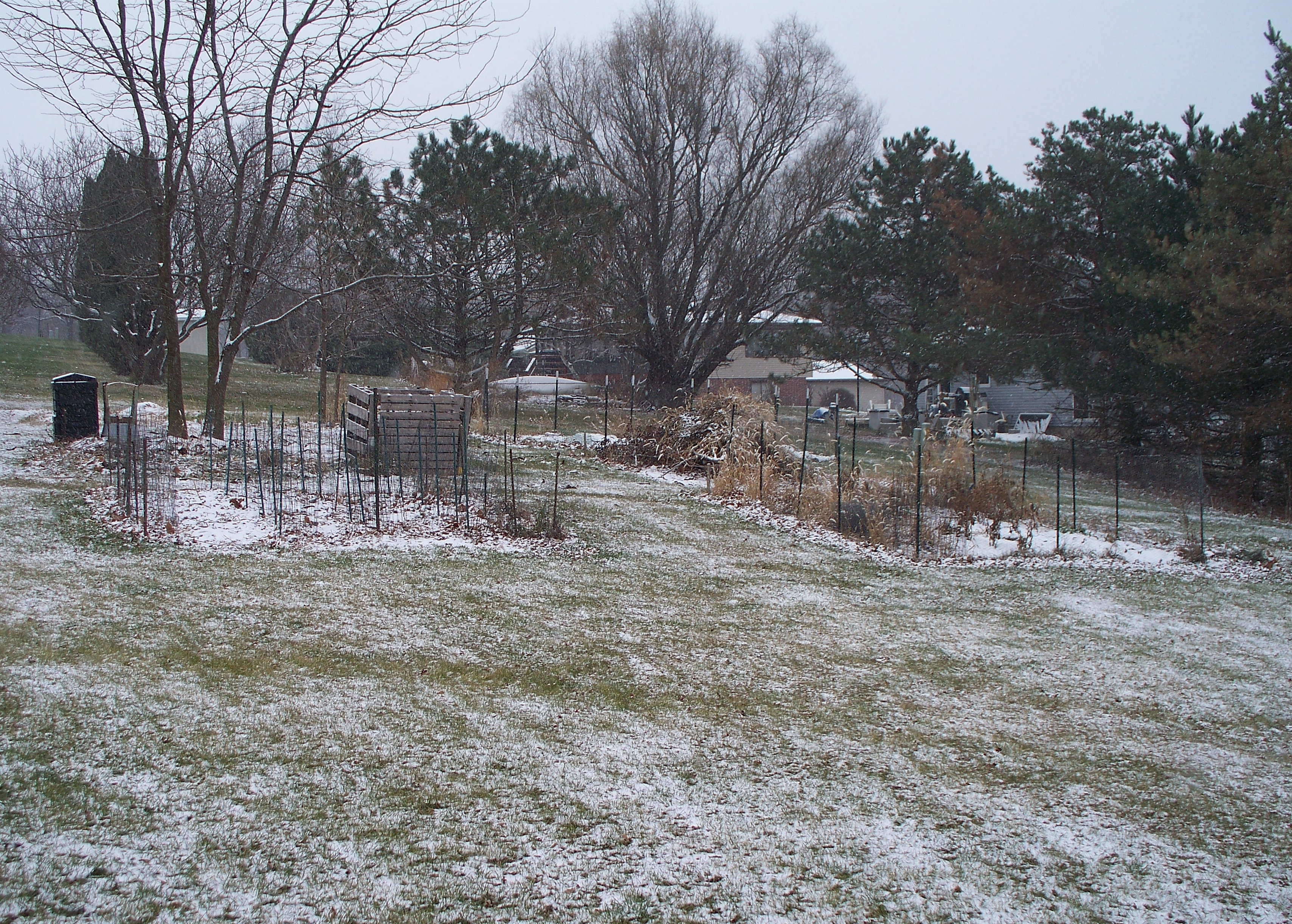
Snow fell and a day later it began melting. The ground is partly snow-covered in today’s predawn darkness. With a forecast high of 30 degrees, there will be more melting in sunny areas. Eleven days remain in winter.

With President Biden’s March 8 announcement, “We’re banning all imports of Russian oil and gas and energy,” U.S. gasoline prices increased immediately. I’m planning to round up our gas cans, take them to town, and fill them. I expect prices to continue to climb because of Russia’s continuing aggression in Ukraine. The country should get completely off fossil fuels, although there has been a lack of political will to do so.

Lettuce and herbs are beginning to germinate on the heating pad. As soon as the snow melts I can build the burn pile and clear the first planting plot. As the growing season begins, I’m ready.

Nonetheless, a few more days of winter remain.

Categories
Living in Society

Joint Statement Condemning Nuclear Threats from Russia

B-61 Nuclear Bombs

FOR IMMEDIATE RELEASE: 
March 2, 2022

Joint Statement from the Nuclear Weapons and Arms Control Working Group Condemning Russian Nuclear Threats

WASHINGTON, DC— Senators Edward J. Markey (D-Mass.), Jeff Merkley (D-Ore.) and Representatives Don Beyer (VA-08) and John Garamendi (CA-03), co-chairs of the Nuclear Weapons and Arms Control Working Group, today issued the following statement condemning Russian nuclear threats:

“On Sunday, Russian President Vladimir Putin ordered his country’s nuclear deterrent forces to be put into an alert status, further intensifying his unjustified and unprovoked invasion of Ukraine by threatening a nuclear attack.  

“We, the Co-Chairs of the Nuclear Weapons and Arms Control Working Group, condemn President Putin’s threats to escalate a conflict of his own creation into nuclear war. His invasion of Ukraine has already resulted in the tragic loss of life, and an escalation to nuclear war would bring untold additional suffering. 

“President Putin should recall what he said in January, along with leaders from the United States, France, China, and the United Kingdom, that ‘a nuclear war cannot be won and must never be fought.’

“We applaud the Biden administration for trying to deescalate against such provocative actions and for making clear that America’s own alert status has not changed. It is in the fog of war that there is the greatest risk that a conventional conflict escalates into a nuclear one. That is why it is imperative that the United States, Russia, and all nuclear powers back a No First Use nuclear policy and affirm that the sole purpose of nuclear weapons is to deter the use of nuclear weapons. The crisis in Ukraine is evidence that there are no plausible military options for direct confrontation between the United States and a nuclear armed adversary – and the folly of investing $1 trillion in unusable new U.S. nuclear capabilities. 

“At the same time, as the U.S. works in lockstep with our European allies to rebuff Russian aggression, we must coordinate closely on our nuclear policy as well. The U.S. Department of Defense should also continue its efforts to open military communication channels with Russia, as they have done in other theatres where the Russians are present, so that “red-lines” are not inadvertently crossed. 

“President Putin has already made his country a global pariah by launching an unjustified and unprovoked war against Ukraine. His threat to escalate his meritless invasion of Ukraine into nuclear war would cross a line from which our world cannot return. The United States and its allies must do everything in their power to disincentivize this dangerous and costly mistake.

“We continue to stand firmly with the people of Ukraine in this crisis as they fight to preserve their sovereignty and democracy,” the lawmakers said. 

Categories
Living in Society

Images from the Russian Invasion of Ukraine

Photo Credit – Goodreads

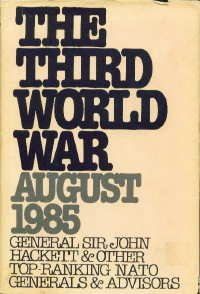
In his 1979 book The Third World War: August 1985, General Sir John Hackett identified that the public generally disregards the possibility of war. He wrote about the role media embedded in combat units would play in his hypothetical war, bringing home different aspects of the conflict from what had been experienced in previous wars. What he didn’t predict was the role of mobile devices sending video and photographs from war zones like those we see on social media posts from Ukraine.

At the time, when I was returning to Iowa after leaving military service in West Germany, Hackett’s book was a page from the lives of everyone like me who participated in making battle plans to defend Western Europe as Soviet army units attempted to penetrate the Fulda Gap. Hackett was right about new methods of reporting from war zones. The experience is more immediate after the rise of Twitter and social media. It changes everything.

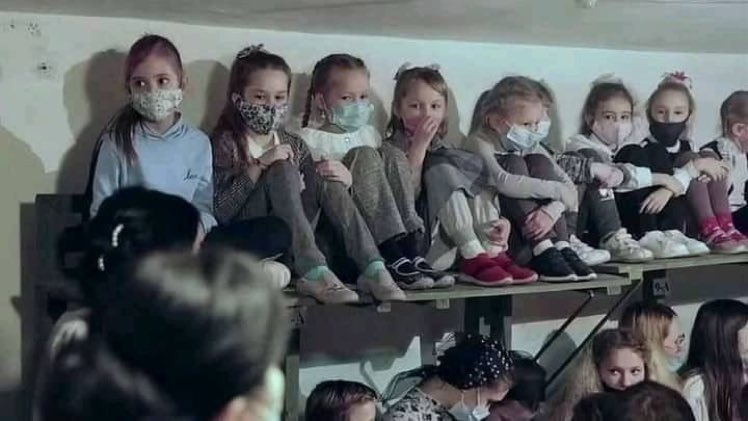
It is difficult to winnow kernels of fact from streams of social media. While something real goes into images posted there, their meaning and veracity, is an open question. It is not helpful that certain photos, like those of children in a bomb shelter, get the most views. I mean photos like this.

Image from Twitter feed of @anniegowen.

We should take video and photographs coming out of Ukraine with a grain of salt. We should resist confirmation bias and let the events tell their own story. That may not be possible, yet it is important to how we determine what political action our country should be taking.

For example, is this photograph posted on Twitter real or fake? I separated it from the accompanying text which appears below.

Image from Twitter feed of @olex_scherba
Text from Twitter feed of @olex_scherba

The post appears to be real. While the reliability of this reporter is known, there has been an attempt to create a fake profile of him as part of a larger disinformation campaign by the aggressors.

Most reasonable people know social media posts are hardly unbiased information. We should remind ourselves as they become a major source of information about the Russia-Ukraine conflict.

Categories
Living in Society

Sleepless Night

Is Spring Coming?

Around midnight I woke with my mind racing. There was a high-pressure fire hose full of news on Monday. It is continuing into Tuesday.

With Ukraine being eight time zones ahead, there were a lot of reports coming in via Twitter when I looked at the mobile device in bed. Much of the information was negative. The fact there is a war in Ukraine at all is negative. If Russian Federation President Vladimir Putin intended to make quick work of conquering Ukraine, he failed.

Putin put Russian nuclear forces on high alert and no one is certain what that will mean, other than creation of an opportunity for unintentional detonation of nuclear warheads. Monday President Biden said people should not fear a nuclear war. He obviously has information I don’t, yet knowing this is happening raised my personal tension a notch.

The Intergovernmental Panel for Climate Change released their latest report yesterday. The last sentence of the 3,675-page report says it all. “Any further delay in concerted anticipatory global action on adaptation and mitigation will miss a brief and rapidly closing window of opportunity to secure a livable and sustainable future for all.”

The U.S. Supreme Court heard oral arguments in West Virginia v. EPA on Monday. Justice questions centered around “major questions” which should be decided by the Congress, not by a regulatory agency. The fear is SCOTUS will severely limit the kind and amount of regulation the Environmental Protection Agency can introduce, sending any action on controlling greenhouse gas emissions back to a stalemated Congress. With a 6-3 conservative tilt, Republicans got what they wanted when President Trump appointed three justices during his term in office.

Republicans in the Iowa Legislature are making laws without regard for dissenting voices. They have a clear majority and are passing whatever laws pop into their heads. The degrading of intellectual standards among lawmakers is obvious and frustrating.

I continue to wait for dust to settle and determine personal next steps. Spring will soon be here, I’m working on income taxes, and once garden planting begins there will be a rush toward Memorial Day. Things seem a bit out of control.

Later this morning I will take a nap. Otherwise, I’m unlikely to make it until supper time. With everything going on, it is hard to sleep and unlikely there is any returning to normal. It is hard to know what the new normal will be.

Categories
Living in Society

Planting for Change

Ajuga rescued from the lawn.

Ajuga is a hearty plant. In the 1990s, we brought some from my father in law’s home to use as ground cover. It spread until plants were visible all along the drainage ditch on the north property line, stretching some 80 feet from the house into the ditch. We hope to use it in the planting area in front of the house this spring.

The last couple of years, before the coronavirus pandemic, there was a small crew of guest workers from Ukraine at the orchard. They were great guys, hard workers, and all with families left behind as they worked in Iowa. They lived in an apartment over the retail space and could be seen hanging around outside their apartment as I left work each day. I hope they and their families are alright during the war.

Our household has been consumed by news of the Russian invasion of Ukraine. We feel powerless. After receiving more than two dozen messages from politicians asking for a donation yesterday, I got an idea.

World Central Kitchen came to Iowa to support us during the aftermath of the 2020 derecho. Chef José Andrés set up World Central Kitchen on the Ukraine-Poland border to feed refugees. I went to a computer and found the non-profit and made a small donation.

It’s a drop in the bucket of needs for humanitarian assistance. It was something useful. We need more of that as the tension escalates.