Categories
Living in Society Writing

Autumn Turning Point

Moonlight on the state park trail.

The crops were mostly in along the interstate highway during a Saturday trip to the state capitol. It seems a shame to grow corn and soybeans on so many acres, yet that’s what Iowa farmers do. A few were tiling their fields, another unneeded intervention designed to marginally increase land outputs. Next year, they will do it all again.

At home, the major land preparations are finished on my 0.62 acre. I mulched the leaves from deciduous trees and let the mealy textured product fall where it might to put minerals back in the soil. I suppose it could be bagged and put into compost, yet decided against it. Whatever else I get done in tearing down the garden this year is not urgent.

When I returned from Des Moines, the two main seed catalogues had arrived by U.S. Postal Service. Between now and January I will plan the 2026 garden and place big orders for seeds. The basics are known — tomatoes, hot peppers, cruciferous vegetables, squash, celery, fennel, and cucumbers — of course, garlic has been planted. It’s the variations in genetics and extras that are most interesting this season. I’m of a mood to try new things.

Our family does not celebrate Thanksgiving. The way our child put it, there is too much bad information around what it represents. They have a friends gathering around that time, and the two of us are deciding how we will spend the day which was drilled into us as custom since youngest memory. If we are home, there will be a special meal of wild rice, a butternut squash, Russet potatoes, baked beans, and a freezer full of vegetables. Plans are not settled and if we are not home, everything will remain good until we are.

There is a caesura in home life activities as work shifts indoors for winter.

In addition to taking care of health and surviving, there are three main activities planned for colder months. The daily work block for writing is my first priority. I continue to want to finish the second book before spring. Next is what I will call the “Big Sort.” That means going through all the boxed belongings to gain visibility of what is available for the autobiography as well as for living our life in Big Grove. Some downsizing to clear clutter seems appropriate. Maybe next spring there will be a yard sale. Finally, on warmer days which seem more frequent during this time of global warming, I want to go through the garage and make a better organized work space. I have a start at it, but come spring I want a place ready to make stuff. If I can complete these projects, that would be enough for one winter.

2025 has been a positive year despite the politics. As we turn toward winter, a lot remains to make this a better life. I am working toward that end.

Categories
Living in Society

Korean Grocery

Bulletin board at H Mart in Niles, Ill. On April 2, 2025.

Someone shared a photo of the interior of a Korean grocery store in Niles, Illinois in a social media post. I had to visit the next time I was in the area, so this week, I did. The experience was a bit surreal.

For the first time in a long time, I entered a grocery store and left without buying anything. It was the H Mart in Niles, an Asian Grocer larger than the American grocer I frequent near home. They had aisles and aisles of foodstuffs with Korean lettering on the packages. Two of us walked from end to end to see what was on offer. It was a lot. It would be easy to drop $500 in one visit and not scratch the surface of what was available.

There was a food court near the entryway. It was well past the lunch hour when we arrived, and two hours until supper time. I would have thought someone would be eating, yet few were. Every person behind the counters was not doing anything, just standing or sitting, I suppose waiting for a customer. The store was almost empty of customers on a Wednesday afternoon.

At the other end of the store near the exit was a row of other kinds of merchants, such as the nail salon that stood out. In between were well-stocked, well-faced shelves. There were a couple of stockers, who each had a single box of a product to refill a shelf. This is unlike our grocer in that here, the stock person fills a large flatbed cart with dozens of items which are wheeled to the floor and parked while the entire aisle is re-stocked. Maybe it’s a cultural difference, although I’m struggling to figure out why.

There was a lot of seafood, reminding me that marine life everywhere on Earth is under pressure from over fishing. There were many kinds of pickled products, including kimchi and daikon radishes. I wouldn’t know how to choose one type of pickled product for a meal among so many options. There were small shelves of U.S. company products. Notable was a wide set of shelves of Spam products, actually multiple sets in different locations in the store.

South Koreans eat lots of Spam, according to National Public Radio. It is the second-largest consumer of Spam in the world, eating roughly half as much as the United States, which has six times as many residents. U.S. soldiers introduced Spam to Korea during the Korean War. Dishes such as Kimchi Spam Musubi, Bibimbap bowl with Spam, and others are considered to be delicacies. When my uncle was stationed in Persia during World War II he ate so much Spam in his rations he never ate it again after military service. To each their own, I suppose.

The reality of H Mart did not measure up to the internet posting. In person, it seemed a vast, well-stocked warehouse for people with a specific culinary interest. How does one decide which pancake mix to choose when there are so many? Maybe there are too many varieties. Inside H Mart it is a world of its own.

They even had boxes of Aunt Jemima pancake mix, with the iconic figure on the box, from before Pepsico took a step into the future of racial equality and removed her. Quaker Oats, a subsidiary of Pepsico, may have felt it was doing the right thing by removing the aunt’s image. In the bright neon lights of the store there was consumer comfort in seeing her image persist. Maybe they got the message about DEI and put Aunt Jemima back in her place.

I found the visit fun, the most fun I’ve had in a while. I don’t get out much. Since I didn’t buy anything, it was cheap fun. I don’t know if the internet ruined me for experiences like this. I would never have seen the inside of H Mart without that social media post. It is one more bit of reality incorporated into my online world view. I just need to develop a taste for kimchi and I’ll be set.

Categories
Living in Society

Colfax Casey’s

Home brewing a cup of coffee while traveling.

Coffee is $2.02 per 16 ounce cup at the Casey’s in Colfax. I stopped there enroute home after an overnight visit to my spouse and her sister. I made many trips to Des Moines this year, and almost always stop in Colfax to see what’s going on at the convenience store. That usually means seeing what new employees greet me, as employee turnover appears to be constant. This Casey’s is an easy off and on the interstate and I usually purchase a lottery ticket, gasoline, and a beverage or snack. The sameness of the offering is comforting.

I started the day with a Keurig cup of coffee at my sister-in-law’s home. I forgot my bottle of instant espresso, which I prefer when I can’t make my own coffee in my own machine. I am an early riser and foraging in the kitchen is better than leaving the house in search of a cup. The Keurig cup served during the hours before the others awoke and got out of bed.

I have been spending so many nights in Des Moines, I bought a 28-inch wide camp cot with 600 pound capacity. I brought pillows, sheets, and a blanket from home, and borrowed a feather blanket from my sister-in-law for added cushioning. It is not the best, yet it is sufficient. Once the transition in Des Moines is finished, we’ll have the cot for overnight guests at home.

My travel from home to Des Moines is in four segments. Leaving home, I cross Lake Macbride and the Coralville Reservoir to access Penn Street which leads to Interstate 380. I take 380 South to the large intersection with Interstate 80, then exit West on 80. There is a long, mostly straight stretch of 80 that leads to the outskirts of Des Moines where Colfax is found. From Colfax, the congestion begins and the highway expands the number of lanes. I follow 80 to Interstate 235 to the exit for the state capitol, then it’s a multi-mile journey to my destination. I have the route memorized. That long stretch of Interstate 80 drives quickly.

If I have no extra chores while in Des Moines, my tank holds enough fuel to make the round trip without stopping. Usually there is something extra, and then Colfax is my go-to fuel stop. Coming from Des Moines, arriving in Colfax is a release of the tensions of congested traffic. On this week’s trip, truck traffic was heavy all the way, which again built tension after resting in Colfax. I made it home safely.

We need places like Colfax. Without these trips, I would not have considered the place important. Just another stop on the interstate highway. Yet our mind needs patterns and in cases like this we create our own. Gasoline, coffee and lottery tickets are available all along the interstate highways. That I pick Colfax for my stops is a bit of creativity I own and enjoy. I look forward to stopping at the Colfax Casey’s.

Categories
Living in Society

Day Trip to Chicago

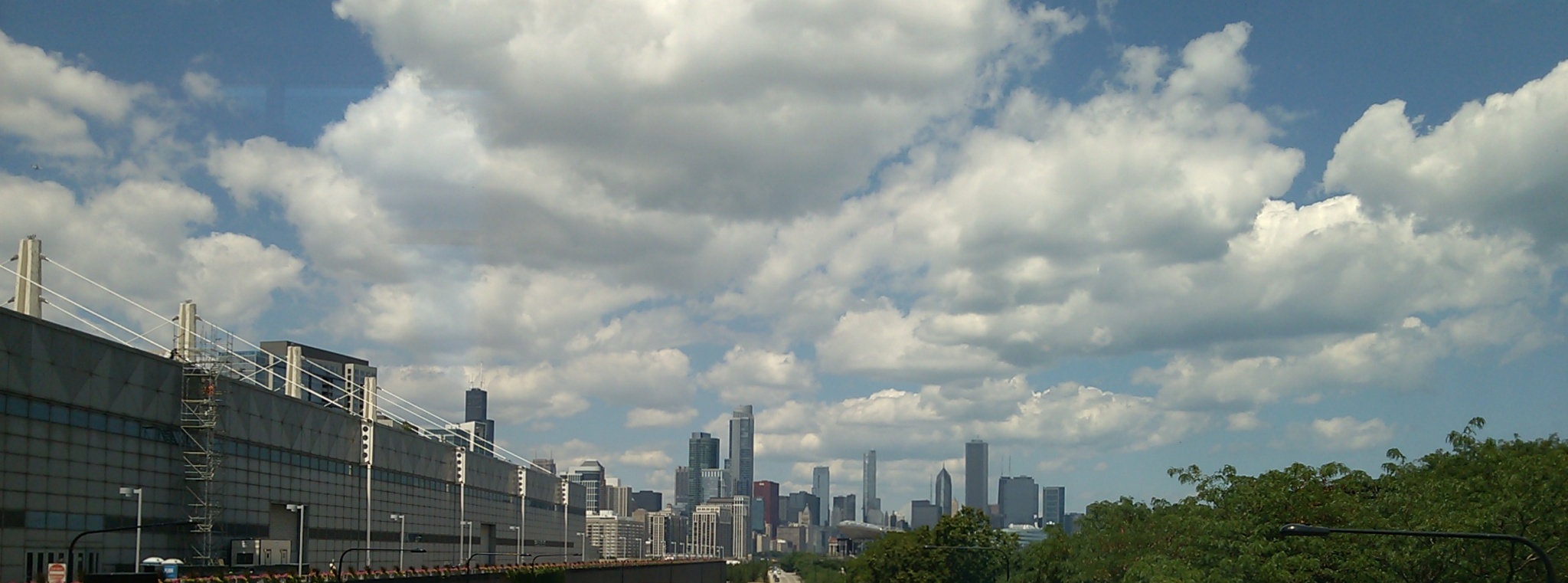
Chicago Skyline from McCormick Place. Photo by the author.

Signs along Interstate 88 in Illinois mark the Ronald Reagan Memorial Highway. Officially designated as the Ronald Reagan Memorial Tollway, whatever it is called, it is one of the better-maintained, low traffic roads in the Midwest. I made a day-trip to Chicago using I-88 on Tuesday. Partly because of that highway, a day trip to Chicago by automobile is possible.

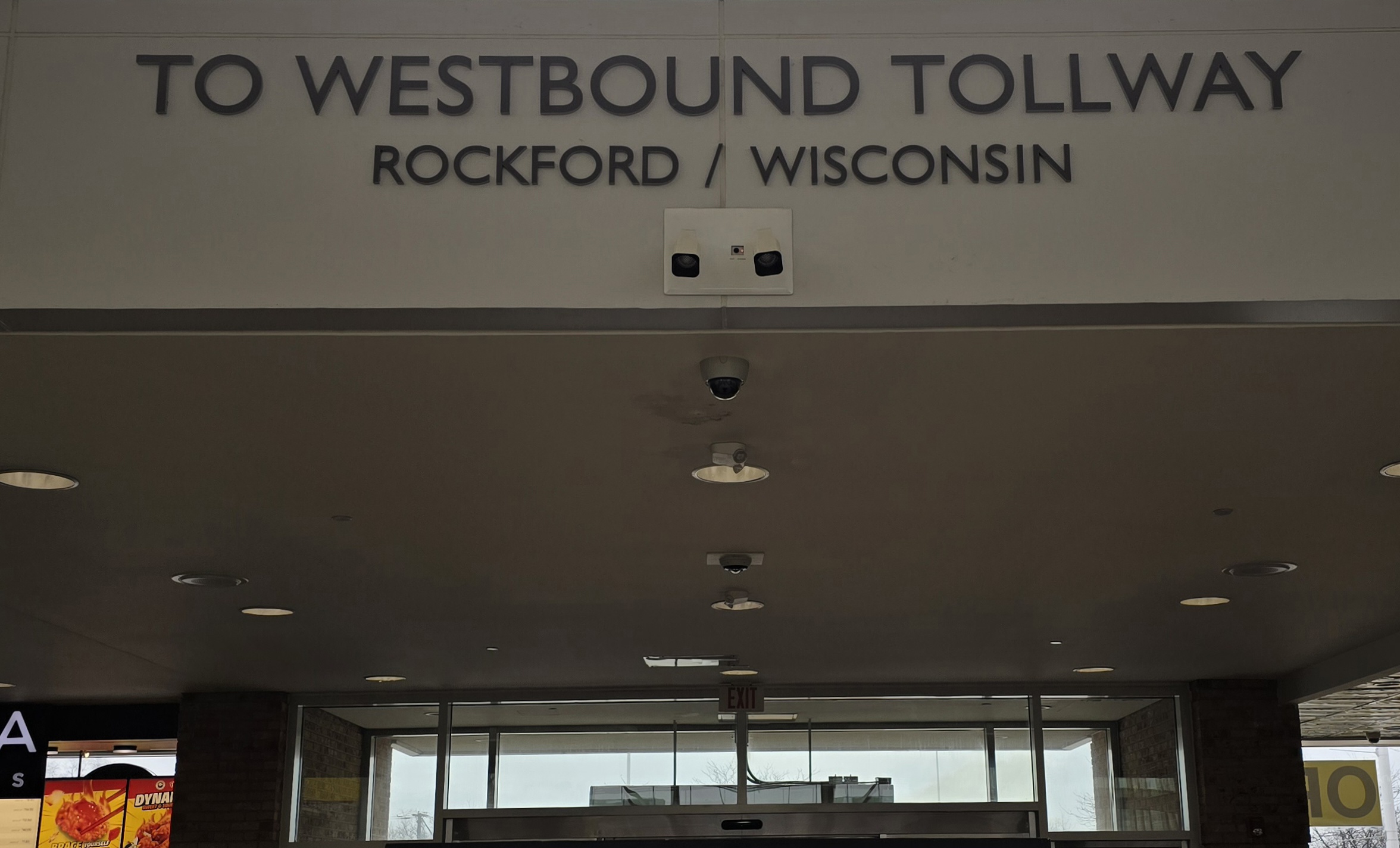
I drove all the way from Big Grove to the DeKalb Oasis without stopping. The DeKalb oasis was constructed at milepost 93 in 1975, prior to the route’s designation as I-88. Our family has been stopping there since we lived in Lake County, Indiana in the late 1980s and early ’90s. Besides clean rest rooms, gasoline sales, and multiple fast food vendors, what I appreciate is the long circuit a walker can make around the indoors perimeter of the building. It is air conditioned and great for stretching after a long time sitting in an automobile. I also use the stop to consult maps and plan my final drive into Chicago, a necessary step for good navigation into the city.

The tolls in the highway’s name are now paid without stopping. A driver sets up an account on line, cameras take a photo of the license plate, and the charges are automatically billed to credit card. It is a pretty slick deal. I wonder how the labor union felt about losing toll-booth attendants with this convenient automation.

Apparently, once a person is a Chicago commuter, they are always a Chicago commuter. Listening to the rapid-fire WBBM radio traffic report “on the eights,” I picked up an accident near the Park Ridge exit close to Touhy Avenue, right where I was going. I made my exit from I-294 on Balmoral Drive and finished the drive on back roads. Why yes, I feel pretty good about it and was on time to my destination.Years of commuting into Chicago sticks with a person.

Farmers were harvesting corn and beans on Tuesday. A lot of soybeans were already in the bin, based on fields I passed. Combines in the field were harvesting beans 4:1 over corn. With temperatures in the upper 80s and no rain, it was a good day for it. The erratic levels of the Mississippi River are causing headaches for soybean farmers. This is go time for soybean barge traffic and low water levels slow traffic. A majority of exported soybeans normally move on the river in October and November.

I couldn’t live in the Chicago area again yet a day trip was pretty satisfying. I don’t know how many more such trips I will make. If they are like yesterday, I won’t mind making them.

Categories
Living in Society

Holiday Travel 2022

Winter Travel

Word is in from the news media-meteorological information trust that a significant Midwestern winter storm is brewing for the days leading into Christmas. Our family is splitting up for the holidays and have travel plans. Because we are retired and flexible, we will comply with the media overlords and travel Wednesday. If I were still working outside home, I would travel when schedules permit. Military service instructed me life goes on regardless of weather conditions.

It snowed overnight yet only a dusting remains. A half hour with a broom will clear what the sky dropped. I’ll wait until sunrise to get that chore done. Otherwise, there is plenty of indoors work to accomplish today.

The last time I was alone on Christmas was after my arrival in Mainz, Germany. While I was being processed into our battalion they were on field maneuvers until the last days before the holiday. When they returned, everyone hurried to be with family and I was left alone. By then, I was 18 months into being a regular journal writer/diarist. I used the time alone for reflection:

Personal Journal
25 December 1975
Mainz, West Germany
Christmas

I have just spent the last few minutes waiting for water to come to a boil on the stove for tea. While waiting, I skipped through this journal, stopping every so often and reading random pages. It seems that what I have written at other times is sufficiently removed from me to permit my pursuit of authorship of literature. This is good.
The things I have read also pain me at times. The thought of a past once present now changed into memories.
As I sit today, Christmas, before my desk, I will not forget, I cannot forget myself when I am writing -- it soothes me by its connection with the past, direct, like looking through the space that I have traveled from the eternal point of view. Sehr gut.
I sit down, spreading ink on paper and what yields it? Ink on my small and ring fingers and a touch with the past.

I’m looking forward to Wednesday’s trip and getting off property for a couple of hours. In deference to the weather, I’ll stop to provision on the trip home. I won’t like being separated from everyone, but at least we have free video conferencing… and, of course, social media. When there is a small family, that’s how it goes some years. I’m okay with it once in a while. Wouldn’t want to make it a holiday tradition, though.

Categories
Living in Society Writing

Postcards from Iowa #7

The Pine Barn Inn, Danville, Pennsylvania

Reverse side: The Pine Barn Inn — Danville, PA 17821 As Featured in ‘Back Roads and Country Inns’ Photo by C.G. Wagner, Jr.

I stayed at The Pine Barn Inn while director of maintenance for a large transportation and logistics company. For many years we bought Fruehauf Trailers built in Fort Madison, Iowa. I was in Danville to evaluate a Strick Corporation trailer manufacturing plant as prelude to picking a new vendor. By 1993 the writing was on the wall that Fruehauf was going out of business.

A leveraged buyout in 1986 by the company’s management left Fruehauf burdened with debt, and in 1989 the company was broken up and sold, though one segment, the truck trailer unit, retained the name Fruehauf Trailer Corporation. That corporation declared bankruptcy in 1996 and was sold to Wabash National the next year.

Fruehauf Trailer Corporation Wikipedia.

While many in the truckload segment of the transportation business were buying Wabash National plate trailers, the owner of our privately held company was apparently not a fan. We chose Strick for a non-Freuhauf plate trailer build over others I evaluated.

I traveled a lot during my transportation and logistics career. It came to a point where I would wake on an airplane and not know where I was or where I was going. The job had me traveling to both coasts and from Florida to the Upper Peninsula of Michigan. I had a heavy carbon footprint in those days.

When I supervised a driver recruiting operation I had offices in Iowa, Indiana, Kentucky, Georgia, West Virginia, Pennsylvania and Missouri. We even did driver recruiting in Astoria, New York near LaGuardia Airport. I met people from everywhere and spent a lot of time in transit.

I don’t remember much about The Pine Barn Inn, except it was clean and met my personal needs. That’s what I wanted during business trips. Today I hope most of my traveling is finished. At least I still have this postcard.

Categories
Living in Society

Blow Out on the Tollway

Illinois Tollway H.E.L.P. trucks.

20 miles east of DeKalb the right rear tire blew out and ruined it. There was a two-inch gash, most likely from hitting something laying on the Illinois Tollway. After the noise, we got off to the shoulder quickly and safely.

When I got out of the car an Illinois Tollway H.E.L.P. truck was already parked behind me with his flashers going. The driver waved me away when I approached the truck, pointing to my car. I got to work cleaning stuff out of the back so I could access the spare tire and tools. The driver said he had a jack and offered it. It was the kind one finds in an auto repair shop and just what was needed. Luckily the spare had enough air pressure to make it to the DeKalb oasis where I fully inflated it.

We made it home safely and Thursday I began calling around for a tire. Ours is a common size and I found one easily. There is a catch. The 2002 Subaru is an all-wheel drive vehicle and to a tire person that means just one shouldn’t be replaced, but all four.

I asked a large tire shop salesperson why all four needed replacement and he said only, “because it is all-wheel drive.” An unsatisfying answer to the former maintenance director of a fleet of thousands of heavy-duty vehicles. He quoted me on a set of Hankook tires, about $600. I told him I had to consider it more as I hadn’t planned on replacing all four. I didn’t like his response to my question.

The next call was to my local mechanic. He took the time to explain why I needed four tires instead of one, having to do with the diameter of all the tires matching when the all-wheel drive function is engaged. He doesn’t keep tires in inventory any longer yet he quoted me two options, including the same Hankook tires the large dealer offered at the same price. “We sell a lot of those,” he said. I scheduled the next available appointment.

It’s good to know as I approach age 70 I can still change a tire while parked on an Interstate Highway. The last time that happened, I was on my way home from work in the Chicago Loop. The Dan Ryan expressway during rush hour can be a scary place to change a tire. They didn’t call them H.E.L.P. trucks back then, but an early equivalent pulled up to alert drivers I was there. I don’t know how the tollway figured the budget for H.E.L.P. trucks yet I’m glad they are there.

Many thanks to the Illinois Tollway H.E.L.P. drivers.

Categories
Writing

Travel Day

Side dish of sliced tomatoes at our picnic lunch on Aug. 13, 2021.

Friday was a travel day during which we visited family in Chicago. It was the first family gathering at their place in a long time. We’d been preparing for the trip for over a month. To maximize visiting time, we packed a picnic lunch and ate at the apartment.

It was a good day.

Children return to school in two weeks, Iowa hospital beds are close to full with COVID-19 patients, and we haven’t had a view of the sun unobstructed by haze from the Western fires since I don’t know when. A flotilla of 14 hot air balloons rose over us near Davenport as we drove home. Their bright colors were muted by the pall over the landscape.

Beyond family, these day are not so good.

Despite difficult times we go on living.

It is becoming a habit. I walked around the neighborhood where they live and ended up browsing in a used bookstore. I bought three books and got three punches in my frequent user card. Yes, I have a frequent user card, and plan to return to get all the punches. We made it home safely before sunset.

Stopped at the used bookstore to browse.
Categories
Living in Society

Needed Rain Fell

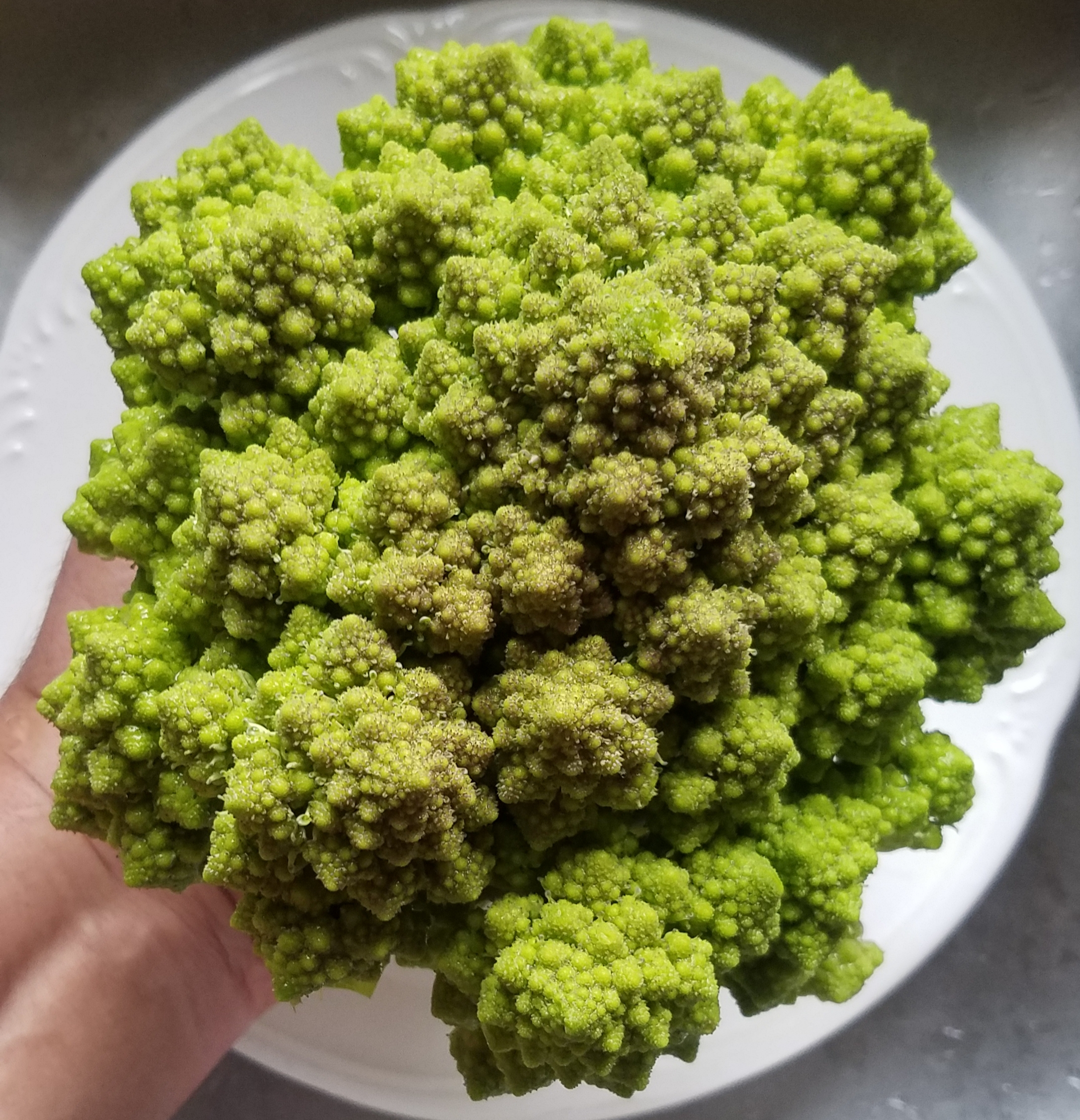
Fresh from the garden cauliflower.

A gentle rain fell through the night and continues this morning. We need rain to assuage the drought. When it rains, garden-watering is more thorough and much appreciated. A benefit was not having to water the garden by hand last night.

In unexpected ways my trip to Florida was life changing. The driving was uneventful and easy. It was easier for me because our daughter led our convoy and all I had to concern myself about was fuel and keeping the rental truck between the highway lines. We spaced overnight breaks so we weren’t exhausted when we arrived each night. We splurged on food, using delivery services like Door Dash, Grub Hub and Uber Eats. We took care of ourselves. Like a vacation, the time was golden even though we didn’t do anything special besides be together.

I hadn’t visited her in Florida since 2013. I missed visiting at a place she lived for five years, the only residence of hers I hadn’t seen. The seven day trip was the most time we spent together in a long time. What’s changed is now that she’s closer–a mere day trip away–we can make plans that the 1,290-mile distance between us made impossible.

Something else changed.

There is a renewed urgency to get things done, to focus on what’s most important. I want to cross things off my to-do list. During the first part of the coronavirus pandemic I seldom looked at or maintained a to-do list. The trip changed all that.

I don’t know how this will turn out yet I’m hopeful. Hopeful we can spend more time together. Hopeful to find more meaning in quotidian affairs. Hopeful to get things done that are worth doing. I didn’t expect that, but it’s welcome.

It was drizzling rain when I went to the garden. I picked three head of broccoli, a head of cauliflower, four bell peppers, a cucumber, a zucchini and a handful of cherry tomatoes. Every day is like that. Rain is important to a healthy, abundant garden. The future is a slate wiped clean by the trip from Florida. For now, we have enough rain.

Categories
Living in Society

Masking in the United States

Baggage Handlers at Orlando International Airport, June 27, 2021.

I recently flew to Florida to help someone move to the Midwest, my first non-local trip since the World Health Organization declared COVID-19 a global pandemic on March 11, 2020. We convoyed from central Florida to Chicago, following major interstate highways all the way. Evidence that the coronavirus pandemic had resulted in the deaths of more than 600,000 people–the most of any nation on Earth–was scant.

The airline enforced a mask policy both in the terminals and on board the aircraft. Hotels where we stayed had well-publicized policy that masks were required indoors and social distancing was necessary. None of the hotels enforced the policies for guests. Compliance was infrequent among staff. All of the other workers we encountered–at truck rental facilities, convenience stores, and restaurants–wore no masks at all. The restaurant delivery drivers all donned masks as they approached us to deliver a meal. Their business is predicated on no-contact delivery during a pandemic, so that was expected. In a Walmart in Indiana about two-thirds of the employees wore masks. The business community seems more interested in avoiding liability while catching up on lost revenue than in preventing spread of the coronavirus.

As far as regular, non-working humans go, few wore masks. In Florida (outside the airport), Georgia, Tennessee and Kentucky I saw zero humans with a mask. That changed when we arrived at our destination in a Chicago suburb.

After the maskless trip from the South, I was pleasantly surprised by the neighborhood where people wore masks indoors and out. I asked one person why they wore a mask outside. They said they were vaccinated and the mask was to prevent contracting variants of the coronavirus that are currently thriving. Made sense to me.

I walked across the street to a local grocery store in which most people were masked, including all the employees. Disposable masks were available for $0.99 at the checkout counter. Not required for customers, yet available.

From the beginning of the trip I asked masked people if I should don mine in their company and the answer was a unanimous no. A couple of masked workers in a local Chicago bakery explained it best. They said I didn’t need to don my mask in their store. Customers would be inside for a short duration, however, they wore a mask because they would spend all day at the counter. This, too, made sense.

While settling into the new apartment a neighbor knocked on the door to introduce themselves. They wore a mask and of course we didn’t at home. I asked them if we should put ours on and revealed we both had been vaccinated. It turned out they had as well. We all went maskless for the rest of the encounter.

If there is a mask policy in the United States, it is either unknown most places I went, or unenforced. Masking is something we Americans do only when required, and not always then.

At this point in pandemic progress, people not vaccinated continue to be at high risk of COVID-19. There is a news story circulating about a woman who avoided getting vaccinated because of side effects people mentioned. She contracted COVID-19, was on a ventilator for a month, then died. Her two children lost their mother. Vaccinated people have not been getting sick with COVID-19 very much.

During our drive I noticed the crappy condition of the interstate highways: countless potholes and not enough construction crews. Whether it is infrastructure, healthcare, or masking during a pandemic, Americans don’t do it well. My advice is get vaccinated if you haven’t been, and wear a mask when indoors in a public place. It may not be socially acceptable among your cohort, although it may save your life.

~ Written for Blog for Iowa.