You’d think I had never been through an abundant harvest before. Bushels of fruit, tomatoes aplenty, and more kale than my regulars can eat in a year. Everywhere fresh produce is abundant as Iowa produced one of the best growing seasons ever for small-scale gardeners.
Most of yesterday’s outdoors time was spent picking pears and tomatoes. There are three crates full of apples and pears in the kitchen ready for processing, along with a counter full of tomatoes. The pressure is on to preserve some of this food for winter and beyond.
The branches on the Red Delicious apple tree are bending with the weight of the fruit. They are not sweet enough to pick, but when they are, there will be bushels more than can be used. People don’t generally like to receive home apples as gifts, but I plan to try to give some away.
The last of the basil made pasta sauce for an Italian spaghetti dinner. I used all of the small-sized tomatoes and it didn’t make a dent in the supply.
I ate several pears that were getting soft in the middle, scooping out the softness with a spoon. There is a short season for pears, and last year produced enough pear butter to last another year. Looking for a recipe for pear-apple-rhubarb sauce for canning, or maybe I will just mix them together and see what happens.
Days without need to leave the property are rare, but much appreciated. They provide time for a life as we choose to live it. Having the luxury of a family home, reasonably far from neighborhood noise, and large enough to create a generous space is just that — luxury.
Harvest days make one appreciate what we have, with hope to sustain our lives another season in Big Grove.
The word “cooking” was on the calendar this afternoon. I went into the kitchen at the appointed time and stood there.
After a while I turned the radio to National Public Radio news, and stood there.
I stood there and let the quiet of a placid summer afternoon sink in.
Filling a wide-mouth Mason jar with ice, I drew filtered water from the icebox and drank.
I refilled the jar.
The green beans had gone bad, so into the compost. A moldy squash was removed to the compost bucket.
There were too many cucumbers, so the small ones were made into sweet pickles (I hope).
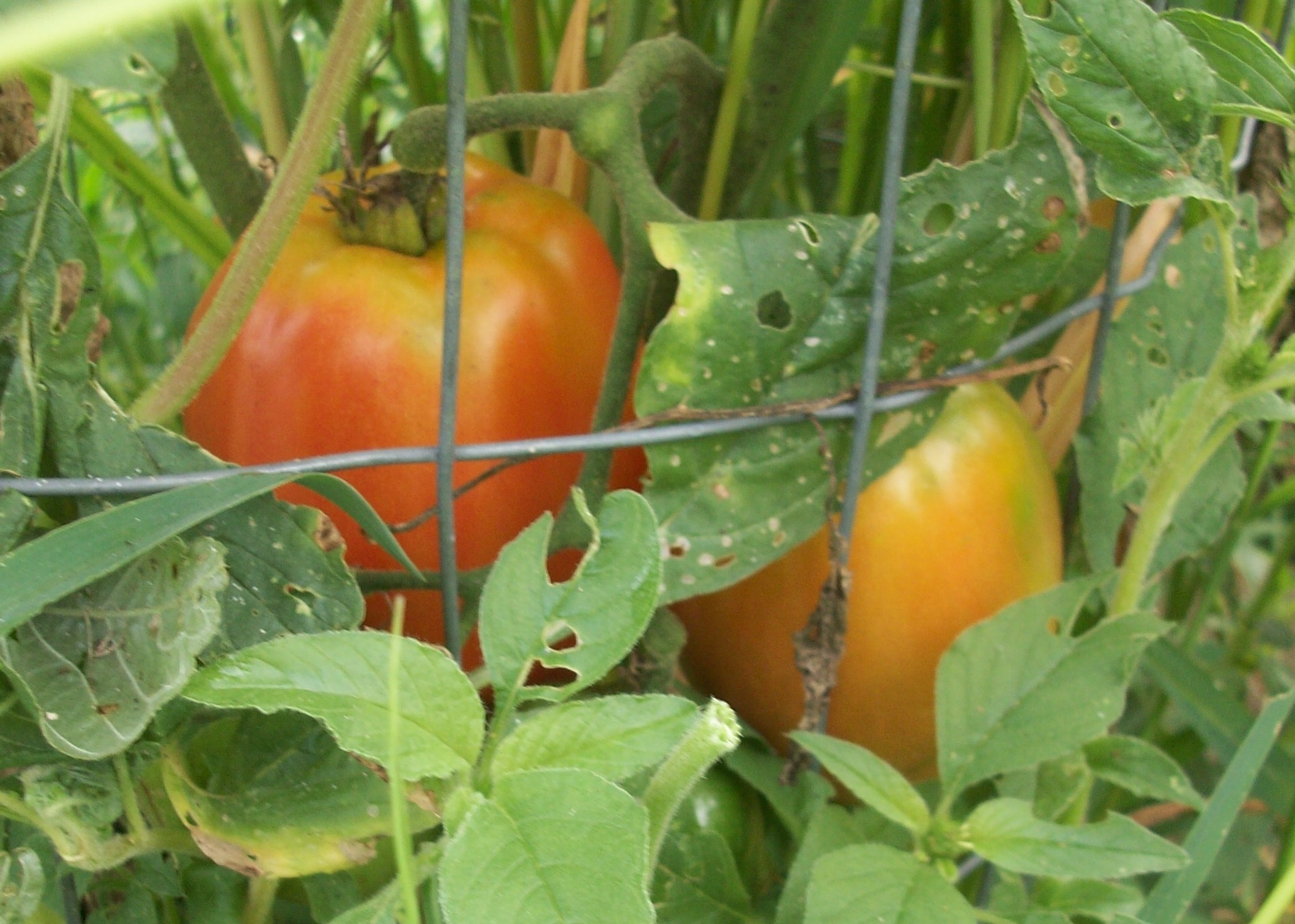
When I selected Brandywine tomato seeds last winter I had no idea the fruit would be so good. A dozen were lined up on the counter in the order of ripeness. I took the biggest one and made two slices from it. I diced one more that was injured from growing between wires on the tomato cage and piled it on top. With salt, pepper and feta cheese, it made two meals by itself.
I cleaned and picked over a crate of kale and found a couple of green worms on the leaves. The predators have arrived. Removing my guests, I tore the leaves and filled up the salad spinner. The kale dried on the counter.
I stood there a while longer, but now I knew. The other dish would be a kale stir fry.
Slicing half an onion, seven cloves of garlic, and a yellow squash, I sauteed them in extra virgin olive oil until tender. Then I piled on the kale and stirred gently. First it turned bright green, then it wilted. It cooked down to two servings, which was just right.
The meal was satisfying, and unexpected. Which is what happens if one would but stand in the kitchen and live.
She wanted to know if I planned to work as a mapper this season. The mapper helps people find apples in a u-pick operation. I said I thought so, but would have to confirm in a couple of weeks, well before the busy season.
Life is complicated for low wage workers working multiple jobs — a constant juggling act of tasks and priorities.
I went to my backyard grove of fruit trees and tasted an apple.
Sweetness is coming, but not here yet. The seeds are not mature, indicating we are a ways off. It won’t be long though. First order of business will be extracting juice from ripe apples to make more cider vinegar. After that, I’m not sure.
It is surprising how big the Amish Paste tomatoes are. I was expecting them to be like plum tomatoes, but they are much bigger. The first two are ripening. As with the apples, it won’t be long.
Lot’s to do on Ruhetag from the warehouse. Better get after it.
This year’s garden work reached its summer pivot point neatly on the solstice. Main crops of tomatoes, peppers, beans, kale, carrots and cucumbers have been planted. There are some kitchen herbs, garlic, celery and a bumper crop of apples and pears. More planting will be done soon, as a couple of plots have space for a second crop. Of course July 25 is by tradition planting day for second crop turnips.
Good news is my car was parked inside the garage last night after being outside for two months. It is a sign summer is really here. I am halfway through my ritual read of The Great Gatsby by F. Scott Fitzgerald, arguably the best novel of summer. Before I get too deep in iced tea, new summer projects, and leisure, let me record some tomato experiences.
I planted tomato seeds the third week in March and it was too early for the garden. It would be better to time them as I expect to plant them, with one batch ready to go into the ground mid-May, and a second mid-June.
I also planted too many tomatoes indoors. I could reduce the quantity by two thirds. After consulting with a local farmer, I restricted myself to one plant per cage. Too, I double cropped with the early peas, so the seedlings got very big in too small a container before planting the last ones yesterday. For future reference, if I plant 1.5 times the number of seeds I expect to plant as seedlings, that should be more than enough for the season.
The Brandywine tomatoes have a distinctive leaf shape and texture, so I am looking forward to seeing how those turn out. Now comes the growing and I am off to the warehouse for a shift.
The intent was to prepare dinner for my spouse who worked later than me on Saturday. The dish would have onions and tomatoes in it. Those things I knew.
From there the culinary session went into chaos as either I couldn’t make a decision, or more likely, refused to cooperate as I struggled to enter the real world of counter top, sink, stove top and oven. There were knives and heat involved, so it is a miracle the preparation left me unscathed.
It began with an onion that was beginning to sprout.
Onions are a staple in our kitchen, and we can’t grow or barter for enough of them. Having used up the local harvest, we were on our second bag from the warehouse club. Unexpectedly, one sprouted.
Not a catastrophe, and my mind turned toward preparing dishes using onions to eat for dinner and store for later. It would be pizza, chili and/or pasta sauce. That “and/or” became problematic, but no problem with the pizza.
A long-time pizza-maker explained that dough makes the pizza. We like it as thin as possible and the recipe is simple: a cup of warm water, a teaspoon of yeast, a scant teaspoon of sugar, pinch of salt and flour enough to bring the dough together in a sticky, but not too sticky ball. Then into a greased bowl in a warm oven, covered by a dish towel for about an hour. It takes practice and over 40 years, I’ve gotten the knack. So far so good.
What did I do for an hour? Partly I prepared the toppings for the pizza, including caramelizing two large onions seasoned with basil, made eight ounces of sauce, drained sliced Manzanilla olives and opened the bag of shredded mozzarella cheese I bought on closeout from the local grocer on the way home from work. Caramelized onions on pizza was something we discussed, and Saturday was the night to try them.
Using ample bench flour, the risen dough was dumped on the counter, kneaded a second time, then rolled with a pin. For the first time I decided to use parchment paper under the pizza dough to make clean up easier. Initially I hoped to put the pizza-laden parchment directly on the oven rack. I rolled up the flattened dough on the pin and transferred it to the parchment paper, which I laid on a large wooden paddle. The paddle was from the part of the plan where I thought the pizza would go directly on the rack. To call it a plan is not accurate. I transferred the works to a baking sheet.
I docked the dough and spread on a thin coating of olive oil. Next the sauce (seasoned with oregano and the remains of a jar of “Italian seasoning” rescued from our daughter’s Colorado apartment), then olives, then onions, then cheese all spread as evenly as possible.
12-15 minutes at 450 degrees and pizza perfection. If I had left it there, everything would have been fine.
I got out my kitchen-weary Dutch oven to make the chili or pasta sauce, having reduced the plan from “and/or” to “or.” In my mind, I was making both. Making a rough dice of another onion, I covered the bottom of the pan with tomato juice drained from two quarts of diced tomatoes. The idea was to steam fry the onions. As the juice evaporated, I added more. This part went well and the onions softened, becoming translucent. I added two small cans of tomato paste. Whoever invented tomato paste was brilliant as it both thickens and adds a pronounced tomato flavor to any dish.
Here is where things went awry. To season the dish, I added a scant tablespoon of chili powder, some cumin and incorporated everything so I could proceed to the next step. Then I added a heaping teaspoon of basil, which violated some unwritten rule, making the dish neither chili nor pasta sauce. When I seasoned the caramelized onions with basil, while the jar was still in my hand, I unwittingly dumped the rest of it into the nascent chili-pasta sauce. It’s not a crime, but it’s not chili.
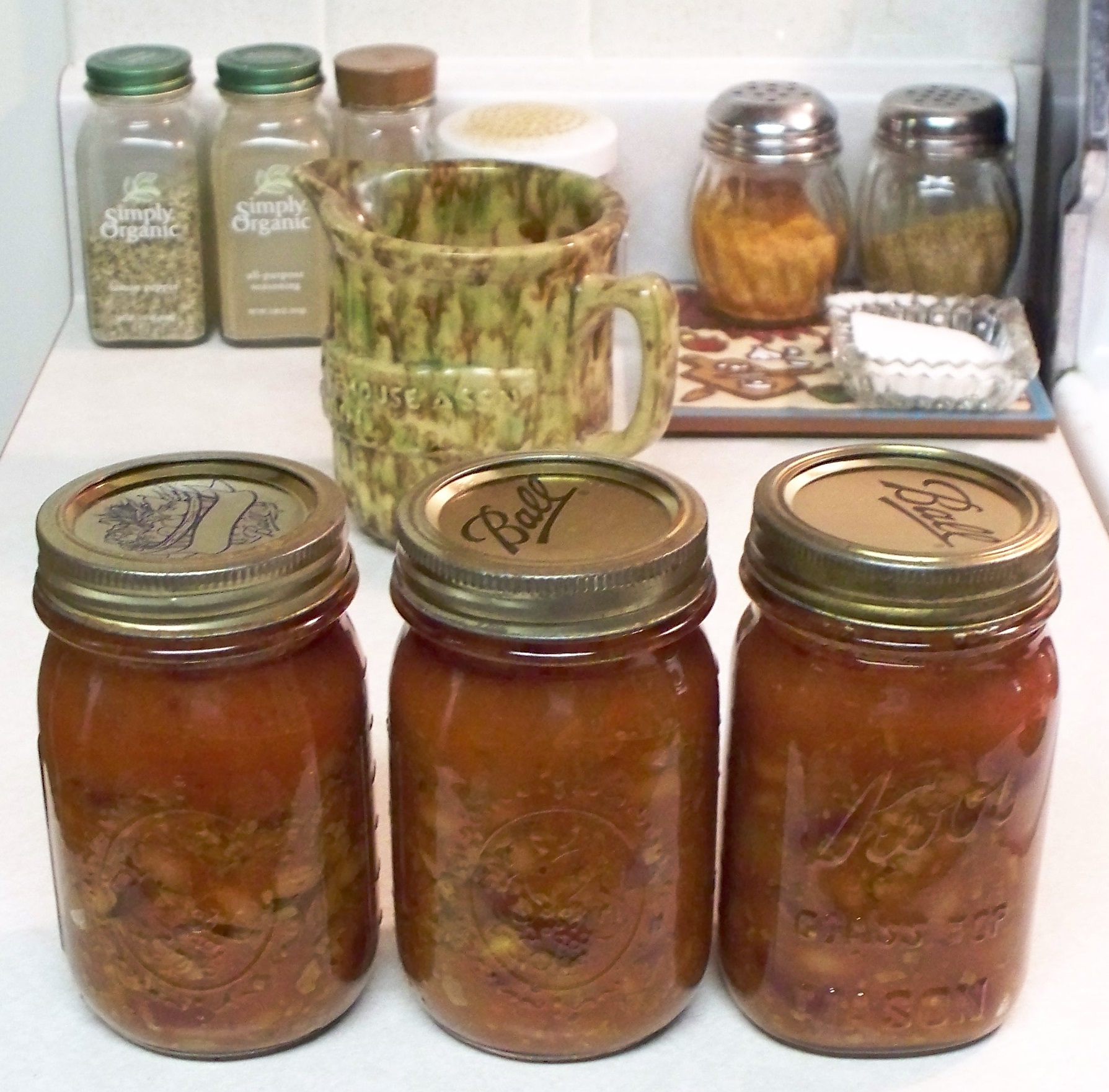
Once the deed was done, I had to recover. With the chili powder, it would never make good pasta sauce, so I fetched some cans of organic kidney beans from downstairs. I drained and washed them and added them in along with a bag of Morningstar® Recipe Crumbles and covered with more tomato juice. It made nine pints of so-called chili.
A fine dinner was and will be had by all as the results of this work are consumed over the next week or so.
What the cookbooks by celebrity chefs don’t explain is the foggy dynamic of what actually goes on in a kitchen. Having cooked many meals with my late maternal grandmother, I understand what happened last night is not unusual. The extemporaneous practice of cooking is more often like that than not.
Through the haze of a long day’s work we look at life’s deteriorating produce, and a spice shelf where seasonings are older than fresh, and say, “something can be made here.” Even when ideas don’t quite come together in the mist of life, we can sustain ourselves. That is a life worth living.
LAKE MACBRIDE— To supply all the tomatoes a household needs, I planted a large tomato patch with eleven or twelve varieties, and two different cages. In all, there were 36 plantings, some with two seedlings in them. I used short cages leftover from previous years, and new ones cut from four-foot wire fencing. The whole plot was mulched deeply with grass clippings.
The endeavor was an unqualified success, and now it’s time to analyze, think and learn.
First Tomato Planting
The seeds came from a couple of sources.
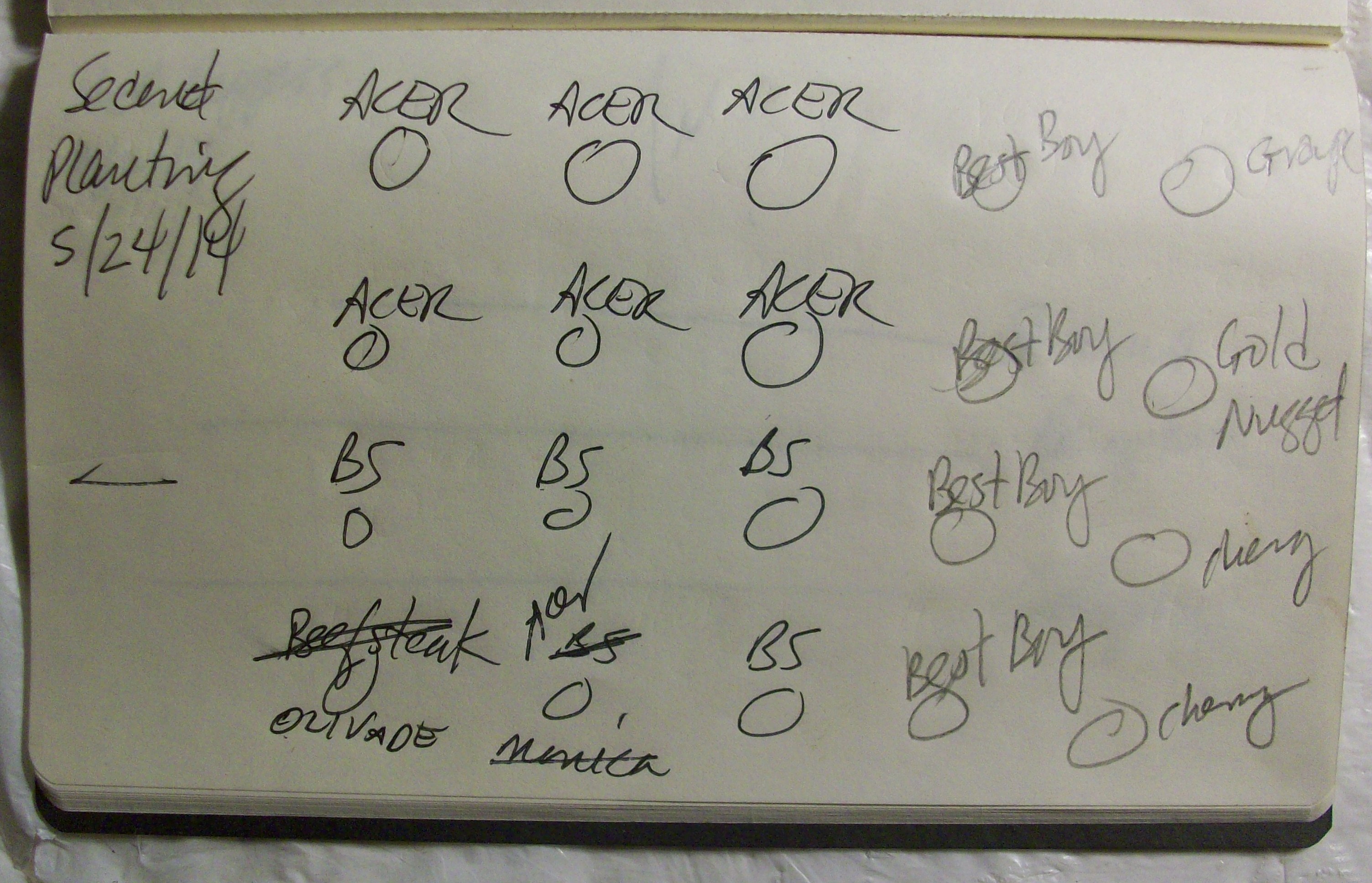
Leftover from last season were Acer and Best Boy. They produced well, however, they matured late. By the time they were ready, the end of the season was upon us, and our tomato needs largely met. Acer is a slicer, the seeds purchased at a grocery store (I think). There are better ones to use going forward.
Best Boy was also leftover from last season, and intended for canning whole. When we organized our canned goods, it became clear we have enough canned tomatoes from last summer to make it another year, so they weren’t needed for the intended purpose. Olivade and Monica are plum tomatoes purchased through Johnny’s Selected Seeds. They will replace the Best Boys going forward.
The organic Beefsteak seeds were purchased at a home center, and they have traditionally been our favorite. They too didn’t ripen until late in the season, and while we used some, a lot went to compost when bugs got into them.
Second Tomato Planting
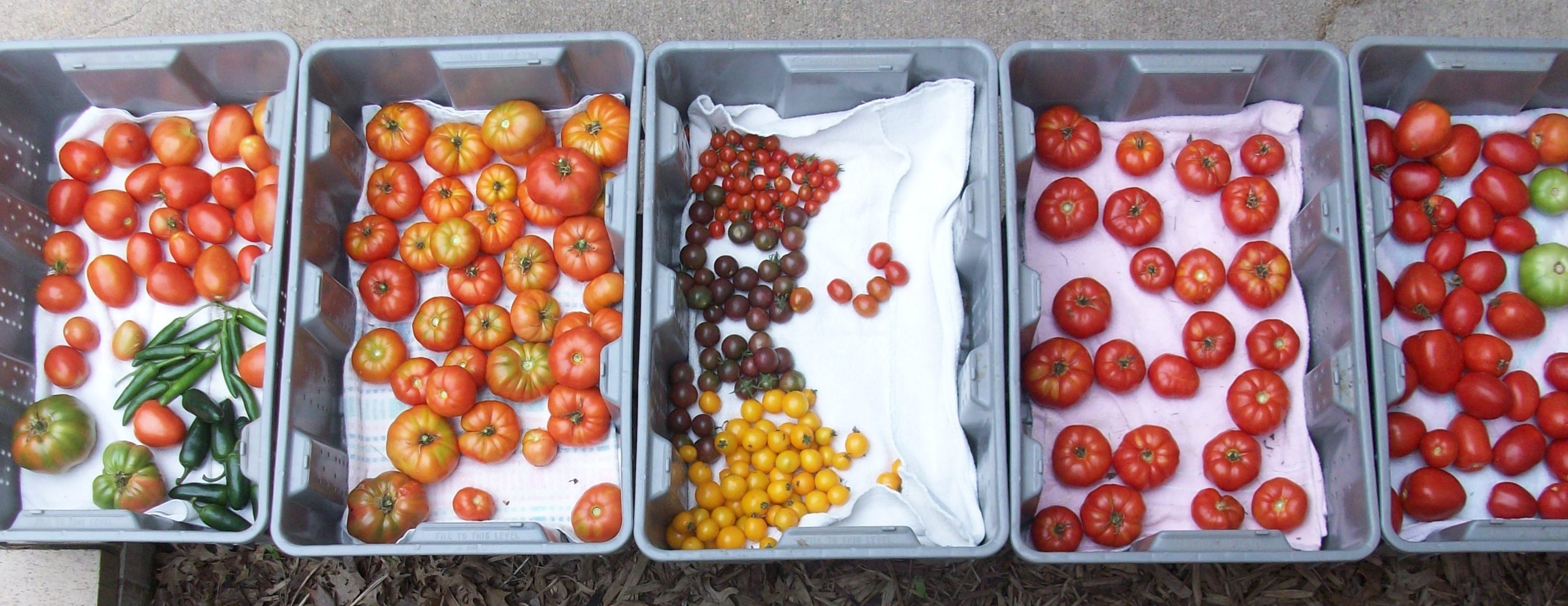
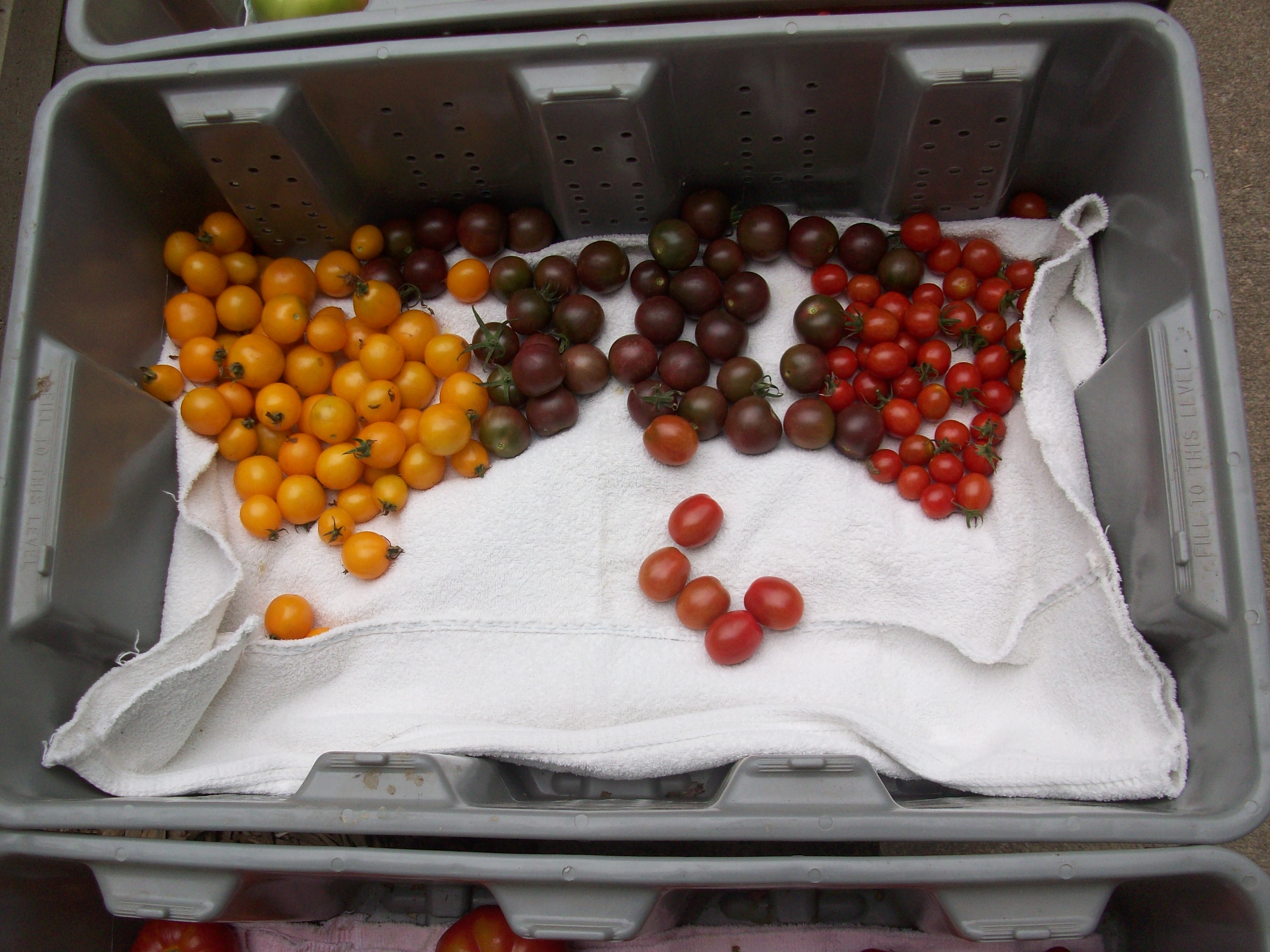
Having a variety of small tomatoes was a joy this year. I planted Cherry, Gold Nugget, Sweet Olive Grape, and Black Cherry. The seed packets were leftover from last season and from Johnny’s. They came in early and were great for salads, snacking and pasta dishes. We froze some whole as an experiment, and look forward to seeing how they eat once thawed later in the year. One seedling of unknown variety was provided by our CSA. The Black Cherry plants grew very tall. Next season, they should be planted in one of the four-foot cages.
Rose and Italian were our early maturing slicers. They were also purchased through Johnny’s, and the Italian seeds were at a reduced price. If they are offered again, both will be purchased for next season. The Italian did well with short cages, and the Rose would do better in four-foot cages. I bought an extra roll of four-foot wire, so some of the old cages can be retired or used for other crops.
Upon reflection, tomatoes are best used fresh, either in the kitchen, or given away as gifts to those who don’t grow their own. Likewise, they are welcome at the food pantry until there is a glut. Fresh tomatoes are an essential part of why we garden, and most of the focus in using them is fresh.
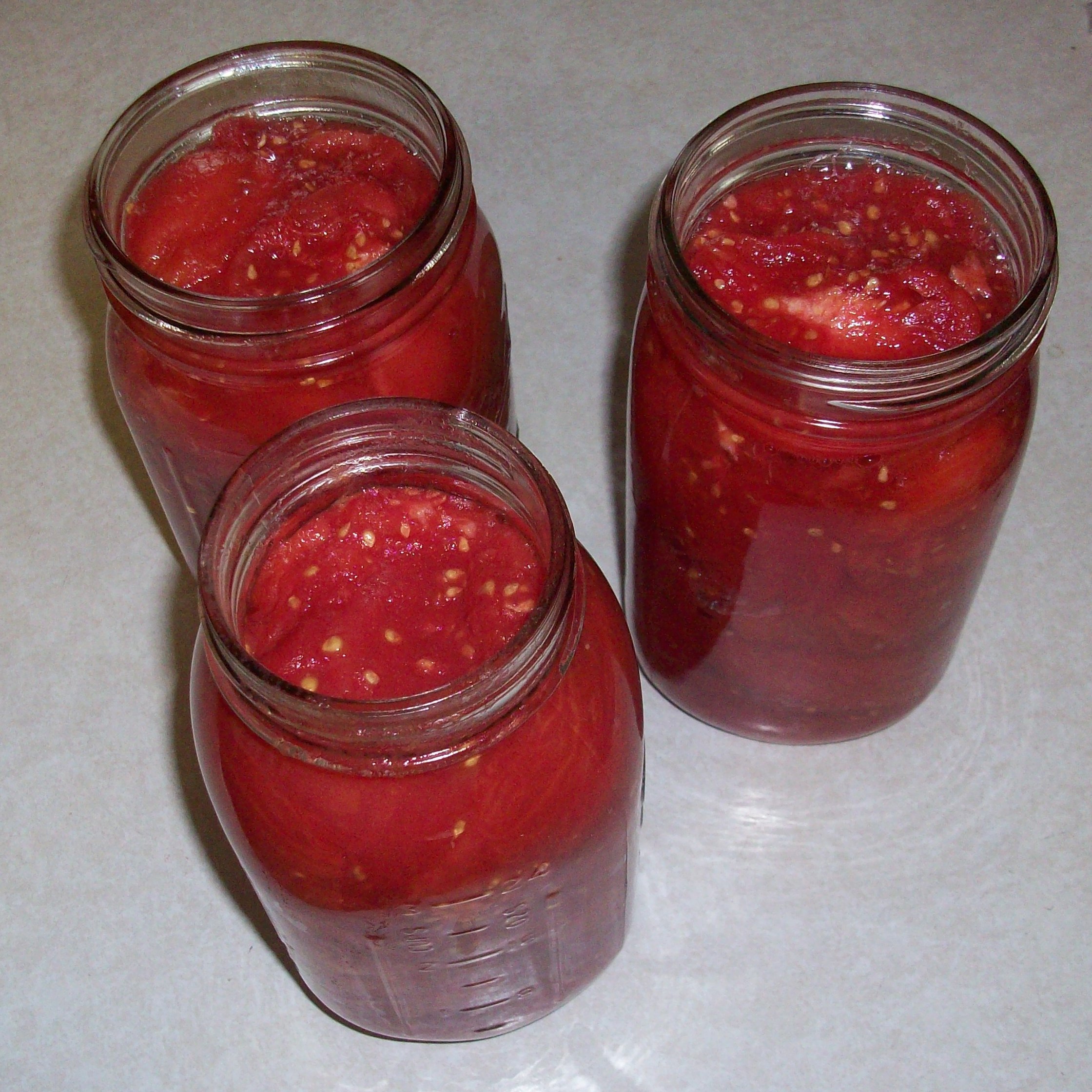
My thinking about canned tomatoes changed. For making pasta sauces, chili and soup, plum tomatoes are the best product to use. Seeded thoroughly, cut in half, and then cold processed, I put up about a dozen quarts which weren’t really needed, although the abundance led me there. They will serve most needs.
I had been canning diced tomatoes, but any application that calls for them could use halved plums, so diced will fall from my repertory. That is, unless there is an abundance of slicers, which is what I used to make canned diced tomatoes. We’ll see how it goes.
A favorite canned product is hot sauce, but like with plain tomatoes, there is an abundance in the pantry ready for use from previous years. I have a gallon fresh in the refrigerator, and there is an abundance of hot peppers for making more, but at some point one has to stop.
There is never a shortage of juice as a byproduct of canning. I’ll continue to can it as it is produced, and any remainders will go to that end as the season finishes.
Growing tomatoes is a highlight of garden life. By using my sketch booklet and keeping track, I have been able to learn what works and what doesn’t— part of a gardener’s outlook in daily living, with lessons to our broader sustainability. Despite all the negative press this year, the tomato crop was excellent.
LAKE MACBRIDE— Yesterday began with two and a half hours of volunteer work at the CSA. The labor in our barter arrangement has already been provided so I’m free to volunteer for general farm chores like working onions.
Onion Cleaning and Sorting
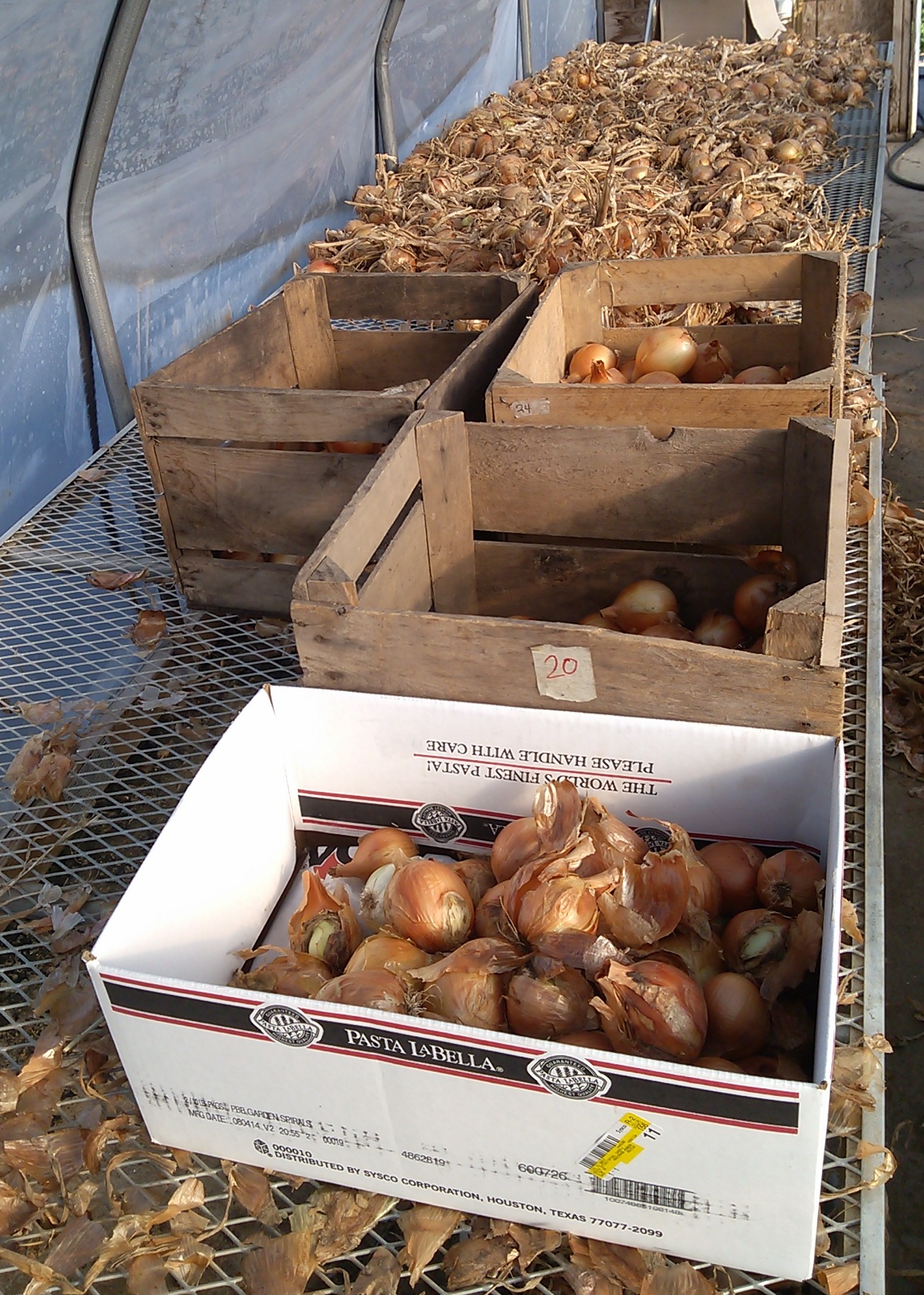
Once the seedling operation moved outside, the germination house was used to cure onions on the long wire racks. They are ready for the next step, which is cleaning and sorting.
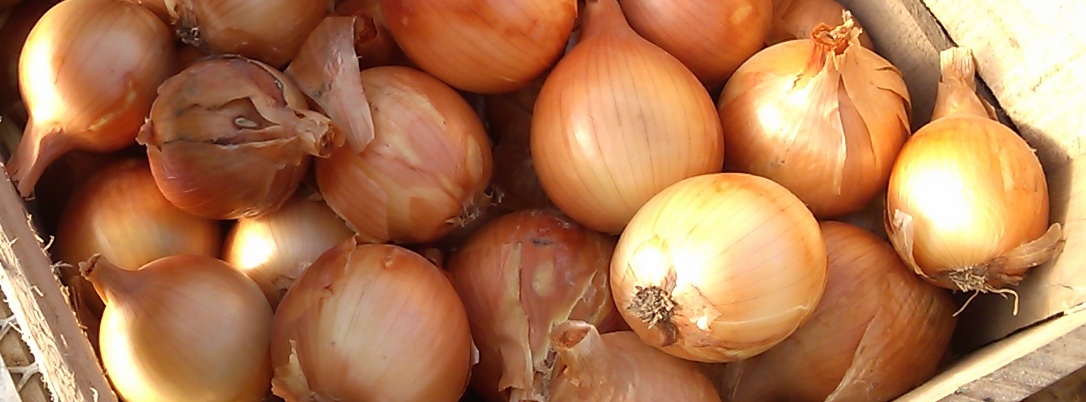
There are five sorting types: big and small storage, ready for distribution, seconds, and those to be composted. I trimmed the tops and roots and sorted. The onion worker got to keep the seconds, so last night was salvaging usable sections of onion. By bedtime, a couple of big bags of peeled onions were in the ice box ready to use.
Basic pasta sauce is of onions, garlic, basil and tomatoes, so as I write, a big batch simmers on the stove. All of the produce is from our garden, or the CSA. Except for the salt, it is 100 percent local. There is always an exception in local food. The tomato sauce will be frozen in quart zip top bags.
Making tomato sauce is elemental. This batch is from the edge between fresh garden produce and compost, where we often live our lives. In cutting away the bad parts of the onions and tomatoes—picking through basil leaves—there was more compost than usable produce.
Between our concept of ourselves and our inevitable transformation to dust is a sliver of life. If we don’t grow food and make tomato sauce, what else would we do? There really is nothing else, except to go on living.
LAKE MACBRIDE— As mentioned previously, there are a lot of tomatoes in the garden and kitchen. So many it is a struggle to preserve, eat and give them away before they turn to compost.
I took a bag of mixed color cherry tomatoes with me on the Great March for Climate Action Wednesday. Interest was mixed— even with exercise and the resulting thirst. Cherry tomatoes are a great snack to eat while walking, but even so, there was resistance.
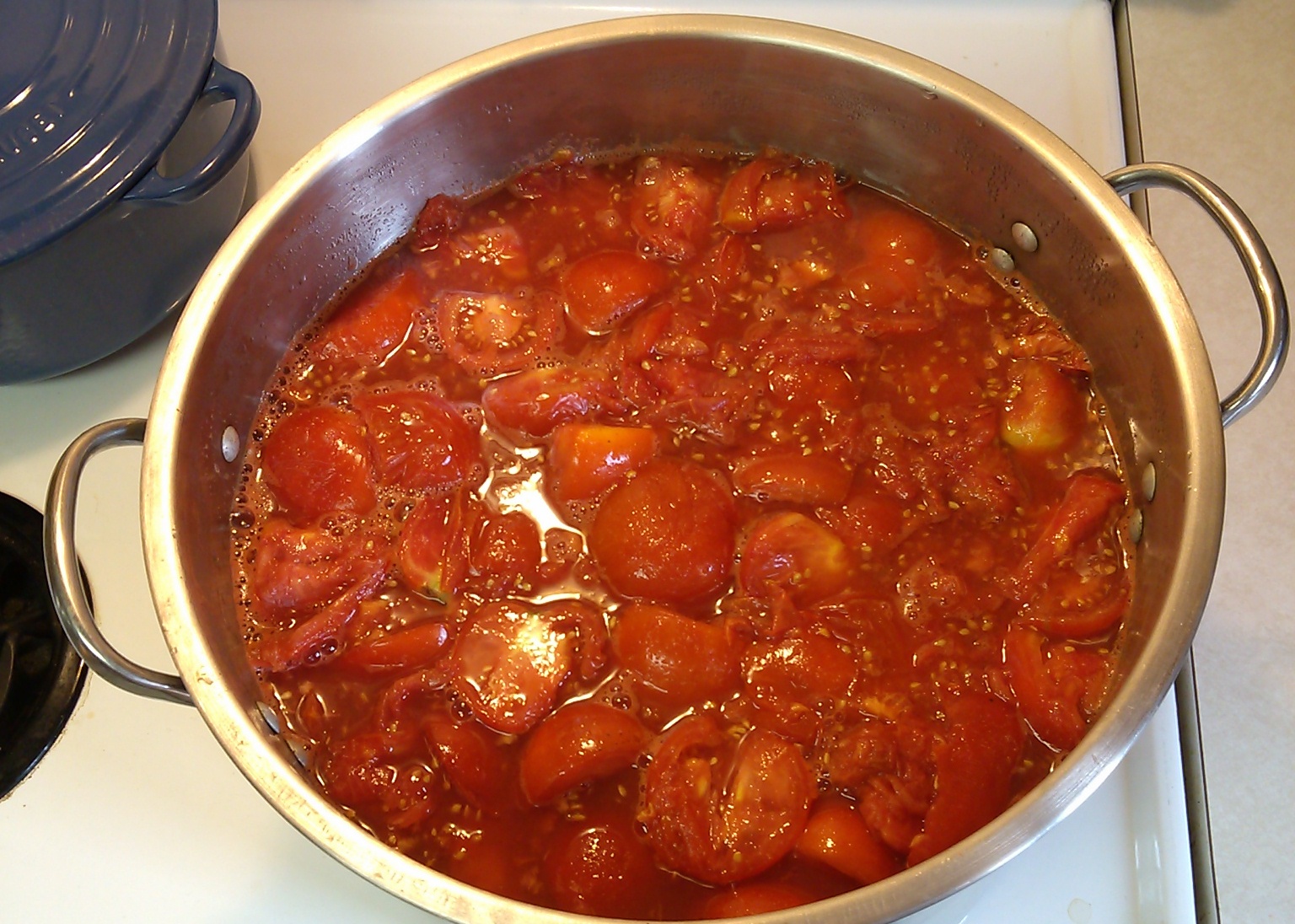
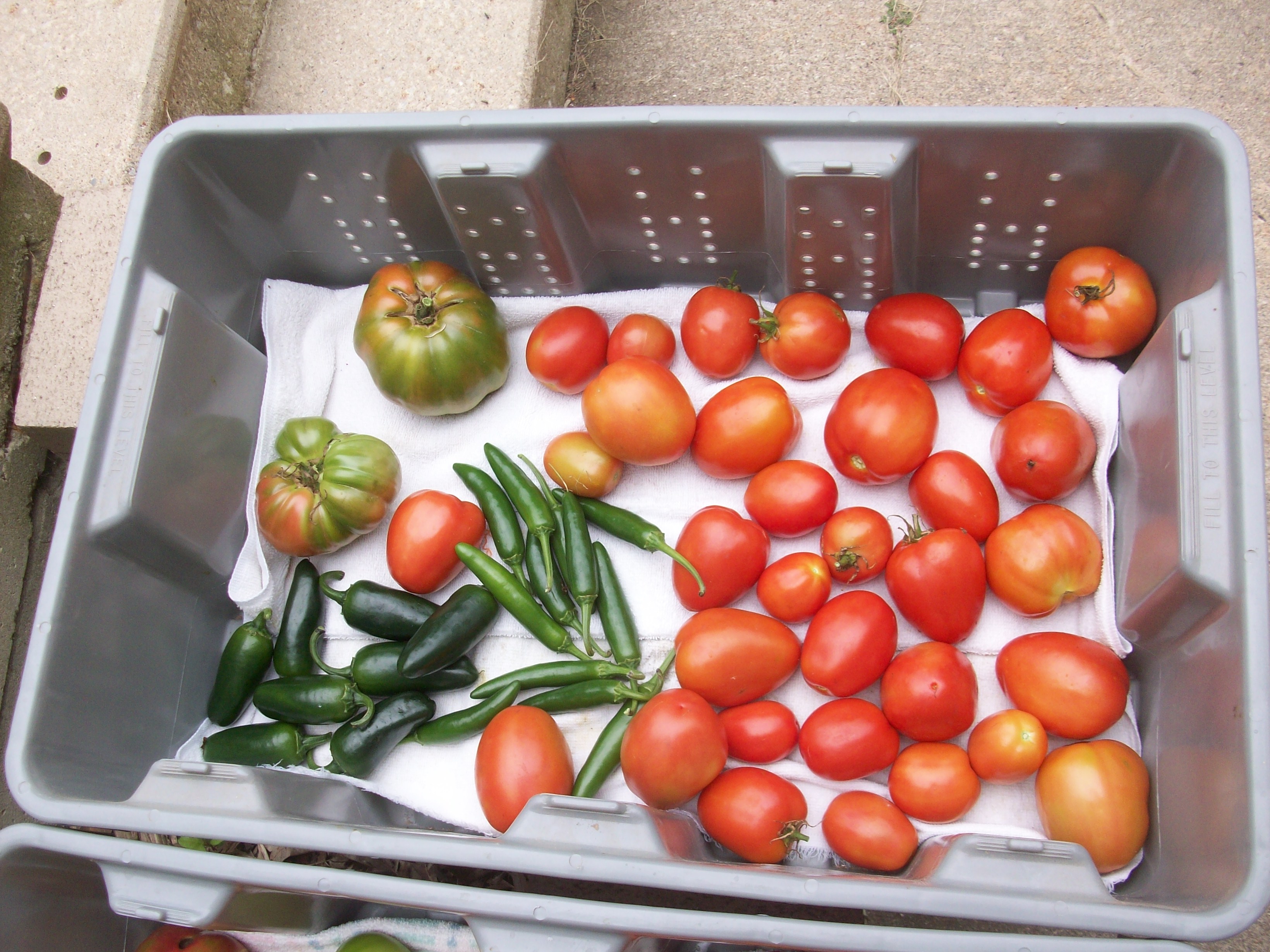
Roma-style tomatoes are great for canning and part of this year’s abundance is being skinned, cut in half, then cored before processing. It’s not that we need more canned tomatoes, but having a crop each year has its own benefits, and there is a certain comfort in having a well-stocked pantry.
Before heading to work in the warehouse, I hope to finish the current batch and get ready for the next wave. Life with tomatoes is pretty good.
LAKE MACBRIDE— A friend declined my offer of a bag of tomatoes yesterday, indicating we have entered that time of garden tomato abundance— ready or not.
It has been a mixed tomato bag during this summer of cool nights and no rain. The heirloom tomatoes are producing, but traditional varieties, notably beefsteak, are not doing as well. My garden is producing more because of its diversity of seeds (12 varieties), and large number (32+) of plants. There will be no tomato shortage in Big Grove.
After abundance, and limited outlets to get rid of the fruit, the pressing urgency to preserve what we can’t eat fresh has arrived. A couple of thoughts about that.
Cherry Tomatoes
A friend suggested frozen cherry tomatoes hold up well, so a tray or two will be devoted to an experiment. I have my doubts, but it is worth a try.
The Roma-type tomatoes will go into sauce and juice. The pantry already has enough diced and whole tomatoes to last until next season, so the focus will be on thick tomato sauce to use with pasta and in chili. The juice is a by-product, and the thought of discarding it gains no traction, so it will be canned in quarts.
Peppers and Tomatoes
Roma is also a good tomato for salsa and hot sauce. There was plenty canned in previous years to meet our needs. I should say my current needs, since I am the only person in our household who eats it. At the same time, by following lessons learned at our CSA, there will be a bumper crop of Serrano and jalapeno peppers, which shouldn’t go to waste. Some form of canned salsa or hot sauce seems inevitable.
I planted a smaller tomato for canning whole, but they haven’t begun to come in yet. If and when they do, I’ll execute the plan and add them to the storage shelf.
It is tomato heaven or hell, depending upon your perspective. It’s all good here, although it adds more work to an already busy season— part of sustaining a life in a turbulent world.
The garden is producing a lot of tomatoes, with the cherry and plum varieties coming in. I picked a bowl last night, and those still on the vines continue to grow and ripen.
There was a mature jalapeno and a couple of Serrano, which with the banana pepper, garlic and onion from the CSA will make the base of a nice tomato hot sauce.
Marketmore cucumbers are forming on the vines. They’re at the stage where close monitoring is needed to pick them at the perfect size and before they balloon to gigantic. The celery is reaching a recognizable stage, and basil is ready. Despite the failures of this year’s gardening, there is a variety of produce to harvest.
News of the Listeria monocytogene scare in some California fruit reached Big Grove. We have a few plums past their prime in the ice box, so it was a good enough reason to compost them, even if there was little trouble from the rest of the box as we ate them. They looked so good in the store, that despite the long trip they made to Iowa, we bought and enjoyed them. Apples and pears will soon be ready in our garden, taking us away from a desire for imported fruit.
The advent of August tomatoes marks a turning point in the season. It’s time to plant the second crop of radishes, turnips, and spinach. That work is scheduled for in the morning.





 Journey Home
You must be logged in to post a comment.