Categories
Environment

Long Tail of Carbon Emissions

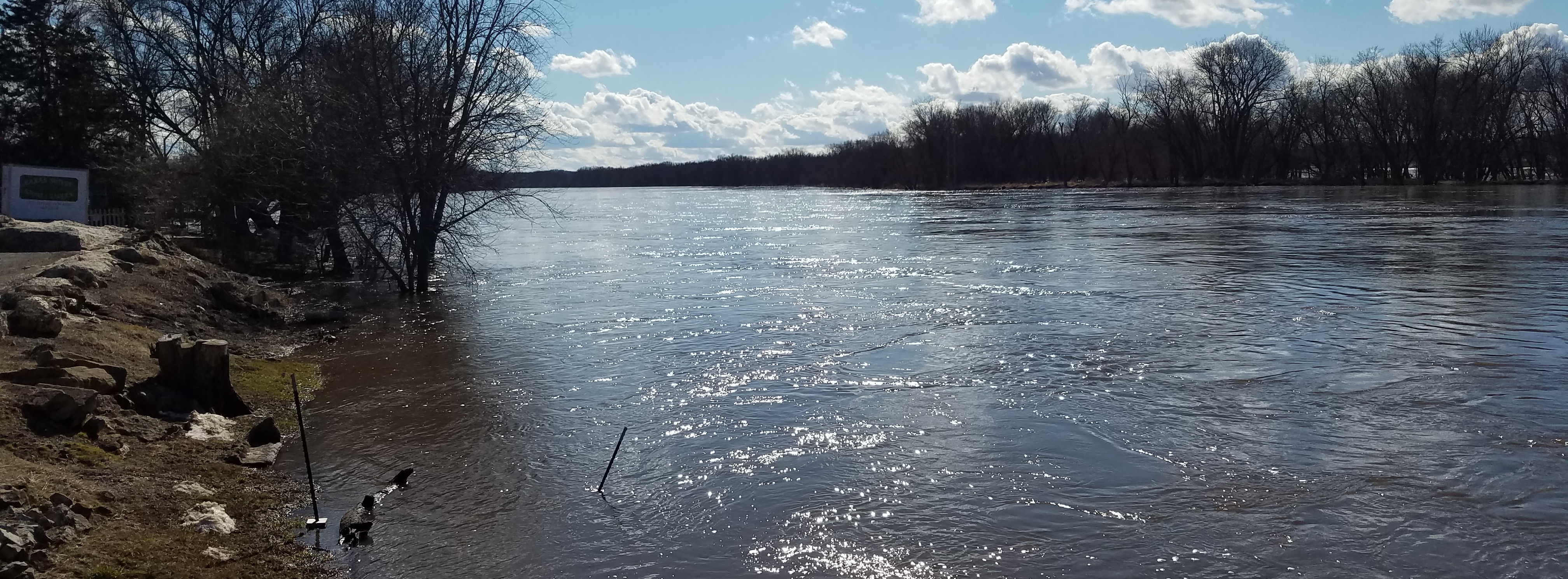
Flooded ATV Park, Johnson County, Iowa.

Earlier this century India and China decided to build fleets of coal-fired power plants as their citizenry entered a world most Americans and Europeans already knew for its modernity and comparative affluence. The two populous states required more electricity.

Carbon emissions from the new plants have come home to roost. According to the International Energy Agency,

Global energy consumption in 2018 increased at nearly twice the average rate of growth since 2010, driven by a robust global economy and higher heating and cooling needs in some parts of the world. Demand for all fuels increased, led by natural gas, even as solar and wind posted double digit growth. Higher electricity demand was responsible for over half of the growth in energy needs. Energy efficiency saw lacklustre improvement. As a result of higher energy consumption, CO2 emissions rose 1.7 percent last year and hit a new record.

China, the United States, and India together accounted for nearly 70 percent of the rise in energy demand, according to the report. Failure to reduce carbon emissions is a result of the lack of political will to adopt renewables as aggressively as their lower cost warrants.

Having lived through the India-China build-out of coal plants, I understand why and importantly that they are planning renewables and to some extent, natural gas and nuclear power, for new electricity generation. The writing is on the wall for coal’s hegemony according to Energy Innovation:

America has officially entered the “coal cost crossover” – where existing coal is increasingly more expensive than cleaner alternatives. Today, local wind and solar could replace approximately 74 percent of the U.S. coal fleet at an immediate savings to customers. By 2025, this number grows to 86 percent of the coal fleet.

While their analysis does not adequately consider stranded costs, it is doubtful India or China will abandon coal-fired power plants built since the turn of the century as they are comparatively new. That is, unless the climate crisis is adequately recognized by governments.

Any doubt climate change is real? The New York Times reported on the flooding in Hamburg, Iowa:

“I’m looking at global warming — I don’t need to see the graphs,” said Hamburg, Iowa’s mayor, Cathy Crain, referring to the role of climate change in increasing the frequency of extreme weather events. After two record-setting floods in a single decade, Ms. Crain said, “I’m living it and everybody else here is living it.”

We shouldn’t be shocked by the International Energy Agency report as rising emissions were planned by China, India and the United States a long time ago. There is a long tail on carbon emissions and government is largely responsible to turn the corner. The report highlights we are going the wrong direction.

How many more tragic incidents like the one in Hamburg are necessary before government acts on climate? More people are ready to act on climate now but we haven’t reached our politicians… yet.

Categories
Environment

Climate Change, Roundabouts and Retail Stores

Rural Johnson County – 140th Street NE west of Ely Road on March 23, 2019.

During a tour of my usual spots to observe flooding it doesn’t look as bad as it has.

In 2008, the flood waters came to within 100 yards of our home before receding. We are nowhere near that now.

Yesterday afternoon Governor Kim Reynolds issued a press release saying the president had approved a major disaster declaration for 56 Iowa counties. Hazard mitigation funding became available for the entire state.

What’s going on?

“Are we just rolling snake eyes over and over or is there something happening here?” Erin Murphy of Lee Enterprises asked on Iowa Press this weekend.

“We have 147 years of temperature and precipitation records for the state,” Iowa State Climatologist Justin Glison responded. “The trend shows us warming and with the warmer atmosphere, a warmer surface temperature, we’re able to hold more water vapor in the atmosphere. That gives us a higher probability of having more precipitation events. What we are seeing over the past thirty years is that the intensity of precipitation events is increasing… Yes, we are moving into a new type of precipitation regime.”

No mention of the words “climate change” and that’s okay. Glison’s message is what I have been saying the last six years, and part of what Al Gore said the two times I heard him present his slide show. The current flooding is climate change happening in plain view. It is time to do something to mitigate not only the damage caused by climate change but the changing climate itself.

What should we do about climate change? Embrace the truth about what this scientist said. Then develop the political will to change human activities that contribute to global warming in a way that makes sense and creates a resilient culture.

The rest of my day seemed anticlimactic. While crossing the Cedar River bridge on Highway One I decided to visit the Ace Hardware Store in Mount Vernon to see if they had a replacement part for the faucet handle in the bathroom.

I entered the roundabout at the intersection of U.S. Highway 30 and Route One. It is a bit confusing but I was able to decipher the signs related to which lane was correct for my trip. I like the roundabout for intellectual reasons, although most locals hate it.

Before the roundabout was completed in October 2013, the intersection was one of the five most dangerous in the state, based on frequency of accidents. In the years since the new roundabout opened, the frequency of accidents remained higher than expected. The intersection is currently exhibiting a crash frequency of 16.8 crashes per year according to a 2018 study. The expectation was there would be from six to eight crashes per year. To make a 60 percent reduction in accident frequency, the study recommends better driver education and improved signage near the roundabout. In other words, Iowa drivers are not finding navigation of the roundabout intuitive and it shows.

I arrived in Mount Vernon and parked across the street from the small hardware store. The future of small city retail was on display as I walked through the entrance. As an employee of a home, farm and auto supply store my radar was up to take in the sales process.

Two cashiers greeted me as I entered and asked if they could help. They directed me to the plumbing aisles which were easy to find in the small space. I walked past a popcorn machine that offered fresh, hot popcorn to eat while shopping. Eating and retail seem inseparable in the 21st Century. I declined to sample a bag. I quickly found a selection of faucet handles.

Using my handheld device, I had taken a photo of the old handle with a ruler held up to it from two angles. I sought an exact match. Within a couple minutes, a sales associate walked up and asked if he could help me find something. I said yes as I wasn’t finding what I wanted. He confirmed the display represented what was on hand and led me to a dual-monitor computer where he researched alternatives. The idea was if we could find the part, the associate would order it on the spot. We looked through four examples, both the Ace and manufacturer brands and couldn’t match the size.

In my experience, expanding product offerings from a retail store’s physical inventory is essential to survival in small cities and towns. It harkens back to the early days of the Sears catalogue. While there were no mobile or home computers back in the day, modern retail at its best emulates the idea there is a broad array of available products that with time can be delivered just about anywhere. The difference between my experience at Ace Hardware and a large on line retailer like Amazon.com is the personal attention I received from everyone I encountered at the store. That service is what satisfies our human need for personal interaction, and is likely to make us a repeat customer. In doing so, local retailers can learn and work toward sustainability.

What do climate change, roundabouts and retail stores have in common? I’m not sure, but that was my day in society.

Categories
Environment

Flooding in Late Winter

Cedar River on March 15, 2019

The amount of snow and ice melt in the Midwest is monumental.

Iowa Governor Kim Reynolds issued disaster proclamations for 41 counties because of flooding (Click on the map to see details).

News photographs show Offutt Air Force Base in Bellevue, Nebraska, home of the U.S. Strategic Command, is one third underwater with at least 30 buildings damaged.

Where did all the water come from?

Warmer atmosphere held more water vapor which was dumped on Iowa and surrounding states in the form of snow and rain during recent polar vortex events. Wild swings in temperature, sometimes as much as 70 degrees in less than 24 hours, combined with rain quickly melted the snow. Because of deep frost in the soil, there was nowhere for the water to go but downstream. Iowa is used to spring flooding, but not like this.

Climate change created conditions for this flooding, both by enabling a warmer atmosphere to hold more moisture, and through warming in the arctic, which destabilized the trade winds and made the polar vortex. It has been depressing to live through this winter. The damage we see on our small lot in rural Iowa is minuscule compared to the bigger picture.

Last week, Al Gore and the Climate Reality Project trained another 2,000 leaders in mitigating the effects of climate change. News media cover climate change now more than in recent years because viewers and readers experience its effects every day. Climate change is real, it is happening now and we hope it’s not too late to find the political will to do something about it.

The state is watching how our governor and other politicians react to this iteration of flooding.

Categories
Environment

Flooding at Mill Creek

Cedar River at Iowa Highway One Sept. 27, 2016 at 11:36 a.m.

Mill Creek swelled its banks swamping nearby farm fields. It looks like the nearby city sewer system was spared inundation… for now.

Snow melt is everywhere in the county. Inches of packed snow yielded to ambient temperatures in the 50s and continuous rain. After a frigid, snowy winter the ice and snow pack is melting all at once. Snow was here Sunday and now is mostly gone.

Winter’s damage is being revealed. Our driveway buckled with the big swings in temperature. In one event, ambient temperatures swung more than 70 degrees in a day. Ice melted, then refroze under the cement, buckling the slabs leading to the road. Yesterday’s rain diverted inside the garage because of a buckle, requiring clean up to prevent further damage. Whether the buckled driveway will settle back down as it has before is unknown. It’s never been this bad.

The scale of the melt in a short period of time is what has Mill Creek flooding. Farmers removing buffer strips to grow a few more rows near the creek will take topsoil and farm chemicals downstream. It was foolish to sacrifice topsoil for a few more bushels of corn or beans. Farmers who did this likely didn’t see it that way even though flooding is not new to the area. Topsoil can’t be easily replaced but chemicals can.

Is this about climate change?

“A historic March blizzard is taking shape across Colorado, Wyoming, Montana, Nebraska, South Dakota, and North Dakota,” according to the National Weather Service. “Between one and two feet of snow is expected in some locations with wind gusts as high as 80 MPH.”

It is called a “bomb cyclone.” With hurricane strength, it has been forming over the Rocky Mountains and Great Plains, creating blizzard conditions and stranding hundreds of motorists.

“During the first 10 days of March, the Colorado Avalanche Information Center recorded more than 500 avalanches statewide (a record number),” wrote Jonathan Romeo in the Durango Herald. “For the season, a total of eight people have been killed in avalanches.”

Issues abound. Icebergs and open water were found on Norton Sound near Nome, Alaska where the Ititarod Sled-Dog Race finished this week. It’s raining in Greenland when it shouldn’t be. Global oceans are at the highest heat content on record. The planet is warming, there is no doubt.

It won’t take long for water to recede into the banks of Mill Creek. When everything melts at once, immediate damage is exacerbated, the duration shortened.

My colleagues with The Climate Reality Project are meeting this week in Atlanta to train another group of leaders. As newcomers join thousands of others, let’s work to mitigate the effects of climate change on humans. March has been a month where the evidence of climate change has come to the forefront. March has run only half its course.

Categories
Environment

A Winter Sort

Garden Seeds

A majority of the garden seeds wait in a corner on the lower level of our home.

I cleared a sorting table and next month will plant celery and kale at the first greenhouse shift. There is no immediate need to plan more.

The seven garden plots have stands of seed-spent foxtail and last year’s fencing. Clearing the plots will begin after a long period of subzero temperatures, assuming we have one. The first traditional planting is Belgian lettuce on March 2, although last year there was no early lettuce because of frozen ground during a spell of weird weather. The weird weather was related to global warming. A gardener, like a farmer, must adapt.

The 2018 vegetable growing season was challenging for farmers I know. However, to a person they responded to the challenges of late start, crop failures, uneven moisture, and other farm-related issues to produce an abundant harvest. They meet 2019 with renewed optimism and energy as the new cycle begins with the annual Practical Farmers of Iowa conference Thursday through Saturday in Ames.

Experience tells me not to worry about what might be during the upcoming gardening season. To deal with its actuality is sufficient. So much of what may happen this year is beyond our control. It’s best to deal with it as we go.

This approach is part of sustaining a life in a turbulent world.

Categories
Environment

Environmental Issues 2018-style

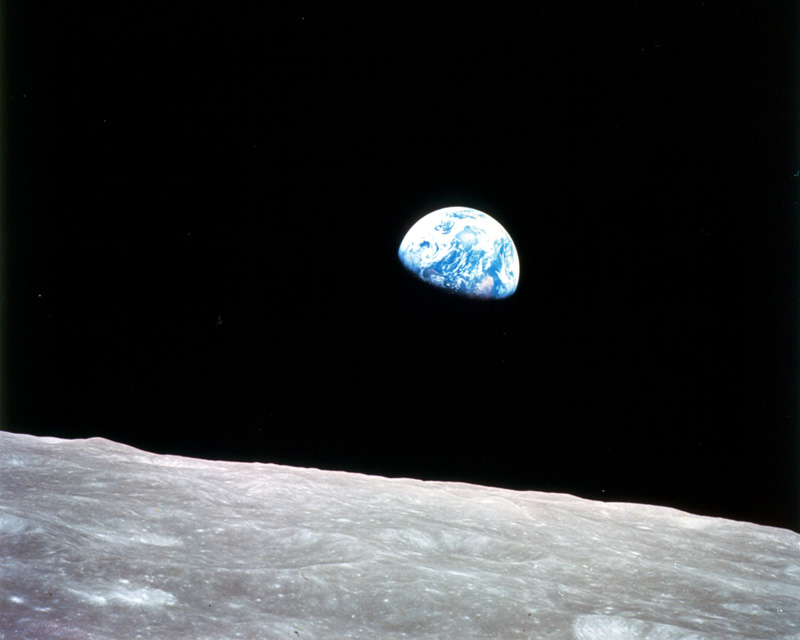
Earthrise by Bill Anders, Dec. 24, 1968

There was never any doubt that when Republicans won the 2016 election setbacks were in store for parts of the environmental movement that rely on government regulations.

Conservative think tanks like the Heritage Foundation were ready with swat teams to investigate every part of the executive branch and reverse anything and everything that could be to favor business interests during the president’s first term.

The funders of these operations have plenty to celebrate going into the new year. The rest of us took a step backward.

What I’ve learned in almost 50 years of being in the environmental movement is there is no parsing the actuality of environmental degradation. A person can summarize the greenhouse effect in as few as 200 words. The impacts of global warming are available to anyone who would recognize them. There is an inevitability of climate action with the main concern being we wait until it is too late to save ourselves.

The battle over the coal industry is being fought less by environmental advocates and more by market dynamics. So many electric utilities converted to natural gas because of its current low cost and availability. Why wouldn’t a utility want a thermal energy source delivered right to their door over a mineral that had to be delivered and handled by the rail car load at greater expense? Based on the home heating conversion of coal to natural gas, ongoing when I was a child, there is no going back to coal.

Natural gas is also a problem because of greenhouse gas emissions. While solar energy installations have stalled as a result of the president’s tariff policy, the market will figure it out to use the sun and wind directly. Renewable energy will prevail in the marketplace over extraction-based energy sources. Based on the science of climate change, they have to prevail if we hope to adapt to the deteriorating environment we created.

Symbolic gestures like the Green New Deal the House of Representatives is proposing are something. However, the problem of environmental degradation won’t be solved by governments alone. We need a resurgence of green habits. It is still too easy and inexpensive for someone to hop in the car and drive 20 miles to pick up groceries to expect them to change their behavior.

Progress made on environmental issues and policy during the Obama administration was no progress at all if it could be so easily reversed by the next administration. The idea a potential Democratic president in 2021 could reverse the damage done by Republicans is a shallow hope. We have to do better than this.

As 2018 draws to a close there is much to be done to reverse the deleterious effects of a changing climate. Some of it can’t be reversed yet we can’t lose hope. Despair is a form of climate denial.

“We do not have time for despair,” Al Gore said recently. “We can’t afford the luxury of feeling discouraged. Too much is at stake.”

Inside politics and out, now is the time for climate action.

Categories
Environment

COP24 and What’s Next

Image of Earth 7-6-15 from DSCOVR (Deep Space Climate Observatory)

Like others, I was skeptical the broad coalition to act on climate formed during and after the 21st Conference of the Parties to the United Nations Framework Convention on Climate Change in Paris would last. This week at COP24 in Poland, three top oil producing states, the United States, Russia and Saudi Arabia, along with number nine, Kuwait, blocked acceptance of the Intergovernmental Panel on Climate Change report the conference commissioned.

The four oil producers objected to “welcoming” the report and preferred the vague language of “noting” the report. Because the conference proceeds only after reaching consensus, and they couldn’t, the report was not adopted.

“Opposition to climate action is one of the issues motivating Trump’s cozy relationship with the corrupt leaders in Russia and Saudi Arabia,” State Senator Rob Hogg tweeted Dec. 9. “This is not who we are as Americans, and we need to put a stop to it.”

“Under Trump, instead of leading the world to act on climate change, the United States joined with Russia and Saudi Arabia to stop the recognition of a scientific report about the increasingly urgent need for climate action,” he tweeted.

Absent U.S. leadership on climate I expect further dissent within the coalition that reached consensus Dec. 12, 2015 with the Paris Agreement. Our politics, led by moneyed interests, hinders efforts to do what makes sense regarding climate change. We can’t even agree on the facts about climate change. Accepting the IPCC report, or “welcoming” it to use the vernacular of the conference, should be a non-issue.

Although President Trump announced his intent to withdraw from the Paris Agreement, the U.S. continues to be party to it. We live in a time when the truth has become unhinged from reality and it’s hard to see what path our country will take regarding our need to act on climate going forward.

What we see in Iowa is changing weather patterns enhanced and made worse by climate change. The 2012 drought was unimaginably oppressive and reduced corn and soybean yields. After local storms on Sept. 19, 2013 knocked trees down and damaged our home I wrote, “Everywhere in the farming community, people are concerned about extreme weather. Weather is always a concern for farmers, but this is different.” New research shows change in the atmosphere is reducing the nutritional content of foods we take for granted. None of this was expected. All of it hits home.

Whether people use the words climate change is less the issue. What matters more is our lives are changing, with tangible costs, and people are worried about it. Not only for the monetary damages of a storm, or for reduced crop yields, but for what it means for the future.

The aspiration of the Paris Agreement was noble, but likely unfeasible without leadership from the United States. Regretfully President Obama did not get buy-in from Republicans in government before he signed the Paris Agreement. Once he was gone, politics took over and his efforts to mitigate the effects of climate change are rapidly being rendered null.

There’s no easy solution to climate change. Was there ever? The truth before us is we must act on climate before it’s too late. Whether society is capable of doing so remains an open question. COP24 provided another setback to action.

Categories
Environment

Protect Our Planet, Protect Ourselves – 24 Hours of Reality

It’s a fact: Fossil fuels are driving a climate crisis and threatening our health. On Dec. 3 – 4, Climate Reality and former Vice President Al Gore will be joined by an all-star line-up of artists, thought leaders, and scientists for 24 Hours of Reality: Protect Our Planet, Protect Ourselves. Tune in and learn how we can make a healthy future a reality: https://www.24HoursofReality.org.

Categories
Environment

Act On Climate

Earthrise by Bill Anders, Dec. 24, 1968

Every few years, interest in climate change spikes, according to internet search frequency reported by Google Trends. When the Intergovernmental Panel on Climate Change released their special report on the impacts of global warming of 1.5º C above pre-industrial levels on Oct. 8, searches spiked again. Searches are already trending downward.

Newspapers in our area ran stories about climate change, about one a day in recent weeks. Is there a new window of opportunity to act on climate? I doubt it. There is no window because the walls of the house we used to live in have been blown out.

It is time to act on climate.

Every environmental activist has a to-do list. Mine has four parts.

Reduce, reuse and recycle personally. I don’t seek to create a livable environment for me only as the late George Carlin derisively asserted about environmentalists. It is better to buy only food the household can use rather than let it go to waste. We live a life of making do with old clothing, old cars, and recycling single use bread and celery bags for our garden crops. It remains important to have a discussion with Waste Management about why they won’t recycle plastic. If enough people do it, maybe they will find a better way than baling and shipping it overseas or discarding it in landfills. This is a starting point for almost everyone.

Band together with like-minded people. We walk a tightrope in life in which the risks are many. On one side, we avoid the insularity of confirmation bias in which like minded people often find themselves. On the other, we are stronger together. A recent Stanford University study of 30 years of data about street protests found “citizen activism, which has been shown to impact state and firm policy decisions, also impacts electoral outcomes.” A single voice can be amplified if it joins a chorus of hundreds or thousands.

Advocate with elected officials to mitigate the effects of climate change. There is an art to political advocacy. Where groups have been successful, we found common ground with people of divergent backgrounds to unify around a single action. This is partly how we stopped two new coal-fired power plants from being built in Iowa. It is also how we changed the minds of legislators regarding new nuclear power plants in the state. Two tactics serve little purpose: contacting a legislator every time we disagree with any action they take, and group think of people who advocate for a carbon tax as their primary method to combat climate change. We must understand the diversity of solutions to the climate crisis, keep our powder dry for when it matters most, then act in unison.

Help educate people on the threat of unaddressed climate change. It goes without saying there is uneven understanding about the impacts of climate change in society. My popular post, Climate Change in 200 Words explains the basic science, about which there is little disagreement from even the most strident climate deniers. Where society gets hit hardest is in the impacts of warmer atmosphere and oceans. The news is full of examples. Few people have missed the fires in California, hurricanes in Florida, Texas and New Jersey, or the severe 2012 drought in Iowa. All of these events were made worse by global warming. Much of the intensification of our weather events is predictable and likely avoidable with societal action. Education is a valid and essential part of creating collective action to mitigate the effects of climate change.

Perhaps the important lesson about climate change derived from Google Trends is there are clear news hooks which can make climate action more likely. The problem hasn’t gone away and we can’t rely upon news events to precipitate our actions.

Whether we will act on climate before it is too late is unknown. What we do know is the human condition includes hope for survival and a better world. It is unrealistic to believe global societies will unite around a single course of action. Part of the brilliance of the 2015 Paris Agreement was it enabled every nation to participate in their own way toward a common goal of reducing greenhouse gas emissions. Whatever deficiencies existed in the agreement, it was a positive sign of what humanity is capable.

The IPCC special report is another scientific explanation we must act on climate before it is too late. This is my to-do list. What is yours?

Categories
Environment Sustainability

Stakes Have Gotten Higher

Image of Earth 7-6-15 from DSCOVR (Deep Space Climate Observatory)

Regardless of winners, there are only two issues that matter on Nov. 6: climate change and nuclear weapons. They represent the only existential threats to society as we know it.

Will Democrats or Republicans do a better job addressing climate change responsibly? I don’t know.

Stakes have gotten higher.

The Intergovernmental Panel on Climate Change issued an Oct. 6 report which said the impacts on humans of letting the planet warm by 1.5 degrees Celsius are bad. If it gets warmer they are worse.

The good news is there is time to address it. It will be hard.

“Limiting warming to 1.5 degrees Celsius is possible within the laws of chemistry and physics but doing so would require unprecedented changes,” said Jim Skea, Co-Chair of IPCC Working Group III.

Humanity does not have a good track record of making sensible change.

The IPCC indicated society has between 10-14 years to address global warming before it reaches a tipping point after which it becomes uncontrollable.

In other words, it will be incumbent upon elected officials to address humanity’s contributions to global warming regardless of party.

Please vote, and consider what candidates might do to address climate change as you do.

View the IPCC report here.

~ Published in the Oct. 18 edition of the Solon Economist