Categories
Sustainability

New START Treaty Extended

B-61 Nuclear Bombs

We received news on Tuesday afternoon the New START Treaty was extended.

“A week ago, the United States and Russia ‘exchanged diplomatic papers’ in order to extend the New START treaty for 5 years,” wrote Physicians for Social Responsibility in a Feb. 2 email.  “Biden and Putin got this done in time — before New START was set to expire this Friday, Feb 5.”

Recent Republican administrations have not favored arms control treaties. In fact, the George W. Bush and Donald Trump administrations exited existing agreements. U.S. Admiral Charles Richard recently wrote in the U.S. Naval Institute journal Proceedings, the potential for nuclear war remains present.

“There is a real possibility that a regional crisis with Russia or China could escalate quickly to a conflict involving nuclear weapons, if they perceived a conventional loss would threaten the regime or state,” the four-star admiral wrote.

There’s nothing new in the Richard’s statement. While our relations with Russia and China require scrutiny, not only with regard to nuclear weapons, but with every facet of their complexity, a few things remain clear about the course the United States should be taking to prevent the detonation of nuclear weapons which may escalate into a full on war. In their new book, The Button: The New Nuclear Arms Race and Presidential Power From Truman to Trump, William J. Parry and Tom Z. Collina outline a framework that includes these items:

The president should not have sole authority to launch a nuclear weapons attack. The U.S. Constitution gives Congress sole authority to declare war. They should be engaged with any decision to launch nuclear weapons against another state or non-state actor. There is no need for the “nuclear football” that has been shadowing the president since the Kennedy administration.

We should never rush into nuclear war. Experience has shown us time is required to gather all the information needed to verify an attack is in progress. There is simply no need for the president to decide to retaliate based on sketchy or incomplete information in a matter of a few minutes. Launch on warning should be prohibited.

First use of nuclear weapons should be prohibited. Given U.S. conventional force superiority, there is little reason to use nuclear weapons.

Intercontinental Ballistic Missiles with nuclear warheads, positioned in silos to launch on warning are obsolete. If the U.S. were attacked with a large-scale nuclear missile launch, ICBMs in silos would be the among the first targets. They are part of the so-called nuclear triad which includes submarines and bombers ready to launch a nuclear attack or counter attack. If there were a nuclear attack on the U.S., submarines and bombers would comprise our primary retaliatory response. ICBMs are obsolete sitting ducks.

Strategic missile defense systems don’t work, despite billions of dollars spent developing them. Russia sees U.S. missile defense systems as a threat to their ability to retaliate in the event of a U.S. nuclear attack. U.S. missile defense systems, by their existence, block advancement of arms control negotiations between the world’s two owners of 90 percent of nuclear armaments.

The bigger picture is nuclear states should take seriously Article VI of the Non-Proliferation Treaty and work toward elimination of nuclear weapons. For those nuclear states which haven’t joined the treaty, they should. Countries should reduce and eliminate spending on weapons of mass destruction.

While I don’t agree with the Biden administration’s military spending priorities, I’m glad to receive the news they extended New START for five more years. Now build upon it.

Categories
Environment

Warm January

Open water on the driveway, Jan. 31, 2021.

This winter is shaping up to be a scary one. There has not been a substantial cold snap where the ambient temperature remains below zero for a week or more. We need that to suppress the insects living in the ground that feed on our plant life in the garden and yard when it gets warmer. Cold weather is also the best time to prune fruit trees.

It’s no surprise it’s getting warmer.

Atmospheric CO2 concentration hit 413.95 ppm at the Mauna Loa Observatory in Hawaii in December 2020. In my birth year of 1951 the global average was 311.80. There is a direct correlation between atmospheric CO2 and planetary warming. Our best hope is it’s not too late to mitigate rising CO2 levels.

According to NASA, 2020 tied 2016 as the warmest year on record in global average surface temperature. According to this chart, the rise in global surface temperature is in an accelerating upward trend since the baseline period of 1951-1980.

In the general election of 2020, Americans took a necessary step toward climate action by electing Joe Biden and Kamala Harris, the president and vice president willing to examine and understand the science of climate change and take action. Because Biden served as Barack Obama’s vice president, he knows what to do. It would have been better to elect a stronger majority in the legislative branch of the federal government, yet we didn’t. The majority we have will serve as we can’t wait two years to increase the majority of science believers in the midterms.

The United States rejoined the Paris Agreement within the United Nations Framework Convention on Climate Change. Like the election, it’s a beginning step. The Paris Agreement is flawed, yet it is difficult to see how the world makes progress toward reducing greenhouse gas emissions without the kind of cooperation it envisioned. Our country simply must be part of the discussion.

As a single citizen, or a small family, it is difficult to see how to help. We can and should reduce our personal carbon footprint, especially by doing things that don’t require a lot of capital: use less hot water, set the furnace thermostat lower, run the air conditioner at a higher temperature, use less gasoline and natural gas, eschew air travel and long automobile trips. The coronavirus pandemic kept many of us at home and that had a direct impact on greenhouse gas emissions. Eventually we will learn to live with the coronavirus and when we do, the need to control emissions will remain.

These are scary times. One view is there is nothing to be done about all this. The apocalypse is coming and the best we can do is mitigate its impact on us as individuals. It’s a vision of doomsday preppers, isolated and remote enclaves of the wealthy, and an attitude of preserving self as the catastrophe hits. I reject this view. We are stronger together and together we should remain in mitigating the impact of climate change.

It also seems important to focus on the big picture. Political leadership is required to make progress. For some of us, such leaders won’t be as bold as we want or feel is needed. We can’t relent on our politics.

Iowa has had its recent climate-related difficulties, floods in 1993 and 2008, tornadoes, straight line wind, a derecho, and drought. At the same time row crop yields were decreased due to climate change, as in the 2012 drought, a new, diverse agriculture remains possible because of our growing conditions. Gardeners like me contribute to resolving climate change by growing more of our own food. The process would be scalable if the importance of growing more local food were more generally accepted. We do what we can with local resources and conditions. We could do more.

Scary as it is, we can’t get depressed. It is human nature to be hopeful and hope is one of our most powerful attributes. It is important to be realistic about where we stand on mitigating the effects of greenhouse gases. For the next years, the picture isn’t going to be pretty. We can’t give up. We must persist in the effort to make our communal lives better. That’s what I plan to do.

Categories
Sustainability

Prairie Burn

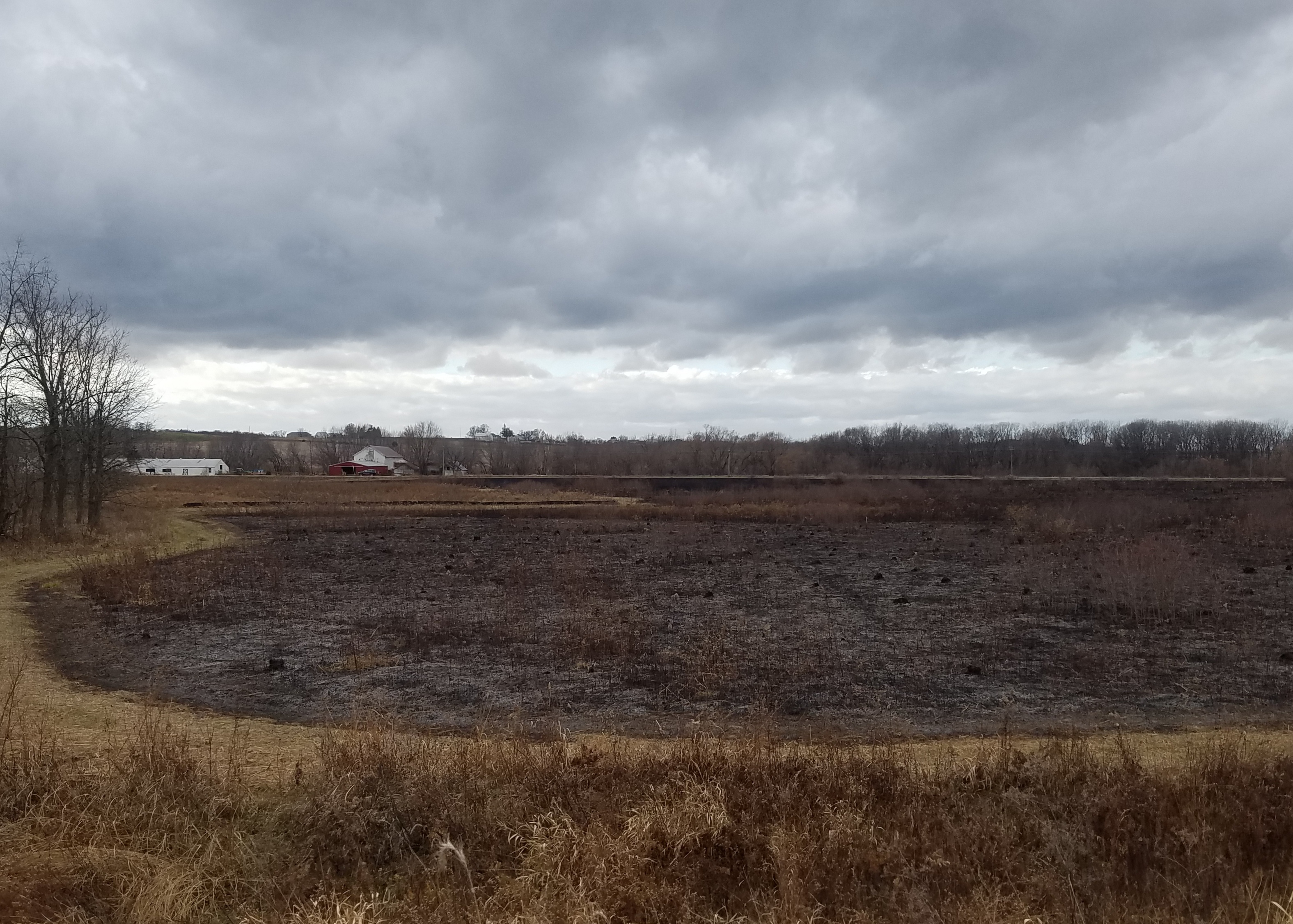
Prairie reconstruction after prescribed burn.

Back on my bicycle Monday with a 10-mile ride. Feeling my legs and lungs working as I climbed hills in low gear was affirming.

Today I’m going to take time to breathe.

Categories
Living in Society Work Life

One More Demolition

Demolition of the Kraft Heinz/Oscar Mayer Plant. Photo Credit – John Blunk

A childhood friend posted this photo of the meat packing plant where my maternal grandmother, my father and I worked in Davenport.

This is where Father died in an elevator accident in 1969. I wrote a long post about Oscar Mayer in 2015, here.

Seeing the photo evoked no emotions although memories came to mind. I recalled driving a forklift truck throughout the plant and working in refrigerated and freezer units, lard rendering tanks, the kill floor, and most other places during two summer stints at the plant. I remember the locker rooms, the butcher shop for employees, the clinic where cuts and lacerations were treated, and meeting with a union representative in a human resources conference room the first summer. Working there was some of the hardest physical labor in my lifetime.

The transition of Davenport began while I was still living there. The city went through some pretty rough times in the 1970s. When my cohort of high school friends returned home from college and university the summer of 1971 anyone who wanted a summer job found one in the city’s major businesses. I’m not sure that would be possible today. When the Mayer family sold the business to General Foods Corporation in 1981 it was the beginning of the end.

When Ronald Reagan became president the jobs environment in Davenport got much worse with large-scale businesses closing and moving toward cheaper labor including outside the United States. It is ironic that Reagan got his start in radio at the WOC studios in Davenport given the damage his administration’s policies later did to the city’s industrial base. Reagan lived in Vail Apartments where Grandmother lived in her last working years. He was no favorite son, that’s for sure.

As prominent as the meat packing plant was during my childhood and early 20s I don’t feel anything about the plant’s demolition. Big meat packers displaced the kill floor years ago, consolidating operations in much larger plants and introducing boxed meat products. When Iowa Beef Processors gained prominence, my uncle, who was a union butcher at a grocery store, went to work for them as a sales representative. He was well aware of the shady business practices of the company during and after the 1969 strike in Dakota City. I also remember the strike and what it did to Oscar Mayer.

We knew this year’s plant demolition was coming so the actuality of it is less meaningful. One more demolition in the transition of society into something else, something that favors capital and its wealthy investors. Yet our family made a life out of the meat packing business for a while… until we didn’t when big corporations took over.

No regrets, no feelings, yet a few memories remain. They are memories of growing up in a union household with a sense of fairness about our personal labor and its rewards. Like the building soon will be, those feelings are gone.

Categories
Kitchen Garden

Temperate

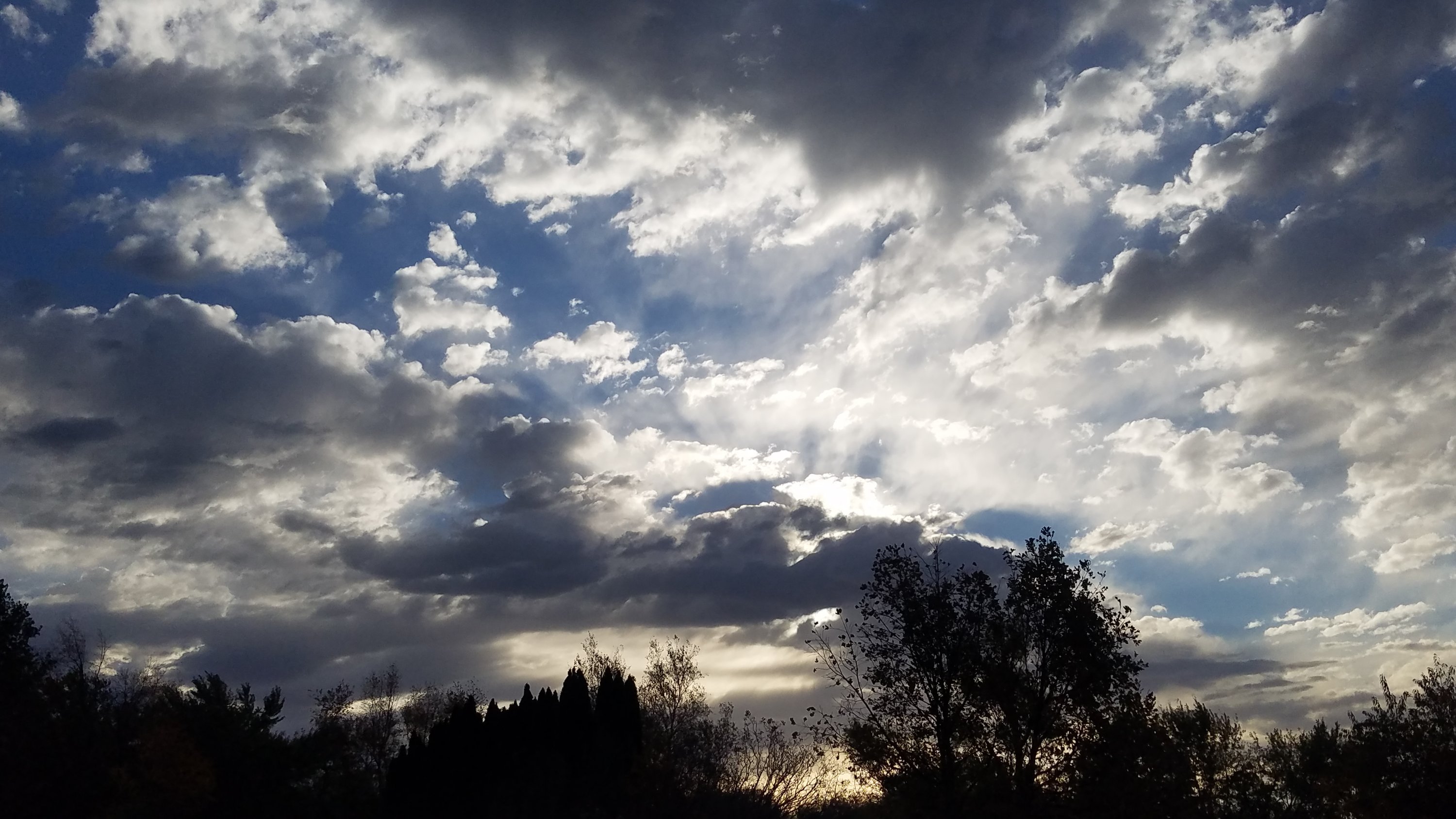
Light and clouds. Oct. 13, 2020

2020 has been a good growing season in Iowa.

Temperatures seemed normal, rain adequate. When there were exceptions, dealing with them was easy and intuitive. Gardeners produced a great crop.

Meanwhile, the arctic is melting, the antarctic too. NOAA reported the third warmest September in the history of record-keeping. Drought and desertification plague many parts of the globe. Hurricanes and typhoons wreck havoc on lives. If the derecho effectively ended our garden production, damaged hundreds of thousands of acres of corn and bean fields, and destroyed half the tree canopy in nearby Cedar Rapids, well that’s a once in a lifetime kind of event… we hope.

A reckoning is coming for how we get our food. California’s Central Valley, which produced one fourth of the nation’s food suffers from drought with limited alternatives for securing water to grow crops. The Central Valley supplies 20 percent of the nation’s groundwater demand and is the second most pumped aquifer system in the U.S. These conditions for farming and food supply are not sustainable.

In March, soon after the governor signed the proclamation of disaster emergency, grocery stores began running out of food. Many people reacted by planting a garden or expanding the one they had. They joined community supported agriculture projects. Since then food supply chains worked to fill most of the shelves. Whether grocery retail sales will return to what they were is an open question. As the coronavirus pandemic continues, it is getting worse in Iowa, causing many to stay home when they can and develop alternatives to how and what they eat.

In Iowa we are blessed with a temperate climate. Converting from row crops to diversified agriculture should be done yet is not as easy as it sounds. Smaller farms require cheap labor to produce vegetables and livestock for niche markets. Mid-sized farms are constantly on the razor’s edge working to maintain profitable and diverse operations while avoiding the burden of large capital investments. Big farmers are stuck in a web of government subsidies, commodity markets, long term capital investments, and changing demand for food.

On March 13 I had lunch at a restaurant and a beer at a bar with my best friend. That was the last time I ate restaurant food or went to a bar. Cooking at home has become the norm, not just for me, but for many. That has an impact on food service companies that supply restaurants, and food processing companies that prepare food for distribution. We lost one of the anchor restaurants on our Main Street in town. There will be more business casualties unless people return to restaurant dining soon. With winter coming and the pandemic getting worse in Iowa, diners seem unlikely to return to restaurants until next spring or summer.

It comes back to Iowa’s temperate climate. It seems clear climate change is changing the way we live. As long as we have a temperate climate here we’ll survive.

In graduate school I interviewed people who survived the great depression. What they did then is what we have to do now: create a home industry that meets more of our needs and relies less on global supply chains that developed since World War II. Self-reliance should come easy for Americans as it was defined early in the history of the republic. What’s needed today is broad adaptation of a self-reliance approach to living.

The Centers for Disease Control and Prevention recommended everyone celebrate Thanksgiving virtually this year to prevent spread of the coronavirus. I suspect many Iowans will meet in person and contribute to spread of a disease that is out of control here. A temperate climate can’t help with that. What we can do is plant a garden, something our environment currently supports.

Categories
Environment Writing

Lilacs Bloom in October

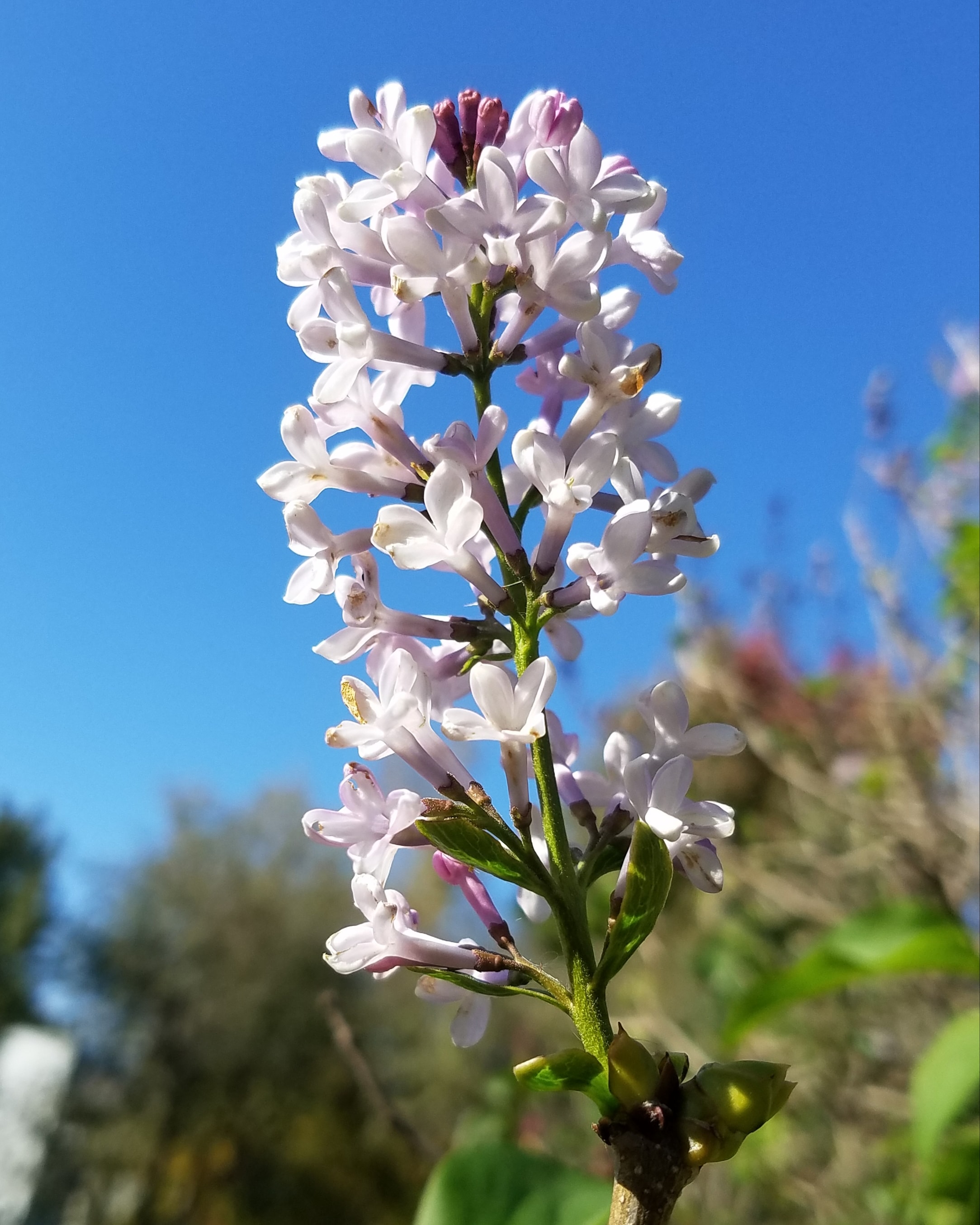
Lilac blooming on Oct. 6, 2020.

2020 has been stressful for trees and shrubs. Our lilac bushes are in bloom. It’s October.

I remember when autumn colors took my breath away. Stunning reds, yellows, greens and browns spread out across the other side of the lake.

It wasn’t breath-taking this year as I jogged along the state park trail.

The trees seemed sparse. More than last year. The yellow, brown and green colors were subdued or muted, as if the forest had one hella year like the rest of us. This side of the lake, tree damage from the derecho is everywhere. As winter approaches uncertainty abounds.

One hopes for catharsis on Nov. 3 yet I don’t know. Ticket sales from Broadway performances in New York have been suspended until May 2021. It seems like forever until then.

Categories
Living in Society

Cutting Deadwood

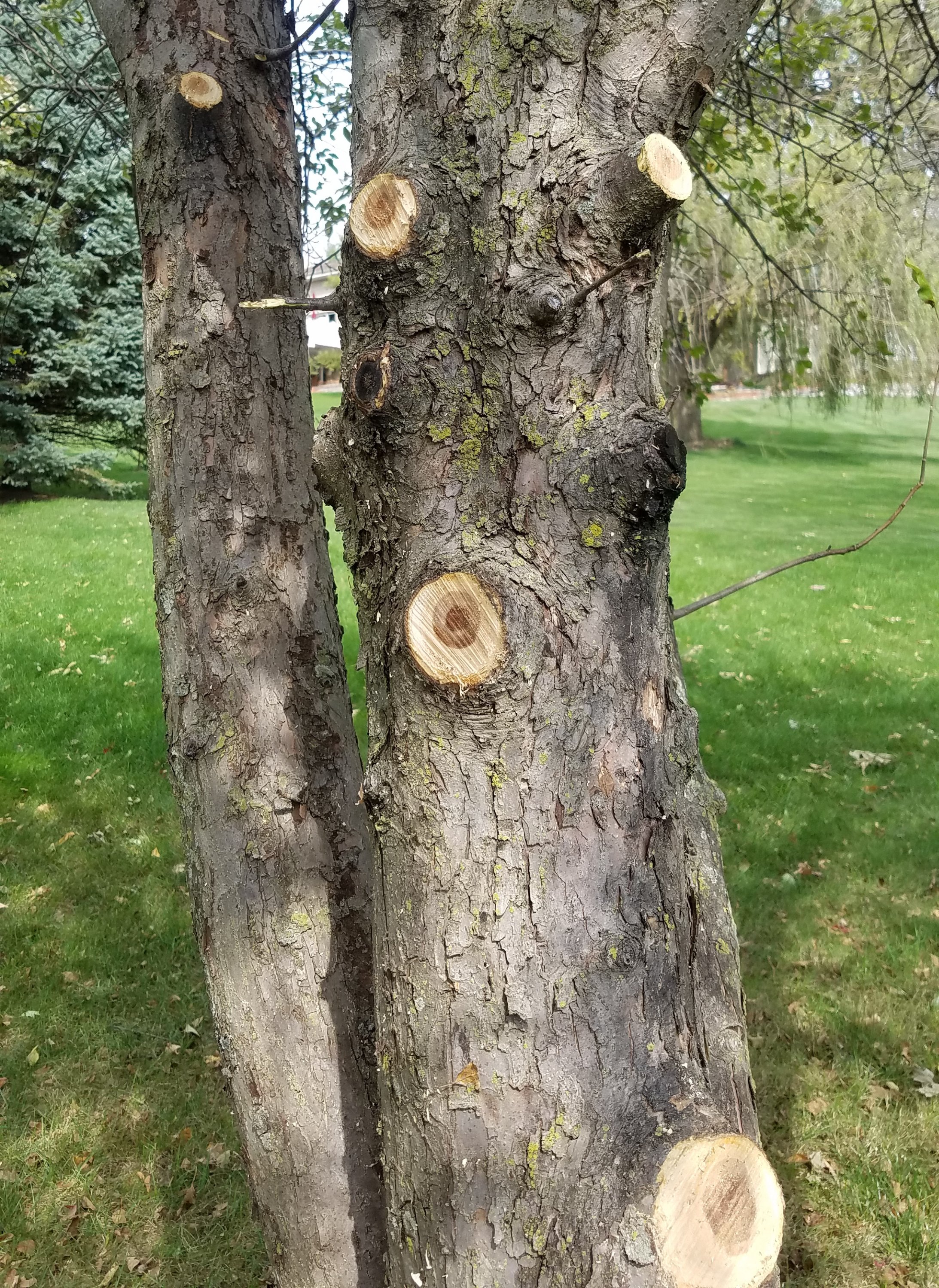
Removing deadwood

It is not ideal to chainsaw dead branches from living trees in autumn yet that’s what I did during my morning work shift. The wounds provide an entry point for insects which may eventually kill the tree. Some of these apple trees are eventual goners, so there was little to lose.

A bee landed on one wound while I was working, making my point.

I couldn’t get to sleep Thursday night which is unusual. I was stressed about 2020 and everything that has happened. A lot of that is going around. When I finally got to sleep around midnight I slept until 4:30 a.m., later than usual.

News the president and first lady contracted COVID-19 waited for me to wake. My reaction was he brought this on himself and should have been more careful. Regular people knew that all along. The following hours were filled with other takes and by the end of the day the president was hospitalized at Walter Reed. Last report was he didn’t need supplemental oxygen.

Friday I did morning work then rode my bicycle. When I got home I spent time outdoors. Leaves on deciduous trees have ignited into color. It was glorious to be outdoors. I feel better after using the chain saw. The pruning is partly finished and a new pile of brush awaits processing. The woodpile will get taller once it is.

The natural part of each day has been calming. We could spend more time in nature and be the better for it. So much depends upon this election, though. It keeps us up at night and retards our ability to function as we once did. We must work through the challenges and maintain our own health and welfare at a basic level. It means wearing a mask while talking to neighbors in the driveway, putting mail in quarantine a couple of days before opening, and reducing the number of in-person contacts with people we don’t know.

Out of isolation something better will come, a path to a better future, I hope. Days rush by toward the election and we can’t wait for the catharsis we hope it will bring. The uncertainty is unsettling and it’s important to acknowledge that.

Saturday begins another day with a full schedule. Mostly I’ll be working on the election as the first gleaning of the garden was yesterday and the brush pile can wait.

We placed our bets that hard work will change the direction of this misguided country. We all must do our part. Most of us are doing the best we can.

Categories
Living in Society

Sunday Turn Around

Soybeans coming out of the field in Johnson County.

As the odometer hit five miles I stopped and turned toward home. A light rain began.

Pedaling at 15 miles per hour I rode ahead of the rain cloud. Real rain would come later in the day, in the afternoon, on my political yard sign pickup event.

A week from today the county auditor will send out vote by mail ballots. Increasingly my energy is devoted to the election outcome. It will be a long, hard ride to Nov. 3. I’ve been in training for the coming month and am ready.

Everything else takes a back seat as I help bring this home.

Categories
Sustainability

Trees Take a Hit

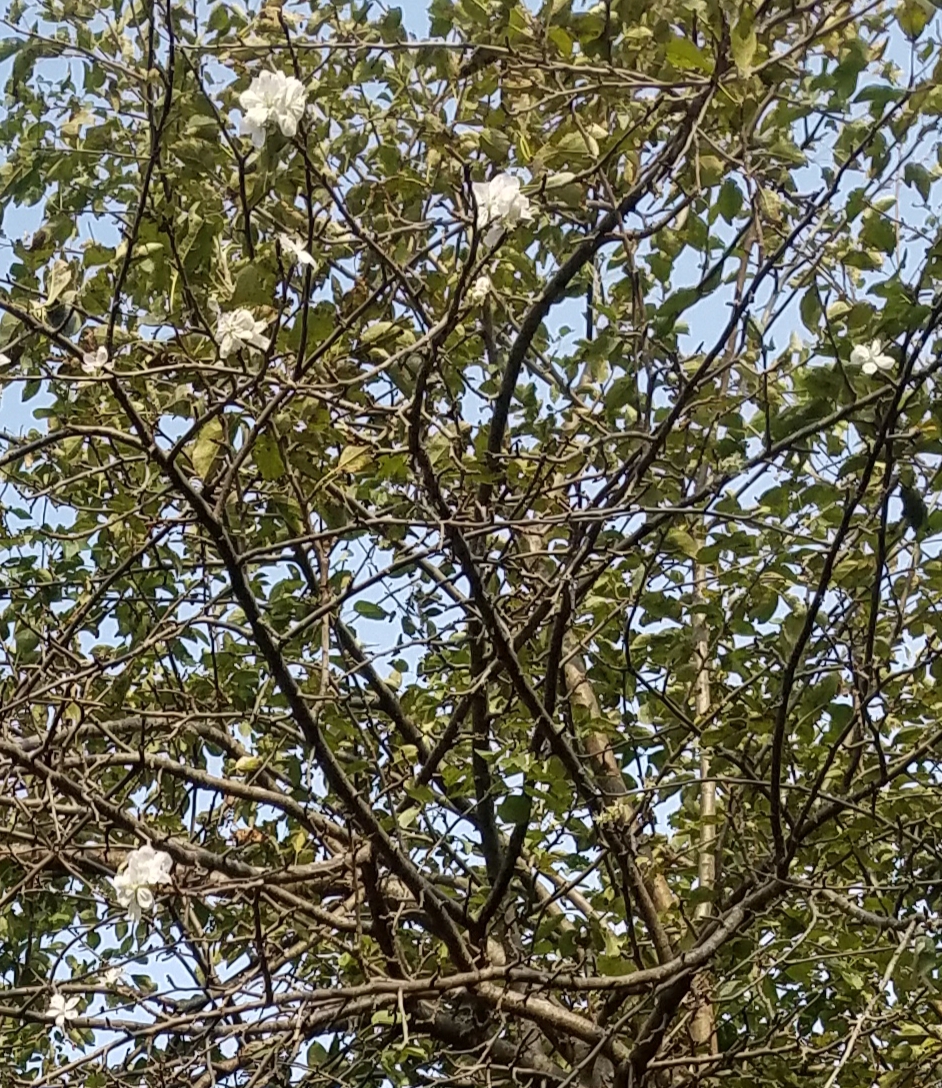
Apple blossoms on Sept. 17, 2020.

2020 is the year trees and shrubs planted in the mid-1990s took a hit.

While mowing for the first time after the Aug. 10 derecho I noticed an Earliblaze apple tree was in bloom. The branches with blooms had otherwise died.

The Red Delicious apple tree lost a major branch during the storm. It seems unlikely to survive, although I might be able to get a crop next year. The scar where the branch was is big. Sealing it from insect predators seems a temporary solution. I had the same experience with a Golden Delicious tree a few years ago. It’s already gone.

One of the lilac bushes suddenly lost all of its leaves. While mowing I noticed new leaves had begun to form. I presume it is next year’s leaves. It’s time to cut that bush out.

Our neighborhood continues to recover from the derecho. Chain saws run almost every day. Burn piles amass, piles of firewood lay everywhere. Although I cleaned up the fallen branches and trees this week, there is more work to be done and sadly it involves a chain saw rather than pruning shears.

Planting a tree is a long-term commitment. When we have a year like 2020 one questions the merit of decades of work when the derecho, combined with disease, mitigates that work so quickly and unexpectedly. I don’t measure my remaining time on this blue-green, turning brown sphere in decades any more. There is enough time to eat apples from new trees I planted this year.

The haze through which the sun shines originated in record-setting fires on the West Coast. The arctic also has a record number of fires. The arctic and antarctic glaciers are melting and don’t get enough snowfall to offset the loss. It is an increasingly hot planet. We are all impacted as the pollution spreads through the atmosphere.

Phase two of my tree work is taking care of many dead branches that cropped up since spring. There is time to work on it. The firewood pile is getting taller though, and isn’t finished growing yet.

Firewood pile Sept. 17, 2020
Categories
Living in Society

Turn Around

Turn around point on a two mile run.

Some days I don’t leave the Lake Macbride watershed while exercising. What we do here flows to the Iowa River and then downstream to the Gulf of Mexico.

Our personal goal is to contribute as few pollutants as possible to the watershed. We’re not the only ones who live, play and work here though.

The lake is polluted with nutrients from runoff. Evidence of surface algae and beach closings because of e. coli. contamination are standard. It didn’t used to be this way. Locals continue to use the lake for fishing, boating and other recreational activities. I stay out of the water and use the extensive trail system for bicycling, jogging, walking and soaking up Vitamin D.

Over the weekend I worked with the county Democratic party in a campaign sign distribution activity. Our home was one of five sign pick up locations throughout the county. Activity was slow. Most people continue to deal with the aftermath of the Aug. 10 derecho and with this week’s resumption of K-12 school. People are aware of the Nov. 3 election, and mostly know for whom they will vote for president, but not engaged in politics at any significant level.

I have a back up bicycle I will dig out and get ready to ride while I figure out what to do with the blown tire of my main one. The goal of exercise is to find four activities that produce a good sweat after 25-30 minutes and can be done easily from home. Bicycling and jogging I’ve written about. There is also a ski machine which serves for indoor and winter exercise. Need to come up with one more type with the ultimate goal of rotating exercise daily. I’m monitoring the condition of my feet, knees, hips and lungs as I venture into jogging for the first time since 2014. As I age I’m monitoring a lot more than that.

Next week I return to the clinic to review the newest panel of blood tests. Since my last one I’ve been exercising more, gave up beer and alcoholic drinks, and started a prescription to address elevated LDL cholesterol. I feel I’ve been doing the work. We’ll see if the results show it.

Life could be worse than living in the Macbride watershed. Whatever concerns we have about living here at least we don’t live in the COVID-infected metropolis. While I provided easy access to yard signs I wore my mask. I’ll be using my masks for a while.