Vegetables drying on the counter after harvest, Aug. 10, 2022.
The first thing I noticed upon my April 20, 2020 retirement is nothing changed. We were entering a period of living in a global pandemic, and a main goal was to live to see the other side of it. Since then, it has become clear the coronavirus pandemic will change, yet not end.
On Feb. 3, the Iowa governor extended the state’s Public Health Disaster Emergency Proclamation regarding the coronavirus pandemic. She announced it would expire at 11:59 p.m. on Tuesday, Feb. 15. After that, “the coronavirus becomes normalized in daily, routine public health operations,” she said. Agree, or not, our lives of living with the virus continue, such normalization as has been dictated by the government has not made life like it was before we heard the words “coronavirus pandemic.”
This is the first of a series of posts I hope to write about aging in America. While my reach is not far beyond Big Grove Township, universal themes run though my life and I hope to think about and tap into them for my writing.
Since retiring during the pandemic I became a pensioner, which means there is a fixed income mostly from my Social Security pension. I feel flush with cash when the monthly check hits our bank account. That feeling diminishes rapidly until I’m waiting for the next check to hit. As long as there are no major crises, we’ll be okay.
A while back I inventoried every distinct part of my body. There were issues with every major system, and aches and pains accumulated over a lifetime of being physically active. I’m not as flexible as at age 30, yet can bend and crawl in the garden much as I have since our first small one in 1983. The frequent jogging I began during military service has turned into walking. I take a cholesterol medication which is fully paid by insurance. Everything else I do regarding inputs is completely voluntary. My frame seems sturdy, I feel healthy, and am mostly ovo-lacto vegetarian.
Most concerning is my ability to see. I wore eyeglasses since high school and now have a pair of transition lens glasses for general use and a special pair for the computer. I expect my cataracts to harden with increased age. My ophthalmologist told me they have already begun to do so. I have an ophthalmologist.
While my financial and physical condition are important, they are not my main interest here. There are questions to be addressed, if not answered:
What does intellectual development mean to a septuagenarian?
How should my diet change with aging?
What types of social engagement should be pursued?
What role will I play in Democratic politics?
What kind of creative output do I seek to accomplish?
It is hard to say how many posts this will take. Like with other big topics, they may not be immediately following each other. Writing about aging in America is a worthy topic, though. I will do my best to not be boring.
Hiroshima, Japan after U.S. Nuclear Attack. Photo Credit: The Telegraph
On the 77th anniversary of the United States dropping an atomic bomb on Hiroshima, Japan, hundreds of diplomats representing the states-parties to the 1968 nuclear Nonproliferation Treaty (NPT), along with representatives from civil society, are convening at United Nations headquarters in New York for talks that will shape the future of the international nuclear arms control regime at a time when the risks of nuclear proliferation and nuclear competition are growing.
Godspeed to the delegates!
I have been writing about nuclear arms reduction since the nuclear freeze days in the 1980s. We don’t seem to be getting anywhere. When the 45th president was in office, he contemplated re-introducing so-called tactical nuclear weapons into our military arsenal and would likely have withdrawn from the NPT if given the chance. He rejected the idea of the U.S. eliminating nuclear weapons.
Where do we go from here?
Nuclear weapons should never be used again. Conservative forces that came to power in the wake of Ronald Reagan’s election in 1980 have been steadily deconstructing the nuclear arms protocols that took so much work to put in place. Unchecked, they will continue their work. It seems clear people with common sense about nuclear weapons need a new narrative. This gets to be a worn sawhorse, but we need to elect politicians willing to reduce and eliminate nuclear weapons in accordance with Article VI of the NPT, an agreement the United States willingly signed and ratified. Who knows if the treaty could be ratified again in today’s polarized U.S. Senate?
So another year passed without progress on reducing our nuclear arsenals. If anything, the war between Ukraine and Russia heightened international tensions and has nations keeping their arsenals in place until we know the outcome.
Let’s hope the NPT Conference produces significant results and a viable plan for compliance with Article VI. The United States should lead this effort, although we have been recalcitrant about hanging on to our nukes.
Today we must consider what it will take to make needed change.
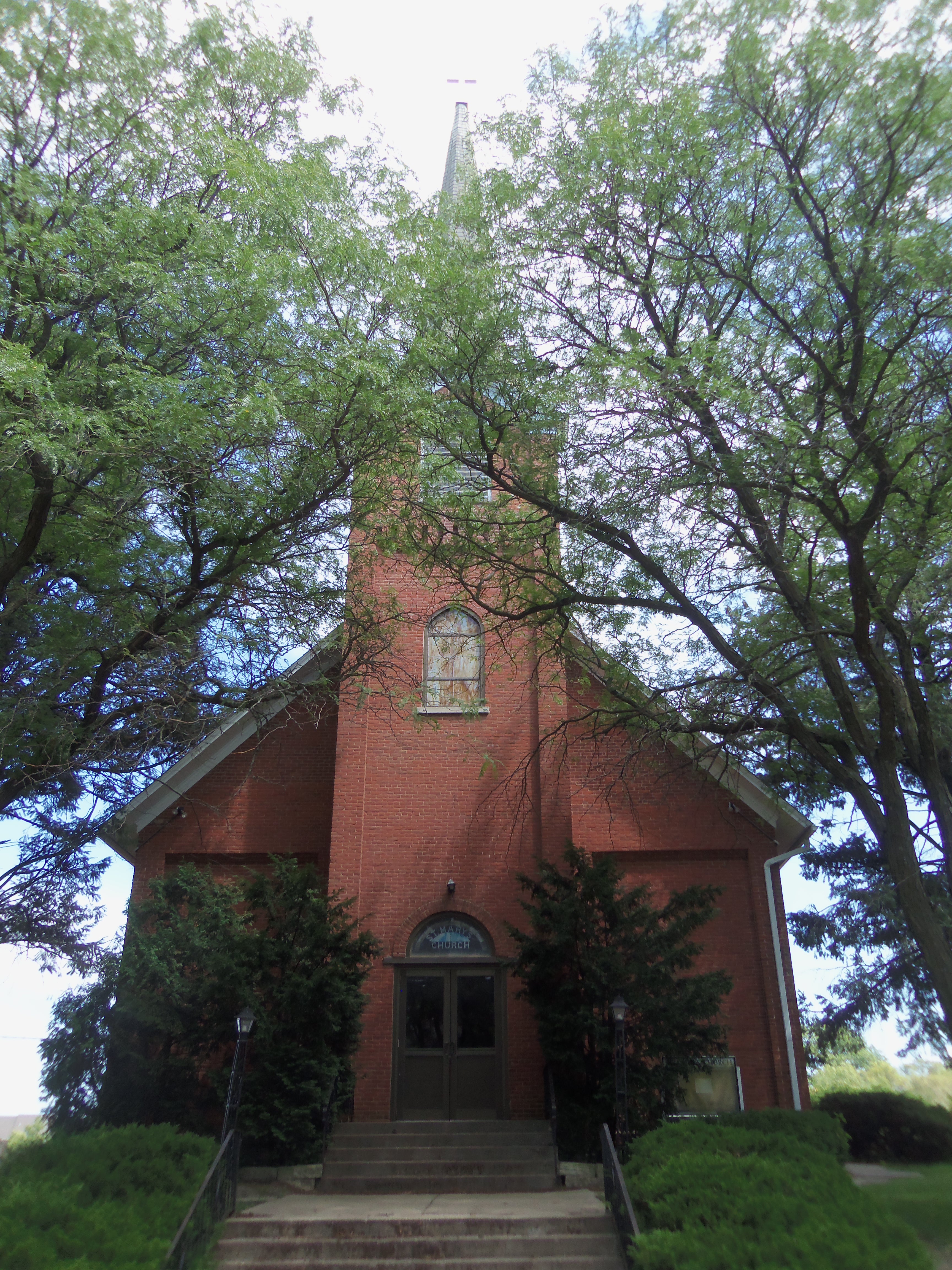
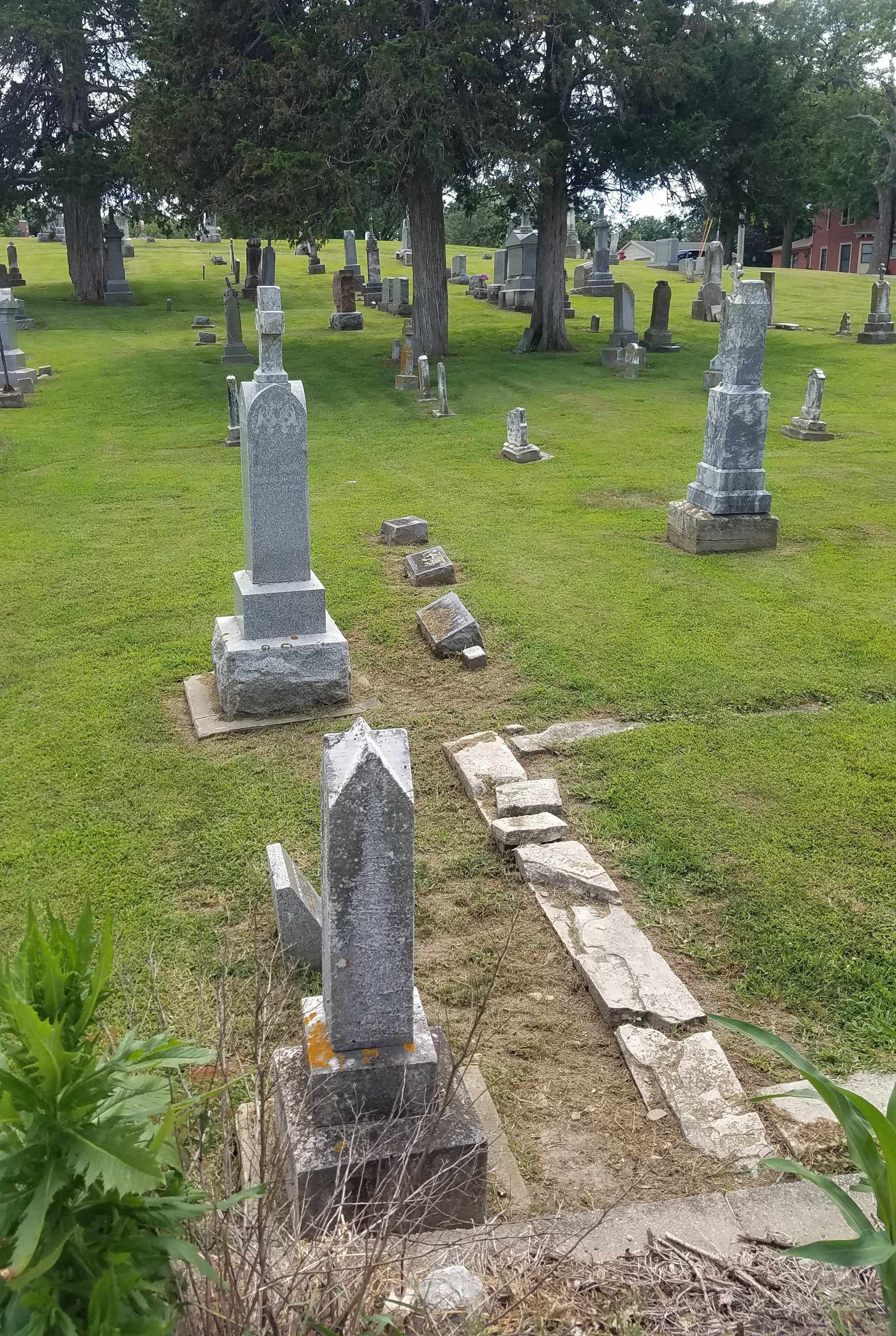
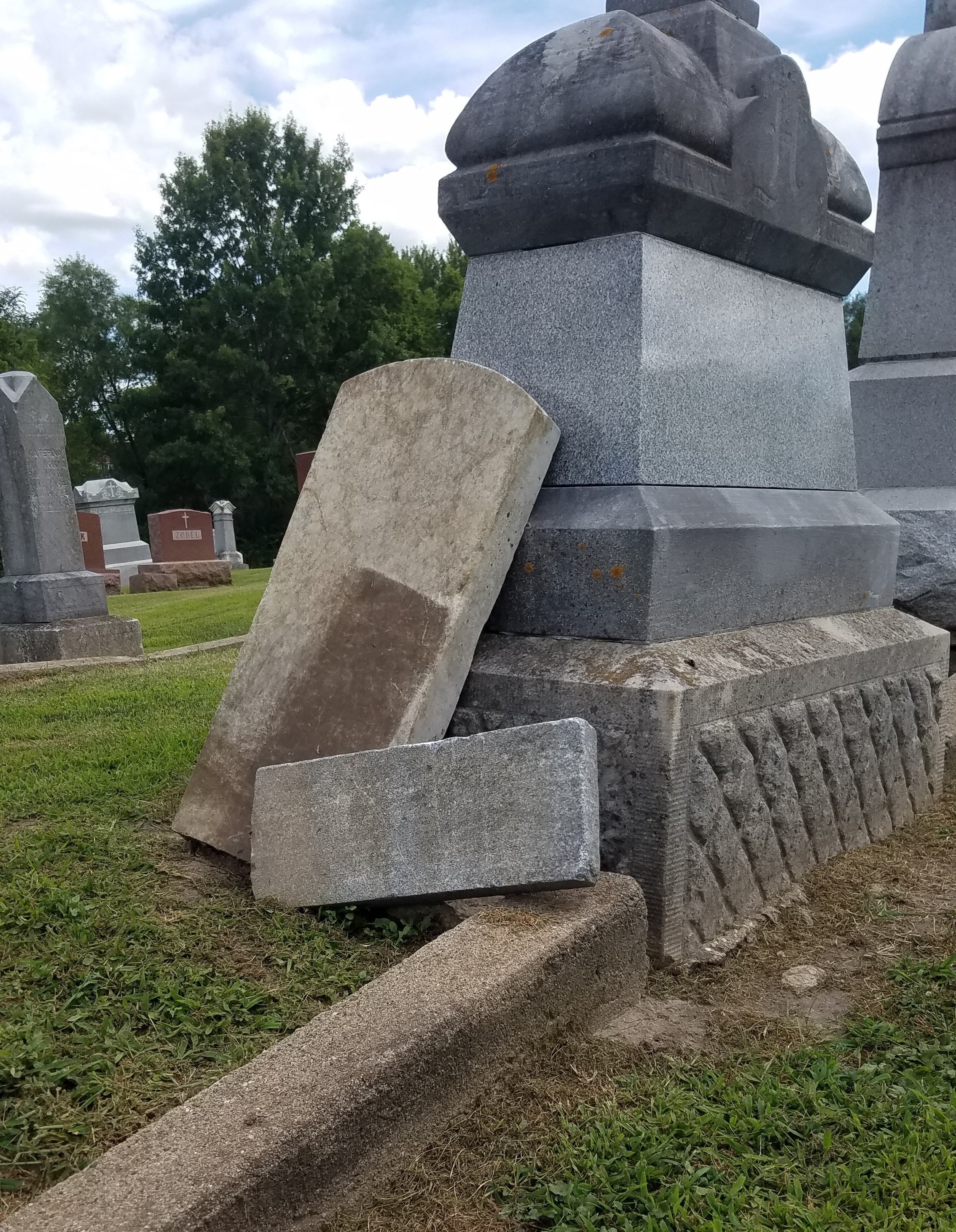
View of the Saint Mary’s Catholic Church cemetery in Solon, Iowa on July 30, 2022. Photograph of the now razed Saint Mary’s Catholic Church on Aug. 1, 2013. The cemetery was located around the church. Photo Credit – Wikimedia Commons.The cemetery has a look of not being maintained. The closer the view, the more markers are found damaged and askew. Broken tombstoneBroken tombstonesLeaning grave markersStacked, broken grave markers.
There are cemeteries like this across Iowa and the United States. I like the look of sunken and leaning monuments, and broken grave markers reflecting the passage of time. How is perpetual care done in places like these? Beyond mowing the lawn, not much is done except by family and volunteers. If I had family buried here, I’d maintain our burial site. What would happen after I’m gone? This cemetery is not featured on the current church website. I wouldn’t call it neglected, yet it is not a main part of the community.
Except for the image of the church, photography is by the author.
The Midwest is bracing for a heat wave next week when ambient temperatures are forecast in the 90s. On Wednesday it is expected to reach 103 degrees. The Iowa State University Extension and Outreach Service issued a reminder to farmers of what to do to protect their investment in livestock. It is going to be a scorcher in the corn belt from top to bottom.
I finished my month of posts at Blog for Iowa earlier in the week and am ready to turn my attention back to Journey Home. This blog has had four names since I created it to move from Blogspot to WordPress in 2008. If we ever get out of the coronavirus pandemic, I might give it a fifth. We are at a distance from the end of the pandemic.
The challenge in the garden is keeping the plants watered, yet not too much. They will survive the heat with adequate hydration. Early morning or late evening watering has been best.
Tomatoes are beginning to ripen and we had our first slicers for dinner last night. Yesterday I grated and froze zucchini for winter soup and tried a quick dill pickle recipe I saw on TikTok. From here until Labor Day, part of every day will be food preservation. I have a row of San Marzano tomatoes to convert to canned wholes for use throughout the year. I tasted the first ripe ones and they were deliciously different from other varieties I have grown.
My sleep patterns have changed while on holiday. I stay up until 9 p.m. and am sleeping through the night, getting six or seven straight hours of sleep. It has been a long time since I did that. I’m hoping the new patterns persist.
I keep plugging along with reading and have almost finished Loretta Lynn’s memoir Coal Miner’s Daughter. The book reminds me of the part of Appalachia where my father was born and how people there lived and still do. Lynn’s birthplace, Butcher Holler, Kentucky, is about 85 miles from Father’s birthplace. Of course, Lynn got to know June Carter Cash and Johnny Cash through her music. June Carter Cash is a shirttail relative of ours.
It is easy to see why people liked Loretta Lynn’s music back in the 1970s. She was part of a social revolution that changed how people lived. In part, it was based on Roe v. Wade and introduction of the birth control pill which Lynn wrote about. In her song, “The Pill,” she wrote, “I’m tearing down your brooder house ’cause now I’ve got the pill.” Husband Doolittle got a vasectomy after birth of their twins and Lynn wrote about that too.
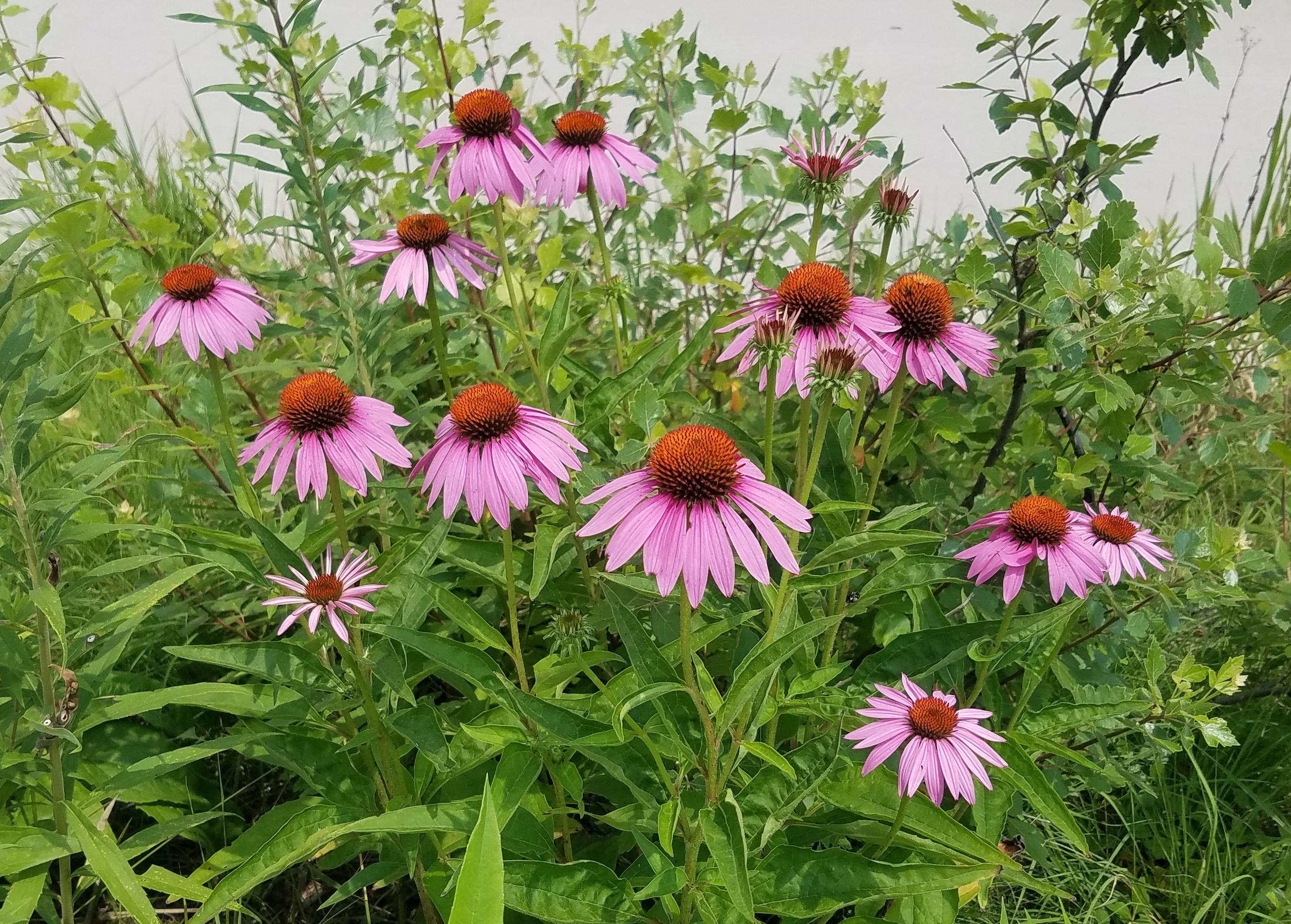
Wildflowers bloom in July with an ever-changing array of color. Now that the garden switched from planting to harvesting, I walk along the state park trail almost daily to watch nature’s changes. Even though The International Union for the Conservation of Nature added the migrating monarch butterfly to its “red list” of threatened species in July and categorized it as “endangered,” I saw a few Monarchs on the trail yesterday.
The world we know may be dying due to the climate crisis yet there is evidence of our past in every walk along the trail. Stay cool next week!
Entering the last week of July, the garden is coming on strong. The refrigerator is full, the freezer is getting full. There is a lot to do in our kitchen garden every day.
Last night’s dinner was what I’d call garden soup. I harvested a bin of vegetables and as I cleaned them threw bits and pieces (cauliflower leaves, broccoli stems, peas and cabbage leaves) into a soup pan along with mirepoix, bay leaves and seasonings. It was occasion to use up veggies that had been in the refrigerator a while, like wilted lettuce, zucchini, kale, green beans, kohlrabi, and sweet corn. I added a couple of cans of prepared beans, a handful each of lentils and barley. Soup like this always comes out good. I froze enough for two future dinners.
I adjusted to being on holiday. That means I am getting more sleep, exercising daily, eating well, and spending my days as productively as possible. There are naps… in the middle of the day.
Reading consisted of two books this month, Parable of the Sower by Octavia E. Butler. and Gone Girl by Gillian Flynn. I didn’t care for the violence in either of them. I started Loretta Lynn’s memoir Coal Miner’s Daughter and set aside books that require deep engagement in social or historical facts. I’ve been doing “summer reading.”
My work at Blog for Iowa turned into covering for much of the month of July. I hope readers enjoy the writing I am cross-posting here. I’ve been posting at Blog for Iowa since February 2009 and as long as the publisher continues to have an interest, so will I.
This July has been exceedingly hot. There has been good rainfall but the heat makes going outside in the afternoon oppressive. I attended an evening potluck dinner at the nearby city’s park and the breeze took away the oppressiveness. For a while it felt like summer I remember from being a grader when our home did not have air conditioning. It was a positive feeling.
I’m not back from holiday and will continue at least until Labor Day. For the moment I’m enjoying what days I can and living a life. The direction I hoped to find has been elusive yet there is time. Sometimes we need to simply drift and get our bearings.
Newly installed bench on the state park trail, Spring 2022.
Mid-June, the garden is in full production and expected to remain so until September. With everything going on in society — politics, transportation, and malarkey from Republicans — it has been difficult to focus on writing. Maybe at some point I can walk to this bench and take a rest. Not now, though. There is too much else to do.
Actor Slim Pickens as Major T.J. “King” Kong in Dr. Strangelove or: How I Learned to Stop Worrying and Love the Bomb. Photo Credit – Getty Images
Iowans are legitimately worried about the risk of detonation of nuclear armaments as a result of increased tensions in the world. The war in Ukraine is perceived by some as a proxy war between the United States and Russia. While it’s true our two countries have the majority of nuclear weapons that exist in the world, both Putin and Biden have said they seek to avoid a nuclear exchange. The assertions about a proxy war do not seem accurate.
Dr. Robert Dodge, posted the following article at Common Dreams on Friday. It explains how I feel: We need to take a step back from the brink.
Ukraine, Existential Threats, and Moving Back From the Brink We can no longer continue to wage war over finite resources and survive in a nuclear-armed world.
First published on Common Dreams by Dr. Robert Dodge.
This spring, as those before, beckons a season of renewal and opportunity for the future. We have just witnessed the major religions of the world celebrate Easter, Passover, and Ramadan and in the words of Ambassador El Yazidi of the Coordinating Council of Muslims in Germany, “We are all siblings in humanity and must work together for good.”
This is also a time when the world celebrates Earth Day with a heightened awareness of the fragility of our world and the intersectionality of mankind’s actions on the survival of our planet. Yet our world is in peril with many intersecting crises from the continued global pandemic, now in its third year, to climate crises that continue to inflict progressive epic storms and devastation. Add to that the two-month-old Russian war on Ukraine with threats and nuclear posturing by the superpowers bringing us closer to nuclear war by intent, miscalculation or cyber-attack portending the greatest threat of a global near-death event since the end of the last Cold War.
Against this backdrop, it is also tax season in the United States when the nation funds its priorities as we look to the future. In the words of Rev. Jim Wallis, founder of Sojourners magazine, “Budgets are moral documents.” And so what are those priorities and how do nuclear weapons factor in?
The 2022 fiscal year budget, the first by President Joe Biden, will see the U.S. rob our communities of precious resources spending nearly $77 billion on all nuclear weapons programs, exceeding the expenditures of the last budget from the Trump administration. In total, the U.S. will have spent approximately $219 billion on all nuclear weapons programs in the last 3 fiscal years while fighting a global pandemic. To see the costs to your community, see the annual Nuclear Weapons Community Costs Project just released by Physicians for Social Responsibility Los Angeles.
Current global nuclear arsenals contain about 12,700 nuclear warheads, with the United States and Russia having near 90% of those. The use of even a tiny fraction of these weapons threatens life as we know it. A regional nuclear war using 100 Hiroshima size weapons (less than half of one percent of the global nuclear arsenals) over cities in India and Pakistan—South Asia’s nuclear powers who have had a tumultuous relationship for decades—could cause a global famine threatening 2 billion people due to the devastating nuclear winter and climate change that would follow. A larger nuclear war between the U.S. and Russia targeting the major cities in each nation could possibly lead to the extinction of the human race.
This is not a situation that has to be. The existence of nuclear weapons and the continued dependence on fossil fuels with the destruction of our environment result from our way of thinking and behavior. We cannot continue to wage war over finite resources and survive in a nuclear-armed world. We must end our dependence on fossil fuels that threaten destruction of our life sustaining ecosystems. Instead, we must recognize our interdependence as one human family. Nuclear weapons have been made by man and can only be eliminated by man. Ending the subsidy and our dependence on fossil fuels while transitioning to sustainable renewable resources is also in reach given the political will.
The United States can and must lead on these issues. There is a rapidly growing national intersectional movement in the U.S. called Back from the Brink. It is a coalition of individuals, organizations, and elected officials working together toward a world free of nuclear weapons and advocating for common sense nuclear weapons policies to secure a safer, more just future. Endorsed by over 400 organizations, 326 U.S. elected officials, 58 municipalities and 6 state legislative bodies, it calls on the United States to lead a global effort to prevent nuclear war by:
Actively pursuing a verifiable agreement among nuclear-armed states to eliminate their nuclear arsenals.
Renouncing the option of using nuclear weapons first.
Ending the sole, unchecked authority of any U.S. President to launch a nuclear attack.
Taking U.S. nuclear weapons off hair-trigger alert.
Cancelling the plan to replace the entire U.S. nuclear arsenal with enhanced weapons.
All are invited to endorse and join this movement. We have a way out. There is hope for the future and that of our children’s children. At this moment in history we must understand the threat and opportunity before us. Let this be a time when we choose hope for all of humanity.
Our work is licensed under Creative Commons (CC BY-NC-ND 3.0). Feel free to republish and share widely. Robert Dodge
Robert Dodge, a frequent Common Dreams contributor, writes as a family physician practicing in Ventura, California. He is the Co-Chair of the Security Committee of National Physicians for Social Responsibility and also serves as the President of Physicians for Social Responsibility Los Angeles.
I had the second discussion of what to do about missing tooth #14 at a recent, routine dental appointment. The same dentist who extracted it answered my questions. I don’t plan to get an implant or a bridge to cover the gap. I’ll be gap-toothed, I guess.
I recounted my experience working as an admissions clerk at the University of Iowa College of Dentistry where what seemed like a lot of patients complained of dental implants gone wrong. Doc said cultural aspects of getting and living with an implant were as important as proper use of the technology. In other words, many implant patients are part of their own problem.
This conversation is basic to being an American. There is the idea of something and the actuality of that same thing. The idea of a dental implant and the loading and living with one are culturally separate. Increasingly, Americans seem more focused on ideas, to the extent the social context in which ideas are found is one of neglect, misinformation and bad habits. Hence failed dental implants and other things.
On several occasions people said to me of their decaying teeth, “I’m going to yank them all and get plates.” One hoped such yanking was done by an oral surgeon rather than in the tool shed or kitchen with common household pliers. There were a share of folks who took the tool shed approach to relieving tooth pain. It created more business for our clinic to remove broken roots their pliers couldn’t reach.
The distinction between ideas and their social context is applicable to things besides dentistry. For example, we know we should moderate simple carbohydrates in our diet to prevent onset of weight gain and Type 2 diabetes. There is a science to this. At the same time it is easy to prepare a simple spaghetti aglio e olio (garlic and olive oil) at home when pinched for dinner. It’s cheap and tastes good if properly prepared. It can seem convenient to order take-out pasta or pizza from a restaurant via GrubHub or Uber Eats without regard for portion size. Moderation is in remission in American society.
What makes American society frustrating is we live in the actuality of ideas developed and promulgated by others. Some of the ideas coming out of media figureheads and politicians are outrageous. What people do based on such ideas affects us all.
We feel little ownership of ideas prominent in our lives. Our country is based on ideas in a certain world view. When the founders wrote the Declaration of Independence, the first seven words of the second paragraph spoke to their world view, “We hold these truths to be self-evident.” There were truths and it was possible to know them and verify them: they were self-evident. If most founders believed there was a God, the new nation was not founded in religion. Quite the opposite. Following the philosophy of John Locke, human understanding considered the natural world, rendering any relationship with God unknowable and unverified. What was true was evident in the natural world and could be observed if one had the will and mental acuity. We’ve entered a realm where any idea can be viewed with suspicion regardless of its inherent, observable truth.
As I told my dentist, the missing tooth is not depriving me of nutrition. Its position is far enough back so I don’t appear to be a gap-toothed fool when I smile. A missing tooth is not what I wanted. The truth is I can go on living in the American experiment.
In retrospect, Earth Day has been a bust. It turned into an annual reminder among privileged Americans to do something about environmental degradation. It became a do-nothing tradition that had little material impact on the environment.
It would have been better to pursue social justice, elimination of poverty, or equal protection under the law, right from the beginning. All paths would lead to improving the environment regardless of the starting point.
Charles C. Mann wrote about the elitist nature of Earth Day in his book The Wizard and the Prophet: Two Remarkable Scientists and Their Dueling Visions to Shape Tomorrow’s World:
So ineradicable was the elitist mark on conservation that for decades afterward many on the left scoffed at ecological issues as right-wing distractions. As late as 1970, the radical Students for a Democratic Society protested the first Earth Day as Wall Street flimflam meant to divert public attention from class warfare and the Vietnam War; the left-wing journalist I.F. Stone called the nationwide marches a “snow job.”
The Wizard and the Prophet: Two Remarkable Scientists and Their Dueling Visions to Shape Tomorrow’s World by Charles C. Mann, page 81.
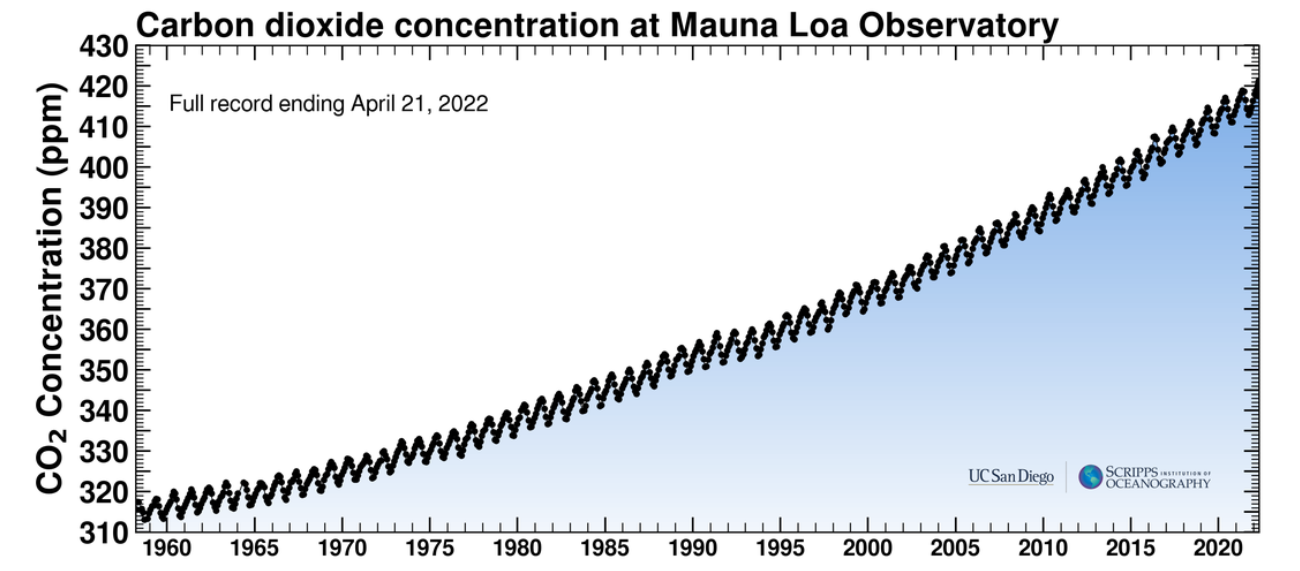
As data from the Mauna Loa Observatory in Hawaii indicates, carbon dioxide concentrations in the atmosphere continue to increase. The latest reading was yesterday at 420.25 ppm. We may not have understood the significance of such a small part of Earth’s atmosphere on the first Earth Day, but we do now and the numbers continue to roll upward at what can be described as a steady pace. It is as if the environmental movement accomplished nothing.
A climate crisis is happening in plain view. The folks at The Dark Mountain Project described it like this in their April newsletter:
The climate disaster unfolding around us is itself a convergence between the breakdown of ancient organic matter and modern industrial ambition, technology, greed and carelessness, a calamitous meeting of worlds.
Email from The Dark Mountain Project, April 15, 2022.
However one describes the climate crisis, part of our problem in taking action to remediate it is we don’t have the intellectual skills to understand environmental degradation or what actions would be effective in reversing it. Likewise, current society has limited functioning methods to take action without a calamitous incident precipitating a need big enough to gain political consensus.
When in 1985 the scientific journal Nature revealed that over Antarctica, a hole in the ozone layer had formed, exposing humans to the sun’s cancer-causing ultraviolet rays, reactions were mixed.
At the time, President Ronald Reagan was in the White House. Environmental policy hadn’t been a priority for him and his advisers, who were more focused on fighting the creep of Cold War communism or federal involvement in issues they believed the states should handle. Even the revelation of the ozone hole didn’t change things–or at least not right away. In fact… Reagan’s Secretary of the Interior Donald Hodel was ridiculed in the press for reportedly saying in a meeting that an international treaty wasn’t necessary to address the damage and that Americans should just put on sunscreen and wear hats.
Reagan Administration Officials at First Dismissed the Ozone Hole. Here’s What Changed by Olivia B. Waxman. Time Magazine, April 10, 2019.
As we know now, the Montreal Protocol, the first-ever global treaty to reduce pollution and phase out chlorofluorocarbons, gained Reagan’s support and was agreed in 1987. The U.S. Senate ratified the treaty unanimously the following year. Our current political environment has degraded to a point where such common-sense action is no longer possible.
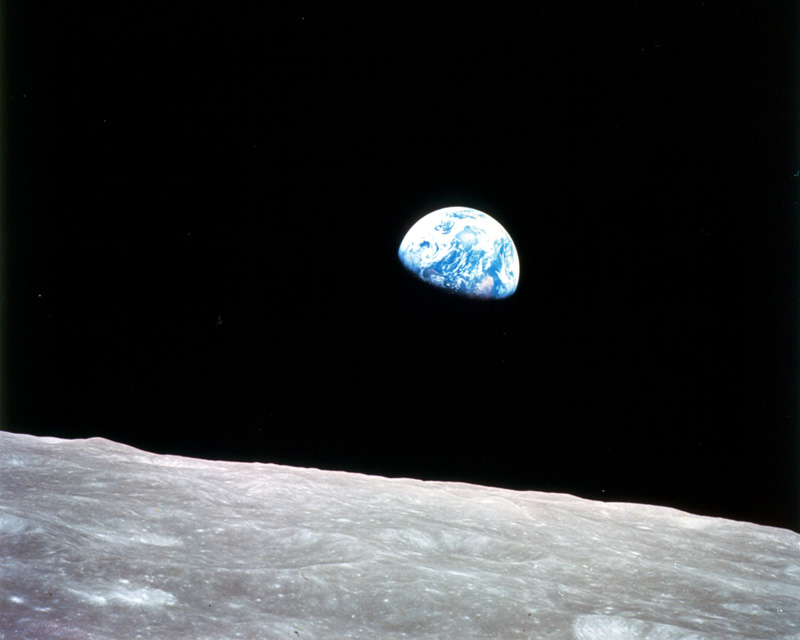
Bill Anders’ Earthrise photograph reminds us of Earth’s suspension in the vast darkness of the universe. We are unique, and dependent on each other on this our only home. For complex reasons, we understand the risks of further environmental degradation and the warming of the atmosphere. We have been unwilling to take adequate action and Earth Day isn’t helping.
Congresswoman Mariannette Miller-Meeks’ recent statement about common sense would make sense if she demonstrated it in her votes.
She said she was “fighting for Iowan common sense values.” Instead of common sense, Miller-Meeks adopted right-wing policies of her Washington, D.C. colleagues.
The lack of common sense shows in her no votes on the American Rescue Plan Act, Build Back Better Act, Invest in America Act, Infrastructure and Jobs Act, and on raising the minimum wage. The votes are a total disconnect from Iowans she represents.
If Miller-Meeks is interested in common sense, here are a few suggestions:
Tax the rich. Folks who have money to spare are able to contribute to reducing the deficit and paying down our national debt. The tax reductions of Republican administrations made no sense. Our history has been to tax the rich at a much higher rate than we do now. Corporations should be taxed as well.
Public funding of Congressional campaigns. Corporations are not people. Take the money out of politics by passing legislation to do so. It’s common sense that corporations and their lobbyists should not be able to buy elections.
Audit Defense Department Spending. The 117th Congress passed an annual defense budget valued at over $768 billion. Isn’t it time we looked to see how effectively the Pentagon is managing one of the biggest budget line items? Why haven’t we already taken this commonsense accountability step?
Eliminate nuclear weapons. Nuclear weapons can never be used without dramatically altering life on Earth. They could literally end life as we know it on Earth. It makes no sense to spend money on nuclear weapons that should never be used.
Stop polluting. Earth has limited capacity to absorb the detritus of civilization. School children are taught to reduce, reuse and recycle. Our national policy should be to do the same and scale it up. It is common sense.
There are plenty of additional suggestions. Miller-Meeks’ votes demonstrate a different meaning of “common sense.” It’s not the commonsense approach we need. I will vote for Christina Bohannan for Congress this November. You should too.
~ An edited version of this post was submitted to several newspapers and was first published by The Little Village on April 12, 2022.









 Journey Home

You must be logged in to post a comment.