My spouse’s trip to her sister’s home extended into a third week. A typical behavior when I’m home alone is going through the pantry to see what new ideas I can experiment with while my mate is gone. I found we have a LOT of quinoa. Some I bought on discount at the home, farm and auto supply company before the pandemic, and the two boxes came from mail order. I decided to cook a quart of it in vegetable broth and see where things went.
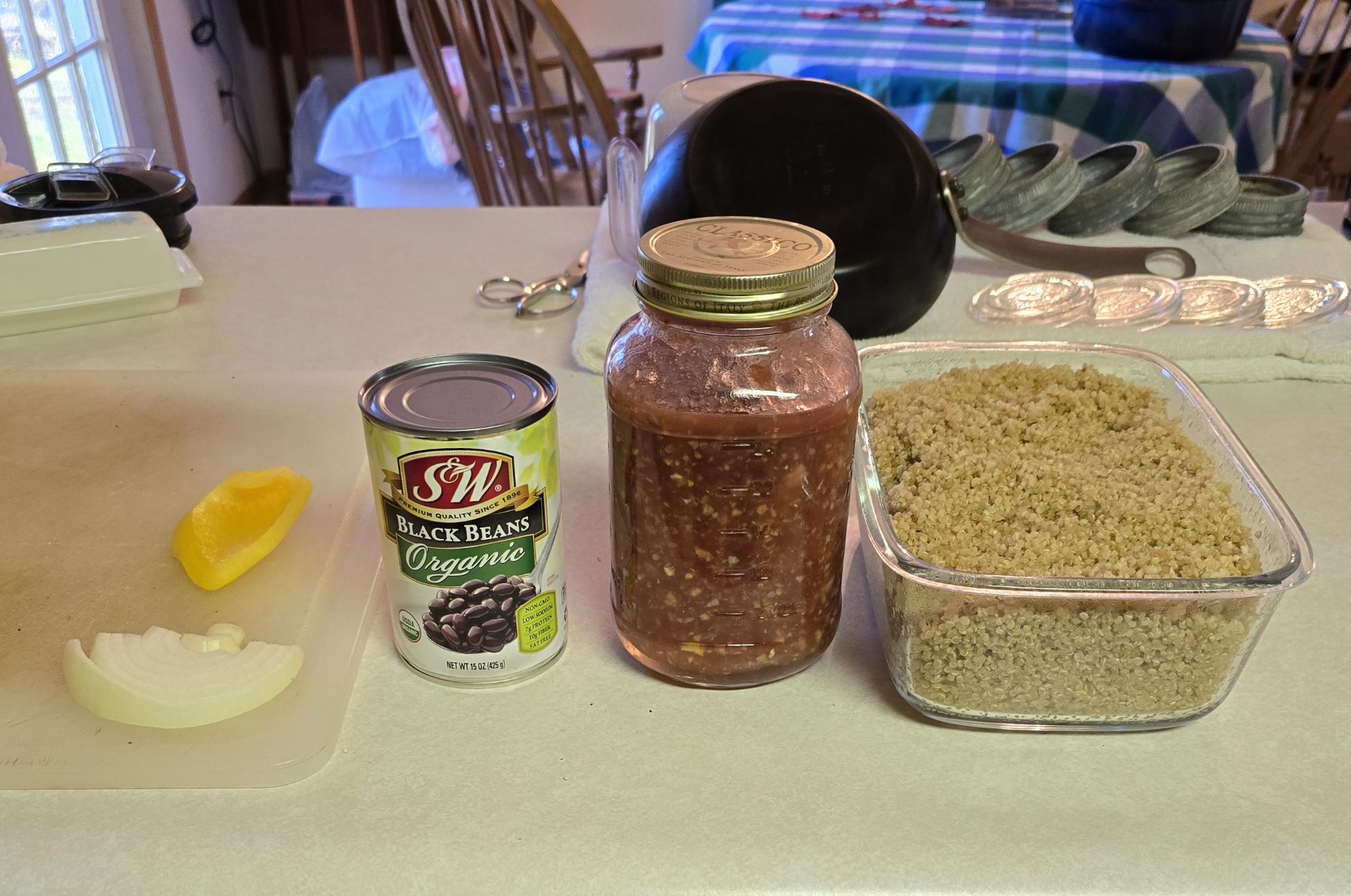
Quinoa bowl ingredients, including less than half the prepared quinoa.
I discovered a quart of uncooked quinoa makes a GIGANTIC amount of cooked. I tried some after cooking the batch and found it quite good by itself. It’s a nice change from other grains. I did research about using it and came upon the quinoa bowl. There will be a lot of those during the next week to ten days.
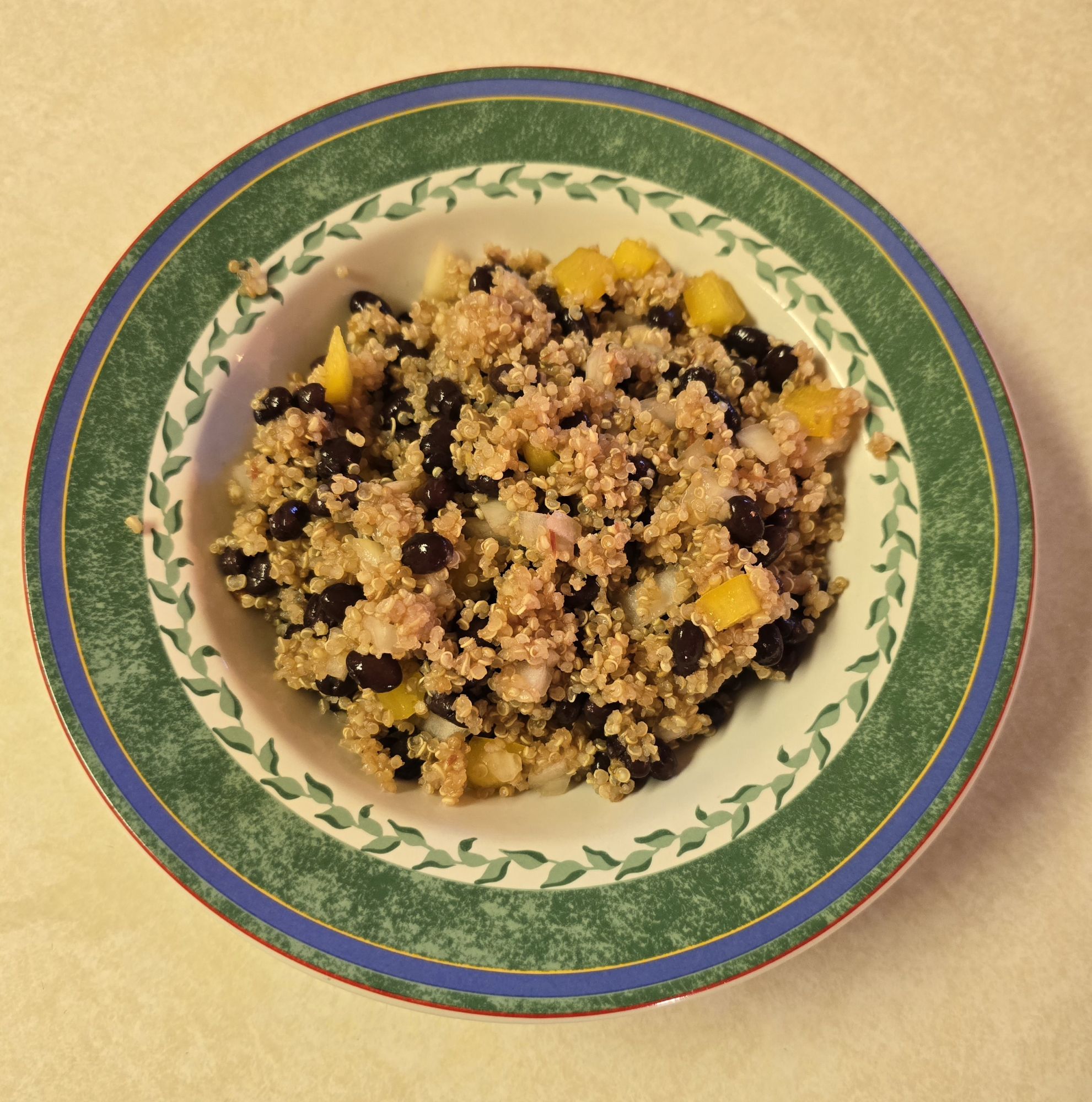
The premise is basic: use a base of cooked quinoa and mix it with other things. First up was a Mexican-style quinoa bowl. I used quinoa, canned black beans, homemade salsa, onion, and bell pepper. The vegetables were raw, and everything else cold. I put the ingredients in a bowl and mixed, and voilĂ : dinner is served. It hardly made a dent in the quinoa. As far as taste goes, I rate it 8 of 10.
Quinoa bowl.
These are going to be quick, simple, inexpensive, and tasty meals. Now the search for other inspiration begins.
My way of cooking macaroni and cheese changed. After some unsatisfying experiments with making it vegan, I now use cheese and butter when I am home alone for dinner. It is on the menu only one or two times per year, so I want it to be satisfying and memorable when I prepare it. I took inspiration for my most recent iteration from Massimo Bottura’s Kitchen Quarantine series during the coronavirus pandemic. Bottura layered the ingredients in a baking dish and I had an Aha! moment.
I have been a mixer. That is, the sauce, noodles, and other ingredients are placed in a bowl and mixed together, then moved to a baking dish and topped with something before baking. Bottura taught me to layer instead, which had never occurred to me. It could be life-changing. Here is what I did.
Boiled pasta was ready to go. Either cook it for the dish, or use leftovers. This time, I emptied partial containers of different kinds of dry pasta until I had two cups and cooked until al dente. My thinking is the pasta should be similarly sized, yet that is a personal preference. There are no rules.
Get the cheese ready. This can be anything the cook wants. I like a sharp cheese and used four ounces of white extra sharp cheddar, half a cup of feta, and four tablespoons of grated Parmesan. I had thought to use Gruyère and bought four ounces made in Wisconsin for the project, but it didn’t pass the taste test. If it were Swiss Gruyère, it would.
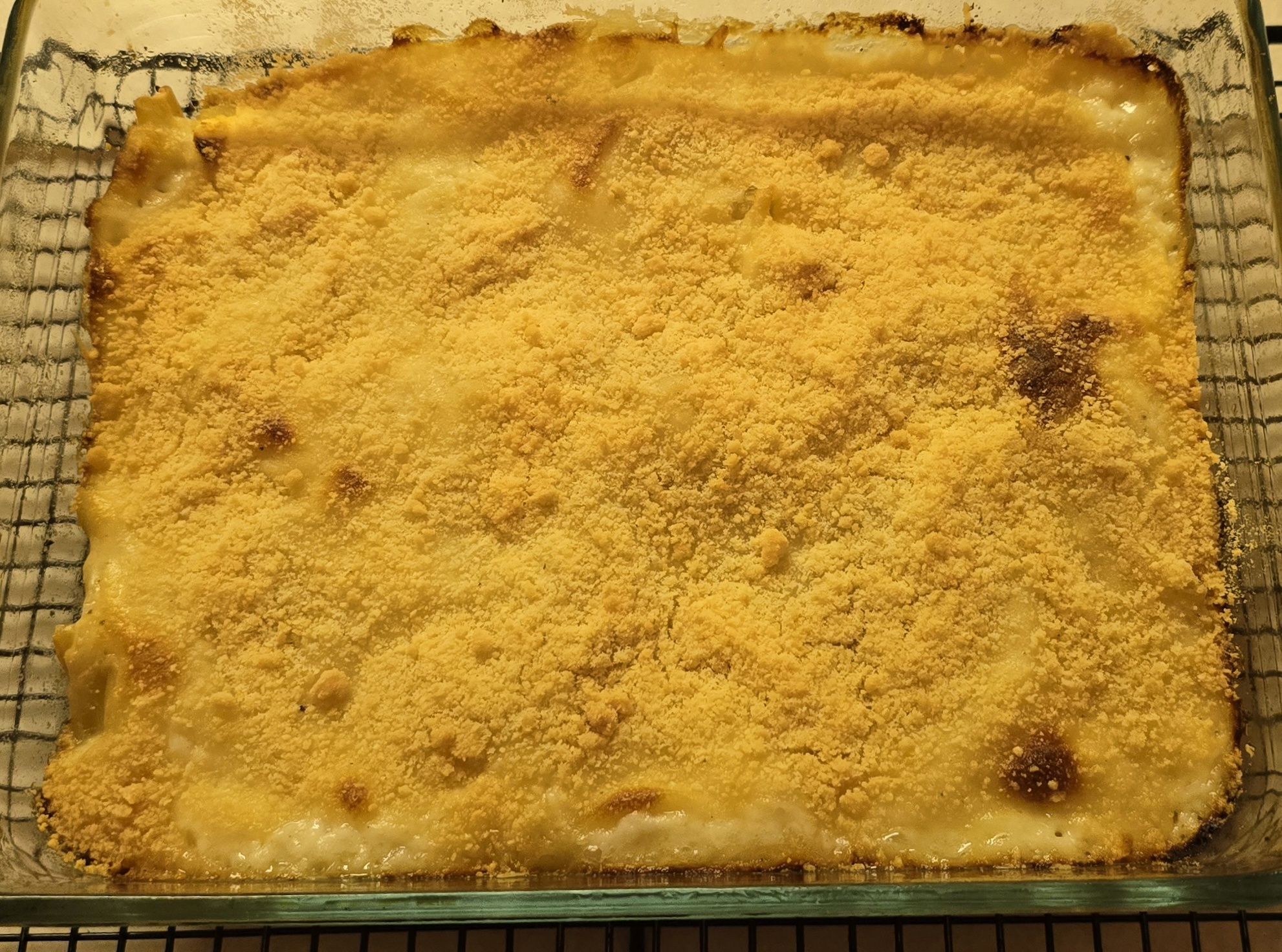
Next is the layering. A thin layer of sauce on the bottom of the baking dish to cover. Next the pasta spread evenly. Distribute the chunks of feta evenly, followed by the cheddar. The rest of the sauce goes on top, and then into the oven for 30 minutes.
At thirty minutes see where we are. I pulled the dish out and sprinkled the Parmesan on top. I turned the oven up to 400 degrees and let it bake until the crust began to turn brown. The result is in the photograph. Based on the taste, I am now a layer guy.
My native impulses had me arrive at a rustic-style product that was the antithesis of processed food. If I learned anything by being a part of the local food movement, it is that this kind of dish is what I want.
My intent was not to become a food blogger. Best intentions aside, I have written hundreds of posts about food — growing it, shopping for it, preparing and preserving it. I have a sense of keeping recipes and techniques on these pages, yet most of that information resides within me, or the little red book in which I write frequently used and locally developed recipes. I took the step of defining the term “kitchen garden.” What of all this food bloggery? I don’t know from where the urge to write about food came yet I persist.
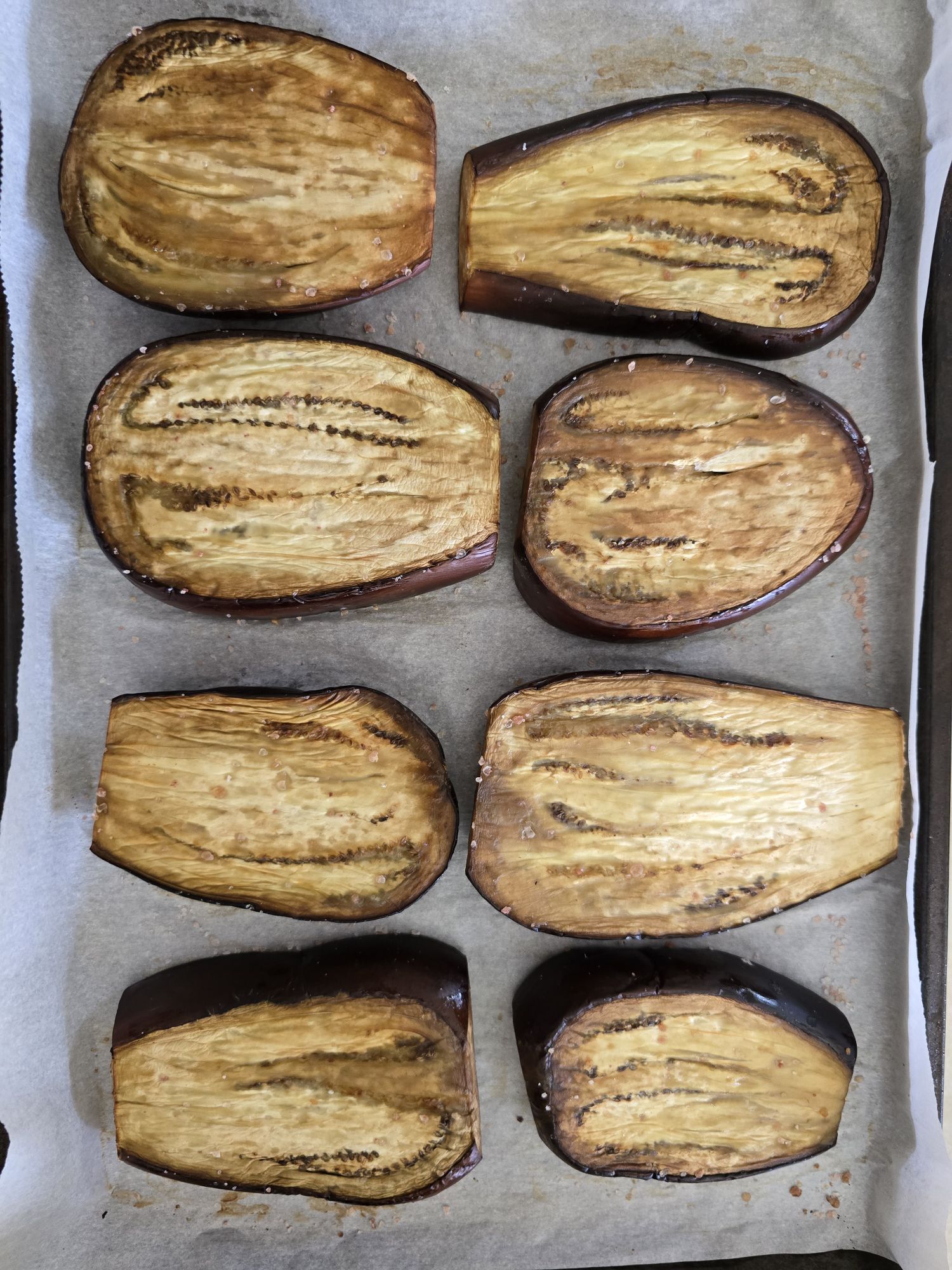
When the garden produces eggplant, there is a lot of it. I picked half a dozen small to medium fruit and cut them into one half-inch slices. I diced the scraps into quarter-inch cubes and placed them in a freezer bag for later use. After brushing the slabs with extra virgin olive oil, and seasoning with salt, I baked them at 400 degrees Fahrenheit for 25 minutes, flipping them halfway. From here, I serve on a plate, spoon some pasta sauce to cover, and sprinkle on grated Parmesan cheese. Any leftover slices of eggplant get frozen for a quick, tasty future meal. Eggplants are a lesson in how to use abundance.
Food writing is a creative outlet. The photograph and text are products of a creative life which represents more than survival. We live in a culture that denigrates the different, that seeks to remove social differences the way politicians seek to erase transgender citizens. Food writing is a way to express a life that falls outside social norms. It is a safe harbor to consider how we might live differently. That seems true whether we write about family food traditions or about a simple eggplant supper served from an abundant garden. We need types of expression that assert our uniqueness without fear of repercussions, without persecution. Food writing can be that. Most readers seem unlikely to recognize it as such.
I meant to write about how four Galine Eggplant seedlings produced so much abundance. This post turned into more than that, about affirmation and the freedom to be different. While my brief recipe for an eggplant dish is not unique, this moment, with these words I became as unique as I might ever be. That has value in a society with low tolerance for anything that is different.
During a recent trip to the grocer we got talking about Sloppy Joe sandwiches. Early in our marriage we would buy a can of Sloppy Joe sauce and mix it with MorningStar Farms Recipe Crumbles to make a sandwich filling. It was the basis for many a quick, tasty meal. We discussed adding it back into our meal rotation for “something different.” We read the ingredients on the name brand and store brand cans of sauce and decided to make our own.
What distinguishes a Sloppy Joe from a Maid-Rite (a.k.a. loose meat sandwich) is the tomato sauce. Following is the recipe I put together from an online recipe modified to match our preferences and what we have on hand in our pantry.
Sloppy Joe Sandwich
Ingredients:
One small onion – diced
One medium bell pepper – diced
Two cloves fresh garlic – finely chopped
Salt and pepper to taste
Half teaspoon chili powder
Teaspoon paprika
1/3 cup ketchup
1/4 cup water
1 tablespoon Dijon mustard
1 tablespoon brown sugar
1 tablespoon vegetarian Worcestershire sauce
One 15 ounce can of prepared tomato sauce
One 12 ounce package of MorningStar Farms Recipe Crumbles
Sandwich rolls.
Mix the dried spices, ketchup, Worcestershire sauce, water, mustard, and brown sugar in a small dish and set aside.
Add the spice mixture and stir to incorporate. Add the Recipe Crumbles and incorporate. Finally add the can of tomato sauce and stir until incorporated.
Turn the heat down to a simmer and cook until the sauce thickens and extra water evaporates.
Serve on a toasted bun with any desired condiments and toppings.
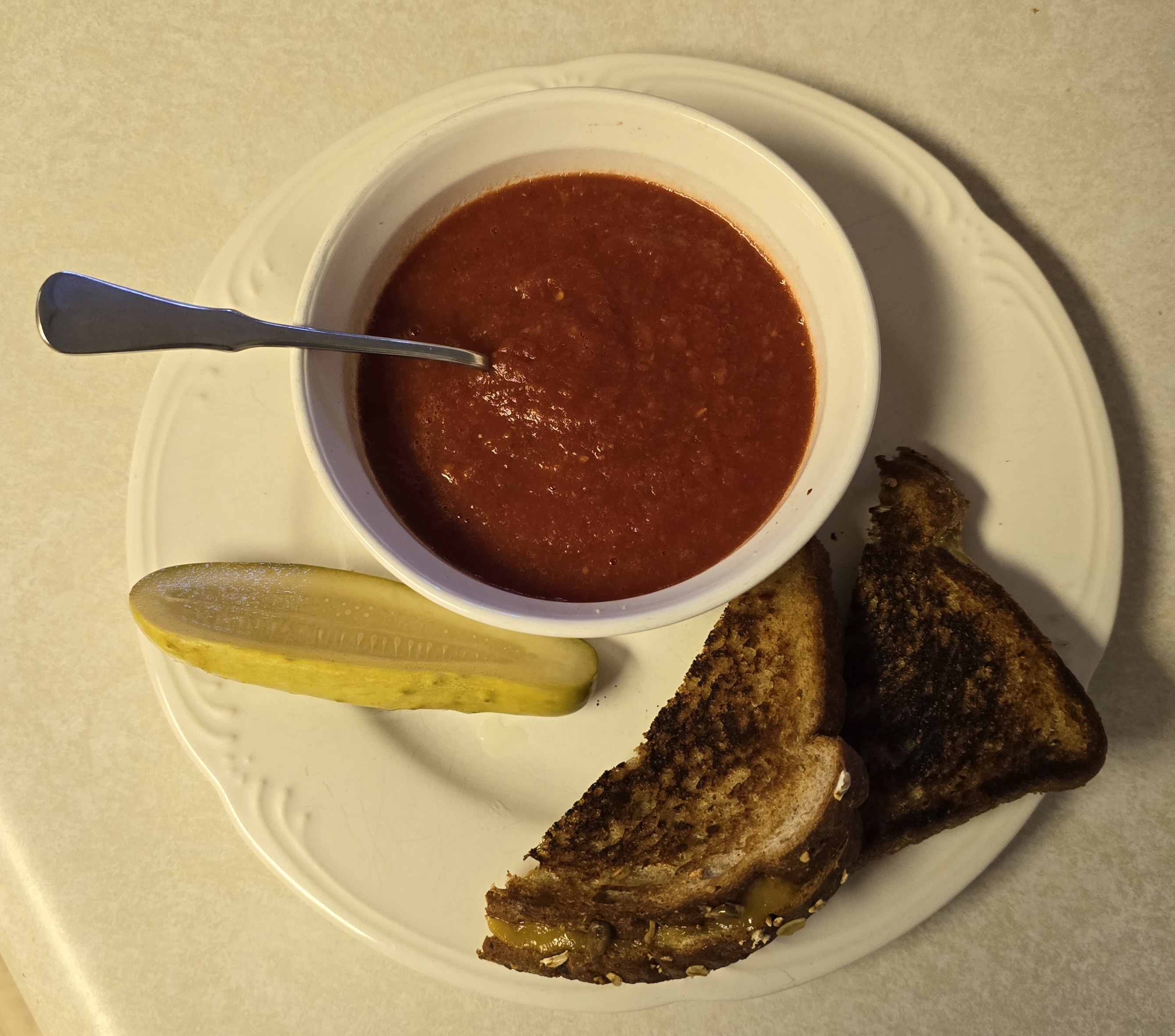
Grilled cheese sandwich with home made tomato soup and a home made pickle.
This tomato soup is much better than what Mother made from condensed soup out of a can. I’m confident if she were here, she would enjoy mine better than hers. This is a simple recipe, worth writing down.
Tomato Soup
When tomatoes are in from the garden, cut out any bad spots, halve them, and cook in a large stock pot for about 20 minutes until the skins loosen. No extra water is needed. Turn off the heat and let them sit for a while, maybe half an hour or the time it takes for a long walk on the trail. Extract as much of the tomato water as you an using a meshed funnel. Once it stops dripping, reserve the liquid. Use the wooden mallet to press the pulp through the screen, leaving behind the skins and seeds. The skins and seed go into the compost.
In a 3-quart saucier place roughly a half inch of tomato water. Once it is boiling, add two medium diced carrots and one medium yellow onion, also diced. Salt to bring out the moisture. Black pepper to taste. Add a generous tablespoon of Italian seasoning and incorporate. Cook until the vegetables are softened.
Add the tomato pulp. You will need about eight cups, but match everything to the amount of tomatoes you have. Bring it to a boil and then turn the heat down to a simmer. Cook until the carrots are tender, about 30-40 minutes.
Put the mixture in a blender and blend until the carrots and onions are incorporated. Return it to the saucier and it’s finished.
Optional: garnish with fresh basil, croutons, or a dollop of sour cream. A milk lover could add a cup of heavy cream to the saucier and incorporate before serving. Makes roughly four servings.
I made lentil soup for dinner last night. With a slice of bread, it made a satisfying meal. What distinguished this pot of soup from more generic vegetable soups I make was the restricted number of ingredients. Here’s how I made it.
I covered the bottom of the Dutch oven with tomato juice and brought it to temperature: enough juice to steam fry the vegetables. We use tomato juice instead of oil to reduce our consumption of cooking oil. My tomato juice is a byproduct of making tomato sauce from the garden.
Next came finely diced onions, carrots, and celery, the mainstays of any soup. I added three bay leaves and salted. Then I diced three medium potatoes and added them.
From the pantry I added one and a half cups of dried lentils and three quarters cup pearled barley. Cover with tomato juice and set to medium heat.
From the freezer I added two one-cup bags of shredded zucchini and two frozen disks of fresh parsley. By now, the lentils and barley were absorbing the liquid so I added tomato juice and one quart of water to cover. I used a total of three quarts of tomato juice and one quart of water.
Two or three cups of chopped, fresh leafy green vegetables from the garden. I had collards for this pot of soup, but kale, collards or others will serve. Frozen is fine also.
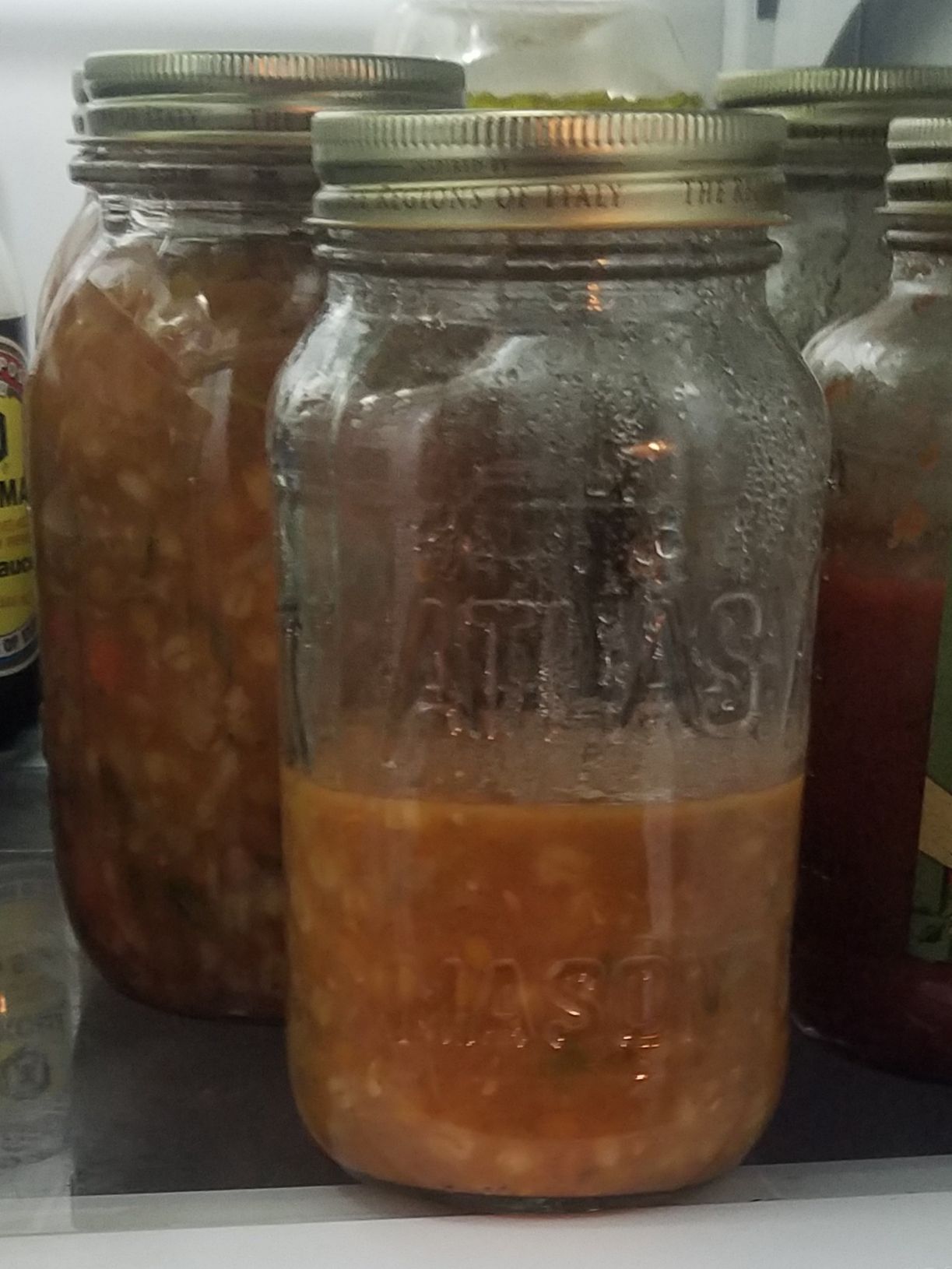
Once the pot boils, reduce the heat and let it simmer until the lentils, barley and potatoes are tender. This process yielded a meal for two people plus three and a half extra quarts of soup for leftovers.
It is the kind of meal regular folks like us appreciate.
My spouse went vegan a while back and I didn’t. I’m having to re-learn how to cook for both of us and I’m okay with that. It’s more work than expected, but I shouldn’t just kick back and grow old according to my former ways. This vegan bent in cooking, combined with other dietary restrictions we follow, led to a long list of food we don’t buy or seldom eat. Long-time readers may be familiar with some of them.
A pox on avocados because popular demand leads to deforestation with avocados being planted beneath the canopies of tropical rain forests before the rain forests are cut down. Either we are serious about preserving rain forests or we are not. That means no guacamole or avocado toast in our household.
Coconut oil? It’s a saturated fat people! Don’t be eating it when other, healthier options are available. I read the summaries pertaining to lauric acid. Still don’t eat it.
I forget why we don’t like mushrooms, yet there hasn’t been one of those in the kitchen for decades.
We never bothered being pescatarian enroute to vegetarianism. Folks should lay off fish for the sake of maintaining our fisheries. If unchecked, humans would take every fish that swims in the seas. If you missed it, sushi is usually some kind of fish, so avoid it.
Don’t get me started on jackfruit. Leave that one in Mexico or Guatemala. See the first item about deforestation.
Seitan is fine unless one has a sensitivity to wheat. We don’t eat it regularly.
After a long search for a recipe to make vegan pumpkin bread with my wealth of frozen Casper pumpkin flesh, I developed this one, which was good.
Vegan Pumpkin Bread
Dry ingredients:
2 cups all purpose flour
1/2 cup granulated sugar
1 teaspoon baking soda
1 teaspoon baking powder
1 scant teaspoon pumpkin pie spice plus extra cinnamon to taste
Pinch of sea salt
Wet ingredients
2 teaspoons vanilla extract
1/3 cup water at room temperature
1/3 cup apple sauce
1-1/2 cups pumpkin puree (or 15-ounce can prepared pumpkin)
Preheat convection oven to 350 degrees Fahrenheit.
Mix dry and wet ingredients separately then add wet to dry. Mix thoroughly, although not too much. Pour into a loaf pan greased and lined with parchment paper. Bake 55 minutes or until a toothpick comes out clean. Remove to a rack and let sit for 10 minutes. Makes 8-10 slices.
We have plenty of recipes in our household. When I’m cooking, I rarely follow any of them. No worries. The end product has always been edible.
Every cook understands following a recipe exactly can be a disaster. A recipe functions like a tool in the kitchen, not a computer algorithm. Recipes are also the starting point for developing one’s own cuisine, not the end result. Cuisine is about actual dishes created and eaten from a kitchen, not some abstraction of design.
An example is the recipe for lemon chicken my maternal grandmother prepared from time to time. I asked her to write it down. Somewhat reluctantly, she did: on the back of an envelope, in front of me, from memory. There was an omission. Lemon was not listed in the ingredients. I had watched her prepare the dish and saw her squeeze the lemon. The interplay of memory with cooking is an underappreciated aspect, and little to do with written or printed recipes.
When baking, I follow ingredient amounts in a recipe carefully because the science is more specific. Even so, actual temperature in the oven, what kind of baking dish is used, humidity, and elevation above sea level all play a role and can create variations in the end product. Learning how to cope with variations is part of being a cook.
During one of our vacations in Stratford, Ontario I bought this bound blank book for reasons then unknown. Eventually, beginning in 2000, I wrote down recipes in it and today the pages are more than half filled.
They are the kind of recipes that are more than improvisational knife and spoon work with me standing in the kitchen, checking the refrigerator and pantry, and whipping up a couple of things for supper.
I return to the cookbook regularly.
First pick of the Red Delicious apples, Sept. 12, 2021.
It is apple time in Iowa and someone asked for apple butter. The first pick of Red Delicious apples will go toward that. I have older jars stored on the shelf but when I gift apple butter, I want it to be this year’s batch.
In 2010 I entered my recipe for apple butter in the cookbook. Back then I made something out of every apple harvested. It was a lot of apple butter, apple sauce and dried apples. There are still a couple old jars hanging around. (They need to be pitched).
Today I give away apples I won’t use. One year I gave 350 pounds to a community supported agriculture project for their members. Another I donated to the food bank. I also offer them to neighbors if interested. The idea is to bring enough into the house to make sure the apple products will last for two years until the next big harvest is expected. I’m done with overshooting that goal, except for apple cider vinegar which keeps a long time.
I have hundreds of printed cookbooks and likely a recipe for every growing, crawling, running, flying, slithering, and swimming thing in the ecosphere. I keep my faves nearby: Rick Bayless, Mario Batali, Julia Child, Irma Rombauer and Marion Rombauer Becker. I always return to the red-covered bound book I wrote myself for the good things in our life.
As we turn toward autumn tomatoes are finishing and peppers are coming on strong. I put up a lot of tomato product and am well-prepared to make it until next August. There is always a question of what to do with peppers. This year there are some new ideas.
Pickled jalapenos and hot sauce are traditional. I’ll also grind up what remains of hot peppers and mix it with salt and apple cider vinegar to use in lieu of fresh peppers in cooking. This worked last year so a repeat is in order.
Hot sauce and pickled jalapeno peppers.
I am backlogged with dehydrated hot peppers so no more this year. The main use is to grind for red pepper flakes. I have plenty on hand. I will re-hydrate the old ones next spring and use them to deter pests in the garden.
I grew Guajillo chili plants. The yield wasn’t what I hoped but will roast what there is, skin and coarsely chop them, and mix with apple cider vinegar, salt and garlic to use in Mexican-style cooking. I buy a commercially prepared version of this, so the idea has been in the works for a while.
Bell peppers will be cleaned, sliced in half and frozen in zip top bags. I don’t need many of these as there are some remaining from last year. The main use for bell peppers is for an afternoon snack. At two per day I could make it well into September with fresh ones for out of hand eating and cooking.
Arrival of pepper time also means the end of the garden is near. It’s hard to believe we’re already at that point in the growing cycle.
You must be logged in to post a comment.