Almost no one I know outside of politics is talking about the Nov. 6 election. That seems typical… and okay.
Most of us try to be organized. At least we pretend to be. We seek to live lives of logic, reason and decency. We’ll organize to figure out for whom to vote later, maybe around Thanksgiving.
Not so fast! It will be too late on Thanksgiving.
Here’s a head scratcher for logic fans from the Environmental Protection Agency. In our relentless pursuit to Make America Great Again, the administration wants to bring back asbestos. Yes that asbestos, the known carcinogen banned in 55 countries. It may soon be available again in consumer products near you.
Our president has a theory about asbestos regulation. In his 1997 book, Art of the Comeback, he explicitly said asbestos bans are a conspiracy “led by the mob, because it was often mob-related companies that would do the asbestos removal.” What kind of theory is that? It is a conspiracy theory.
Ask a public health professional or physician what they think about deregulating asbestos. While you’re at it, make your plan to vote on Nov. 6.
Governor Kim Reynolds proclaimed counties in Iowa to be a disaster because of severe weather. It is time to act on climate.
Tornadoes tore through Marshalltown, Pella and Bondurant last Thursday as I got off work at the home, farm and auto supply store. It doesn’t appear anyone was seriously injured or died, although damage to the communities was substantial. Photos and video posted on social media depicted a horrible scene.
Are these storms due to climate change? We know Governor Kim Reynolds issued 11 disaster proclamations since June 11 for severe weather, heavy rains, storms, tornadoes and flooding. Something is different about our weather. Even a casual observer understands our climate changed and contributed to these extreme weather events.
Additionally, the seasons have been out of wack this year. A late spring, early high ambient temperatures, and more frequent storms make our weather exceedingly weird. Iowans have noticed and are talking about it. It’s not a random occurrence.
Ben Santer, an atmospheric scientist at the Lawrence Livermore National Laboratory, led a study of four decades of climate data that concluded human activity is disrupting our seasonal balance. That is, the seasons don’t proceed through time the way they did. Eric Roston at Bloomberg wrote a more accessible article about the study here.
“Poring over four decades of satellite data, climate scientists have concluded for the first time that humans are pushing seasonal temperatures out of balance — shifting what one researcher called the very ‘march of the seasons themselves,’” Roston wrote. “Ever-mindful of calculable uncertainty and climate deniers, the authors give ‘odds of roughly 5 in 1 million’ of these changes occurring naturally, without human influence.”
While an individual study is one thing, the science of climate change is clear. I wrote about it in 2014:
People seeking scientific proof of anthropogenic global climate change are barking up the wrong tree. The goal of science is not to prove, but to explain aspects of the natural world. Following is a brief explanation of climate change.
Around 1850, physicist John Tyndall discovered that carbon dioxide traps heat in our atmosphere, producing the greenhouse effect, which enables all of creation as we know it to live on Earth.
Carbon dioxide increased as a percentage of our atmosphere since Tyndall’s time at the beginning of the Industrial Revolution. As a result, Earth’s average temperature increased by 1.5 degrees Fahrenheit.
The disturbance of the global carbon cycle and related increase in carbon dioxide concentrations in the atmosphere is identifiably anthropogenic because of the isotope signature of atmospheric carbon dioxide.
We can also observe the effects of global warming in worldwide glacier retreat, declining Arctic ice sheets, sea level rise, warming oceans, ocean acidification, and increased intensity of weather events.
It is no wonder the vast majority of climate scientists and all of the national academies of science in the world agree climate change is real, it is happening now, it’s caused by humans, and is cause for immediate action before it is too late.
Ed Fallon lives and works in Des Moines and has long been a friend of Blog for Iowa. Here’s an update on Ed’s current activities from an interview conducted last week via email.
We noticed you are affiliated with Bold Iowa. What is Bold Iowa and what attracted you to pitching your tent with them?
I continue to host the Fallon Forum and direct Bold Iowa. Bold Iowa grew out of the Bold Alliance, which was formed after the Keystone XL fight. Just a year after the alliance started, Jane Kleeb, founder of Bold Alliance, abandoned Alliance chapters in Iowa, Louisiana, Oklahoma and Virginia. We now operate as an independent organization.
What are you working on this summer and why?
We’re focused on supporting the landowners who have filed a lawsuit against the abuse of eminent domain to build the Dakota Access pipeline. Sierra Club is part of that suit. One of the ways we are supporting landowners is to raise awareness of the suit through The First Nation — Farmer Climate Unity March. We are also hosting a series of community forums, setting up editorial board meetings, sending out press releases, and encouraging people to write letters to the editor. If landowners and the Sierra Club prevail in the lawsuit, it could stop the oil from flowing through Iowa, North Dakota, South Dakota and Illinois.
Climate change has been in Iowa news this year more than recently. Have you noticed? If you’ve noticed, to what do you attribute the increased mentions in social and conventional media?
I’ve noticed, although the uptick has been small. Mostly, it seems some editorial boards and a few reporters are beginning to understand that climate change is not just another issue, that it’s a crisis that demands immediate attention.
What would you like our readers to do to support your causes during the remainder of 2018?
March with us Sept 1 – 8 from Des Moines to Fort Dodge, following the pipeline route through Story, Boone and Webster Counties. Contact media about the importance of the lawsuit and the urgency of climate action. Most important, vote in November for candidates who take climate change seriously.
Listen to the Fallon Forum live Mondays, 11:00-12:00 noon CT on La Reina KDLF 96.5 FM and 1260 AM (central Iowa). Add your voice to the conversation by calling (515) 528-8122.
It’s no secret Rep. Bobby Kaufmann follows the Republican Party line on most major votes.
He voted like an automaton for one egregious bill after another during the 87th Iowa General Assembly. Once Republicans held majorities in the Iowa House and Senate, in addition to the Governor’s office, they had their way with legislative output. Kaufmann was right there in the gang. He is and has been a partisan Republican since being first elected.
In 2013, as soon as Kaufmann joined the legislature, he co-sponsored HJR 1, a bill to amend the Iowa Constitution to incorporate existing right to work law.
Right to work is part of who we are as Iowans. Even Governor Chet Culver couldn’t reverse right to work when he had Democratic majorities in both chambers of the legislature. We don’t need a constitutional amendment for right to work to exist in Iowa. Kaufmann and the gang went one further in the bill, prohibiting collection of union dues or deduction of union dues from a person’s pay as a prerequisite for employment. HJR 1 didn’t pass. It continued a divide between Iowa Democrats and Republicans, one that prevents bipartisanship and continues today.
Over the years, Kaufmann has seen few Republican bills he didn’t like. He voted with Republicans on radical Chapter 20 revisions regarding collective bargaining, for the embryonic heartbeat bill, and more.
This year he’s running for a fourth term. Kaufmann downplays his extremism in newspaper articles and community forums by omitting his conformance with the Republican playbook.
Last winter Kaufmann held a town hall-style meeting in Solon, Iowa. His mislead by omission approach became evident.
At the meeting he was surprisingly focused on the House, not Republicans in general. For example, a Republican asked a question about Senate passage of the embryonic heartbeat bill. It was news to Kaufmann. His take was the heartbeat bill was unlikely to get 50 votes in the House because Republican members believe when it is struck down by the courts it will be done in a way that makes it difficult to appeal to the U.S. Supreme Court, which was their endgame. As we now know, through the sausage-making process of legislating, House Republicans were able to get 51 votes including Kaufmann’s.
Kaufmann meets with city councils, boards of supervisors, and a host of community organizations each year, such talks enabled by incumbency. He appears on the fund raising circuit with the two Republican U.S. Senators. No doubt he learned these tricks from his father, Jeff Kaufmann, the 45th president’s most devout Iowa believer.
Faced with increased Democratic activism, Kaufmann is shoring up support in precincts that went for Trump in 2016. For example, Big Grove Precinct went for Trump by four points (46 votes). A significant issue there is the ban on Lake Macbride of boat motors over 10 horse power during the summer boating season. During the 2018 session Kaufmann was able to kill the perennial bill to lift the ban. In late June, the Lake Macbride Conservancy announced Rep. Kaufmann will be touring the lake with members. It’s partly for information and experience, but also to develop relationships with key influencers in the group.
As the campaign continues through summer it is important to remind friends and neighbors Bobby Kaufmann is a Republican. Period.
~ First published in the Summer 2018 edition of The Prairie Progressive
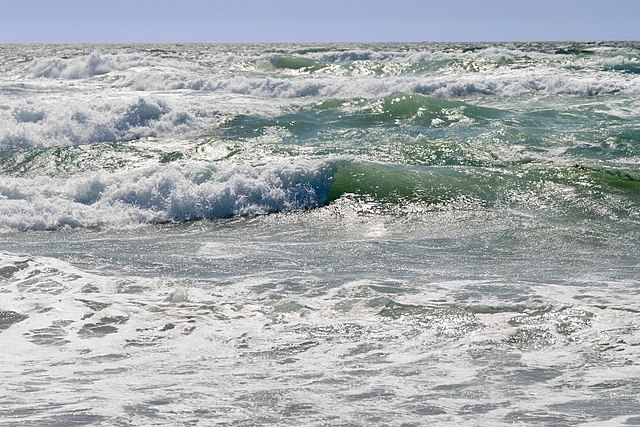
What color do you see? Photo Credit – Wikimedia Commons
People are excited by the prospect of flipping the Iowa House and governorship in November. I share the excitement, and note such voters are engaged in politics more than most who will show up at the polls.
I’ll be convinced a blue wave is coming when I hear people other than candidates, those hired to work in politics, or activists tell me about it. Right now it seems a big blue bubble, especially when I talk to people I’ve known for years.
Time will tell and many of us will be working it because, as Fred Hubbell suggested, “blue waves must be created.” Democrats are not there yet.
Ocean waves look pretty green to me.
“The ocean looks blue because red, orange and yellow (long wavelength light) are absorbed more strongly by water than is blue (short wavelength light),” according to Scientific American. “So when white light from the sun enters the ocean, it is mostly the blue that gets returned. Same reason the sky is blue.”
Are we Democrats seeing blue because of what we can’t see?
Media outlets glom onto the obvious. A replacement to fill Associate Justice Anthony Kennedy’s U.S. Supreme Court seat when he retires; activities of “the resistance;” the perennial non-debate over immigration reform; active discussion about overturning Roe v. Wade; and yes, new developments about Hillary Clinton’s emails.
What’s going on in the ocean of voters?
Democrats are choosing more female candidates for the U.S. Congress and down ticket.
“In many respects, the Democratic tilt toward female candidates is the logical culmination of the political dynamics since Trump’s election,” Ronald Brownstein wrote at CNN. “Coming after he bragged about sexually assaulting women in the 2005 ‘Access Hollywood’ tape, Trump’s election provoked its greatest backlash among Democratic-leaning women. That intensity was immediately apparent in the unprecedented women-led protest marches the weekend of Trump’s inauguration. The emergence of the #metoo movement and the proliferation of sexual harassment allegations against powerful men in other arenas has only added fuel to that fire.”
Democrats, men and women, are fired up about this. Will it win over non-college educated white women who favored Trump in 2016? Probably not. Will it fire up the Democratic base? It already has. The base is far from enough to win in November.
This talk has a secondary impact on voters. More influential are statements like the one made at a recent gathering of men in our neighborhood.
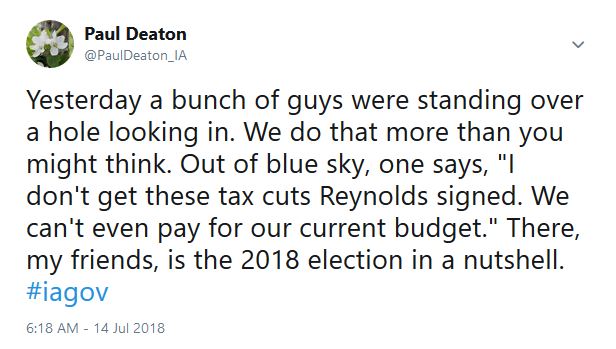
Regardless of the ocean of pixels spilled about a Democratic blue wave, the election will reduce itself to small gatherings of voters doing work that must be done in the community. The community water main was leaking in that hole in the ground. We had gathered, not to talk politics, but to fix the leak. So it is with many non-politically active voters, men and women.
The grunt work of winning elections is not fun. Knocking on doors, making phone calls, and networking with friends, family and neighbors to promote candidates, are part of activating voters. Cecile Richards was in Des Moines last week and captured the challenge of midterm elections.
“Millions of women who even voted in the presidential election won’t go vote this November,” Richards said. “Thousands of them here in Iowa will stay home. Thousands would be enough to determine the governor’s race or a congressional seat or taking back state house and state senate seats. But we can change that… the single most important reason people said they didn’t go out to vote is that no one asked them.”
The campaigns for which I work plan to ask men and women to make a plan to vote.
The notion of a Democratic blue wave can be a place holder for people to do nothing to influence an election outcome, even in the time of Trump. Rather than get involved in politics, people hear there’s a blue wave coming and kick back into already challenging lives, intending to ride the wave.
There is no blue wave. There will only be one if we make it between now and election day.
Coyote Natural Bridge, Grand Staircase-Escalante National Monument, Utah. Photo Credit – Wikimedia Commons
The Trump administration is giving away access to our public lands for discovery and exploitation of minerals and fossil fuel reserves. Conservatives and mining interests are setting a place at the table to get their share.
“Trump signed a pair of proclamations late last year reducing the size of the 1.35-million-acre Bears Ears National Monument by 85 percent and the 1.87-million-acre Grand Staircase-Escalante National Monument by roughly 50 percent,” according to Huffington Post. “It was the largest reduction of national monuments in history, with more than 2 million acres losing protections. Prohibitions on new hard-rock mining claims in those now-unprotected areas were lifted in early February.”
The administration’s assault on national monuments is upsetting on a number of levels. It is the culmination of an effort by conservatives to divest government control over national parks and monuments, something most of us thought was long settled.
It’s not settled at all.
A Canadian mining firm, Glacier Lake Resources, Inc., has staked a claim on land that was, until recently, part of Grand Staircase-Escalante National Monument in Utah. The Vancouver-based company said in a press release it plans to mine copper, cobalt, zinc, and other minerals from the Colt Mesa deposit about 35 miles southeast of Boulder, Utah.
On Feb. 2, four members of the Lamoreaux family, which owns a small mineral company called Alpine Gems LLC, staked an 80-acre claim near Butler Valley, southeast of Cannonville. On May 9, Alpine Gems staked three 20-acre claims in that same area.
Last week, Utah Senator Mike Lee introduced the Protecting Utah’s Rural Economy Act in the Congress. He explained in an opinion piece he wrote for the Deseret News. Here are two excerpts that provide the gist of it:
The looming danger for Utah’s rural communities comes from the Antiquities Act of 1906, which was originally intended to protect objects of historic and cultural interest, such as artifacts and religious sites.
Unfortunately, what was once a narrowly targeted tool for preventing looting on federal lands has become a weapon of faraway elites to use against hardworking rural Americans.
That is why I am introducing the Protect Utah’s Rural Economy, or PURE, Act. This bill would protect Utah from future abuses under the Antiquities Act by prohibiting the president from establishing or expanding a national monument in Utah unless the proposed monument has been authorized by an act of Congress and the state Legislature.
Rural Americans want what all Americans want: a dignified, decent-paying job, a family to love and support and a healthy community whose future is determined by local residents — not their self-styled betters thousands of miles away.
Lee’s argument is a genome away from political theorist and the seventh vice president of the United States John C. Calhoun’s arguments in support of slavery and state’s rights. Calhoun is remembered for defending slavery and for advancing the concept of minority rights in politics, which he did in the context of defending white Southern interests from perceived Northern threats, according to Wikipedia.
The Wilderness Society is challenging Trump’s proclamations in court and monitoring the progress of the companies seeking to extract minerals. It may not be enough.
Read more about The Wilderness Society’s efforts to protect our wild areas and fight back against the anti-conservationist movement at wilderness.org. If you are in a position to help financially, here is a link to donate to the Wilderness Society.
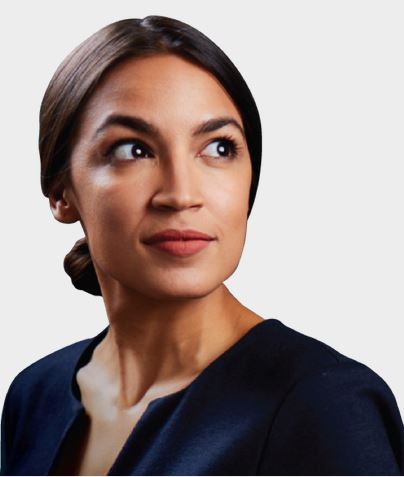
Regardless of the methods of her election or her platform — or the buzz around beating 10-term incumbent Joe Crowley in New York’s 14th Congressional District — if she wins in November she will be one of 435 members of the House of Representatives.
To get anything done, she will need help from other legislators as she attempts to carry the momentum from her district to the Congress. What help can she expect?
Establishment Democrats
“Establishment Democrats” is shorthand that rose to common usage during the 2016 primary season to serve as the whipping boy for all that was perceived to be wrong with the Democratic Party. Think of Congresswoman Debbie Wasserman Schultz or maybe John Podesta. To the extent members of congress have been categorized as part of the establishment, I believe Ocasio-Cortez will find more common ground with them than not. In any case, she could take a lesson from establishment pol in chief Hillary Clinton when it comes to legislating. Become less a personality in the Congress and more someone willing to work hard to find common ground on issues that matter as Hillary did when she was elected to the U.S. Senate from New York. If she does this, such establishment Democrats as there are will reciprocate.
Hispanic Caucus
The Hispanic caucus has been welcoming despite being more conservative than Ocasio-Cortez. One of her signature policies is abolishing ICE and she outlined a process within the caucus to legislate it.
“What we can do is — I’m unafraid to champion a really bold and strong stance in the sand, and what that does is give us an anchor, a negotiating point,” she said. “I think the abolishment of ICE makes a lot of sense, and I’m willing to have those conversations and figure out how we get that done as a caucus.”
Abolishing ICE is a lightning rod that could diminish Ocasio-Cortez’ influence. I predict regardless of the outcome of abolishing ICE, media (and not just FOX News) will paint her as either a hero or the goat soon after the 116th Congress convenes based on this sole issue. A competent legislator will find there are a lot of ways to shave ice. The Congress has been unwilling to address immigration and naturalization since the Reagan administration. If the time has come, I believe Ocasio-Cortez and the Hispanic caucus will be part of it, bringing new energy and ideas to the stale debate.
Democratic Leader
More than anyone in the U.S. House of Representatives, Democratic Leader Nancy Pelosi knows how to count votes. While Ocasio-Cortez indicated she may vote for someone else as speaker/leader if elected, unseating Pelosi seems unlikely in the 116th Congress. That means Ocasio-Cortez will have to develop a relationship with her to get anything done. She would be foolish not to.
For Iowa Democrats who worked on many campaigns, it was great to see someone use the skills and techniques in the progressive activists kit bag to win big against an entrenched incumbent. Winning in November looks like a cake walk in Ocasio-Cortez’ heavily Democratic district. Assuming she wins, her real work will begin in the 116th Congress. She will find plenty of Democratic help among liberals, centrists, conservatives and everyone in between.
Adrian Carrasquillo wrote about Ocasio-Cortez’ potential relationship with the Hispanic Caucus at The Intercept here.
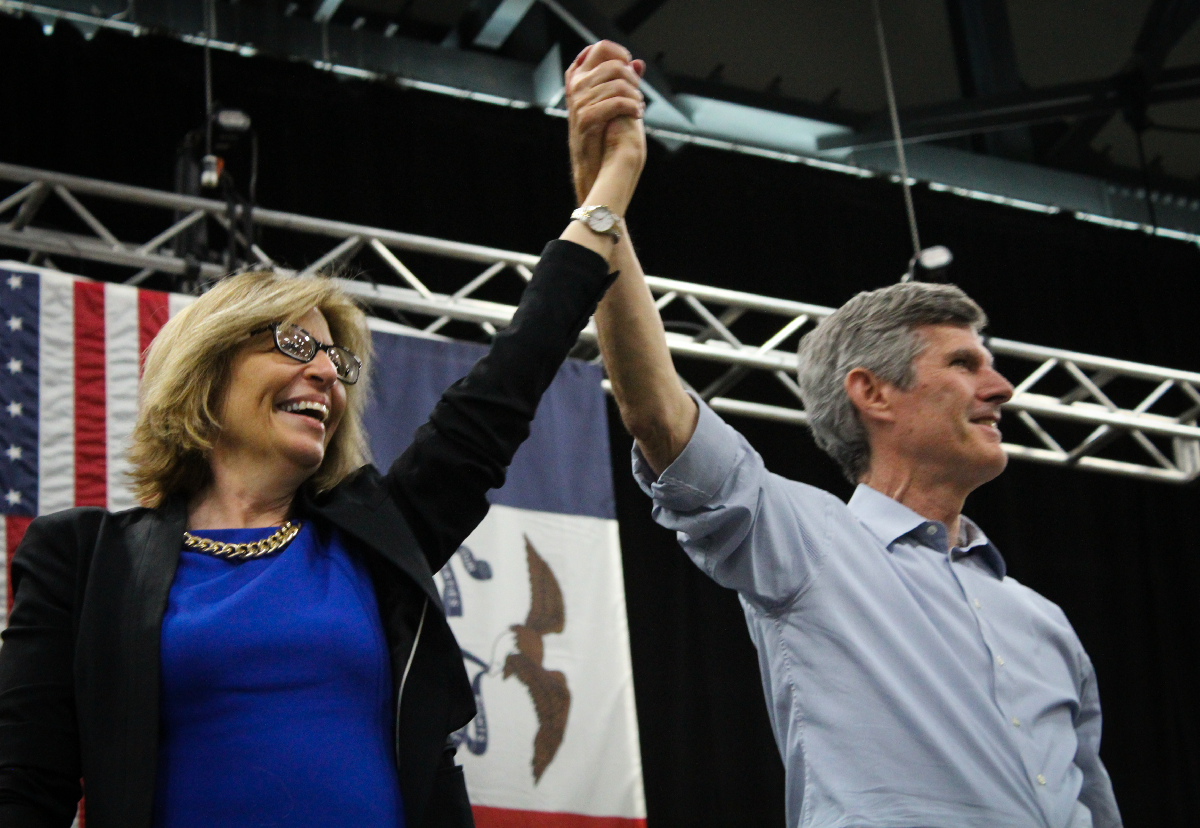
Rita Hart and Fred Hubbell Photo Credit Hubbell Campaign
Since Iowa Democrats picked Fred Hubbell as their nominee for governor he’s honed his message to a few major issues. In a recent letter Hubbell wrote,
I want to be clear about one thing: I’m not just running against Governor Reynolds and her failed record. I’m running for the people of Iowa. All of Iowa. I’m running on a vision to get Iowa growing the right way and a record of bringing people together to get things done. We’ve got to turn this state around and we don’t have time to waste.
We are all Iowans and we stand united by a simple vision — that if we invest in the future, the people of our great state will benefit.
Hubbell’s priorities are straight forward: make Iowa first in education again; get incomes rising across our state; restore funding to Planned Parenthood; improve our health care system, including mental health; invest in renewable energy; preserve our topsoil; address water and air quality concerns; and restore workers’ rights.
“Blue waves are not automatic; they must be created,” Hubbell said. “It’s on us to make sure every voter has the opportunity to engage with our campaign and hear our vision for Iowa.”
Consider this an invitation to get involved with the Hubbell-Hart campaign.
“I know we can take back Terrace Hill, but we can’t take it for granted,” Hubbell said. “Can we count on you to join the team today? With your help we can win in November.”
It may seem late yet I declared the garden planted on Friday.
We’ve already had a bumper crop of vegetables and we’re not even started with tomatoes, eggplant, peppers, green beans and more. There will always be garden work to do but for now it’s planted.
Time to turn to other things.
What I mean is between now and Aug 4, when orchard work begins, there is writing, household repairs and cleaning, and loads of work to improve our home life. At some point I switched from being a consumer to a doer and that makes the difference in my mid-sixties. I just stay home and do.
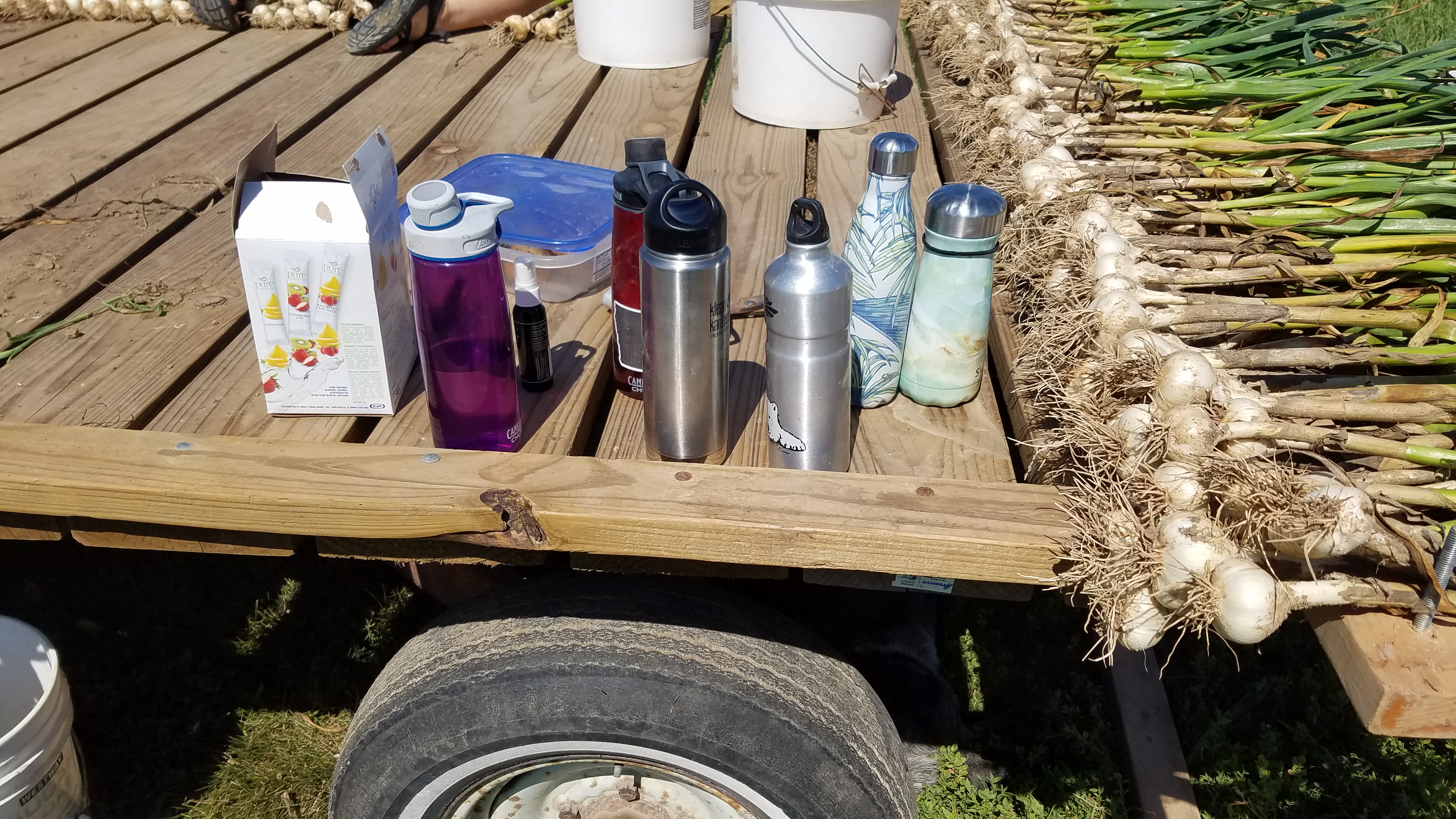
Water Bottles
Politics plays a role in current affairs and it’s much different than it was. My focus is to understand the complex world in which we live and work to make a positive impact. My themes haven’t changed (environment, social justice, economic survival, good governance) although my understanding of what needs doing has. During the re-election of George W. Bush I re-activated in politics. Each succeeding campaign was both learning and engagement. After seven campaigns, I enter my eighth with a deeper understanding of the role social networks play in determining winners and losers. I’m not referring to Facebook, Instagram and Twitter here, but broader social movements and the momentum they bring to an election.
The first Obama campaign, with its demographics analysis and targeted voter lists seems like ancient history. What Obama did can’t be replicated, even if we wanted. To better understand the electorate, we must knock on every door, hear every voter, and determine how to fix the broken politics endemic to our lives. Creativity and networking are important. We don’t know if what’s broken can be fixed in a generation. If we don’t start now, it may never be fixed.
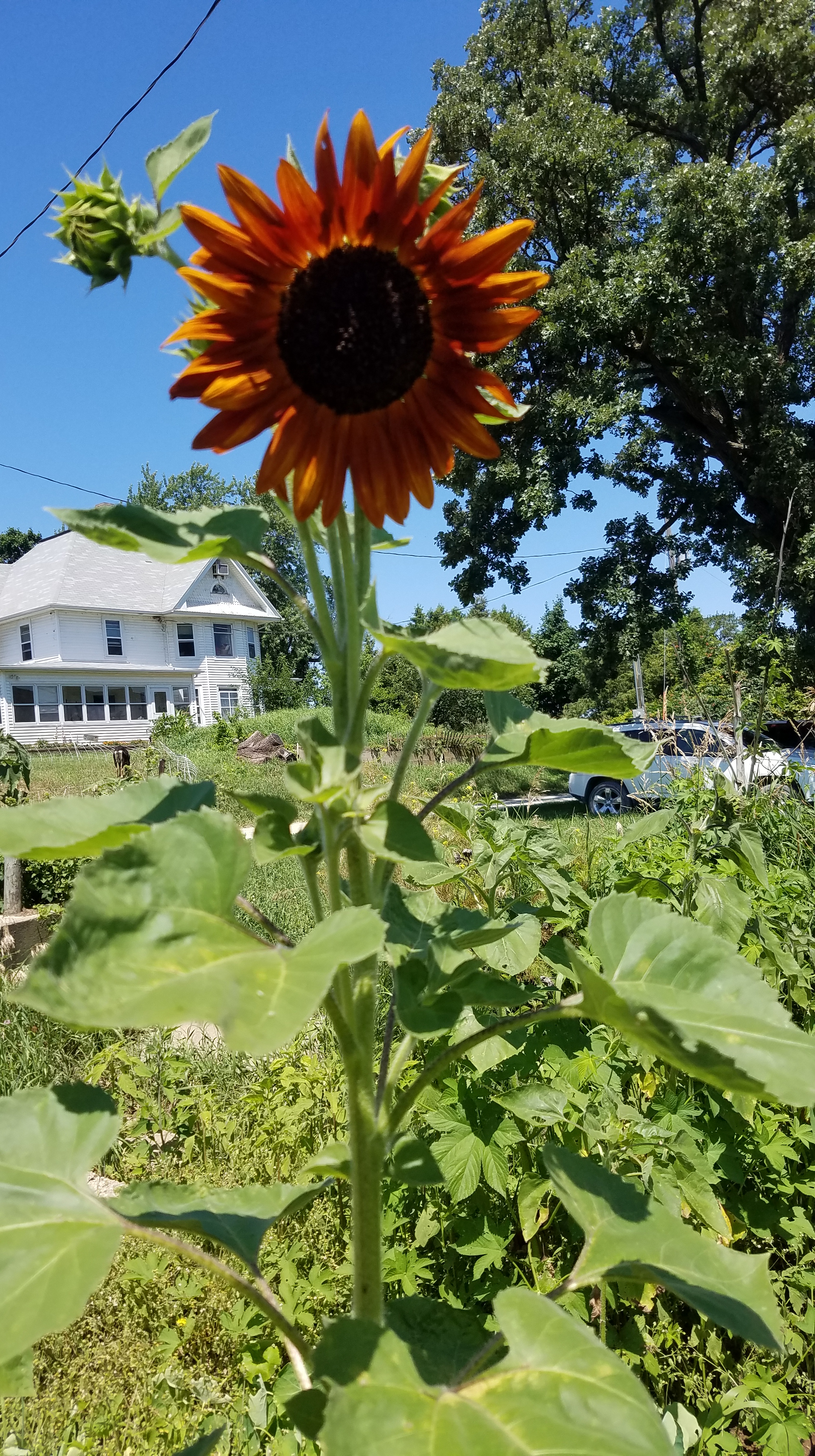
Flower at the Farm
Politics is not everything. After only three hours at yesterday’s garlic harvest at the farm I felt a bit dizzy, presumably because of hard work in the sun. It was a temperate day, nonetheless, I played it safe and called it early. My point is I’m not getting any younger. Working a six or eight hour shift in the sun doesn’t work as well as it did a few years ago. Working smart is replacing working harder.
The rest of the year goes something like this. July is a month to work at home: advance my writing projects, get space at home to be more livable, and work to get the yard into better shape. August through October is work at the orchard. This year I may be taking on additional responsibilities, but for sure I’ll be there weekends and on Friday Family nights. November and December will be focused on writing. While this is going on, I’ll continue to work at the home, farm and auto supply store two days a week. Every dime of income has a place to be used at this point.
Declarations like mine about the garden are ephemeral. What matters more is a process of continual improvement in which life goes on as best we can make it until the final curtain falls. In the meanwhile, we expect there will be garden vegetables to eat.
I worked as an admissions clerk at the University of Iowa Dental Clinic after graduate school. We saw patients from all around Iowa — wealthy patients with private insurance, indigents with limited means, and everyone in between. Anyone who came to my desk was accepted for treatment. What I knew then seems poised for change.
Cuts to regents university budgets combined with an Iowa Medicaid administrative disaster led the university to cut off new dental patients on Iowa Medicaid because of difficulty collecting fees and complicated new rules.
“The dispute pits state administrators at the university against their counterparts at the Iowa Department of Human Services,” Des Moines Register reporter Tony Leys wrote last Saturday. “It is the latest skirmish in the bitter controversy over whether Iowa should have private companies run its $5 billion Medicaid program.”
Over 600,000 poor and disabled Iowans are eligible for Medicaid and most adults are covered by its “Dental Wellness Plan,” according to the article. Existing patients will continue to receive treatment. People with pain or swelling will receive emergency treatment at the clinic. As for the rest, the future is uncertain. Read Leys’ article for more details.
The University of Iowa Dental School likely changed since I worked there. What hasn’t changed is Iowa’s poor and indigent populations need our help. Under Republican governance the state is creating obstacles to limited, reasonable dental care offered under Medicaid.
Governor Kim Reynolds is looking into the situation, according to the article. Since she’s all-in on Medicaid privatization, it may be a case of what you see is what you get.





 I worked as an admissions clerk at the University of Iowa Dental Clinic after graduate school. We saw patients from all around Iowa — wealthy patients with private insurance, indigents with limited means, and everyone in between. Anyone who came to my desk was accepted for treatment. What I knew then seems poised for change.
 Journey Home
You must be logged in to post a comment.