It’s as if everything in the national and state government is approaching a breaking point. What might be broken? Any remaining faith we have that the United States is different from other nations in a positive way.
I can’t count how many significant news stories there were in the week leading up to this holiday weekend, at least a couple dozen. How to deal with them? Military training instructs us: bunker in and wait for the shells to fall before commencing an initiative.
I’m trying not to think about it going into end of year holidays. Yet, how could I not?
As I approach my 67th birthday, age may be a driver. I’m old enough to remember our country made contributions to peace and prosperity in the world. We did good things. I also see we are responsible for covert wars, military actions and civilian deaths in combat operations. We’ve not been a player only for good in a while.
During the run up to the 2016 election, anyone with knowledge of history, or even those just paying attention to the campaign, knew Donald Trump would be bad at the job of president. No one knew he would be this bad. What kind of man retreats from working on our many current issues to watch television and listen to the radio? That a president would do this, as media reports he is, is not good for our mutual, future prospects as a nation.
Groups formed to resist Republican governance after Trump’s victory. I’m skeptical of the efficacy of putting my elected officials on speed dial for daily or even weekly calls. Better than resisting, we should be voting them out, only we haven’t been able. Despite a “resistance,” Iowa Republicans maintained the trifecta control of the governorship, house and senate. We need to work smarter.
First we wait until the news avalanche finishes. Until we know the bottom — until the dust settles, giving us clear sight — it is difficult to make any meaningful effort. So for a few more weeks we hunker down and figure out where to go from here.
With all the news it has been difficult to know where “here” is. We will eventually recognize this place. Soon, I hope.
I hadn’t heard of Royceann Porter until she was considered to be the Democratic nominee to fill the seat on the Johnson County Board of supervisors left by the death of Kurt Friese.
Through hard work and effective organizing she won yesterday’s special election by an honest margin of 56 percent of 9,658 votes cast, beating another Iowa City resident, Phil Hemingway, decidedly.
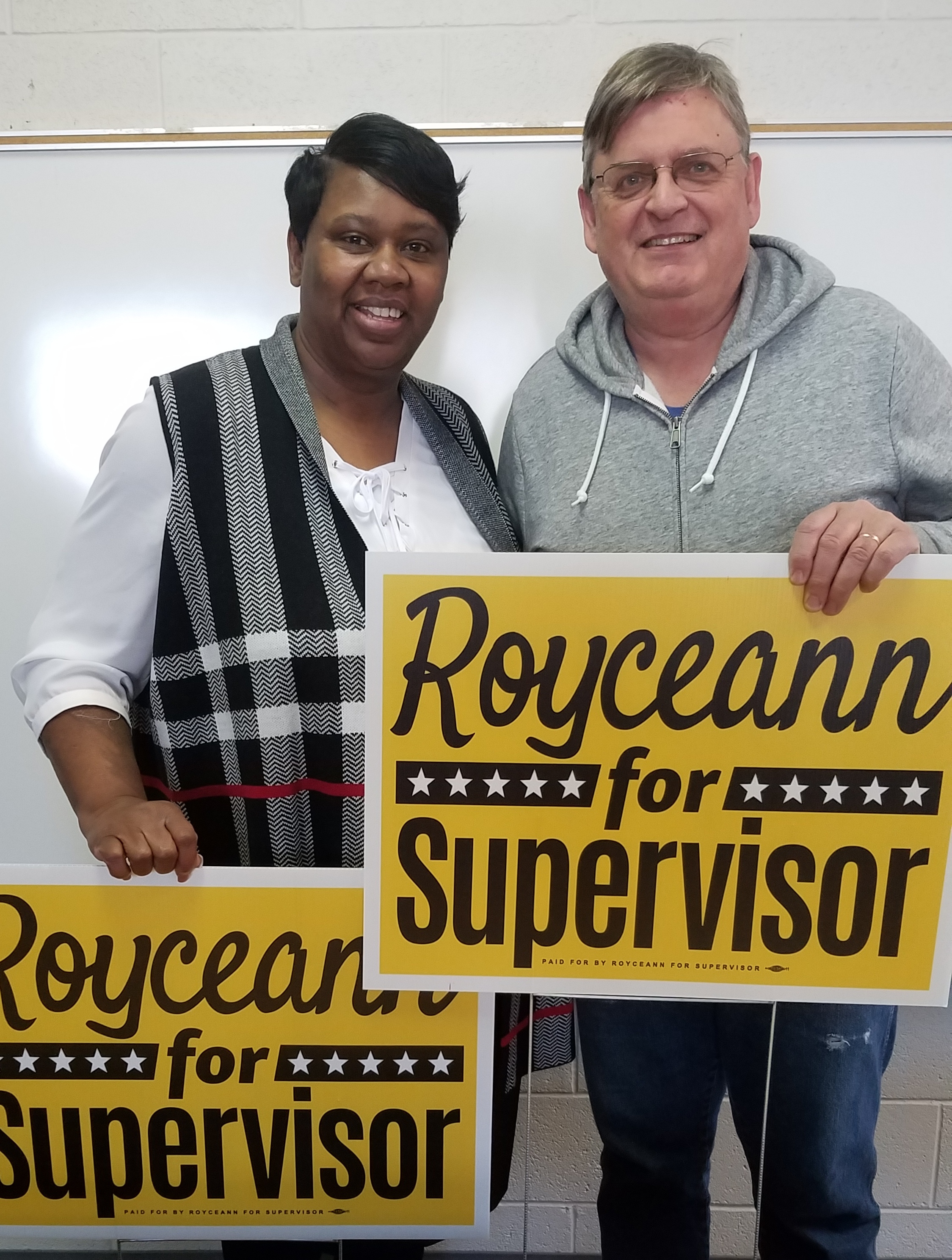
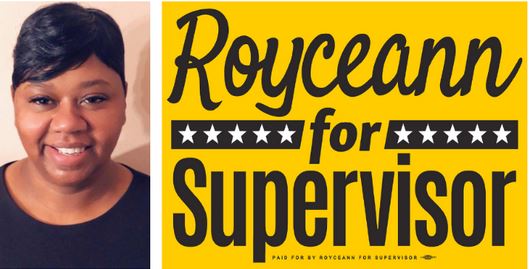
In case you missed it, I included a photo. Royceann Porter is black, and a woman, the first black woman to be elected to the Johnson County board of supervisors.
During the campaign I found racism was still alive in the county. Those of us who talk to voters and have over the last couple of decades are well aware of Johnson County’s endemic racism. Porter herself has been working for racial justice in the county. Voters I meet don’t look at themselves as racist, although Royceann’s candidacy scratched it like a rash. It showed itself in characteristic fashion in unexpected, unwelcome places among people in my circle of acquaintances. The euphemisms were several: “Hemingway is better qualified.” “Did you see her at the forum?” “We need rural representation.” These were Democratic voters I spoke to and the attempts to distract from their racism wore thin and saddened me.
I contributed to Royceann Porter’s campaign. As a Democrat, what else was I going to do? With other area friends we organized a meet and greet in our nearby city and advertised it in the local newspaper. I contacted everyone I know and urged them to vote for Porter in the special election. I posted this photo on social media with an endorsement. I don’t know what impact these things had, but Johnson County Democrats may have learned the lesson of the 2013 special election when their chosen candidate, Terry Dahms, lost to Republican John Etheredge with 6,113 total votes cast in that election. Yesterday turnout across the county improved over 2013 by 58 percent.
Was this election about race? Only partly. With a focus on running a viable campaign in a short period of time, Porter overcame every obstacle she faced and won. Racism is still there in Johnson County, the same racism I recognized when our family moved to Big Grove in 1993.
This election and Royceann Porter’s win provides another opportunity to address problems in the county. Racism is only one of a long list of things the board of supervisors must tackle. There’s plenty to do and the board voters chose is reflective of who I am and the direction I’d like to see county government go. That’s what elections are supposed to be about, isn’t it?
Good luck to Royceann Porter on the board. She has the potential to accomplish a lot in 2019 and beyond. Many of us will be pulling for her.
There was never any doubt that when Republicans won the 2016 election setbacks were in store for parts of the environmental movement that rely on government regulations.
Conservative think tanks like the Heritage Foundation were ready with swat teams to investigate every part of the executive branch and reverse anything and everything that could be to favor business interests during the president’s first term.
The funders of these operations have plenty to celebrate going into the new year. The rest of us took a step backward.
What I’ve learned in almost 50 years of being in the environmental movement is there is no parsing the actuality of environmental degradation. A person can summarize the greenhouse effect in as few as 200 words. The impacts of global warming are available to anyone who would recognize them. There is an inevitability of climate action with the main concern being we wait until it is too late to save ourselves.
The battle over the coal industry is being fought less by environmental advocates and more by market dynamics. So many electric utilities converted to natural gas because of its current low cost and availability. Why wouldn’t a utility want a thermal energy source delivered right to their door over a mineral that had to be delivered and handled by the rail car load at greater expense? Based on the home heating conversion of coal to natural gas, ongoing when I was a child, there is no going back to coal.
Natural gas is also a problem because of greenhouse gas emissions. While solar energy installations have stalled as a result of the president’s tariff policy, the market will figure it out to use the sun and wind directly. Renewable energy will prevail in the marketplace over extraction-based energy sources. Based on the science of climate change, they have to prevail if we hope to adapt to the deteriorating environment we created.
Symbolic gestures like the Green New Deal the House of Representatives is proposing are something. However, the problem of environmental degradation won’t be solved by governments alone. We need a resurgence of green habits. It is still too easy and inexpensive for someone to hop in the car and drive 20 miles to pick up groceries to expect them to change their behavior.
Progress made on environmental issues and policy during the Obama administration was no progress at all if it could be so easily reversed by the next administration. The idea a potential Democratic president in 2021 could reverse the damage done by Republicans is a shallow hope. We have to do better than this.
As 2018 draws to a close there is much to be done to reverse the deleterious effects of a changing climate. Some of it can’t be reversed yet we can’t lose hope. Despair is a form of climate denial.
“We do not have time for despair,” Al Gore said recently. “We can’t afford the luxury of feeling discouraged. Too much is at stake.”
Inside politics and out, now is the time for climate action.
Congratulations on your reelection last month and thanks for the conversation after the Second District convention.
My wish list is brief, here it is.
Create a process to audit where defense dollars go. We are spending a lot on defense, more than I believe is needed. We ought to be able to determine where this money goes. I believe we can save money. I’d bet there is enough money to pay for the president’s wall, not that we should. Please work on such accountability for the Pentagon.
Protect Social Security and Medicare. I first paid into Social Security the summer of 1968 and 50 years later depend on my Social Security pension to help pay monthly bills. Most of my friends on Medicare believe it doesn’t cover enough. However, what we have adds value to our lives. Keep these both solvent and determine a better, more cost effective way to manage them.
No doubt you are aware of the dire reports on the potential consequences of climate change on society. The New Green Deal for which Nancy Pelosi has indicated support could be part of a government effort to mitigate the consequences of global warming and climate change. It is not enough. Scientists have indicated in the recent Intergovernmental Panel on Climate Change report that the horizon for catastrophic consequences is much closer than expected. It is time to act on climate change, and I hope you will do your part every day.
Thanks again for your representation. Best wishes for end of year holidays and an optimistic new year.
What surprised me was the clarity with which Obama depicted a life on the South Side of Chicago and how it influenced her both while coming up and once she had means to be on her own. The first two sections of the book are by far the strongest. That’s partly because as First Lady events in the third part had plenty of previous play in the media creating a background noise that interfered somewhat with her meticulous and thoughtful narrative.
She crafted a story almost anyone could relate to. Highly recommend you check this book out from the library and give it a read. Better yet, have your children read it, or read it with a group of friends.
The 2018 Midterm elections are over and I’m happy about the outcome.
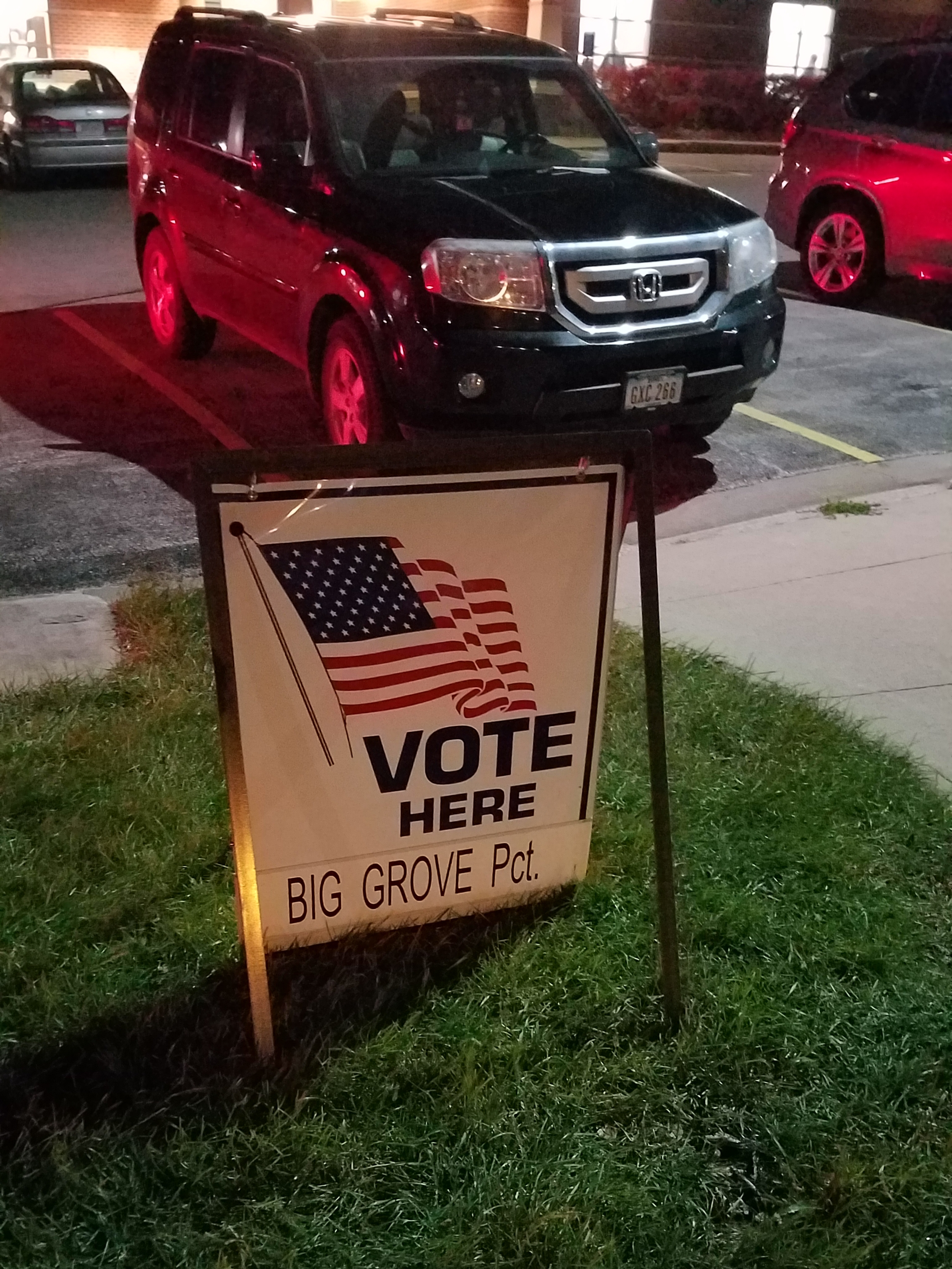
I live in Big Grove Precinct, nestled around Lake Macbride, and here Fred Hubbell beat Kim Reynolds by two votes of 1,107 cast in the governor’s race. Why am I happy if Hubbell lost statewide?
Compare 2018 to 2014 election results in Big Grove when Terry Branstad won the precinct with 558 votes to Jack Hatch’s 367 (951 votes cast). Overall voter turnout increased by 16 percent in 2018, and almost all of the increase favored the Democratic governor. In a precinct where Donald Trump won by 54 votes, I’m glad to see we flipped back to Democratic in the governor’s race, even if only by two votes.
My opinion on these facts: the 2018 midterms were a fair election.
People are already gearing up for the 2020 election. At stake will be something that gets to the core of what makes for fair elections, a fair way to draw maps of congressional and legislative districts.
Iowa’s process where an independent, temporary commission recommends a district map to the legislature, which votes on it, is a fair one. Iowa has avoided gerrymandered districts (like Pennsylvania and North Carolina drew to favor a particular political party) largely because of our process.
No matter who wins the legislature in 2020 we should keep our statutory redistricting process to ensure fair elections, that is, if we want to strengthen our democracy. I want that and hope you do too.
~ Published in the Nov. 29, 2018 edition of the Solon Economist
Last night Johnson County Democrats nominated Iowa City resident Royceann Porter for the Dec. 18 special election for county supervisor. I support her candidacy for two reasons. She is a Democrat who won the nomination in an open process, and many people whose judgement I respect support her. Before last night, I wouldn’t have recognized her if I saw her walking on the street. I’m rapidly getting to like Porter and have already reached out to congratulate her and offer help in her campaign.
The other nominee, Pat Harney, had been elected county supervisor four times yet convention delegates rejected him by a vote of 109 to 42. In his three-minute speech Harney focused on the challenges of winning the special election, something of which delegates seemed cognizant. Unspoken at the convention was the challenge a black woman would face among quietly racist voters in the county who would prefer the white male Republicans are expected to nominate. Porter’s campaign is about moving the county forward and that’s another reason I support her.
“I have been a leader in this community for many years,” Porter wrote in a Nov. 19 campaign email. “I will use my commitment and experience to make sure that Johnson County works for all of us. And, I know I can win against the Republican nominee in the December 18 special election.”
In a county where 48,758 people voted for Democrat Fred Hubbell for governor Porter should easily win the election over any nominee Republicans put forward at their upcoming convention. It’s not a given as the 2013 special election that made Republican John Etheredge a supervisor reminds us. It’s up to delegates at last night’s convention to get the word out about Porter’s candidacy and make sure voter turnout is sufficient for her to win.
I plan to do my part to elect Royceann Porter county supervisor and look forward to the campaign.
Written before the 2018 Midterms and Bret Kavanaugh’s confirmation to the U.S. Supreme Court, Greg Sargent provides an outline of key issues to help Democrats as we prepare for the 2020 general election. He covers voter suppression, gerrymandering, the role of disinformation in our current politics, and refreshes our memory of the hardball constitutional politics played by Republican leadership in recent years. He frames up what Democrats can do about our politics that favors democracy and fair play in governance.
In a couple hundred pages Sargent brings together national issues that resonate on a local level. If a person were to read a single book about national politics, An Uncivil War should be the one.
Part of me wants to get outside my wheelhouse and talk about the Iowa Democratic Party’s performance during the just finished midterm elections. Part of me does not.
After the last presidential election I had some specific ideas about how the Iowa Democratic Party should be blown up and re-built: eliminate Iowa’s first in the nation presidential caucus, reduce staffing, work toward better communications, and so on. Under Andy McGuire’s leadership the party drifted and Republicans eclipsed Democrats in Iowa by their support of the current president and their down ballot candidates. The sorry times will continue in the 88th Iowa General Assembly as they retained control of both chambers of the legislature and Terrace Hill.
I have just a few points to make.
I met IDP chair Troy Price, during the Obama campaign. I’ve always liked Price although I don’t know him personally. Democrats didn’t want for resources during the midterms and that’s attributable to him. Price made a worthy effort to be inclusive, appearing across the state in a multitude of events and meet ups. He worked to let the grassroots organization in counties lead. We’ve had diverse chairs and Price is the kind I like to see. Unlike McGuire, he knew the grassroots issues with IDP and worked to address them in his leadership.
In Janice Rottenberg the party hired an experienced political consultant to lead Campaign for Iowa and, from my perspective, the effort was solid, laser focused on very specific objectives proven during the Obama campaigns: identify and turn out infrequent voters and expand voter registrations. It was a little annoying to be asked to “volunteer” up to a half dozen times each time I entered a local CFI office. When I did offer to volunteer, in my precinct, or at the office, such offers didn’t fit the very specific niche they were trying to fill, walk and call shifts. Rottenberg was largely unseen during the midterms but her fingerprints were on everything. Strict and focused discipline is what IDP needed to get us back to being competitive in the state. Janice Rottenberg delivered.
The majority of my volunteer work during the midterms was writing walk and call lists for the House District 73 campaign of Jodi Clemens. Clemens decided to use Vote Builder to track our canvass effort. My first experience with Vote Builder was in 2004 and it’s come a long way. The tool is user friendly and useful to campaigns operating on a shoestring budget. Once we got through the getting to know each other phase of our relationship, I worked well with IDP information technology staff and we had reasonably accurate information with which to work. This technology contributed significantly to Clemens’ achievement of winning 6,330 votes, a 57 percent increase over the performance of the last Democratic candidate to run for the seat in 2014. Vote Builder is something IDP does well.
During the Democratic primary candidate John Norris repeatedly said the process of Democrats regaining strength in Iowa would be a multi-cycle effort even if we won the governorship or one of the legislative chambers. That remains true. Were the midterms a success for Democrats? How responsible is IDP for the results? It’s hard to call them successful with Republicans maintaining their trifecta of control. All the same, statewide voter turnout at 61.0 percent, according to the Iowa Secretary of State, is much better than the 53.3 percent in 2014, the last midterm election. Increased voter turnout is partly attributable to reactions to politics in Washington D.C. and in Des Moines. The Democratic part of it is due to a concentrated, focused effort on the part of the Iowa Democratic Party under Troy Price.
If Iowa Democrats will get more control of our government, the work of specific campaigns like Campaign for Iowa will remain important. However, there is a broader, cultural picture here. One that is beyond the scope of a political party. I continue to believe the best thing Iowa Democrats could do would be deny Republicans their key organizing tool and eliminate the presidential caucus. It’s not a popular position, but I believe it is a substantial part of the remedy Democrats need to regain political control of Iowa. And no, I’m not deleting my account as some have recommended after hearing my position.
Well done in the midterms Troy Price and the Iowa Democratic Party.
There was only one new face at the Democratic election night call center for Big Grove and Solon Precincts. Five of the six of us are regulars at this biennial event.
Six people doesn’t seem like many but between us we finished every phone call needed an hour before the polls closed. Experience pays, leaving more time for refreshments while waiting for results.
While the group wanted to know the night’s winners, my question was whether Big Grove Precinct would swing back after Joni Ernst and Donald Trump won here in 2014 and 2016. The answer is yes.
Fred Hubbell won the precinct by two votes over Kim Reynolds in the governor’s race. Of 1,107 votes cast, Hubbell won 545 to Reynolds 543. Libertarian Jake Porter got 11 and Communist Workers Party candidate Gary Siegwarth got 8. Democrat Zach Wahls won 650 of 918 votes cast over Libertarian Carl Krambeck with 264. These wins were expected.
Of the four general elections since redistricting after the 2010 U.S. Census, two baselines measure Big Grove Precinct’s performance: Democrat Dave Loebsack (IA-02) and Republican Bobby Kaufmann (HD73), who won seven of eight races against different opponents. Here are some numbers indicating votes cast in their specific races:
Loebsack’s results:
2012: 1,123 votes cast, Loebsack 588 to John Archer 496.
2014: 948 votes cast, Loebsack 484 to Mariannette Miller-Meeks 463.
2016: 1,147 votes cast, Loebsack 576 to Christopher Peters 571.
2018: 1,099 votes cast, Loebsack 592 to Christopher Peters 480.
Kaufmann’s results:
2012: 1,089 votes cast, Kaufmann 528 to Dick Schwab 561.
2014: 937 votes cast, Kaufmann 611 to David Johnson 325.
2016: 866 votes cast, Kaufmann 837 to Write-Ins of 29.
2018: 1,091 votes cast, Kaufmann 591 to Jodi Clemens 500.
2014 was a midterm election and overall votes cast in these races dropped from 2012 and in Loebsack’s case regained in 2016. Kaufmann ran unopposed in 2016 and many voters skipped the race rather than fill in the oval for a Republican. 2018 was also a midterm election although turnout was roughly 16 percent higher than in 2014. The political climates in Washington, D.C. and Des Moines motivated Democrats to get to the polls as indicated by Loebsack’s midterm increase from 484 to 591 votes (22%). Republicans best year was 2016 when Trump won the presidency, Christopher Peters lost to Loebsack by only five votes, and Kaufmann had his highest vote total ever. Based on this analysis, 2018 marked a return to normal voting patterns in Big Grove Precinct. Including the Kaufmann win, voters swung back.
Democrats had competitive races for House District 73 in 2012 and 2018. In 2012, Dick Schwab was well known in the precinct where a couple of us encouraged him to run for the open seat. His involvement in the community provided a deep base of support, especially his work for Dollars for Scholars, the Bur Oak Land Trust, and his contributions to building the Solon Public Library. Subsequent Democratic candidates had to work harder for votes here. David Johnson hitched his wagon to the politics of Bernie Sanders in 2014 and hardly campaigned in the precinct. His efforts helped precinct swing voters get used to voting for Kaufmann. When Democrats failed to nominate a candidate in 2016, Kaufmann found additional voters willing to fill in the oval for him, yielding the high water mark of his appeal in the district. Jodi Clemens found herself in a position of having to persuade Kaufmann voters to switch back to Democratic and she didn’t get to enough of them to win the precinct. Clemens did the work of a campaign, but damage was already done in 2014 and 2016 as Kaufmann gained support equaling that of Dave Loebsack. 2018 results are likely the new norm going into 2020, the last election before re-districting. If a Democrat runs and wins House District 73 in 2020, it will again be a tough row to hoe.
After the aberrations of 2014 and 2016, Big Grove Precinct swung back to normal. Democrats don’t like the new normal with Bobby Kaufmann as our state representative. It’s hard to fathom how Governor Kim Reynolds garnered so many votes given the failure of privatized Medicaid and the egregious bills she and Terry Branstad signed during the 87th Iowa General Assembly. The almost identical number of votes for Dave Loebsack and Bobby Kaufmann indicates a belief among voters that both are less partisan, can work across the aisle, and perhaps are unbeatable here. Such belief belies the reality of the candidates. In order to create an environment that recognizes the partisan reality it will take a lot more cultural support than knocking doors and making phone calls from phone banks will ever provide.
Eventually the septuagenarians among us at the call center will take the path of our octogenarian friend who first campaigned for Aldai Stevenson. She didn’t make any calls this cycle but talked the election up among friends and baked a pie for election day. Hopefully new people will step up and get involved in local Democratic politics in 2020 and beyond. I’m reasonably confident they will.
Note: 2018 vote totals had not been canvassed by the county auditor at the time of this writing. They may change once the canvass is completed.





 Journey Home
You must be logged in to post a comment.