Categories
Kitchen Garden

In The Summer Kitchen

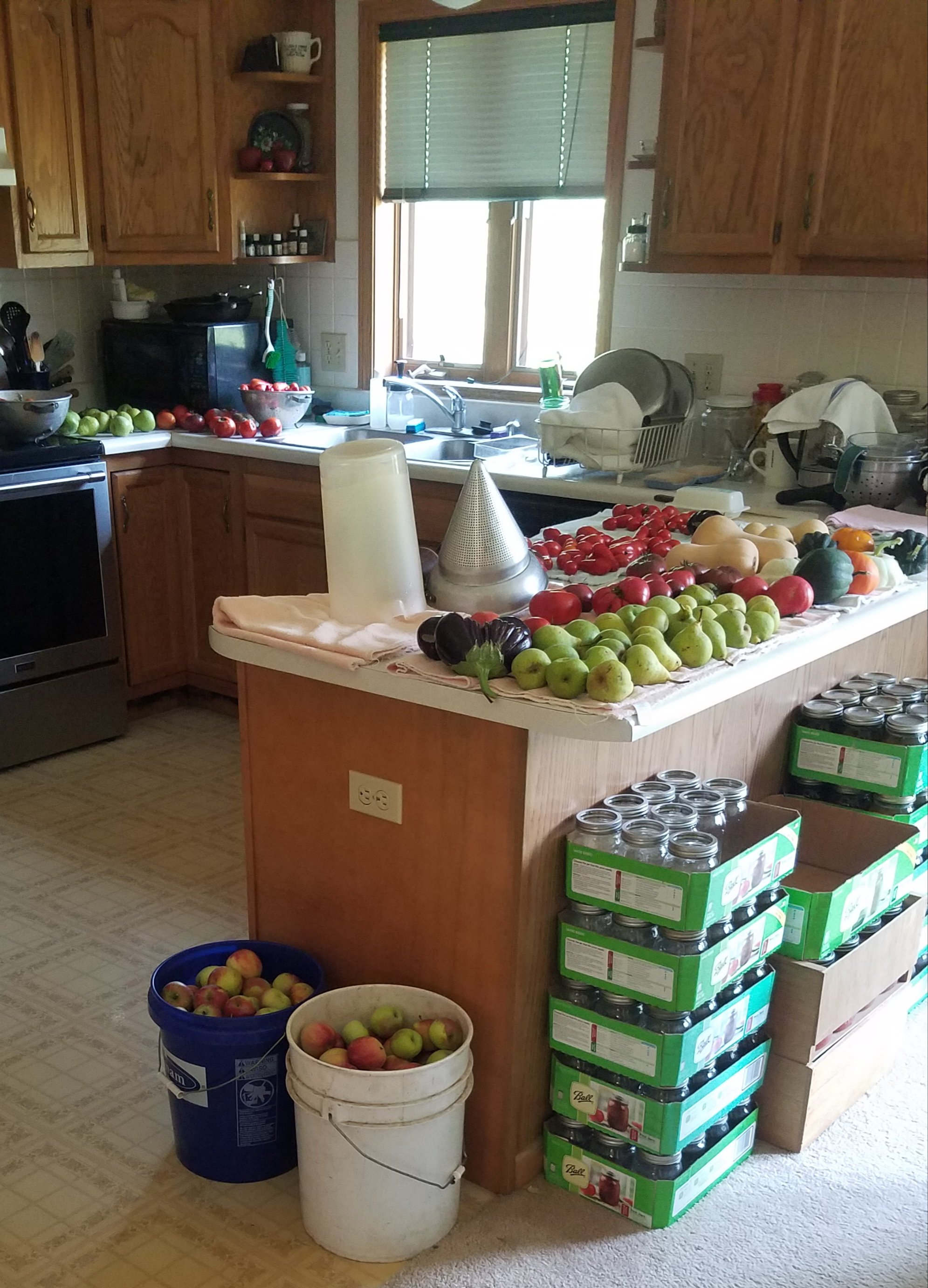
Produce in our summer kitchen.

The orchard where I worked for eight seasons before the coronavirus pandemic has Red Haven peaches from the owner’s cousin in Michigan. They are among the best peaches I have yet eaten. I didn’t buy any this year because the pear tree we planted at our daughter’s high school graduation party is producing in abundance. Our pears are misshapen yet sit down and stand up sweet and delicious. I’ll save my peach buying for another season.

It is hard to keep up with the garden’s abundance. On the counter are tomatoes, pears, apples, squash, and eggplant waiting to be processed or cooked. In August, this could be a full time job. I truly want to can tomatoes for winter. Luckily, they have a reasonable shelf life and I can process them before spoilage. Half of the challenge in the kitchen is knowing what to process, how, and in what quantity.

Physical stamina is another thing. A person can stand at the counter slicing tomatoes for only so long without rest. I do it until my back gets sore and then stop and sit for a while. It extends the overall time to get things done. It also allows me to continue until the work is finished.

The way the harvest comes in makes for canning batches of two or three different items. I currently have apple sauce, tomato juice, diced tomatoes, and salsa verde ready to be processed in a single batch. We’ll see how the morning goes and whether there are enough tomatoes to make a complete batch. I know there are enough apples to make seven quarts of sauce for a single batch. Usage in cooking determines whether to put things in quart or pint jars. For example, tomato sauce is for pints, and whole tomatoes for quarts. Apple sauce is for quarts, apple butter for pints. Navigating through canning and food preservation is a learned skill.

Ten years ago, I preserved everything I could from the garden. That resulted in many extra jars of pickles, applesauce and apple butter. Unless there is a specific reason, I now limit my seasonal output to what we can use in a year or two. I do not see a future of canning pickles the way I did in 2016 when I generated 24 quart jars. Cucumbers are so abundant, I can make fresh refrigerator pickles that last for a year. The canned goods are tasty, but also too much when trying to process everything.

My cruciferous vegetable plot was an unmitigated success this year. I put up all my kale early in the spring and now pick fresh when I need it. Soon I’ll pick a couple crates for the food banks, but I don’t like to inundate them with kale. Same for chard and collards. We have frozen broccoli and cauliflower enough to last until spring. The broccoli plants are still producing small floret bunches.

When I’m busy in the kitchen, it is time for a batch of soup. The problem is the refrigerator and freezer are full, so there is no place to store a couple quarts of home made vegetable soup.

The rack of garlic is dry enough to process and clean. I’ll save the 25 biggest heads to break apart and plant as seeds in October and put the rest in a crate for storage on the lower level of the house. Because the garlic season lasts from October to July, I tend to forget about it. It is a mainstay in our kitchen where we use some almost every day.

There is no place I’d rather be than in our summer kitchen. When one grows a kitchen garden, meals are better and we engage in the process enough to forget our troubles. It’s where I’ll spend many of the coming days.
Categories
Kitchen Garden

Peak Gardening Season

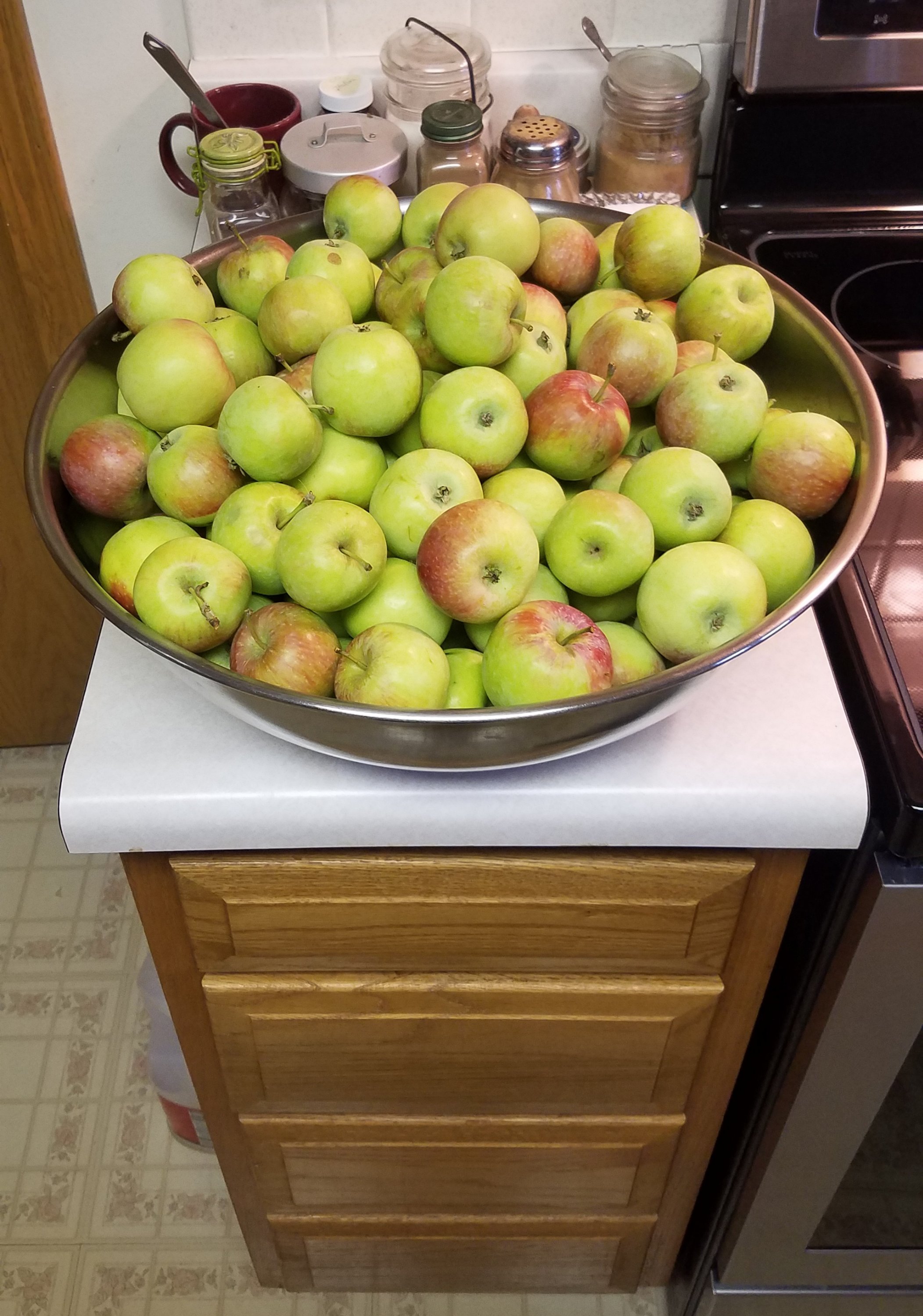
Not enough sugar for cider to make vinegar, so apple sauce.

I’m left alone to attend to the house while my spouse is helping her sister. She’s been gone three weeks, and a return date is uncertain. I made a care package of garden produce, a couple boxes of rags, and my labor for some heavy lifting last Wednesday. We had a good conversation about life after the work was done.

The main August activity centers on the garden. There is a lot of food to bring in and preserve for the future. It never seems a straight line on getting things done.

Apples are dropping at the rate of one every minute from the Earliblaze trees. I picked a bucket full, yet there is not enough sugar in them to make cider for vinegar. I guess I’ll sauce them. If it is a bit tart, we can add a sweetener when we open the jars and serve. This was not a good variety of tree to plant back in the 1990s and I have two of them. The Zestar! apples, from a tree planted a couple of years ago, made a great-tasting sauce. That jar is in the refrigerator for immediate eating.

The first round of hot peppers is in and needs processing. The goal is to make at least one quart jar of Guajillo chilies with garlic, maybe two. There are also Serrano peppers for eating fresh and another kind of refrigerated chili sauce. Jalapenos will be eaten fresh. Anticipating a fresh salsa, I bought a bag of organic corn chips at the wholesale club. Once we get past the hot times, there will be a surge of hot peppers.

There is a small patch of celery to bring in. These get sliced thinly and frozen in one cup batches for soup. The leaves are abundant. I put them in the food processor to chop them and then freeze with water in small batches in a muffin pan for soup flavoring. Nothing is so good as home grown celery.

Tomato canning is on deck for the weekend. There are a dozen quarts left from last year and it looks like I’ll need them to get through the year. I’ll have a separate post later about the tomato crop. The ones that are coming in from the vines have had excellent flavor.

It is more difficult to cook for one. I made a big cut vegetable salad and it lasted for days. A person can only eat so many vegetables. I’ve been donating to the food pantry, so that helps alleviate the backlog. Still, there is a lot to process this weekend before the vegetables deteriorate. Better get after it soon.

Categories
Kitchen Garden

Sweet Corn

First sweet corn of the summer.

Sweet corn became available Saturday afternoon and we tried a dozen ears. About half of the ears were under-developed but the rest of it was as good as sweet corn gets. Since our standby outlet closed a couple years ago, only marginal corn has been available. It is unclear whether there will be enough good sweet corn available to put some up.

Our area, like most of the upper Midwest, is under drought conditions. This complicates farming with a residual effect on folks like us who rely on farmers for sweet corn. We aren’t going to go hungry.

I caught a deer in my tomato patch yesterday. When it saw me coming, it attempted to jump over the eight foot fence. It got caught and ended up bending the fence over to make its escape. The fencing system implemented this year is not working, although I am getting more exposure to deer behavior. Next year it will be better.

I delivered my spouse of 40+ years to her sister’s home on Sunday. They are preparing for a move after closing on a home at the end of the month. She will be gone for about two weeks, although these things are never certain. I reverted into some form of myself I don’t quite recognize. The main characteristics of this are changes in eating habits (spicier), and a weird feeling of loneliness when I realize no one else is home.

I’ve been preparing an editorial calendar for the 23 posts I will make on Blog for Iowa in August. I have outlines for half a dozen so far and feel there will be no shortage of topics. The trick is to make them relevant to August 2023. I’m not sure what exactly that means during the resurgence of Republican state governance. Well, I do, but I can’t post every day about what the Biden administration is doing.

It is hard to miss that Elon Musk directed Twitter to become X. It’s probably for the best as it drove me to become more of a lurker than a poster in social media. What am I worried about? Here’s a definition of media addiction:

Social media behavioral addiction is defined by being overly concerned about social media, driven by an uncontrollable urge to log on to or use social media, and devoting so much time and effort to social media that it impairs other important life areas.

The Addiction Center website.

Musk X’d that out.

Soon I’ll harvest the rest of the red cabbage, celery and potatoes. Arrival of sweet corn is a sign we’ve turned to corner of the gardening season. As long as deer don’t eat the entire tomato crop there will be plenty to do in our kitchen garden. I’m ready for it.

Categories
Kitchen Garden

Month Into Summer

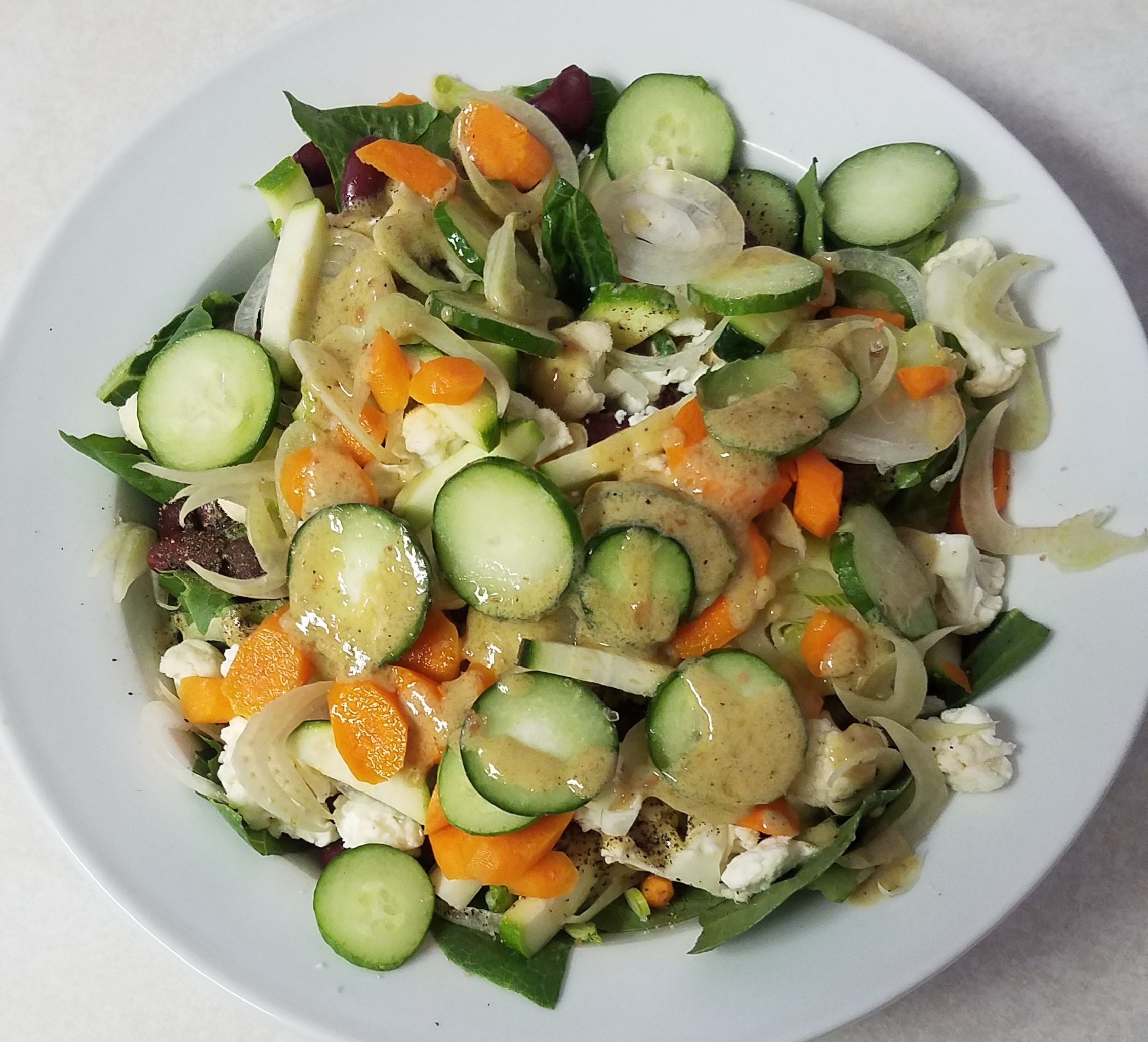
Summer salad made mostly with ingredients from the garden.

Battle with squash bugs began this week. Egg laying is concentrated on the patty pan squash plants but they are throughout the squash plots. I am catching some of the egg clusters just as they are hatching. This year I am determined to get rid of them before I have to get rid of all the plants. Daily diligence in removing eggs and any squash bugs is the only way to do it without chemicals. Even that may not be successful. There were fewer eggs today than I found yesterday. I’m hopeful I can be master of my garden.

The main objective is to save the pumpkins and winter squash. A person can eat only so much zucchini and patty pan, so no loss there.

The onions are cured and ready for storage. I emptied the greenhouse Friday afternoon. Soon I will pack it away for the season. The main crops of peppers, eggplant and tomatoes are about to begin. There are many cabbage heads coming, kale, chard, and collards for leafy green vegetables. Potatoes will soon be ready to dig. There will be no shortage of fresh vegetables in our kitchen garden for a while.

There is more to life than gardening and eating the results. Not much more, though.

Categories
Kitchen Garden

Donating the Garden

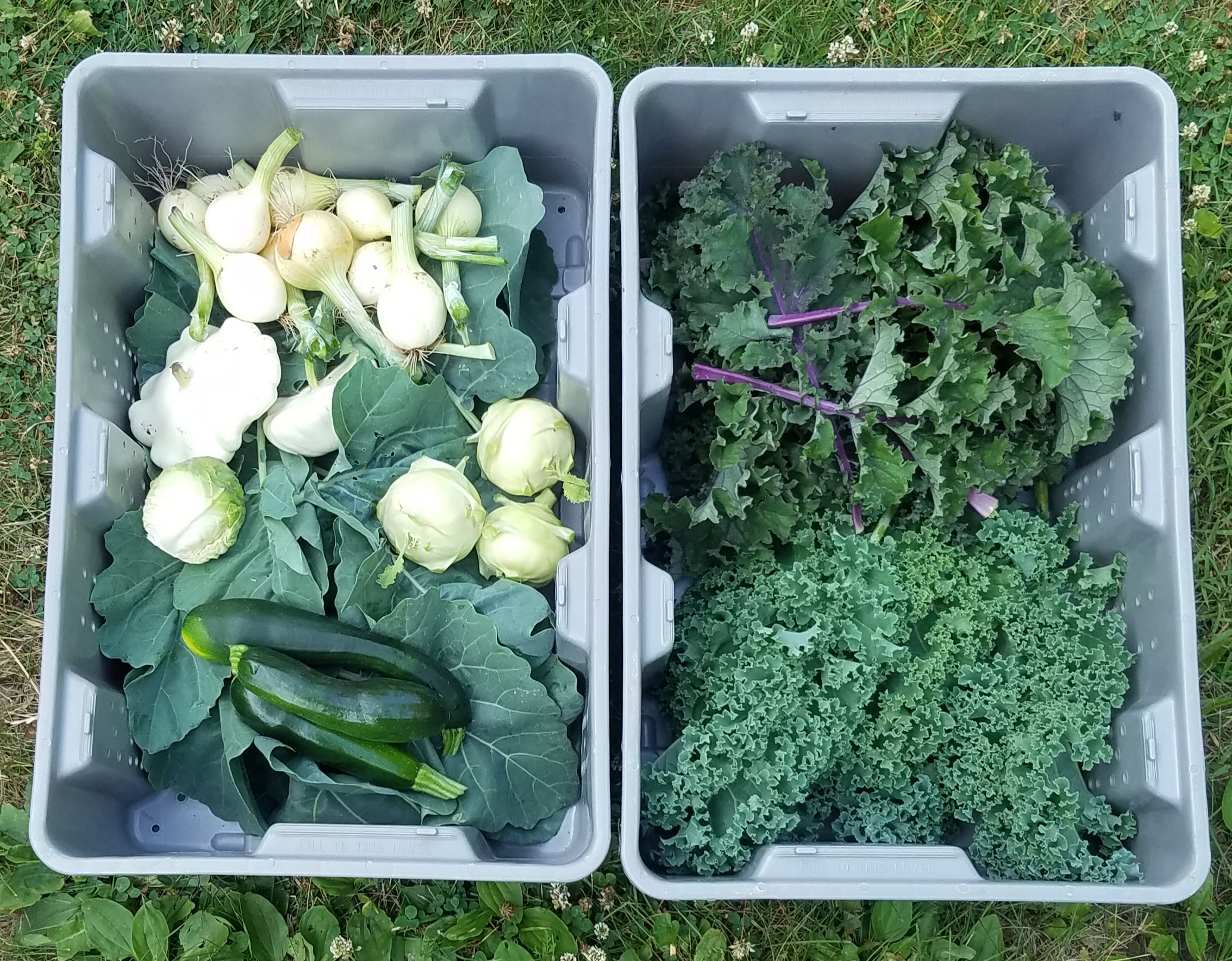
Eight crates of vegetables for the food bank.

I just returned from my Monday morning trip to donate to the food pantry at the Methodist Church in town. They are open Monday afternoons for clients and accept deliveries beginning at 9 a.m. I donated cucumbers, zucchini and patty pan squash today.

Donating food accomplishes a couple of things. Clients really need the food they get at the food bank. By donating there, I contribute directly to someone’s good. When I want to preserve something — kale, cucumbers, vegetable broth, cabbage — I don’t know the yield, or how much I will need. The food bank enables me to grow plenty of what I need of a specific crop and find a home for the rest. By growing different things — patty pan squash, for example — I provide produce that is a bit different from what other gardeners may be donating. That give clients more diversity in their diet. More than anything, My donations make me useful in society.

I grow a garden for the fresh food. Being able to donate excess makes it feel like nothing is going to waste. That’s a good feeling.

Categories
Kitchen Garden

After a Day of Rain

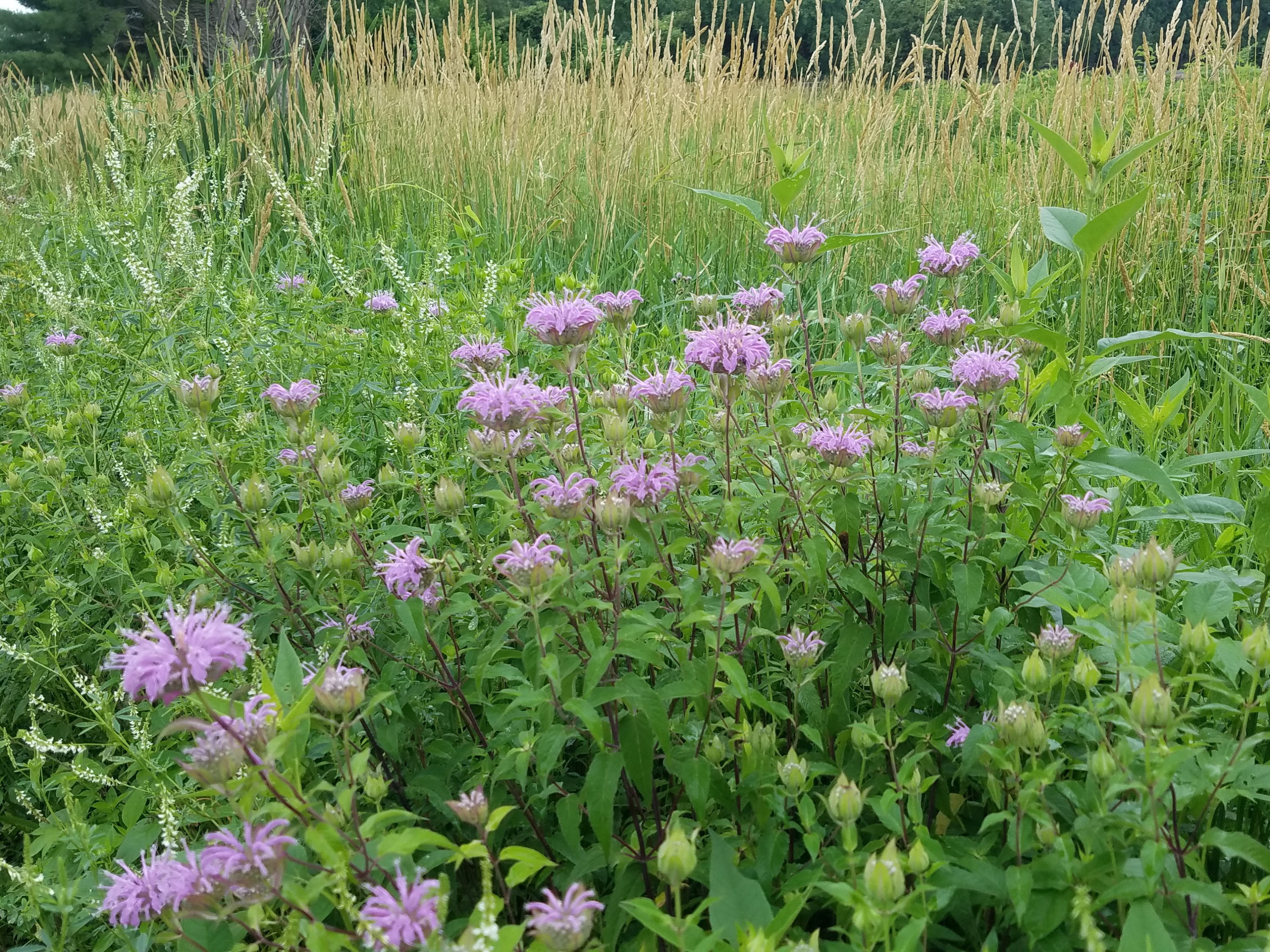
Wild Bergamot on the state park trail on July 2, 2023.

Rain was forecast all day Saturday and it did sprinkle some in each hour. In between sprinkling I made my way to the garden and found the first head of cauliflower was ready to pick. I grabbed it and headed back indoors.

It was a punk day while rotating between my writing desk, the living room, the kitchen, and taking naps. We both continue to suffer from contact dermatitis, my spouse worse than me. There was tending to treatments to alleviate pain and itchiness. At the end of the day I was tired, yet I can’t put a finger on exactly what exhausted me.

First cauliflower on July 1, 2023.

I’m in a pickle over the vegetable harvest. The refrigerator and freezer are close to capacity and I’m only just beginning. Pickling cucumbers and other veggies is not a path to exit, since I have too many pickles canned in jars from previous years. I messaged a friend who works at the local food bank and if they are working the day before Independence Day, I will transfer much of what I have to them for distribution. I like the excess produce as we can take the best and give the rest away to people who need or want it.

It is a lazy, early summer day. It’s not hot like it can get in August, yet spring is over. It’s an in between time of organizing for the next big project, yet not starting it. It’s time for taking naps in the middle of the day. How long it took us to get to this place in our lives.

Categories
Kitchen Garden

Deer Jumped the Fences

First summer harvest of vegetables.

For the first time since I began gardening in Big Grove, deer jumped the fences and began nibbling on my plants. Thus far, they got into two plots, eating peas, green beans and cucumber plants. I put up supplemental fencing where I thought they jumped over, yet I’m not sure that will do any good. I don’t have enough fencing to elevate the height to eight feet all around every plot.

What is going on? I haven’t changed anything. My instinct is the exceedingly dry weather hindered growth of their natural food supply and my tasty plants were better than starving. The damage of one eating session is substantial, and will impact yield. I need to do something.

I mastered the art of keeping rabbits out of the garden. By securing the bottom of the fence to the ground, and letting the clover grow in the yard, they have plenty of food without intruding on my vegetable patch. It is a success story. I’ve long realized deer can easily jump my four and five foot fencing, yet because of the how I planted, they haven’t… until now.

I’ll rig up some additional fencing after the sun rises and I view last night’s damage. What I believe would resolve the problem is getting a good, long rainfall.

U.S. Drought Monitor
Categories
Kitchen Garden

A Day in a Garden

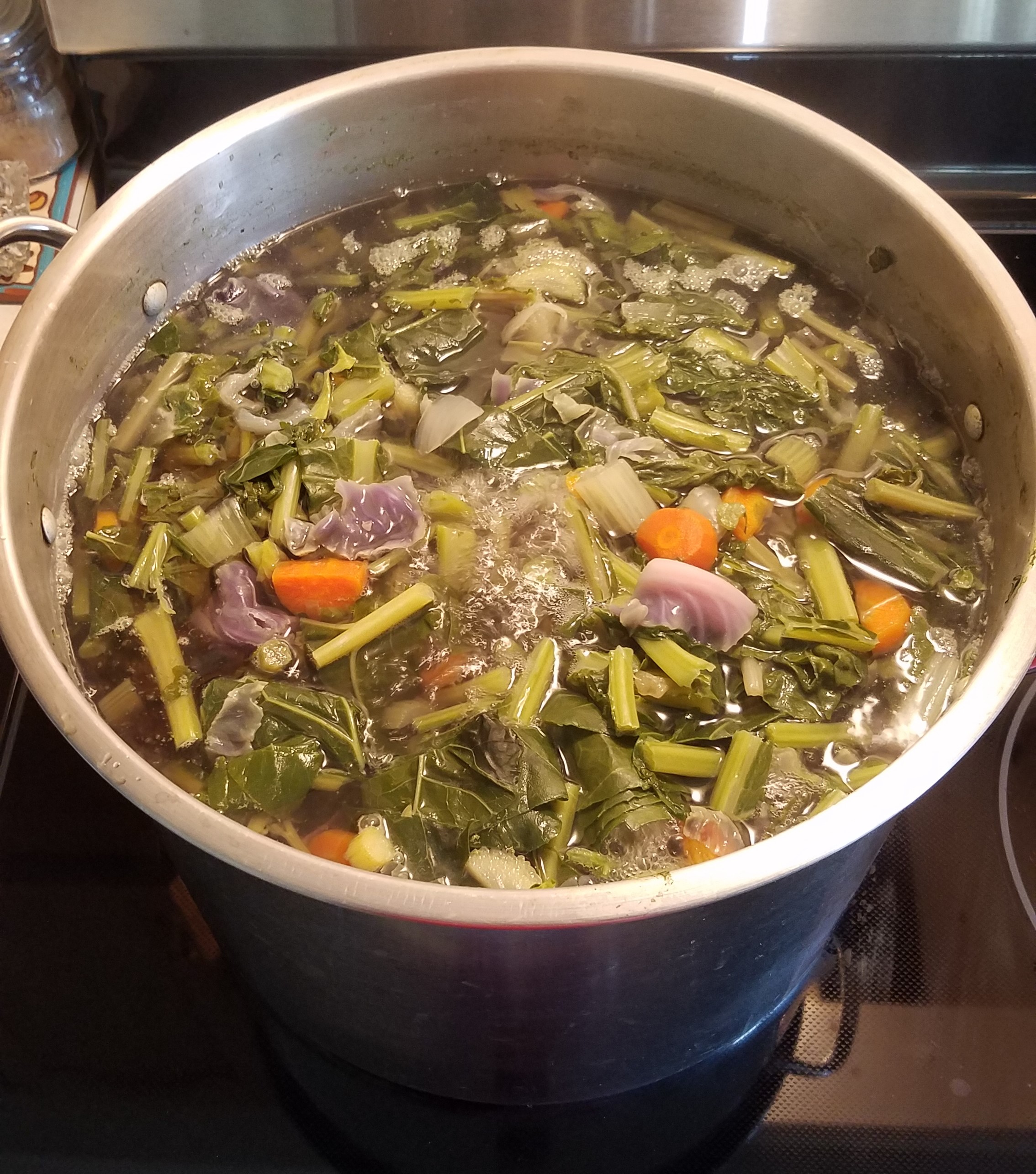
Vegetable broth simmering. Made with many kinds of garden greens.

A hummingbird dipped water from the leaves of cabbage plants throughout the garden. It has been a dry season, yet the bird found enough to drink condensed from the night and pooled in drops on the leaves. The garden is full of such life. By taking time to stand, listen, and look, we share in the experience. We become part of the garden, which is not nature, yet as close as we can get.

A deer was eating pea blossoms over the fence. I let it go on for two nights then installed additional fencing to make it eight feet tall and restrict access on that corner of the garden plot. It worked, but the deer jumped the fence on the other side and tried to access the peas from inside the fence. It ate one or two, leaving hoof marks in the fresh-dug soil where I planted spinach seeds. I wonder what happened that it only took one bite.

Predictably, I found the first little green worm on a kohlrabi plant yesterday. The egg-laying white butterflies have been thick in recent days. It was only a matter of time. The challenge now is to seek them out and pick them off in the mornings. Hopefully the organic insecticide I applied will suppress them. They arrive just as the heads of broccoli are beginning to form. Half the battle is knowing their behavior. It is a battle that can be won by diligent humans.

My daily morning walk through the garden is rewarding. Everything is growing and besides early greens, I harvested the first zucchini and patty pan squash. This is my first year growing patty pan or scallop squash. This first one will go into stir fry later this week.

Tomatoes and tomatillos are beginning to blossom. Onions are forming bulbs. Green cabbages are about three inches in diameter. Soon I will turn over the first tub of potatoes for small ones. Apples and pears are growing. There is a lot going on.

We are lucky to be able to age in place. I don’t think of the outside world when I’m in the garden. I listen, observe and experience the ecosystem I made while wondering how I fit in. It’s the wondering that’s the best part.

Categories
Kitchen Garden

Spring Kale is the Best

Cart of five varieties of kale picked June 17, 2023.

The best kale is harvested before the characteristic little green worms have a chance to establish themselves. I deter them from getting too far by a couple of applications of Dipel, an insecticide containing toxins from Bacillus thuringiensis kurstaki (Btk), a naturally-occurring bacterium found in soil and plants. Btk is not harmful to humans, to birds, or to most beneficial insects and pollinators. It is widely used by farmers who use organic practices. The truth is one has to do something about the little green worms to have a good crop. This year, because of these applications, the cruciferous vegetable patch of kale, collards, broccoli, cabbage, chard, and cauliflower looks quite good.

The spring greens harvest has two major purposes outside eating fresh kale and collards. I stem the leaves and put as many packages as will fit in the freezer. Less attractive leaves, as well as the stems go into canned vegetable broth. I have been following this practice since we got a small freezer during a power outage. Since then, we upgraded to an upright freezer. This enables us to eat greens all year, until next year’s crop. It is something that goes well in our garden. Something upon which we rely in our everyday cooking.

Based on the number of white butterflies spotted in the cruciferous vegetables yesterday, it will be hard to keep up with them soon.

We like kale, especially in stir fry, soups, and tacos. Many people do not care for it. I learned to grow it from my friend Susan back in 2013. I would stop eating it if I didn’t grow it myself and control all the inputs. Part of aging successfully will be figuring out how to continue the annual kale crop.

Categories
Kitchen Garden

Apples in Early June

Apples in early June.

They say if you bring something good to a potluck you’ll have to bring the same dish to every potluck from now on. I don’t make the rules.

When I attend a potluck, with or without my spouse, I take something we can both eat. Sometimes it is popular, yet mostly it is not. I overestimated the degree to which other people’s like for kale would match mine. I no longer take kale dishes. Whatever is not eaten goes into our rotation of leftovers. Live and let live. Life is good.

When the garden comes in, I make something for potluck with fresh ingredients, maybe potato salad. It is important to keep anything with eggs in it chilled. During apple harvest, some sort of baked apple dish is the norm, something like apple crisp. Thus far, my dishes haven’t been described as good very often, so I’m free to experiment. And I will.

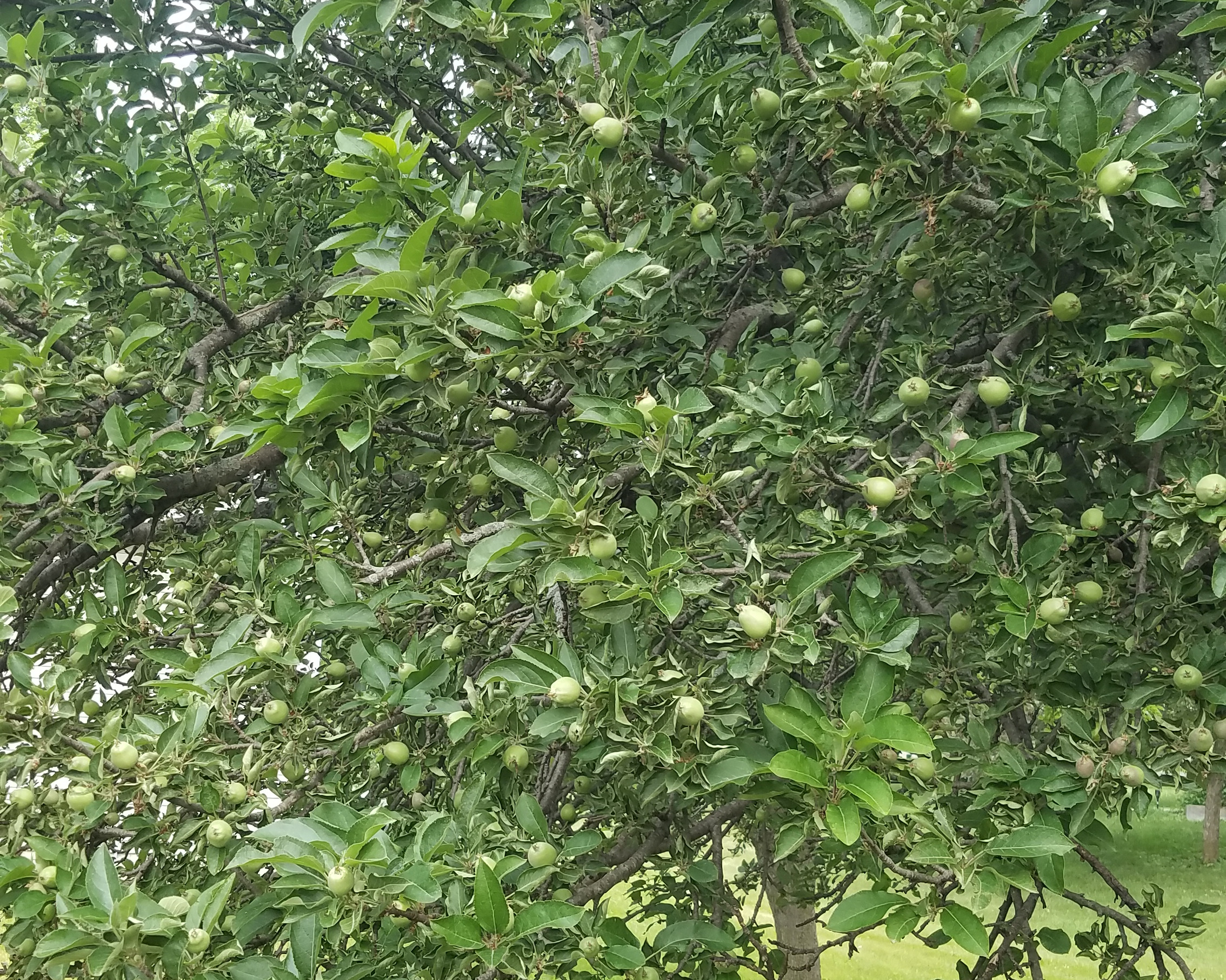
In mid-June we have a good idea if there will be an apple crop and how big it may be. This year’s apples look to be plentiful. Typically, earliest apples go to sauce for fresh eating, and apple cider vinegar. Depending upon how they taste, I may make some apple butter with early apples. Mostly I wait until the September-October harvested ones for the main batches of canned sauce and butter. I also fill up the cider vinegar jars in the pantry. Each year I learn a bit more about processing the abundance when there is one.

The two newest apple trees are unpredictable. One has a couple of fruits forming, and the other has a lot. I can’t remember which is Zestar! and which is Crimson Crisp. Either would be welcome this year.

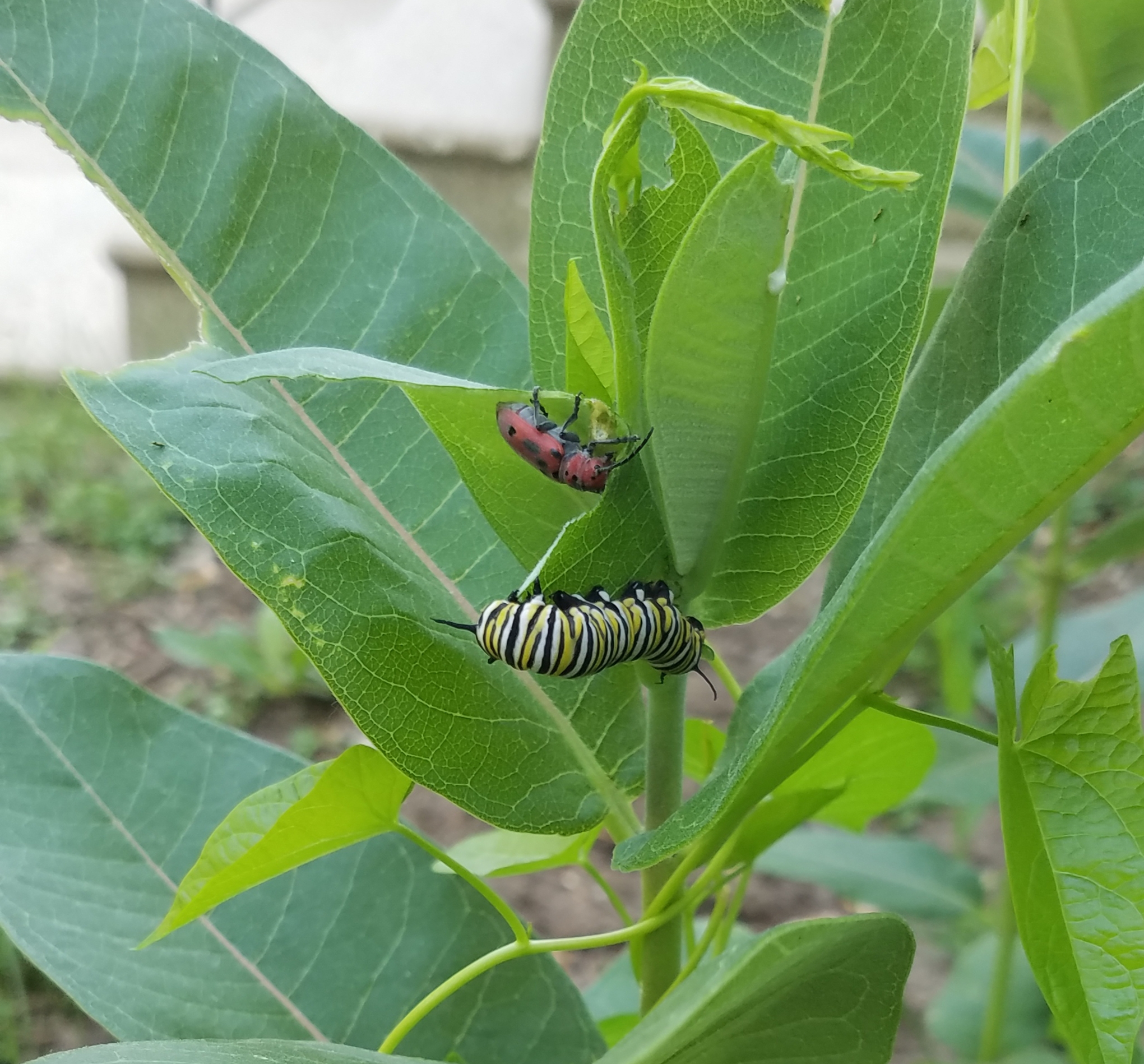
I toured the garden this morning and besides weeding, things look alright. There was not much caterpillar damage on the cruciferous vegetables. In the front yard, I saw a Monarch caterpillar and a milkweed bug having breakfast together. Late spring is a great time of year.