Categories
Kitchen Garden

Goal Posts Moved in 2024

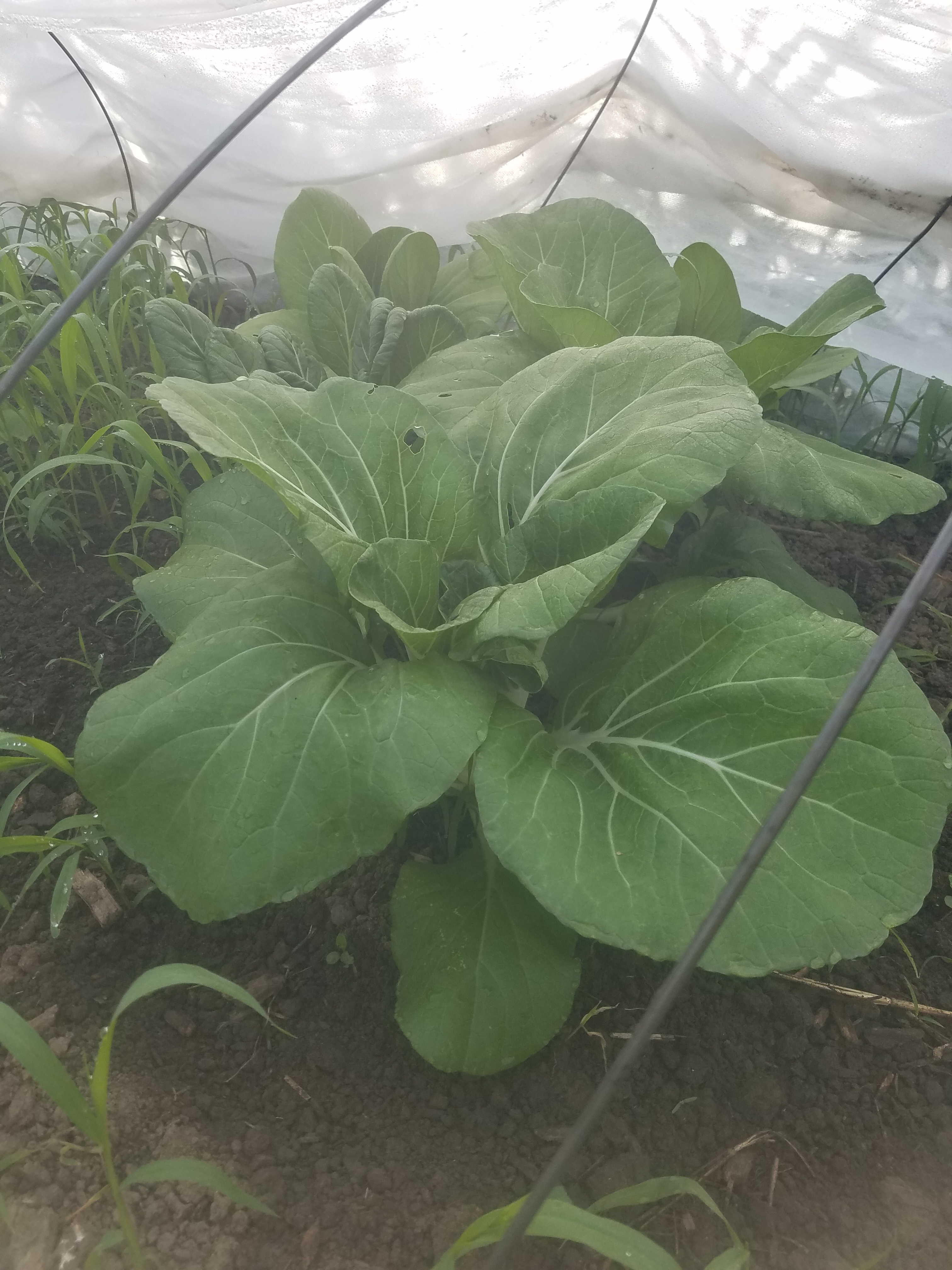
Pac choi under a covered row.

Instead of getting the garden in by Memorial Day, I moved the date to June 20 when summer begins. I have five plots laid out, plan to skip one this year, and may skip part or all of another. Large amounts of rain kept me out of the spring garden. The shelves in the greenhouse are slowly emptying, and soon initial planting will be finished.

We’ve been cleaning to make room for technicians to repair our washing machine. It generated a code which I couldn’t resolve, so I made an appointment. The service company telephoned and said I should contact Maytag about covering the repair under warranty. I did and they will. The code first appeared at almost exactly at the end of the initial warranty period.

It is surprising how much a modern household depends upon getting laundry done. I can’t imagine what it would be like to return to laundromats. The one in our small city closed years ago, so it would be a big to-do of traveling to the county seat or further to launder clothes. There is only so much time in a life. The less spent on laundry the better.

I opened the covered row and an abundance of pac choi, lettuce, and basil was ready. I brought the haul indoors, cleaned it, and put it away in the refrigerator. I made a sandwich with a generous amount of fresh lettuce for lunch. I don’t often buy lettuce at the grocer, so when I have it in the garden, I make the most of it.

There will be pac choi ramen. In January I bought a 24-pack of Maruchan ramen. When I make it, I throw out the flavor packet that comes with it and make my own broth. This time, I’ll make a vegetable broth using white miso, then saute onions, garlic and pac choi, mix them together, and cook the noodles in the resulting liquid. The abundance of fresh leafy greens is wonderful.

Also in the kitchen garden mix is pasta sauce using last year’s tomato sauce, onions, fresh basil and garlic. This first of the season sauce is also a chance to try out my new saucier. Basil doesn’t keep long, so by the time this posts, I may already have made it.

There is one head of romaine lettuce which I’ll roughly chop for a salad. Not sure what to do for dressing, but it will inevitably use extra virgin olive oil and home made apple cider vinegar. I can’t wait.

While I had to move the goal posts for finishing planting the garden, the harvest already begins. These are the good days for which we live during the long winter. It’s life, as good as it gets.
Categories
Kitchen Garden

Getting a Saucier

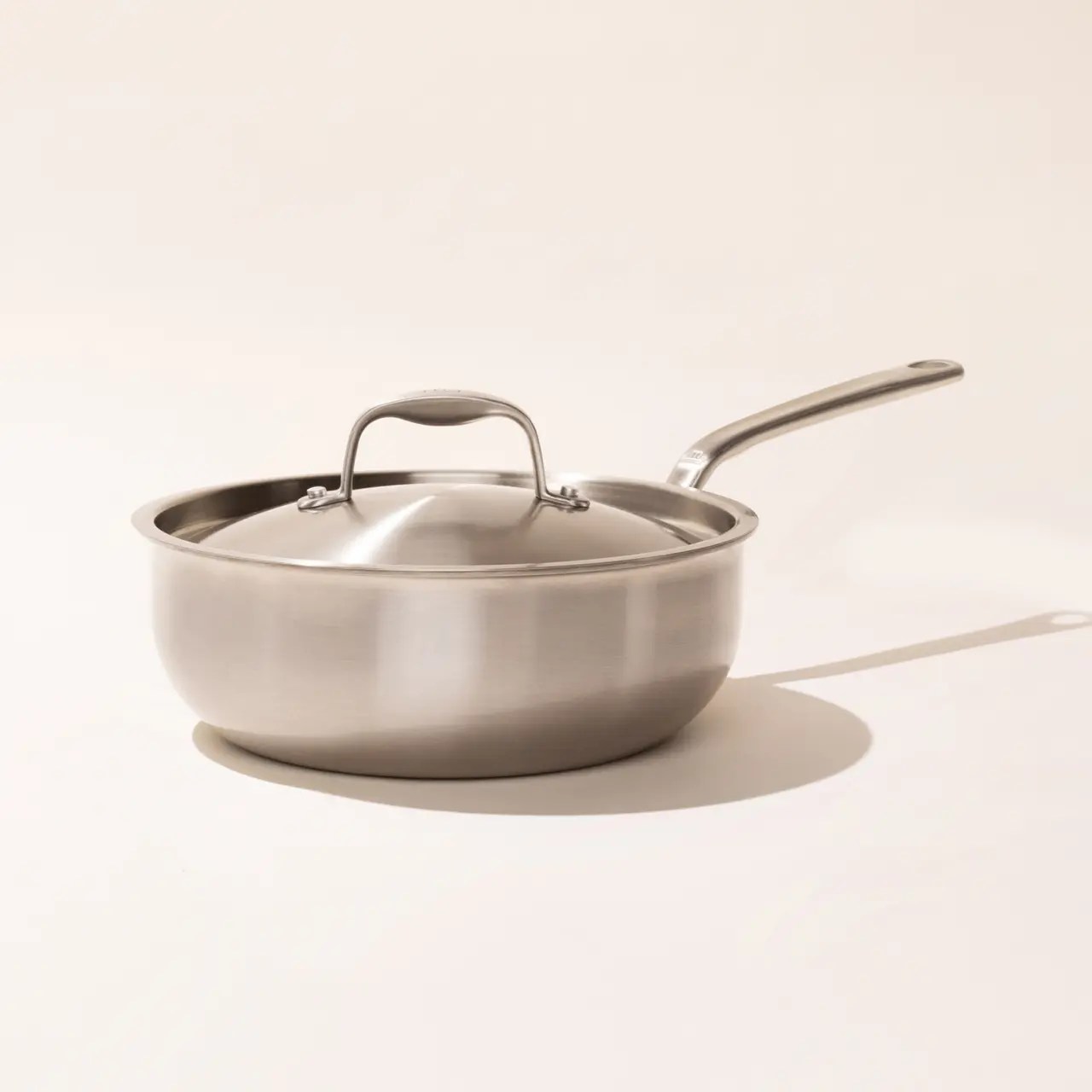
Made In three-quart, stainless steel saucier. Photo credit – Made In website.

I came into some extra money from my writing and ordered a Made In, five-ply stainless steel clad, three quart saucier. I saw the device on Olivia Tiedemann’s Instagram channel where she recommended it for sauces, grain cooking, one-pot dishes, and more. It is her go-to pan, she said. Tiedemann is a private chef with more than 4 million Instagram followers. She makes short cooking videos, curses a lot, and flips the bird at the camera at least once during each episode. The saucier sold out on the Made In website shortly after I ordered mine.

I am very excited to be receiving this saucier, tracking the shipment a couple times a day. As I type, it is at a warehouse in Iowa City awaiting delivery, presumably today.

Buying a saucier is a poor man’s extravagance. Did I need a special pan to make sauces? I was getting along just fine. Do I want to be like Tiedemann? Maybe, except she is definitely oriented toward using all the meat and dairy products, unlike what goes on in our household. Once one eliminates meat, fish, dairy, butter, eggs and the like from meal preparation, cooking becomes something else. I’m hoping the saucier will help me down a path of developing sauces and dishes for our hybrid vegetarian-vegan cuisine. If I had real money, I’d dine at a favorite restaurant multiple times a week. I don’t, therefore, saucier.

Will the saucier change my life? I hope so. I hope to be a better cook in my kitchen garden. Imagination and a special pan may be the way to distinguish what I do here. The anticipatory excitement is well worth the money spent on the saucier.

Categories
Kitchen Garden

Local Food Reconsidered

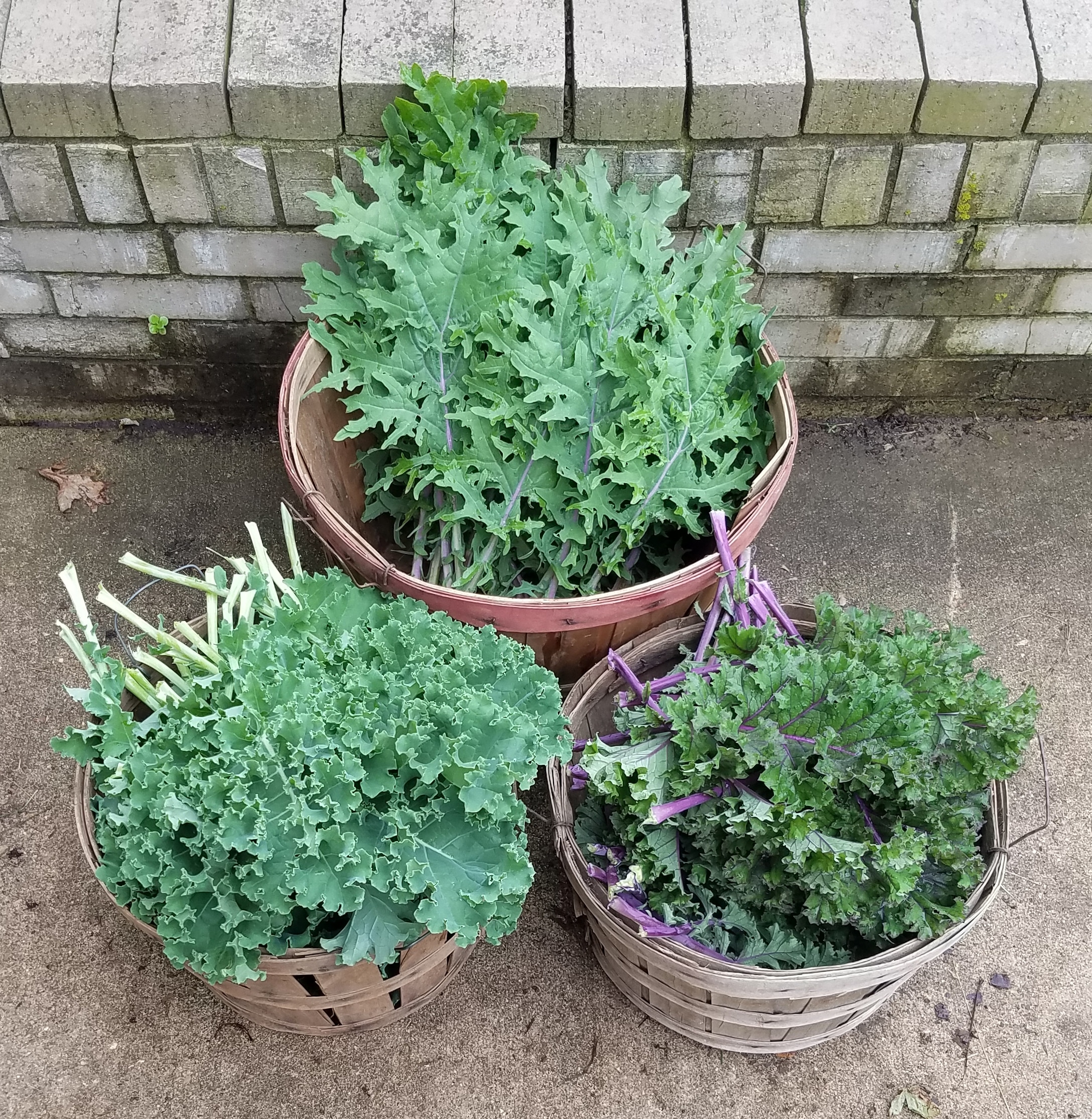
First big kale harvest, Spring 2020

I began following Buffalo Ridge Orchard in Central City this year. In part, that means I am divorcing myself from a local farm where I worked for seven seasons. In truth, Wilson’s Orchard and Farm hired one of the best chefs available to prepare dishes made from local foods and gave him his own venue. They appear to have successfully transitioned from a mostly apple crop to add flowers, strawberries, and other common, locally sustainable produce. They went big into hard apple cider, long the mainstay and chief reason pioneers grew apple orchards on their farms. They continue to experiment and expand. What’s not to be happy about?

I seek a different relationship with local food. I will continue to buy select varieties of apples from Wilson’s as well as in-season sweet apple cider. As a consumer, that has been most of what I bought there through the years. I am more interested in a collaborative approach, like the one on display at Saturday’s pop-up market at Buffalo Ridge Orchard.

Early Saturday morning I received an email notification of the pop-up market that day. Products of nine different farms were available. I know three of those farms very well. While I didn’t make it over for the sale, partly because our pantry is already full of spring goods, it is more attractive than pursuing a basket of strawberries on a large, crowded operation when strawberries are in season.

I grow a large garden and we eat fresh from it from March to November. When I seek outside produce, it’s because I’m not having a good year or choose not to grow certain items. For example, my aging and soon to be goner Red Delicious apple tree produces every other year and I need to source apples somewhere every year. The ones at the grocer are usually not the best quality. Too, I can’t imaging buying someone else’s garlic. I have had a steady, year-around crop since I began planting it ten or so years ago. A certain level of independence is assumed when a person operates a kitchen garden.

Another consideration is our mostly vegetarian household cuisine. We don’t eat meat or consume much dairy in the form of fluid milk, butter and eggs. For the most part, I buy dairy at the wholesale club because their buying power makes it much cheaper than local. Expense does matter, especially with commodities. Maybe I should give up dairy. That’s a conversation for another post.

One day I plan to return to the Iowa City or Cedar Rapids farmers market. I don’t need to shop there, yet I enjoyed the atmosphere when I did and brought home items we used. For years I bartered for a Community Supported Agriculture share at a local farm, although when I increased the size of my garden, the need for that produce diminished. A kitchen garden has been a natural evolution toward independence from the very local growers who inspired me. Some farmers told me such independence is a positive thing, rather than an infringement on their business.

Over the years this blog has posted a number of opinions about local food. What I learned was the idea of local food is constantly evolving. I continue to purchase groceries from a large, retail establishment on a weekly basis. That doesn’t make me any less interested in available local foods. Am I a purist? No, I am not. Nor need I be. It is challenging enough to keep track of what local food is available and where. I leverage it when it makes sense.

Categories
Kitchen Garden

Plot Three Develops

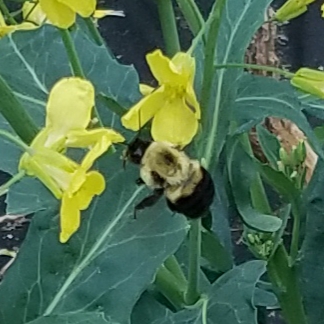
Bee in the collards.

On May 8th I’m way behind in getting the garden in. The first plot is mostly garlic planted in October. I’ll finish that plot off with herbs, lettuce, bok choy, and spinach under row cover. The second is onions and potatoes which will soon need weeding. I don’t know what will go in plot three but I have to get cabbage and kale in the ground before they get root bound. So I guess that will be part of it. I also need to get peas in, so maybe I’ll plant those next to the fencing so they have a support system. This is more hodge-podge than I care to be.

Wednesday was taking down last year’s fencing and pulling up the ground fabric. I was on my knees most of the time while working. There are two large collard plants in full bloom with abundant pollinators. The buzzing didn’t bother me while I worked around them, and took photos. Just being in the garden is affirming.

I asked the neighbor about cutting back the overhanging branches from their wild wooded area adjacent to our property. I did that, and left the branches to dry before piling them up for burning on Thursday. It was getting so thick, I couldn’t get the mower through without knocking my cap off my head.

The last of the volunteer garlic was ready to pick as spring garlic. It looked like a head developed and I missed picking it last year.I trimmed it and brought it to wash in the kitchen. While the spring garlic dried on the counter, the aroma filled the space. It was wonderful.

On Tuesday afternoon I drove the 6 or 7 miles to the Ely creamery. They have a retail store with products they make, including cheese, fluid milk, ice cream, and more. I like the cheese curds particularly. When I was riding my bicycle during the pandemic, I would ride the trail to Ely and stop there as a turn-around point. Their prices are a bit high, yet it is good to support a local business.

I don’t work in the garden as long as I did. I have to stop after an hour or so and take a short break. If I keep at it, I can likely get everything in the ground by Memorial Day. At least that’s what I’m hoping.

Categories
Kitchen Garden

Garden Enchiladas

Enchiladas, Spanish rice, and sauteed corn and bell pepper.

It seems early for a kitchen garden post yet here we are. The combination of a mild winter and plentiful plantings last year brought a Saturday vegetable harvest. There were collards, kale, cilantro, and spring onions growing in last year’s planting areas. Volunteer garlic came up where I plan tomatoes this year. After harvest, I cleaned the produce and made dinner with it. We had enchiladas, Spanish rice, and corn sauteed with bell pepper. I also used preserved guajillo chili sauce from last year. My recipe for enchiladas is here.

This meal has a lot of steps yet is worth the effort. The point I make today is while I enjoy plate photos like the one above, the sought end result is fleeting creativity in the kitchen, set in time, as I use ingredients picked an hour or two before. It is of such fleeting essences our lives are made.

During my time I viewed many television cooking shows, and lately, short-form videos about cooking. Rarely does any one of them stand out. Some are formulaic, some a brief distraction. There were so many of them, all the recipes and processes began to look alike. I mean, we know the combination of onion, carrot and celery with bay leaves makes a delicious soup base. We should know the Louisiana “holy trinity” is onions, bell peppers, and celery. How many times do we need to hear it? I imagine most of us have heard it enough.

It is possible to be a creative person. Creativity has some end goal in mind, with cooking, perhaps a plate photo or making a memory of a specific meal. Yet it is the process for which we live. I would never have put collard greens in the filling of an enchilada, except that’s what I found in the garden that day. I found fresh cilantro and that unplanned addition characterized the dish. While I often have recipes in mind, they are little more than a suggestion when cooking. The best of what we eat is often the result of a process that had no recipe in mind at the beginning. At least, it can be.

Grocers have a problem with my kind of food creativity. A grocer in a big box store must stock thousands of items while waiting for some customer to come along seeking one. They rely upon an item’s popularity to cover overhead and make a profit. Popular as they are, I can’t imagine many circumstances when I would buy fresh cilantro or spring onions at the grocer, even though they stock them all year. Therein lies the difference between my kitchen garden and cooking. There is something magical about a kitchen garden that can’t be replaced by commodities from the grocer.

Enchiladas are a well-liked meal in the United States and elsewhere. Our small community has two Mexican restaurants that sell them. If I wanted a Mexican-style dinner, I could just buy take out. That would be missing the point of time in the kitchen garden.

Categories
Kitchen Garden

Peppers and Tomatoes

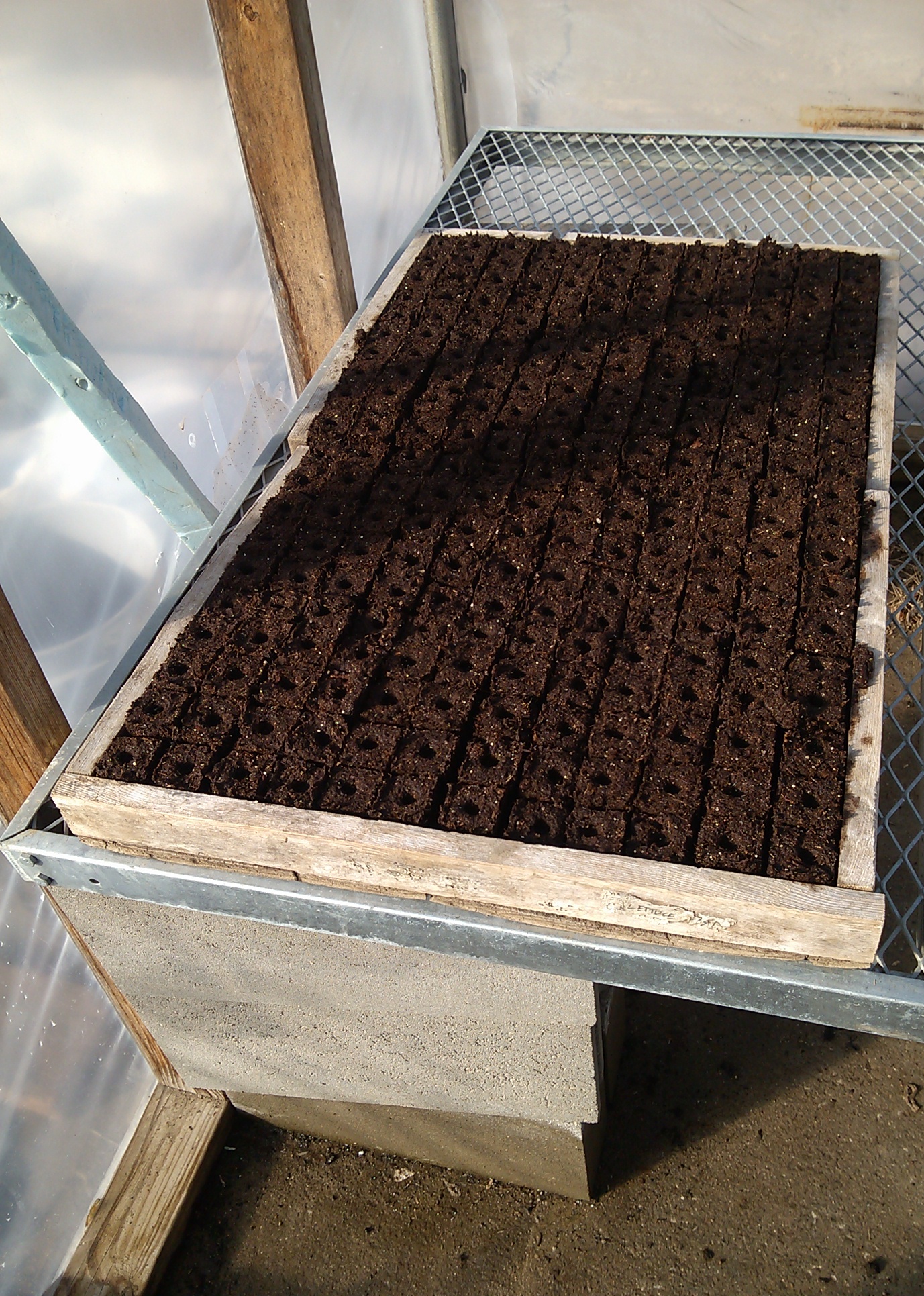
Seeding peppers on March 30, 2024

Saturday was the first day I worked up a sweat in the spring garden. I moved storage items around and contemplated where I should bury the potato containers. The fence around the southwest plot needs to come down, and ground cover taken up. The layout will be changed to accommodate six potato containers, mowing around the apple tree, and placing the large compost bin made of old pallets. There will be space leftover. It will be an awkwardly shaped space.

Potatoes do better when there is a fence around them to keep deer away. If I can find mulch to put around them, they won’t need much besides water and pulling a few weeds. I must remain vigilant to see if the Colorado Potato Beetle arrives. The insect hasn’t been around the last few years.

I moved chard, collards, and fennel seedlings into larger pots to allow them to grow. I also thinned the bok choy family of seedlings to one sprout per block. One never knows how older seeds will perform so I doubled up. About half the celery seeds germinated. I’m not sure if twelve plants will be enough and I may plant more.

How many varieties of pepper seedlings should be planted? I cut back. Using the remaining bell pepper seeds from last year, I may not attempt to grow them again. With nice bell peppers available year-around at the wholesale warehouse, I am less worried about my failure to grow good bell peppers. The rest of the peppers are Serrano, Jalapeno, and a variety of long, red hot peppers for drying and converting into red pepper flakes. Reducing the variety aligns with how I use them. If I want a specialty pepper, I can likely get them at the farmers’ market.

The most important annual crop is tomatoes and I cut back the number of varieties this year. I’m a bit nervous about that with three varieties of plum, three slicers, and five cherries. For fresh eating, we tend to consume more cherry tomatoes than slicers. Both are reasons to grow a summer garden. The plums are mostly for canning whole or as sauce. There can never be enough of those.

I collected fallen branches and twigs from the yard and started a burn pile. I’m running behind on that, yet there is not a lot to burn. All the same, spring gardening has begun. It will be a constant activity from now until Memorial Day.

Categories
Kitchen Garden

Early Spring Chills

Black bean and kale taco filling.

With ambient temperatures in the twenties and thirties it has been a chilly early spring, of a kind that has me lingering indoors to find things to do. It is what it is. I hope to plant potatoes on Friday, yet if it’s too cold, I will delay. In the life cycle of Midwestern gardening, the growing season is extended by a warming climate and a few days doesn’t matter that much.

I plant potatoes in containers so the soil is less accessible to rodents. I move them each year, using the soil dug to bury them plus some soil mix and compost all blended with a cup or so of fertilizer in each tub. So far no critters dug their way into the tubs to eat the tubers.

A company in Monticello sells composted chicken manure, which is used by a lot of organic growers. I need to get over there and buy this year’s supply which is 150 pounds. There will likely be the annual discussion of which sales person gets credit for my sale. A few years ago we established that mine is a “house account” which means no sales person gets credit as I just walk into the office to buy it. Since beginning to use fertilizer, garden yields have improved.

Based on last year’s experience, I delayed planting peppers last weekend. Timing of seeding to planting time is more important for peppers and tomatoes. Any more, I don’t see an advantage of germinating early. I am cutting back on peppers and tomatoes this year with fewer varieties. For peppers to be successful in this climate, I need to install drip irrigation. I have been unwilling to do so, and there is an abundance of peppers when they come in around the county. I do plan to plant the varieties that grow well with my sparing watering.

I inspected the garlic and it is looking quite good. Taking time to loosen the straw mulch compacted over winter facilitated growth. It looks to be another great harvest.

When the weather finally breaks, there will be a lot of outdoors work to do. I am ready for it, even if there is plenty of indoors work to keep me busy.

Categories
Kitchen Garden

Getting Soil Mix

First Soil Blocks at the CSA

It was time to get soil mix for seed starting. The amount leftover from last year wasn’t enough to get through this weekend’s planting of herbs, cauliflower and broccoli. I emailed the dirt company (yes, we have those in Iowa) to make sure they had what I needed and drove over near Tipton yesterday to get it. The sun was so bright I had to wear sunglasses.

I enjoy that drive. When I was a paid political campaign consultant I got to know Cedar County quite well, both cities and rural areas. I could name the owners of some of the farms as I passed. The direct route to the dirt company is over gravel roads. While the car needs a wash when I finish the trip, I feel comfortable in that geography without a map. I have driven those roads so much I don’t need one.

It was also a great day to be outdoors driving along massive fields coming out of winter. There were a few pieces of farm equipment on the roads, yet most of the fields haven’t been touched this year. Corn stubble left from the 2023 harvest was everywhere. The Cedar River seemed lower than usual, likely a result of continuing drought conditions. It seemed like the end of winter, although with spring not far away.

It has been more than ten years since I had a pickup truck. I miss those days. To get the soil mix to fit in our subcompact, I had to remove the shelf in the back window and flip down the seats. I laid a couple of towels over everything so it wouldn’t get dirty. The subcompact held to the roads pretty well as I am an experienced rural driver.

I figure there are 14 more gardens in me before I get too old to grow them. Back in the day when we first married I just stuck tomato plants in the ground and hoped they produced. I added some skills in the 41 years since those first plantings. It helped to work on a vegetable farm for eight years.

The new portable greenhouse arrived, my fourth since I began using them. One was damaged in a straight line wind storm, the next by the August 2020 derecho, and last year the zipper tore loose. With a new one, this year should be fine. I’d prefer a permanent greenhouse yet even with the replacements it has been much cheaper to use the portable ones. We have plenty of uses for any extra cash, so the savings is welcome.

The kale seedlings are sprouting their third leaves so it’s time to put them in a bigger container before planting. With new soil mix in the garage, I’m ready.

Categories
Kitchen Garden

Vegan Cooking by Accident

Vegan applesauce muffins.

My spouse went vegan a while back and I didn’t. I’m having to re-learn how to cook for both of us and I’m okay with that. It’s more work than expected, but I shouldn’t just kick back and grow old according to my former ways. This vegan bent in cooking, combined with other dietary restrictions we follow, led to a long list of food we don’t buy or seldom eat. Long-time readers may be familiar with some of them.

  • A pox on avocados because popular demand leads to deforestation with avocados being planted beneath the canopies of tropical rain forests before the rain forests are cut down. Either we are serious about preserving rain forests or we are not. That means no guacamole or avocado toast in our household.
  • Coconut oil? It’s a saturated fat people! Don’t be eating it when other, healthier options are available. I read the summaries pertaining to lauric acid. Still don’t eat it.
  • I forget why we don’t like mushrooms, yet there hasn’t been one of those in the kitchen for decades.
  • We never bothered being pescatarian enroute to vegetarianism. Folks should lay off fish for the sake of maintaining our fisheries. If unchecked, humans would take every fish that swims in the seas. If you missed it, sushi is usually some kind of fish, so avoid it.
  • Don’t get me started on jackfruit. Leave that one in Mexico or Guatemala. See the first item about deforestation.
  • Seitan is fine unless one has a sensitivity to wheat. We don’t eat it regularly.

After a long search for a recipe to make vegan pumpkin bread with my wealth of frozen Casper pumpkin flesh, I developed this one, which was good.

Vegan Pumpkin Bread

Dry ingredients:

  • 2 cups all purpose flour
  • 1/2 cup granulated sugar
  • 1 teaspoon baking soda
  • 1 teaspoon baking powder
  • 1 scant teaspoon pumpkin pie spice plus extra cinnamon to taste
  • Pinch of sea salt

Wet ingredients

  • 2 teaspoons vanilla extract
  • 1/3 cup water at room temperature
  • 1/3 cup apple sauce
  • 1-1/2 cups pumpkin puree (or 15-ounce can prepared pumpkin)

Preheat convection oven to 350 degrees Fahrenheit.

Mix dry and wet ingredients separately then add wet to dry. Mix thoroughly, although not too much. Pour into a loaf pan greased and lined with parchment paper. Bake 55 minutes or until a toothpick comes out clean. Remove to a rack and let sit for 10 minutes. Makes 8-10 slices.

Categories
Kitchen Garden

Deconstructing a Garden

Breakfast bowl of grits.

I let my southern roots show by making grits for breakfast. There is no recipe, just an approximation. For a single large serving bring two cups of liquid to a boil (half milk/half vegetable broth) and add half a cup of grits. Salt and pepper to taste and cook on medium low heat until the texture of ground corn begins to show. Add one tablespoon of butter and then half a cup of shredded extra sharp cheddar cheese. Stir until every thing melts and the dish comes together. When the grits are soft, they are finished.

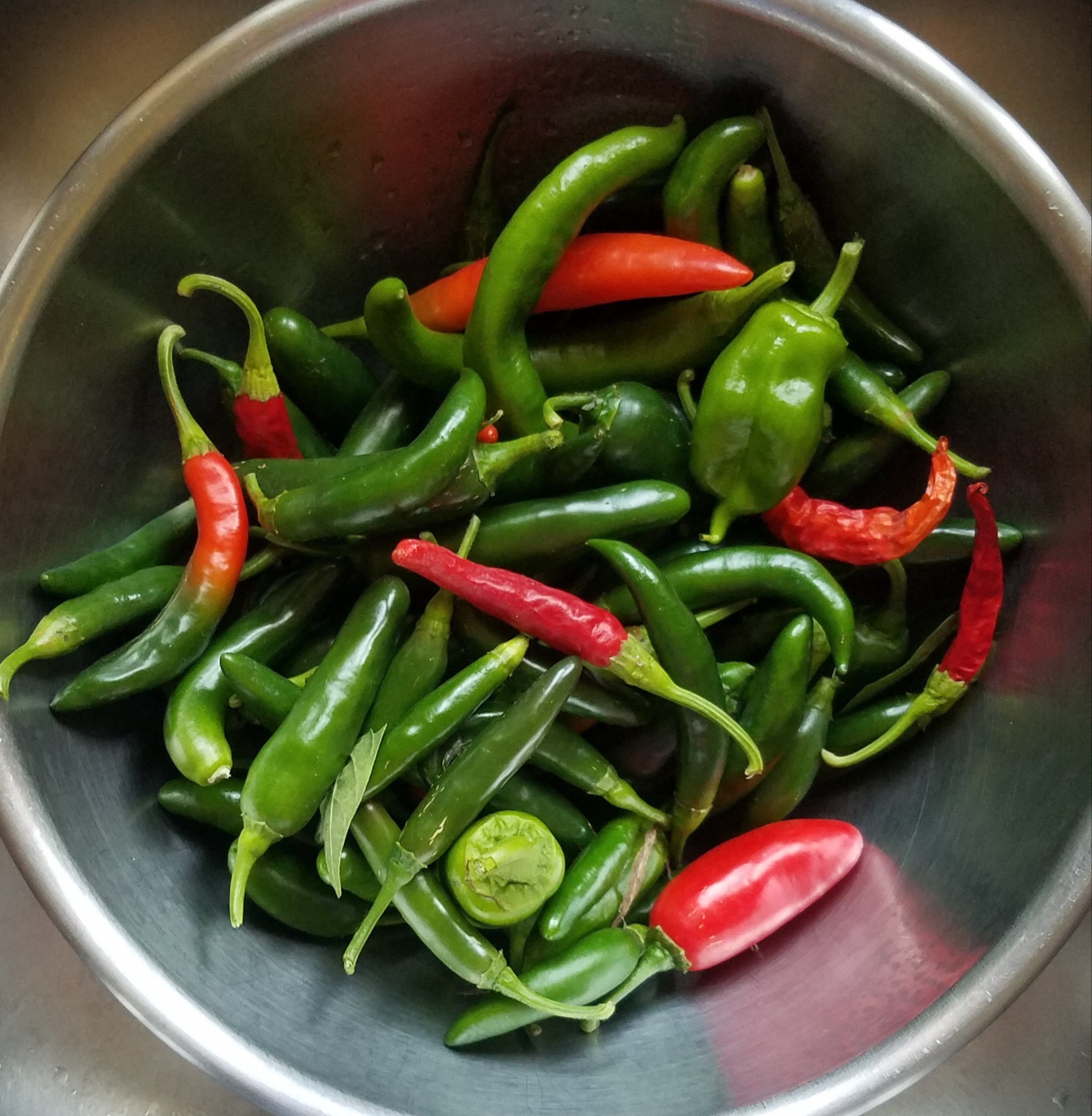
Last of the hot peppers as I cut the pepper plants down to clear the plot.

I’m taking down the third garden plot because I need a place to store tomato cages over winter. This was a hot pepper, fennel, eggplant and tomato plot. Fennel is coming back to life so I may get enough for a stir fry or two. To preserve the ground cover for another year, I cut the plants off close to the ground, remove the staples, and lift it off gently to get minimal tearing. Reusing assets like ground cover is a key economic factor in gardening.

Looks like we’ll get a hard frost over the weekend. It’s about time. I rely on cold weather to suppress garden pests. In addition, I already have enough hot peppers and kale to last until next year.

A local farm had a bumper crop of specialty pumpkins this year. Everything was priced half off over the weekend. I bought a large Casper pumpkin for pumpkin bread. I’ll bake it all and freeze it in amounts to fit the recipe. What they don’t sell will be fed to their cattle. Cattle enjoy eating pumpkins, apparently.

That’s all for this life in Iowa. Thanks for reading and make it a great day!