Since making this post on May 1, 2011, society’s view of ICE has deteriorated for good reason. The problem with illegal workers runs right up to a home owner’s front door where choices are made. This post is unchanged.
While walking in the neighborhood last fall it was hard not to notice a gang of 21 roofers working on a neighbor’s house. The job of removing and replacing the shingles took about 5 hours. It looked like there was not enough room for all of them up on that roof. I tracked down the foreman and asked him to price my roof and after a few measurements, he quoted a very low price. He worked as a subcontractor during the week and on weekends he sought additional direct work to keep his crew busy.
On Wednesday, nine people were arrested by Immigration and Customs Enforcement Officers in Hiawatha, Iowa at a roofing job site. They could not produce paperwork indicating their immigration status, were detained, and then charged with immigration violations. All of them were from Mexico. We have yet to hear about what may be the real crime in this incident.
According to the news story, Eastern Iowa Construction (EIC) sub-contracted the Hiawatha roofing job to a business in Iowa City. What this means is that EIC made a sales commission on the job and did not perform the actual work. Photographs in the news story showed that the equipment on the site belonged to EIC. They likely received financial consideration for that as well. Nothing wrong here as that is what business is about, buying low and selling dear. Did EIC know the sub-contractor engaged undocumented workers to perform the labor? Hard to image they did not.
The question is about the sub-contractor. Did he comply with Federal Immigration law? Obviously not adequately. Did the sub-contractor pay the minimum wage? Maybe. But do the math on a roofing job. There is not enough to pay for the supplies, disposal of the old shingles, the sales commission, the subcontractor’s gross margin and a living wage for nine workers. This is the untold crime in the news story, the exploitation of undocumented workers.
While negotiating a new roof on our house, the author refused to sign a contract as long as the roofer kept language that he could sub-contract the work. He told me he needed to keep this option open, and it seemed most of his customers did not question that provision. I gave the job to someone who would do the work themselves without subcontracting.
We live in a society of law and crimes should be punished. Some portray ICE agents as the bad guys, when they are doing their job. Where are the unions in this picture? Where are the home owners to specify contractors who comply with the law instead of taking a lowest price based on worker exploitation?
One hopes the nine workers arrested by ICE make it home safely, and that in Iowa, home owners will start being concerned with the rights of workers as much as they are concerned with trying to maintain a life style in a time of austerity. It is easy to blame our problems on undocumented immigrants, on ICE, and on a host of others. These problems can literally be solved much closer to home.
Packinghouse Daughter: A Memoir by Cheri Register is a book I wouldn’t have found except for patronizing an excellent local used bookstore. They have a deal where you set an amount of money to spend, tell them your interests, and they locate books that match. I have yet to be disappointed by their choices. One of the interests I presented was in memoirs written by female authors. They likely didn’t know the story of Wilson & Company was connected to me in multiple ways.
My father worked in a hog processing facility with a kill floor and everything else mentioned in this book through to the fertilizer processing tanks. He died in a plant accident in 1969. I worked there too, for two summers while at university. I even crawled into one of the large processing tanks to help a millwright fix it, learning about lockout/tagout for the first time. The first part of the book resonates completely with my experience, even though Register was older than I am. It is useful to know this history of Wilson & Company in Albert Lea, Minnesota exists.
Register claims hesitancy about writing the memoir about Albert Lea because it was her father who worked at Wilson’s and experienced many of the issues she mentions. I don’t know who can better tell this story than such a daughter whose father worked there and was invested in the job and packing plant employee community. She did the research and the narrative is better for it. She could have gone easier on herself. Register died March 7, 2018.
I was struck by the description of people moving from farms to the city to work in meat packing. This was true of my family where my maternal great grandparents left central Illinois to live in Davenport in retirement. Four or five of their daughters worked in a defense plant making coats during World War II. My maternal grandmother did, and also worked a stint at the Oscar Mayer hog processing plant where Father and I worked. That cohort is now buried in local cemeteries. This part of the book also resonates with my experience.
An exodus from farming and rural areas continues today as agriculture has grown larger and requires fewer workers because of computer automation and changes in operations. Those who relocate, for lack of a better term, are not choosing meatpacking as a profession — or even as a job. With consolidation in the meatpacking industry and increased automation, there are simply fewer positions available. It is hard, dirty work as well. As a result, the job-driven movement from rural areas to cities no longer exists in the same way it did in Albert Lea during the period covered by this book.
I found Register’s narrative deeply resonated with my experiences. It is must reading for anyone interested in the specific history of Wilson & Company or in meat packing culture. With changes in the industry happening post-WWII era, that culture would disappear without books like this.
Author at Kraft Foods Oscar Mayer plant on Second Street in Davenport, Iowa Nov. 25, 2011
Following is a chapter of my privately published memoir, An Iowa Life.
A Union Job
With classes and examinations finished, I headed back to Mother’s home for the summer. Several high school classmates applied for summer jobs at industrial workplaces in the Quad-Cities. The post-World War II economy was still humming at John Deere, International Harvester, J.I. Case, and other manufacturers. I took a job at Oscar Mayer and Company where my maternal grandmother and father had worked at different times.
It had been two years since Father died at the plant while loading an elevator. He had been the chief union steward and knew almost everyone. It was a safe, comfortable place to work where the folks who knew Father looked out for me. During one of my first shifts, a millwright who was good friends with Father, asked me if I wanted to see where he died. I passed on the opportunity and took no rain check. It was too soon.
I experienced being a union hire, Iowa-style. Once Oscar Mayer’s human resources representative finished orientation for our group of new hires, he reminded us that the company was an at-will employer in an at-will employment state. At-will means an employee can be discharged for any reason or for no reason. He then left the room so a union representative could recruit us to join. There was never a question that I would join the union, and I did. I worked for Oscar Mayer that summer and two years later in 1973. When I left, I secured a union retirement card. At $4.04 per hour, with overtime, I earned enough during the summer of 1971 to pay my bills during sophomore year at university.
Three college students worked as “maintenance helpers” that summer. It meant we performed a variety of work, usually helping one of the millwrights or welders on projects too big for one person. I spent time in almost every plant department and at the warehouse on Schmidt Road in the West End of Davenport. I learned to drive a forklift, but mainly, I was there to perform physical work. It was hard work.
I was skeptical about productivity. As summer help, a group of us did routine maintenance jobs, like picking up trash on the roof, and cleaning up large piles of metal that had accumulated over the year. But mostly, I helped millwrights and welders repair things in the plant. The work was important, but we were never very busy.
When the production line went down, it was all hands-on deck to repair whatever went wrong and avoid idleness among line workers. The cost of down time was estimated in the tens of thousands of dollars per hour, which seemed like a lot in the early 1970s. I remember trying to break loose a vat of resin with a jackhammer. The resin was used to remove hair that hadn’t burned off the animal at a previous station. Once it cooled and congealed, the line went nowhere until it was removed. I had plenty of supervisors as I ran the tool in the black brick the resin had become. We got the line back into production.
There were days when we were assigned a job at the warehouse. The old timers interpreted a trip to the warehouse as a full day’s work regardless of what had to be done. The times I went with millwrights to the warehouse, whatever needed fixing took a couple of hours. We always spent the full day doing the work. Instead of eating lunch in the company cafeteria, my co-workers looked forward to items off the roach coach which plied the neighborhood with sandwiches, snacks, and beverages. The plant foremen had full understanding about our use of time, and were part of the problem, if there was a problem. When a company recruiter offered me a job to become a plant foreman before college graduation, I turned it down. After my work experience, I did not want a job where lack of productivity was the norm.
My co-workers at the meat packing plant no longer work there, and I lost communication with them as soon as I returned to college that fall. Maybe I learned something from them. There is more to life than staying constantly busy.
Staying busy has never been my priority. I seek truth and meaning in life and feel no need to occupy every moment with items from a to-do list. In fact, there are several ways constant industry creates problems. We become task masters of an arbitrary list and block out the potential of life around us while we concentrate on what we thought was important in the morning.
While we may be skeptical of what a day will bring, and how busy we are, we should enjoy the anticipation of different work and what the roach coach may bring. If we do that, I suspect we will recognize opportunities that we otherwise wouldn’t have known exist. Productivity and industry are important in business, but in our lives, we must take time to wonder. That is a form of industry too often neglected.
It was easy to get a job at the plant. I belonged to a union, the Amalgamated Meat Packers and Butcher Workmen of North America, Local 431. Wages were good, plant conditions were dangerous, and the work was physically hard. I never felt in danger in the plant, despite Father’s death. In my work as a millwright’s assistant the first summer and on the cleanup crew the second, I got to see most of what went on throughout the plant and warehouses. It was not pretty.
Meatpacking was much different in 1971 from what it is today. The plant took in live hogs from farmers and processed about 500 of them each day. There was very little waste. There was a “hog hotel,” which was a place where hogs were kept in smaller pens and fed so they would be calm for slaughter, usually the next day. One of the dirtiest jobs I had was at the end of the production line where a rendering tank processed the final remains from the cutting floor into lard. What was left was shipped to a processor to make fertilizer. My job was to work with a millwright to remove and replace giant paddles inside the tank. It was among the dirtiest jobs in the plant. I learned about using hearing protection and lockout/tagout. The union had negotiated a payment for extra cleanup to perform that work. My millwright made sure I knew to request the pay on my timecard.
People who worked on the production line did not look happy. The work was repetitive and physically demanding, requiring a person to be on their feet for an eight-hour shift. A lot of the work was mindless. Stamping a USDA inspection marking on carcasses, picking through hog innards to find a certain organ, or making the same cut hundreds of times a day. The pay and benefits were perceived to be good by most workers, so they put up with the mindless quality of the job to bring home a paycheck. After the first summer, it was clear a career in meatpacking was not in my future.
Breaker boys picking slate from coal using a coal breaker in Pottsville, Pennsylvania. Photo Credit – Wikipedia
A breaker boy was a coal-mining worker in the United States whose job was to separate impurities from coal by hand in a coal breaker. The use of breaker boys began in the mid-1860s, according to Wikipedia. Although public disapproval of the employment of children as breaker boys existed by the mid-1880s, the practice did not end until the early 1920s, after the Keating-Owen Child Labor Act was signed into federal law in 1916. Later, along came Governor Reynolds, the Iowa Legislature, and a group of lobbyists like the Iowa Restaurant Association to change things around regarding child labor.
Governor Reynolds signed Senate File 542, an act relating to youth employment, into law on May 26, 2023. Legislators, the governor, and lobbyists had every reason to know the new law conflicted with standing federal law. The U.S. Department of Labor weighed in almost immediately, saying outright that Iowa’s new child labor law conflicted with federal law. Republicans and their crew did not care.
After the Iowa child labor law passed, restaurants and other covered workplaces began to enact its provisions. NOT SO FAST! said the feds, who fined improper users of child labor tens of thousands of dollars in accordance with federal regulations. The governor decried the penalties as EXCESSIVE! and scheduled a press conference in North Liberty on June 24 to air grievances.
Unaware as she appeared to be at the time to what is actually going on in Iowa — namely severe flooding in Northwest Iowa — she did cancel the labor press conference to spend time where she should have been all along, touring the flooded areas, asking President Joe Biden and FEMA for help, and doing what is right for Iowans in time of natural disasters. The latest news is Governor Reynolds plans to reschedule the child labor press conference on how mean the federal government is for enforcing the law.
What in the Sam Hill is going on? They knew the new law conflicted with federal law. I don’t believe it is about that. All roads lead to abortion in Iowa politics and here’s a connection.
Historian, raconteur, and chronicler of our daily lives in the United States Heather Cox Richardson wrote the following on the second anniversary of Dobbs vs. Jackson Women’s Health Organization:
In the decision, written by Alito, the court said that the right to determine abortion rights must be returned “to the people’s elected representatives” at the state level. This construction of American law is central to the right-wing project of dismantling the federal government which, under the Fourteenth Amendment, is charged with protecting equal rights in the states. Centering the states, which determine who can vote within them, enables a minority to dominate the majority. (Letters to an American, June 24, 2024).
Does the federal government have primacy through the Fourteenth Amendment in protecting the rights of children who work outside the home? Despite being wrong in Senate File 542, Reynolds and her Republican crew make the assertion that children should be allowed to work under less restrictive rules and employers should be held harmless. Iowa, and other similar Republican states, attempt to drive the train of what is permissible within state boundaries. The ultimate goal of bad laws, and ensuing lawsuits and conflicts, is the distraction from a coarsening of Iowa life which includes restrictions on abortion, defunding public education, and in this case a permissive child labor law. A majority of Iowans support protecting children (and all workers) in the workplace. Republicans in our government simply don’t care because they have an agenda of dismantling the federal government and cementing themselves in power.
Groups like the one who quickly scheduled a counter-press conference in North Liberty on June 24, headed by State Senator Zach Wahls, County Supervisor Rod Sullivan, and others, are important to hold the line against the governor’s aggressive approach to implementing bad labor policy.
At our most human level, we know abusing children in the workplace is wrong. What is worse is when our government favors the desires of business to keep their costs low and permits such abuses. Even if it means breaking federal law. Everyone knows it is wrong for children to work in coal mines. Our government should know that by now. Thank goodness the coal fields in Iowa have diminished or Republicans would be revisiting using breaker boys again.
In 2022 I wrote how I felt about Labor Day: “Even though I retired during the pandemic, and its been many years since I carried a union card, I believe I’ll take the day off, work at home, and thank a union.” At 11.3 percent of the workforce, there are not that many American workers represented by a union. The number is down by 0.3 percent over last year, according to the Bureau of Labor Statistics.
The Iowa City Federation of Labor is hosting a Labor Day picnic at City Park this afternoon. When I was more involved with politics, I attended the annual event. What I found was it was difficult to relate to young union families with children. It is their event. Rather than feel alienated as a “friend of labor” once a year, I no longer attend. I’m okay with that. The union members in attendance likely won’t miss me.
It is hard to avoid talking about class on Labor Day. George Carlin famously said there are three classes in the United States, the rich who have all the money and don’t pay taxes, the middle class who do all the work and pay all the taxes, and the poor who exist to keep the middle class in line as a warning of what they might become. Carlin was funnier when he said this. The division between the rich and everyone else is no laughing matter.
My member of Congress sent her weekly update Sunday afternoon and it serves as an example of how Republicans attempt to co-opt the middle-class. There was no mention of the Labor Day Federal Holiday in it.
Miller-Meeks believes H.R. 1, The Lower Energy Costs Act is the answer to what’s troubling the middle class. The bill passed the House with four Democratic votes and is stalled in the Senate. I described the bill previously here. The bill represents a rejection of the Biden administration energy policy and establishes a view of the middle class that may sound good yet is off base. Here is the second paragraph from the email.
The consequences of high energy costs are far-reaching, particularly for working-class families who find themselves grappling with the rising cost of living. As gas prices linger almost $2 higher than they were when President Biden took office, many families are left to make difficult choices between essentials like groceries and rent. The relationship between energy policy and the price of goods is undeniable as American companies rely heavily on having affordable energy for both manufacturing and transportation. In fact, a major component of food costs is energy, which affects average Americans every day with much higher food prices. With gas prices nearly doubling in recent years, American companies of all sizes are left with no choice but to raise the prices of the goods they produce to survive financially. With an abundance of energy resources on American soil, hardworking Americans should never be forced to make tough financial decisions on their most basic needs.
Miller-Meeks Weekly Script, Sept. 3, 2023.
Was there ever a time when people did not grapple with the rising cost of living? No. Since I can remember, our family never had enough money to do everything we wanted. Each bill we got was prioritized in the order of payment. There were good times when we felt we could splurge on a vacation, but mostly, we held our nose to the grindstone to pay for our child’s education, pay off the mortgage, and keep functioning in society. Grappling to meet household financial needs is neither Republican nor Democratic. What is significant is the usage brings “working-class families” under the Republican tent. This is not a minor point.
While middle-class families may be familiar with gas prices when they fuel up, things get complicated when discussing why the local prices increased.
We can see the price at the convenience mart or gas station is higher than in recent memory. Two dollars higher than when Biden took office? No. She rounded up to simplify for the masses. According to the U.S. Energy Information Agency, the U.S. All Grades All Formulations Retail Gasoline Price per gallon was $2.420 in January 2021 when Biden was inaugurated. It was $3.954 per gallon last month. Gas prices doubled in recent years? No. Half of $3.954 is $1.98. Gas prices have not been consistently below that number since April 2004, although they did hit it for a single month after Trump took office. The congresswoman is selling us subtle woof tickets here.
By sanding the specifics off her message, Miller-Meeks seeks to gain buy-in to a conservative view of how we live. “Grappling the rising cost of living,” “gas prices,” “difficult choices between essentials like groceries and rent,” and “hardworking Americans,” are all political tropes. As gossip columnist Louella Parsons might have said, they are nothing burgers. The evenly-worded message lures the unsuspecting in, and I believe gains the congresswoman votes.
To make lives of middle-class working Americans better, Republicans should support universal healthcare, lifting the cap on Social Security taxes, raising the minimum wage, taxing the rich, smart regulation of business, and our K-12 public school system. I don’t hear any of that from the Republican who represents me in the Congress. If she did want to support the middle class, she might turn her attention to some of these instead of to energy policy which masks the large corporate entities who are pulling the strings on what gets done in Washington.
Best wishes for a happy Labor Day to all my card-carrying union buddies. You earned this holiday.
Republicans in the Iowa legislature are treating children like trash. It is part of their view of the role of children in society. It is not right.
Republicans embrace our forefathers, and seek to make Iowa and America great. They don’t want to hear alternative views of American history, like those presented in The 1619 Project created by Nikole Hannah-Jones of Waterloo. They also don’t want to go back to our founding in 16th Century Britain, although that’s where we seem to find ourselves today.
Today’s Republicans embrace the worst aspects of 16th Century colonization, including the idea of Richard Hakluyt that children of the poor be “brought up in labor and work” so they would not follow in their parents’ footsteps and become “idle rogues.” These Republicans are no different than the British elite who had never set foot in the Americas as they rounded up the poor, indigent, and criminal, as well as children, to send to North America and return riches made with the sweat of their brows.
When I woke at 3 a.m. this morning the Iowa Senate was deadlocked over Senate File 542, a bill to roll back protections for children against inappropriate types and amounts of labor. The bill was written by the governor and a small coterie of restaurant and retail establishment lobbyists seeking to resolve Iowa’s labor shortage. Deadlock was related to the spoken intent of the bill. Republicans didn’t want to say anything about their intent, so they refused to answer direct questions about the bill during debate. This is behavior unworthy of their oath of office.
I worked on the cleanup crew of a large slaughterhouse as an adult, and it’s no place for children regardless of the law. This is common sense.
Children are not something to be used up and thrown into the garbage. Yet that is the effect this legislation could have. Republicans frame this as learning the responsibility to work and saving a little money for higher education or other advancement of personal goals. I see it for what it is: a chance to indoctrinate children to do the bidding of the wealthiest among us and in doing so, give up part of their childhood.
No matter how you look at it, it is a raw deal for children when they are treated like expendable commodities. The Iowa House will debate this bill next.
In 2021, 15.8 million wage and salary workers, 11.6 percent of the workforce, were represented by a union according to the Bureau of Labor Statistics. It is a small, yet mighty segment of the American people.
The flip side of this is 313.7 million Americans are not represented by a union. To me, that is the more significant number. Most of us have plenty of non-paid work to do.
I wrote about my relationship with unions in 2007.
I have been on just about every side of the union issue, beginning with my membership in what was then called the Amalgamated Meat Cutters and Butcher Workmen of North America in 1971 (where I hold a retirement card). I worked at the University of Iowa while AFSCME unsuccessfully tried to organize us in the early ’80s, and supervised groups of teamsters from Local 238 in Cedar Rapids, and Local 142 in Philadelphia. In Philadelphia I negotiated the contract with the local business manager. My mechanics signed cards when I ran a trucking terminal near Chicago, and ultimately decided the teamsters union was not for them. Based on this experience, I know a bit about unions.
If you believe unions are strong in 2022, some of them are. There are high profile news stories about organizing Amazon workers and Starbucks employees. Time Magazine reported last October the number of work stoppages over contract issues had doubled. Simple facts of the American economy emerging from the coronavirus pandemic — higher corporate profits, a Democratic president who supports organized labor, and a shortage of workers — have created a pro-labor sentiment. My advice is for workers to get what they can, while they can, as this environment may not endure once corporations determine how to cope with workforce changes.
Rick Moyle, executive director of the Hawkeye Area Labor Council AFL-CIO, wrote in this morning’s Cedar Rapids Gazette we should hold elected officials accountable.
The bottom line is that we can no longer allow our elected officials to say one thing on the campaign trail and do just the opposite once elected. They bank on people forgetting the statements and promises they have made. Working people can no longer afford to be duped into partisan rhetoric and hot button topics. We must come together and hold our elected officials accountable, regardless of party affiliation.
On Labor Day Hold Politicians Accountable by Rick Moyle, Cedar Rapids Gazette, Sept. 5, 2022.
Ahead of Labor Day, AFL-CIO launched what it believes is the largest voter organizing drive in history to restore America’s promise. “All told, more than 100,000 volunteers will reach at least 7.7 million working people between now and Election Day,” according to an article at Iowa Labor News.
On June 28, 1894, Congress passed an act making the first Monday in September of each year a legal holiday. President Grover Cleveland signed it into law. Even though I retired during the pandemic, and its been many years since I carried a union card, I believe I’ll take the day off, work at home, and thank a union.
Delicious food can be part of a normal life. It seems important to enjoy food we eat as it results in sustaining our lives in a turbulent world. There is little point in living a Dickensian food culture of gruel three times a day when so much food is abundantly available and recipes to prepare it are ubiquitous.
At the same time, as Raj Patel points out in his 2012 book Stuffed and Starved: The Hidden Battle for the World Food System, there are more than a billion people on Earth that don’t have enough to eat each day, and another group of even more that are overweight. Along the way, we became disconnected from the flavor of our food, and its purpose to nourish us. Patel argues that being food insecure and overweight are related conditions caused by the system which delivers our food. I recommend the book.
According to the U.S. Department of Agriculture, roughly 10.5 percent of U.S. households were food insecure for part of 2020, or about 13.8 million of them. This seems like a lot for one of the richest nations on the planet, given the relatively low cost of food calories. Our household has never been food insecure and we spent time and energy creating a food system that works for us. Part of it is growing some of our own food. It also includes shopping for the right things versus for everything. Food insecurity is a real problem, something to which most affected in the U.S. appear to adjust.
Joining a Community Supported Agriculture project was a way to know the face of the farmer and how food on our plate was grown. I joined for these reasons rather than any economic advantage, embrace of organics, or lifestyle change. Most CSA farms donate part of their share to local food banks, yet I never sought this form of generosity.
What is revolutionary about the CSA model is they cut out the middleman in agricultural sales, selling directly to consumers. Crops grown on a CSA farm are, for the most part, not fungible, thus avoiding issues related to the advent of middlemen and processors such as one finds in corn, soybean, dairy, cattle and hog farming. By selling direct to consumers, certain marketplace factors and dynamics can be avoided. CSA farmers secure a premium price for their products and their customers don’t mind that more of the cost of food goes directly to the farmer.
The CSA financial model avoids cyclical, seasonal debt for farm operations. Consumers finance farm operations by paying for a share of production at the beginning of the season. The farmer can avoid taking a loan for seeds, fertilizer and other inputs. Debt avoidance is significant and stands in sharp contrast to how a typical Iowa farmer funds operations.
CSA farmers have a working, if tenuous labor process. Wages are low for permanent workers and offset in some cases by providing food and lodging as part of the arrangement. There is a culture of volunteerism around CSA farms that further reduces labor costs. When I worked at a farm in 2013, my labor was shared with other CSA farms in a complicated process of barter and financial settlement. Most seasons I bartered my labor for a share in the farm, equipment, greenhouse space, or specific types of produce, reducing the farmer’s cash outlay. CSA farmers are creative in controlling and reducing labor costs. They have to be.
This returns me to the idea of delicious food. For the longest time I did not taste what I prepared in the kitchen while making it. I made dishes based on habit, recipes, and what was available in the ice box, pantry and garden. I didn’t give much thought to flavor and that was a mistake.
My outlook is changing. As I more closely integrate my garden with the kitchen flavor has become more important. Each small plate prepared is a multilayered work of creative expression. Some days the food is better than others and I’m beginning to appreciate the variation and what it means. Being part of a CSA brought me from being a consumer to something else, to being a person who relies less on the processing and distribution of food by middlemen. That is the true food system revolution.
Yesterday’s news was workers at Kellogg’s cereal plant in Memphis, and at plants in three other cities, rejected the company’s terms during contract negotiations. In response, the company posted this statement on its website:
The prolonged work stoppage has left us no choice but to hire permanent replacement employees in positions vacated by striking workers.
Long-time readers of this blog may know my beliefs about unions are complex. I’ve been on all sides of the negotiating table, from being a union employee or part of a business unit that attempted to organize a union, to being part of management of union employees or business units that attempted to organize. In my work recruiting truck drivers I once crossed an unrelated picket line in Flint, Michigan to do my work. Nonetheless, in 2021 I am sympathetic to unions, private sector unions particularly. When people called for a boycott of Kellogg’s consumer products, I wanted to help.
A challenge I have is that of the hundreds of products Kellogg’s produces and sells, only two in one brand, MorningStar Farms®, are something we regularly buy. We will stop purchasing them immediately, although there is enough already in the freezer to last for a long strike. There are plenty of other protein sources in our vegetarian diet. Kellogg’s and others in the distribution chain will lose about $20 per month in revenue from our household.
The trouble for striking workers is the company is within its rights to hire replacement workers. Whatever outrage people are able to muster, it doesn’t matter to the company’s desire to continue using their investment in these plants to produce products. For the most part, consumers are not paying attention to this labor dispute and their consumption patterns are expected to persist.
Part of the reason for a lack of attention from consumers is since the 1970s U.S. cereal sales have declined as consumers choose more protein-based breakfast options or skipped an early morning meal completely. In our household, if we buy cereal for breakfast, it is organic steel cut oats which does not come from one of the major cereal manufacturers. I typically eat oatmeal during winter. Striking workers have additional problems to face than whether or not to accept Kellogg’s contract.
Our family boycotted grapes when Cesar Chavez and Dolores Huerta called for it in the 1960s. That strike of farm workers over working conditions went on for five years. The Kellogg’s strike was called in October, with a decision to hire replacement workers this week, indicating how quickly the company is willing and able to move.
Kellogg’s operates a global supply chain in which many parts are unseen by a local plant worker. The company could easily shift cereal production to Mexico as others have done. From a global perspective this would be a minor adjustment in the supply chain.
The teeth have been removed from boycotts of consumer products. While admittedly unusual in my shopping patterns, during most trips to the store I don’t go down the aisles where Kellogg’s products are sold. As a result of the coronavirus pandemic, many people don’t browse the way they did previously while shopping. They get what they know specifically, except for in the produce department where a shopper must pay attention to quality. This behavior has implications for workers at Kellogg’s and other processed food manufacturers.
Our small outpost of support for striking Kellogg’s workers will continue as long as the strike lasts. If the company does hire replacement workers, we can move on and not purchase any of their products again. We’ll miss our recipe crumbles, yet not that much.
Editor’s Note: News the strike with Kellogg’s ended reached us Dec. 21, 2021. Happy Holidays to all.
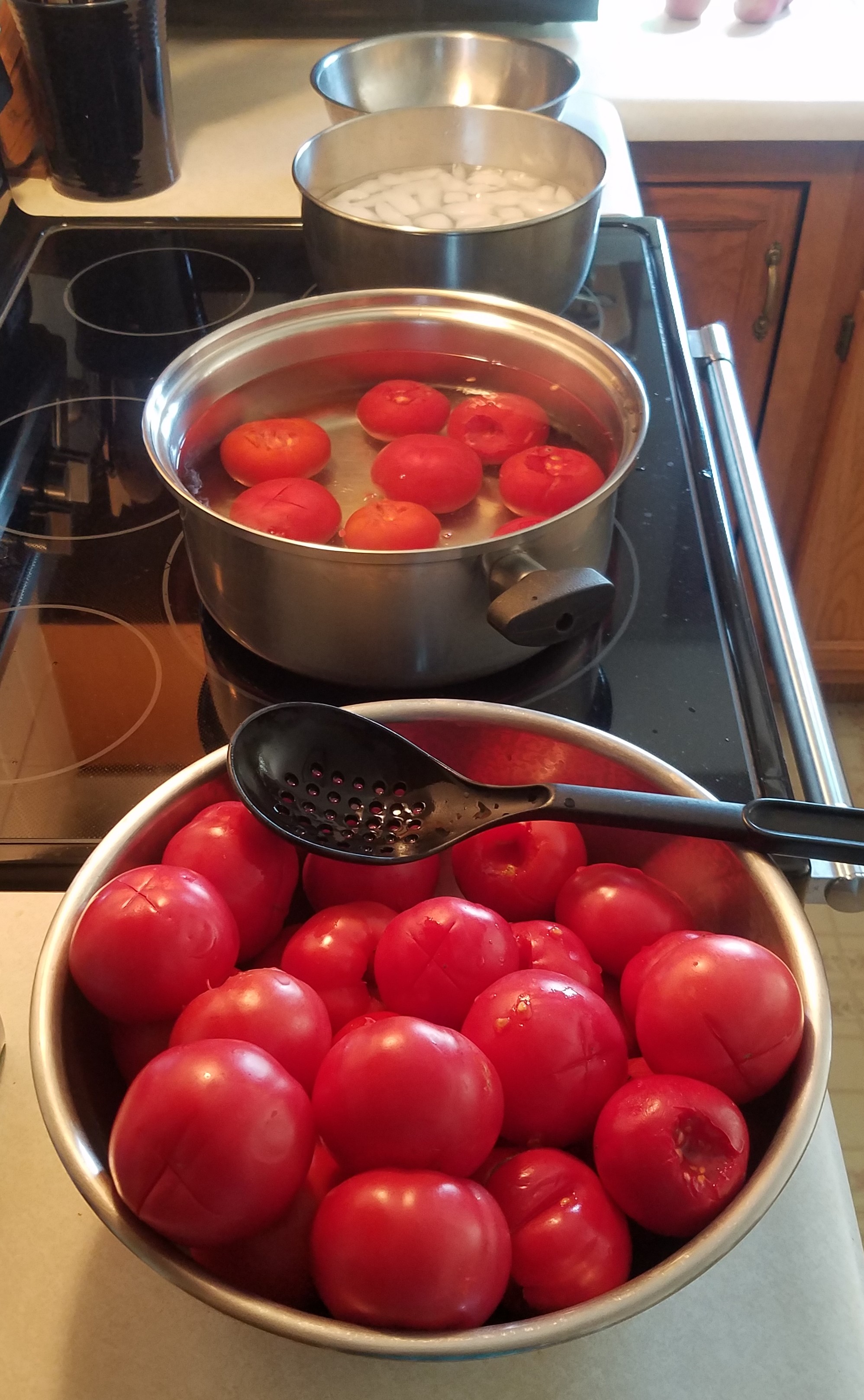
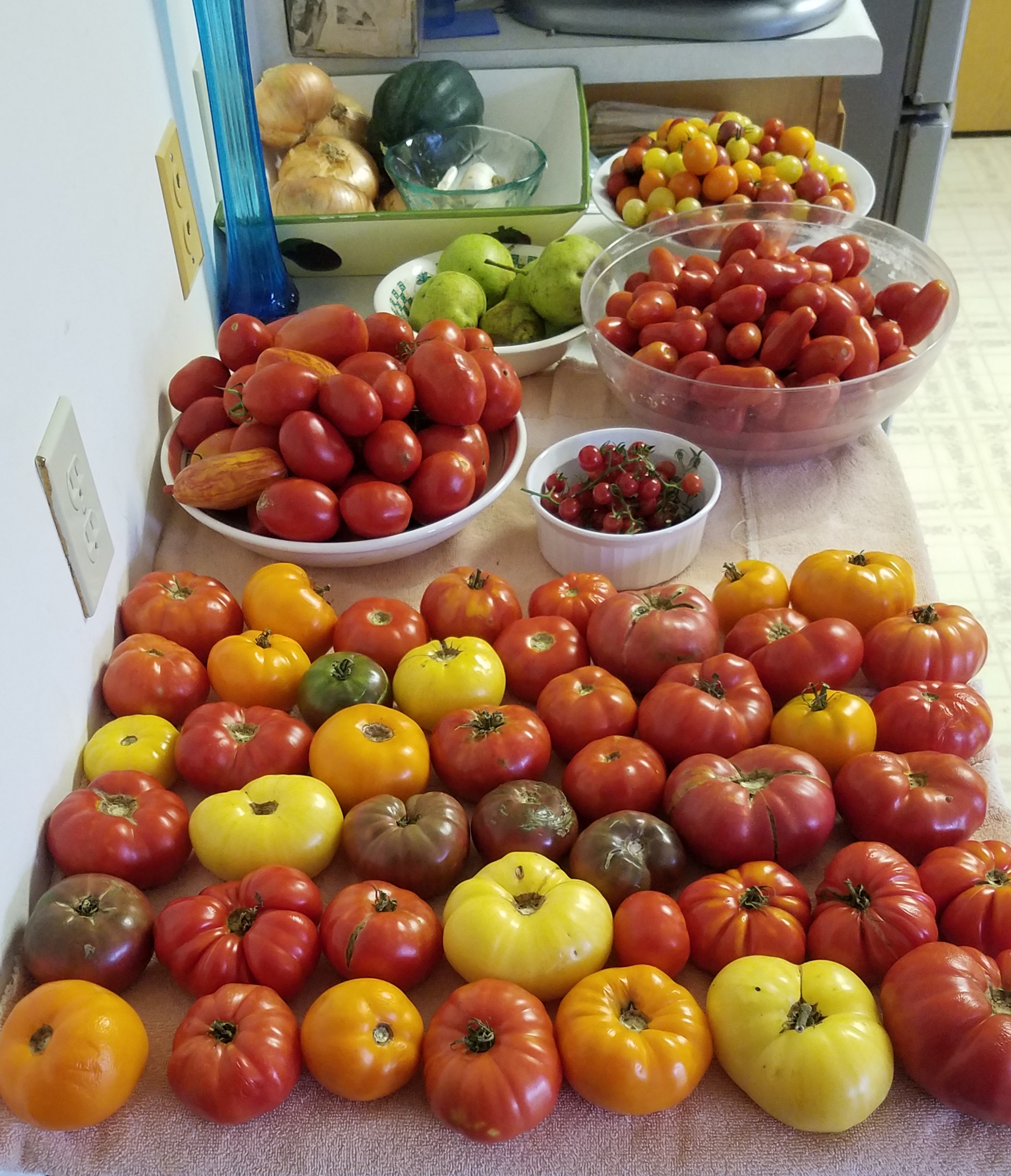
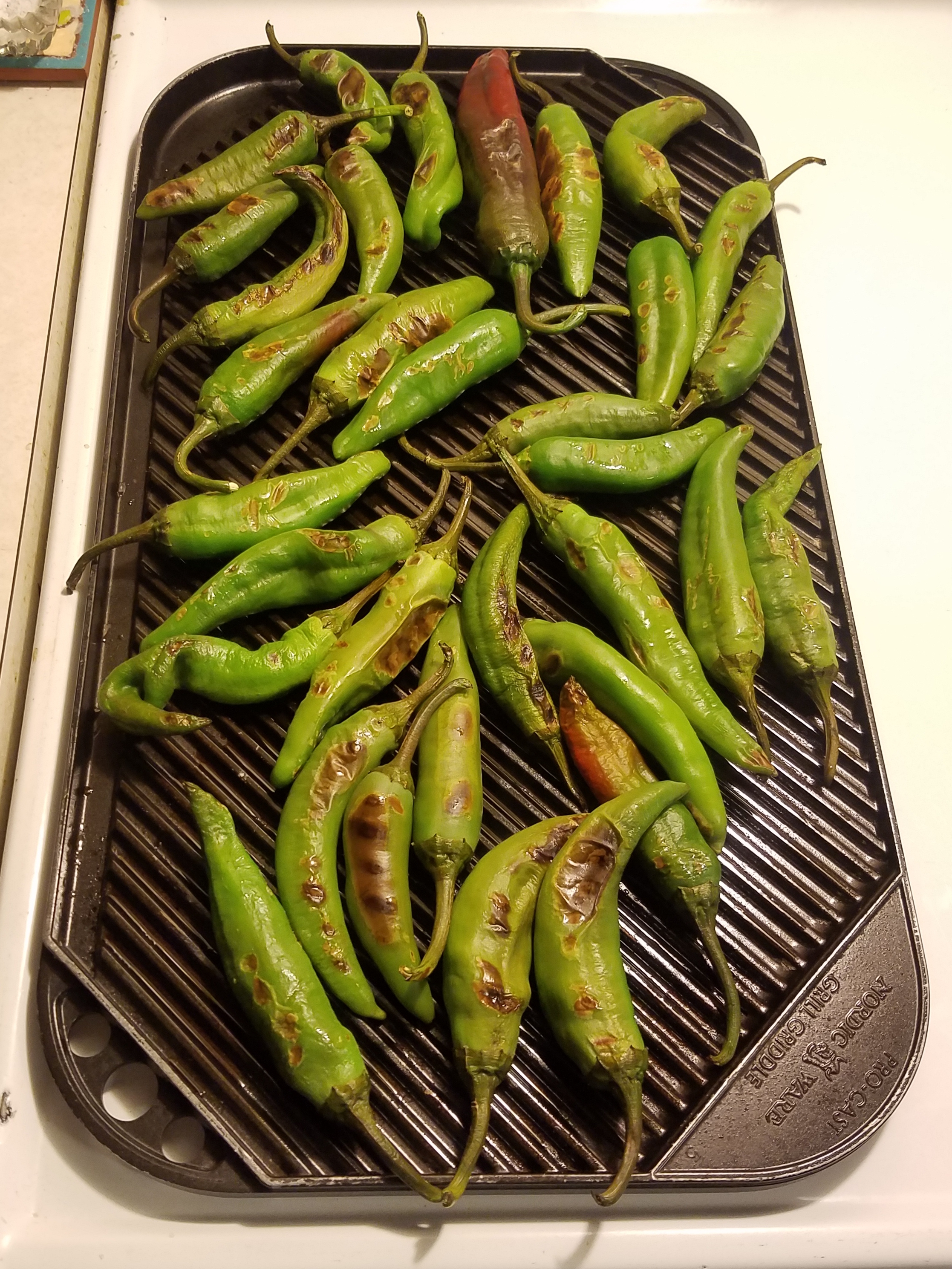
Labor Day weekend work: preserving Guajillo chilies.
For the second year in a row I’m not employed on Labor Day. The kinds of events marking the day are not the same as they were.
An announcement on the Iowa Labor News website read, “Most of the Union sponsored Labor Day events around Iowa have been cancelled, for safety reasons.”
“Safety reasons” refers to the coronavirus pandemic, which is not over, which has no end in sight. “The virus is here to stay,” Governor Kim Reynolds said at a Sept. 2 news conference. “Which means we have to find a way to live with it in a responsible, balanced and sustainable way.” There is no going back to the way things were before the coronavirus came along on Labor Day or on any day.
It’s been 48 years since I carried a union card at a meat packing plant. Since then, private business restructured to minimize its exposure to a unionized workforce. I’m not sure what Labor Day represents any longer. It sure isn’t about unions even if they are the groups most likely to plan events during better times.
Locally grown Honeycrisp apples.
This weekend the orchard began its Honeycrisp apple season, the university had a Saturday home football game, and there is a Labor Day Vendors Market in nearby Mount Vernon. It’s not much considering how many people work for a living. This year’s Labor Day Mayor’s Bike Ride in Cedar Rapids has been cancelled due to the pandemic. Suffice it Monday is a holiday and the weekend can be a time to take it easy.
Labor Day weekend is the “unofficial end of summer.” That’s going to have to do. Since I returned from a trip to Florida at the beginning of July the weather has been exceedingly hot and humid. Sunday morning’s ambient temperature was 59 degrees, reminding us of autumn’s approach. Sumac along the state park trail has begun to change color. There are signs of the end of summer all around.
In February I bought a new CPU to replace the one I’ve been using since 2013. This Labor Day weekend I hope to get it up and running, with files transferred. I face the same issue as in the past: what files do I want to keep? Ready or not, change has come and it’s time to decide. Like with the Labor Day holiday I must act like there is no going back. What is hard is deciding whether that means keeping old behavior or developing new. For now, I plan to work at home on Labor Day.








 Journey Home
You must be logged in to post a comment.