Categories
Kitchen Garden

Final 2025 Garlic Report

2025 Garlic just in from the field.

This year, I produced 103 head of garlic from 103 cloves planted in March. Without doubt, a person can plant garlic in the spring and get a decent crop. I plan to return to fall planting later this year.

There were four or five wet stalks that pulled off, yet the rest of it looked as it should. If anything, there were more smaller heads. That is likely due to the shortened growing season. There are plenty of large heads to seed next year’s crop.

I racked them up in no time.

2025 garlic racked and in the garage.

Because of the moisture from recent rain, I set up a small fan to circulate air around them while they dry. Once they feel less “wet” I will put away the fan and let them cure without it. It usually takes about three weeks.

Small fan to circulate air between the racked garlic plants.

Growing my own garlic has been life-changing. There is no going back.

Categories
Kitchen Garden

Apple Management

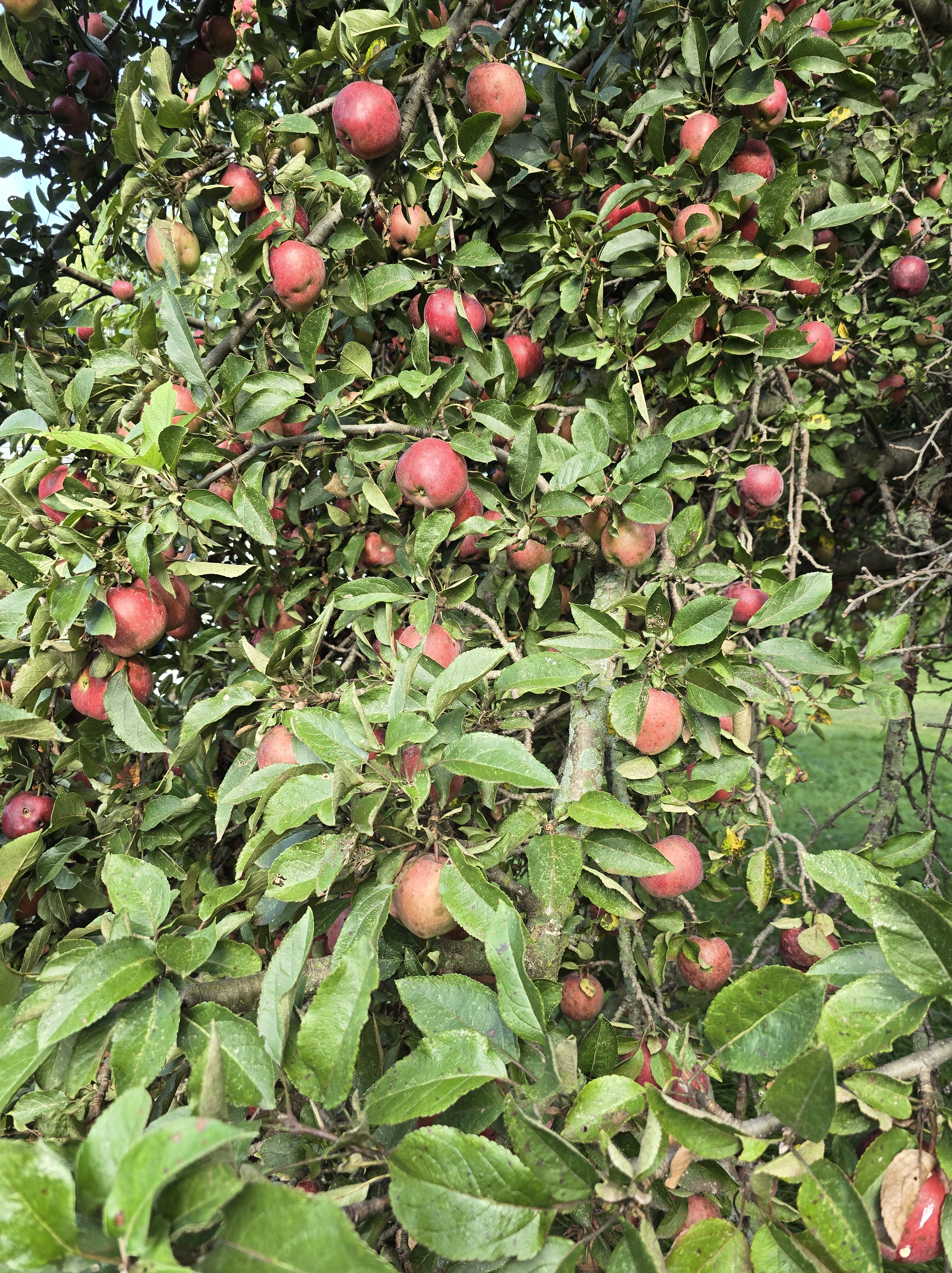
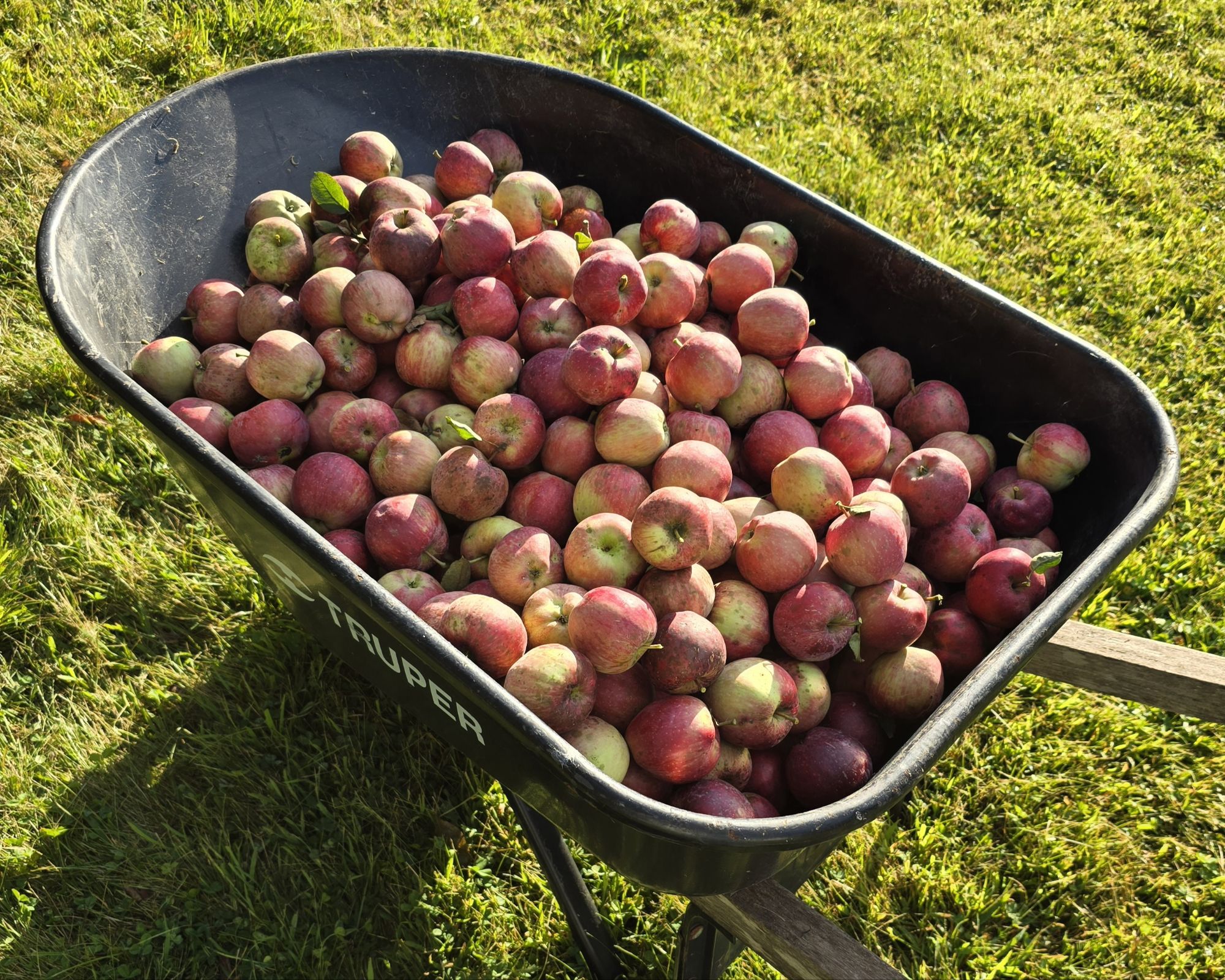
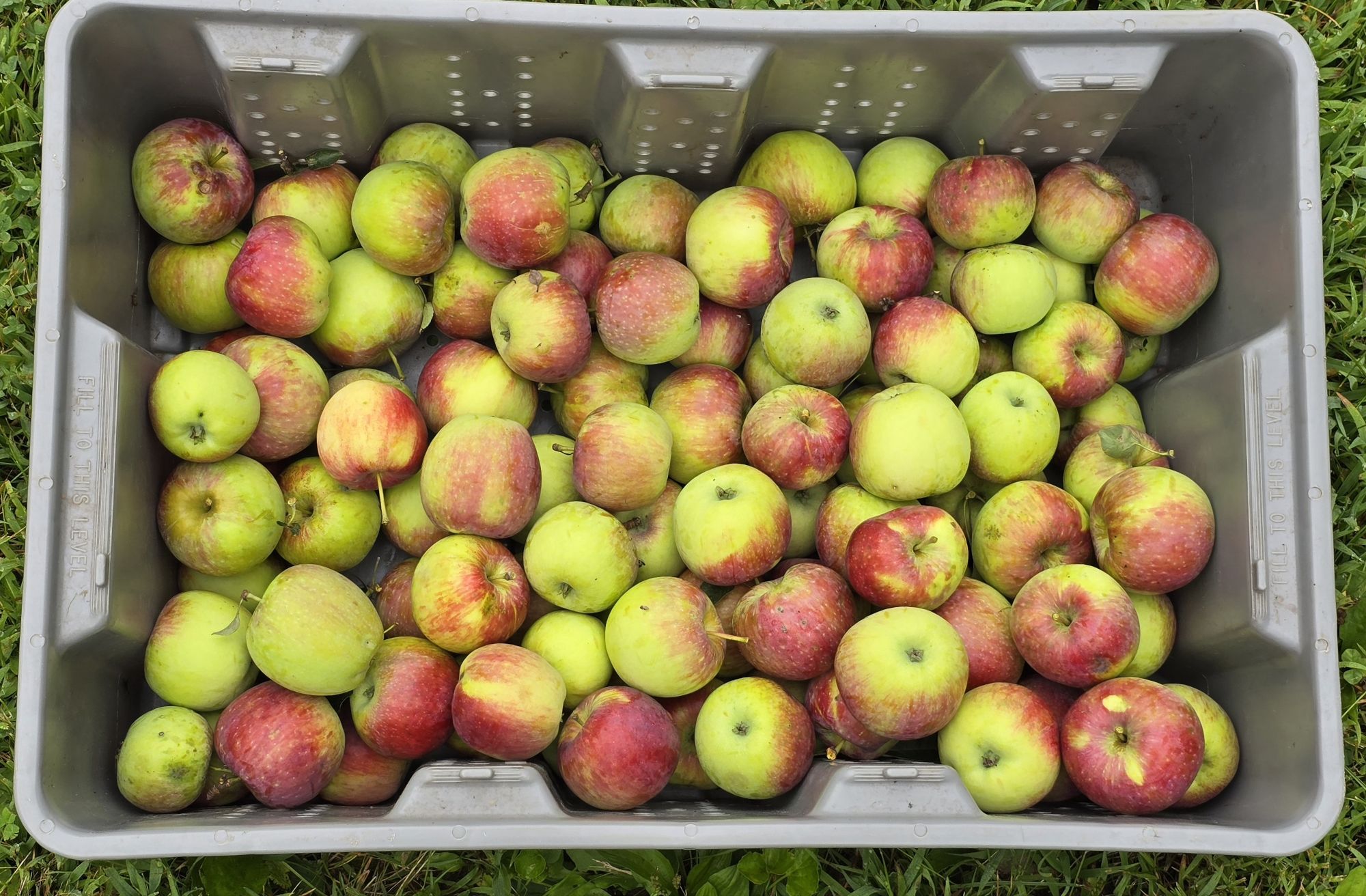
Crimson Crisp apples from the garden, Aug. 12, 2025.

These two Crimson Crisp apples fell from the tree during Tuesday morning’s thunderstorms. They looked undamaged so I picked them up and ate one of them for an afternoon snack. “Delicious,” he punned. They need to be picked. Apples are beginning to back up in the kitchen, so I better get going with the process.

Stories of my father’s people were about apples. The women worked in an apple canning plant and grew multiple trees on their properties. My great aunt Carrie said she ate apples every day of her life. She passed on a simple recipe for fried apples. Of course the men worked mining coal. Father was lucky to escape such a future when he was a teenager.

I wrote before about my father and apples here. This is the salient memory from that post:

Father taught me to eat apples after a trip on River Drive to buy a bushel.

It seemed unusual to secure so many at once, but he knew someone, and with a limited weekly income from the meat packing plant, the family took what help he could find.

Dad used a knife to cut away bad spots and avoid eating worms. I remember him rocking in a chair eating apples with a paring knife after dinner. He didn’t call them “knife apples.” I coined that term when describing the fruit from our trees. (Knife Apples, Paul Deaton, Oct. 10, 2014).

When we moved to Big Grove Township, I planted six apple trees at the time of my mother-in-law’s death. Three of those remain, one Red Delicious, and two Earliblaze. They are all reaching the end of their lives, but as long as they produce, I don’t cut them down. Recently I planted one Zestar! and one Crimson Crisp in a different spot in the yard. This year is the first all four varieties are producing.

Now that I have a producing orchard, what next?

I grew out of the idea of processing every possible apple into something. Apples now get divided into three major categories. The best ones are tucked away in a refrigerator drawer for eating with a knife. Most of those do not have visible imperfections. The seconds are saved for making three major products: Apple butter (usually 12 pints per major harvest); apple sauce (a dozen quarts and two dozen pints); and apple cider vinegar to fill all my containers. I need about 3-4 gallons this year. When the vinegar jars are filled, I usually reserve a quart or two of fresh apple juice for drinking from the refrigerator. Any other apples are comprised of fallen fruit and the least desirable of what I pick (small or too many imperfections). These go in a pile near the lilac bushes on the property line. They usually sit there decomposing from now until winter, yet in the spring they have all been eaten by wildlife who need winter food.

I used to make dried apples in a dehydrator, but just don’t eat them. Once they get used up from last time, that will be the end. In short, I process to make what I make and anything else goes to wildlife. Extra apples are not usually shared. It takes a certain type of outlook to turn a gnarly apple into applesauce or vinegar. Wildlife don’t complain and eat everything I put out for them.

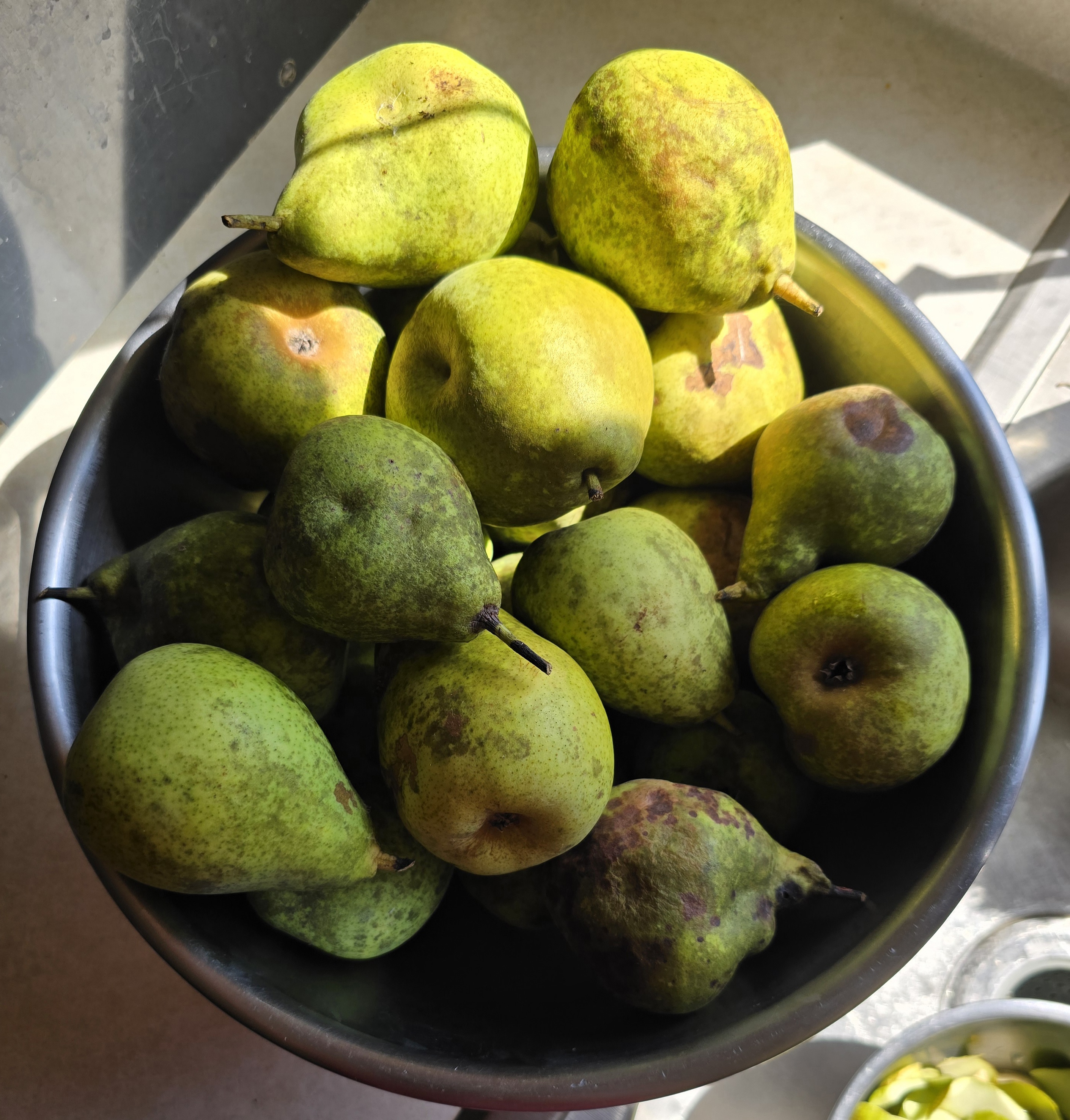
The main challenge in apple management is getting everything done before they start going bad. That’s where I currently am. The Zestar! have been processed, there are two containers of Earliblaze in the kitchen waiting for processing and a lot on the trees, I’ll pick Crimson Crisp today or tomorrow, and Red Delicious, which is my workhorse apple, are still ripening and won’t be ready for another month or so. Apple management is a process of continuous improvement. Re-defining and knowing what I want is important to keeping my sanity in this busy time of the garden year. Apples are worth the work.

Categories
Kitchen Garden

Garlic Harvest and Garden Stuff

Garlic harvest in 2021.

I spent part of Monday prepping the garage to receive two racks of freshly picked garlic plants for curing. In 2024, the harvest was July 12, so with spring planting this year, I’m running a month behind. The garlic plants look a bit weird — multiple flowers per head, small scapes — so I don’t know what I will get. Hopefully there will be enough good cloves to replant in the fall, with the rest to be used in the kitchen regardless of size. I have a dozen head of garlic left from 2024. Later this week I will grind them in the blender with some olive oil to store in the refrigerator until I use them up. My cooking life was forever changed when Susan Jutz taught me to grow garlic.

I made a batch of applesauce with Earliblaze apples and it was not as good as the batch made with Zestar! apples. If I get ambitious, I might cut down one or both of the Earliblaze trees and replace it with another Zestar! tree. I don’t see that happening this fall.

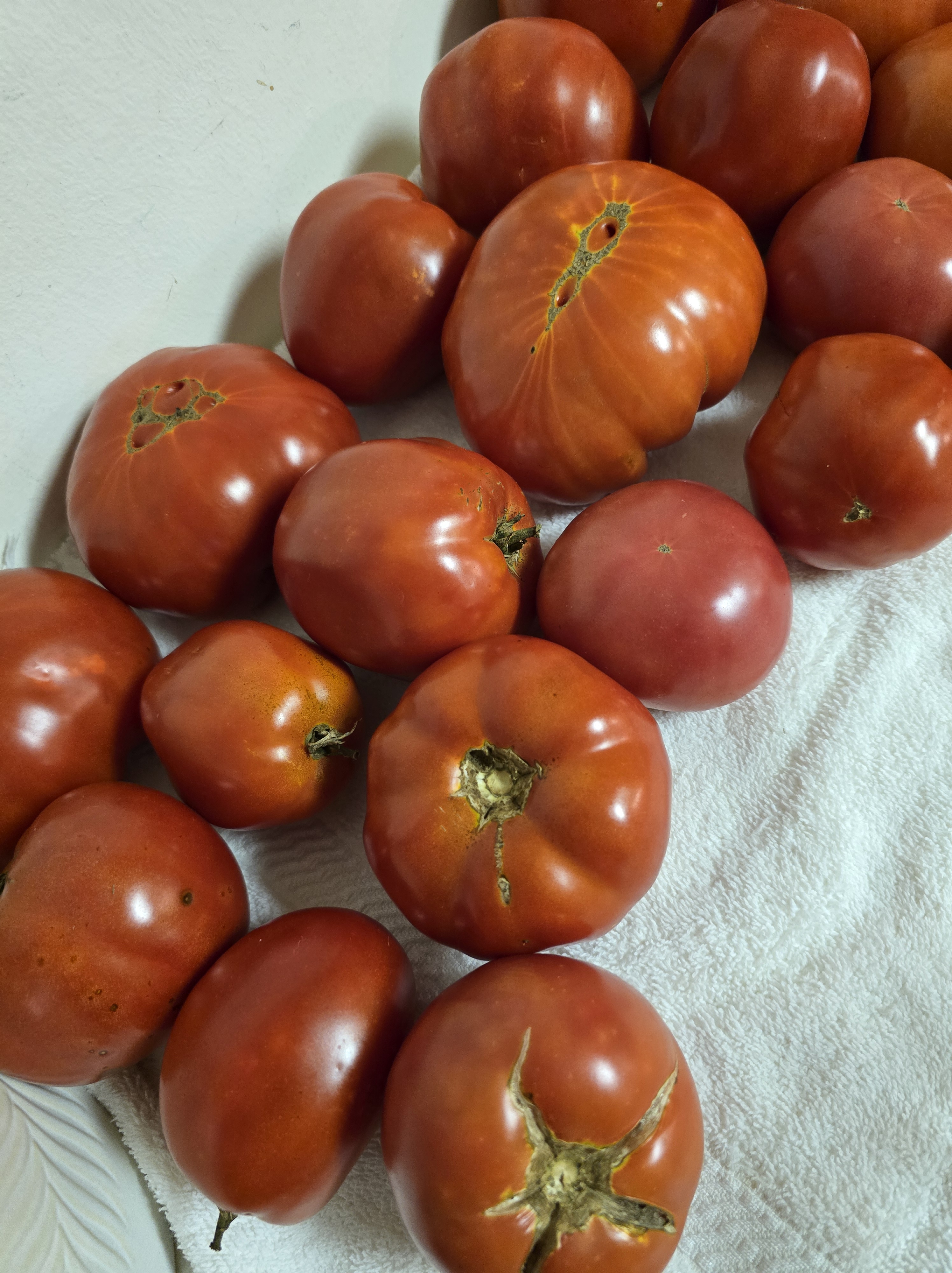
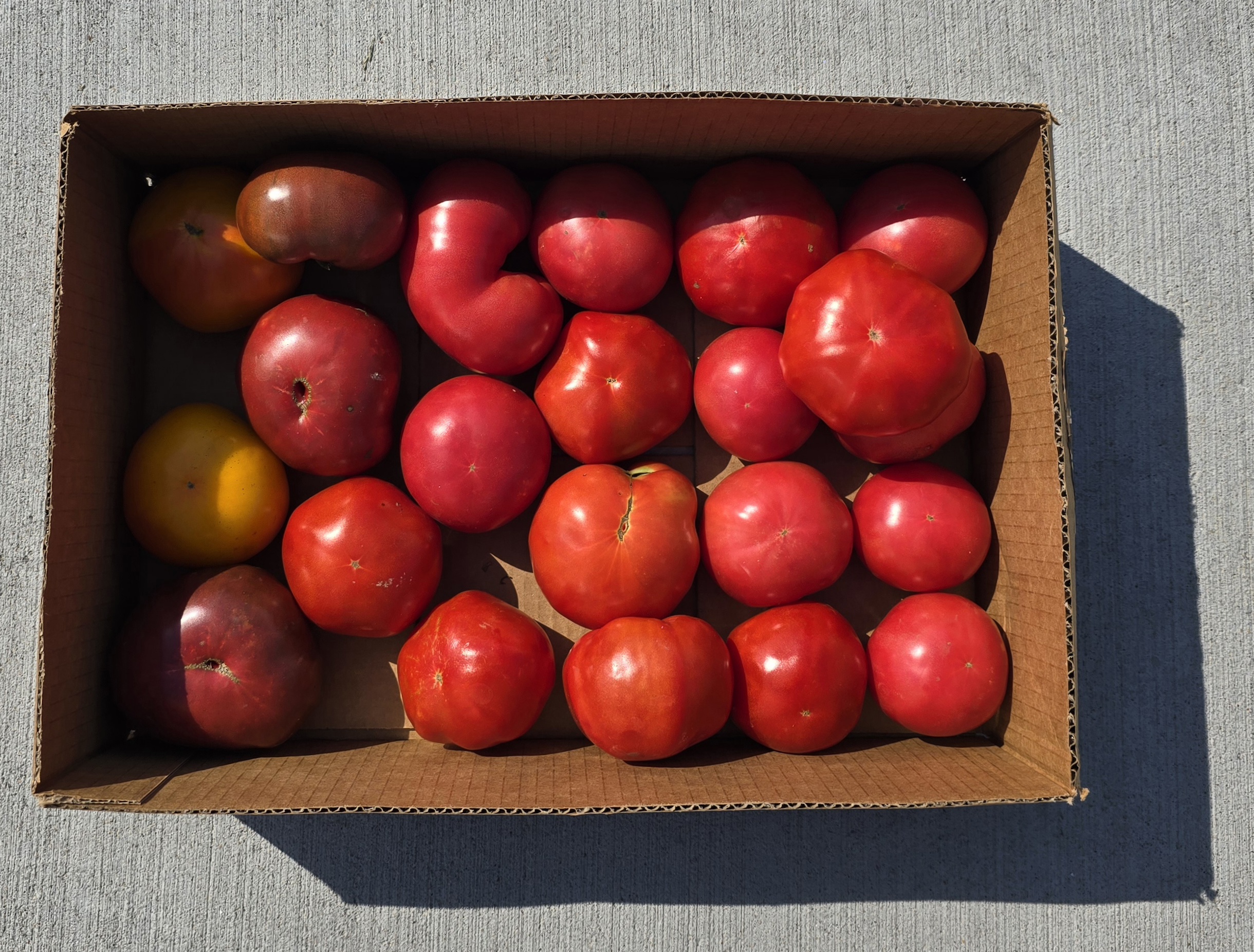
There does not look to be an abundance of tomatoes for canning. With 70 cages, there are plenty to eat fresh and cook with. Just last week I made a batch of chili using San Marzano tomatoes and it was distinctively better. This shows cooking with fresh tomatoes makes a big difference in taste. The tomato harvest is beginning to accelerate so we’ll see where it takes us.

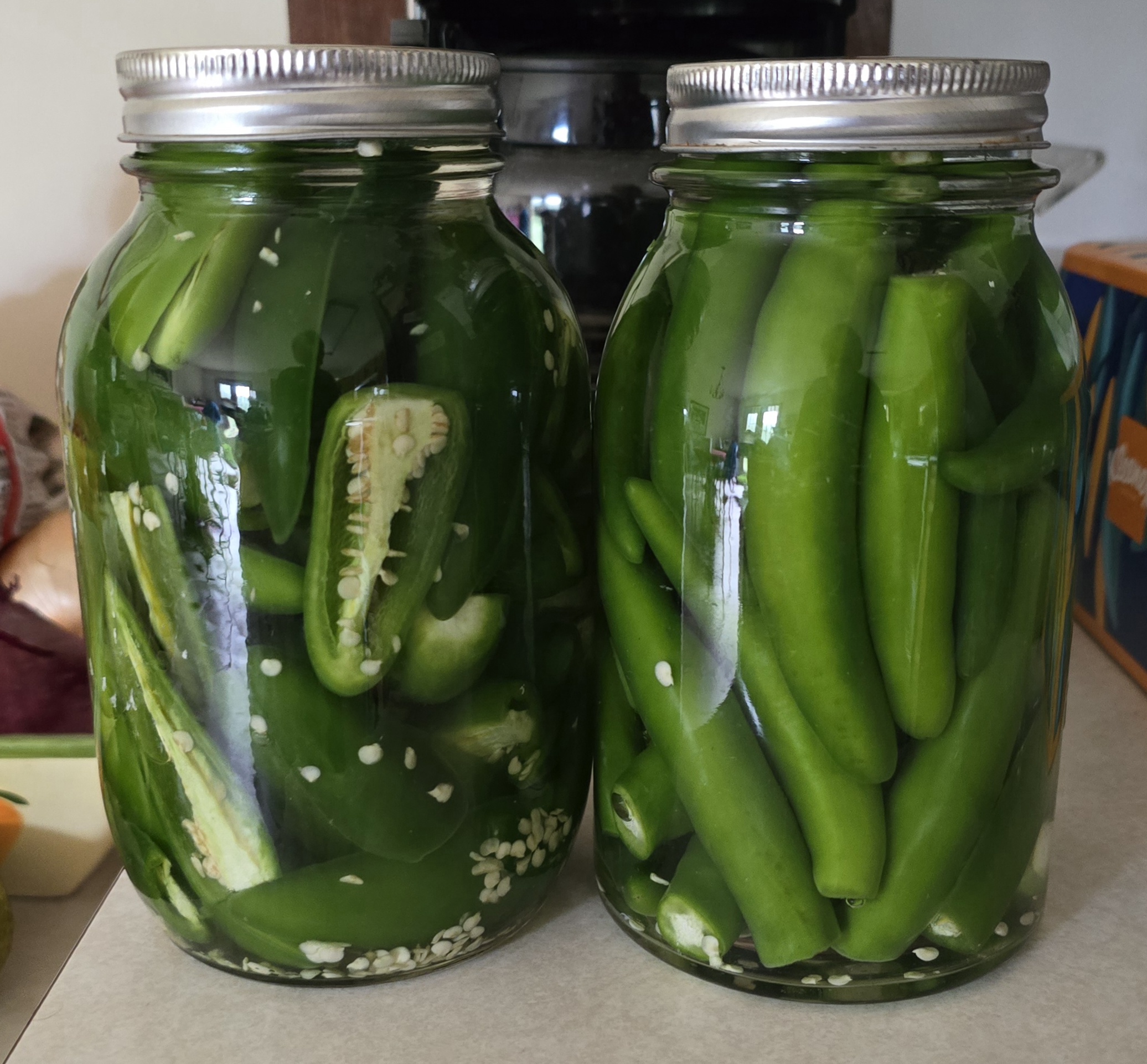
Squash and cucumbers are pretty well done. A few green beans remain to be picked. Leafy green vegetables are aplenty, although the refrigerator and freezer are stocked with enough to last until next season. Hot peppers have just begun to come in. There will be some more eggplant and bell peppers. That is about it.

This is a snapshot of where things are in the garden. It has been a great year.

Categories
Kitchen Garden

A Challenging Garlic Crop

First 2025 garlic.

I had COVID-19 in August and September 2024, so I did not get garlic planted before winter. Once recovered from the virus, I checked soil conditions each day into December and did not find them right for planting. One thing led to another, winter came and went, and I planted garlic on March 29. My friend Susan told me long ago garlic could be planted in the spring. Ever since I began growing it in my home garden I over wintered.

I began to freak out when the plants did not seem as tall as in previous years. On July 9, I ordered one pound of garlic seeds from Johnny’s Selected Seeds, the first time I ever did that. If my crop was a bust, I wanted something to start over. It was an expensive insurance policy.

When scapes emerged, they seemed of mixed quality. A few looked normal, yet some sprouted multiple scapes, and some were puny. They tasted fine, it’s just the overall volume for 100 plants seems lighter than in previous years.

By August, my garlic is usually harvested, racked, and curing in the garage on the special rack I made. I want the first couple of leaves to start turning brown before harvest, and we just aren’t there. Some are starting to turn, so harvest can’t be long. I dug one head (see photo) and it looked good. Maybe I’ll be alright.

It never occurred to me what life would be like without garlic. It wouldn’t feel like a real life. Fingers crossed I make it through a decent harvest and fall panting in October.

Categories
Living in Society

Peak Iowa Summer

Lilies growing in the state park lake.

I woke early and have been listening to boomers roll across the area. There is a severe thunderstorm watch according to the National Weather Service. Rain is expected to continue until around 10 a.m. It will be another good morning to spend in the kitchen.

There has been so much rain I haven’t unrolled the hose to water the garden for two weeks. That is a good thing on several levels. All the greenery has taken off, including plants I put in the ground and weeds. Indeterminate tomato vines are reaching more than eight feet long. When the rain slows down, I need to get under them and see if any tomatoes are ready. I planted the main rows four feet apart, yet the vines in all the rows reach up and touch each other. We like rain.

Thunderstorms are a characteristic of Iowa summer.

While picking green beans on Monday it was so hot and humid I pushed my physical limits. I was drenched in sweat and felt dizzy a couple of times, yet worked to finish picking mature beans. Sorting and cleaning them was a chore yet I got that done in the kitchen before dinner. We did not eat green beans for dinner, having broccoli from the garden instead.

Green bean harvest on July 28, 2025.

Lately I’ve been thinking about my decision to retire during the coronavirus pandemic. The combination of the lock down, becoming eligible for full retirement on Social Security, and the health risks of working in a retail environment brought the decision together. I’m having second thoughts about being retired. It was evident before, although is clearer today, that if the Congress does not address the shortfall in Social Security in 2032-2034, we will need more income than we have. Changing course to engineer a life that produces more income than our pensions produce is in the near future. That will give me something to think about while I work in the kitchen this morning. In the meanwhile, it is peak Iowa summer and we should enjoy it.

Categories
Kitchen Garden

Sunday Cookery

Green beans harvested Sunday in high humidity.

Sunday morning I picked green beans because they were ready. About 20 minutes into the task I was drenched in sweat. With a forecast high of 89 degrees it became clear it would be another indoors day. Once again, I escaped into my two favorite spots in the house: my writing table and the kitchen.

After finishing chores I sat at the desktop and finished my post for yesterday. I also exchanged emails with a friend with whom I am doing this event.

We met in person on Friday and have the idea of talking about why we write books at the end of the time. We are curious about how attendees get information about complex topics. Do they read books to do so? Should be a good conversation.

I am into the second volume of my autobiography and she is into her third, so that’s the origin of that. She sent along a quote about why we write from Nairobi Williese Barnes that said, “(we write) to shift the conversation, challenge harmful narratives, and encourage accountability in the ways we support and uplift one another.” I don’t disagree with that sentiment.

She quoted me back from my own writing from posts on this blog:

So we write, partly to clarify our thinking, and partly to satisfy our need to reach out to others and express the value of our lives, one life among the billions of people walking on the planet. Whether anyone reads or understands our writing is not the point, although we hope they do. 

Why am I writing here, in public? Part of it is self-expression, a basic human need. Part is using language to understand complex social behavior. …. Defining a broader moral lesson is the challenge as the memoir progresses.

There are few finer things on this jumping green sphere than writing about writing, especially with a friend.

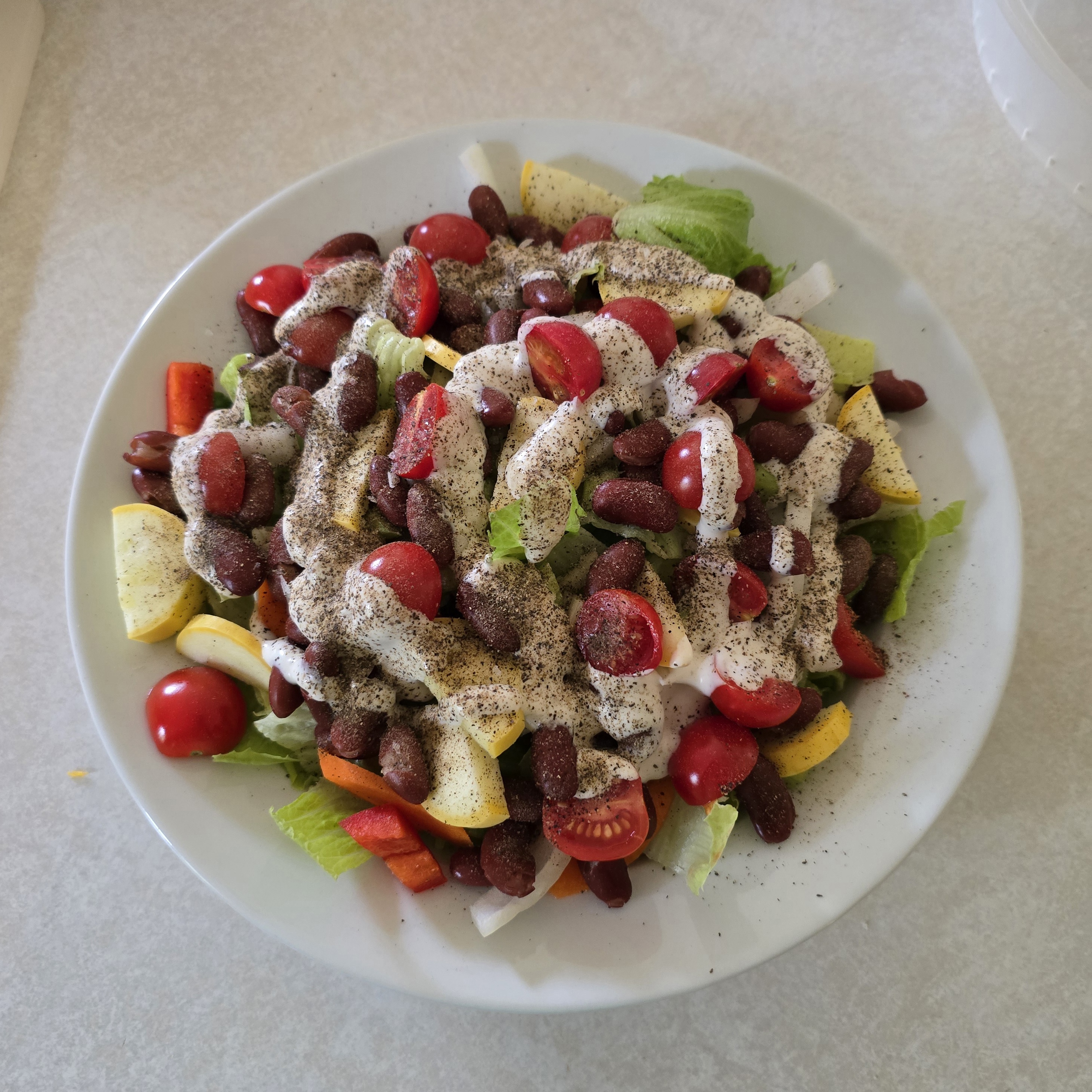
I made it to the kitchen at about noon and endeavored to get busy. I started with doing the dishes. More accurately, I started with the laundry. On the last Sunday of each month I launder my bed sheets and catch up on other laundry that accumulated. This took a bit of time out of kitchen work as I did five loads. I managed to make what I call “minced salad.” That is summer vegetables suitable for eating raw diced into one eighth inch cubes and mixed together with extra virgin olive oil and apple cider vinegar. I season with salt yet the seasoning possibilities are endless. It came out well.

The garden is about finished with zucchini. I modified my zucchini bread recipe, substituting applesauce for the oil, and by wringing the water out of the zucchini with a towel. It is to set for 2-3 hours before cutting so I haven’t tasted it. It appears to have had the desired effect which was to decrease the moisture in the loaf and reduce cooking time. It should be good.

Zucchini bread baked on July 27, 2025.

The benefit of these activities is I can shut out the rest of the world and focus on our family. We need more time doing that. It is a way to go on living in turbulent times.

Categories
Kitchen Garden

Saturday Apple Cooking

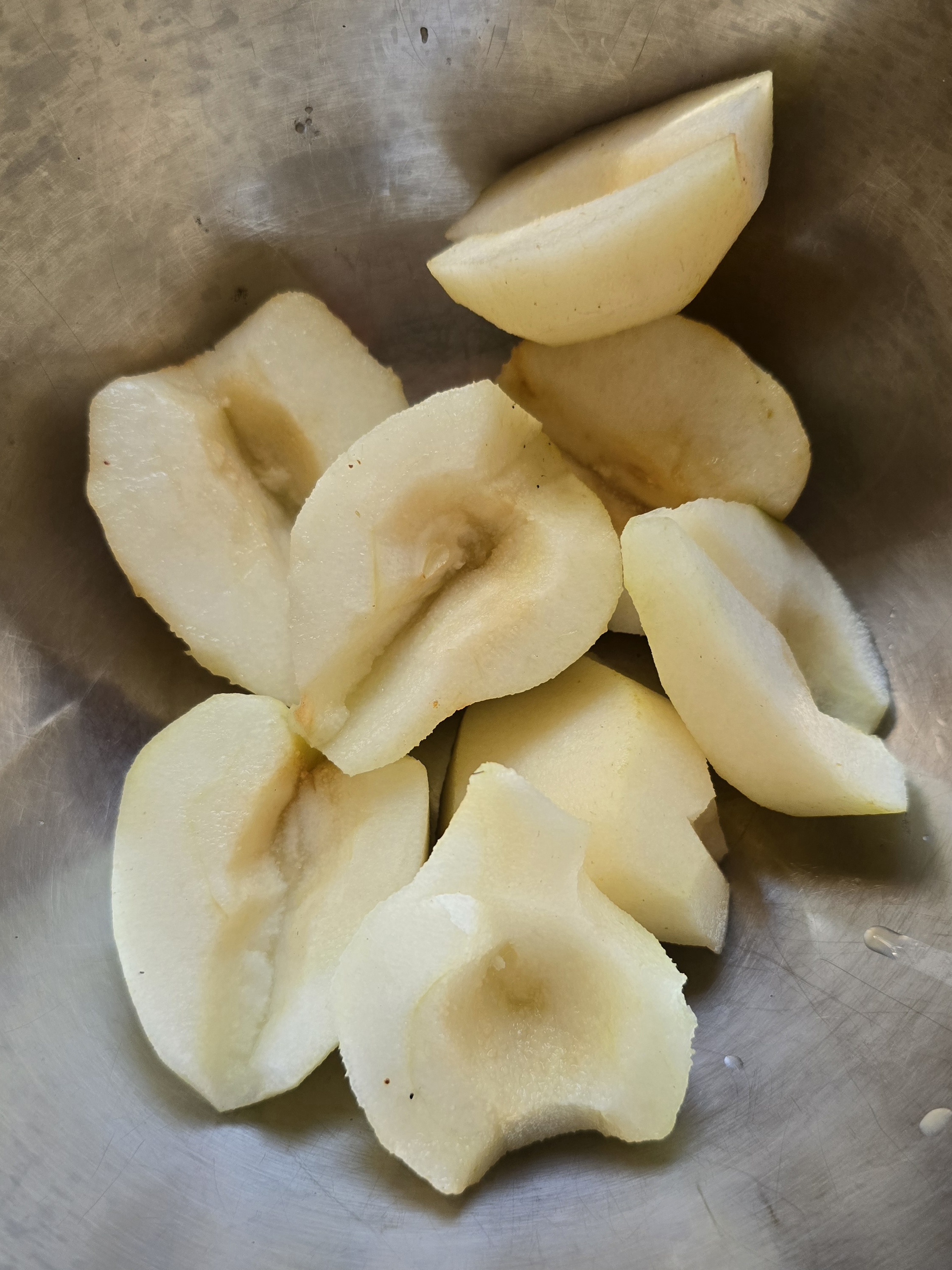
Zestar! apples in the sink before making applesauce.

Saturday cooking is one of the great pleasures of life. I use it to set aside worries and concentrate on preserving and making food for our family with an emphasis on taste and using the garden abundance. Rain was forecast all morning so I spent Saturday in the kitchen. This post is a slice of that life.

The day began with breakfast of cottage cheese and some cherry juice left from the recent visit of our child. Next I did the dishes to make space to get everything clean before making a new mess. Then I went through the refrigerator, which is packed to the doors. I pulled out everything that could go into a new batch of vegetable broth and laid the items on the counter. I also went through the cucumber drawer to make sure decaying vegetables were either used up or composted.

Cucumbers take the most management because there are so many of them when they come in and their shelf life is short. I noted the quart jar of pickles was almost gone, so I reused the brine, fortifying it with some new vinegar and seasonings, and refilled the jar. There are already three or four quarts of refrigerator dill pickles tucked away in the back but we have to make them while cucumbers are in season.

While cleaning the fridge, I made a cut vegetable tray for snacking. Celery, zucchini, cucumber, and bell peppers cut and ready to eat if I need a break from the action. This is for sharing, yet sometimes I am the only one who eats this convenience food. I typically like some kind of salad dressing with them.

Vegetable broth is an easy use of vegetables nearing the end of their life. I make it with standard mirepoix, bay leaves, and the oldest bag or two of leafy green vegetables from the freezer. This day, I used up a couple of bags of last year’s celery leaves to make way for new. One of the last gifts Mother gave me was a large All-Clad multipurpose stainless steel stock pot. If I’m working a full shift in the kitchen, I usually put a pot of broth on and water bath can it. I made six more quarts. At 42 quart jars in the pantry, I am good for most of the rest of this year into spring 2026.

This may seem like a lot yet it was preparatory of making apple sauce.

One of the few surviving photographs of our family in Appalachia is of Granny Reed at Stella’s funeral. Reed’s given name was Josephine, yet I only discovered that from searching the U.S. Census a few years ago. She was always called Granny Reed. She is our child’s great, great, great grandmother.

Granny Reed, along with other female family members worked at a canning plant where they put up apples. When I am picking, sorting, peeling and coring home grown apples for use, I inevitably think about those Virginia women. When in 1983 I visited the home places in Virginia, my Uncle Gene talked about apples.

Next, we went to Norton, another of the places Grandma and Grandpa lived. Uncle Gene talked about apples, how Grandma used to work on peeling and coring apples for one of the big companies. At one time, then, there were large orchards. But now, there is only the coal companies. They used to eat fried apples for breakfast. Later Aunt Carrie told us how to make them. Slice apples into wedges, fry in a little water, sprinkled with sugar. (An Iowa Life by Paul Deaton).

Uncle Gene talked at breakneck speed and I tried to get it all down.

Something that goes through everything is the presence of apples. Grandma worked in an apple cannery, had orchards. There is an apple tree on the old home place, Aunt Carrie served fresh applesauce for us, she said a day hasn’t gone by when she hasn’t had apples. Uncle Gene talked a lot about the apples and how he and the boys helped with them. And everywhere we ate them, the apples were good, the trees bearing fruit. The apple trees bearing lots, even the ones abandoned for years. Eat them green, cooked, fried, in applesauce. (An Iowa Life by Paul Deaton).

As Gene said, “That Granny Reed was always a smart one.”

My entry into Zestar! apples had me eating them fresh and making apple sauce. Before now, I had only every made applesauce from Red Delicious and Earliblaze apples. It turned out on Saturday the flavor profile of Zestar! apple applesauce was delicious (no pun intended). I am so glad that tree is now a part of our home orchard.

I was dog tired at the end of my six-hour kitchen shift. It was an inexpensive escape from the internet and everything on it. A time to live in the past with my forebears, if only for a few hours.

Categories
Kitchen Garden

Garden Gangbusters

Food pantry donation on July 18, 2025.

In July, we are in the thick of harvest season. There has been adequate rain, and growing conditions are almost ideal. 2025 will be one of my best gardening years ever. Among the benefits of a productive garden is frequent donations to area food pantries.

Zestar! apples July 21, 2025

One measure of abundance is Zestar! apples. It was the first large harvest from a tree I planted a few years ago. The taste is sensational: juicy and tart. They will make great applesauce. This year I decided to can applesauce in pint jars instead of quarts. One main use is as a binding agent in my Iowa vegan cornbread and the pint is more likely to be used up before it goes bad.

Use of apples goes way back on my father’s side of the family. Stories survive of family working in the apple canning plant in Appalachia in the early 20th Century. I am happy to have four varieties of apples growing in our back yard. Calling it my heritage is not wrong. I don’t spray, so they are not perfect. Boy howdy! Do I use them up!

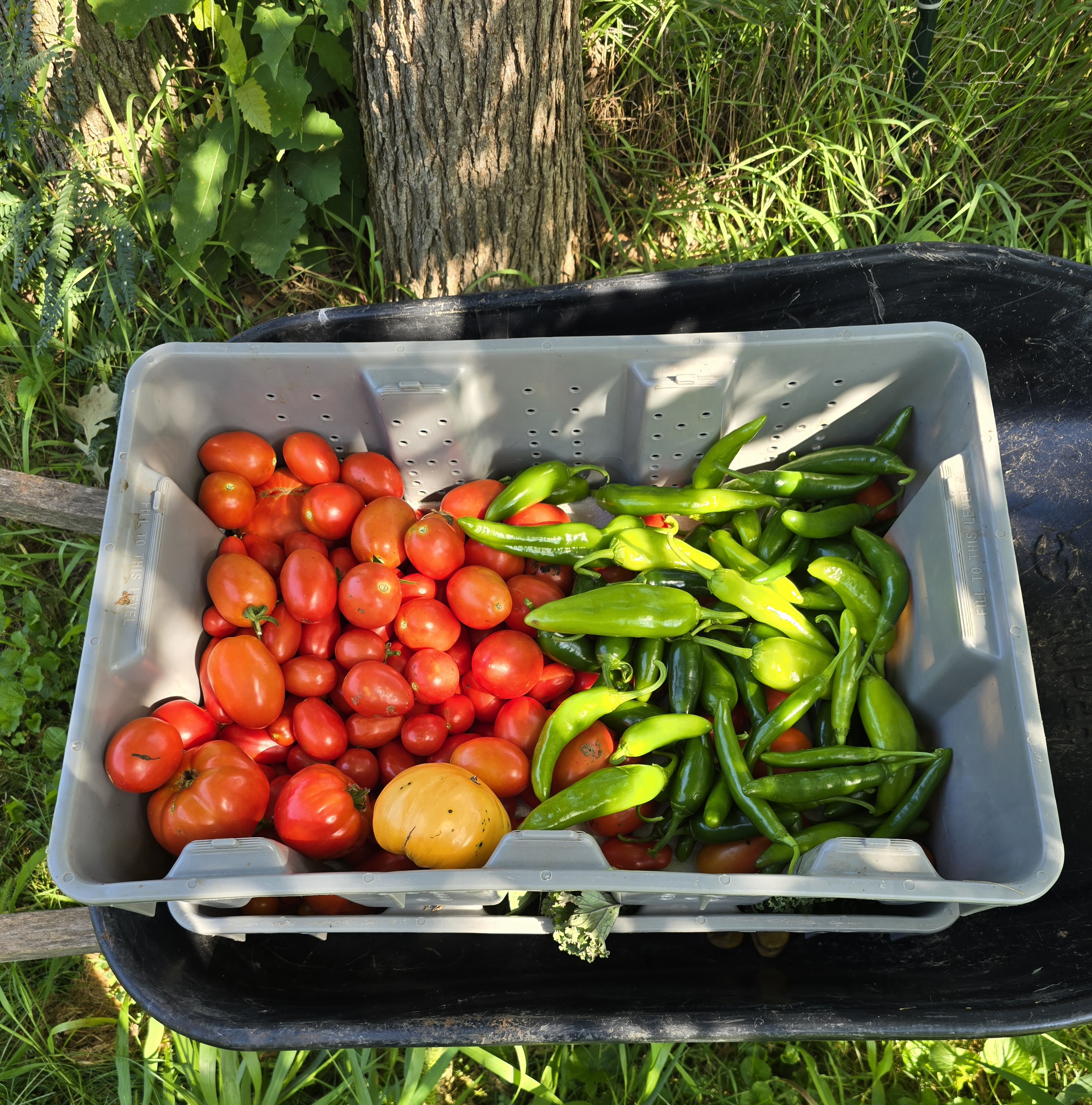
Harvest on July 21, 2025.

When the garden is going gangbusters, the challenge is to use up or preserve as much as possible, as soon as possible. Two of the crates in the photo above have celery in them. Celery gets processed into four different things: I keep “hearts” of celery for cooking fresh, ending up with ten of them this year. The various outer stalks are separated from the leaves. The stalks with some size to them are chopped into small bits and frozen to add to soup. All the very small pieces of stalk and stem are roughly cut, bagged and frozen for use in making vegetable broth. Finally, the leaves are rough chopped, bagged and frozen to add to soup. I use the whole plant. All of this takes a bit of work, yet the flavor makes it worth the effort.

Another big project ahead is using garlic scapes before the garlic harvest. I have a good crop of basil, so I expect I will make garlic scape pesto. I already have plenty of half pint jars of pesto in the freezer, so I don’t need many more. Will see how far along with that I get.

Growing a large garden ties a person to home. There is so much to do in July, if we don’t pace ourselves, we may be tuckered out for the August tomato season. Can’t let that happen.

Categories
Kitchen Garden

Eggplant Bloggery

Baked eggplant.

My intent was not to become a food blogger. Best intentions aside, I have written hundreds of posts about food — growing it, shopping for it, preparing and preserving it. I have a sense of keeping recipes and techniques on these pages, yet most of that information resides within me, or the little red book in which I write frequently used and locally developed recipes. I took the step of defining the term “kitchen garden.” What of all this food bloggery? I don’t know from where the urge to write about food came yet I persist.

When the garden produces eggplant, there is a lot of it. I picked half a dozen small to medium fruit and cut them into one half-inch slices. I diced the scraps into quarter-inch cubes and placed them in a freezer bag for later use. After brushing the slabs with extra virgin olive oil, and seasoning with salt, I baked them at 400 degrees Fahrenheit for 25 minutes, flipping them halfway. From here, I serve on a plate, spoon some pasta sauce to cover, and sprinkle on grated Parmesan cheese. Any leftover slices of eggplant get frozen for a quick, tasty future meal. Eggplants are a lesson in how to use abundance.

Food writing is a creative outlet. The photograph and text are products of a creative life which represents more than survival. We live in a culture that denigrates the different, that seeks to remove social differences the way politicians seek to erase transgender citizens. Food writing is a way to express a life that falls outside social norms. It is a safe harbor to consider how we might live differently. That seems true whether we write about family food traditions or about a simple eggplant supper served from an abundant garden. We need types of expression that assert our uniqueness without fear of repercussions, without persecution. Food writing can be that. Most readers seem unlikely to recognize it as such.

I meant to write about how four Galine Eggplant seedlings produced so much abundance. This post turned into more than that, about affirmation and the freedom to be different. While my brief recipe for an eggplant dish is not unique, this moment, with these words I became as unique as I might ever be. That has value in a society with low tolerance for anything that is different.

Categories
Kitchen Garden

Toward Peak Summer

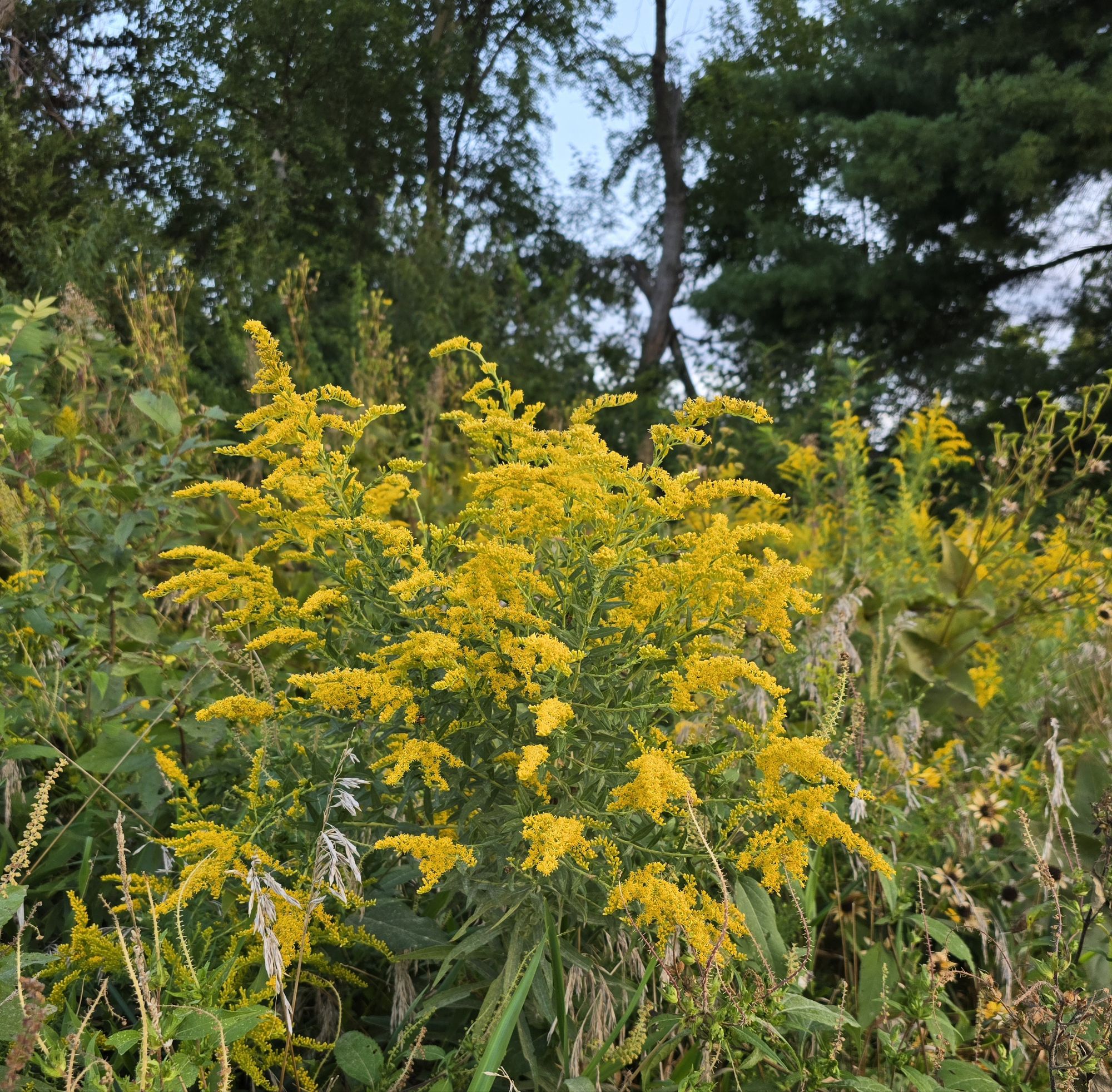
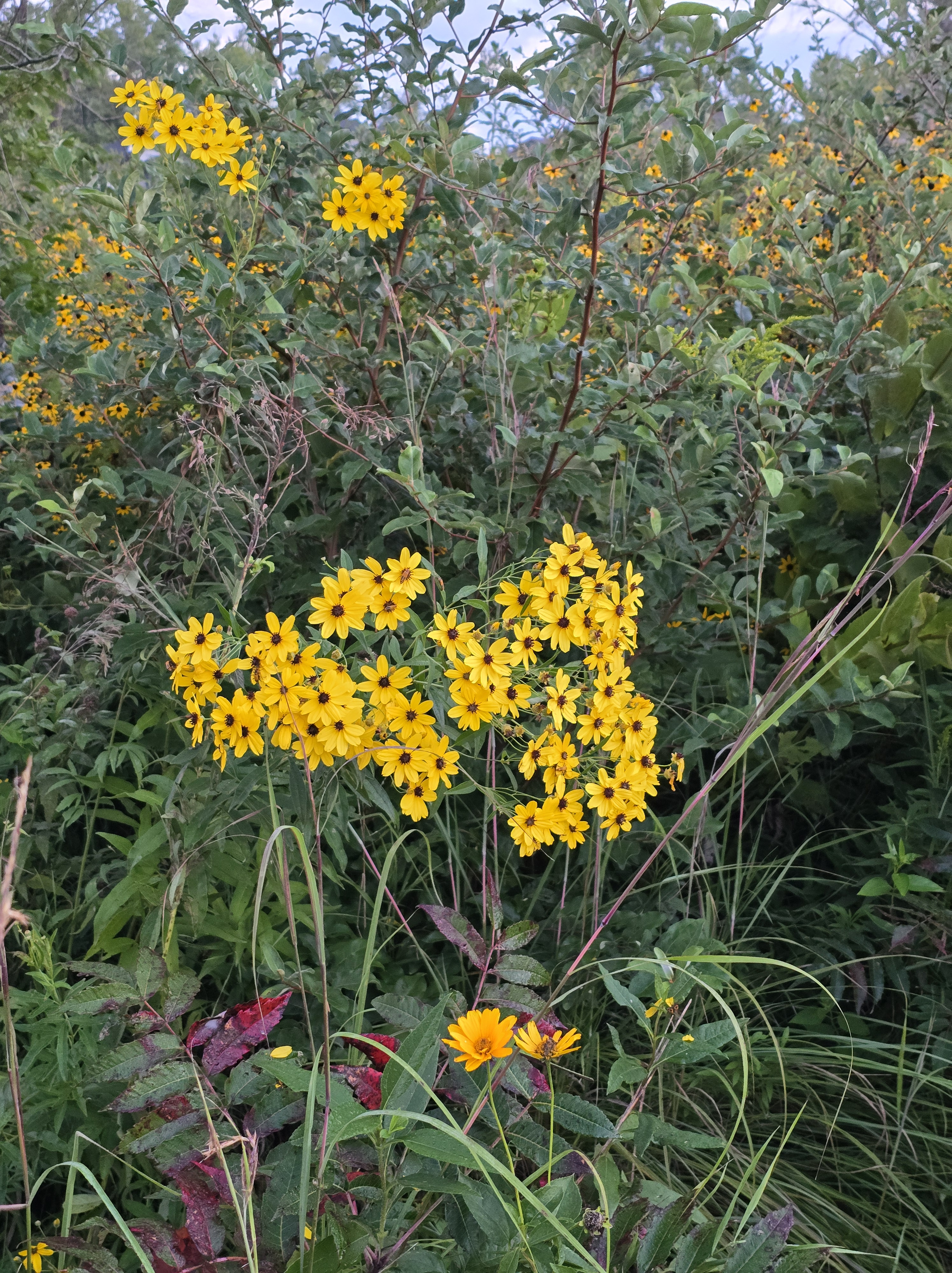
Wildflowers in the state park.

It looks to be a bountiful year in our kitchen garden. The refrigerator is jammed. I rearrange the freezer a couple of times each week to fit in more food. I make two or three donations to local community food pantries each week. It’s one of the reasons we garden.

There is a skill in shopping at the full-service grocery store. For the best fruit and vegetables, early Friday morning is when to shop. Between 6 and 7 a.m. on Fridays, there has been a good selection of organic fruit. Taste does matter. Freshness does matter, especially when buying from a large-scale grocer. By being aware of shelf-stocking procedures, one can shop when the best produce is available and in doing so, live better.

I’ve written about the flavor of home-grown celery. There is nothing like it. I harvested three bunches yesterday and processed them for use. It created three cores to be used fresh in cooking, three bags of celery leaves for seasoning soup, a bag of stalks chopped for soup, and a bag of bits and pieces to be used in making vegetable broth. I will use all of this.

Freshly Picked Celery

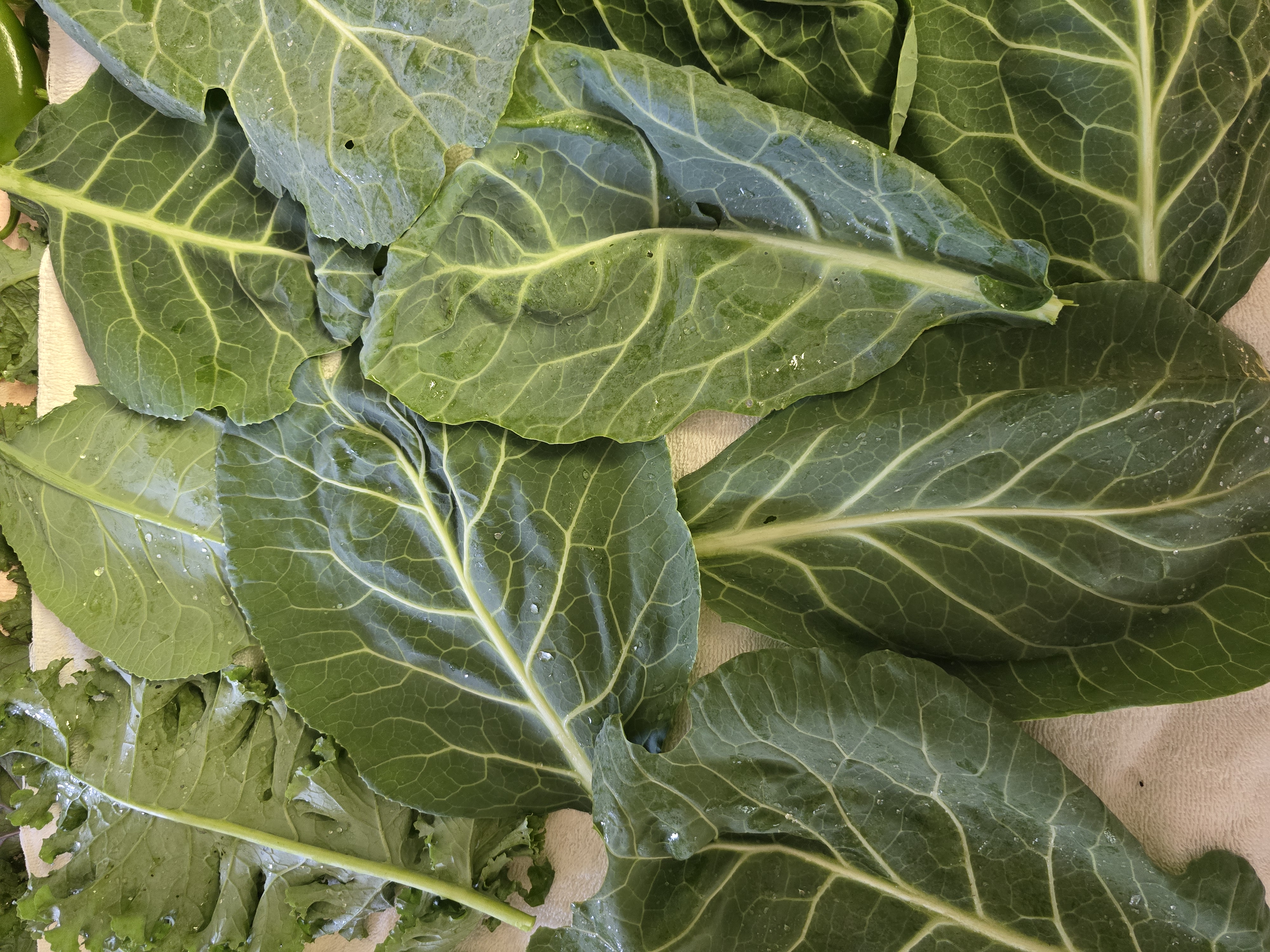
Cabbage heads are getting big, and the crop looks great. Conditions are right for cruciferous vegetables and the whole plot is doing well. Farao Cabbage is the variety doing the best this year. Cabbage keeps a long time in the refrigerator, yet if there’s no room left, some of it will go to the food pantry.

Cucumbers, squash and zucchini could slow down and I wouldn’t miss them. There has been too much to use. A crate of cucumbers will go to the food pantry this morning.

With abundant rain, everything is growing, including wildflowers in the state park. This has been a summer to remember. We currently are at its peak.