There is little point in growing a garden if one doesn’t use the produce.
Yesterday I made the first pick of arugula and sugar snap peas for a classic dish with farfalle.
Preparation is done while the pasta is cooking and the result makes the effort worth it.
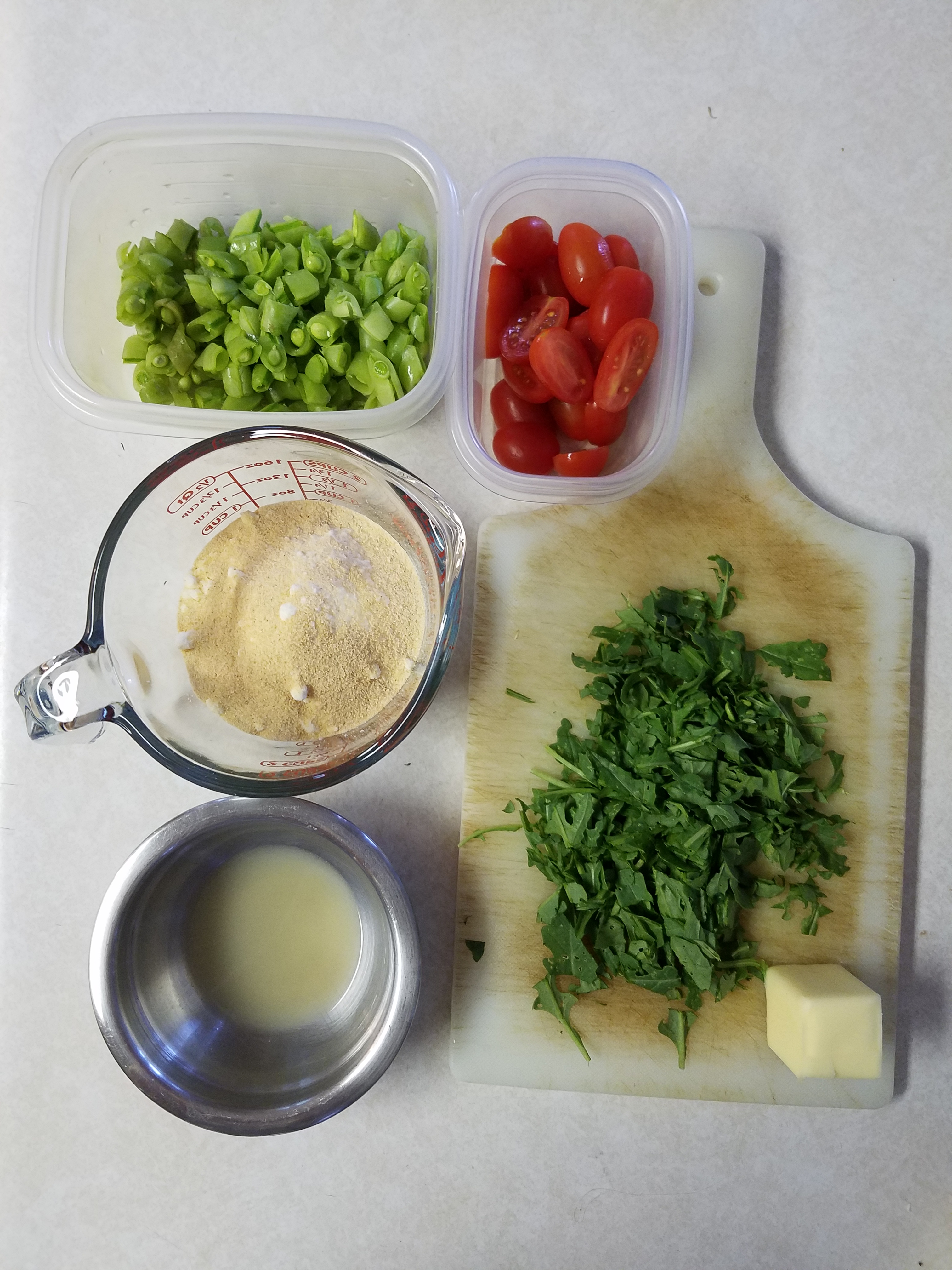
Put six ounces of dry farfalle pasta on the boil for 12 minutes or until al dente.
While the pasta is cooking clean the sugar snap peas, removing the vein, and slice thinly. Next, roughly chop the arugula. Set both aside.
Cut ten grape tomatoes in half and set them aside. We get grape tomatoes from the warehouse club, although the first flowers are appearing on the tomato plants in the garden. It won’t be long before we have home grown cherry and grape tomatoes.
Remaining ingredients include a scant quarter cup of lemon juice, one cup Parmesan cheese, a generous tablespoon of granulated garlic, and 2 knobs of butter.
Cut the butter into small bits and place in a large bowl. Dump in the drained pasta and gently mix to melt the butter. Next add the lemon juice, peas and arugula and mix until incorporated. Finally, add the tomatoes, cheese and garlic mixture and mix together until the cheese coats all of the pasta. Salt and pepper to taste and serve. Makes 2-3 servings.
Seasonal side dishes include a lettuce salad with kohlrabi, spinach and kale or steamed asparagus.
I must be the worst food writer in the world as I neglected to take a photo of the finished dish. Suffice it to say it tasted like spring.
The garden and yard were excessively dry Saturday morning so I watered the vegetables. Couple of hours later it rained, then cleared up in time for a wedding at Wapsipinicon State Park.
It was a lovely day for a wedding, and for living in Iowa.
We could use more lovely days… and more rain.
I had a couple of food inspirations this week.
On Thursday I had meetings after my shift at the home, farm and auto supply store so I stopped at Estela’s Fresh Mex Mexican Restaurant on Burlington Street in the county seat. I ordered veggie tacos with the traditional mix. The line cook measured a portion of vegetables (corn, onion, peppers and other undetermined items) on the griddle and sauteed them. Next the mixture was distributed among three flour tortillas in a specialized stand and served with choice of toppings and sauce. The inspiration was more process than composition. Because I make breakfast tacos at home at least once a week, I found inspiration.
I use fresh uncooked flour tortillas from the warehouse club in our home kitchen. The typical filling is onion, bell or hot peppers according to what is available, fresh garlic, and recipe crumbles seasoned with home-blended spices. This mixture reminds me of tacos Mother used to make so I anticipate keeping it. What Estela’s traditional mix inspired is a second type of filling, a combination of sweet corn, black beans, onions, peppers and garlic that could be made fresh in a big batch and stored in the ice box. When I want tacos, I could portion out what’s needed and keep the rest — handy for breakfasts when time is short. I plan to work through some variations on this idea during coming weeks.
A second food inspiration was to begin making smoothies.
A smoothie is a use it up recipe based on what’s available. I start making them in spring as spinach and kale come in. It’s a good way to use some of the bounty. The base is home made almond milk.
The preparation for almond milk is to soak raw almonds for three days, changing the water at least once daily, and grinding them in a blender. I use two cups filtered water with one cup raw almonds. It makes enough for three or four servings. I use the entire blended mixture but if one wanted almond milk like what comes from the grocer, it could be strained with a cheesecloth. For breakfast smoothies I use everything… why not?
When I worked at the warehouse club they sent us to Chicago to be trained as demonstrators by Blendtec staff. The basic technique is to load the blender jar with liquids and soft ingredients on the bottom, then top with frozen and hard ingredients. Leafy greens can go before or after the hard ingredients. Using this technique eliminates any need to poke ingredients into a moving blade with a spatula.
A typical smoothie includes a cup of almond milk, a Cavendish banana, other fruit in the ice box, a quarter cup of Greek yogurt and a generous handful of greens. I’m also using up a home-mixed protein powder, but when that’s gone I won’t replace it. Protein comes from the yogurt and almonds.
I also made a spread from goat cheese and other ingredients in the ice box. This too is a use it up recipe, although I bought the goat cheese at the warehouse club intending to make a spread.
I put a log of goat cheese in the bowl of the food processor with two cloves of peeled garlic. Next, a generous cup of purchased New Mexico Hatch Chile mix. I’d use home-canned hot peppers if I hadn’t purchased the blend which included salt, garlic and lime juice. I added half a small jar of sun dried tomatoes from the ice box and processed everything until smooth. I added no seasoning, and after refrigeration a day or two garlic began to overpower the pepper flavor. If I did it again, I’d use only one clove of garlic and try other on-hand ingredients. The spread goes well on crackers and on toast.
Try any of these three ideas and I bet you will be on your way to a lovely day.
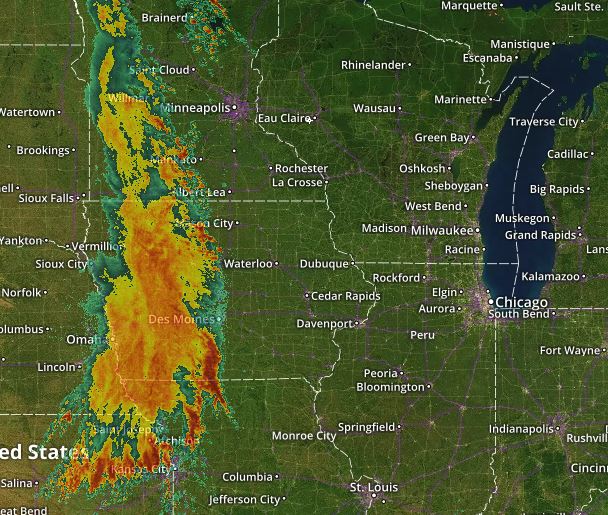
The forecast had been rain for a couple of days. The weather radar looked ominous Saturday at 4 a.m. It was heading our way.
At sunrise I went to the garden to beat the rain.
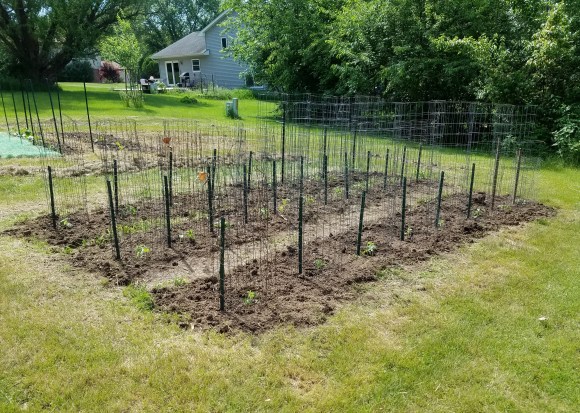
Our garden is big enough to engage a person for hours — weeding, harvesting, planting, mulching, fence mending and the like. It never ends. I think there, mostly about our relationship with the environment and toward a food ecology, the dreams of gardeners.
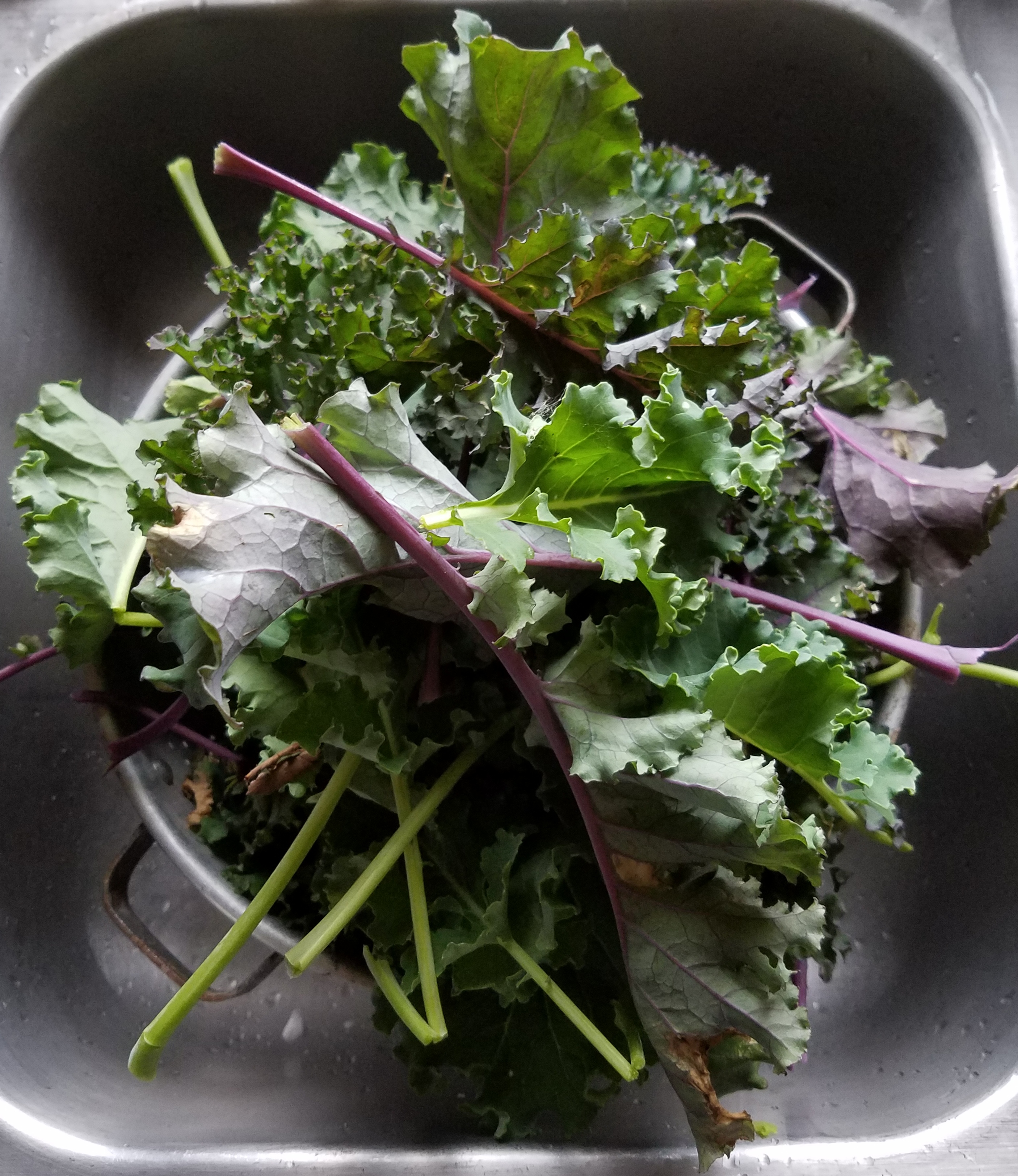
The work was to mulch tomatoes, weed carrots and beets, clean up kale leaves bitten by intense heat, replant seedlings where they failed and organize for the next planting session. The mulch collected this week is about half used. Before I plant, it must all be relocated to a final destination to clear space for peppers and beans. There is another day’s work waiting today.
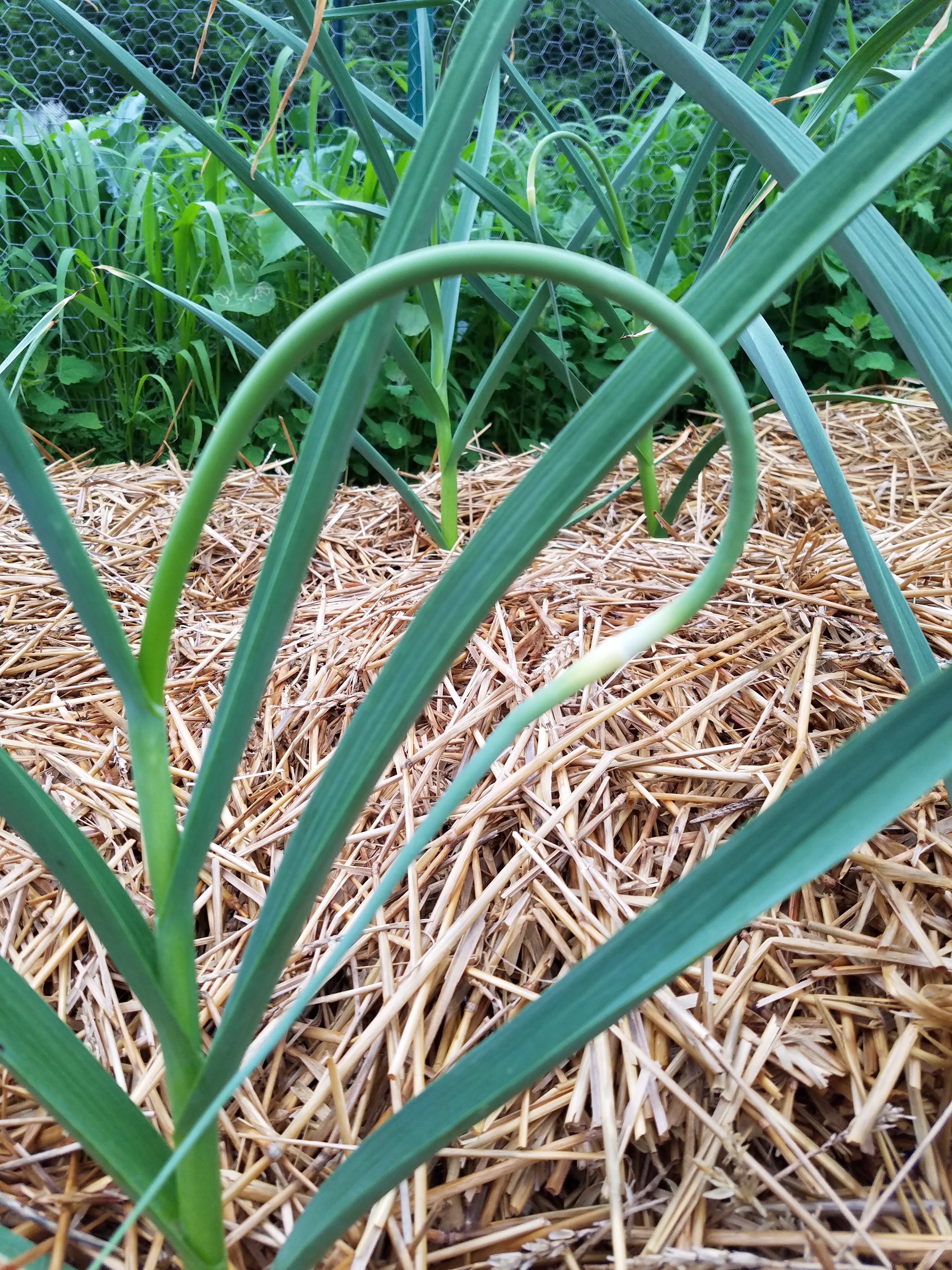
Garlic Scape
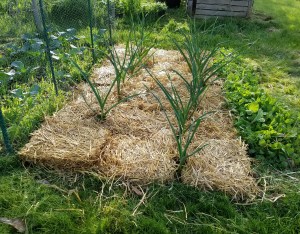
The garlic crop has been exciting. Scapes began to appear and as soon as they twist back around on themselves I’ll cut them off, to enable the bulbs to benefit from the plant’s energy, and to use them in the kitchen. The seeds were planted seven months ago so it’s great to see we’re getting closer to harvest.
The cloud formation I saw on radar broke up before it got to us. Where I expected rain, there were blue skies. I got out the hose and watered.
Like it or not, I must deal with my physical capabilities. I’ve been blessed with good health most of my life. When I had to give up running a couple years ago things began going downhill. What I mean is there was a perceptible decrease in flexibility and energy coupled with selected aches and pains in my shoulders, feet and hands. The foot pain is likely related to running although I’ve been spared the joint pain runners experience in their knees and hips. My shoulders? One of the transient doctors at the nearby clinic diagnosed arthritis, but I doubt it. I’ve learned to be careful not to injure myself with lifting. My back is sound. I get along.
Kale Harvest
The main thing is dealing with energy levels. Instead of staying in the same place to finish a job I’ll take a break and go walking… to the garage, to my desk, to the kitchen. Sometimes I sit in the recliner for a while. I get back up and return to the garden. It’s a hodge-podgey way of doing things, however, I believe variation in work routine staves off further bodily ailments. It’s likely good for my mind as well.
The spring share at the CSA finished on Monday. The ice box is filled with fresh greens and rhubarb. On deck is rhubarb something, a vegetable broth for canning, and spinach daily until the kale avalanche arrives. I did not barter for a summer share at either CSA in order to survive mostly from our garden. Each year I become a better grower. It enables us to sustain ourselves with fresh produce while the season continues.
Wednesday I worked from sunrise until 2:30 p.m. in the yard and garden. Ambient temperatures rose only to 89 degrees, and the relatively cooler day enabled me to work longer.
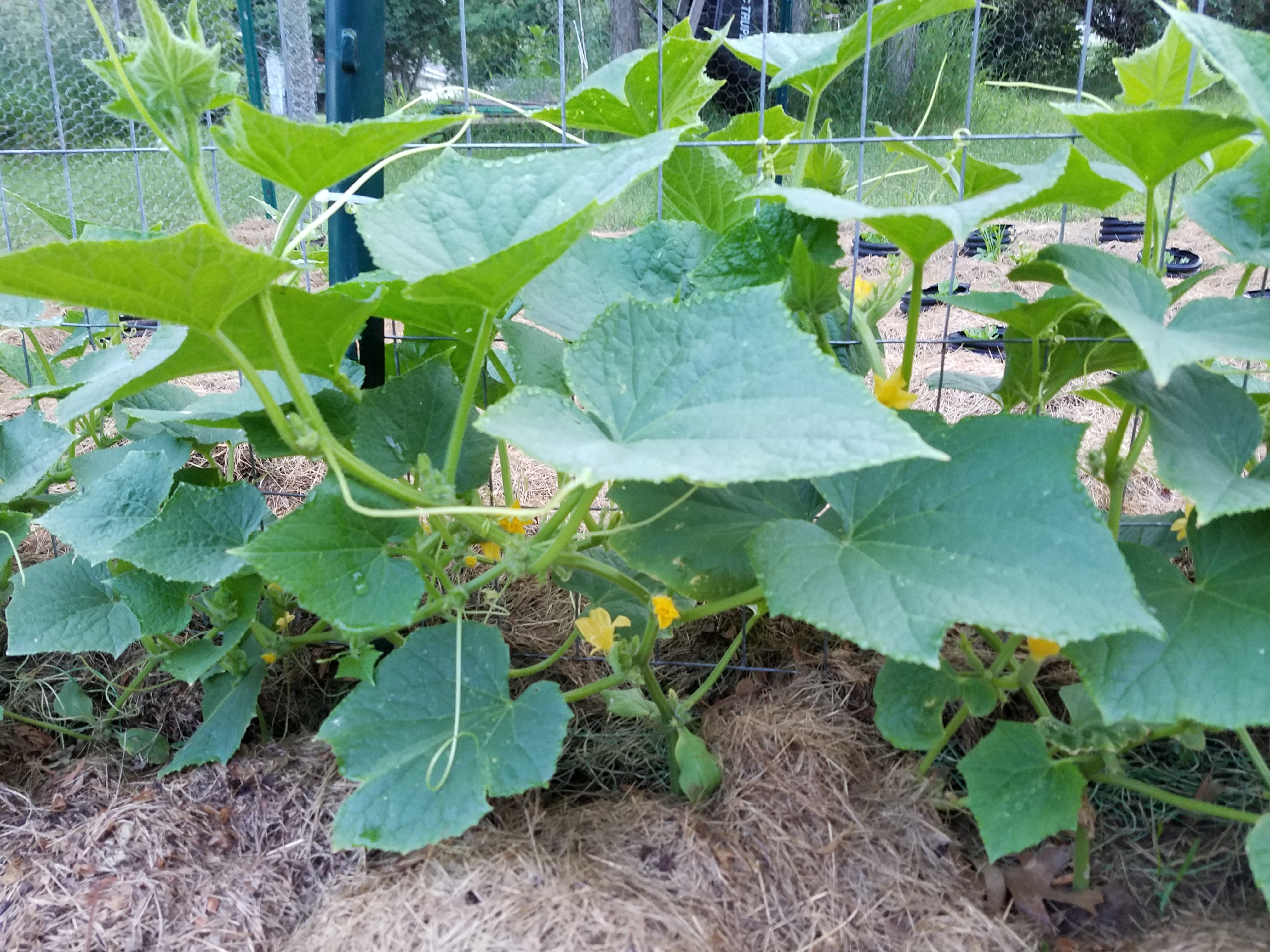
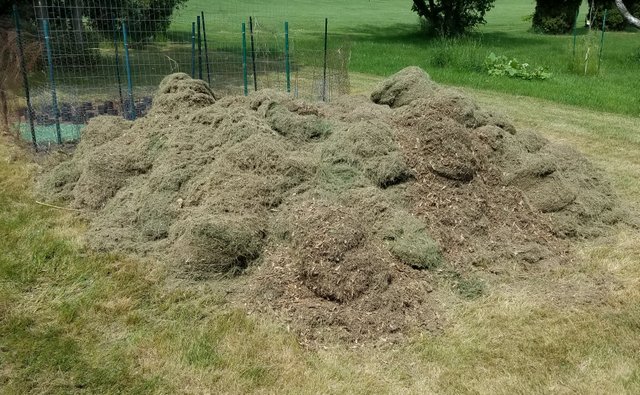
Early hours were harvesting spinach and spring onions, weeding, planting Red Rocket peppers, tending seedlings in the garage, and installing nine feet of fencing for pickling cucumbers to climb. The major work was preparing the yard for mowing and then mowing with a grass catcher to harvest mulch for the garden. It takes about four times as long to mow when collecting clippings.
It was a big project.
Riding the mower around our 0.62 acre yard provided a chance to inspect everything. There’s more work to do besides gardening.
A greenish moss is growing on the north side of the house. Dead tree branches requiring trimming. One of the apple trees looks like disease is spreading as the yellow leaves already fall from the branches. The lilac bushes are overgrown and require a chain saw to cut them back. The mulberry and pear trees are forming fruit.
The lawn is reverting to what it was before we built and installed a lawn. Compared to the chemically treated neighboring yards, ours looks a step out of the prairie — greens and browns blended together compared to lush green. After mowing and grass collecting it looks like a hay field. There is a lot of yard work after the garden is in.
After five days in a row off work, I return to the home, farm and auto supply store today and tomorrow. Friday is a farm day then four days in a row off to work on the garden. Once the mulch is laid and peppers and beans planted the initial garden planting can be called done.
For the second day in a row ambient temperatures reached the high 90s with a “feels like” over 100 degrees. Farmers and gardeners were up at sunrise and curtailed outdoor activities by noon — a simple adaptation to unseasonable weather.
It was too damn hot.
While picking up the final spring share at the farm a fruit farmer friend arrived. We talked about the weather, then joined two farmers who were loading the truck for share deliveries in Cedar Rapids. They read my new T-shirt, which is red and says, “The United States of America Established 1776.”
“Very patriotic,” they opined.
The irony is the tee was made in China. They offered to screen print the farm logo on a new shirt at the next farm get-together. After the farmers left for the city we discussed politics until we gathered our shares and returned home.
I left seedlings outside in the morning, but well before noon, the pepper plants began to wilt. I brought them inside and they perked back up in the moist darkness. When I watered toward sundown the tomatoes, eggplant, cucumber and zucchini seedlings looked healthy — giving them plenty of water appears to be the key to survival. One kale plant looked worse for the heat and unlikely to be revived. Regrettably, I turned all the extra kale seedlings into salad the day before, so there will be a hole in that row.
Concerned about my ability to stand the heat, the afternoon and evening was spent indoors reading, cooking and working on my memoir. There is a lot of that kind of work to do and if the weather won’t cooperate with my gardening wants and needs, a person has to do something.
The good news is the forecast today is for highs in the high 80s. I’ll be out there as soon as the sun comes up.
Despite extreme heat tomatoes were planted yesterday.
Temperatures set new records throughout the state. Here it was 96 degrees by noon. I began planting at sunrise and finished around 10:30 a.m. when it became too hot. Snow last fell on April 15, so spring, if we can call it that, lasted about five weeks.
It is shaping up to be a punk vegetable season although it’s far from over. The heat stresses cucumbers and zucchini requiring a close watch to make sure they get enough water to survive. Likewise tomatoes. Some plants won’t survive and I reserved the extra seedlings to get through initial planting and establishment. Gardeners will adapt as best we can to weird and unseasonable weather. It’s what we do in a time of global warming.
Tomato Worksheet
That said, the tomato seedlings survived planting and the heat.
This year I planted eight varieties, Martha Washington, German Pink, Brandywine, Soldacki, Nepal, Red Pearl, Taxi and Clementine. If they all make it, harvest should include a variety of textures, colors and flavors.
The process was to dig three yard wide trenches in the designated plot. Using a hoe I broke up the clods of dirt then fertilized. Next I used a garden rake to further break up the dirt then fertilized again. Finally I smoothed everything over with a rake.
Down the center of the plot I spaced Soldacki and Brandywine seedlings about 18 inches apart — a bit close together but it allowed a dozen plants in the row. These varieties will produce fruit that weighs less than a pound.
I began the east row with German Pink. This variety grows fruit up to two pounds and I planted all five seedlings that germinated, spacing them more generously. It is one of my favorites because of the large slices it produces. Next I planted four each of Taxi, Red Pearl and Clementine bunched together. Each stake held two cages in which two each of the seedlings were planted together. These three varieties are smaller, with fruit weighing from 20 to 150 grams each.
In the west row I planted four each Nepal and Martha Washington spaced at 24 inches. These slicers will produce fruit weighing less than a pound. It’s the first time trying them both.
With seedlings planted, next is mulching. I need to harvest grass clippings for that, which got pushed off because of the heat.
Farmers Market Asparagus
After planning to skip the Solon Fire Fighters Pancake Breakfast, I showered and went to town after five hours in the garden. The morning crowd had dissipated so there was no line and plenty of food.
The big news was announcement of a $5 million fund raising goal to build a new fire station near the Dairy Queen. According to the handout, the building will be funded by private donations, donated goods, services and labor, and via loans. The goal is to raise the money by Jan. 1, 2020, although $5 million is a lot for our community comprised of a small city and four townships. “We’ll donate something,” I told first assistant chief Scott Wolfe.
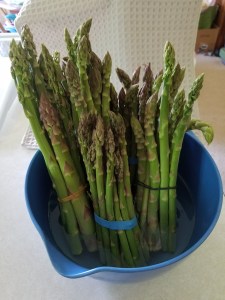
It’s been a bad spring for asparagus with none from the farm this year as the farmer tries to reclaim her asparagus field. To make up for it, I went to the farmers market in the county seat on Saturday and found some. We featured it for dinner last night — steamed with butter and a seasoning mix. It was fit reward for a hot, tiring day.
Plants and seeds are going into the ground — the main spring event in a kitchen garden.
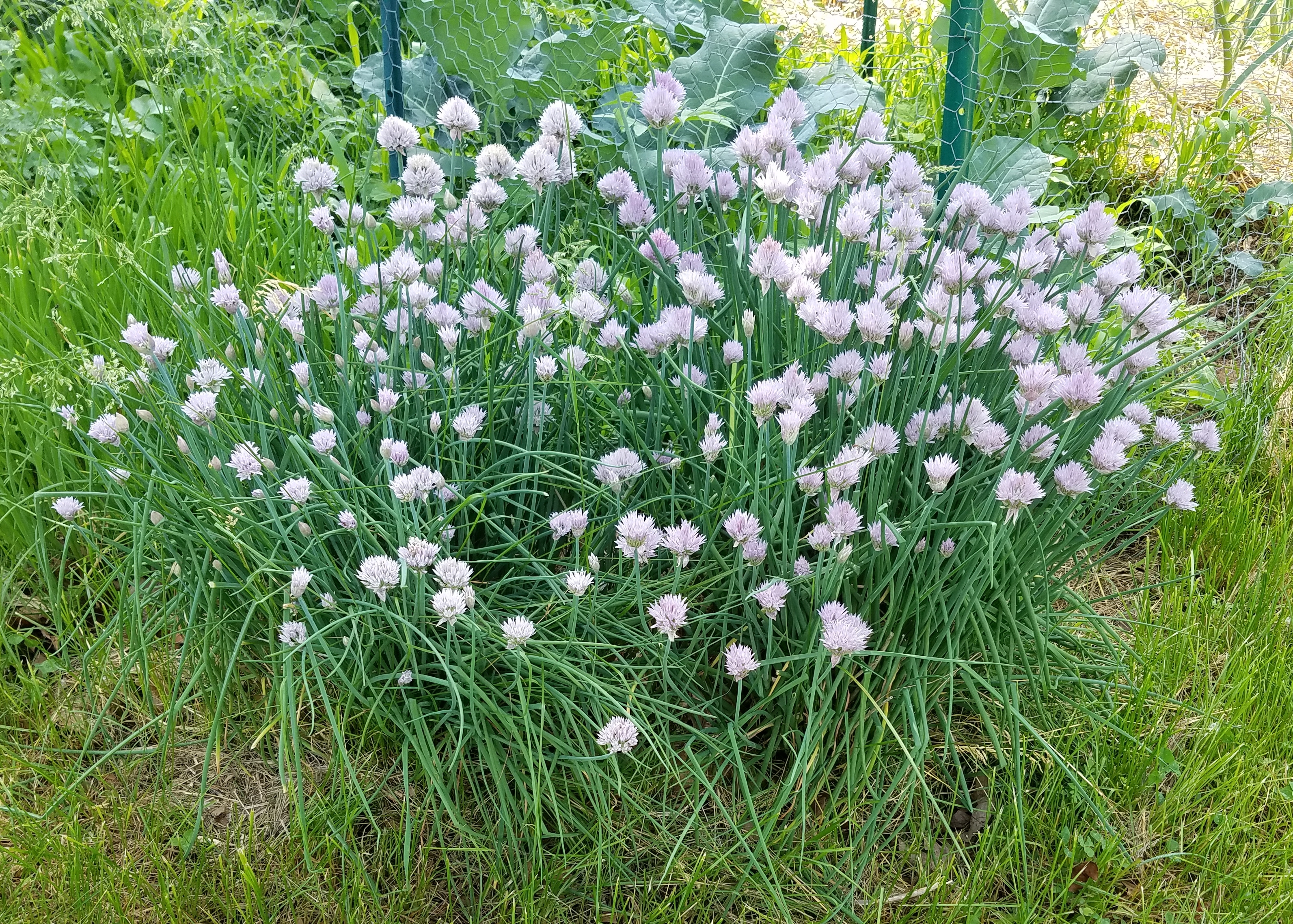
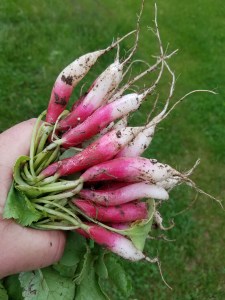
Harvest is ramping up with d’Avignon radishes, spinach, cilantro and chives heading to the kitchen.
I planned cilantro for my gardener’s lunch, and the spinach has been cleaned — some frozen and some in a big, recycled plastic clam shell chilling in the ice box. Chives will be for dinner and the radishes for snacks and salads.
This is why we have a kitchen garden.
Yesterday I spent ten hours working in the garden. Big projects were making a space for zucchini and Marketmore cucumber seedlings, and mowing the lawn for the grass clipping mulch. I removed seedling rings from the kale, mulched garlic with a bale of wheat straw, and studied small sprouts to determine which were from planted seeds and which weeds. It’s not clear. Weeding and mulching are so commonplace it’s almost not worth recounting. It’s assumed.
Garlic Patch
Weather was perfect for being outdoors.
The harvest began before the garden is fully planted. Tomato and pepper seedlings mature in the greenhouse while celery plants are ready to go into the ground as soon as I can find time and a space. There are pickling cucumbers and green beans to go somewhere, winter squash to plant. The combination of planting, harvesting and cooking — kitchen gardening — will continue throughout the growing season.
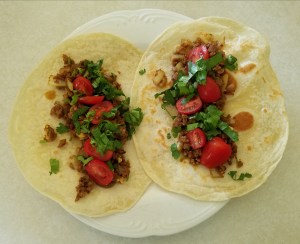
I stopped around noon and made lunch — fresh cilantro tacos.
Fresh Cilantro Tacos
Using pantry ingredients — storage onions, garlic, recipe crumbles, salt and home blended seasonings — I made a filling. I cooked tortillas in a large frying pan, and finely cut cilantro stems and ribboned the leaves. I topped the filling with halved grape tomatoes from California and fresh cilantro, which made the dish.
I bartered for a spring share at the farm so there are bags of greens in the ice box. We had a tub of firm tofu, so I decided on stir fry for dinner. Making stir fry is a way to use up vegetables.
I started two cups of raw brown rice in a quart of home made vegetable broth. I fried the tofu in olive oil, cut in half-inch by one and a half inch square slabs, then set them aside.
Included in the stir fry were baby kale (stems and leaves), carrots, onion, celery, garlic, pine nuts, halved grape tomatoes, red cabbage, a teaspoon of lemon juice and salt. Once the vegetables were soft, I spooned the mixture over a bed of rice and topped with spring onions and chives. It made four servings.
I texted Carmen to get the work forecast at the farm on Sunday. A light load of seedling trays is planned. After farm work, it’s back to the kitchen garden.
Flowers began to fall from lilac bushes. Air is fragrant with sweet smell.
It won’t last long. It is spring, which continues as it has for millennia, reminding us we are but a speck of dust in time by comparison.
It’s the last day before the end of my hiatus from the home, farm and auto supply store.
Two days a week isn’t much to work. When quitting time on the second day rolls around I feel I accomplished something but am not committed. That’s what I want.
I’m reading Natchez Burning by Greg Iles. Part of me likes it and part doesn’t. What I like is it was checked out from our digital library during recent rainfall and I’m reading it on my mobile device. It’s an easy read, a thriller. The story moves along and while I’m reading it’s easy to finish a chapter. What I don’t like is the obvious handles which are part of the narrative. Characters, settings, the former music store, iconography of popular culture — it all seems too easy a construct and such awareness while reading is a distraction. There are thousands of on line reviews of the book, so it’s easy to find people who agree with me. Many others liked the book. Because of the convenience and quick pace I’ll read on for now. If I don’t finish before the lending period is over, I’m not sure I will renew. Life’s long enough to try it, but too short to follow the novel to its conclusion through sheer determination.
Rain fell and it’s been good. Green up is here and the clean look of leaves and branches before insects get to work is inspiring. Time to weed the garden and harvest spinach and spring onions.
Some garden plots need weeding, others need digging and planting. The lawn needs mowing for the mulch grass clippings and ground up leaves will make.
I took two days vacation from the home, farm and auto supply store to get some of this done. There are seven full days between now and when I return to tackle spring planting and yard work. Rain is forecast Wednesday. I know what to do today.
This is also the first day of early voting in the June 5 primary. My voting plans are flexible. Voting at the polls on election day is my preference, however, if I happen to be in the county seat I’ll head over to the auditor’s office and vote early. My mind is made up.
Once I mow the front yard, I’ll place political signs for candidates I support near the road for neighbors to see. According to a Des Moines Register article, Iowans don’t mind political signs in a neighbor’s yard.
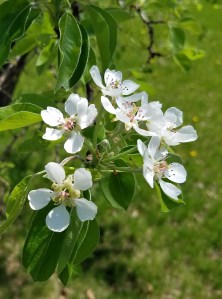
It doesn’t look like there will be apple blossoms this year. Last year was a big year for apples and recovery often takes two seasons. Will have to make the most of the pear tree which is currently in bloom, and leverage my work at the orchard for fruit.
Sauteed Bok Choy with Lemon
Last night I split bok choy lengthwise and sauteed it in butter and olive oil for a vegetable course. At the end I added lemon juice — too much lemon juice. We puckered up and ate them anyway.
Each year’s trace is unique, and the same. Bok choy is a reminder of spring we get from Carmen’s farm. She grows it in the high tunnel which we leverage when we buy a spring share. Once spring bok choy is finished, we move on to what’s next as Earth orbits the sun.
In the vast expanse of space we make a life six inches from our nose… with dinners at home and days in the garden in a sense of belonging. What else are we to do but live in concert with family, farmers, neighbors and distant energies of governance?
Answering that question is a life’s work — a way of sustaining our lives in a turbulent world.
Friday is my day to work with Farmer Kate near Iowa City.
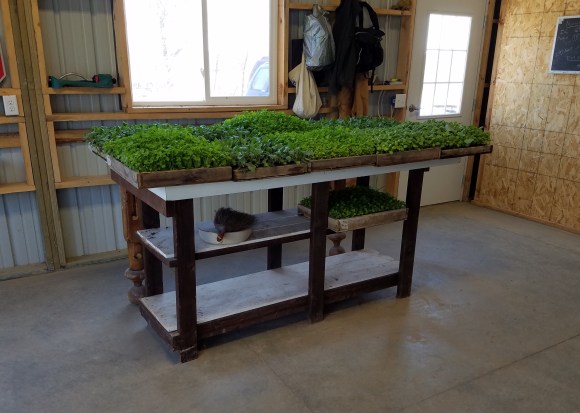
I made 30,288 soil blocks for plants at Wild Woods Farm this season. Add in additional work at Sundog Farm and my total production was 59,688 soil blocks since Feb. 25. That’s a lot of vegetable seedlings.
We’re planting lettuce, squash, cucumbers and zucchini which indicates we are more than halfway through spring production. Last year I finished at both farms on June 25 to get ready for the apple season beginning in August.
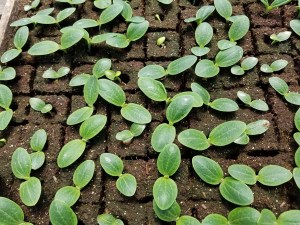
Cucumber Seedlings
Soil blocking is specialized. I use unique tools and soil to make the 72 and 120 block trays. This is my sixth year and I’ve incorporated soil blocked seedlings into our kitchen garden. Better propagation through this process makes a difference. Soil blocked seedlings are a part of growing better plants which produce great tasting vegetables. With retirement, healthy seedlings combined with additional weeding and better cultivation should result in higher yields. Importantly, it is all about freshness and flavor.
I receive fair compensation for my farm work. Over a few years we arranged a part barter – part cash settlement that works out for both parties. Each season has been a little different. This year I exchange labor for standard CSA shares in the spring and fall, then secure crates of tomatoes, potatoes, peppers and onions for preservation and storage. If my labor is more than that, I get a cash settlement. It is probably unnecessary to place a monetary value on these arrangements. Vegetable shares supplement our kitchen garden which produces much of what we need along with some specialty crops not grown on the farms. In turn, sourcing some crops from the farms reduces work in my garden. The arrangement is part of an ecology of food our household developed over time.
Over the course of spring, soil blocking at the farms has become part of our culture. I intend to continue as long as I can and the farmers are willing.



 Journey Home
You must be logged in to post a comment.