
Editor’s Note: This is a work in progress for a chapter in my autobiography titled Toward a Kitchen Garden.
Mother was a good cook based on the meals she served us while growing up. She took home economics in high school yet learned most of her skills related to cooking at home. She would make dishes for Father that reminded him of his southern roots, like creamed beef on toast. I remember her meatloaf served with mashed potatoes and a vegetable, her beef soup served on rice, and carrots and peas. The meatpacking plant where Father worked had a full-service butcher where employees got a discount. There were experiences with organ meat (kidneys and liver) which was inexpensive. This suggests a mostly meat as the main dish diet.
Mother was the first woman I knew who prepared tacos in her kitchen. In retrospect, a contributing reason she took up this dish was the introduction of pre-packaged tortillas and other “Mexican” ingredients into our local grocery store before the advent of Mexican food sections like one can find at a supermarket today. It was another chance to use many ingredients normally found in her pantry to make something different and special.
When we ate outside food, Chicken Delight was walking distance from our home. I remember ordering take out or delivery pizza from them more than chicken. When we ate out as a family, it was at a restaurant like the Bell Eat Shop where I mostly ordered a hamburger and fries. We had a long tradition of dining at Riefe’s Restaurant. Smelling their kitchen from our rented home across the alley is one of my earliest memories. Eventually, each of these restaurants closed, with Riefe’s closing permanently on Dec. 23, 2015.
Those things said, I do not have strong memories of what or how Mother cooked, or about what food I ate before leaving for university. Mother kept me out of the kitchen while she was cooking and brought serving dishes to the dining room table where the family gathered for a meal. I did not develop an interest in Mother’s recipes.
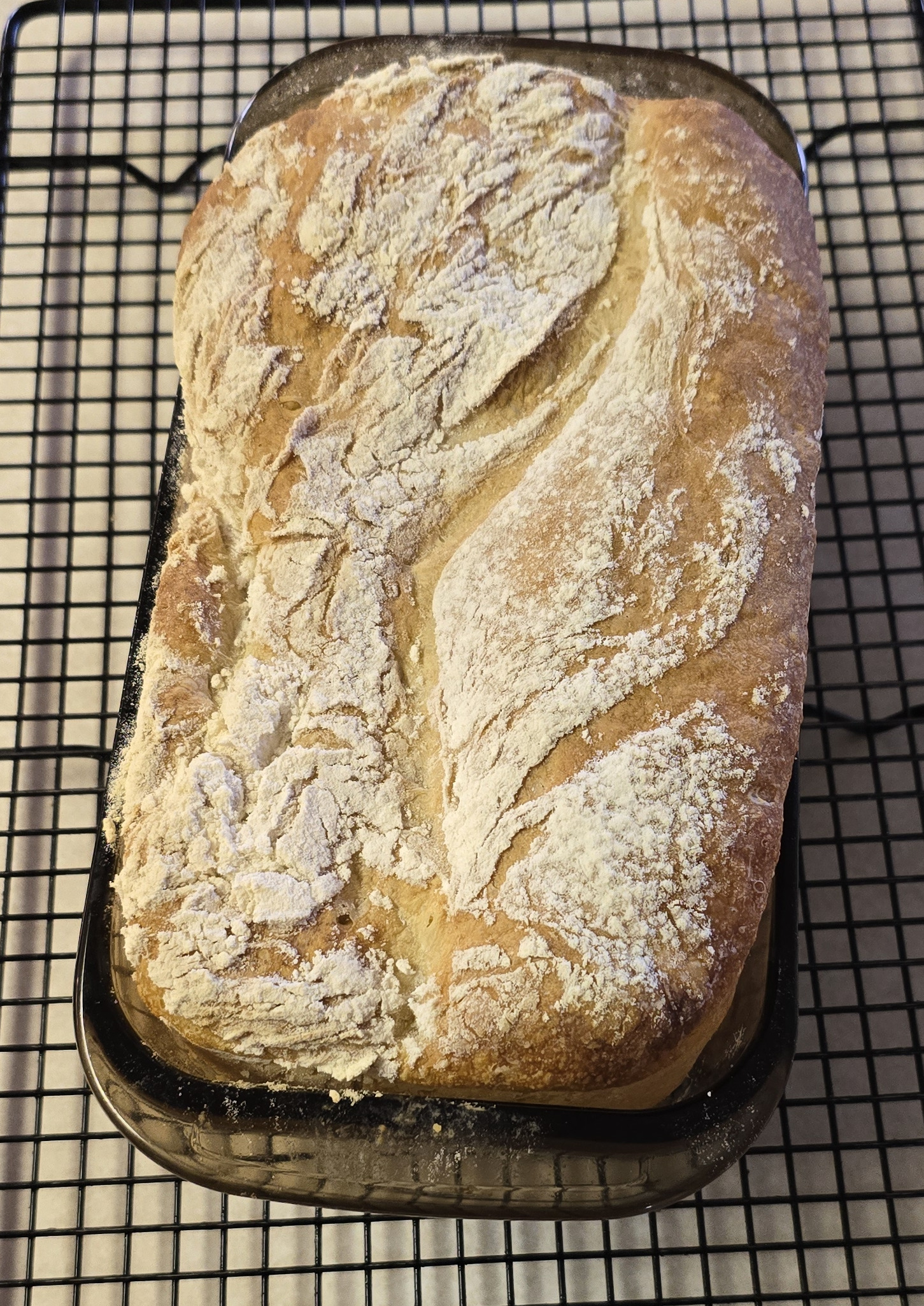
I began cooking in my junior year at university. I lived in a trailer home with my high school friend Dennis and tried various dishes to save money and avoid eating out. I tried baking bread and didn’t understand how yeast worked. I used the resulting loaf as a door stop for a while. What food I made during the rest of my undergraduate years is lost in history.
At some point I learned to make tuna and noodle casserole. I served it to Mother before leaving for military service, and then when I had some friends over to my apartment in the military. I liked the taste of it, yet it was not a sophisticated dish. It was what I knew how to make.
Perhaps my most influential culinary experience was in South Georgia. I worked on a logistics project in Ochlocknee in 1997-98. I decided to stay in the nearby county seat at a motel with cable television—a needed escape after working 14 to 16-hour days. I had access to cable television’s TV Food Network.
I developed an insatiable curiosity about food and its preparation. Emeril Lagasse, Mario Batali, Susan Feniger, Mary Sue Milliken, Julia Child and others prepared food on screen, and I was captivated, watching episode after episode on Georgia weekends. Food is a common denominator for humanity, and I couldn’t get enough. My involvement in the local food movement today has its origins in the contrast between that uninviting place in South Georgia and my food escape. There is a broader point to be made than one person’s transient addiction to a television network while away from home. It is that American food pursuits, and the economy around them, continue to be based partly upon curiosity.
It seems clear that American curiosity about food and food preparation drives what we find in markets. It is a commonplace that corn syrup can be found in every aisle of a traditional mega mart, but it is the endless combinations of diverse ingredients that attract our attention then get us to buy. By developing and marketing new things—for example, quinoa mixed with chocolate or chicken, troll or pole and line caught tuna, gluten and GMO free products, and a host of others—purveyors of the consumer economy seek to engage us through the current sales cycle. I suspect we will stop buying at some point, returning to staple foods, or moving on to what the food marketers deem next.
I began using a process I now call “improvisational cooking.” What does that mean? There are two broad categories of cooking. Most regular dishes and meals allow for variation in taste, ingredients, seasoning, and cooking methods. Others, like baking, do not. It’s what I’m doing today, and I believe how many Americans organize their cuisine. It means creating a food ecology from which I pull in elements from our garden, local farms, and area markets to prepare meals based on what’s readily available.
Occasionally I purchase items on-line or via snail mail when I want something that’s not locally available. For example, I recently bought bags of dried Mexican-grown Guajillo chilies and Mexican oregano on-line. At the end of my cooking day, it is a never-ending process that produces, as Tamar Adler called it, “an everlasting meal.” Exploring the symbiosis between traditional and improvisational cuisine is a popular topic when talking to friends and neighbors about cooking.
Improvisational cuisine draws from the broader society. For example, when I make tacos today, typically for breakfast, they are more improvisational than Mother’s were, but use some of the same techniques. I buy raw flour tortillas to cook as I need them and occasionally make my own with corn Masa. The tortilla is a delivery system for a pan-fried amalgam of fresh vegetables, herbs and spices, a sauce, and protein topped with salsa or hot sauce, fresh tomatoes in season, and a form of soft cheese. It is a recognizable dish even though the ingredients vary from day to day and from season to season.
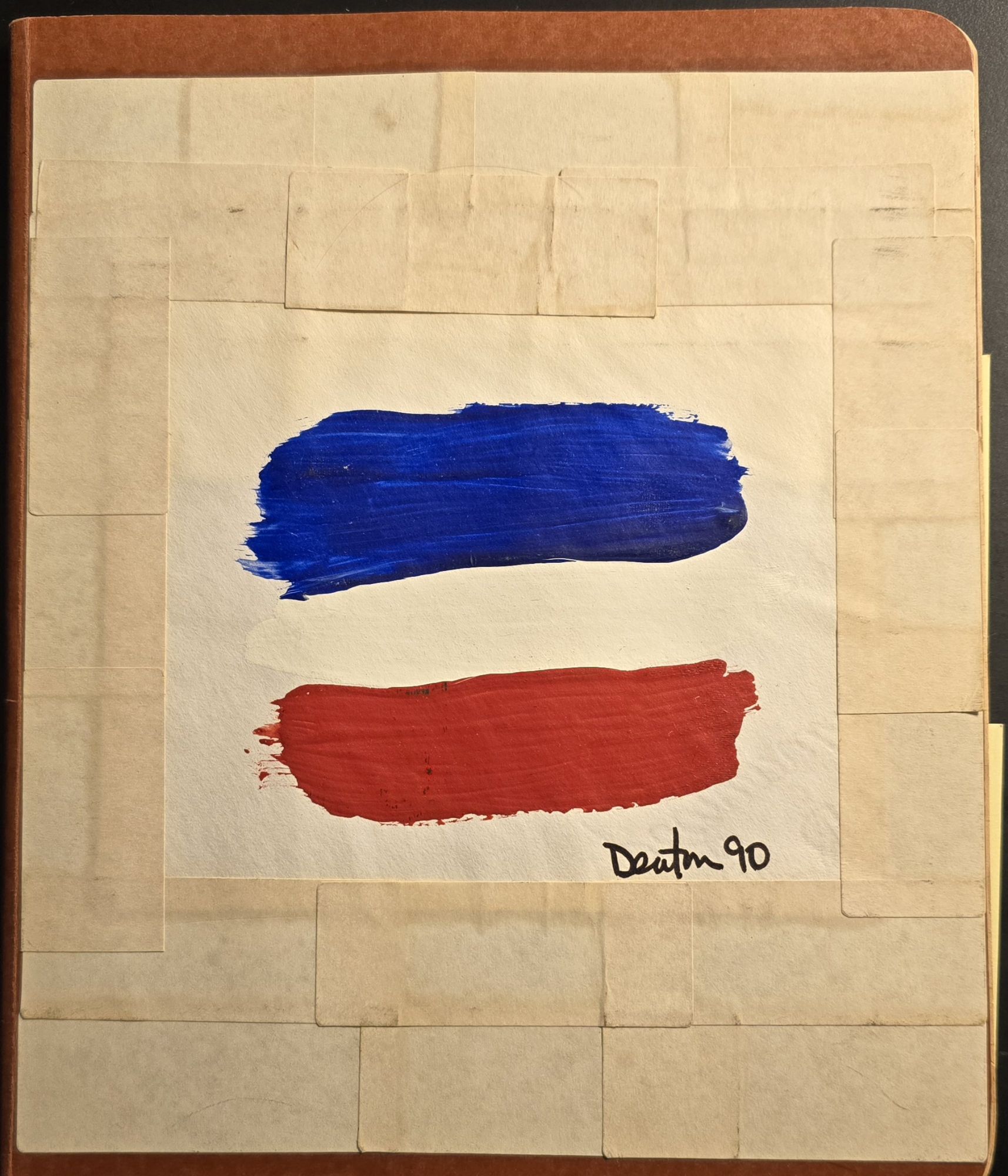
I do use recipes. My go-to recipes are memorized or written in a red spiral-bound notebook I bought on vacation in Stratford, Ontario. In the back I put a few loose-leaf handwritten recipes from Mother and my maternal grandmother. My go-to cookbooks are Julia Child’s Mastering the Art of French Cooking, Joy of Cooking by Marion Rombauer Becker, and a couple of others. I am downsizing my collection of hundreds of cookbooks yet kept three shelves on display in my writing area. The influence of Mother and Grandmother is more one of technique rather than a particular dish.
An example of a cooking book I read cover to cover is Tamar Adler’s An Everlasting Meal: Cooking with Economy and Grace. More than anything, she presents a narrative about cooking that goes beyond a single meal or dish to how we connect them together. I also read Anya von Bremzen’s Mastering the Art of Soviet Cooking: A Memoir of Food and Longing. Again, for its narrative more than cooking tips.
I studied church and organizational cookbooks extensively. I adopted very few recipes from them. I keep cookbooks that have some sentimental value, ones in which recipes by friends appear, and a set of a dozen or so from my old neighborhood in Northwest Davenport. The purpose of acquiring these cookbooks has been to understand the development of kitchen cookery beginning in the 1950s and ’60s. People used a lot of gelatin and lard back in the day, that’s for sure.
There is a lot of good stuff in cookbooks, although a lot of repetition as well. Over the years I’ve been enthusiastic about certain chefs — Child and Rombauer Becker, Rick Bayless, Mario Batali, Giada De Laurentiis, and Tamar Adler. I’m hoping to find new inspiration in Anthony Bourdain, José Andrés, Sally Schneider and Nigella Lawson. In any case, the result I envision is a new repertory of about 25 main course recipes that have predictable nutritional value and can be made with mostly local ingredients. I also hope to learn new ways to prepare vegetables. Whatever I learned from studying cookery reduces itself into repeatable main dishes made using understandable preparation techniques. A family only needs so many recipes.
I am now lacto-ovo-vegetarian which requires and fosters a constant dialogue about nutrition, cooking, ingredients, flavors and diet. Being vegetarian strips away most traditional dishes, like the ones I ate while growing up. Occasionally we mimic meat dishes in our household with the growing number of manufactured meat substitutes. If we make a pie chart of our diet, those meat substitutes would occupy a tiny slice. I have also been diagnosed as diabetic, which means closer monitoring of blood sugar as well as related dietary changes.
The cuisine we developed in Big Grove Township focused on techniques to use readily available ingredients to make repeatable dishes. We used to regularly eat pasta, pizza, macaroni and cheese, bread, chili, soup, casseroles, toppings with rice, and manufactured non-meat burger patties. Fresh and frozen vegetables are basic. Fruit is seasonal and desserts infrequently made or purchased. With my spouse becoming vegan, elimination of dairy products became my newest learning opportunity as a cook. I continue to develop that list of 25 main course recipes.
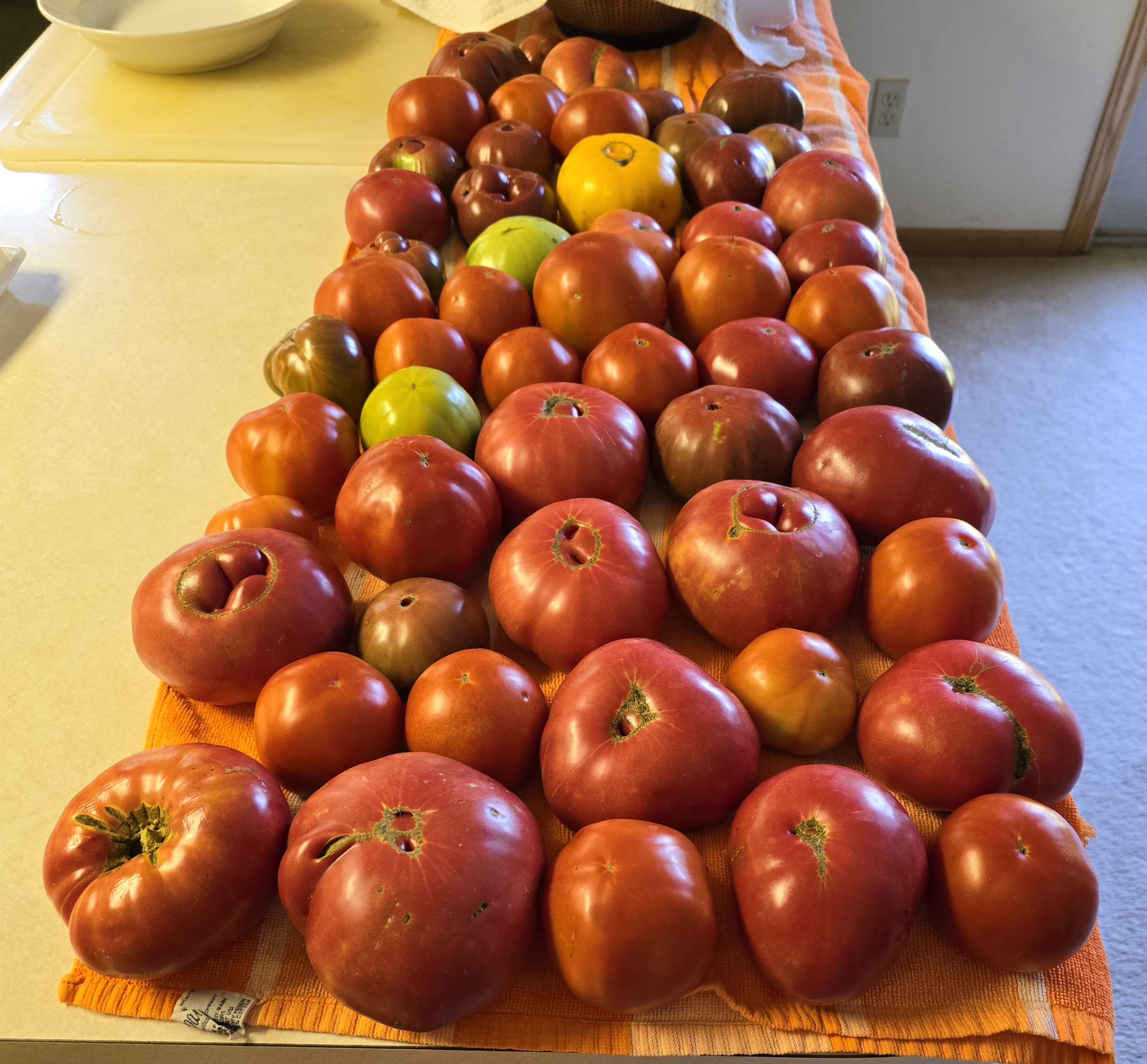
When the garden comes in vegetables dominate the plate. Tomatoes are a favorite and we have fresh with most meals while they last. When lettuce comes in, we make big salads for dinner. For the time being, I don’t bake bread very often, eschew meat and meat products, and use only a few manufactured products for their ease and serviceability within the context of our cuisine.
Most nights it’s easy to get a meal ready for dinner. Our repertory includes easy and complex dishes which satisfy if done right. I prepare dinner for both of us four or five nights a week and we are on our own for breakfast, lunch and snacks. It works.
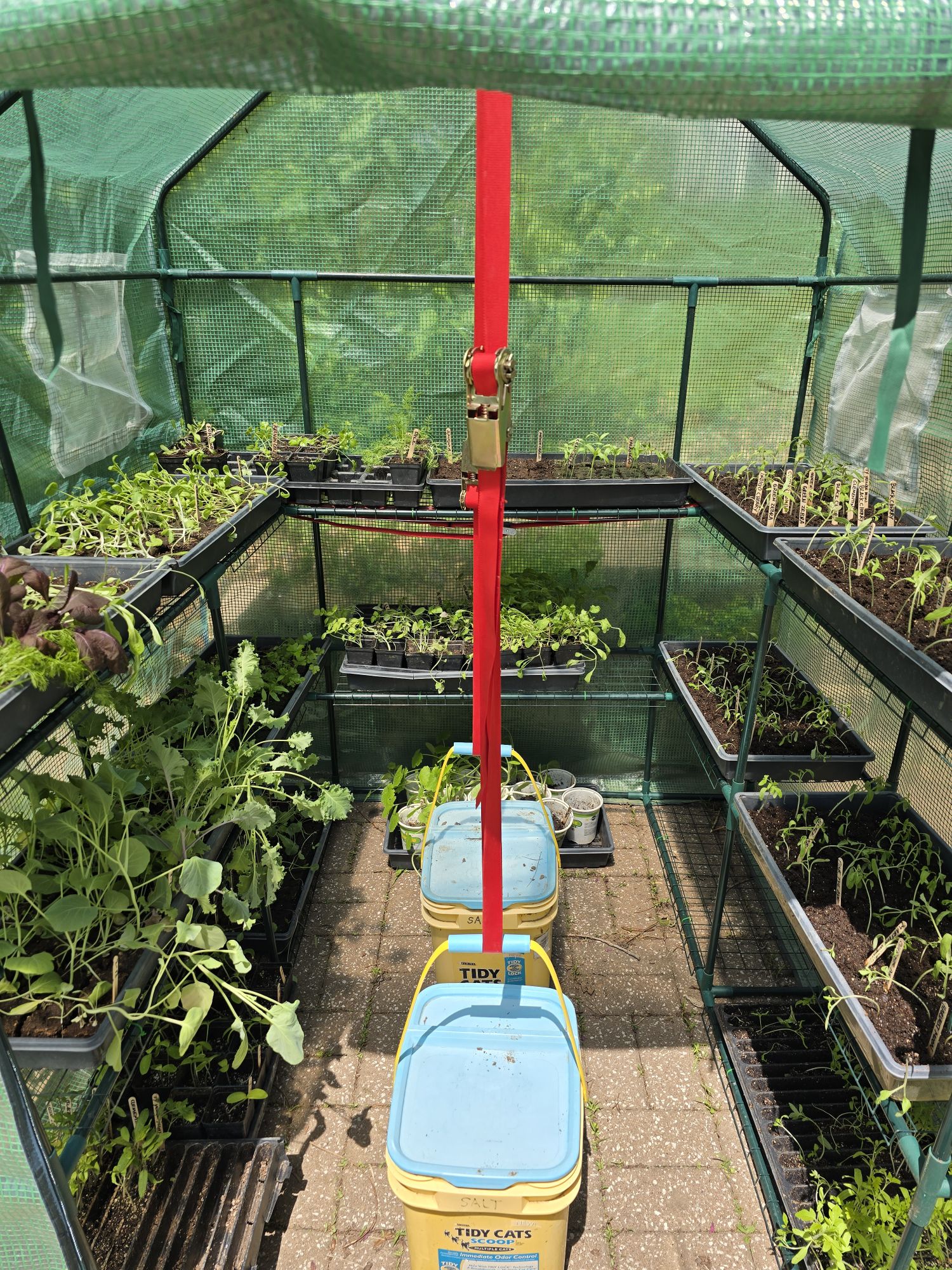
If we are serious about sustainability and local food systems, we must get beyond curiosity, and distraction from the challenges of a turbulent world. We must get to the production of things that matter in our lives on the prairie. At some point during the last ten years my talk about a “local food system” became talk about a “kitchen garden.” The goal of having a kitchen garden is to produce food aligned with our culinary habits that helps meet a basic human need. We have to eat. It may as well be enjoyable. We’ve all eaten our share of food that doesn’t please our palate. A kitchen garden should address that.
A kitchen garden is a reaction to the culture of consumerism. An important distinction is reaction, not rejection. I will continue to buy black peppercorns, nutmeg, vanilla bean extract, refined sugar, and all-purpose flour milled elsewhere. How else will we get such necessary ingredients?
While I am a local foods enthusiast, and my diet centers around being that, I am not doctrinaire. Other people must consume the results of my kitchen work. Despite several issues with his behavior and written output — including bigotry, racism and patriarchy — I like the Joel Salatin idea of a food shed. That is, secure everything one can that is produced within a four-hour drive of home. I am also not doctrinaire about “food miles.” I’ve written often on the topic and if we work at it, we can secure most of our food produced within less than an hour’s drive from home.
For the time being, I’m mostly ovo-lacto-vegetarian, which means consumption of dairy products and the good and bad that goes with them. I’m not of one mind on this. For example, I’ll buy a gallon of skim milk from the local dairy 6.2 miles from my house, yet I’ll also stock up at the wholesale club for half the price. I take local eggs from the farm when offered, yet I also buy them at the club. Maybe it’s best to become vegan and eschew dairy altogether. I’m not there yet.
In a free society, people should be able to do what they want with only minimal restrictions to protect the commons. In our consumer society, that is a joke. For a local food system to be sustainable beyond the initial curiosity of trying it out, something fundamental must change. It is a need— perceived or real— to change from the act of consuming to the act of production. That involves a lot of hard work, and I’m not sure it could be done in the current society.
In my kitchen garden cooking remains a work in progress.





 Journey Home
You must be logged in to post a comment.