LAKE MACBRIDE— First shift produced two quarts of tomato juice, four pints of tomato sauce and an experimental jar to see how my pickles take to water bath processing. There are still a lot of tomatoes to process.
I delivered frozen bell peppers to a farm where one of my work for food ventures is located, and stopped by the orchard to drop off a lead for some cheese curds. I bought a jar of sweet, dark cherry preserves on my employee discount.
Summer is waning, and I just took more harvest work to earn some money for the tax collector. Staying busy with the changing seasons is easy. There may be fewer posts for a while as the unofficial end of summer comes this weekend.
Thanks everyone for reading. It won’t be long until my next post. Meanwhile, I’ll be out in farm fields trying to earn a living.
LAKE MACBRIDE— Two batches of pickles are fermenting in crocks downstairs, the second started three days after the first. The rule is to place cucumbers in the brine and let things get started for three days before checking. There was scum to skim on the first this morning— evidence the pickling process is proceeding as expected. The reason for a second batch is a local grower had excess cucumber seconds which were offered and taken to serve my dill pickle addiction.
Eggplant is abundant. I peeled and cut three into half inch rounds. They were baked for 15 minutes at 425 degrees, cooled and then frozen and bagged for future use, most likely in eggplant Parmesan. By then, the freezer was reaching capacity, and eggplant is not an everyday preference.
Last processed yesterday was two tubs of broccoli. This is part of a work for food barter, and unexpectedly came about while discussing seconds and surplus with a grower. All told, it took me about four hours to process the two tubs with a total yield of 20+ pounds frozen. The first tub, which yielded 8-1/2 pounds, was returned to the grower as compensation for the produce. I kept the second, added two heads I already had in the refrigerator, and that was the balance.
It’s a shame we had to compost the stems, as they are some good eating. If better organized, I would have made a big batch of soup stock using carrot, onion, celery, bay leaves and the broccoli stems and canned it in quarts. Our household uses a lot of stock.
The squash beetles mentioned yesterday avoided the butternut squash seedlings and congregated on the withering acorn squash plants. I need to study natural pesticides before I pull those vines, as the bugs will likely next migrate to the new cucumber plants, and infringe on my plans for more dill pickles. It is remarkable that I had tremendous abundance of zucchini and yellow squash before the squash beetles showed up.
The grower with whom I’m working on the broccoli and tomatoes stopped by to drop off some canning jars. We toured my local food operation which is situated on 0.62 acres. It is revealing to see what other growers notice about a home garden: the apple trees, my compost bin made from four pallets, the healthy Brussels sprout plants, my deer-deterrent fencing, and my pile of cut brush waiting for a fall burn after the garden is finished. She asked if I turned the compost. I won’t until spring when it is spread on the garden plots.
A local food system centered around a single household is both simple and complex. Cooking and preserving food are practices that have been around since hunting and gathering gave way to agriculture and domestication. Fresh food is sourced from a garden and a mix of growers. Specialty items are purchased where they are available at local retail outlets. There is a constant balancing act that regulates types and quantities. The refrigerator contents reflects how things are going, hopefully with the majority of foodstuffs having no commercial label.
While endeavoring to earn money for the tax man, insurance companies and lenders, we have to eat. The question becomes, what takes precedence? We can live without bankers, but sustaining a life requires a sophisticated, ever evolving local food system. The pay is not much, but the rewards are renewable.
LAKE MACBRIDE— Hundreds of us are converging upon Chicago for the Climate Reality Leadership Corps training. To avoid the expense of the conference hotel, I will be staying with friends of a friend for the duration. I’m making up a gift basket of produce for them. It’s a showcase of the local, organic produce that is passing through our house this summer.
Included will be a pointed cabbage, green and yellow zucchini, blue lake green beans, market more cucumber, yellow squash, a box of cherry tomatoes, kohlrabi, daikon radish, broccoli and a jar of home made apple butter. If there’s sunlight in the morning, I’ll add herbs: rosemary, basil, flat leaf parsley, sage and thyme.
To keep the veggies, I’m dumping the freezer’s ice in a cooler, topping it with a water barrier and the veggies. Hopefully it will survive the trip.
It is somewhat ironic that while I am with Al Gore, one of the leaders in the use of technology, and a board member of Apple, I’ll be leaving my laptop at home. I’ll be off the Internet, except to communicate through my mobile device. Regular posting will resume over the weekend, so stay tuned.
LAKE MACBRIDE— There’s a lot to get ready before departing Big Grove on Tuesday to attend the Climate Reality Leadership Corps training in Chicago. The week’s posts on Blog for Iowa need to be wrapped up, financial matters put in order, a major work session in the garden completed, and logistical things like reading the course materials and packing are prerequisites. This in addition to my usual responsibilities at the newspaper and CSA. The next eight days will be busy.
My friend Dick Schwab decided to run for another term on the community school board. Being on the board is a thankless, unpaid job made more contentious by the negative community reaction to standards based grading. I have been reading about the new program in our local newspaper for about two years, so I don’t get why there is a reaction when the long planned program is being implemented. That is, only to say that while there has been complete transparency, like in most locations in the U.S., the public tuned out until it dawned on them the discussion actually affected their lives. I’m also helping Dick get petition signatures for the Sept. 10 school board election before leaving for Chicago.
During a phone call with my mother we talked about the food storage cabinet in her basement. It looks home made, and was built to store a year’s worth of canned goods in Mason jars. On grocery day, one of the tasks I shared was hauling bags of canned goods to the basement and arranging them on its shelves. The cabinet was in the house when we moved there the summer before I entered second grade. For a while, I wanted it in Big Grove to store my own canned goods, but changed my mind. I favor a better arranged pantry close to the kitchen over an artifact designed for another era.
Dawn has broken on another glorious summer day in Iowa, and soon I’ll be off to the newspaper for a long morning’s work. This summer has been what we expect of summer days, full of life and belle weather on the Iowa prairie.
LAKE MACBRIDE— During childhood, our home had no air conditioning. We had four mature trees, two pine and two maple, on the south and west sides of the house. There was an exhaust fan on the upper landing of the staircase that led to our bedrooms on the second floor. During the summer heat, we slept with windows open and the exhaust fan on. When temperatures cooled as night progressed to dawn, our parents turned the fan off. On good days, we woke to the sound of songbirds in the predawn hour. It wasn’t so bad.
During my military service I became a morning person, craving coffee and exercise when I woke. Some of the exercise was provided at 6 a.m. at our battalion commander’s direction. I would dress in my VOLAR (for volunteer army) sweatsuit, pile into my pickup truck and drive past the white asparagus fields and vineyards to the caserne for a several mile run. Ours was an infantry unit, so we worked in whatever weather presented itself— exercise being part of our work. The caserne had no air conditioner either.
We didn’t have central air conditioning in our home until we moved here from Indiana and sold the two window air conditioners we had accumulated. Central air was a luxury we have come to depend upon during the heat spells of Eastern Iowa.
Last summer’s drought was the worst. Continuing days of extreme heat had us penned up in the house, with the air conditioner hum drowning out the exterior world. I have learned to get outside more during the extreme heat, to tend our garden in the morning light, to work under shade trees grown mature from saplings, and to take a break when feeling overheated. Partly, this is adaptation to changing climate, and partly the behavior reflects a need to be useful in life. Both are important.
As the sky turns gray this morning, I’ll finish this post and have first breakfast. There are green beans to pick, garlic to check, and onions to dig, all while the temperature is in the 70s. After that, the perennial question of what to do with the remainder of my life, something wanting an answer despite best efforts to focus on this moment.
According to the weather forecast, there are about three hours before the temperature hits 80 degrees. It’s time to get on the gardening, after some locally prepared food for breakfast. The beginning of another day, presenting just as much opportunity as any day every did. A time for action to improve the sustainability of our life on the Iowa prairie. Part of that is dealing with the Iowa heat.
LAKE MACBRIDE— Scum is forming on the surface of the crock liquid, and that’s a good thing: a sign of bacteria working the cucumbers, transforming them into pickles. Sounds kind of gross, but hopefully fermentation is going as it should— there are only so many times one can check the progress in a day, then it’s time to move on to something else.
Saturday’s weather was hot, but otherwise gorgeous. The work outside was invigorating and sweaty. The pest du jour was swarms of gnats which, upon arrival in the garden, were a reminder to apply repellent. An application of imitation vanilla around my nose and mouth took care of the annoyance, and unintentional ingestion of gnat protein.
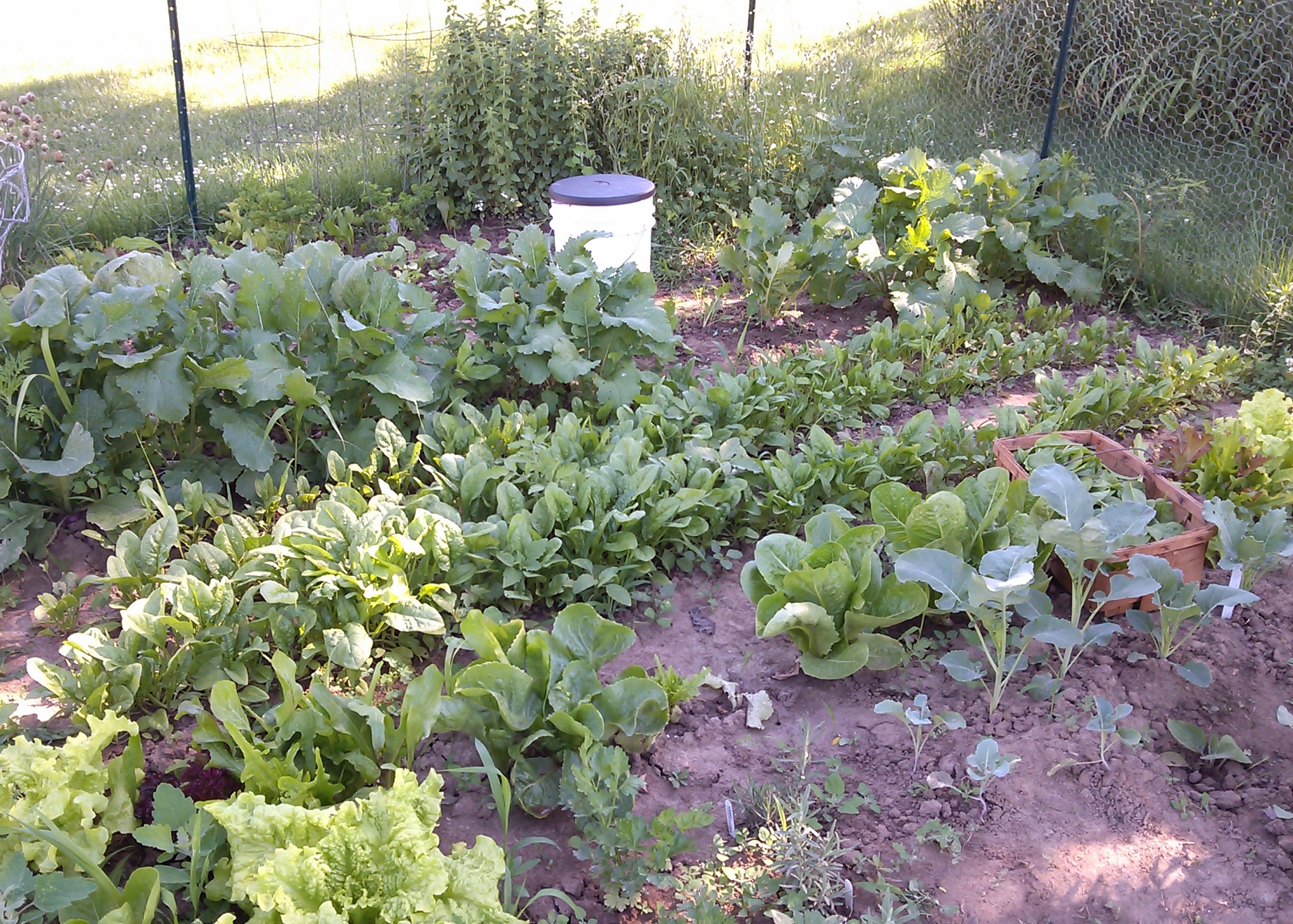
The main garden task was to turn over soil where the spinach and radishes were to plant lettuce seedlings. It seems hot to be planting lettuce, but with the shade of the locust trees protecting the plot in the morning, I am hopeful of another crop. Much of gardening consists of experimentation and my newly found ability to start seeds in the garage has me doing more of it this year.
I cleaned up the plot, removing the fence to cut the grass, weeds and small trees growing around its base. Then I picked a bushel of lettuce from the previous plantings, and sorted, washed and dried it to make two bags for salads. There were a couple of small turnips, one of which was later grated onto a dinner salad. When the work was done, the garden plot looked well groomed.
As the kitchen fills with food, it is time to process the new and do something with the old. I separated the leaves from the stems to make a quart jar of dried oregano for winter cooking. I cleared some space in the freezer by removing bags of last year’s Anaheim, Jalapeno and red and green bell pepper and cooked them in a Dutch oven in a cup of white vinegar. When they were tender, I ran them through a food mill and put the resulting green hot sauce in a Mason jar in the refrigerator to use in Mexican-style dishes.
Using four pounds of yellow squash and zucchini, I made a casserole, which will keep for a few days. The idea was to use the squash, and I made a large recipe with the idea of following the chef’s instructions to produce the desired result. Next time, and it won’t be long, I’ll scale it down to portions for a household of two.
How many kohlrabi can a person eat in one season? I intend to find out. I made mashed potatoes for dinner using leftover roasted turnips and two kohlrabi cut into half inch dice and cooked in a separate pan. When the potatoes and kohlrabi were cooked, I added them to a large bowl with the turnip and mashed them. Once the blend seemed right, I added some salt, butter, sour cream and chopped fresh rosemary. It seems wrong to mixed potatoes with cruciferous vegetables, but what came out passed the taste test.
After dinner, I inspected and watered the garden. The new lettuce will need watering more often, and there is more to harvest Sunday: zucchini, green onions, herbs and broccoli. Chard and collards are plentiful, but there are enough leafy green vegetables in the refrigerator, so they’ll stay in the garden for now.
Septoria Leaf Spotting blighted some of the tomato plants. The ones with the first cherry tomatoes look like they will make it to harvest, but not much longer. I noted the last planted tomatoes have not shown evidence of the disease. Will observe them as the season progresses to see if any conclusions can be drawn. We are a week or two away from some ripe cherry tomatoes.
This is how it goes in a kitchen garden. A constant activity that is not tremendously exciting, but a template for living and eating well on mostly locally grown food and the work of our hands. Life could be a lot worse than this.
LAKE MACBRIDE— Proofreading the newspaper didn’t take long this morning, so after making the smoothie mentioned yesterday, I inspected the cruciferous vegetables and found very few green caterpillars. Either the sunlight chased them away, or they were gone. I picked ten cucumbers, but my focus was on cleaning the garage.
Things had gotten spread out, rendering the garage space unusable. My car has been parked outside since spring began, and nothing seemed in a place when it could be found. By the end of the afternoon, the trash cart was full, there was room for both cars inside, and serious progress was made getting rid of things.
Walnut Logs
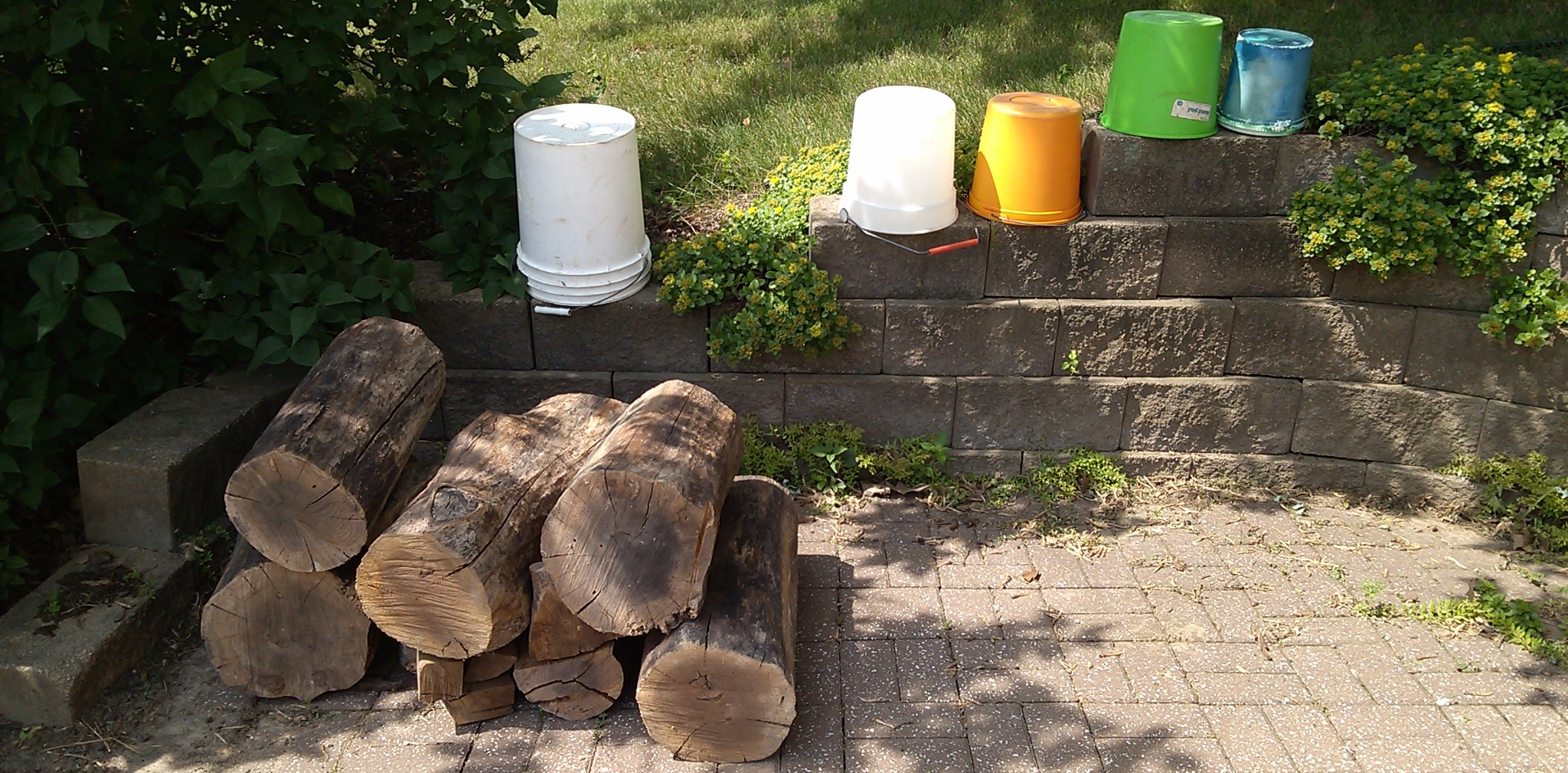
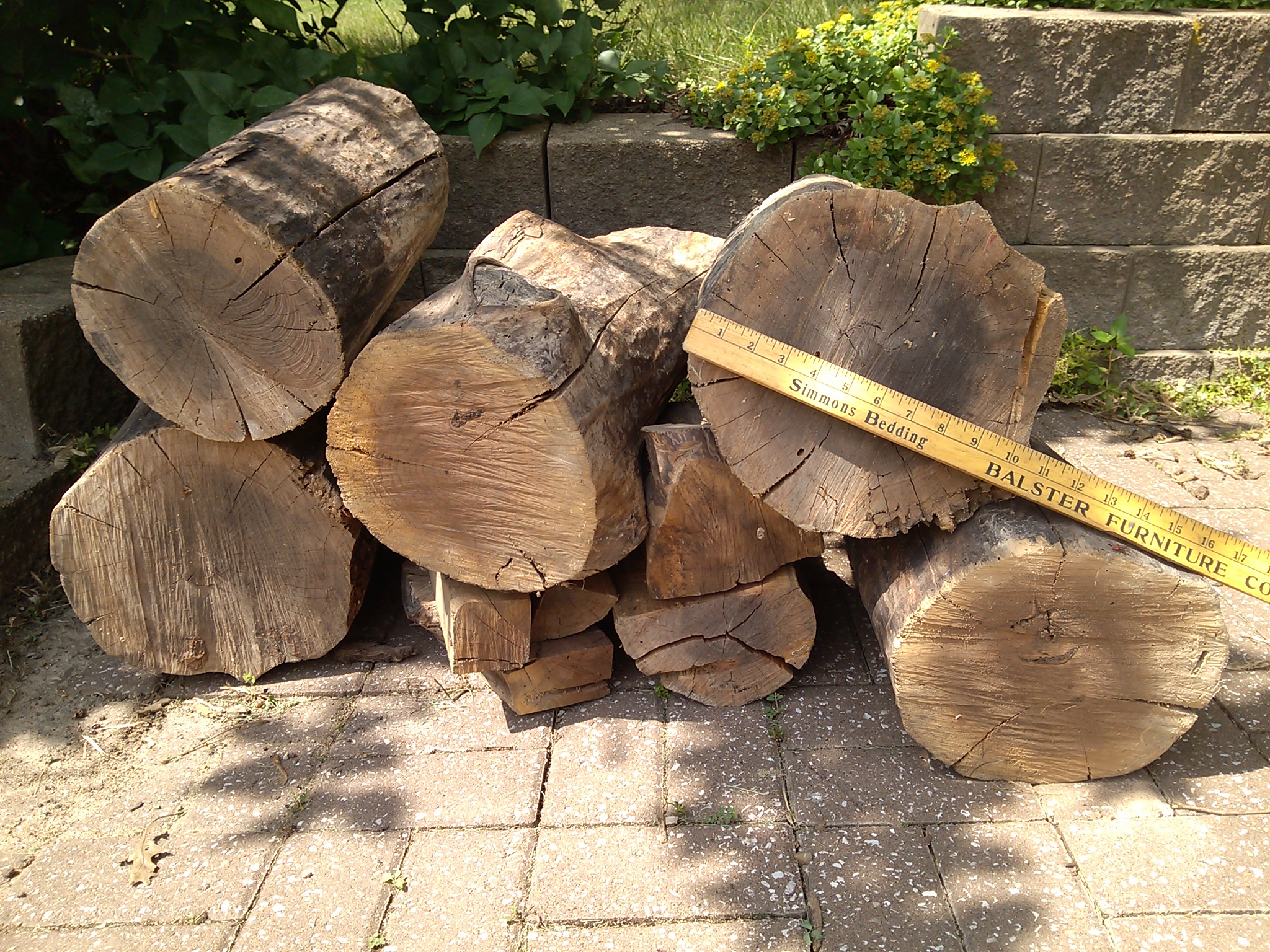
Some sections of walnut tree trunk have been sitting on the radial arm saw for a while— a long while. Time has come to either make something from them or get rid of them. I harvested them in the 1990s in Ames after lightning struck the tree and felled it. I cut them into 16 to 28 inch pieces to haul them around in our Plymouth Horizon. We got rid of the last Horizon in 2002, so that’s an idea of how long they have been in the garage. Too long.
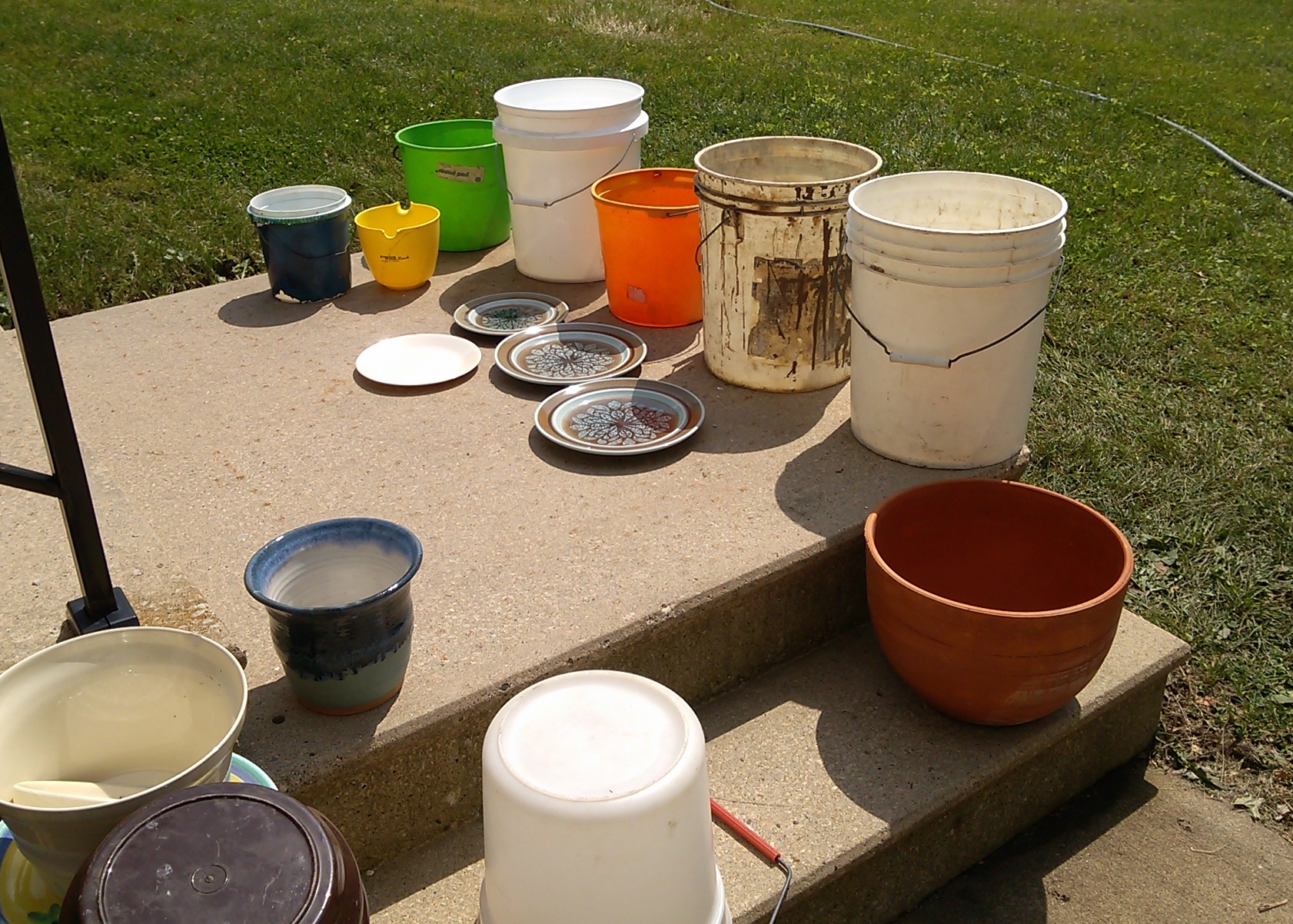
Buckets, Plates and Flower Pots
The buckets for gardening had gotten disreputable, so they all got washed. Same for the flower pots and vases. I re-seeded some cucumbers that didn’t germinate in the tray and watered the four trays of seedlings. They will get planted this week.
On a bulletin board near the work bench were pinned a number of magazine clippings of Adirondack chairs. The images were to be the inspiration to build a couple of our own. Like so many ideas, its diaphanous suggestion was torn asunder by a life occupied by a career. I took the clippings down and put them into the recycling container.
With a clean board, I pinned a poem by Wisława Szymborska, translated as “A Man’s Household”— a Polish poet for a descendent of Poles. A few other photos were already in the garage, a photo of our daughter at Lake Michigan, a post card of some textile workers holding a large 48-star American flag, a photo of my father when he was a toddler, a photo of my maternal grandmother and her second husband. It is the beginning of something hopeful— a place to make dreams into something tangible.
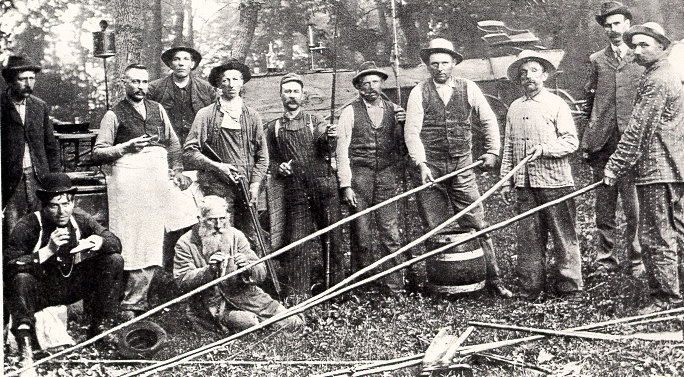
LAKE MACBRIDE— Today will be a work day, but before I get to it, there is this image of a fishing trip to South Dakota from the 20th Century. Among the men in the picture are my great, great grandfather, and my great grandfather. We don’t have a lot of photos of them, and this is the only known image of my great, great grandfather. He is seated in the foreground, baiting a hook.
With the explosion of photography, there are too many images to count and assign a meaning. So many people carry cameras all the time, on devices that are more powerful computers than were imaginable during the 1990s when I secured this image by photocopying the page of the book where it was published.
We select and bring artifacts into our narratives, just as this photo is now part of this blog.
Behind every narrative, there are moments in time when they are made, and when they take on meaning. In a consumer society, we can forget where things come from, the meaning of an artifact being the fact of its collection. That someone planned the fishing trip, invited guests and made this image using technology of the era is forgotten.
We seldom see the face of the photographer, but he or she is an unseen part of the narrative, as is the technology and the people who created it. The narrative of our lives is unavoidably collaborative, with people we know and those we don’t.
It would be presumptuous to pretend otherwise.
Today, I feel the presence of so many people who have influenced, fed and nurtured me. Whether they are here or not doesn’t matter. What matters if continuing the search for truth and meaning in the world, and creating a useful narrative out of these moments in time. Something that serves a greater good than a single life on the Iowa prairie.
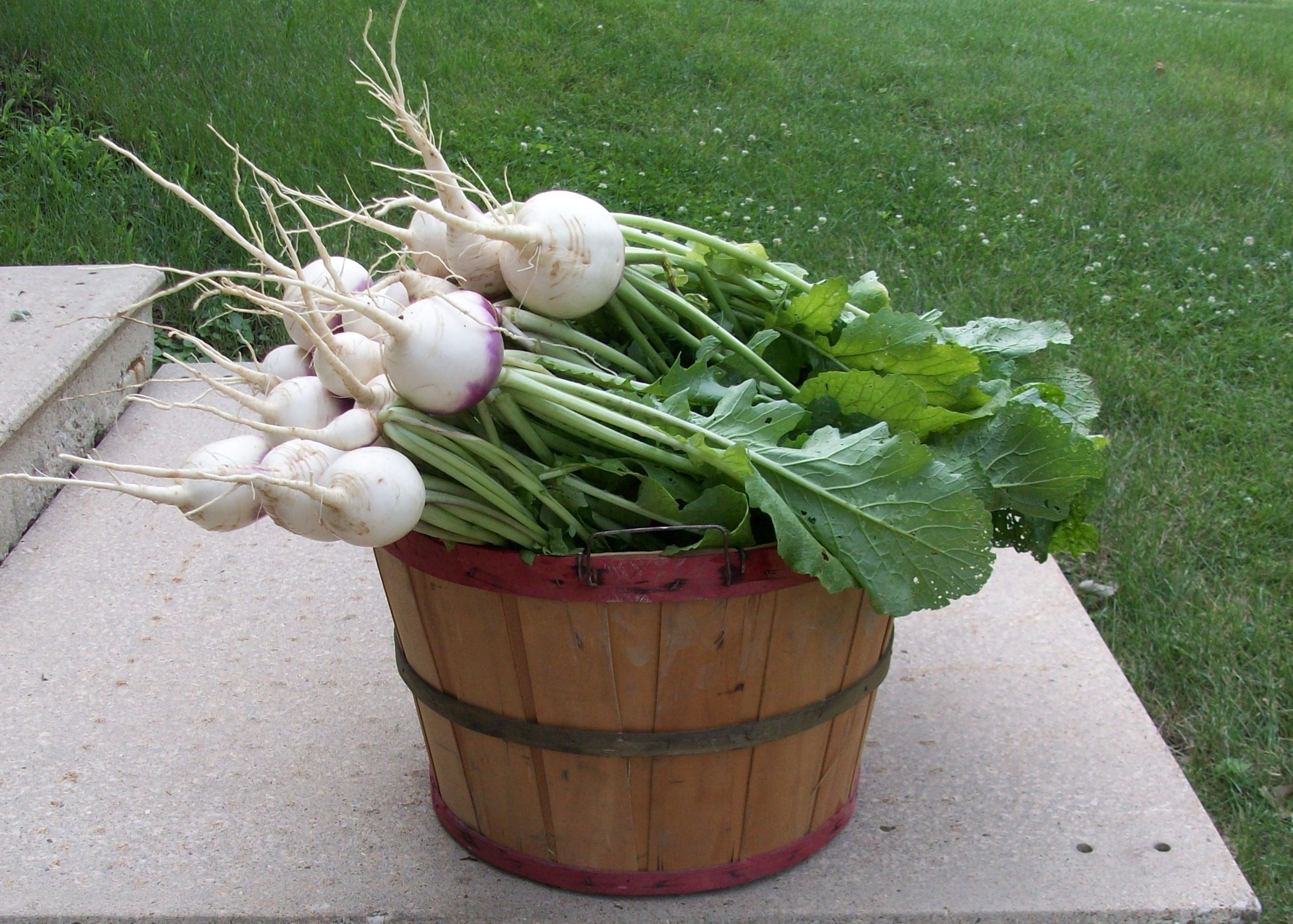
LAKE MACBRIDE— Today was the turnip harvest, and the crop was the best ever: plenty to use this season, and more to give away. There were so many greens that once I reserved a couple of gallons for soup stock, the rest went into the compost. It is turnip city over here.
We have a tradition to make soup stock in our household when the turnips are in. A large pot is coming to a boil on the stove. It includes, broccoli stalks, carrots, onions, celery, zucchini, yellow squash, bay leaves and importantly, the turnip greens which color the stock deep brown and add a delicious flavor. No salt is added until the stock is used in the final application. After cooking for a few hours, the stock will be turned off, to sit on the stove overnight, and canned in Mason jars tomorrow. In the past, I’ve used the cooked vegetables from stock making as a base for barbeque sauce, but I have several jars leftover from the last batch.
Great Grandmother with Turnips
With all of the large roots, we’ll have roasted root vegetables with turnips, potatoes and onions. If we had similarly size beets, those would be added. The recipe is easy— cut everything in half, approximately the same size. Coat with olive oil, salt and pepper to taste, and place open side down on a cookie sheet. Roast at 350 degrees for one hour or until done. It is a highlight of the season.
According to a CSA farmer, July 25 is the date to plant the second crop of turnips, and I’m about ready. One more row this year should be sufficient, and if I can find beet seeds, I’ll plant those as well. The question is how to arrange the spring vegetable patch for optimal July planting. A topic for another day as I bask in a successful harvest of a traditional vegetable in our family.
LAKE MACBRIDE— My grandmother was born on June 24 or 25, 1898 at home on the farm, west of the Catholic church in Wilno, Minn. The official record is unclear as to the precise date, and the clerk in the recorder’s office in the county seat told me that often births were not directly reported, but only when someone from the farm made it into Ivanhoe.
The church records show she was born Salomea Nadolski on June 25, 1898, and baptized on July 10, 1898 by the Rev. J.F. Andesejewski. Her godparents were Ladislaus Kuzminski and Maria Nadolski. I believe this version of the truth is closest.
The certified copy of the birth record I got from the county seat in Ivanhoe listed place of birth in Royal Township, Lincoln County, Minn. as Soluma Nadolski on July 10, 1898. Parents listed as Frank and Katie Nadolski.
Her certificate of death lists June 24, 1898 as the birth date of Mae N. and then Selmae M. Jabus, and those names and date were provided by my mother. The newspaper listed her as Mae M. Jabus in the obituary. Whatever may be official, we called her Busha after our daughter was born.
She told countless stories of life on the farm near Wilno and those stories came to life when I visited the home place, the church and the county seat after she died. If I am a story teller at all, it is because of her.
Her birthplace was still standing when I visited, and the owner kindly let me look around inside. I think he and his wife were looking to tear it down and build a more modern home for their growing family, although he didn’t say it. By today’s standards, the house was very small. There were shirttail relatives everywhere I went, including a gent who lived across the road from our home place. He was not doing well so we chatted only for the briefest of moments. He was connected through my great grandfather.
Like many descendents of Polish immigrants, my grandmother was fully assimilated. She still spoke Polish, but only with her sisters, and to the occasional wrong number who also spoke the language. There are stories about that for another telling.
Despite all the stories that have been and might be, I’ve been thinking about Busha’s life as I knew it the last couple of days. When I last saw her, she had moved to a nursing home where she used to work. She was mentally alert, and worried that the staff was stealing from her, even if there was not much to steal. She fumbled with her hearing aid so she could pay attention to what I had to say.
She got it to work, and we talked as we always had.
It has been 115 years since she was born, plus or minus a day. I feel so lucky to have known her for so long. The memory of so many things we did together persists as the sun sets over the Iowa prairie. I’m glad for that.
 LAKE MACBRIDE— First shift produced two quarts of tomato juice, four pints of tomato sauce and an experimental jar to see how my pickles take to water bath processing. There are still a lot of tomatoes to process.



 Journey Home
You must be logged in to post a comment.