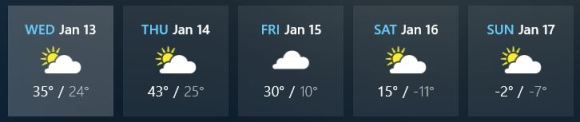
It doesn’t appear we will get a solid week of subzero temperatures this winter. Based on the five-day forecast I’m planning to prune the fruit trees on Sunday.
Would that growing food were all there was to worry about.
The challenge has been to assimilate a new work schedule at the home, farm and auto supply store into my writing schedule. Halfway through January, I’m no closer to a plan.
While it may seem self-indulgent, mentioning the word “I” so many times, unless I get this right, it’s curtains for my aspirations as a writer.
I won’t let that happen.
How to use the couple of hours in the morning, my break periods at work, and time in the evenings and on weekends for writing production needs definition. Family, our food system, maintenance on the property, and adding revenue have to be considered as well.
Confident I’ll get there, midweek before the cold it’s not clear how. Something will get figured out. I hope it will be sooner rather than later.
Having yesterday off work at the home, farm and auto supply store, I made a trip to the grocery store and considered last year. Here are some highlights for interested readers.
Reading list.
A key realization was most of my reading — and I still do a lot — is short articles, mostly on my mobile phone or desktop computers. Of the 10 paper books I read, no regrets — I learned from each of them.
I mentioned in my birthday post, the education and empowerment of women is emerging into a new importance, so the Kristoff/WuDunn book Half the Sky was a better motivator than the others.
Here’s the list with most recently read first.
Half the Sky: Turning Oppression into Opportunity for Women Worldwide by Nicholas D. Kristof and Sheryl WuDunn; On Writing: A Memoir of the Craft by Stephen King; This Changes Everything: Capitalism vs The Climate by Naomi Klein; Gilead by Marilynne Robinson; The Perils of Prosperity 1914-32 by William E. Leuchtenburg; The Great Gatsby by F. Scott Fitzgerald; 1381: The Year of the Peasants’ Revolt by Juliet Barker; Poetry City: A Literary Remembrance of Iowa City, Iowa by Dave Morice; Jewelweed by David Rhodes; and The Robber Barons by Matthew Josephson.
Blogging
For the third year I edited Blog for Iowa while Trish Nelson took a summer break. I posted about all five Democratic presidential candidates and got a press pass to attend the Iowa Democratic Party Hall of Fame Celebration July 17 where they spoke. The grab bag of political, environmental, labor and other topics can be found here. The writing speaks for itself.
The post that received the most attention was 5 Reasons Jim Webb’s Stock is Up. There was a vacuum of Iowa coverage of the Jim Webb presidential campaign and my post seemed to fill it for a brief while. Even the candidate posted about my article in social media.
The most popular posts at On Our Own: Sustainability in a Turbulent World were ones written in past years. Autobiography in 1,000 Words, written in 2013, gets consistent, daily page views. Rounding out the top five for the year were my post announcing reasons to caucus for Hillary Clinton in the Feb. 1 Iowa caucus; Climate Change in 200 Words, written in January 2014; my letter to U.S. Senator Joni Ernst advocating for the agreement with Iran over their nuclear weapons program; and a post from 2013 with three photos of some summer pest problems. Readers increasingly recognized me in public because of my writing.
Newspaper Writing
I filed 59 stories with the Iowa City Press Citizen in 2015. When my editor, Emily Nelson, left the newspaper July 2 after a long tenure, it was a signal that the end was approaching. This was confirmed when my new editor, Tricia Brown left Sept. 11. My last story ran Oct. 16.
I covered diverse topics by taking whatever assignment was offered at the Press Citizen. By interviewing startup business owners, people working for non-profits, and many others I met new people.
My favorite newspaper article was about Iowa Secretary of Agriculture Bill Northey’s visit to Local Harvest CSA. It was also the most fun to write. My article about Bobby and Kayla Thompson and their new hair styling salon in downtown Iowa City was the most popular in 2015, receiving more than 2,500 online views after publication. My advance article about the TaxSlayer Bowl in Jacksonville, Fla., published December 2014, garnered the most online views during my one-year tenure with over 3,000. Print circulation of the paper was about 10,000 according to Gannett’s 2014 annual report.
I don’t have a burning desire to do more newspaper work. It was lowly paid for the investment of time. The monetary income, though slight, went to good use. Freelancing with the Press Citizen helped me realize the importance of having an editor.
Working
Checks came in from nine different employers and contracts during the year with the largest share of income (65 percent) being from Club Demonstration Services, a part time, no benefits job I left in September. Income from CDS will be replaced with income from the home, farm and auto supply store, a full-time job with a benefits package that began Nov. 12. Every other income producing activity was much smaller, with Gannett (15 percent), the apple orchard, the community supported agriculture project, freelance writing and editing, and stipends from my elected office work completing the picture. As the new year begins, I receive only one paycheck, with three other seasonal jobs planned along with my last year of elected office. I need another ten grand in contracts or employment to make financial ends meet this year.
Gardening and Farm Work
The 2015 garden was as productive as it’s ever been. My work at the CSA and the apple orchard continued to teach me new things about growing and selling produce. The garden and both farm jobs are part of the 2016 plan. Combined with related kitchen work, local food is becoming a part of daily life.
In October I decided to write a longer piece — a memoir of my time in the local food movement since retiring from my transportation career. In the article On Not Being Vachel Lindsay, I explained:
The first subject will be a memoir about the evolution of my understanding of local food over the last six years. The goal is a 25,000-word essay that can be combined with other short pieces into a self-published book. Book sales will become a way for people to contribute financially to my work at events.
After leaving CDS in September, it was optimistic to believe I could write 1,000 words a day while preoccupied with a search for income. As the year ended, and now that I have an income base with the work at the home, farm and auto supply store, I expect to resume this writing. I drafted about 6,000 words last year and posted a snippet here.
On New Year’s Eve I reviewed my activity diary and found a disproportionate number of personal contacts were related to politics. My work at Blog for Iowa got me involved, and I expect it will continue. Once we get past the Iowa caucuses I hope to reduce my involvement in politics to a more sustainable level.
In 2015 I spent time writing almost every day. With the practice, I’m confident something good will come of it in 2016.
As my 65th trip around the sun begins, here are some things about where I’m going.
Without good health, family and friends, and a sound financial system, it will be difficult to do much beyond the lot lines where we spend most of our time. I’m lucky to be in good health and working on the rest.
Global warming is a threat to life as we know it, bigger than any other. Individually and collectively we must take action to mitigate the causes of climate change.
The education and empowerment of women — worldwide — is our best hope for creating an environment to protect the common good. As a privileged American it has been tough to recognize the basic truth of this. I’m working on this blind spot and hope to contribute in a meaningful way.
Methods of learning have changed. Reliant more on the Internet for news and information, mine wants review and a course correction. For the first time in years I will develop a learning plan. Not just reading and viewing video, but while living in society as well.
When we first built our home in Big Grove we did a lot of things right. 22 years in, maintenance and improvement delayed due to time and financial resources must be addressed. That means re-activating our garage as a workplace and picking projects to get started. A five year plan to take the as-is situation and convert it to a place where we can live comfortably is in order. That is, assuming we decide to stay here.
Followers of this blog read about food, cooking, gardening, farming, labor, politics and other topics related to nutrition and health in society. There is enough of this work to be a palette from which to paint a future. I plan to do just that in the coming months. I hope readers will keep clicking along with the journey.
Chard and celery are growing in the garden and not ready to pick. It’s Dec. 25 for heaven’s sake!
Grass is greening and water is standing in the ditch. Ambient temperature is 30 degrees — freezing, but not quite. The spring-like weather belies the holiday decorations inside our home.
Our daughter pulled back to back shifts where dreamers work, ending last night with a terrific fireworks show. Had we been near we would have watched, but the miles separating us were too many this Christmas.
Threatening to move closer, she said we wouldn’t like it. Even in an Iowa that borders corrupt, uninspiring and terrible under Terry Branstad, she is likely right. There is no way I would trade my current congressman… however, there is that nice Corrine Brown. Maybe I’m not finished making my case.
This morning’s activities included laundering my three work shirts, blue jeans and socks. I look forward to when I have enough clothes to last a full work week.The biggest development at the home farm and auto supply store was my interview about becoming a receiving clerk. Because of the store’s growth, they now need two.
I began cross training with the current clerk on Wednesday. What makes the new position different is the hours 8 a.m. until 4:30 p.m., Monday through Friday. It will be my first time with weekends off since I worked at the University of Iowa. After all the irregular work hours this will provide an opportunity, setting the stage for work to generate the ten grand — reduced a bit by the increase in hourly wage the new position will garner.
After several attempts, I developed a winter hot sauce made from canned goods. I drained whole tomatoes, reserving the juice for another recipe. I added drained, pickled Serrano peppers to the bowl. Next, a jar of a red and jalapeno pepper sauce made earlier this year. I chopped the mixture with a stick blender, jarred and refrigerated. It went great on my scrambled eggs, which along with hash brown potatoes and an apple is a traditional holiday breakfast in our household.
I started a load in the dishwasher.
Next came a batch of traditional shortbread cookies. I softened a pound of butter on the counter overnight. To the butter, add a cup of brown sugar and cream together. Add 4-1/2 cups all purpose flour, then bring the dough to consistency, roll it out and cut into strips. Bake at 325 degrees for 22 minutes.
We never know what today will bring. For me it is enough to spend time at home with family and seek respite in personal traditions as the rest of the world is muted by the clatter of dishes in the sink and my firm intent.
It hasn’t been the best Christmas, nor the worst. It just is, and that’s enough.
Tomorrow is winter solstice and I’m ready for days to get longer. A new year’s hope begins.
We spent yesterday decorating the house for the Christmas holiday. I ate a slice of the fruitcake sent by Mom.
This morning I’m drinking coffee from the Boynton reindeer Christmas mug, and settling into habits formed long ago. It is time for year end reflection and planning.
I posted on Facebook:
Went to Wilson’s Orchard yesterday and bought two gallons apple cider, a baker’s dozen Gold Rush apples and 12 pounds frozen Montmorency cherries. The cherries were grown in Michigan which produces ~90,000 tons of the fruit each year. The ancient Romans are credited with finding this cherry near the Black Sea and propagating it in the Roman Empire. It is named for the Montmorency region near Paris, France. We mix them with plain strained yogurt and granola for a meal substitute.
In other holiday news, we put up the holiday tree and I placed the big order for garden seeds from Johnny’s Selected Seeds. There are a lot left over from last year, so the order was smaller than usual. I plan a gigantic plot of radishes, some of which I hope to convert to cash to donate to Physicians for Social Responsibility – Iowa Chapter. Next step is to look at the Seed Saver’s Exchange and pick out some kind of red bean for drying, along with some one-time experimental seeds.
We are making a sincere effort to locate the remote control that operates the analog to digital converter on the television. Might watch a VHS Christmas movie if we can find it.
Best wishes for a happy holiday season and a Merry Christmas to those who celebrate it.
I ordered a new vacuum cleaner on line from Hoover last night, and garden seeds from the Seed Savers Exchange this morning. Holiday shopping is done if one can call it that. I work at the home, farm and auto supply store all but two of the 11 remaining days this year, helping shoppers make purchases as this year transitions to next.
There’s the ten grand, but I can’t lose sleep over that — at least not yet.
And thus the next orbit of the sun begins. May God shine light on all of us as our search for truth and meaning continues. May our actions further social justice and a hospitable environment in which to live.
Rain fell last night leaving a wet landscape. Soon it will be time to make breakfast — and get ready for the trip across the lakes.
Most creative Americans I know have a sense of responsibility about their lives. Artists, writers and musicians accept lowly paid creative work when they can get it and find other, supplemental funds to pay bills.
We all have bills and there are consequences for failing to pay them.
It is a constant struggle, leading some to selling plasma, taking physically demanding and dangerous work, working in call centers, retail, farming and the food business. Occasionally we sell artwork, writing or music. The struggle is important, and life remains about the creative process. I’ve discussed selling plasma with visual artists and low wage workers who do, and it’s not for me — at least not yet.
Another ten grand should help our family make it through 2016 responsibly. Twenty would be better. I’ll find it somewhere.
Earthworms crawled along the bottom of the garage door, fleeing groundwater. The lawn is greening after the big snow storm followed by rain. Water stands in the ditch with temperatures forecast in the 40s through the end of the year. It’s not normal.
Another crazy weather episode in a life increasingly filled with them.
It is hard to concentrate on the big picture and will be until I have a plan for that ten grand.
I reached into the rusted storage cabinet to find the silicone spray.
The padlock needed lubricant before securing the employee locker at my newest job.
It’s not like I’ll keep valuables inside. My lunch and mobile device when I’m working, my box cutter, tape measure, name tag, note pad, ink pen and radio earpiece when I’m not.
I expect to enjoy helping people solve everyday problems at the home, farm and auto store. Problems like having a corroded padlock.
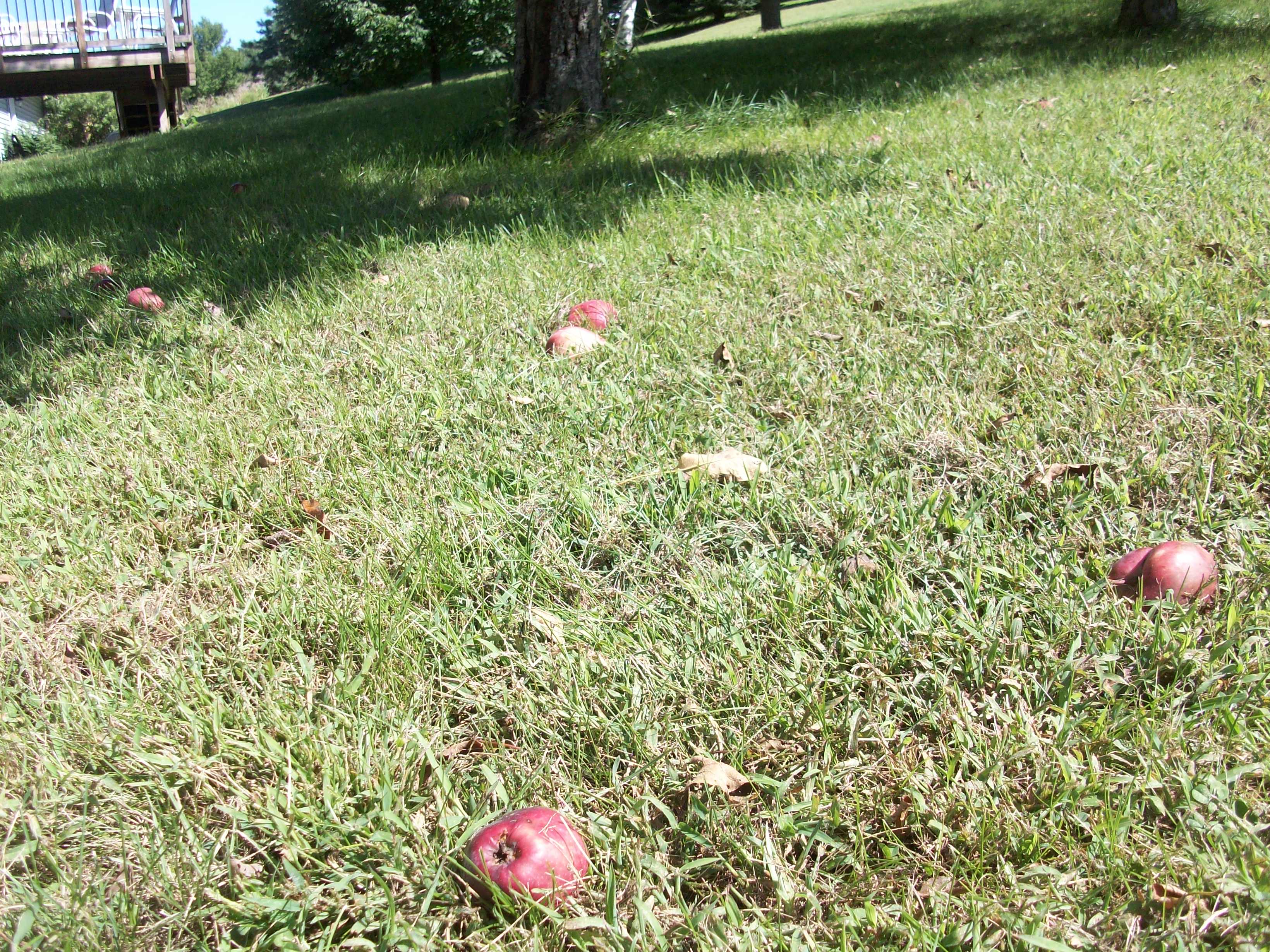
Tuesday’s thunderstorm blew the remaining apples off the tree. We had a tornado warning so I turned on the television to view weather radar. It turned out the remote that controls the analog to digital converter went missing. I couldn’t tune in. One of two things will happen: 1. Get rid of the TVs altogether, or 2. Buy a digital set. No hurry on a decision because television viewing is a dying practice when life offers better options.
The apples in storage need using before turning to compost so I made applesauce – the first of many batches over the coming days. To give it a twist, I added cinnamon, allspice and cloves with a handful of dried fruit. It was delicious.
The terrorist attacks in Paris were breaking news when I returned from my first day of work at the store. The morning after details are sketchy. The death count mounts. Reasons are unknown. The French border remains closed.
I have two direct connections. My friend Ed Fallon is currently in Normandy marching to Paris on foot for the December convention of the parties on climate change. Al Gore was broadcasting the Live Earth – 24 Hours of Reality event from Paris, and suspended programming to recognize and respect unfolding events. I’ve been to Paris a few times, but that was decades ago.
“Once again we’ve seen an outrageous attempt to terrorize innocent civilians,” President Obama said last night. “This is an attack not just on Paris, it’s an attack not just on the people of France, but this is an attack on all of humanity and the universal values that we share.”
Social media was quick to respond with memes. Commentators became immediate experts in terrorism whether they knew anything or not. It was predictable and sad.
Humanity is on the move, not only from Asia, Africa and the Middle East. Rather, civilization as we know it appears to be collapsing.
In the wake of World War One, William Butler Yeats wrote “The Second Coming,” which in part says,
Turning and turning in the widening gyre
The falcon cannot hear the falconer;
Things fall apart; the centre cannot hold;
Mere anarchy is loosed upon the world,
The blood-dimmed tide is loosed, and everywhere
The ceremony of innocence is drowned.
The best lack all conviction, while the worst
Are full of passionate intensity.
Almost a century later it is unexpected that “gyre” has come to define the largest ecosystem on Earth and home to a very large collection of man-made debris in the Pacific Ocean. The detritus of a deteriorating civilization coming together.
We feign shock at the latest unfolding terrors when it’s the bigger picture that may injure us.
I’ll take the apple peels and kitchen food waste to the compost bin. Cold weather may delay the deterioration until spring. One can only believe that the new season will also bring hope. So too for our society, although in the darkest hours that seems far from certain.
For now, I’ll lock up my gear and continue to solve everyday problems. And contribute to hastening the compost and tilling it into into the soil for next year’s garden. It’s no satisfaction, but rather what I can do to create hope.
The garden season officially ended today with gleaning that filled eight crates with tomatoes, apples, celery, Swiss chard, kale and hot and bell peppers.
I delivered a second 200-pound load of apples to the CSA for shareholders and the food pantry. While there, I picked up some potatoes, garlic, lettuce, a large squash, sweet potatoes and some onions.
With a hard frost expected early Saturday morning, I made a harvest soup with vegetables. Five quarts of it are processing in a water bath as I type.
Times like this, a list of ingredients suffices. Not as a recipe, but as a record of what went into the soup.
Fresh and canned tomato juice
Onions
Carrot
Celery
Potatoes
Kale
Swiss chard
Large winter squash cut into cubes
Bay leaves
Sea Salt
Orange lentils
Dried red beans
Pearl barley
Prepared organic vegetable broth
The draft toward winter is inescapable. Snow will soon be flying and subzero temperatures not far behind — and the comforting warmth of harvest soup.
The garden and trees turn to fall colors all at once — right now, as I write.
First frost can’t be far away, maybe next week. Leaves and grasses turn without freezing temperatures. The landscape assumes a warm brilliance.
Apple Harvest
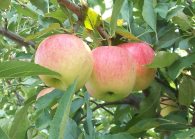
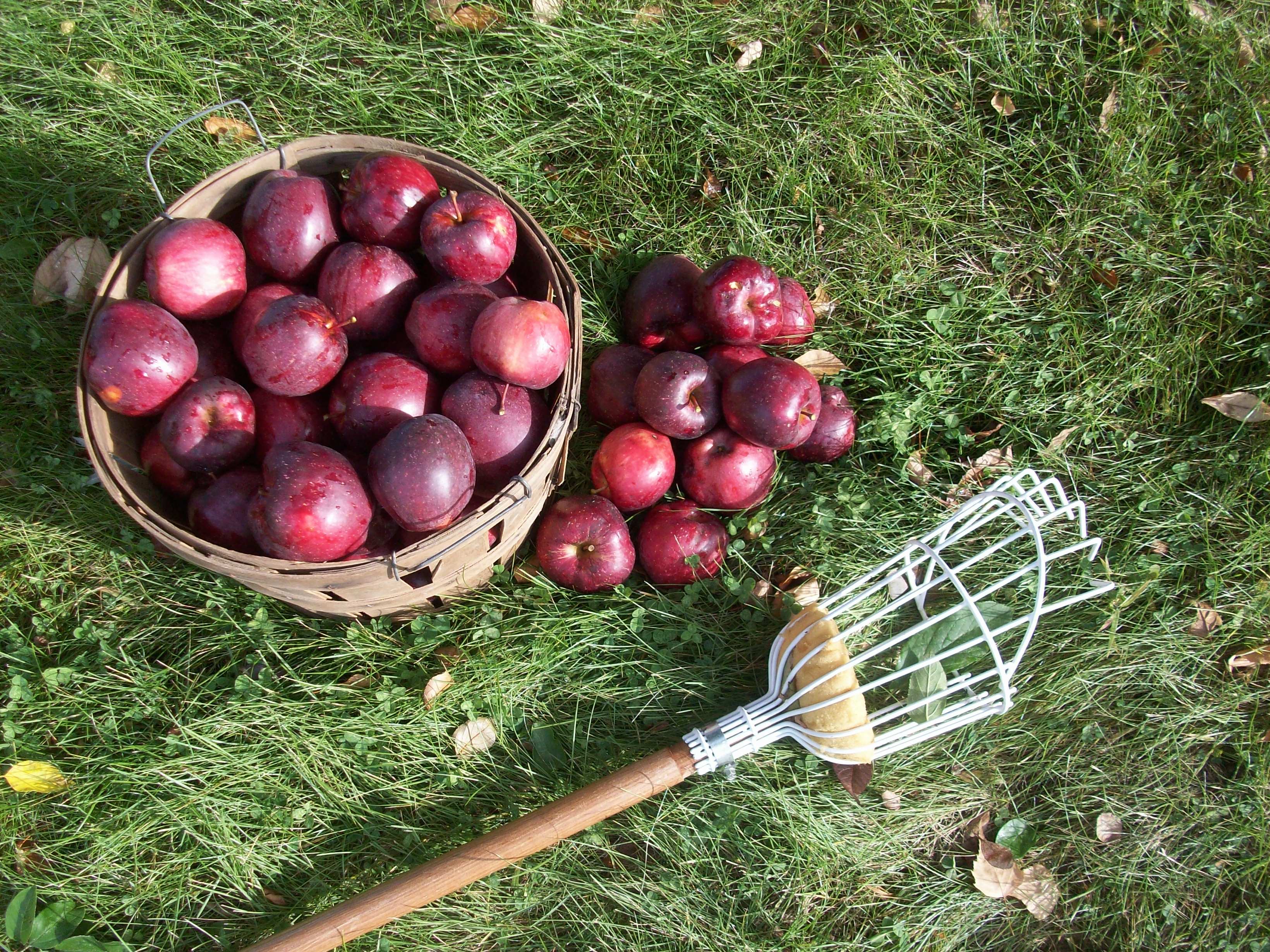
I picked more than 200 pounds of apples Wednesday and donated them to Local Harvest CSA. Enough for shareholders to bake a pie or crisp, or even eat! The apple variety is Red Delicious.
The trees have never been sprayed, and grow as near organic as possible. Fruit sometimes develop black spotting which can be washed off easily. They are delicious in more ways than one.
I walked the garden, filling a bucket with bell peppers, Swiss chard, scarlet kale, celery, a few tomatoes, basil and oregano — what was available. Most of it became soup for dinner.
Beginning with a cup of tomato juice in the Dutch oven. I steamed a diced large onion, sliced chard stems, fine ribbons of kale and chard leaves, celery, turnips and carrots. Except the onion, all were grown in our garden. Once the vegetables softened I added savory, bay leaves, sea salt, dried orange lentils, barley and a can of prepared organic kidney beans. Tomato juice to cover. The pot boiled and I turned it down to simmer. While soup was on, I cooked a cup of organic rice. Plating was a scoop of rice in the middle of the bowl with soup ladled around it.
The next day I water bath processed two quarts of soup, along with three pints of apple butter and a quart of apple sauce. Because of the backlog of apple sauce and apple butter in the pantry, I’m making a limited amount, just to have this year’s vintage when previous jars are used up. There’s more than enough soup for winter into spring.
The tine of my apple peeler cracked, rendering it useless. I drove to the orchard to buy a new one, but in conversation with the chief apple officer, it turns out they had plenty of spare parts. He gave me a used replacement part which fit perfectly and put me back in business.
Cider, New and Apple Vinegar
We got to talking about apple cider vinegar.
This conversation began in 2012 with another friend, who also works at the orchard. He gave me some mother of vinegar which originated with his family in the 19th century. It’s still alive. The orchard used it to start a line of bottled apple cider vinegar to sell in the sales barn.
Today’s discussion was about whether or not to use brewer’s yeast. Jack, the source of the mother, has a large plastic container to which he occasionally adds new juice, but never any yeast. We decided that the yeast must have come from other sources, and therefore no new need be added. Since it works, and in a home kitchen we expect there to be variation in the level of acetic acid, I decided to forego using yeast for the time being.
Yeast is basically everywhere. As anyone who made sough dough from scratch knows, it needn’t necessarily be purchased from a store. Jack’s mother likely has yeast in it, although I rarely see bubbles forming after adding new apple juice. It makes vinegar and that’s the hope.
Fall’s progress is one of the best times of the year. Squirrels scour oak trees for every last acorn. Birds roost on tomato cages where vines still produce.
It takes a walk in the garden to remind us of Earth’s potential, providing soup for dinner and apples for the sweet and sour of life.
I slept for twelve hours last night fighting a cold I hope doesn’t turn into something else.
The big comforter kept me warm, and except for doing two loads of laundry around 1 a.m., I slept in four two to three hour parcels.
I feel achy, this morning, but the coughing reduced significantly. I’m easing into a day of writing, yard work and cookery. There is no other choice than to get to work.
The Social Security Administration sent us an annual statement last month. At the current benefits level, we should be fine if we can make it to full retirement age of 68. The current authorization is expected to fund it until 2041, in which year I will turn 90. After that, who knows if the Congress will address the program in a positive way. There’s a lot of living to do before then.
An acquaintance from working in the warehouse stopped at the orchard yesterday. He left as well, taking a part time job at a different warehouse store for $16 per hour. He said others have left. I’ll check the job out, and if accepted, and it fits my writing schedule, I may take it. All of those are unknowns — part of this week’s discovery. It was good to see him again.
Today seems like it will be alright. Not perfect — what day ever is — but serviceable. Perhaps a portal to potential unrealized in a turbulent world.



 Journey Home
You must be logged in to post a comment.