Categories
Kitchen Garden

Fall Cookery – Preserving Local Food

Hay Bale
Hay Bale

I connected with Local Harvest CSA last week. The farm looked great.

Iowa Secretary of Agriculture Bill Northey stopped there with my state representative, Bobby Kaufmann. I spent a couple of hours chatting and collecting information for an article that appeared Saturday in the Iowa City Press Citizen.

The next day Susan provided three crates of bell pepper seconds to eat and preserve. The freezer and vegetable drawer are now full. The good news is there weren’t many clinkers among them.

Our garden kept me busy this summer, producing more than enough for our kitchen and some to give some away. Tomatoes, kale and hot peppers are in abundance. The rest of the Red Delicious apples will soon be harvested. I spent most of Monday in the kitchen preserving food.

The kitchen day began with picking a bucket of tomatoes and jalapeno peppers in the garden.

Cutting the bad spots from the tomatoes, I cooked them and made sauce using an old timey tomato juicer with a wooden cone. The byproduct was 1-1/2 quarts of juice which is chilling in the ice box, ready for soup.

Coring and cutting bell peppers into slabs for the freezer is straightforward. I freeze them on a cookie sheet, then bag them for storage. That way they don’t freeze together. Two bags left from last year were in good shape so I added six more — a full year’s supply.

A bag of roasted red peppers and one of jalapenos was left in the freezer from last year. After thawing, I cut the jalapenos in half and put both into the Dutch oven. Adding bits and pieces of pepper leftover from the freezing operation, once tender, the lot went into the food processor until the mixture reached the consistency of relish. I put the result into half-pint jars and processed in a water bath.

I make some applesauce each year even though there is plenty in the pantry. The labor produced two quarts which wait in the ice box until more jars are ready to process in the water bath.

The remainder of the first crate of Red Delicious apples was juiced. I spent half an hour managing vinegar, bottling what was finished from the two-quart jar started in the spring and adding new juice to the mother. There are three finished quarts in the pantry. I may never buy apple cider vinegar again.

When the sun set, the implements of preservation were scattered on the counter — clean and drying. Yesterday I used my hand tomato juicer, a sieve, an apple peeler, an electric juicer, the food processor, a turkey baster, the granite ware water-bath canner, and the usual lot of bowls, jars, lids and rings. Knowing what to do makes it easier with each passing year.

There is a sense that these days of harvest cookery can’t go on forever. Suffice it I’ll keep living them for as long as possible, trying to learn from every season.
Categories
Environment

Oak Leaf Tatters and Herbicides

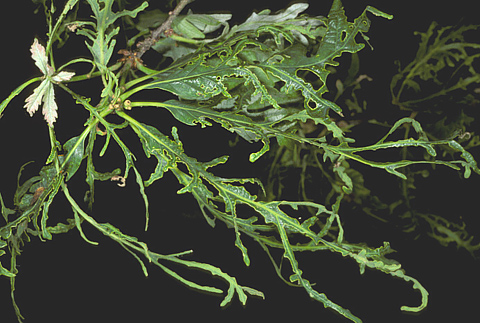
White Oak Leaf Tatters
White Oak Leaf Tatters Photo Credit Plant Management Network

What to make of a study of the impact of herbicide drift from farming operations on oak trees?

In a peer reviewed 2004 study at the University of Illinois, Department of Natural Resources and Environmental Sciences in Urbana, Ill., scientists found drift of chloroacetamide herbicides is a possible cause of the leaf tatters syndrome in White Oak trees.

During the last few decades, white oak (Quercus alba L.) in the north central region have developed malformed spring leaves often called “leaf tatters.” The symptoms begin with the death of some interveinal leaf tissues, eventually leaving only the main leaf veins with little interveinal tissues present (See Illustration Above). Leaf tatters reduces the overall canopy of trees, making them more susceptible to other stresses. Leaf tatters has been reported in Illinois, Indiana, Iowa, Michigan, Minnesota, Missouri, Ohio and Wisconsin.

It’s a single study, probably not enough data to fully ratify the relationship, even if there is concern among foresters about how herbicide drift may be affecting stands of trees in both urban and rural areas.

The topic is worth more study than it is getting, as chloroacetamide is the active ingredient in a number of herbicides used with row crop corn and soybeans.

Preserving our woodland heritage is more complicated than letting a stand of trees go on as it has. Existing oak-hickory forests are being subjected to a wide range of stress including growth of invasive species below the canopy, and a lack of significant events, like forest fires, to remove mature trees, permitting new growth. After being in place for thousands of years, the oak-hickory forest will become a thing of the past without modern forestry management.

If there are other studies of the impact of herbicide drift on forests, I couldn’t easily find them. In fact, I had to contact an acquaintance to locate the study referenced in this post. Besides a small group of scientists and foresters, I don’t know who else is even looking at this.

What this study suggests to me, and to others whose opinion I value, is chemical drift from large scale farming operations can impact life in urban areas where most of the population lives.

As we escape rural areas in favor of cities we remain connected to what goes on in the country. Part of that, perhaps, includes maladies caused by chemical drift from large farms.

It is time we, as a society, spent time and resources determining what the relationship between chemical drift and our lives in the city is.

Categories
Environment

We Have a Water Problem

Iowa Row Crops
Iowa Row Crops

DES MOINES—”We have a water problem,” Mayor Frank Cownie said at the state convention of the League of Women Voters of Iowa on Saturday.

Like all municipalities, the Des Moines Water Works must comply with the Safe Drinking Water Act and the Environmental Protection Agency standards for maximum contaminant level in water processed and sent into its system. Peak nitrate levels in source waters have taxed the city’s ability to meet its obligations.

The problem is nitrates in the water, however, the bigger problem for Des Moines is nitrate discharge into drainage districts in Buena Vista, Calhoun and Sac Counties which feed its source.

“The current denitrification technology is outdated and cannot continue to operate with rising nitrate levels and increased customer demand.” according to the Des Moines Water Works. “Continued high nitrate concentrations will require future capital investments of $76-183 million to remove the pollutant and provide safe drinking water to a growing central Iowa.”

Nitrate runoff is an unrecognized environmental cost of farm operations. The lawsuit filed in the case asserts that the drainage districts named are point sources of nitrate runoff and should be regulated as such.

There is a lot of chatter about the lawsuit the Des Moines Water Works filed to establish a cost to people who use nitrogen fertilizer that contributes to water pollution. Here is their rationale from their website:

  • Des Moines Water Works filed a complaint in Federal District Court – Northern District of Iowa, Western Division, on March 16, 2015.
  • The complaint seeks to declare the named drainage districts are “point sources,” not exempt from regulation, and are required to have a permit under federal and Iowa law.
  • The complaint states that the drainage districts have violated and continue to be in violation of the Clean Water Act and Chapter 455B, Code of Iowa, and demands the drainage districts take all necessary actions, including ceasing all discharges of nitrate that are not authorized by an National Pollutant Discharge Elimination System (NPDES) permit.
  • In addition, damages are demanded to Des Moines Waters to compensate for the harm caused by the drainage districts unlawful discharge of nitrate, assess civil penalties, and award litigation costs and reasonable attorney fees to Des Moines Water Works as authorized by law.
  • Des Moines Water Works’ mission is to provide safe, abundant and affordable water to our customers. Des Moines Water Works is fighting for the protection of customers’ right to safe drinking water. Through this legal process, Des Moines Water Works hopes to reduce long-term health risks and unsustainable economic costs to provide safe drinking water to our customers, via permit and regulation of drainage districts as pollutant sources.
  • Continued insistence from state leaders that the voluntary approach of the Iowa Nutrient Reduction Strategy is working does not give solace to the 500,000 central Iowans who must now pay to remove pollution from their drinking water.

While this lawsuit is specific to Des Moines, there are a lot of unrecognized environmental costs in diverse business operations. Set all the partisan chatter about this issue aside and the fact remains there is a tangible cost, that someone should pay. It is a cost measured in risks to human health, environmental degradation and inadequate financial models in business.

Thanks to the Des Moines Water Works, we can begin to put a dollar figure to it.

Categories
Kitchen Garden

Organic Salad Greens

First Spring CSA Share

Is the local food movement here to stay?

Intellectually, how could it not be? The future must necessarily be one of producing food much closer to where people live, especially as transportation costs escalate, and current food sources in the California Central Valley, in South Florida, and in Texas face the extreme weather characteristic of climate change.

That said, life with food is not always about rational behavior.

Growth of organic food sales is unmistakable, with 2014 food and non-food item sales setting a new record of $39.1 billion. Organic was almost five percent of food sales, according to the Organic Trade Association.

There is good and bad organic food. When we think about it, what good is it to buy organic canned black beans produced in China more cheaply than what a local farmer can sell? Is it bad that local producers use “organic practices” yet do not secure USDA organic certification of their operations?

The good news is interest in organic food helps small-scale producers generate needed sales. As organic sales go mainstream, being found in four out of five grocery stores, a crop of informed consumers is making up 18 percent of buyers, accounting for 46 percent of organic food sales. There is room for continued growth in this segment as wider availability of organic food, and mainstream information about organic foods drive people to buy them.

Each week, I hear people explain why they buy organic food. Their reasons are diverse, and don’t always make sense. The commitment is often to “eating healthy” as opposed to any sound rationale. This attitude toward organic food can become problematic, and  small-scale producers in the local food movement are particularly vulnerable. If organic is the latest fad, then long-term sustainability may be out the window for them.

Another thing people don’t mention much is as organic food becomes mainstream, large-scale players will increase their share in organic, and dominate the marketplace. Companies like Earthbound Farm Organic will become the norm, rather than the exception. Food conglomerates may establish gigantic organic food divisions as they have already done with gluten-free food. Better margins in organic food will attract capital, and small-scale farmers seem seldom have enough of that to compete.

I brought a bag of seven or eight kinds of spring greens home from the farm, reminding me of why I buy and barter for local food. I know how the farmers treat the soil, where they get seeds and rootstock, how they control pests, how they treat animals, and how they treat labor.

There is not much hope for a market based on “eating healthy.” It is not sustainable, even if organic is gaining market share.

Some of us find hope in being close to the means of production and getting our hands dirty. We also know the face of the farmer—something that gets forgotten midst the hoopla of buzzwords.

Knowing the face of the farmer is sustainable in local food systems. It is hard to replace, and it is time we got to know more of the farmers whose production we eat every day.

Categories
Work Life

Spring Rush to Memorial Day

Garden View of Lake Macbride

April has gotten very busy. There are dozens of tasks to do at home and farm work has kept me busier while my warehouse work and newspaper writing continue at the same level. It seems impossible that I had eight jobs at one point last year. Working three jobs fills the time if it doesn’t produce enough money to get ahead.

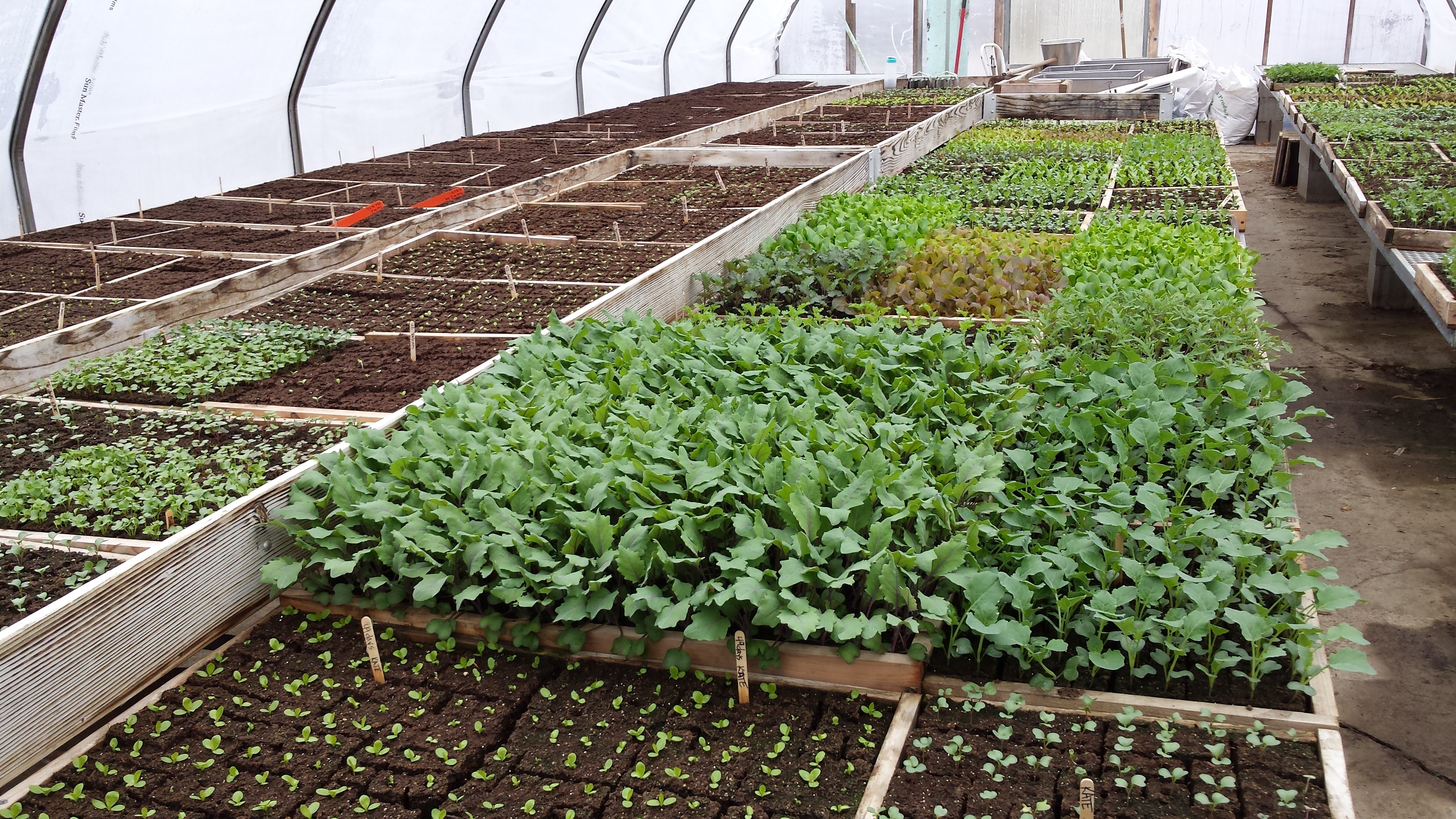
Farm work has been planting, planting and more planting—in the field, in seed trays, in the high tunnel. Yesterday was lettuce greens and broccoli. The day before onions and soil blocking. Today, I will seed some trays before cleaning up to head to the warehouse.

The challenge is to find time for our own garden. When I receive next week’s work schedule a priority will be setting aside a home work day.

A livestock farmer spent yesterday preparing his fields to plant corn. His planter is maintained and ready. Another spread fertilizer, complaining of a sore throat because he had the tractor window open.

Everyone’s busy with spring. That includes me. The garden needs planting before Memorial Day. It’s five weeks away, but it seems like tomorrow.

Categories
Kitchen Garden

Back at the Farm

Inside the Greenhouse

This week began another stint working at Local Harvest CSA. I’m back to soil blocking, planting seeds in trays and seedlings in the high tunnel in preparation for another season of vegetables. This year the plan is to work until the regular crew arrives in May—a month of physical labor to reinvigorate after winter’s inactivity. I’ll help with the first deliveries to members in two weeks.

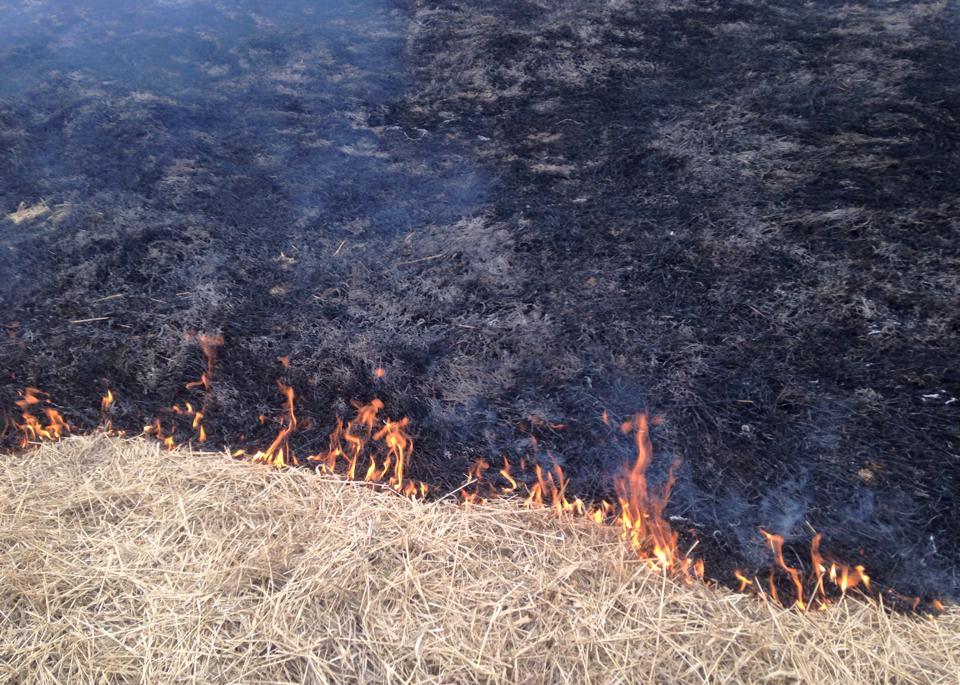
The fields we burned earlier in the week look great, and the green up should be spectacular.

The work has been going a lot faster this year. With experience I’ve become better able to move from one task to the next. By the time I get fully proficient, my one-month stint on the farm will be about over.

That said, the rain has kept me out of the home garden where most of this year’s produce will originate. The green up in our yard has begun.

Categories
Kitchen Garden

Burning the CRP

Photo Credit: Kate Edwards

Prescribed burning is a requirement of some USDA/Farm Service Agency Conservation Reserve Program (CRP) contracts. Burning is an economical way to reduce lower thatch in a field and encourage growth of desired grasses.

It took four of us about four hours to complete a prescribed burn at the farm where I began work yesterday.

Another day in the life of rural Iowa.

Categories
Kitchen Garden Work Life

End of Season Work

Fall Colors
Fall Colors

SOLON— One was planning to harvest corn until Sunday, when he would turn to beans. Half the beans are already in and the fields have been too wet to get the equipment in the last few days. Talk is about how much propane will be needed to dry the harvest.

“It could easily run up to a thousand gallons,” he said. He plans to take a slower approach to erode less of his margin.

Another is cleaning up the fields and barns after a long season. Picking up and stacking tomato cages is the last big task before turning to livestock and wintering.

While no farmer, I’m still picking kale, peppers, apples and a few tomatoes, delaying the garden clean up for another week. There’s a lot to be done before settling inside for winter. People winter too.

Fall Colors
Fall Colors

Not really ready for winter and don’t want to be. Perhaps that’s why I let the scraggly bits of green shoots grow on top of the tomatoes. That’s why I hope for an ability to use more of the abundant kale. Eventually I’ll get the extension ladder out of the garage and pick the high apples. But I’m not ready for the last lawn mowing, mulching the garden, or inspecting the gutters one last time before the cold. Perhaps it all seems too much like death.

So not ready for that. I left the house.

Fall Colors
Fall Colors

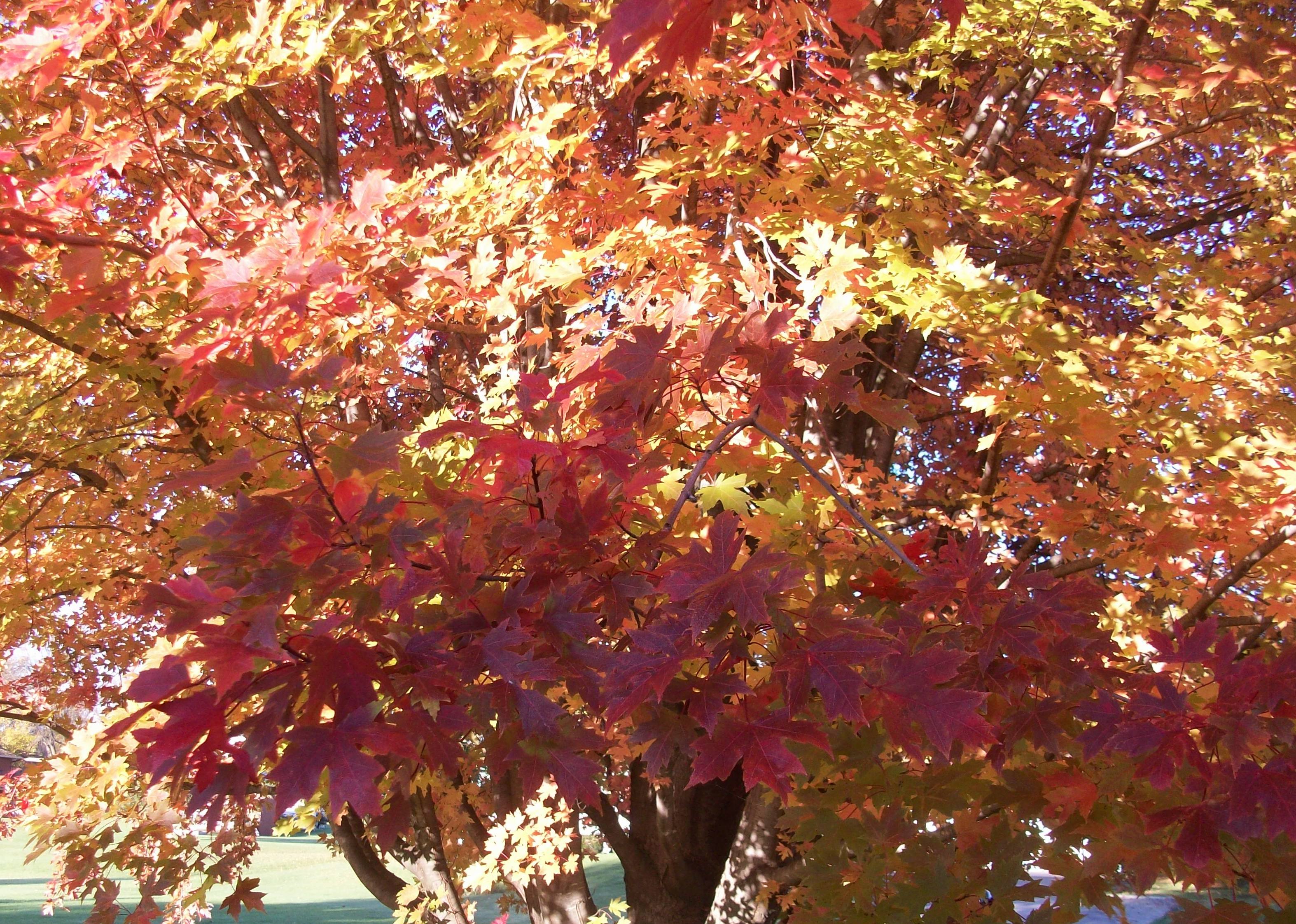
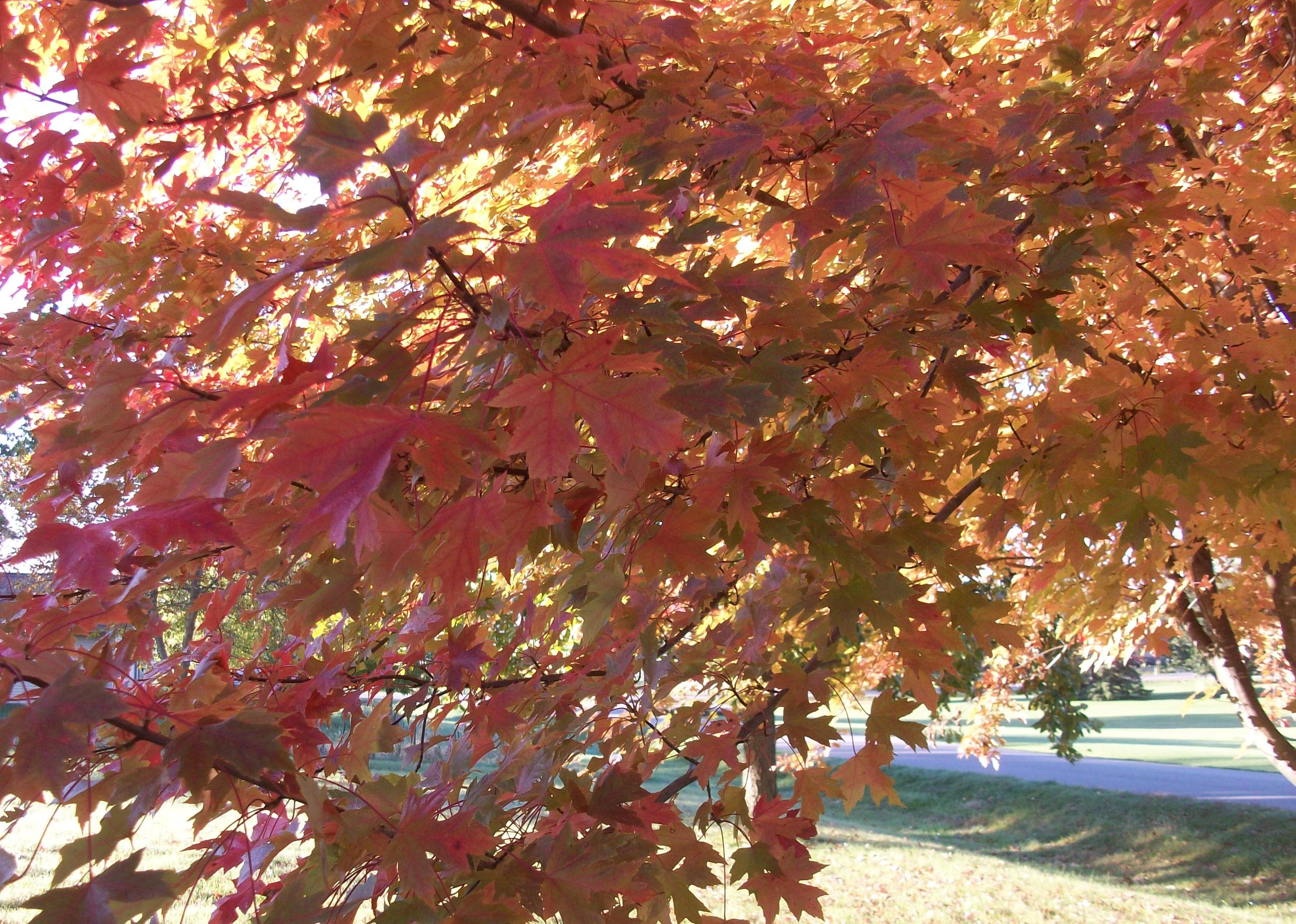
The fall colors are just slightly past their peak, and still beautiful. They are breathtaking really, and hard to capture in digital images.

I drove to town to buy a newspaper because my first article appeared in the Iowa City Press Citizen this morning. While I’m mostly digital, having a print copy of my first still means something. I spent the last 75 cents in my pocket on a second copy.

There is a shift at the warehouse this afternoon. To get ready for a celebration, I pulled a couple of beers out of the box to chill while I’m working. Expiration date July 2014, so I hope they are not skunked. Is that still a thing?

Whatever end there is to this season, and it is palpable all around us, here’s a toast to the idea that it will not be our last trip around the sun. May we sustain our lives on the prairie for yet another year, with an abundant harvest, a great margin on our work, and fresher beer.

Categories
Kitchen Garden

Garlic Harvest

Garlic Harvest
Garlic Harvest

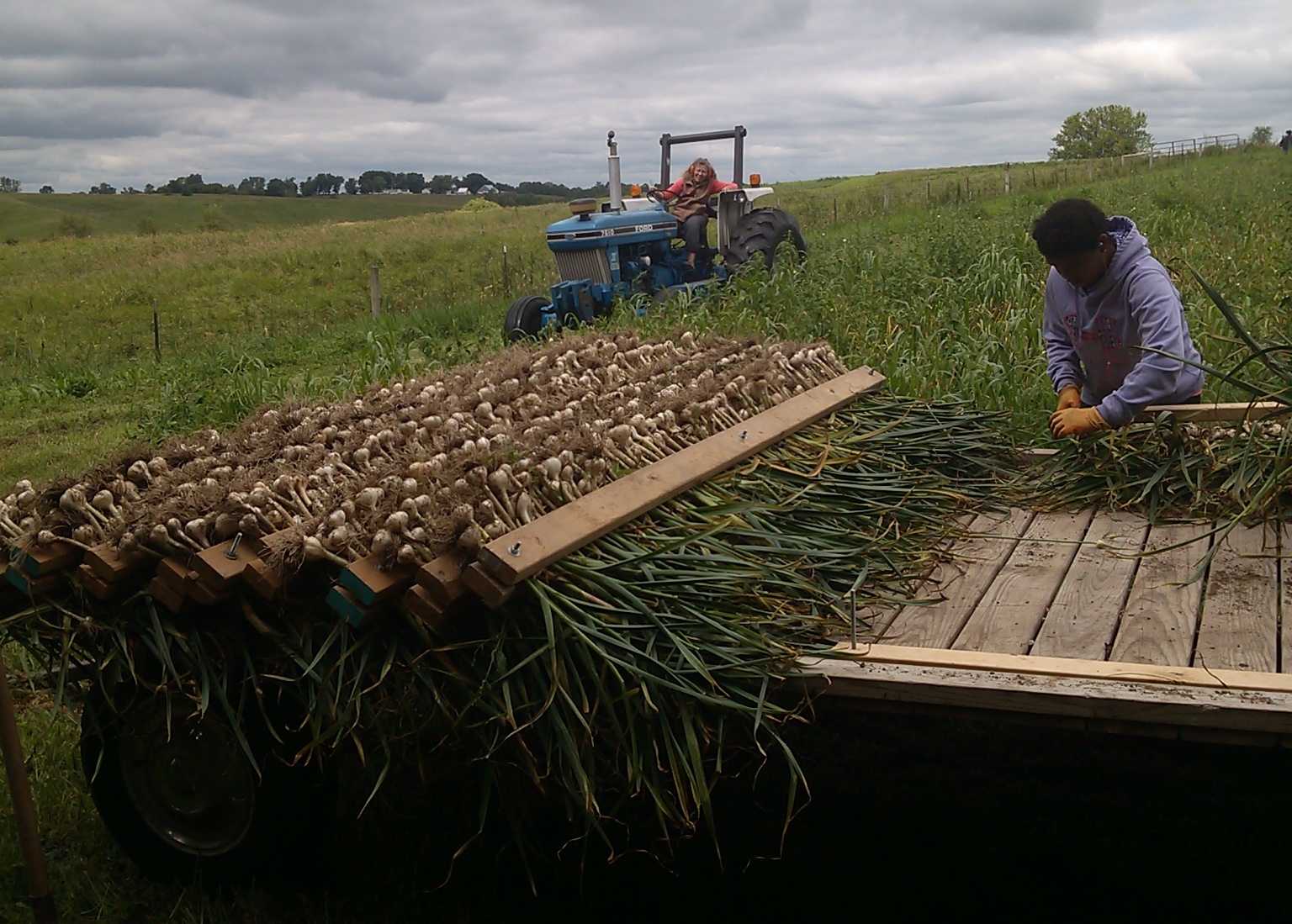
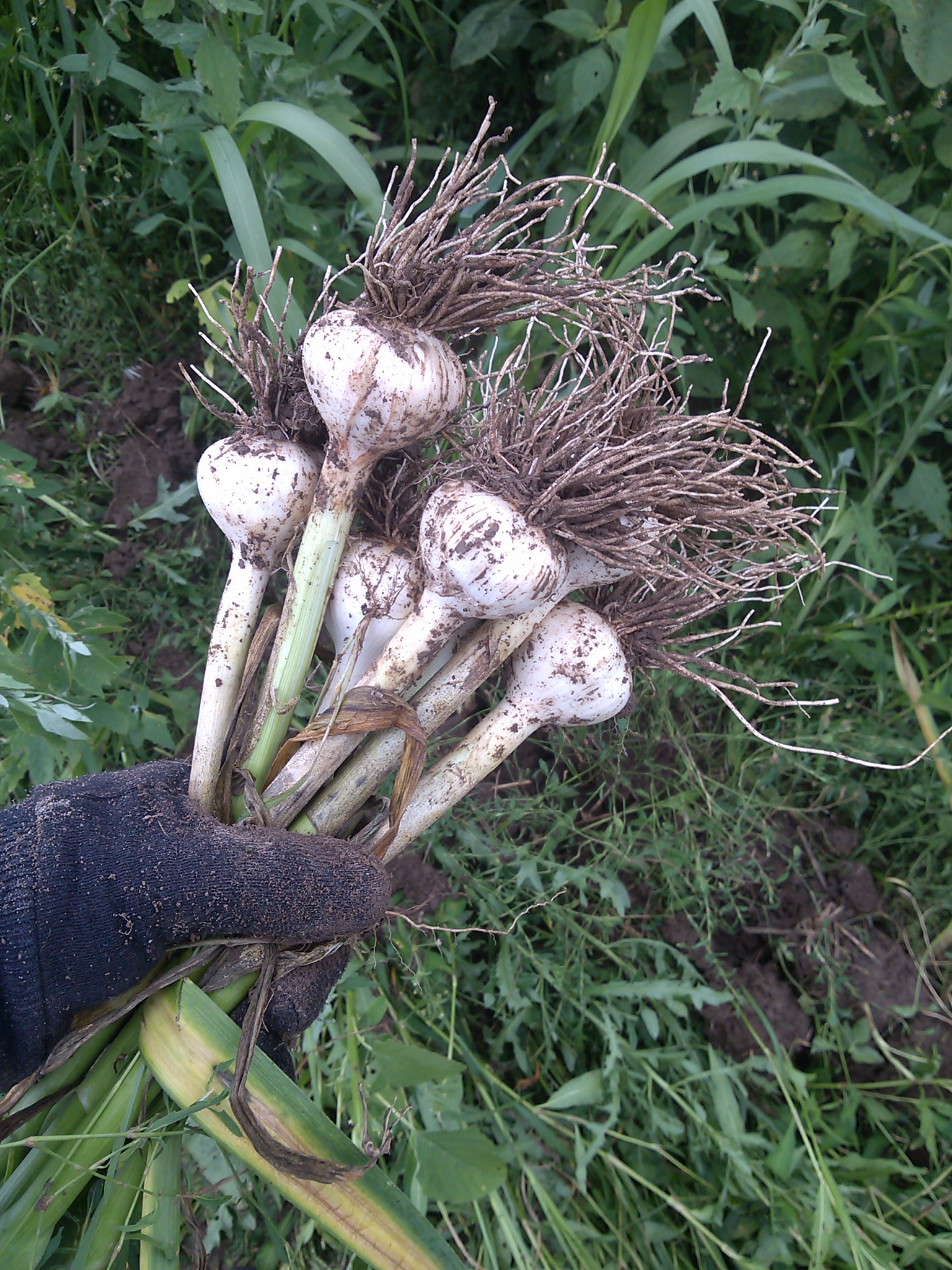
RURAL CEDAR TOWNSHIP— This week’s work at the CSA was helping with the garlic harvest. Now is the time to get it out of the field, even as a few garlic scapes linger in the ice box.

It was all hands on deck yesterday, and I did my share— in some cases picking the garlic I remember planting last fall. The crew size varied during my shift with as many as 16 workers at a time busy digging, cleaning, racking and carrying. It has now been a complete year since we had to buy garlic for our household.

Fresh Garlic
Fresh Garlic

The work was not demanding, but at the end of the day, my hands were cramping uncontrollably for a while. The trouble dissipated with deep sleep, and today I feel as normal as a 60 something ever does.

It felt good to be a part of this year’s garlic harvest.

Categories
Kitchen Garden

Tuesday was Farm Day

CSA Pepper Field
CSA Pepper Field

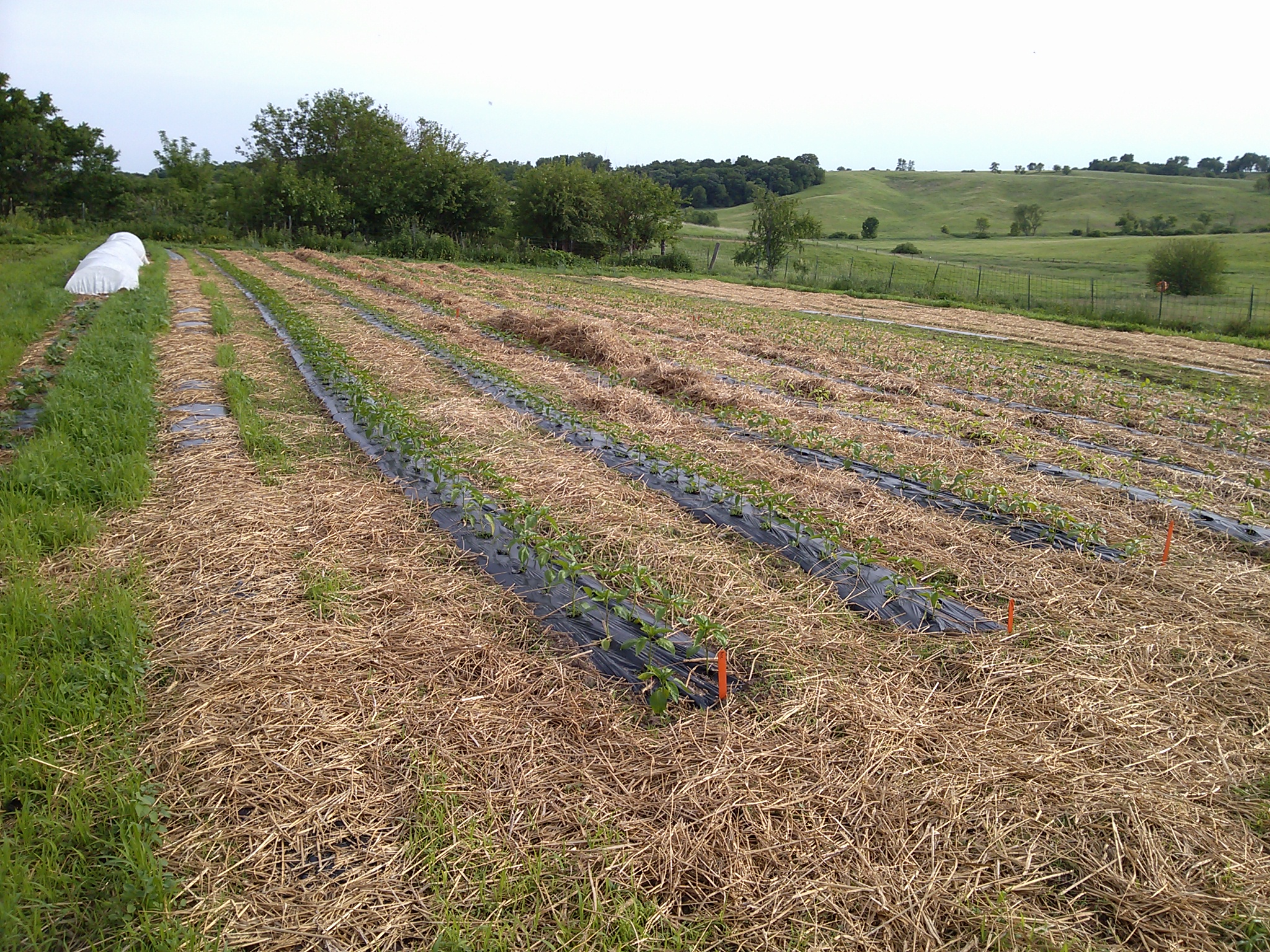
LAKE MACBRIDE— One day per week usually shapes up to be a garden and farm day. Yesterday I planted peppers for 3-1/2 hours at the Community Supported Agriculture (CSA) project, followed by tomato planting and mowing/mulching at home. There will be plenty of grass clippings, and a host of relieved neighbors once I bring it all in. The tomatoes are in the ground, and victims of transplanting have been replaced.

The pepper plants from last week  were shocked, with the leaves characteristically turning white. Today it appears few of them will survive. Afterward, I moved most of the rest of the seedlings outside to harden them. Luckily I have a few additional bell pepper seedlings and can get more from the CSA if needed. The hots are aplenty.

Summer Beer
Summer Beer

At a meeting last  night, we had a conversation about what to do about arugula that bolted (produced flowers), and decided we would eat the leaves. I also gave away some of my excess tomato seedlings and two heads of lettuce, a bag of kale and one of braising greens to young city dwellers who don’t have gardens. There is plenty of food around our house and giving it away is a gratifying part of a local food system.

Last week I purchased a case of beer for after the garden is planted. It is an annual ritual. The beer lasts until fall as I ice them down in a cooler and down them a couple at a time in summer’s heat.

While gardening and farm work aren’t all that was going on yesterday, it seems better to combine those activities, if for no other reason than to dirty only one set of clothes. Something minor, but important as laundry time becomes more precious and limited.