Categories
Living in Society

Cutting Deadwood

Removing deadwood

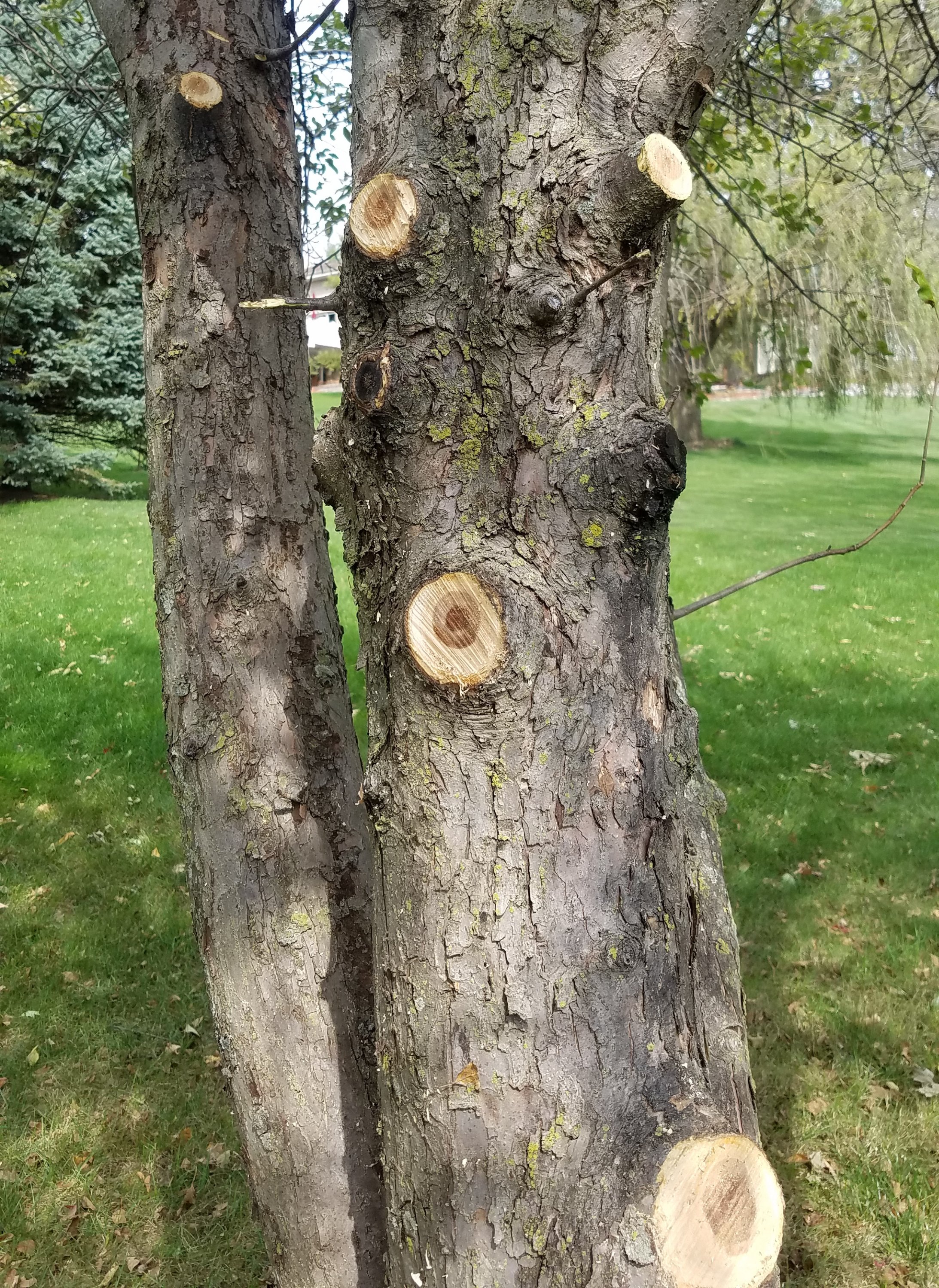
It is not ideal to chainsaw dead branches from living trees in autumn yet that’s what I did during my morning work shift. The wounds provide an entry point for insects which may eventually kill the tree. Some of these apple trees are eventual goners, so there was little to lose.

A bee landed on one wound while I was working, making my point.

I couldn’t get to sleep Thursday night which is unusual. I was stressed about 2020 and everything that has happened. A lot of that is going around. When I finally got to sleep around midnight I slept until 4:30 a.m., later than usual.

News the president and first lady contracted COVID-19 waited for me to wake. My reaction was he brought this on himself and should have been more careful. Regular people knew that all along. The following hours were filled with other takes and by the end of the day the president was hospitalized at Walter Reed. Last report was he didn’t need supplemental oxygen.

Friday I did morning work then rode my bicycle. When I got home I spent time outdoors. Leaves on deciduous trees have ignited into color. It was glorious to be outdoors. I feel better after using the chain saw. The pruning is partly finished and a new pile of brush awaits processing. The woodpile will get taller once it is.

The natural part of each day has been calming. We could spend more time in nature and be the better for it. So much depends upon this election, though. It keeps us up at night and retards our ability to function as we once did. We must work through the challenges and maintain our own health and welfare at a basic level. It means wearing a mask while talking to neighbors in the driveway, putting mail in quarantine a couple of days before opening, and reducing the number of in-person contacts with people we don’t know.

Out of isolation something better will come, a path to a better future, I hope. Days rush by toward the election and we can’t wait for the catharsis we hope it will bring. The uncertainty is unsettling and it’s important to acknowledge that.

Saturday begins another day with a full schedule. Mostly I’ll be working on the election as the first gleaning of the garden was yesterday and the brush pile can wait.

We placed our bets that hard work will change the direction of this misguided country. We all must do our part. Most of us are doing the best we can.

Categories
Kitchen Garden

At the Orchard

Wilson’s Orchard and Farm, Sept. 30, 2020

I began work at the orchard in August 2013. It feels weird not returning this season. I was asked. Due to the coronavirus pandemic and Iowa’s lack of governmental leadership in containing it, combined with my personal risk factors, I declined the customer-facing position as mapper. Maybe next year.

A May frost during bloom took out some of the crop. Then the derecho knocked down trees and shook fruit loose. For the first time in my memory there was no u-pick operation last weekend to allow remaining apples to ripen. It won’t be the best crop. The apples I bought yesterday were grown by the chief apple officer’s brother in Michigan.

There is a crop. I hope to buy a bushel of Gold Rush at the end of the season. When I last inspected those rows they were abundant. What happens is customers start picking them before they are ripe. I’ll wait to see what’s left at the end of October when they ripen. Fingers crossed.

Our back yard apple trees are reaching the end of their lives so I planted two new ones last spring. The Earliblaze trees are slowly dying. The Red Delicious tree had a branch knocked down and the scar from where it was can’t be fixed. Since my trees alternate years of bloom we’ll see what they do next year but it’s clear they need to be replaced.

On Instagram I follow a few Europeans who post about food. Yesterday Maria Bessières posted about apples:

“Got a bit carried away this morning at the market and came home with 4 kg of apples. Now, there is a difference between an apple you get from the grocery store and the apple that grows in your garden. In Estonia apples are one of those things that you never run out of during autumn. Everyone has a grandma with an apple garden or a summer house with apple trees and once the season starts, there is no end in sight. So you make apple jams, compotes, juice, anything and everything you can imagine that uses apples. And when there are still too many of them lying around, you put bags or buckets of them outside of your garden for whoever happens to walk by to help themselves. Apples for days and days to come.”

In the United States that world of apples doesn’t exist with consistency. Supermarkets sell many apples yet we rarely buy them there. When our own trees don’t produce we visit one of the several area orchards and eat them fresh and in season. Instead of dealing with apple abundance during off years we buy them as commodities for out of hand eating or specific recipes. When we do have a crop I put them up as apple sauce, apple butter, dried apples, apple cider vinegar, apple juice, frozen apple slices, and more. During off years we work the pantry down until there is another crop. There is a predictable pattern of our personal apple kingdom. It’s reflective of a type of American individualism.

It’s already October and the orchard is into Ida Red and the Jonathan family of apples. Because of coronavirus restrictions the experience isn’t quite the same. I see them advertising for help in social media yet I’m not tempted to return until the risk of contracting COVID-19 from customers is in the rear view mirror.

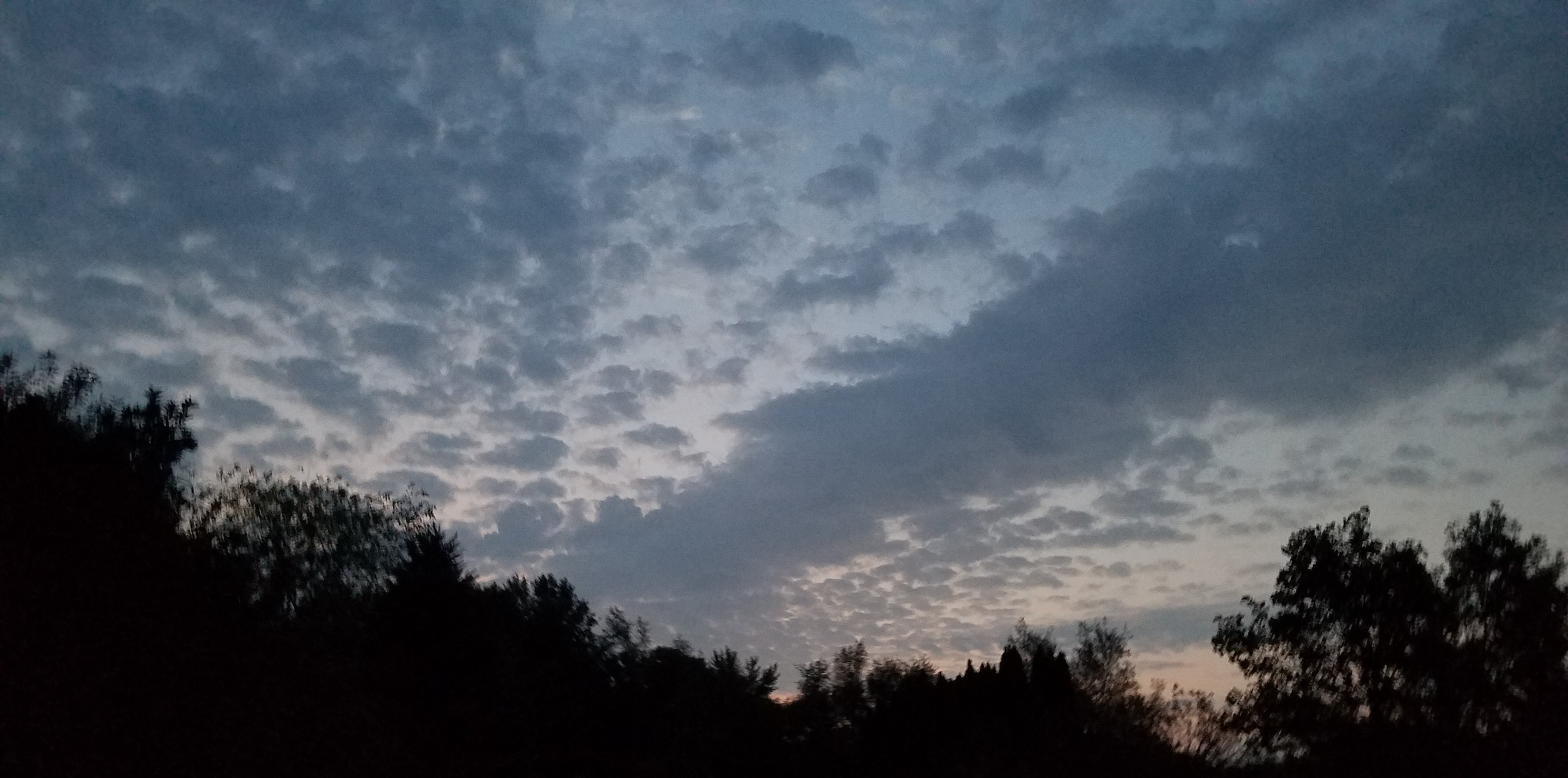
The orchard is a pretty place, a fit place for walking and breathing fresh air. A change of scenery from the isolating confines of home during the pandemic. The cloudy sky doesn’t look different, then it does as we spend a couple of autumn hours at the orchard.

Categories
Living in Society

Holding Pattern

Turn around at Lake Macbride State Park, Saturday, Sept. 26.

While waiting for Joe Biden’s first presidential debate my mind was not on politics. I was wondering what to do after the election.

I returned in memory to a trip I made to Philadelphia in September 2001 after the attacks on the World Trade Center and the Pentagon, the day an airplane laden with terrorists and bystanders crashed in Somerset County, Pennsylvania. Passengers on my flight were few, with most seats open. The country was still in shock although I had business to attend. While driving to the Cedar Rapids airport I heard the president was also planning a trip to Philadelphia that morning, his first trip after the terrorist attacks.

Because of the president’s visit our aircraft entered a holding pattern as we approached Philadelphia. It lasted a long time, 45 minutes or so. When we were cleared for landing and did I entered a changed world, eerily quiet. I rented a car and drove to our operation on Grays Avenue. There were law enforcement officers on every corner. I encountered the Bush motorcade heading back to the airport on the opposite side of I-95. It was a turning point in my support for the president after the attacks.

The question I find myself asking today is similar to what I asked myself that grey day in Philadelphia. What will be next? An honest answer today is I don’t know. A lot depends upon the outcome of the Nov. 3 election.

Yesterday the other shoe fell as the Walt Disney Company announced layoffs for 28,000 workers in Florida and California. After cast members were on furlough for six months this is an unwelcome announcement. Airlines will soon follow suit with layoff announcements. Cruise ships haven’t figured out how to operate post-pandemic. People aren’t going to the movies as they did. Government has done a poor job of containing the coronavirus and people do not want to join the more than one million people world wide who died from COVID-19. Everyone is cautious and it is unclear if or when we will do things again that once seemed so normal. If the travel and entertainment industry can’t figure it out, there’s little hope for us until well into 2021 or maybe 2022.

In the meanwhile we are in survival mode, conserving resources and making do. Every extra cent from our pensions is used to pay down debt and keep our credit lines open. The August 10 derecho resulted in $1,200 in direct expenses for us. We got off easy compared to many. The unresolved stress of the elections works against our best intentions. It will be worse if Republicans win.

In all of this we must find hope enough to find our way out of the darkness while remembering the darkest hour is just before the dawn. It is hard to find hope when we’ve been up all night.

Categories
Living in Society

Turning Point 2020

Predawn light. Sept. 20, 2020

A few things in the election campaign need doing before turning toward home. Compared to past years the work ahead is enough to keep busy yet less.

Chaos in the pandemic response, racial tensions, economic turmoil, and the obvious impact of global warming made it easier to get to this point in the 2020 election cycle.

I’ve been discussing candidates with friends, family and neighbors. Everyone is planning to vote. Most have decided for whom.

I want to finish the lit drop for the state house candidate, take a look at our budget to see if we can afford another contribution to congressional candidate Rita Hart and state house candidate Lonny Pulkrabek, and finish the last writing for the campaigns before boxing up the memorabilia and moving on. Unlike in past years we won’t likely have a final get out the vote gathering or operating center in town because of the coronavirus pandemic.

What bothers me most about 2020 is the inadequate government response to the coronavirus pandemic. If African nations, with a lot fewer resources than the United States, can control the virus what is our problem? I don’t have good answers.

The fact that Russia is blatantly trying to influence the outcome of the election gets to me. It’s not because I viewed the former Soviet Union and Russia as an adversary while serving in the U.S. Army in West Germany. It’s because Republicans apparently agree with the Russian view that reelecting Trump serves their purposes. When did we become susceptible to Russian propaganda? I don’t know but Trump is without question their favored candidate. What the president does to contain Russian global aggression is pitiful. Did he think we wouldn’t notice?

The issue of China is problematic. In a new world order with the United States diminished by the president’s America first agenda, China is rising. They have been for a while. It’s been 11 years since I retired from my job in transportation and logistics when the appetite for American companies to do business with China could not be sated.

There were many examples, Hon Industries in Muscatine is one. They pursued a deal with China to manufacture and distribute office equipment in the Asian market. Manufacturing costs were much lower in China and there was proximity to developing markets combined with transportation infrastructure to export the goods. Doing business in China seemed obvious from a global perspective. The kicker was they could own no more than 49 percent of any China-based business, surrendering control to the Chinese. I don’t know how this worked out for Hon but they were vulnerable to the Chinese and deemed it worthwhile to expand use of their technologies into new markets.

Republican politicians repeat the words “Chinese Communist Party” without end. If China was such a good business partner a short while ago, what turned us on them now? The answer sounds dumb but rings true: the problem the president created with his management of foreign affairs is coming home to roost. Instead of managing diplomatic and economic relations with China the president let the whole thing turn into a mess. Our former governor now outgoing ambassador to China Terry Branstad’s personal relationship with the Chinese president couldn’t stop the president’s inept policy.

Part of the president’s message is about jobs. It is incoherent. For anyone following this as long as I have, history tells a different story about job migration. Once President Bill Clinton signed NAFTA the job exodus began. Jobs first went to the Mexican side of the border where labor was cheaper than in unionized plants in the United States. These plants were called maquiladoras. Ultimately corporations left Mexico and chased cheap labor around the globe, ending up in China and Southeast Asia. As I’ve written previously, there is no bringing those jobs back. The global system American business created would be difficult and costly to dismantle. I’m not sure we want it dismantled.

Whatever the outcome of the election we’ll go on living. As the disaster of 2020 governance has shown, it will be better with Democrats in positions of power. I’ll continue working to elect Democrats until the polls close on Nov. 3. At the same time I am ready to turn toward winter and what’s next.

Categories
Sustainability

First Coronavirus Wall

Turn around. Ely, Iowa.

As autumn begins we hit the six-month wall of the coronavirus pandemic. We are all getting tired of the masks, restricted activities, and video meetings.

We want our lives to return to a sense of normal with more reasonable human interaction, the kind to which we are accustomed.

The Aug. 10 derecho gave Iowans something to do at home. Now that it’s mostly cleaned up we are left with ourselves and more mask-wearing, restricted activities, and video meetings.

If we have to go to the doctor or dentist we understand there are specific protocols to maintain social distancing inside the clinic. They are labor and time-intensive. The clinicians are not used to them either. At least we determined a way to get routine medical checkups.

Time was we could escape from our daily lives. People took cruises, traveled to faraway places as tourists, or just went to the beach. Now there is nowhere to go because the pandemic is global. Cruise lines, those floating cesspools of infectious diseases, haven’t determined how to restart operations in the pandemic. Air travel is not much better.

We learned new ways of securing provisions, living at home, meeting with friends, working, and attending school. Some found new ways to entertain and enjoy ourselves. We prepare more of our own meals and exercise more. We make more telephone calls and participate in a variety of activities made possible by the internet. All the same it doesn’t seem normal. For the time being there is the wall.

Last Saturday NBC News reported the U.S. COVID-19 death toll surpassed 200,000 individuals. In March, Dr. Deborah Birx, coordinator of the White House Task Force on the coronavirus, said in a best case scenario, with Americans doing exactly what was needed to mitigate the effects of the virus, the death toll would be contained to between 100,000 and 200,00 deaths. At the time there had been only 3,000 COVID-19 related deaths. 21st Century Americans are not a disciplined lot nor good at doing what is needed. We are also not the best listeners. Whatever happened to us? The pandemic is expected to get worse.

“As we approach the fall and winter months, it is important that we get the baseline level of daily infections much lower than they are right now,” Anthony Fauci, director of the National Institute of Allergy and Infectious Diseases, told James Hamblin of The Atlantic. For the past few weeks, the country has been averaging about 40,000 new infections a day. Fauci said, “we must, over the next few weeks, get that baseline of infections down to 10,000 per day, or even much less if we want to maintain control of this outbreak.”

Up against the wall, many are not paying attention to public health officials. We want to get on with our lives. The coronavirus does not care.

The first step in dealing with the coronavirus pandemic is to admit it exists. Denial of the reality of the virus only serves the virus. We have to live like we are contagious. We get tired of hearing it yet we must wear a mask and pay attention to our immediate environment, what we contribute to it, and what we take away from it. Maintaining social distancing has been hard. I want to be closer to people when with them, to maintain customary behavior. We can’t do that as much in the pandemic. We also have to pay attention to the amount of time we are with people because duration of exposure is a key factor in COVID-19 spread. It is near impossible to view every person I know and meet as a disease vector.

Experts say the six month wall in a crisis arrives and dissipates like clockwork. We can muster a positive attitude and persist, be kind to those closest to us, and take care of our obligations. Before we know it we’ll be on the other side. That’s a start, and for many it may be enough. We have a long way to go in the coronavirus pandemic, maybe another year or more. To sustain ourselves we must let the chips fall and be prepared to climb when we discover a chink in the wall. It is there, although at times difficult to see.

The human condition is optimistic. We believe this pandemic will end. We know enough to see there will be another pandemic after this one. At the same time we should realize that the wall we encountered six months in isn’t the end, even as the coronavirus is permanently with us. We are able to parse the difference and should.

The predictable wall gives us a new kind of normalcy. It’s a bit weird yet comforting at the same time. In a couple of weeks we hope to be on the other side.

Categories
Living in Society

Work Ahead

Burn pile, Sept. 18, 2020.

On the driveway, under starlight, I remembered Ruth Bader Ginsburg.

It will be a busy fall Saturday.

For the first time since the coronavirus pandemic began with the governor’s March 9 proclamation there is a can and bottle drive at the high school. We don’t drink many beverages that come in cans yet I have six cases of glass bottles to recycle. I don’t know which charity gets the deposit refund although one person organizing the drive is a member of the school board.

While in town I plan to deliver seven sets of political yard signs. My supply of most signs is close to depleted. We are supposed to get more from the Biden-Harris campaign this month.

Yesterday we re-submitted requests for absentee ballots. A judge ruled our first requests, and those of thousands of others, were invalid because of a paperwork issue. Make no mistake. We will vote.

I expect politics to dominate our daily lives until the election results are known. The Commonwealth of Virginia began early voting on Friday. The line lasted for hours and is a harbinger of what’s to come. Turnout is expected to be higher than normal for a presidential election.

These are not normal times.

Categories
Living in Society

Rain Continues

Derecho Woodpile

From drought to rain the last week has been unrelenting.

The garden continues to produce and grass is growing again creating another task once the landscape dries.

Doesn’t look like drying will happen today.

I am helping the local political party distribute campaign yard signs. There are few parts of the county north of the interstate highway I don’t recognize. I’ve gotten requests from voters on some new streets yet when I look for them the same roads and streets are in memory to find them. I remember a lot of door knocking from past political campaigns.

I stopped to refuel my 1997 Subaru Outback. At the convenience store no one was wearing a mask. Not a single person. I couldn’t see through the window whether the cashiers were, although I hope so. Keeping my distance at the fuel pump I sanitized my hands once back in the driver’s seat. Risk avoidance is a key part of dealing with the coronavirus pandemic. I resisted the temptation to go inside and buy a Powerball ticket.

It’s just as well it’s wet outside. I have an indoors project with a deadline and it’s easier to avoid distraction when it’s raining. I’m about to make my second French press of coffee for the day. It may not be the last. I’m digging into the history of our community. There’s a lot of food for thought and memory. It should keep me busy all day.

Categories
Sustainability

Coronavirus Redemption

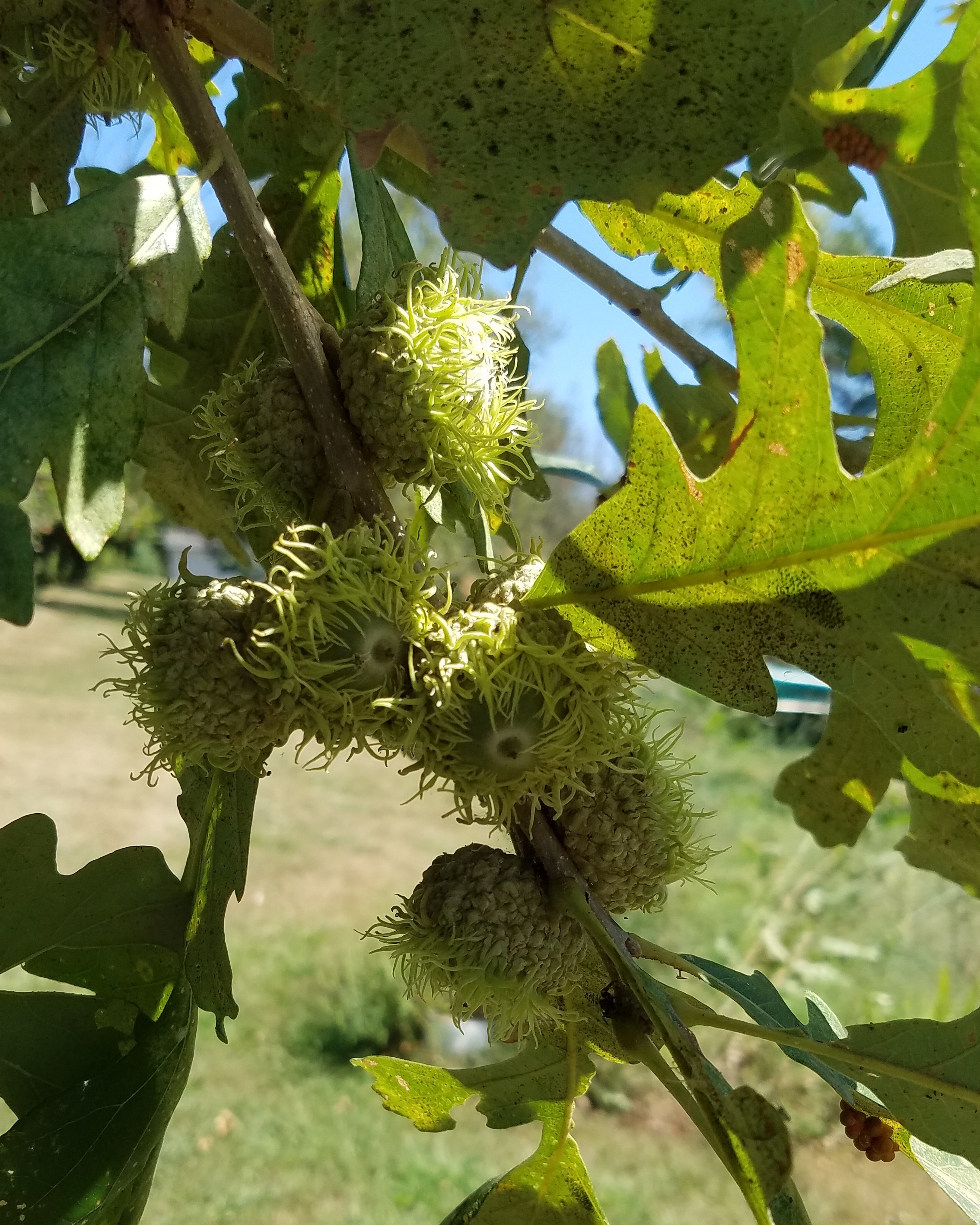
Bur Oak Tree acorns.

The coronavirus pandemic put us in our place.

When the real risk of illness or death can be found everywhere, behaviors change. Upon reflection, so can our process for living.

Yesterday, the Washington Post published an article titled 9 everyday experiences the pandemic has endangered — and how they impact our lives. I read it and only one of nine, using cash for payments, impacted my life. That’s one of the problems with this pandemic: one person’s perspective just doesn’t apply to everyone. That’s increasingly American and to the extent our tolerance for diverse opinions is scant, it is a problem for coming out of the virus. If we can’t agree with scientists, including epidemiologists and public health officials, we will not solve the problem of a virus that sickens millions and kills hundreds of thousands.

How do we get out of the pandemic? Given today, I don’t know how we can.

The cost of redemption is subverting our egos, something a large group of people are willing to do, at least long enough to abate the virus. Absent political leadership, such ideas seem futile. As lifelong Republicans are willing to vote for Joe Biden to end the crazy of the current administration, suppression of who we are, while it may get us through the pandemic, is not a longer term solution to social problems.

The pandemic forces us to change how we live. We now have homemade cloth masks to wear in public. If one of us were out more we’d invest in a plastic shield to protect our eyes. We cook all of our meals at home. We rarely leave the property. When our cable to internet access was accidentally cut, our wireless usage more than doubled — we stay connected to the digital world. Increasingly, internet content seems homogeneous.

There are a few changes to daily life I hope continue into the post pandemic period.

Containing Contagion. We’ve not been sick since the governor declared the emergency on March 9, six months ago. In retrospect, not going to a workplace with 80 employees reduced the number of infections I brought home. While I enjoyed the extra income from that retail job, I better enjoyed good health and the absence of colds, influenza and pneumonia. I hope mask wearing, washing hands, sanitizing when soap and water is not available, and maintaining social distancing continues in society long past the end point of the coronavirus pandemic. I’m likely an outlier.

Using Stuff. Our house became over-filled with the unused detritus of living in a consumer culture. The coronavirus pandemic has us using some of that stuff in a way we hadn’t anticipated. I found my webcam and installed it on my desktop to participate in video conferencing. I took my bicycle off the hooks in the garage and have been riding it almost daily. When it breaks down I try to fix it myself and consult with friends and technicians on what to do. I’m cooking more, trying to use up ingredients stored in the pantry and freezer. I developed a process to circulate and wear clothing that is too worn to donate to charity but had remaining use. Our home has become a workshop in a way I have long wanted but was too busy to create.

Kitchen Garden. I abandoned my quest for local food and its meaning. To replace it, I focus on the new term, “kitchen garden,” which represents the intersection between created meals and the farms, gardens, orchards and manufacturers that produce our food. The term “local food” was a construct that no longer serves our purpose. We are consuming more locally produced food than ever by recognizing and living in this nexus.

Wellness. The coronavirus pandemic brought attention to our health and wellness. I get in 25-30 minutes of exercise daily, eat less, and address my health risks. In addition, I write letters (on paper) to a few people, stay in touch via email and social media, and do more neighboring. While the circle of friends radius is shorter, it is more meaningful and that has been better for wellness. It is important to mention the pensions our household receives. The viable economic base they provide makes everything else possible.

Intellectual Development. While my work status is “retired,” I stay busy. The coronavirus pandemic stopped everything in its tracks as I stayed home and followed what government leaders suggested when it made sense. The enlightenment of this self-isolation is that something will be next. I don’t know what it will be, but it will be local, new, and grounded in intellectual pursuit as we tackle issues where I live. There have been a number of locals interested in participating over the years. It is time we break from participation in distant activities to create our own local ones. I’m not sure what that looks like but am motivated because of the pandemic to figure it out.

Transportation. Most days if I leave the property it is to exercise. The number of auto trips is severely reduced as I shop at the wholesale club once every two weeks and go to a grocer less than once a week. I need to rotate the autos so they both get started and driven regularly. Gasoline use dropped 20 percent. When we ran a generator during the derecho recovery we consumed 15 gallons or more. I make occasional trips to the county seat, visited a local nature preserve once, and drove to the TestIowa COVID-19 test site three times. That’s pretty much it. I’ve become comfortable with staying home for several days at a time.

It is hard to say when the coronavirus pandemic will be officially over. It will be with us for a while, I’m sad to say. Amid the sickness, death and financial challenges I find a new way of life and a wavering ray of hope. Let’s hope it persists.

Categories
Sustainability

Locust Tree

Locust tree trunk.

Punk day? We go on living.

Wednesday started well enough with cool temperatures and a 13-mile bicycle ride. Then I tried to clear the remainder of the locust tree laying across the garden.

The Poulan chain saw started but when I hit the accelerator it died. That was the trouble last time I had it out. I put it on the front steps, got out my Wagner electric chainsaw, and proceeded to make about a dozen cuts. The Wagner has been a great tool, although toward the end of this session it developed a problem I couldn’t resolve. I called the small engine repair shop across the lakes.

They said the electric chain saw repair would likely cost more than the tool was worth. They did work on Poulan chain saws and had space in the work queue to get mine in. With the derecho cleanup, businesses like theirs have been busy. I packed my 1997 Subaru and headed across the lakes. Overnight they adjusted the carburetor, sharpened the chain, and I was good to go. I proceeded to clear the garden of the locust tree.

I’ve been taking my time with the rest of the derecho clean up. I got the fallen branches and my destroyed greenhouse out of the neighbors’ yard the day the derecho hit but have been in no hurry to process the debris. The metal sink I kept in the garden was crushed when the locust tree fell on it. Good sections of fencing and posts were ruined. One of the three oak trees I planted in the garden is leaning due to the derecho wind and weight of the locust tree falling against it.

Some of the vegetables survived although all of the tomato and tomatillo cages were crushed and twisted. Much of my row of peppers was smashed. I’ll get outside to work on it again today and harvest what I can from the wreckage.

We need rain yet none is forecast. As summer ends the pace is picking up. As if it weren’t already at a stunning clip.

Categories
Living in Society

No Vacation To Speak Of

Dawn as we enter a drought.

I spent a couple of hours reading in a shaded folding chair in the garage. That will be the extent of our vacation this summer.

The weather was exceptionally nice on Saturday after the heat wave. I could hear chainsaws in the distance where neighbors were continuing derecho clean up. Mid afternoon a pickup truck pulling a trailer laden with logs drove by. There was fishing at the lake, including a raptor flying with its prey during my morning jog.

The reason I was jogging is my bicycle blew an inner tube on Thursday. I had a spare but it won’t take air. I also had spare tires but the bead is cracking on all of them. I plan to upgrade the quality of my tires but that will take a while because of an order backlog. That is, because I don’t want to travel to the COVID hot spot in the county seat, mail orders are backlogged until October.

I haven’t adjusted to retirement forced on me by the coronavirus pandemic. Maybe vacation no longer exists.