A few people I know attended, but mostly the names and faces of the negotiators and players were reduced to certain heads of state and prominent activists.
Short version: now that the agreement is made, governments must adopt it.
“Senate leadership has already been outspoken in its positions that the United States is not legally bound to any agreement setting emissions targets or any financial commitment to it without approval by Congress,” he said.
Managing greenhouse gas emissions will be a challenge without U.S. leadership. The Republican-controlled Congress is unlikely to consider or adopt the agreement. The Heritage Foundation asserted the administration is planning to make an end-run around Senate scrutiny. That is ridiculous given the public nature of the negotiations that produced it and the long, lead-up to the accord.
Suffice it that the Environmental Protection Agency Clean Power Plan is the primary mechanism for compliance with the terms of the Paris agreement, and the Congress has been trying to kill it. Debate on the Clean Power Plan began long before it was published Oct. 23 in the Federal Register. On Nov. 18 the Senate passed a resolution to kill the plan. On Dec. 1 the U.S. House of Representatives did likewise.
The United States is not the leader we could be on mitigating the causes of global warming. Nothing about COP21 changed that.
What has changed is the world is coming together to address the greatest threats to human survival. Not only regarding greenhouse gas emissions, but in other areas. Whether the United States will lead or follow is to be determined. The direction has been set, and while there will be tenacious resistance to changes in the fossil fuel paradigm, new leadership is emerging. Life as we know it hangs in the balance.
Let’s hope our government steps up to the challenge. We have the capacity. Whether we have the political will is an open question as the world passes us by.
President Obama is scheduled to depart Washington for Paris later today to attend the 21st Convention of the Parties (COP21 or Paris 2015). Paris 2015 offers our best hope to curb greenhouse gas emissions through the United Nations Framework Convention on Climate Change.
As of yesterday 150 heads of state had accepted the invitation to participate, with representatives of 196 nations planning to join. Each head of state will make a speech, with the order set by UN rules. President Obama’s speech will follow His Majesty Mohammed VI, the King of Morocco around noon local time.
In the wake of the Nov. 13 terrorist attacks, Paris is on lock down. Ed Fallon described the scene.
With public demonstrations banned, would-be participants lined up pairs of shoes in one of the rally locations that would have been. As I type, a human chain is lining up between Place de la Nation and Place de la Republic.
Even though people with means have traveled to Paris to demonstrate, contrary to what people like Naomi Klein and other prominent climate change advocates have said, accompanying demonstrations don’t seem so relevant to the bigger picture. With or without them, the heads of state and dignitaries will accomplish something with regard to mitigating the causes of climate change. Let’s hope it is enough.
That’s not to say there isn’t hope, just that all of the speeches could be reminiscent of the scene from Star Wars where Queen Amidala addressed the Galactic Senate.
Even though the U.S. political system, the legislative branch of government particularly, is unprepared to act on climate today, I believe, and with good reason, the effects of anthropocentric climate change will become so pronounced that even the most virulent climate skeptic will recognize the need to take action to mitigate its causes.
The time for which we have long waited is upon us. Here’s hoping our leaders take action.
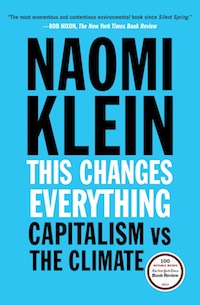
Unlike the climate crisis story spoon fed to us in decreasing numbers of corporate media stories, in social media memes, and in fleeting conversations at community gatherings, in This Changes Everything: Capitalism vs The Climate, author Naomi Klein said there is a nascent, global movement preparing to take climate action.
“The climate movement has yet to find its full moral voice on the world stage,” Klein wrote. “But it is most certainly clearing its throat—beginning to put the very real thefts and torments that ineluctably flow from the decision to mock international climate commitments alongside history’s most damned crimes.”
If you haven’t read Klein’s 2014 book, you should. Not because of a desire to take sides in the public discussion of global warming and the need to keep global temperature increase to two degrees or less. But because a). reading a paper book can be good for us, and b). with Klein you can hear her broader story and learn new things. Here’s more on why you should pick up a copy at your library or bookstore if you haven’t already.
In Iowa, as home to the first in the nation caucuses, we are inundated with stories about politics. Elections matter, and we have seen how in the Republican awakening after Barack Obama’s 2008 election. Progressives hardly understood that Republicans, though in the minority in the Congress, would exercise such power that much of Obama’s agenda was sidelined from the beginning. Republican comebacks in 2010 and 2014 have turned the congress from Democratic to Republican, and right-wing hardliners have more input to the legislative process than their numbers warrant. Taking climate action in Congress has, for the most part, been a non-starter.
“It’s not just the people we vote into office and then complain about—it’s us,” Klein wrote. “For most of us living in post-industrial societies, when we see the crackling black-and-white footage of general strikes in the 1930s, victory gardens in the 1940s, and Freedom Rides in the 1960s, we simply cannot imagine being part of any mobilization of that depth and scale.”
“Where would we organize?” Klein asked. “Who would we trust enough to lead us? Who, moreover, is ‘we?'”
Klein’s book frames answers to those questions: People are organizing everywhere, resisting unbridled extraction of natural resources by corporations. “We” includes almost everyone.
This Changes Everything reviews the recent history of the climate movement. It covers extreme extraction of natural resources that leave behind waste heaps, fouled water and polluted air, then are burned and produce atmospheric gases that warm the planet. Everyone from fossil fuel companies to environmental groups have been involved in what Klein calls “extractivism.” There is a growing resistance, including environmental groups divesting from investments in the fossil fuel industry, indigenous people mounting court battles, and community groups violating international trade agreements to move to renewable energy sources. The book is a snapshot of where the climate movement currently stands.
While Klein has her point of view, she depicts the complexity of a global network of fossil fuel companies seeking to extract hydrocarbons scientists tells us must be left in the ground. While the resistance may not have found its full moral voice, Klein’s book makes the case it won’t be long and recounts the significant inroads indigenous people and communities near extraction sites are making.
When we talk about taking climate action, Naomi Klein’s work should be part of our conversation.
The exchange between U.S. Senator Ted Cruz and Sierra Club president Aaron Mair during an Oct. 6 Senate judiciary subcommittee hearing was a brief flash in the news cycle. Was it also a debate about climate change?
The subject was to have been the impact of federal regulations on minority communities. The junior senator from Texas turned it into something else — a desultory grilling of Mair in which he brought out some old sawhorses from the climate denial tool shed. Here is the exchange:
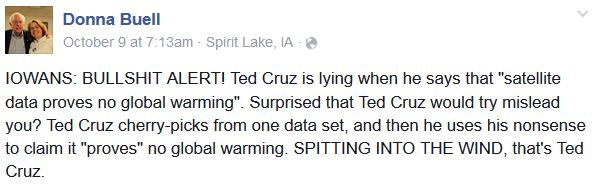
Sierra Club board member Donna Buell posted this on Facebook after the hearing:
Mair was quick to reply on behalf of the Sierra Club:
View the entire two-hour hearing if you have the stomach for it here.
Cruz asserted in an Oct. 7 press release he “proved, contrary to liberal assertions that man-caused climate change is ‘settled science,’ that there is still a healthy and vigorous debate about the causes and nature of climate change based on the data and scientific evidence.”
So does Cruz picking a fight indicate debate? Decidedly not. In fact, as Mair pointed out in his video response, Cruz’s claims during the hearing have been debunked by the National Oceanic and Atmospheric Administration, an agency over which Cruz has oversight in his role as chair of the Senate Committee on Commerce, Science, and Transportation.
What’s this about?
It is about the attempt of right wing politicians like Cruz to hijack reasonable discussion among people with differing opinions in favor of a personal agenda.
On Oct. 12, I was part of a Sierra Club panel of presenters in which I suggested attendees could continue the discussion Cruz and Mair started by bird dogging Cruz in Washington, Iowa Wednesday morning.
Miriam Kashia, a veteran of the Great March for Climate Action, raised her hand and said, “I’ve done that.”
She reported the incident in an Oct. 13 guest opinion in the Iowa City Press Citizen,
Then, during a media interview with Sen. Ted Cruz speaking about the terrorist threat, I jumped in and asked him, “What is your response to the fact that the Pentagon tells us that climate change is the biggest threat to America’s security?” His response, “You don’t have the right to ask any questions, because you’re not a member of the media.” The media, meanwhile, was not doing its job.
Statements by Cruz and his ilk so often go unchallenged. People agree with him, and in Texas helped elevate him to power in 2012. His supporters are vocal and much of what is said serves the conservative agenda or it doesn’t get heard. I don’t doubt there is a Cruz community that buys into his world view, even though it appears to be based in something other than reality.
What becomes clearer each time people like Cruz are examined is nothing is behind the verbiage but vapidness. Sarah Beckman pointed this out about Cruz in an Oct. 13 post on Iowa Starting Line.
If you spend enough time with Republican presidential candidate Ted Cruz, you start to get the feeling that there is something “off” about him. His long pauses, his forlorn looks out into the audience, his deep crescendos and trailing whispers, his odd pop culture references. They all paint the picture that Cruz is maybe not as honest and authentic as he lets on while campaigning.
Never is Cruz talking about what we have in common, about how we can live better with each other, or how we solve the greatest problems of our time, like mitigating the causes of global warming.
Elections matter, and when the electorate elevates people like Cruz to positions of power over NASA, NOAA and the government’s scientific bodies, we are doing ourselves no favors.
If readers plan to move to Texas to sort out this mess, and elect someone who will enter the arena to fight for all of us, then God bless. I don’t see that happening.
Cruz gives us reason enough to engage in politics. Leaving important political work to others helped produce Senators Cruz, Ernst and Grassley, and the troubled time in which we live.
There is a better way, and it’s up to us to find and follow it.
It would be great to just plug into a socket, use electricity and be done with it. There’s more to it than that.
We take lighting after sundown for granted, as we do preserving food in the ice box and proper functioning of the myriad of appliances in a modern home.
Since before the Christian Era, humans have attempted to understand how our universe works. I was reminded of this while doing research on tonight’s supermoon lunar eclipse, the mechanics of which were worked out by the ancients around 200 B.C.E., according to Robert Mutel at the University of Iowa.
Since the industrial revolution began, humans have increased development of community solutions to improve lives. The expansion of electrical usage is one of the great things to emerge, transforming lives where whale oil, then kerosene were the primary fuels used to illuminate darkness.
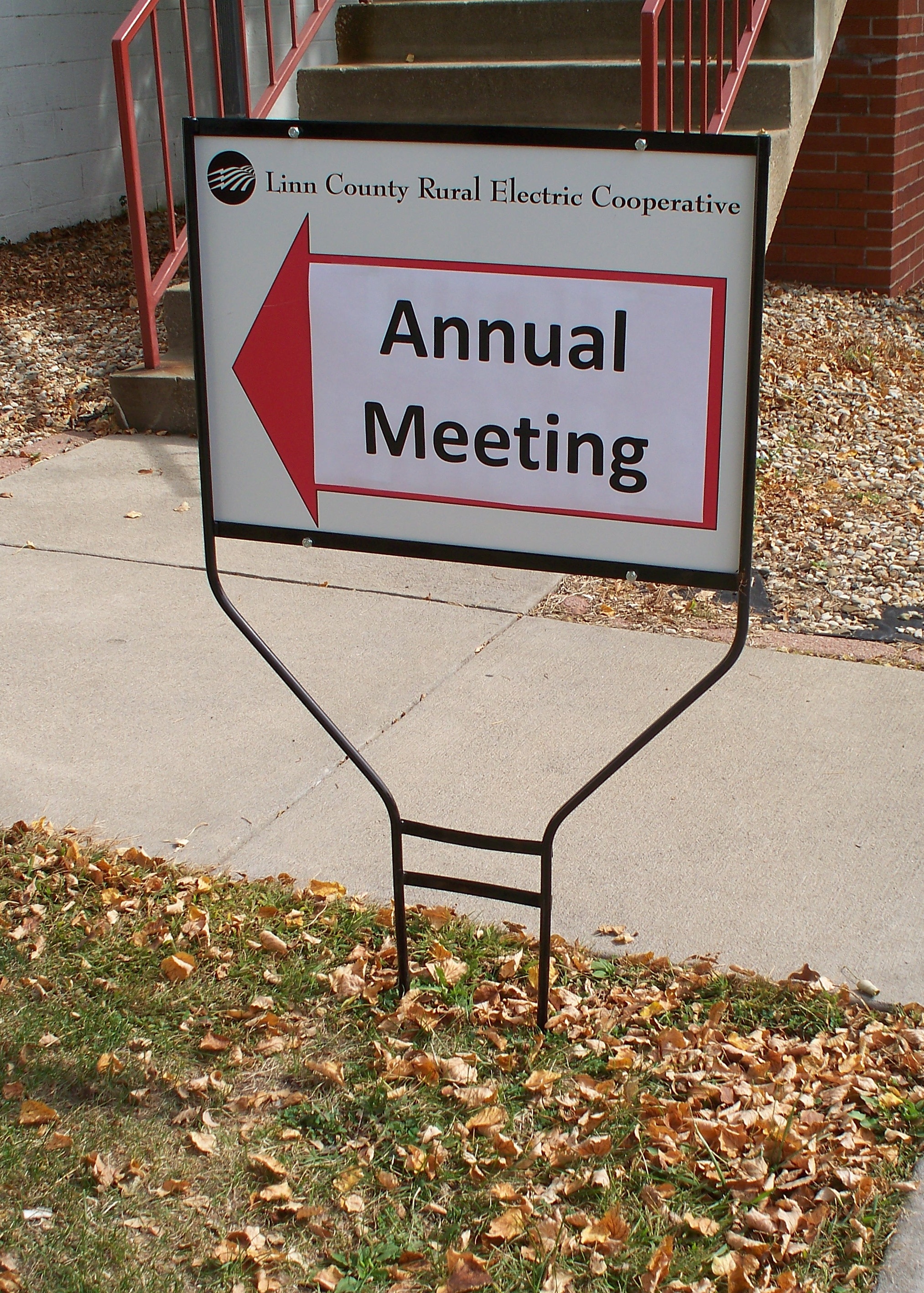
People continue to pay limited attention to electricity. Friday the Linn County Rural Electric Cooperative annual meeting was held at the Teamsters hall in Cedar Rapids.
The report from staff was that while the number of new connections was down in 2014, crews found plenty of maintenance work to do. The organization is financially sound.
The event turns out a lot of elderly couples who use the occasion to get out of the house, socialize with friends and neighbors, and take advantage of the free lunch, door prize drawing and gifts. Among this year’s gifts was a portable mobile phone charger, something even octogenarians might use.
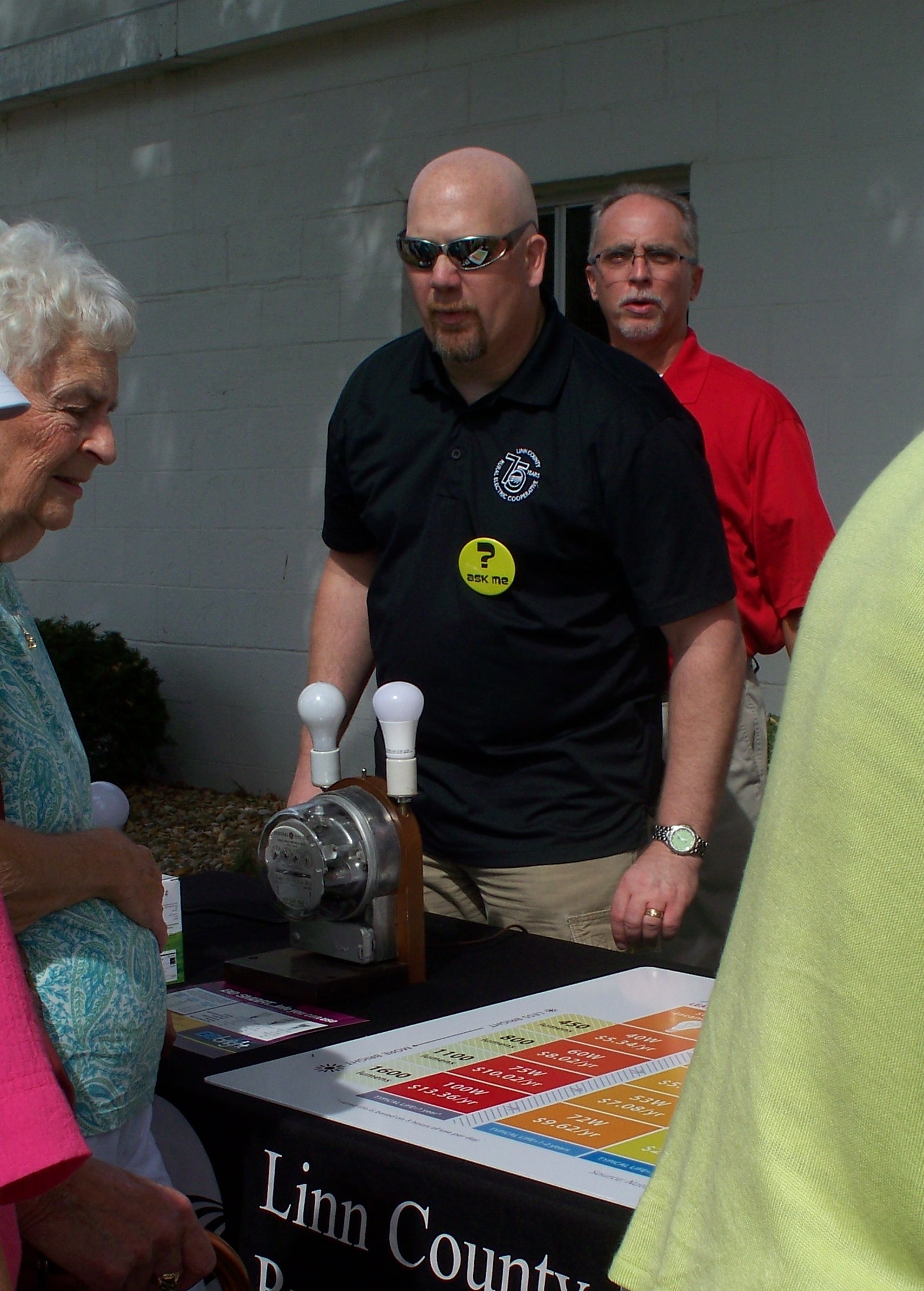
LED – Incandescent Light Bulb Demonstration
A demonstration comparing electricity usage of incandescent and LED light bulbs was set up outside. When the demonstrator threw a switch, changing which bulb was turned on, the change in speed of the rotating gear on the electrical meter indicating usage was obvious. The message was buy energy efficient light bulbs and when you do, look at the number of lumens rather than wattage when picking one.
While attendees ate lunch from their laps on folding chairs — choice of cheeseburger or chicken sandwich with sides of baked beans and potato salad — a slide show enumerated financial incentives for home owners and businesses to take advantage of to reduce electricity usage when installing new appliances or constructing a new home or business.
Would that life were so simple when it comes to electricity.
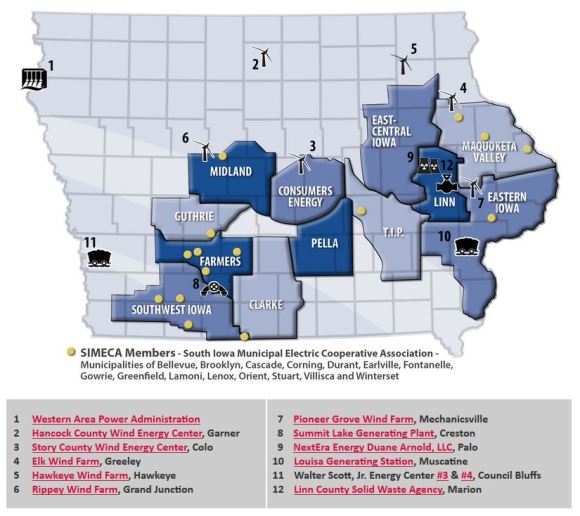
The REC has this statement about how their electricity is generated on its current website.
Linn County Rural Electric Cooperative is committed to providing electricity that is reliable, cost effective and sustainable. One hundred percent of our electric power needs are provided by Central Iowa Power Cooperative (CIPCO), a generation and transmission cooperative.
CIPCO meets our energy needs with a diverse fuel mix of coal, nuclear, hydro, landfill gas, wind, natural gas and oil energy resources. In 2013, approximately 95 percent of the power CIPCO provided to its members was generated right here in Iowa; and over 60 percent of its electricity is generated from carbon free resources that minimize the impact to our natural environment.
Specific generating capacity is listed on the CIPCO website.
CIPCO Map of Generating Sources 9-27-15
There is some political posturing here, in that CIPCO draws electricity from the NextEra Duane Arnold Energy Center, Iowa’s lone nuclear reactor. One assumes that is part of the “carbon free resources” mentioned, even though tremendous carbon-based resources are used in preparation for the moment heat is produced by nuclear chain reaction to boil water.
There’s probably more obfuscation here if one took the time for analysis. It’s not worth the time. Scientific evidence is clear that the ceaseless emission of CO2 pollution by electricity generation stations using fossil fuels is a primary cause of global warming. If people are distracted and assuaged by door prizes and flowery language, they won’t be for long. Global warming is impacting our climate in a pronounced, negative (to humans) way.
The Environmental Protection Agency recognized CO2 as a pollutant and this summer rolled out new regulations in the Clean Power Plan. As with all things governmental, there is a political aspect to the plan. Some states are resisting implementation.
Each state is required to locally implement the Clean Power Plan. In many ways the Clean Power Plan is an opportunity for democratization of how energy is produced and used, and we should take advantage of it, said historian and political economist Gar Alperovitz. He called for “an all-out mobilization with potentially far-reaching consequences,” as states adopt a plan.
In Iowa, Governor Branstad has been resistant to the Clean Power Plan, saying only that he would wait and see the final regulations before commenting. The future is well known as Iowa has consistently said the state will adopt no stricter regulations than those required by the federal government. One expects the state to take minimal steps in compliance, and only after hearing from the American Legislative Exchange Council, and waiting out initial litigation regarding the new rules.
The trouble is transition to renewable, carbon-free sources of electricity can’t occur fast enough to undo the CO2 pollution already emitted into the atmosphere. Urgency at our annual REC meeting only took the form of opening water bottles and cutlery packs with reduced physical capacity.
Topic of the moment at Linn Cty REC is “which dor prize did you enter for?” mMany struggling with opening cutlery pack in plastic bag.
A lot of good work is going on regarding development of new electricity sources that directly harness the wind and sun. Our future is to accelerate development and implementation of carbon-free, nuclear free electricity. That means a lot more than using the phrase on the REC’s website or in a blog post.
People don’t react well to non-imminent threats. Our future is raising awareness of the climate crisis without causing people to withdraw from society.
While looking up a link for this post, I saw a Bobby Jindal web ad on my article. Jindal referred to the negativity in our world and said, “It’s time to turn to God.” Maybe. For those of us already oriented that direction, there is plenty of work to be done on earth to improve the human condition. Mitigating the causes of global warming is an important part of it.
Leaves are beginning to fall from the Green Ash trees. Those on the two early apple trees have been down more than a week. The garden is producing and likely will until the hard frost comes in mid-October.
This time, more than any in the year, is for work at home.
Today’s to-do list includes harvesting tomatoes and peppers, canning, and cooking gumbo. I prepared a lunch of sliced tomato, salt, pepper and feta cheese using blemished fruit. It’s a simple and satisfying repast.
For so many years, work was elsewhere. While downsizing I found a three-ring binder with papers from expense reports dated 1992. I was managing trucking terminals in Schererville and Richmond, Indiana, and starting recruiting operations in West Virginia, Georgia, Pennsylvania and Missouri. I would wake up on an airplane unsure of where I was, or where I was going. It was a busy time and there was little left for family. They were days of intangible hope for a future that included success. I don’t know what that means any more.
President Obama stopped at the Iowa State Library in Des Moines yesterday. The stop wasn’t on his formal agenda, but while there he submitted to an interview by Marilynne Robinson, the Pulitzer prize-winning author who lives in Johnson County. Obama reads Robinson and listed Gilead as one of his favorite books. It is pretty neat that one of our own has this kind of relationship with the president. Obama quoted from the book in his eulogy for the Rev. Clementa C. Pinckney in Charleston last July.
I’ve been trying to read Gilead without success. Starting it three times over the last three weeks, I don’t get it. Maybe eventually I will. It’s one of the must read books produced by an author affiliated with the Iowa Writer’s Workshop, where many less acclaimed books than Robinson’s have been produced. Maybe the time is not right. Maybe the president’s visit will encourage me to give it another try.
It’s two months to the 21st Conference of the Parties, or COP 21, in a suburb of Paris. Iowa environmental groups are wrangling for a unifying Iowa event just prior to the first day of the conference, Nov. 30. It seems a bit late to be planning as leaves fall, the harvest comes in, and we turn our attention to the work necessary to sustain ourselves. It’s important the parties reach an enforceable agreement. It won’t be the end of the world if they don’t. Or maybe it will.
Environmentalists are having trouble wrapping their head around a president who visited Alaska above the Arctic Circle on Wednesday to speak on the need to mitigate the causes of climate change, while at the same time on Aug. 17 approved Royal Dutch Shell’s exploration and development of oil there.
It’s not that hard because the challenge of our time is the lack of political will to take action to reduce CO2 emissions in a culture dependent upon fossil fuels. The problem is politics, not physics.
Bill McKibben expressed the sentiment concisely:
It’s literally painful to hear Obama’s powerful words from Alaska and know that they’re so cheapened by his decision to let Shell drill
The Arctic drilling fight is less between enviros and oil companies than between human beings and physics https://t.co/351SRxv2SP#ShellNo — Bill McKibben (@billmckibben) August 30, 2015
It’s no use crying Bill McKibben’s tears.
In 2014, the U.S. used 6.95 billion barrels of crude oil with 27 percent being imported, according to the U.S. Energy Information Agency. That’s 19.05 million barrels per day, including biofuels. Most of it is for gasoline, diesel, jet fuel, heating oil and liquefied petroleum gas. (The EIA explains how the oil was used here).
During President Obama’s administration the U.S. took substantial action to reduce dependence on imported oil. During the eight years of President George W. Bush, the country imported 28.6 billion barrels of oil or 3.574 billion barrels per year on average. In 2014, the U.S. imported 2.68 billion barrels or 25 percent less than the Bush average.
The rub is that in order to reduce imports, the Obama administration encouraged domestic production through an all of the above strategy that included hydraulic fracturing and increased exploration and discovery like Royal Dutch Shell had been doing in the Arctic in 2012. The strategy worked, and has been revitalized, but at what cost?
Doing nothing about global warming is not an option. The Obama administration has been and is doing something significant. As much as some would like to shut down the coal trains, end hydraulic fracturing and stop drilling for oil – leaving fossil fuels in the ground – it is only beginning to happen under Obama. Whoever is president in 2017, an “all of the above” strategy would mean quite different things with a Democrat or Republican in office.
Scientists understand the basic physics of global warming, and mostly have since the mid-1800s. As long as there is demand for fossil fuels, there is no reason to think exploration and discovery by oil companies will end any time soon. The problem with denial is not so much with political climate deniers. The physics will out, hopefully not too late.
A bigger problem is denial of our addiction to fossil fuels. Most continue to use them like there is no tomorrow. A reckoning is coming and it will take more than renaming that mountain to climb it.
Monday the Obama administration formally adopted the Clean Power Plan with targeted reductions of greenhouse gas emissions from coal-fired power plants of 32 percent by 2030 compared to 2005 levels.
If readers care about mitigating the causes of global warming and ceasing the practice of dumping more than 110 million tons of CO2 into the atmosphere each day as if it were an open sewer, this is it.
This is the majority of the United States plan to reduce emissions at the 21st United Nations Conference of the Parties in Paris (COP21) this December. It’s what we plan, as a nation, to do about climate change.
Adoption of the Clean Power Plan is expected to be greeted with derision, litigation, delay, obfuscation, contempt, denial and politically correct, but meaningless statements.
The Environmental Defense Fund, The Nature Conservancy and the World Wildlife Fund US queried 50 companies for their position on EPA’s Clean Power Plan. Their carefully worded responses are here.
They range from this:
“Starbucks signed the Ceres letter supporting the EPA Clean Power Plan.”
to this:
“We don’t have a position on the EPA’s proposed Clean Power Plan, and Target does not support the US Chamber’s position.”
to this:
“Cargill is part of Risky Business to lead a dialogue across the philosophical spectrum about the long-term impact that climate change could have on the ability to produce food and the ways that agriculture can adapt to ensure global food security. We believe progress can best be made by engaging with groups and discussing our point of view. In fact, Greg Page, former CEO of Cargill, briefed Tom Donahue, president and CEO of the US Chamber of Commerce, this summer about the Risky Business project and its findings. We also spoke with the Farm Bureau about the Risky Business report and asked their advice about how to effectively engage farmers on the climate change issue.”
to this:
“Caterpillar filed comments with EPA opposing the coal-plant rules. The company said: ‘Caterpillar strongly urges EPA to withdraw the Proposed Rule in order to (1) reevaluate the agency’s legal authority to establish requirements on both the entire electric sector and end-users of electricity; (2) conduct a more full and realistic estimate of the economic impacts of its proposed rule; (3) consider changes that avoid the adverse impacts outlined in these comments; and (4) provide guidance to states so that they have the tools necessary to minimize adverse impacts as they construct compliance plans.’ In its sustainability report, Caterpillar says: ‘We support intelligent, responsible public policies addressing climate and energy issues.’”
Gov. Terry Branstad has been critical of the proposed clean power rule, saying it will push energy costs higher and “hurt Iowa consumers and cost Iowans jobs,” according to the Des Moines Register.
If everyday Iowans don’t support the Clean Power Plan, then what? Doing nothing is not an option when it comes to mitigating the causes of climate change, and the Clean Power Plan is something.
There are few better options to take climate action than supporting the Clean Power Plan. Letting government officials know of your support is part of the picture, but what matters more is making the discussion part of everyday life. We may be accused of being “political” in our social circles, and that may be better than suffering the consequences of inaction, now and going forward. The Clean Power Plan is a solution worthy of our support. As the administration adopts it, so should we.
In 2015, France will be hosting and presiding over the 21st Session of the Conference of the Parties to the United Nations Framework Convention on Climate Change (COP21/CMP11), otherwise known as “Paris 2015.”
COP21 will be held from Nov. 30 to Dec. 11 on the Paris-Le Bourget site, bringing together around 40,000 participants in total – delegates representing each country, observers, and civil society members. It is the largest diplomatic event ever hosted by France and one of the largest climate conferences ever organized.
COP21 will be a crucial conference, as it needs to achieve a new international agreement on the climate, applicable to all countries, with the aim of keeping global warming below 2°C.
The stakes are high: the aim is to reach, for the first time, a universal, legally binding agreement that will enable us to combat climate change effectively and boost the transition towards resilient, low-carbon societies and economies.
To achieve this, the future agreement must focus equally on mitigation – that is, efforts to reduce greenhouse gas emissions in order to limit global warming to below 2°C – and societies’ adaptation to existing climate changes. These efforts must take into account the needs and capacities of each country. The agreement will enter into force in 2020 and will need to be sustainable to enable long-term change.
France will therefore be playing a leading international role to ensure points of view converge and to facilitate the search for consensus by the United Nations, as well as within the European Union, which has a major role in climate negotiations.
Before we knew it the year turned. Society’s distractions obscured it from time to time, yet the facts of days getting shorter, the planting season turning to harvest and second crops, and the humidity of summer are elemental, inescapable.
The construct of a year is artificial only from society’s view. Nature’s evolution in trips around the sun, with its changing angularity of light, formed deep expectations from which cultural patterns sprung. Patterns and culture are coming unhinged from human exploitation of the natural world. There have been unintended consequences for the biosphere just in living our lives.
Yet we go on living.
Today is the American holiday celebrating our independence from England. When I look at my life, the least benefited are descendents of the first people—who saw discovery, that loathsome word, genocide, and the great migrations from Europe, Africa and eventually from every habitable place on the planet.
At my workplace I hear the melodious, and sometimes harsh resonances of a dozen languages every day. We were never a melting pot, another loathsome phrase, but a garden of peoples who migrated and have taken to the land in its post settlement construct.
The name of our township is Big Grove, and what trees may have been here to warrant such appellation were mostly gone before the Civil War. It’s settled now, and to grow crops the soil must be augmented with chemical fertilizers. The rich topsoil, and that natural balance are mostly gone.
There is debate about whether to preserve, or recreate the oak-hickory forests that once dominated the landscape. What may have been here for thousands of years, has been relegated to parks and preserves, and not many of those. There’s no going back.
To say we understand nature is a lie, one I refuse to tell. Yet as the procession of days continues, I can’t help but notice things.
Like the wild blackberries I used to pick this holiday. The season is now finished, my favorite blackberry patches removed for development.
Like the cool damp days that have been good for garden lettuce, which by now had in previous years bolted.
Like the view of countless boats on the Coralville Lake as I crossed over the bridge under construction to North Liberty, despite warnings of underwater debris from the Iowa Department of Natural Resources. “Be careful out there” said one official, knowing little could prevent the overcrowded scene from developing on the high holiday of independence.
Like the nascent hope that despite these patterns, change is possible. Not hope against an inevitable reality, but something tangible, a path to preservation of culture that is eroding like the topsoil that was once so abundant.
One goes on living as best we can, making as light a footprint as possible in the dust of summer days. Our best hope is of crossing over into something more than a new bridge over old habits—to a better way of life clothed in fabric made of our past, over bodies naked and new like this place once was.
This is where I find myself this Independence Day.
 Yesterday the 21st Conference of the Parties, including 195 nations, adopted an agreement to curtail greenhouse gas emissions.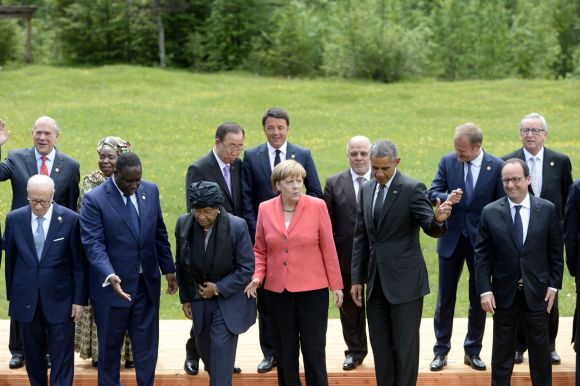




 Journey Home
You must be logged in to post a comment.