Categories
Writing

The Great Sort – Part IV

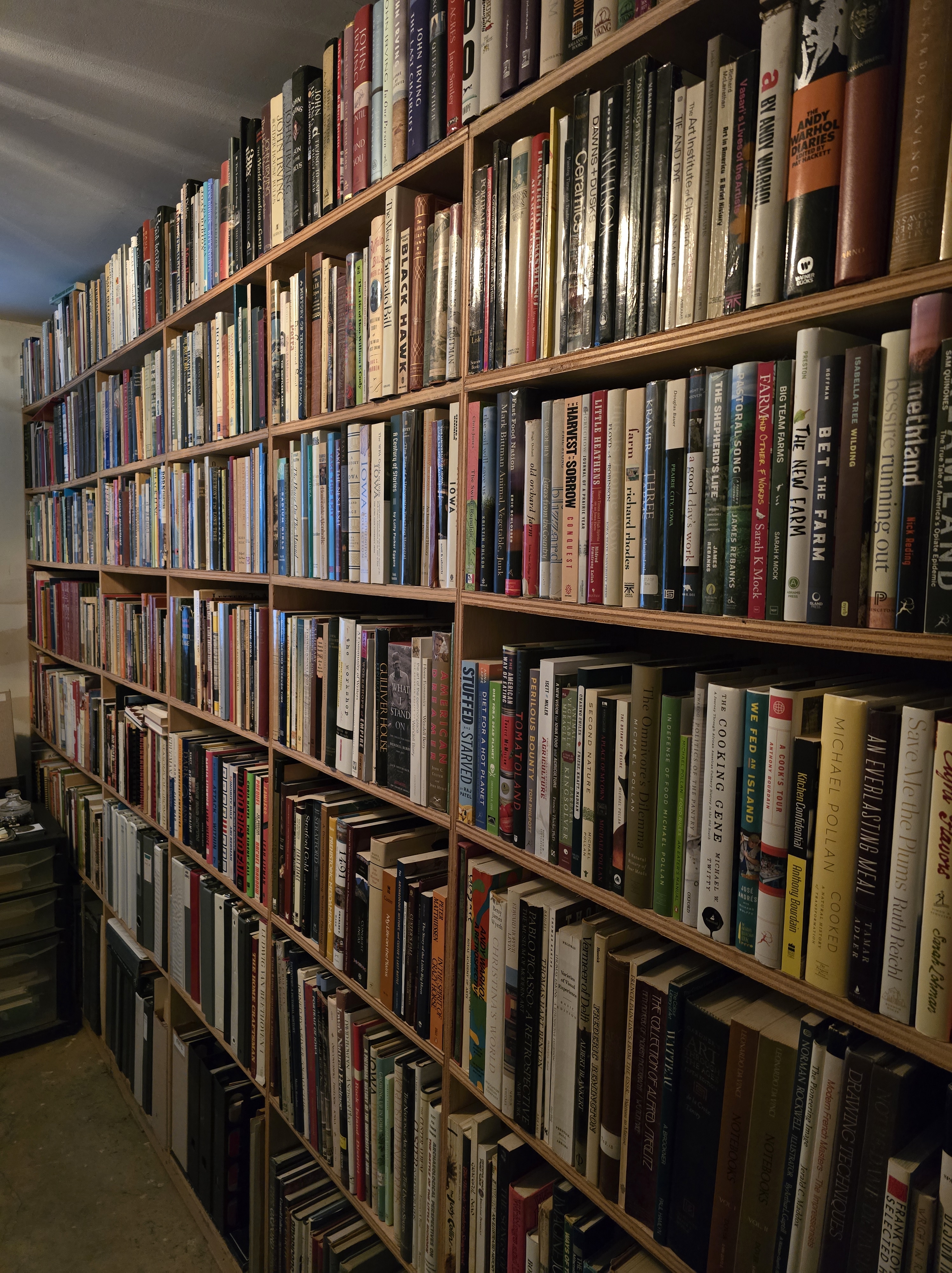
North wall bookshelf after The Great Sort.

Calling this project done for now. I went through all remaining boxes in the two stacks and prepped two more boxes for the library used book sale. There are five empty boxes and a good amount of new stuff placed in old boxes. This was the first major sort of my books since they arrived in 1993 and I built the shelves. I’m satisfied I have a better idea of what is available, which was the point.

Notes:

I found the rest of my books related to slavery and African-American studies. The Autobiography of W.E.B. DuBois is important to the literary discussion of the United States. If a 21st Century canon was relevant or possible, he would be in it. I don’t expect to reread the book, yet it earned a place on the shelf. I studied Stanley Elkins’ book Slavery in graduate school. I would be curious to reread it, and also read the criticisms of it. Up from Slavery by Booker T. Washington moves from box to shelf as well. On my to-do list is rearranging my African-American studies books.

I had more than a hundred business books. It was a really complete set as my work at the transportation and logistics company ended in 2009. The only ones I am keeping are Dale Carnegie’s books, which include one owned by my father, and an autographed copy of Out of the Crisis by W. Edwards Deming. I picked Deming up for a buck at a used bookstore in Sweetwater, Texas during the rattlesnake roundup.

I intentionally left political books alone. I have all the presidential memoirs I know about, beginning with Truman. The next reading here is if Barack Obama ever finishes the second volume of his presidential memoir. I’m not a fan of Trump and to my knowledge, he hasn’t written a memoir from his first term. Like with Nixon, I’ll likely wait until he is dead before considering purchasing any memoir. I bought a copy of Mike Pence’s 2022 vice presidential memoir So Help Me God for a buck at the library used book sale. It is occupying the spot where Obama’s book will go when published. Pence seems to have tried to tell a normal story of that period. Will know more if I get around to reading it. Life is short. So many books with limited time.

As I approach a new year of writing, I feel refreshed by The Great Sort. I feel better aware of my stuff and know where to find things again. Highly recommend it if you have a wall of boxes hanging about your home.

Categories
Writing

The Great Sort – Part III

New light for these classics.

For years, my books about North American indigenous culture were tucked away in a box. I decided I was wrong about them and with newly opened space because of The Great Sort, I put them on a shelf. These are in addition to the works by and about Black Hawk which I always kept out, and those of Hyemeyohsts Storm which I kept out, yet now boxed away. I wrote about Chuck Storm as we called him here. The next step is to incorporate this literature into a reading plan.

Of these books, the author that might best fit into a canon of American Literature (if such a thing existed or was possible) is N. Scott Momaday, whose House Made of Dawn won the Pulitzer Prize in 1969. There are others here that remain quite good. I read what I read of these beginning in 1970 while at university. I don’t know where this is going, yet they are out and available in a prominent space. I won’t miss seeing them daily and expect to read some of them.

I mentioned the Time magazine purge. I came across a dozen copies of Harpers Magazine dated 1938 and 1942. I bought them at either an auction or a yard sale for a buck. They used to be property of the Mount Carroll, Illinois public library, yet now find themselves in The Big Sort. There are familiar authors inside: John Dos Passos, E.B. White, Peter Drucker, Margaret Bourke-White, Glenway Wescott, Eudora Welty, T.S. Eliot, Franz Werfel, and probably others I should recognize. At the stop on my desk, enroute to the recycling bin, I notice how many pages of book advertisements there are. The December 1938 issue has 44 pages by most of the major publishers. That says something about the role Harpers played in popular culture. If that didn’t give it away, the advertisement for New York department store Hammacher Schlemmer did.

There are four mover’s boxes of vinyl records which I will attempt to sell locally. I asked our child about them and there was only a single record of interest: Beethoven’s Fidelio. The ones I will keep are a small, undetermined number. I will keep the Red Gallagher album because he autographed it for me and grew up a block away from our home. I spent a good part of my life listening to these hundreds of records. While I still have a turntable, I need a new amplifier and don’t want to spend the money. Probably should sell the turntable as well.

I’m writing on Christmas Day and noticed how many empty boxes there are. The purge of books and magazines is having the desired effect. There are more boxes than things on the sorting tables. At this point, I will find something to fill most of the boxes, although I am weeding out different styles of boxes because I need them for book shipments to the public library. While I just began The Big Sort, it feels like it has been going on for a much longer time. In a way, it has.

Categories
Writing

The Great Sort – Part II

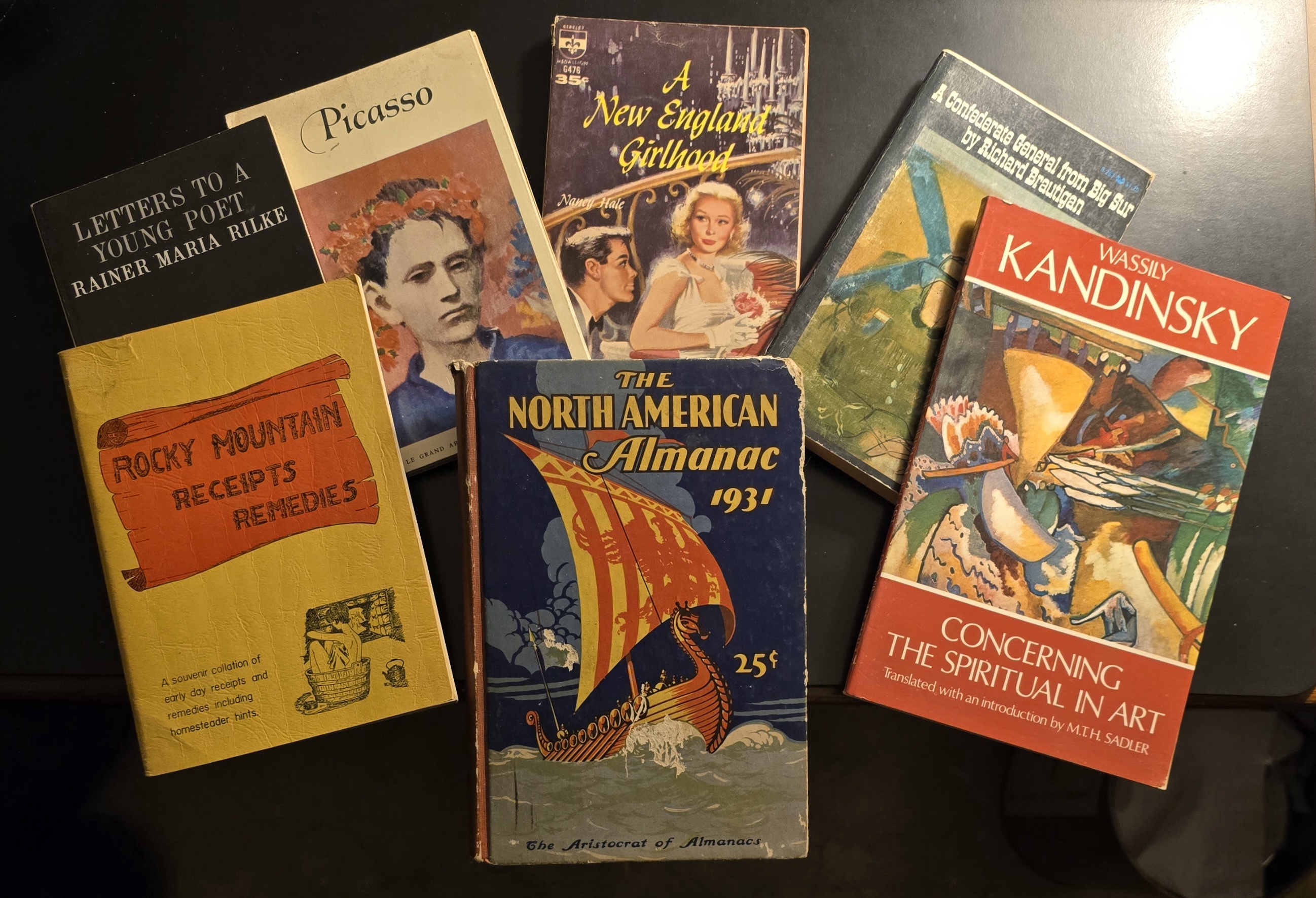
Books re-discovered during the Great Sort.

When handling hundreds of books long packed away, a few will stand out. Not only do I want to keep those in this photo, I want to read or re-read them next year. It’s part of the process of the Great Sort.

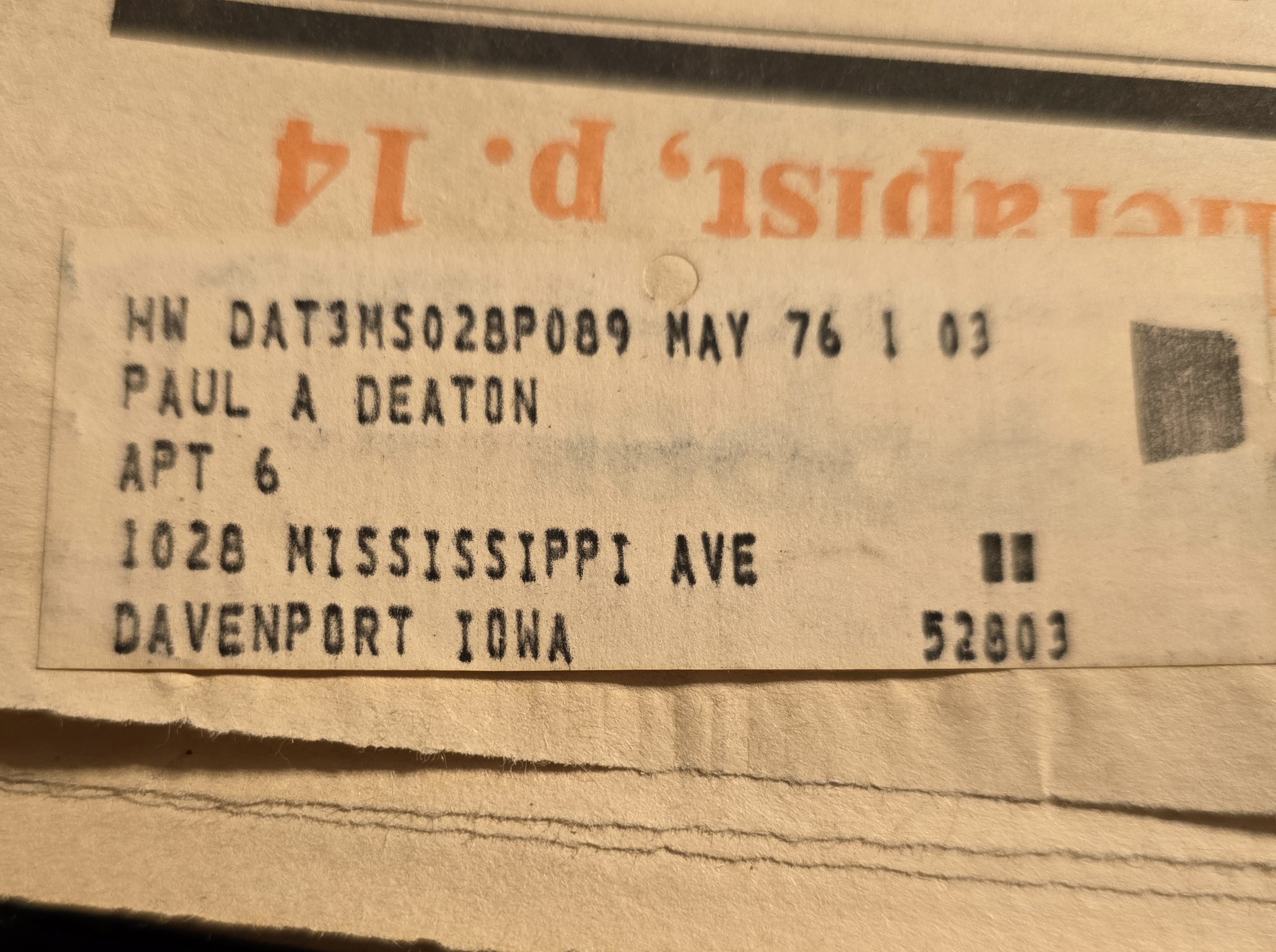
While living in Mainz, Germany, I had a stamp made with my military address and Social Security number on it. Back then, we viewed the Social Security number as unique to us and if we got separated from any possession, the rightful owner could be found. It was embossed into our dog tags. We put it on clothing, imprinted it inside field boots, in books, on everything that would take ink. That was short-term thinking from a perspective of how many people today would like to get hold of that number and use it for theft and other evil purposes. Wasn’t the best idea.

A substantial part of the Great Sort has been spent searching for these stamped locators and either blacking them out or cutting them off.

It has been hard to persist more than a few hours without getting impatient and stuffing books back into another box and into the new stacks I am building. At that point I must resist the urge, turn off the lights, and find something else to do. I want this to be a final sort. I’m labeling and dating the outside of the boxes so I know what’s in them and when I last touched the books. I doubt I will return to many of the boxes.

In the display area of my writing space I have about 3,000 books. I pulled out and boxed all the books of music. The vinyl long playing records will get boxed, reunited with the others I have, and then finally disposed of. This creates more space for active books and some of it will fill with the three-ring binders I am making as I write my autobiography. It should be a more useful (to a writer) library.

I want the Great Sort to be finished by Spring. I think that is doable even as I enter seedling planting time next month, especially if I stick with it a couple hours per day. The purpose of the work is to improve how I store research materials and become a better writer. I’m hopeful at this point. all of that will be the Great Sort’s outcome.

Mailing label from the first apartment where I wrote after university.
Categories
Writing

The Great Sort – Part I

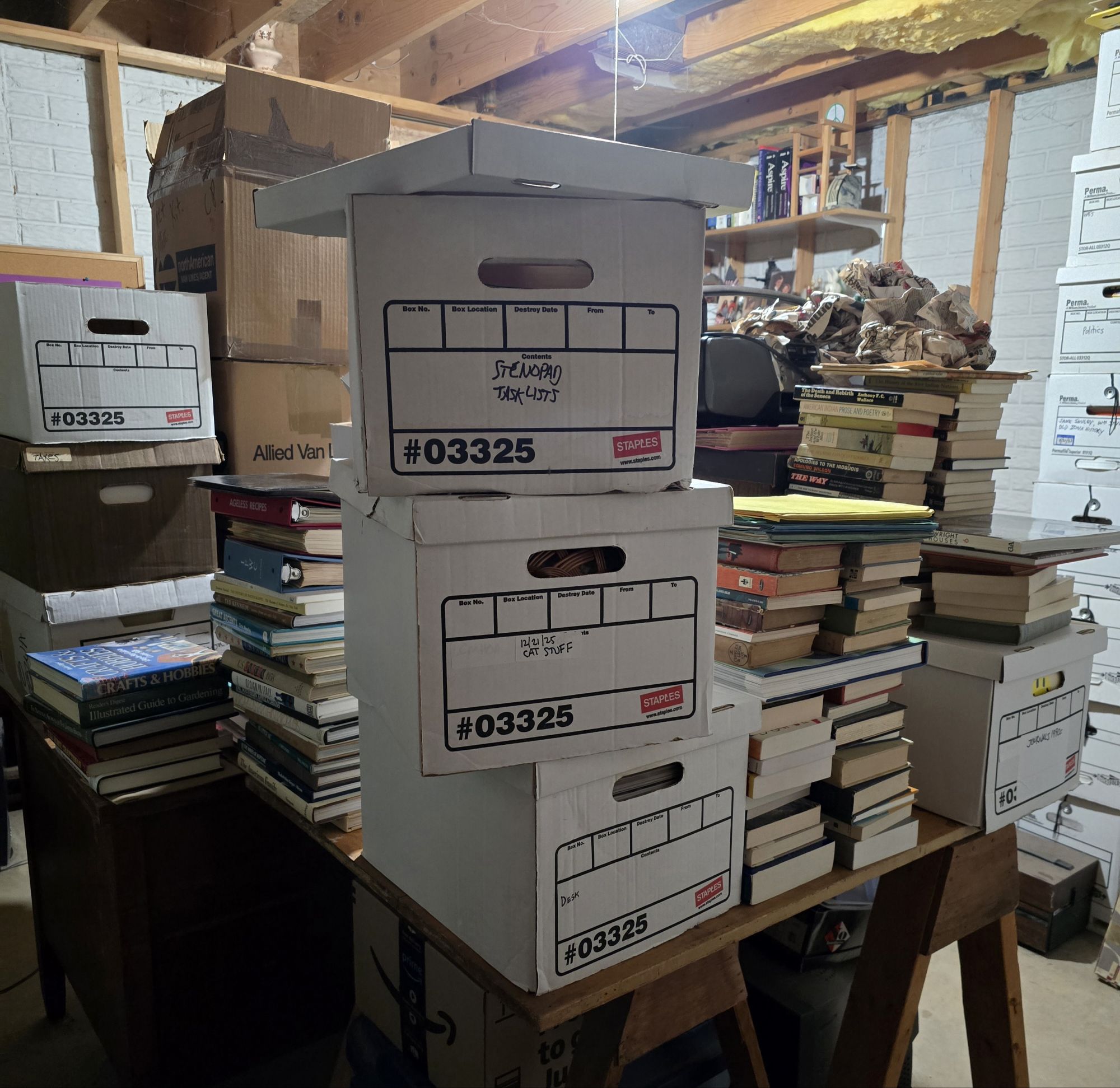
Evidence of the great sort.

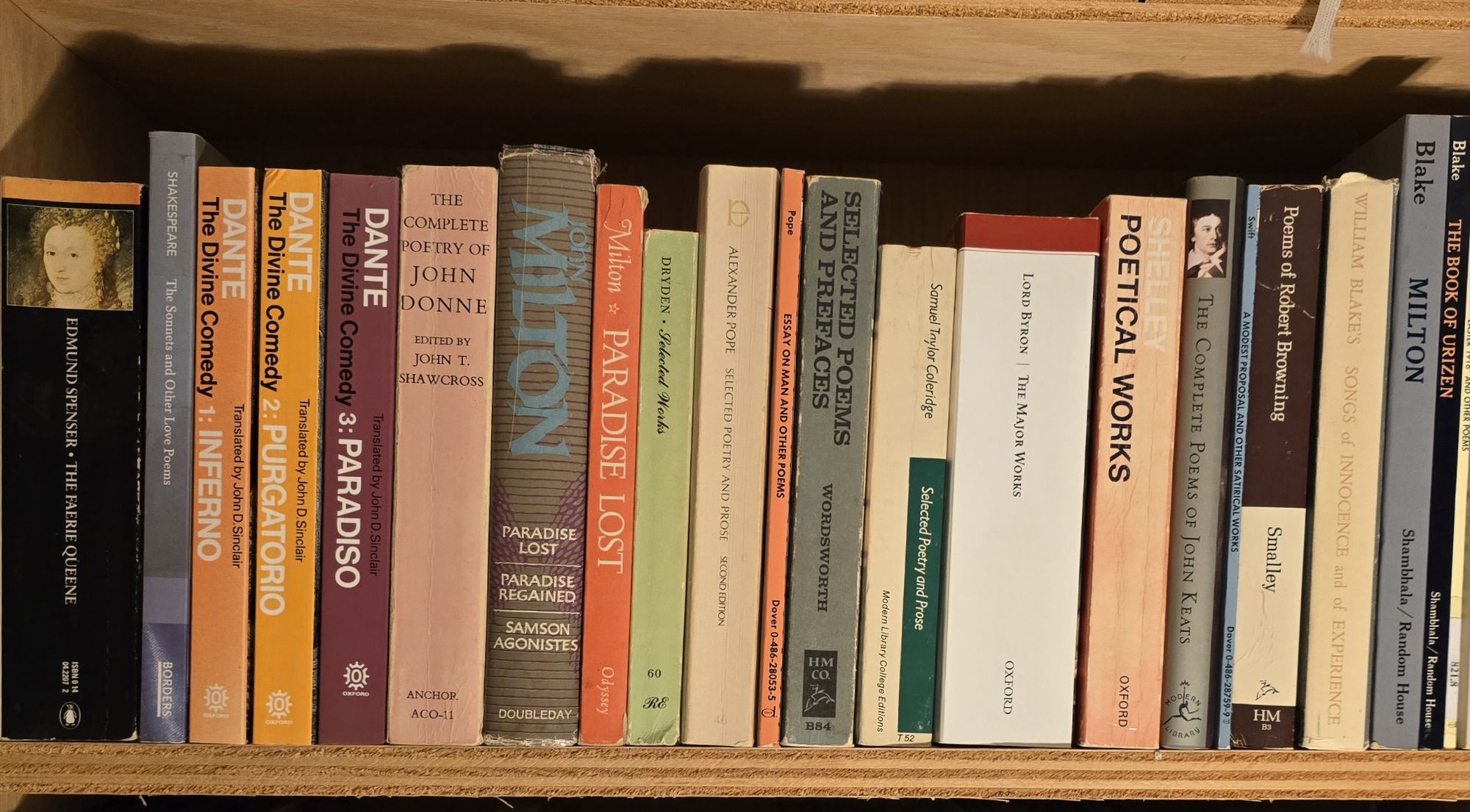
I spent two hours rearranging poetry books in my stacks. I decided eight 23-inch shelves was enough poetry and some had to go. Now there is an eight-inch stack of poetry books awaiting disposition. Poetry measured in inches.

I rearranged the poetry so more in which I have interest rest at eye level. On top are the smaller-sized books and below that is the canon. You know, Chaucer, Shakespeare, Dante, Donne, Milton, Dryden, Pope, Wordsworth, Coleridge, Byron, Shelley, Keats, Swift, Browning, and Blake. The exception is Chaucer and Shakespeare’s plays are across the room because the poetry shelves weren’t tall enough.

The other exception, or rather objection to the canon, is where are the women? You know, Charlotte Smith, Felicia Hemens, Mary Robinson, Anna Laeticia Barbauld, and maybe others. They were largely erased by the male authors of the canon. I don’t own any of them or I’d fit them in.

Don’t get me started on an American canon. Somewhere in the 20th Century that broke down and can never be repaired.

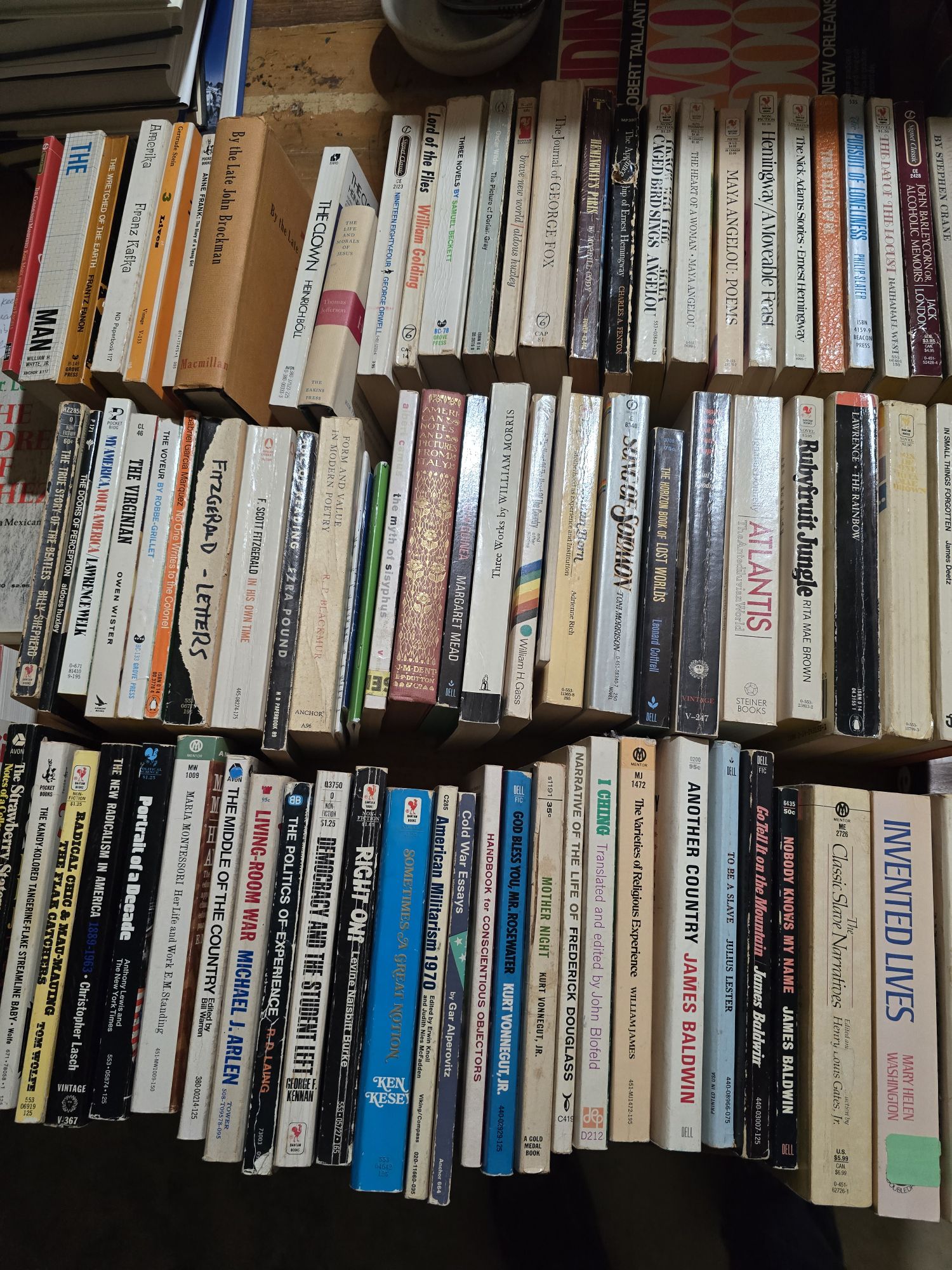
This is my current life when I am not writing. Opening about 100 boxes of books and deciding which to keep and which to donate. Already I’ve taken a dozen boxes to the library’s used book sale. There will be more.

I used to stamp my name and address in every book I bought. My hands have been on books from every place I lived this month. Some of the fifty year old paper has changed. Books from the 19th century crumble in my hands. I took one old book to a used bookshop to consult about the damage. This is a practical task that should involve logic. It’s more emotional than expected.

There is material for multiple posts in this project. I have to wait and see what I get into before knowing what their subject will be. I hope you are along for the ride.

The all-male canon.
Categories
Living in Society

Favorite Reads in 2025

Book shelf on Nov. 29, 2025.

In late November I’ve read 63 books this year. Not all of them were good, yet many of them were exceptional. This post is about books I am glad to have read this year.

The Politics of Resentment by Katherine Cramer

Cramer’s examination of rural political consciousness — and the resentment often directed toward “liberal elites” — is essential reading for any Iowan trying to understand where our politics may be heading. I remember the mass demonstrations in Madison during Scott Walker’s tenure, and Cramer uses his administration as a springboard for a broader exploration of government’s place in everyday life. Her account is grounded in the many conversations she held with rural Wisconsinites while conducting her research, giving the book both texture and credibility.

Queen Esther by John Irving

Beginning during my university days I had a small number of authors whose work I read with great anticipation shortly after a new book was released. First it was Saul Bellow, and then Joan Didion. When they died, that author became John Irving. Queen Esther is what I expect from an Irving novel.

The reason I enjoy reading Irving is when he writes about his time in Iowa City, it is the place I came to know. The Water Method Man was set there and he specifically mentioned 918 Iowa Avenue, with which I am very familiar. That feeling, along with other common experiences, gives me entree into the world he describes in his latest book.

There are some naysayers about Queen Esther, yet it is familiar fare which I am glad to access. Having traveled there myself, I particularly enjoyed the chapters about Vienna and Amsterdam. He describes the same Vienna I came to know and that draws me into the book. My review is here.

The Siren’s Call by Chris Hayes

There are other books about the attention economy, but Chris Hayes The Siren’s Call: How Attention Became the World’s Most Endangered Resource comes at a time when we need to hear his message. I hear the word “distraction” multiple times each day from friends and family. There is more there and Hayes gets to the heart of it. My review is here.

Source Code: My Beginnings by Bill Gates

Source Code: My Beginnings is a straight up autobiography of Bill Gates’ early years through development of Microsoft. The early coding he wrote was impactful in my life and in the broader society. To hear it directly from the source was a quick, informative read.

This is for Everyone by Tim Berners-Lee

Tim Berners-Lee is credited as being the inventor of the World Wide Web in 1989. His autobiography explains what happened. It is something that affects most people and worthy of reading.

Apple in China by Patrick McGee

The relationship between Apple and China is part of the news each day whether mentioned explicitly or not. I remember Iowa firms establishing a business relationship in China when I was in my 50s and found it curious that China would not let them own a majority stake in businesses they managed there. Apple in China: The Capture of the World’s Greatest Company explains the risk and what happened to the company because of it.

Breakneck by David Wang

While China is an engineering state, relentlessly pursuing mega-projects, the U.S. has stalled. America has transformed into a lawyerly society, reflexively blocking everything, good and bad. This book makes the case why China is so far ahead of the United States in manufacturing and in other areas of the economy. When we consider the United States, the concept of “lawyering up” is a negative for the betterment of society. Just look at our president and the number of lawsuits in which he is engaged.

The Devil Reached Toward the Sky by Garrett M. Graff

I previously read many of the stories in this oral history of the making and use of the atomic bomb. What sets Graff’s book apart is collecting first person accounts of that history. It brings a form of immediacy to a topic modern people tend to forget when discussing nuclear weapons and disarmament.

Nomadland by Jessica Bruder

I know many people looking for work without much success. Jessica Bruder wrote an autobiography about her experiences in a workforce unhinged from a predictable, daily schedule of work. She worked all over the country in seasonal or part-time positions, the most recognizable of which is the Amazon CamperForce program. Amazon leverages people displaced from regular work and have taken to living in recreational vehicles. They have a formal program to hire them in their warehouses during peak sales activity. This is just one example. This one is well worth your time for its window into a world most of us didn’t know existed. My review is here.

Eleven Days by Donald Harstad

The county sheriff recommended this book about a crime in the area where I live. I don’t read many crime novels, yet the local setting drew me in, and the tightly written narrative had me turning every page as quickly as I could.

2025 was a good year for reading. In retrospect, I should have read more poetry, so I’m making that a goal for 2026. To conserve resources, I expect to read more books from the public library and my own collection. I maintain my daily reading target of 25 pages, although that creeps up when I find a compelling book.

I’d be interested in what readers are reading in the comments.

Categories
Reviews

Book Review: Queen Esther

I did not receive an advance reader’s copy of Queen Esther by John Irving. I emailed the bookstore in the county seat to make sure they would have it on publication day. On Nov. 4, I drove there and parked on Iowa Avenue, the same Iowa Avenue Irving described in The Water Method Man. I walked to the bookstore and couldn’t find it among new arrivals. After my inquiry, a sales associate found it in the back room and I bought it.

After Saul Bellow and Joan Didion died, Irving became my favorite author. I thought The Last Chairlift was his final novel and was pleasantly surprised and hopeful about this new one. It did not disappoint.

Anyone who lives in modern society has some familiarity with the issues that brought about the Hamas-Israel war. No book on those issues will have universal support, much less fiction. It seems risky for Irving to have tackled that and I admire him for it. Frankly, successful at age 83, what does he have to lose?

As someone who began reading Irving more than 40 years ago, I highly recommend Queen Esther. It is classic Irving.

Categories
Creative Life

Changing Book Stores

Photo by Joshua Brown on Pexels.com

When the email from Macmillan Publishers arrived I knew I would purchase The Devil Reached Toward the Sky: An Oral History of the Making and Unleashing of the Atomic Bomb, by Garrett M. Graff. I immediately logged in to Amazon and found I could order it to be delivered the next day, on publication day (Aug. 5, 2025), for full price. I hit the pause button. Didn’t I tell myself I was going to slow down my ordering from the behemoth book seller?

Next I found the website for a local bookseller who was offering pre-order for delivery to the store also on Aug. 5. It was also full price, so I said what the hell. No time like the present and ordered it on their website. It was an experience compared to Amazon.

First, when I received my automated order confirmation, it was detailed, giving me everything I needed regarding the order: tracing, question outreach, price, and so on. One curious bit was the order showed being from an outfit called BookPeople, which is a large independent bookseller located in Austin, Texas. Austin is less like the rest of Texas, so I am okay with that. Besides, I assume my local bookshop does what it must to reduce acquisition cost and build margin on sale. Both of those are necessary to stay in business. So far, so good.

Next came the email from the local bookstore. It was sent by an individual at the store to advise me they would notify me when the book arrived. Nice personal touch.

All was going well when my contact reached out with this message: “The Devil Reached Toward the Sky has arrived and I have set aside a copy for you at the back information counter. All of the copies which we received were damaged so I picked out the least damaged one to set aside for you. Have a look at it and we will order another copy for you if you don’t like this one.” Seriously? Well, it is not my bookseller’s fault the book was damaged in shipment, so I started a string of emails, which turned into text messages. The text exchange took 30 minutes and included photos of the damage and discussion of price for damaged goods. We were able to work it out and I drove the 25 minutes to the county seat to pick up the book, paying cash.

If a book got damaged with Amazon, I know the drill. I contact them and would get disposition instructions while they credited my account and shipped another book. Most likely, if I had to return it, I would have had to drive to their return consolidation point at a local big box store. Goods damaged in shipping is always a hassle and the blame always lies with the party that packaged and did the shipping. It is a rare occurrence to receive damaged goods from Amazon.

I will just assume this situation is a one-off and will order new books I want to add to my library locally, especially when there is no price difference. I don’t like taking so much time dealing with a local store, yet hopefully we will get to know each other better and develop a relationship. When my annual book-related budget is about $1,000, it’s not like I am the biggest fish in the sea. It is one more way I can spend more of my life relating to people, even if it’s because of a glitch in the process.

I’m confident I can break my Amazon habit.

Categories
Living in Society

Progressive Summer Reading Program

Iowa history books.

At a time when conservative political activists tell us what we can and can’t read and learn in public spaces, summer reading programs at public libraries continue to thrive. In the City of Solon, population 3,018, 261 kids attended the public library’s May 30 Summer Reading Program kick-off event.

Most have heard of Dolly Parton’s Imagination Library which mails free books to children from birth to age five. Each month Parton’s organization mails books to one million children around the world with one in seven American children receiving her books. Any parent can sign their child up for the service from Imagination Library.

Young children seem on board with reading. It’s the adults among us that need to do better. According to the website Wordsrated, the average American adult reads five books per year. 51.6 percent of Americans don’t finish a single book in a year. Here are some books where progressives can start improving our book-reading. Call it a progressive summer reading program!

I recommend starting with my March 31 post titled Women to Read and Follow. These authors are essential to understanding the progressive viewpoint in contemporary society. Don’t yap about dark money in politics or Citizen’s United unless you have read Jane Mayer’s Dark Money: The Hidden History of the Billionaires Behind the Rise of the Radical Right. Following women’s health care rights post-Dobbs? Read Alice Miranda Ollstein’s articles at Politico. Concerned about misinformation and disinformation in the media? You should read Barbara McQuade, Attack from Within: How Disinformation is Sabotaging America. All eight women I covered are worth reading.

There are some men writing on progressive topics who are also worth reading. I recently reviewed Ari Berman’s latest book Minority Rule: The Right-Wing Attack on the Will of the People–and the Fight to Resist It. Berman’s previous book, Give Us the Ballot: The Modern Struggle for Voting Rights in America is a must-read. I’ve been following Thom Hartmann’s Hidden History series and any of them is a good starting place. My recent review of The Hidden History of American Democracy: Rediscovering Humanity’s Ancient Way of Living is here. Warning! Once you get started with Hartmann you may become addicted. Blog for Iowa weekend editor Dave Bradley wants to read Barons: Money, Power, and the Corruption of America’s Food Industry by Austin Frerick.

How do disabled people become political activists? You owe it to yourself to read Year of the Tiger: An Activist’s Life by Alice Wong who tells her story. What is a main issue? Free and open access to the internet.

Worried about the climate crisis? Hannah Ritchie’s new book Not the End of the World: How We Can Be the First Generation to Build a Sustainable Planet offers a fresh and refreshing perspective. Helen Macdonald’s Vesper Flights is about bird migrations and our interaction with nature, suggesting we should not be using nature as a metaphor at all.

It has been so long since Hiroshima and Nagasaki, people tend to forget nuclear weapons should be eliminated and the major powers all agreed to do just that. Annie Jacobsen recently published Nuclear War: A Scenario to remind us. This book deserves distribution beyond folks who work for nuclear abolition.

Who We Are Now: Stories of What Americans Lost & Found during the COVID-19 Pandemic by Michelle Fishburne is a unique story of her 12,000-mile journey with her children in an RV during the pandemic. Her story captures something about the pandemic it is difficult to find elsewhere.

Blog for Iowa editor Trish Nelson passed along some summer reading recommendations. The Life and Times of the Thunderbolt Kid by Bill Bryson is one person’s stories of growing up in Iowa, many places and things we all remember come and gone. A Woman of No Importance by Sonia Purcell and Wolves at the Door: The True Story of America’s Greatest Spy by Judith L. Pearson are two different books with the same topic: an infamous female spy from America who was a key player in the French resistance during WWII. Trish also recommends Cassidy Hutchinson’s Enough and Underground Railroad by Colson Whitehead.

A person needs escape through reading from time to time. Novels I recommend are A Gentleman in Moscow by Amor Towles, Lessons in Chemistry by Bonnie Garmus, The Map of Salt and Stars by Jennifer Zeynab Joukhadar and Whose Names are Unknown by Sanora Babb. It was hard to put each of these books down as the subject was compelling and the story masterfully told.

I turn to poetry when I need a break from prose, reading new and old poetry from my personal library. In the new category, I recommend Plantains and Our Becoming by Melania Luisa Marte, a debut poetry collection about identity, culture, home, and belonging. In the old category, someone on social media convinced me to read the poetry of John Betjeman. His collected poems is on my summer reading list. I am also a fan of Lucia Perillo’s The Oldest Map with the Name America. My recommendation? Go to the nearest public library, find the poetry section, and pick something that interests you.

There you have it: a progressive summer reading list. Happy summer reading!

Categories
Living in Society

Curating a Personal Library

Author’s workspace on Nov. 13, 2023.

A library is curated, which means it inherently contains the biases of the librarian or curator. How will books be organized? When space is at a premium, which go to a thrift shop and which go into a box for potential future use? Which books should be acquired and which checked out of a library? I have a lot of books — a few thousand in my writing room alone. My collection of books, papers and other media is idiosyncratic. That’s as it should be. The meaning of the collection goes little further than the door through which I took this photo. My library mostly serves my writing.

As winter approaches, the pace of my reading increased. I’m reading about 50 pages a day and more if the text is engaging. Since the coronavirus pandemic began I read an average of 58 books each year. A recent Gallup poll found Americans started 12.6 books per year and finished five of them on average. This chart from the poll tells the story that reading books in America is in decline:

When I retired during the pandemic I adopted a firm rule that no matter what, I’d read at least 25 pages per day. This is harder when garden work is in full swing, and easier when I’m more home bound in winter. What I didn’t plan is how to curate the books and papers accumulated since the 1950s. Curation includes acquisition and disposal, two skills I haven’t practiced with consistency in decades.

I used to buy books at thrift shops and yard sales, but I haven’t been to one of those in years. I do buy new books, mostly based on recommendations from people I know on social media or related to my writing projects. The whole thing is hodge-podge and it shows.

Work on my autobiography energized the curating process. In addition to telling my story, writing includes going through possessions the way a Forty-Niner panned for gold in the California Gold Rush. The yield has been more than a few good nuggets.

In addition to preparing a bound book, I hope to reduce possessions by 75-90 percent. You can’t take it with you and our millennial child may never be able to afford a house. Nor would I want them to accept and store all my stuff. When they visit, we discuss what is of interest and what is not. It is a recurring thing we do that I enjoy.

Who knows when I’ll need to refer to a 1920s book titled Rural Sociology? I want to be able to find it when I do. Will I ever need to refer to my facsimile of the 1771 edition of the Encyclopaedia Britannica? With Google I likely won’t need it to gather information, yet there are reasons to keep it… idiosyncratic ones. Should I keep my copy of Charles and Mary Beard’s The Rise of American Civilization, purchased at the local library used book sale to which it was donated by the estate of Alexander Kern? Kern was one of the first American Studies professors in the program in which I matriculated. His more important papers reside in the University of Iowa Special Collections. Don’t get me started on the problems with the Beards’ book. I feel I should keep it just for those issues.

Using the verb to curate is not likely the intended use for what I do with my collection of stuff. Cataloguing the books is out of the question. Like most people, I seek truth and meaning in my life. Part of that is dealing with too many books, papers and media by making something of them the way my forebears mined coal. I want a work product both recognized and useful to others.

Based on the numbers in the Gallup Poll, I’m different from most Americans when it comes to reading and collecting books. I’m okay with being different.

Categories
Reviews

Book Review: Democracy Awakening

Democracy Awakening: Notes on the State of America by Heather Cox Richardson is a must read for anyone following the contemporary discussion of conflict between the liberal consensus and movement conservatism. If you don’t know what those two things are, Richardson takes the reader through how they came about, beginning with the founders. She explains why the discussion is important to American democracy. The liberal consensus has been under assault since Ronald Reagan was sworn in as president in 1981. To a large extent, conservatives have been successful in beating back the liberal consensus.

The benefit of reading this book is it takes political things we mostly know about and frames them in a narrative that both explains them from Richardson’s singular perspective and makes sense. To the extent she is preaching to the choir of readers who already understand the liberal consensus, how it came about, and why wealthy Americans are dismantling it, the book stopped short of expectations. There could be more calls to action to satisfy us. However, the important aspect of the book is that most modern adults haven’t lived through the Reagan years and their aftermath. It serves as a primer for millennials and more recent cohorts who now comprise the nation’s largest living adult generations. The book is not directed to boomers, although we will read it, but to younger Americans. They will have to take action to defend or re-invent the liberal consensus simply because my generation is dying off.

Part 2, The Authoritarian Experiment, is an important narrative about the rise of Donald Trump and a popular history of his administration. Many words have been written by others about this, yet what I found lacking in other accounts, and Democracy Awakening addresses, is a basic timeline and explanation of the shit show that was the Trump presidency. Many people stuck their heads in the sand from the November 2016 election until the present because they found it incredible that Trump’s outlook and minions would prevail. Indeed, with the election of Joe Biden as president, forces of authoritarianism were held back.

Democracy Awakening was a fast read, I finished in four days. I recommend it to anyone concerned about the future of our democracy. It seems unlikely the book will be the definitive history of that period. At the same time, it is what we need to inform our political action during the 2024 election cycle and beyond.

I also recommend subscribing to Richardson’s daily substack, Letters from an American. It is a blend of history, journalism, and analysis of current events. It is one of the sane bits of writing coming out of the explosion of disinformation in our media sphere.