On July 14, I participated in an online briefing with former IRS Commissioners Fred Goldberg Jr. and Charles Rossotti on modernizing the IRS and shrinking the tax gap.
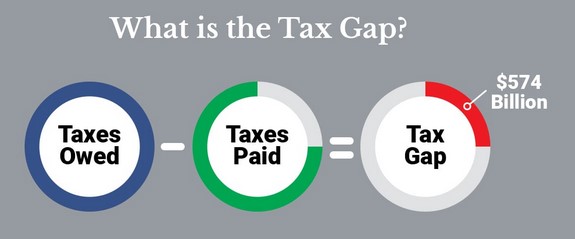
Goldberg was appointed as IRS Commissioner by President George H.W. Bush in 1989 and served three years. Rossotti was named IRS Commissioner in 1997 by President Bill Clinton. He served five years. Both former IRS commissioners are members of the group Shrink the Tax Gap, which states each year there is a tax gap of $574 billion in taxes that are owed to the IRS but not paid. Their position is simple and clear. Most people pay their taxes. Some people don’t, and that’s not fair.
In an article by James Q. Lynch, Congresswoman Ashley Hinson (IA-01), a member of the House Appropriations Committee, said of bills the committee was marking up, “I think that these bills disrespect taxpayers.”
What if we collected taxes due the IRS to help pay for them? Would that respect taxpayers?
Hinson supports expanding the child tax credit in the American Rescue Plan, but has concerns about the price tag of the bill that includes sending payments averaging $423 a month to about 35 million families with children. Hinson, like every Republican member of Congress, voted against the American Rescue Plan. When we are talking about price tags, the elephant in the room is the hundreds of billions of dollars in unpaid taxes created by the tax gap.
President Joe Biden proposed spending more money on the IRS so it could pursue tax deadbeats. We’re talking about people who have unpaid tax bills, not creating new taxes. Republican U.S. Senators want no part of this.
“What Republican senators object to here is training IRS investigators on people and corporations who are deliberately trying to cheat the system (not to mention the American people) and have the resources to do so,” wrote Kerry Eleveld at Daily Kos. “Instead, (they) would clearly rather just keep the IRS focused on smaller fish, who may have messed up some calculation on TurboTax, for instance. Why? Because the small fries aren’t delivering enough to GOP campaign coffers, that’s why.”
Paying taxes is so basic to being an American I believe most voters would support collecting taxes due. Yet that’s not how our government is evolving. The Republican minority seeks to retain control over the tax system to benefit the minority of wealthy Americans.
In Sunday news, Senator Rob Portman (R-OH) announced Biden’s plan to fund the IRS is officially off the table in the bipartisan infrastructure bill because he got “pushback” from fellow Republican lawmakers who dislike the idea of giving the IRS the tools it needs to collect taxes owed. Portman is a key negotiator for Republicans on this bill. It will be up to Democrats to pass this provision through reconciliation in the separate $3.5 Trillion infrastructure bill to which their caucus has agreed.
Do your job Congress. Shrink the tax gap.
For more information about Shrink the Tax Gap, click here.
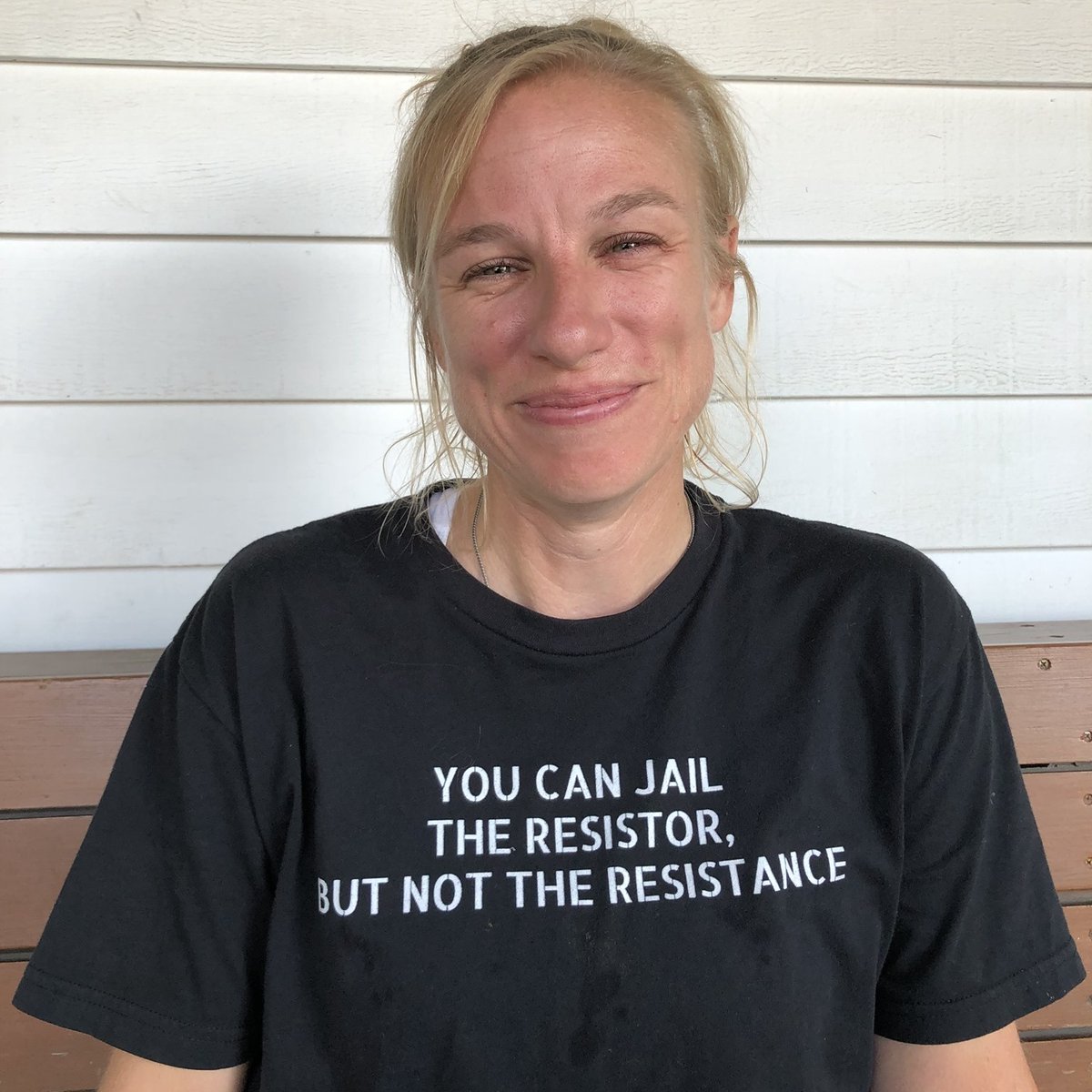
Jessica Reznicek, a 39-year-old environmental activist and Catholic Worker from Des Moines, Iowa, was sentenced in federal court June 30 to eight years in prison for her efforts to sabotage construction of the Dakota Access pipeline.
In November 2016, Reznicek and Ruby Montoya, a former preschool teacher, set fire to heavy construction equipment at a pipeline worksite in Buena Vista County, Iowa.
Over the next several months, the women used oxyacetylene torches, tires and gasoline-soaked rags to burn equipment and damage pipeline valves along the line from Iowa to South Dakota. Their actions reportedly caused several million dollars’ worth of damage and delayed construction for weeks.
Catholic activist sentenced for Dakota Access Pipeline vandalism by Claire Schaeffer-Duffy at NCROnline.com. To read the rest of the article, click here.
Reznicek’s criminal penalties were substantial. In addition to jail time, U.S. District Court Judge Rebecca Goodgame Ebinger included $3,198,512.70 in restitution and three years’ post-prison supervised release after she plead guilty to a single count of damaging an energy facility, according to Common Dreams. It’s hard to argue her protest was intended to be non-violent. She used an oxyacetylene torch to damage the pipeline without knowing if fuel was in transit.
Reznicek is being prosecuted as a terrorist. Is that what she is? It seems unlikely the board of directors or billionaire Kelcey Warren of Energy Transfer Partners felt terrorized. They had reason to know there would be protests during construction, and likely built defense from them into their operating, overhead, and risk management budgets. For ETP, pipeline protests represented business as usual. In 2018 there was a “protect the protests” direct action in Dallas, Texas where demonstrators accused ETP at its corporate headquarters of attempting to silence them with lawsuits.
Like many in the Des Moines Catholic Worker community Reznicek has been willing to break the law in peaceful protest and has been arrested. In 2014, she was detained for nearly 48 hours and then deported after flying into Israel to support Palestinians in the Israeli-occupied West Bank, according to the Des Moines Register. It seems obvious the Iowa Legislature had people like Reznicek in mind when they recently increased penalties for protesters.
I received the first of a series of emails from Reznicek during the Occupy Movement in 2011. She was an organizer for Occupy Iowa, Occupy Des Moines, Occupy the Caucus, Occupy Monsanto, Occupy the World Food Prize, and other direct action protests. She was arrested at some of these protests. It seemed like boilerplate organizing. Whatever cache the Occupy movement may have had, the work she did was straight forward with transparency. It was not a terrorist plot the way in 1995 Timothy McVeigh plotted to bomb the Alfred P. Murrah Federal Building in Oklahoma City. It would be better for the peace and justice movement if Reznicek did not have to spend her time serving time and defending herself in this prominent case. It goes with the territory, though.
The answer is no. Jessica Reznicek is not a terrorist. Society needs more people like her to call attention to injustice. If there is a cost to her protests, she has been willing to accept responsibility. If asked, my neighbors would say justice was served with Reznicek’s prosecution and sentencing. As it plays out in the judicial system, some of us wonder who will step in to fill her shoes in the peace and justice movement. It may be someone, but it won’t be her for a while.
“The unprecedented global challenges that the United States faces today—climate change, pandemics, nuclear proliferation, massive economic inequality, terrorism, corruption, authoritarianism—are shared global challenges. They cannot be solved by any one country acting alone. They require increased international cooperation—including with China, the most populous country on earth.” ~ Sen. Bernie Sanders, June 18, 2021
Readers have likely noticed recent Republican reference to “Communist China.” They seek to create a bogeyman to scare the electorate–one more trick in their fear-mongering bag used to dominate low-knowledge voters.
In a recent article on the Portside website, Sen. Sanders laid out how relations with China have changed, why they remain important, and require further change despite challenges.
“It is distressing and dangerous, therefore, that a fast-growing consensus is emerging in Washington that views the U.S.-Chinese relationship as a zero-sum economic and military struggle,” Sanders wrote. “The prevalence of this view will create a political environment in which the cooperation that the world desperately needs will be increasingly difficult to achieve.”
As far as a military struggle goes, the claim that China challenges the U.S. militarily is exaggerated.
It’s important to begin any assessment of the challenge from China by noting that the United States currently outpaces it militarily by a large margin. The U.S. has a more modern air force, a more capable navy and a far larger nuclear arsenal than China, and it spends roughly three times as much on its military. The spending gap widens considerably when U.S. allies in NATO, Australia, Japan, and South Korea are taken into account.
The nuclear gap is especially stark – the United States’ active nuclear stockpile is 11 times the size of China’s and deployed U.S. warheads are five times what China possesses. The gap between the U.S. and Chinese militaries is documented in detail in a recent analysis by the Center for Arms Control and Nonproliferation.
As recently as 2000, the consensus in the United States was that China should be granted “permanent normal trade relations” status or PNTR, according to Sanders. It may be familiar to hear that to compete in a global economy, U.S. companies require access to Chinese markets.
“At that time, the U.S. Chamber of Commerce, the National Association of Manufacturers, the corporate media, and virtually every establishment foreign policy pundit in Washington insisted that PNTR was necessary to keep U.S. companies competitive by giving them access to China’s growing market, and that the liberalization of China’s economy would be accompanied by the liberalization of China’s government with regard to democracy and human rights,” wrote Sanders.
This approach was wrong according to Sanders, as is the current approach of casting China as villainous. “For the American people to thrive,” Sanders wrote. “Others around the world need to believe that the United States is their ally and that their successes are our successes.” He supports President Biden’s approach toward relations with China.
To learn more about the change in Republican views toward China, and why it is important to coming elections, I recommend reading the two linked articles. I also recommend we don’t let Republican scare tactics divide us.
While it got scant notice in the U.S. press, the joint statement after the Geneva, Switzerland meeting between President Joe Biden and Russian President Vladimir Putin was significant:
We, President of the United States of America Joseph R. Biden and President of the Russian Federation Vladimir Putin, note the United States and Russia have demonstrated that, even in periods of tension, they are able to make progress on our shared goals of ensuring predictability in the strategic sphere, reducing the risk of armed conflicts and the threat of nuclear war.
The recent extension of the New START Treaty exemplifies our commitment to nuclear arms control. Today, we reaffirm the principle that a nuclear war cannot be won and must never be fought.
Consistent with these goals, the United States and Russia will embark together on an integrated bilateral Strategic Stability Dialogue in the near future that will be deliberate and robust. Through this Dialogue, we seek to lay the groundwork for future arms control and risk reduction measures.
The joint statement echoed what President Ronald Reagan and Secretary General of the Communist Party of the Soviet Union Mikhail Gorbachev said 36 years earlier in Geneva, “A nuclear war cannot be won and must never be fought.”
“The complete abolition of nuclear weapons is the only way to be safe from their threat,” president of Physicians for Social Responsibility of Los Angeles Robert Dodge, M.D. wrote in Common Dreams.
The United States and Russia possess far more nuclear weapons than the rest of the nuclear states combined, enough to destroy life as we know it on Earth many times over. The two states working toward strategic stability is essential to compliance with Article VI of the nuclear nonproliferation treaty. During the previous U.S. administration, future compliance with the NPT came into doubt. President Biden is getting the U.S. back on the right track.
That’s not to say it will be easy. As Dodge points out, the Treaty on the Prohibition of Nuclear Weapons went into force January 22 this year. Currently it has been signed by 86 nations and been ratified by 54. Neither Russia nor the U.S. have joined the treaty and the prospects of them doing so near term are dim.
All nine nuclear states must take a step back from the brink of nuclear annihilation. The Geneva statement on strategic stability suggests it is possible to do so.
To learn more about the U.S. grassroots organizing effort to produce the safer, healthier and more just world that is possible without nuclear weapons, visit the Back from the Brink website.
One of the highlights of the 2021 political summer will be distribution of the U.S. Census data and the decennial re-districting. The Iowa legislature is expected to convene a special session for that purpose in August.
In 2011 only two members of the legislature objected to the first re-districting map and it passed unceremoniously. We’ll see what happens this year. You’ll know there is skullduggery if the first two maps drawn by the non-partisan commission are rejected.
Trish Nelson is taking vacation in July and I’ll be helping to keep the blog going. I don’t know her plans, other than it will involve dogs, cats, bicycles, and time with family. The blog must go on!
An idyllic version of summer is getting away from stress and tension of American political life for a while and reading a good book. My reading pace slows during summer as more outdoors activities are available. I asked for summer reading recommendations from friends of the blog and here they are for your consideration:
Trish Nelson recommends The Underground Railroad by Colson Whitehead. “Cora is a slave on a cotton plantation in Georgia,” according to Goodreads. “Life is hell for all the slaves, but especially bad for Cora; an outcast even among her fellow Africans, she is coming into womanhood—where even greater pain awaits. When Caesar, a recent arrival from Virginia, tells her about the Underground Railroad, they decide to take a terrifying risk and escape.”
Dave Bradley recommends god is not Great: How Religion Poisons Everything by Christopher Hitchens. People love or hate Hitchens, who died of pneumonia while being treated for esophageal cancer in 2011. “Hitchens described himself as an anti-theist, who saw all religions as false, harmful, and authoritarian,” according to Wikipedia. “He argued for free expression and scientific discovery, and asserted that they were superior to religion as an ethical code of conduct for human civilization. He also advocated separation of church and state. The dictum ‘What can be asserted without evidence can also be dismissed without evidence’ has become known as ‘Hitchens’s razor.'”
Friend of the blog Ellen Ballas recommended Russian Roulette: The Inside Story of Putin’s War on America and the Election of Donald Trump by David Corn and Michael Isikoff. We’ve been hearing of Russian influence in the 2016 general election for what seems like an eternity. Corn and Isikoff followed it from start to finish and present an incredible account of how American democracy was hacked by Moscow to influence the election and elect Donald Trump.
On my bedside table is Devotions by Mary Oliver. Poetry, which I read outdoors during good weather, has been part of my summer for many years. I enjoyed Oliver’s American Primitive, leading me to buy this collection of her selected poems. I don’t think I can go wrong.
I also plan to read The Warmth of Other Suns: The Epic Story of America’s Great Migration by Isabel Wilkerson. Wilkerson’s book has been recommended by so many people I lost count. Many of us are familiar with the great migration from the southern United States to the north. “From 1915 to 1970, this exodus of almost six million people changed the face of America,” according to Goodreads.
Whatever you are doing this summer, I hope you enjoy it… and that you’ll join me on Blog for Iowa during the month of July.
It’s no secret there is an epistemological crisis undermining the authority of knowledge. It may be the most significant problem to grow out of the Reagan administration. That the discussion of creationism versus evolution returned during the 1980s was only the beginning.
There is a difference between justified belief (a.k.a. facts) and opinion and it is epistemological. That is, “relating to the theory of knowledge, especially with regard to its methods, validity, and scope, and the distinction between justified belief and opinion,” according to Dictionary.com. At issue is that solutions to other pressing problems rely on the ability of Americans to separate opinion from facts, something we as a society have become less able to do. Al Gore recently summarized our current situation as follows:
And though the pandemic fills our field of vision at the moment, it is only the most urgent of the multiple crises facing the country and planet, including 40 years of economic stagnation for middle-income families; hyper-inequality of incomes and wealth, with high levels of poverty; horrific structural racism; toxic partisanship; the impending collapse of nuclear arms control agreements; an epistemological crisis undermining the authority of knowledge; recklessly unprincipled behavior by social media companies; and, most dangerous of all, the climate crisis.
Al Gore, New York Times, Dec. 12, 2020
Unless we can agree there are facts, and how to distinguish them from opinions, we may have reached the end of the long, good run that was the American republic.
During the time since Reagan, moneyed interests gained hegemony in our government and society. Thom Hartmann put it this way in his forthcoming book The Hidden History of American Oligarchy: Reclaiming Our Democracy from the Ruling Class:
Billionaire oligarchs want to own our republic, and they’re nearly there thanks to legislation and Supreme Court decisions that they have essentially bought. They put Trump and his political allies into office and support a vast network of think tanks, publications, and social media that every day push our nation closer and closer to police-state tyranny.
Thom Hartmann, The Hidden History of American Oligarchy: Reclaiming Our Democracy from the Ruling Class, to be released February 2021.
It is particularly distressing American oligarchs used the cover of the coronavirus pandemic to increase their grip on the nation and extract taxpayer money intended to alleviate the fiscal crisis it caused. In normal times this would be unthinkable. These are not normal times.
In 1996, President Bill Clinton signed the Telecommunications Act which deregulated use of the public air waves. Regulations put in place in the 1920s through the 1940s were largely repealed. The result has been to consolidate most media under half a dozen corporations which now control the message. Perhaps Sinclair Broadcast Group is the worst in that they distribute editorial pieces from the corporation for inclusion during on-air broadcasts. All of the media corporations play a role in the deterioration of knowledge.
In 1987 President Ronald Reagan directed the FCC to cease enforcement of the Fairness Doctrine. In 2011 the Obama administration removed it from the FCC rules completely. Broadcasters no longer had an obligation to present balanced or fact-based information. The significance to the epistemological crisis these actions brought is hard to overstate.
What do we do about it? For those of us on small, private blogs it is easy: have a basis in fact if we run a story, focus on inquiry and understanding. As Tom Nichols pointed out in his book, The Death of Expertise: The Campaign Against Established Knowledge and Why it Matters, “None of us is a Da Vinci, painting the Mona Lisa in the morning and designing helicopters at night. That’s as it should be. No, the bigger problem is that we’re proud of not knowing things.”
With their 40-year head start, it will be challenging to overtake the oligarch puppet masters who bought much of our government. Hartmann has a dozen ideas to get us started. Gore and Nichols have more. The bottom line is the truth matters, scientific methods matter, and while religious belief plays a role in human culture there is a difference between things we take on faith and those that can be verified through scientific methods.
At the Oct. 22 presidential debate, Joe Biden said, “We’re going to choose science over fiction.” It’s a starting point on a long journey, one which we all should join.
Image of Earth 7-6-15 from DSCOVR (Deep Space Climate Observatory)
The climate crisis continues in the coronavirus pandemic.
The pandemic with its economic downturn threatens years of progress addressing climate change and sustainability. It’s now or never for the environment.
Governments are expected to spend trillions of dollars in stimulus to get the economy going again. Addressing the climate crisis can’t wait. Climate solutions must be integrated with stimulus spending.
“We now have a unique opportunity to use (the economic crisis) to do things differently and build back better economies that are more sustainable, resilient and inclusive.” said Saadia Zahidi, World Economic Forum managing director.
WEF warned that “omitting sustainability criteria in recovery efforts or returning to an emissions-intensive global economy risks hampering the climate resilient low-carbon transition.”
Sustainability should be integrated into recovery efforts because the health crisis, economy, and environment are inextricably connected. There is only one chance to manage this recovery. Trillions can be spent only once. Given the scope of the climate crisis, its pressing urgency, society must choose to address the climate crisis now.
The International Energy Agency has ideas on how to do that. They developed a 174-page essay titled “Sustainable Recovery.” However, no single solution applies to global matters. We need multiple solutions implemented synchronously.
Global carbon dioxide emissions reduced by 17 percent in April as people sheltered at home, industry reduced production, and automobile use slowed. Since then, emission levels surged back. A conscious decision to integrate smart energy use into the recovery is needed. The issue has been politicized so thoroughly it seems doubtful any such action will be taken in the United States. One is being political whether they say something about climate change or not when discussing the economic recovery. We must persist in demanding a solution.
Fiona Harvey, environmental correspondent for the Guardian reported, “The world has only six months in which to change the course of the climate crisis and prevent a post-lockdown rebound in greenhouse gas emissions that would overwhelm efforts to stave off climate catastrophe.”
No one knows how long we have. It’s common sense that stimulus money could be used in a holistic way. Ideas are out there. What’s lacking is political will.
That few in our government talk about addressing the climate crisis as we “open up” the economy is part of the problem. Oil and gas interests have so infiltrated our government politicians don’t want to hear about solar or wind generated energy, even if they are the least expensive and least damaging regarding carbon dioxide emissions.
Think about it though. When has doing what makes sense gotten so politically out of fashion? Among other things, that needs to change.
Al Gore recently said, “Moving forward from COVID-19 means we have an obligation to rethink the relationships among business, markets, government and society. We must deliver a sustainable form of capitalism.”
That’s not going to happen without a change in our government.
People ask me how I plan to address the climate crisis. My answer?
It’s time to stand up for what is needed in our country right now: moral revival and transformative change. That means voting for Democrats in November.
Postscript: Since I wrote this post Joe Biden released his plan to ensure the future is “‘Made in All of America’ by all of America’s workers.” The word climate is mentioned once in a paragraph to “apply a carbon adjustment fee against countries that are failing to meet their climate and environmental obligations.” I support Biden for president and encourage readers to read his Made in America plan here. Like any plan it will be subject to modification if Biden is elected president. One modification I expect is to integrate addressing the climate crisis in the plan.
Independence Day is over! Time to get rolling on the fall campaign to elect Democrats! Not so fast…
The 2020 general election cycle has been like no other. Iowa didn’t stand a chance of influencing the national debate after the precinct caucuses yielded a field of five candidates who were awarded national delegates. Joe Biden, the presumptive nominee, placed fourth with six of 41 delegates, according to the Iowa Democratic Party website. A botched reporting process took Iowa out of the limelight as we didn’t certify caucus results until the race had moved on to New Hampshire and South Carolina.
Then the coronavirus hit the state. On March 9, Governor Kim Reynolds signed a disaster emergency proclamation regarding COVID-19. Political campaigns moved on line, conducting fundraising, voter contact, forums, and other events via telephone, text, email, and video conferencing. We got to know Zoom.
The impact of the coronavirus pandemic on political campaigning is far from over. There is expected to be little door-to-door canvassing, few in person events, and forget about the usual slate of county and state fairs, parades, pancake breakfasts, fish fries, and chili suppers. Politics in the pandemic seems much less significant than the public health emergency coupled inextricably with the economic downturn the pandemic is causing, to be honest. Whatever our federal and state governments are doing to mitigate the pandemic, it’s not working. The president’s recent guidance, parroted by the Iowa governor, is, “we need to live with it.”
On June 2 Theresa Greenfield became our nominee for U.S. Senate and all Democratic attention could turn to defeating incumbent Joni Ernst. In the age of Trump it seems possible to defeat the incumbent senator who had a solid win against Democrat Bruce Braley in 2014. The race will be tight and a lot of money will be spent by the candidates and political action committees.
In Iowa’s four congressional districts we have a slate of outstanding candidates in Abby Finkenauer (IA-01), Rita Hart (IA-02), Cindy Axne (IA-03) and J.D. Scholten (IA-04). They are working their campaigns and appear to have resources to do so. We can also expect each of them to be underdogs in the campaign cash department as Republicans have an unlimited supply of big dollar donors and political action committees just as in the U.S. Senate race.
The Iowa Senate seems out of reach for Democrats this cycle but we could make headway in the 18-32 minority, setting the stage for a majority in 2022. In the House of Representatives, flipping the majority to Democratic is within reach in 2020. If we could gain a House majority that would buffer the worst impulses of the Republican Senate and governor.
What’s an active Democrat to do? Get involved with electing Democrats.
While the way we support Democratic political campaigns may differ this cycle, the endgame is the same. Keeping track of voter contacts and make sure we reach out to everyone possible. In the pandemic that means participating where one can in virtual phone and text banks, and staying in touch with candidates through Facebook pages and virtual events. It also means adding politics to the list of things one discusses with friends and relatives. We each need our own list of people we seek to convince to vote Democratic whether it is provided by the party or not.
Politics has been weird this cycle. I’m okay with change yet the lack of person to person contact at events, door knocking, and fund raisers is unsettling. I have been walking in parades with Democrats and Democratic candidates for 20 years. Partly, I am involved in politics for this type of in person interaction. It’s hard to get fired up about a Zoom call the way it is to obtain a fresh list for door knocking.
The Iowa Democratic Party is being cautious about the risk of campaigning in the pandemic. An IDP employee explained it this way in an email.
The fear is that we might alienate Dems who are being extra cautious right now if we start showing up at their doors. The phones are the best option we have without in person contact being on the table, but hopefully it will become an option again soon.
Rank and file Democrats like me have little choice but to support what the state party and campaigns want to do. The thing is, we need to get everyone possible to vote for Democrats.
It’s clear no preference voters, along with some Republicans can be persuaded to vote for Joe Biden. They may not be willing to vote Democratic in federal and down-ticket races so we need to be nuanced in our approach to potential ticket splitters. We want those Biden votes for sure. If they are willing to pull the lever for Theresa Greenfield as well, that’s better. The secret sauce of Dave Loebsack’s long tenure is appealing to this type of ticket-splitting voter. A one size fits all campaign as we’ve run them previously hasn’t been as nuanced as 2020 demands.
My advice if you are reading this post is do three things: 1. Set a monthly budget to contribute to your favorite Democratic candidate. Almost anyone can afford a recurring small donation to the Iowa Democratic Party; 2. Make a personal list of people — friends, family, neighbors, and social groups — to contact about the election and then do it. Some may be resolute about their support for a candidate we do not prefer. Don’t beat them over the head with it but have that conversation; and 3. Get involved with formal party activities virtually or in person if they exist. The basic needs of the coronavirus pandemic — washing hands, social distancing, wearing a mask or shield in public, staying home if sick — are straight forward. If events support these precautions, they are worth considering for participation.
Summer is here, as is the pandemic. Democratic politics will adjust and move forward, hopefully toward victory in November.
If the Iowa precinct caucuses created doubt about the efficacy of our voting process, we are not the only ones with concern.
Thom Hartmann, the number one progressive-talk-show host in the United States wrote the book, The Hidden History of the War on Voting: Who Stole Your Vote and How to Get It Back. It will be released by Berrett-Koehler Publishers on Feb. 11.
Blog for Iowa reviewed the book here and on Jan. 21 interviewed Hartmann about it and his work as a progressive. Hartmann was engaged and spoke freely about his book, about his concerns about voting in the U.S., and about his work as a progressive writer and radio personality.
We will run the interview in multiple posts, beginning with Hartmann’s comments about this book. The interview was transcribed from audio and is presented with only minor grammatical corrections for clarity.
BFIA: Can you tell me about the background, why you came up with this Hidden History series?
Hartmann: I’ve noticed a couple of trends. One is that people have less and less time to read books, and myself included. But I think it’s just ubiquitous. Spread across the culture. You can blame screens, you know, or phrenetic lifestyle, cause of the bite that Reaganomics is taking out of the middle class. I’m sure it’s a whole bunch of different factors but the simple reality is people don’t just sit down and spend ten, fifteen, twenty hours reading a book like they did twenty-five, thirty years ago.
So I wanted to come out with a series of small books that were books that a person could read in a weekend or maybe even in a long afternoon. I also have been just an absolute history fanatic my whole, entire life. My Dad wanted to be a history teacher when he grew up, a college professor. He had to drop out of college because Mom got pregnant with me and that was the end of that. But he had 20 thousand books in his basement; a lot of them were history. And we talked history all my life, you know, until my Dad died.
I proposed this to BK Publishers, said I’d like to do a series about things that are contemporary issues that have historical roots that most people are unaware of the roots. They don’t know where this came from, how this came about.
The first one we did was the Hidden History of the Second Amendment which is kind of self explanatory. The second was the Hidden History of the Supreme Court and the Betrayal of America. That is how the Supreme Court basically flipped us into oligarchy in the 1970s and it also takes on the issue of judicial review, something most people don’t know anything about the background of and how angry Thomas Jefferson was about it. The third one was the Hidden History of the War on Voting. I argued it should be titled “Republican War on Voting” because there is no Democratic war on voting. They didn’t want to make it seem too partisan.
It’s fairly evident when you read the book who’s trying to prevent you from voting and who isn’t.
BFIA: Thank you. In the voting book, which is the most recent one I read, is there anything you would like to highlight in particular.
HARTMANN: I think the big aha! For a lot of people who have read the book has been Red Shift and voter suppression. Red shift is something that started showing up around 2000 in the United States.
Around the world exit polls are the gold standard to determine if an election has been fraudulent or not, whether there is election fraud. Historically, and in fact, most countries in the world vote by paper ballot. They don’t vote electronically. As a result it takes a couple of days to count the vote.
Every European Country, Canada, take your choice. I lived in Germany for a year and when they have elections in Germany they call the elections when the polls close because they do it based on exit polls. Exit polls are never more than one tenth or two tenths of a point off, even though it takes them four days to count the vote. We saw this in the U.K. very recently with Boris Johnson.
In the United States our exit polls had always been within a tenth of a point or so of our election outcome. But in 2000 this strange thing started showing up. It got really bad in 2002, 2004, 2006 and 2008, when what showed up was that in a handful of states, that started out four or five and now it’s more like ten or fifteen, the outcome of the election is anywhere from two to five percent more Republican than the exit polls. And that’s why it’s called Red Shift toward the Republican Party.
And for a long time, and this is not a secret, the exit polling companies were so freaked out about this they didn’t know what to do. I mean this was a crisis for them in the 2004 election, the John Kerry-George Bush election. There was substantial Red Shift, including in Ohio where George Bush supposedly won that election.
So when we first saw these changes in numbers, how they almost always benefited exclusively Republicans, we concluded and they seem to follow the widespread adoption of electronic voting machines. The first guess of most people was that this was rigged or hacked voting machines.
I think one of the things we have learned in the years since then, particularly over the last ten years or so, that Republicans are more open and up front about their strategies. We’ve gotten access to some of their memos going back 15, 20 years, (showing) that what they have been doing in states where the Republicans control the state they throw hundreds of thousands of people off the voting rolls in the year before an election, in particular they do it in the Democratic cities.
And then when those people show up to vote they’re told, “Oh I can’t find your name on the roll, but here is a provisional ballot you can vote on this.” They don’t realize that provisional ballots are only counted if an election is contested. So those votes literally never get counted, with very few exceptions.
But when they walk out of the voting place and speak to the exit pollster, who says, “How did you vote?” They’ll say “Oh, I voted for John Kerry.” And they write that down as a John Kerry vote, neither the pollster nor the voter realizing that because the voter will be on a provisional ballot that that vote will never be counted.
In most states if you want to your provisional ballot votes to be counted you have to show up at the secretary of state’s office within 48 hours, and prove that you are who you are, and where you live, and you are a citizen, and basically go through the whole process of re-registering to vote, or proving that your registration was inappropriately removed, which most people don’t even know they have to do much less know that they can do.
I think that’s probably a better explanation for Red Shift because the red shifts seem to be the worst in the states that had the most aggressive voter purges.
“Right-wing media have been laying the groundwork for Trump’s acquittal for half a century,” Nicole Hemmer wrote in the New York Times. “These tactics (i.e. minimize Trump’s transgressions and paint a picture of non-stop Democratic scandals) are not inventions of the Trump era. They are part of a decades-long strategy by the right to secure political power — a strategy originating in conservative media.”
For a student of history the story is not only about conservative mass media beginning in the mid-20th Century. It goes further back.
It’s been a few decades since I finished graduate school yet I remember we studied nineteenth century newspapers from the Old West in Kansas, Oklahoma, and the like. They were mainly gossip sheets in which people could and did say just about anything. Whatever was needed to engage locals and sell advertising, whether it was true or not. It is a part of human nature to want to hear gossip and the outrageous things that may or may not be going on in a community.
What’s different now is corporations have exploited this aspect of human nature to generate revenue. They’ve been successful at doing so. In a way, right wing media is yet another corporate theft from the commons.
One can’t make the argument that media has ever been without bias. Journalists, editors, and even historians have their implicit point of view which may or may not serve the truth or other human needs. I’m thinking here of the work of Howard Zinn, David Hackett Fischer, Clifford Geertz and others.
Joan Didion described it as well as anyone, “We tell ourselves stories in order to live.” What we hadn’t planned for was the malicious intent of people who would come to dominate news and information sources, and the role that would play in the stories we tell ourselves.
The first sign of trouble should have been when our favorite news personalities began to earn millions of dollars annually for what should have been a public service. That Sean Hannity earns $40 million per year is all one needs to know about FOX News. Even Walter Cronkite earned close to a million.
My media behavior toward this impeachment effort is similar to during the Nixon and Clinton proceedings. I tune it out. One exception though. While I’m still in bed, before I turn the light on, I pick up my phone and read Heather Cox Richardson’s daily letter. It’s about all that I can take. Is she biased? Of course. But my tolerance for the biases of Phillips Exeter Academy and Harvard where she was educated is a bit higher. Plus she feeds my confirmation bias.
.jpg)






 Journey Home
You must be logged in to post a comment.