My current book is heading for home and each new day of editing brings a sense of impending completion. Being a career logistician, I consider process: By June, copies for early readers; then another edit; then fund-raising, printing, and distribution. Having written it, the work ahead is answering questions about whether it is the best it can be.
What is this autobiography, with working title A Working Life: A Memoir, about?
A man who set out to write discovers the long experience of work and of living meaningful days in the American Midwest is the life of a writer.
While this sentence needs work, it is the product of writing the book, driven by its themes. Writing, work, and meaning made a permanent structure. Until I finished a first draft I did not recognize that. Now I can stand on it.
Begun in 2010, this work is having a long gestation. As the writing and editing ends, I understand more clearly what my life is about. Soon I can move on to the next project.
More than anything, I need closure. I can see now that by Labor Day I will be ready to let it go.
Following is a description of how I spent the bicentennial in 1976 from my book An Iowa Life: A Memoir. I was on military leave, in between Officer Candidate School and Infantry Officer Basic Course. This year is the 250th birthday of America. I’m not feeling celebratory and wish I could go back to those days when I slept on mother’s front porch through the holiday, away from neighborhood noise.
I stayed on at Fort Benning to take the Infantry Officer Basic Course and attend jump school. After OCS, life was less stressful as I prepared for my assignment in Germany.
I felt the beginnings of transformational change from being an observer of society to a participant.
I see myself more as a player in the show than as an observer and critic. I, too, am a pilgrim traveling on the road to Canterbury with the others. I am beginning to chip the yellow stains from my teeth in preparation for a big smile in greeting the people and animals I see. Life is alive again, and my spirit is tuned into the wavelength of the people again. (Personal Journal, Fort Benning, Georgia, June 6, 1976).
I spent the Bicentennial Independence Day at home in Davenport,
If you stop by my mother’s house you still may see the red, white, and blue décor where I slept this week during my leave time.
After running around the Assumption track a few times, I returned, bathed, and lay down on our ancestral glider. The glider where girls I have crooned and plots have made. I tried to read N. Scott Momaday’s Pulitzer Prize winner but nodded as I have so often done, waking with an urge to set ink to paper about an event from the past.
So, with Grandma sleeping inside and green maple leaves surrounding me, I will recount the vision I have just had.
Several years ago, while we were still in school, Tim Hawks invited me up to his family farm house near Belleview. Some friends of his from Georgetown were visiting and I brought my guitar along to make a little music. In DeWitt, I believe, we stopped and bought a kite to fly once we got out to the farm. When we arrived, we were greeted by the cat who had the house to himself for quite a while and was anxious to make our acquaintance. In we go and carry whatever it was we brought with us inside and got the heater going to provide a more comfortable evening for us. After this and a slight tour, we decided to go outside and fly the kites which we managed with little difficulty: one regular and one box kite. For some reason we decided to leave the kites out and reel them in in the morning before we left. As it got dark, we retired to the inside where we settled down making a little music together, Timothy disappearing to the upstairs after a while with my guitar to make some music on his own. When we woke the next day, we discovered several inches of snow on the ground and that our kites had come down. After a breakfast of pancakes, we policed up the kites and made our way back the treacherous road to the highway, our adventure on the farm complete. (Personal Journal, Davenport, Iowa, July 5, 1976).
When I returned to Fort Benning, I found spare time to write in my journal.
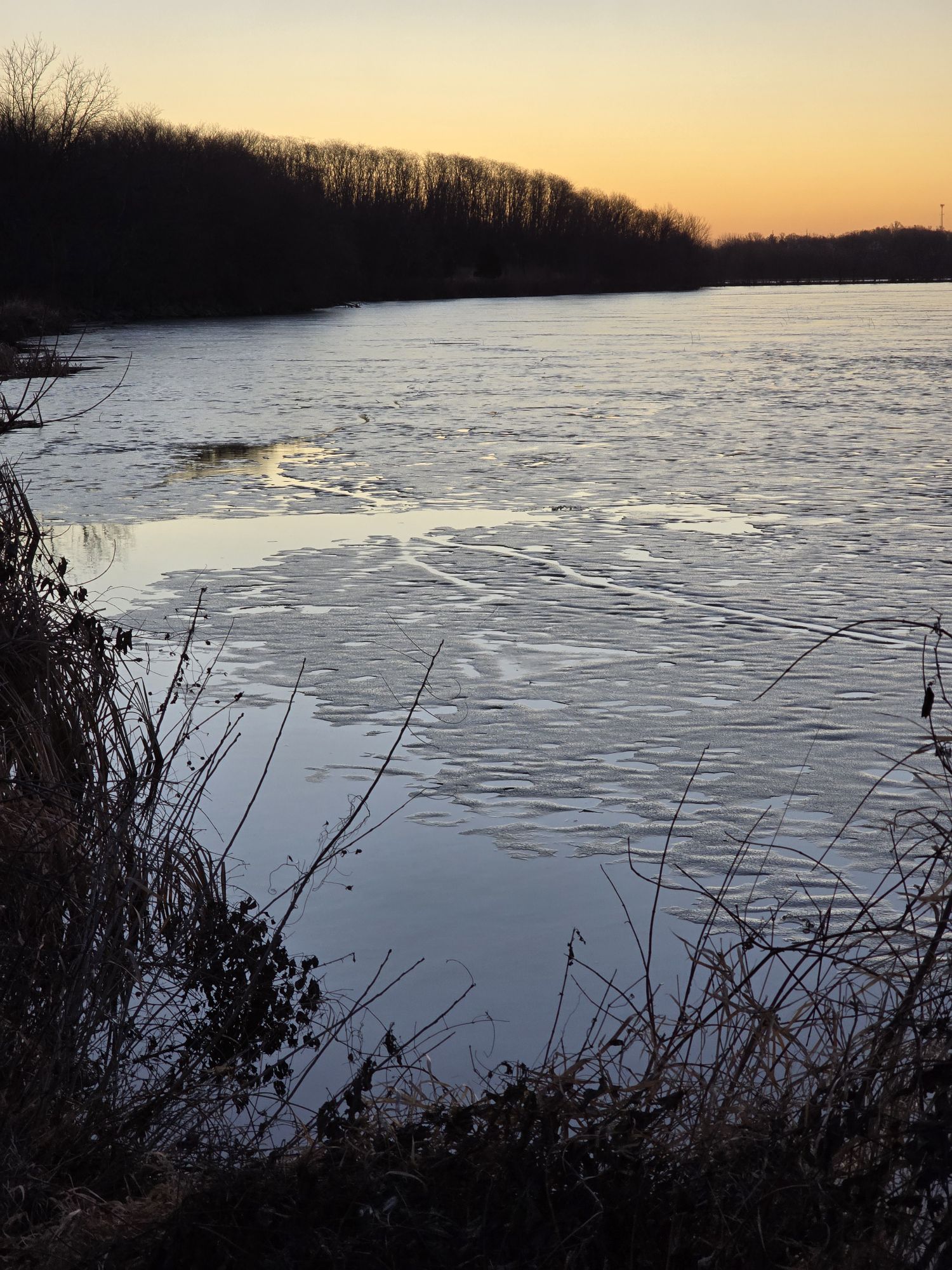
The portion of my autobiography after leaving a transportation and logistics career looks a lot like the ice in this photograph. Parts of it are smooth, yet thin, because only recently it was open water. Parts have frozen and thawed so many times it is difficult to determine where the surface could support a human. This morning, I stood on the bridge to where the boat docks will go this summer and felt I didn’t know what I was writing.
I haven’t given up. I’m deep in 2010, which was a pivotal year across my life in writing, politics, home ownership, work, and family life changes. I felt economic pressure from leaving a regular paycheck combined with depletion of savings. In my life, however, money was never anything to fret about.
The backlash to the election of Barack Obama was severe that year. It took less than a year, yet Republicans demonstrated they viewed little about Obama’s election as permanent, including the Patient Protection and Affordable Care Act which was signed into law that year. They reorganized themselves around right-wing figures while blocking and undoing the good things Obama did. That struggle continues.
I held a job trying to get U.S. Senator Chuck Grassley’s vote for the New START treaty, something D.C. lobbyists for nuclear abolition thought possible. When the Senate ratified the treaty on Dec. 22, 2010, we had not won Grassley’s vote.
There was a long automobile trip west to the high plains with a lifelong friend. Upon my return, I helped organize a 40th year high school class reunion which put me in touch with people I hadn’t thought of for decades. These were both positive and re-established my roots. I had a lot of material originating in 2010 and crammed as much as I could into a single draft chapter. Perhaps that was not a wise tactic.
The best approach to this revision may be to not work at all. Let everything sit for a few days. Focus on other projects and forget about writing. For this book to be any good, there is no deadline, even if I still want to finish by the end of this year.
I set it aside, thinking, maybe I could use a nap. I read in David Morrell’s book about writing, shaved, showered and re-started my day. I already feel the better for it.
Short post today. I haven’t considered my early days on Blogger and WordPress until now. They were outlets for all kinds of writing.
Been working on a chapter about the early years of social media and blogging. This paragraph needs work yet it captures one way I used the platforms in those early blogging days.
When I began blogging in 2007, I had no idea where it would go. I wrote more than 5,600 posts since the beginning. For a long time, it was the only writing I did each day. It became a writer’s workbench to test ideas and how to express them. Some days the posts were cringe worthy. Some days I touched the sky. Part of me would like to return to handwriting paper journals the way I did before 2007. Part of me does not.
I also re-wrote the first paragraph of the chapter. Next I will re-do the rest.
I also mention social media in it. I was active on half a dozen platforms and joined Facebook in March 2008, after which made this brief post:
Tonight I joined Facebook. Yikes! Facebook connects us to people we have not thought of in years. In some cases we haven’t made contact in over a quarter of a century. All within a couple of hours. From moment to moment, the number of “friends” builds. What to say on the site? What elements to show? What pictures to place? How much time to spend? When a friend accepts the invitation, it feels good. The wave has broken, now I’ll ride it in.
If there was excitement at first, when our child stopped posting there I lost interest. It took a while yet in 2025 I deactivated my account. My problem was the contrast between lots of activity and the loneliness I felt as a result of being increasingly away from the real world. There is a kind of relationship on social media, I determined it was not a good one.
The purpose of the chapter is to figure out the meaning of all this. Maybe I will.
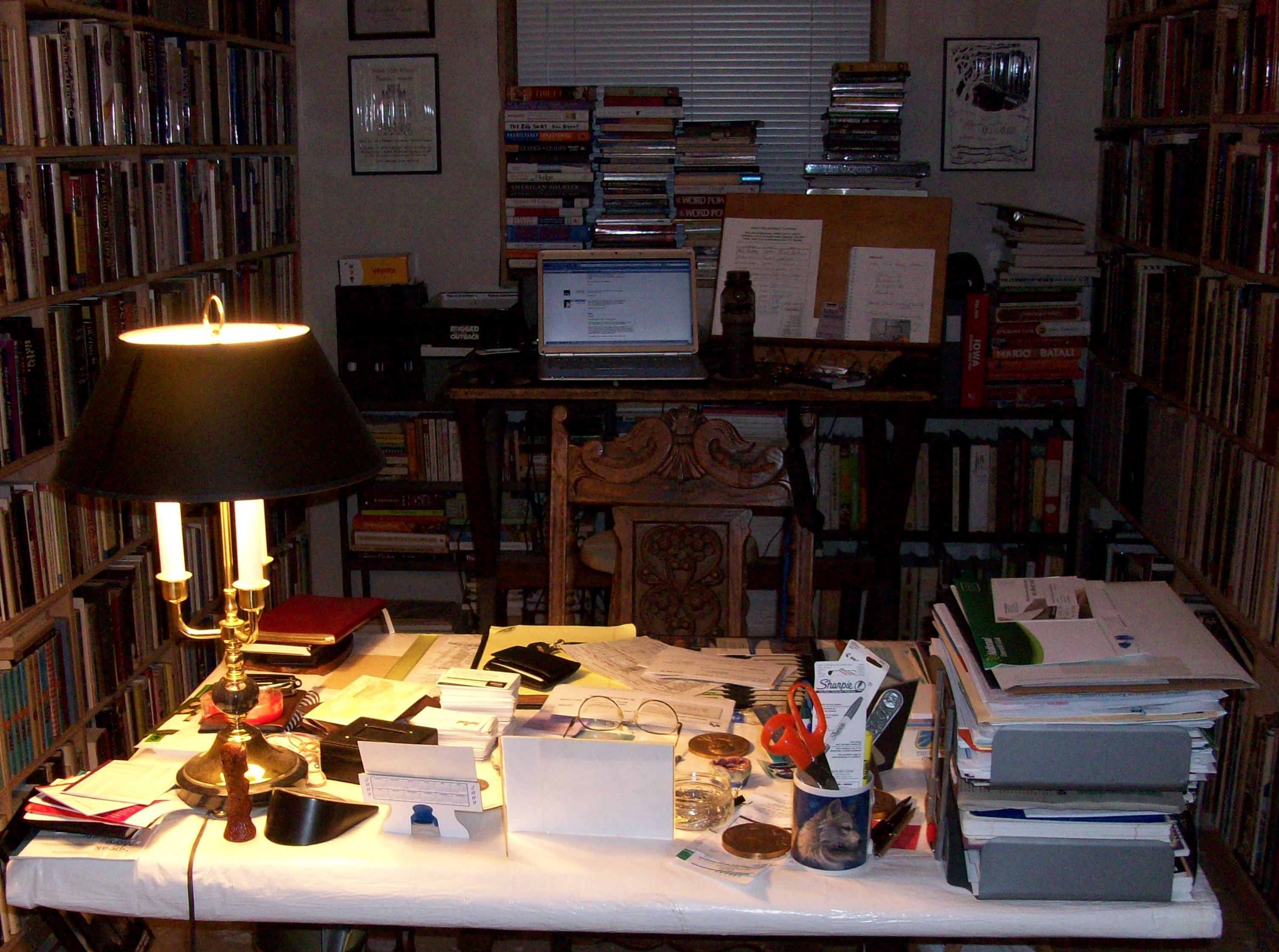
Writing space at Five Points in Davenport, Iowa, 1980.
Ambient temperature was to climb to 60 degrees Fahrenheit on Sunday. It made it to 61. Spring is in the air, even if that thought is not rational given the calendar. I sat down and outlined the path to finalizing my book.
I finished the initial draft on Jan. 5, and am 37 chapters into the first pass of revisions. What are reasonable next steps toward publication? I laid them out.
It will take two to four weeks to finish this pass of the remaining 12 chapters. After our child leaves Iowa after college in the story, the chapters have a different focus. I wrote them quickly, now I must revise them slowly. Given three to four hours of early morning darkness, that should be doable. With each passing day, I lose darkness, yet I will persevere.
After this pass, I plan a structural review. The purpose here is to ensure the book has continuity, that it is going somewhere with intent. I laid out a sheet of 8×11 paper with a chapter title on each, and arranged them in the current order. On each sheet I will define where the chapter starts, where it ends, and then summarize in a sentence or two what story movement is included. I already see some order-switching at hand.
Once structural concerns are addressed, it’s time for a reality check. Is the book saying what I want? Is it meaningful? Once those questions are adequately addressed, it is time for a second pass with re-writing, if needed.
This pass leads to proofreading and getting the book formatted for a local printing in either spiral or comb binding. I will pick the printer and make a dozen or so copies for early readers.
If everything comes together, by Memorial Day, manuscripts have been distributed to a small group of trusted readers whose screening process answered the questions: Did they read the first book when delivered? Did they provide meaningful comments? I have a couple of new readers in mind, with whom I’ve had conversations about my book, yet haven’t read it yet. While I will be in a hurry at this point, the book then becomes potential summer reading for this group.
The next goal is to collect feedback as it comes, in whatever format it is. No later than Labor Day I enter a decision table: Do I print privately as in the first book, or take steps to use a printing service to make the book into various formats: eBook, paper book, and audio book and distribute more broadly? The answer to this question is not made and I would be happy with either outcome.
The three to four hours of writing each day leaves plenty of time for a life. In my eighth decade, every bit of life is important.
Here is the draft preface from my autobiography in progress, with working title, A Working Life: A Memoir. It is a record of lived participation in work, place, institutions, and time. The book will be as good as I can make it, and with diligence, finished this year.
PREFACE
My story resumes after returning from visiting friends in the American South to Iowa City where I would work as a writer. I just finished my master’s degree and had enough resources to get started.
The first book, An Iowa Life: A Memoir, reflects an extended childhood and education. Next, I began writing.
I take you with me as our family moved to Cedar Rapids, then to Indiana and finally back to our present home. When our child left home, and then left Iowa, the story breaks loose into individual essays about ways I lived, worked, and engaged in society.
When I began work at CRST, Inc. I had no career plan. What I learned though my work in transportation and logistics was the country was changing. Industries repeatedly restructured and I spent years listening to thousands of people explain what had just been taken from them. The experience changed me.
To indicate passages drawn from journals, notes, and my public writing, I use italics.
I have limited names and altered identifying details for those who are not public figures.
Despite issues with our current political and social environment, I must press toward completion of my book. Mine has been a life of delayed gratification, and in my eighth decade, I am running out of time to finish this work.
As I write, the administration announced repeal of the Endangerment Finding. Commentators are commenting about it, and I don’t have anything unique to say. Why wouldn’t we want to reduce and control pollutants entering the atmosphere? No one asked me.
This second book is going to be better written than the first. Maybe I am learning how to shut the world out and focus on craft. That is necessary not only in creative work, but in many aspects of our lives. While my writing space encompasses the entire world, at this stage of the work, close focus is critical. I can only consider one idea at a time, one sentence at a time, the way an air traffic controller lands airplanes. Hopefully the book will make a safe landing.
Following is an excerpt from my autobiography in progress. This passage was written to transition from our first year of marriage into what would come next. I reprised the self I exhibited at university to come up with this at the time.
I embarked on contemplation like during my undergraduate years when I would wander the campus considering Cartesian philosophy, unaware of the real world in which I walked. From this came my ideas about consumerism, professionalism, and the courage to live a moral life.
Consumerism was part of the American condition in the 1980s. It still is. I felt we ceased concerning ourselves with production of goods and values to spend more time consuming and planning for consumption. When we took paying work to earn money, we wrote off that invested time as a necessary precursor to the consumptive act. We sacrificed for work, and in the process, alienated ourselves from the main trajectory of our hope and dreams. This was unfortunate for my writing. I concluded, there is a wealth of experience around us. The time we spend doing something is worthwhile. The knowledge we gain from our experience comes at a high price…for we give our unique life for it. We should cherish our memories, and use the gift of life wisely, for there is only one for us. Being a consumer was not what I had in mind.
This is important because delayed gratification was necessary for a career. Paraphrasing Thoreau, by seeming necessity we were employed. Looking back, in 1983 we made a decision, and that led us to a different question: “What’s in it for me?” In part, this is necessary for a family to get started. In the end, I came to reject this question in favor of others. I felt we could have gone on working for the University of Iowa and built a life based on that. We were called to do more than just live a life in Iowa City.
The interweaving of the job and the experience of the job was also important. It suggests a perspective on work we can own. By accepting and nurturing this reality, I set a wedge between our family and my job. To some extent, this wedge later kept me from full acceptance in the social network of transportation’s elite. To the same extent, I was the better for it. It was a subtle, but important aspect of our decision-making.
Many themes from my journal carried through until today. I wrote about the “professionalism of modern life,” drawing a distinction between a person’s moral life and the profession they chose. I explored this in the following passage. I used the word “woman” yet have always considered the ideas relevant to everyone. Perhaps I was influenced by the first female supervisors I had had since beginning paid work in high school.
In Going Home I hope to address some of the aspects of the women’s movement that seem pertinent to Davenport. The specific issue I feel most competent to address is the way women I know have used professionalism as a vehicle for personal liberation. They have taken jobs as librarians, bankers, real estate agents, doctors, and dentists as a form of self-maturation, a way of establishing themselves in the world. This professionalization of modern life is one of the most pernicious forces I see present in the world. Not because women are the ones who are becoming professionals, but because the life of a professional is taking the place that was left by the exit of religion. The modern person looks at life as a moment in the sun, a time in which we fill the days with activities.
Creating a profession can fill a life with activities that remove us from our hopes and dreams. I called it pernicious because of how a professional lives within a society of friends. There are networks of people and within the context of the network, their lives are defined. To a degree we all do this, but it is no substitute for living a moral life. More than many another life, it can be dictated by things that lie outside the individual. The professional can commiserate with his peers, saying, “oh, I have been through that experience,” and that might be the end of it. The professional has a way of looking at the world provided, and the tendency is to look no further for a perspective. Like so many other things in modern life, this is self-alienation: a degradation of personal experience.
I viewed professionalism with the behaviors and artifacts around it as having the potential to be a hollow shell. The danger was that if a person had no moral compass guiding them along life’s path, the results personally and for society would be detrimental. At the same time, professionalism was another way of subduing our native culture.
We accept certain behavior in the context of working as a professional that we may not accept at home. Professionalism enabled people to concern themselves with “my career” instead of with the greater society. In retrospect, I did not see the society this represents coming. Given the veneer of professionalism, something would fill the empty middle.
During the time I was preparing to write Going Home, I spent considerable time researching the idea of living a moral life. As humans, we must have one. While I did not write that book, its research helped establish who I would be as we entered the second year of our marriage.
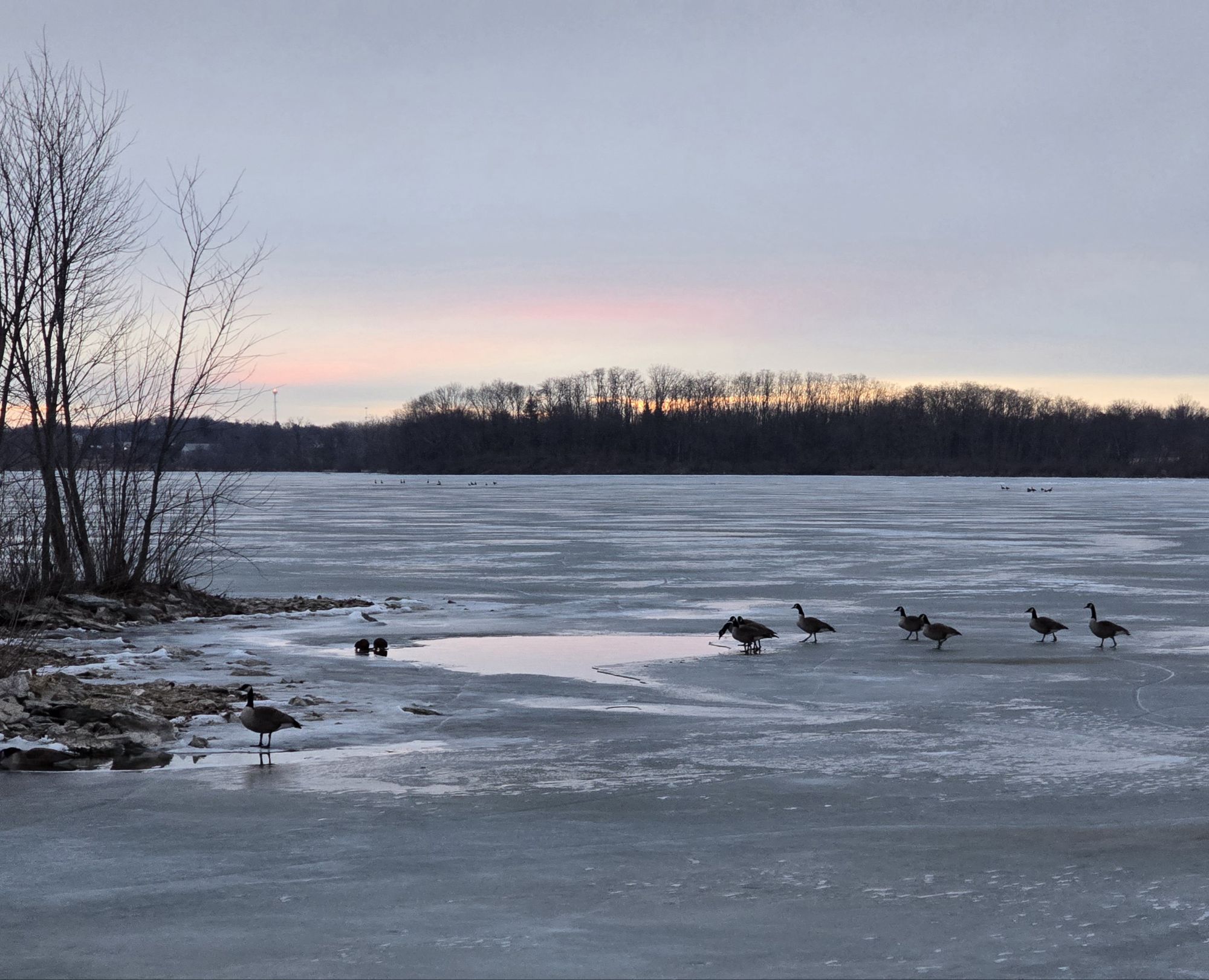
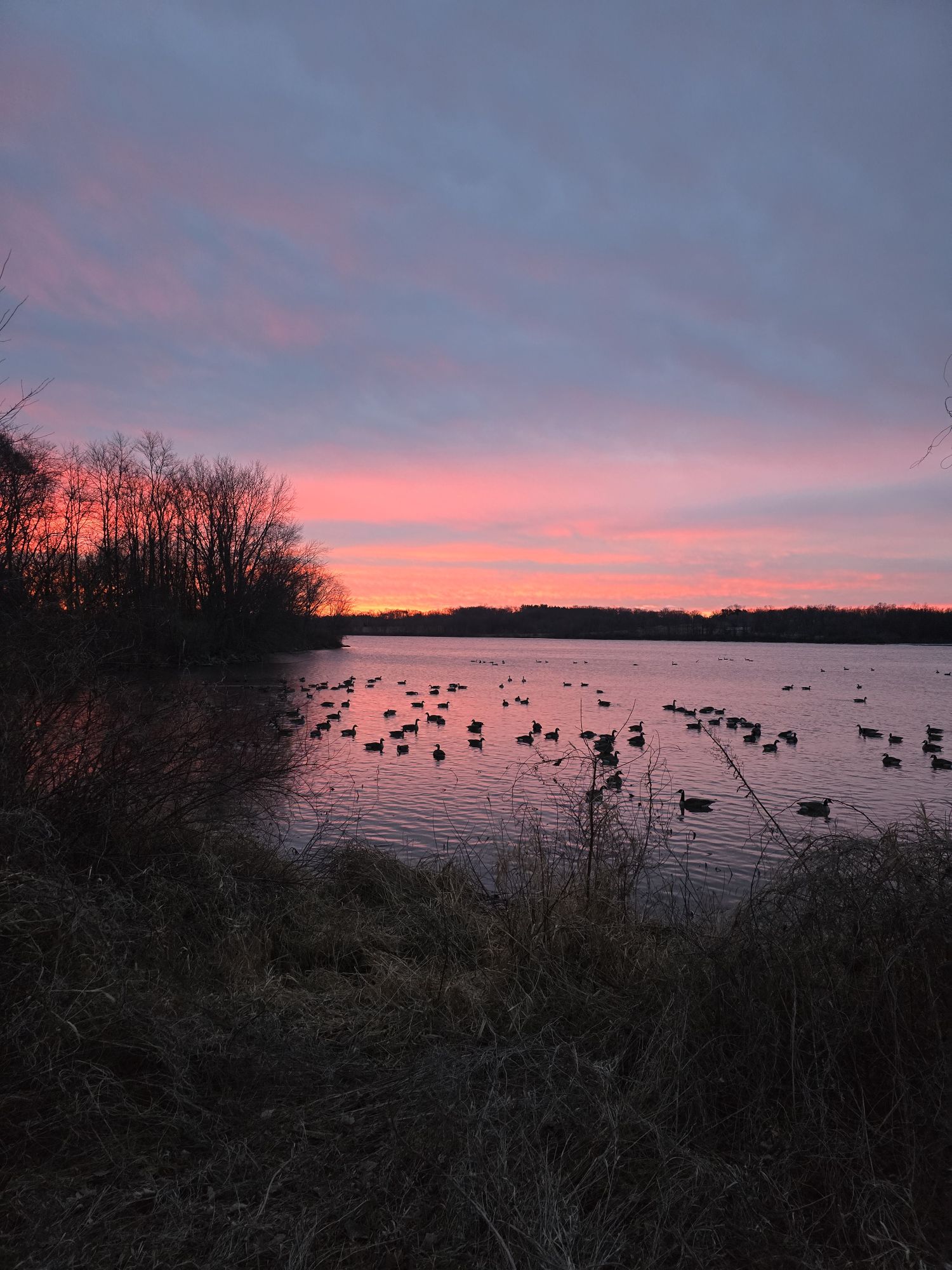
Canadian geese are getting frisky. Ambient temperatures are unusually warm, the surface ice is melting, and before dawn, they crowd along the shoreline, hundreds and hundreds of them. They are very chatty, although that is not a goose-specific term. They are flapping their wings in close proximity to others. We are definitely in the part of courtship with vocalizations and displays. It’s warm today, but if goslings hatch from the activity, many might die from late winter freezing temperatures. Totally weird weather is driving this. It also drives their over-wintering behavior, something they didn’t used to do.
With the first draft of my book finished, followed by the first re-reading from beginning to end, now begins the work of making it more readable. I look forward to this stage.
I have so much information that I just crammed it all into sentences, paragraphs, and chapters until it is likely too much for a casual reader to take in. That needs fixing. Another thing is it reads like a scientific journal that has been fully footnoted. I know the specific dates when many things happened and quote them as such. For a memoir, I don’t believe I need to do that so much. For example, I refer to seeing the early premier of the film The World According to Garp — written by the Writers’ Workshop’s own John Irving — on May 13, 1982 at Hancher Auditorium. Since the chapter is about 1981-82 anyway, I don’t likely need the specifics of this image. I suppose all this is part of the craft of writing and I’m enjoying the work so far.
I took up my Life of Photos project this week and hoo boy! This will be a beast. I began with the digital files and there are so many of them. The file for 2008 has more than 5,000 images! They are mostly mine, yet some are from other photographers. For example, our child worked as a stage hand on an Arlo Guthrie performance at Walt Disney World that year, and those images are theirs. Likewise, I don’t know who was the photographer for some of the political photos I downloaded. That needs sorting out.
What I do at this beginning stage of the project will have consequences for the rest. For now, I opened two windows, one for the working files and one for the “keeper files,” along with the photo editor. That is sort of a process, yet is cumbersome. The lesson learned is to pace myself and when I start cutting corners, stop for the day. I also need to better organize the keeper files. Just diving in has its merits, yet the process is anything but smooth.
So often I feel like a creative person. I spent a lot of time engaging in life experiences and taking photographs as part of it. It is positive in that I have lots of material, both written and photographic. I feel fortunate to have had the stability and financial support to retain these artifacts of a life and to now go through them to see how they can be used. Working with these resource materials is a different kind of creativity. It is one more experience in the life of a creative person and I welcome it.
In 1986, I wrote a friend, “A writer without agriculture is a mere ornament brought out in the cold darkness of winter’s holiday, then put away at the epiphany of his humanity.” It seemed fortuitous to find this as Tuesday was the Feast of the Epiphany, between finishing the first draft of my current book on Monday, and turning toward editing it on Wednesday.
I am consumed with passion to finish this work and make it as good as I can. I am also five weeks from planting the first indoor garden seedlings. For me, the relationship between writing and gardening is essential. I want to finish this edit just as garden planting begins.
In private documents I am calling this the “Great Edit,” a beginning-to-end reading which includes minor text editing yet holds off on major edits until I read the book in its entirety. I have read the chapters so many times in writing them, my tendency is to skip over them and thus accept them. That’s not what is needed. I must also resist the urge to make, as Grace Paley suggested in her book title, Enormous Changes at the Last Minute, until the first read is done. I finished about a third of the text during the last 24 hours.
Some of the text suffers from “cut and paste-itis.” Much of it was pulled from my journals and letters and pasted without editing. The idea was I would get back to the work. That time is now.
The short version of the book is as follows: After completing an extended childhood and education (Book I), a person chooses the path of a writer, only to encounter societal pressure to postpone gratification in that metier. Along the way, family life, social engagement, cooking and gardening, and a career take precedence — until 2010, when the world finally turns toward his aspirations. He confronts the unknowns of the same social order in which he began, even as it comes apart. Words written must now be crafted to conform to these overarching themes.
I could never get to this point without writing the book. By that I mean the writing changed how I looked at my life. It is clearer now what all the struggles I experienced since 1981 meant. If I didn’t write another word, the journey would have been worth it for that outcome.
There will be editing and additional words, though. Also publication in some form, hopefully as a conventional book to match the one already published. Figuring that out is work for later.
This is the first blog post I made about Christmas on Dec. 25, 2007.
The meaning of Christmas is derived from my remembrance of the priests at Holy Family Catholic Church in Davenport genuflecting while reading John 1:14 “And the Word was made flesh and dwelt among us…” There are many translations of this verse and the idea that an omniscient God would take human form remains a compelling idea. In order for our lives to have meaning, we should live them as Jesus did, through acts in human society.
If Jesus was the incarnate God, we are something less.
If the meaning of Christmas can be found in John 1:14, how should that affect us with our imperfections?
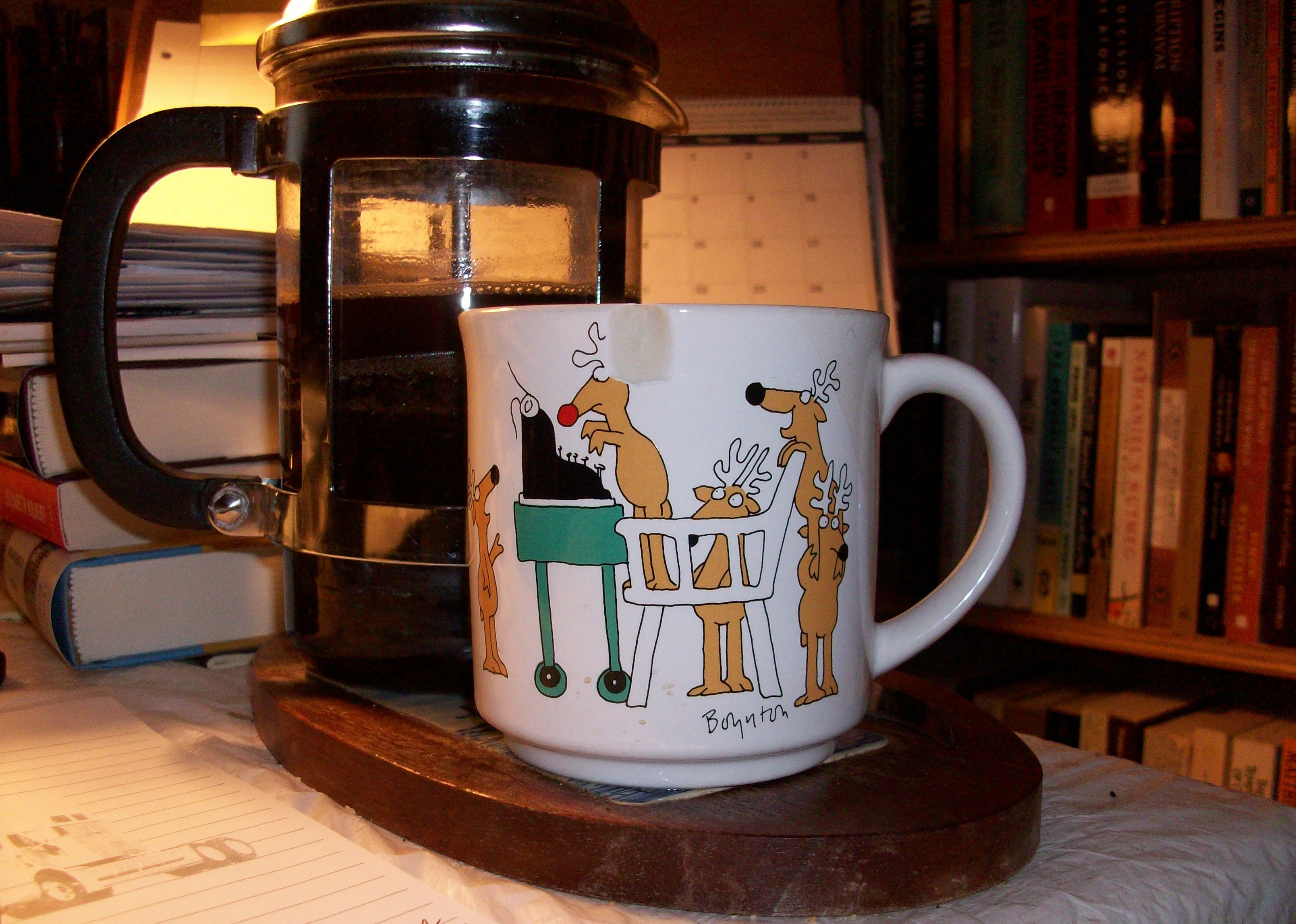
My Christmas story is about the coffee cup that we keep in our bins of Christmas decorations. It was a gift from Jacque and printed in the glaze are five reindeer around a typewriter consulting on a message. The reindeer at the keyboard has a red nose, and must be Rudolf. On the other side of the mug are misspelled the words “Merry Christmas,” presumably typed by Rudolf. At some point I chipped the cup and each year we discuss whether we should get rid of it because of the chip. I have always said no, although I should probably let go. The chipped cup with the animals trying to put a message into human language using human technology has become part of our Christmas tradition. Because it is so similar to the meaning of Christmas, I have trouble letting go of it. We have always ended up keeping the cup and I am using it now to hold the coffee I made this morning.
We humans can use some coffee on Christmas morning, and we need to put it in something.




 Journey Home
You must be logged in to post a comment.