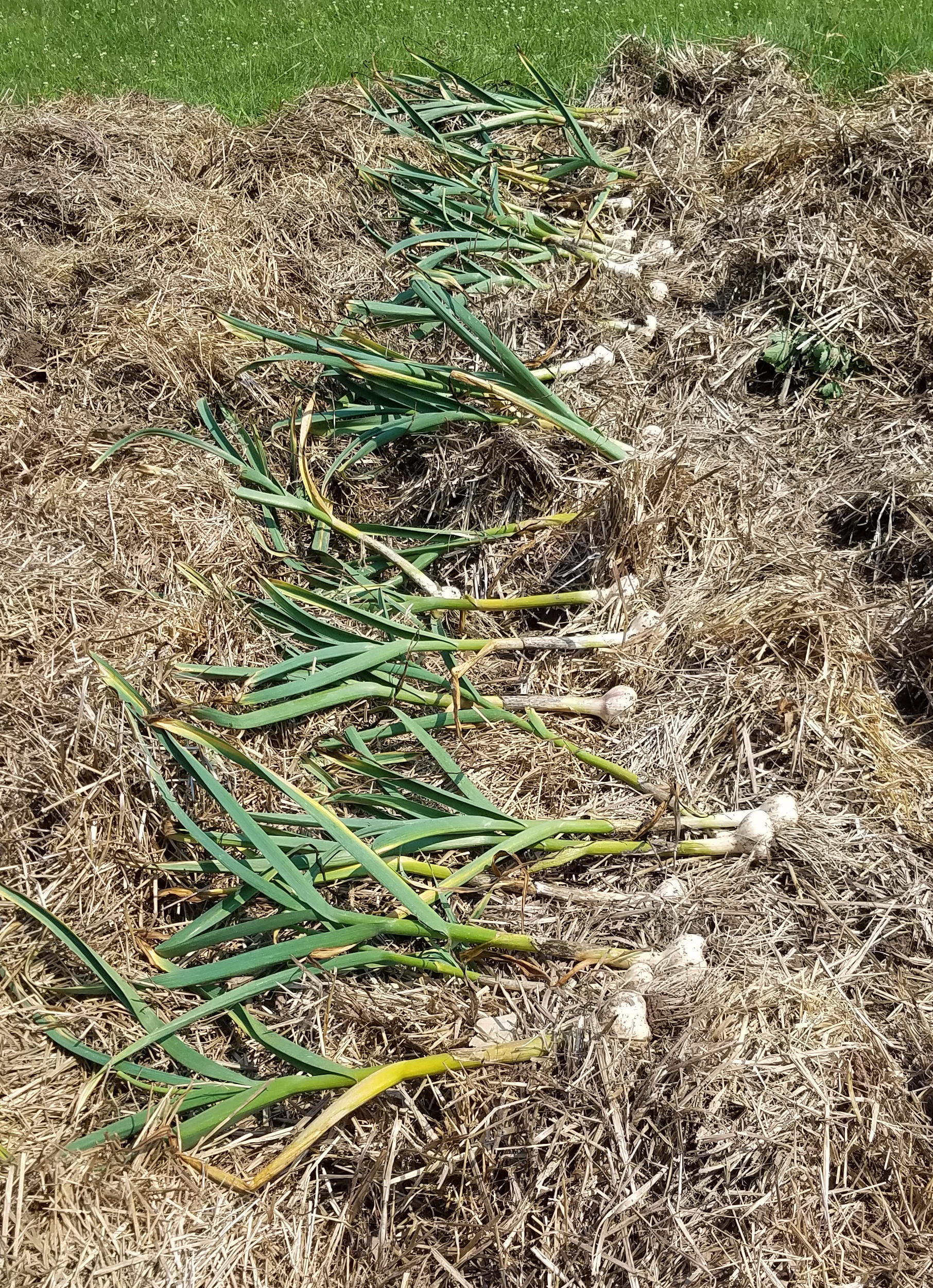
I spent part of Monday prepping the garage to receive two racks of freshly picked garlic plants for curing. In 2024, the harvest was July 12, so with spring planting this year, I’m running a month behind. The garlic plants look a bit weird — multiple flowers per head, small scapes — so I don’t know what I will get. Hopefully there will be enough good cloves to replant in the fall, with the rest to be used in the kitchen regardless of size. I have a dozen head of garlic left from 2024. Later this week I will grind them in the blender with some olive oil to store in the refrigerator until I use them up. My cooking life was forever changed when Susan Jutz taught me to grow garlic.
I made a batch of applesauce with Earliblaze apples and it was not as good as the batch made with Zestar! apples. If I get ambitious, I might cut down one or both of the Earliblaze trees and replace it with another Zestar! tree. I don’t see that happening this fall.
There does not look to be an abundance of tomatoes for canning. With 70 cages, there are plenty to eat fresh and cook with. Just last week I made a batch of chili using San Marzano tomatoes and it was distinctively better. This shows cooking with fresh tomatoes makes a big difference in taste. The tomato harvest is beginning to accelerate so we’ll see where it takes us.
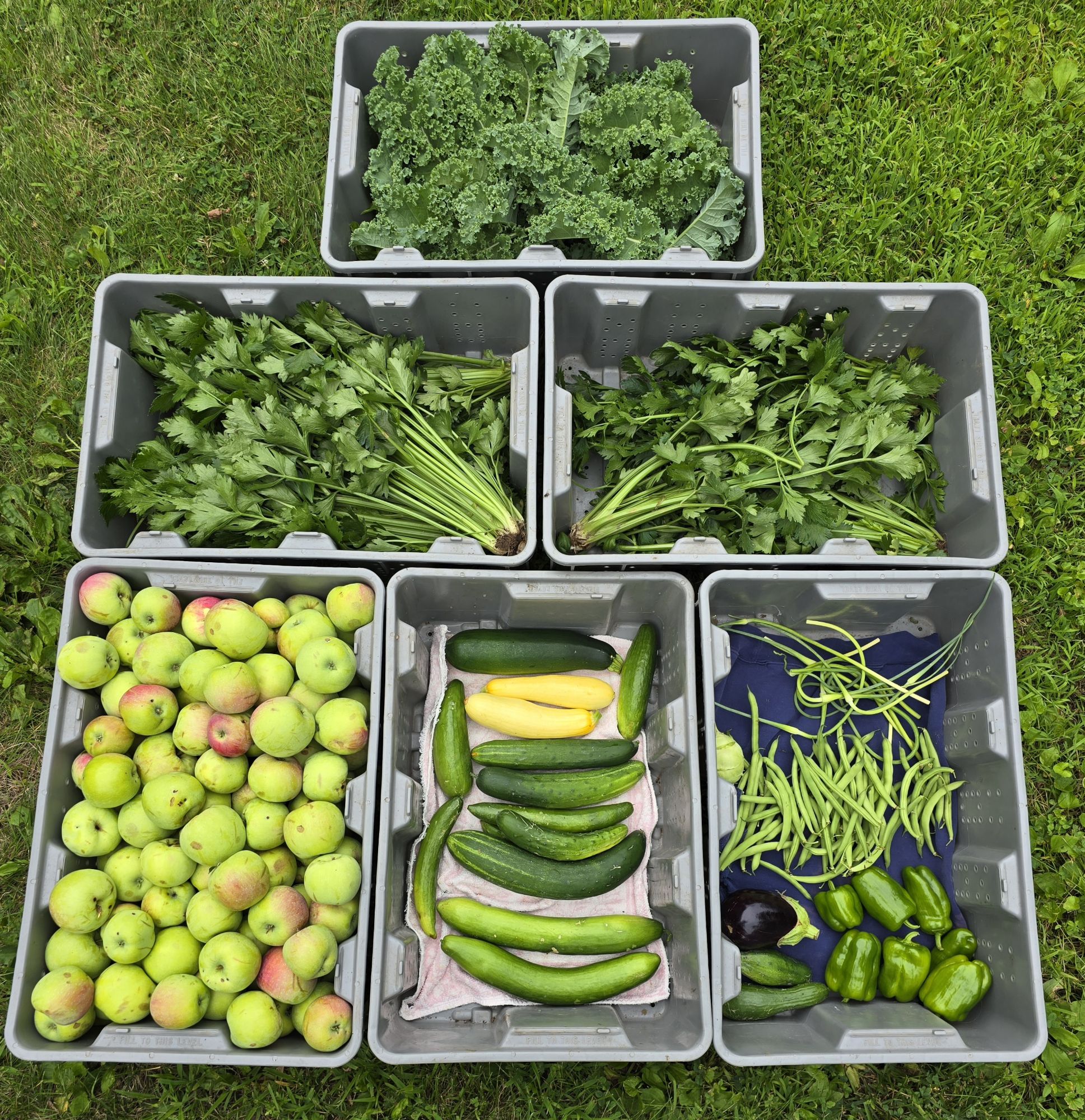
Squash and cucumbers are pretty well done. A few green beans remain to be picked. Leafy green vegetables are aplenty, although the refrigerator and freezer are stocked with enough to last until next season. Hot peppers have just begun to come in. There will be some more eggplant and bell peppers. That is about it.
This is a snapshot of where things are in the garden. It has been a great year.
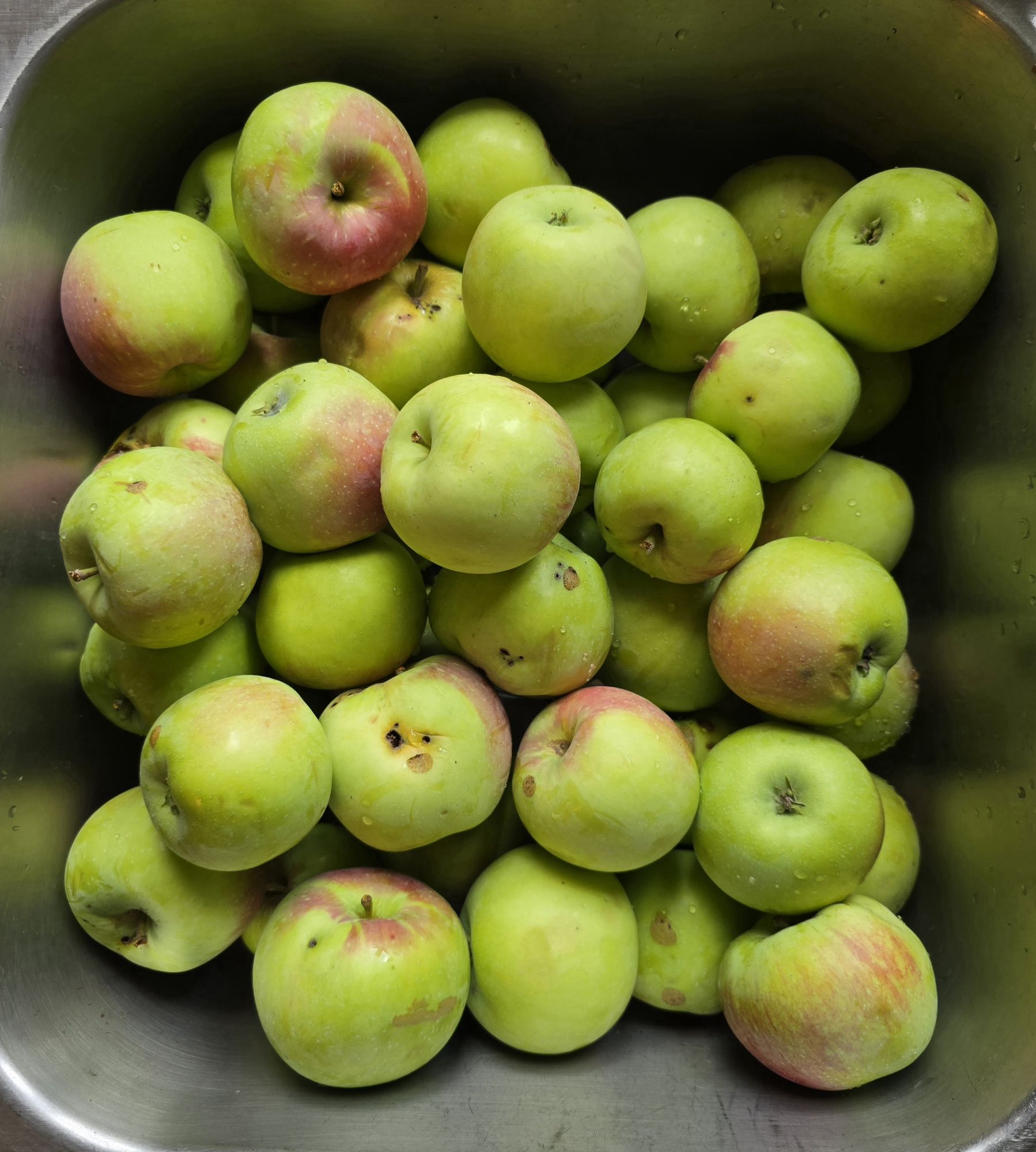
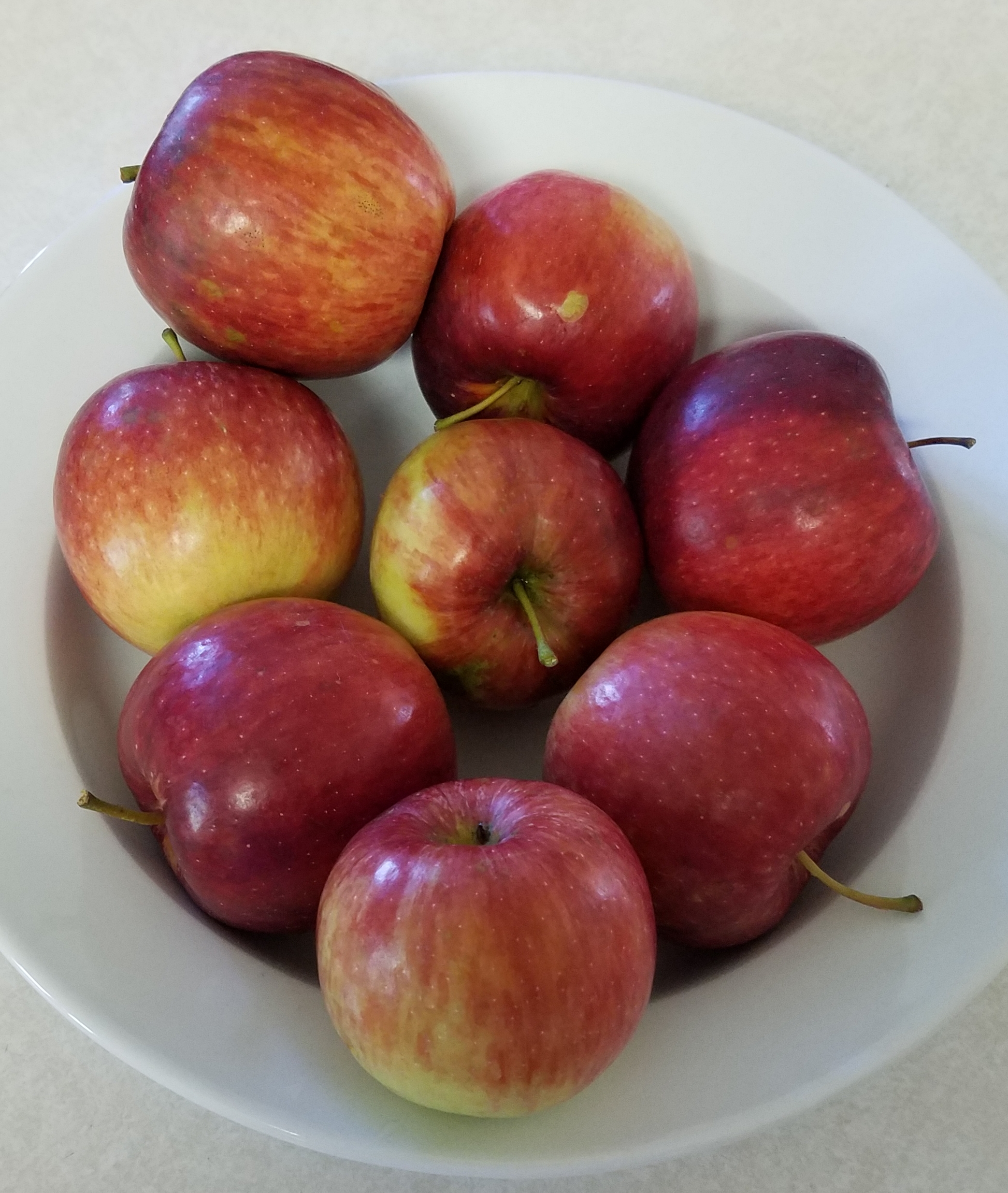
Zestar! apples in the sink before making applesauce.
Saturday cooking is one of the great pleasures of life. I use it to set aside worries and concentrate on preserving and making food for our family with an emphasis on taste and using the garden abundance. Rain was forecast all morning so I spent Saturday in the kitchen. This post is a slice of that life.
The day began with breakfast of cottage cheese and some cherry juice left from the recent visit of our child. Next I did the dishes to make space to get everything clean before making a new mess. Then I went through the refrigerator, which is packed to the doors. I pulled out everything that could go into a new batch of vegetable broth and laid the items on the counter. I also went through the cucumber drawer to make sure decaying vegetables were either used up or composted.
Cucumbers take the most management because there are so many of them when they come in and their shelf life is short. I noted the quart jar of pickles was almost gone, so I reused the brine, fortifying it with some new vinegar and seasonings, and refilled the jar. There are already three or four quarts of refrigerator dill pickles tucked away in the back but we have to make them while cucumbers are in season.
While cleaning the fridge, I made a cut vegetable tray for snacking. Celery, zucchini, cucumber, and bell peppers cut and ready to eat if I need a break from the action. This is for sharing, yet sometimes I am the only one who eats this convenience food. I typically like some kind of salad dressing with them.
Vegetable broth is an easy use of vegetables nearing the end of their life. I make it with standard mirepoix, bay leaves, and the oldest bag or two of leafy green vegetables from the freezer. This day, I used up a couple of bags of last year’s celery leaves to make way for new. One of the last gifts Mother gave me was a large All-Clad multipurpose stainless steel stock pot. If I’m working a full shift in the kitchen, I usually put a pot of broth on and water bath can it. I made six more quarts. At 42 quart jars in the pantry, I am good for most of the rest of this year into spring 2026.
This may seem like a lot yet it was preparatory of making apple sauce.
One of the few surviving photographs of our family in Appalachia is of Granny Reed at Stella’s funeral. Reed’s given name was Josephine, yet I only discovered that from searching the U.S. Census a few years ago. She was always called Granny Reed. She is our child’s great, great, great grandmother.
Granny Reed, along with other female family members worked at a canning plant where they put up apples. When I am picking, sorting, peeling and coring home grown apples for use, I inevitably think about those Virginia women. When in 1983 I visited the home places in Virginia, my Uncle Gene talked about apples.
Next, we went to Norton, another of the places Grandma and Grandpa lived. Uncle Gene talked about apples, how Grandma used to work on peeling and coring apples for one of the big companies. At one time, then, there were large orchards. But now, there is only the coal companies. They used to eat fried apples for breakfast. Later Aunt Carrie told us how to make them. Slice apples into wedges, fry in a little water, sprinkled with sugar. (An Iowa Life by Paul Deaton).
Uncle Gene talked at breakneck speed and I tried to get it all down.
Something that goes through everything is the presence of apples. Grandma worked in an apple cannery, had orchards. There is an apple tree on the old home place, Aunt Carrie served fresh applesauce for us, she said a day hasn’t gone by when she hasn’t had apples. Uncle Gene talked a lot about the apples and how he and the boys helped with them. And everywhere we ate them, the apples were good, the trees bearing fruit. The apple trees bearing lots, even the ones abandoned for years. Eat them green, cooked, fried, in applesauce. (An Iowa Life by Paul Deaton).
As Gene said, “That Granny Reed was always a smart one.”
My entry into Zestar! apples had me eating them fresh and making apple sauce. Before now, I had only every made applesauce from Red Delicious and Earliblaze apples. It turned out on Saturday the flavor profile of Zestar! apple applesauce was delicious (no pun intended). I am so glad that tree is now a part of our home orchard.
I was dog tired at the end of my six-hour kitchen shift. It was an inexpensive escape from the internet and everything on it. A time to live in the past with my forebears, if only for a few hours.
In July, we are in the thick of harvest season. There has been adequate rain, and growing conditions are almost ideal. 2025 will be one of my best gardening years ever. Among the benefits of a productive garden is frequent donations to area food pantries.
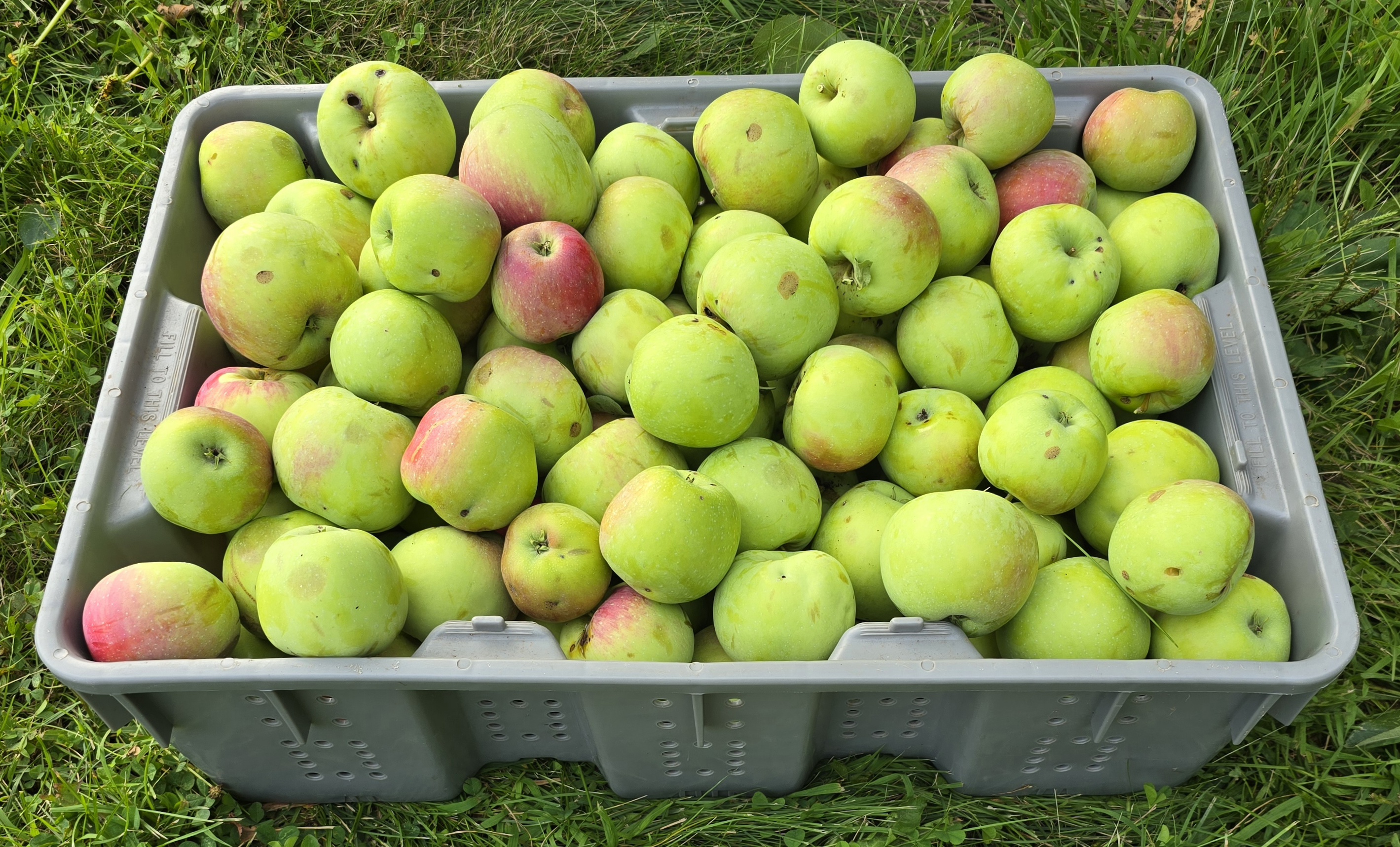
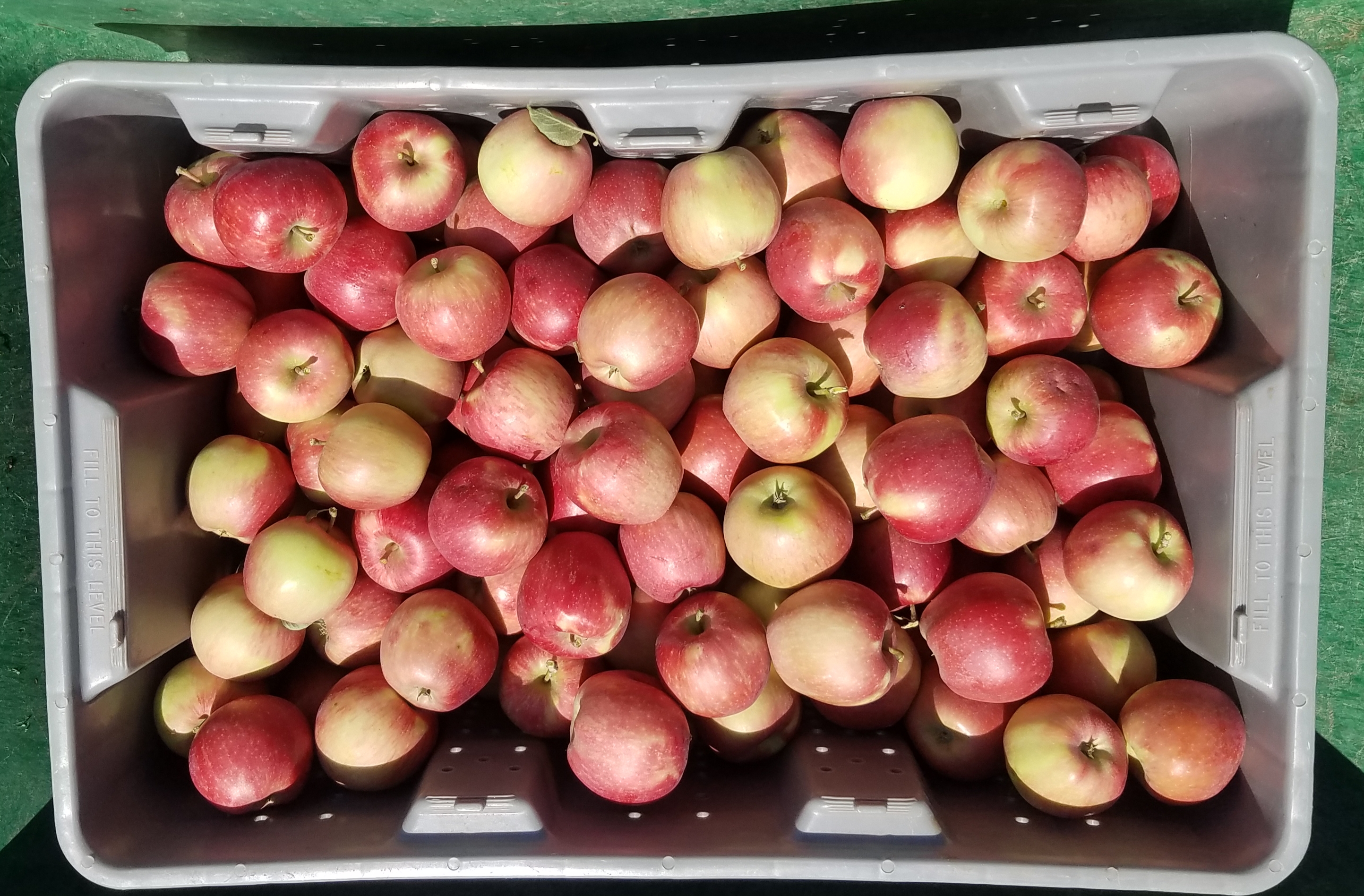
Zestar! apples July 21, 2025
One measure of abundance is Zestar! apples. It was the first large harvest from a tree I planted a few years ago. The taste is sensational: juicy and tart. They will make great applesauce. This year I decided to can applesauce in pint jars instead of quarts. One main use is as a binding agent in my Iowa vegan cornbread and the pint is more likely to be used up before it goes bad.
Use of apples goes way back on my father’s side of the family. Stories survive of family working in the apple canning plant in Appalachia in the early 20th Century. I am happy to have four varieties of apples growing in our back yard. Calling it my heritage is not wrong. I don’t spray, so they are not perfect. Boy howdy! Do I use them up!
Harvest on July 21, 2025.
When the garden is going gangbusters, the challenge is to use up or preserve as much as possible, as soon as possible. Two of the crates in the photo above have celery in them. Celery gets processed into four different things: I keep “hearts” of celery for cooking fresh, ending up with ten of them this year. The various outer stalks are separated from the leaves. The stalks with some size to them are chopped into small bits and frozen to add to soup. All the very small pieces of stalk and stem are roughly cut, bagged and frozen for use in making vegetable broth. Finally, the leaves are rough chopped, bagged and frozen to add to soup. I use the whole plant. All of this takes a bit of work, yet the flavor makes it worth the effort.
Another big project ahead is using garlic scapes before the garlic harvest. I have a good crop of basil, so I expect I will make garlic scape pesto. I already have plenty of half pint jars of pesto in the freezer, so I don’t need many more. Will see how far along with that I get.
Growing a large garden ties a person to home. There is so much to do in July, if we don’t pace ourselves, we may be tuckered out for the August tomato season. Can’t let that happen.
2025 is turning into an alcohol-free year. I didn’t even purchase my normal case of bottled beer for the summer. Some days, I don’t know who I am.
I drove across the lakes to the North Liberty Community Food Pantry and donated the day’s harvest of yellow squash and cucumbers. It was the third food bank donation this week. I like having an outlet when I grow too much of something. It enables me to pick the best produce for the kitchen yet find a home for all of it. Patrons of the food pantry truly need what donors provide.
On the way home I stopped at the convenience store to gamble $2 on the lottery. I noticed the display of many types of shots of liquor between the two cash registers and asked,
"Do you sell a lot of these?"
"We do," replied the cashier.
"I imagine you sell a lot on Friday nights," I said. "Actually, mornings are the biggest sales. You'd be surprised how many people need a shot to start their work day."
I went to the orchard where I worked eight seasons and bought Michigan cherries. A family member grows them and they are some of the best I have ever tasted. Expensive? Yes. Worth it? Also yes. It is a summer tradition worth continuing as long as I can afford it. In the sales display with the cherries they had bags of Lodi apples. This signifies the apple harvest has begun its long season continuing into late October.
The first crop of Zestar! apples will soon ripen in my garden. I picked one today and while the sugars are beginning to form, they are not yet ripe. It won’t be long, though, maybe a week or two.
The work of planting is mostly finished. From here, the work changes to weeding, harvesting, cooking, and leveraging other growers for what I don’t produce myself. It is all part of the circle of life when you grow food. I feel a part of something bigger than myself on days like this.
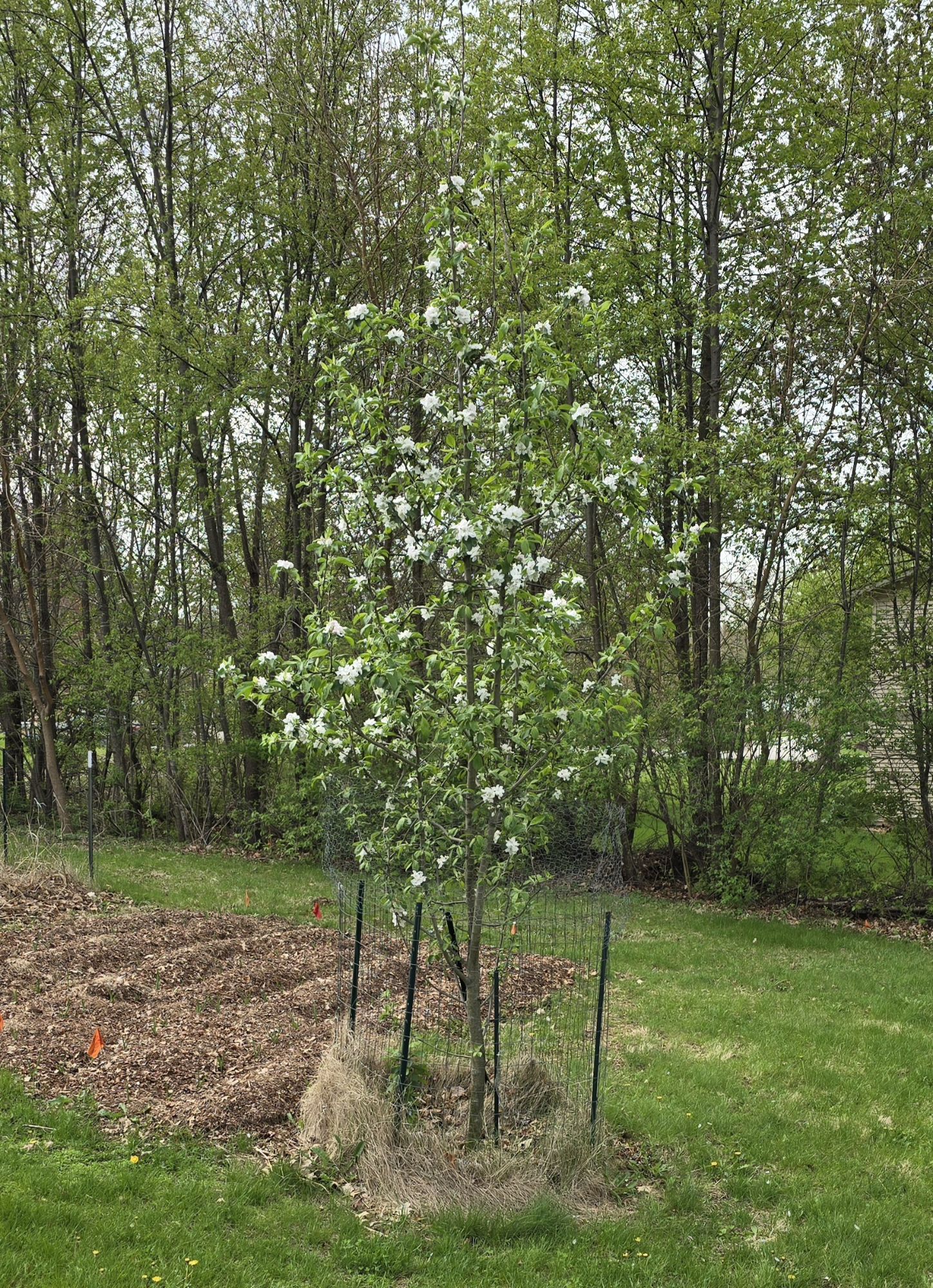
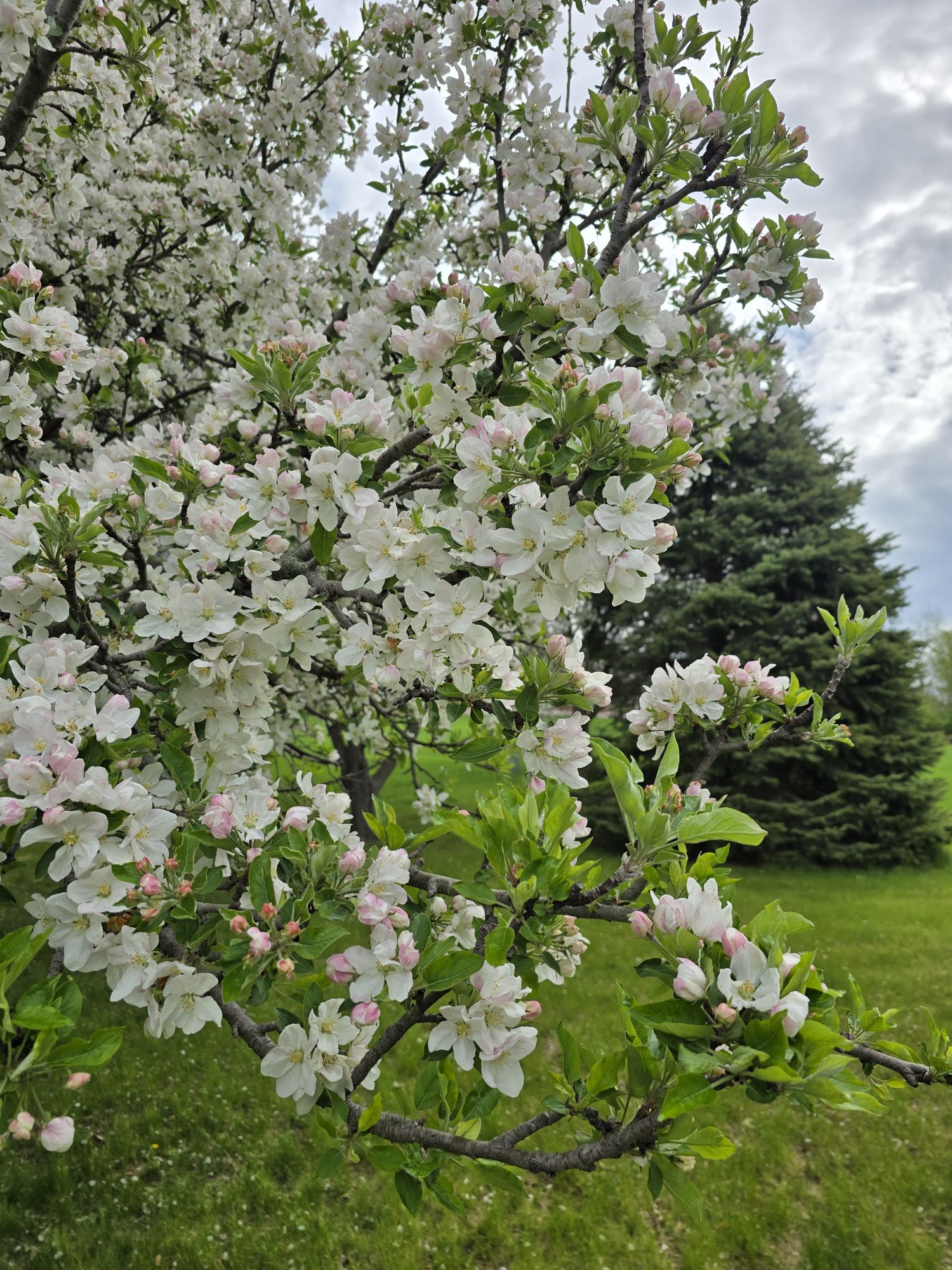
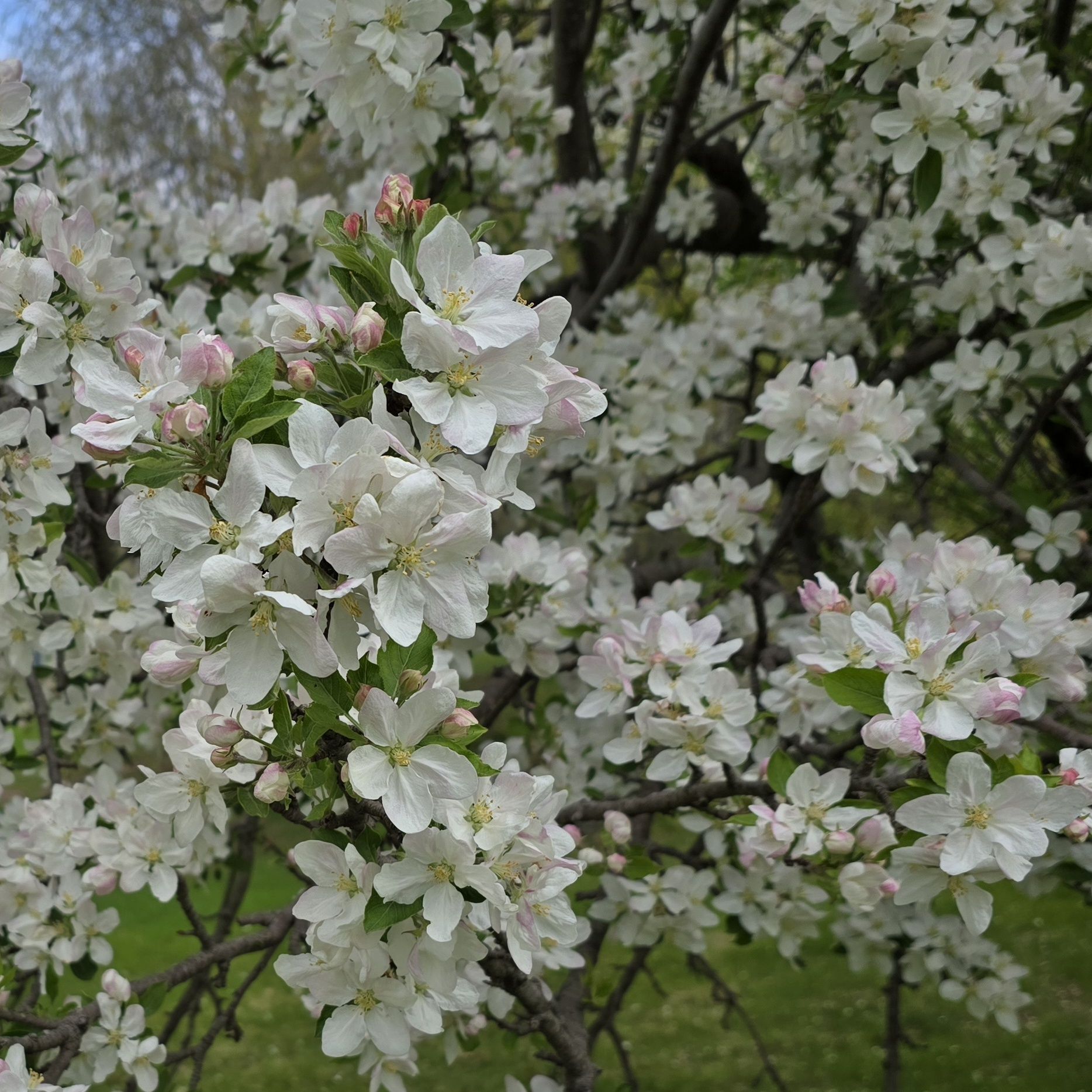
This year should be a good year for apples and pears. Every tree has a lot of blooms, including the two newly planted “replacement” trees. Some days it’s good to just view this fleeting event during which we pray for frost to hold off, pollination to occur, and a bountiful crop.
Red Delicious and Earliblaze apple treesRed DeliciousClose up Red Delicious bloomsMore Red Delicious
Gold Rush apples at Wilson’s Orchard and Farm Oct. 22, 2022.
During the eight years I worked with Paul Rasch at Wilson’s Orchard I learned a lot about apples. I was offered a chance to return after the coronavirus pandemic, yet I declined. Things had changed too much as they diversified their offerings. They moved from being mostly a seasonal apple orchard to being more of a year-around event destination with multiple big crops available for u-pick, musical entertainment, special dinners, and of course the rebuilt barn that could host a wedding or other special event. It would be difficult to recapture how I felt about my tenure in the earlier years by taking the job. I’m okay with everything.
When my apple trees fruit, I don’t hardly go to the orchard. I can get all the apples I need for a year from the five remaining trees. At the end of each season, regardless of whether I have apples, I buy Gold Rush apples from the orchard because they keep really well in the refrigerator. On Feb. 14, I’m still eating last season’s apples, even though they are getting wrinkled. They seem sweeter now than they did when they were just-picked.
When I have apples, I replenish my stores of applesauce, apple butter, apple cider vinegar, and dried apples. In the beginning, I would process every good apple I grew. A person only needs so much of processed goods. Today I make what I need to replenish the shelves and leave the rest for wildlife to eat fresh and over the winter. Invariably, every apple I leave in a backyard pile is gone by spring.
I’ve gotten to Henry David Thoreau’s view of apples:
Early apples begin to be ripe about the first of August; but I think that none of them are so good to eat as some to smell. One is worth more to scent your handkerchief with than any perfume they sell in the shops. The fragrance of some fruits is not to be forgotten, along with that of flowers. Some gnarly apple which I pick up in the road reminds me by its fragrance of all the wealth of Pomona, carrying me forward to those days when they will be collected in golden and ruddy heaps in the orchards and about the cider-mills.
Thoreau captures something I can’t. I think about this quote every time I take a wrinkled Gold Rush apple from the refrigerator drawer and inhale its perfume.
Ten half-gallon jars of apple cider vinegar fermenting.
There was an opportunity to fill the apple cider vinegar containers so I took it. With an abundant apple harvest there are plenty to juice and turn into vinegar. I’ve written about vinegar-making multiple times in the last ten years. All I have to add is this is one of the best apple seasons since I planted the first trees in 1994.
The apple juice produced by these Red Delicious apples is quite good, even better once the impurities are filtered out. I have a couple of five gallon buckets of juice apples ready to convert and store in large glass jars. It tastes better than anything I buy at the store. Key to good taste is drinking it fresh rather than canning it.
Vinegar-making is the end of the garden harvest season. I’ll glean the garden a couple more times and pick more apples should I need them. The main work is done.
Last year I planted garlic on Oct. 15 and expect about the same this year. A neighbor with a pickup truck already took me to a local farm where I bought four straw bales for mulching. They are resting in the garage and ready to go once the cloves are in the ground.
This is a punk autumn because everyone but me is away and sick. On Monday I went to a pharmacy that had the just-released COVID vaccine and got inoculation number seven. I am determined to avoid getting COVID. This means avoiding most human contact of a duration over ten minutes. With our child living on their own and my spouse at her sister’s home for an extended stay, the chance of contracting the virus at home from one of them is close to nil. I restrict movement as best I can and wear a KN-95 mask when with groups of people. For good measure, I also got the seasonal influenza vaccination last week.
With vinegar fermenting on the shelf, I am at the point of apple season where I need a big project to use the harvest before it goes bad. In the meanwhile, if I want a snack, it will contain apples. Breakfast? Apples. Lunch? Apples. Supper? Baked apple dessert. We look forward to this time of year so I plan to enjoy it.
My focus in the garden turned to apples. By weight, it is the biggest crop I grow. Doing something useful with them drives me to spend much kitchen time processing them. Zestar! and Earliblaze are finished with Red Delicious remaining to close out the garden season.
Of the four varieties I grow, Red Delicious hang the longest on the tree. When they produce, there are many, many of of them. Our needs for juice, applesauce, apple butter, dried apples, and fresh eating are modest compared to the quantity on the tree. I’m already looking for placement of most of them in a Community Supported Agriculture project.
Tomatoes are finishing and it has been a good season. Because of spring trouble getting seedlings to take, there weren’t as many, or as many different varieties, as I had hoped. The difference this year compared to last is that we used most garden tomatoes in our kitchen instead of giving them away. Tomatoes are a brief delight of summer. Once ours are gone, I expect to buy very few tomatoes at the grocer.
I took down the portable greenhouse and noticed a problem with the zipper at the access point. I don’t know if it will be usable next year but I folded it up and put away the frame. Replacing it will be a spring decision, although I likely will. The portable greenhouses are good for a couple of seasons.
I need to figure out fall garden plot preparation. Where will the burn pile be? Where will the garlic go next month? Where will tomatoes go next year?
The burn pile is important because I move it around to deposit minerals throughout the garden. Because we are in a drought I won’t actually burn anything until rain comes. There needs to be plenty of space to pile it high while we wait.
I plan to plant 100 garlic seeds and it will likely be in the plot where the garden composter currently lives. The pallets used to make the composter are getting old and deteriorated. I will likely move the composter to the west side of the garden. I hang my Practical Farmers of Iowa sign on it, so on that side, it may be more visible from the street.
Finally, there are tomatoes, likely the most important crop I grow. This year, deer were able to jump the fence and eat many small tomato plants. Next year I plan to return to a crowding method of tomato planting. By giving deer no place to land inside the fence, they can’t jump in, and the plants grow better. The issue is it crowds me as well. I liked having four-foot rows between the tomatoes this year. It made it easier for me to get among the plants to weed and harvest. It made it easier for the deer as well. I may have enough fencing to install eight-foot tall chicken wire around them next year. This may be the compromise I choose to keep four foot rows. Which plot will tomatoes go? I’m not sure yet, although I favor following the garlic.
As home life turns to apple processing, I enjoy the sense of closure it brings. In years when there are few apples, gardening doesn’t seem the same. In the coming days I’ll embrace the apple rush. Who knows how many more there will be?
I finished what I’m doing with Earliblaze apples this year. The trees produced so much fruit I could not keep up. There will be plenty for wildlife to eat well into winter.
Besides eating them fresh, I made apple cider vinegar and applesauce for storage. I have a backlog of apple butter and dried apples, so none of that this year.
There is a brief break in apple processing while I wait for Red Delicious to ripen, maybe a week or two. After they do ripen, it will be a mad rush to the end.
When I planted six trees at home I didn’t know much about growing apples. I knew I wanted apple trees, in part because of family stories of my Virginia ancestors. I picked varieties that would space out the harvest. That’s about it. There were four varieties planted in 1994 and two remain. My learning about growing apples came mostly from working for seven seasons as a mapper (person who directs guests) at Wilson’s Orchard beginning in 2013. It was an unexpected job, but one for which I am thankful.
Paul Rasch and Sara Goering bought Wilson’s Orchard in 2009. Chug Wilson had planted more than 100 varieties of apples before he sold to them. During my tenure I learned about many of them. I would come in well before my shift and wander through the part of the orchard where trees were planted to test how they did.
What I value most about working there is countless conversations I had with Paul about apple culture. If I had a question, he had an answer. I would bring in photos of my home orchard for his advice. We talked about everything apples. Learning with an experienced apple grower was a perquisite of the job. It was great!
Years like this one I’m on my own for apples. My trees produced so many I don’t need outside apples. What I’m saying is I’m now an irregular customer of Paul and Sara’s orchard. I buy a couple of half-gallons of sweet cider in season, and if they have Gold Rush apples, I’ll get some for storage. For now, I have all the Earliblaze apples we can eat.
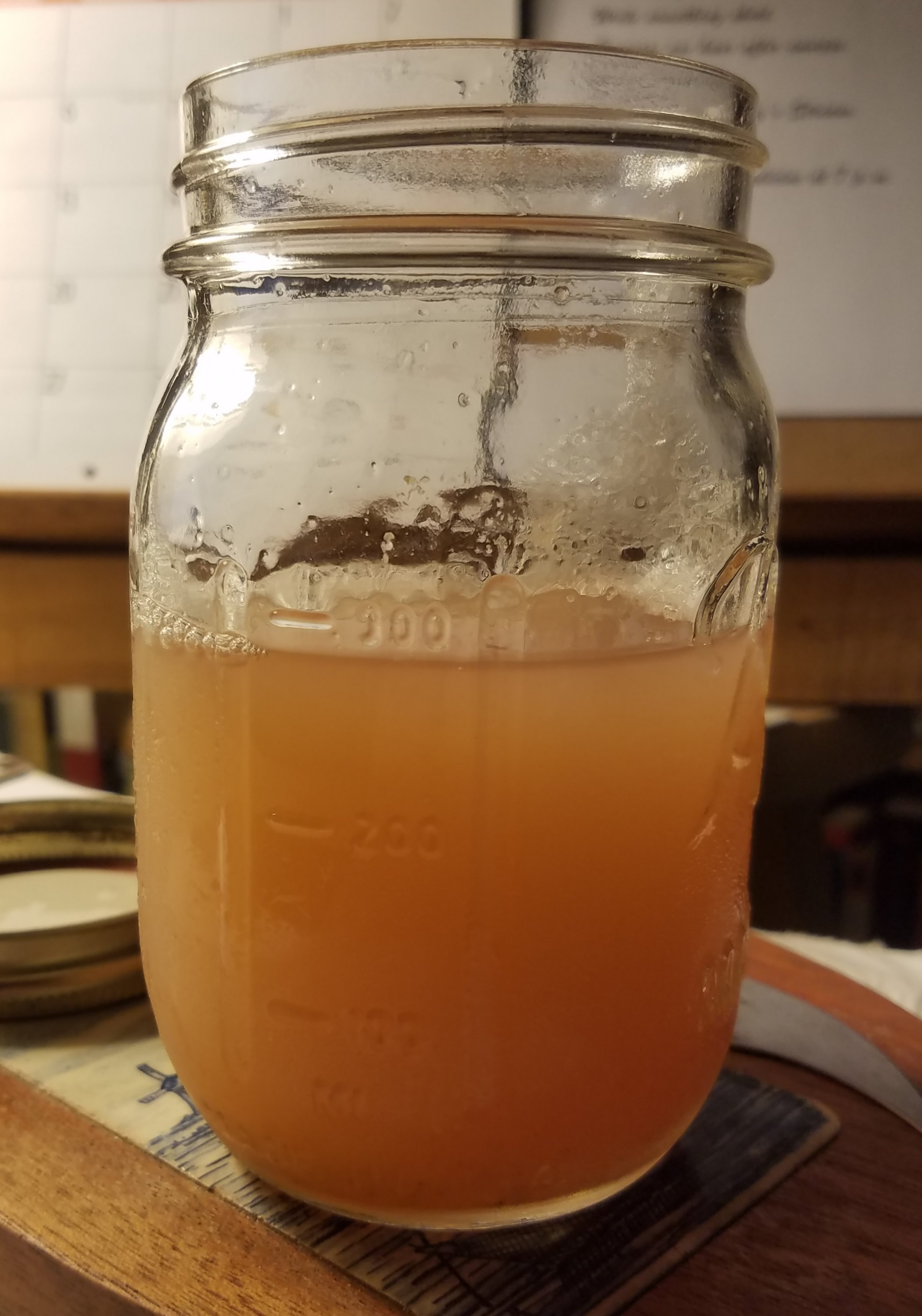
This is one tart, tasty apple drink. I’m not sure what to call it.
When I make applesauce, I steam cored apples in enough water to cover the bottom of a pan. Additional moisture is released from the apples. Everything goes into a cone sieve strainer resting on a large Rubbermaid pitcher. Once the liquid filters out I move the strainer to a second identical pitcher and separate the applesauce from the peels. The liquid goes into jars which are stored in the refrigerator until used. I made about a gallon of it already.
Every kitchen has the potential for unique culinary items like this. With the thousands of cookbooks out there, someone is likely to have described this apple beverage previously. It is one more way to use produce in a kitchen garden.
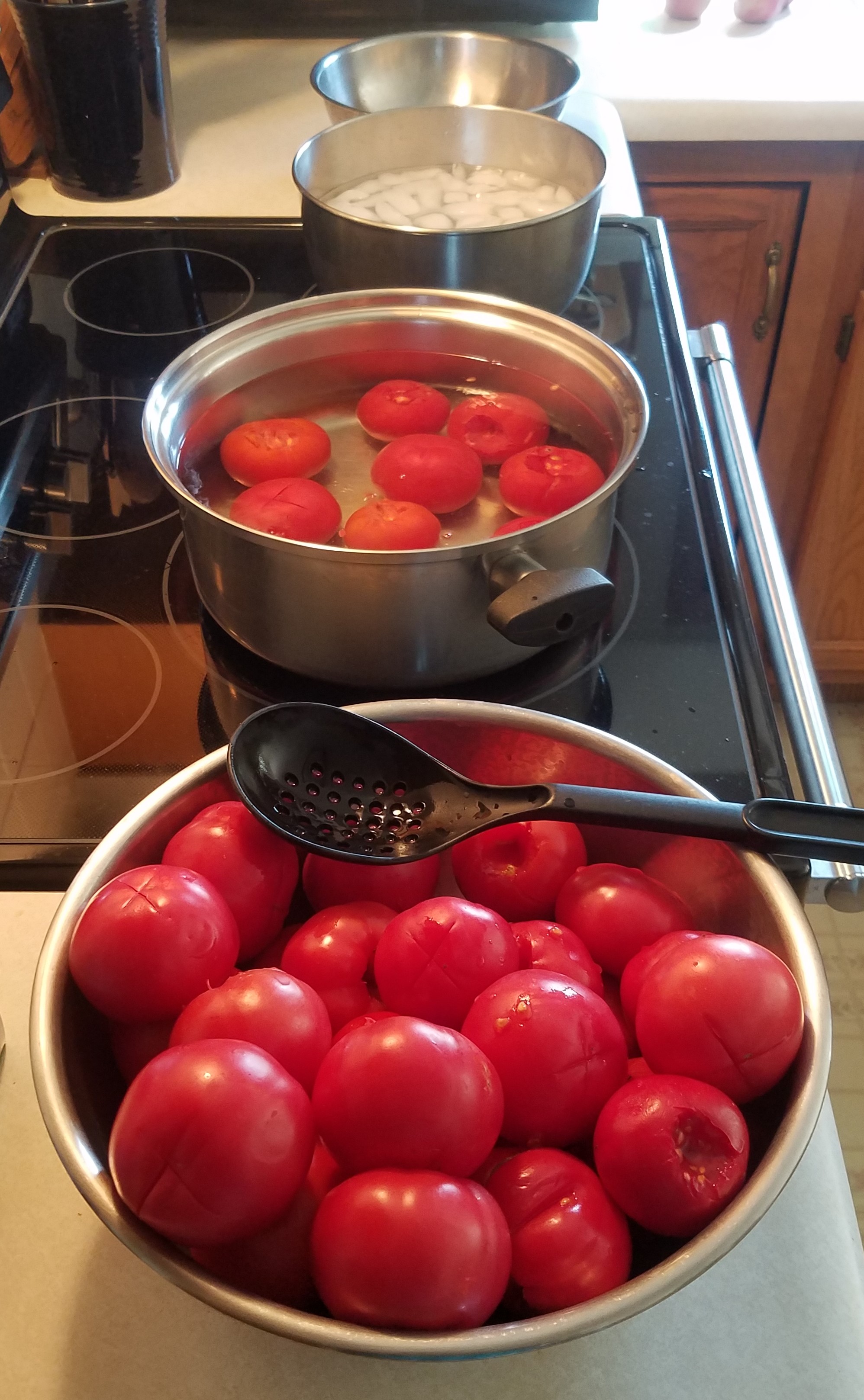
Tomato peeling for canning whole.
I grow enough tomatoes to sort them by size and type. Medium-sized ones are to be canned whole and the process is much like what exists in other kitchens. I core them and put a small X in the bottom. Dip them in boiling water for a minute or two and then cool them in an ice water bath before peeling. Next, I cram them into a quart jar leaving about an inch of head space. Once filled, they go into a water bath canner for 40 minutes. This is a simple, reliable technique.
Some people add salt or a teaspoon of vinegar to the tomatoes before canning. I rarely have an issue with spoilage, so I leave it out. I can’t recall how many quart jars of whole tomatoes I put up in 2022 yet I have a half dozen left.
I make tomato sauce. Most of the crop of Amish Paste and San Marzano goes into sauce. Similar to making applesauce, I steam cook the tomatoes until the flesh gives with a spoon without adding any liquid to the pan. Into the cone sieve strainer the whole thing goes where they sit while the juice drains off. The juice is canned until I have enough quart jars to last at least a year. It is mostly for soup making. In the second pitcher, I separate the skins and seeds leaving a rich, thick tomato sauce. This goes into pint-sized jars. It’s enough to make a batch of pasta sauce for two people. The organic tomato sauce I buy at the wholesale club costs about $0.75 per 15-ounce can. It is good, yet I like using my own first. I’m at the point of summer when I’m running out of new canning lids. When I went to the home, farm and auto supply store to get more last week, they were out as well.
The dehydrator is running with Red Rocket variety hot chili peppers. When these dry, I’ll crush them and use for red pepper flakes, replacing the ones from last year. Since my spouse doesn’t like hot stuff, a little goes a long way.
I picked a half dozen Red Delicious apples and while crunchy and sweet, they are not at peak sweetness. I’ll wait a while before harvesting for the kitchen. Apples and pears have been so abundant this year, most of the crop will feed wild animals though the winter. I need about three more quarts of applesauce. Then I’ll pick the best to eat raw for refrigerator storage and juice the rest until all the half gallon jars are fermenting vinegar. It has been a great apple year.
A couple of bananas were getting overly ripe. I made banana bread for the first time since I can’t remember. I used the King Arthur Flour Baker’s Companion cookbook for the recipe. It came out quite good. The challenge for banana bread in our household is to reduce oil and take out the eggs and milk products. The egg replacements I used previously haven’t really worked. I use applesauce instead of eggs to make cornbread. Maybe I’ll try that next time. Once I try a recipe that works, and this one did, I then start to tweak it to make it low oil and vegan. Eggs are so much a part of American cooking it is difficult to give them up. We do like banana bread.
For supper I made a pizza with home made dough, my tomato sauce, and toppings of sliced onions, jalapeno peppers and tomatoes from the garden. Cheese was mozzarella and a sprinkle of Parmesan. There will be leftovers.
So that’s what went on in our kitchen today. Despite outdoors temperatures around 90 degrees all afternoon, I made the best of it inside. It felt like a productive day.





 Journey Home
You must be logged in to post a comment.