Categories
Living in Society

End of a Season

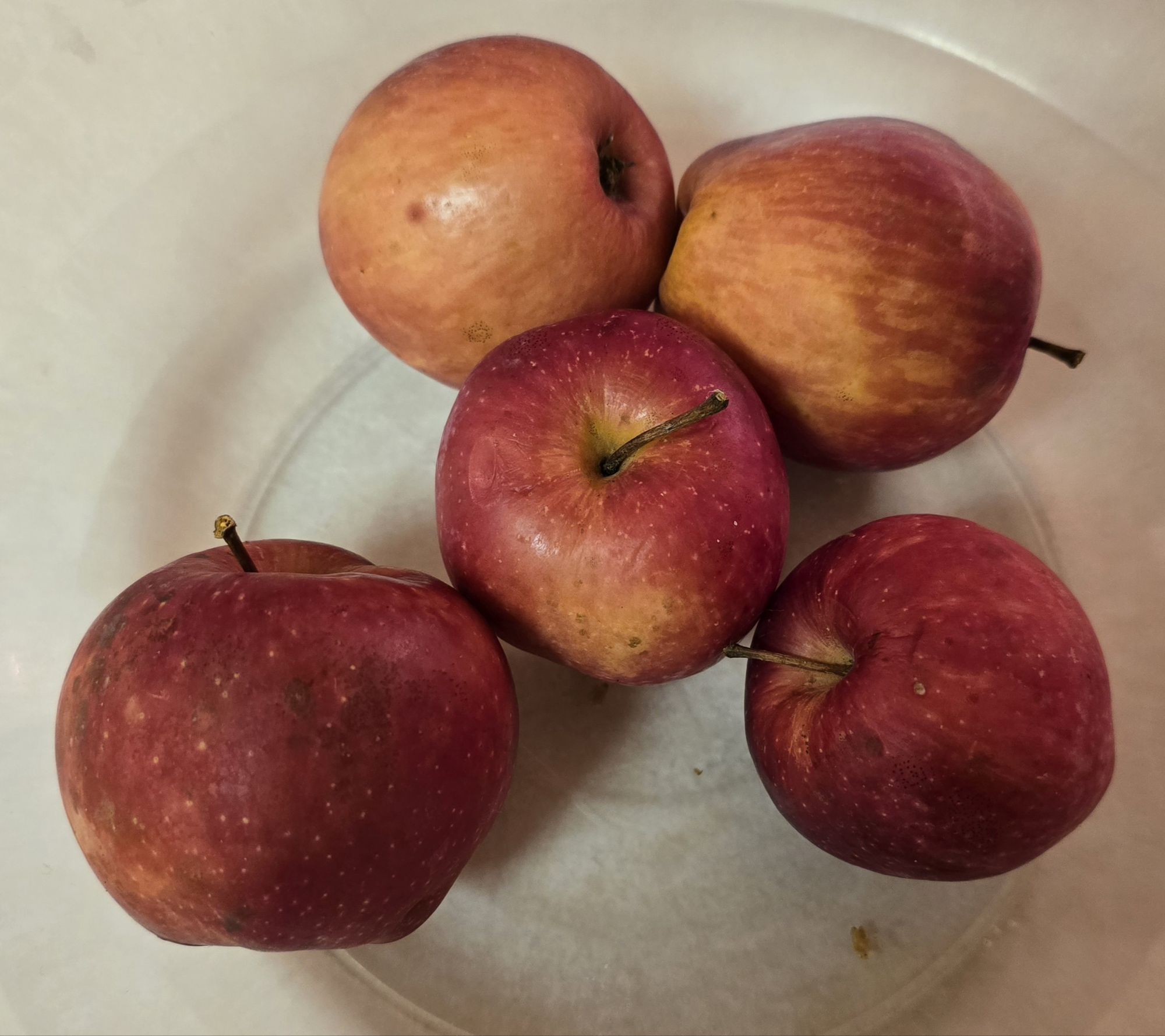
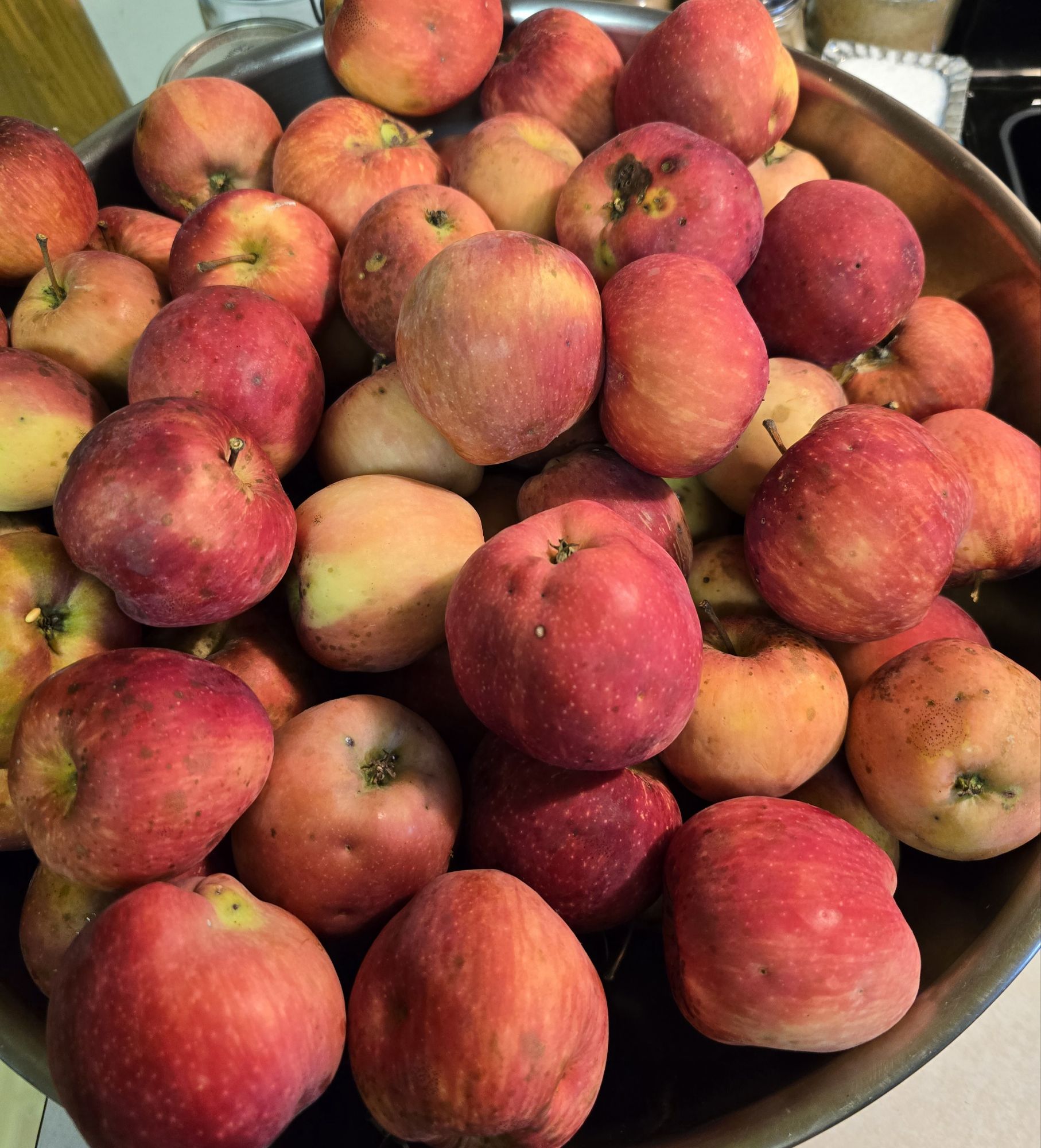
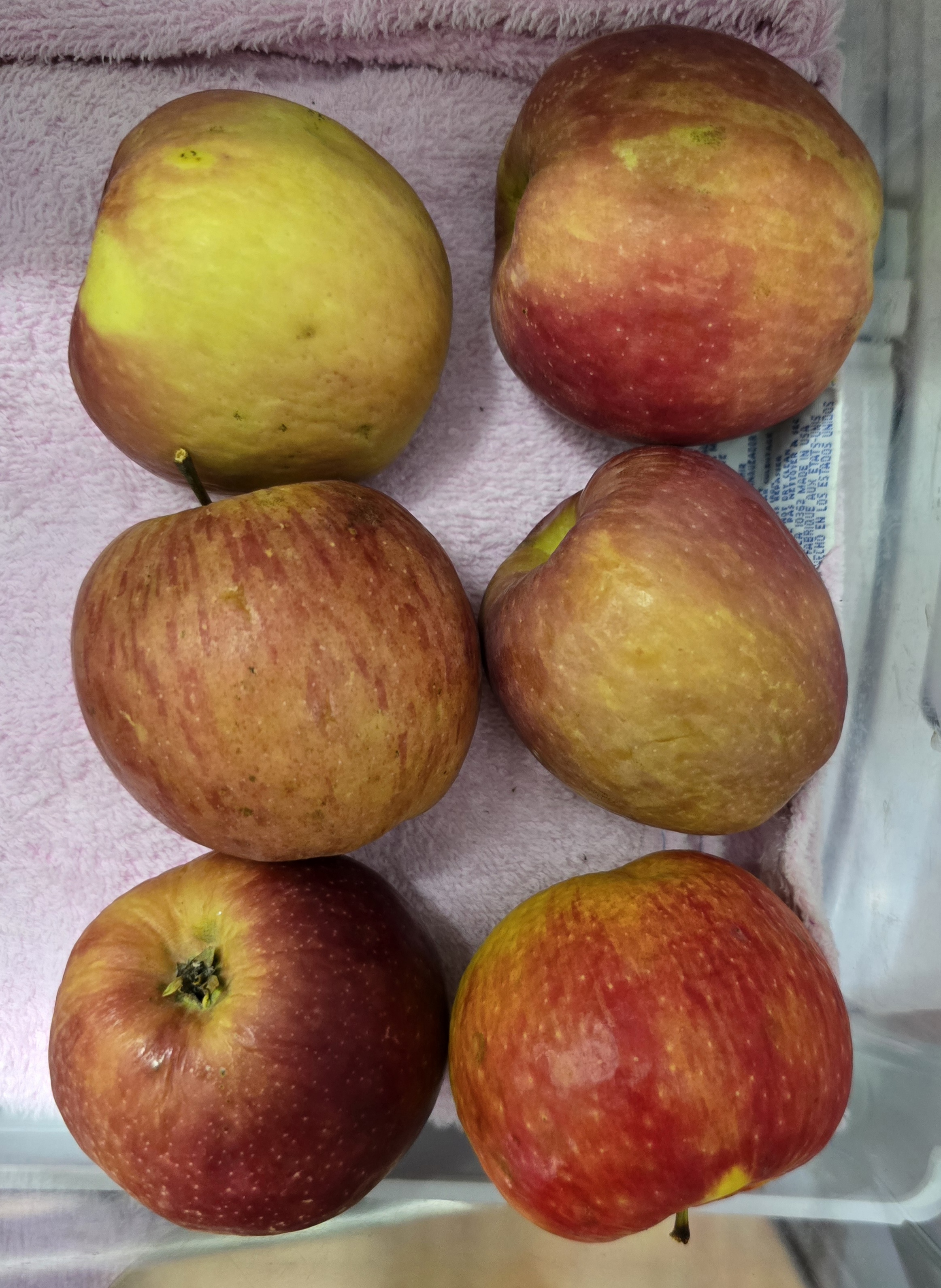
Last five fresh apples.

There are no more apples to harvest from the trees. I made applesauce from the last five on the counter, peeling, coring, and cooking them in a bit of apple juice. When tender, I took the potato masher to them and now I have fresh, chunky-style applesauce. It’s among the best dishes of apple season. There is not much, yet enough to provide a taste of summer.

Now we begin eating storage apples from a special drawer in the refrigerator. I checked them the other day and they are keeping well, even varieties not known to be long keepers. 2025 was a great year for apples, all around.

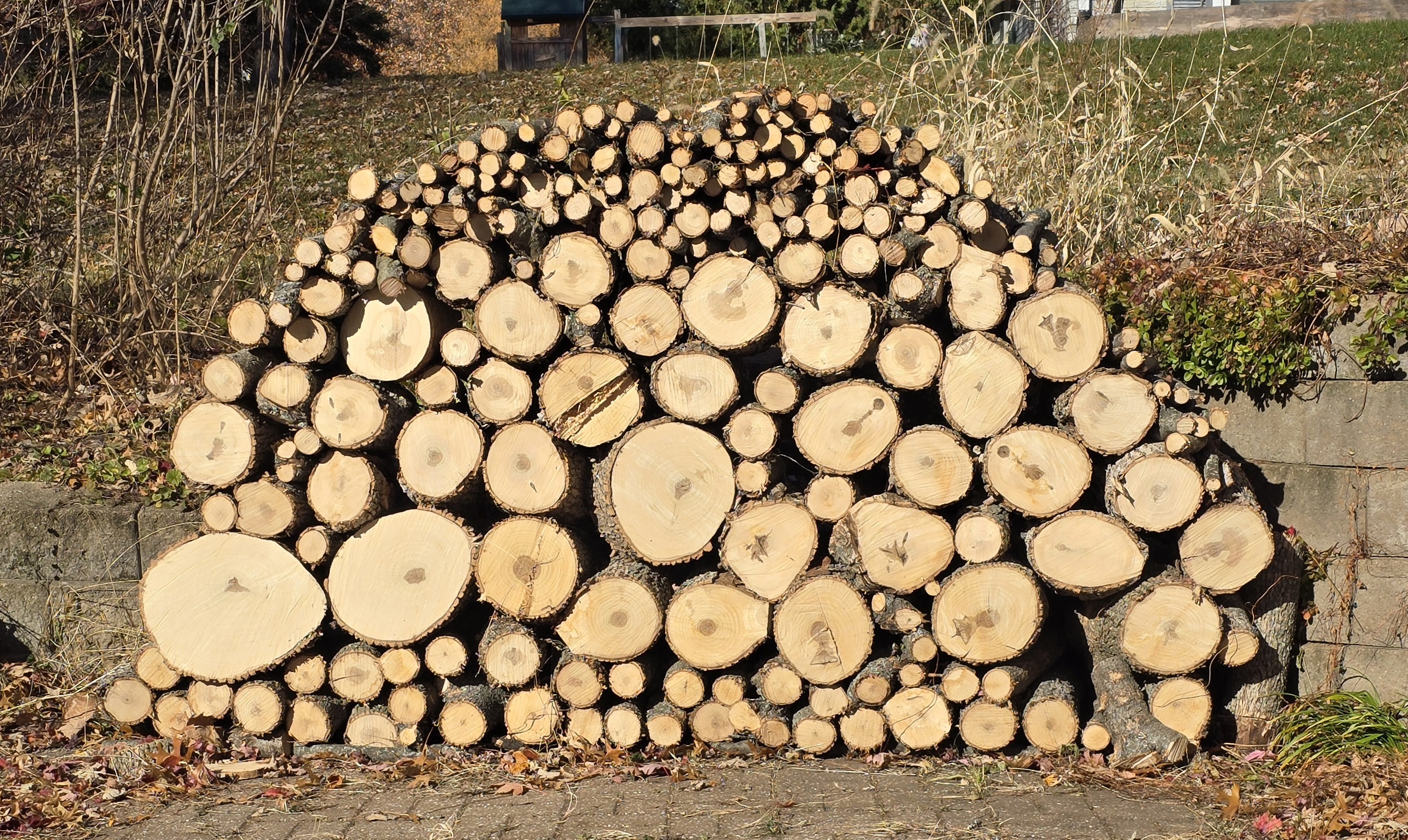
Woodpile from two dead ash trees.

It took about a week from getting a chainsaw, taking down the two dead ash trees, and processing all the wood. We don’t have a fireplace or go camping much, so this woodpile will be for someone else. I offered it to the neighbor who helped take one of the trees down yet he said he has enough for this winter. It is a beautiful thing to look at but I’ll need the space for the greenhouse in the spring.

Burning brush.

Burning the branches took most of a day. The process was straight forward with only a cut or two needed on each before putting them on the burn pile. Everything burned quickly, although there was a lot to burn. I enjoy burn piles and do one each in fall and spring.

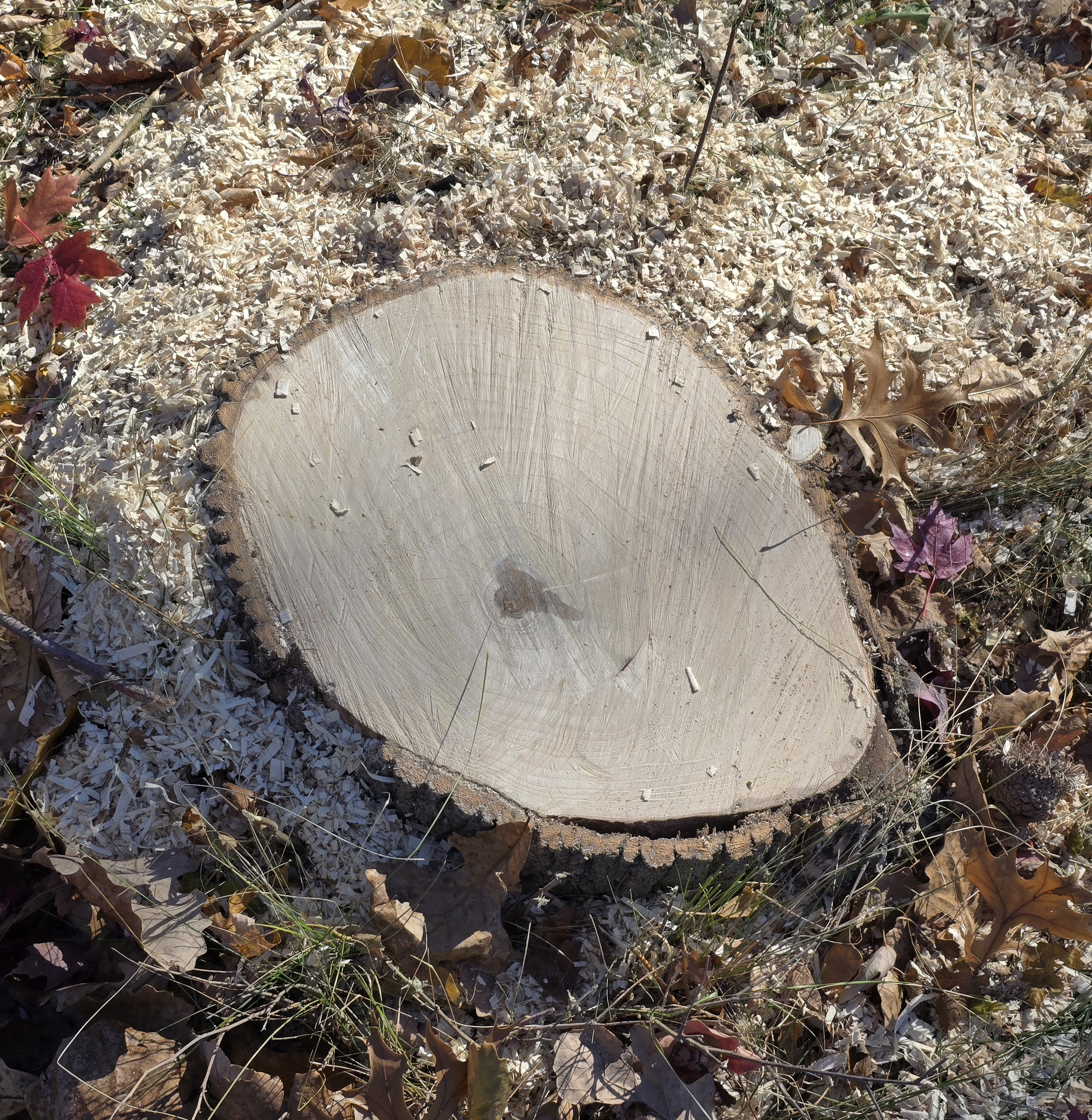
Ash tree stump.

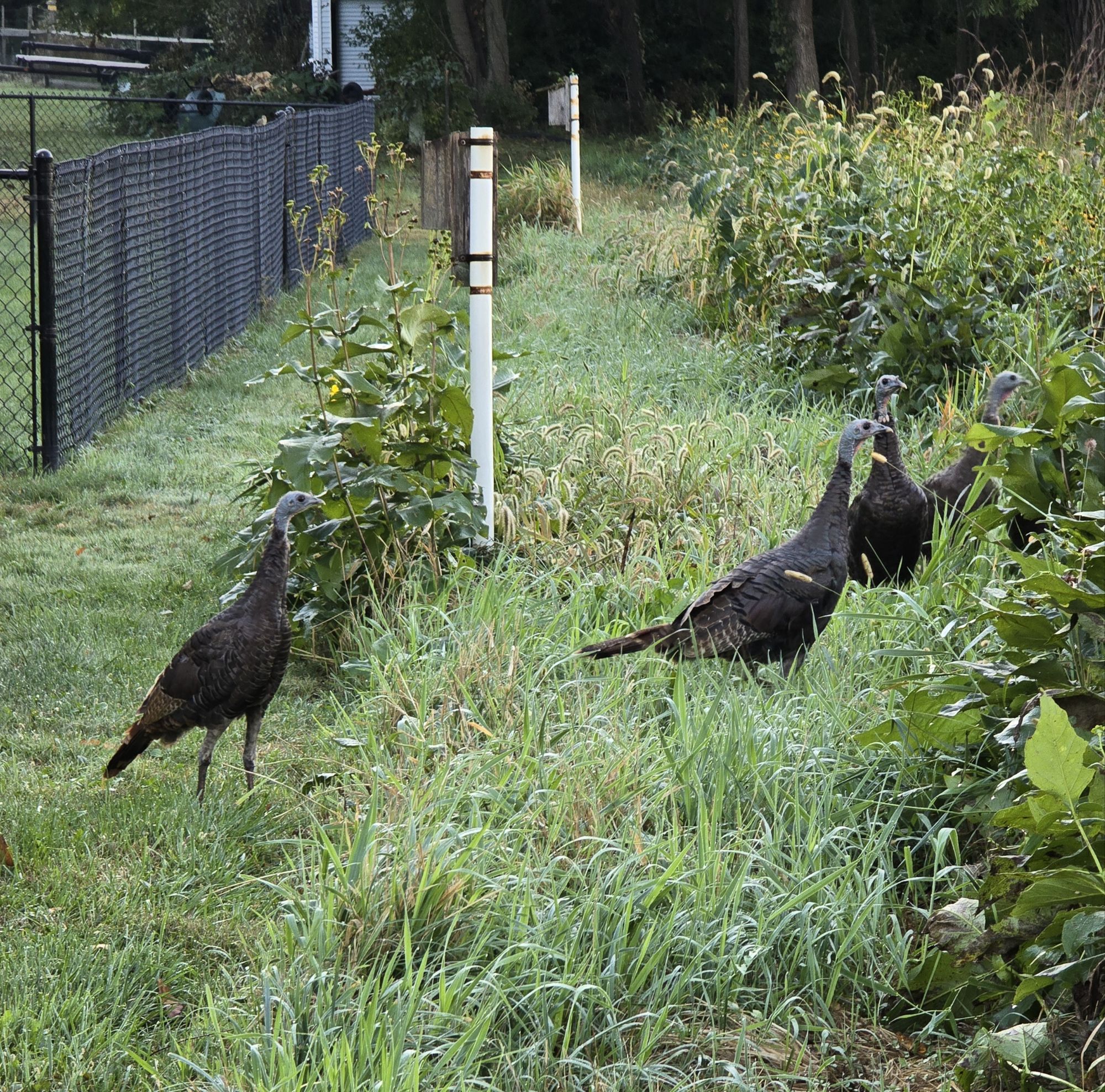
About the only must-do task outdoors is to mulch the leaves now that they have fallen from trees that shed in autumn. That takes about an hour and it should be done this week. After that, I’ll deconstruct what I can of the garden. I know where most of next year’s crops are going, although it is not an urgent fall task. Wildlife continues to enjoy the habitat.

Winter will soon arrive, yet not before we enjoy a few more weeks of autumn. Life at home is an escape from the rest of society. Sometimes we need that.

Categories
Creative Life

Fall Photos

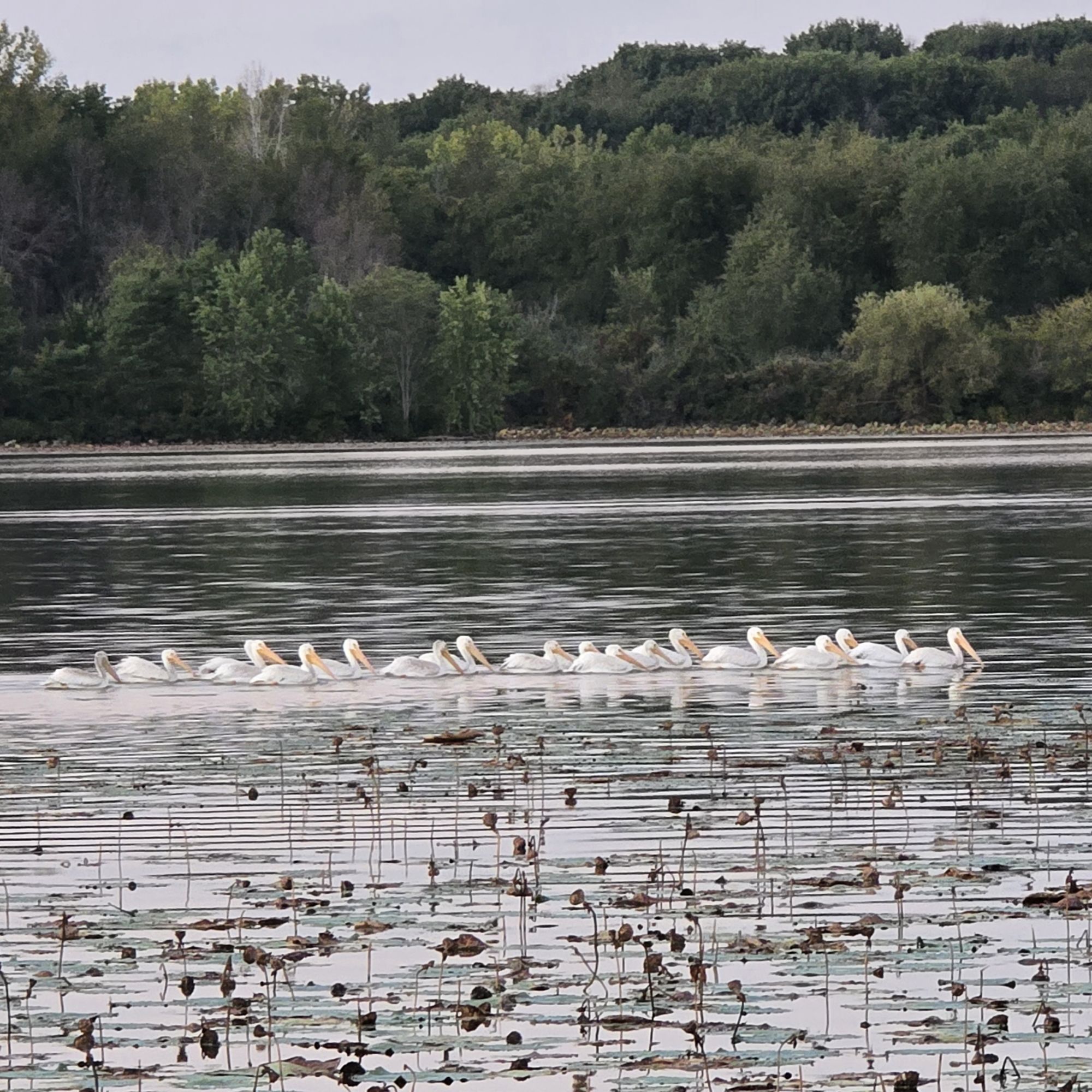
Pelican migration.

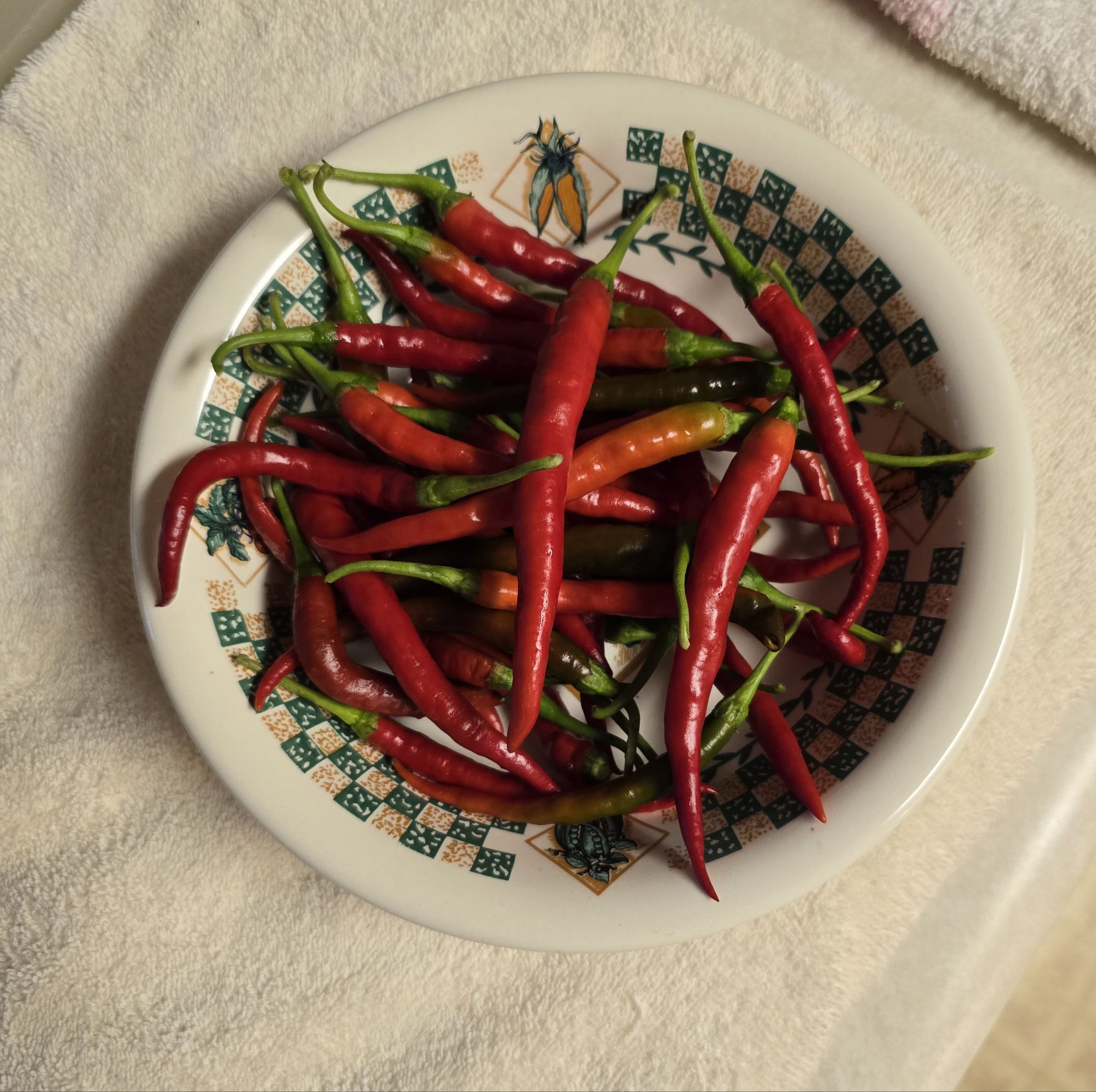
This week was all about the shift to autumn—putting up hot peppers, processing apples, and getting ready for winter. Add a high school class reunion on Sept. 25, and it’s already been a busy season. Here are some of the best recent shots.

Sunrise on the state park trail.
Categories
Kitchen Garden

Scion of Hawkeye

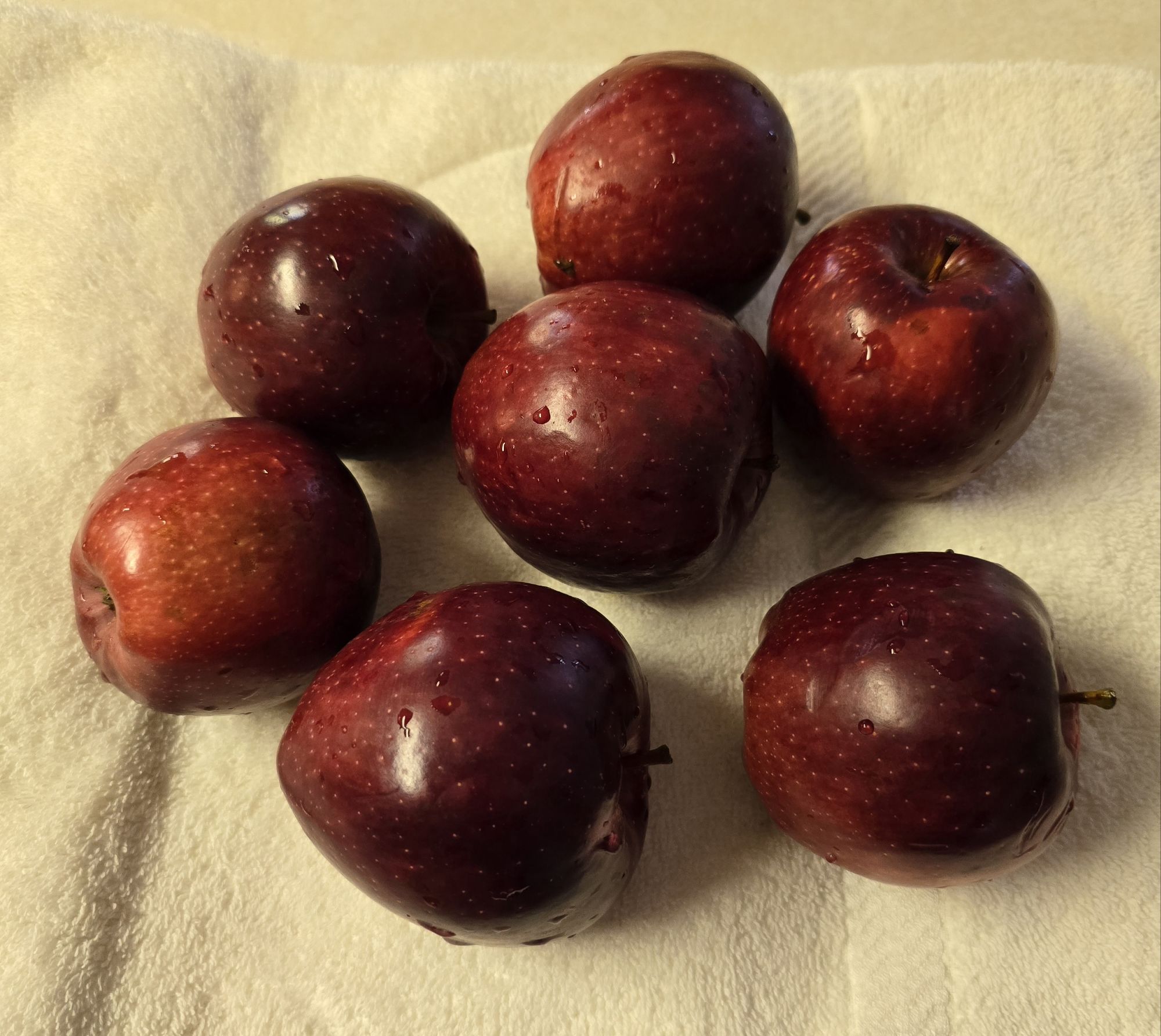
Red Delicious apples picked in early October.

The Iowa story of the Red Delicious apple is best told on the Stark Bro’s website. What stands out to me is that 1893, the year of the first International New Fruit Show where Jesse Hiatt of Peru, Iowa exhibited his chance seedling, the Hawkeye apple, also saw the World’s Columbian Exposition in Chicago. The Exposition embodied the late nineteenth century’s drive to catalog, classify, and display the world’s cultures, species, and artifacts—a hallmark of the Age of Imperialism.

Clarence Stark was not a fan of the Ben Davis apple widely planted in Iowa and the Midwest at that time. While Ben Davis stood up to winter, grew almost anywhere, and did not bruise easily, it lacked flavor. Stark literally got on his horse and went out to find better. When he found the Hawkeye at the New Fruit Show, he immediately liked it. Somehow Hiatt’s association with it had gotten lost. The two came together at the second show.

Clarence was elated. He could not get to Iowa fast enough. The Stark brothers made the trip immediately and bought the sole rights from Hiatt, named the apple “Stark® Delicious” (only after naming ‘Golden Delicious’ in 1914 did it become ‘Red Delicious’) and secured a registered trademark. (A Delicious Discovery: Red Delicious Apple, Stark Bro’s Nurseries and Orchards).

That Red Delicious was first found in Iowa is the reason I planted it in my backyard in April 1995. It has been a good tree. Even with large parts of it damaged in wind storms and the Aug. 10, 2020 derecho, it produces an amazing amount of fruit every other year. If Stark Bro’s propagated it to the extent flavor was diminished after adapting the cultivar to mass markets, the tree in my backyard continues to produce great-tasting fruit. I’d say they were delicious, but that would be too punny.

I am thankful to have planted this Red Delicious tree 30 years ago. It came from a time of robber barons seeking to buy anything of value and profit from it. To a minor extent, Stark Bro’s did that as well. As the apple business changes, stores are less reliant on Red Delicious. Because of the flavor, I wouldn’t trade my tree for anything.

Categories
Kitchen Garden

Varietal Applesauce

CC = Crimson Crisp; E = Earliblaze; RD = Red Delicious; Z = Zestar!

With the first big harvest from the Zestar! and Crimson Crisp trees, I decided to make applesauce from each variety. When I finished putting up 36 pints, I organized them to make this variety case. It will be interesting to see how the distinctive flavors mature over time. I never heard of anyone doing varietal applesauce, where each jar is the same variety of apple. So this may be unique to our household. That’s what a gardener can have when they work at it.

There is a daily, recurring task in my planner to “Make Applesauce.” Once I finish the planned amount, I will change it to “Make Cider Vinegar.” I’m still working off a pantry shelf full of apple butter so I don’t need more this year.

The first step was to pick and sort the apples, which I did a week or so ago. I sorted nine bushels of Red Delicious apples into saucers and juicers, and stacked them in crates next to the furnace. The race is on to process them before they go soft.

Apples awaiting processing.

Each day I take the tub that approximates one batch of applesauce, fill it up from the bins, and set it next to the stove. When I’m working on apples, the day starts with washing them as well as I can and air drying them on a towel. It is important to use a little elbow grease when cleaning them and make them a bit shiny. This removes the black spots that sometimes develop.

Next I cut them lengthwise in quarters and cut out the seeds. At this stage, it is important to remove as little of the core as possible since that is where pectin forms. We want pectin as a thickener. While I’m at it, I cut any bad spots and compost them.

I used to leave the seeds in, yet over time, I decided not to cook them and potentially release amygdalin, a cyanogenic glycoside composed of cyanide and sugar. A little cyanide can kill a human, however, it is unlikely enough cyanide is present if seeds are not crushed. Removing the seeds before cooking is overly cautious, but nothing in terms of flavor or workflow is lost by doing so.

When it is apple season there is always a form of apple juice around. I put about 12 ounces in the bottom of the cooking vessel to prevent scorching and create steam to cook the whole pot. Water is released from the flesh while cooking and it turns into a thick, delicious apple drink which I separate and store in the refrigerator.

Apples trimmed, cored, and ready to cook.

How long to cook the apples? Like anything enough but not too much. I stir the pot once and then when the apples on top begin to soften I turn the heat off and let them sit on the stove for at least an hour. This finishes the cooking without losing all of the goodness. It also allows them to reabsorb some of the apple juice.

Next, I use a large stainless steel cone strainer to separate the apples from the liquid. I put all of apples from the pot in there and cover it with a plate for at least an hour, sometimes more. Because I use applesauce mostly for recipes and baking, I don’t need a lot of moisture in it. If a person wanted to eat applesauce from a dish, or use it as baby food, the moisture level could be adjusted. I put my strainer in a large Rubbermaid pitcher to catch the liquid. It makes it easy to pour it into a Mason jar.

After the liquid is drained, I put small quantities in a different cone strainer and with a pestle, press the flesh out through the tiny perforations. I keep adding small amounts until it has all been pressed and what is left in the strainer is dry skins. This process saves the time of peeling apples. Sometimes I want chunky applesauce, so I peel the apples before cooking and then use a potato masher to break them up in the cooking pot.

The final step is to place the sauce in clean Mason jars with a new lid and water bath can them. When they have been canned, I loosen the ring, and if there is evidence of leakage before sealing, I wash it off so the ring doesn’t get corroded. If I run short of rings, I’ll store the jars with lid only. There has never been a problem.

My process is intended to make enough applesauce for two years, in between big harvests of the Red Delicious tree. I might adjust that if the other trees produce more apples.

I didn’t mention, but should, I take time to clean the kitchen and do dishes before getting started. I enjoy watching wildlife eat fallen apples through the window behind the sink and consider what a blessing having apple trees can be.

Categories
Kitchen Garden

The Moon is Still Out

Trail walking on Sept. 9, 2025. The moon is still out.

Walking on the state park trail before dawn is the latest iteration of my use of the trail. When I go out early I am hoping to catch some glorious photographs of a colorful sky. Recent days have been rather quotidian. At least the moon is still out at that hour. Yesterday I settled for wildflowers.

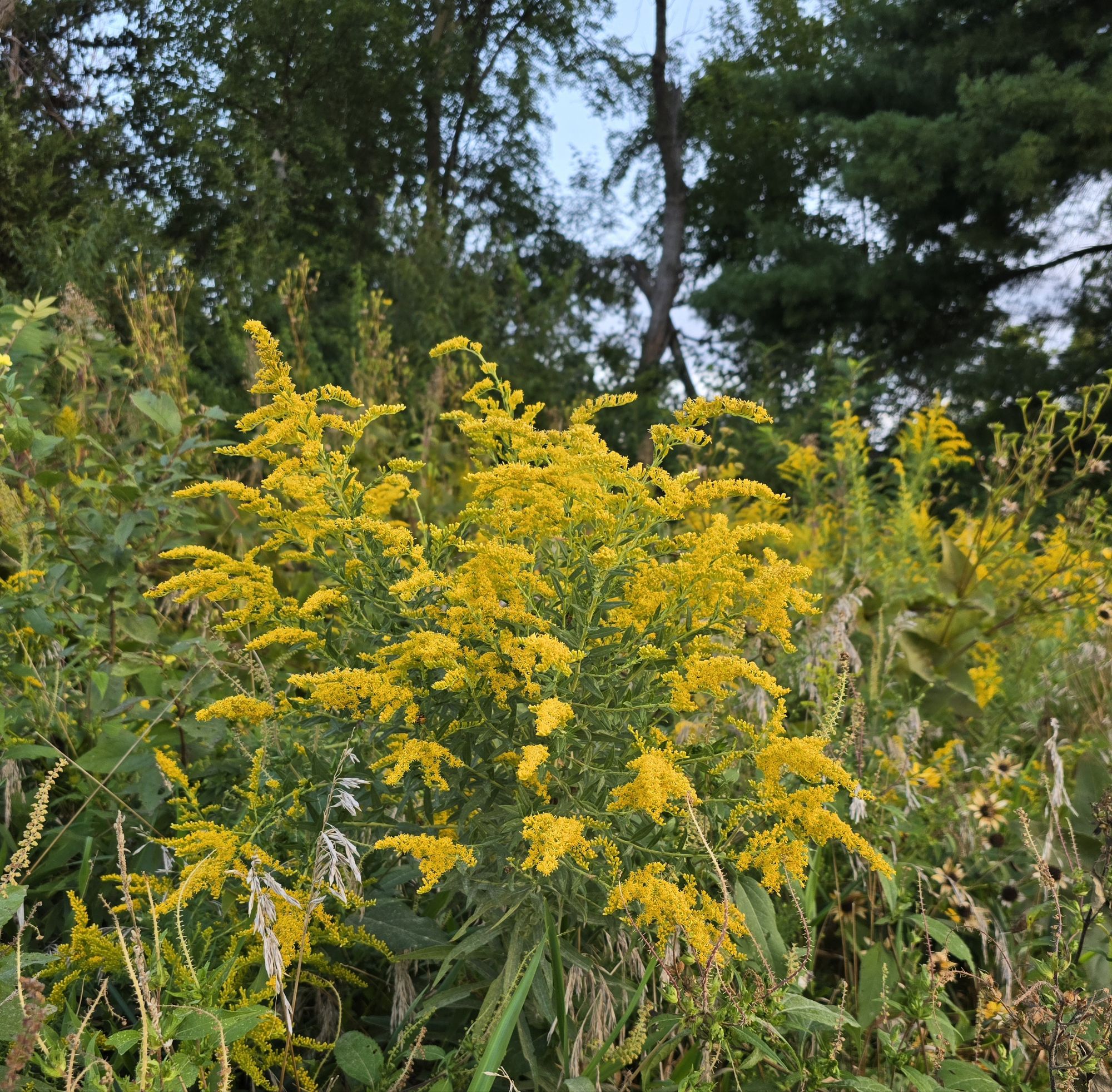
Wildflowers on the state park trail on Sept. 10, 2025.

Our 55th high school class reunion is later this month and among other things, I agreed to bring a dessert. The planning group had a lengthy conversation about sheet cakes last year. The consensus was that a sheet cake would not be eaten. I have to bring 24 of something that can be held in hand. Thinking of a small cookie as someone else is bringing bars. Also considering something without sugar to be more diabetic friendly for my cohort of septuagenarians. The research sources will be my red, hand-written cookbook and four church cookbooks from the parish where I attended grade school. Nothing against the fancy pastry cookbooks sitting on my shelves. It is a reunion and a tribal recipe might go over. The first recipe to which I turned was for sugar cookies. I have nine bushels of apples picked and ready for the kitchen, so maybe something with those. There is time.

While I type, the last batch of tomato sauce is being water-bath canned. With what is leftover from previous years in whole tomatoes, the 24 pints I made should serve until next year. It is hard to believe how quickly tomato season is ending. I’ll make one last pass through the rows and that is likely it.

I decided to make eight quarts of applesauce (to make a case of the four leftover from 2023) and to finish one case of pints plus one more case. Total of 36 pints plus 12 quarts to last two years until the next Red Delicious harvest. It should be plenty. After that, I get out the juicer and make juice for cider vinegar. The quantity is never exact, and I just returned from counting six mostly empty half-gallon jars. I leave a little vinegar with the mother in each of the jars for a starter. I have five bushels of cider apples, plus more on the tree, so there will be plenty.

The food part of summer is winding to a close. I need to trim the garlic and put it into storage. I want to get the garlic for next year’s crop in the ground in early October. Once that is done, gardening season will be over for the year.

Categories
Kitchen Garden

Hints of Autumn

Trail walking before dawn.

Ambient temperatures were in the high 40s as I made my way along the state park trail. The chilly air stimulated bare skin exposed by my short sleeve t-shirt. Even though it was before 6 a.m. three others were out running. Two had lights and one did not. When younger, I used to run five miles each morning in moonlight, so I never carry a light. I memorized the trail and know where the one tree root crosses so I don’t trip on it in the dark. Darkness dissipated as Earth rotated, bringing us into the light.

The weather has been perfect for about a week. It is the kind of summer weather we seek. Thursday the high temperature was below 70 degrees.

The garden is winding down, with only one or two varieties of tomatoes left ripening. There are also hot peppers which will produce until the first hard frost. Leafy green vegetables continue to grow but the freezer and refrigerator have enough to last until next year. I pick what we need to eat fresh and leave the rest. Apples are aplenty. I will end up leaving a lot on the tree for wildlife. Autumn is not here, yet we can sense it is close.

I made enchiladas for dinner on Thursday. I modified my standard ingredients, substituting fresh tomato sauce for the canned I use in winter. There are still garlic scapes in the refrigerator, so I used those too. It is an easy meal for after a long day of working with apples.

The garden garlic has been racked in the garage for three weeks and is ready for trimming and storage. I’m not in a hurry to get that done. Using a small fan to blow on it helped them dry more quickly and thoroughly.

I have five bins holding a bushel and a half of apples, sorted by juicers and saucers, downstairs near the furnace. I plan to fill the other three bins and then turn to sauce first, followed by juicing. We don’t eat much applesauce, mostly using it to substitute for an egg in vegan corn muffins. Once a year we make an applesauce cake. The refrigerator drawer can take a few more of the best apples for storage. This year has been a mad rush in the garden.

When I tear down the squash patch I expect to find a winter squash or two. That operation was ill-advised in that I couldn’t get to the vines and lost track.

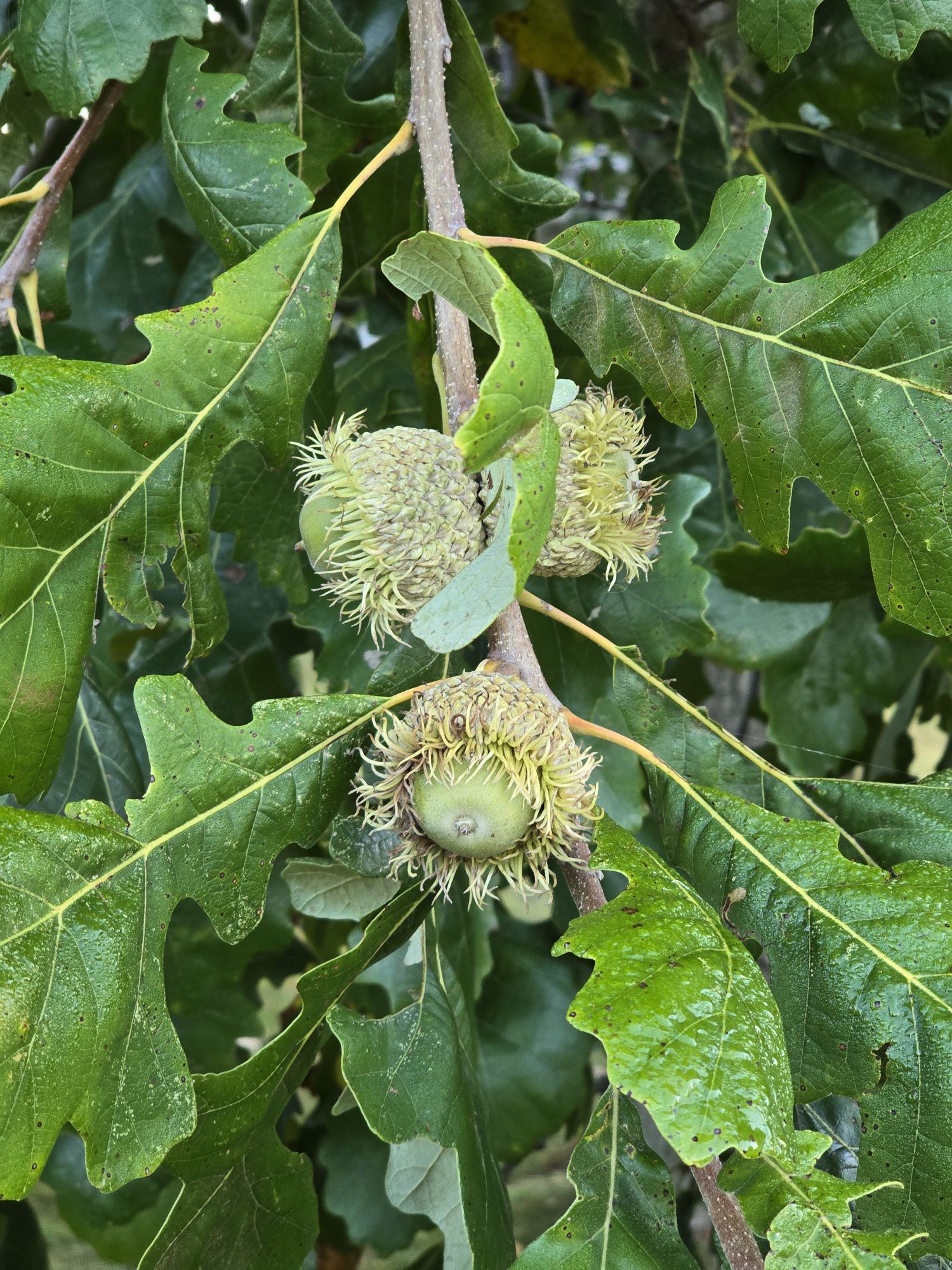
The acorns on the Bur Oak trees are full sized. I expect squirrels will make quick work of them.

Such is my life in Big Grove Township. We live our best lives here… as best we can.

Categories
Kitchen Garden

Deep in Apple Season

Low hanging fruit.

Apple season begins in earnest as Red Delicious ripen. I’ll pick the best few dozen for storage and make cider vinegar and applesauce with the rest until my allocation of pantry space is filled. I didn’t know it at the time, yet this is why I planted apple trees.

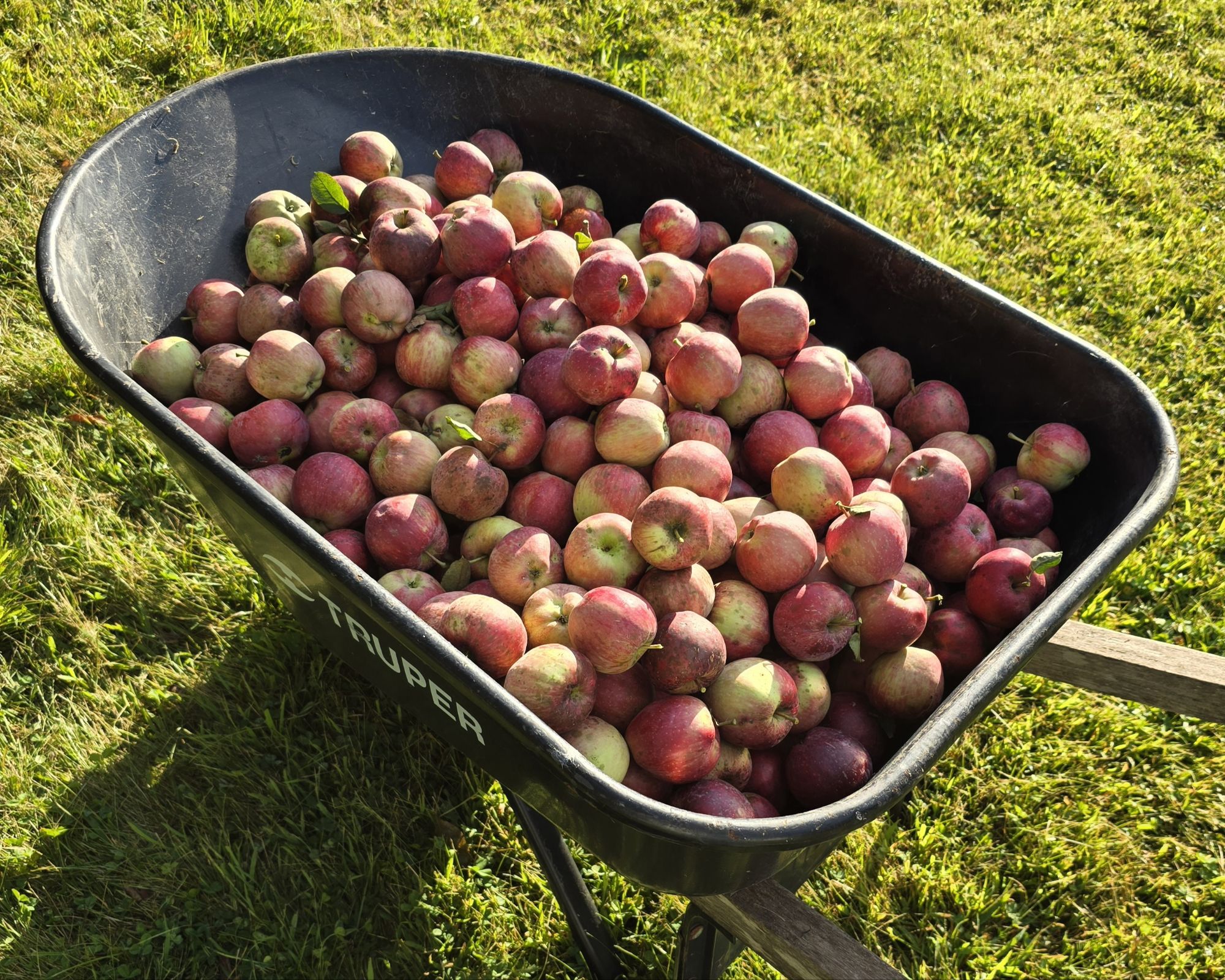
The Red Delicious harvest began Tuesday and it won’t take long to fill all eight of my tubs with fruit. After that, kitchen work begins as I race the clock to meet goals before the rest of them fall from the tree.

The most challenging work is running three or four bushels through my small juicer. It is worth the effort to have apple cider vinegar. I also jar a couple of quarts of fresh apple juice.

The other four trees have finished. By far, the best flavored apple was first to ripen: Zestar! I canned pints of applesauce from most of the harvest. Crimson Crisp and Earliblaze filled the time gap until Red Delicious ripened. I labeled each jar of applesauce with the variety of apple. The best of each variety was washed and placed in a refrigerator drawer for storage. I should have fresh apples at least until January.

This activity signals the end of summer. 2025 has been a great one for garden produce. Maybe once all the work is done I can kick back and take it easy for a couple of days. I’m not there yet.

First wheelbarrow full of apples.
Categories
Kitchen Garden

Apple Management

Crimson Crisp apples from the garden, Aug. 12, 2025.

These two Crimson Crisp apples fell from the tree during Tuesday morning’s thunderstorms. They looked undamaged so I picked them up and ate one of them for an afternoon snack. “Delicious,” he punned. They need to be picked. Apples are beginning to back up in the kitchen, so I better get going with the process.

Stories of my father’s people were about apples. The women worked in an apple canning plant and grew multiple trees on their properties. My great aunt Carrie said she ate apples every day of her life. She passed on a simple recipe for fried apples. Of course the men worked mining coal. Father was lucky to escape such a future when he was a teenager.

I wrote before about my father and apples here. This is the salient memory from that post:

Father taught me to eat apples after a trip on River Drive to buy a bushel.

It seemed unusual to secure so many at once, but he knew someone, and with a limited weekly income from the meat packing plant, the family took what help he could find.

Dad used a knife to cut away bad spots and avoid eating worms. I remember him rocking in a chair eating apples with a paring knife after dinner. He didn’t call them “knife apples.” I coined that term when describing the fruit from our trees. (Knife Apples, Paul Deaton, Oct. 10, 2014).

When we moved to Big Grove Township, I planted six apple trees at the time of my mother-in-law’s death. Three of those remain, one Red Delicious, and two Earliblaze. They are all reaching the end of their lives, but as long as they produce, I don’t cut them down. Recently I planted one Zestar! and one Crimson Crisp in a different spot in the yard. This year is the first all four varieties are producing.

Now that I have a producing orchard, what next?

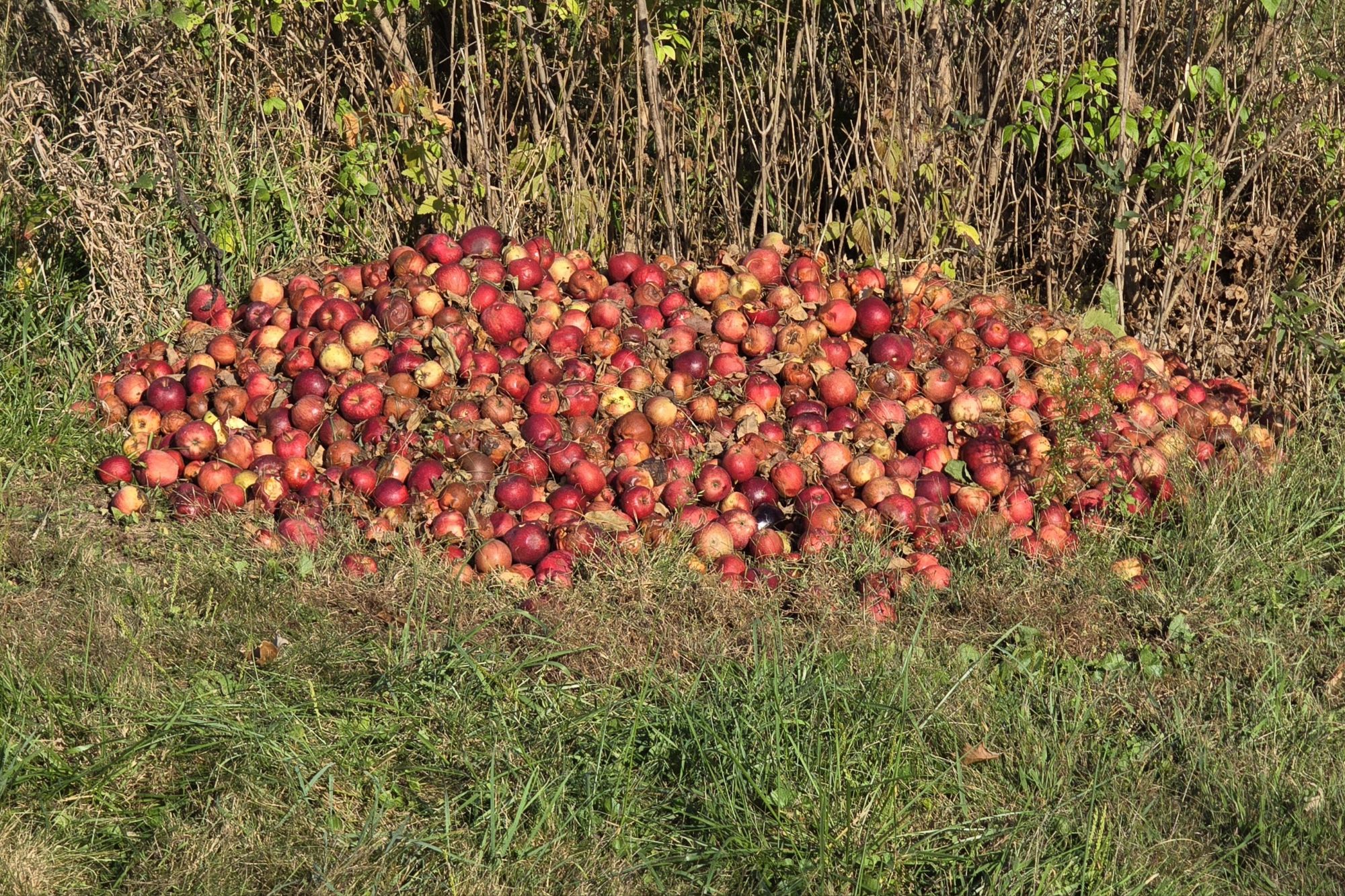
I grew out of the idea of processing every possible apple into something. Apples now get divided into three major categories. The best ones are tucked away in a refrigerator drawer for eating with a knife. Most of those do not have visible imperfections. The seconds are saved for making three major products: Apple butter (usually 12 pints per major harvest); apple sauce (a dozen quarts and two dozen pints); and apple cider vinegar to fill all my containers. I need about 3-4 gallons this year. When the vinegar jars are filled, I usually reserve a quart or two of fresh apple juice for drinking from the refrigerator. Any other apples are comprised of fallen fruit and the least desirable of what I pick (small or too many imperfections). These go in a pile near the lilac bushes on the property line. They usually sit there decomposing from now until winter, yet in the spring they have all been eaten by wildlife who need winter food.

I used to make dried apples in a dehydrator, but just don’t eat them. Once they get used up from last time, that will be the end. In short, I process to make what I make and anything else goes to wildlife. Extra apples are not usually shared. It takes a certain type of outlook to turn a gnarly apple into applesauce or vinegar. Wildlife don’t complain and eat everything I put out for them.

The main challenge in apple management is getting everything done before they start going bad. That’s where I currently am. The Zestar! have been processed, there are two containers of Earliblaze in the kitchen waiting for processing and a lot on the trees, I’ll pick Crimson Crisp today or tomorrow, and Red Delicious, which is my workhorse apple, are still ripening and won’t be ready for another month or so. Apple management is a process of continuous improvement. Re-defining and knowing what I want is important to keeping my sanity in this busy time of the garden year. Apples are worth the work.

Categories
Kitchen Garden

Garlic Harvest and Garden Stuff

Garlic harvest in 2021.

I spent part of Monday prepping the garage to receive two racks of freshly picked garlic plants for curing. In 2024, the harvest was July 12, so with spring planting this year, I’m running a month behind. The garlic plants look a bit weird — multiple flowers per head, small scapes — so I don’t know what I will get. Hopefully there will be enough good cloves to replant in the fall, with the rest to be used in the kitchen regardless of size. I have a dozen head of garlic left from 2024. Later this week I will grind them in the blender with some olive oil to store in the refrigerator until I use them up. My cooking life was forever changed when Susan Jutz taught me to grow garlic.

I made a batch of applesauce with Earliblaze apples and it was not as good as the batch made with Zestar! apples. If I get ambitious, I might cut down one or both of the Earliblaze trees and replace it with another Zestar! tree. I don’t see that happening this fall.

There does not look to be an abundance of tomatoes for canning. With 70 cages, there are plenty to eat fresh and cook with. Just last week I made a batch of chili using San Marzano tomatoes and it was distinctively better. This shows cooking with fresh tomatoes makes a big difference in taste. The tomato harvest is beginning to accelerate so we’ll see where it takes us.

Squash and cucumbers are pretty well done. A few green beans remain to be picked. Leafy green vegetables are aplenty, although the refrigerator and freezer are stocked with enough to last until next season. Hot peppers have just begun to come in. There will be some more eggplant and bell peppers. That is about it.

This is a snapshot of where things are in the garden. It has been a great year.

Categories
Kitchen Garden

Saturday Apple Cooking

Zestar! apples in the sink before making applesauce.

Saturday cooking is one of the great pleasures of life. I use it to set aside worries and concentrate on preserving and making food for our family with an emphasis on taste and using the garden abundance. Rain was forecast all morning so I spent Saturday in the kitchen. This post is a slice of that life.

The day began with breakfast of cottage cheese and some cherry juice left from the recent visit of our child. Next I did the dishes to make space to get everything clean before making a new mess. Then I went through the refrigerator, which is packed to the doors. I pulled out everything that could go into a new batch of vegetable broth and laid the items on the counter. I also went through the cucumber drawer to make sure decaying vegetables were either used up or composted.

Cucumbers take the most management because there are so many of them when they come in and their shelf life is short. I noted the quart jar of pickles was almost gone, so I reused the brine, fortifying it with some new vinegar and seasonings, and refilled the jar. There are already three or four quarts of refrigerator dill pickles tucked away in the back but we have to make them while cucumbers are in season.

While cleaning the fridge, I made a cut vegetable tray for snacking. Celery, zucchini, cucumber, and bell peppers cut and ready to eat if I need a break from the action. This is for sharing, yet sometimes I am the only one who eats this convenience food. I typically like some kind of salad dressing with them.

Vegetable broth is an easy use of vegetables nearing the end of their life. I make it with standard mirepoix, bay leaves, and the oldest bag or two of leafy green vegetables from the freezer. This day, I used up a couple of bags of last year’s celery leaves to make way for new. One of the last gifts Mother gave me was a large All-Clad multipurpose stainless steel stock pot. If I’m working a full shift in the kitchen, I usually put a pot of broth on and water bath can it. I made six more quarts. At 42 quart jars in the pantry, I am good for most of the rest of this year into spring 2026.

This may seem like a lot yet it was preparatory of making apple sauce.

One of the few surviving photographs of our family in Appalachia is of Granny Reed at Stella’s funeral. Reed’s given name was Josephine, yet I only discovered that from searching the U.S. Census a few years ago. She was always called Granny Reed. She is our child’s great, great, great grandmother.

Granny Reed, along with other female family members worked at a canning plant where they put up apples. When I am picking, sorting, peeling and coring home grown apples for use, I inevitably think about those Virginia women. When in 1983 I visited the home places in Virginia, my Uncle Gene talked about apples.

Next, we went to Norton, another of the places Grandma and Grandpa lived. Uncle Gene talked about apples, how Grandma used to work on peeling and coring apples for one of the big companies. At one time, then, there were large orchards. But now, there is only the coal companies. They used to eat fried apples for breakfast. Later Aunt Carrie told us how to make them. Slice apples into wedges, fry in a little water, sprinkled with sugar. (An Iowa Life by Paul Deaton).

Uncle Gene talked at breakneck speed and I tried to get it all down.

Something that goes through everything is the presence of apples. Grandma worked in an apple cannery, had orchards. There is an apple tree on the old home place, Aunt Carrie served fresh applesauce for us, she said a day hasn’t gone by when she hasn’t had apples. Uncle Gene talked a lot about the apples and how he and the boys helped with them. And everywhere we ate them, the apples were good, the trees bearing fruit. The apple trees bearing lots, even the ones abandoned for years. Eat them green, cooked, fried, in applesauce. (An Iowa Life by Paul Deaton).

As Gene said, “That Granny Reed was always a smart one.”

My entry into Zestar! apples had me eating them fresh and making apple sauce. Before now, I had only every made applesauce from Red Delicious and Earliblaze apples. It turned out on Saturday the flavor profile of Zestar! apple applesauce was delicious (no pun intended). I am so glad that tree is now a part of our home orchard.

I was dog tired at the end of my six-hour kitchen shift. It was an inexpensive escape from the internet and everything on it. A time to live in the past with my forebears, if only for a few hours.