Categories
Writing

Lookout Park Barricaded

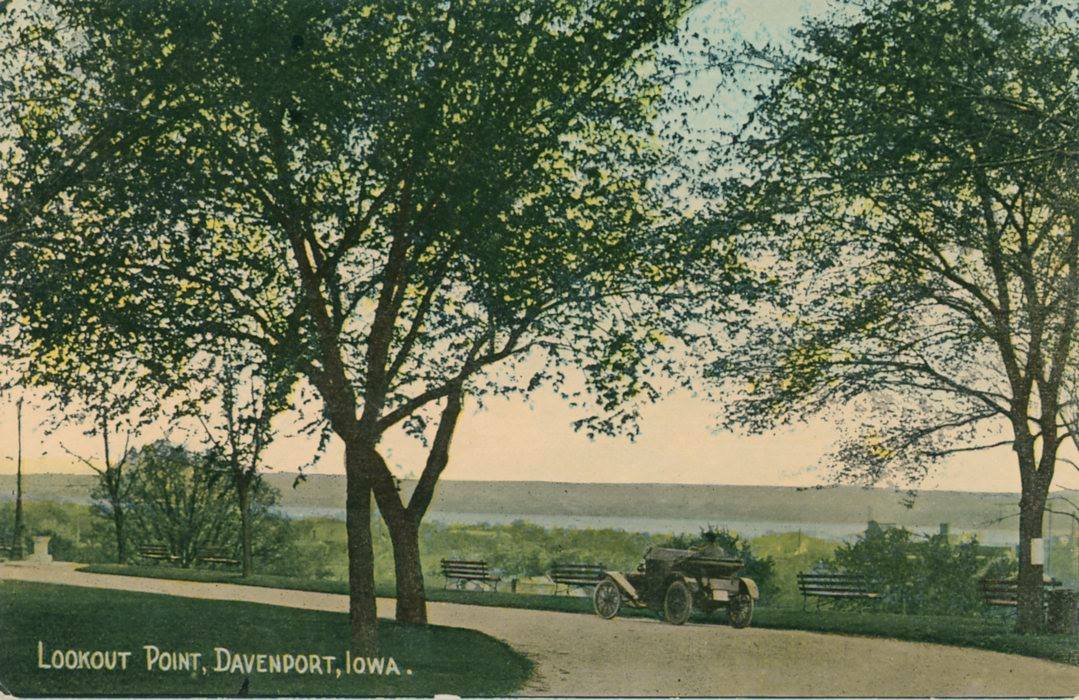
Riverview Terrace Park, Davenport, Iowa postcard. Provenance unknown.

I played at Lookout Park, which was within walking distance of home, before I attended school. The main features are the view of the Mississippi River depicted in this postcard, a long, steep hill in front of the benches, and a stairway from the bottom to the top.

I liked to take a cardboard box up the stairs and then slide down the grassy hill with neighborhood children. After the slide, we would mount the stairs to the benches, take a rest, and then slide down again. It seemed like endless hours of fun in a time when there were few responsibilities.

The city purchased the property in 1894, then known as Lookout Park, and changed the name to Riverview Terrace around 1900. It is listed on the National Register of Historic Places. Despite the official name, we called it Lookout Park.

Tom Barton of the Quad City Times reported the park had been closed by the city with concrete barricades placed so vehicles can’t get in or out. I knew the neighborhood was in decline, yet it’s sad to think of the after hours drinking, littering, prostitution and drug dealing he reported going on in a place with more positive memories.

“This has been an ongoing problem that ebbs and flows, and it began to flow again” this summer, said Ward 3 Alderwoman Marion Meginnis, who represents the area. “The design (of the park) has made it an attractive nuisance.”

Though closed to vehicles, the three-acre site remains open to the public, Meginnis stressed in the article, and is meant as a temporary measure until city staff can decide how best to address and discourage crime.

Sometime we don’t want to know what is happening in the old neighborhoods. At the same time, bad news triggers fond memories. There are days I wish I could forget about everything and slide downhill like we did. Being carefree is a part of youth we didn’t appreciate as we lived it. There is no going back, just remembering.

Categories
Writing

Attending State University

When I arrived at the University of Iowa campus in fall 1970, the university president was Willard Boyd who officed in Old Capitol. The previous term, the president’s office had been occupied by protesters and the academic year ended abruptly. During my freshman year, Boyd held meetings with students and I attended one in Quadrangle dormitory where I lived. He seemed approachable and that surprised me. It proved to be an enduring character trait.

I last spoke to Boyd for an article I wrote for the Iowa City Press Citizen on Oct. 22, 2014. He was much as I remembered him. Following is the piece about the anniversary of the legal name of the State University of Iowa.

50th Anniversary of UI name change — or not

Fifty years ago today, the university in town decided to keep its legal name, “State University of Iowa,” but replaced it with the familiar nickname now in everyday usage. It was not the “Hawkeyes.”

Willard “Sandy” Boyd, currently Rawlings/Miller professor of law and president emeritus, was university provost at the time.

“Virgil Hancher (university president from 1940 until 1964) was a lawyer and said, ‘It is named in the constitution, therefore it shall be ever thus,’ ” Boyd explained. “Howard Bowen (who succeeded Hancher as president) said he ‘wasn’t a lawyer, so we’ll leave it,’ suggesting a nickname, ‘University of Iowa.’ ”

On Oct. 22, 1964, the Iowa state Board of Regents passed a resolution approving the usage of “University of Iowa” to describe the constitutionally named State University of Iowa, keeping the original name for legal purposes.

“I believe the change was intended to reduce confusion between Iowa and Iowa State,” said Mark Schantz, who received his bachelor’s degree from Iowa in 1963 and retired from the College of Law in 2013.

There is less confusion and almost no controversy now, but it wasn’t always so.

Early on, university officials attempted to change the naming convention for the State University of Iowa in practical usage.

In a letter dated Jan. 18, 1918 (available in the University of Iowa Special Collections), C.H. Weller, the university editor, requested permission from University President Walter Jessup to use “University of Iowa” on printed invitations.

“I have been trying for several years to accustom people to the name ‘University of Iowa,’ in harmony with the nomenclature of practically all other great state universities,” he wrote. “The legal name, of course, is ‘State University of Iowa’ (not ‘The State University of Iowa’), but the general use of a shorter term in informal usage is nothing unusual.”

In a Nov. 21, 1963, editorial, the Press-Citizen wrote, “The problem in the names of Iowa’s three state-supported institutions of higher education is that there is a law — the one that says the State University of Iowa is at Iowa City, Iowa State University is at Ames and the State College of Iowa is at Cedar Falls. This may be clear to Iowans, although it’s doubtful, but the plethora of ‘states,’ ‘Iowas’ and ‘universities’ seems to be just too much for those who don’t deal with it frequently.”

The newspaper called for the name to be changed to the University of Iowa.

Has the confusion continued?

The answer is yes, according to University Archivist David McCartney.

“It’s correct to say that our esteemed institution has always been named the State University of Iowa,” he wrote in a December 2010 article for the University of Iowa Spectator. “It’s complicated, as they say. To this day, people still occasionally (and understandably) confuse the names of Iowa’s public universities.”

That’s something today’s Hawkeyes, Cyclones and Panthers will be certain to clarify.

~ First published by the Iowa City Press Citizen on Oct. 21, 2014

Categories
Living in Society Writing

Postcards from Iowa #7

The Pine Barn Inn, Danville, Pennsylvania

Reverse side: The Pine Barn Inn — Danville, PA 17821 As Featured in ‘Back Roads and Country Inns’ Photo by C.G. Wagner, Jr.

I stayed at The Pine Barn Inn while director of maintenance for a large transportation and logistics company. For many years we bought Fruehauf Trailers built in Fort Madison, Iowa. I was in Danville to evaluate a Strick Corporation trailer manufacturing plant as prelude to picking a new vendor. By 1993 the writing was on the wall that Fruehauf was going out of business.

A leveraged buyout in 1986 by the company’s management left Fruehauf burdened with debt, and in 1989 the company was broken up and sold, though one segment, the truck trailer unit, retained the name Fruehauf Trailer Corporation. That corporation declared bankruptcy in 1996 and was sold to Wabash National the next year.

Fruehauf Trailer Corporation Wikipedia.

While many in the truckload segment of the transportation business were buying Wabash National plate trailers, the owner of our privately held company was apparently not a fan. We chose Strick for a non-Freuhauf plate trailer build over others I evaluated.

I traveled a lot during my transportation and logistics career. It came to a point where I would wake on an airplane and not know where I was or where I was going. The job had me traveling to both coasts and from Florida to the Upper Peninsula of Michigan. I had a heavy carbon footprint in those days.

When I supervised a driver recruiting operation I had offices in Iowa, Indiana, Kentucky, Georgia, West Virginia, Pennsylvania and Missouri. We even did driver recruiting in Astoria, New York near LaGuardia Airport. I met people from everywhere and spent a lot of time in transit.

I don’t remember much about The Pine Barn Inn, except it was clean and met my personal needs. That’s what I wanted during business trips. Today I hope most of my traveling is finished. At least I still have this postcard.

Categories
Living in Society

Cleaning Up The Mess

Woman Writing Letter

The debt ceiling is in the news. Once again, for the same reason: a Republican president ran up the debt on the American people and a Democratic president is left cleaning up the mess.

At the same time, Iowa is participating in its decennial redistricting process. Voters in the Iowa Quad Cities aren’t sure who their member of congress might be. Currently it is Mariannette Miller-Meeks. If the first redistricting map is accepted by the legislature, it could be Ashley Hinson.

Both congresswomen have joined the Republican block to say they will not vote to raise the debt limit. Shame on them. They should focus on solutions, not obstruction.

While neither was in office when the 45th president and the Congress ran up our bill, it is clear from this statement by both and from their voting record earlier this year, their interests lie more with Washington Republicans than with Iowans.

Both voted against the American Rescue Plan Act which benefited many Iowans. One expects them both to vote against the Build Back Better Act when it comes up for a U.S. House vote in the near future.

Regardless of the redistricting outcome, they both need to find other work.

~ Published by the Quad-City Times on Sept. 27, 2021.

Categories
Writing

Postcards from Iowa #6

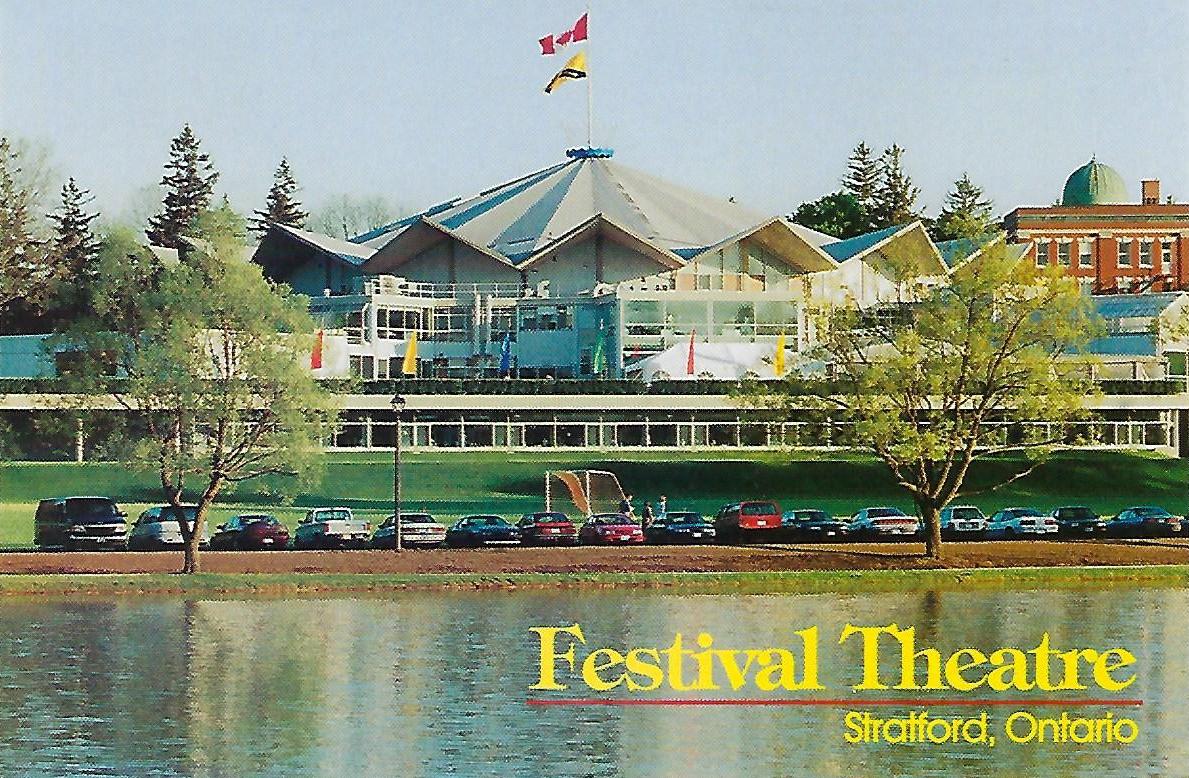
Text on the postcard: Stratford, Ontario, Canada The Festival Theatre viewed from across the Avon River is one of three theatres offering an excellent selection of theatrical performances during the Stratford Festival (May to November). Photo Credit: Robert B. Hicks

When our daughter was in middle school we began taking family vacations. They persisted through the summer between junior and senior year in high school.

It began with a week-long trip to Orlando, Florida where we stayed in a motel and made day trips to theme parks, including Walt Disney World, Universal Studios and Sea World. It was our first air travel together. For me, vacationing was participation in a great American adventure. It had one foot standing on consumerism and the other on a job that consumed much of my life. While we had only a brief sampling of what Orlando has to offer that first year, it was a positive experience. We made summer vacations annual.

Next was a trip to Colorado where we visited friends and did some mountain sight seeing. We drove among the 14,000-foot peaks and spent the rest of the time visiting people. After that, it was trips to Stratford, Ontario for the Stratford Festival of plays, and everything around them. I don’t recall how many plays we saw but our daughter insisted on meeting the actors to get the program autographed after each one. Vacations in Stratford became something else.

I didn’t realize it then, yet it became clear later, vacations were a crucible for making a life from the raw materials of society. They transitioned us through releasing our child to college and then to the greater challenges of living a creative life. Upon reflection, there are not many creative communities like the one in Stratford. We were fortunate to have had those trips.

It’s hard to say whether we will return to Stratford as a family, or take any kind of vacation. We will always have those summers to remember.

Categories
Living in Society

Living with Digital Images

Stones viewed through water.

Among things that have become harder to manage in the digital age are images. It is easy to take photographs with my Samsung mobile device today. Because it’s so easy, and has been for a while, the quantity of images on file is huge.

Every photograph is not important. Most are geared toward editing and posting on line in one of my social platforms, including WordPress. It is unclear what I should keep longer term. The cheap availability of storage suggests there is no need to sort through and delete some of them. While that may be the default process, I want change as I transfer files to my new CPU.

In August I captured 186 images, which is a typical monthly amount. Most of them are photos of garden produce, cooking, books, artwork, and things that happened or places I went. The best solution to reducing the quantity of files is to delete originals after cropping them for posting. Another is decide on the story a series is to tell. For example, I have 12 images related to donating my 1997 Subaru to Iowa Public Radio. They could be reduced to four. The best time to do this is immediately after I download them from my mobile device.

As I transfer thousands of images I plan to go through them all. To get this done I put an item on my daily outline, “work on file transfer.” I don’t know how long it will take yet I’ll work until it is done, a bit each day.

I don’t know the provenance of many of my photos, especially those with political subjects. In 2006-2008 I was getting used to a digital camera as my main image capturing technology. I felt little restraint about downloading photos by others when my own at a specific event were sub-par. I work harder to give credit today, but some of the older digital images are fond, and I have little idea who made them. I try to avoid using them outside my computer.

A main use of the files is in story telling. Before I deleted my Flickr account it was a great platform for story telling. The problem is how to translate those types of online stories into something more meaningful inside our home. When Yahoo had the problem with personal information security, I killed all the related accounts and downloaded the text from the stories on Flickr. It’s not the same.

Photos are a significant part of my autobiographical research. While ten years later I don’t care what I had for dinner on a given Sunday, those photos play a role in daily life, one that should be explored and developed for the story. A few will go into the final book yet the rest are best stored by editing, printing them out, and placing in an album. That’s as big a project as working through the transfer. The file transfer project will, in part, be designed to set up an album-making project for later.

There is no denying quality varied a lot over the more than 50 years I’ve been taking photographs. Sometimes a blurry image is all one has and it must be used for the album or story to make a point. I hope the formats .bmp, .jpg, .jpeg, .tiff, .png, and .tif persist yet there are no guarantees. The main issue going forward is there are a limited number of commercial outlets to print photos. We are tied to whatever those technologies are. It is too expensive to make our own prints on a home printer, except for on special occasions.

As I approach my seventieth birthday I think more about not leaving a large task of image sorting behind when I die. I may want to keep a couple of photos of tomatoes I grew, yet I don’t need a thousand. Likewise, if I can’t remember the name of a person in a photo, there is little reason to keep it. The recycling bin is already getting full.

I’ll be better off by giving this project some measure of thoughtful approach. Now that I’ve started, I hope to persevere until the work is done. The best part will be in actually completing the transfer so I can devote this time to something new. Wish me luck!

Categories
Writing

Postcards From Iowa #5

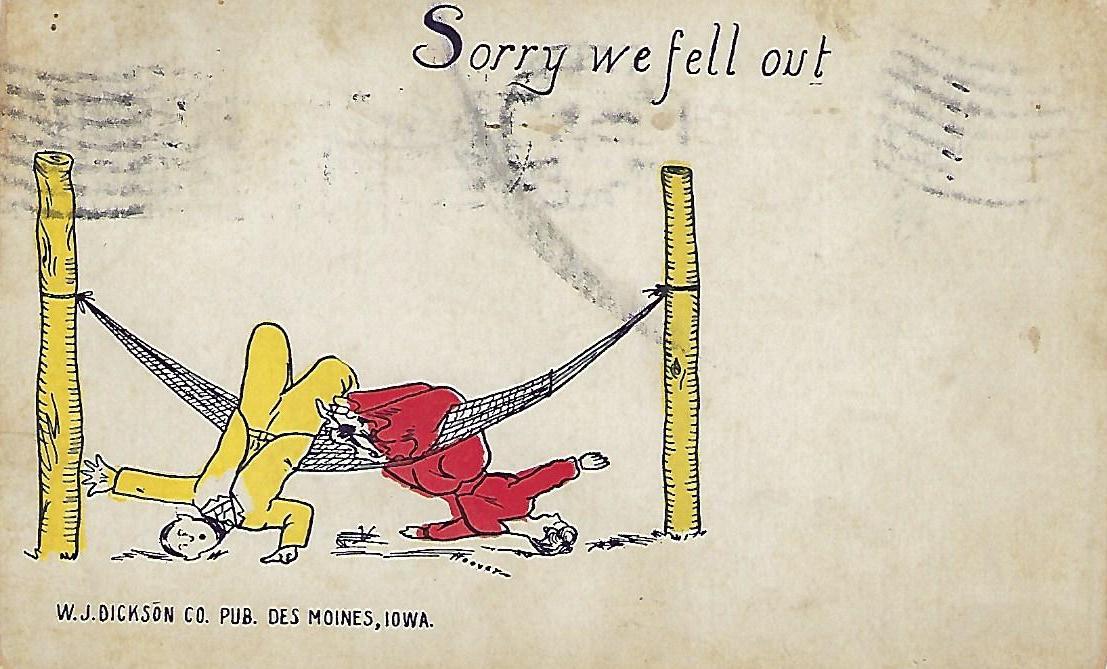
Reverse side: Personal note postmarked Oklahoma City, July, 8, 1908.

Social media hasn’t helped us stay in touch with friends and acquaintances.

In 2010 I searched for members of my high school class and asked them to join a Facebook group started for our fortieth class reunion. Many joined, but the group is now pretty inactive. Mostly we fell out.

It takes work to maintain a relationship and with all the stuff we have to do just to keep up with society it doesn’t happen. We drift except for those closest to us. I’m coming to a place where that seems okay.

What we yearn for is doing new, interesting, or exciting things. It doesn’t matter if it is with people we’ve known for decades or with those we just met. The arc of our lives isn’t a fixed trajectory. Just because we walked to school with the same group of people during the 1960s, that doesn’t mean the bond was permanent. If I encounter such childhood friends — these days mostly at funerals — we reminisce a bit in the moment and that’s that. We’ve built new lives that diverged from our beginnings.

I favor writing letters to friends and family. Not too much, though. There is an unspoken obligation to write one back and I don’t want to hang that on people I care about. Yet I write a letter from time to time.

This postcard reminded me there are a few people with whom I’d like to re-establish contact. Not that many, though. I have to ask why we fell out in the first place. Sometimes we’ll never know.

Categories
Writing

Outlining

On the state park trail.

I spent a fair amount of Tuesday revisiting the outline of my autobiography. It quickly came into perspective. There will be multiple sections with each drawing on different parts of my life story.

After the dedication and introduction I currently see the following parts.

Part I: Background

It will begin with four historical pieces about Lincoln County, Minnesota; the area around LaSalle, Illinois; Wise County, Virginia; and Davenport, Iowa in 1951. I spent the most time last winter drafting these sections. They each need more work.

Part II: Main Narrative

Next will be a high level narrative of my life from birth until the present. In it I’ll cover the main stories on a time line, from my perspective. I’ll leave out personal information of people who are still living.

This part is subdivided into sections: 1. From earliest memories, moving to Madison Street, school, and my eleven-year residence at the American Foursquare in Northwest Davenport. 2. Begins with college, a trip to Europe in 1974, military service, moving to Iowa City, graduate school, and then marriage. 3. I begin what would become a career in transportation and logistics in 1984. I follow my career from the move to Cedar Rapids; to Merrillville, Indiana; and then back to Big Grove Township where we now live. 4. Next comes our daughter finishing grade and high school, going to college, and then moving from Iowa. 5. Finally, there is empty nest life, community engagement, my first retirement from transportation and logistics, continuing work until the coronavirus pandemic, and the post-work life in which I now find myself. The idea of these sections is to lay out the bare bones of how I spent my life. To research and get the story down.

Part III: Collected Writing

The last part of the autobiography will be a collection of my writing from letters to the editor beginning in 1974, and including resumes, poetry, published writing, journal writing, newspaper writing, and blog writing. The focus will be to reduce the quantity of written work to inform the narrative presented in the second section.

The clarity that came from spending time away from writing as I worked on the garden was a welcome surprise. The outline is not finished. A few days work remains and I’m ready to do it. After that it’s back to writing.

Categories
Writing

Toward Season’s End

Thistle near the state park trail.

Just like that! Temperatures are cooler. It has been in the mid-fifties overnight, with a daily high in the seventies. The shift toward season’s end is happening. Ready or not, here it comes.

This winter I’m again planning to devote significant time to my autobiography. I wrote good pages last winter and would like to move the narrative along. If I learned anything it’s that the task is monumental. Without organization, I’ll never finish.

As I mentioned in yesterday’s post, I’m upgrading my computer CPU to a new one. As I do so, I’ve been going through countless files to see what is relevant to an autobiography. I printed a few things out. The more I look, the more files I find that can be permanently deleted. A person only has so much time to spend with old things that depart from the narrative that is to be preserved. Best to purge it now and get it done.

I resisted going through all the physical objects last winter. The boxes, albums, photographs, files, books, clothing and trunks are everywhere and need to be gleaned for relevant artifacts. Maybe I’ll spend time on that this year. If I do, the idea is to organize things chronologically instead of thematically. That mean busting up boxes and folders I once thought went together. As I extract and refine what I’ll use, there will be no going back. I’m okay with that. As I proceed with computer files I’m finding my organizational process was more a hodge-podge than orderly.

I stopped work on the autobiography mid February as my attention turned to the garden. If I repeat the cycle, I should be able to get a solid five or six months work done. The document on which I’d first like to make progress is called the “book tree.” It’s an outline of how I currently see the narrative progressing. There is a month or more work improving it. In the end it will make writing the narrative easier. Last winter I got addicted to word count. I need to let go of that for the moment and focus on what will be the story. That’s honest, journeyman work to which I look forward.

There are still things to do in the yard and garden. With the hot, humid weather I delayed until there is no more delaying. The grass is turning green and needs mowing. Before I do that I have to clear what became a weed patch upon which to place the clippings. I also have to pick a plot to plant garlic in four or five weeks. By the way, the garlic came in really good this year.

I don’t know how long the autobiography will take. What I expect is it will make life easier for whoever takes charge of my stuff when I’m gone, if for no other reason than that there will be less of it. I cling to the present life yet realize I need to let go. Upgrading my CPU is as good a metaphor as any for that.

Categories
Living in Society

Labor Day 2021

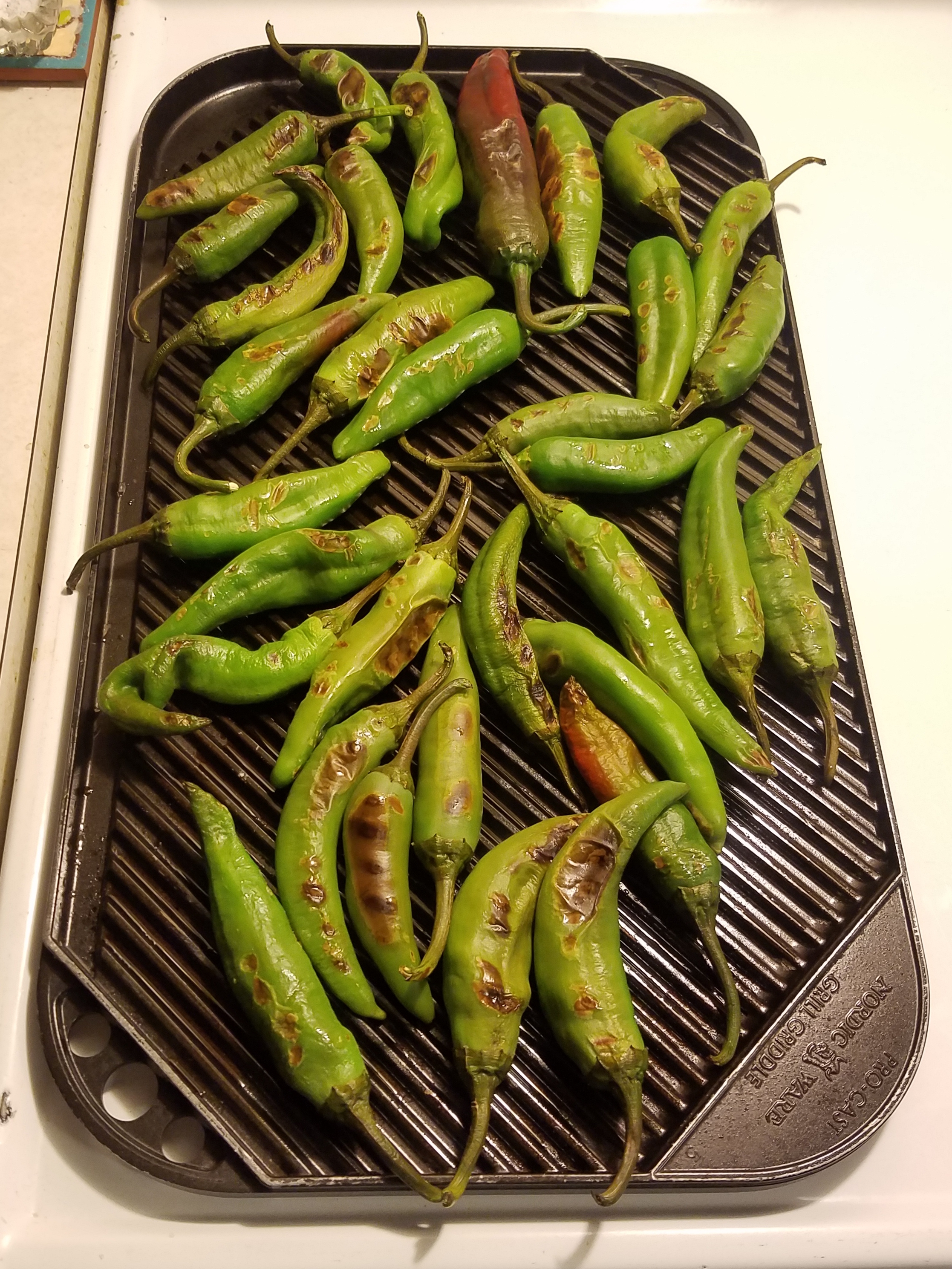
Labor Day weekend work: preserving Guajillo chilies.

For the second year in a row I’m not employed on Labor Day. The kinds of events marking the day are not the same as they were.

An announcement on the Iowa Labor News website read, “Most of the Union sponsored Labor Day events around Iowa have been cancelled, for safety reasons.”

“Safety reasons” refers to the coronavirus pandemic, which is not over, which has no end in sight. “The virus is here to stay,” Governor Kim Reynolds said at a Sept. 2 news conference. “Which means we have to find a way to live with it in a responsible, balanced and sustainable way.” There is no going back to the way things were before the coronavirus came along on Labor Day or on any day.

It’s been 48 years since I carried a union card at a meat packing plant. Since then, private business restructured to minimize its exposure to a unionized workforce. I’m not sure what Labor Day represents any longer. It sure isn’t about unions even if they are the groups most likely to plan events during better times.

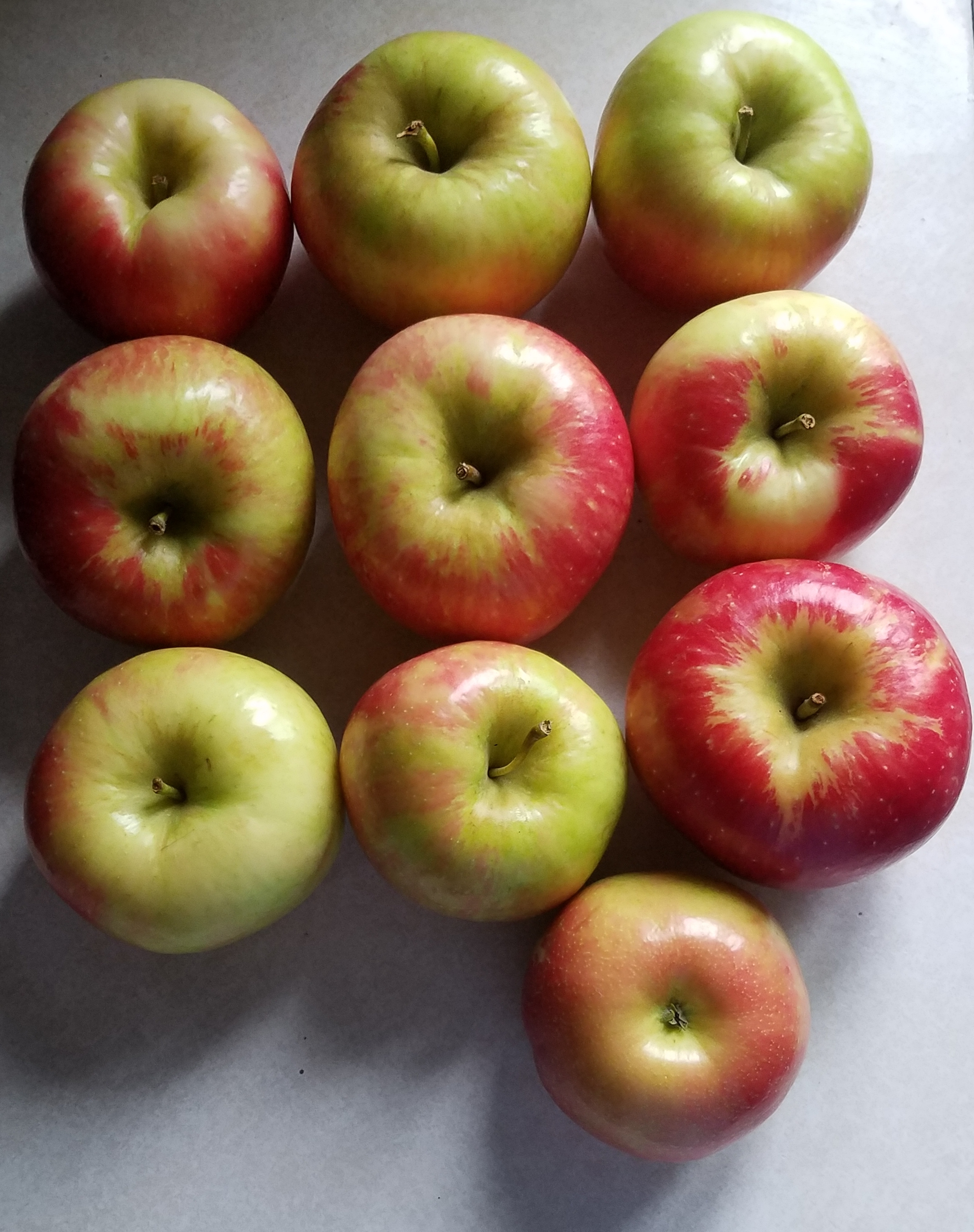
Locally grown Honeycrisp apples.

This weekend the orchard began its Honeycrisp apple season, the university had a Saturday home football game, and there is a Labor Day Vendors Market in nearby Mount Vernon. It’s not much considering how many people work for a living. This year’s Labor Day Mayor’s Bike Ride in Cedar Rapids has been cancelled due to the pandemic. Suffice it Monday is a holiday and the weekend can be a time to take it easy.

Labor Day weekend is the “unofficial end of summer.” That’s going to have to do. Since I returned from a trip to Florida at the beginning of July the weather has been exceedingly hot and humid. Sunday morning’s ambient temperature was 59 degrees, reminding us of autumn’s approach. Sumac along the state park trail has begun to change color. There are signs of the end of summer all around.

In February I bought a new CPU to replace the one I’ve been using since 2013. This Labor Day weekend I hope to get it up and running, with files transferred. I face the same issue as in the past: what files do I want to keep? Ready or not, change has come and it’s time to decide. Like with the Labor Day holiday I must act like there is no going back. What is hard is deciding whether that means keeping old behavior or developing new. For now, I plan to work at home on Labor Day.