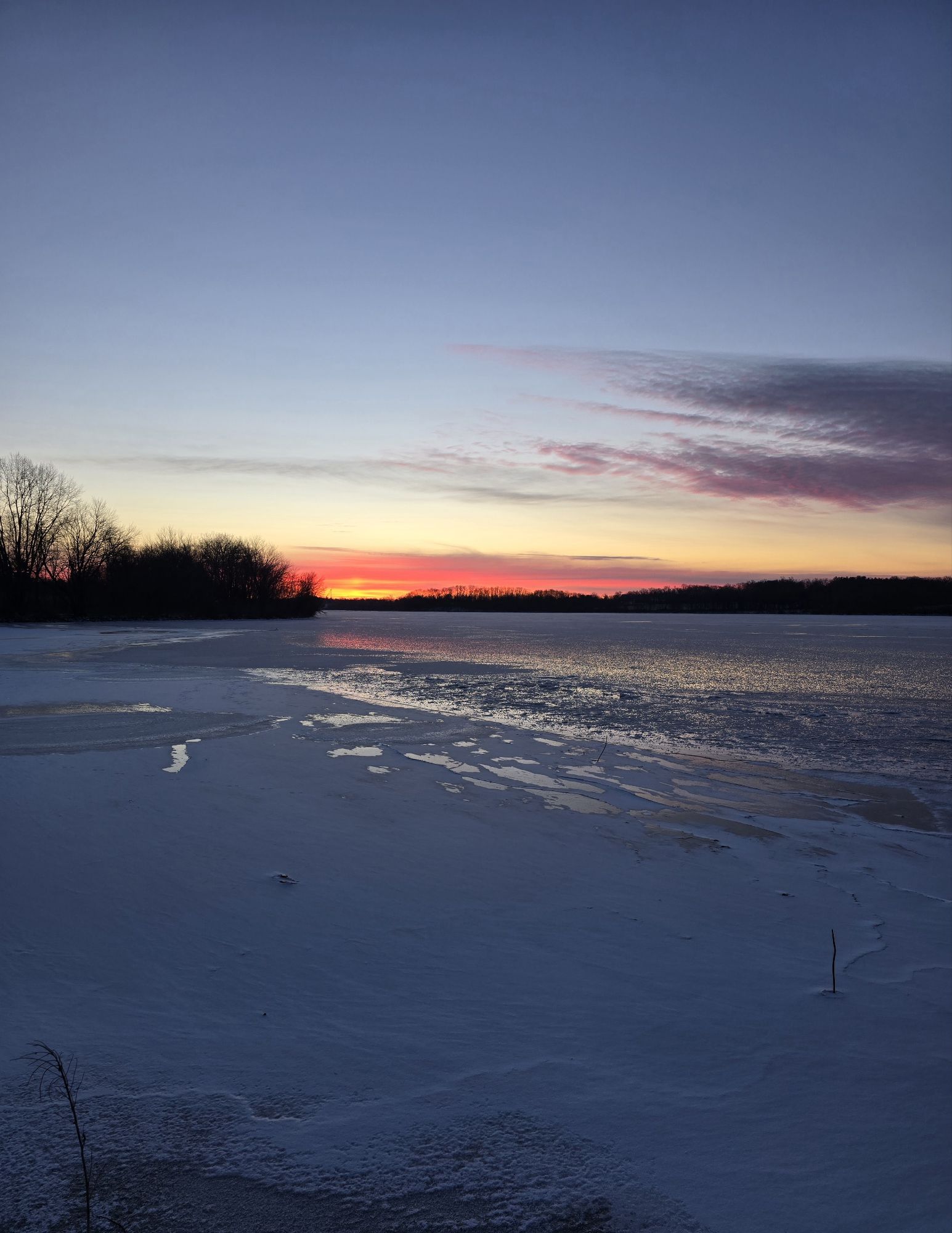
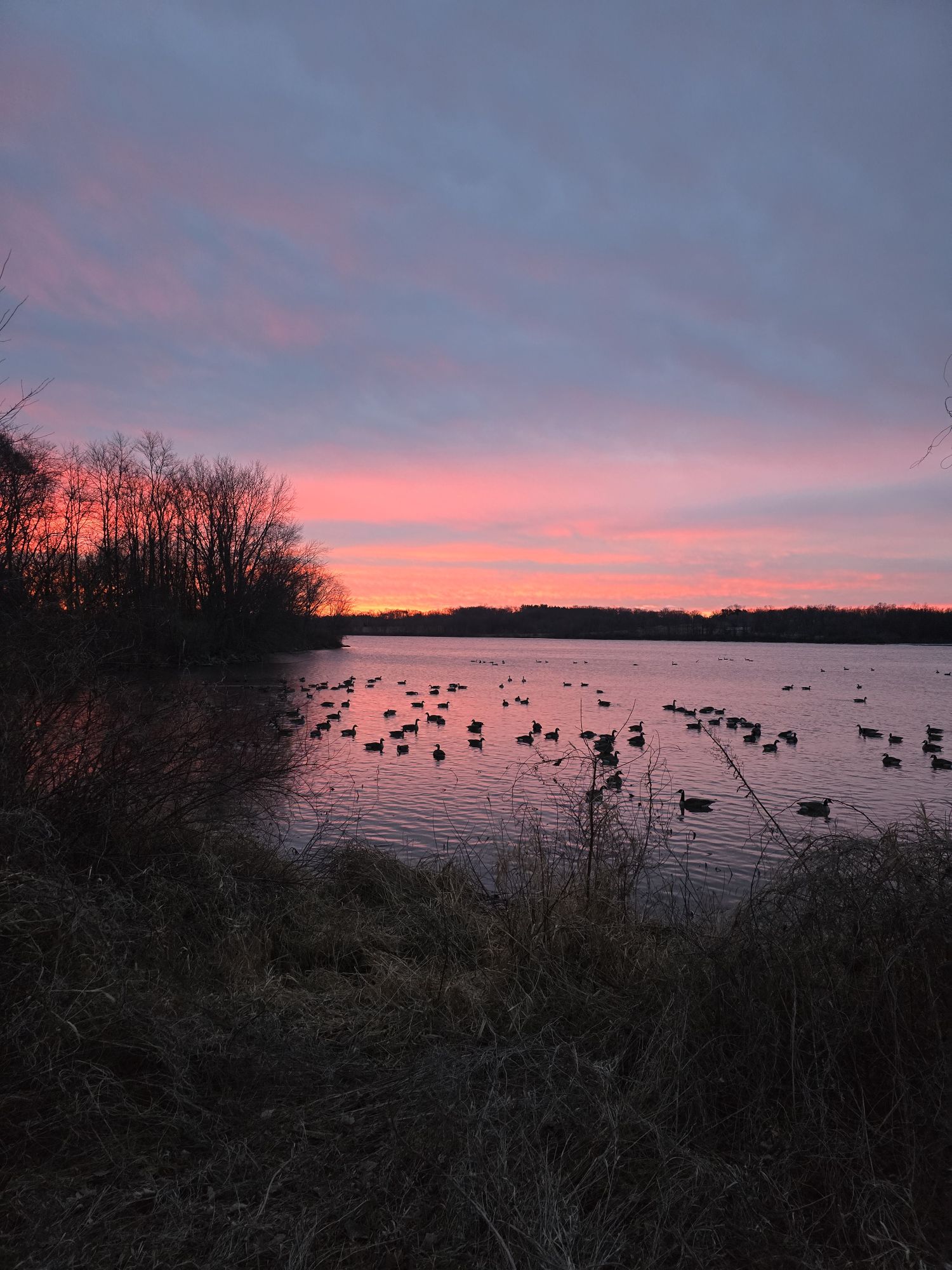
Restaurant where we held our 55th year high school class reunion on Sept. 25, 2025.
The combination of a punk reaction to my influenza shot and massive intake of information at our high school class reunion led to Saturday being a challenging day. I made it through the fog and by 4:30 p.m., felt like doing stuff. In quick succession, I finished yesterday’s post, canned a batch of applesauce and apple juice, and worked on laundry I started in the morning. In retirement, that makes a busy day.
Our time together at our high school class reunion Thursday night was precious. I don’t want to let go of the conversations. There are only so many of the 8.2 billion people on this jumping green sphere with whom an individual shares a life’s experience. Grade school and high school mates are unique in that regard, in my stable culture, anyway. Through conversation I became aware of developing a tunnel vision of my own history by focusing on a subset of experiences to produce an autobiography. The reunion opened my eyes to a broader experience that exists, of who I was and who I have become.
When we dig ourselves into a tunnel of memory, it seems useful and important to find our way out into our broader experience. I believe the brain captures our experiences yet some of them get relegated to places where they don’t get our attention. Too, our way of seeing filters out parts of our experience so we remember only the filtered events. John Berger said what I am trying to say more directly in his book Ways of Seeing:
Seeing comes before words. The child looks and recognizes before it can speak. But there is also another sense in which seeing comes before words. It is seeing which establishes our place in the surrounding world; we explain that world with words, but words can never undo the fact that we are surrounded by it. The relation between what we see and what we know is never settled. (Ways of Seeing, John Berger).
Our class reunion helped me be more aware of the surrounding world, one that is specifically relevant to me and my classmates.
In addition to memory, my writing focuses on journals, letters, photographs, and blog posts created over a period of fifty years. For every detail captured, there are multiple that exist elsewhere if I can summon them. Talking to people with shared experiences is one way to do that.
A five minute conversation listening to a classmate that worked for an insurance company for 40 years, or another who lived in California for a similar amount of time then returned to Iowa and married a classmate, are ways to do that. Reading an email about how one classmate recruited the widow of another to attend is the same. The easy familiarity of one with whom I played basketball in the grade school playground is another. Spending time with someone who was a neighbor to a close friend I lost in an auto accident shortly after graduation is another. All of these remind me of the broader, yet common world we inhabited, at least for a while. We now inhabit the present together, at least on Thursday night we did.
I don’t seek to wax nostalgic about my high school experiences. The recent conversations remind me of who I once was and help to become a better me in the present. It’s no wonder I don’t want to let go.
The jump I made in 1989, from working for a top truckload common carrier to working for the ninth largest corporation in the world, freed me to be more creative. I read my journals from that time in the Calumet region near Lake Michigan and find in them the kernel of all that I would become as a creative person.
I am thankful my creative self came up through a grueling career as a transportation and logistics manager. It grounded me in the unpleasant reality that is society in the post-Reagan era. In particular, the more than 10,000 interviews I had with job applicants in transition changed me in a way that would not have been possible without them. For creativity to have been forged in this kind of life gives it an edge.
This passage came from my life experiences in the Calumet.
The book written by Jack Kerouac has the same validity as his presence here. What do the creators of these texts have to say to me? What shall I say from this outpost of civilization?
What becomes significant in this studio is not the clutter in it, but the words and texts produced here and sent into the rest of society. Things take on significance to me, but it is more important that I begin sending things out. Messages in a bottle if you will. (Personal Journal, Merrillville, Indiana, Sept. 15, 1990).
Because of my high level of engagement at work, it was exceedingly difficult to “send things out.” Likewise, there were not many platforms for doing so. I survived on letters to a few friends, trips to visit them, and time in my writing space contemplating life in society. When I could, I spent time in the garage or at the word processor in the dining area being creative. I never gave up being creative and that led me to today.
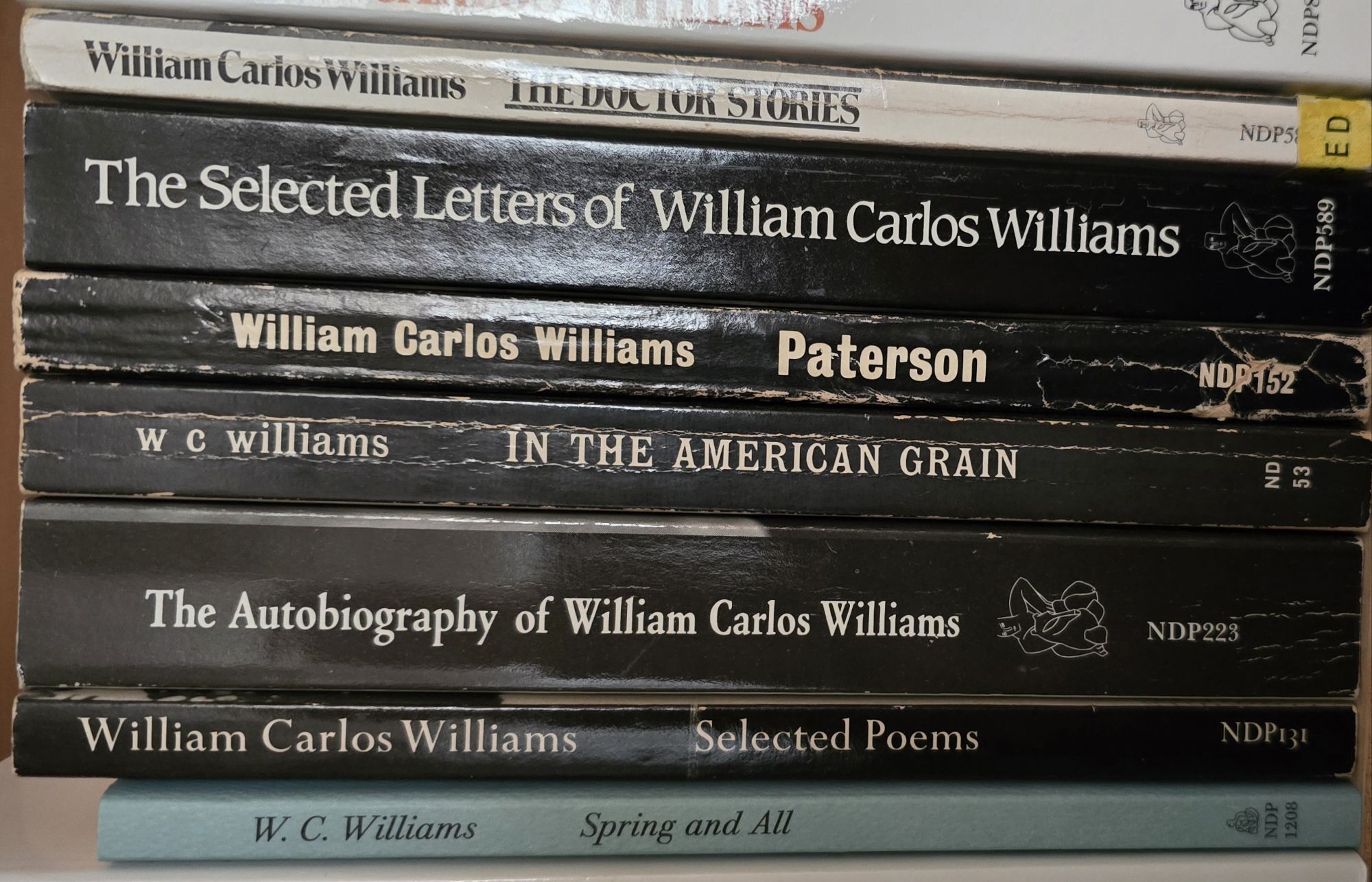
When I read a book, I image the author as if they were sitting across the room. Sometimes that works and indeed what Jack Kerouac wrote in any of his books is not far removed from his life. When I read one of Robert Caro’s books I imagine him in his workspace in New York, turning every page. When I read John Irving’s writing about Iowa City, I remember the occasional times I saw him near the English-Philosophy Building or visited one of the places mentioned in his books. When I read William Carlos Williams today, I can’t help but be influenced by the time I spent in Iowa City with his publisher James Laughlin. Laughlin got teary-eyed when he spoke of his last meeting with Flossie Williams. I want my writing to be like that: one step or less removed from the reader.
I mentioned clutter and sometimes such clutter gathered from projects of mine, auctions, and the detritus of living a life found its way into what I produced. I’m not sure it was particularly good, yet it reflects my urge to create something new and original. A collage of photographs, old calendar pages, and magazine advertising was something I found visually appealing at the time. That I still have this piece is remarkable.
Livelier than Andy Warhol by Paul Deaton, 1989.
Leaving the trucking firm freed me from my Iowa connections and enabled new ones in the Calumet. I became more of a creative being. When things didn’t work out at my new job I returned to the trucking firm. Yet I did something after leaving that stays with me. I was able to better balance work, creative endeavor and family after the experience. There is a straight line from that realization to today.
The race to 2026 begins. As we age, time seems to move faster. On days like today I want to slow down and breathe.
We cope by taking one day at a time and living it as best we can. That doesn’t mean we eschew longer term goals. Rather we live consciously in the moment and make what good from life we can. It takes awareness to experience success at this. I decided long ago to make things from the experiences and artifacts of my life and put them out in the world. That is a main reason I became a blogger and have persisted.
My to-do list for this fall is short: Continue to finish daily chores. finish apple season, plant garlic, close down the garden, maintain health, and resume writing my autobiography. These things should be familiar to readers of this blog. I need to take up a new task: combating falsehoods clogging our information wavelengths. How I will do that is a work in progress.
I’m having a bit of a China issue. As I write, my blog has had 1,545 September views originating in China compared to 343 in the United States. I recognize many international visitors here, yet not like this. Something is going on, and I don’t understand the increase in views. The increased China traffic started August 14.
I’m familiar with the “Great Firewall of China,” designed to restrict access to the global internet within the borders of the Chinese mainland. Apparently there is a leak. The way views tally up is one at a time at a rate of 3-6 per hour. Seem like if a machine were training artificial intelligence with my posts, it wouldn’t be so slow. The other thing is Chinese “viewers” are seeing older posts and downloading a lot of files stored in my media file. In particular, files relating to climate change and nuclear power have been download quite a lot. The downloads otherwise seem somewhat random and related to specific posts. In the scope of the Chinese population, a couple thousand views per month is insignificant. Yet, it has me worried.
Bloggers make a decision to post our content on websites like WordPress. From the beginning we understood the possibility of piracy, yet I’m not writing posts for which I expect to get a Nobel Prize in Literature. If I determine the risk is too great, I will transfer my website address to one of the spare blogs I keep hidden and reduce the amount of public access to the old stuff. Who is really interested in what I wrote twelve years ago? That was when I took the whole blog down and started anew.
Anyway, this autumn is a time for writing. I hope to get back in the saddle with regular posts here, beginning today. It feels like fall. “God’s in his heaven— All’s right with the world!” ~Robert Browning
An early reader of my autobiography asked about this paragraph.
When I was born, Davenport was already a tired town. I hadn’t realized it, of course, because my family life was positive and supportive. I felt I could be anything I wanted, and this notion was reinforced once I started school. I grew up in a time of hope, despite challenges. We had vague knowledge of Davenport’s beginnings. I came to believe while being from there, I was not of there. (An Iowa Life by Paul Deaton).
“I am most surprised by your statement that you did not believe you were ‘of there.’ Looking for more explanation here,” they wrote.
In response, I wrote:
My mother and father brought a defined culture with them when they moved to Davenport and I was born. I came up in that culture, which for Mother was based in rural Illinois where she was born, and for Father, it was in western Virginia. In going through the history for this book, it occurred to me that I did not experience any culture indigenous to Eastern Iowa, but rather what my parents brought with them and lived. Yes, I was from Davenport, but not a person who grew up in a culture that was local. I contrast that with Provincial France where people are a literal extension of the soil, the sea, and the air. Mine was a distinctly American experience. (Letter to a friend, Sept. 6, 2025).
When I re-write the book, which I will once its companion is finished, I plan to add this explanation. As long as we live in a consumer society where the work to produce our lives lies in places, corporations, and people with whom we have no relationship, except for a commercial transaction, we cannot be of there, much though we yearn to be.
Green slime on the state park lake due to over-application of nitrogen in the watershed.
Weeds will grow anywhere in Iowa with open ground. I use plastic fabric to suppress weeds in the garden, yet a weed will find even the tiniest pinprick, plant itself, and grow. The purpose of weeding is to favor one side in the competition among plant life and improve crop yields.
This post isn’t proceeding how I thought it would. I am from an agricultural state, so when I think of weeds, I think of how it impacts row crops, corn and soybeans. I feel obliged to discuss that first.
On Sunday crop dusters flew over the house most of the day. It’s time to spray pesticides and herbicides, I guess. In 2024 Iowa corn yield was 211 bushels per acre according to the Iowa Department of Agriculture and Land Stewardship. According to Farm Progress, failure to control weeds, especially early in the crop cycle can lead to anywhere from 20-40 fewer bushels per acre. When the corn is taller, and has established a canopy, competing weeds can reduce yields by about 3 bushels per acre for every day they are left uncontrolled, according to Iowa State University. Corn farmers live on tight margins, so they usually don’t hesitate with a generous application of glyphosate. Those 20-40 bushels can mean the difference between a good year and a bad one.
I have been reading Chris Jones’ book The Swine Republic. In the way the universe sometimes comes together, Monday morning’s reading happened to be the chapters on glyphosate and Dicamba, two herbicides widely used in Iowa. I was already writing this weedy post, so it added a certain something to my mood. This isn’t the rabbit hole I intended when I began.
I would use the weed paradigm differently. Whenever I enter the room where most of my artifacts live, they compete for attention. By getting rid of some, they would be out, freeing me to follow the vein of an idea where it may lead without distraction. Part of me doesn’t mind the diversions. Empirical me understands I only have so much time left on this jumping green sphere and I’d better make the best use of it.
I should weed out things of marginal interest to the broader thrust of my work. I don’t want to. My wants and urges have little to do with logic. They arise from a complex experience of a life that seldom conformed to social norms for their own sake. This is part of what makes me unique. Unwillingness to execute a plan to downsize possessions is a feature of my creative life, not a problem. Rational me understands the house will explode if we try to fit much more in it. Creative me says if it will, let it explode and we’ll see how it unfolds.
When I’m in the garden I pull weeds as I go. This is especially important as soon as seeds germinate and emerge from the soil. Like the corn farmer, I know this is the time to eliminate competition for nutrients, light and space. It is better to do it before seedlings emerge. I do what I can to produce a bountiful harvest. My creative issue is the seedlings in my life emerged long ago and have grown to become part of the living landscape. Weeding the stuff would create a new way of seeing. What if I don’t like it?
Maybe I’ll feel better about weeding my stuff after I finish the autobiography.
Anyway. It’s time to set all that aside and get to weeding. We can’t take it with us and don’t want to leave a big mess for my heirs to clean up.
It was hot and humid outdoors all day Tuesday. I managed a hike on the state park trail between thunderstorms. A little after 10 a.m. I drove across the lakes to the wholesale club to secure provisions. My usual three-pound can of generic Colombian coffee had increased to $20.99 from $13.99 the last time I stocked up, a 50 percent price increase. The tariff on Brazilian coffee goes into effect on August 1, after which it will cost even more. I did not replenish inventory at $20.99.
At the end of June, I replaced the whole house water filter. Yesterday I sat down to order a replacement and the new price was $20.19. In February I bought the exact same part for $13.40, a 51% increase in 5 months. I only get two of these per year but this increase and others like it will make household financial management more difficult. It is a preview of what life under the oligarchs will be like.
The garden has me distracted from work on my autobiography. There is so much produce to process, there seems little time for anything else. To preserve the harvest, immediate action is required, so writing is pushed back. In the annual cycle of my life, this is a feature, not a bug. Our lives would be the worse without the garden.
Hours in the kitchen enable my thinking about life and writing about it. I am certain I have at least one more book in me as the urge to write an autobiography has been with me as long as I can remember. At its core, writing autobiography is part of a life well lived. Once I finish and get a copyright, what then?
I envision creating a new document, using the first two books as a base, to which I add autobiographical information and stories. The published books will stand on their own as moments in time, yet my story will continue to evolve as long as I live. Part of it is finding aspects forgotten during the first telling. Part of it is recording new insights on the same stories already told. It will be a continuous work in progress that may never be published the same way again. It will be a never ending memoir.
There are other books I imagine publishing. The most obvious one is collections of my essays first published on this blog. There is enough here to make a book about local food. There is another about sustainability. While I’ll cover the coronavirus pandemic in part two of my autobiography, there is a much longer story to tell about its impacts on my life and on society more generally. That story is just being revealed. Whether I get to any of this is an open question.
For now, I continue to process fruit and vegetables so we’ll have something for our dinner plate long after the frost comes in October. As the harvest winds down, I’ll work again on my memoir. I still hope to finish the draft by the end of year holidays.
Sunday morning I picked green beans because they were ready. About 20 minutes into the task I was drenched in sweat. With a forecast high of 89 degrees it became clear it would be another indoors day. Once again, I escaped into my two favorite spots in the house: my writing table and the kitchen.
After finishing chores I sat at the desktop and finished my post for yesterday. I also exchanged emails with a friend with whom I am doing this event.
We met in person on Friday and have the idea of talking about why we write books at the end of the time. We are curious about how attendees get information about complex topics. Do they read books to do so? Should be a good conversation.
I am into the second volume of my autobiography and she is into her third, so that’s the origin of that. She sent along a quote about why we write from Nairobi Williese Barnes that said, “(we write) to shift the conversation, challenge harmful narratives, and encourage accountability in the ways we support and uplift one another.” I don’t disagree with that sentiment.
She quoted me back from my own writing from posts on this blog:
So we write, partly to clarify our thinking, and partly to satisfy our need to reach out to others and express the value of our lives, one life among the billions of people walking on the planet. Whether anyone reads or understands our writing is not the point, although we hope they do.
Why am I writing here, in public? Part of it is self-expression, a basic human need. Part is using language to understand complex social behavior. …. Defining a broader moral lesson is the challenge as the memoir progresses.
There are few finer things on this jumping green sphere than writing about writing, especially with a friend.
I made it to the kitchen at about noon and endeavored to get busy. I started with doing the dishes. More accurately, I started with the laundry. On the last Sunday of each month I launder my bed sheets and catch up on other laundry that accumulated. This took a bit of time out of kitchen work as I did five loads. I managed to make what I call “minced salad.” That is summer vegetables suitable for eating raw diced into one eighth inch cubes and mixed together with extra virgin olive oil and apple cider vinegar. I season with salt yet the seasoning possibilities are endless. It came out well.
The garden is about finished with zucchini. I modified my zucchini bread recipe, substituting applesauce for the oil, and by wringing the water out of the zucchini with a towel. It is to set for 2-3 hours before cutting so I haven’t tasted it. It appears to have had the desired effect which was to decrease the moisture in the loaf and reduce cooking time. It should be good.
Zucchini bread baked on July 27, 2025.
The benefit of these activities is I can shut out the rest of the world and focus on our family. We need more time doing that. It is a way to go on living in turbulent times.
Donation to the community food pantry on July 14, 2025.
Writing can be divided into two large categories: public and private. Most of us spend time in each domain. The obvious difference between public and private writing has to do with audience. Most of what I write is for public consumption, which means I have a responsibility to use logic, facts, and verifiable truth as tools to make my language more effective. This blog is public writing, as are letters to the editors of newspapers, and the books I am writing. Private writing includes journals, emails and letters, and to some extent, exchanges on private servers. Public writing is my main concern.
Why am I writing here, in public? Part of it is self-expression, a basic human need. Part is using language to understand complex social behavior. There was a time — thinking of 1974 — when I hoped to influence the direction of society. That is, I assumed society had a direction and momentum that would improve how we live. To some extent, that outlook continues in published letters and on this blog. I am no longer sure of the role of individuals in this.
To effect change in 2025 society, it seems clear it takes a broader, more diverse movement. Movements need a voice, yet not only one. The democratization of expression has given everyone who wants it a voice in the public square. We may not like what we read and see, yet in the end, democratization of expression is a net positive. The 500-1,000 word essay is a perfect medium for working through ideas. That’s one reason I’m here after beginning this blog in 2007.
Book writing presents a special challenge. In autobiography one hopes to depict a personal history with some verifiable accuracy. There is also a didactic principle at work. The example of a single life may have broader meaning in the culture and that is what we hope. At least that’s the goal of my longer works. It became evident this week there is much to do to make my autobiographical work more meaningful beyond my circle of friends and family.
I opened part two of my autobiography and started reading from the beginning. I have been writing forward, without looking back, since the beginning of the year… to the tune of 86,728 words. The idea was to get a story down and return to edit. There is a lot of editing to do, in addition to new writing. I hope to finish the book by year’s end, yet don’t want to finish just to finish. The narrative should mean something beyond personal reminisces. Defining a broader moral lesson is the challenge as the memoir progresses. Simply put, working through that is why I’m here.
The year is half done and it’s time to check the compass to see if I’m heading the right direction. Maps will be required, so I got out some of my favorite ones and considered where I’ve been and where I might go from here at mid-year. This process isn’t really scientific.
I know the region of Fulda, Germany as well as I know Big Grove Township, probably better. Getting out the same old maps is comforting… a reprise of what is possible in a life. It’s a fit thing to do on a Saturday as June ends and the days get shorter. It is easier to chart a course by knowing where we’ve been.
Saturday mornings do not mean the same thing they did. When I was a grader, Saturday meant taking the city bus to downtown, paying my newspaper bill, and eating at the automat in the department store or at the Woolworth’s lunch counter. I often hung out until the movie theaters opened for a 25-cent matinee. It was an outrage when the price increased to 35, then 50 cents. At university, Saturdays meant time to catch up on studies and enjoy the quiet while everyone else attended a home sporting event. After university, as I entered the work force, Saturdays were a time to relax for a few hours before heading into a work place. I rarely worked only five days in a week, especially in the military and after beginning work in transportation and logistics. When I retired, it got increasingly difficult to tell one day from the other without looking at a calendar. The meaning of Saturdays eroded, although hope for meaning persists.
This Saturday morning began with a restless night. I woke just after midnight and finished reading the current book. I couldn’t get back to sleep so I got up just before 2 a.m., did my exercises, and made coffee to start my day. I finished my to-do list, made refrigerator pickles with yesterday’s harvest, and then went back to bed just before dawn. After a couple hours sleep, I got up again, turned the coffee warmer back on and went for my normal daily hike along the state park trail. There were a lot of people on the trail, dressed in brightly colored workout clothing. While I didn’t know many of them, it felt like being part of a community. The only ones who did not say “hi” back were men with earbuds distracted from nature’s beautiful morning.
It was going to be another hot afternoon, so I got to work soon after arriving back home. I changed into my overalls and mowed the ditch, which likely burned more calories than the trail hike. I worked for a while in the garden and then headed inside to take a shower and got out my compass.
Writing. I’m back to work on the second volume of my autobiography. The main task is to set aside a couple of daily hours for new research and writing. When we moved to Big Grove Township, our child was eight. I’m enjoying reconstruction of what our lives together were like during the time before they entered college. This part is pleasurable to remember and write about.
Reading. I read 43 books in the first six months. This year is different in that I am interfacing more with the public library. In addition to saving money on buying books, the range of my reading increased. The public library makes it easy to see what new books are being shelved, and the wait-time to borrow a copy of something in which I find interest is usually short. I even recommended a couple of books for purchase and without exception, the library did buy them. I hope there will be more of that ahead.
As owner of thousands of books, there are already plenty of them in the house to read. My best hope is to find work related to my autobiography and put them at the front of the reading queue. Part of me wants a process for picking the next book. Part of me wants to leave the choice full of whimsy and spontaneity.
Physical Condition. Improving my physical condition is a must. I lost 20 pounds of weight since January 1, and according to the doctor I need to lose a lot more. 30 minutes of brisk daily walking has been good. Working in the garden has also been positive. When the garden season began, I could hardly get up from being down on my knees. Now, I don’t even think about it and get right up when I am finished with something. The key changes this year were the increased physical activity combined with tracking how much I eat in an application. There are issues with the app, but it does help me stay focused on what I am feeding myself. The result has been a slow, steady weight loss since I began using it. I don’t see anything changing in the next six months. If I continue as I have been doing I could reach target weight before the end of the year.
Kitchen Garden. In addition to making vegetable broth, pesto and pickles, I’m looking to stock the pantry and freezer with produce I grow myself. This year looks to be a big apple year, so I need to save energy to process and stock up on related products. Garden abundance will guide my efforts here. I need to go with the flow.
Working in the Garage. Working on the Indiana section of my autobiography has me reprising this activity. I put the flag up over the garage door and work outside with creative impulse, modeled on what I did in Indiana when our child was living at home and entering school. It’s not the same as then, yet it is a form of nostalgia in which I am not afraid to indulge. More of that in the coming months. In many ways, it reflects who I am.
Curating Artifacts. It is incumbent on septuagenarians to cull the good from the not so good as far as souvenirs, photographs, books, clothing, tools, supplies, and everything else accumulated in a lifetime so those left when we pass on don’t have to deal with them. I admire Mother for doing this in the final years of her life. The photographs are the hard part. Spending time with a batch of 50 images should take ten minutes or less. Invariably it can turn into a several hour project because of the way memory is invoked. If I did one thing in the rest of 2025, it would be to develop a process that allows memories to arise from the well of lived human experience, and then find a different home for 90 percent of my artifacts. That merits some time.
Financial Stability. We depend on pensions and there is a known problem with Social Security. I wrote about this in 2017, and while the date changes along with the program, politicians have not done much to address this gap, then forecast in 2034. The Congress should address this now, although there is little visible interest in doing so. Senators like Elizabeth Warren and Bernie Sanders have a plan. The Congress needs to take the issue up and fix the program. That or tell us to get screwed now.
As Saturday morning turned to afternoon I felt recovered from a restless night. For the time being I can afford health care and medical visits, improve my eating habits, and get on with my writing. In many ways, the second volume of my autobiography will be the high water mark. Once I finish writing it, I plan to edit both books for publication and get them out there as ebooks and paper books, using one of the services. I know the way to accomplish this, so I can put away my maps until needed again. I’m not ready to get rid of them.
Before dawn it was 78 degrees Fahrenheit. I went for a hike before the sun came up and beat the daytime heat. It will be the kind of heat they were talking about in the Bible… namely, Hell. A couple groups of joggers were out with me, one running by flashlight. We locals often have the same ideas if there are different interpretations of illumination.
I went to the clinic for a blood test this morning. A technician was working on the entryway. Looked like he was installing a new security system. He asked, “How are you?” I responded, “That depends upon what the doctor says.” Well… he left himself open to that old-time joke.
The university remodeled the waiting room. They removed almost everything except the seats, replaced those and increased the capacity to 13. They included two double-wides, not that anyone in our area needs one of those. They must have high hopes. That or standard practices that make no sense out in the country. I noted they made me wear a wrist band. Not like I would get mixed up with anyone else at my early morning appointment. They did use it to scan me after the blood was drawn.
When I was checking out, the person at the window said my current physician is moving to Coralville. Did I want to follow him, they asked? I said I wanted to continue to visit the local clinic, where I have been going since 1993. They changed my appointment to be with the new practitioner. I should have asked whether it was a physician or some other type. Guess it doesn’t matter for my kind of common maladies.
I made a list of outdoors work for after the clinic, but the only thing I did was spray the cruciferous vegetable patch with DiPel which is made of bacillus thuringiensis, a common pesticide used by organic growers. Everything else will have to wait until the heat wave moves on. According to our post-DOGE weather report, it looks like it is heading east and we may break loose by tomorrow. Who knows, though.
Importantly, I have returned to writing. I wrote a chapter with a career update, then turned to my real interest: remembering our time as a family when we moved from Indiana to Big Grove Township. I can tell it will be a good summer for writing.
You must be logged in to post a comment.