When Jim Schmidt had a stroke 15 years ago, he was never the same. He almost died. Jim was one of a small number of people in this community of 7,000 with whom we could engage more deeply about intellectual matters. The stroke took that away from us. It hurt no less when he died on Friday, April 7, 2023.
Jim Schmidt’s obituary from the Cedar Rapids Gazette can be read here.
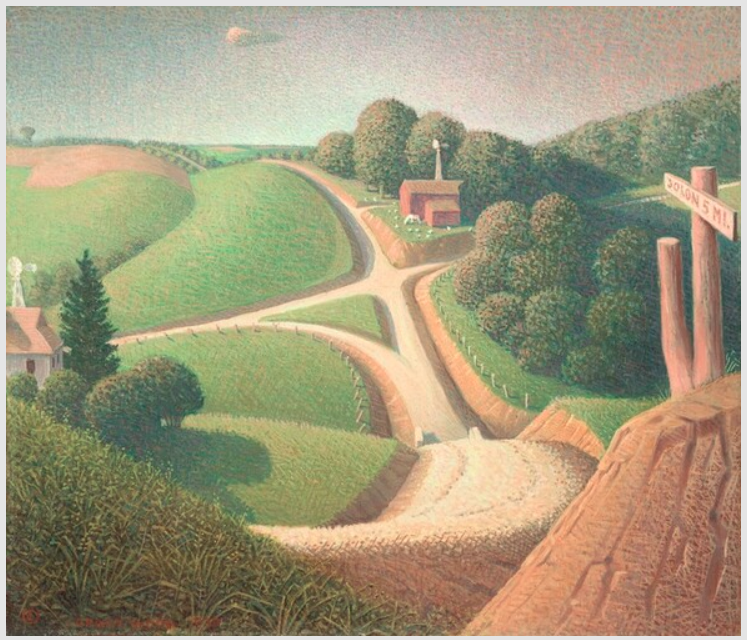
Part of Jim’s legacy was his analysis of the local terrain where Grant Wood painted New Road in 1939, with its mention of the City of Solon. The article, written by our mutual friend Janet Brown, was quite popular. It contributed to the Solon Public Library securing the rights to make prints and note cards of the image, and sell them to raise much needed funds for the library.
After so long, memories of our discussions faded. What remains important is we had those discussions, and for a while, had hope of making the world a better place. May his memory be a blessing.
My spouse and I noticed the mulberry tree on walkabout Tuesday afternoon.
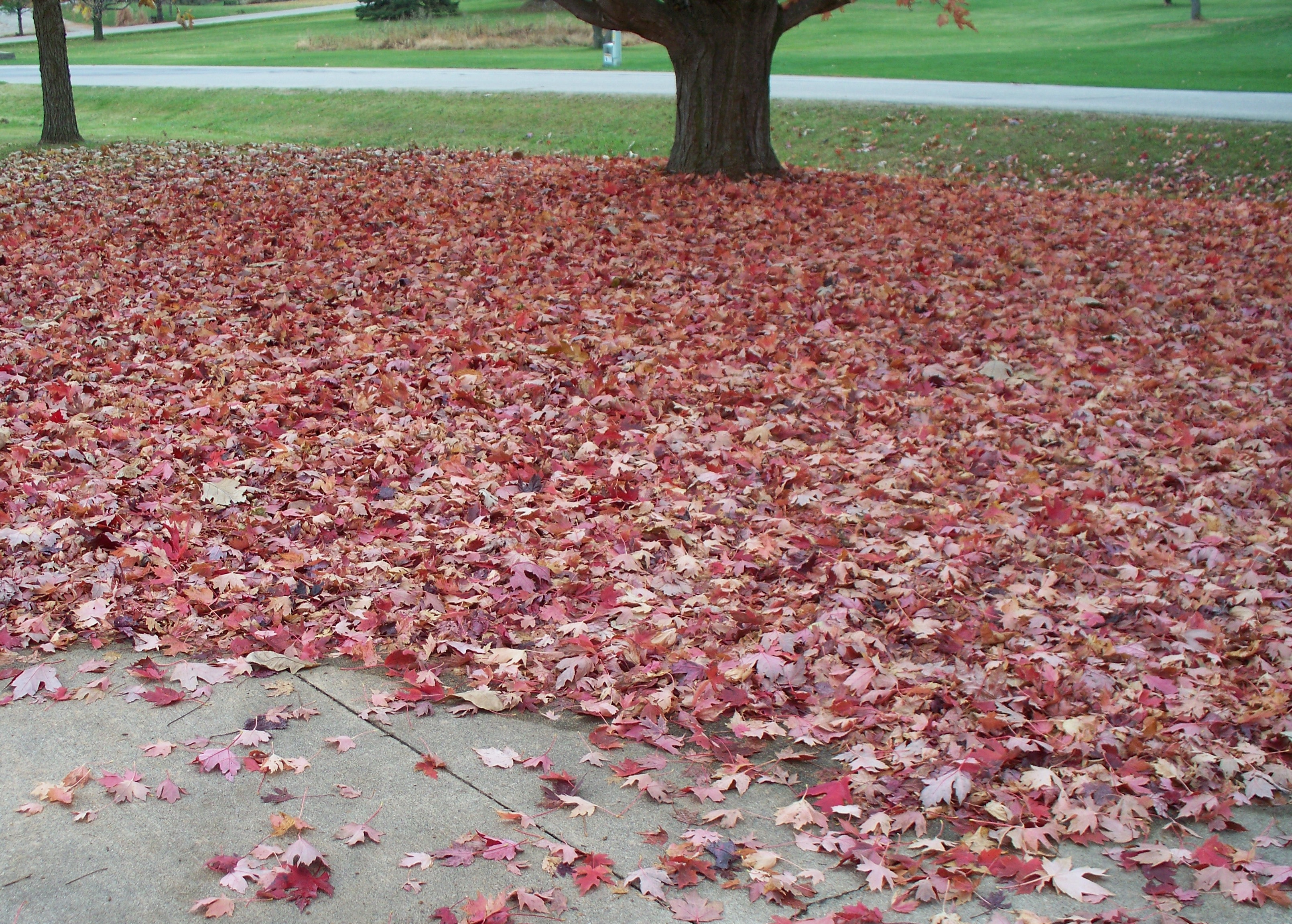
The mulberry tree was damaged by the 2020 derecho and has begun to die. Branches high in the canopy are losing bark and not regrowing it. Soon it will need to be cut down and recycled. This is the only tree remaining from when we bought the lot in 1993.
We were discussing what to do with the yard. Mainly, we need to plant the area in front of the house where it was cleared last year. A flower bed of some kind will go there.
We took out the maple tree stump last year. We are considering replacement with some kind of tall bush rather than another tree, a forsythia or hydrangea, maybe.
More than half the Red Delicious apple tree is gone due to wind storms yet it seems very robust. Hard to tell if there will be an apple crop this year, yet under normal circumstances, there should be one.
Finally, the trays of seedlings are now outdoors in the greenhouse. It should be easier to water them. Next into the ground are onion sets, beets, and spinach. Hopefully there will be progress midst ambient temperatures in the 70s today.
Now to close this entry out and head for the lake trail for a morning walk.
With enough perspective, the social importance of objects is diminished.
I’ve been inside the Statue of Liberty in New York harbor, and saw it up close. It’s name, “Liberty Enlightening the World,” by sculptor Frédéric Auguste Bartholdi, simply states what it represents. Since installation it has come to mean more.
At the reopening after restoration of the statue, on July 3, 1986, President Ronald Reagan said, “…we celebrate this mother of exiles who lifts her light beside the golden door.” The golden door is a political addition, and not needed. It is a corruption. It permeates everything. It was only when I viewed the Statue of Liberty from Windows on the World atop the World Trade Center did I realize how imbued with cultural attachments it is. From my seat overlooking New York harbor, the statue seemed minuscule, less significant than the movement of boats under a clear night sky.
My belief about culture-imbued words used in poetry came from epiphanies like this. The best poets stay away from that kind of cultural insertion, instead using language to create meaning. My reading of poetry is a search for such verse, without culture bombs dropped into the text. It is hard to find.
The first books I bought after earning money delivering newspapers were collections of the poetry of Robert Frost and Carl Sandburg. I later added the poetry collection of W.B. Yeats. The books lay on a shelf at the M.L. Parker department store and spoke to me. I purchased them. Poetry did not become a key organizing principle for my home library, yet volumes were often available at a discount or given to me. The number of poetry books grew. Today, I have eight 23-inch shelves of poetry in my library.
In the late 1970s and ’80s I wrote poetry as a form of creative expression. Some of it was good, most wasn’t. A few have been posted here. It was a way to be a writer. There is a project of going through those pages, editing them and re-writing the poetry from today’s perspective. When I previously did that, results improved. There may be a book of poetry in me, yet I am a prose writer. I don’t often write it, yet do read poetry often.
Like everyone, I have favorites. I will go on reading Charles Bukowski until I’ve read every available verse. I only recently discovered Mary Oliver. Can you believe it? She’s among the best. Eventually I will get to Sven Armens’ two books purchased at a used bookstore in the county seat. Armens was my undergraduate Shakespeare teacher, a figure more suitable to being a character in Othello than poet or Shakespearean scholar. A reader needs to expand beyond favorites. That is the purpose of my eight shelves of poetry: be there when I need to consider language.
If I were a poet I would emulate characteristics of Vachel Lindsay, particularly his Rhymes to be Traded for Bread. Poetry as literal currency. I remember visiting the Vachel Lindsay house in Springfield, Illinois, and thinking how dull it must have been for Lindsay to be planted in a single location for any length of time. I see Lindsay walking into Kansas and other Midwestern places more than being planted in Springfield. I should return to reading Lindsay.
Having a wide selection of unread verse creates a go-to place when I’m stuck for what to read next. These going to poetry moments are unlikely to deliver me to re-reading Edmund Spenser’s The Faerie Queen, yet maybe I should. The use of inventories in his writing has been influential in mine. Better to list the cultural attributes one seeks to invoke rather than assume readers will understand all the references in a single, culturally well-known object as an author hopes.
A writer has to use nouns, dammit! Better that verse explores the meaning of nouns. I would rather poetry be all verbs, suggesting action and an ever-evolving thought process. One can’t escape the nouns, though. I’m not hopeful I’ll find such verse in my eight shelves of poetry. I plan to continue the search, a couple of volumes each month.
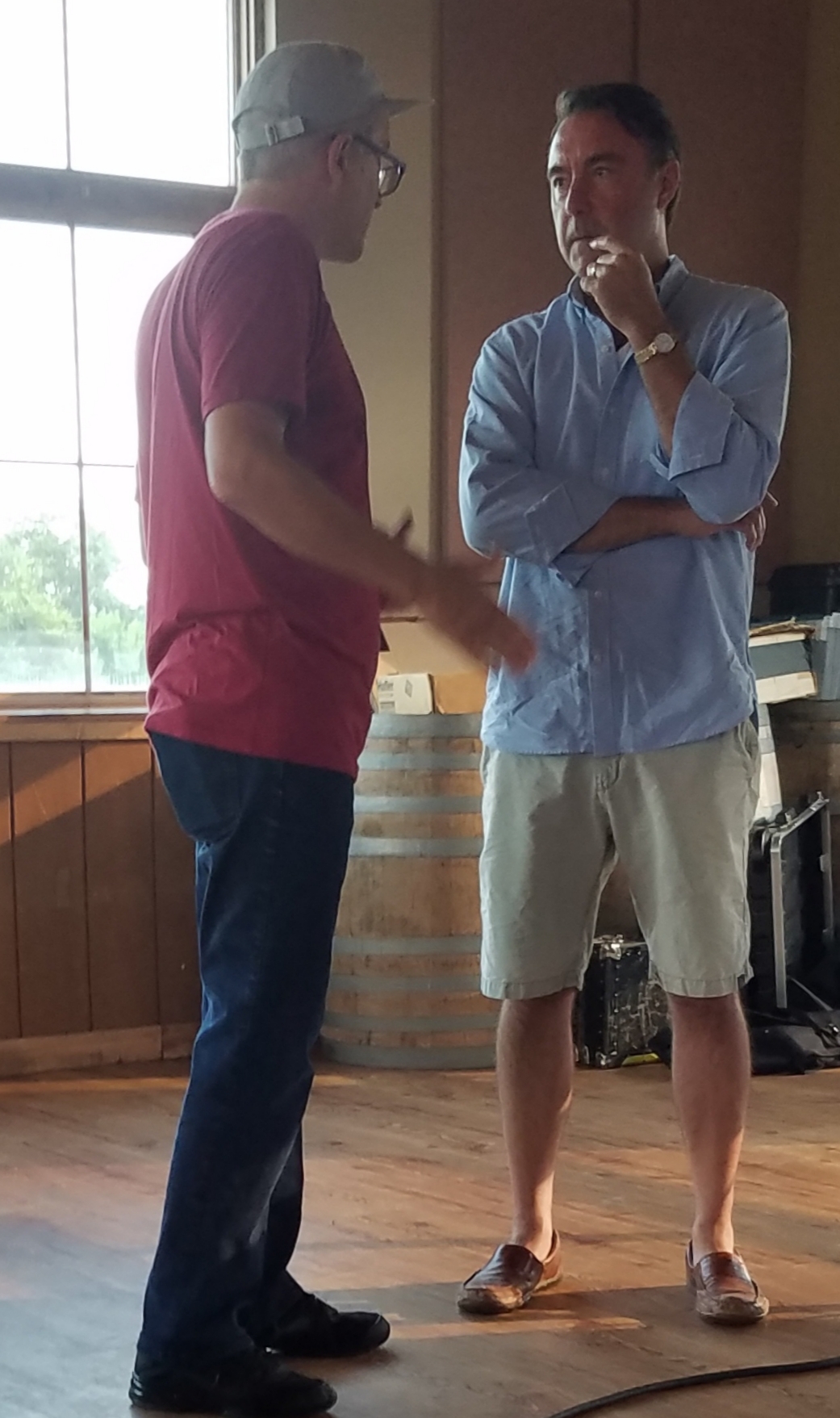
Ben Keiffer (L) and Dr. Christopher Peters chatting at Pints and Politics event, Thursday, Aug. 9, 2018
I hope the procession of deaths of friends and acquaintances will give it a rest for a while. I need to think about other things, namely gardening, cooking, writing, reading, and to some extent, politics. That last one sticks in my craw.
My new process of saving political newsletters to read over each weekend is working well to offload worries about political life. Better to save them and review all at once, I thought. The decision made me more productive during the week. I can see which elected officials are doing the work and which are phoning it in.
One newsletter stands out. Brad Sherman, my representative’s newsletter, sent from his campaign website. Sherman is a fringe member of political society. As a preacher, he is also on the fringe of nondenominational congregations. I compare him to other Republicans I’ve known and he doesn’t seem to work at getting to know constituents except those that produce a vote for him. Not only is Sherman on the fringe, he is plain weird. I gain insight into the weird at the expense of foregoing my priorities for state government. It is an unsavory dish to swallow.
Sherman won the election fair and square, even beating the Democrat in typically liberal Johnson County. We’re stuck with him until 2024, although depressed voter turnout and lack of interest in politics may be his ticket to reelection.
What don’t I like about him? In his last newsletter he wrote,
It has become obvious, for anyone who is not under the spell of the corrupt mainstream media, that Donald Trump won the 2020 election. Election fraud is now out in the open and it is time for it to be dealt with. And if the 2020 election was fraudulent, then Donald Trump is the rightful president, and we must insist that this gets fixed!
Brad Sherman legislative newsletter, April 6, 2023
It is tedious to mention Joe Biden won the 2020 general election for president the same way Sherman did, fair and square. I won’t be taking that up with him as he is off in the deep end. I don’t want to get dragged down with him as I have gardening and other things to do, as mentioned. Whether electing a Democrat in this district is possible is an open question. My sense is few people are paying attention to politics these days.
Iowa Democrats are in transition, as is the entirety of the state.
Much has been made this news cycle of the 565,000 registered Iowa voters who didn’t vote in the 2022 midterm elections. Secretary of State Paul Pate is sending letters to them all to receive confirmation they want to remain on the rolls. No response, you are purged in 2026. Yes Republicans are working to purge voters from the rolls. My comment is a little different. Did Democrats really leave 565,000 votes on the table in 2022? I believe Obama 2008 would never have left that many fish in the pond. My take is sloth set in.
Democrats have a lot of plans, and maybe that’s part of the problem. Centralized thinking about winning elections hasn’t worked for a long time, likely since the big wins in 2006 when the electorate decided they’d had it with George W. Bush and Republicans more generally. The worm has turned now.
My experience during the 2022 cycle was there were very few active Democrats in the nine Johnson County precincts in House District 91. Most have trouble filling two seats on the county central committee, let alone doing much during GOTV in the run up to the election. Partly, this is apathy, but partly the Democratic Party. More than apathy, Democrats have lost the relevance of which they are continuously reminding us. Other factors play more important roles in people’s lives. Politics is not high on the list of what is important.
Iowans are amenable to collective thought, and that serves Republicans. Farmers alone have to listen to bankers, equipment dealers, chemical companies, seed companies, and people who make a market in the commodities they grow. Without being collective farms, farmers act like them voluntarily because it serves their best interests to conform to the demands of people and organizations they rely upon. Evidence of the success of our form of agriculture is that millions of people haven’t died of hunger as they did in the hey day of collective farms in the Soviet Union.
It’s been a couple days since one of my friends and acquaintances died. Let’s see if we can go a few weeks before there is another. In the meanwhile, I’m keeping politics on the back burner.
Gardening began in the traditional way, with onions planted indoors beginning in December, and seed potatoes planted on Good Friday. Fourteen trays of seedlings are either on a table near the French doors or under a grow light downstairs. As soon as I can get the greenhouse assembled, cruciferous vegetables will head out there. Onion sets arrived Thursday and need to go right into the ground. Chives from last year are up and garlic is poking through the leaf mulch that covered them since October. Once again, I’m committed to raising food in 2023.
I plan to reduce the number of varieties of what I grow and grow more of it. The idea is to use or preserve what we can and donate the extras to the local food pantry. This year, the volume of clients visiting food pantries has risen significantly. We each must help how we can.
I need to make a trip to Monticello to buy fertilizer. It will be the same 50-pound bags of composted chicken manure that have become standard. I also need to visit Beautiful Land Products in Tipton and pick up a couple of bags of soil mix. I think I’m good for fencing this year, so it may be a low capital garden. I need one of those.
I will likely be sore in the morning, yet I relish the fresh air and sunshine. As we age, it is important to stay active. Gardening can be done at whatever pace we choose. Cheers to Garden 2023!
Iowa Valley Habitat for Humanity reported their warehouse in Iowa City was destroyed by a tornado. They sent this email yesterday:
As a result of the March 31 storms that brought tornadoes through towns across Eastern Iowa, our 5,760 square foot warehouse used as the main storage space for our construction tools, supplies, materials, safety equipment, vehicles, trailers – everything necessary to build and repair homes – is a total loss. At this time, we have no plans to stop building and improving homes, especially now that our neighbors impacted by the storms are in need of home repairs. To continue this critical work without interruption in our services, IVHFH is looking to the support of the Iowa Valley community to raise funds and rebuild the Habitat warehouse.
Habitat for Humanity is an organization full of good people and volunteers doing good work. I volunteered on a couple of projects and the spirit of teamwork is infectious. If you can help them, they made a website to donate or volunteer here.
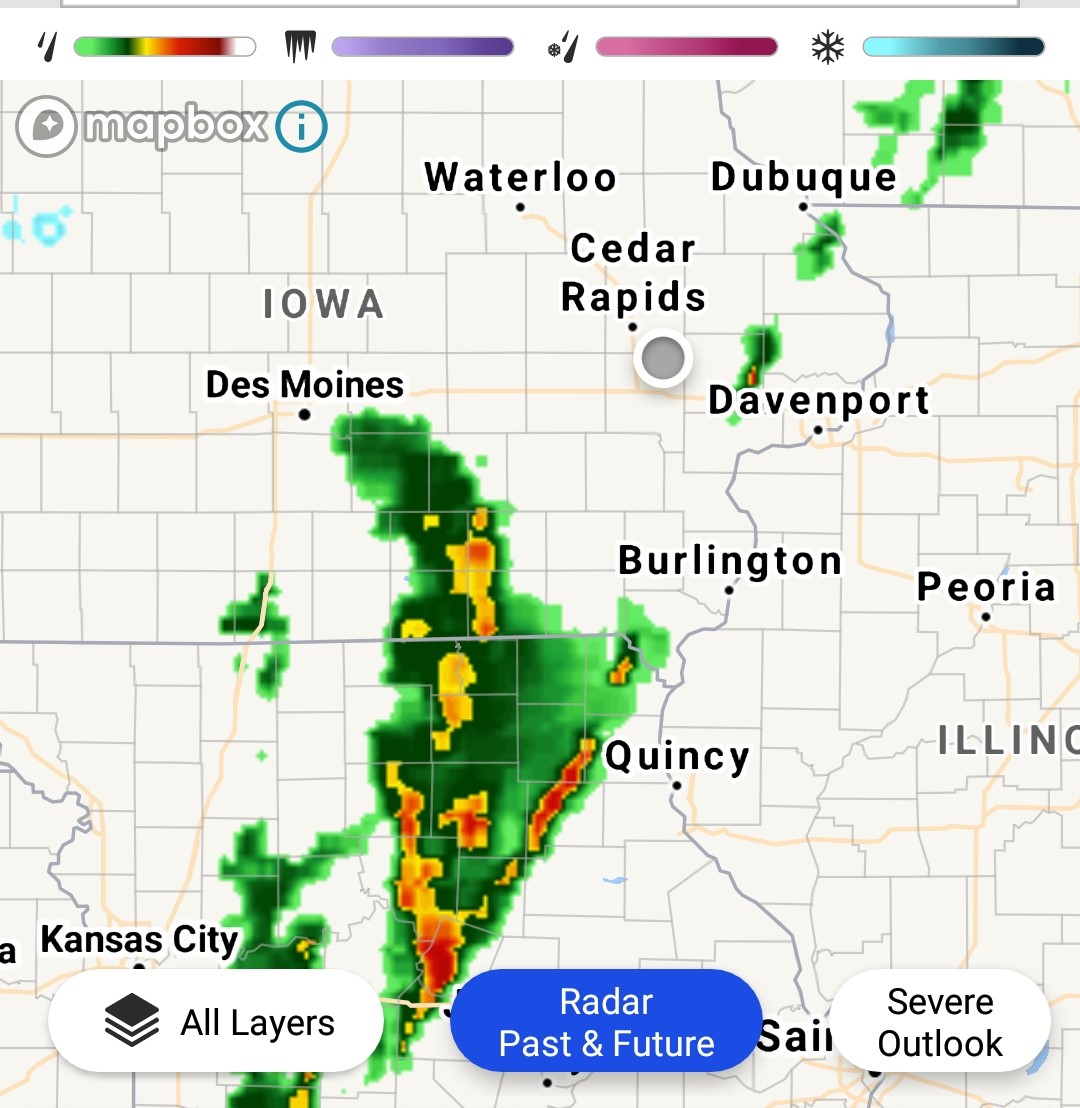
Even though the main lines of storms blew through here during the last five days, we were unscathed.
My first weather learning experience was in the military. When traveling around West Germany in formations of armored, tracked vehicles, both current and forecast weather mattered a lot to operations. Weather reports came down from on high, although from how far up the chain of command, I’m not sure. I remember being near Baumholder, in a tent on a hill, with 20 degree below zero ambient temperatures. The S-2 intelligence officer cradled a telephone receiver in a machine that wrote a facsimile of weather maps on a roll of thermal paper. Mostly, we were interested in precipitation forecasts before maneuvers.
Ever since, I tried to learn about weather forecasting in a basic human way.
The amount and types of free weather information available today is remarkable. It is also easy to use. Once one understands prevailing wind direction and how to read a radar map, it is relatively easy to plan around storms. The more I look at actual weather and compare it to radar, I gain a sense of how the large bodies of water around us impact storms. This is particularly useful when a storm is coming and the lawn needs mowing. A few clicks of a mouse on the computer screen and a person will have a good idea whether an hour’s outdoors work can be finished before rain falls. It’s a great feeling to see the first raindrops just as mowing is finished and I’m heading for the garage.
We have a safe place on the lower level of our home where multiple load-bearing walls intersect. When a big storm is coming, we move a chair there and bring a laptop to follow the storm. We don’t have a permanent space, like a storm cellar and don’t need one.
If you can spare some change, I hope you will help Habitat for Humanity rebuild their warehouse. Here’s the link.
By the calendar it is spring, yet it doesn’t quite feel like it. Too much darkness, too much rain, and too cold temperatures. Things will break, yet that doesn’t help get through today.
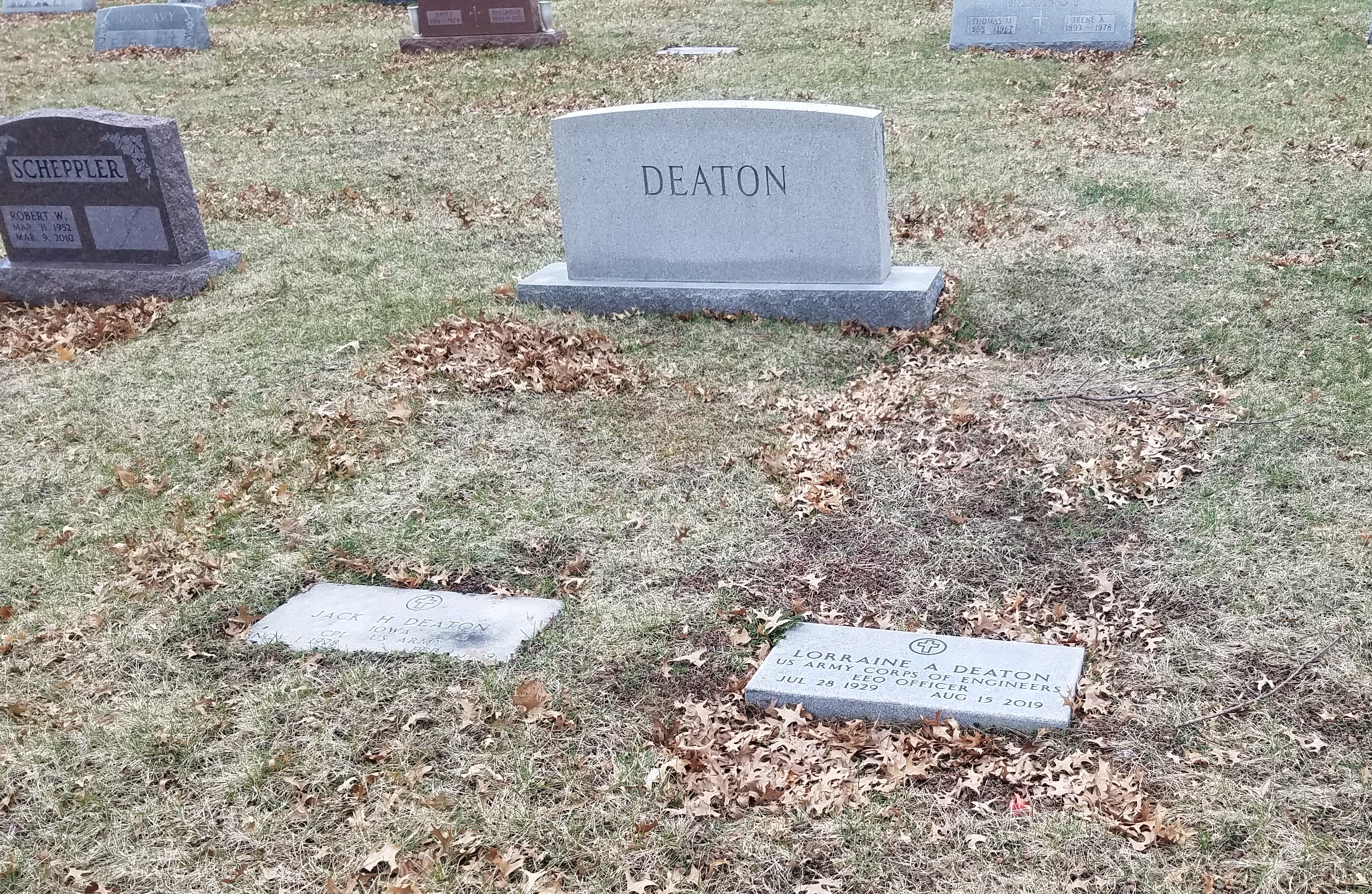
Monday I stopped at my parents’ graves while on my way to the wake for a friend. The dirt on Mother’s grave settled in the three and a half years since she was buried. I don’t know if the cemetery takes care of that, or whether I should bring a couple bags of topsoil, grass seed, a rake, a pair of gloves, and build it up myself. Whatever I do would be converted to the cemetery standard in time. It may not matter over the long term, although I’d feel better after tending her grave.
There have been enough funerals for a while. It is convenient to watch some from a distance via streaming. We don’t get the benefit of fellowship when we attend that way. I knew a lot of people at my friend’s in person wake, so that was pretty satisfying. I’m ready for what’s next and if spring would arrive, that would be it.
I didn’t know what to expect with Christopher Isett and Stephen Miller’s The Social History of Agriculture: From the Origins to the Current Crisis., yet it is slow reading as I drag my way through peasantry, indentured servitude, slavery and variations of people farming for little or no money. It seems a necessary background and the previous half dozen books were easier to read and more enjoyable. I’m halfway finished. Time to hunker down and finish it as there is valuable information therein. With gathering darkness and storms outside, what else is there to do?
It’s been a punk day for weather with me feeling under the weather. We have plenty of COVID-19 test kits, yet I’m confident that is not the problem. I’m okay with a bit of mystery. Soon enough spring will be here.
Probably time to get out William Carlos Williams and re-read Spring and All. Few things cheer me up like his writing.
Timbers are falling too frequently in the forest of life. Mike Tandy died on March 31 in Davenport.
Our roots together were in high school stage crew. When we formed the band in 1973, Mike would sit in, playing bass from time to time. He was a good guy and always dependable.
I missed Mike and Jan’s 1978 wedding while I was living in Germany. I missed a lot of weddings those years. When I returned to Iowa the following year, I presented a belated wedding gift and got caught up.
Mike was a teacher. He taught Language Arts at Davenport Central High School from the day he arrived until he retired. He directed plays, coached sports, and did all the things a teacher would. More than anything, Mike was devoted to family and friends. I felt lucky to be one of them.
Mike and Jan attended our wedding. The last time I saw him was at a 2019 reunion of stage crew and band friends in Coal Valley, Ill. Like always with Mike, we had a lot to catch up on. It always felt there was not enough time to say everything we wanted. We did our best until it was time for him to be with his family. When he said he had to go, he meant it. I felt there would always be a next time.
I am thankful for our time together. Rest in peace, my friend. You were too young to be gone already.
Seeded tomatoes and peppers and set them on a heating pad under a grow light.
Saturday seemed busy. It could have been more productive. As a retired septuagenarian, there is never any difficulty staying busy. I do wonder if I could produce more during each day. More production is the American way.
A key aspect of America’s peculiar institution of slavery was efficient use of slaves. Especially on sugar plantations, but on others as well, every daylight hour was to be spent working in the fields or processing crops. If a slave died from being over worked, no problem. They could easily and inexpensively be replaced by another. The lives of slaves on a plantation were short.
The average lifespan of enslaved Africans who worked on colonial sugar and rice plantations was seven years. Extreme physical demands relied on equally extreme instruments of torture to ensure control over enslaved peoples and to protect plantation profits. The economies and societies they built were denied to them, along with human dignity.
National Museum of African American History and Culture website.
Making enslaved humans productive was essential to accumulation of wealth in the highly lucrative production of sugar, rice, cotton, tobacco and indigo. A system of overseers and supervision was developed. While slavery ended with the Civil War, those techniques from plantation days persisted in practice and in many cases are revered by business efficiency experts. In 1850, the average life expectancy for a slave was 36 years.
We’re not accumulating any wealth here, yet feeling like I’m accomplishing more would be a boon. Here’s what I have in mind:
About this time last year I stopped regular, daily work on my book. This year I plan to spend less time in Summer and Spring, yet write something or work on research every day. The major obstacle is I can’t seem to get through all the boxes of research documents in a timely manner.
Reduction of my book stacks will continue. The goal is to donate every time I shop over in Coralville, or about every other week. I have a process and things are moving more quickly now. Some time each day on this.
My goal is to read 25 pages per day. For historical books with a lot of detail, that’s probably right. When reading fiction, it’s too low. The idea is to adopt different goals for different kinds of books. If I can’t read 50 pages of fiction per day, there is something wrong with me.
Our refrigerator and pantry are good at keeping food and there is too much of it. I plan to work down the excess by cooking differently. Maybe I’ll find a few recipes that are keepers.
Listen to more music. I wrote this playlist in 2005. It is a story of my life in music. Back when I played, I sang all of these.
Cripple Creek (Traditional)
Lord Franklin (Traditional)
Shenandoah (Traditional)
Big Rock Candy Mountain (Harry McClintock)
House of the Rising Sun (Traditional)
500 Miles (Hedy West)
The Cruel War (Traditional)
Blowin' In The Wind (Bob Dylan)
Pack Up Your Sorrows (Pauline Marden and Richard Fariña)
Wabash Cannonball (William Kindt)
This Land is Your Land (Woodie Guthrie)
Freight Train (Elizabeth Cotten)
The Hammer Song (Pete Seeger and Lee Hayes)
Good Night Irene (Huddie Ledbetter said he didn't know who wrote it)
Someday Soon (Ian Tyson)
Early Morning Rain (Gordon Lightfoot)
Four Strong Winds (Ian Tyson)
Both Sides, Now (Joni Mitchell)
What About Me? (Scott McKenzie)
The City of New Orleans (Steve Goodman)
You Ain't Going Nowhere (Bob Dylan)
I Shall Be Released (Bob Dylan)
It's All Over Now, Baby Blue (Bob Dylan)
The Dutchman (Michael Peter Smith)
The veins on my arms do not stand out. Ever. The clinic drew blood for my semi-annual checkup and it took two staff members four pokes to obtain a sufficient sample. I’m an adult and can stand the pokey pokey. I also know about my hiding veins.
The blood test results were posted same day on a health profile hosted by the hospital. Let’s just say I have some work to do after last winter.
My high school friend Mike Tandy died on Thursday. He was on stage crew and close friends with most of our 1970s band members. He occasionally played bass guitar. He was a teacher most of his working life. Rest in peace, buddy.
The last ten days have been relentless with deaths of people I knew well. Now that spring is here, maybe I’ll get some relief. In any case, I bookmarked the three funeral homes in my home town for easy reference.
A thunderstorm blew through Big Grove Township last night. It was severe enough for us to retreat to our safe place on the lower level. After the 2020 derecho, it was no biggie. A little hail and moderate rain fell. We lost electricity for an hour or so. When the lights and stove went out, I put away the dinner I was making and took the ingredients back out when electricity returned. I left the half-cooked brown rice on the stove and without additional heat, it turned out exceptionally well. We need to replicate that process without the loss of electricity.
I binged on poetry reading at the end of the month, finishing books by Czesław Miłosz, Alice Walker, Adrienne Rich, and James Wright. I liked each one in different ways. The fewer mass culture references in poetry, the better. None of them was clean enough for my liking. It bugged me a little that Walker repeated she was “writing poetry again.” Just show me, don’t tell me is a basic tenet of poetry.
The cleaning of an external hard drive proceeds a little each day. Unfortunately, there are unique and useful files on it, so the computer spends several hours each day with the transfer. My obsessive compulsion about saving my computer work paid off in the new finds I have made. It is a drudgery, though.
I don’t care about sports, yet last night’s win by the University of Iowa Women’s basketball team against number one ranked South Carolina was a big deal. I noticed in social media, some friends flew to Dallas for the game. We talk a lot about how divided the country has become. Yet, if one can’t get behind the success of this team, you may be the problem and need a look in the mirror.
It’s tomato and pepper planting day in Big Grove. I had better get after it.




 Journey Home
You must be logged in to post a comment.