Categories
Sustainability

Adding Value

Trail walking on May 7, 2024.

If HRH the Prince of Wales can’t make a go of organic farming, I don’t know who might. In his 1993 book Highgrove: An Experiment in Organic Gardening and Farming, he and co-author Charles Clover lay out the expenditure of resources, including consulting from prominent Brits with expertise in gardening, animal husbandry, and farming, to convert his estate in Gloucestershire to organic production. While there were successes, the end result was they couldn’t completely and satisfactorily convert it.

Highgrove had three rules: convert from conventional to organic production cheaply, deal with the public direct when possible to keep prices down, and add value.

How does a farmer add value to their crops? One of the approaches Highgrove made was using organic grains to bake bread for retail markets. It was more expensive, but with the prince’s imprimatur they found entree and some sales.

Highgrove could not solve some problems with using all-organic bread ingredients grown on site. They had to blend Highgrove wheat with high protein, organically-grown Canadian wheat to produce the soft crumb British bread-eaters crave. There were also no known producers of organic palm oil needed to “give good loaf volume.” Prince Charles decided to go to market with some compromises, sufficing to say the bread was made using organic flour grown on the property and branded as the “Highgrove loaf.”

While we don’t need to be the future king of England to know it, adding value to common commodities is a ubiquitous practice. It is the foundation of capitalism. Have a few hundred tons of wheat? It will be worth more if it is turned into bread, biscuits and the like. Such added value and the revenue derived from it is used to offset higher input costs for organic vegetables and grains.

The book was a solid read, recommended for those in the contemporary discussion about alternatives to food production based largely on chemical inputs. While the Highgrove story is interesting in itself, it is a long setup for my main topic. What are we made of?

…in the sweat of thy face shalt thou eat bread, till thou return unto the ground; for out of it wast thou taken: for dust thou art, and unto dust shalt thou return.

Genesis 3:19, King James Version

While our lives are nourished by bread and everything around it, we are not the bread we eat.

Most of the elements of our bodies were formed in stars over the course of billions of years and multiple star lifetimes. However, it’s also possible that some of our hydrogen (which makes up roughly 9.5% of our bodies) and lithium, which our body contains in very tiny trace amounts, originated from the Big Bang.

The Natural History Museum, London.

We are stardust, literally.

We are stardust
We are golden
And we’ve got to get ourselves
Back to the garden

Woodstock, Joni Mitchell

We are such stuff as dreams are made on…”

The Tempest, William Shakespeare.

I need to sleep more, think less, and get in the garden. Now that rain let up, maybe I can.

Categories
Living in Society

Agency to Eliminate Nuclear Weapons

Hiroshima, Japan after U.S. Nuclear Attack. Photo Credit: The Telegraph

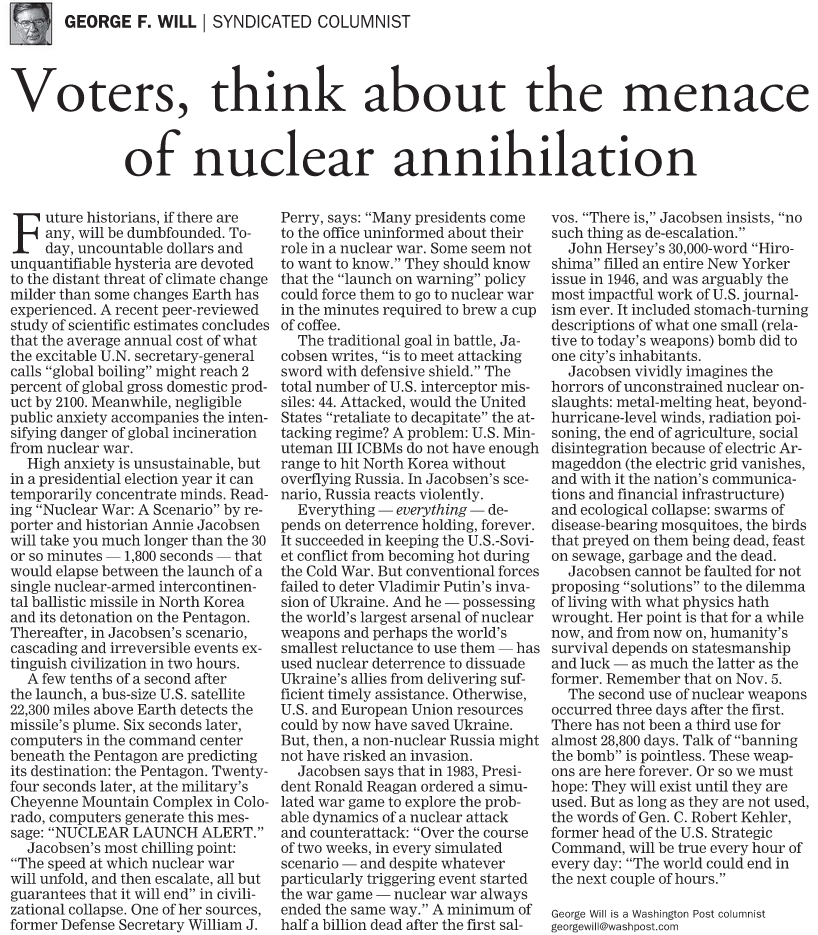
George Will’s May 6, “Voters, think about the menace of nuclear annihilation,” makes me wonder what Gazette editors are up to when they select outside articles for re-publication. Will wrote, “Talk of ‘banning the bomb’ is pointless. These weapons are here forever.” Good grief! Hath a citizen no agency to effect change? The editors must just want to stir things up.

The optimist in me would say “nuts” to Will and engage in the effort to step back from the brink of nuclear annihilation. 83 nations are already on board with such an effort, which calls on the US to acknowledge that the continued existence of nuclear weapons is the greatest security threat we face and to actively pursue their elimination. In addition, nuclear weapons-armed states already agreed to eliminate nuclear weapons in Article 6 of the Nuclear Non-proliferation Treaty. A simple, missed truth is most of the world’s nuclear weapons have already been dismantled. All that remains is to finish the job.

Is seeing George Will in the Gazette a blessing or a curse? I had not heard of Annie Jacobsen’s book before reading about it here. However, Will represents a Cold War mentality when he wrote, “Humanity’s survival depends on statesmanship and luck–as much the latter as the former.” When we adopt that view, our luck will run out sooner than we think. We can and will do better.

~ Published on May 7, 2024 as a letter to the editor of the Cedar Rapids Gazette.

Categories
Writing

Weekly Journal 2024-05-05

Lilacs planted shortly after moving to Big Grove Township in 1993.

The week began with delays getting into the garden. Life’s exigencies required attention and garden work was pushed back. There was also rain. There is time before last frost, but not much of it.

Dental Care

Tuesday began with a dental appointment. My dentist sold his practice to a large dentistry operation in 2017. I don’t like outlasting medical practitioners yet as a septuagenarian it happens more than I want. The new group, a large company based in Waterloo, seldom treats me with the same practitioner whether it be hygienist or dentist. Each appointment offers a different vibe and I don’t like it. I mean, I’m used to dentists practicing on their own or with a partner or two and not a constantly revolving carousel of practitioners. I don’t know their business model, yet I suspect the pay is low and the assembly line style of operations yields a lower cost for the owners. It is not patient-centered care.

Trip to Des Moines

It rained on Thursday, making it a good day to take my spouse to see her sister. The rain let up west of Williamsburg and water was standing in Iowa’s neatly rectangular planting areas. Looks like farmers had been in the fields and maybe planted some corn. As we progressed into Des Moines, the state capitol construction scaffolding had been removed from the smaller domes. It was an uneventful trip. The longer I drive, the more I like that.

District Convention

The First District Democratic candidate for Congress was not present at Saturday’s district convention in North Liberty. Iowa political districts are designed around the congressional seat and I have an old-school expectation of hearing from the candidate in person, and getting a chance for a brief side-conversation. I have become a dinosaur. It was not to be.

Absent the candidate, I’m not sure what, besides necessary elections to the state and national conventions, we accomplished. The morning was consumed by a presentation from a third party grassroots group, and an explanation about why we would be using ranked choice voting for the elections. We would likely have saved time if we had skipped these presentations and gone directly to voting.

The third party person gave a presentation that divided campaign work into three buckets: Grassroots groups who would do much of the work around getting voters to the polls, county parties responsible for centralized communication, fund raising, and party organization, and candidate campaigns, which work mostly on their own to secure votes needed to be elected. This division is both useful and problematic.

Do people need something to do in a political campaign? Beyond making sure one is registered to vote and casting a ballot, one can get involved with campaign work, if interested. When Iowa lost first in the nation status after the computer application debacle in reporting results to national media in 2020, we also lost funding from the candidates who spent heavily in the early states to garner attention for their campaigns. Likewise, because Iowa Democrats are in a significant minority, expenditures from the president’s national campaign are not expected. There is work to be done, yet it isn’t clear how such work should be described and assigned to mostly volunteers.

Endemic to the current party structure is a misdiagnosis of key issues to a campaign. More than anything else, politics has gotten local. In Big Grove Precinct, the electorate is divided. During the 2020 presidential election, Donald Trump won over Joe Biden 671 votes to 637. In 2016, Trump beat Hillary Clinton 575 votes to 529. Barack Obama won here in both 2008 and 2012. My precinct has a divided electorate and has recently been won by both Democrats and Republicans. While new people moving to our area lean Republican, the key issue is how does an organizer build a Democrat majority at the polls, recruiting votes regardless of party?

A speaker at the convention looked around the room and suggested the dominance of white-skinned, grey-haired delegates is the problem with the party. Whatever. Had rain not been forecast during the convention hours, I would rather have been working in our yard. The trouble, as I experienced recruiting a replacement for my position on the county central committee, is literally no one is willing to do the work to provide steady volunteer work for local Democrats. That’s a much different problem than skin tone and hair color among people willing to show up on a spring Saturday.

My problem at the end of this week was it was May 5 and so much work remained to get the garden planted. We may have had the last frost and I simply don’t realize it. I am determined not to be distracted during the upcoming week.

Categories
Living in Society

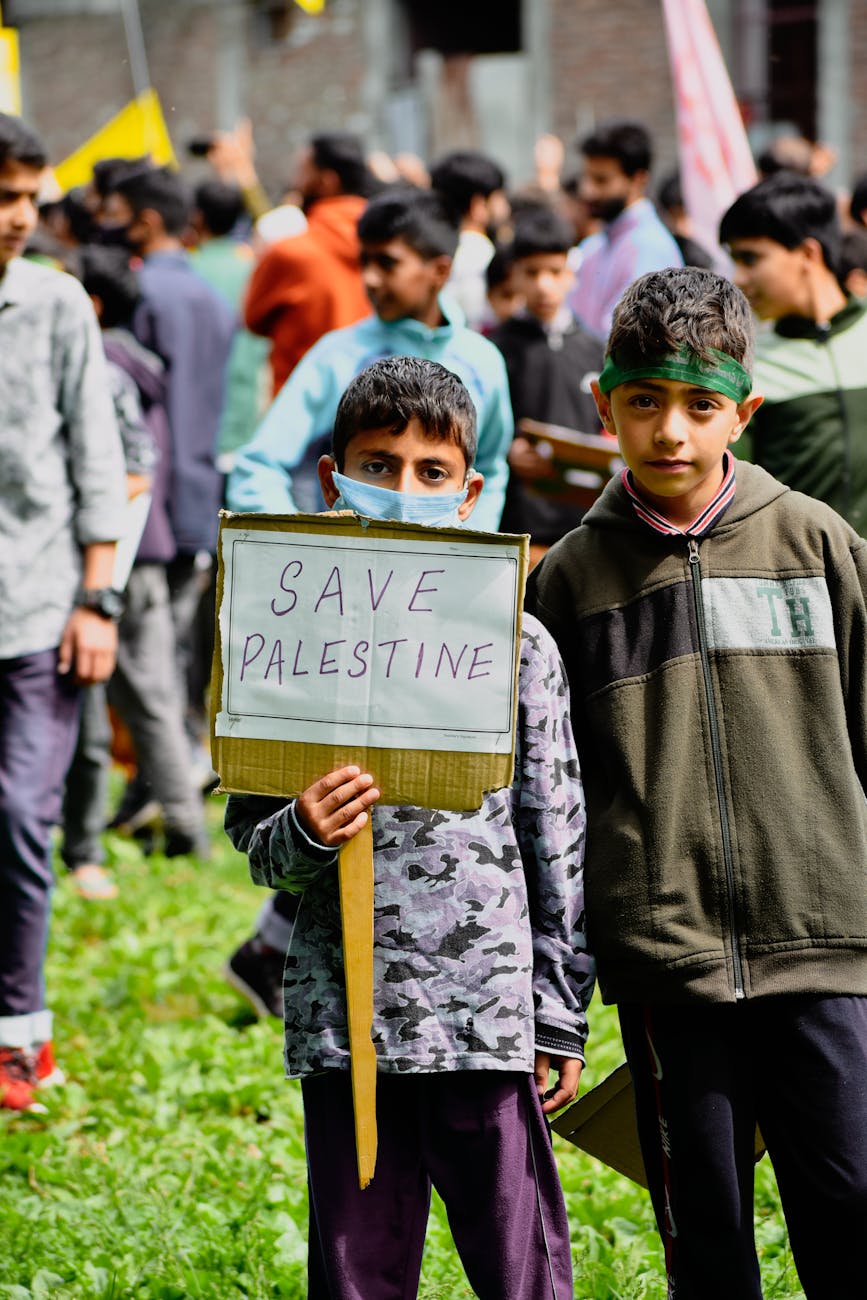
Middle East Protests

Photo by Hurrah suhail on Pexels.com

War has always been devastating yet the devastation of the Israel-Hamas war is unprecedented. What makes this war different is it is occurring in the ever-present media-influenced eyes of a populace unfamiliar with the long relationship between Israel and Palestine. People young and old are being activated by this public war: donating money to relief funds, protesting, and more. There are a lot of moving parts.

That said, I don’t know what else to say, other than there should be an immediate, permanent ceasefire; humanitarian aid should have unfettered access to the Palestinians; and both sides should release any hostages or unlawful detainees. At yesterday’s Democratic district convention, we passed a resolution saying those things.

Some friends with family ties in Palestine were present at the convention. One spoke during debate over the resolution. He pointed out the plight of children in the war zone. What heartless fool could not be affected by this?

I read about the use of artificial intelligence in generating military targets. Computers find targets, which may or may not be reviewed by a human before striking. What algorithms often find is the best place to target someone is in the evening when they are at home. Often the whole family is present when the bombs hit.

On-campus protests have drawn an undue amount of attention. The varying responses by school administrations and law enforcement has been both appalling and comforting. The temptation is to compare it with my own campus protests over the Vietnam War in 1970-1973. That is the wrong impulse. Things have changed on campus in more than 50 years.

Another temptation is to blame the U.S. administration for the war. President Joe Biden is an easy scapegoat. While exerting public pressure for him to change tactics is acceptable in a democracy, it is of itself, no solution. When it comes to the Mideast, there will unlikely be consensus in an approach to peace-making.

It feels hopeless some days. I contribute to relief funds as I can, write my congressional representatives, and pray for resolution. There is no assurance there will be a resolution in the Mideast, and that’s part of the problem.

Categories
Environment

Al Gore Receives Presidential Medal of Freedom

With Al Gore and Company in Chicago 2013.

On Friday, May 3, Al Gore was awarded the Presidential Medal of Freedom by President Joe Biden. Al Gore is deserving of this recognition.

Here is the announcement. Al Gore was one of 19 people to receive the medal yesterday:

Al Gore is a former Vice President, United States Senator, and member of the House of Representatives. After winning the popular vote, he accepted the outcome of a disputed presidential election for the sake of our unity. He was awarded the Nobel Peace Prize jointly with the Intergovernmental Panel on Climate Change for his bold action on climate change.

My decision to associate with Gore through the Climate Reality Project was a game changer, introducing me to climate activists all over the planet. Joining Climate Reality upgraded my understanding of the climate crisis and everything around it.

What is next for the Climate Reality Project? I don’t know yet presume succession plans are already in place for Gore’s retirement.

Categories
Living in Society

Politics Beyond the Expected

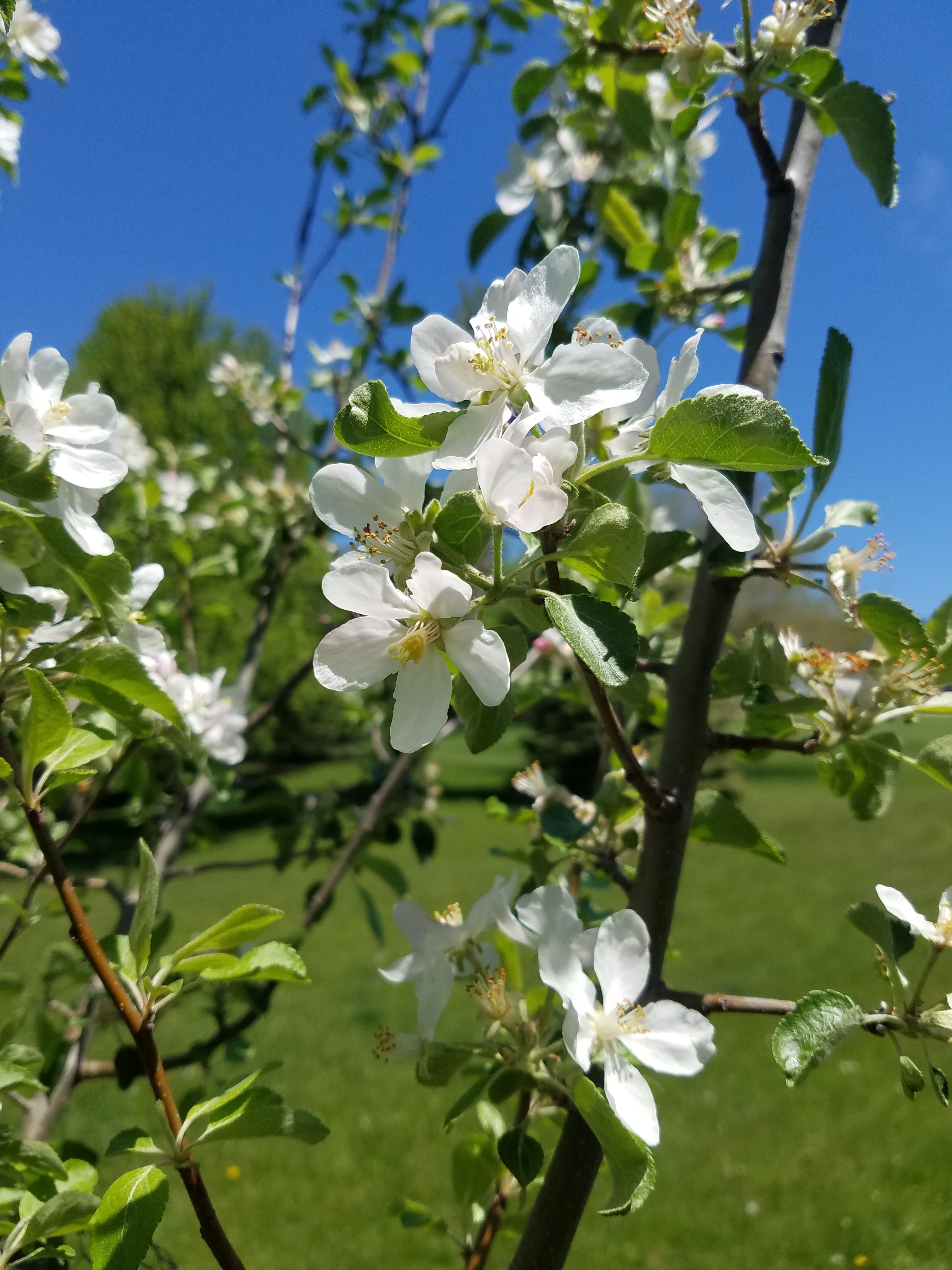
Apple blossoms.

Absent live performances during the coronavirus pandemic, the comedy troupe The Capitol Steps, whose periodic radio shows were called “politics takes a holiday,” turned off the lights and folded. It turned out they could not survive without live performances, and as many believed, no one wanted to attend a live performance if one of the side effects was infection with the coronavirus. We learned politics never takes a holiday during a pandemic as Republicans dominated the elections in Iowa.

On Wednesday, I participated in a video conference with about 35 others with former Congressman Dave Loebsack asking First Congressional District Democratic candidate Christina Bohannan a series of softball questions. It was an okay hour, yet we’ve heard almost everything Bohannan said before. Democrats need new ideas, new approaches. Considering the alternative, I’ll support Bohannan with my time and financial resources.

Like with the now defunct Capitol Steps, live performance is everything in politics. A candidate cannot win elections without in person live events. What does that mean?

A county supervisor candidate sent an email this week, asking for help. Specifically, they asked for help doing things related to voters: door knocking, making phone calls, and placing yard signs. They also asked for a financial contribution. The primary election is four weeks away, so their needs are pressing. I’m supporting other candidates for supervisor, so the request fell on deaf ears.

Just before Bohannan’s event I received a text message from the Democratic National Committee asking me to participate in video conference training on how to be more active in the national campaign. If all politics is local, why would I work under direction from the national party? I wouldn’t.

Another contact that day was a telephone call from a local county party organizer. They have a short regimen of door knocking work to reach out to voters and see where they are. To me, door knocking is about one thing: identifying which voters will support a given candidate, then getting them to cast a ballot. I declined the opportunity to take a shift.

All of this is expected, and as you can see I rejected it out of hand. In the meanwhile, incumbent Republicans shape how the general election will proceed. Since they are in power, they have a strong platform to frame the debate. They are framing it. It will be difficult to avoid becoming enmeshed in their verbal construct.

I accepted an invitation to help our state house candidate organize for the election. About a dozen of us were invited. He has no primary competition so we can focus on the general election. He’s new to politics so we can begin with a fresh slate and build upon our core competencies. I’m looking forward to the possibilities of such a campaign.

Our state senate candidate is also new to politics. He is the chief financial officer of the Mount Pleasant school district, and hasn’t run a campaign before. As he organizes, there will be possibilities to get involved with what I hope is a unique and vibrant campaign full of new energy.

Saturday is the district convention, precursor to the state and national conventions. I’m a delegate and will use the time to explore possibilities for organizing with other attendees. Since there is only one statewide candidate this cycle, 2024 will be a cycle of local politics, focused on my state house representation. Hopefully those campaigns will roll out in an unexpected way.

Categories
Writing

Blog Book Changes

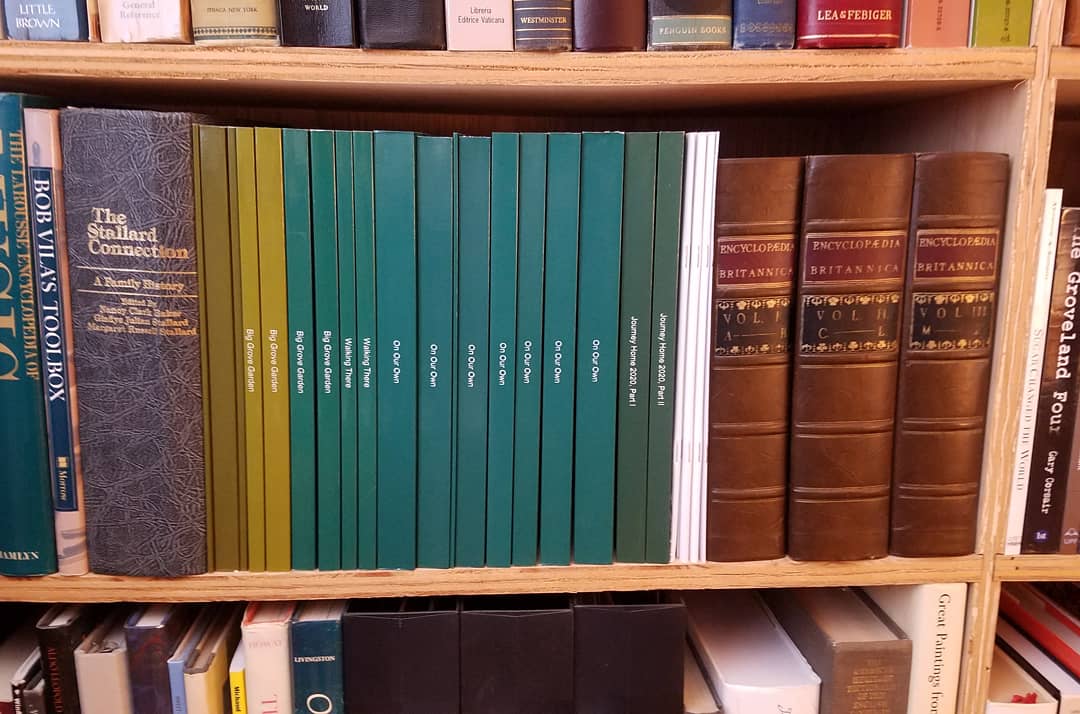
My 12-inches of blog books through 2020.

I use a service called blog2print to make a paper copy of my blog. That is, I used them until Tuesday. In an email, they wrote,

All good things must come to an end

After delivering hundreds of thousands of blog and photo books over the years, it’s time for us to say goodbye. Before we close our digital doors on May 15th, stock up and save 50% off everything!

I ordered books of my 2023 posts plus everything through April 30 this year. I like having matching sized, similarly styled books of what I posted. That won’t be possible going forward, at least through this company. The books are for the inevitable day when I make my exit from the online house I built.

I renamed this blog Journey Home on January 20, 2020. On March 11 that year, the World Health Organization declared COVID-19 a pandemic. Also that year, I made the last payment on our child’s student loan, and ended a long career of working for someone else to retire. 2020 was a year of change.

On Feb. 3, 2022, the governor extended the state’s Public Health Disaster Emergency Proclamation on Feb. 3, announcing it will expire at 11:59 p.m. on Tuesday, Feb. 15. After that, she said, the coronavirus became normalized in daily, routine public health operations. Whatever she said, the coronavirus lingers in society today.

It is time to re-brand this blog, not only to put the pandemic in the rear view mirror as much as is possible, but to mark a new purpose as I write. As I work in the garden this May, hopeful consideration will be given to what is next. The expectation there will be something next is the human condition. A gardener has confidence spring work will produce a fall harvest, and so it is with my writing.

I relish the changing patterns of life. It is possible to get too comfortable, so whatever the source of change, I expect and embrace it. While I don’t like changing how I save my work, I am also ready for the future… and to get the next garden planted.

Categories
Reviews

Book Review: Minority Rule

A decent history of American politics in the post-Obama era has yet to be written. One can’t rely upon any of the conservative principals to author one, because they have been drinking at the well of minority rule for too long. A Trump autobiography? He didn’t even write The Art of the Deal.

Enter Ari Berman’s new book, Minority Rule: The Right-Wing Attack on the Will of the People–and the Fight to Resist It, published in April. It provides a well-researched and relatable history of an issue that has been at the heart of modern conservatism since Pat Buchanan worked in the Nixon White House.

In a 1995 National Press Club address, Buchanan, then a presidential candidate, said, “If present trends hold, white Americans will be a minority by 2050.” This underlying fear mongering became endemic to Republican politics and drove the ascendancy of the 45th president. Irrational fears the United States would transform from a First World Power to Third World status drove conservative voters to the ballot box.

In my reading of books about the rise of Donald Trump as president, Berman is the first author to tell a clear, coherent, and relatable story of that time. Minority rule is at the heart of current Republican policy and behavior and Berman lays it all out for the reader.

While the 1965 Voting Rights Act broadened access to the ballot, conservative white folks were aghast and feared they would become a racial and political minority. During the Johnson administration, an emphasis on immigration of whites was transformed to a broader band of global populations. Enter Trump to both fan the racist, anti-immigrant flames, and get elected as a supposed fire fighter for the fires he started.

Berman outlines the constitutional and legal structure that enables minority rule in the United States. The conduct of the U.S. Census, having two U.S. Senators per state regardless of population, the growth of the filibuster, the electoral college, and drawing political districts in a way that disenfranchises non-white voters, all play a part in enabling minority rule, according to Berman.

While it may sound easy to keep the U.S. Census above politics, it was politicized during the 2020 census by the administration. Having two U.S. Senators, combined with the filibuster enables senators representing a minority of the population to set policy and block majority-favored laws they don’t like. Political gerrymandering, especially in states like Wisconsin and Michigan entrenched minority rule and blocked attempts for political districts to represent the people in the state. There is no magic bullet to fix any of these issues. Entrenched, minority rule makes it more difficult.

In Minority Rule, Berman outlines the role of The Heritage Foundation’s sister organization, Heritage Action, in our politics. Heritage Action is a 501(c)4 nonprofit conservative policy advocacy organization founded in 2010. The Heritage Foundation was restricted from advocating policy, so they created this offshoot, which has become one of the most powerful political lobbying groups in the nation. Iowa is one of the states where these dark money groups have been active.

Ari Berman gets a thumbs up for this book, and I recommend you read it yourself. Minority rule is endemic to the problems of politics in 2024. Berman helps us get a grip on it. He also provides hope the electorate can address the problem and embolden democracy going forward. He presents evidence such a movement has already started.

I also recommend Berman’s previous book, Give Us the Ballot: The Modern Struggle for Voting Rights in America.

Categories
Living in Society

April Showers

Volunteer cilantro from the garden.

April is ending with rain showers. As hot as the atmosphere and ocean have been, I expect an abundance of rain in 2024. Our local newspaper wrote there will be “bouts of record-challenging high temperatures throughout the nation and the possibility of the hottest summer ever observed.” Call it the climate crisis, call it a lot of rain, call it whatever you will yet these are crazy times and the weather became crazy along with it.

A friend and I organized a political meet and greet at the public library so voters could meet candidates before the June 4 primary election. As mentioned yesterday, the primary election may as well be the November general election for county supervisors: The county electorate is liberal compared to many Iowa counties and Republicans on the November ballot don’t stand a chance.

It is no surprise there is discontent among the electorate. That is the county Democratic resting happy face. Two new candidates challenged three incumbents for county supervisor. I spent time at our event with each of the five, including the ones I am just getting to know. They are all good people with a set of manners one expects from a candidate for public office. Incumbency is difficult to overcome unless someone did something terribly wrong. There is no evidence of that among these incumbents.

The state house races are just beginning and neither the state senate nor representative candidate was ready with campaign literature or yard signs. April politics is a parade gathering in a field waiting for the grand marshal’s signal to start. There is a lot of milling about. All eight candidates at the event, including the county sheriff, are solid.

Inside the front entrance to the library is a stone wall with the chiseled names of original donors who built it. Our public library used to be under the bandstand in a city park, then moved to the former fire station. Both spaces were incredibly small for a library in a city and surrounding community of more than 10,000 people. Many take for granted having a well-built library with a robust staff. Not every small community can afford it. The original community donations, in money and sweat equity, set the path for a great local resource we use for our political meetings and many other things.

Morning sunlight is drying the driveway as I type these words. No rain is forecast so it should be a decent day of outdoors work. Soon it will be time to get cabbages in the ground.

Categories
Writing

Weekly Journal 2024-04-28

Onions Curing in 2010.

The week began with planting onions: Patterson (yellow) and Blush (red). In a kitchen garden one cannot grow enough onions to support meals. In my case, the garden has been hit or miss in producing a good onion crop. After planting six rows, I threw up a temporary fence before heading indoors for the rest of the day.

Legislature Adjourns Sine Die

By 4:25 a.m. on Saturday, April 20, the Iowa legislature adjourned and could do no further damage to regular folk. Shortly afterward, the Governor issued a press release touting their accomplishments. What stood out to me was this paragraph about charter schools,

Charter School Expansion: Adjusts per pupil funding to support educational freedom opportunities and allows vacant or underutilized public school district facilities to be available for lease or purchase by nonpublic or charter schools. (SF 2368)

Gov. Reynolds Statement on 2024 Legislative Session, April 20, 2024.

If there were any clearer message Republicans are going after public schools, I don’t know what it could be when they make provisions for disposal of public school property.

Blog for Iowa

Wrapped up my work filling in for Dave Bradley at Blog for Iowa while his family moved to a new home. During this tenure, I wrote 38 posts on a range of topics. Most of them were cross-posted here so readers wouldn’t miss any. It felt good to write on a regularly scheduled basis. It also feels good to be free of the commitment as garden planting ramps up and my work on an autobiography enters a new writing stage.

A Late 50th High School Class Reunion

Our high school graduating class missed our 50th reunion because of the coronavirus pandemic. We decided not to wait any longer and are holding it this July. I volunteered to work the interface between the reunion planning committee and our fellow high school classmates. From my previous experience, it is the best job. I’m enjoying reading the emails with RSVPs and the contact it brings. In this role, I am privileged to interact with almost every classmate engaged with the school, whether they plan to come or not. I expect to attend the main event in July.

Political Event

On Saturday, the Solon Area Democrats hosted a Meet and Greet at the public library. Eight Democratic candidates who attended are running in the June 4 primary. In our county, the supervisor primary is usually the determinant of the general election outcome. There are five supervisor candidates for three seats this cycle. They are all decent people. This was our kick off event for the November election. I’ll have more comments about politics as the campaigns progress.

The pressure to get plants in the garden soil is on. On a related note, I’m running out of indoors places to put seedlings. Here’s hoping for a productive time between now and Memorial Day.