Mottled shadows of grasses against a piece of cloth.
I hung a piece of cloth over the lower level windows across from my writing table. As the sun rises, shadows dance on it: insects, long blades of grass, and lately, a hummingbird suspended in air as they are while searching for food. It feels I’m living in Plato’s allegory of the cave and I’m fine with that. It is a reminder the world in which we live is not a lie. I’m not chained in place. I’m free to go outdoors, see the hummingbird, and not be blinded by the sun.
I bought mini-blinds to put on that window, like the others in the lower level of the house, yet am glad I didn’t install them. There is a constant show on the window covering for dreaming. We humans need dreams.
The garden ground is too wet to work this morning. It seems unlikely to dry by noon. If the lawn dries sufficiently I’ll mow. There is plenty of indoors work to do if it doesn’t.
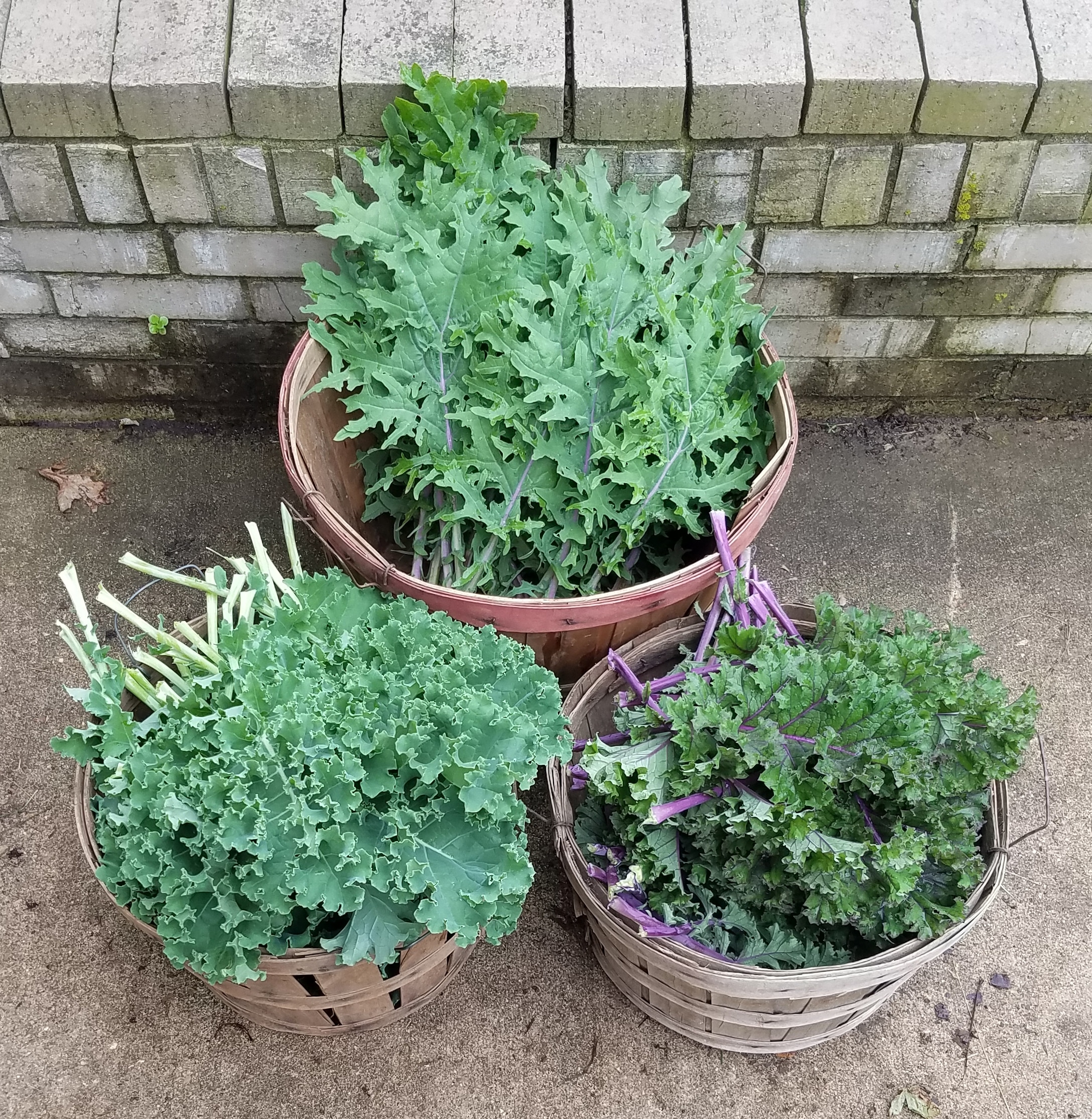
Our go-to, easy-to-prepare dinner is tacos. I made them last night, based on the recipe I wrote a few years ago. Instead of yellow onions, I used spring onions. Instead of garlic, I used garlic scapes. Instead of frozen kale, I used a mixture of fresh Pac Choi and collards from the garden. Such seasonal variations make tacos one of our favorite meals. They always taste a little different, in this case, fresher than normal. We prepare the dish often.
This week, Major League Baseball added the Negro League statistics to the record book. It changed some of the rankings. Josh Gibson beat Ty Cobb in highest career batting record. Gibson beat Babe Ruth, Ted Williams and Hugh Duffy in other categories as well. When I was a kid I didn’t have a baseball card of Josh Gibson and was not aware the Negro League existed. For me, Babe Ruth was it. Until this year, we found he wasn’t. Here’s a link to the Washington Post story.
After a long shift working in the garden I took a nap. When I woke around 4 p.m., the jury in the New York trial of Donald J. Trump had returned a guilty verdict on each of the 34 charges for which he was indicted. There was no surprise here as I had been following the court action and believed the prosecution’s case was bulletproof, the defense was weak. Sentencing is set for July 11, just before the Republican National Convention. The defendant is expected to appeal.
I was not in a celebratory mood. I shaved, took a shower, and then sat down with my handheld device to check the news. Of course it was dominated by reactions to the verdict. Among the first things I saw was Governor Kim Reynolds’ statement about the verdict, which I quote in full:
America saw this trial for what it was, a sham. For years, Democrats like Alvin Bragg have been trying to put President Trump in jail with complete disregard for our democracy and the will of the American people. The only verdict that matters is the one at the ballot box in November where the American people will elect President Trump again.
Statement by Kim Reynolds, Office of the Governor Press Release, 4:15 p.m., May 30, 2024.
Governor Reynolds appears to have forgotten the “will of the people” was that Joe Biden become president after the 2020 election. In Reynolds’ statement lies the seed for the destruction of Iowa Republicans as a dominant force in our politics. I don’t think they understand this or what they are doing. I’ve been around long enough to remember another president who was a crook.
In my autobiography, I wrote a chapter on the meaning of Richard Nixon’s resignation:
Richard Nixon announced his resignation from the presidency on Aug. 8, 1974. I had no idea who Gerald Ford was, or what kind of leader he would be. The next day he said, “My fellow Americans, our long national nightmare is over.”
I felt a strong sense of social responsibility and the moral outrage of youth in what I believed were the deception and lies of a man in whom the country had put its trust. Hearing Nixon’s address that night, in our small apartment, was catharsis. I remember this feeling as I typed here in Big Grove Township tonight. I was relieved that Nixon was leaving. More importantly, I felt that the many protests and demonstrations during the Vietnam war had finally borne fruit. Direct action to support a just cause could accomplish things, even force out a sitting president. It was a heady feeling.
Even with many experiences by the time I reached age 22, it was that moment of seeing Nixon resign on television that opened the possibilities of the world. I became aware that direct action, in concert with others I did not know, could engender change in society. I also learned that the people, places, and things we read about can be grounded in a reality that is not that distant from where we live. We are connected to each other in unlikely ways.
Unpublished autobiography by Paul Deaton
In the post Trump era, I no longer feel as optimistic about the future as my 22-year-old self did. I simply realize how much work remains to be done for justice to prevail for all Americans by ensuring Republicans continue in decline. I realize how little time is left to accomplish this. No matter how Republicans try to spin the guilty verdicts, their enabling of Trump has a down side that led us directly to this moment of hope.
If I celebrate the verdict at all, it is because the American rule of law continues to work. No person is above the law, despite ongoing attempts by conservatives to undermine it for political advantage. Trump’s guilty verdict was a victory for the rule of law and that is worth celebrating. If the rule of law does not prevail, there will be no democracy in America.
As the Reverend Jesse Jackson said, “At the end of the day, we must go forward with hope and not backward with fear and division.” He also said, “Keep hope alive.” Words to live by as Trump has his day in court.
We live in the only home we planned and built. When I arrived from Indiana in 1993, ahead of the rest of the family, our lot was a vacant remainder of Don Kasparek’s subdivision of his farm. There were two volunteer trees and tall grass.
A deal on another lot had fallen through, and there was an urgency to find a place to settle. This lot, with its proximity to Lake Macbride and a reasonable school system was to be it.
I remember sitting on the high wall after the contractor dug the lower level from the hillside, before the footings were in. A cool breeze blew in from the lake — the kind that still comes up from time to time.
We built a life here in Big Grove Township over more than 30 years.
Today is still a time of transition. The trajectory of life seems clearer and much work remains unfinished. Slow and steady wins the race, they say. Like this turtle, I hope to make it to the finish line of a better life.
When Antoine LeClaire, George Davenport, and others brought the first steamboat full of land speculators from Saint Louis to sell them plots in what would become the city of Davenport, Iowa, they did not appear to have clear title to the land. Sales were lackluster. Right or wrong, I attribute this to the dominant unanswered question: Who truly owned the land?
When the Sac and Fox tribes crossed the Mississippi River into Illinois in 1831 and 1832, their dispute was with settlers who moved onto the land. Indigenous tribes did not recognize the previously signed 1804 treaty in which Sauk and Meskwawki individuals surrendered tribal lands. This dispute initiated the so-called Black Hawk War. The tribes were routed and a new treaty was signed in 1832. By 1837 all surrounding tribes had fled to the West, leaving the former Northwest Territory to white settlement, and expanding settlement into Iowa and the western parts of Minnesota.
In my autobiography I wrote about Lincoln County in southwestern Minnesota, “the presence and perceived threat of indigenous people had diminished.” In the white-written history of that place, there is scant mention of indigenous people. I included this sentence because the complete omission of indigenous people would be an error. If the tribes had truly fled to the west by 1883 when my great, great grandfather bought his land, they may have been a minor threat. Was southwestern Minnesota part of the frontier? One doesn’t see much to indicate it was. At the same time, how else would we describe it?
In 1893, Frederick Jackson Turner published The Significance of the Frontier in American History. I first read Turner in graduate school, and while his writing is familiar it was easier to disagree than agree with his thesis that once the frontier closed, so too did the defining aspect of American character. Yes, his work led to an expansionist foreign policy and forays by the United States into new territory during the Spanish-American War. At the same time, it is hard to stomach that the strength and the vitality of the America identity lay in its land and a once vast frontier.
I submit that land is land whether it be acres of tribal land ceded under a treaty, land granted or purchased for speculation by the founders of Davenport, or land bought in Minnesota from the railroad, the interaction of individuals and communities with the land and natural environment was more defining of American character. The better question is “What shall we make of this land where we find ourselves?” The perspective for an answer can be very narrow.
We Americans, like my Polish ancestors, often seem completely self-absorbed in ourselves and in our communities in locum. Our vision doesn’t go far beyond our noses. When we talk about character and culture, the native impulse is to tell a single, brief narrative of our lives. It is a combination of essential, defining moments, and multiple, broader narratives set in societal context. Depiction of a frontier may be part of it, yet once basic security and land rights are attained, the frontier fades into the background.
At the root of such stories, we must answer the question J. Hector de Crèvecoeur asked in Letters from an American Farmer, “What then, is the American, this new man?” The proper answer in 2024 is we are male and female, and not one singular thing. We have become Lyndon Baines Johnson’s vision of America, like it or not.
Once the question, “Who owns the land?” is settled, another important dynamic takes the foreground: the interaction of settlers with the natural environment. There is no question about a frontier, except to ask what took us so long to put it in its place?
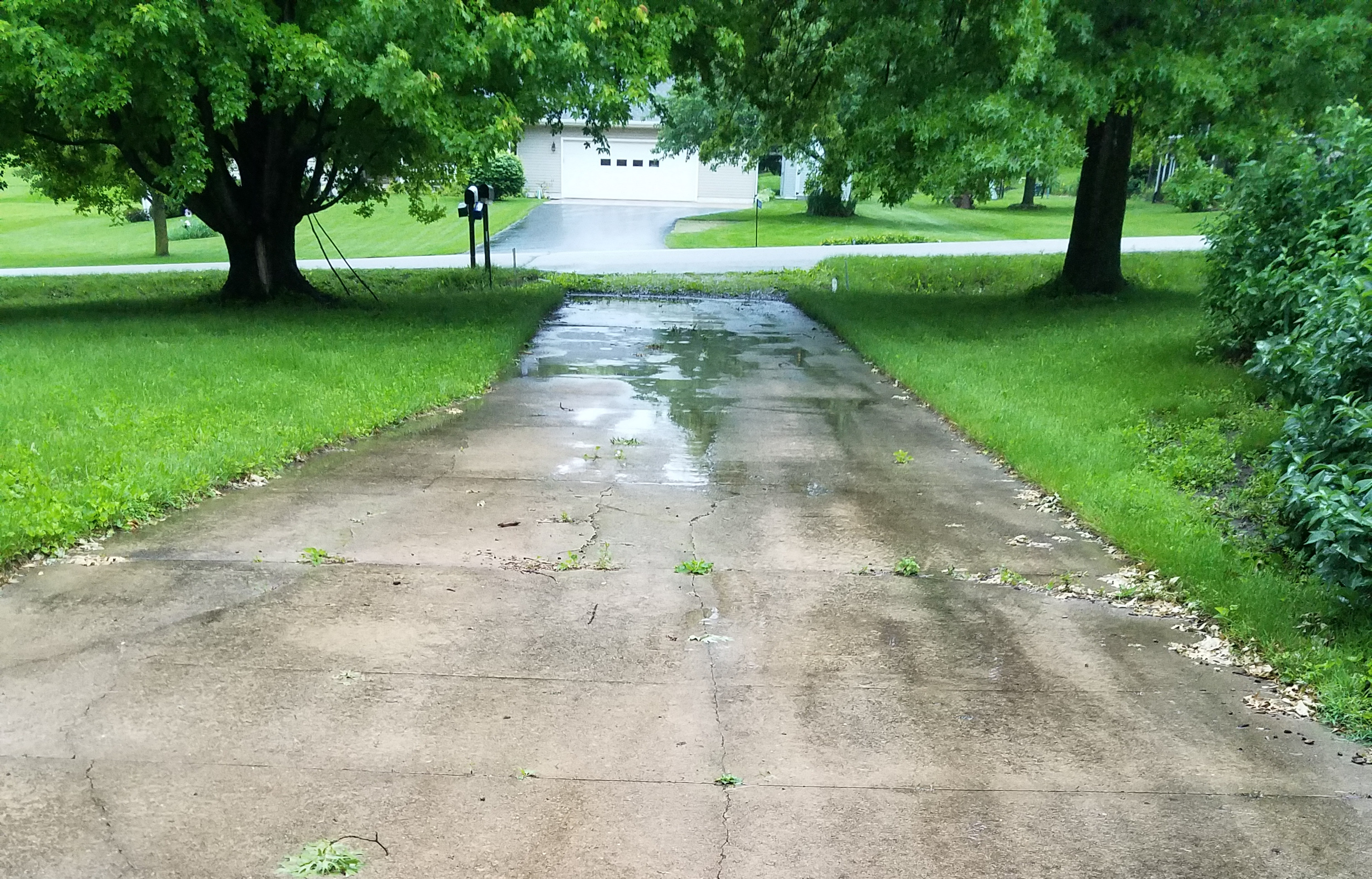
There are good and bad things about this week. In the good category, it rained four out of seven days, alleviating local drought conditions. In the bad category, it rained four out of seven days, making the ground too wet to work in the garden. There is now a race to get seedlings into the ground before they get too big in their soil blocks. I plan to focus on tomatoes first.
Editing
Each time I edit my autobiography I find chapters that need work. The positive is I get further into the edit without stopping to do anything but correct typos and grammatical errors. There are clinkers, though.
I am not satisfied with the narrative about time in the military. I assembled the right quotations from my journal and papers. They can flow better. I reread them after a sound sleep and they do tell the story. The issue is I have many versions of the story of being in the military I have told and would like to tell. For my autobiography, I need to choose one.
I should be able to re-write the entire book as needed and prepare it for self-publication. If all comes together as planned, I should have a printed book by early next year.
Gardening
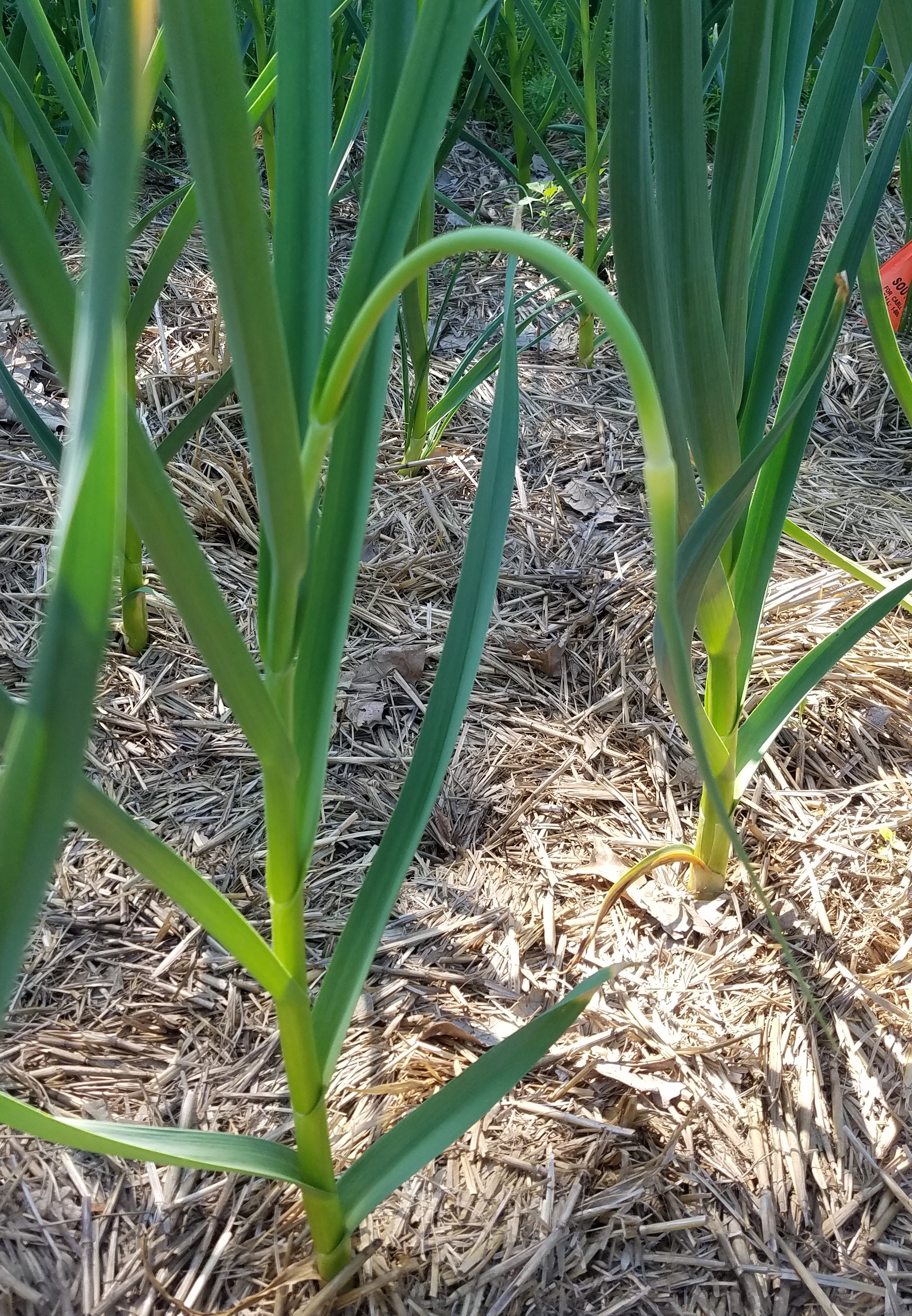
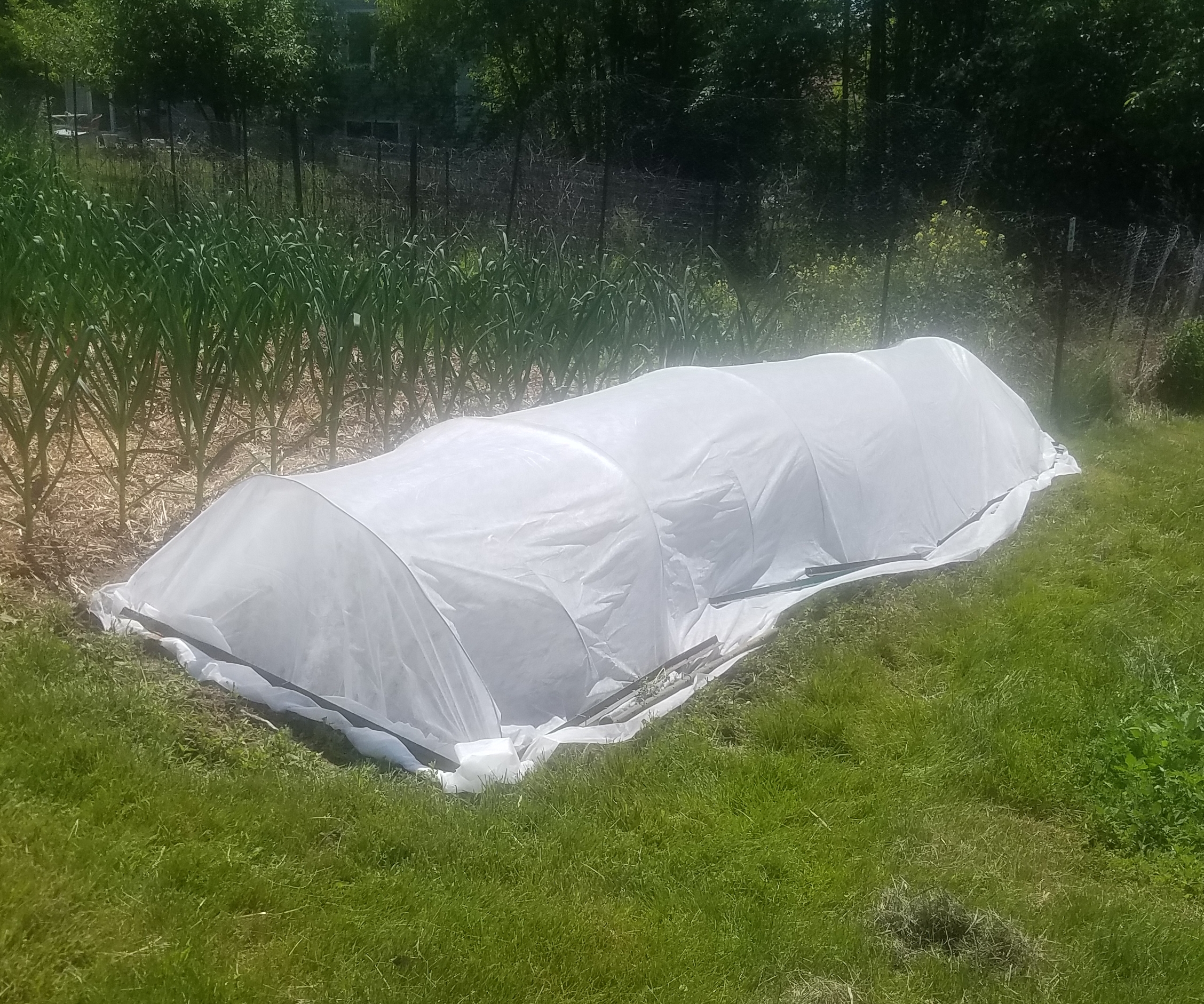
I’m usually finished with garden planting by the end of May. Not this year. The combination of rainy weather with increased limits on my stamina has me way behind. Even so, what was planted shows progress. Scapes are beginning to emerge from garlic plants. I got a few cabbages and kale in the ground. I weeded onions in time to save them from being dominated by weeds. The covered row is up and the seedlings under it are doing well. What is planted is growing. I just need to be closer to the finish line than I am.
Memorial Day
I did not do much this Memorial Day weekend. I have written about the holiday a lot on this blog. Here is a passage from a 2022 post: “Freedom has a cost, and there is no more salient aspect of it than the sacrifices men and women made by giving their lives in military service. Memorial Day celebrations are tempered with a feeling of loss, isolation, and sadness this year.” That seems always to be the case.
I am not aware any of my ancestors died while serving in the U.S. military. Our family is lucky in that. My maternal grandfather served in the U.S. Army and shipped out to France just before the Armistice was signed at the end of World War I. He did not see combat. Noting Memorial Day seems important nonetheless.
Memories of Summer
My summer is increasingly comprised of memories. Lately, the heat has been unbearable, drought too penetrating. I turn inward and indoors, like I did in this paragraph from a 2008 post in the first year of this blog:
I think of Ricard drunk in the non-commissioned officer’s club in Vannes on the West Coast of France. Of the overnight ride in the sleeper berth and waking in Paris to change trains. Of the trip to visit Gothic cathedrals in Amiens, Rheims, Rouen, Notre Dame, and others. Of the American cemetery at Normandy Beach. Of the landing near Calais where my backpack was stolen from a youth hostel. Of the rive gauche and Montmartre and le Big Mac. Of leaving France through Irun to see the running of the bulls in Pamplona, then swimming in the bay off San Sebastian.
Le week-end d’été, Aug. 1, 2008.
The garden occupies me and blocks other activities. Hopefully the weather will dry up long enough to finish getting it in. In the meanwhile there are plenty of memories to keep me busy indoors.
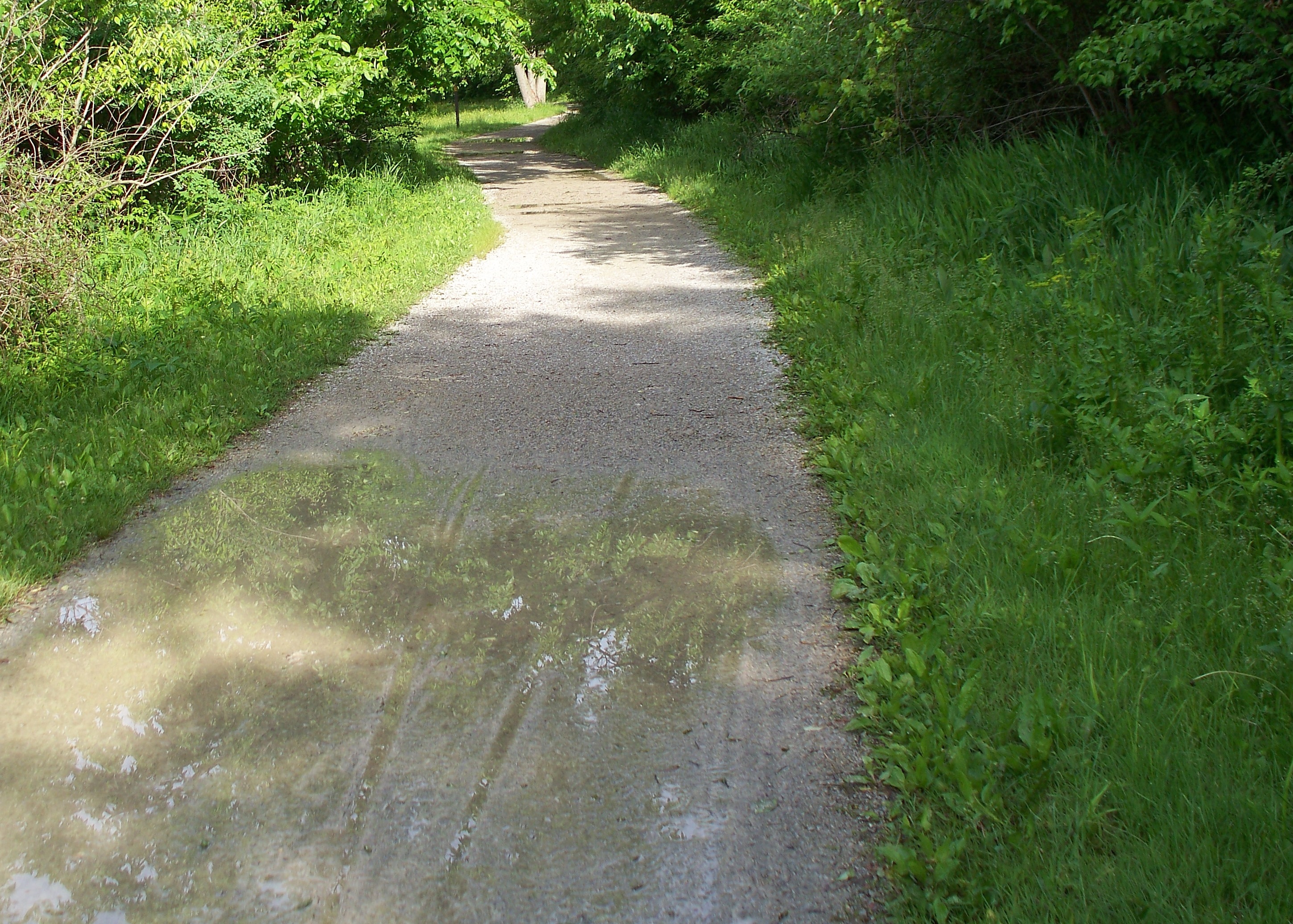
Lately I forgot to take photos while out trail walking. I carry my mobile device with me. Maybe I’m distracted. Maybe the sight of Canadian Geese sunning themselves on a jetty is too commonplace. I did, however, have pleasant walks on the trail before rain started again on Friday. I used an old photo on this post and it serves.
Senate Republicans rejected the strongest, most comprehensive bipartisan border bill we’ve seen in decades. They do not want to solve problems at the Southern border. Period.
The New York Times has been reporting Trump edging Biden in polls for about eight months. Here’s the rub. They have a squishy way of saying who they polled. First it is registered voters, and then it is voters who cast a ballot in the 2020 general election — two very different parts of the electorate. As Nate Cohen reported for the Times, “President Biden has actually led the last three New York Times/Siena national polls among those who voted in the 2020 election, even as he has trailed among registered voters overall. And looking back over the last few years, almost all of Trump’s gains came from these less engaged voters.” An unbiased news outlet would put all this information out in front. The Times buries it and therefore, their reporting is not trustworthy.
Yesterday the U.S. Supreme Court published a decision in Alexander vs. South Carolina Conference of the NAACP, about political gerrymandering. The headline in the Cedar Rapids Gazette read, “Justices find no racial gerrymandering in S.C.” It is political gerrymandering, the high court said, and that is apparently okay because drawing districts is a political process. If you believe that, stand on your head. The majority opinion was written by George W. Bush appointee Samuel Alito who has been in the news this week for his flag-displaying propensities.
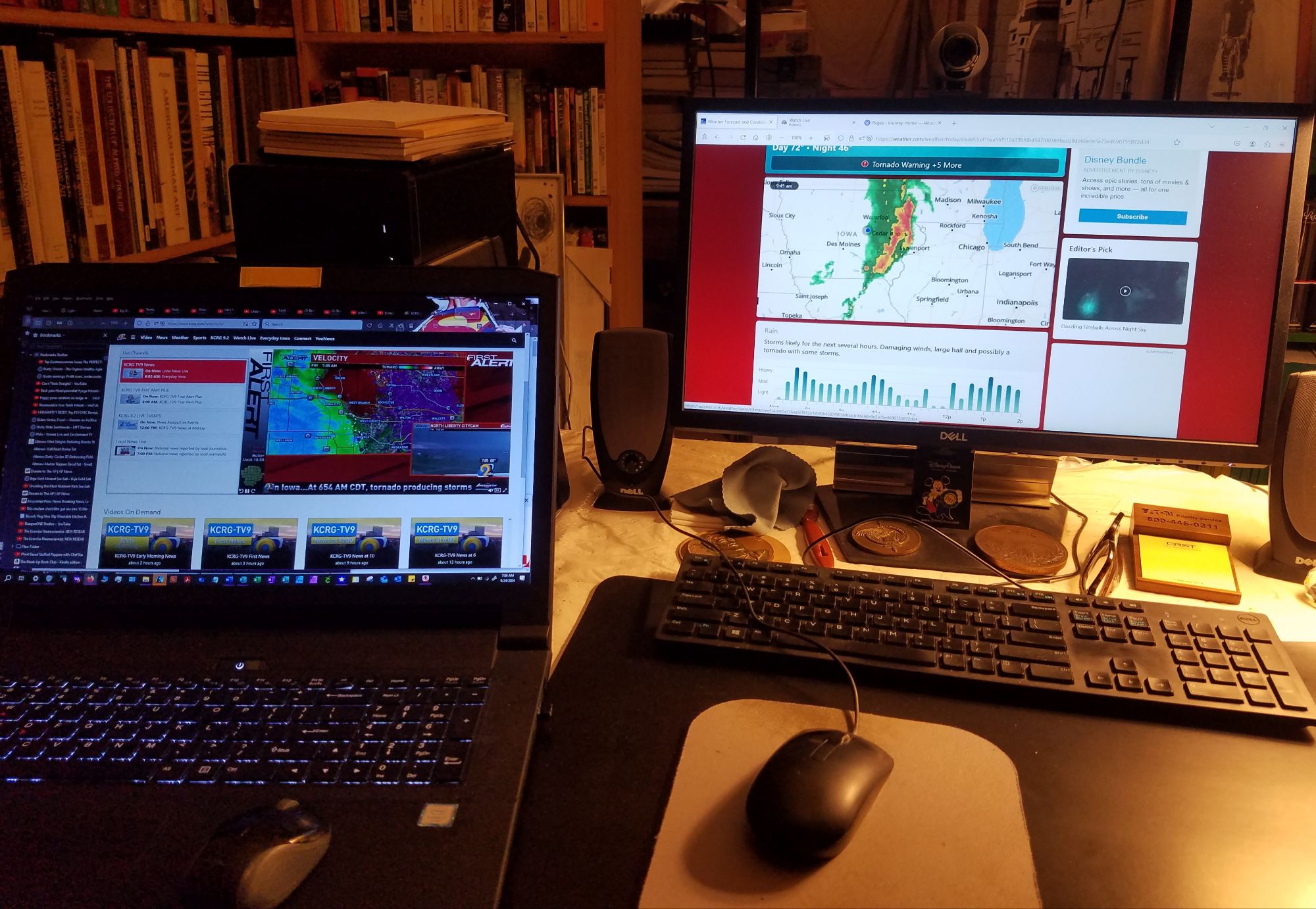
We woke early this morning to the sounds of local sirens warning about a tornado watch. We followed our standard procedure of gathering electronic communications devices downstairs and monitoring the process of the storms. At one point we had a desktop, two laptops and two phones in action. It’s how we Iowans do when it comes to severe weather.
In Iowa when the local severe weather sirens go off, we gather on the lower level with all the electronic communications devices. Friday, May 24, 2024.
I possess a personality yet expend little effort in knowing or cultivating it. I avoid considering a self-concept when I can. When I feel I have one, I try not to impose it on others. Most times I don’t pay much attention to who I am to focus on others. People appreciate someone who takes a sincere interest in them, according to Dale Carnegie.
What combination of qualities defines personality? It’s not an answer I sought or even thought about much. Search the internet for personality traits and five are returned in the top results: openness, conscientiousness, extroversion, agreeableness, and neuroticism. I have a vague idea what these mean. I am a confident public speaker who tries to be conscientious about what I say, and agreeable when I can be. I am open to consideration of new ideas yet immovable in my beliefs. I don’t tolerate bullshit well. Not sure where that lands me on the personality spectrum.
Neurotic people experience anxiety, worry, fear, anger, frustration, envy, jealousy, pessimism, guilt, depressed mood, and loneliness, according to Wikipedia. If asked, I would deny experiencing these feelings. For example, I am often alone yet don’t feel loneliness. My denials are not believed. I accept at face value what is, and don’t trouble myself with feelings about it. I may be an odd duck, yet that analysis may be a form of quackery. If pressed to put a name on my personality, I’d have to get professional help.
What brought all this up? I would like to be a person where people say they know who I am.
I have given the topic of personal influences more than a little thought, especially before my retirement from transportation and logistics in 2009. Here is a short list of personal attributes that might be considered qualities of a personality.
I accept the Cartesian version of reality.
I am not a hugger, except with close family.
I know how to evaluate risks and am willing to take chances.
I depend upon systems, like a kitchen garden.
I depend upon organizations, like hospitals and retailers.
I am not always listening and need to work at being a better listener.
I continuously learn, or believe I do.
I am frugal in most areas of daily life.
I have no idea how to style my clothing.
I am a creature of habit, and despise habitual behavior.
Someone might be able to put a name on this personality. For every attribute listed, one was left out. No system of reckoning is perfect.
The two things I’m most often recognized for are my public writing and gardening. Maybe I should better embrace those identities.
We were doing introductions at an event and someone said, “I read him,” referring to me. I took the compliment. A person could do a lot worse than describe themselves as a writer. Because I was prominent in the local food movement for some years, I’m recognized as a gardener. Gardening is something in which many people take interest. Talking about gardening doesn’t get me as far as talking about being a writer, yet it is a very common interest. We may have to have a multi-dimensional personality. At least two aspects, anyway
Part of my issue is I don’t share a lot of the most common interests. I have trouble carrying on a conversation about movies, TV shows, radio, and music. I don’t care much for sports, travel, and fine dining. I am interested in health and fitness, yet feel that is too personal for discussion with those outside family. Fashion and beauty? See #9 above.
Some recent topics I discussed are use of plants in a landscape where I find myself. I believe people wearied of hearing me rave about the wisteria growing on a pergola at an event. A recurring topic is how the sociology and language used to describe the coronavirus pandemic has changed. COVID-19 affected and is affecting almost everyone. The new trend in these conversations is “Get ready for bird flu.” These are something.
Part of me holds that if I haven’t figured out who I am by my 70s, then what is the point? At the same time, I don’t seek to be calcified in my self-image, to the extent I admit I have one, or in that people don’t know who I am.
I consider my role models — my maternal grandmother, my second battalion commander, certain high school friends — and, if they were living, they would know my personality. Maybe that’s part of the problem. Important people who know me are dying, leaving me a survivor. As I wrote the other day, I don’t mind the isolation of aging. Perhaps a side effect of that is developing a personality on which people can get a handle. One where I can feel some comfort in their grip. I’ll work on that.
I began following Buffalo Ridge Orchard in Central City this year. In part, that means I am divorcing myself from a local farm where I worked for seven seasons. In truth, Wilson’s Orchard and Farm hired one of the best chefs available to prepare dishes made from local foods and gave him his own venue. They appear to have successfully transitioned from a mostly apple crop to add flowers, strawberries, and other common, locally sustainable produce. They went big into hard apple cider, long the mainstay and chief reason pioneers grew apple orchards on their farms. They continue to experiment and expand. What’s not to be happy about?
I seek a different relationship with local food. I will continue to buy select varieties of apples from Wilson’s as well as in-season sweet apple cider. As a consumer, that has been most of what I bought there through the years. I am more interested in a collaborative approach, like the one on display at Saturday’s pop-up market at Buffalo Ridge Orchard.
Early Saturday morning I received an email notification of the pop-up market that day. Products of nine different farms were available. I know three of those farms very well. While I didn’t make it over for the sale, partly because our pantry is already full of spring goods, it is more attractive than pursuing a basket of strawberries on a large, crowded operation when strawberries are in season.
I grow a large garden and we eat fresh from it from March to November. When I seek outside produce, it’s because I’m not having a good year or choose not to grow certain items. For example, my aging and soon to be goner Red Delicious apple tree produces every other year and I need to source apples somewhere every year. The ones at the grocer are usually not the best quality. Too, I can’t imaging buying someone else’s garlic. I have had a steady, year-around crop since I began planting it ten or so years ago. A certain level of independence is assumed when a person operates a kitchen garden.
Another consideration is our mostly vegetarian household cuisine. We don’t eat meat or consume much dairy in the form of fluid milk, butter and eggs. For the most part, I buy dairy at the wholesale club because their buying power makes it much cheaper than local. Expense does matter, especially with commodities. Maybe I should give up dairy. That’s a conversation for another post.
One day I plan to return to the Iowa City or Cedar Rapids farmers market. I don’t need to shop there, yet I enjoyed the atmosphere when I did and brought home items we used. For years I bartered for a Community Supported Agriculture share at a local farm, although when I increased the size of my garden, the need for that produce diminished. A kitchen garden has been a natural evolution toward independence from the very local growers who inspired me. Some farmers told me such independence is a positive thing, rather than an infringement on their business.
Over the years this blog has posted a number of opinions about local food. What I learned was the idea of local food is constantly evolving. I continue to purchase groceries from a large, retail establishment on a weekly basis. That doesn’t make me any less interested in available local foods. Am I a purist? No, I am not. Nor need I be. It is challenging enough to keep track of what local food is available and where. I leverage it when it makes sense.
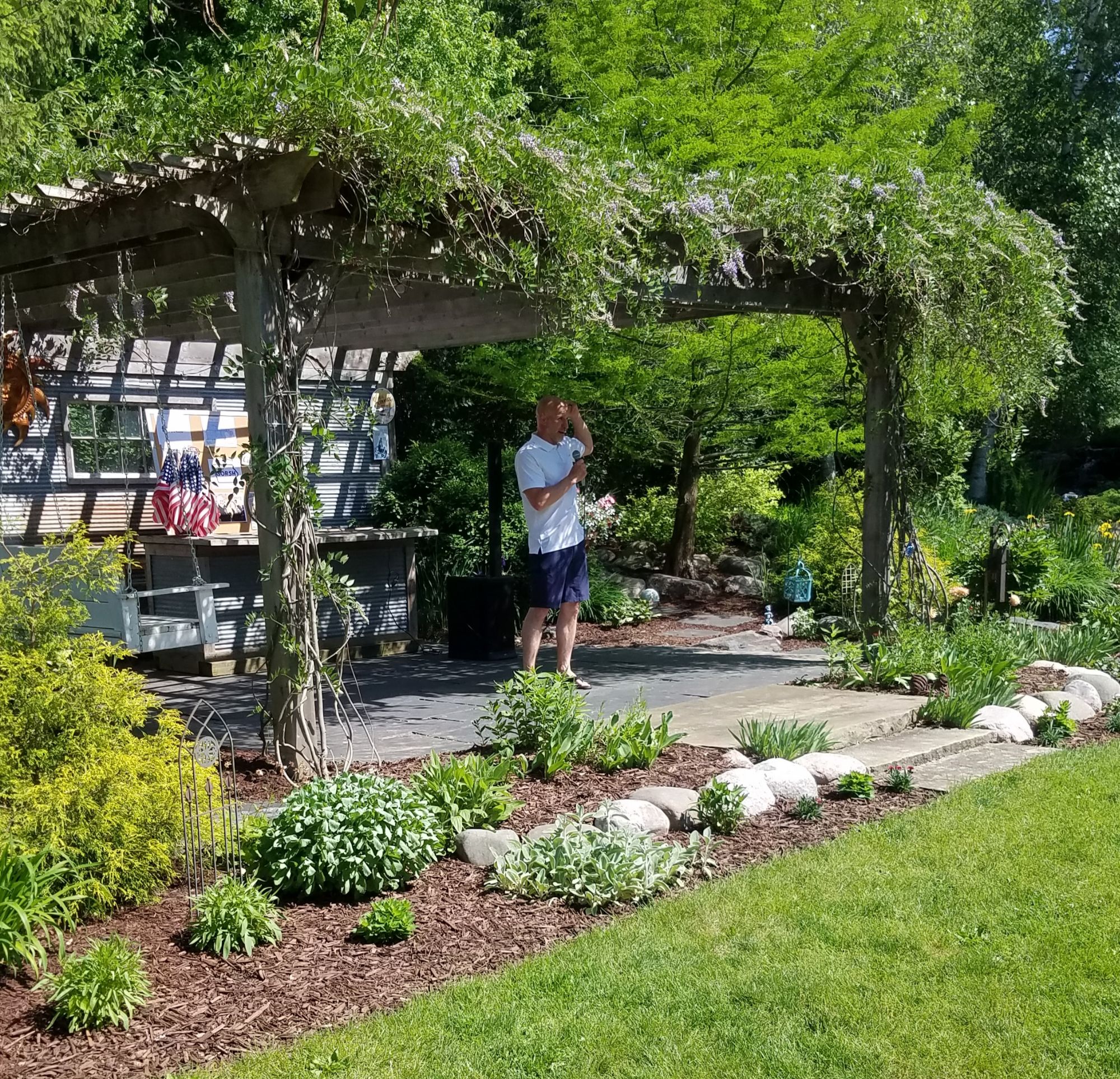
Iowa House candidate Jay Gorsh speaking beneath a pergola with wisteria.
Saturday afternoon I attended the campaign kick off meeting for Jay Gorsh in Williamsburg. The event was lovely. Shade in the backyard, combined with a gentle breeze, helped us forget the ambient temperature was 87 degrees. It was a good gathering of new and old friends.
Shorter Shifts, Slower Progress
In between rain and sunshine I spent three solid shifts in the garden. The challenge is always weather, yet this year my stamina has been wanting. Five hours at a time has been my limit, especially when ambient temperatures are above 80 degrees. As I enter the final push before Memorial Day it seems unlikely everything will be planted by then.
Des Moines Neighborhood Sounds
While visiting my sister-in-law we discussed neighborhood sounds. I’ve hear the rooster that lives close by. There are typical yard work and mowing sounds. People tend to fix up their own homes there and the sounds of hammers, saws, and drills can be heard from time to time. She reported a nearby garage band playing. Acclimatizing oneself to neighborhood sounds is a part of fitting in, especially to one that was established more than a century ago in the capital city.
June 4 Primary Election
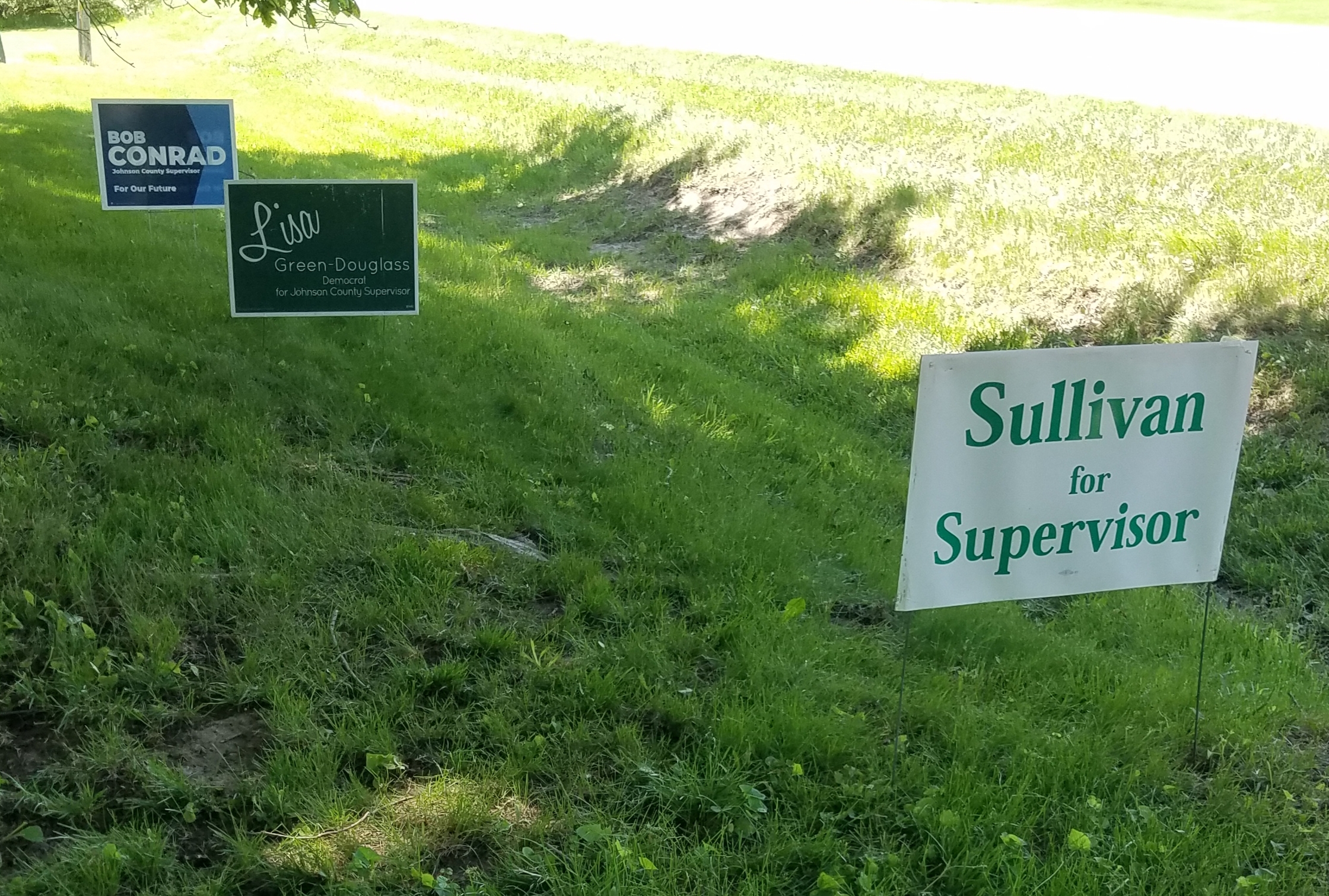
The consequential county races in the June 4 Democratic primary are among the five supervisor candidates. After thought and consideration, I decided on my three and put out their yard signs.
June 4, 2024 primary yard signs.
County primaries are quirky in Johnson County. There are a lot of factions and groups. For example, people in the labor movement favor Royceann Porter. A group of young progressives favor Mandi Remington who lost her bid for Iowa City City Council last November. Long time state legislators Mary Mascher and Kevin Kinney endorsed newcomer Bob Conrad. Rod Sullivan and Lisa Green-Douglass have served and are known entities. Sullivan seems like a shoe-in and it’s jump ball for the other two seats by the other four candidates. As they say, we’ll see what happens.
Black Hawk War
I began a reading project about the Black Hawk War. The first book is John Wakefield’s History of the Black Hawk War. Halfway into the main narrative, I’m not sure what to make of this racist tome. Likewise the inventories of forgotten men who served in military leadership has little relevance in 2024. One note is that a few years after settling in Illinois, a group of white pioneers was surprised that Black Hawk disputed their claim to the land and invaded from west of the Mississippi River to take it back. There are five books in the collection I created.
I need to get cabbages planted as they are growing too big in the greenhouse. Most vegetables in the greenhouse need to go into the ground soon. That will be the work of the coming week.
Row cover for lettuce, bok choy, herbs, spinach, and the like.
I’m okay with increased isolation as I age. I spent so much of my working years with people, I’m ready for a break. Let’s call it a permanent break. For the time being, I still drive, use the internet, and get along in social media. I can do my own shopping and make an occasional long automobile trip. Our personal to-do list is long. Working on such projects while I am healthy and reasonably strong is alright by me. I’m not as strong as I used to be. Sometimes I need help.
I rise from bed early most days. By 2 a.m., sleep is finished. I take my blood pressure and weigh myself, get dressed, and head to the kitchen to make coffee. Most days my spouse is still asleep, so I spend several quiet hours reading, writing, doing chores, and planning the day. I have a full shift in by 7 a.m., by which time I often haven’t spoken to anyone.
When I am with people, I often don’t know what to say. Engrossed in my own thoughts, such meetings force me to realize I’m not alone in the world. I seek to get along without conflict and mostly can navigate that scene. What in the heck is wrong with me that I view such meetings this way?
Yesterday I spent time with some old friends. I was careful in selecting topics for conversation. When young, it seemed we had endless hours to be with each other and do things. Now we see each other less often. When we do meet in person, time seems limited. The event I attended had new friends as well. I consider what brought us together. In most cases, it was politics or a joint project. These are good times, yet they are fleeting. I notice this more as a septuagenarian.
Being able to live in isolation is a privilege of being white, affluent, and located in a free country. In many ways, getting to this point is what I worked for most of my life. I plan to enjoy it. While I readily admit we live inside the context of a vast web of people upon whom we rely–fire fighters, physicians and nurses, grocers, utility companies, and the like–as I age, I don’t want to think about that.
After a long life of hard work, I just want some peace and quiet, isolated from the rest of the world.



 Journey Home
You must be logged in to post a comment.