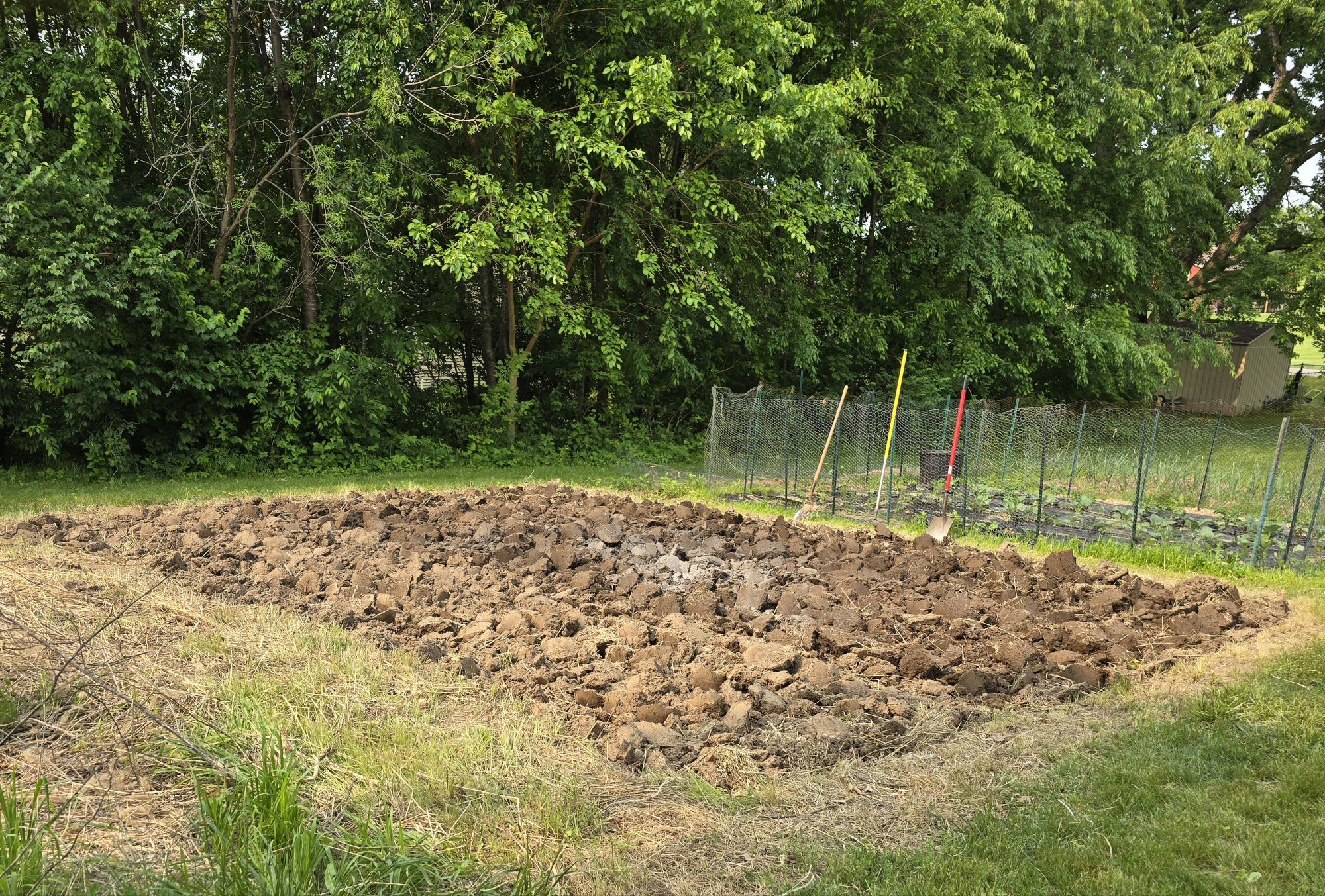
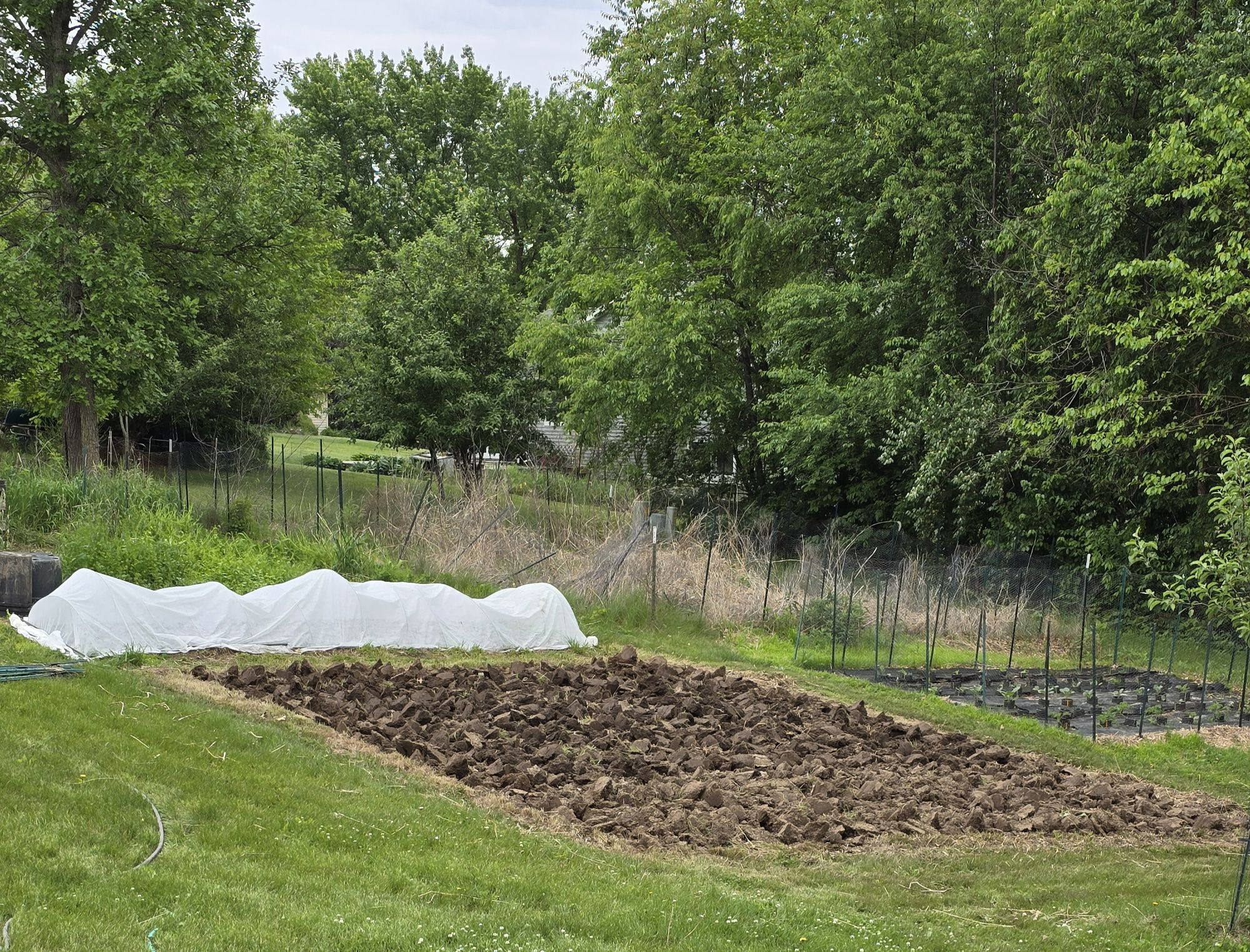
When the Aug. 10, 2020 derecho blew an oak tree akilter, I had to cut it down. I left a tall stump for a seat from which I took this photo. This will be a plot of tomatoes. The seedlings are getting tall in the trays, which means they need more moisture and roots do not have a place to grow. If I can make it through a long day on Monday, I will get them in the ground. That’s a big “if.”
This plot is smaller than the one I used last year, so I may need more space in another plot. I haven’t measured and counted yet, so no worries until I do. I had hoped to leave one of the large plots fallow, but it may be required for production to fit everything in. This is what happens when a gardener just starts a bunch of seeds without detailed planning. It’s how I have gardened since I began.
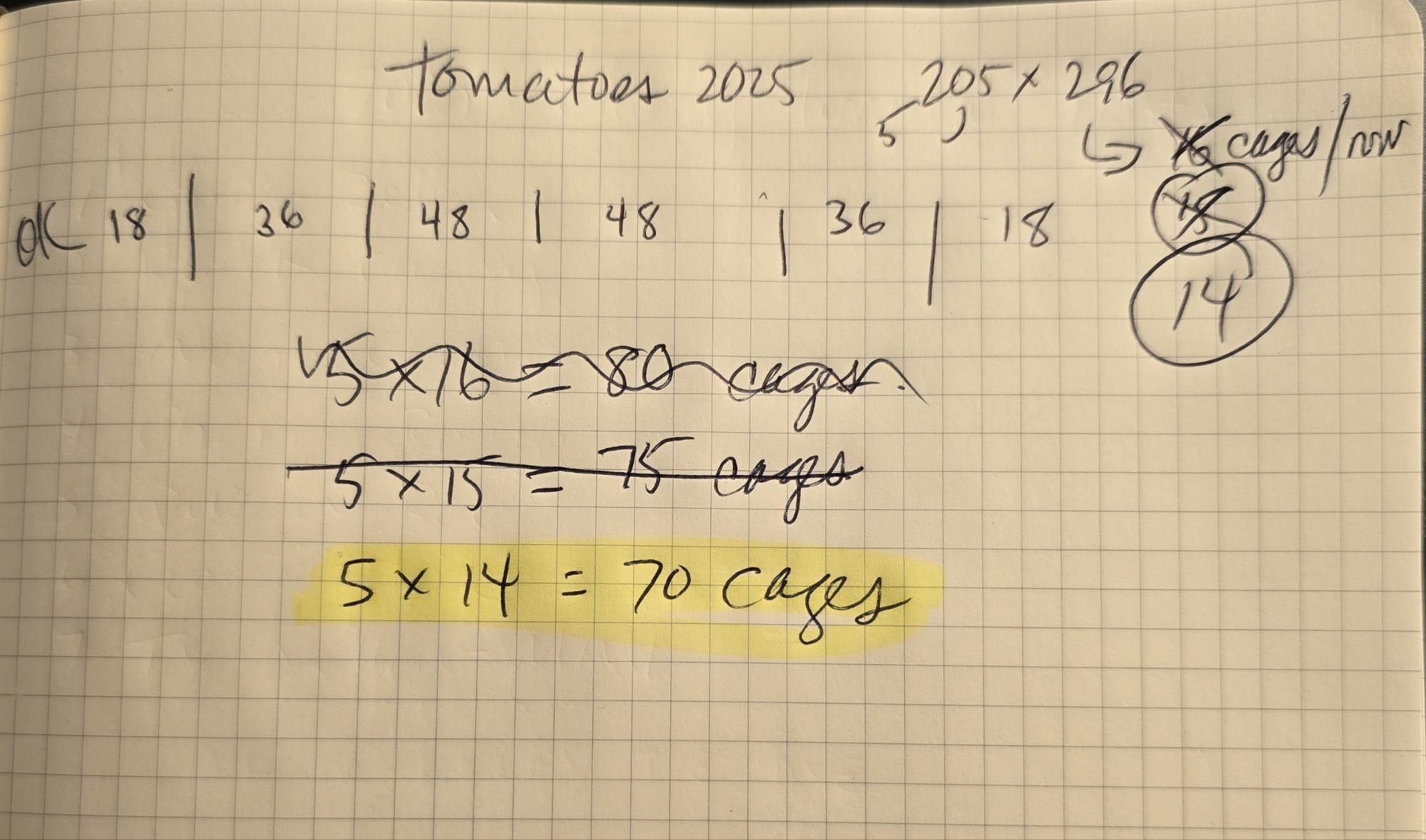
So I measured and counted and came up with this planting plan:
Tomato Planting plan plot #4 – 2025.
It will be a bit crowded yet I can deal with that. I may have to take the fencing down to access the two outside rows. Won’t know that until we see how things grow with these indeterminate vines that go all over the place.
Editor’s Note: Still short posting while I work on the garden. About another week to go before the main planting is finished.
The weather has been fabulous the last week or so. Mostly clear skies, moderate ambient temperatures, and normal relative humidity. Each day I begin a little earlier and work until just before I drop. That means about six hours. It is beginning to look like a garden.
Instead of working straight through on a single garden task, I have a couple tasks going at the same time. I work some on one, then another, and then another in small bits of time. It breaks up repetitive motion, keeping me healthy. It also makes garden work more engaging.
The last day of May was cleaning and organizing tomato cages and stakes, turning over part of the soil in plot #4, and then grinding all the desiccated tomato vines into the yard.
I picked a big bunch of greens: Pak Choi, three kinds of lettuce, and arugula. In the house, I managed three loads of laundry. By the end of all this, I felt tired and sore.
Here is a photo gallery of the best last day of May shots.
Trail hiking.Canadian Geese.Sunrise on the trail.Transporting tools.Turning the tomato plot.Tomato cages are ready.
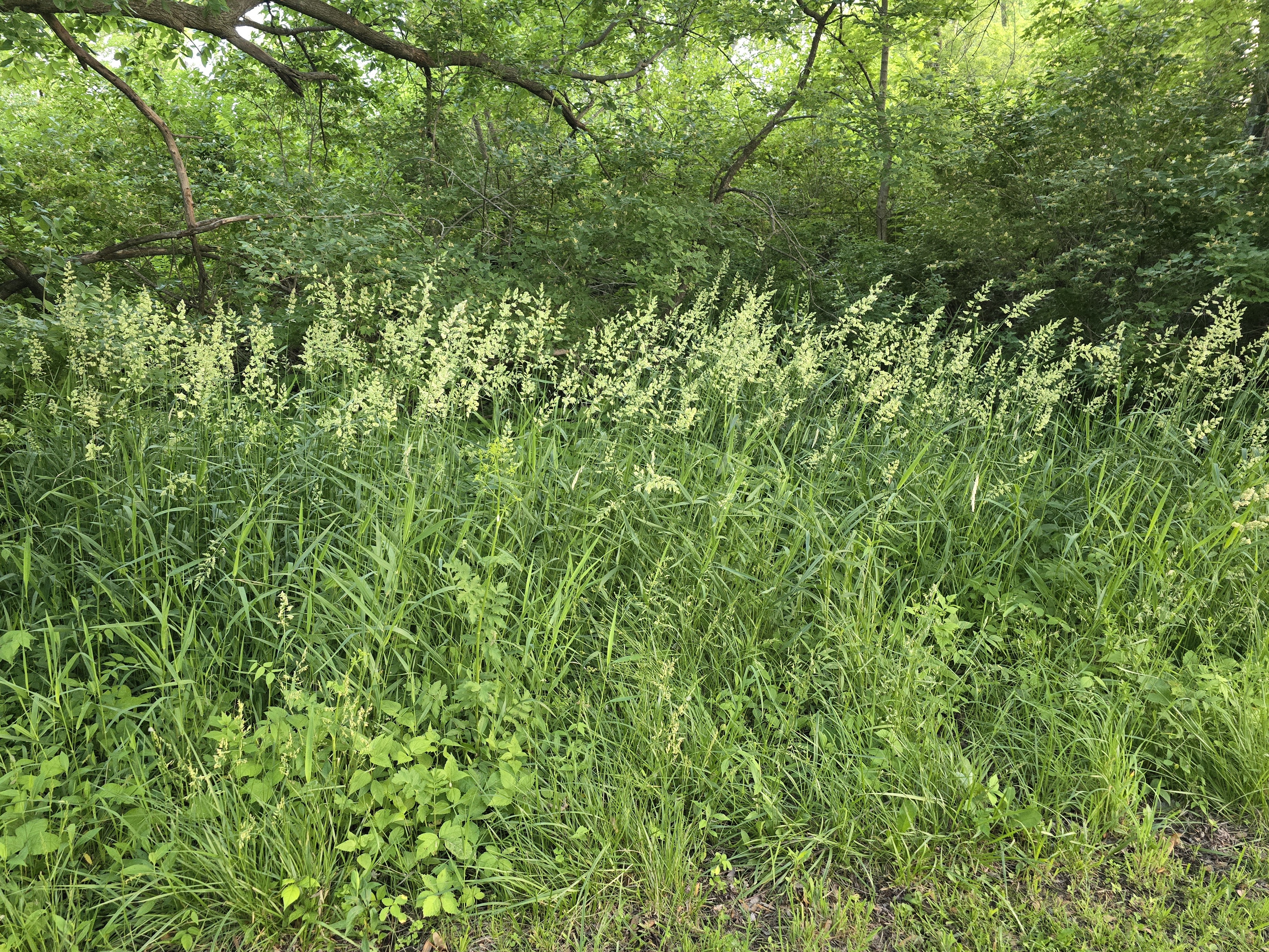
On Friday I dug into the garden plot that was fallow last year. Tall weeds took it over and died, leaving a soft place for wildlife and two feral cats to bed down and sleep protected from trouble. As I moved the weeds aside and pulled up the plastic, my feet sank into the soft, fertile loam. I worked a lot of years to get soil to be like that.
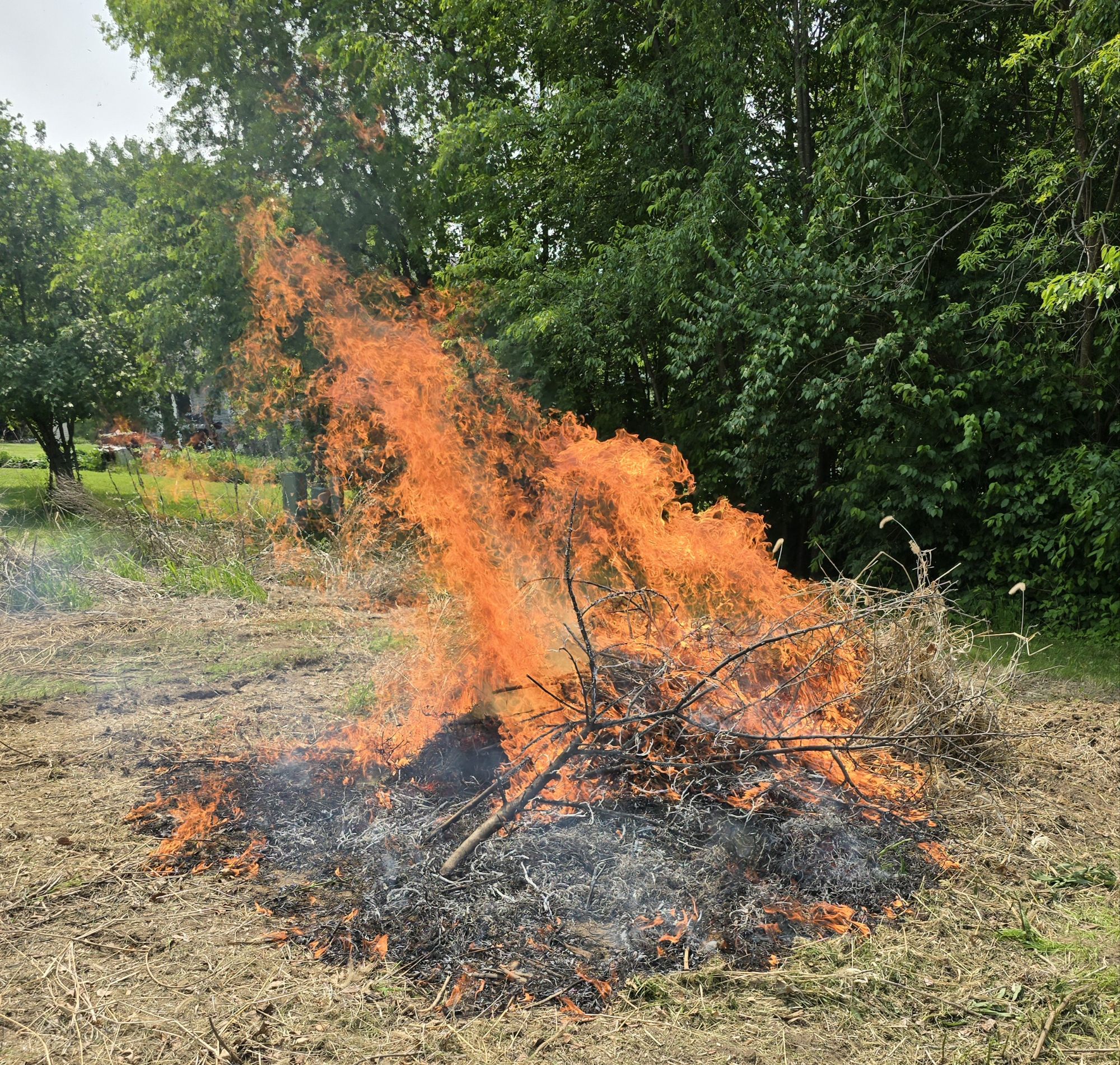
Because the pile of dead grasses was so tall, I burned it instead of running the mower over it for mulch. The fire was intense, radiating its heat 20 yards away. Luckily, it didn’t harm the nearby kale and chard plot. It burned, bright, intensely, and soon exhausted its fuel. Saturday morning I will start turning the soil over for tomato planting.
Because ambient temperatures were forecast in the low 80s, I started early at 7:30 a.m. By 1 p.m. I was tired and achy. It was a good day’s work. A six hour shift is what I can stand these days. Enough of them back-to-back and we’ll have a garden.
I found volunteer collard plants in the plot. I picked them all and we’ll use them in the kitchen this weekend. I can already sense it will be an abundant year.
Editor’s Note: Still short posting while I work on the garden. About another week to go before the main planting is finished.
I decided to call my morning exercise a hike instead of a walk. That’s mostly because when my sneakers wore out, I replaced them with a pair of hiking shoes. I don’t know if this will persist, but I’m trying it on for size, to wit:
Here are some photos from my morning hike.
Sunrise on the trail.The trail goes on forever.Reflections in the state park lake.A neighbor’s bush.Bur Oak tree leaves.
I was sidetracked by being a grease monkey for 90 minutes at the beginning of my outdoors shift. When I removed the wheel to replace the tractor tire, I did not realize the role the key plays. It uses friction to to keep the wheel turning as gears engage and turn the axle. No key, no movement.
I started the tractor and put it in reverse: nothing. A couple of YouTube videos later I understood what was wrong, retrieved the key I discarded from the trash and reassembled everything. The grease on my hands won’t come out using special soap, so I will have to wear it off. I drove the tractor to mow a patch in the garden… good as new.
My father eschewed being a grease monkey and encouraged me to find a different way to make a living. Toward the end of his life he was assigned duties as a forklift operator in the meat packing plant. He made a point of wearing decent clothing as he hauled pallets of meat around the warehouse. Decent meant a minimum of homemade repairs. His message was we could rise above the quotidian circumstances in which we came up and found ourselves. He graduated from college at age 40 as an example.
I was glad to resolve the issue created by mounting the wheel improperly. I resisted an urge to call the repair shop and ask them. I just solved the problem using tools available. Self reliance is essential if we will survive the authoritarian regime in Washington, D.C. We need to save our money for more important things like taxes, food, shelter, clothing, and healthcare. Today’s political trends have me living closer to the means of production. That’s a good thing.
Editor’s Note: I finished planting most of plot #3 on Wednesday. I’m waiting for the hot peppers to mature before transplanting them into the final row. Next step is preparing a tomato patch. In the meanwhile, my posts here will be shorter than normal. I do plan to return to “normal” at some point after the garden is in.
When the repair shop returned the John Deere yard tractor, the right rear tire would not hold air. I removed it and ran it across the lakes to the tire shop. The diagnosis came back air was escaping through the sidewall due to rubber deterioration and the tire needed to be replaced. According to the tire’s date code, it was older than the technician that worked on it. The guys (and they were all males) at the tire shop had fun talking about that.
The garden is proceeding on a reasonable schedule now that we are past the worst of spring weather. This week has been about tilling the soil in plot #3, covering the surface with plastic sheets recovered from last year, putting up a fence, and then beginning the work of clearing out the greenhouse. I made good progress by Tuesday and should finish planting seedlings ready to go into the ground today. The next big project is clearing a space for the tomatoes. I know just where that plot will be this year.
I harvested arugula and spinach. Under the covered row everything grows well and soon there will be Pak Choi, lettuce and more arugula. Picking kale is not far away as it is growing well in almost ideal conditions. Already it is feeling like a productive garden.
Yesterday I went grocery shopping after garden work was done. I had a dozen items on the list and quickly got them into a shopping cart. Just as I finished gathering the last item, I realized I didn’t have my wallet. I left the cart near the frozen foods section in the health market and ran to the car to see if it was there. It wasn’t. I returned to my cart and calmly returned all the items to the shelves. Shopping will have to wait for another day.
Editor’s Note: I am short posting when I get time until the garden is planted. It is taking longer than expected, yet I am determined to harvest produce from this soil, this year.
We must get on with our lives. There is no better time than right now to lean into empowerment of ourselves and our identities in the face of trying times. These are trying times. From the uncertainties of markets to the fragile nature of our environment, it is always something new, different, or difficult. We didn’t ask for this, yet it is our gift from the body politic.
I’ve been thinking about the trees on our lot that were damaged during the August 10, 2020 derecho. The mulberry tree, with a big crack in the main trunk, is beginning to lose branches. The Autumn Blaze Maple also has main trunk cracks. It is only a matter of time before they will have to come down. In addition, the two Ash trees are already dead from the Emerald Ash Borer. How does one deal with climate change? By getting a decent chainsaw, obviously.
I continue to lean into the garden and work until I can’t work any longer. The shifts are shorter than they were ten years ago. Nonetheless, it is beginning to look more like a garden.
Editor’s Note: I am short posting when I get time until the garden is planted. It is taking longer than expected, yet I am determined to harvest produce from this soil, this year.
Editor’s Note: This post from 2011 expresses my feelings about Memorial Day better than anything I could write today.
A soldier feels a sense of connection to his country that is like few other things. That connection is to current events, but to the lives of past soldiers as well. Being a soldier can be a form of living history.
When I left the 2nd Battalion, 87th Infantry, and the Robert E. Lee Barracks in Mainz-Gonsenheim, Germany, I returned my service revolver to the arms room and never looked back. It was with a sense of duty, family tradition, and adventure that I had entered the post-Vietnam Army. My enlistment was finished, I resigned my commission, and like many soldiers turned civilian, my main interest was in getting back to “normal,” whatever that was.
A soldier’s connection to country includes being a part of living history. For example, many of us are familiar with Lieutenant General George Patton from the movie starring George C. Scott. When I stood at Patton’s grave in the Luxembourg American Cemetery and Memorial there was a personal connection. I learned a history I had not known. He died in a car accident after the war and his life seemed visceral, real…he was one of us. His actual life story, considered among the American soldiers laid to rest in Luxembourg, was real in a way no movie ever could be.
Words seem inadequate to describe the feeling I had when visiting the Normandy American Cemetery and Memorial at Colleville-sur-Mer in France. I was traveling with some friends from Iowa and we went to Omaha Beach and the Pointe-du-Hoc, where the United States Army Ranger Assault Group scaled the 100 foot cliff under enemy fire. It is hard to believe the courage it took for these men to make the assault that was D-Day. The remains of 9,287 Americans are buried at Normandy. What moved me was that so many grave markers indicated deaths within such a short period, buried at the site of the battle. The lives of these men embody the notion of devotion to country.
The Andersonville, Georgia National Cemetery is where some Civil War dead are buried. This cemetery is active with veterans and their dependents continuing to be interred there. Andersonville is a part of our history that is often forgotten. Some 45,000 Union soldiers were confined at Camp Sumter during its 14 month existence. More than 13,000 of them died “from disease, poor sanitation, malnutrition, overcrowding, and exposure to the elements.” It was an ignoble death for a soldier and emblematic is the large number of graves marked “unknown” at Andersonville. It saddens us that citizens activated to serve the cause of preserving the union ended up this way. It seems like such a waste in an era when we have knowledge that proper public health procedures and basic sanitation could have prevented many of these deaths.
A friend of mine in Davenport kept the bullet that killed a relative during the Civil War on a “whatnot” in her living room. It was a constant reminder of the sacrifices servicemen and women make when they put on a uniform. It is also a reminder that defense of the common good is no abstraction.
On this Memorial Day, it is worth the effort to consider those who made the ultimate sacrifice for our country and pay them respect. People and organizations are decorating cemeteries with American flags, reminding us that military service is not about images and speeches. It is about the decision individuals make that there is something more important than themselves and that from time to time it is worth giving one’s life to defend the common good.
~ First published on May 29, 2011 on Blog for Iowa.
Taking time from writing my autobiography is not a clean break. While I’m digging in a garden plot or walking on the trail, my mind is consumed by how to pull everything together and bring the work to a close. Up to the time we moved back to Iowa in 1993, a chronological narrative seemed appropriate. Beginning here, in this place that was a vacant lot when we arrived, life got complex to an extent a time-based narrative doesn’t really capture those 32 years. There was no single narrative.
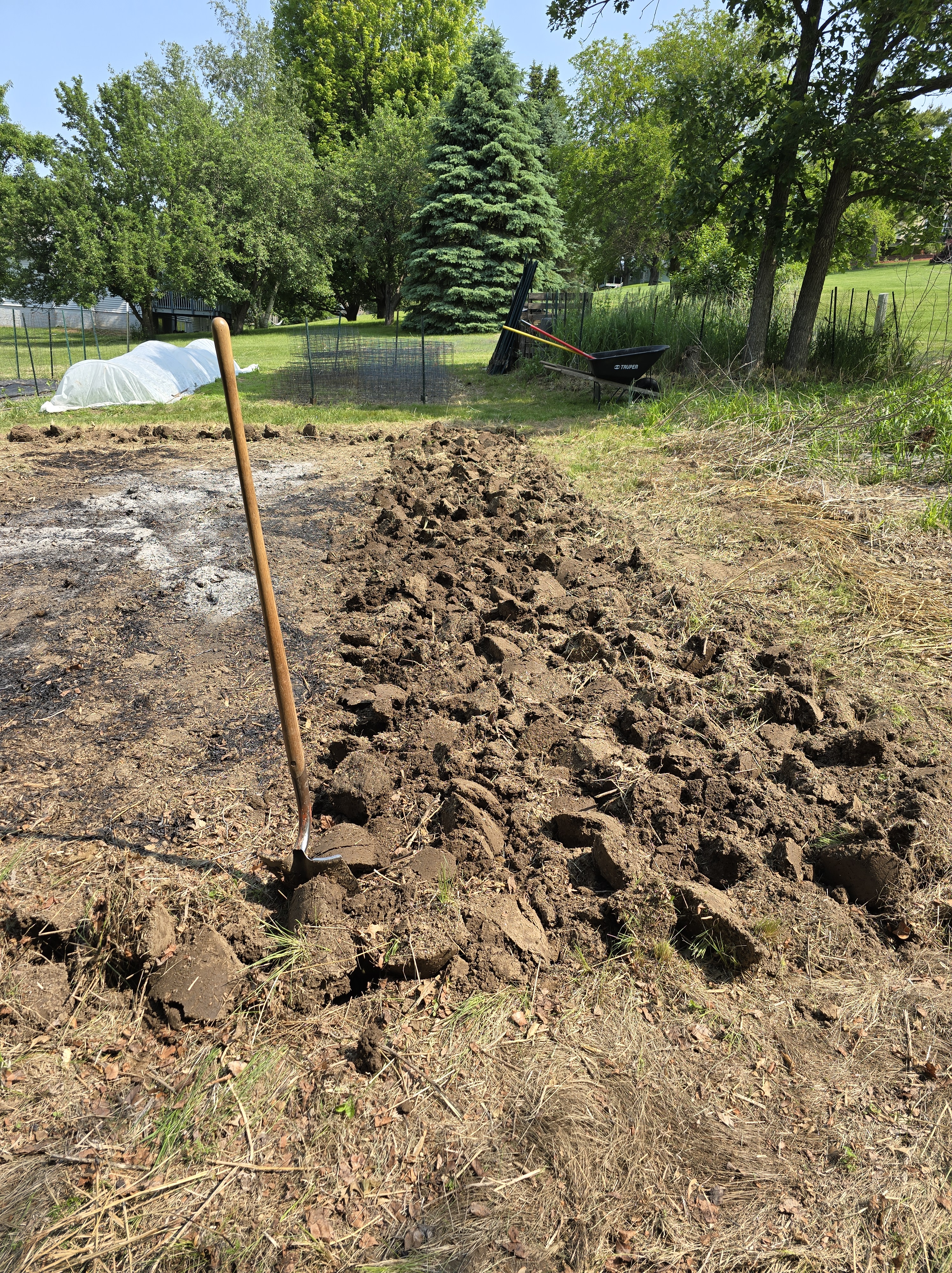
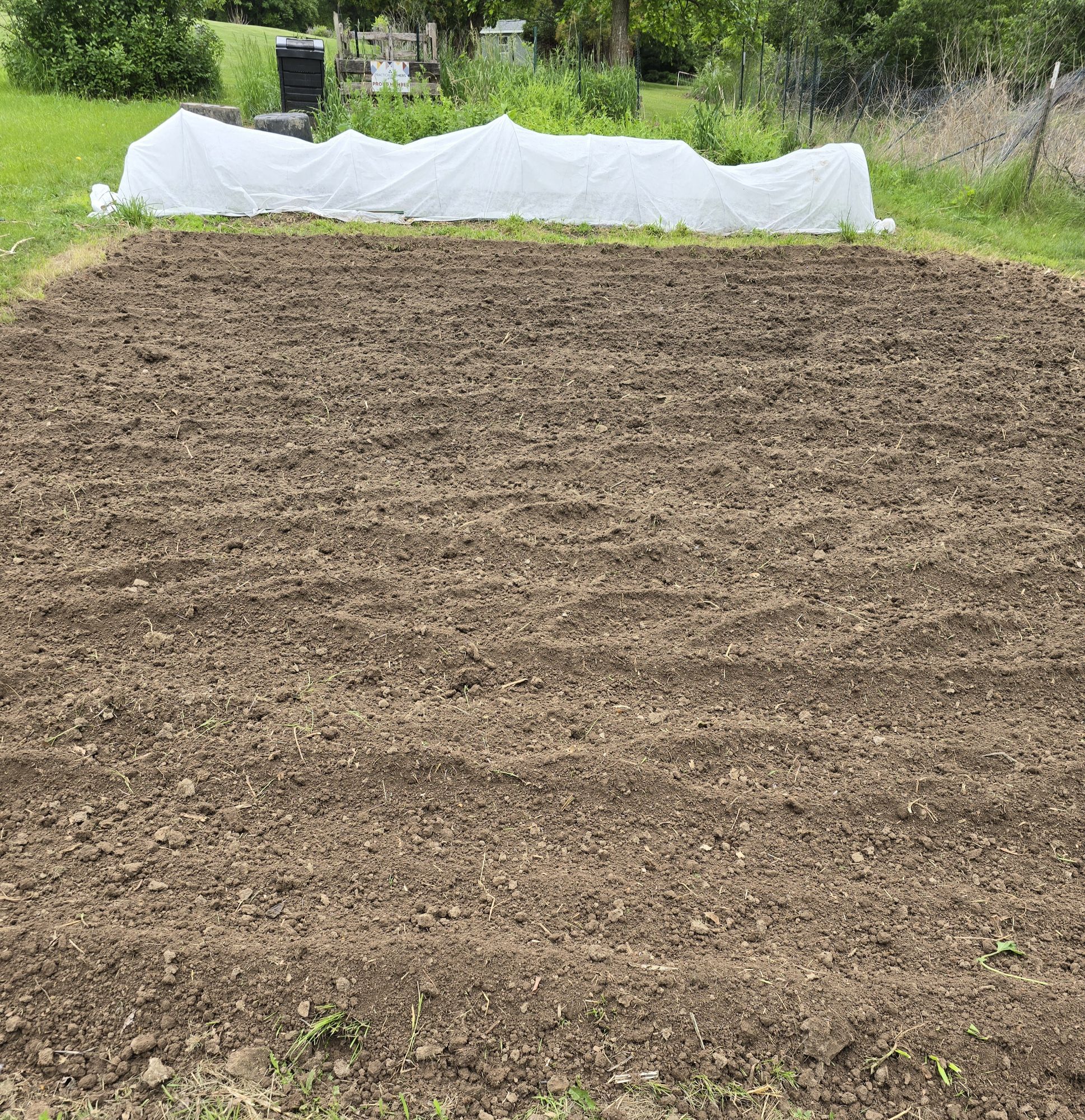
Thanks to another low-wind, warmish, and dry day I had time to myself to consider the bigger picture of what I am writing. That and get the next big plot turned over. Well, by the time I finished this, I had turned it over with a spade:
Plot No. 3 spaded.
I read Lawless: How the Supreme Court Runs on Conservative Grievance, Fringe Theories, and Bad Vibes by Leah Litman this week. She points out how the U.S. Supreme Court takes more and more power unto itself without substantial resistance from the other two branches of government. While today the president is ignoring some of their decisions, whether there has been a Democrat or Republican as president, the Supreme Court is calling the shots in society through jurisprudence, according to Litman. (Major questions doctrine = good grief!) The attention hound of a president distracts from this very real center of power among the six Republican-appointed justices. If you are following the U.S. Government in 2025, consider picking up a copy and reading it. It informs what is going on in the news in real time. Few books I know are like that.
Today is the fire fighters’ breakfast at the fire station. The menu is simple, but not vegan or particularly vegetarian. I’ll go for my annual dose of pancakes and orange juice. I expect to encounter many I know so it’s not so much about the food. It’s about joining together as a community. We need that now more than ever.
Editor’s Note: I’m still on short posts while I focus on the garden. I have three main plots to go to call it planted. Wish me luck!
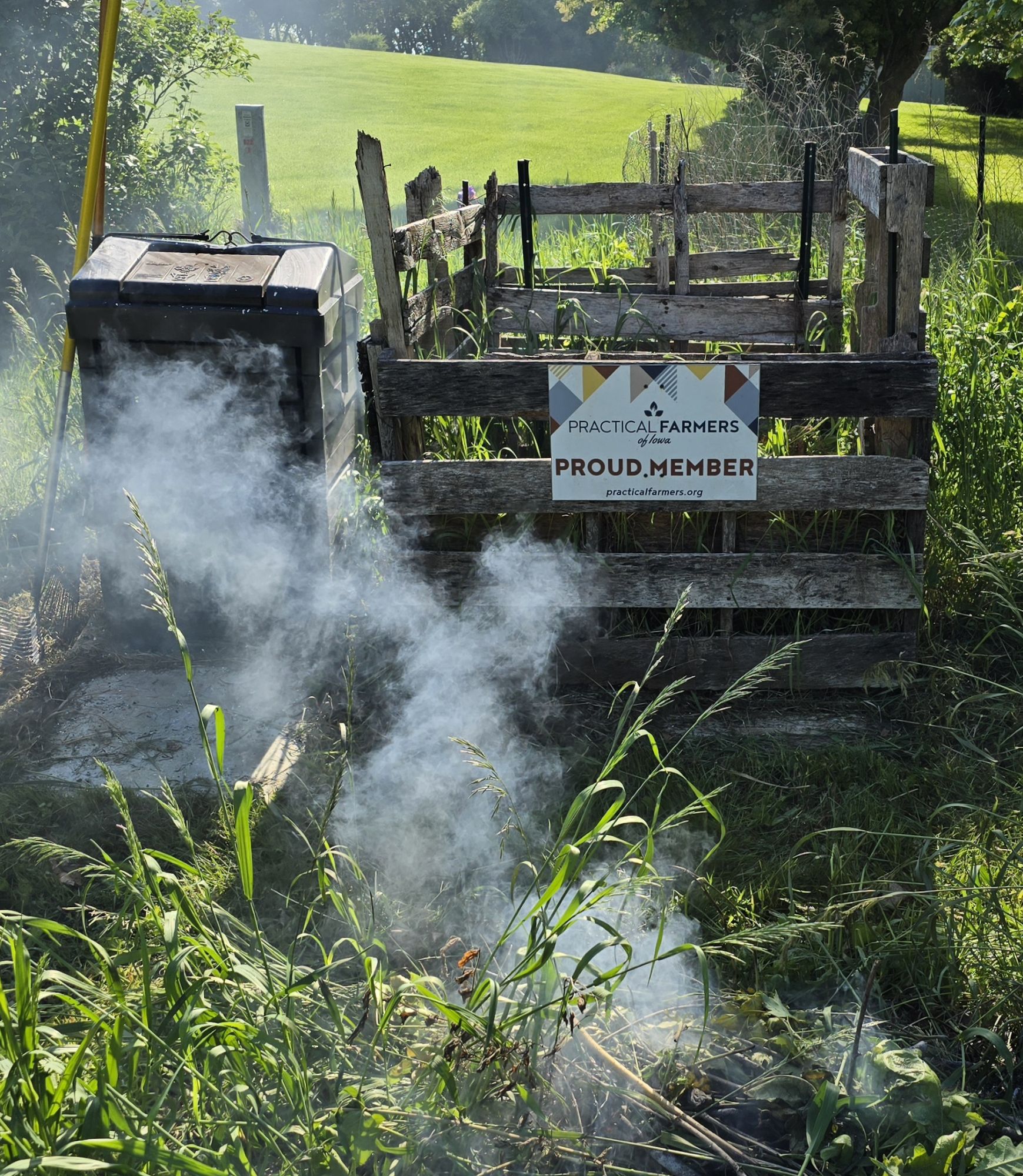
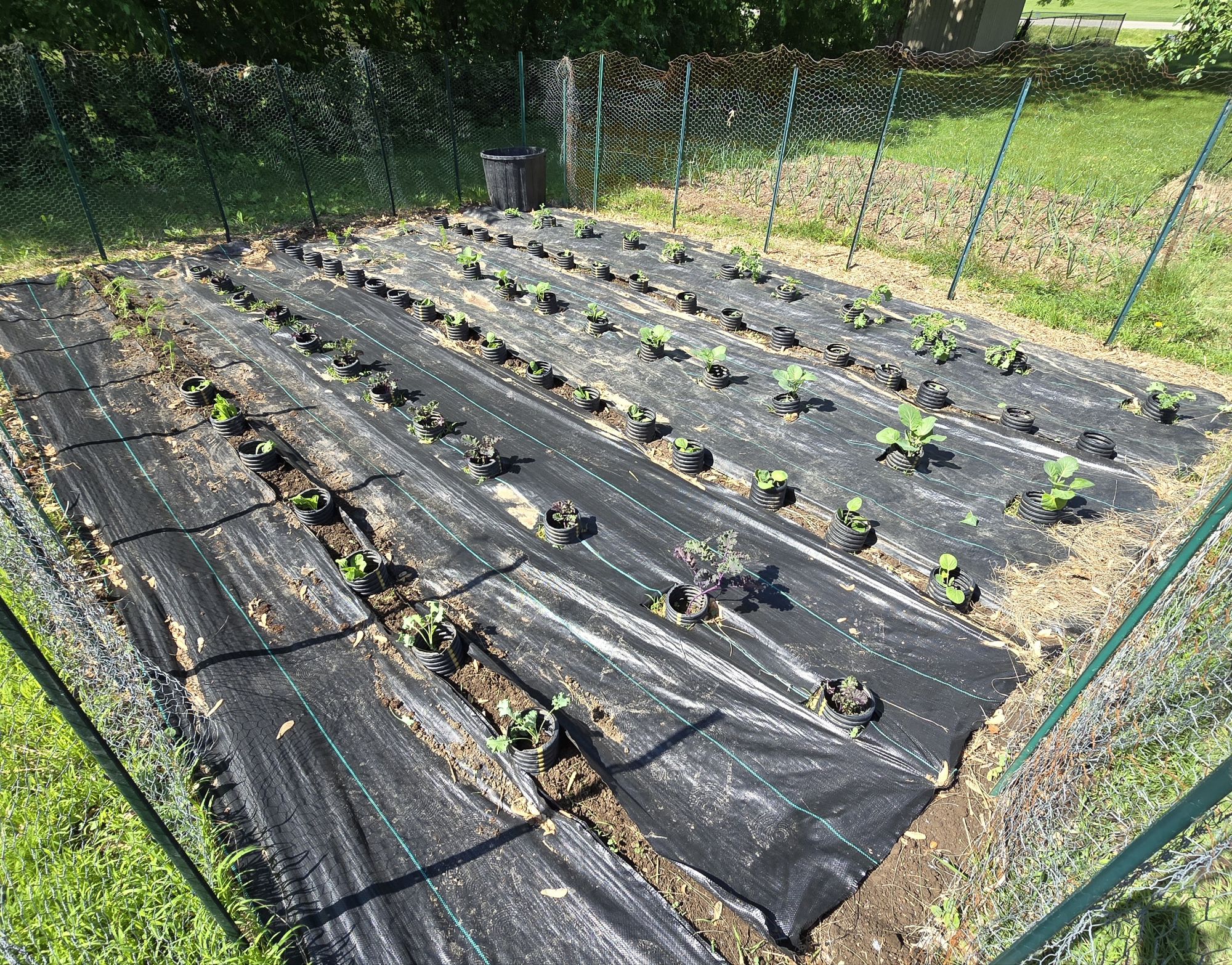
After several days of rain, Friday was a clear day for gardening. The cruciferous vegetable plot is fully planted, the next large plot is cleared, and I cut weeds so I can access the compost bins more easily. I lit the first burn pile of the season. The plot with the burn pile needs mowing so I can store the tomato cages there until ready to use them. I put my Practical Farmers of Iowa placard on the compost bin to officially open the garden. It felt like a productive day.
Cruciferous vegetable plot.
The right rear tire of the yard tractor wouldn’t hold air. I called the John Deere shop and they sent me to a local tire service that has been in business since 1932. I checked in the wheel, and now await their phone call. I’m good with waiting until Tuesday to pick up the wheel. Everyone, especially a mechanic, needs a holiday weekend.
I complain about the internet from time to time, yet it was easy to locate a YouTube video that showed how to remove the wheel from the tractor. It saved time and frustration. It assured me I was performing the work correctly. We didn’t have that in the pre-internet days. As a bonus, I had the correct tool to remove the clip holding the wheel on the axle.
It’s the time in the garlic cycle where heads from the 2024 crop need to be used. Thursday after supper I took half of what remained and made garlic purèe with olive oil. I froze eight jars, which is plenty for the rest of the year. There is an abundance to use fresh until scapes come in.
Friday was a good day in the garden. Here’s hoping for more like that.







 Journey Home
You must be logged in to post a comment.