Stump cut to make a resting place for the gardener.
With four weeks left until Labor Day, summer is about finished. A lot of work remains. The only compensation I receive for any of it is the satisfaction of a job well done.
Is my work the same as working for an employer? I think so, yet there is an attitude shift when we work for ourselves. I find more personal risk and am particularly careful I don’t get injured or make a bad financial decision. There is no malarkey in my work life. It is based on empirical tasks, cash flows, and bank loans, all of which are necessary to piece together a life. Most things break down into short projects upon which I can work until completion. There is no overtime pay, or any of the benefits allowed many workers. My spouse and I pool our pensions and hope they cover the bills.
I came up in a work environment where I earned more money than needed for minimal survival. It enabled buying a house, saving for our child’s education, and then later, when our savings proved to be not enough, it allowed us to pay the student loan to take that out of the child’s bucket. I also earned enough money to be able to quit my job multiple times without immediate prospects. The biggest adjustment to living on pensions is there is no longer any “extra” money.
From the time I left the job where my spouse and I met, until we moved back to Iowa and our child left to attend college, she worked at home. The work she did was valued and important to raising our child. There was the avoidance of child care expenses, and a clear division of labor, yet it was more than that. It was a way of life that had little to do with money except treating it as the fungible commodity it was. Ours wasn’t a perfect life, yet we got by.
I resist framing what I do every day as a job. The old farm word for it is “chores.” It’s more than that. With our more sedentary lifestyle, we need exercise, a healthy diet, and some amount of socialization. I suppose that makes us more than a cog in the machine of life. I hope we are more than that.
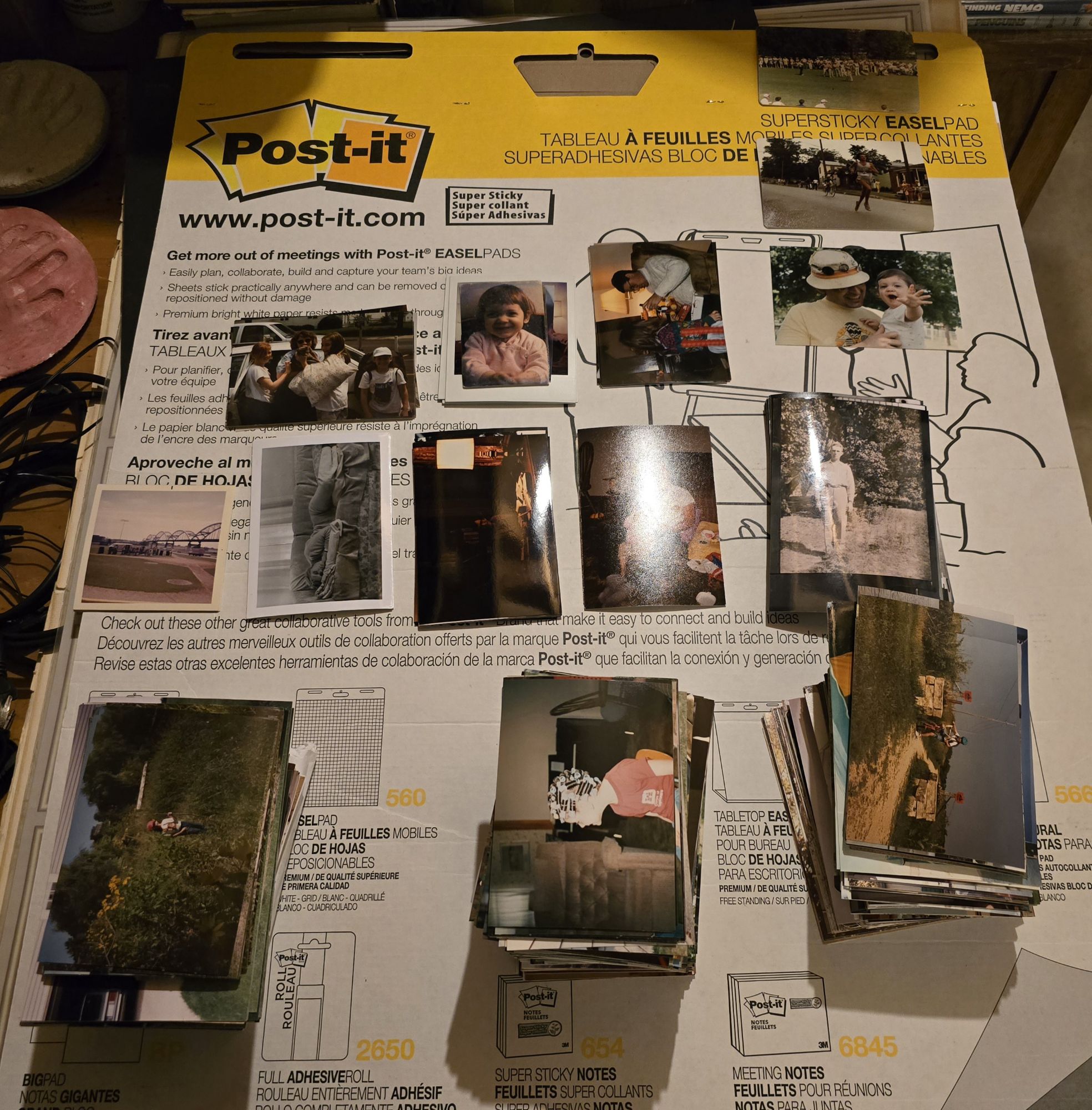
In the end, photographs are objects. They have qualities — paper, coloration, moisture, processing technique, subject matter, and many others. In the beginning, one has to take a pile of them and just start organizing. This is especially true if during the collection process, there was no organizing principle, other than all photos go into a certain box labeled “photos.” It’s a process, or may be one once I have gone through everything on an initial pass. Here I’m talking about paper photographs.
Somehow I ended up with large quantities of photos, stacked one-on-one, placed together only by happenstance. Now I review them, one-by-one, to see where the journey leads. The immediate task is separating them into groups according to when they were taken. For example, there is a set of our young child getting a home permanent. They obviously go together in their own stack. Another stack is photographs I took when I lived in Mainz and from the travels around the area. It is a tall stack because I avoided thinking too much about them. They are easily grouped for later analysis. Going through them quickly is a necessary first step.
The hardest part of a review and sorting is to turn off memory while doing it. That was a stumbling block because I easily got distracted by memories evoked by the prints. I also felt I had to turn immediately to my autobiography and write about a set of photos. Now, one pile, one box, is sorted at a time. I group the objects together as they appear before me and as I recall how they went together.
Each pile could be a story in itself. To get through them, the stories need to be set on the sidetrack to be hooked up to the train later. Maybe it’s not optimal, yet it is a way to get from randomness to a better understanding of what I have available… and how each image might be used. This process will be about my personal cultural attributes, some of which I know, and some lie unawares in the conglomeration of personal cultural artifacts.
For now, I decided to make a weekly post about how my photography process evolves. The first one is here. Going forward, I will use the tag A Life of Photos. I hope readers will follow along.
It was hot and humid outdoors all day Tuesday. I managed a hike on the state park trail between thunderstorms. A little after 10 a.m. I drove across the lakes to the wholesale club to secure provisions. My usual three-pound can of generic Colombian coffee had increased to $20.99 from $13.99 the last time I stocked up, a 50 percent price increase. The tariff on Brazilian coffee goes into effect on August 1, after which it will cost even more. I did not replenish inventory at $20.99.
At the end of June, I replaced the whole house water filter. Yesterday I sat down to order a replacement and the new price was $20.19. In February I bought the exact same part for $13.40, a 51% increase in 5 months. I only get two of these per year but this increase and others like it will make household financial management more difficult. It is a preview of what life under the oligarchs will be like.
The garden has me distracted from work on my autobiography. There is so much produce to process, there seems little time for anything else. To preserve the harvest, immediate action is required, so writing is pushed back. In the annual cycle of my life, this is a feature, not a bug. Our lives would be the worse without the garden.
Hours in the kitchen enable my thinking about life and writing about it. I am certain I have at least one more book in me as the urge to write an autobiography has been with me as long as I can remember. At its core, writing autobiography is part of a life well lived. Once I finish and get a copyright, what then?
I envision creating a new document, using the first two books as a base, to which I add autobiographical information and stories. The published books will stand on their own as moments in time, yet my story will continue to evolve as long as I live. Part of it is finding aspects forgotten during the first telling. Part of it is recording new insights on the same stories already told. It will be a continuous work in progress that may never be published the same way again. It will be a never ending memoir.
There are other books I imagine publishing. The most obvious one is collections of my essays first published on this blog. There is enough here to make a book about local food. There is another about sustainability. While I’ll cover the coronavirus pandemic in part two of my autobiography, there is a much longer story to tell about its impacts on my life and on society more generally. That story is just being revealed. Whether I get to any of this is an open question.
For now, I continue to process fruit and vegetables so we’ll have something for our dinner plate long after the frost comes in October. As the harvest winds down, I’ll work again on my memoir. I still hope to finish the draft by the end of year holidays.
I woke early and have been listening to boomers roll across the area. There is a severe thunderstorm watch according to the National Weather Service. Rain is expected to continue until around 10 a.m. It will be another good morning to spend in the kitchen.
There has been so much rain I haven’t unrolled the hose to water the garden for two weeks. That is a good thing on several levels. All the greenery has taken off, including plants I put in the ground and weeds. Indeterminate tomato vines are reaching more than eight feet long. When the rain slows down, I need to get under them and see if any tomatoes are ready. I planted the main rows four feet apart, yet the vines in all the rows reach up and touch each other. We like rain.
Thunderstorms are a characteristic of Iowa summer.
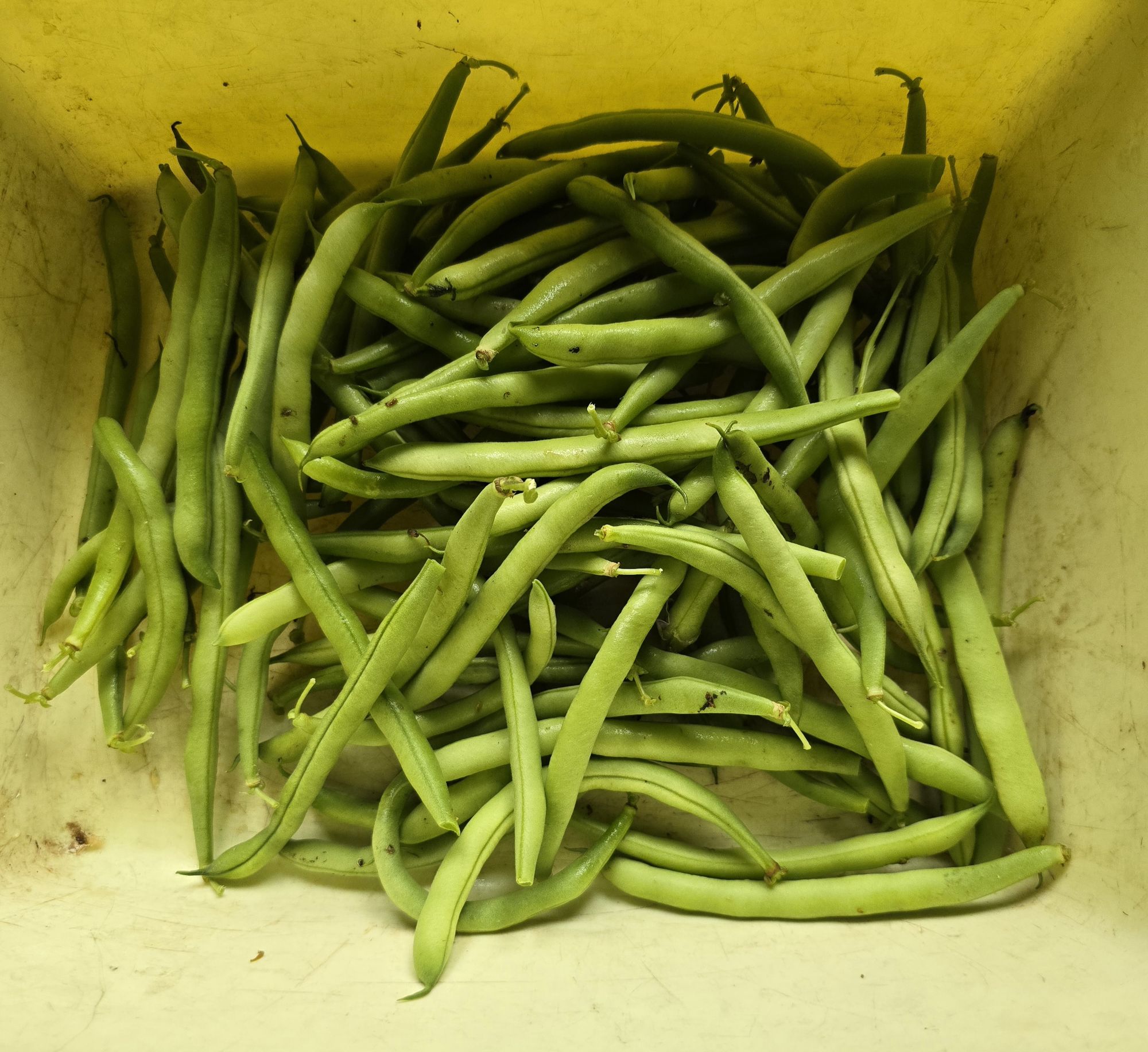
While picking green beans on Monday it was so hot and humid I pushed my physical limits. I was drenched in sweat and felt dizzy a couple of times, yet worked to finish picking mature beans. Sorting and cleaning them was a chore yet I got that done in the kitchen before dinner. We did not eat green beans for dinner, having broccoli from the garden instead.
Green bean harvest on July 28, 2025.
Lately I’ve been thinking about my decision to retire during the coronavirus pandemic. The combination of the lock down, becoming eligible for full retirement on Social Security, and the health risks of working in a retail environment brought the decision together. I’m having second thoughts about being retired. It was evident before, although is clearer today, that if the Congress does not address the shortfall in Social Security in 2032-2034, we will need more income than we have. Changing course to engineer a life that produces more income than our pensions produce is in the near future. That will give me something to think about while I work in the kitchen this morning. In the meanwhile, it is peak Iowa summer and we should enjoy it.
Sunday morning I picked green beans because they were ready. About 20 minutes into the task I was drenched in sweat. With a forecast high of 89 degrees it became clear it would be another indoors day. Once again, I escaped into my two favorite spots in the house: my writing table and the kitchen.
After finishing chores I sat at the desktop and finished my post for yesterday. I also exchanged emails with a friend with whom I am doing this event.
We met in person on Friday and have the idea of talking about why we write books at the end of the time. We are curious about how attendees get information about complex topics. Do they read books to do so? Should be a good conversation.
I am into the second volume of my autobiography and she is into her third, so that’s the origin of that. She sent along a quote about why we write from Nairobi Williese Barnes that said, “(we write) to shift the conversation, challenge harmful narratives, and encourage accountability in the ways we support and uplift one another.” I don’t disagree with that sentiment.
She quoted me back from my own writing from posts on this blog:
So we write, partly to clarify our thinking, and partly to satisfy our need to reach out to others and express the value of our lives, one life among the billions of people walking on the planet. Whether anyone reads or understands our writing is not the point, although we hope they do.
Why am I writing here, in public? Part of it is self-expression, a basic human need. Part is using language to understand complex social behavior. …. Defining a broader moral lesson is the challenge as the memoir progresses.
There are few finer things on this jumping green sphere than writing about writing, especially with a friend.
I made it to the kitchen at about noon and endeavored to get busy. I started with doing the dishes. More accurately, I started with the laundry. On the last Sunday of each month I launder my bed sheets and catch up on other laundry that accumulated. This took a bit of time out of kitchen work as I did five loads. I managed to make what I call “minced salad.” That is summer vegetables suitable for eating raw diced into one eighth inch cubes and mixed together with extra virgin olive oil and apple cider vinegar. I season with salt yet the seasoning possibilities are endless. It came out well.
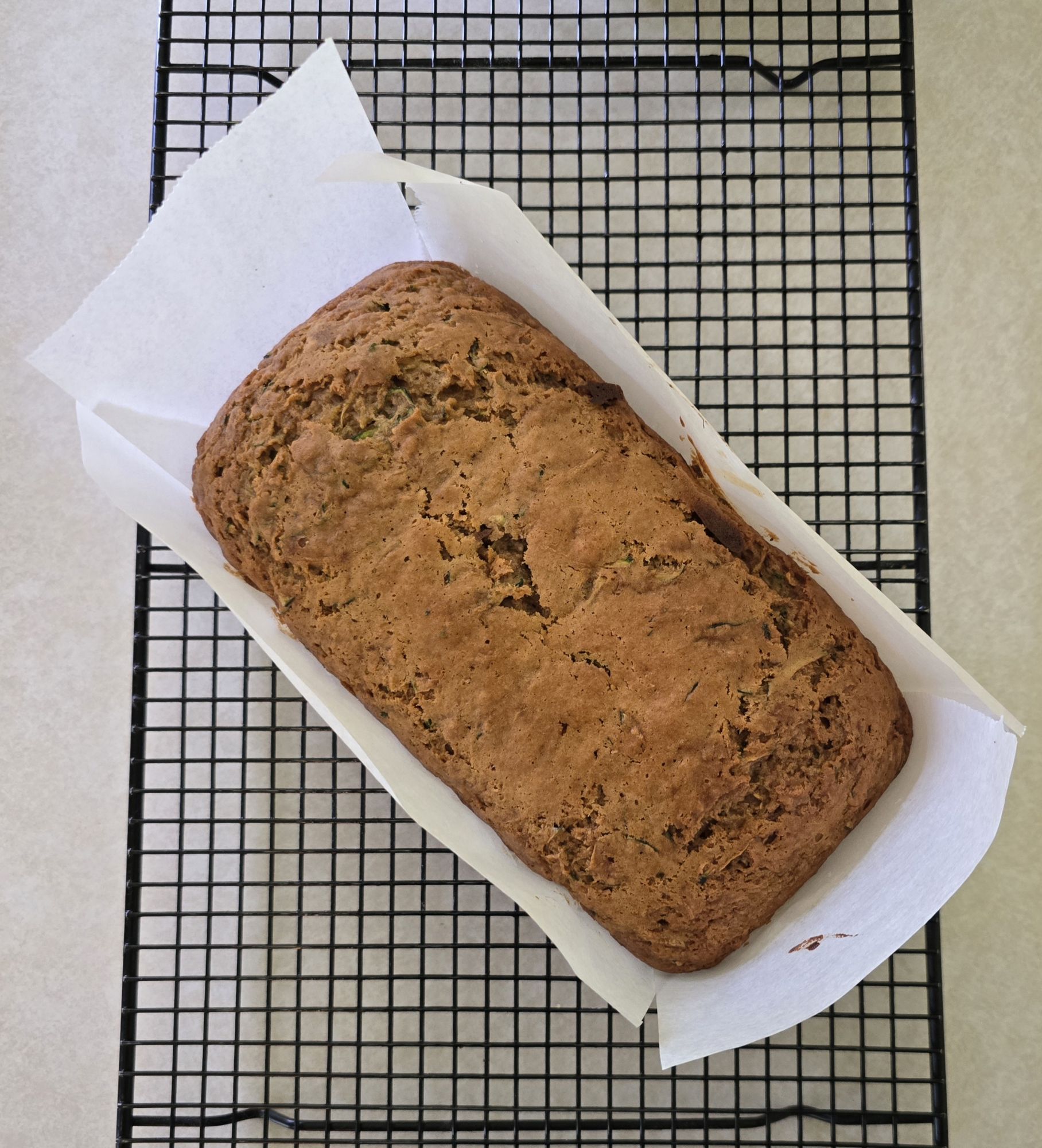
The garden is about finished with zucchini. I modified my zucchini bread recipe, substituting applesauce for the oil, and by wringing the water out of the zucchini with a towel. It is to set for 2-3 hours before cutting so I haven’t tasted it. It appears to have had the desired effect which was to decrease the moisture in the loaf and reduce cooking time. It should be good.
Zucchini bread baked on July 27, 2025.
The benefit of these activities is I can shut out the rest of the world and focus on our family. We need more time doing that. It is a way to go on living in turbulent times.
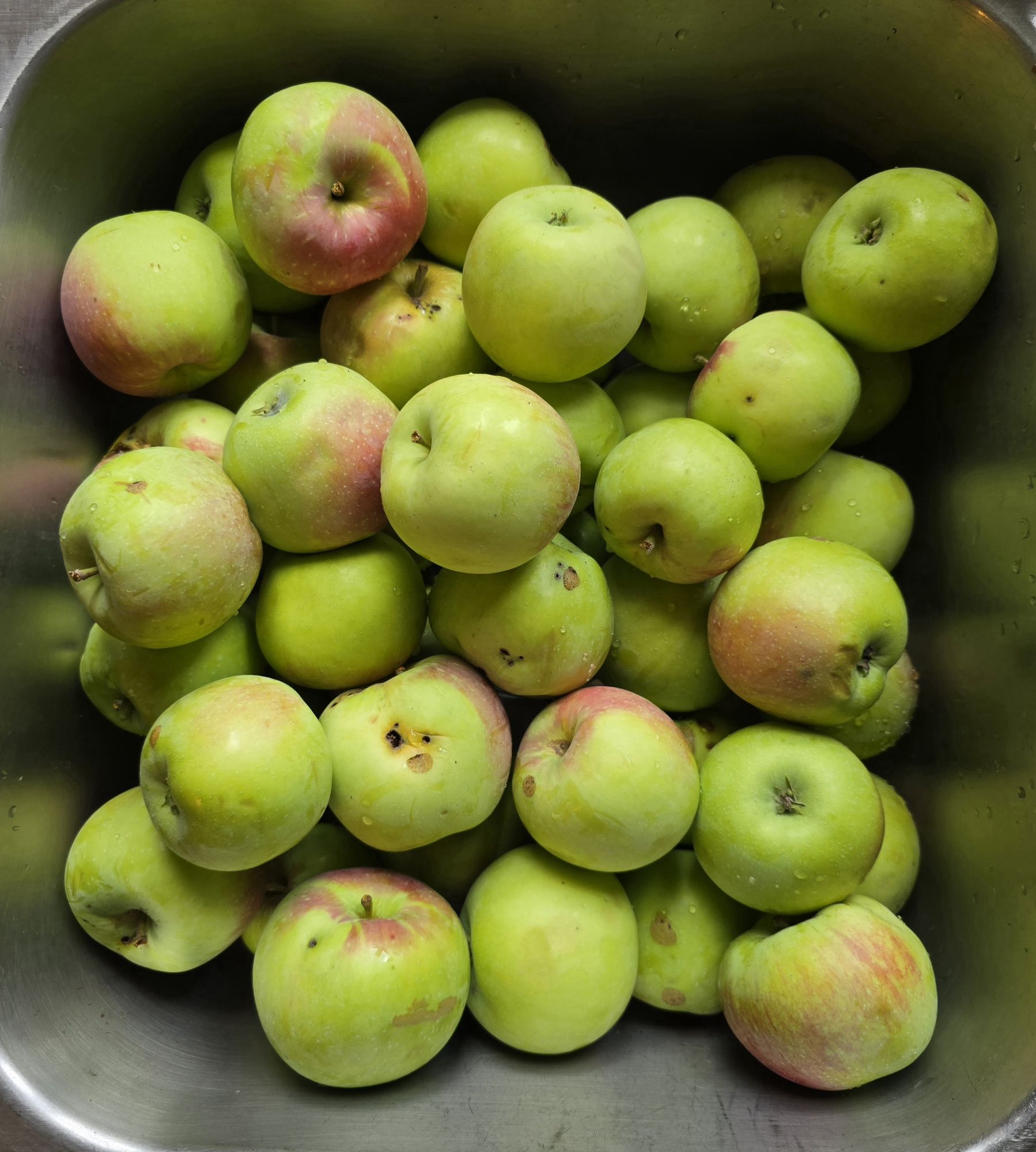
Zestar! apples in the sink before making applesauce.
Saturday cooking is one of the great pleasures of life. I use it to set aside worries and concentrate on preserving and making food for our family with an emphasis on taste and using the garden abundance. Rain was forecast all morning so I spent Saturday in the kitchen. This post is a slice of that life.
The day began with breakfast of cottage cheese and some cherry juice left from the recent visit of our child. Next I did the dishes to make space to get everything clean before making a new mess. Then I went through the refrigerator, which is packed to the doors. I pulled out everything that could go into a new batch of vegetable broth and laid the items on the counter. I also went through the cucumber drawer to make sure decaying vegetables were either used up or composted.
Cucumbers take the most management because there are so many of them when they come in and their shelf life is short. I noted the quart jar of pickles was almost gone, so I reused the brine, fortifying it with some new vinegar and seasonings, and refilled the jar. There are already three or four quarts of refrigerator dill pickles tucked away in the back but we have to make them while cucumbers are in season.
While cleaning the fridge, I made a cut vegetable tray for snacking. Celery, zucchini, cucumber, and bell peppers cut and ready to eat if I need a break from the action. This is for sharing, yet sometimes I am the only one who eats this convenience food. I typically like some kind of salad dressing with them.
Vegetable broth is an easy use of vegetables nearing the end of their life. I make it with standard mirepoix, bay leaves, and the oldest bag or two of leafy green vegetables from the freezer. This day, I used up a couple of bags of last year’s celery leaves to make way for new. One of the last gifts Mother gave me was a large All-Clad multipurpose stainless steel stock pot. If I’m working a full shift in the kitchen, I usually put a pot of broth on and water bath can it. I made six more quarts. At 42 quart jars in the pantry, I am good for most of the rest of this year into spring 2026.
This may seem like a lot yet it was preparatory of making apple sauce.
One of the few surviving photographs of our family in Appalachia is of Granny Reed at Stella’s funeral. Reed’s given name was Josephine, yet I only discovered that from searching the U.S. Census a few years ago. She was always called Granny Reed. She is our child’s great, great, great grandmother.
Granny Reed, along with other female family members worked at a canning plant where they put up apples. When I am picking, sorting, peeling and coring home grown apples for use, I inevitably think about those Virginia women. When in 1983 I visited the home places in Virginia, my Uncle Gene talked about apples.
Next, we went to Norton, another of the places Grandma and Grandpa lived. Uncle Gene talked about apples, how Grandma used to work on peeling and coring apples for one of the big companies. At one time, then, there were large orchards. But now, there is only the coal companies. They used to eat fried apples for breakfast. Later Aunt Carrie told us how to make them. Slice apples into wedges, fry in a little water, sprinkled with sugar. (An Iowa Life by Paul Deaton).
Uncle Gene talked at breakneck speed and I tried to get it all down.
Something that goes through everything is the presence of apples. Grandma worked in an apple cannery, had orchards. There is an apple tree on the old home place, Aunt Carrie served fresh applesauce for us, she said a day hasn’t gone by when she hasn’t had apples. Uncle Gene talked a lot about the apples and how he and the boys helped with them. And everywhere we ate them, the apples were good, the trees bearing fruit. The apple trees bearing lots, even the ones abandoned for years. Eat them green, cooked, fried, in applesauce. (An Iowa Life by Paul Deaton).
As Gene said, “That Granny Reed was always a smart one.”
My entry into Zestar! apples had me eating them fresh and making apple sauce. Before now, I had only every made applesauce from Red Delicious and Earliblaze apples. It turned out on Saturday the flavor profile of Zestar! apple applesauce was delicious (no pun intended). I am so glad that tree is now a part of our home orchard.
I was dog tired at the end of my six-hour kitchen shift. It was an inexpensive escape from the internet and everything on it. A time to live in the past with my forebears, if only for a few hours.
When we live in rural Iowa, mail order remains important to our way of life. Shopping by mail has changed since I was a child. In addition to the United State Postal Service, there are Amazon, FedEx, UPS and other company trucks delivering in the neighborhood almost daily. The fact is, much of what I need to operate our household is not available in the city of 3,000 souls near our residence. Mail order is the most efficient way to find what I need, compare price, and receive goods in a timely manner.
Amazon is rightly the whipping post for all that is bad about modern mail order. The company is very large, and has a monopoly on what they do. They are hard on workers. The online retailer has made its owner one of the wealthiest men on the planet, and the upward flow of weallth to already rich people is an essential problem for society. After a family conversation I decided to do something about Amazon in my life.
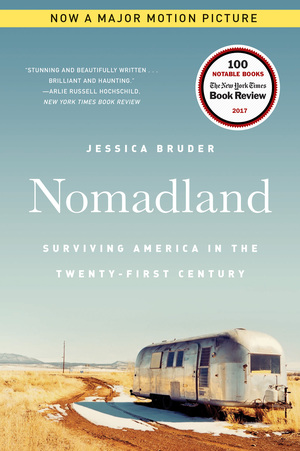
I looked at my Amazon purchases because I agree, at least in part, about their labor abuses. The book I just read, Nomadland, described the lifestyle of people who travel the country in mobile living vehicles and do temp work, including at Amazon warehouses during the push right before Christmas. The author does not paint a positive picture of working conditions, even if many people rely on that temp work to live. Amazon warehouses are already staffed with robots for certain tasks and the expectation is more humans will be replaced in the near future. For now, the temp jobs fill an economic need for these nomadic workers.
I spent $1,309.27 at Amazon this year, in 43 orders, or $194 per month. Here’s what I’m willing to do: a. cut back on the number of orders to no more than two per month (down from 6.4 per month). b. I plan to cut my overall spending in half.
While some purchases are unavoidable because the item (like the corded electric lawn mower) are simply not available here, I can reduce the amount of foodstuffs I get at Amazon and buy locally when I’m already at the market. Likewise, I have less need to own books. In writing my second book, there are plenty of research materials in our home library and we have a good public library for non-writing related reading.
So that’s the plan. Not too fancy, yet with specific goals. Hoping this will cut back on Amazon enough to improve my life. Mail orders will continue, yet hopefully better managed. Fingers crossed!
Jessica Bruder’s book Nomadland: Surviving America in the Twenty-First Century was recommended on social media. It contains the kind of crisp, clear writing, and solid narrative I seek to create. When combined with the topic of how septuagenarians and others fit in to a modern American economy where it is difficult to earn enough to afford a home, it was a quick read. I didn’t know it when British writer/photographer Marie Gardiner recommended it on BlueSky, yet it is smack in the middle of my reading sweet spot.
Bruder spent three years, driving 15,000 miles gathering information for the book. She interviewed countless people living in many different vehicles driving throughout the country. Each was making a life from dire financial circumstances combined with temporary jobs and a reasonably open road. The stories are compelling.
She worked as an associate at an Amazon warehouse in Haslet, Texas and participated in a sugar beet harvest in North Dakota. Neither job lasted long, yet they gave her a basis of experience to validate what the people she interviewed said. She immersed herself in the culture of the people about whom she was writing.
With a bit of a stretch, there is enough information to use the book as a how-to for living the nomadic life depicted. Bruder explains how people put together a life with complex facets. She presents examples of how people choose a vehicle in which to live. Finding adequate income through a combination of Social Security and temporary, seasonal jobs is important. Social programs like thrift stores, food pantries and SNAP also play a role. The book stresses how individualistic each solution to living can be. There is enough here to spark an interest in doing something similar.
Of Iowa interest is Adventureland in Altoona seeks labor among itinerant nomads called “Workampers.” They have a Workamper program that offers a free hook up campsite that includes electric, water, and sewer. There is no contract or time commitment to work at Adventureland. There are bonuses for working through the end of the season. Among the jobs on offer are ride operations, loss prevention, security, cook, ride maintenance technician, character performer, and others.
Bruder emphasizes the people she interviewed are not desolate. They are affirming members of a society hidden from most of us most of the time. There are few other, similar books. Recommend.
Our small family gathered around my writing table as I displayed a PowerPoint slide show of images downloaded from the Johnson County Democrats Hall of Fame event. Our purpose was to view the dozen images, yet also to consider my thousands of photographs with an eye toward using them for many purposes. Mainly, I like photography, and don’t want to leave the raw materials of a life behind in a disorderly fashion. I thought it prudent to get feedback on this project from other family members. This post springboards from our hour or so discussion while also considering the scope of the issue.
Using Photographs Now.
At 73 years I don’t have a lot of extra time to be looking at old photographs. The question that prompted our family discussion is what will happen to all the paper and digital photographs I collected in a lifetime when I am gone? So often I got hung up with that question it was difficult to live in the now and do something with them. There are plenty of things to do with old photographs in the here and now.
My use of photographs on this blog and on other social media platforms is straight forward. I take a photo of my morning coffee and post it with a brief message on BlueSky. When I take my daily walk I’m on the lookout for conditions that merit a photo and then post them either here or on BlueSky. If I attend a public event, I’m looking for a single image to use on this blog. This is what my quotidian life of photography has become. It is okay. The absence of posed photographs is noted and mostly, desired.
Photo displays could be added into current usage. For example, like the referenced slide show, I could create another set to be shown when we are next together. Likewise, it could be shared on Discord or another online sharing application. This would provide some motivation to both define projects in small bites, and to meet a deadline for producing a slideshow. Partly, this mimics the old film and print days when I got a packet of photos back from the drug store and wanted to share them with family and friends. It would also nudge me to find projects relevant to the audience. Social media has eroded interest in that type of viewing, yet with a little gumption it could easily be renewed and appreciated.
As I write my autobiography I post relevant photos on a magnetic white board. This is not a permanent shrine to my life and the people in it. It is a living thing from which I gain inspiration. Which photos are on it changes constantly. At some point they will be taken down and stored away in more permanent places. This type of photo display serves the specific purpose of kindling memories so I can do a better job writing about my life. Among the uses of photographs this is as valid as any of them.
I have limited interest in creating traditional photo albums. As the ones we have age, we should maintain them as appropriate. The rubber cement we used to affix prints to a page apparently doesn’t hold up over the decades. Maintaining those memories is important, although I’m not sure I would make another like them. Albums have been a medium for creative expression and that will likely continue to some degree if I find a topic.
Archival Review and Storage.
The state of my photographs is neglected. I have piles and envelopes with many different photos in them. There are multiple shoe boxes of photographs. There are a couple dozen photo albums. My digital photos are filed by date and it’s hard to tell what they are without looking. I also have photos stored in file folders related to projects. That’s not to mention those I’ve posted here or on social media. The goal of any project is to feel I’m giving due attention to images I captured: to neglect images less.
I decided to use the envelope method to store print photos that are similar in some respect. That is, groups of photos will be stored, and to some extent labeled, and placed in envelopes according to some criteria. For example, photos of certain friends might have their own envelope. It is important to write on the back of prints what the viewer is looking at. Also, why are certain photos grouped together. If I want to pass on stories to the millennial generation, this is one way of doing it. It is worth making time for the effort.
Likewise there is an archivist concern about taking care of photos in storage. In particular, how is print exposure to moisture being controlled? Is the cloud storage solution the right one for digital photographs? Which cloud storage is the best option?
Inevitably, these concerns lead to touching each photograph and doing something with it. To accommodate this, I feel it is important to set up a regular time each week to work on that. The current schedule is to work on photography each Tuesday for a couple of hours.
Making New Photographs.
Going forward, the goal is to save fewer photographs. If I take ten shots of a sunrise, I should keep only the best one, making the decision within an hour of taking a photograph. Not doing so is pure laziness. While it is easy to make multiple exposures, the goal is to find what Henri Cartier-Bresson called the “decisive moment.” From a photo production standpoint, using unposed, candid moments captured with a focus on composition and the “decisive moment” includes learning how to better frame an image, attention to lighting, and perhaps taking multiple shots, and then discarding the lessor quality images. One assumes we won’t return to the lesser images.
As far as printing digital images goes, there needs be a reason to do so. It can be to mail an image to the people in it, or in rare cases, pasting them into a photo album on a specific topic.
Like everything I do these days, managing photography is an ongoing discussion. Time with the potential inheritors of a collection of stuff just makes sense, and I’m glad we had the conversation.
~First in a series of posts about managing personal photographs





 Journey Home
You must be logged in to post a comment.