Just over a week until autumn begins so I am taking a break from bloggery to enjoy these last days. Thanks for following my posts.
Just over a week until autumn begins so I am taking a break from bloggery to enjoy these last days. Thanks for following my posts.

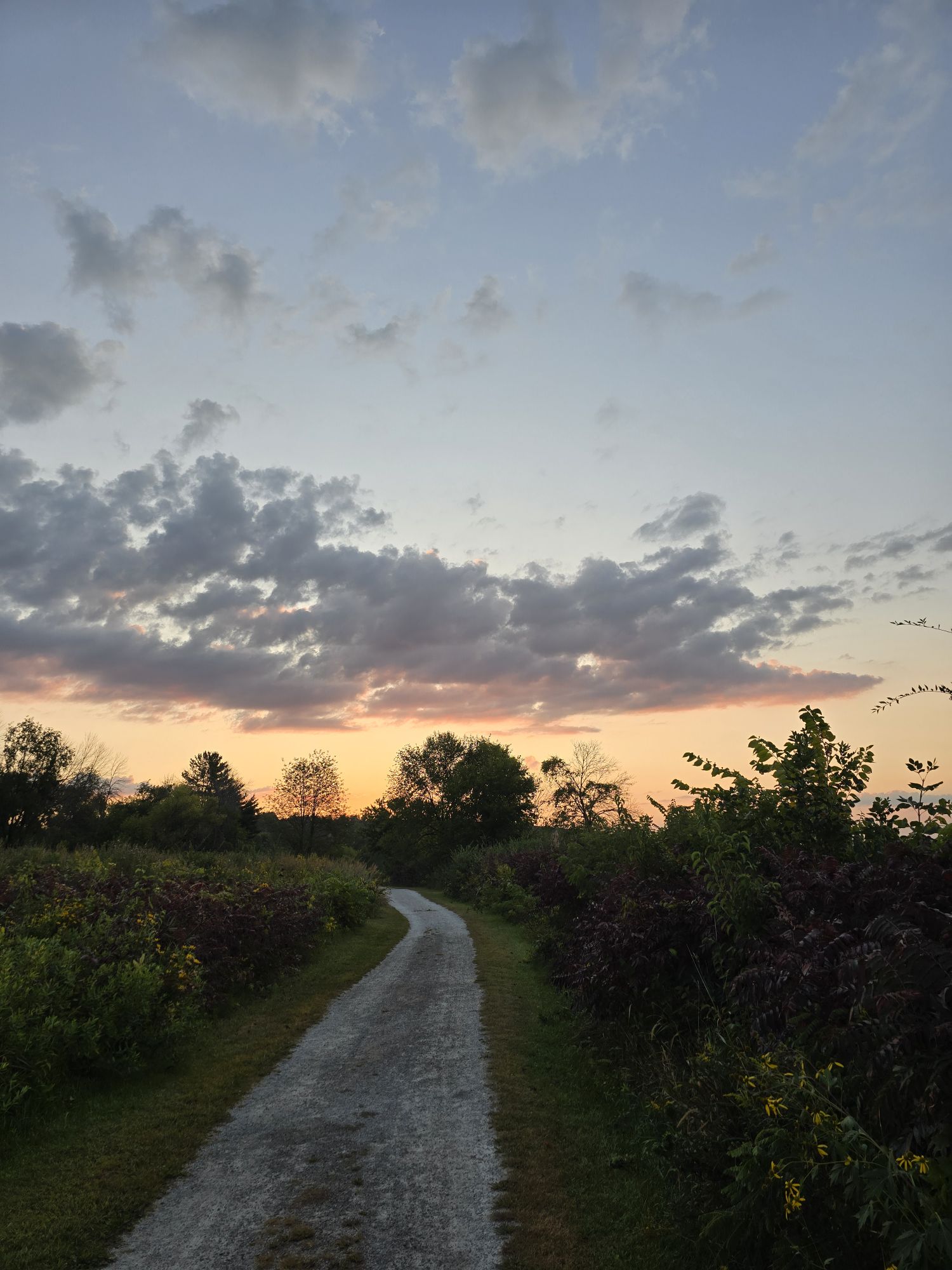
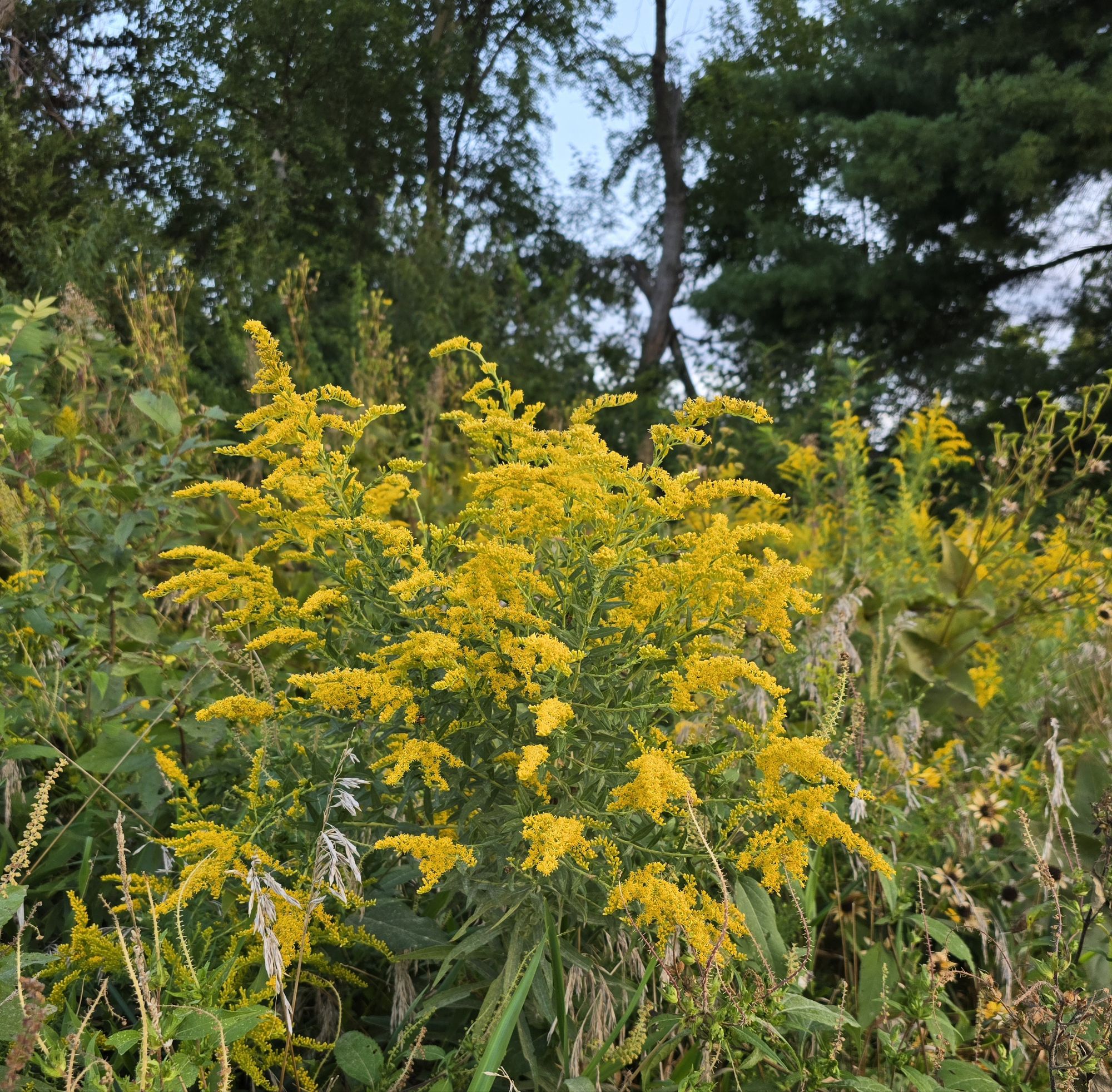
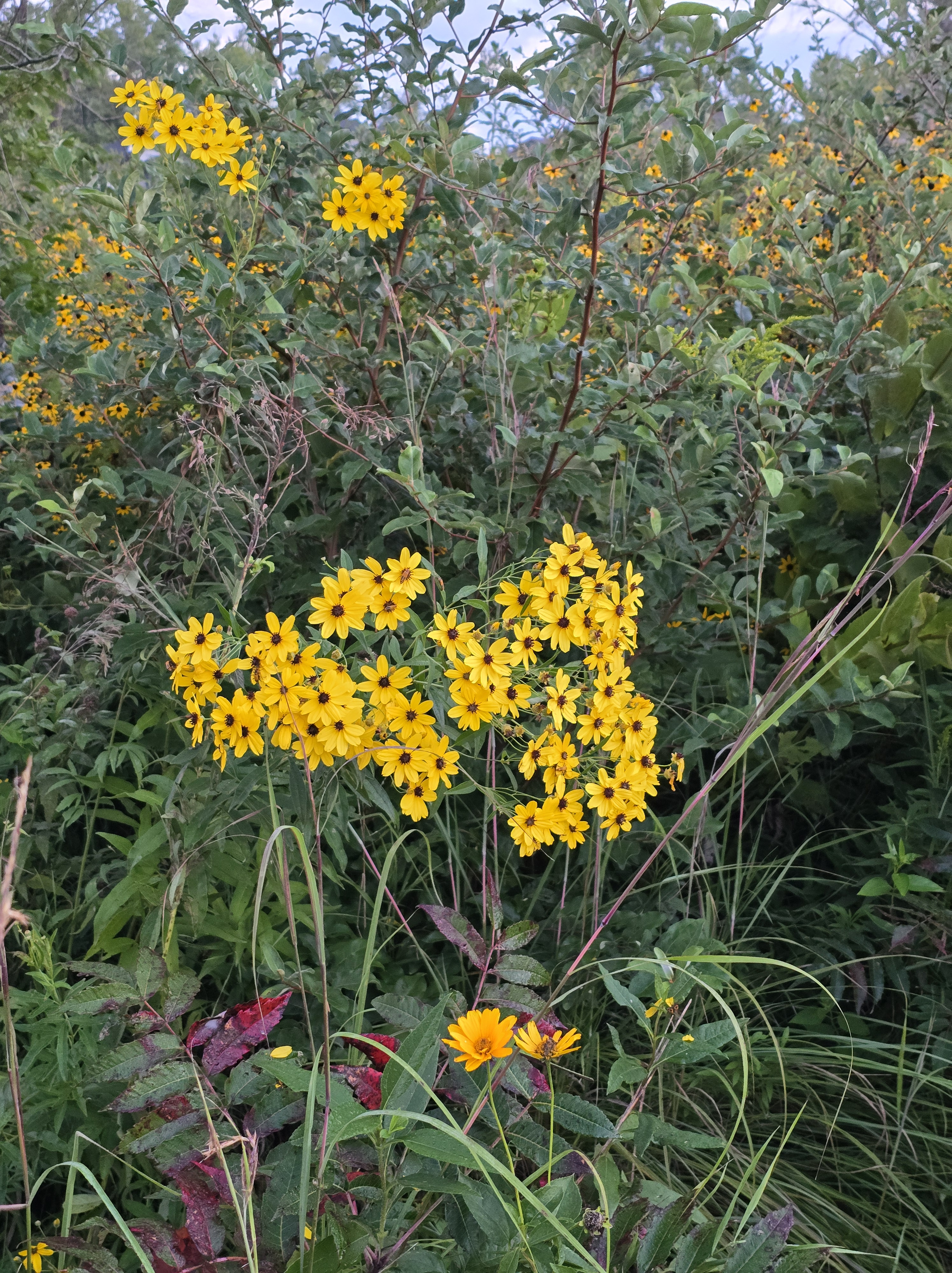
Walking on the state park trail before dawn is the latest iteration of my use of the trail. When I go out early I am hoping to catch some glorious photographs of a colorful sky. Recent days have been rather quotidian. At least the moon is still out at that hour. Yesterday I settled for wildflowers.
Our 55th high school class reunion is later this month and among other things, I agreed to bring a dessert. The planning group had a lengthy conversation about sheet cakes last year. The consensus was that a sheet cake would not be eaten. I have to bring 24 of something that can be held in hand. Thinking of a small cookie as someone else is bringing bars. Also considering something without sugar to be more diabetic friendly for my cohort of septuagenarians. The research sources will be my red, hand-written cookbook and four church cookbooks from the parish where I attended grade school. Nothing against the fancy pastry cookbooks sitting on my shelves. It is a reunion and a tribal recipe might go over. The first recipe to which I turned was for sugar cookies. I have nine bushels of apples picked and ready for the kitchen, so maybe something with those. There is time.
While I type, the last batch of tomato sauce is being water-bath canned. With what is leftover from previous years in whole tomatoes, the 24 pints I made should serve until next year. It is hard to believe how quickly tomato season is ending. I’ll make one last pass through the rows and that is likely it.
I decided to make eight quarts of applesauce (to make a case of the four leftover from 2023) and to finish one case of pints plus one more case. Total of 36 pints plus 12 quarts to last two years until the next Red Delicious harvest. It should be plenty. After that, I get out the juicer and make juice for cider vinegar. The quantity is never exact, and I just returned from counting six mostly empty half-gallon jars. I leave a little vinegar with the mother in each of the jars for a starter. I have five bushels of cider apples, plus more on the tree, so there will be plenty.
The food part of summer is winding to a close. I need to trim the garlic and put it into storage. I want to get the garlic for next year’s crop in the ground in early October. Once that is done, gardening season will be over for the year.
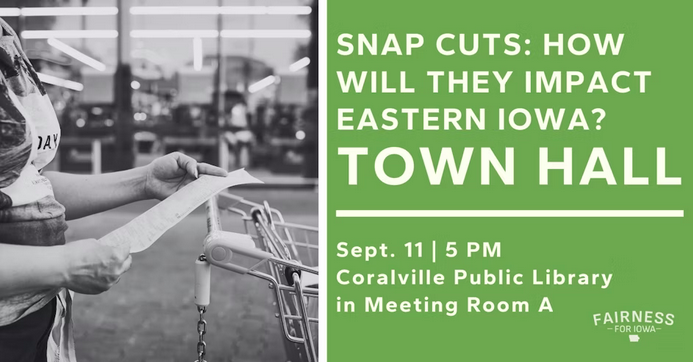
SNAP cuts: how will they impact eastern Iowa? How can our community respond?
Please join Fairness for Iowa for a Town Hall event that discusses how the $1 billion of cuts to SNAP in Iowa will impact our communities in eastern Iowa. These cuts are a direct result of the recent Trump tax bill that was voted for by all our federal representatives including Congresswoman Mariannette Miller-Meeks and Senator Joni Ernst, who prioritized tax cuts for billionaires over feeding hungry kids and community members.
At the event, attendees can hear from panelists across the local food system including Hai Huynh, Associate Director, Coralville Community Food Pantry, Sandra Komuhiimbo, Coralville Community Leader, and Nicki Ross, Executive Director, Table to Table. Learn more about local food insecurity issues and how our local food bank and pantry system is responding to the increased needs of our community as a result of the SNAP cuts.
Attendees will also have the opportunity to take further actions to push back on SNAP cuts at the federal and state level, and call out Congresswoman Miller-Meeks and Senator Joni Ernst for their votes and actions to not stand up for their constituents, and instead increase food insecurity in our communities.
Attendees are encouraged to bring a goods donation for the Coralville Food Pantry to the event. The greatest need is for:
Where: Meeting Room A, Coralville Public Library
When: Thursday Sept. 11, 5 until 6:30 p.m.
This is a chance to hear directly from community leaders and food security advocates about how this legislation could impact access to food for thousands of Iowans. Bring your questions, bring your voice, and bring a donation to help area food pantries.
Let them know you are coming at this link: https://www.mobilize.us/progressiowa/event/832997/


How does a person win an election? By getting 50 percent of the votes cast plus one. Some say there is more to it than that, but in the end, a candidate has to track his/her votes before the election, make sure there are enough of them, and then turn out those votes before or on election day. In politics there is nothing more elemental than this.
Last Thursday, while debating one of two resolutions (see below), a friend stood and addressed the county Democratic Central Committee, saying instead of this debate, we should spend more of our time working to win elections. The debate we engaged in did not win elections and took time away from that, he asserted.
It is ironic that when State Senator Janice Weiner arrived, she was praised by the committee for her leadership in winning two special elections to the state senate this year. One of those elections gained national attention. A number of people in our county helped win those elections yet Senator Weiner’s leadership contributed undeniably. While we may debate issues, she was busy winning elections.
The main reason I stayed until the end of the meeting was to hear the debate and vote on the two resolutions.
During the first presidential election after my wedding, I attended the Iowa Caucus where I was elected to the county convention as a George McGovern delegate on the platform committee. At caucus we had a discussion of political issues and made some decisions about what should and should not be on the county platform. At the county convention some of the decisions we made were overturned. I noted some delegates came to the county convention with the explicit intent to reintroduce platform planks that were voted down at the precinct. My initial experience with the county Democratic Party was soured by this experience.
In my political work in this county, I never again joined the platform committee. Most years, I don’t even read the platform. I’m not sure it is even necessary. At the same time, I see the two issues in the proposed resolutions are important and relevant to what we do as Democrats. The DEI resolution is a result of the impact of the president’s policy on the University of Iowa, which is a major regional employer. U.S. support for the Israeli government during the Hamas-Israel War was clearly divisive among Democratic voters and likely contributed to Democratic voter suppression in the 2024 general election. Talking about these two issues as a central committee won’t change the world, yet it moves the group toward alignment in our politics. Having clear positions on DEI and the Palestinian genocide is important to winning elections. After taking time to amend the language, these two resolutions were approved by the body.
Iowa Democrats stand at a distance from winning statewide elections. First, we have to know who we are. This debate helped. As one speaker said during the debate, if we are not going to stand for our values now, then when? Here is the result of our debate:
Johnson County Democrats Statement in Support of Diversity, Equity, and Inclusion (DEI):
The Johnson County Democrats support diversity, equity, and inclusion (DEI) in all walks of life and as policy at the public universities of our amazing state to help foster an open and welcoming environment for all people.
We condemn in the strongest sense President Trump’s bigoted attacks on DEI policies, diversity in our state and country, and Governor Kim Reynolds’ blatant waste of Iowa taxpayers’ resources and money by having state Attorney General Bird investigate a victimless incident at a time when Iowans are struggling with rising cancer rates, undrinkable water, and untenable increases in the cost of living.
The “Freedom to Flourish” in our great state is a freedom ALL people should enjoy regardless of race, ethnicity, gender, creed, or sexual orientation. We stand for an Iowa for ALL people and ALL Iowans.
“Our liberties we prize and our rights we will maintain.”
Resolution for an Embargo on Military Aid and Weapons Transfers to Israel
RESOLVED, That the Johnson Country Democrats support an immediate embargo on all military aid, weapons shipments and military logistical support to the Israeli government; and
BE IT FURTHER RESOLVED, That the embargo on military aid, weapons shipments and logistical support continue until Amnesty International, Human Rights Watch, and B’tselem certify that the Israeli government is no longer engaged in apartheid rule.

How does a photographer capture well-known sites? I would argue professional photographers whose work appears on post cards serve a useful function in capturing a personal experience.
This photograph of Mount Rushmore was created in part by my being there. Composition of the resulting image is due largely to the design of the visitors center which presented a platform from which I took it. The light is good and the talus provides context. However, picking up a postcard at the gift shop eliminates variations inherent in converting a digital image to a print. If you stick to selecting familiar images, postcards can be interchangeable with printed photos in terms of remembering the experience. I submit having both types of image upgrades the experience.
The advent of the “bucket list” likely ended a lot of meaningful photography. If Mount Rushmore were on my bucket list, I might have stepped in front of the camera to record myself with the famous sculpture. Maybe at home I would have a bulletin board where I pinned all my bucket list photographs. People are free to do what they want, but for me, the memory of that moment’s experience is what stands out more than a trophy photograph hanging on a wall or uploaded to a website.
Defining who we are in the context of our lives, and who we want to be matters more than an arbitrary list of places we seek to visit. Above all, it is about the experience. A personal photograph or postcard is a subset of what that experience is. Photos are not necessarily the most important part of it.
What was this experience about? My friend since seventh grade and I left our spouses behind and made a long road trip out west. The furthest point was Missoula, Montana where we visited another high school friend and their spouse. Mount Rushmore was one of the less interesting stops we made. We were so close to it we felt obliged to stop, so we did. It was tacked on to an experience about something else.
I am a bit old school in that I don’t see much purpose to video recording a well-know site. My aunt, uncle, and their family lived in Europe for a number of years. They took home movies on 8 millimeter film when they traveled. I recall one where they visited the leaning tower of Pisa and recorded the kids trying to push it the rest of the way over. It was a family joke, and that’s fine. I hope they bought a postcard to remember the architecture while they were at it, even if that wasn’t their interest. Life is not always a joke.
I had only one photograph in my memoir, An Iowa Life. However, I looked at a lot of them while writing it. A photograph invokes living memories and it was those memories that drove my writing. I expect to return to this image of Mount Rushmore when I get into the post-analog part of my life. For that purpose, it won’t matter if an image was one I took or a postcard. That’s as it should be.
An early reader of my autobiography asked about this paragraph.
When I was born, Davenport was already a tired town. I hadn’t realized it, of course, because my family life was positive and supportive. I felt I could be anything I wanted, and this notion was reinforced once I started school. I grew up in a time of hope, despite challenges. We had vague knowledge of Davenport’s beginnings. I came to believe while being from there, I was not of there. (An Iowa Life by Paul Deaton).
“I am most surprised by your statement that you did not believe you were ‘of there.’ Looking for more explanation here,” they wrote.
In response, I wrote:
My mother and father brought a defined culture with them when they moved to Davenport and I was born. I came up in that culture, which for Mother was based in rural Illinois where she was born, and for Father, it was in western Virginia. In going through the history for this book, it occurred to me that I did not experience any culture indigenous to Eastern Iowa, but rather what my parents brought with them and lived. Yes, I was from Davenport, but not a person who grew up in a culture that was local. I contrast that with Provincial France where people are a literal extension of the soil, the sea, and the air. Mine was a distinctly American experience. (Letter to a friend, Sept. 6, 2025).
When I re-write the book, which I will once its companion is finished, I plan to add this explanation. As long as we live in a consumer society where the work to produce our lives lies in places, corporations, and people with whom we have no relationship, except for a commercial transaction, we cannot be of there, much though we yearn to be.
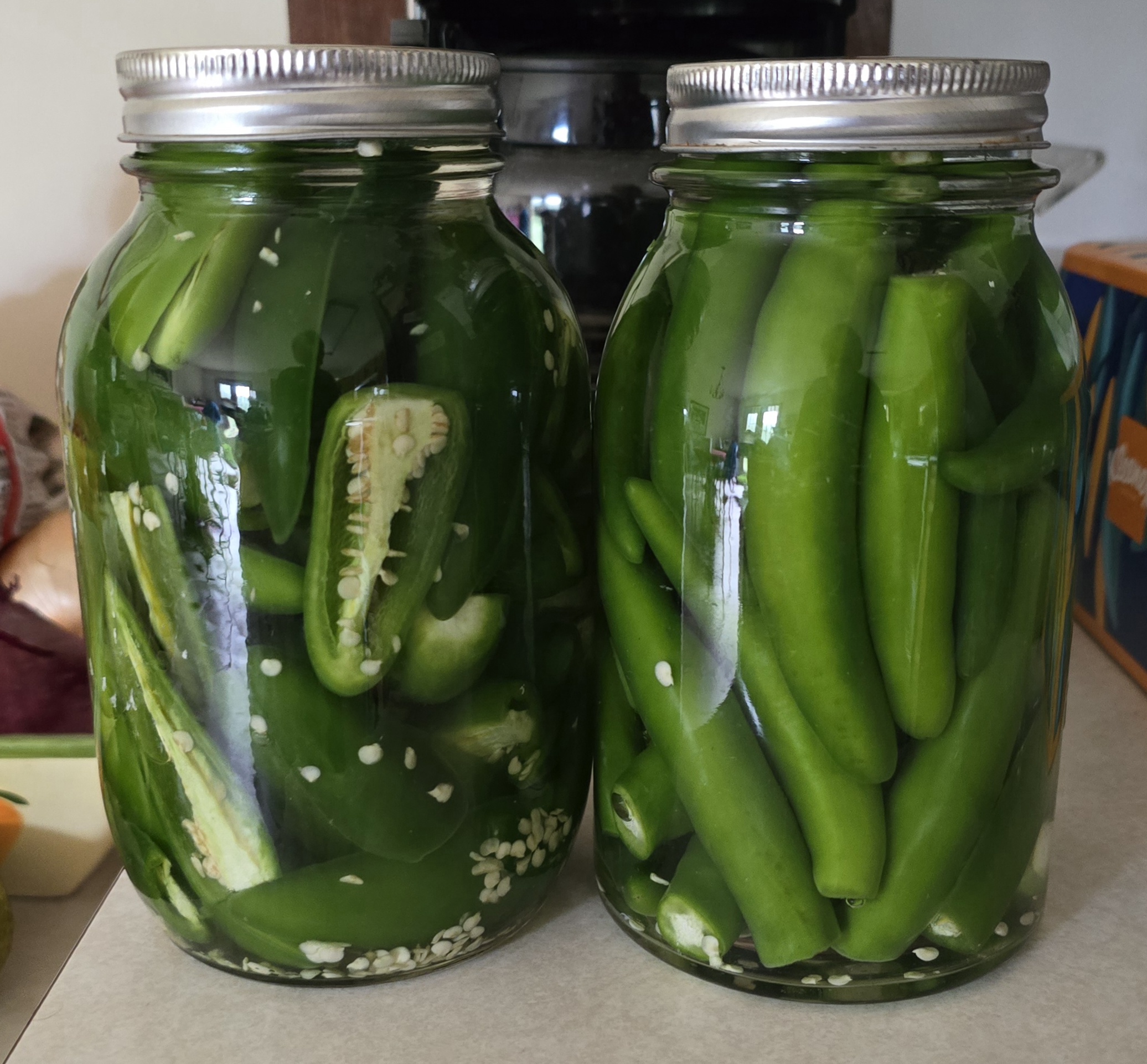
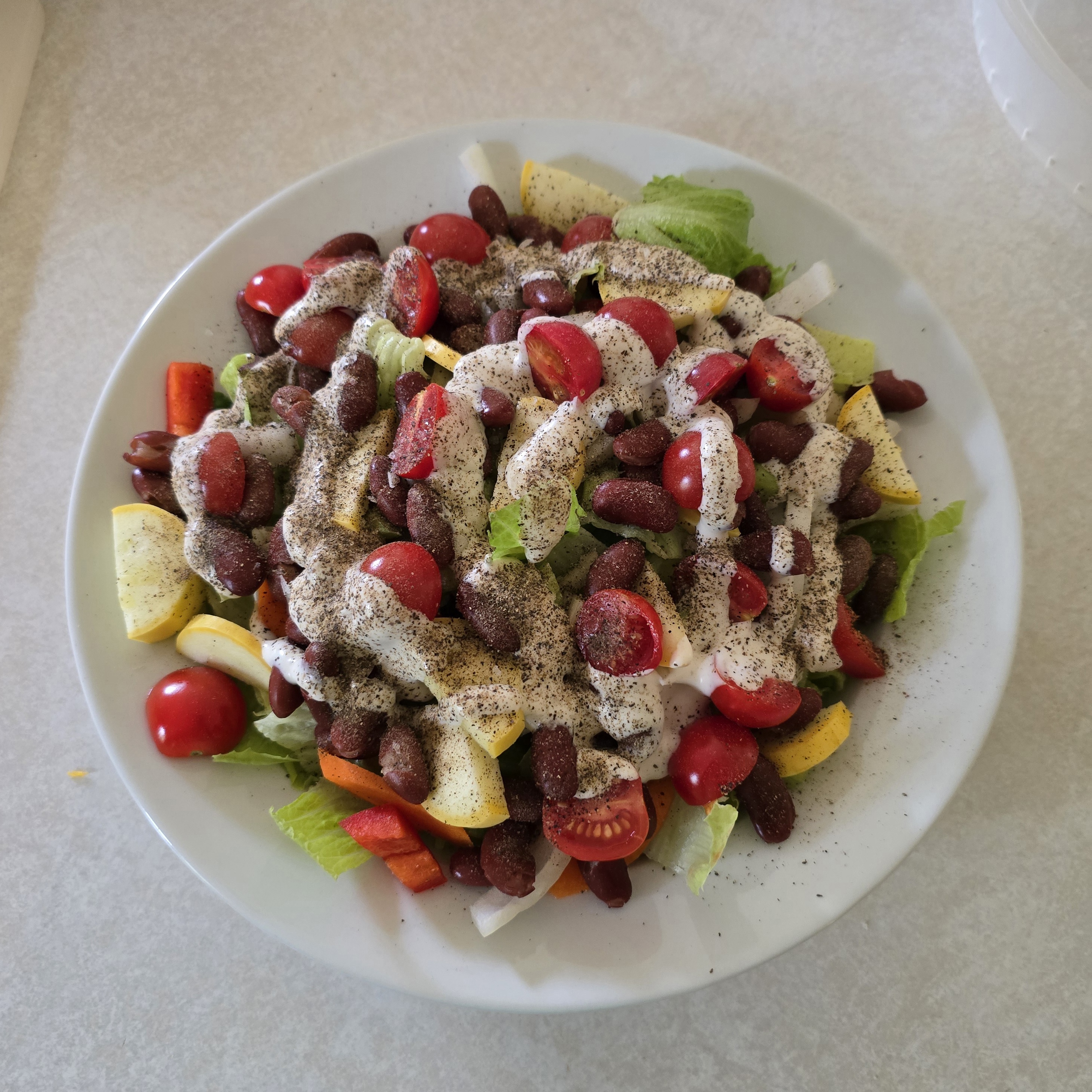
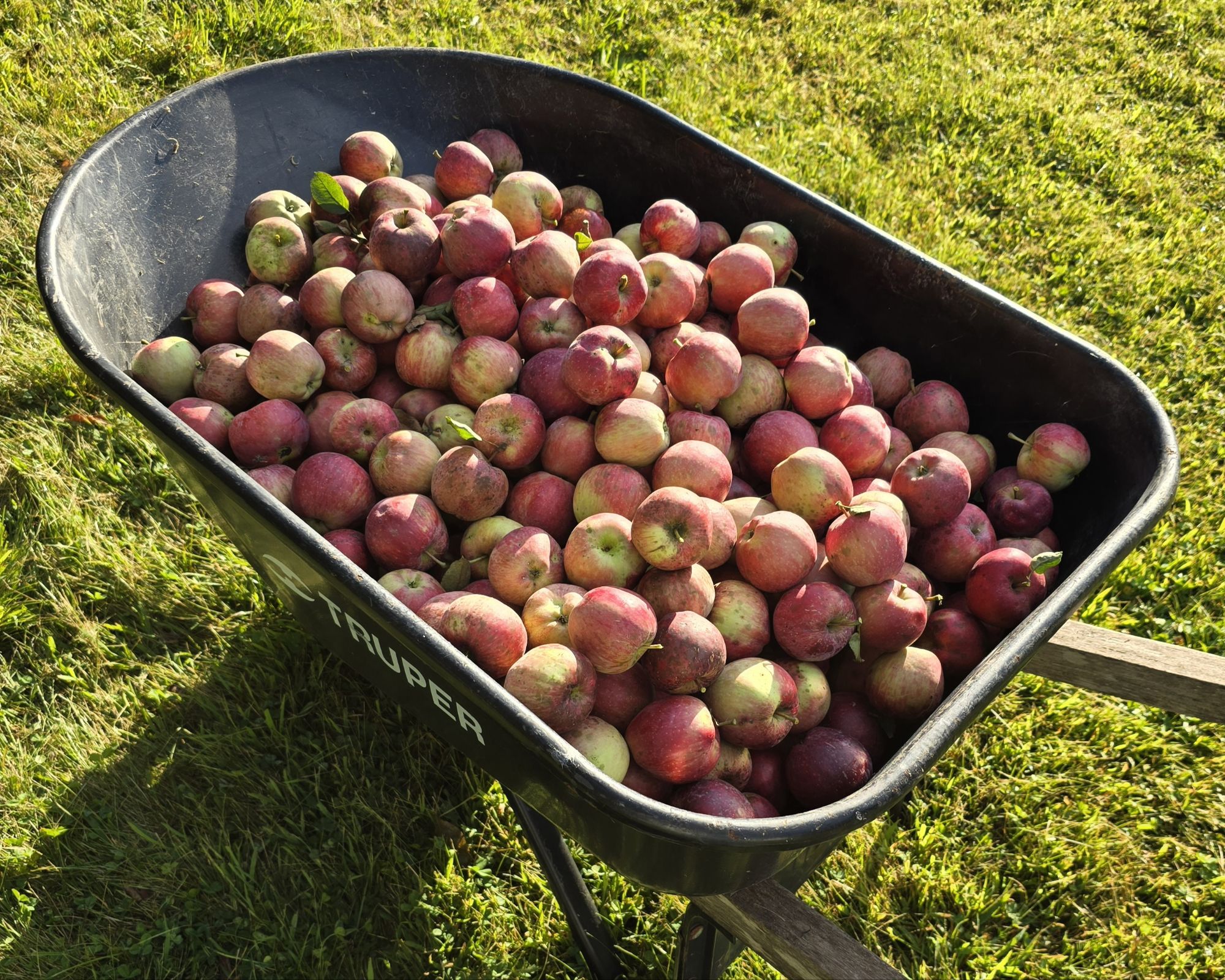
As the garden turned from tomatoes to apples, I captured plenty of images. Here are some of them.
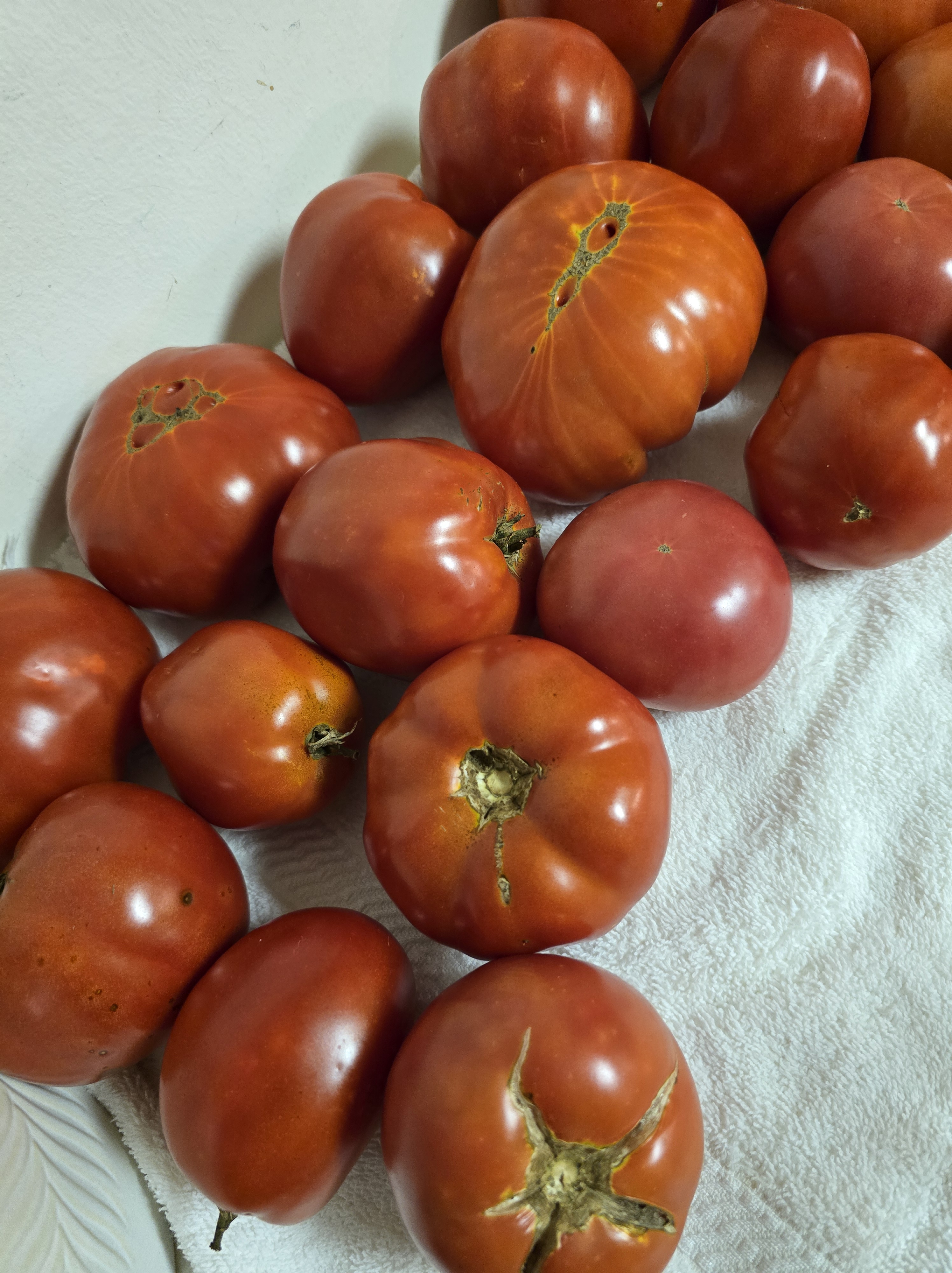
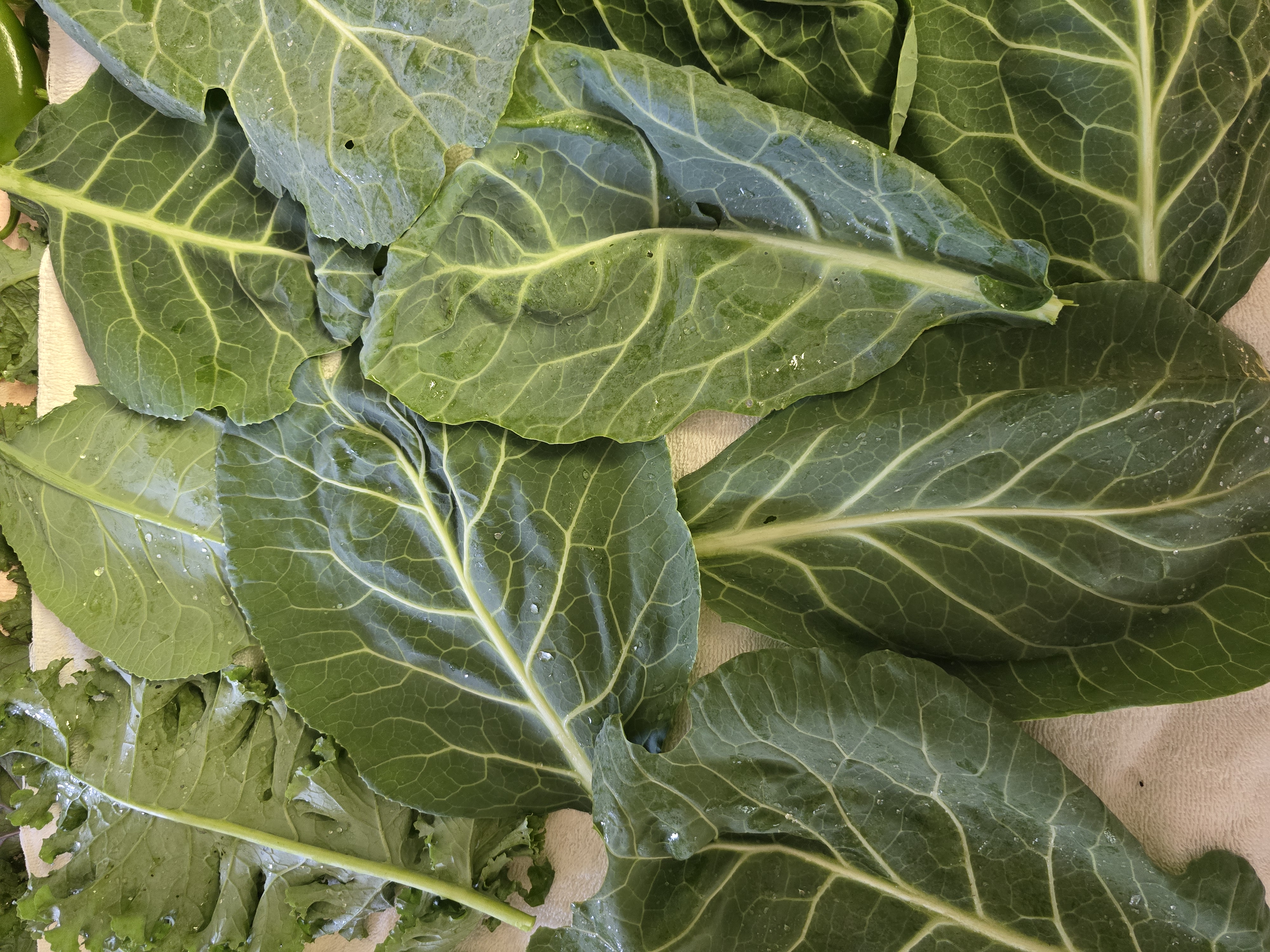
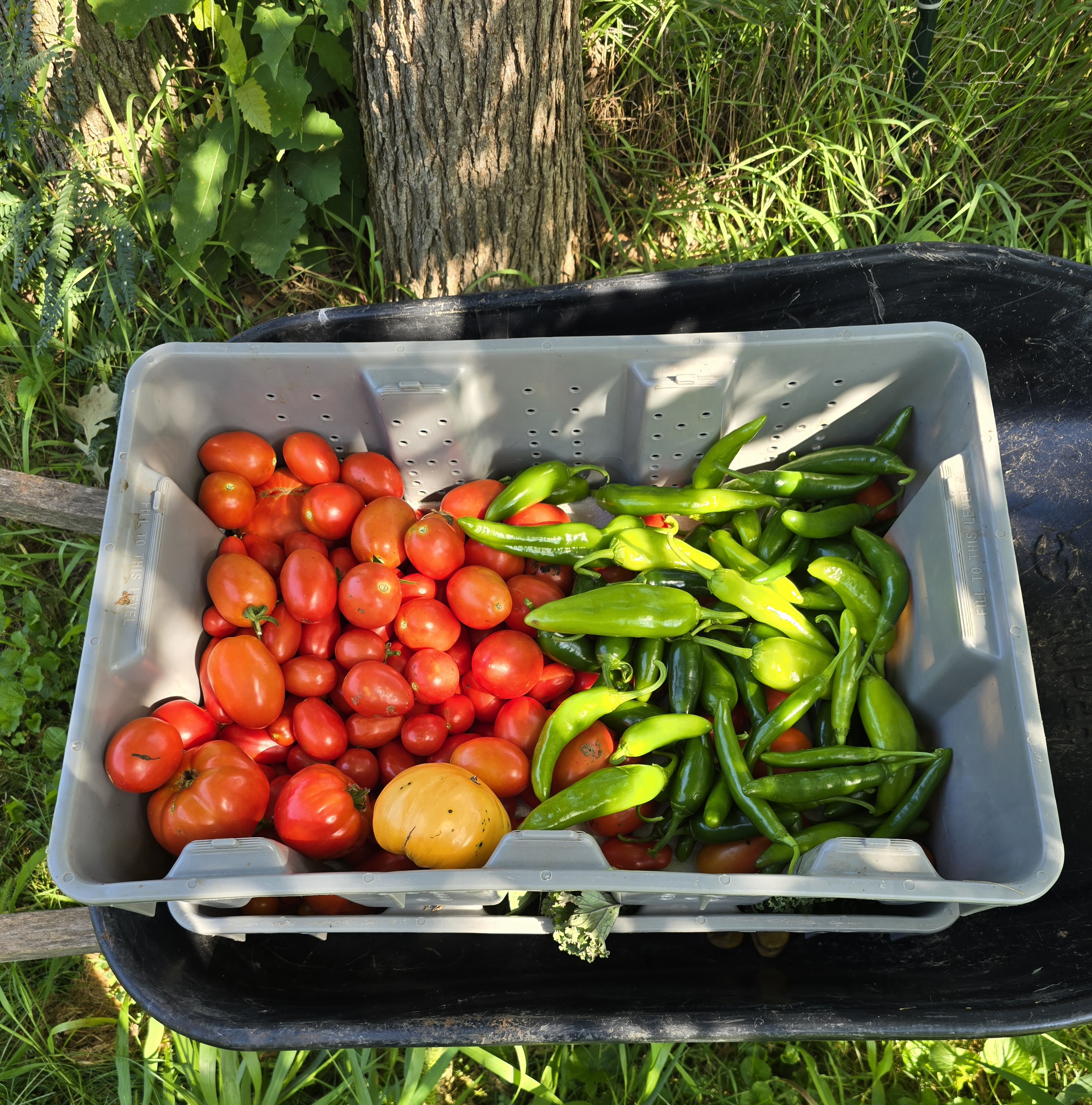
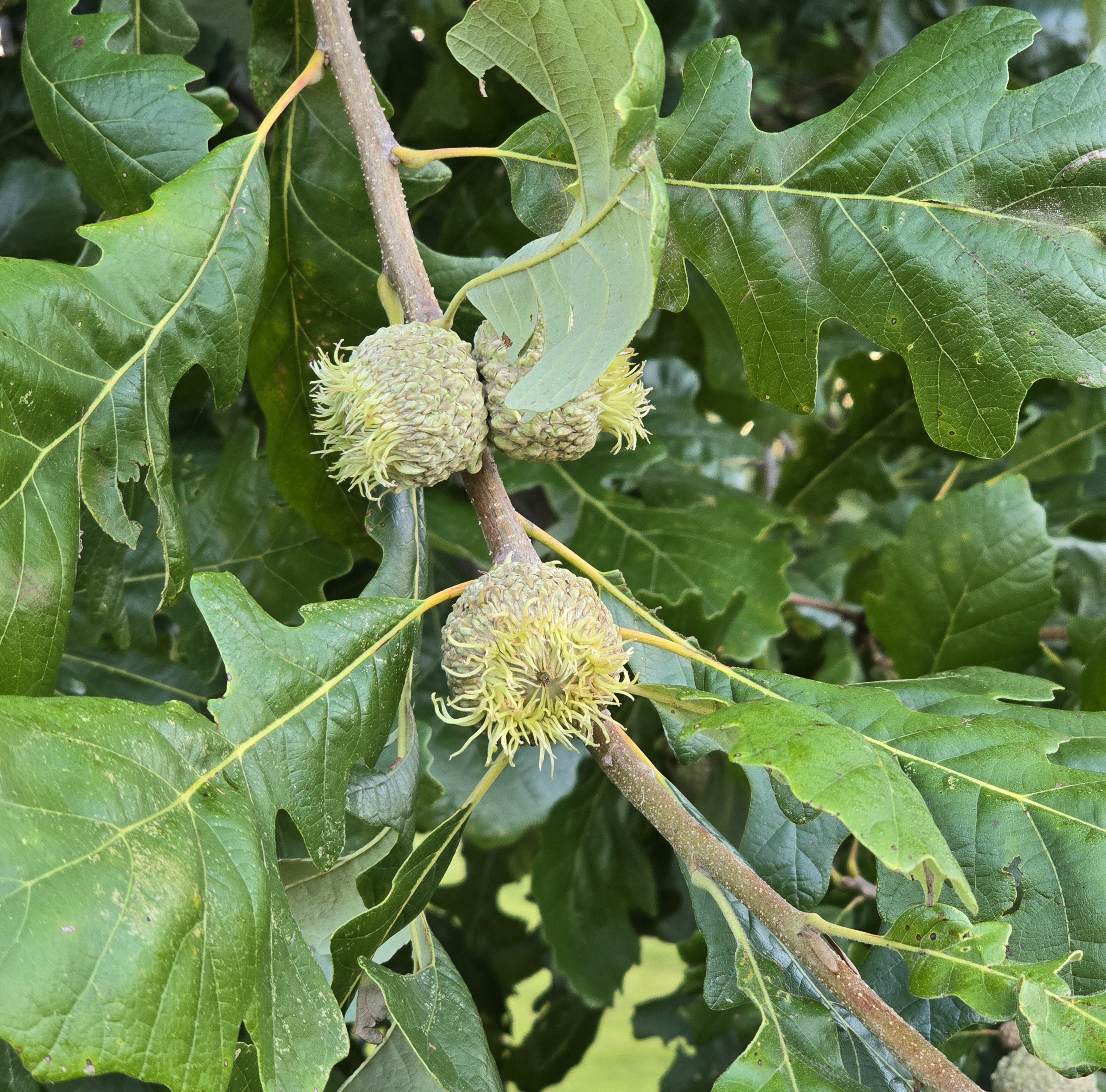
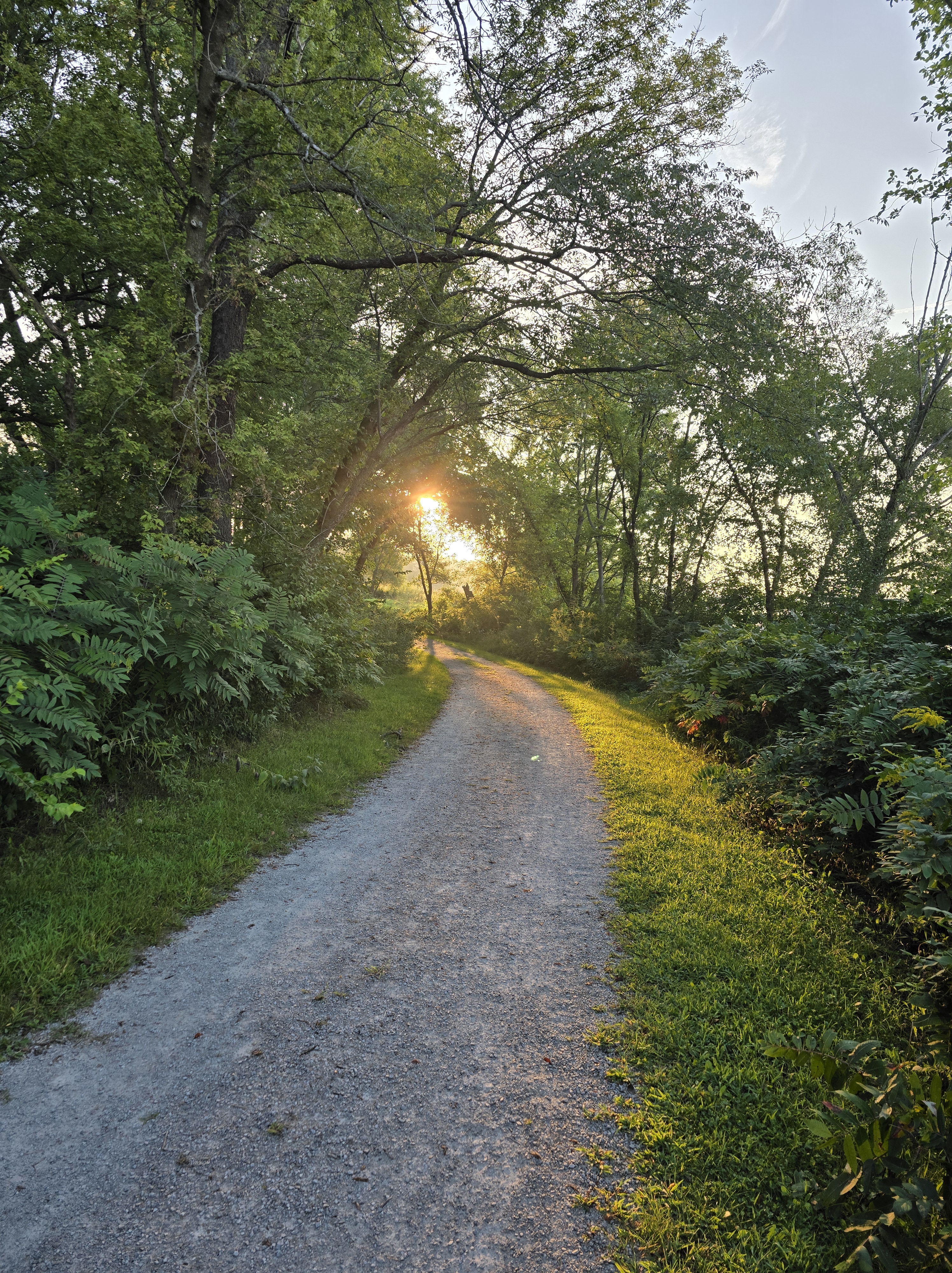
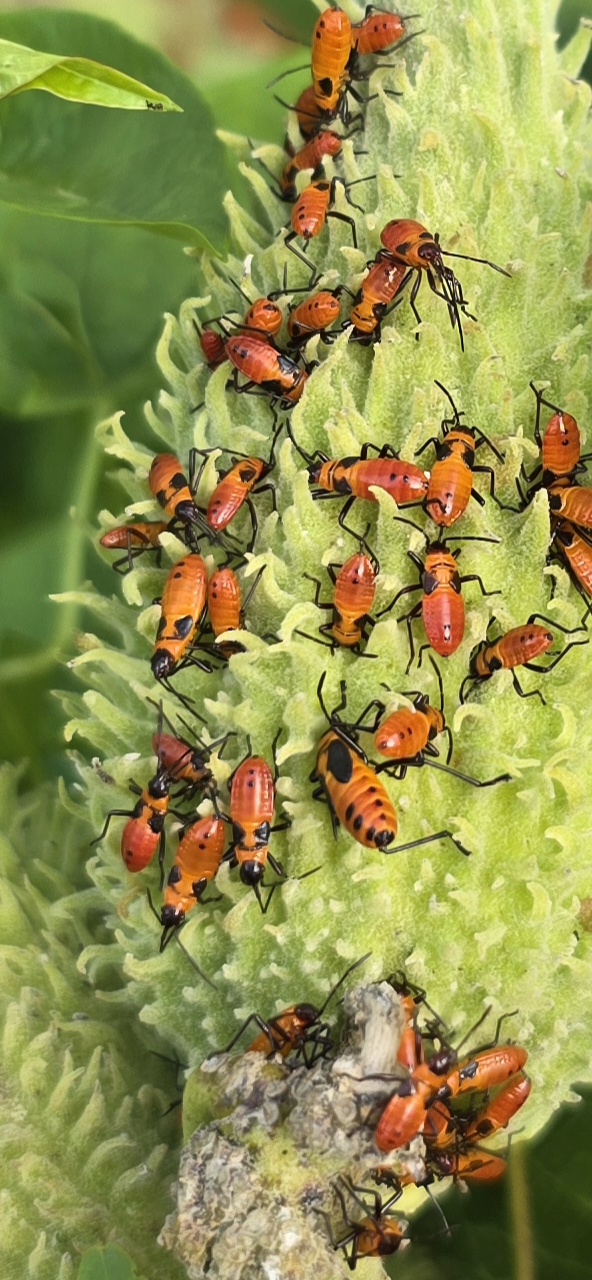

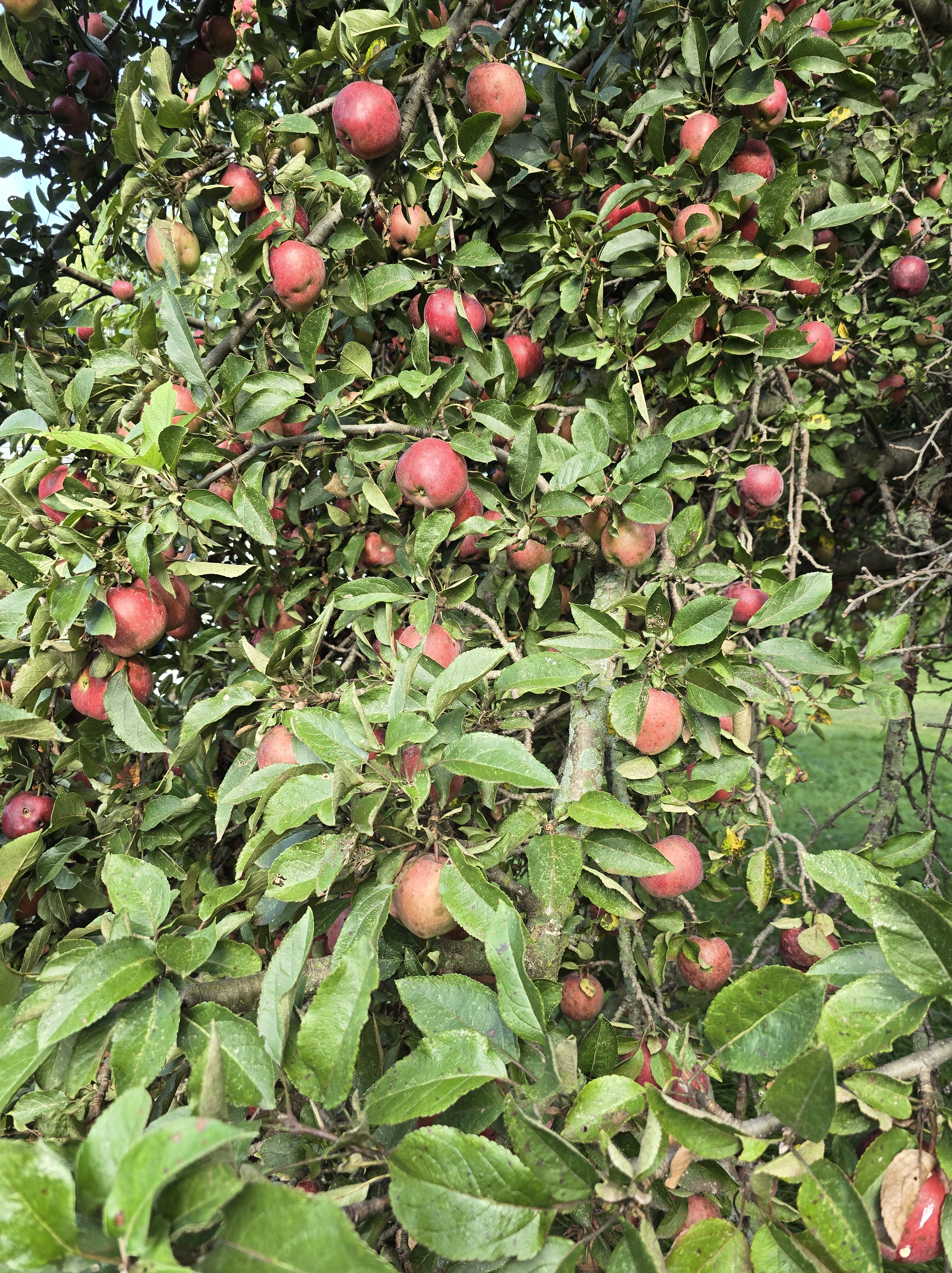
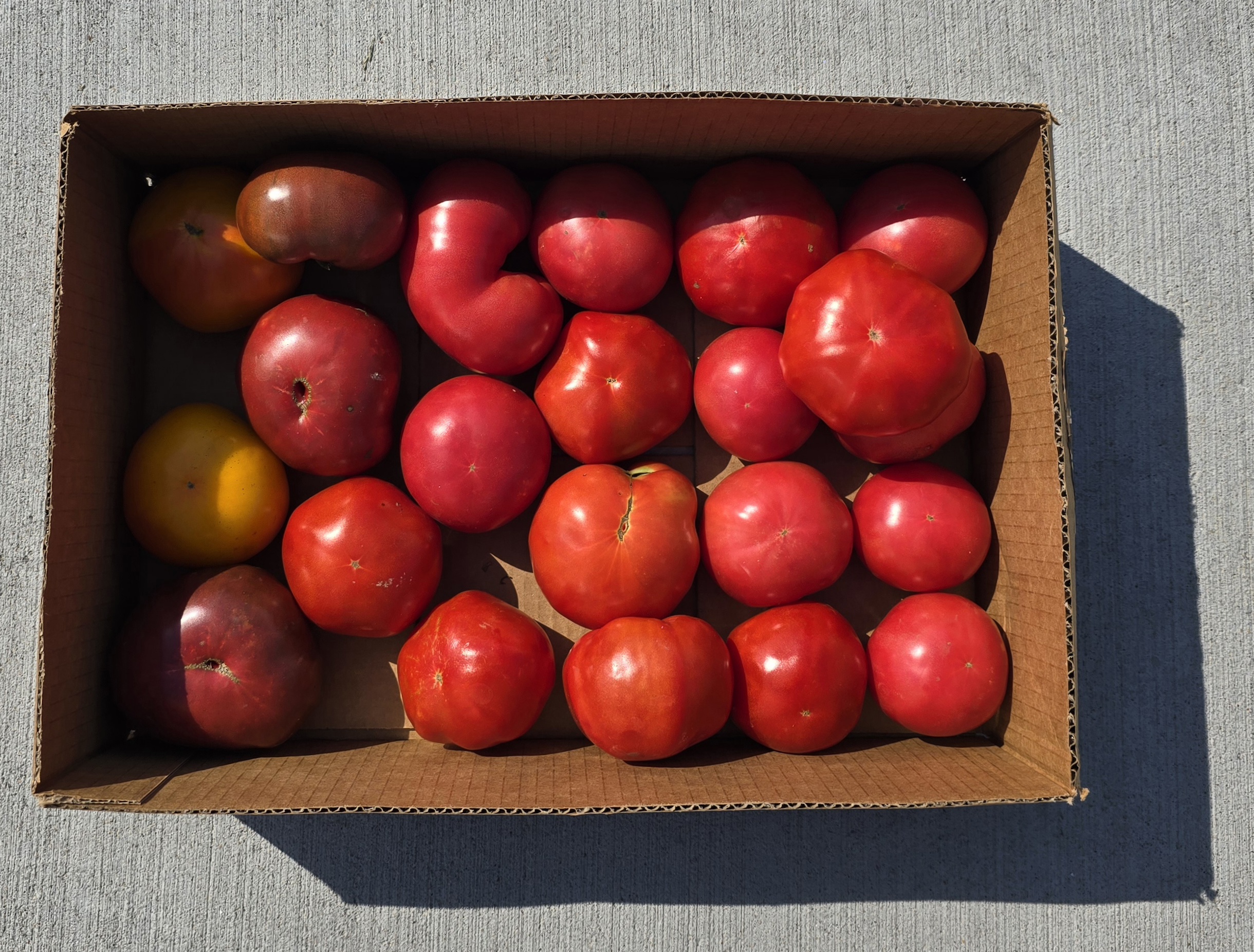
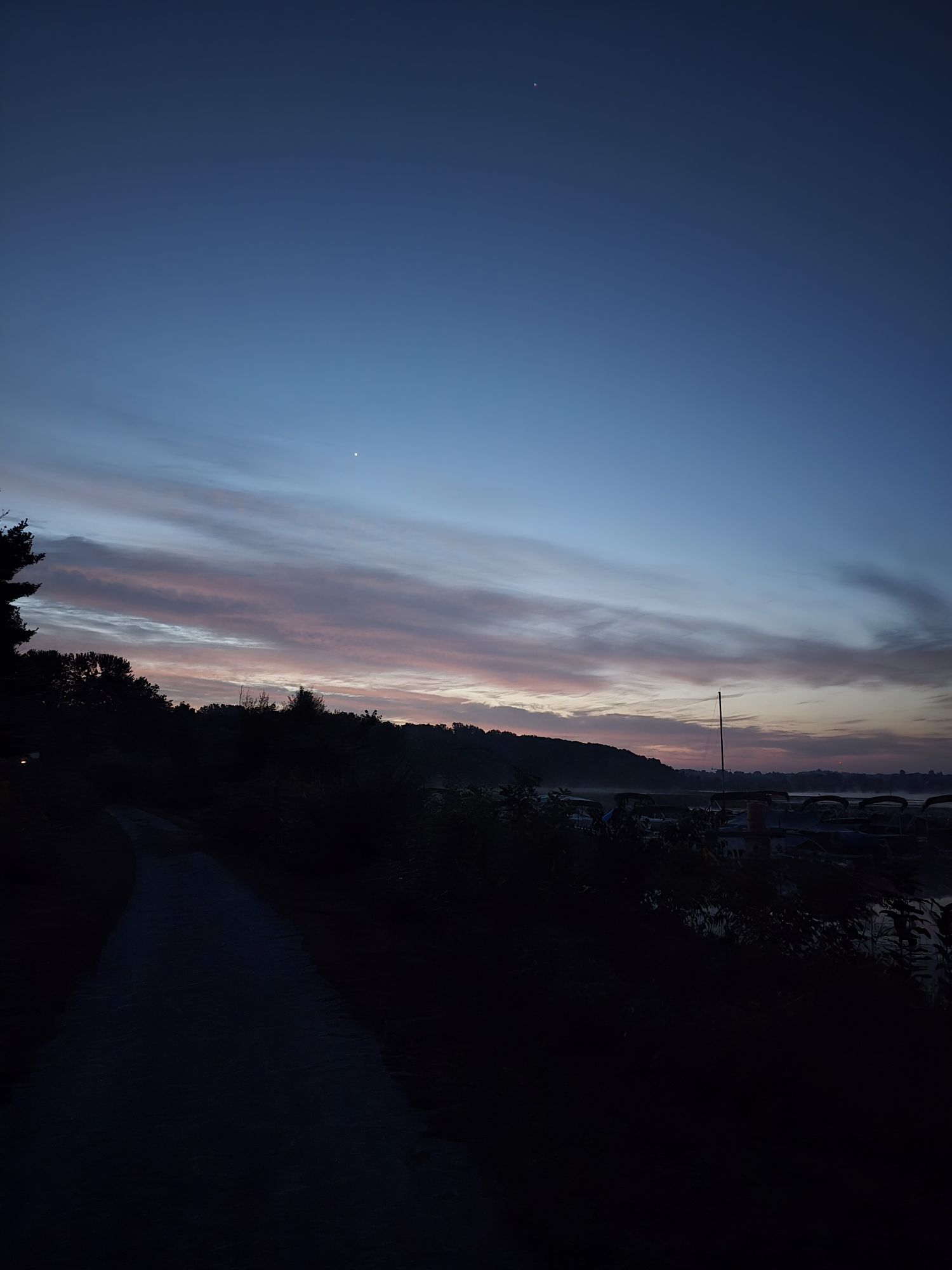
Ambient temperatures were in the high 40s as I made my way along the state park trail. The chilly air stimulated bare skin exposed by my short sleeve t-shirt. Even though it was before 6 a.m. three others were out running. Two had lights and one did not. When younger, I used to run five miles each morning in moonlight, so I never carry a light. I memorized the trail and know where the one tree root crosses so I don’t trip on it in the dark. Darkness dissipated as Earth rotated, bringing us into the light.
The weather has been perfect for about a week. It is the kind of summer weather we seek. Thursday the high temperature was below 70 degrees.
The garden is winding down, with only one or two varieties of tomatoes left ripening. There are also hot peppers which will produce until the first hard frost. Leafy green vegetables continue to grow but the freezer and refrigerator have enough to last until next year. I pick what we need to eat fresh and leave the rest. Apples are aplenty. I will end up leaving a lot on the tree for wildlife. Autumn is not here, yet we can sense it is close.
I made enchiladas for dinner on Thursday. I modified my standard ingredients, substituting fresh tomato sauce for the canned I use in winter. There are still garlic scapes in the refrigerator, so I used those too. It is an easy meal for after a long day of working with apples.
The garden garlic has been racked in the garage for three weeks and is ready for trimming and storage. I’m not in a hurry to get that done. Using a small fan to blow on it helped them dry more quickly and thoroughly.
I have five bins holding a bushel and a half of apples, sorted by juicers and saucers, downstairs near the furnace. I plan to fill the other three bins and then turn to sauce first, followed by juicing. We don’t eat much applesauce, mostly using it to substitute for an egg in vegan corn muffins. Once a year we make an applesauce cake. The refrigerator drawer can take a few more of the best apples for storage. This year has been a mad rush in the garden.
When I tear down the squash patch I expect to find a winter squash or two. That operation was ill-advised in that I couldn’t get to the vines and lost track.
The acorns on the Bur Oak trees are full sized. I expect squirrels will make quick work of them.
Such is my life in Big Grove Township. We live our best lives here… as best we can.

Apple season begins in earnest as Red Delicious ripen. I’ll pick the best few dozen for storage and make cider vinegar and applesauce with the rest until my allocation of pantry space is filled. I didn’t know it at the time, yet this is why I planted apple trees.
The Red Delicious harvest began Tuesday and it won’t take long to fill all eight of my tubs with fruit. After that, kitchen work begins as I race the clock to meet goals before the rest of them fall from the tree.
The most challenging work is running three or four bushels through my small juicer. It is worth the effort to have apple cider vinegar. I also jar a couple of quarts of fresh apple juice.
The other four trees have finished. By far, the best flavored apple was first to ripen: Zestar! I canned pints of applesauce from most of the harvest. Crimson Crisp and Earliblaze filled the time gap until Red Delicious ripened. I labeled each jar of applesauce with the variety of apple. The best of each variety was washed and placed in a refrigerator drawer for storage. I should have fresh apples at least until January.
This activity signals the end of summer. 2025 has been a great one for garden produce. Maybe once all the work is done I can kick back and take it easy for a couple of days. I’m not there yet.

“There are only ten minutes in the life of a pear when it is perfect to eat.” ~Ralph Waldo Emerson
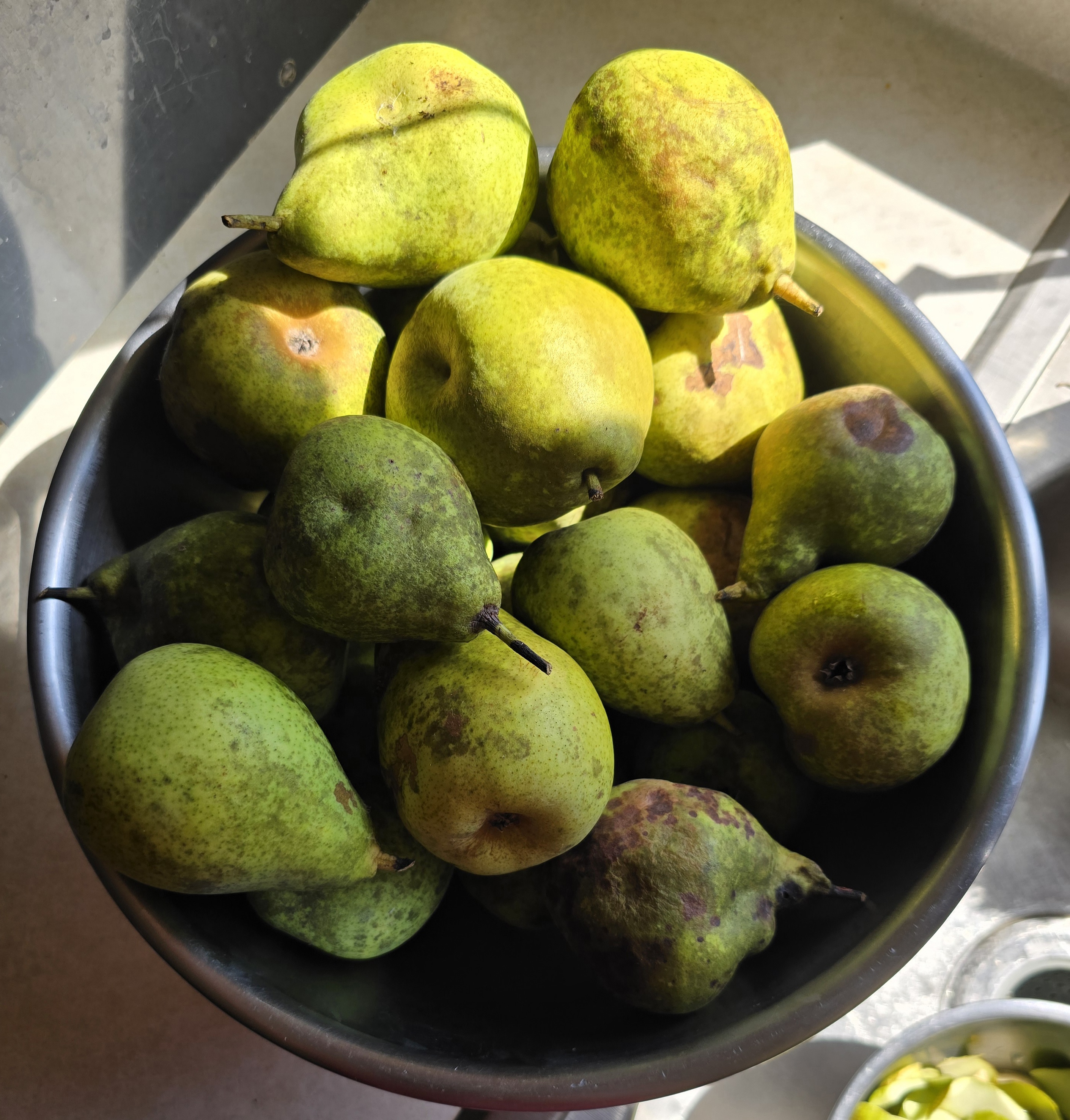
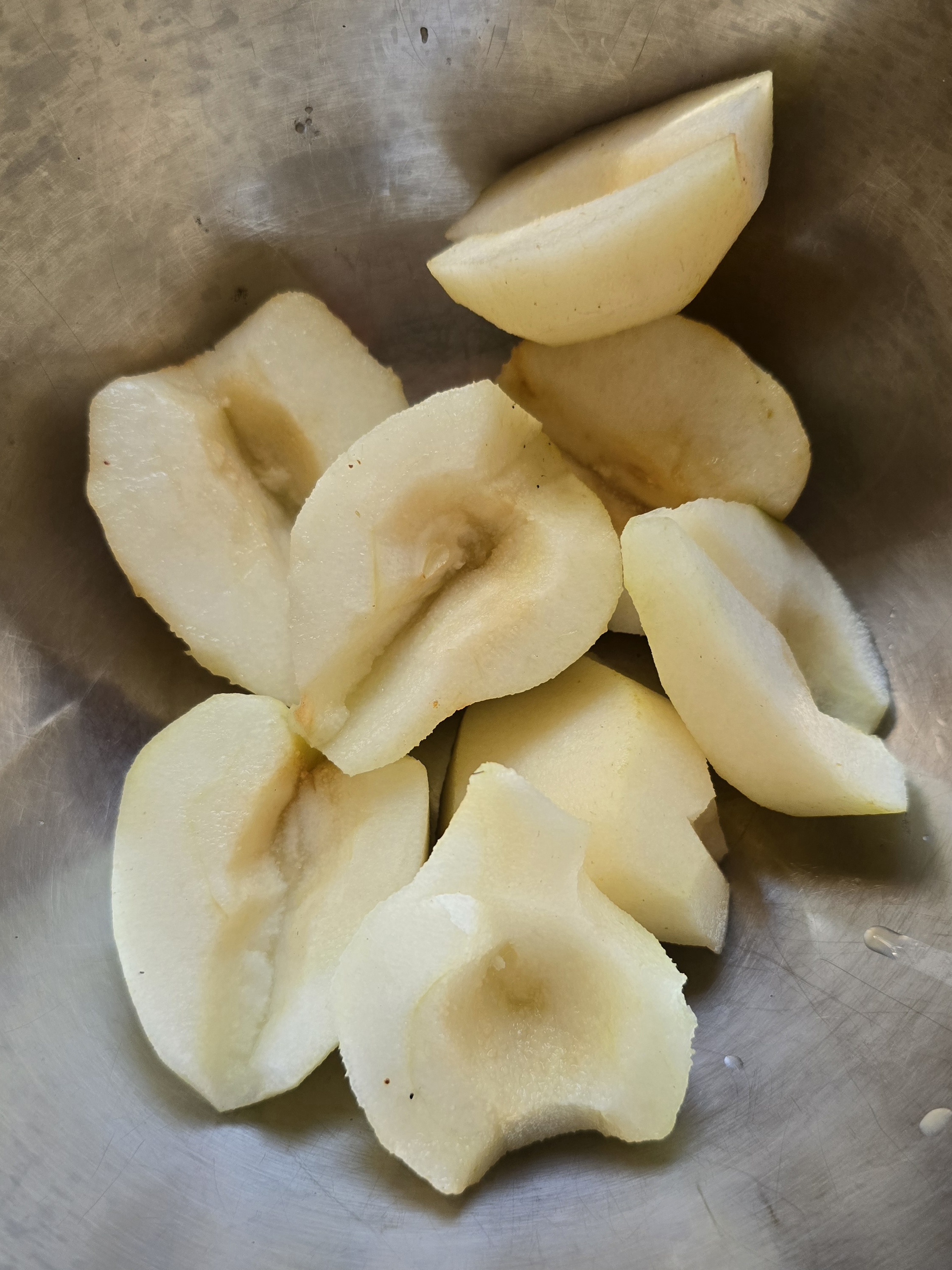
A gardener learns to take bits of fruit and vegetables and make something of them. These pears came from the tree outside our kitchen, a tree that has been producing almost every year since it was planted in 2003. Most of the fruit goes to wildlife, yet I picked this bowl full to make sure we took advantage of the sweetness inherent in them while we can. They did not disappoint.
Here is a post written in 2014 during pear harvest. I feel much the same way today:
Pear Harvest
Our pear tree is very tall. So tall the highest fruit can’t be reached without a ladder and a picker. Even then, some will be left on the tree.
That’s okay because the shelf life or pears is very short, and we have all the pear butter we can use already in the pantry from last year. We’ll bask in the glory of fresh, organically grown pears for a week or so, and give a lot away during that time.
The money spent to purchase this tree was paid back years ago. Just this year, I paid attention to how to harvest them, and found this information from Stark Brothers to be useful. If left on the tree, pears ripen from the inside out and taste mealy. Don’t want that.
This one tree has been the perfect producer for us. Not too many pears, and not too few.
It turns out I’m okay with eating pears for a few short weeks when they come in, and have little craving for them the rest of the year. One more way to sustain ourselves throughout the year with local food without eating the same thing over and over.

 Journey Home
You must be logged in to post a comment.