Using a combination of vegetables from the freezer, ice box, pantry, and storage bins I made vegetable soup for dinner last night. There were three quarts leftover for the rest of the week.
I don’t know the food cost. Purchased ingredients included a half cup of lentils, a quarter cup of pearled barley, three bay leaves, salt, and a 15 ounce can of prepared USDA organic kidney beans. Everything else was either from my garden or the farm.
More important than the meal, I captured something about Saturday afternoons in the kitchen. That feeling of a break from weekday work and action. That feeling we can live in the moment. A feeling that our lives have potential, that we are creative. Even if the result was a dependable, pretty good meal, there is more than that to living.
It turns out constraints in the supply chain for the coronavirus vaccine will result in less people becoming vaccinated than expected by the end of the year — about ten percent of projections. A group of hospital workers said yesterday they wouldn’t feel comfortable in returning to “normal behavior” until 70 percent of the U.S. population was vaccinated. My own projection is our family will be restricted until at the end of 2021. There is a lot of uncertainty about social change resulting from this virus, making accurate projections difficult.
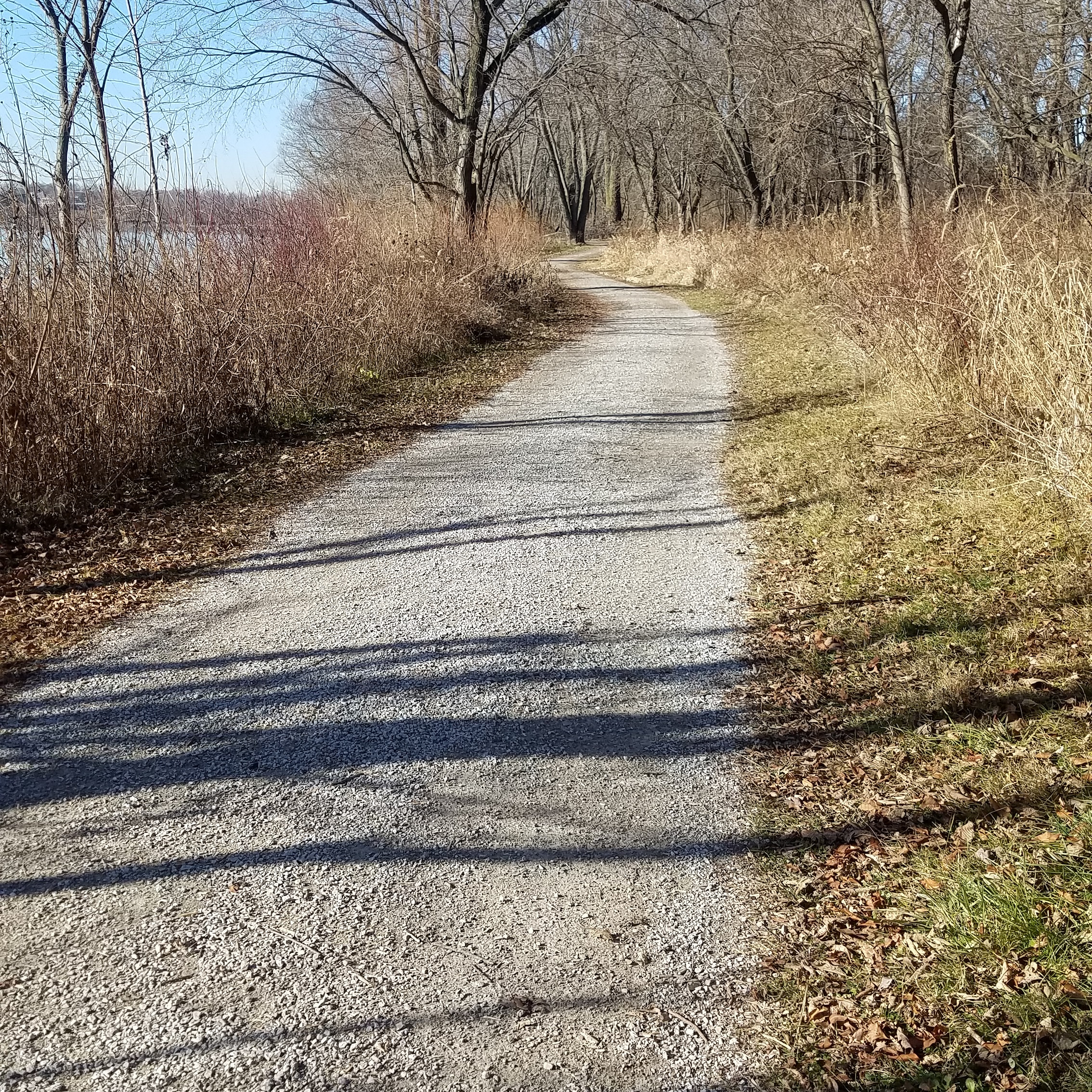
Once again, I was the only trail walker wearing a face mask yesterday. I’m not complaining, just saying. I must get out of the house at least once a day and the trail is a useful way to do so. It was unseasonably warm in what may be the warmest year for the globe since we began keeping records. I was reminded of my personal responsibility to address the climate crisis. One more thing to be worked into my 12-month plan.
The period after the general election and before the next U.S. Congress is proving to be desultory. About the only positive thing coming out of these weeks is the president is fading from view as each day brings us closer to a Biden-Harris administration. I don’t want time to pass quickly yet I seek outlets besides national politics for my human energy. I also take a daily afternoon nap.
Garden planning has begun and the first shipment from a seed supplier arrived yesterday. I hope to expand the garden, more closely correlate the garden and the kitchen/pantry, and grow more vegetables for the food rescue operation. In the meanwhile we’re still cooking food put up last summer and fall.
I read the first 400 pages of Obama’s presidential memoir. His first book, Dreams from my Father remains his best written with A Promised Land ahead of The Audacity of Hope. He’s a young man so I expect there will be more writing after he finishes the second volume of memoirs. I also doubt he will be as prolific a writer as Jimmy Carter became in his post-presidency period. A Trump memoir? Stand on your head if you think he will personally write one. No doubt he will cash in on the opportunity by hiring a ghost writer to tell his story, his way, and put his name on it.
I read my journal from late 1974 and 1975. In it I recorded reading many books, two or three a week and sometimes more. Today reading a book is a bigger deal. I will finish 50 or so this year, which is more than most people read, yet much less than I once did. According to the Social Security Administration life expectancy calculator I can expect to live 16 more years. At an average of two books per month that’s 384 more to read, which doesn’t seem like many given everything that is available.
I’m nowhere near assembling the planning threads for next year. There’s the garden, reading and writing. There is also our family’s wellness and home maintenance to consider. By the first of January I hope to weave something that is meaningful and fits well as we enter another year of the pandemic in 2021.
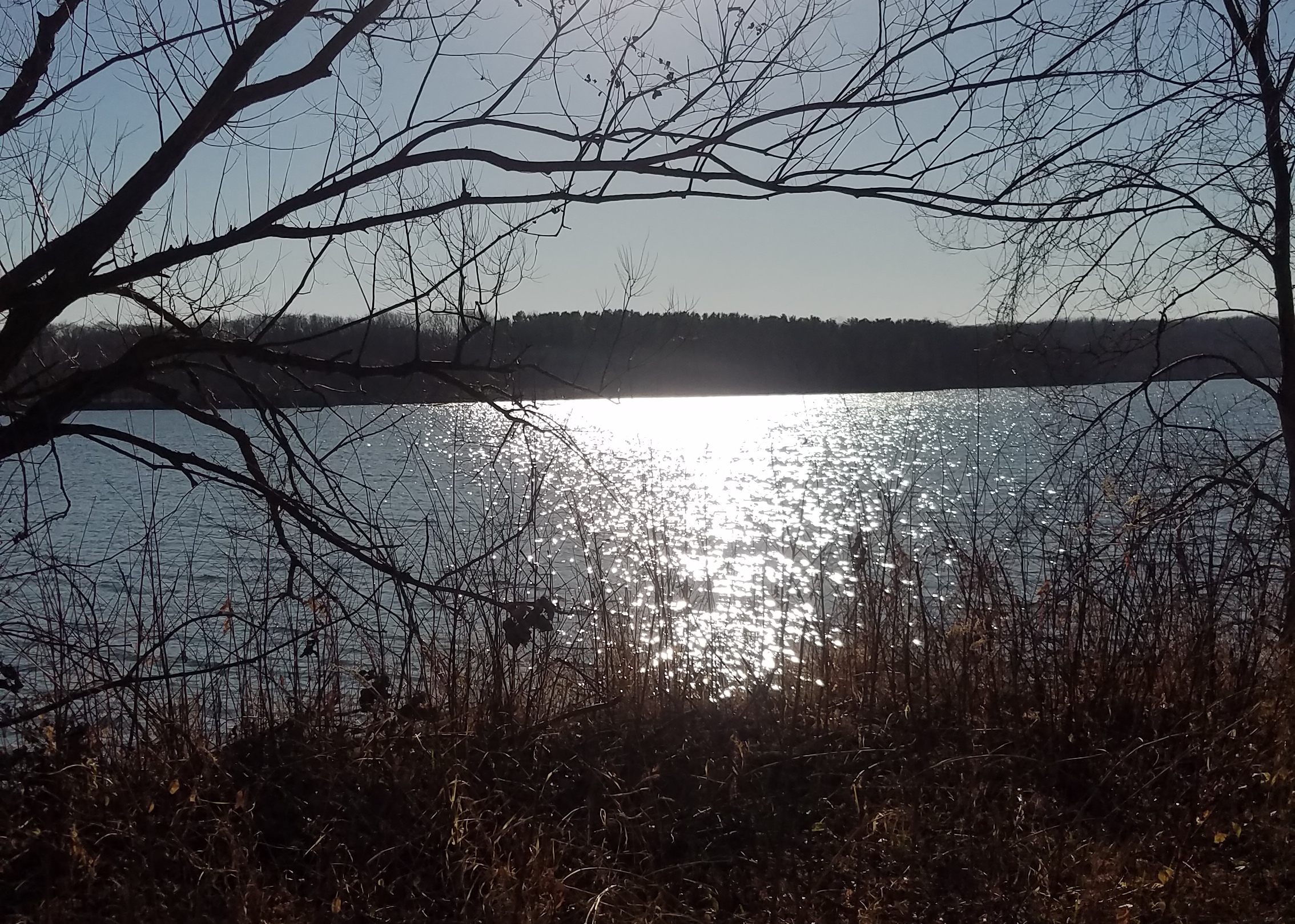
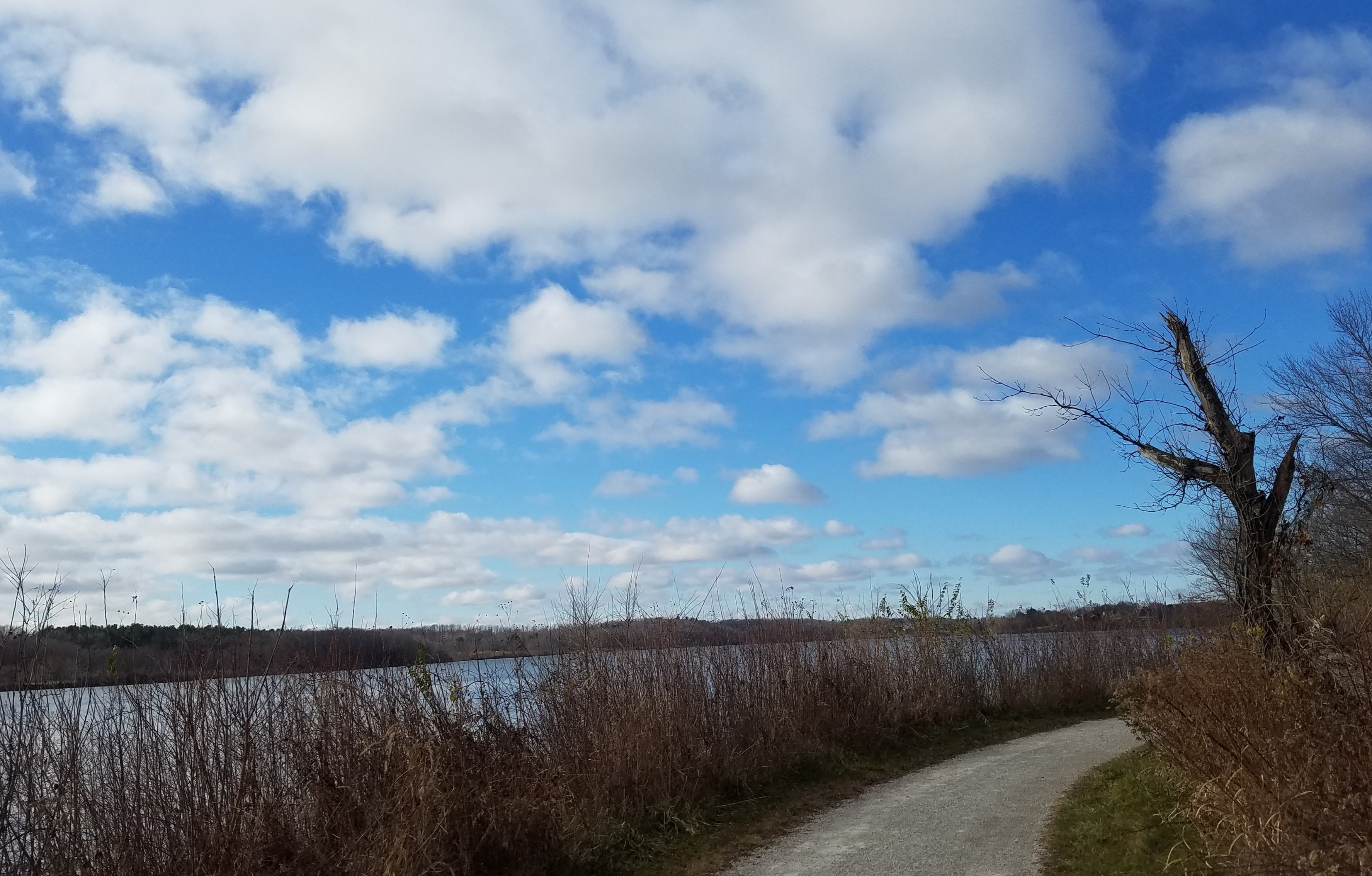
Yesterday the lake was frozen around the edges. There was plenty of open water where waterfowl — geese mostly — swam and fished. The weather was good for walking with not too much wind. Soon the ground will freeze and the cold will end work in farm fields.
As we bend toward winter there is much to consider… and plan… as we enter the second pandemic year. I’m on a brief hiatus from writing and will return with regular posts soon. Be well.
Wednesday was discovering thick layers of dust on shelved books in my writing room. A long stream of cobwebs wove its way along the top shelf of one side, through 15 toy trucks collected during my transportation career. To get any focused writing done, of the kind an autobiography represents, the books must be rearranged for quick reference… and dusted.
With all of that I managed a walk on the trail.
I’ve been writing about the closest congressional race in the country here in my congressional district. Yesterday Rita Hart’s campaign identified next steps after the results of the election were certified on Monday. She lost by six votes. Here is the unedited press release for readers as I get back to work planning 2021.
Make it a great day!
Rita Hart Announces Next Steps to Ensure All Iowans’ Votes Are Counted, Calls on Miller-Meeks to Join Effort
WHEATLAND, IOWA — Today, Rita Hart announced plans to challenge the latest vote totals in Iowa’s Second Congressional District, reflecting the need to count all votes cast in the Second District, including legally cast ballots that were not considered in the state recount process, which far outnumber the number of ballots needed to change the outcome of the election. Additionally, given the short six day timeline allotted for a state elections contest in Iowa and the volume of ballots left to be examined across 24 counties, Rita Hart plans to file a petition with the House Committee on Administration under the Federal Contested Elections Act, a decision that allows for enough time for all legally cast ballots to be considered, ensuring Iowans’ votes are accurately counted.
Since Election Day, significant errors in the counting process have led to confusion over whom Iowans in the Second District elected to represent them:
On November 6, Secretary of State Paul Pate announced a significant over-reporting error in Jasper County, triggering a county-wide recount.
Then, on November 10, Pate announced yet another reporting error, this time involving under-reported votes in Lucas County.
On November 23, the recount board in Jasper County conducted a machine recount that netted 9 votes for Rita Hart. However, at the urging of the Miller-Meeks campaign, the recount board conducted yet another recount on November 25 that netted just one vote for Rita.
Many counties did not fully review ballots to identify valid votes that the machines did not recognize, in part because of the time and burden that would have been required for such a thorough count.
Once the initial district-wide canvass was completed on November 12, the gap between the two candidates was 47 votes. After the state recount process, the margin has narrowed further to just 6 votes — making this the closest federal race since 1984. More Iowans’ votes were counted after the state recount process, but time constraints and a lack of standard rules prevented all votes from being counted. The Federal Contested Elections Act petition will ensure that more Iowans’ votes are counted.
“When the recount process began more than two weeks ago, Rita Hart was down by 47 votes. Since then, more Iowans’ ballots have been counted and Rita has continuously gained ground, narrowing the gap to a mere 6 votes. While that recount considered more votes, limitations in Iowa law mean there are more legally cast votes left to be counted. With a margin this small, it is critical that we take this next step to ensure Iowans’ ballots that were legally cast are counted. In the weeks to come, we will file a petition with the House Committee on Administration requesting that these votes be counted, and we hope that Mariannette Miller-Meeks will join us in working to ensure that every Iowans’ voice is heard,” said Rita Hart for Iowa Campaign Manager Zach Meunier.
The Associated Pressannounced earlier this week that it will not declare a winner in the race until all legal options are exhausted.
On background:
According to Iowa law, a state election challenge must be completed by December 8, 2020. That tight timeline would not allow for adequate time in which to examine the ballots and evidence needed to ensure all Iowans’ votes are accurately counted in this historically close election.
Iowa law prohibits ballots not counting in the initial canvass from being considered in a recount. As a result, there are legally cast ballots that have yet to be counted, far exceeding the current 6 vote margin in this race. These ballots that still have not been counted include ballots cast by military members serving overseas, ballots that were not counted on Election Night despite being legally cast, and thousands of unexamined overvotes and undervotes.
It is unacceptable that ballots in an election this close would go uncounted, particularly those belonging to active-duty service members overseas.
It’s never a problem to fill days with activity. Setting and working toward a broader goal is proving elusive during the coronavirus pandemic.
Activities once taken for granted are now impossible. So many people are on the lookout to prevent contracting COVID-19, causing massive deterioration of our shared social life. My reaction to the extended pandemic was reasonable: a decision to focus on my autobiography. Increasing parts of each day include such work.
In the Jan. 28, 2019 issue of The New Yorker, historian Robert Caro recounted a meeting with his managing editor, Alan Hathway at Newsday in 1959.
“Just remember,” Hathway said. “Turn every page. Never assume anything. Turn every goddam page.”
Caro took the advice to heart. My book won’t be as detailed as his books on Robert Moses and Lyndon Johnson. However, it is important to read what I’ve previously written and saved. It’s important to go through the souvenirs, books, boxes and trunks that clutter our household. When the pandemic recedes it will be important to visit places and again speak in person with friends and acquaintances. It is important to give things consideration as I distill them into a couple hundred thousand word memoir.
I started keeping a journal after graduation from the university. The first volume was stolen with my back pack in 1974 at a youth hostel in Calais, France. The rest of them sit on a shelf within arms reach of my writing table. There are more than 35 bound volumes and more in photo albums, media, three-ring binders and file folders in the next room. That’s not to mention photographs, the trove of letters I wrote Mother and got back after her death, or the thousands of blog posts and hundreds of newspaper publications. It’s a lot to read, examine and consider.
I don’t know what to do except begin and let the thread go where it will. With that in mind, below is the first journal entry that remains with me.
Very sunny here today near Stonehenge, and other ancient ruins. Stonehenge yesterday brought to attention the very tourist like notions of seeing something only to tell your friends about it when you get back. It may be that these days this is the notion you should have or at least most common, but it is also a notion of which I refuse to partake. It is only a very insensitive person who will go look and come back in one hour as the tour bus takes, but then there’s hours and barb wire fence to keep you from doing it any other way. Yet here too comes the notion that since there are so many books and pictures and articles about Stonehenge why even bother the few minutes to even see the thing.
On the way from the rocks to the return bus, the drivers were talking and one said to another, “It’s too bad it started to rain. It spoiled their trip.”
Here it seems that there is such a “holiday” preconception among these drivers (and all Britons as well) that it prevents them from seeing what is really, actually there: some rocks with barb wire about them with people crowded within these premises. At any rate, I was no different from the others when I paid my 65p and walked, took some photographs, and bought some postcards which I today mailed to the states.
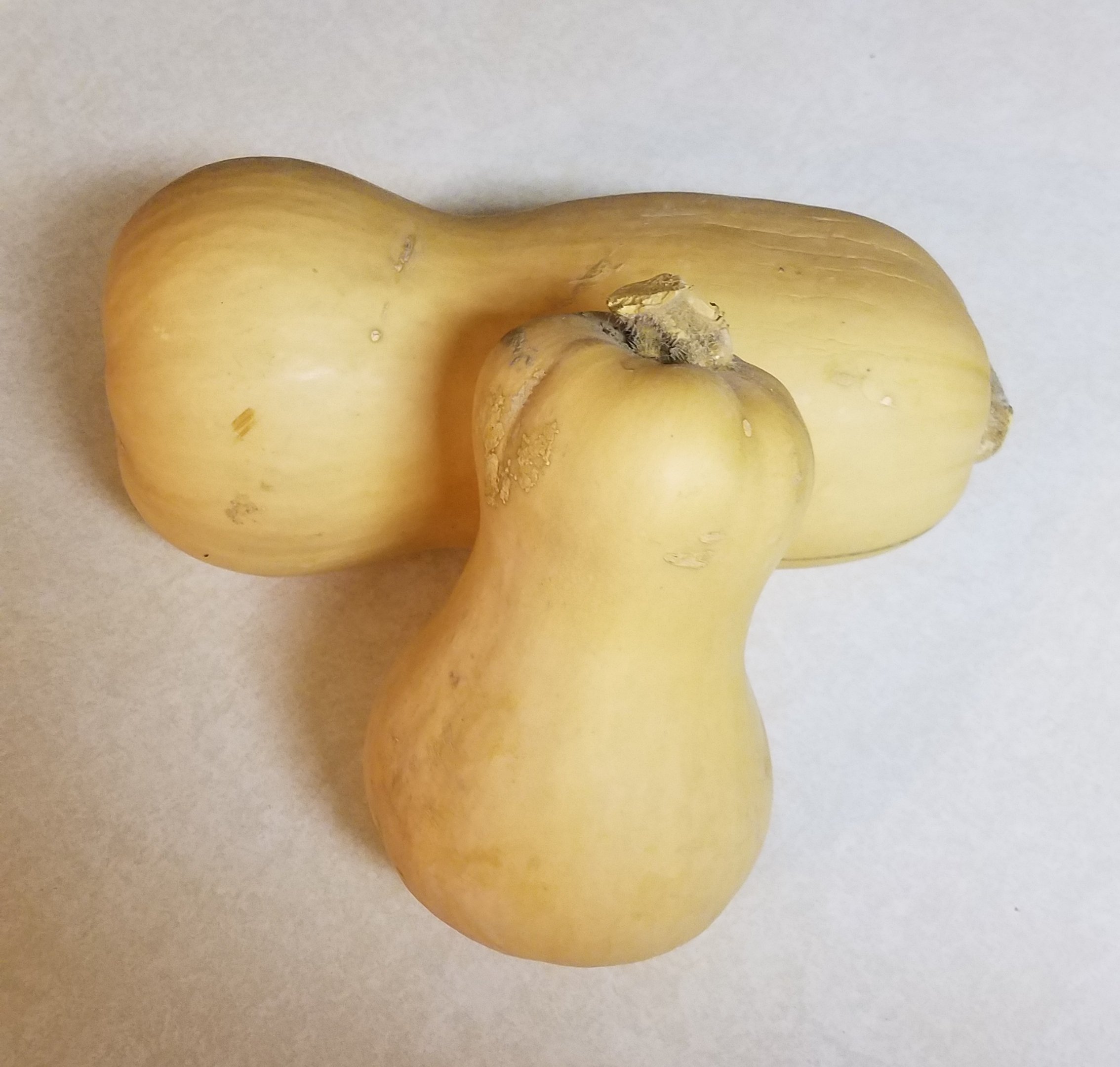
It is easy to grow butternut squash. By the end of the gardening season, our kitchen counter accumulates half dozen or more. They keep for a long time at room temperature, so no need to be in a hurry to eat them all.
Mostly we halve them, remove the seeds, and roast them to use the flesh as a side dish. We’ve been exploring new recipes that reduce the amount of dairy products and oils in our meals. Roasted squash fits right into the menu.
We found a way to make a main dish out of butternut squash and tried a new recipe last night. It is called “butternut squash mac and cheese with broccoli.” It tastes nothing like macaroni and cheese and there is no cheese in it. The name is pretty lame. However, we normally stock the ingredients in our kitchen, and I commonly use the required cooking techniques already. I believe we will try this again. Below is how I would prepare it next time.
Butternut Squash with Pasta and Broccoli
medium butternut squash (~1 to 1-1/4 pounds)
1 cup diced onion
4 cloves garlic, peeled and minced
1 teaspoon dried thyme
1 teaspoon dried basil
1 cup unsweetened almond milk
2 tablespoons nutritional yeast
1 tablespoon apple cider vinegar
sea salt to taste
black pepper to taste
8 ounces dried penne pasta
3 cups small broccoli florets
Peel, seed, cube and steam the butternut squash until the flesh yields easily with a knife.
Cook the onion, garlic and seasonings in a saucepan with a quarter cup of broth or water. Keep adding broth to prevent the vegetables from sticking to the pan.
Start eight ounces of pasta in a large pan with plenty of water. Set the timer for five minutes before reaching al dente stage. May have to SWAG this.
Put the almond milk, vinegar, onion-garlic mixture, nutritional yeast, in a blender and stir briefly to incorporate. Add the squash and run at the puree setting until the big pieces are smoothed out. Because there was so much liquid and squash, I did this in two batches. Place the mixture in a large wok or saucepan.
When the timer goes off, add the broccoli to the pasta and cook together for the remaining five minutes. Drain the pasta-broccoli mixture and add it to the sauce pan with the squash mixture. Stir everything together over medium heat until it comes to temperature.
Makes four generous servings.
Tips: I cut the almond milk in half from the original recipe. The amount will require some tweaking. Use pasta made with chick peas or lentils to increase the amount of protein in the dish. I used frozen broccoli which had been parboiled before freezing. I’d try fresh if we had it. I’d also try Brussels sprouts instead of broccoli but cook them completely before adding to the final dish.
Earth from Voyager at 6 billion kilometers, Feb. 14, 1990. Photo Credit – NASA
The recount in Iowa’s Second Congressional District was completed Saturday afternoon resulting in a win for Mariannette Miller-Meeks over Rita Hart with a margin of six votes. According to this morning’s data on the Secretary of State website, 394,430 votes were cast in the race.
Miller-Meeks won our precinct hands down, so I’m not surprised at the result.
The state is expected to certify the election results tomorrow. Unless there is substantial evidence of foul play, that will be that. Because the race was so close, I expect the 2022 campaign for the seat to begin immediately. In a politics imbued with money, that was a given for the congresswoman. If Hart runs again, she should start now.
The Des Moines Register reported the Iowa Democratic Party is expected to release the results of an investigation into the 2020 Iowa Precinct Caucuses. I’m not sure what there is to investigate. The problem was they developed a computer application on the cheap and the results reported through it were all balled up. The brouhaha about the reporting application masked something else at the time.
There were only 70 percent of the caucus attendees in our precinct compared to 2008. What happened to the missing 80 voters? I gave an answer only passing thought after the caucus. After the general election it’s pretty clear what happened. The missing voters died or moved, and new people moving into the precinct lean Republican. We are a more Republican precinct this year than when we moved here in 1993. I’m not sure if Dave Loebsack were on the ballot he would have won. It was that kind of year in local politics.
Nationally, there is a ray of hope. We elected Joe Biden and Kamala Harris at the top of the ticket, and retained a majority in the U.S. House of Representatives. The U.S. Senate race is complicated by the two Georgia Republican Senators who failed to get a majority of votes in the general election. Both are facing a Jan. 5, 2021 runoff election. If Democrats win those elections, the senate will be split 50-50 with Harris breaking any ties. There are no guarantees Democrats will win the Georgia runoff races.
There is a ray of hope, yet like the bands of sunlight reflected by the camera in the photo it is not real. Our politics has lost its way. What is the benefit of the tens of millions of dollars being spent on politics? To common folk like me, not much. It is a crime against people who are less fortunate.
For the time being we Democrats are a pale blue dot in a vast, dark universe. It’s always been that way, although the epiphany came late to me. We have to seek the light, avoiding the camera’s refraction, and find a better way. None of us can do that alone.
Next is a jump ball and I haven’t played basketball since being a grader.
My experience of the 1970s is book ended on one end by graduation from high school and attending the Kickapoo Creek Rock Festival in Heyworth, Illinois on May 30, 1970. On the other is cutting up my military service identification card on Nov. 25, 1979 at a party in my apartment near Five Points in Davenport.
Life was not what I expected.
Some of my high school classmates married immediately after graduation. I expected to marry a woman, yet that would not be until later in life. Like many in my cohort I left home to attend college rather than settle down. The following ten years were a time of adventure and learning about the world beyond my home place. I sensed life would not follow a standard path.
There was an unseen momentum that led me to attend and graduate from university. Father’s death in 1969 resulted in questioning the efficacy of the life I’d been planning with him. Had I not been awarded the full scholarship through the efforts of the meat packers union, I doubt I would have attended or finished at university. My last discussion with him was about studying engineering, although he did not affirm that I should. He was busy with his own struggles attempting to turn the page from working at a slaughterhouse to passing the state medical board examination required to become a chiropractor.
Before I left home I had a conversation in the living room with Mother about whether I should stay in Davenport to help her get through the loss of Father and help with my younger siblings. She wouldn’t hear of me staying and encouraged me to leave Davenport to attend university. After working the summer at the Turn Style discount department store I left for the University of Iowa. More than any other parental guidance, this conversation set the course for who I would become.
A person does not experience life by becoming set in patterns of existence. The whole idea behind automation was the elimination of routines. By allowing standardization of products to dominate the ambitions of men, we can reach the point where society is nothing more than a group of zombie-like creatures who are willing to conform to what everybody else does. This is why European thinkers criticized the machine as a cancerous growth on humanity.
School papers, University of Iowa, Iowa City, Iowa. Fall 1970.
It seems appropriate my university coursework brought me to this conclusion about standardization. Few of us realized in 1970 what the impact of automation, branding, technology, communications, and dominance by corporate interests and other institutions would have on our lives half a century later. Part of my life has been standing up to such standardization. Even so, my 1970s were not that different from others.
I attended university, made a three-month tour of Europe, came back to Davenport for a year, then enlisted in the U.S. Army. By the time I returned to Iowa in 1979 — and collected all of my belongings from storage, shipped from Germany, and from Mother’s house — I knew I wouldn’t be long for my home town. This letter to the editor summarizes how I felt.
As a college graduate, I would like to believe that a rewarding lifestyle consists of more than a hefty paycheck with plenty of taverns in which to spend it. I would like to believe that my future in Davenport holds more than a secure family life.
Letters to the Editor, Quad-City Times, Dec. 30, 1974.
Looking back on the 1970s I see the beginnings of the same path I’m on today. While it was not a standard path it has been pretty consistent all along. I expect to continue, at least for a while.
The measure of Thanksgiving came this morning when I took my blood pressure and stepped on the scale.
My systolic blood pressure was normal and the diastolic slightly elevated. It was elevated to the same point where my medical practitioner and I had a conversation about medication a couple of visits ago. We decided I wouldn’t take meds and I expect my blood pressure to return to normal by tomorrow.
My weight was the same as 24 hours ago, meaning the huge plates of food consumed in the celebration, which made me feel stuffed and drowsy, won’t likely be added to my waistline.
The two of us were alone for the holiday as we’ve been for many years. Our family is small and no one makes a big deal of the holiday. We do all have some kind of feast. Phone calls, text messages, emails and social media posts were made. It was all reassuring. It all felt like normal.
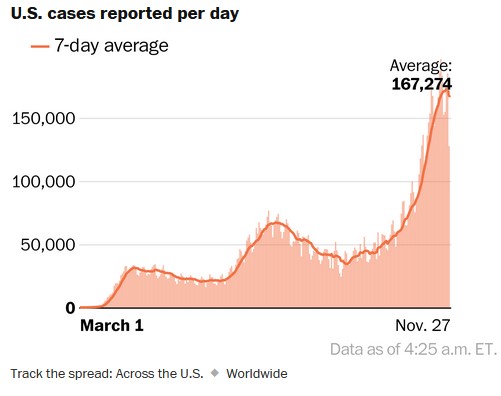
Washington Post, Nov. 27, 2020
The coronavirus pandemic is here and the incidence of cases elevated to the highest level since it began in March. Keeping the gathering small was easy for us: we just had to be ourselves. The Centers for Disease Control recommended Americans not travel. Americans are not good listeners. “In a pandemic-era record, 1,070,967 people passed through security at America’s airports on the day before Thanksgiving,” CNN reported. I expect the numbers on this chart to soar higher in the next couple of weeks.
We are lucky to have enough to eat. CNN reported yesterday some 50 million Americans didn’t on Thanksgiving. Food pantries were swamped and some ran out of food. The toll of the coronavirus pandemic on health, on employment, and on income is tangible. In graduate school, during interviews with survivors of the great depression, they told me having a garden was a big part of how they put food on the table. Because so much of what was on our plate was produced locally or from our garden, food insecurity was not a direct issue here. For that we are thankful.
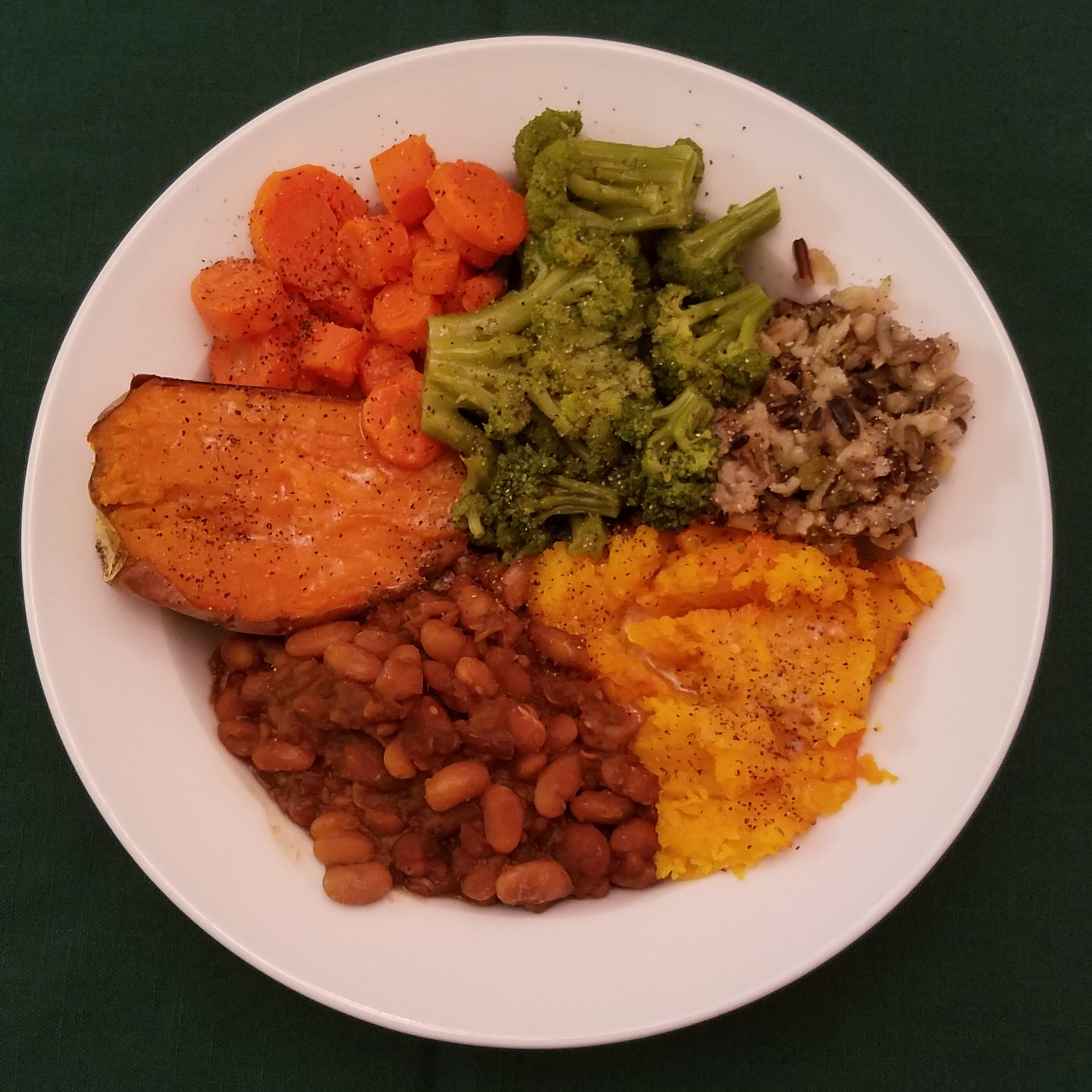
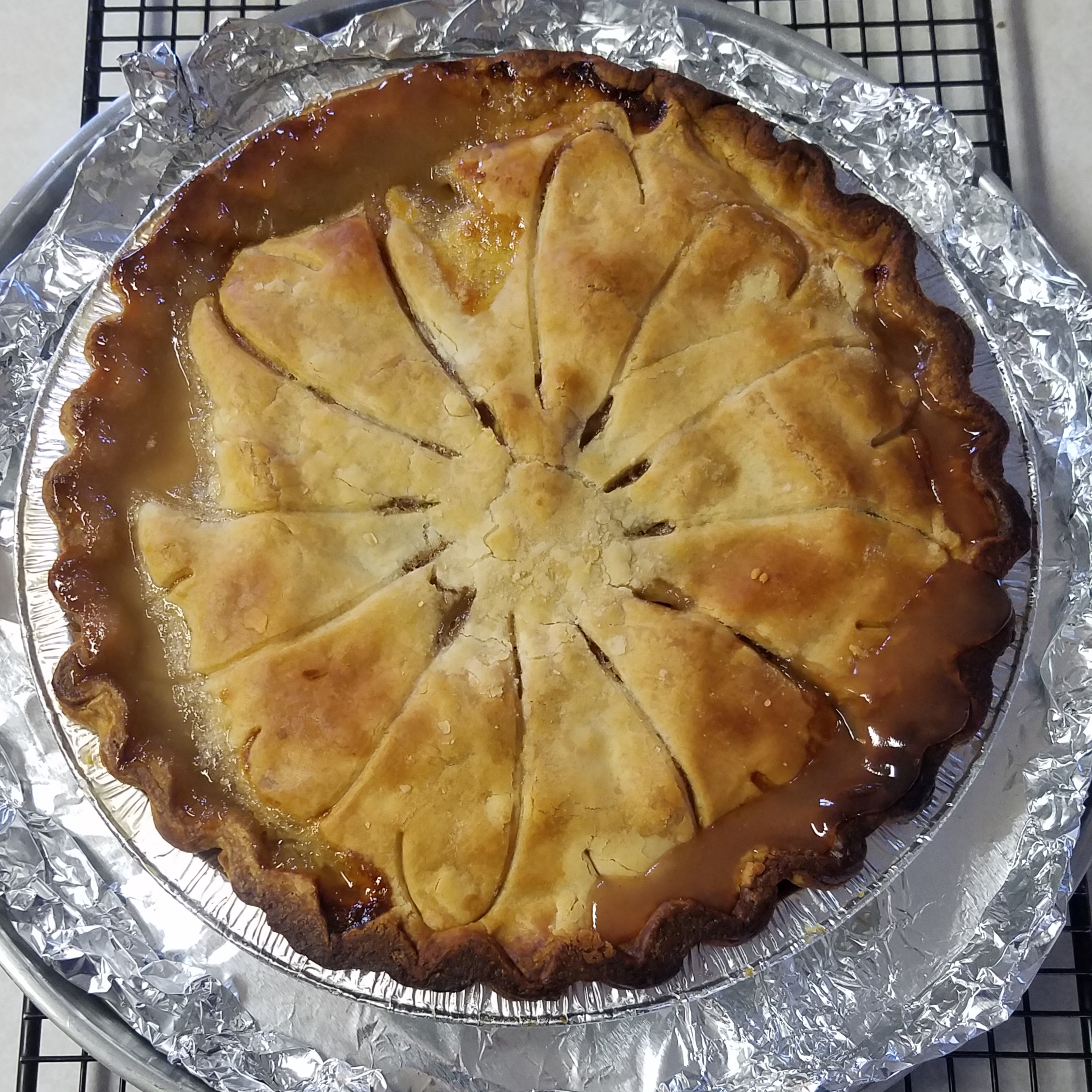
I did most of the cooking beginning at 11 a.m., continuing for six hours. Over the years we developed recipes for baked beans and wild rice which are the two most complicated dishes and take the most cooking time. Beans and rice are the center of a vegetarian meal. For sides we had steamed broccoli, cooked carrots, butternut squash and sweet potato. I ate a few home made pickles while I was cooking. For beverage it was fresh apple cider and for dessert a take and bake peach pie, both from the local orchard. Everything in the main meal was low fat. Except for the peach pie there was little refined sugar. Eating an ovo-lacto vegetarian diet has its advantages.
Part of my Thanksgiving is politics and I spent time reading Barack Obama’s presidential memoir, A Promised Land. He wrote about the 2006 Tom Harkin Steak Fry where he spoke and my friends and I had a chance to shake his hand in the rope line. While others have written about the campaign, notably David Plouffe in The Audacity to Win, it was good to read familiar stories of that campaign. There may not be another like it because of changes in American society since then.
The president took press questions for the first time since the election while I was cooking dinner. He made what were described as “stunning claims” about the election, without evidence. We are a nation of laws. Mr. President, either show us evidence the election was rigged or shut up. He did say he will plan to leave the White House after the electoral college votes on Dec. 14. There is no doubt Joe Biden won the election. President Trump really has no say in the matter of his leaving by Jan. 20, 2021.
In normal times I would be scheduled for work at the home, farm and auto supply store this morning for Black Friday sales. I left retail work because of the pandemic. I’m not sure I will return to it. We’ve discovered how to get by on our pensions.
During my regular end of year planning it appears our budget for next year is sustainable. My best hope is 2021 does not bring another pandemic Thanksgiving.


 Journey Home
You must be logged in to post a comment.