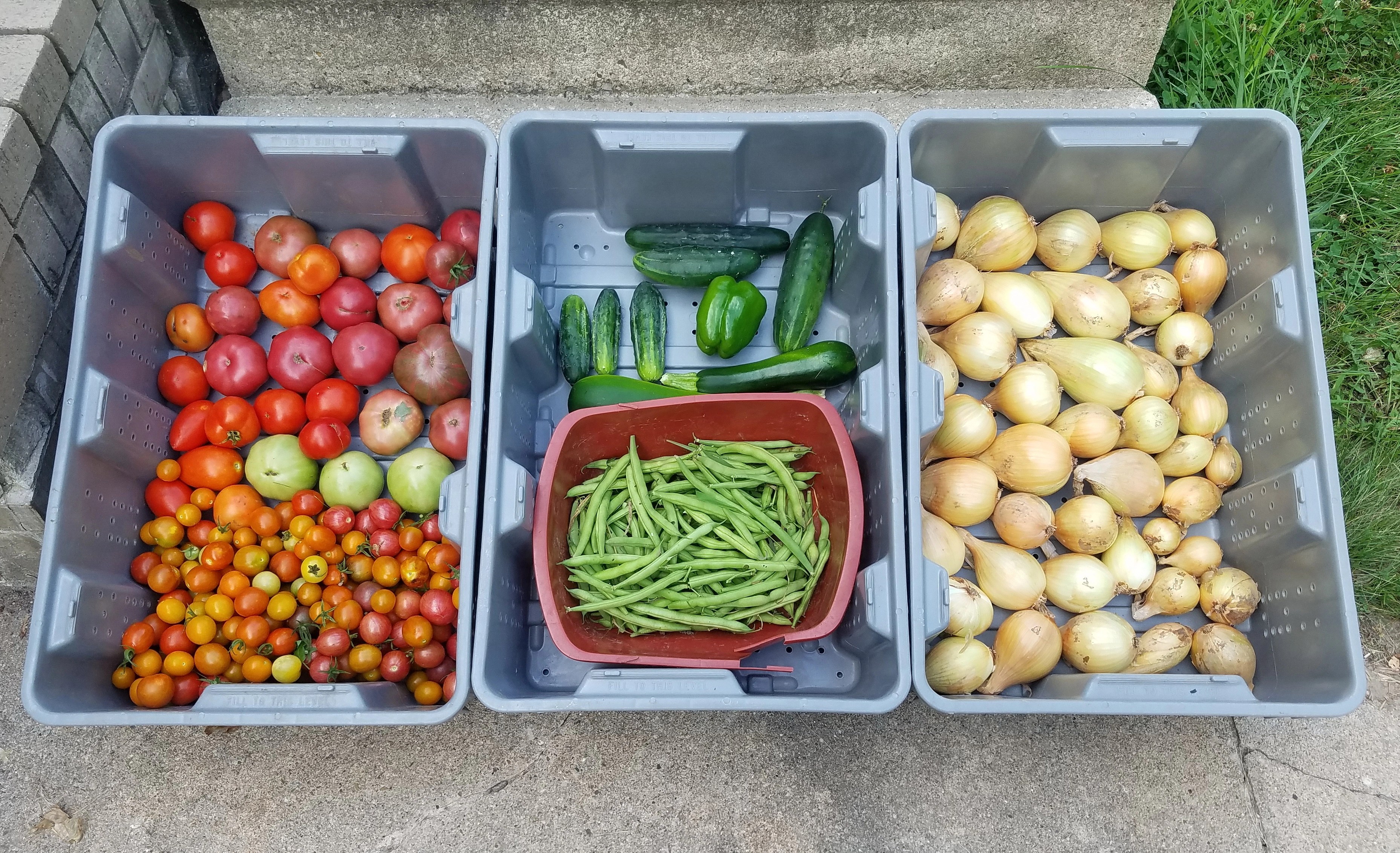
Despite near drought conditions most of this growing season, our garden is producing the best crop I can remember. Our ability to irrigate is most of that. I’m also becoming a better gardener. We don’t have it as bad as California does.
Because of dry conditions over an extended period of time, California farmers are letting fields go fallow. Without rain or irrigation there is no point in putting seeds in the ground. California Governor Gavin Newsom issued three drought emergency proclamations this year, in April, May and July. The state called for residents to reduce water use by 15 percent to stretch supplies and protect water reserves. While this drought is not the worst on a 1,000 year time line, it is bad and if it continues it will affect what shoppers see in grocery stores. It goes without saying prices will trend upward.
Because of drought in western states, what we do in our Midwestern back yards increases in value.
When Michael Pollan released this video in 2010, the landscape for local food was different. His focus was on the amount of fossil fuel it took to produce vegetables in California and distribute them across the United States. He also discusses the energy required to make processed foods, like Hostess Twinkies. While avoiding global warming remains a reason to eat locally, with drought made worse by climate change, supply becomes an issue. If California farmers are not planting crops, if almond trees are not sustainable there, how will we get nutritious food? There are few better solutions than growing one’s own and sourcing locally.
Mariannette Miller-Meeks on the Iowa State Fair Political Soapbox on Aug. 13, 2010. Photo credit: Wikimedia Commons.
Mariannette Miller-Meeks ran a successful fourth campaign for congress and now represents Iowa’s Second Congressional District. People argue with that statement, saying they stopped counting the votes, yet it is accurate.
Her first three campaigns (2008, 2010 and 2014) were won consistently by Dave Loebsack, even in 2010 when Republicans began taking back control of the state. Loebsack won in 2010 with 51 percent of the vote to Miller-Meeks’ 46 percent.
Her several campaigns created many opportunities to hear her speak and ask questions over a 13-year period. She is a relatively known entity.
What is new and a bit unexpected, is she used her long awaited victory to become a blabbermouth. Today, my Google Alert finds Miller-Meeks saying something noteworthy to someone a couple of times a day. With her regular appearances on FOX News, she attempts to carve a peculiar narrative of her drawn-out election victory. I preferred it when our district’s member of Congress had less to say and wasn’t constantly spinning talking points.
During the time constituents were represented by Jim Leach and Dave Loebsack, we didn’t hear from them much. Our expectation was we wouldn’t hear from them unless it was important. We are used to our member of Congress being above the fray. Leach and Loebsack were the ones who evaluated data and legislation with their district foremost in mind. While Leach was definitely a Republican, he presented an image of bi-partisanship that won him many district fans. Miller-Meeks evaluates legislation based on her partisanship first and make no pretense about it.
Miller-Meeks’ no vote on the American Rescue Plan epitomizes her partisanship. No Republican in the Congress voted for the law. At the same time Iowans specifically benefited from features of the law. Although the congresswoman has been less vocal about the benefits, her staff is in a position to have to help Iowans with the programs. While voting no, she gains favorable attention by helping constituents.
It is more than she speaks excessively. Miller-Meeks is purposely divisive and the district has not seen this for decades. Jim Leach’s reputation was built on being the guy who could be persuaded to cross the aisle on legislation. Miller-Meeks votes against laws she recognizes will pass without her vote and enjoys the benefit of Democratic policy among voters. She is able to cynically say, “I voted against that bill” to her base, while her staff helps constituents secure benefits. Perhaps the correct descriptive term is Rep. Miller-Meeks is a “divisive blabbermouth.”
For the present, the congresswoman is who she is and as she speaks openly and often, constituents have a chance to get to know her. I doubt people are as tuned into her daily activity as we are at Blog for Iowa. Her frequent unexpected and divisive statements are money in the political bank for Democrats–a reserve that will be spent as Democrats identify a candidate and begin the 2022 Congressional campaign.
Let her go on talking. There will be a price to pay before her term is up.
Laundering home sewn face masks is back on the to-do list. It looks like we’ll need them.
On Monday I wrote we are not really taming the coronavirus in Iowa or in the United States as a whole. Too many unvaccinated residents are in social situations without protection. The unvaccinated make up the vast majority of hospitalizations for COVID-19. If you missed it, click here to read the post.
To my point about children returning to school this fall, also on Monday, the American Academy of Pediatrics recommended universal masking in schools for everyone older than age two.
While that recommendation was churning in the vessel, both political commentator Sean Hannity of FOX News and U.S. Senate Minority Leader Mitch McConnell made strong public statements that people need to get the COVID-19 vaccine in their arms. McConnell was particularly direct, with a “get vaccinated or else” statement. Here is the clip:
Get vaccinated!
These shots need to get into arms as rapidly as possible, or else we're gonna be back in a situation this fall like what we went through last year. pic.twitter.com/J4o6yL5cn4
What gives? Are we at a turning point in addressing vaccine hesitancy? We know Hannity and McConnell are not sincerely concerned about those who died or are afflicted with COVID-19. Was it Monday morning’s 750-point drop in the Dow Jones Industrial Average? Did they have a come to Jesus meeting… with Jesus? I’m sure I don’t know, other than it is self serving. Maybe they are worried too many of their anti-vaxx constituents will die of COVID-19, yielding the political fight to Democrats.
My cynicism about conservatives’ motivation aside, the increase in number of COVID-19 cases is alarming. While the majority of COVID-19 hospitalizations are among the unvaccinated, there have been prominent people who, while fully vaccinated, have contracted a new variant of COVID-19. On the one hand we have to go on living. On the other, there are unknown risks to be addressed.
If you are vaccinated, the CDC recommends you comply with federal, state, local, tribal, or territorial laws, rules, and regulations regarding protection from the coronavirus, including local business and workplace guidance. If a merchant requires you to wear a mask on their property, just do so or walk away. Seek to get along in society knowing the pandemic brought out the worst among some people. Seek safer activities if you are in doubt, the CDC made a handy list.
And launder those reusable masks. Don’t be afraid to wear them in public. A mask won’t kill you but the coronavirus might.
Editor’s note: Sean Hannity spent time on his Thursday radio program back tracking on his encouragement to the unvaccinated to get vaccinated.
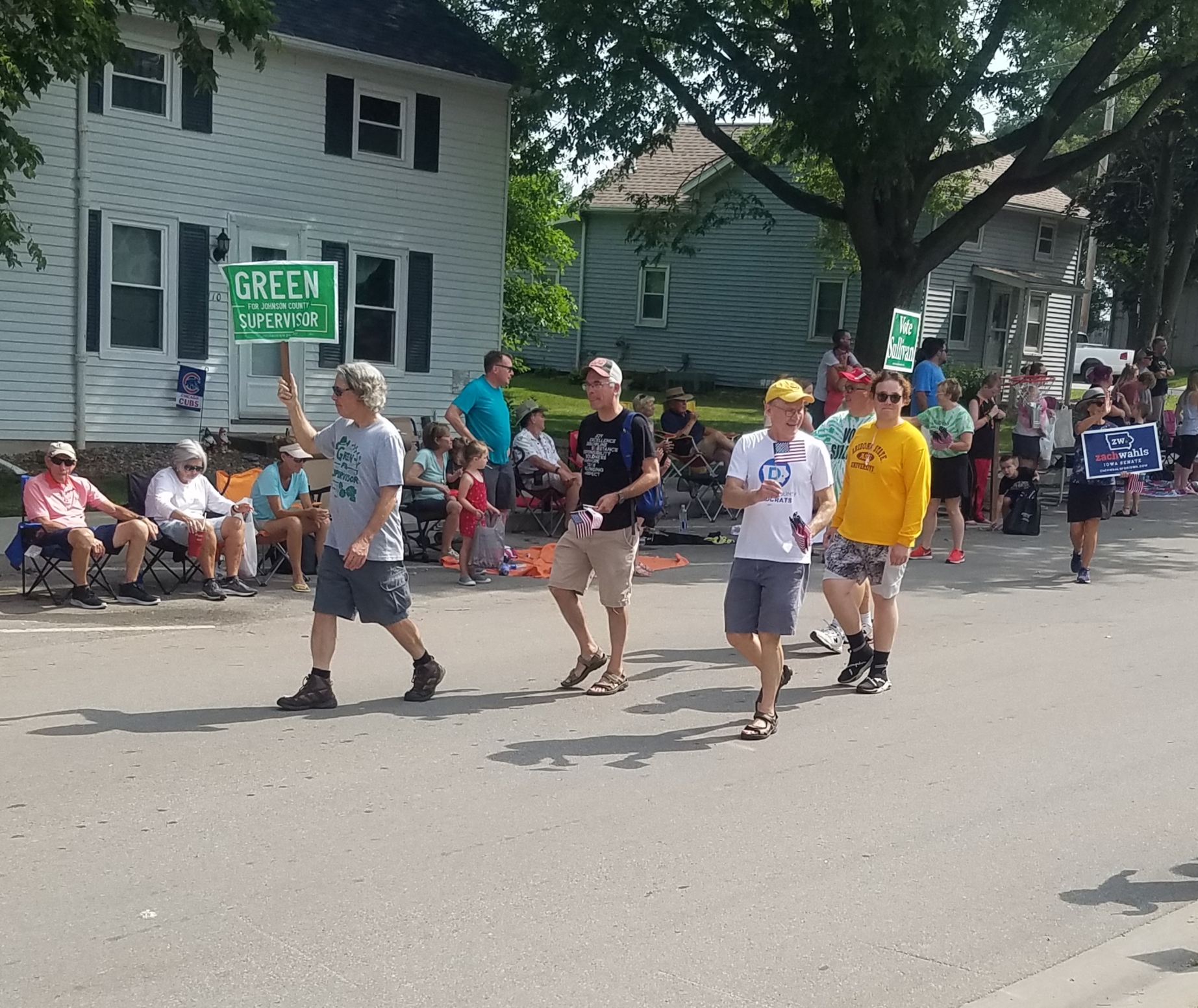
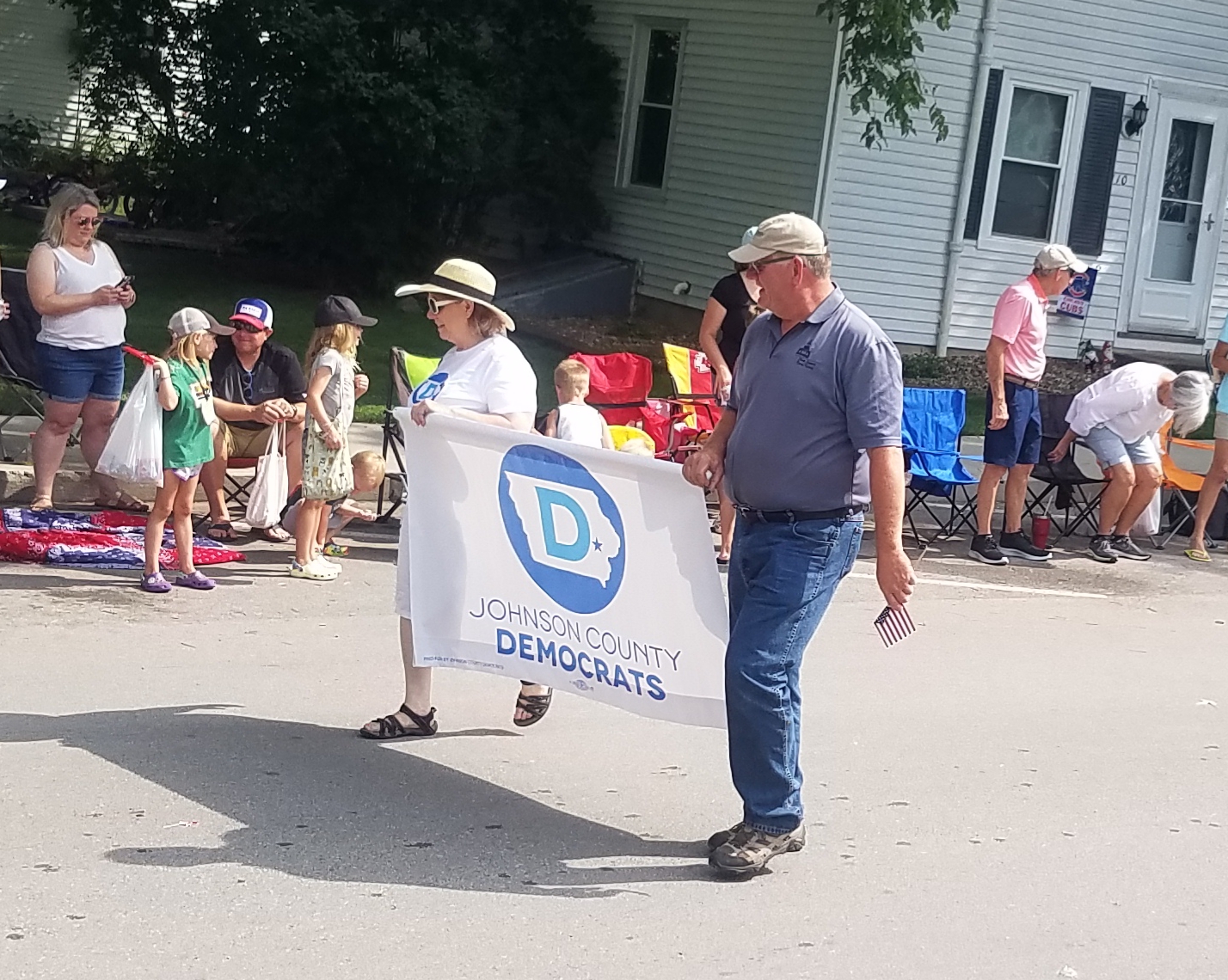
Small yet mighty turnout of Democrats at the July 17, 2021 Solon Beef Days parade in Johnson County.
The deputy chief of staff to Congresswoman Mariannette Miller-Meeks was recently bragging on Twitter, “When you got $1.17 million in the bank and no democrat opponent.” With it he posted an image of an apparently happy, but not smiling congresswoman.
Not so fast buckaroo! There will be opponents… and money.
If you’ve been following along, there are currently only two declared Democratic candidates for statewide office in Iowa: David Muhlbauer for U.S. Senate and Ras Smith for Governor. Others are kicking the tires on runs for congress, senate and governor, but until the districts are defined–hopefully in September–a lot is up in the air. For the time being Muhlbauer and Smith have the Democratic playing field to themselves. One hopes they are taking advantage of their early entry into the 2022 campaign.
If I were a Republican, I’d say the current districts, with a few tweaks to even out population growth, could serve. We became a Republican state with these districts. There is no evidence they want that or are planning anything but accepting the first map from the Legislative Services Agency. Republicans are also good at keeping secrets, so who knows? What they do shall be revealed.
To fill the absence of campaigns, I walk in parades where it makes sense, write letters to the editor and blog posts, and try to support the county party from a distance in my Republican pocket of Iowa’s most Democratic county. I donate a small, monthly amount to the Iowa Democratic Party and get no further than the state borders with my donations.
I could speculate about potential campaigns but what would be the point? After the drubbing we took in 2020, it seems best for Democrats to keep our powder dry until we know something. As we get through redistricting, and the rest of this post-pandemic summer, we’ll find out where we are heading. I’m okay with periodic gaps in the action.
This morning I opened my father’s King James Bible and found the well read passage from Romans 13:12, “The night is far spent, the day is at hand: let us therefore cast off the works of darkness, and let us put on the armor of light.” We’ll be casting off the tweets of Miller-Meeks’ staff. Democrats have to work smarter because, as Alexander Pope put it in the 18th Century, “Fools rush in where angels fear to tread.”
On July 14, I participated in an online briefing with former IRS Commissioners Fred Goldberg Jr. and Charles Rossotti on modernizing the IRS and shrinking the tax gap.
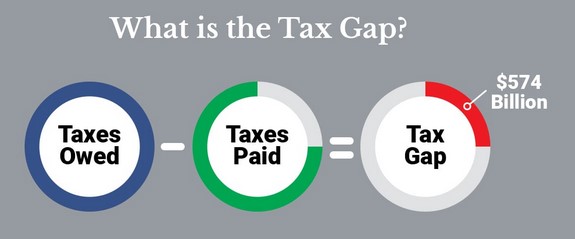
Goldberg was appointed as IRS Commissioner by President George H.W. Bush in 1989 and served three years. Rossotti was named IRS Commissioner in 1997 by President Bill Clinton. He served five years. Both former IRS commissioners are members of the group Shrink the Tax Gap, which states each year there is a tax gap of $574 billion in taxes that are owed to the IRS but not paid. Their position is simple and clear. Most people pay their taxes. Some people don’t, and that’s not fair.
In an article by James Q. Lynch, Congresswoman Ashley Hinson (IA-01), a member of the House Appropriations Committee, said of bills the committee was marking up, “I think that these bills disrespect taxpayers.”
What if we collected taxes due the IRS to help pay for them? Would that respect taxpayers?
Hinson supports expanding the child tax credit in the American Rescue Plan, but has concerns about the price tag of the bill that includes sending payments averaging $423 a month to about 35 million families with children. Hinson, like every Republican member of Congress, voted against the American Rescue Plan. When we are talking about price tags, the elephant in the room is the hundreds of billions of dollars in unpaid taxes created by the tax gap.
President Joe Biden proposed spending more money on the IRS so it could pursue tax deadbeats. We’re talking about people who have unpaid tax bills, not creating new taxes. Republican U.S. Senators want no part of this.
“What Republican senators object to here is training IRS investigators on people and corporations who are deliberately trying to cheat the system (not to mention the American people) and have the resources to do so,” wrote Kerry Eleveld at Daily Kos. “Instead, (they) would clearly rather just keep the IRS focused on smaller fish, who may have messed up some calculation on TurboTax, for instance. Why? Because the small fries aren’t delivering enough to GOP campaign coffers, that’s why.”
Paying taxes is so basic to being an American I believe most voters would support collecting taxes due. Yet that’s not how our government is evolving. The Republican minority seeks to retain control over the tax system to benefit the minority of wealthy Americans.
In Sunday news, Senator Rob Portman (R-OH) announced Biden’s plan to fund the IRS is officially off the table in the bipartisan infrastructure bill because he got “pushback” from fellow Republican lawmakers who dislike the idea of giving the IRS the tools it needs to collect taxes owed. Portman is a key negotiator for Republicans on this bill. It will be up to Democrats to pass this provision through reconciliation in the separate $3.5 Trillion infrastructure bill to which their caucus has agreed.
Do your job Congress. Shrink the tax gap.
For more information about Shrink the Tax Gap, click here.
Wildflower patch in Lake Macbride State Park, July 21, 2021.
Each July I walk through the prairie restoration areas of Lake Macbride State Park where a number of acres have been restored. It is always inspiring. Here’s a gallery of some of my shots.
Prairie Walk through Lake Macbride State Park on July 21, 2021.
State Senator Kevin Kinney and County Supervisor Lisa Green-Douglass at the Solon Beef Days parade in Solon, Iowa on July 17, 2021.
Most people along the parade route reacted positively to the Johnson County Democrats entry in the Solon Beef Days Parade on July 17. All over the state, parades have re-emerged as a social activity after missing last summer because of the coronavirus pandemic. While the parade was a positive event reflecting community values and attitudes, it’s clear the pandemic is not over as vaccinations lag behind what is needed.
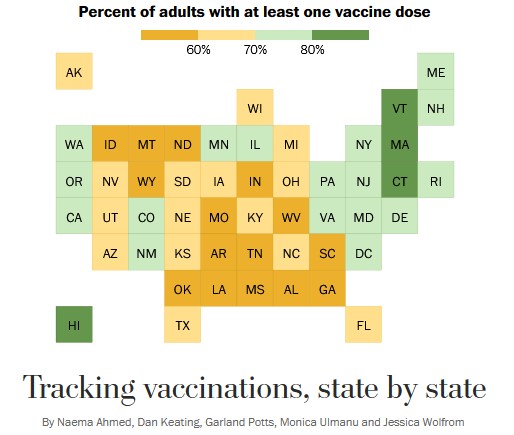
Nationally, 161 million people are fully vaccinated against COVID-19, representing 48.5 percent of the population. We are about the same percentage in Iowa with a million and a half people, or 49.0 percent of the population, fully vaccinated. The daily rate of vaccination has slowed considerably during parade season.
On Friday, Nick Coltrain of the Des Moines Register reported the majority of hospitalizations for COVID-19 are among people who are not vaccinated:
Almost all of the people hospitalized with COVID-19 since the spring have been unvaccinated against the disease, spokespeople for three of Iowa’s largest health care systems said.
At the University of Iowa Hospitals and Clinics, upward of 90% of patients admitted due to COVID-related illness since April have been unvaccinated, spokesperson Laura Shoemaker told the Des Moines Register. About 95% of patients hospitalized at UnityPoint facilities since March 2021 were not fully vaccinated, spokesperson Macinzie McFarland said. And at MercyOne’s Des Moines hospitals, 97% of patients hospitalized for COVID-19 were not vaccinated, spokesperson Clara Johnson said in an email.
The COVID-19 vaccine has been widely available to anyone 16 and older since April 5.
Iowa City Press Citizen, July 16, 2021
It was fun giving small American flags to children lining the parade route on Saturday. We live for such moments of small joys and happiness. However, the potential for disaster looms in the fall when children are required to return to in-person instruction at schools around the state.
We know the way to avert disaster is to get a higher percentage of the population vaccinated. Yet there is not an approved vaccine for children under age 12, and poor vaccination rates among school-aged children who are eligible. With the combination of low vaccine rates, a resurgence of COVID-19 cases, and a population that clings irrationally to the idea that the COVID-19 vaccine is in some way dangerous or not needed, trouble is fermenting in Iowa.
While enjoying parade season, I hope our actual experience in the fall proves me wrong about new, school-based COVID-19 outbreaks. We have the information to do what is right. Yet as raconteur, philosopher and satirist Ron White said, “You can’t fix stupid.” That’s where we are with half Iowa’s population.
Once life is separated from the work week everything changes. It’s not that we become unhinged. Days just resemble each other without differentiation.
As denizens of the United States, if we seek continued participation, we need something to tell days apart. The worklife week served as we had one. For me, it fell apart during the coronavirus pandemic and the resulting retirement from paid work.
I developed a morning routine which begins around 3 a.m. and continues until it is done. It is my time to learn about the world and my role in it. I like the routine because, for the most part, I own this time of day, every day. After that things can get muddled.
I want to have a weekend… a Monday and Friday. I need a hump day. I want them to mean something. What I find is without a job, the days blend into each other. Increasingly, I accept it.
I don’t know what to do about it. I feel a need to do something. Today’s Monday. Maybe I’ll start there.
“Earlier this year, the European Union was celebrated in headlines across the world when renewable energy surpassed the use of fossil fuels on the continent for the first time in history,” wrote Majlie de Puy Kamp for CNN.
The European Union pledged to reduce greenhouse gas emissions and approved burning biomass as an alternative to coal, categorizing it as a renewable fuel. They found wood pellets were a suitable, renewable fuel to produce electricity and searched the globe for enough of them.
“The American South emerged as Europe’s primary source of biomass imports,” de Puy Kamp wrote.
Enter companies like Enviva, the world’s largest producer of wood pellets, with four wood pellet manufacturing plants in North Carolina.
The world’s leading authority on climate science, the Intergovernmental Panel on Climate Change, explicitly recognizes bioenergy as a renewable energy source that is critical to our low-carbon future. The IPCC also concludes that sustainable forest management is critical to prevent forest conversion to non-forest uses.
We need bioenergy both to replace fossil fuels and to keep forests as forests.
The IPCC states in its guidelines “do not automatically consider or assume biomass used for energy as ‘carbon neutral,’ even in cases where the biomass is thought to be produced sustainably.”
As I wrote in 2015, while the carbon cycle of renewable fuels can eliminate putting fossilized carbon into the atmosphere, and reduces emissions of particulate matter, the amount of CO2 released when burning biomass is about the same as with burning coal. What makes burning wood pellets and other biomass “sustainable” is we would leave more fossilized carbon in the ground.
Burning stuff to release energy that is made into electricity remains problematic in terms of emissions. While windmills, solar panels and hydroelectric generators are not without issues, these forms of electricity generation better serve our future energy needs as we work to reduce greenhouse gas emissions.
As we contemplate the EU’s path to reducing reliance on fossil fuels, there is another issue that gets lost. The quest for wood pellets has greater impact on marginalized communities near forests that are being harvested for fuel. Read de Puy Kamp’s article for more information about these climate justice issues.
“I can’t think of anything that harms nature more than cutting down trees and burning them,” said William Moomaw, professor emeritus of international environmental policy at Tufts University.
While the EU may meet an arbitrary goal of reducing its carbon footprint, by using wood pellets to generate electricity the achievement is more paperwork drill than actual reduction of greenhouse gases in the atmosphere.
In 2014 and 2015 I worked as a freelance reporter for three area newspapers. I refer to this article published on Oct. 7, 2015 in the Iowa City Press Citizen frequently in my work on the climate crisis and post it here for easy reference.
UI study finds benefits in burning oat hulls for thermal energy
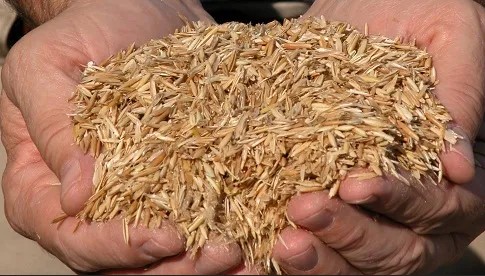
Biofuel use is a well-known contributor to meeting sustainability goals at the University of Iowa. Since 2003, UI has used oat hulls sourced from Quaker Oats in Cedar Rapids to generate electricity, heating and cooling on campus.
Several chemistry department faculty and students recently completed a study of gas and particle emissions from co-firing coal and two types of biomass versus straight coal at UI’s main power plant.
Researchers also found that using oat hulls with coal reduced carbon-dioxide emissions by 40 percent and significantly reduced the release of particulate matter, hazardous substances and heavy metals.
“The UI is working toward meeting a goal of using 40 percent renewable energy by 2020,” said Betsy Stone, an assistant professor in UI’s chemistry department. “Part of their plan to achieving that goal is the use of biofuel, which is a renewable source of energy, instead of fossil fuel, in this case coal.”
The group was interested in understanding how using biomass instead of coal changed emissions released into the atmosphere, Stone said.
“When burning 50 percent oat hulls and 50 percent coal, we saw a big reduction in criteria pollutants compared to burning 100 percent coal,” she said. “When I say ‘criteria pollutants,’ I’m talking about things like fossil carbon dioxide, sulfur dioxide and particulate matter.”
Use of the 50/50 mixture reduced the mass of particulate matter by 90 percent, Stone said.
While overall CO2 emissions were constant among the three fuels used in the study — straight coal, 50/50 oat hulls/coal, and 3.8 percent wood chips/96.2 percent coal — the use of plant material makes the process more sustainable, Stone said. Biomass takes CO2 out of the atmosphere and incorporates it into the plant. When it’s burned, CO2 is released.
“It’s considered to be a renewable fuel because we have that carbon cycle going on,” Stone said. “With fossil fuels, we’re releasing fossilized carbon. It goes into the atmosphere and takes millions of years to get back to fossilized form again.”
The major take-home message is there is a significant reduction in fossilized CO2, sulfur dioxide and particulate matter, which is beneficial to people living near the power plant, Stone said.
“I thought the study was definitely encouraging and in line with our thoughts that biomass is good for the environment,” said Ben Anderson, UI power plant manager. “Overall, the results are encouraging and provided assurance we are going the right way with the biomass project.”
The biomass project brings the renewable component to the plant, but is also a component of fuel diversity, he said.
“That’s really important for reliable operations,” Anderson said. “Natural gas markets have been known to spike from a cost perspective. If there is a problem with pipeline transport, we can use the biomass and still keep this plant online.”
Maureen McCue, coordinator for Iowa Physicians for Social Responsibility, noted important considerations of this study, including locally sourced fuel options and the avoided cost of buying and shipping coal. McCue called UI’s biofuel efforts “a good use of a resource that might otherwise go to waste.”
“The mixture avoids some of the known adverse health effects associated with burning more coal,” McCue said in an email. “There is no health benefit to anyone unless you assume burning coal is obligatory/unavoidable and thus count as benefited the person(s) who would have been impacted by more coal.
“It’s like saying not hitting your head with a hammer is a health benefit,” she added. “No one wants to risk their health breathing coal emissions or headaches by hammer if there are alternatives.”
.jpg)









 Journey Home

You must be logged in to post a comment.