Jazz flows across the Mississippi.

A polite and encouraging announcer presents:
   a businessman from Davenport,
   a chiropractor with
   his brother from Sacramento,
   a lawyer from Moline,
   a Catholic priest from Argentina,
   and a band leader from Orlando.

They will play jazz.
"The way it is supposed to be played," he said.
"The way Bix would have liked it."

I wander the levee toward the roller dam
   where water churns.

A collector, steeped in passion,
   and at home,
   makes piles of Beiderbecke 78s...

He might say,
to the gathered musicians,
"These songs sound mighty good,"
yet prefer the dust and scratches
of his collected disks.

Water churns through the dam.

I consider when there was no jazz to remember,
   before the grid of streets and buildings,
   and return to a native place.

In a heartbeat of clarity and intuition I see...
   famous forebears surveying the plats...
   and wonder what happened
   to Black Hawk's bones.

While jazz flows across the river.

~ Undated from some summer in the 1970s
Red Sky at Dusk

A redness fills the room
   where I spent hours practicing guitar.

It is the setting sun
   refracting its rays.

Securing my thermal blanket,
   I rest in bed.

With or without a red presence,
   I'll close my eyes and ears,
      leaving me with memories...

To dream... of musical notes infused with red sunsets.

~ Undated from the mid-1970s
This morning you bumped
your own dresser.
Knocking a pack of Certs,
wintergreen flavor,
onto the floor.

One cert flew loose and
landed in your mouth.

Then you awoke
and I had
a fresh mint taste in my mouth.

I had another.

~ Iowa City, 1973-1974.
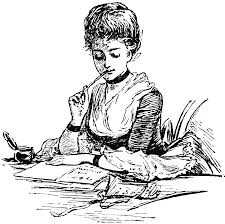
Writing desk purchased in November 1979 in my apartment at Five Points, Davenport.
At this desk I made some of the most consequential decisions of my life. I had just returned from three years living in Mainz, Germany, and rented this one-bedroom apartment at Five Points in Davenport. By the time this photo was taken in December, I knew I could not stay in my home town.
It’s not that I disliked Davenport. I was insulated from seeing how average the city was by a family that welcomed me and tried to do their best by me. As I returned after a long absence, There was little vitality running through the city. I didn’t fit in.
When I sat at the desk and wrote, I felt like a writer.
The early part of my post-high school intellectual development centered around Saul Bellow. “I want,” he wrote and I agreed. At Five Points I became enamored of Joan Didion. I bought The White Album from The Book of the Month Club. After it arrived, I went to the public library and checked out everything Didion had written. I read three of her early books in two weeks about when this film was exposed. I couldn’t get enough of her.
“Didion speaks with a voice, the voice of a person sitting in a sunlit room at a typewriter,” I wrote in my journal. “Her paragraphs seem well-written, her vocabulary is enriched with new words. I particularly like her image of the end of the 1960s. The spread of word of the Tate murders across the valley.”
Didion’s thoughts seemed to evolve before my eyes on the page.
She was from a military family. Her father was an Army finance officer and the family often moved. I found commonality in this experience. “She touches on something it has taken the four years in the military for me to realize,” I wrote in 1980. “It is a feeling more than anything else, but I suspect that it may be something peculiar to the military environment.” I saw how her experiences in a military family influenced her writing and in turn how my service would influence me.
During the following years, I sought out every book Joan Didion wrote and began reading them soon after publication.
I continue to think of Joan Didion while I’m writing.
In every place I lived, I had a desk on which to write. What makes this one different is it rests a few feet from the writing space I established after inheriting my father-in-law’s library table.
At university I struggled to find a path. I was on a trajectory supercharged by the death of Father in 1969. Didion’s writing was something I could look to and see myself. Being successful as a writer wasn’t meant to be my career. Yet Didion gave me hope in dark times.
I needed that at Five Points as the 1970s ended and I began to call myself a writer.
The first funnel of the Iowa legislature is March 3, so it’s time to look at what our representatives Dawn Driscoll (SD46) and Brad Sherman (HD91) have been up to.
No doubt they won the 2022 midterm election, despite failed Arizona gubernatorial candidate Kari Lake’s warning about election integrity during a recent trip to Iowa. They won fair and square.
If I don’t agree with them in many cases, they each have explained some of their votes in their newsletters. Reading them helps me understand their point of view. I won’t convert from being a Democrat to Republican, yet listening to legislators with whom I disagree is important. It’s a way to improve civility that has been lacking in our politics.
Republicans hold legislative majorities, and the governor is pushing for major changes. Because proposed changes are substantial, it is difficult to get a grip on the reorganization of state government and education. Legislators should take time to consider the bills in public forums.
My hope for the rest of session is that Republicans listen to Democrats when they have something important to say, pay attention to details of what they propose, and do right by all Iowans. These are reasonable things to ask.
~ First published by the Marengo Pioneer Republican on Feb. 14, 2023.
76 and 53...
degrees and humidity...
climate,
     as good as we get,
     in the Calumet.

Our society,
     of family and friends,
     spoke of weather:

     conversation derived...
          from ancestors who...
               sectioned townships....
                    once the natives were gone.

And while the indigenous here...
     seem preoccupied with commerce...
          I consider...
               the atmosphere...
                    of the Calumet.

~ Summer 1988
I don't want that old thing
that you had before.

I just want to tell you
one thing:

I want to play baseball

now

at the park

because there's no baseball space here.

No baseball space at all.

~ Spring/Summer 1989
Summer came today
Cool, windy, clear.

On the weathered picnic bench
I sawed limbs,
fallen during the storm,
into firewood.

She stacked the logs
on the deck
near the gate leading to the
driveway.

~From my Indiana Journal circa 1988
Writing autobiography is an American endeavor. I studied under Albert E. Stone who was my first advisor in graduate school. He edited an edition of J. Hector de Crèvecoeur’s Letters from an American Farmer.
We Americans, especially in this century, often seem completely self-absorbed. There is a native impulse to write or tell a single, brief narrative of our life. More accurately, it is a combination of essential, defining moments and multiple, broader narratives. At the root of autobiography, we must answer the question Crèvecoeur did, “What then, is the American, this new man?”
This new man, when it comes to journaling, was typified as a woman in the 1970s when I wrote,
Traditionally, it is the girl or female of the family who writes in journals. Sometimes it seemed nothing more than a way to keep a girl busy until she gets old enough, reaches the age of child-bearing, then her true work begins.
Personal Journal, Mainz-Gonsenheim, West Germany, Dec. 12, 1976.
This tradition of female-based diary or journal writing was something I was taught in high school. All I can say in 2023 is, OMG!
Journal writing has a purpose instead of marking time. It gets the writer seated behind a desk or table with pen or keyboard in hand. In such a posture one cannot help but write something. It may be gibberish, yet once in a while it may be profound. It is only through practice one becomes a better writer. Journaling serves this purpose.
Journal writing is a form of therapy in that its performance resembles use of an addictive drug — we take it when ill and continue its use until we are well. In some diarist’s cases the illness never left. My condition of restlessness and loneliness has been with me a long time. Journal writing helps me cope.
A foundational part of autobiography is journal writing. As I work through the timeline of my current book, I find the stories I want to tell were written before, many times over, during the last 50 years. They were often written in a journal, or since 1999, in an email or since 2007 in a blog post. In living life we find certain people, places and things stand out. Those are the narratives that can find their way into a journal. The more we write these stories, the better they can become. They become part of us. In the end, who are we but the stories we tell about ourselves living in society?
I am pleased to report the draft of my book passed 100,000 words today. The journals I kept, beginning in 1974, have been especially helpful in getting this far. Writing emails and blog posts served a similar usefulness. I have been mining them both. The lesson from this story is journaling is important to being a writer. It helps us cope and provides a record in case one is needed. From time to time we must rediscover who was are. Writing in a journal helps us do that.
I work a lot on winter days. Some readers may want to put air quotes around that word. What I mean is cleaning the house, washing dishes, preparing meals, doing laundry, and snow removal. I began to plant seeds in trays to grow seedlings for the garden. In winter, any type of physical activity is welcome and most of it must be done to maintain a household. As a septuagenarian in reasonably good health, I need breaks from time-to-time to sustain activity throughout the whole day. When I do rest, it is in the form of a nap or to sit quietly for a few minutes in my living room chair.
While resting, I listen to the wind.
Since we moved here there have been three major wind events. The first two were what we called “straight line” winds that damaged the house and some of the trees. The last major event was the 2020 derecho. Before these events, I paid little attention to the wind. Now it is more engaging than television, radio, or looking at the screen on my handheld mobile device. It creates a form of solitary alertness well cognizant of the consequences of strong wind.
Listening to the wind doesn’t seem like much. At a certain age it evokes memories that transform the present into something else: a sense of fear, experience, or knowledge about the hazards of living in a turbulent world. Listening to the wind is more than about resting.
When I’m at my writing table I can’t hear the wind or anything else that goes on outdoors. Well, I can hear the predawn fusillade of shotguns during hunting season. It is a quiet environment by design. If I have the space heater on, I can only hear the fan. It is the type of environment suited to concentrating on memory and the imagination. It is the setting for reading and writing.
I’ve been reading Grandmother’s letters from when I was in the military. When she wrote them, she was not much older than I am today. She had at least four heart attacks while I was gone, and fell on the street twice. She was often tired, she wrote, especially during her recovery from hospitalization or the falls. She would stop working and lay on the bed or sit in her living room. Sometimes all she got done was to prepare meals and make her bed. It’s was not unlike how I am today.
The sound of the wind takes me back to the past. While wind may be a present danger, I worry less about it because of my experiences. I know for what to listen in the wind. I become thankful for my health and presence of mind. The wind inspires me to get back to work and improve how I live.
Some days we just need to shut off the noise, take a rest, and listen to the wind.


 Journey Home
You must be logged in to post a comment.