Categories
Writing

Deregulation and Me

Bumper to Bumper

Editor’s Note: This is an excerpt from my autobiographical work in progress.

In life, the world seems unknown until one lives it. Whether or not I would have found CRST, Inc. without my job search is an open question.

CRST, Inc. exploited the 1980 Motor Carrier Act that deregulated trucking and helped break the teamsters’ unions. This legislation passed during the Carter administration and was implemented during the Reagan years. While some trucking employees continued to be represented by the union, their numbers diminished after deregulation. Shippers benefited from lower costs and the expense reduction came mostly from new, non-union companies, made possible by lower wages and fewer benefits for employees. It was another feature of the Reagan Revolution.

Founded as Cedar Rapids Steel Transportation, Inc., on March 1, 1955, when I joined the firm on March 29, 1984, it was very much a “Company on the Grow.” While founder Herald Smith did not have a business education, through entrepreneurial energy, an ability to carve out a niche in the highly regulated transportation business, and a willingness to confront unions and union rules, he was able to establish CRST as a viable entity in the years before de-regulation. When the Motor Carrier Act of 1980 deregulated trucking, Smith, and people like him, took advantage of the new operating environment.

According to In It for the Long Haul: The Story of CRST, published to note the company’s 50th anniversary in 2005, CRST Inc. was the third company in the nation to secure 48-state operating authority after deregulation. Smith sought to eliminate the part of his business that was unionized, reducing pay and benefits, and creating cost efficiencies to support a lower rate structure. He did this by hiring independent contractors who owned and leased their own tractor-trailer rigs to CRST, Inc. and by acquiring companies that had non-union company drivers and then keeping them that way. This practice kept the number of union employees in decline as the company continued to grow.

By the time I joined the company, annual revenues were about $60 million and the “tough on employees” environment that characterizes many entrepreneurial businesses was evident throughout the organization. To me, it was something new and exciting, a natural extension of having served in the United States Army. I looked forward to the new opportunity.

I remember walking into the operations office during my job interview and saying to myself, “I hope I don’t have to work in that room.” In the office of what had previously been an LTL cross dock, was the core of the operation: van operations from the Midwest to the east coast, flatbed, and trip lease. Van operations had an island of workstations in the center, with additional work stations around the perimeter. A number of employees were smokers and a grey haze of tobacco smoke filled the room. The language was on the blue side, indicating an acceptable means of expression and interacting with others. It was a mostly male environment, although there were some women, most of them working in clerical positions behind a glass wall on the East side of the room when I entered that first day.

I had applied for a position in the shop, but my interviewer thought I was overly qualified for the position. He referred me to operations. The supervisor had been with the company a long time, was a Vietnam veteran, and had an office in the operations department. He interviewed me and then introduced me to the person who managed a company called Lincoln Sales and Service, which was becoming the growing, non-union part of the company.

Lincoln Sales and Service sought to hire management trainees, train them in the business and then have them open growth terminals throughout the country. All three interviewers treated me well, and with my military experience, they viewed me as having the “aggressive” personality traits they were seeking for management staff.

CRST, Inc. characterized itself in the newspaper ad to which I responded, “CRST is an aggressive, rapidly growing, major motor carrier transportation company based in Cedar Rapids. To help us in our expansion plans, we need a dedicated, career minded individual to fill a management trainee opening in our maintenance department.” Emphasis was on being “aggressive.”

I took notes after my interviews, writing on March 13, 1984: “Impressions: A good company, Iowa owned, they offer good benefits, and an entry a step ahead of other management positions I’ve been looking at. I feel the benefits of the other interviews to date.”

I was interviewed on March 12, went for a company physical on March 13 and was offered the job the same day. That night, I laid out the pros and cons: “PRO: good pay, pay incentives, location, benefits good, family owned (vs. public), I can relate to the people to whom I talked, expanding company, 65/100 of major carriers, chance for advancement, yearly evaluations, interesting, leadership, use more of my skills. CON: 2nd or 3rd shift, relocation in a year.” As indicated, I began work on March 29.

I did my research on CRST, Inc. and the characteristics of the job and company met my expectations.

…the Interstate Commerce Commission’s rigid controls on who could carry what freight at what rates over the nation’s highways were reduced almost to the vanishing point by the Motor Carrier Act of 1980 and by greater leniency on the part of the commission itself. Since 1981, about 9,000 new carriers have thronged into the field. When the 1982 recession almost simultaneously reduced the amount of available freight to be handled, an orgy of rate-cutting and discounting resulted…

…Nevertheless, a few companies, such as CRST, are enlarging their volume and profits even at a time when the industry’s excess capacity still is holding down freight rates. CRST’s success at swimming against the tide is all the more notable because it isn’t one of the giants of the trucking business and because it is a full-load carrier where the competition is the hottest.

Wall Street Journal, Feb. 13, 1984.

Goals for CRST, Inc.

  • Keep a business journal with entries at least monthly.
  • Learn the basic elements of the trucking industry…sales, maintenance, administration, terminal operations, etc.
  • Develop as a person, increasing my ability to communicate and motivate subordinates.
  • Write an article about my entry level experiences.
  • Demonstrate my competence prior to the six month review date.
  • Within one month, draw up a list of quantitative goals and achieve them.
  • Demonstrate that I am the one in a hundred who can best do the job.
Business journal entry, March 28, 1984.

I started work on March 29 and was one of a class of 16 management trainee and new exempt employees who began training on April 2, 1984. Of the 16, Mike Gannon, now Groups President of CRST International, Inc., is the only remaining person at the company as of this writing.

It was an exciting time, and I was glad to be a part of this growing, Iowa-based company. Too, the initial salary of $17,000 per year was enough to enable Jacque to stay at home while we tried to start a family. Things looked pretty good in March of 1984. Jacque left me a note the morning I left home for my first day of work as a maintenance coordinator.

I encountered no surprises during my first two days with CRST. I trained with the first shift breakdown coordinator in the shop. He was located in the maintenance office, where I met him and other employees who worked there. I got a good feeling for the operations of the company, where they are, and what kinds of maintenance problems the drivers experience on the road. My initial impression is that these are people dedicated to getting the job done right.

[…]

Having been an Army officer, I appreciated the approach the company made to providing training to assimilate me into the company. As a company with growth plans, they recognized the need for training, and while there was not a specific training agenda, the company wanted me to think like the management team did regarding operations. At the same time, having managed soldiers in Germany, I possessed a firm sense of myself and quickly cut through the inefficiencies of my predecessor in the position to make changes to what I felt were more viable solutions to daily problems.

Having this awareness from the beginning of my employment enabled me to make good suggestions for process improvement and at the same time contributed to a disengagement from the prevailing management outlook at CRST. This would be a positive for my career in the first couple of years of my work in transportation. My stock within the company would grow in value. There was a direct consequence on my writing and home life.

Business journal entry, March 31, 1984.
Categories
Writing

Letters from Mother

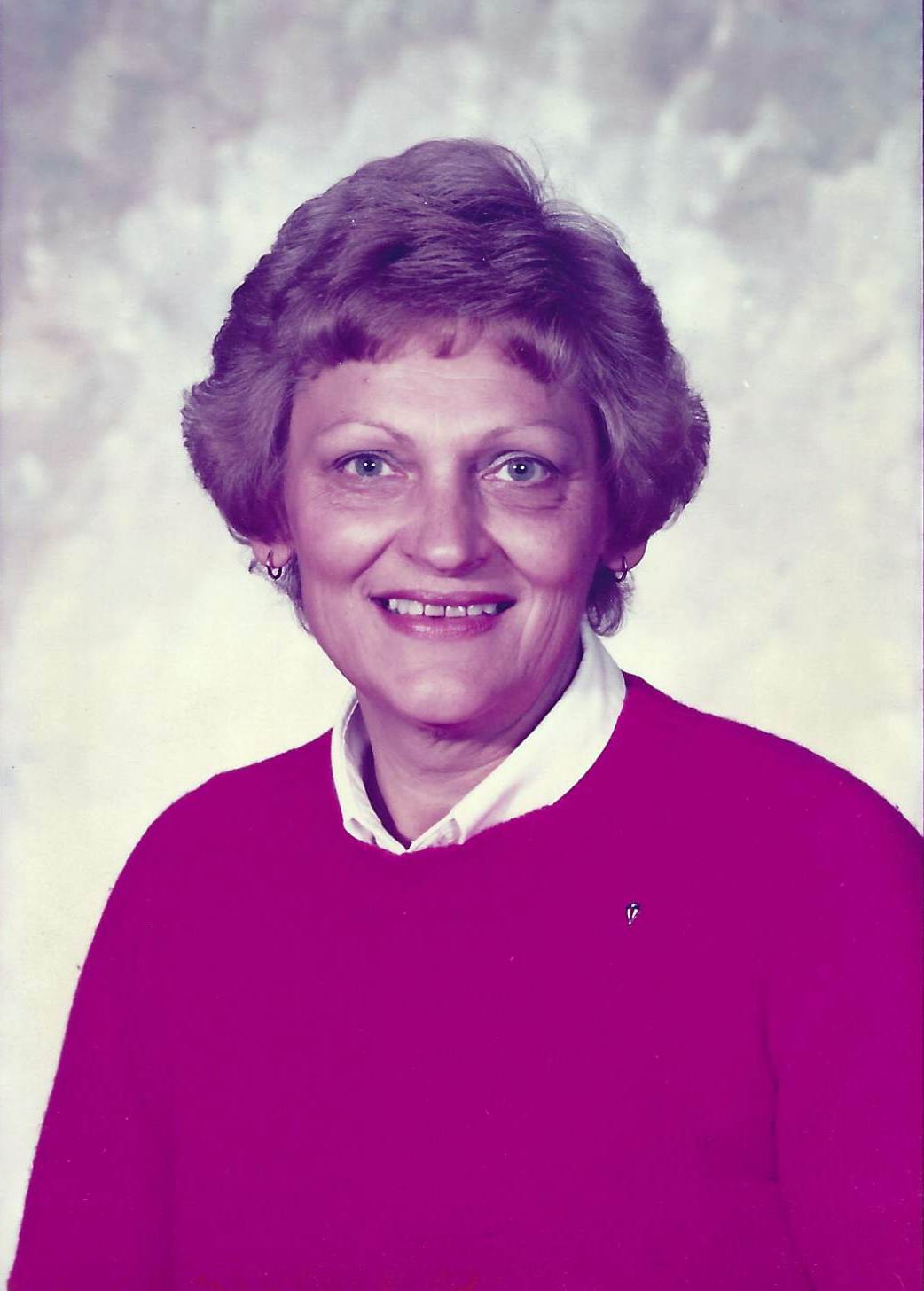
Lorraine Deaton at the U.S. Army Corps of Engineers

While sorting my papers I made a pile of letters from Mother beginning when I left for university in 1970 and ending when I returned from military service in 1979. There are about 50 of them, containing a lot I didn’t realize when I received and read them the first time. What does a person do with such artifacts?

She wrote a lot of them while working at the U.S. Army Corps of Engineers on the Rock Island Arsenal. She mentioned writing them on her breaks, yet from the tenor of the letters, I believe she also wrote them on her work desk. It was her chance to get me caught up on family news while she was working an important job.

The early letters are newsy, yet part of them is also about her adjusting to being widowed at a young age. She didn’t date anyone new for a long time after Father died. She felt socially uncertain about attending parties solo. One summer she had a romance with someone who worked for the AAA ball club in Davenport. When he moved back to California at the end of the season, the relationship was over. The level of confidence she shared with me did not broach my consciousness at the time.

She didn’t know how to handle the fact I enlisted in the U.S. Army after graduation from university. Having lived through the aftermath of World War II, the Korean Conflict, and Vietnam, I’m certain she was concerned for my safety as only a mother could be. She attended my commissioning ceremony at Fort Benning, Georgia and talked about visiting me in Germany while I was stationed in Mainz. We never got her trip to Europe arranged.

She worked several jobs to make ends meet. In addition to her work at the Corps, she worked at a credit union and did keypunch for the American Automobile Association. She liked the keypunch work, as that’s how she got started working for the government. She could go in for her shift, do her work, and leave any thoughts about it behind when she left. Unfortunately the keypunch work was lowly paid and she soon quit because the work did not pay enough.

She often complained in the letters of how tired she was from working. She accomplished a lot after Father died yet I believe she would have been fine had the two of them had a full life together. She made clear in the letters returning to the workforce was something she was forced to do to survive as a widow.

She wrote a long letter after discovering there was an inheritance of land in Virginia. My Great Uncle Roy had been settling the estate of Patrick Henry Addington and Tryphena Ethyl Miller, my great grandparents. They died intestate and there was a matter of land to be divided among many relatives. With the death of my paternal grandmother and my father, those many relatives included me.

In the letter Mother wrote about possible plans for the land. While Great Uncle Roy had been buying everyone out to get clear title, Mother and my Uncle Gene had discussed joint ownership of our share. She described two level surfaces on what would have been our plot, where a house could be built. We would share use of the property, she proposed. Nothing came of this and during a 1983 trip to Virginia, I quit claimed my share to Uncle Roy.

Letter writing is a lost art in 2024. It is a much different thing to sit alone and write to someone we’ve known our whole lives. If I were stationed in Germany today, and Mother were still living, we’d no doubt video chat via Discord or Face Time or Zoom. She did such a good job writing letters I continue to learn from her. For the time being, I’ll keep them.

Categories
Writing

Writing into 2024

Desk Work

The recently finished holiday season was good for at least one thing: I spend more time writing. A funk spread over me for a few months as the garden wound down. Now, the desire to write is hard to contain. I feel some of what I recently wrote has been pretty good, both on this blog and in my autobiography. A couple things made the difference.

Perhaps the biggest is by reading more, I’m beginning to gain better understanding of contemporary affairs and connect dots. When I began using Goodreads to track my reading, the goal was to start reading books again. Somehow I had fallen away from book reading. When I made a commitment to read 25 pages per day and began tracking books read, the number of annual books read grew from 24 in 2018 to 69 in 2023. Quantity improved measurably.

Better than quantity, I’ve been able to correlate perspectives of history that didn’t previously come together. Because of my book selection process, I tend to read books with similar themes, with direct consequences. For example, the Reagan Revolution is clearer to me now that I read multiple books from different perspectives about it. As understanding deepens, it lays a foundation and context for my recent personal history. There is no reason to describe the wake of Reagan and neoliberalism, but rather assume it as background and build something positive from there. My recent letter to the editor of the Cedar Rapids Gazette is an example of what is possible.

It may seem like a small thing, but beginning to write Part II of my autobiography using chapters with names helped a lot. Instead of a Jack Kerouac-style automatic streaming of content from memory, the chapter titles break up the narrative and enable the reader (and the writer) to focus on one thing at a time in a long and complex narrative. This was a recommendation of a friend who read Part I early last year. It was a positive addition.

I’m filling in for Dave Bradley at Blog for Iowa until his family gets settled in Indiana. That means I have a commitment to provide at least two posts each weekend. The weekly obligation keeps me thinking about possible topics. At the same time, it helps organize the flow of ideas into buckets for that blog, this blog, letters to the editor, and my autobiography. Having a firm deadline to produce something for an audience helps maintain focus. Dave expects to be away for several months, and it will help my writing.

I deactivated my X account on Nov. 22, 2023 after 15 years on the platform. After giving Threads a thorough beta testing, I found a core group of accounts that provide diversity and interest so when I need social media, I have a responsive place to go. I would like to rebuild what I had on X: a strong group of Iowans interested in politics. It’s happening slowly, but I’m hopeful with a presidential election this year, it will come together by Labor Day. I’m still new there. The biggest change is the weight of X toxicity was lifted almost immediately. That has been good for my writing.

I don’t make New Year Resolutions yet feel like in 2024 I can accomplish a lot on my autobiography. By reading and writing more, the process gets better defined… and easier. That should make the writing better. If the holidays provided a needed boost to my writing, I’ll take it.

Categories
Writing

Last Peace Vigil of 2023

Newman Abuissa, chair of the Iowa Democratic Party Arab American Caucus, speaking at a peace vigil in Iowa City on Dec. 29, 2023.

I studied the Israeli Six-Day War (June 1967) and the Yom Kippur War (October 1973) while I was in the military. We figured with the Vietnam War over, the next major conflict would be over oil in the Middle East. We lifted Israeli tactics and put them into practice in our Mechanized Infantry Division in preparation for the inevitable conflict. General Norman Schwartzkopf, who led U.S. forces during the First Gulf War, served as Assistant Division Commander in the same unit I was in, although after I left Germany.

Besides that, I haven’t studied the Middle East to any extent. It has been a blind spot in my knowledge of history. A friend from high school was serving in the Peace Corps in Israel during 1973. By chance, I ran into him while leaving a youth hostel in Florence, Italy. We walked to Piazza San Marco and chatted about life since I had last seen him stateside. I don’t recall what he said about the war, but it was one contributing factor to his return to the states. When I boarded a bus to Fiesole was the last time I saw him.

A group of local peace activists held their regular Friday afternoon vigil at the University of Iowa Pentacrest on Dec. 29. KCRG-TV was there and wrote this story.

Iowa City, Iowa (KCRG) – The Iowa City chapter of Veterans For Peace held a peace vigil in front of the Pentacrest in downtown Iowa City on December 29th.

They were joined by people from the following groups: Iowa City Action for Palestine, Iowans for Palestine, Jewish Voice for Peace, Iowa Physicians for Social Responsibility, Mennonite Peace Group, Johnson County United Nations Association, and the Johnson County Interfaith Coalition who all spoke at the event.

The chapter’s co-founder Paul Deaton called for a ceasefire as well as allowing unrestricted humanitarian aid into the Gaza Strip.

“There is a need for peace in this world and if we don’t work for peace we won’t have peace,” said Deaton.

‘Veterans For Peace’ handed out leaflets outlining their positions, saying being critical of Israel’s actions is not the same as being anti-Semitic.

The leaflets also stated “Support for Palestinian justice and a cease-fire does NOT equate to endorsement of Hamas.”

The group holds peace vigils every Friday.

Groups come together in Iowa City at vigil for peace in Israel-Hamas War KCRG-TV, Dec. 29, 2023.

I don’t understand the Middle East any better than I did in 1974 when I ran into my friend in Florence. What I do understand is what I told KCRG-TV, “There is a need for peace in the world and if we don’t work for peace we won’t have peace.” Working for peace are words to live by.

Categories
Writing

One More Year

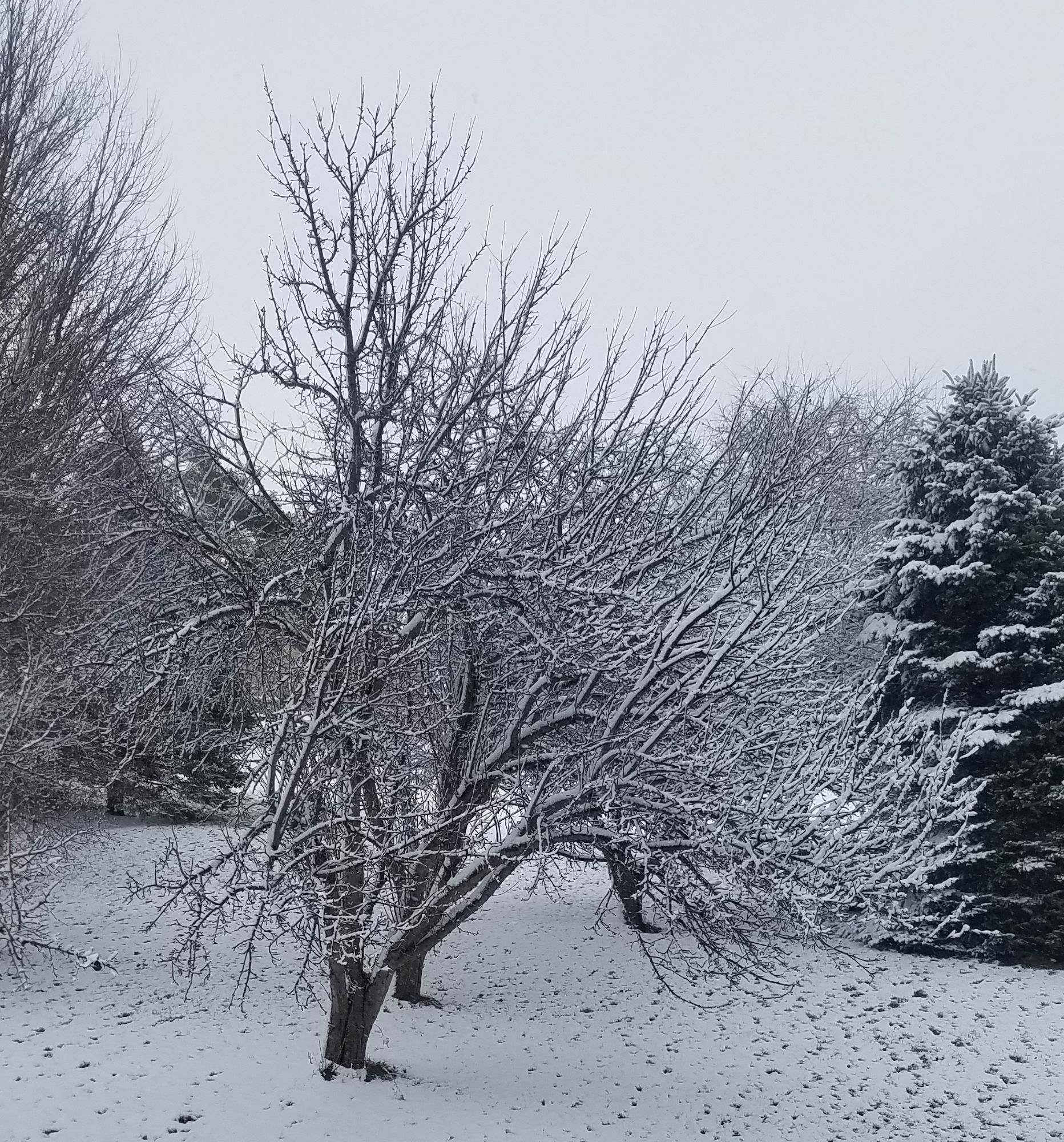
Apple tree in winter.

On my 72nd birthday I reviewed last year. There was not much on my calendar. As I withdraw into whatever it is occupies my days, what remained were political events, home owners association business, trips to visit our child and my sister in law, and medical appointments. I gardened, took photographs, and went grocery shopping, yet those things don’t go on the calendar as they are assumed.

Nothing stood out and I’m okay with that.

I keep my birthday hidden for the most part. It coincides with the birthday of the State of Iowa, where I live. Celebrate that instead of one more year of an aging septuagenarian. We’ll be better for it.

If I’m granted one more year, I hope to do some good in society. While I let go of things from my past, may there be new adventures ahead. No New Year’s Resolutions, just hope for a better future.

Right now, all I can think about is snow falling on apple trees.

Categories
Writing

Holiday Interregnum

Lake Macbride at sunrise, December 2023.

The sky spit a few flakes of snow at me during the trail walk this morning. As warm as it’s been, none of it is expected to stick. Water is slowly draining from the watershed back into Lake Macbride. Perhaps the worst of the drought is past. Fingers crossed.

We are in that time between Christmas and New Year’s Day, a time to take stock of the preceding year and look toward the future. For as much time alone as I’ve had, I’m way behind. I wrote a 2023 Highlights post back in November, yet I need something more to bring closure.

This was a tough year financially. We hope things will lighten up in 2024. In 2022 we had to replace the car and the freezer. It turned out one could not get new parts for a 20-year old automobile. In 2023, the big expenses got worse, including three major appliances, the HVAC system, and the septic tank pump. The result of these physical plant failures was we took two loans and are paying down our credit card balance. The good news is these repairs should last a while. The washer and dryer are likely to be the soonest needing another placement. The last ones we bought lasted about twelve years, according to the receipt. There should be time to catch a breath.

The main non-writing work this week is planning the garden. The seed orders usually have gone in by now, so I’m behind here as well. There will be a significant expense in hardware in 2024 as I develop the deer fencing better than it was this year. The portable greenhouse wore a hole next to the zipper, so it needs replacing. Getting this done will be the main part of a single day.

Seems like there is a lot to be planned for 2024. Maybe if I set some New Years Resolutions… no, that never works. I may have to wing it while hoping for the best. There have been worse times.

Categories
Writing

Daily Outline (Revised)

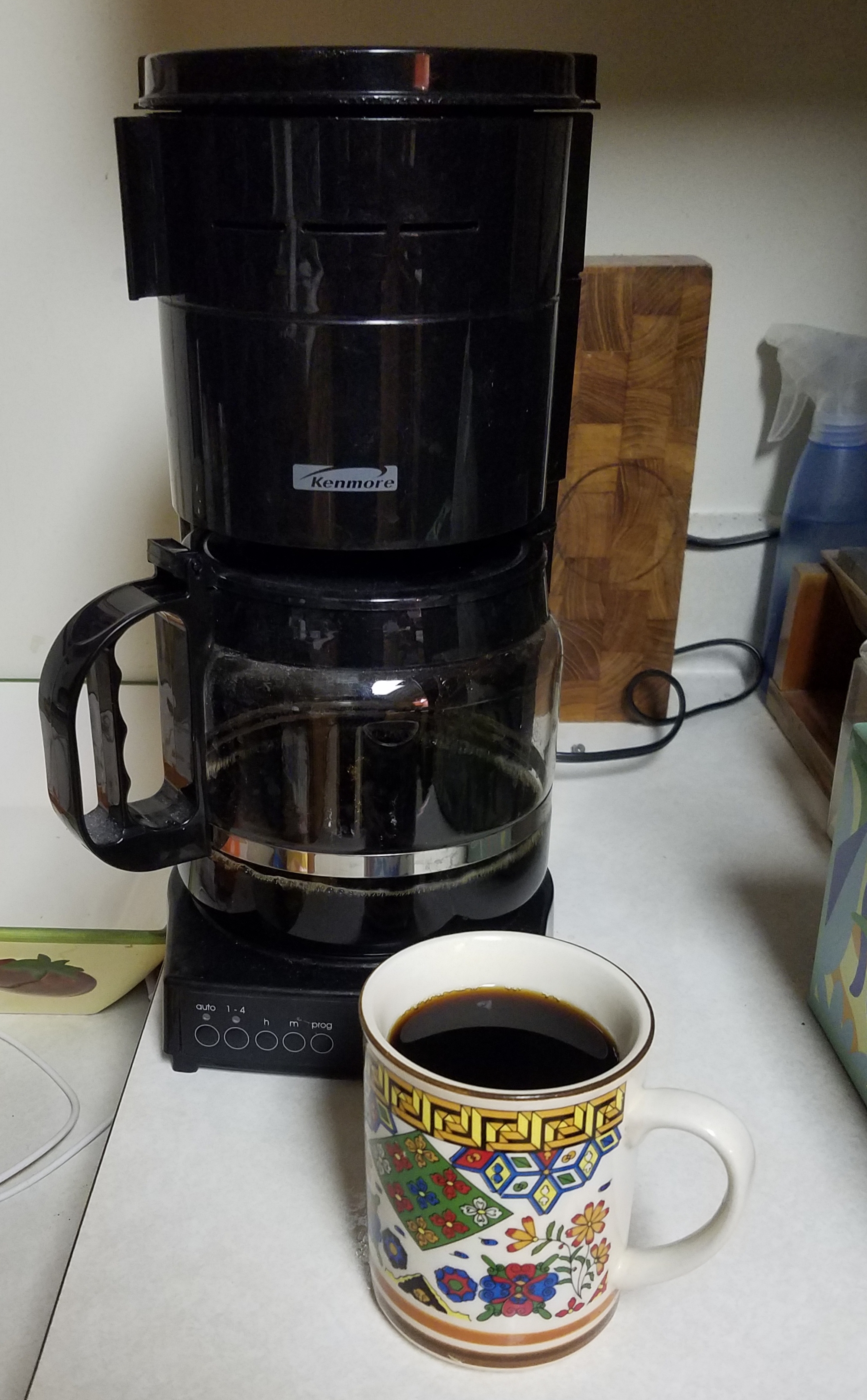
Got out my Kenmore drip coffee maker and the brew is noticeably better.

47°F at winter solstice last night in Iowa. That’s very warm for the beginning of winter. Rain is forecast most of today so I began indoors exercises to compensate for not getting out on the trail: dumbbells, walking in place, calisthenics. Today, I need to revise the daily outline that drives my morning.

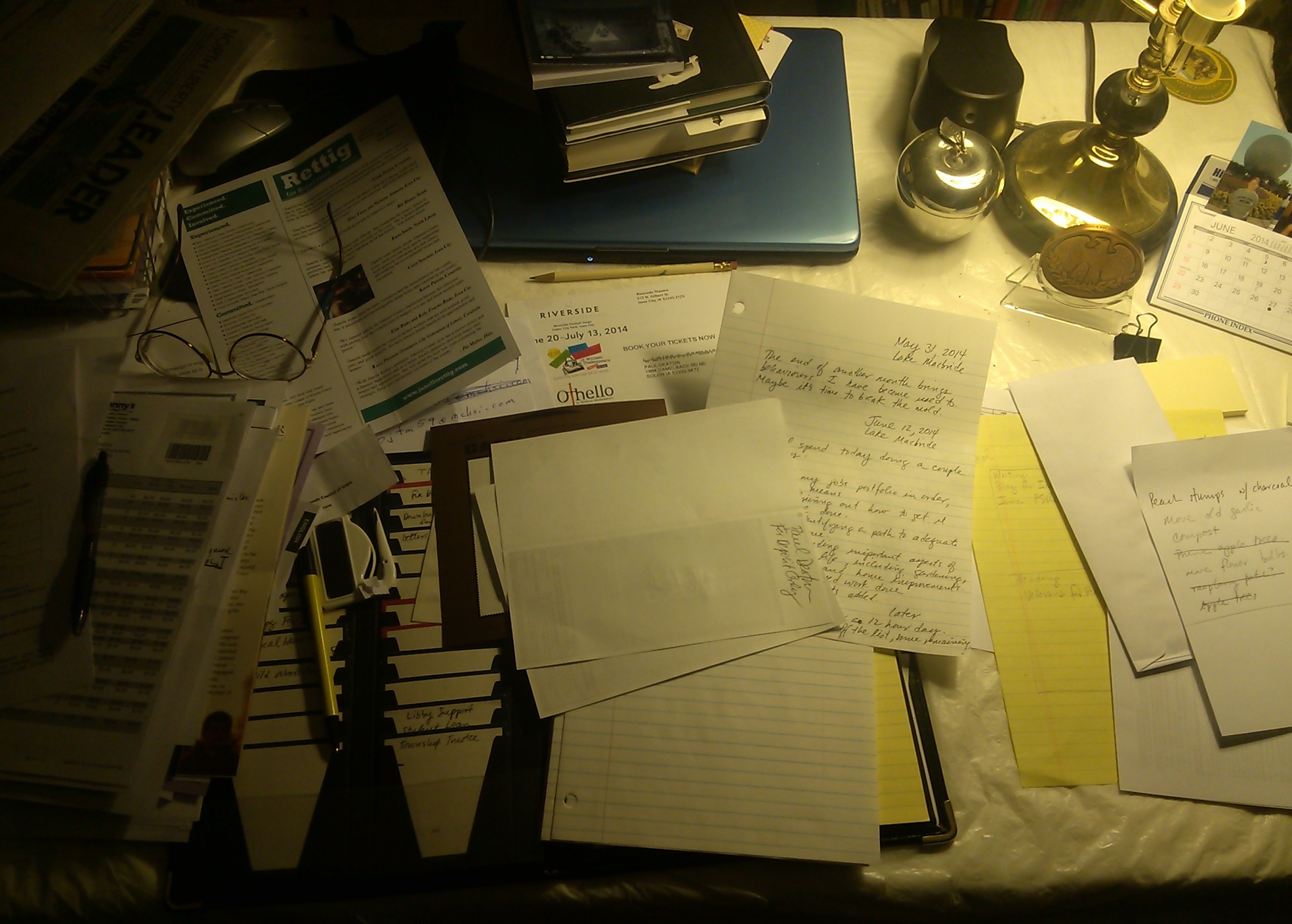
By daily outline I mean the 8-1/2 x 11 inch piece of paper on a clipboard next to my writing table. It contains the sequence of events for most days. It occurred to me, after reading how other writers work, that I should clear clutter from early morning activities and write while still rested. Revision of the outline was needed and straight forward.

There is getting up, which includes taking blood pressure, stepping on a scale, dressing, making coffee and taking my morning vitamins. Checking my mobile device is in there, yet I want to delay that until after a couple of things.

First is reading 25 pages or more each day. I take my coffee to the living room, grab a blanket from the rocking chair, and settle down with coffee to read. I am a slow reader, yet I want to get this done before the day gets away from me. Sometimes, if I can’t sleep, I’ll read in bed although that is never the plan. Depending on my level of interest in the current book, this takes about an hour.

Second, the big change is to record progress in Goodreads, refill my coffee, and walk immediately downstairs for a writing session. How long that will last depends on the day and what inspiration might be present.

The change is also delaying time with my social media, reading the newspaper, reviewing banking, paying bills, eating breakfast, exercise, and other daily chores until reading and writing are finished. I’m hoping this will provide a clearer mind and better focus on writing. Also, I hope to get more writing done.

I printed the new form. The new daily outline begins tomorrow.

Our holiday season begins Dec. 18 with our wedding anniversary and continues until January. I hope to plan a lot during this time. The daily outline, one more small thing, is done.

Categories
Writing

End of Year Holidays

Photo by Suzy Hazelwood on Pexels.com

On the shortest day of the year, I grabbed a couple of stacks and started going through artifacts of my life. The current pile is mostly cards and notes sent for occasions long forgotten. I developed a new rule: If I can’t recall who sent an item, it’s off to the shredder.

The owner of his namesake home, farm, and auto supply company used to send an annual, hand-written birthday card while I was employed there. Apparently, I kept them all. Amy Klobuchar sent a Christmas card in 2019 when she was running for president. I think she will run again. Tom Harkin’s operation was a Democratic machine and I have a couple of his Christmas cards. I am sorry to see him gone from the U.S. Senate.

My friend Ed sends irregularly arriving letters about the Veterans for Peace chapter we founded. In one was a photograph of 16 of us at the Iowa City Public Library. I pulled that out and put it on the magnetic white board next to my writing table. The group suffered a bit as the World War II and Korean War veterans died. In this month’s letter it was uncertain whether our chapter would survive.

There was a ticket stub from the June 13, 2009 performance of Midsummer Night’s Dream by William Shakespeare. Riverside Theatre produced the play on the Festival Stage at Lower City Park. Our child and I spent several nights there through those years, guarding the property from vandals. After our shift, we had breakfast at Hamburg Inn No. 2. I found a card from Ron Clark and Jodi Hovland thanking us for our support. One season, they both played mechanicals in Midsummer Night’s Dream, although I don’t recall if it was this performance. Theirs were some of my favorite performances in the many Shakespearean plays I have seen.

I found one of the last letters from Mother in an envelope addressed by my sister. Mother apologized for not baking a fruitcake due to complications with the aftermath of a root canal. I’m afraid the fruitcake tradition is barely alive at this point. If we were to make one, it would not be anything like hers. I believe we have family fruitcake recipes stashed away in piles and cookbooks. So, there’s that.

I found a recipe for Date Pinwheels provided by a friend from when we worked at the university. It is written in his hand. I pulled it out of the pile to stick in my hand written cookbook. My spouse and I were visitors to his apartment a few times. He was a fan of the Star Wars movies and had copies on the new technology of VHS video cassette. We watched a movie or two with him on VHS. We won’t be making any date pinwheels because one of us is vegan and we’ve yet to find a good substitute for eggs and butter in baking.

I finished the first stack and the next is a pile of letters, drafts and papers. Most of this pile is related to my autobiography. I kept most letters I received and there are many tucked away in different places. This pile has ones to which I referred in writing the first part of the work.

I printed the State of Illinois Bureau of Labor Statistics Report on the Cherry Mine Disaster on Nov. 13, 1909. My grandfather worked the Cherry Mine although was not present the day of the fire which claimed 259 lives. He worked in several mines over his long career as a coal miner. I learned more about coal mining than I thought possible from reading this report. It explained the mine, how it was dug, and has a detailed description of the sequence of events during the disaster. Being a coal miner must have been a drudgery, one with constant danger of being buried alive. This is a common thread throughout my side of the family where both Mother and Father were descendants of coal miners.

Eventually I will dispose of all this paper. There is too much to leave as an inheritance. The purpose of my autobiography is to distill a narrative from these diverse documents. For now, having gone through them, they are back on the sorting table until I refer to them again. It’s a fit way to spend part of the holiday season.

Categories
Writing

41 Years

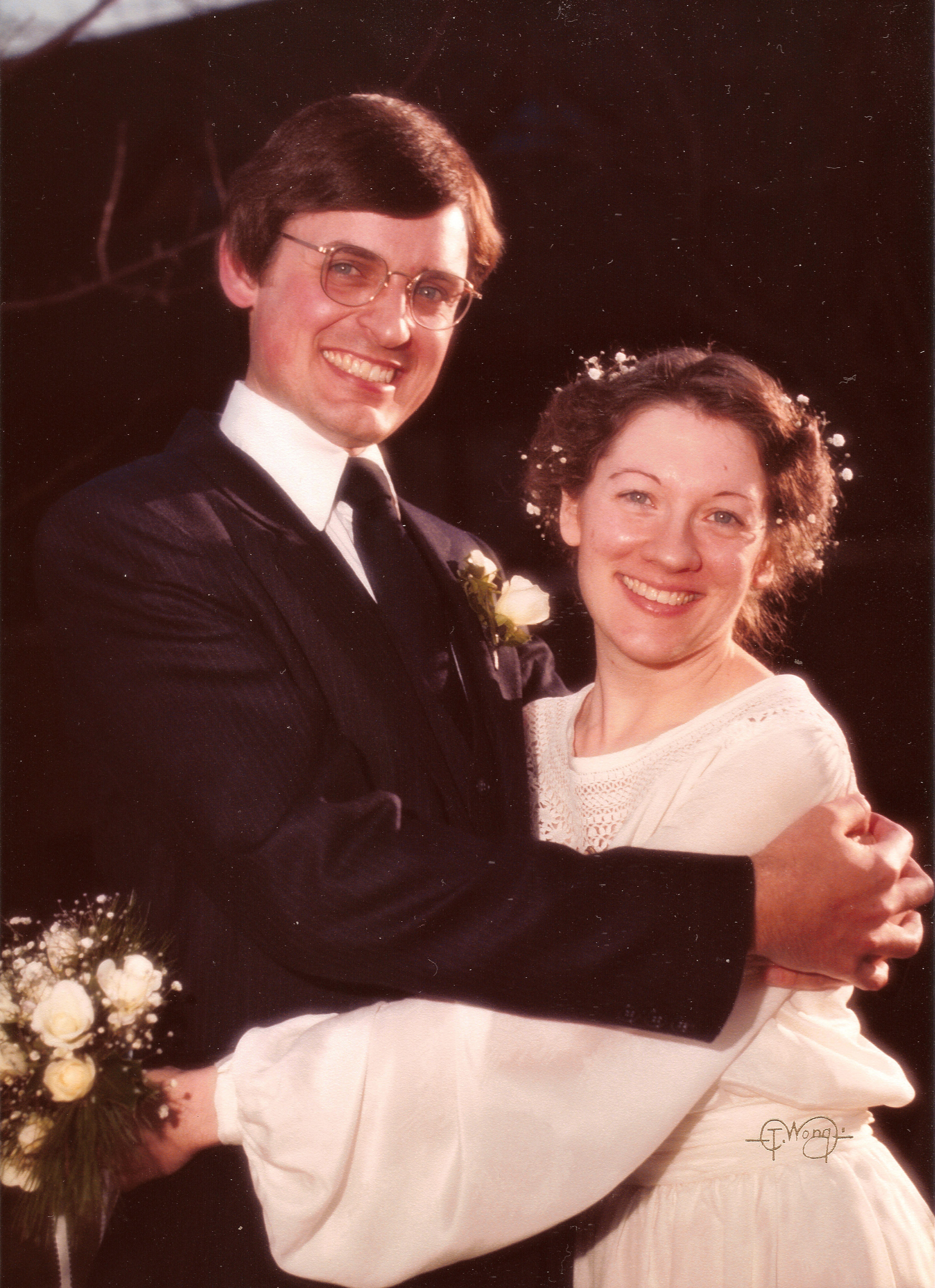
Unitarian Universalist Society of Iowa City, Dec. 18, 1982.

Yesterday we noted it has been 41 years since our wedding. We are still together. We spend more time together and need each other as we age. In these times, that a marriage lasted so long is atypical. That’s us.

I wrote about this moment in my work in progress autobiography:

If one looks at the wedding photograph of us standing in front of the church door, right after taking our vows, it represents what happiness looks like. The day was also a unique embarkation on a search for truth and meaning in our lives.

In the moment of that photograph, on a warm December day, within a small gathering of family and friends, at a modest reception, and with a wedding trip planned, we started the journey we continue today. Words can’t capture how we felt except to say, it was a defining moment full of every potential that life offers.

An Iowa Life, work in progress.

As we age, I do most driving and in-person shopping. Together we nurture our health. Like many marriages, ours had ups and downs. I try to focus on the good as I age. There is no denying we made a happy start. This photo is evidence.

Categories
Writing

Substack and Me

Ready to check email.

Wikipedia: Substack is an American online platform that provides publishing, payment, analytics, and design infrastructure to support subscription newsletters. It allows writers to send digital newsletters directly to subscribers. Founded in 2017, Substack is headquartered in San Francisco.

Finding an audience is challenging. When I started writing in public in 1974, letters to the editor were the usual way to get people to read my work. I had vague notions of becoming a novelist, yet found it difficult to break from the exigencies of a life to produce a novel. In 2007, I began blogging and that, combined with social media, satisfied and is satisfying my need for a readership. I have modest needs.

I read a large number of WordPress blogs and the writing is usually good. There are about 60 million WordPress blogs. Regardless, most don’t seem to get much traction. While the static format can and does gain readership, authors yearn for something more.

I can see why Substack is more attractive than a static blog. It harks back to earlier days when everyone had a junk mail, or later, a junk email list. We would send out the same newsletter to everyone on the list. Often recipients replied and you knew they read your writing. The efficacy of that was mixed. I look at my daily stats of emails sent from this blog to email subscribers and less than 10 percent get opened. Can Substack, with email delivery, be any better?

A number of Substack missives find their way into my email inbox. The ones I read regularly can be counted on one hand: Heather Cox Richardson, Laura Rozen, Art Cullen, Liz Mair, and one finger left over. Simple fact is there are too many Substacks, not enough time. Julie Gammack has organized a large number of Iowa Substack writers, and listed 45 of them on a Sunday morning email. There are good writers among them, yet there are so many. It is too much work to pan through them all to find nuggets of gold.

I wonder why a writer like Heather Cox Richardson publishes on Substack rather than being syndicated in a couple hundred newspapers. I suppose there is a benefit to being able to hit send on the computer when the piece is done, rather than meeting a newsroom deadline. Hopefully she has many paid subscribers and is getting rich from her Substack. Her reach and influence is a modern phenomenon. She deserves to be well-paid.

I get asked if I am moving to Substack. I am not. I figure to write in public until the 50th anniversary of my first letter to the editor in 1974. After that, I’ll focus on my unfinished autobiography and hopefully complete it by the time I turn 75… or before my mental capacity wanes. Then I plan to take it easy. God willing my eyes hold up and I’ll read more books written by others. I don’t see myself as an audio book guy. I may take up writing letters to friends, although my cohort is beginning to die off. I will continue gardening.

What has been important is building community, now with a new group of people whose interests intersect with mine. That new group will include many more young people, something I find is happening already on my new micro-blogging account on Threads. That is important as I wind down outside activities and focus on writing. If more young people read my posts, that’s what I want. I am far from cracking the code of any kind of viewership.

People will do what they want regarding Substack. I’m of an age where I don’t want to spend time learning something new, especially when I expect to be at writing in public for less than a year more. Like anything, Substack is no panacea for what ails a writer. As they say, though, not my circus, not my monkeys. I say live and let live… on substack if you please.