Categories
Writing

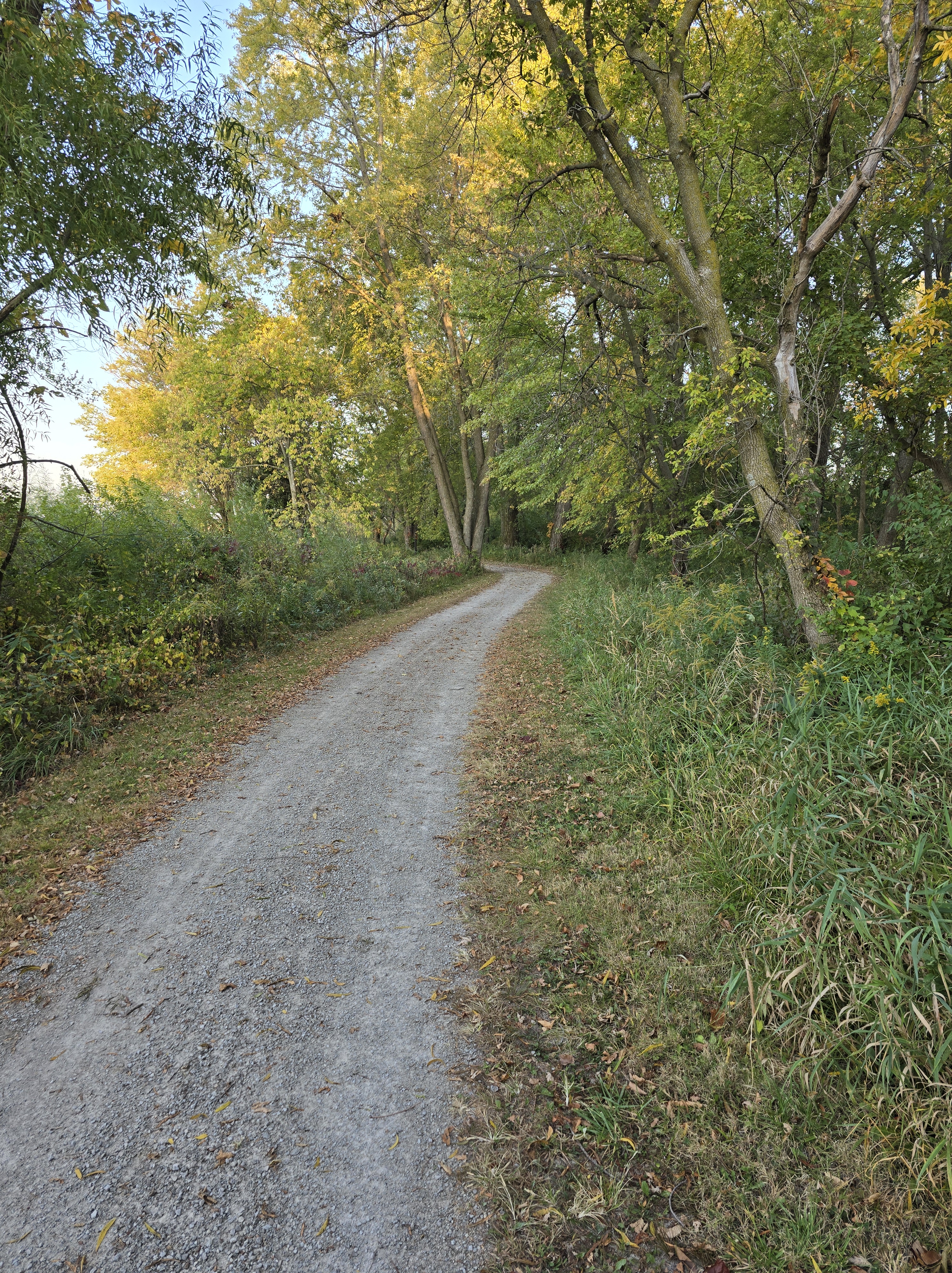
Autumn Morning

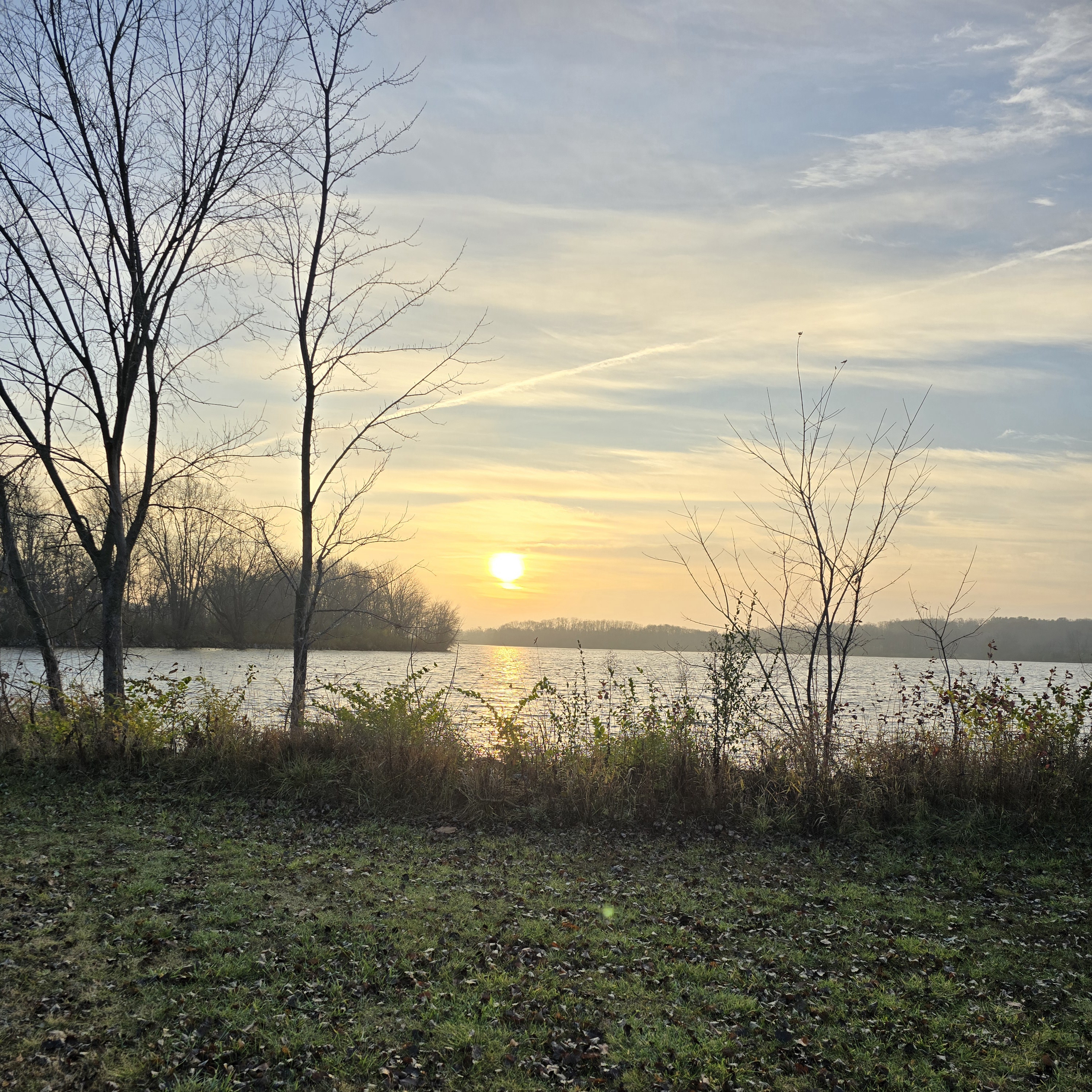
Along the state park trail.

I spaded the garlic patch on Saturday. It was too wet to till. I’m not in a hurry, yet I’d like to finish planting garlic soon. Rain is forecast all day today.

On Sunday, someone who helped edit my memoir pointed out the whole book was an origin story. Upon reflection, that seems accurate. It takes my story from the earliest times up until my beginnings as a married person in society. After that point, I drew on the origin story, and still do. However, what happened afterward was built on the foundation of my origin story, and is much different from the earlier period.

Last week I visited the new, multi-story University of Iowa clinic at Iowa River Landing for the first time. My physician and attending staff seemed competent. The facility is very nice. I noticed the presence of double-wide chairs in the waiting room and in the examination room. That furnishing is making a statement about the obesity epidemic in the United States. It’s not subtle. It did feel like I was smaller than I am when sitting in those.

I have been visiting various clinics a lot the last 3 months since I had COVID. It took me 2-1/2 hours to read everything that documented my visits and make a plan to heal. With that kind of time commitment, no wonder folks don’t always follow doctor’s orders. It’s a long and complicated process if done right. I noticed physicians often pointed to me as the decision maker. I mean, what do I know about whether I should take a medication or not? I ended up asking a lot of questions.

If you are an Iowa Democrat, Sunday’s front page article in the Cedar Rapids Gazette is worth reading. I believe much of what was said is wrong, especially the assumptions about how messaging functions in politics. All the same, one has to understand the establishment viewpoints if we want to change our politics to regain the majority. The authors rounded up the establishment for us. Here’s a link to a printed copy of the article.

On Sunday I called my Aunt who lives in Southwestern Virginia. According to my phone, the call lasted 37 minutes and 51 seconds. We had a good talk. The last time we visited in person was more than 40 years ago. We shed the preliminary pleasantries and got right into the conversation. That’s how we did it back in 1983. Unfortunately, I couldn’t answer some of the questions she asked me about my grandparents. What she asked was never discussed.

She refreshed my memory on some of the old stories, like the “Dude Hole” where the three boys (my father and his two brothers) would swim in a creek next to the railroad tracks, then hop on the train as it passed to ride through town. They found it to be fun, she said. We recounted the story of my grandmother’s death in Summer 1947. My grandfather was away in prison so they split the three boys up among grandmother’s siblings. “You can imagine, three boys! There was not enough food (to keep them together).” My great aunt and uncle adopted my aunt, who was much younger than the other three.

We retold the story of the coal mining company that strip mined the valley near my great aunt’s home. They augured out the coal from the high wall and spoiled the well. The family got no money from the mining company for ruining the water. For years my aunt hauled jugs of water out to my great aunt so she wouldn’t have to use the “sulfur water.” She updated me during the call that she had paid the fee to run clean water out to the property. Her daughter now lives there.

We discussed a number of other topics of a kind that is best left within a family. At the end of the call she said “this call isn’t over.” I agreed and made a note to call again before the end of the year.

Categories
Writing

A Writer’s Outlook

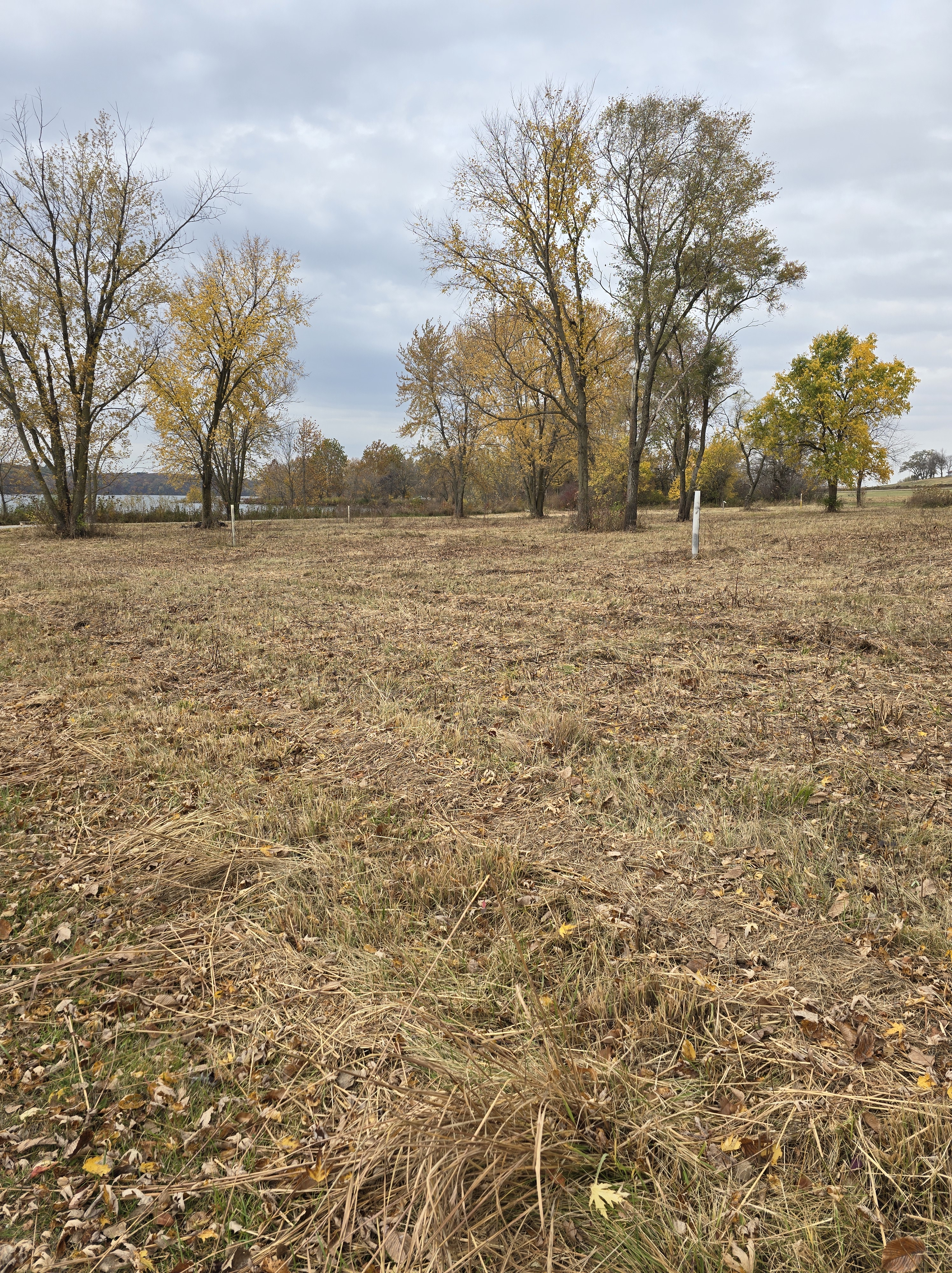
Trail walking along the state park trail.

I come to a breaking point in the narrative of the United States. When we married, Ronald Reagan was in the second year of his first term in office. He was a popular president, garnering the electoral votes of 49 states during his 1984 re-election campaign. Reagan won 58.8 percent of the popular votes that year. What he and his minions did to our country is unforgivable. This year, Donald Trump won re-election. Votes are still being counted, yet it appears he will win the popular vote at or slightly below 50 percent of those cast. Trump is expected to change American society even more than Reagan did, if that’s possible. My chosen role is to write about something other than the decline of the United States. I’ll need to write about other topics. Here is what’s on deck for 2025.

My main 2025 writing is continuing with my autobiography. This involves a daily writing and editing commitment. Sometimes I post chapters here to get feedback or to work with the language. In addition, sometimes I learn more than is needed in a chapter. The excess material can often make a solid blog post.

News not reported in other media is always popular. There will be a school board election next fall. Information I gather locally about national issues is another source for posts. Likewise, issues about Lake Macbride, public lands, extreme weather, and such are also potential topics.

I sense another transition in my views about local food, gardening, foraging, cooking, and food shopping. Cooking is a constant learning process, so there will be posts about that. I set a goal to redesign our garden and grow one again in 2025. This has been and will continue to be a rich topic.

Book reviews, rites of passage within my circle (mostly deaths of friends), travel reports, and reports on local activities of significance beyond the region are all likely subjects.

Aging in America has become an important personal topic. I will have a few things to say about health, medicine, chronic illness, Medicare, Social Security, and adjusting to getting older.

Few people in Iowa are reporting on nuclear weapons and nuclear power issues. A group is advocating for the Duane Arnold Energy Center near Palo to reopen their nuclear power plant to generate electricity for data centers. It is an important issue where I can add to the public discussion.

When I finished my graduate degree in 1981 I was increasingly aware of racism in America. It seems evident that issue is not going away. The protections of the 14th Amendment to the U.S. Constitution remain the centerpiece of our lives. In Iowa, racism isn’t talked about enough, even though it runs right below the surface of what used to be called “Iowa nice.”

2024 was a presidential election year and 2025 is not. I hope to decrease my posts about politics unless it impacts one of the other topics listed above.

Lastly, I will write about the craft of writing and what I am learning about it.

These topics seem like a lot. Hopefully they will organize my thinking for the coming year and help produce a blog worth reading.

Categories
Writing

A Writer in Iowa City

Photo by cottonbro studio on Pexels.com

After my post-masters degree tour of racism in America I decided to stay in Iowa City. My reasons were not complicated.

I had to decide whether to be in a relationship with someone, and Iowa City was a regional social hub offering a large pool of potential friends and mates. The rest of the state seemed a primitive agricultural landscape, desolate and barren of intellectual engagement. As a young Iowan possessing two degrees, of course I chose to live in Iowa City.

Having established my desire to write, Iowa City seemed an excellent place for that. It offered a broad intellectual life, not to mention being the home of the writers workshops. I expected to find other writers of varied skills, along with what it took to support a writers community.

Work was available. The money I banked in the military would soon run out. I needed a job to pay monthly bills. I had no idea of supporting myself beyond the next rent payment. I could live paycheck to paycheck indefinitely, working a job that would leave energy each day for writing. The idea of long-term employment with decent benefits had already begun to fade from American society as Ronald Reagan was inaugurated as president in January that year.

In the pre-internet days, relationships were in person or they were difficult. A long-distance relationship involved telephone calls and letters. We made our life where we lived and it took a year to discover what was possible in Iowa City. It became my year of being a writer.

In undergraduate school I saw writers come and go in the shared house on Gilbert Court where I lived. The pattern was simple. Find a place to live and write, find enough income to pay bills, and then go on living with a view toward producing a book of poetry or prose. It was no different when I finished graduate school.

When it came time to get my own apartment, I found a small one with a kitchen while most students were out of town on summer break. When I toured the apartment, a tenant still lived there. I deduced she was a writer of some kind, “a writer’s workshop type.” She had photographs of writers on the walls, and many books by workshop alumnae in a peer cabinet in the living room. My quick analysis of her book shelves was she displayed types of books I tried to avoid. My future landlady had had a run in with her, and described her as a little backward. I didn’t care much about all that drama. I was ready to move in and get started with the next iteration of my life.

The apartment on Market Street had six windows. It helped me feel more in touch with the world after living in a windowless basement with my friend Joe. I felt in union with events going on around me in the vibrant county seat. I felt a power living in the old part of the city, and I was in its midst. It took me two days to settle in.

From a logistics viewpoint, the pieces of a life were coming together. What I realize now, and didn’t then, was I needed something to write about. That flaw made it difficult to get words down on paper in the time before we knew what Reagan and his coterie were up to.

This is a draft of the first chapter of the second part of the author’s memoir.

Categories
Writing

No More Geniuses

Michael Alden Hadreas, better known by his stage name Perfume Genius, is an American singer, songwriter, and musician. Photo Credit – Wikimedia Commons

Why are there no more geniuses?

That’s an easy one to answer. Our culture no longer recognizes people as being geniuses. But, you might say, what about Einstein, or Leonardo, or others? Weren’t they geniuses? The answer, of course, is yes they were, but we now call them geniuses only in hindsight.

Today we see people as people, innately of potential equality, with various forces at work which inhibit the realization of that potential.The case of women artists is one, there are others. There is a dangerous assumption here: that genius is a goal or state of being to which a person aspires. An individual begins a human like other humans and develops to become a genius. They go through a process, they progress. I reject this.

Genius becomes a function of being recognized as such. If a genius is “ahead of their time,” then they will not be recognized in their own time for their accomplishments. In short, genius, like all other words, is defined in a cultural context. As the culture changes, today’s geniuses might be tomorrow’s buffoons. We need a new word to describe genius. That word will not appear in the current American milieu.

~ This post was written in the author’s journal on June 14, 1981.

Categories
Writing

Stormy End of Autumn

Trail Walking.

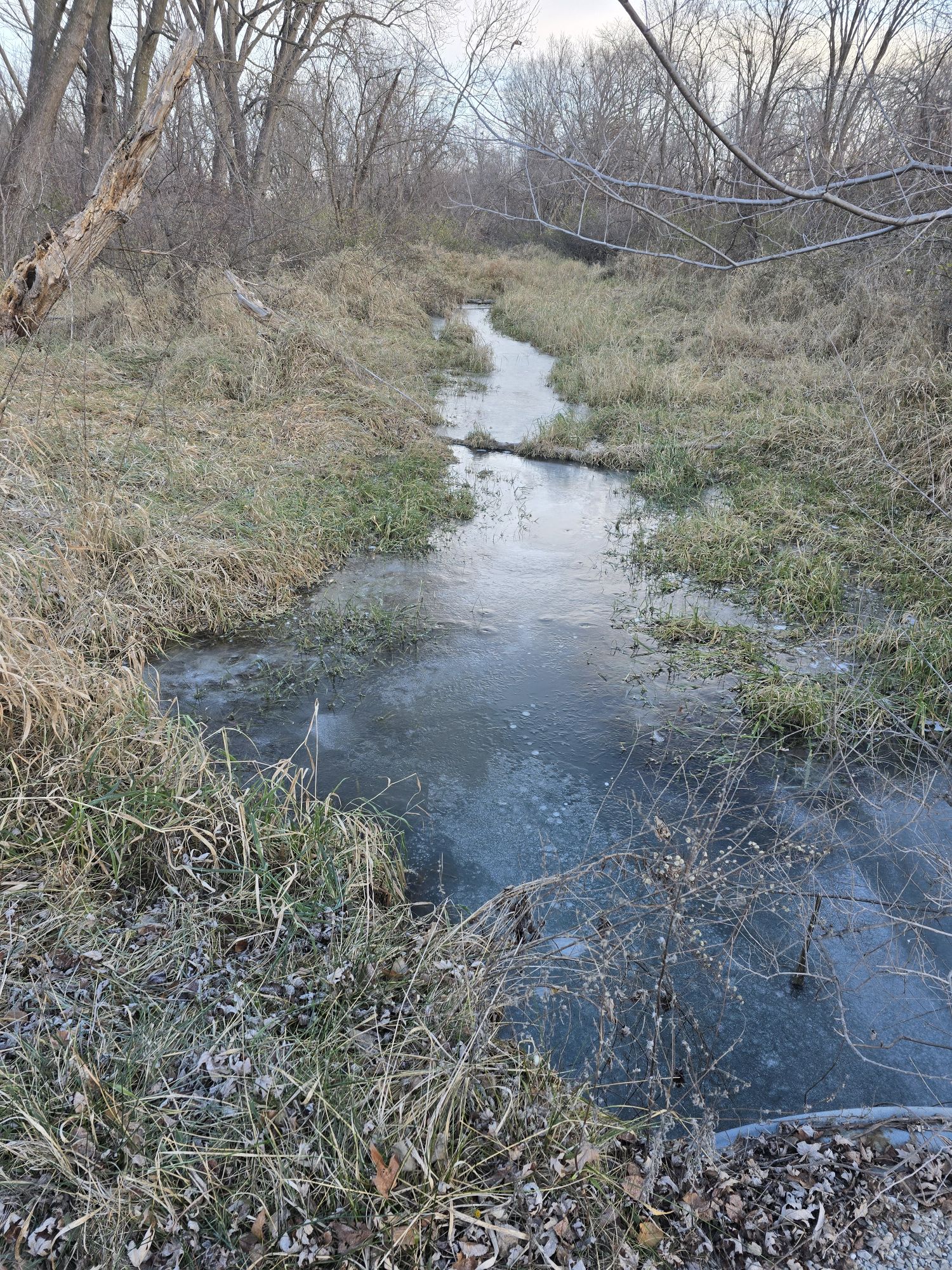
Rain and wind are blowing leaves from most deciduous trees, revealing squirrel nests in the canopy. Some, like the Pin Oak, hang on to their leaves until next year’s growth pushes them out. Most everything that’s coming down before winter has come down on the third day of stormy weather in Big Grove Township.

I set the election aside to focus on writing.

I’ve written about 60,000 words of the second part of my memoir. I feel I should start over. Writing the first part changed the way I look at writing memoir. I should incorporate what I learned, and will. That means a complete re-write of the outline and a chapter by chapter re-writing of the story. It will be a different book than what I first envisioned and hopefully more readable and engaging.

I left the story in Iowa City during the summer of 1981 just before President Ronald Reagan fired the PATCO air traffic controllers to break their strike. Reagan and his conservative progeny’s deconstruction of the world in which I grew up became a constant theme during my life. During summer 1981, they were just getting started.

There was a brief window of about a year before I proposed to my now spouse on Aug. 18, 1982. In that year, I lived in the Iowa City of which we’ve heard tell as a writer’s haven. I moved from my high school friend’s home to an apartment on Market Street. I found a job with the University to pay my bills. I sought to be a writer and did what many would be writers do near but not part of the writer’s workshop. It was something of a plan. It is important to recapture that time because in several ways, it is archetypal of what creative Iowans do to cope with this barren agricultural state which is increasingly devoid of creativity.

Because my focus was on writing, I have plenty of journal entries from that time to re-read. That summer, I compiled a number of my essays into a book called Institutional Writings. I printed 15 copies and distributed them to friends. I was determined to be a writer even though I wasn’t sure what that meant in 1981. Iowa City wasn’t a solution for me. It was more a transitional place.

I accomplished something significant today. I got started writing Part II. There is much to be done yet I’m moving, hopefully in the right direction.

Categories
Kitchen Garden Writing

Food In Situ

Backyard garlic.

I recently read The Cooking of Provincial France by M.F.K. Fisher, et. al. It raised awareness of how cuisine can be rooted in specific locales, based not only on locally-grown food products, but on the soil, air, and water specific to a place. Local residents literally spring from the landscape and food grown there, according to the authors. Regretfully, French cooking is immersed in animal products. Separate the dairy, beef, pork, lamb, fowl, and fish and it would not be French cooking. It cannot exist except in situ.

What does in situ mean?

In the United States, we have a long tradition of destroying places and then building settlements as if on a blank slate. Natural vegetation, evolved over hundreds of years, was razed, and replaced with farms. Then, when the farm couldn’t make it — even with government subsidies — it was parceled off and sold for residential properties.

We built our home in such a farm conversion and prepare varied meals in the space we built. None of it is native except for the harvest from our backyard garden. Those seeds and seedlings come from elsewhere and not here. The phrase in situ, in this context, includes some aspect of food grown locally.

It seems ironic that as much “food” as is grown in Iowa and in the fields surrounding our residence, most of the corn, soybeans, wheat, hay, and other commodities are not grown for direct human consumption. Much of these foodstuffs are used either in animal feed or as an ingredient in industrial processes like distilling ethanol, or making biofuels or corn syrup. In Big Grove Township, there is no in situ.

That’s not to say our household lacks a cuisine. Clearly it has a distinctive one. Perhaps the most characteristic food we prepare is tacos. That they are made from raw tortillas from the wholesale club, greens and tomatoes grown at home, and produce we sometimes grow ourselves and sometimes don’t, makes them ours. The Mexican oregano we use also lends distinctness to the dish.

The important thing is when I make tacos, I’m not trying to copy a dish I saw elsewhere. I’m creating something unique, from scratch, with ingredients we grew or have locally available. I use tomato sauce that varies a lot (just as each tomato picking is different). How I use each jar makes a difference in the outcome of the tacos.

Rather than produce a certain kind of soufflé according to the science and rules of French high cuisine, I’m more likely to scramble an egg or make an omelet. Sometimes I’ll make another serving of tacos, perhaps with scrambled eggs in it.

While a few people I know grow shallots, chervil, and tarragon at home, the seeds to grow them did not come from here. They may be typical of French cuisine, yet are not of here. It is important not to get too precious about certain ingredients and where they come from. If I grow these, I use them until they are gone.

Over the years I posted many opinions about local food. Today I’m not sure that matters as much as I thought. What I learned was the idea of local food is constantly evolving. I continue to purchase groceries from a large, retail establishment on a weekly basis. That doesn’t make me any less interested in available local foods. Am I a purist? No, I am not. Being a purist about food does not make sense. It is challenging enough to keep track of what local food is available and where.

I leverage locally grown food when it makes sense. The dishes I prepare are not any less good. So, I’m here, I grow food, and I’m cooking. I am still a latecomer to the upper Midwest, one who is trying to get by. What else can I do besides enjoy what I make here?

Categories
Writing

Political Rush

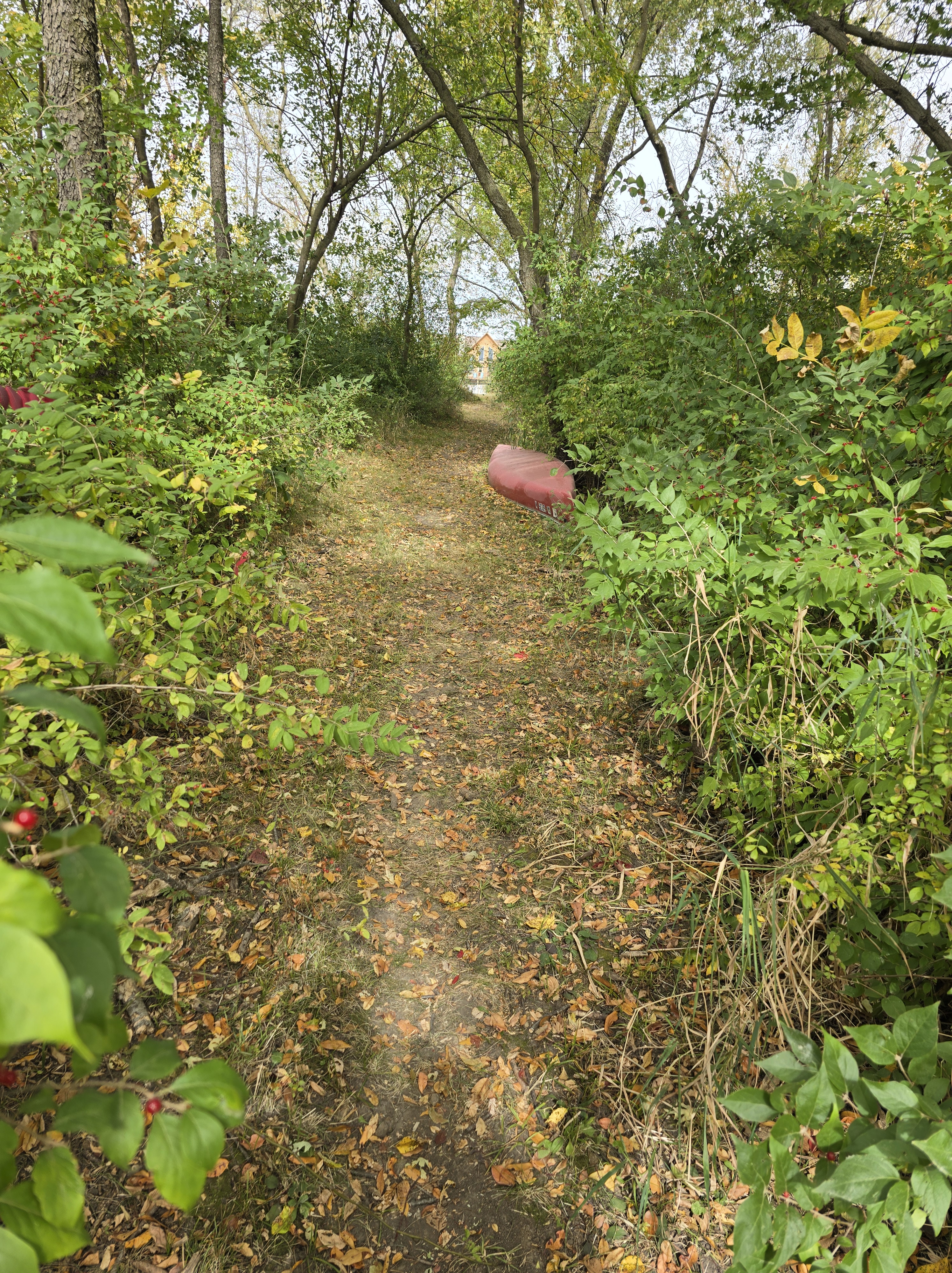
Canoe stored near the state park trail.

I continue to do two or three things daily to contribute to Democratic wins on November 5. I don’t know how successful I will be, but every step forward is of value.

After my bout with COVID-19, I gained a different attitude about writing. I don’t believe that will resolve at least until after the election. I’ve been thinking of the second part of my memoir, yet I’m not quite ready to begin revising and writing. Outside the election, I don’t have much else to say.

In the works are pieces about Cook County, Illinois, a garden report, and then, beginning on election day, I will cover our local elections. After that, who knows about this blog. COVID and related illnesses remind me that life is short. I want to finish my memoir as a first priority.

Speaking of my memoir, I have a dozen copies out among friends and family. I’m waiting for feedback before deciding whether to make the book more available. Lots of folks I know are working on the election, so that may not be resolved until the end of the year.

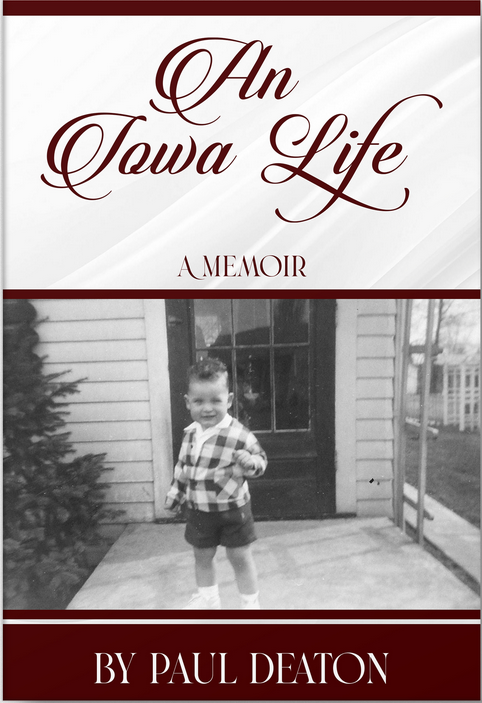
Thanks to all my daily readers of this blog. There will be more posts, although I can’t say when. Here is what the book cover looks like.

Categories
Writing

Starting Over

Autumn on the state park trail.

Just as a concertina began the musical Carnival! — slow, isolated, and alone — the path to writing again is picking up the rusty squeezebox and getting started. As I renew effort on this important project, I will be joined by a full orchestra with instruments, players, and settings while engaged in a jamboree of my life in the post-Reagan era. Everything that will fit in 250 pages, I will.

I learned a lot finishing the first part. Blending the past with the future, in terms of the time line was important to style. My omniscient narrator’s voice has the ability to span my entire life at once and I did. Anything else would be fakery. In the chapter on Joan Didion, I began with my discovery of her writing in while I lived at Five Points after military service, and blended my experiences with her writing through her death in 2021. By weaving the whole story into a single chapter, I both told the history and previewed what her writing meant to me. I can’t imaging splitting this story up. So it was with other topics.

The length of part one was about right at just less than 250 pages in the final book. I should keep part two a similar length despite the fact there is more to tell. Exercising disciple in sticking to a narrative is important for the research, and for the writing. I decided to hang the narrative on a timeline based on where we lived, beginning in Cedar Rapids, then Merrillville, Indiana (the Calumet), and returning to live in Big Grove Township in Johnson County, Iowa. Because the Big Grove section is so much longer, more than 30 years at present, I subdivide that with three breaks: my retirement from transportation in 2009, taking work at the home, farm and auto supply store in 2015, and the onset of the coronavirus pandemic in 2020.

The second layer is tracing the history of trucking industry deregulation. This includes the Motor Carrier Act of 1980, signed into law by President Jimmy Carter, Ronald Reagan’s reaction to the PATCO strike, and Bill Clinton’s NAFTA. The impact on American society of these things was broad and deep. My career in transportation positioned me to be in the middle of it as it unfolded. Plenty of books have been written about this. I want to write my story. I have been driving Interstate 80 to Des Moines the last few months. It is remarkable how truck traffic has changed. There is a story behind that.

The third layer is a broad brush approach to our family life in Iowa and Indiana. Ours was not a typical family life, beginning with our vegetarian food culture. We also thought differently about everything from politics to education to banking and finance to transportation to recreation. I hope this layer will be particularly meaningful to our child.

The fourth layer will be the impact of climate change on our lives and on our life in society. A changing environment, warmer temperatures, extreme weather, and public service, including my six years on the county board of health, all play a role.

The fifth layer is how my writing and intellect progressed. If I planned to focus on writing when we married, such focus diffused in the existential struggle to provide for a family. We divided labor in a somewhat traditional way, with me being the primary wage earner, and Jacque working at home during the early years. This had consequences for my writing and for our living. We had a good life, yet there were challenges.

Woven into these layers is my history of working on political campaigns, travel for business, gardening, and learning to live in the post-Reagan society leading up to the 2016 election.

Nothing is cast in concrete. This post is a start. Off we go! Now where did I put my concertina?

Categories
Writing

Recovering From September

On the state park trail.

My writing process was decimated during September. It will take time to get back in the swing of things. With four weeks left until the election, I probably won’t get in the saddle until mid-November. I just don’t feel like engaging in writing for the moment.

I doubt many of my candidates will beat the Republicans in this precinct. Politics won’t take a holiday until after the election. If it is like in 2020, the malarkey from Trump won’t end until January 2025 if he loses. I expect him to win Iowa yet lose in the electoral college.

Just a brief post today… to let readers know I’m alive. My interview with Thom Hartmann posts Monday. It may be the best one I’ve done with him. I hope you’ll return and listen to it.

So for now, it’s back to the kitchen and meal prep. When I’m cooking for one, one dish can make multiple meals.

Categories
Living in Society Writing

Diplomacy Winds Down

U.S. State Department. Photo Credit – Wikimedia Commons

Efforts to advance diplomatic goals are grinding to a halt with the U.S. election seven weeks away. Among the key initiatives that slowed are negotiating an end to Russia’s invasion of Ukraine, and updating a deal to curtail Iran’s nuclear program, according to Laura Rozen.

As the United Nations General Assembly opens next week, President Joe Biden is expected to give his last speech before the body. He is perceived by other members to be not that interested in the U.N. as he closes his storied career in politics. A lot in diplomacy world depends on the results of the Nov. 5 election and everyone knows it.

Our choices for president couldn’t be more stark when it comes to diplomacy and foreign affairs. With Kamala Harris, we expect a continuation of Joe Biden’s rebuilding of international relations made worse by the 45th president. With election of Donald Trump, we expect another disaster with open grifting on the part of the billionaire convicted criminal.

Diplomacy and America’s stature in the world matter to most of us. There really is no choice but to elect Harris if we want to continue to address world problems in which the United States is deeply engaged. I know that’s what I will do.