Categories
Sustainability

Adding Value

Trail walking on May 7, 2024.

If HRH the Prince of Wales can’t make a go of organic farming, I don’t know who might. In his 1993 book Highgrove: An Experiment in Organic Gardening and Farming, he and co-author Charles Clover lay out the expenditure of resources, including consulting from prominent Brits with expertise in gardening, animal husbandry, and farming, to convert his estate in Gloucestershire to organic production. While there were successes, the end result was they couldn’t completely and satisfactorily convert it.

Highgrove had three rules: convert from conventional to organic production cheaply, deal with the public direct when possible to keep prices down, and add value.

How does a farmer add value to their crops? One of the approaches Highgrove made was using organic grains to bake bread for retail markets. It was more expensive, but with the prince’s imprimatur they found entree and some sales.

Highgrove could not solve some problems with using all-organic bread ingredients grown on site. They had to blend Highgrove wheat with high protein, organically-grown Canadian wheat to produce the soft crumb British bread-eaters crave. There were also no known producers of organic palm oil needed to “give good loaf volume.” Prince Charles decided to go to market with some compromises, sufficing to say the bread was made using organic flour grown on the property and branded as the “Highgrove loaf.”

While we don’t need to be the future king of England to know it, adding value to common commodities is a ubiquitous practice. It is the foundation of capitalism. Have a few hundred tons of wheat? It will be worth more if it is turned into bread, biscuits and the like. Such added value and the revenue derived from it is used to offset higher input costs for organic vegetables and grains.

The book was a solid read, recommended for those in the contemporary discussion about alternatives to food production based largely on chemical inputs. While the Highgrove story is interesting in itself, it is a long setup for my main topic. What are we made of?

…in the sweat of thy face shalt thou eat bread, till thou return unto the ground; for out of it wast thou taken: for dust thou art, and unto dust shalt thou return.

Genesis 3:19, King James Version

While our lives are nourished by bread and everything around it, we are not the bread we eat.

Most of the elements of our bodies were formed in stars over the course of billions of years and multiple star lifetimes. However, it’s also possible that some of our hydrogen (which makes up roughly 9.5% of our bodies) and lithium, which our body contains in very tiny trace amounts, originated from the Big Bang.

The Natural History Museum, London.

We are stardust, literally.

We are stardust
We are golden
And we’ve got to get ourselves
Back to the garden

Woodstock, Joni Mitchell

We are such stuff as dreams are made on…”

The Tempest, William Shakespeare.

I need to sleep more, think less, and get in the garden. Now that rain let up, maybe I can.

Categories
Environment

Al Gore Receives Presidential Medal of Freedom

With Al Gore and Company in Chicago 2013.

On Friday, May 3, Al Gore was awarded the Presidential Medal of Freedom by President Joe Biden. Al Gore is deserving of this recognition.

Here is the announcement. Al Gore was one of 19 people to receive the medal yesterday:

Al Gore is a former Vice President, United States Senator, and member of the House of Representatives. After winning the popular vote, he accepted the outcome of a disputed presidential election for the sake of our unity. He was awarded the Nobel Peace Prize jointly with the Intergovernmental Panel on Climate Change for his bold action on climate change.

My decision to associate with Gore through the Climate Reality Project was a game changer, introducing me to climate activists all over the planet. Joining Climate Reality upgraded my understanding of the climate crisis and everything around it.

What is next for the Climate Reality Project? I don’t know yet presume succession plans are already in place for Gore’s retirement.

Categories
Environment

Nuclear Power Isn’t It

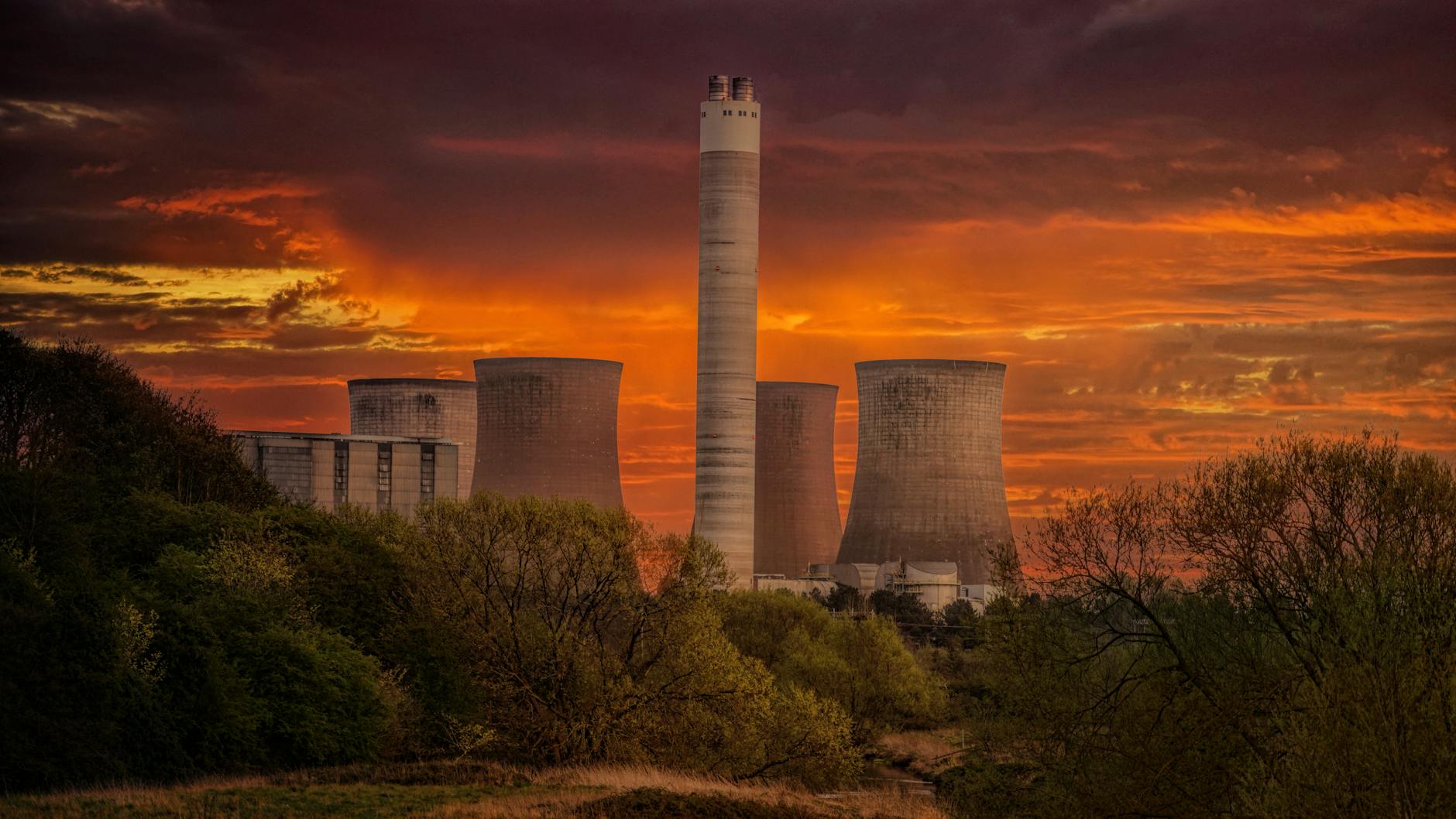
Photo by Johannes Plenio on Pexels.com

Little has changed to make nuclear power a safe and affordable option to produce electricity. That didn’t stop Iowa Republican members of congress, all four of them, from voting for H.R. 6544, the Atomic Advancement Act of 2023. They were not alone, the bill passed on Feb. 29, 2024 (365-36-1). It awaits action in the U.S. Senate Committee on Environment and Public Works. What were they thinking? They were thinking they would take care of big business first.

In a sneaky, self-serving way, the bill revised the Nuclear Regulatory Commission’s mission statement to emphasize the “public benefits” of nuclear energy instead of protecting human life and health through regulation. In other words, it promotes more nuclear power over safety.

Using questionable wisdom, the U.S. House of Representatives pushed more of the cost of recovery from a nuclear disaster upon tax payers. The bill calls for renewal of the Price-Anderson Act, a 1957 law which caps the industry’s liability for nuclear disasters at only $13 billion. H.R. 6544 extends it for 40 more years. The Price-Anderson Act makes US taxpayers liable for the full costs of nuclear disasters – which could run into the hundreds of billions of dollars – and exempts the insurance industry from covering homeowners and businesses for damages from those disasters. We regular folks never have it that good from our government.

Construction costs for new nuclear power are more than ten times those of comparable solar capacity. There are similar cost issues around fuel sourcing, waste disposal, safe operations, and escape of radioactive pollution from a power plant, none of which have been resolved. There can be agreement we’d like to use a method of electricity generation that minimizes pollution. Nuclear power isn’t it.

Entrepreneur Bill Gates is working to make nuclear power more cost effective and safe. When he decided to make nuclear power generation one of the projects in his post-Microsoft life, he said he wanted to solve its problems so it could replace more polluting methods. Gates believes nuclear power is an important part of solving the climate crisis. That may be, yet not until we solve the problems of cost and safety. Read about his effort in Kemmerer, Wyoming here.

The U.S. Congress is getting ahead of itself in advancing this bill. My House Representative Mariannette Miller-Meeks was out with a statement shortly after voting for it, “The Energy and Commerce Subcommittee on Energy held a hearing to discuss nuclear energy expansion. I believe nuclear energy plays a key role in the future of American energy and am proud to support it.” I have been writing about the representative’s affection for nuclear power since this post on Dec. 11, 2010. I wrote, “As a proponent of nuclear power to control toxic emissions from coal fired power plants and concentrated animal feeding operations in the state, she is expected to kick the ball down the road for the decades it would take to bring adequate megawatts of nuclear energy on line.” One decade down, how many to go?

It is obvious the nuclear industry has made little progress toward improving safety in operations and affordability as measured in unit cost of electricity produced. They hang their hat on the likes of Bill Gates, instead, and pray he solves the problems. I didn’t know those folks spent that much time in church.

Categories
Environment

How Are Things Going Before Earth Day?

Image of Earth 7-6-15 from DSCOVR (Deep Space Climate Observatory)

Earth Day is Monday, so how are we doing? Is the news media helping us create a better environment?

Bill McKibben follows issues centered around the climate crisis better than almost anyone. Here’s the stark truth from his substack, The Crucial Years:

At the most fundamental level, new figures last week showed that atmospheric levels of the three main greenhouse gases—carbon dioxide, methane, and nitrous oxide—reached new all-time highs last year. Here’s how the National Oceanic and Atmospheric Administration reported the figures:

While the rise in the three heat-trapping gases recorded in the air samples collected by NOAA’s Global Monitoring Laboratory (GML) in 2023 was not quite as high as the record jumps observed in recent years, they were in line with the steep increases observed during the past decade. 

The global surface concentration of CO2, averaged across all 12 months of 2023, was 419.3 parts per million (ppm), an increase of 2.8 ppm during the year. This was the 12th consecutive year CO2 increased by more than 2 ppm, extending the highest sustained rate of CO2 increases during the 65-year monitoring record. Three consecutive years of COgrowth of 2 ppm or more had not been seen in NOAA’s monitoring records prior to 2014. Atmospheric CO2 is now more than 50% higher than pre-industrial levels.

Entirely unsurprisingly, the planet’s temperature has also continued to rise.

The Crucial Years, a substack by Bill McKibben, April 10, 2024.

Not long ago, McKibben headed an organization called 350.org, which advocated keeping average surface concentration of CO2 below 350 ppm. At 419.3 ppm, and increasing about 2 ppm per year, we are going the wrong direction.

How do news audiences perceive the climate crisis? A recent study explored this question. Why is it important? How we perceive and receive news about the climate crisis determines, in large part, whether and how we address it.

Around Earth Day, we expect to see more news stories about the climate crisis. Folks at Reuters Institute studied news use and attitudes about climate change, using data from Brazil, France, Germany, India, Japan, Pakistan, the UK, and the USA. The issues are similar to what we see in response to media on any topic: Should we trust scientists? What is misinformation and what isn’t? What news sources are trustworthy? Are direct action protests covered fairly by media? They found a lot:

  • In most of the eight countries there has been a slight increase in climate change news use, with just over half (55%) on average using climate change news in the previous week.
  • Climate news avoidance and trust in climate information from the news media have remained roughly stable, but avoidance has decreased slightly in the UK, USA, and Pakistan, as well as trust in the UK and Germany.
  • Scientists remain the most trusted sources of news and information about climate change, trusted by 73% on average, and respondents more often see them used as sources in the news media than any other source of information.
  • Over three quarters (80%) of survey respondents say they are concerned about climate change misinformation, consistent with data from 2022.
  • Once again, respondents think television and online (including social media and messaging apps) are where they see most climate-related misinformation. Politicians, political parties, and governments are frequently mentioned as sources of false and misleading information.
  • Nearly two thirds of respondents believe that news media play a significant role in influencing climate change decisions, actions by large businesses, government policies, and public attitudes, with particularly strong beliefs in Brazil, India, and Pakistan.
  • There is large variation in how soon respondents think people in their country will face the serious effects of climate change, with significant proportions in every country thinking the consequences are decades away at least. However, people who use climate change news on a weekly basis are considerably more likely to think that people are being affected by climate change now.
  • Significant disparities exist in perceptions of the impact of climate change on public health specifically, with those in Global South countries (Brazil, India, Pakistan) generally perceiving larger effects (50% or more) than those in the Global North (UK, USA, France, Germany, Japan).
  • Just over half of respondents think that climate change has a larger effect on poorer people (53%) and poorer countries (52%), but there is a considerable partisan disagreement on this in France, the UK, and the USA, with those leaning politically right less likely to agree.
  • People are more likely to think that richer countries and more polluting countries should take greater responsibility for reducing climate change, and weekly climate change news users are more likely to hold this view.
  • In the UK, USA, Germany and France opinion is roughly evenly split on whether direct action climate protests (e.g. blocking roads, disrupting sporting events) are covered fairly by the news media. But in Germany, the UK, and the USA opinion varies depending on whether people support or oppose the protests.
  • People in our survey expressed a high level of interest in various types of climate coverage, including news that discusses latest developments, positive news, and coverage presenting solutions. People did not express a clear preference for the type of solutions journalism they are most interested in.

What do these findings mean? Assessing news in media has become a critical skill in 2024. It is important to align our lives with accurate information about the climate crisis. Rich McKibben is a good source of information. So are Katharine Hayhoe and Al Gore. Knowing the truth about the climate crisis will make us better advocates. It will set us free to create a better world for our progeny.

On Earth Day 2024, we are a distance from achieving our goals. Things are not going as well as we need and it is complicated by reliance on media fraught with misinformation. We can do better.

~ The author helped organize the first Earth Day on April 22, 1970 in his home town. He served as chair of the county board of health, and has been advocating and writing on environmental issues all along his journey. He joined Al Gore’s Climate Reality Project in 2013.

Categories
Environment

Drought Continues

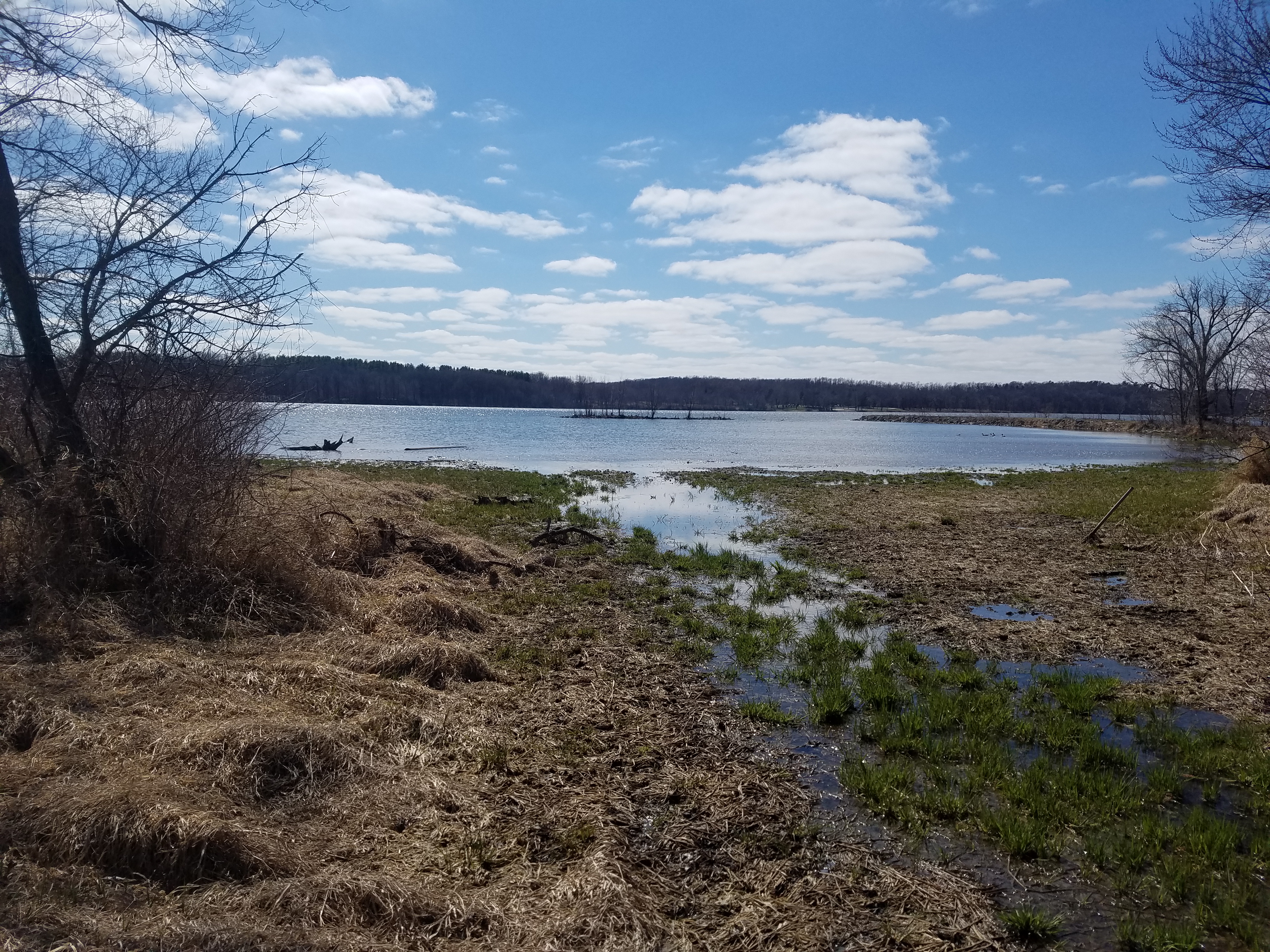
All of the foreground should be covered in water. Photo by the author on March 18, 2024.

A few snowflakes fell on my forehead while rolling the recycling cart to the road. The forecast did not indicate much snow, yet we’ll take any we can get.

Yesterday we went to the new Department of Transportation facility across the lakes for an appointment to renew my spouse’s driver’s license. We took a thick envelope of documents to meet the new Real ID requirements. We were able to get what we needed beforehand and a new driver’s license was efficiently issued. Appointments like this can consume a whole morning in the life of a septuagenarian.

While there, we stopped at the wholesale club to get two cases of organic soy milk from the least expensive place in the county to do so. The trip was uneventful and met our needs.

It was a punk afternoon after that: too chilly to spend much time outdoors and too sunny to stay indoors. We ate late lunches after which I retired to my writing table to work on weekend posts. Our child was streaming, so that was on in the background.

I was feeling a headache so decided not to attend the political event near the county seat. One of the county supervisors was having a kickoff event. In our active local politics, there is always another event.

A note about fasting labs had me skip dinner so I wouldn’t forget. It was another day in a time of appointments, shopping, and living in the ongoing drought.

Categories
Environment

Naming Things

On the state park trail on March 18, 2024.

Naming things found in nature reflects an urge to own, control, or possess them. I have no interest in that. I seek to be outdoors and observe everything natural with all my senses. I don’t object to knowing the formal taxonomic classification of a plant, insect, animal or other living thing. With increased experience in nature, some knowledge of genus and species comes naturally. For example, when I see a Blue Jay, I know the name. What I don’t want is worry about naming everything in my environment.

I began using the Merlin Bird App last week to interpret which songbirds are nearby. Identifying bird sounds is a subset of ornithology. On Tuesday, the American Robin, Northern Cardinal, and American Crow showed up on a windy morning. The app helps me understand nature. While I’m working outdoors all kinds of sounds become a background noise for my activity: birds, vehicle traffic, weather, local human and animal activity, and more. I want to recognize when something different stands out from the background. What new bird might I see? What new world will be unveiled?

As a gardener, I care a lot about insect and plant life. Which insects are beneficial, which are predators in this specific vegetable garden? Which plants are weeds? Which are edible or poisonous? I’ve been gardening since 1983, and am getting better at identification each year. I see behavior of white butterflies that lay eggs on my cruciferous vegetable leaves yet have no idea what they are called. I’m not that interested in learning the name, just in identifying their behavior as a pest.

When I move indoors, my view toward naming is not much different.

I’ve been writing about my early life before the seventh grade. I’m lucky I didn’t obsess over the naming of things. My classroom focus was on the mysticism of the Catholic Church and stories told by my teachers and classmates. Charlotte’s Web in fourth grade was pivotal. I sang, learned to play music, and played games with classmates in the playground. We knew the game was called “Four Square” yet what mattered was getting a chance to play after waiting patiently for our turn in queue near the court painted on the asphalt. These activities didn’t require a name.

When I go to the pantry, I sometimes can’t recall what things are. I know we have almond and barley flour, yet to identify them takes tasting a pinch. Some in the household says I should label things. Maybe, yet I resist. I don’t know if my reasons are good, but I don’t want to be limited by the confines of having to know things by name. In the kitchen, imagination and improvisation are the key dynamics, even when it comes to the “science” of baking. Not once have I mistaken salt for sugar.

What is the story of nature? It is more complex than I can understand. I’d call mine a Cartesian outlook and that means I live in my senses most of the time. What may be “out there” beyond senses, we have no way of knowing. We are taught nature is out there. Equally so, there is no way to own, control, or possess things we sense with any permanence. Living this way is a matter of faith, not requiring any naming. We are better off by not naming things we experience.

As long as I’m getting along in society, I’m not going to spend undue amounts of time with this. I’ll be the better for that.

Categories
Environment

Into Spring

Lake Macbride on March 12, 2024.

In one minute, my newly downloaded app, Merlin from Cornell University, identified the sounds of four birds: American Robin, Blue Jay, American Crow and Northern Cardinal. They are common birds in Big Grove Township yet the app is training me in how to listen for and identify bird life with which I’ve lived since we moved here. I stood on the front steps and turned it on. Briefly, it is fun.

Judging from my email traffic, yesterday was busy. I published the letter to the editor I wrote yesterday, worked on my class reunion, planned for the county convention, cleaned, and cooked. I made chili and cornbread for dinner.

My chili recipe is toned down for milder palates. Six ingredients: a diced large onion, three 15-ounce cans of organic kidney beans, three pints of tomato sauce (home canned or store bought), chili powder, cumin, and a bag of Morningstar Farm Recipe Crumbles. I usually make vegan cornbread to go with it. It isn’t like the cornbread Mother used to make but it is uniquely ours and tasty.

Overall it was a punk day, with a walk on the state park trail being the only outdoors activity. When I moved the mulch over the garlic earlier in the week, there was still frost on the ground underneath. We had a couple of days in a row where temperatures got up to 70 degrees. A few more and I will be able to dig in the garden.

We got much-needed rain this morning. Hope to get outdoors in between showers. Lots to do this cloudy day before we get into Spring.

Categories
Sustainability

Meaty Issues In Late Stage Republicanism

Beef Cattle. Photo by Pixabay on Pexels.com

Another week and Republican state legislators stuck in my craw. Why do they hate plant-based food? In the end, all our food is based on plant life, including beef, hogs, and sheep which all eat plants.

Ty Rushing of Iowa Starting Line reported the following from Republican Rep. Mike Sexton: “If it was up to me, I believe I would outlaw fake meat in the state of Iowa, and I would make it illegal to transport it across the state of Iowa.” Perhaps someone should inform Rep. Sexton many fake meats are made from soybeans, which is a major Iowa crop. Sexton is like the guy in a bar, who two hours after the game finished is telling wait staff clearing tables his opinion about a long past and obscure referee call. Legislators are not serious people when they raise issues like this.

Diners who converted to a plant-based diet sometimes want the home-cooked flavor of a burger like those offered by Morningstar Farms and Beyond Meat. People with common sense know processed food is not particularly good for us. If the choice is eating a fast food meal or going hungry, there is no choice: stave off hunger until we can improve our diet. The traditional wisdom is “all things in moderation.” We should take it easy on processed food.

The point missing in this excerpt from life in late stage Republicanism is we, as a society, should be cutting the size of our livestock herds. In her book Not the End of the World, author Hannah Ritchie explains her beef with beef and other livestock.

Raising cattle is a very resource-intensive way to make food. Cows need a lot of food, water, emit a lot of greenhouse gases, and need a lot of land. When it comes to how much land is needed to produce a kilogram of food, beef and lamb are miles ahead of any other food.

Not the End of the World: How We Can Be the First Generation to Build a Sustainable Planet by Hannah Ritchie.

Globally, we don’t need to use so much land for food production, Ritchie asserts. While not impacting overall food availability, reducing livestock herds could significantly reduce the amount of agricultural production needed to feed everyone on the planet. Take away livestock, and more soy produced as animal feed could be converted to human foodstuffs. We could reduce deforestation and let some land used for livestock grazing revert to forest, grassland or other wilderness. We would all be better for this.

The thing about late stage Republicanism is it is not about logic and common sense. This is about the GOP Culture Wars. I visited our public library last week and there is an entire 30-foot row of shelves containing books about health, diet and cooking in a city of 3,000 people. The culture of food is all around us. When it becomes politicized, like Sexton made it, there are no winners. What? You want me to make my own fake meat burgers? Well fine. They will be better than tolerating the sh*t show Republicans put on every day as their party is grasping at straws. Democrats are on the cusp of something big when drones like Sexton have their say.

If you want to learn about the bigger picture of sustainability, I recommend Hannah Ritchie’s new book, which can be found here. In the meanwhile, the dithering Republicans in the State House haven’t banned your recipe crumbles… yet.

Categories
Sustainability

Why Eat Less Meat?

Grass Fed Dairy Cattle

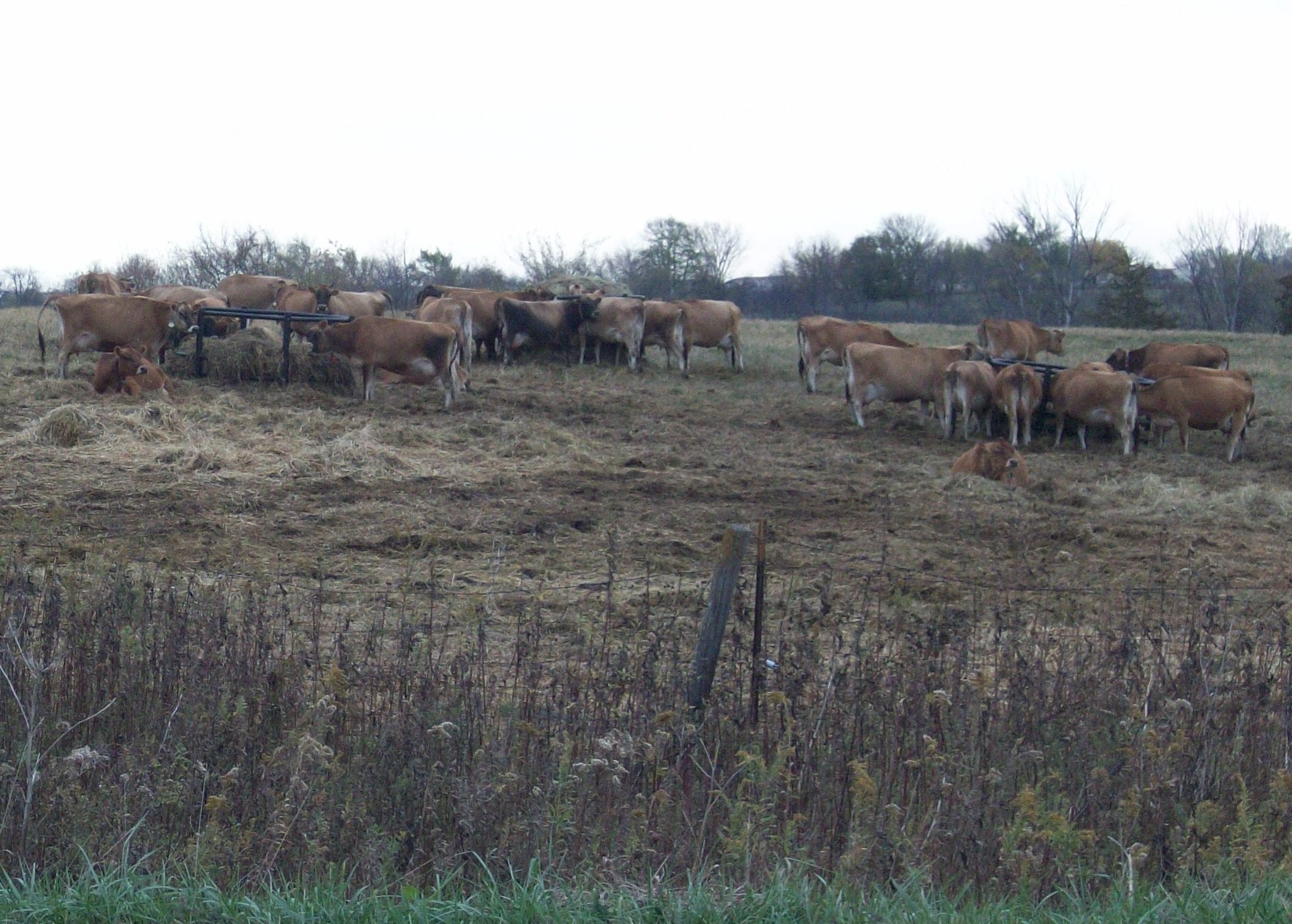
We, as a society, should be eating less meat. Why? Producing meat is an inefficient way to make food. Much of our agricultural production goes to animal feed where most calories are wasted because animals have lives to live. For example, for every 100 calories a cow eats, it produces three calories in meat. It’s not much better for sheep, dairy, pigs and chickens. Not only is meat-production inefficient, it requires a lot of land: half of the world’s habitable land is used for agriculture. Three quarters of that is used for livestock. (In Iowa, half the corn crop is used to manufacture ethanol). Add it all together — greenhouse gas emissions, land use, water consumption, and air and water pollution — and there is a strong case for meeting human nutritional needs other than from livestock.

R. Buckminster Fuller was the first person I read who said there is enough food produced in the world to feed everyone comfortably. He canceled the notion there wasn’t enough. What nature couldn’t provide, science would, he said, in the form of improved fertilizers, plant genetics, better land use, and distribution and packaging. Where we are each day is a beginning point for the rest of our lives. Each generation develops new insights into what makes our world work and how to improve it, including food production and distribution. Humanity is fraught with potential to feed ourselves.

“Man is a complex of patterns, or processes,” Fuller wrote in I Seem To Be A Verb. “We speak of our circulatory system, our respiratory system, our digestive system, and so it goes. Man is not weight. He isn’t the vegetables he eats, for example, because he’ll eat seven tons of vegetables in his life. He is the result of his own pattern integrity.” Understanding our “pattern integrity” and how it relates to the physical world is a key challenge of agriculture. It is also a source of planetary degradation because of how we pursue agriculture, especially through livestock culture.

Hannah Ritchie points out in her book, Not the End of the World: How We Can Be the First Generation to Build a Sustainable World, “Our battle with agriculture has been centered around one thing: having enough nutrients in the soil at the right time.” During the early 20th Century, German chemists Fritz Haber and Carl Bosch developed what is called the Haber-Bosch process which converts nitrogen and hydrogen into ammonia which can be used as fertilizer. The advances in plant genetics developed by Norman Borlaug are well known. Between Haber, Bosch and Borlaug, they created the Green Revolution which enhanced food production three-fold from historical levels. This is the kind of science to which Fuller referred.

Changing how we live regarding agriculture is about more than personal choices. I have no regrets choosing a mostly ovo-lacto vegetarian diet beginning in the 1980s. In the early period, there was no strict line between meat culture and vegetarianism. I did not eat meat at home, and when I was out, especially with business clients or close family, I sometimes did. It was a non-issue. I guess you would call 1980s me a casual vegetarian.

As I age, I have less interest in eating meat: partly because it is expensive to buy, and mostly because it has no viable role in the cuisine I developed in our kitchen-garden. The issue with personal choices is they are not scalable to a level where it would make make a significant change in land-use policy. It would take a lot of people leveraging the power of the pocketbook to turn things around regarding consumption of meat and associated environmental degradation.

When addressing global environmental problems we can lose hope because of their scale. By identifying a big part of the problem has been livestock and meat production, we have something tangible to grasp, something within our control. By reducing consumption of meat we contribute to a solution to our environmental crisis. There is something good in that.

Categories
Environment

Earthrise Studio on Fossil Fuels

I met Finn Harries in Cedar Rapids at Al Gore’s 2014 Climate Reality Leadership Corps training. The diminutive Brit showed up only for the days Gore gave his Inconvenient Truth lecture. Harries and his twin brother Jack had millions of subscribers on their YouTube channel JacksGap. With a fame of his own, Finn Harries had specific intent in attending the Iowa training.

During the last ten years, the brothers developed a process to address the climate crisis. Finn is working on regenerative agriculture and Jack started Earthrise Studio. The transformation of their YouTube channel is ongoing at Earthrise Studio.

This channel is currently undergoing an exciting transformation. In 2011 we launched JacksGap, a creative storytelling project featuring short travel films by Jack and Finn Harries. Since then we’ve been on the most incredible journey covering stories all around the world and increasingly learning about the significant environmental issues we face. Today 10 years later we are re launching this channel as Earthrise, a digital media platform and creative studio dedicated to communicating the climate crisis. Earthrise tells stories for a new world. Radical stories of hope, of new possibility. Stories from the future that help us navigate the now. We’re so excited for this next chapter and hope you’ll join us!

Earthrise YouTube Channel

Their channel has grown to 3.63 million subscribers.

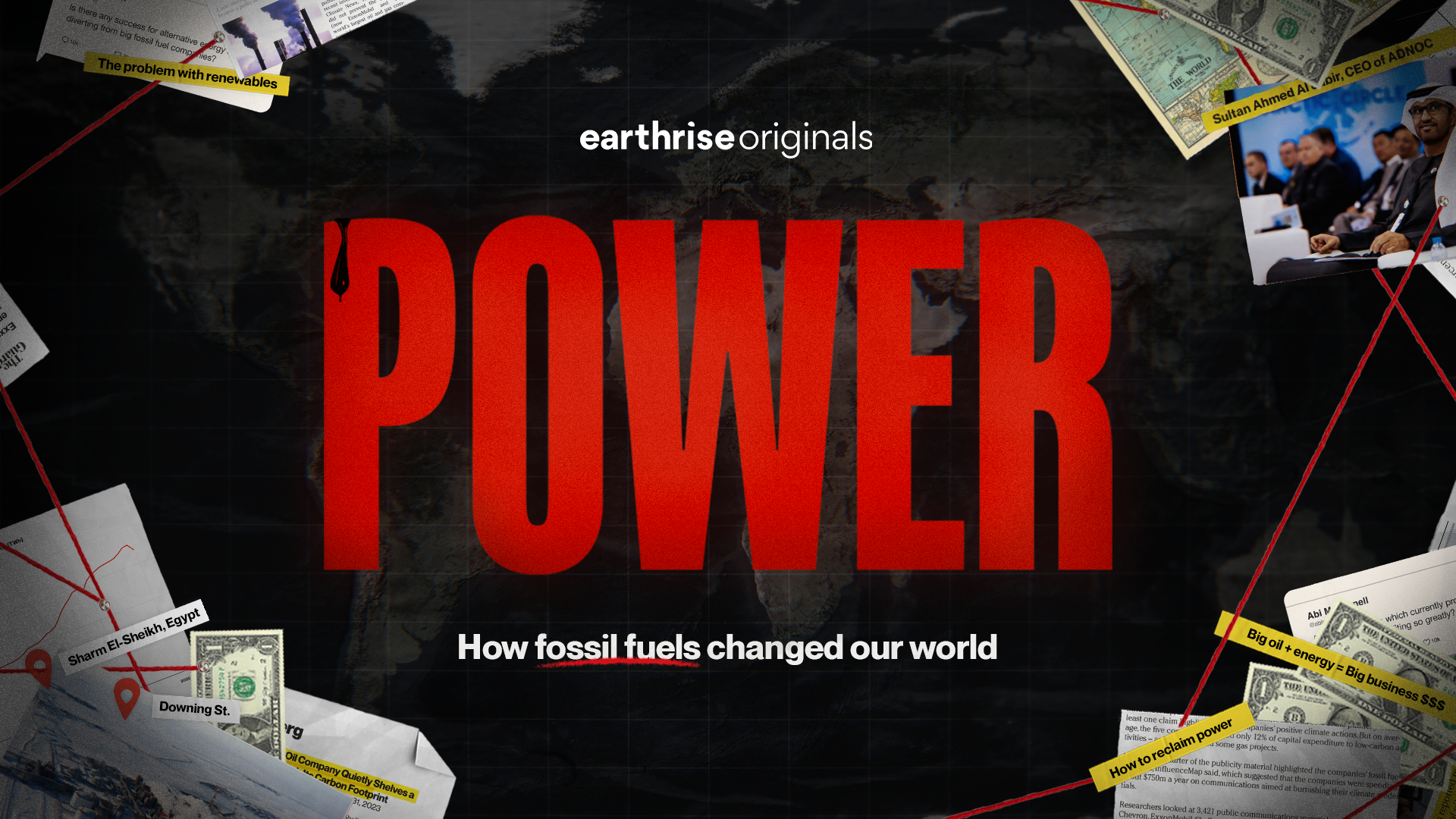
On Tuesday, Jan. 16, I received this email with a link to their first video about fossil fuels. Please take 11 minutes to view it. It presents a different picture of the geopolitical impact of fossil fuels and leads into the same discussion about renewables.

A year ago, we set out on a journey to investigate the origins of the global energy crisis, an issue that took the world by storm and resulted in extortionate energy bills for people everywhere.

Fast forward to today, we’re so excited to share that the first episode of POWER has just gone live on our YouTube channel. But first, a quick recap on how we got here…

February: We decided to make a series about fossil fuels.

March: We went to our audience to crowdsource questions.

April: We began writing the series.

July: We kicked off production in our new filming studio.

December: We wrapped filming.

Yesterday: We held an in-person premiere for our community.

Today: We hit upload on Episode 1, and you can now stream it on our YouTube channel using the link below.

Email from Earthrise Studio, Jan. 16, 2024.