Categories
Environment

Comparing the Floods

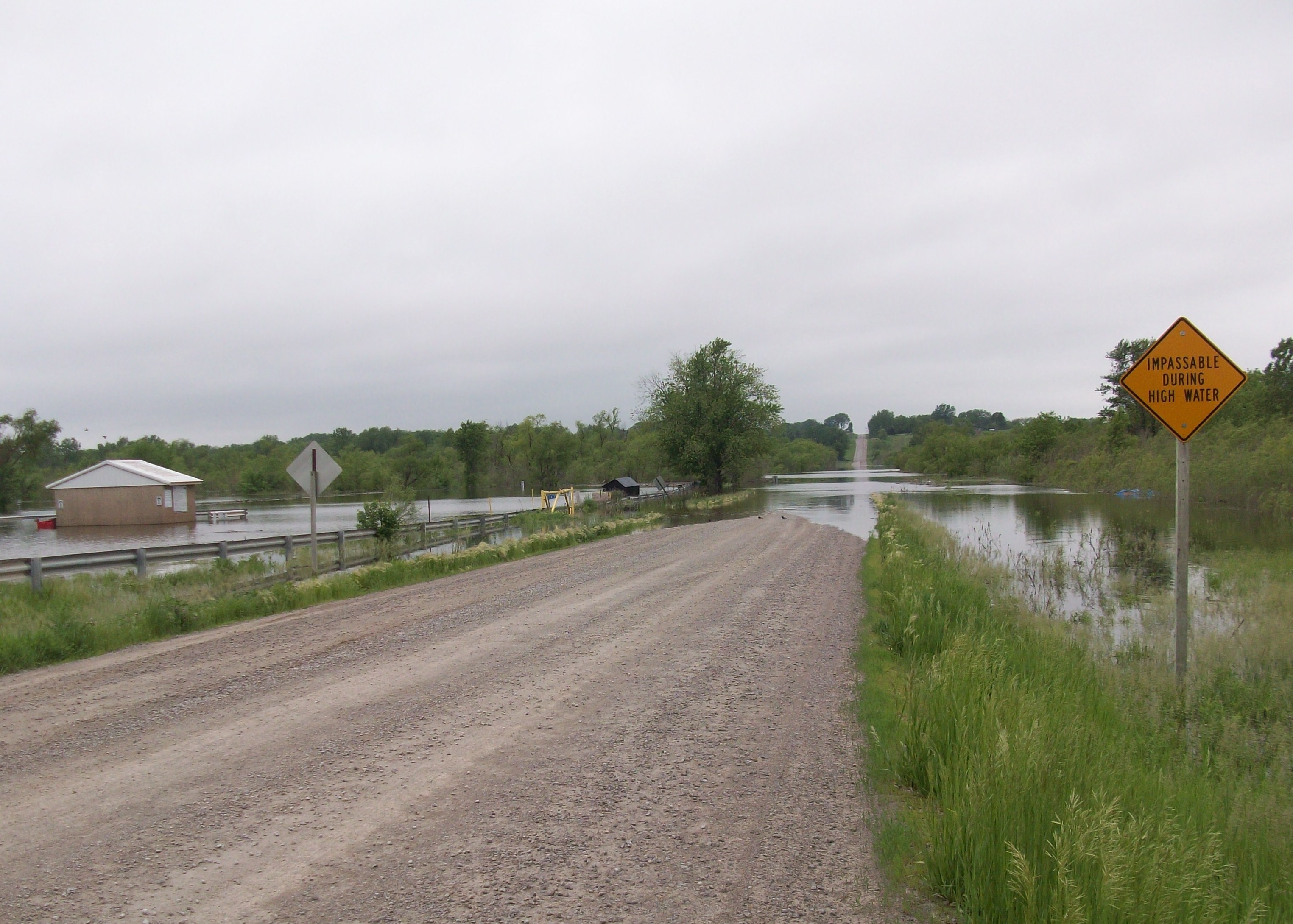
140th Street
140th Street

ATHERTON WETLAND— The flooding continues here. It has not reached the level of either 1993 or 2008— yet.

As I write, the county has issued mandatory evacuation orders for people who live in low lying areas. What used to be a 100 year flood needs a new name, as this spring brought the third major flooding in 20 years. One has to believe that a cause of the frequent and extreme weather is our changing climate, wrought by greenhouse gas emissions resulting from human activity. The flooding is a reminder of the importance of working toward a solution to the climate crisis.

A proximate cause of the flooding is the rain. The Iowa Department of Natural Resources reported record rainfall,

swinging from drought concerns to flooding worries within weeks, Iowa has set two precipitation record highs in 2013: the statewide average precipitation for March, April and May collectively at 16.65 inches; and a year-to-date precipitation total of 18.92 inches. These are highs among 141 years of records.

What to do but adapt?

If the reader clicks on the photo, there is a building on the left side of the image. During June 2008, the flood waters reached the eaves of this building. In 1993, the building did not exist.

We live near Lake Macbride and in 2008, the trail next to the lake was covered in water. It would take a lot more water to fill the watershed enough to reach our home, so were never in danger of a wet basement.

We’ll see how the flood of 2013 plays out, but based on the reports on social media, it may fall somewhere between 1993 and 2008 levels. Iowans are getting used to frequent flooding, indicating advanced stages of adaptation to changing climate.

Categories
Kitchen Garden Living in Society Sustainability

Farmers Oppose Nuclear Power

Nuclear Power? - No Thanks
Nuclear Power? – No Thanks

WILTON—About 65 people gathered at the Wilton Community Center last night to view a screening of the documentary, “The Atomic States of America,” hosted by the group Saving America’s Farmland and Environment (S.A.F.E.). Attendees also heard an update from two of the group’s co-founders Dwight and Dianne Glenney. S.A.F.E. began with a group of farm families who rose in opposition to MidAmerican Energy’s plans for a nuclear powered generating station on 150th Street near Wilton.

No surprise that a group of farmers would fight a large corporation in the biblical terms of David v. Goliath when MidAmerican Energy bought options on 729 acres of prime Iowa farm land in the middle of an established rural community to build a power plant. According to Glenney, the electric utility has three possibilities for the land should they exercise the options: build a nuclear powered generating station, build a natural gas powered generating station, or do nothing. S.A.F.E. is organized so their Davids can remove MidAmerican’s Goliath from their lives and the land options expire without action.

I first met some of the group in October 2012 when Iowa Public Interest Research Group hosted a community organizing meeting to oppose siting a nuclear power plant near Wilton. My advice at the time was, “your most effective voice is with your state legislators when they convene the 85th General Assembly… Let your legislator know you’re opposed to it.” Since then, members of S.A.F.E. engaged their elected officials, securing resolutions opposing nuclear power from the Cedar and Muscatine county boards of supervisors. They also recruited state representatives Bobby Kaufmann and Tom Sands to support their efforts. Membership is approaching 400 people who have signed their petition and joined S.A.F.E.

According to Dwight Glenney, the group has been researching nuclear power during the time since the October meeting. What they learned moved the group from a not in my back yard approach to more general opposition of nuclear power in Iowa, in the United States and globally. Glenney indicated there are options besides nuclear power to supply electricity to meet growing demand in the state.

He reported that MidAmerican Energy has completed their three-year study of the feasibility of nuclear power in Iowa and is expected to deliver the report to the Iowa Utilities Board this week. Dianne Glenney reported on grassroots organizing activity of fundraising, letters to the editor, production of an information packet, attendance at legislative forums and other items.

S.A.F.E. makes a strong point that they are not affiliated with any so-called “green” groups, and that is a strength of the organization. By remaining strictly grassroots, with members of the community effected by MidAmerican Energy’s plans for rural Wilton being the primary stake holders in the group’s activity, they have an independent and unique voice that dovetails with other concerns of rural Iowa.

What’s next? S.A.F.E. supports building any new electricity generating facility on existing power plant locations so that new land is not taken out of farm production. According to Dwight Glenney, it makes sense from the standpoint that the logistical support of transmission lines, roads and infrastructure is already in place. They also plan to advocate with the Iowa legislature for a ban on nuclear power, similar to what 13 other state legislatures have enacted. Such a ban may be permanent, or until the unresolved problem of disposal of radioactive spent fuel is addressed by the federal government. S.A.F.E. is working with their legislators to introduce bills regarding these issues during next year’s second session of Iowa’s 85th General Assembly.

Dwight said that if the issue is resolved, and MidAmerican Energy decides not to build a power plant near Wilton, any funds remaining in their bank account will be divided three ways and donated to local Future Farmers of America groups. For the time being, they asked for financial support and for people to join their growing membership. If you would like to learn more about S.A.F.E., email Dianne Glenney at diglenney@live.com.

Categories
Environment

Spring Flooding and Moving On

Flooded Wetland
Flooded 140th Street

ATHERTON WETLAND— 140th Street west of the Ely Blacktop has been flooding for a couple of weeks. The recent heavy rains, and those forecast for today and tomorrow are expected to create more flooding. The local result is the Atherton Wetland gets wet, holding water destined for the Coralville Lake, the Iowa River and beyond— serving its purpose in our owned and built environment.

Atherton Wetland
Atherton Wetland

June is a time of flooding, something Iowans are getting used to managing. The water is expected to flow over the 712 foot Coralville Lake spillway later this week, and the government is making preparations for the flood. In the personal world of quotidian affairs, the Ely blacktop is still open, and I should be able to make my way to Cedar Rapids later today to run errands.

Our lawn is lush, green and long— a habitat for birds, rabbits and other small mammals and amphibians. When the rain ends, it will be a four hour project to mow, bag and pile the grass clippings near the garden: a harvest of mulch for a garden that badly needs weed suppression. Garden weeds like rain as much as the lawn does.

Atherton Wetland
Atherton Wetland

It is just as well the rain came last weekend. There is plenty of inside work to do and the garden can be a distraction. This year, more than others, I feel a connection to the earth. Despite the rain, I harvested lettuce, arugula, spring garlic, chives, spring onions and radishes for our dinner salad. Perhaps it is the work on the farm and the understanding of where our food comes from that pulls me in. Perhaps something deeper.

Would I could let go and spend my days tending the garden and harvesting the produce of rain, sunlight, soil and biodiversity. For now, with the reality of flooding roads and other exigencies, that remains a dream.

Categories
Sustainability

Memorial Day 2013

Oak Tree and Flag at the Cemetery
Oak Tree and Flag

BIG GROVE TOWNSHIP— In May 2011 I wrote a post on Blog for Iowa that represents my thoughts about Memorial Day. This morning’s rainy forecast brought no new ideas on the topic, so read it there if you have an interest. It’s my best offering regarding our war dead, whose lives we remember today.

The American Legion ceremony is at nine o’clock. The flags at Oakland Cemetery have been flying in anticipation since Saturday. Each flagpole bears a plaque with the name of a deceased local veteran. For the first time, as a trustee of the cemetery on Memorial Day, I feel I should attend. At our recent board meeting there was discussion about the landscaping service preparing the grounds, although these things seem to take care of themselves in rural Iowa once the contract is let. Yesterday the cemetery looked ready for the expected crowd from the highway.

As years pass, the unchanging order of service and empty language have eroded my interest in the local legion’s ceremony. It is more for the friends and relatives of the World War II and Korean Conflict generation, who show up each year in diminishing numbers. Aging veterans take it easy in a row of chairs along the course of service flags while speakers utter hackneyed pabulum for those gathered. The ceremony has become a reflection of the distance society has put between the visceral reality of war and the ersatz patriotism of 21st century American society. We honor our war dead, but should we honor the living who enable our government to prosecute war? Perhaps my expectations are greater than rural Iowa can deliver upon.

Before we get wrapped up in the flag and “honor their service,” as is the commonplace, it is important to recall that war deaths are no abstraction. The living may decorate the graves of our war dead, but come tomorrow, some part of our lives must be devoted to waging peace. Otherwise those that died while defending our freedom will have died in vain.

Categories
Sustainability

Vilsack’s Energy Policy Legacy

Nuclear Power? - No Thanks
Nuclear Power? – No Thanks

LAKE MACBRIDE— Does Tom Vilsack’s 2007 consulting agreement with MidAmerican Energy matter any more? It does, but not in the way conservative pundits characterized it, as a form of political corruption, after President Obama appointed Vilsack to his current job as secretary of agriculture.

The case can be made that beginning in 2003, then governor Tom Vilsack was a driver in governmental policy that created a regulatory environment for Iowa’s growth in renewable energy. Particularly in wind powered electricity generation. MidAmerican Energy was a key partner with Iowa government in developing wind farms in Carroll and Crawford Counties, and in other parts of the state. Most people agree, wind energy, along with ethanol production and biofuels development, have been good for Iowa. Vilsack should be given credit for his policy contributions to the development of Iowa’s renewable energy capacity.

At the same time, Vilsack was promoting all forms of electricity generation in Iowa, so the state could become a net exporter of the commodity. His advocacy for coal, natural gas and nuclear power generation is often forgotten, and resulted in a favorable regulatory environment for utilities to consider, and in some cases, build new coal and natural gas fired power plants. The release of CO2 pollution into the atmosphere by these new plants contributes to warming the planet and the liability of its climatic consequences. Tom Vilsack gets some of the blame.

Vilsack’s consulting relationship with MidAmerican Energy was said to help the company develop renewable energy sources, but it would be naive to believe the conversations he had with his client did not include coal, natural gas, nuclear and other sources of energy, especially since Vilsack made an issue of them as governor.

Why would Warren Buffett’s MidAmerican Energy pursue the legislative changes required in Iowa to make an investment in nuclear power more palatable to Wall Street investors? It is because Tom Vilsack started the conversation. His Oct. 12, 2006 speech to the Council on Foreign Relations (CFR) is evidence of this. Vilsack said,

“In the last seven and a half years we’ve had six new power plants built, some of them state-of-the-art coal and natural gas facilities. We have embraced renewable energy and have now become the number one state in the country for wind energy per capita. And we, of course, have expanded dramatically our interest in ethanol and soy diesel, to the point where the state of Iowa is now the number one producer of each.

And we’ve been able to do this by working with the private marketplace and private sector in partnership. We changed regulations to provide greater stability for our utility companies so that they make the billions of dollars of investment to build new plants.”

If we consider HF 561, an act relating to the permitting, licensing, construction, and operation of nuclear generation facilities, from Iowa’s 84th General Assembly, the legislature attempted to do exactly what Vilsack said in 2006 was the intent, to provide a regulatory environment to attract investment money in new nuclear power plants. From the CFR speech,

We should take a look at the long-term impact of nuclear. […] we ought to be looking at ways in which either the risk (of nuclear waste) can be matched with opportunities that folks are looking for, or that we can create a compensation system that makes it easier for people to assume and accept that risk.

Vilsack sought to open a door that was closed for decades with regard to new nuclear power and its radioactive waste. He started the conversation. When the people of Iowa saw how the conversation would develop, that the high risks of nuclear power would be borne by rate payers so that Wall Street would invest, they saw through MidAmerican’s ploy and rejected the changes proposed by the legislature.

By then, Tom Vilsack was in Washington, but his energy legacy lived on back in Iowa.

Categories
Sustainability Work Life

Revolution in the Home Kitchen

My Great Grandmother
Great Grandmother

LAKE MACBRIDE— The idea that a revolution should take place in the home kitchen is not unique to this blog. My focus on the relationship between the home kitchen and local food— that the latter won’t be viable in the way it could be without changes in the former— is not unique either. However, a recent New York Times article, “Pay People to Cook at Home” by Kristin Wartman demonstrates the disconnect between what is going on at the grassroots level regarding local food and priorities in urban cultural centers.

Wartman, a nutritionist and blogger, posits the following,

“Those who argue that our salvation lies in meals cooked at home seem unable to answer two key questions: where can people find the money to buy fresh foods, and how can they find the time to cook them? The failure to answer these questions plays into the hands of the food industry, which exploits the healthy-food movement’s lack of connection to average Americans.”

Her solution, as the title of the article suggests, is to pay people to cook at home, “(to place) a cultural and monetary premium on the hard work of cooking and the time and skills needed to do it,” including a government program. My suggestion is she hop on the shuttle from her home in New York City down to Washington, D.C. and witness the vast sea of farm industry lobbyists on Capitol Hill. She may then realize that hell would freeze over before any help in paying home cooks would be forthcoming from the federal government.

One can agree with the idea of placing a cultural premium on the value of home cooking, although we don’t necessarily want to return to the era of my great grandmother and her kitchen garden (see photo). The question is how, as a society, do we get there?

The future of local food and a revival of home cooking with whole foods is more dependent upon economics than upon time. If the economics are great, people will find the time. It is common knowledge among local food enthusiasts that the current economic paradigm regarding food, cooking and eating depends upon cheap energy.

Wendell Berry recently asked Michael Pollan, “what will be the effect on farming, gardening, cooking and eating of the end of cheap energy? Are physical work and real cooking going to remain optional?” Readers can listen to Pollan’s answer here. The gist of it is that as cheap energy fades from view, people will be required to become more self-reliant as a form of adaptation to the environmental crisis. This would likely drive more of whatever were least expensive, including local food and home cooking if they provided superior value, something it is not clear they do, at least for now.

The relationship between local food systems and cheap energy is important. I dismiss so-called food miles as an overly simplified argument. There is a complex but valid argument about the relationship between artificially low energy prices and high prices in local food systems that is worth pursuing. It is further complicated  by the fact that the end of cheap energy will be delayed due to the proliferation of hydraulic fracturing and the abundance of natural gas it produces. The complexity of the relationship between energy prices and local food requires further exposition in another post.

People can agree that obesity is a national and local problem. They can agree that chronic diseases, related to eating habits (including salt, sugar and fat consumption), drive a segment of higher health care and related health insurance premium costs. Where there is difficulty agreeing is in answering the question whether to take a homemade brown bag lunch to work, or spend the 30-minute break going to the gas station to have $1 per slice pizza for lunch. Today, the economics of direct food prices drives the decision at one of my workplaces.

The revolution in the home kitchen will begin once we deal with the environmental crisis, cheap fuel and the false notion that there is not enough time for what is important. The economics of food are driven by these things. That won’t happen anytime soon, not until the importance is escalated by some imminent, existential reality. It is not as simple an answer as creating another government program.

A better answer may be to seek ways to recognize the value of all work in society. That too is a complex problem wanting an answer. Something this blog is working toward.

Categories
Sustainability

Rot in the Nuclear Force

Iowa City Nuclear Free SignLAKE MACBRIDE— After the U.S. Air Force removed 17 nuclear weapons launch officers from duty this week for marginal job performance skills, it should be a wake-up call. Lt. Col. Jay Folds, deputy commander of the 91st Operations Group, which is responsible for all Minuteman 3 missile launch crews at the Minot, N.D. Air Force Base, indicated there is “rot” in the force.

According to the Associated Press, “underlying the Minot situation is a sense among some that the Air Force’s nuclear mission is a dying field, as the government considers further reducing the size of the U.S. arsenal.”

Air Force Secretary Michael Donley was quoted, “it is the duty of commanders to ride herd on those young officers with this awesome responsibility of controlling missiles capable of destroying entire countries.” No sh*t Sherlock.

With all the public posturing about nuclear deterrence and missile defense in Washington, D.C., a simple truth is that the care-takers of our nuclear weapons program are not always the best. Situations like the one at Minot creates a risk of a nuclear mishap, which could have devastating consequences.

There has been a long series of nuclear weapons mishaps, and while some credit is due to the Air Force for inspecting and taking action regarding the program, as a taxpayer, one has to ask how did the men and women holding the nuclear umbrella get to be in such sorry shape?

Along with changing climate, a nuclear weapons exchange is on the short list of things that could end life as we know it on the planet. Incidents like this week’s sidelining of nuclear weapons launch officers provide evidence that there is more risk than reward in the deployment and maintenance of a nuclear weapons program.

It is more reason to support the administration’s slow, but steady progress in moving toward a world without nuclear weapons.

Categories
Environment

Earth Day 2013

1970 Earth Day Button

LAKE MACBRIDE— There is little new to say this Earth Day. It’s not that I’m down about it, but most everything has been said before.

What started in high school as a way to participate in a national environmental movement by selling green and black buttons leading up to April 22 has become institutionalized in a way that takes the punch out of things.

Government and corporations have Earth Day activities, and not as many of them this year compared to last. It is a sign that corporate reputation management is at play more so than the grassroots efforts of men and women who want to see our government act on the Keystone XL pipeline, reduce the use of hydrocarbon and nuclear fuels, and preserve our air, land, water and biodiversity.

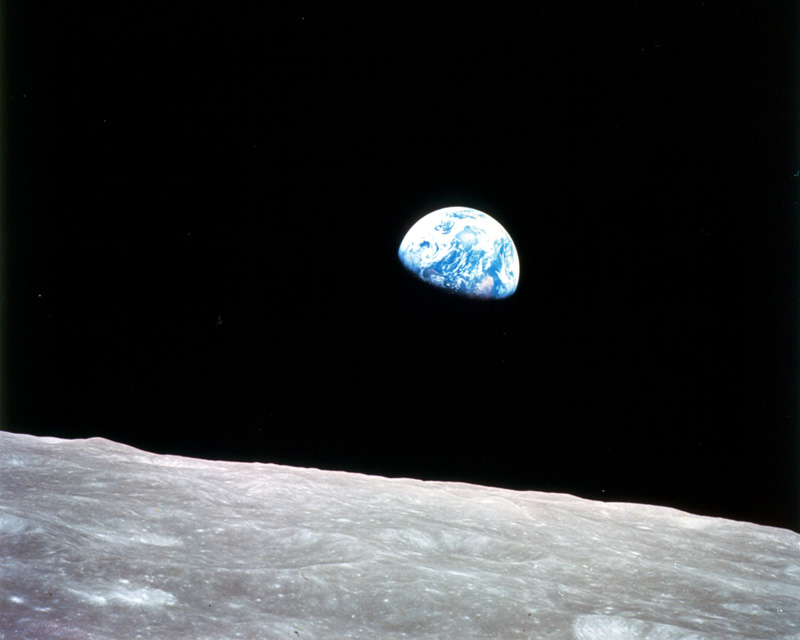
Earthrise 1968
Earthrise 1968

There are a lot of things individuals can do to reduce, reuse and recycle, and many people do them year around. What is lacking today is the political will to reduce CO2, methane, mercury, and other emissions. Our culture is driven by corporations more than government, and the business models upon which they operate continue to consider the atmosphere the same way we do an open sewer. That has to change if human society is to survive. It’s not just me saying that.

It has been a long struggle to get environmental issues to have parity with war and peace, economic progress, social justice, and man’s inhumanity to man. Environmental issues are not at parity yet, but should be.

What we know today is that the time for individual efforts is past. Only by joining together with like-minded colleagues will change be possible, and there is no agreement on what change is desirable, nor a path to determining how to proceed.

For a while, we must stop talking, stop thinking… and consider where our lives on the planet place us. Earth Day or no, many will reduce, reuse and recycle as these behaviors have become part of our daily habits. It is not enough.

On Earth Day 2013, I plan to dig in our garden, and let the work produce a sweat as I plant spinach, radishes and turnips. A brief retreat from talking and thinking, appreciating the irony that it was agriculture that started the release of greenhouse gases that led us to today.

What is the greater good when it comes to the environment? I don’t know, but more than seven billion others on the blue green planet have a stake in an answer. It’s time to renew our efforts to find one.

Categories
Environment Social Commentary

Pelicans and Cranes

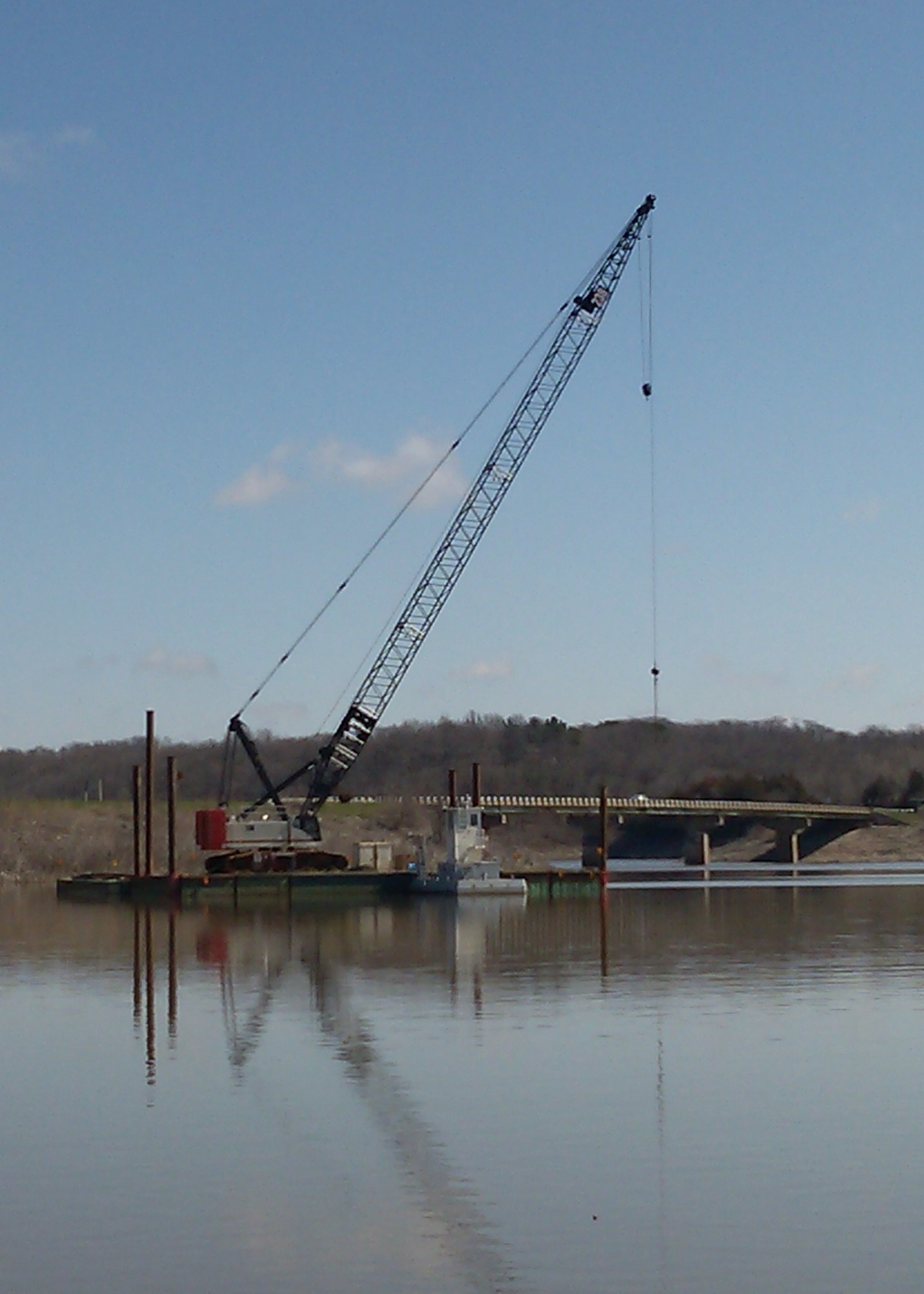
Crane at Mehaffey Bridge

LAKE MACBRIDE— The pelican migration is underway, and flocks of the white and black birds fly lazily— above our lakes and river— back and forth in a pattern I recognize, but can’t adequately describe. Pelicans appear here twice a year. I stopped during a trip to North Liberty to watch them fly near the construction site for Mehaffey Bridge.

I am leading a new life with my beater of a car. The radio has six preset buttons, of which four are set. I haven’t tested the cassette and CD players and listen mostly to a country station in Cedar Rapids owned by Cumulus Media. The music fits my new lifestyle, or seems to.

Country music on Cumulus gets me thinking. It is imbued with a certain familiar life, and while on a trip to work or to market, it is easy to suspend disbelief and listen. The songs are places where I don’t have to be me until Monday, people cope with loss as they drive your truck, and where “I found Jesus” rhymes with “I wrecked my first car. I tore it all to pieces.” Whether one likes the new country music or not, the snippets of reality are tangible, visceral the way manual labor is— stripping away the intellectual aspect of our lives. That may be the point of my predilection to hit number four on the presets most often— sometimes it is good to just stop thinking.

Consider the cranes. Man-made with engineering specifications that enable a reach four stories above the roadway to build the new bridge. They are built to fit the task, work from floating barges, and reach heights limited by design. Our lives today tend to be more like cranes than pelicans. Near these man-made lakes, we lean toward believing Bill McKibben, that we are at the end of nature. Except no one told the pelicans.

Beyond the fixed world of my used Subaru, with its country music tuner and enough life to keep me going for a while, are the flocks of pelicans, doing what pelicans do— part of which is inspiring us to believe there is more to life than what we find on main traveled roads needing an overhaul.

Categories
Sustainability

No New Nuclear Power in Iowa

Nuclear Power? - No Thanks
Nuclear Power? – No Thanks

WILTON—Dean Crist, vice president of regulatory affairs for MidAmerican Energy Company told a group estimated by the media at between 300-450 people last night, “we’re going to have to burn less coal because of environmental regulations, we need to replace that with something.” The company spokesperson said the electric utility has no plans to build any type of power plant in Iowa, including a much discussed nuclear power plant. No surprise here.

Over the coming decades, public utilities must replace a number of aging power plants, including the fleet of 104 nuclear reactors in the United States. Utility executives view coal, nuclear and natural gas power plants as central to their overall plans, because of their scale and ability to turn them off and on to match demand. MidAmerican Energy and others have a growing generating capacity in renewable energy, especially wind and solar power, but what has been going on in Iowa for the last three years has been an effort by the company to persuade regulators and the Iowa Legislature that nuclear power is an option.

Companies like MidAmerican Energy are playing a long game, and meetings like the one last night seem to be a minor blip on their radar screen. While growth in demand for electricity slows, there are legitimate issues they must resolve regarding generating capacity during the next 50 years. Having been blocked in their legislative agenda, other approaches will be taken. It is up to members of the public to maintain vigilance as their plans unfold.