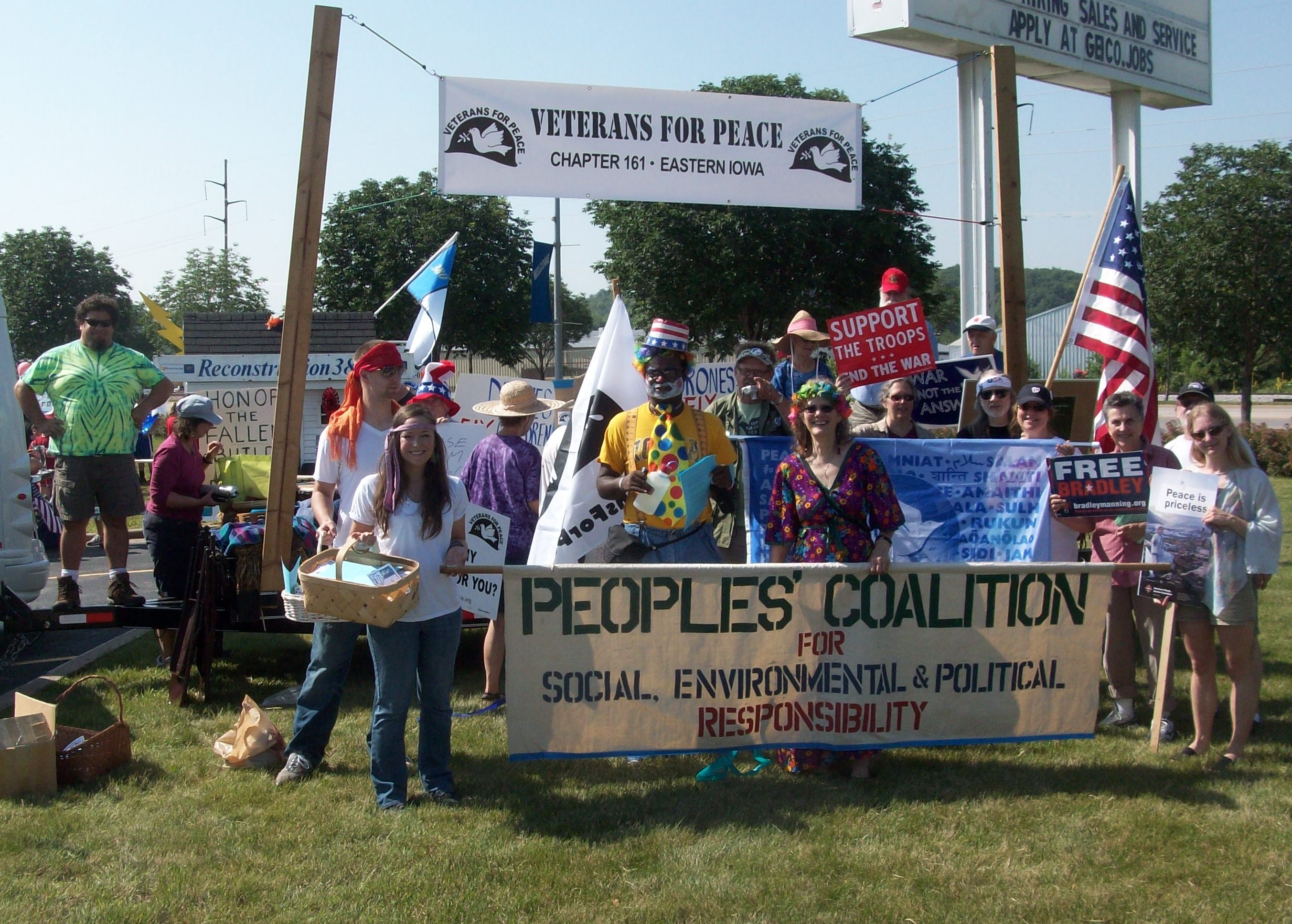
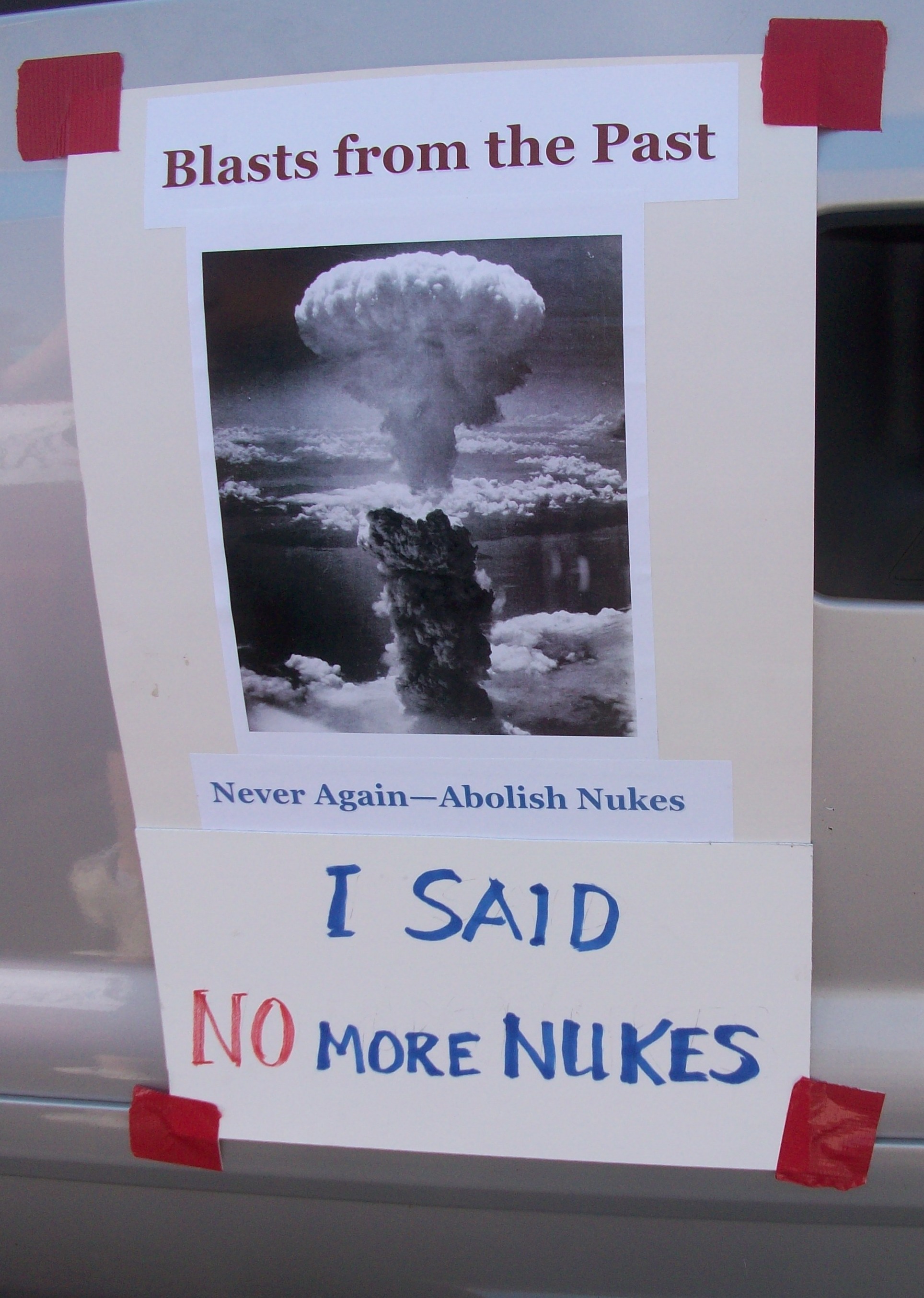
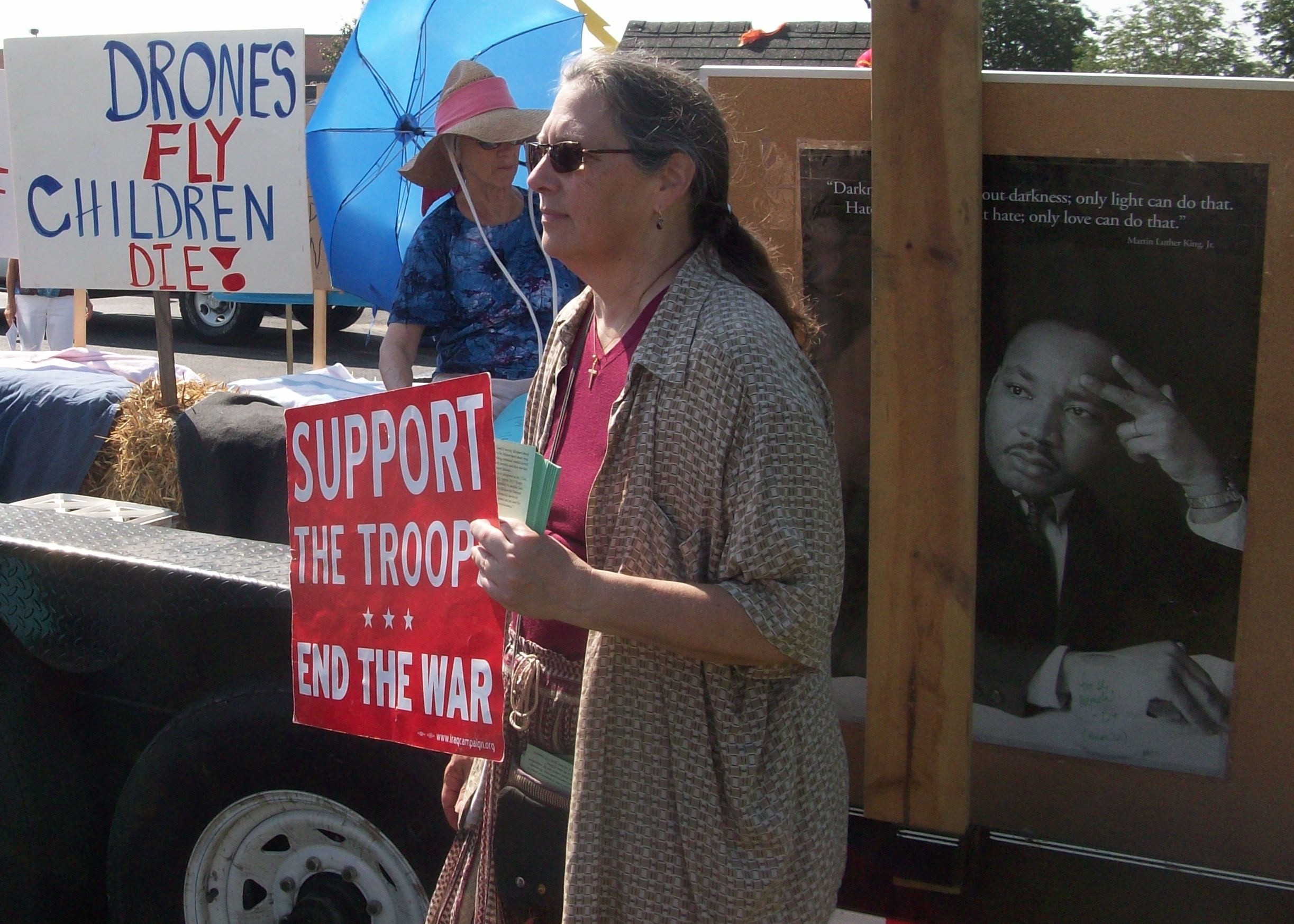
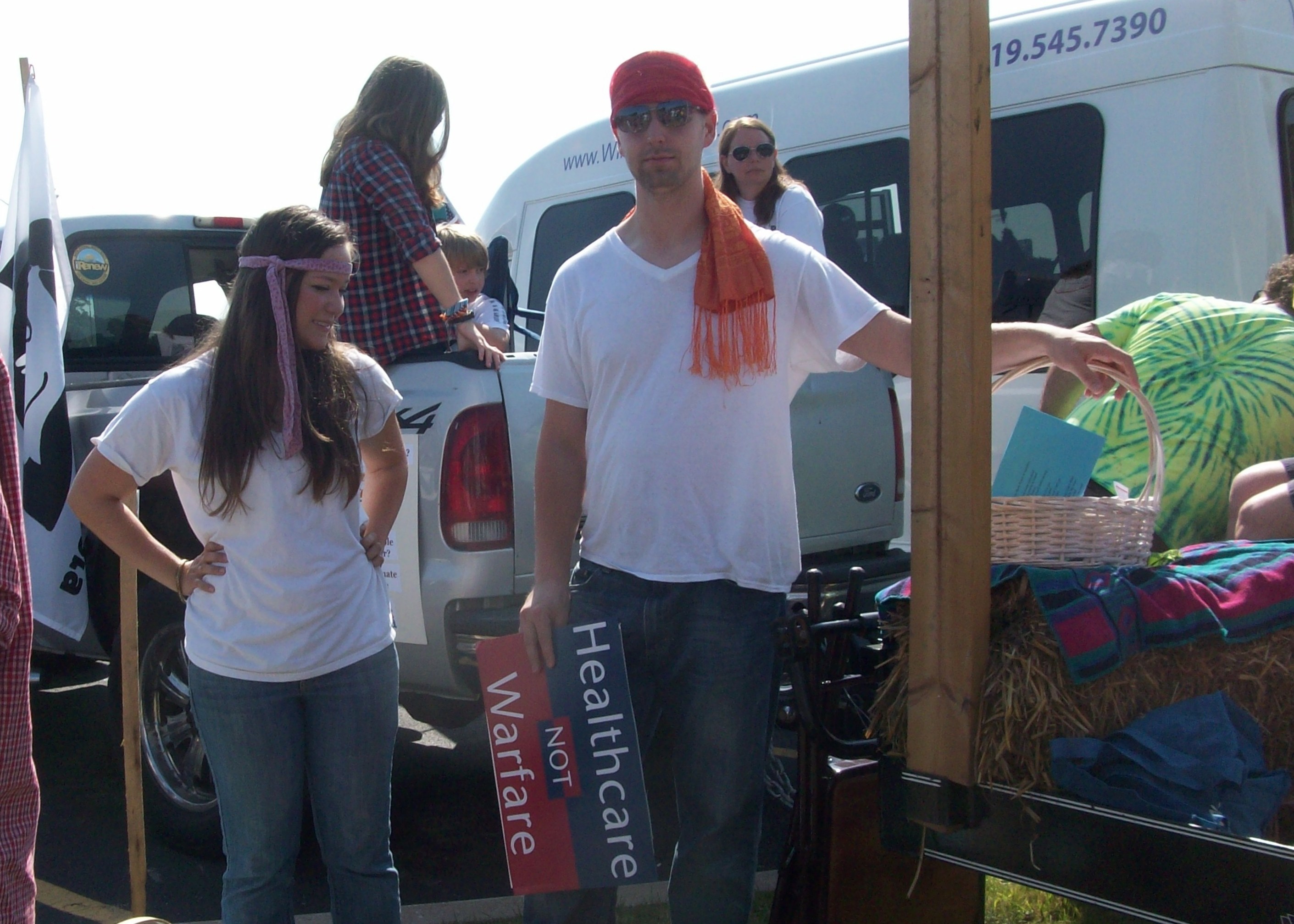
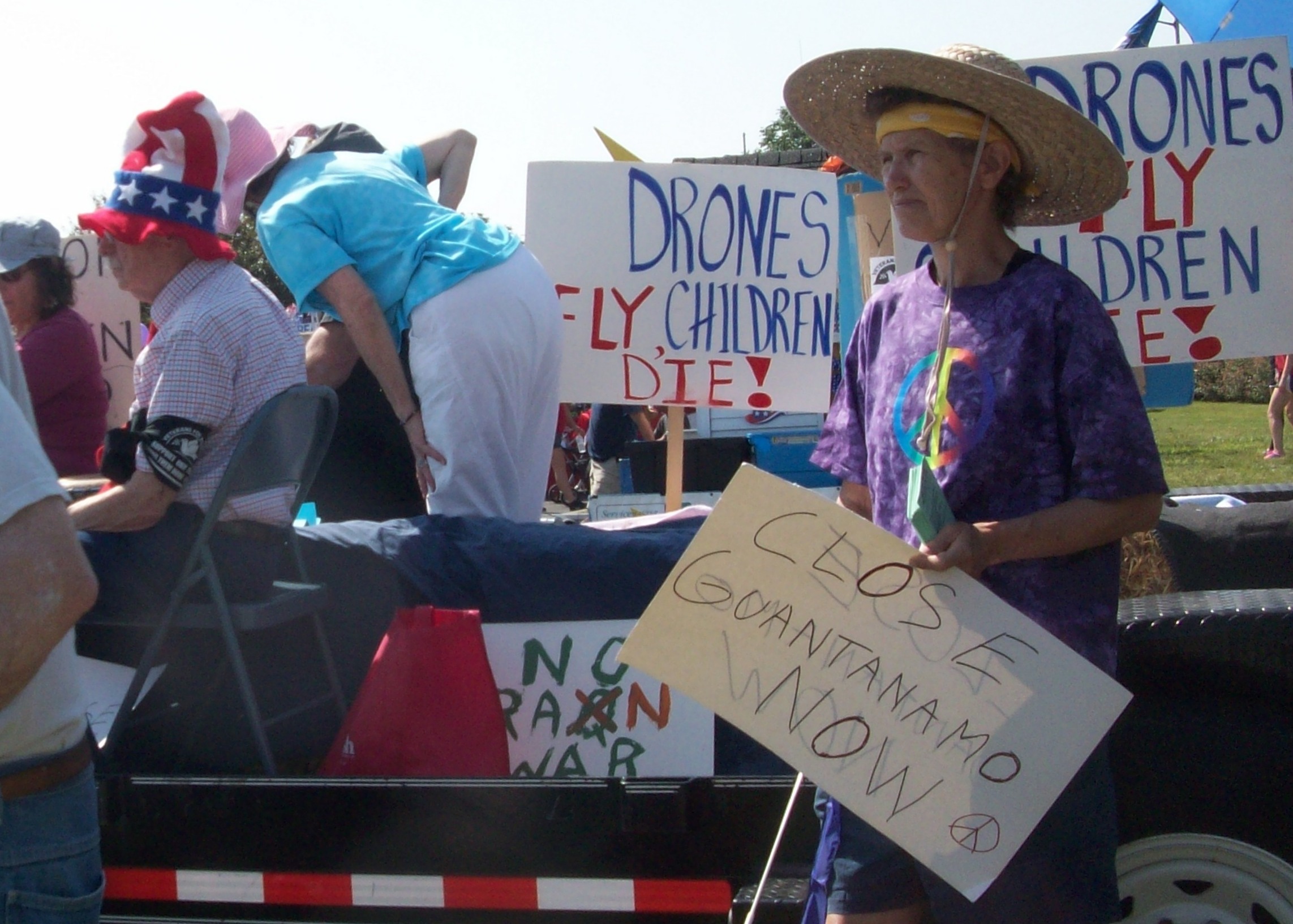
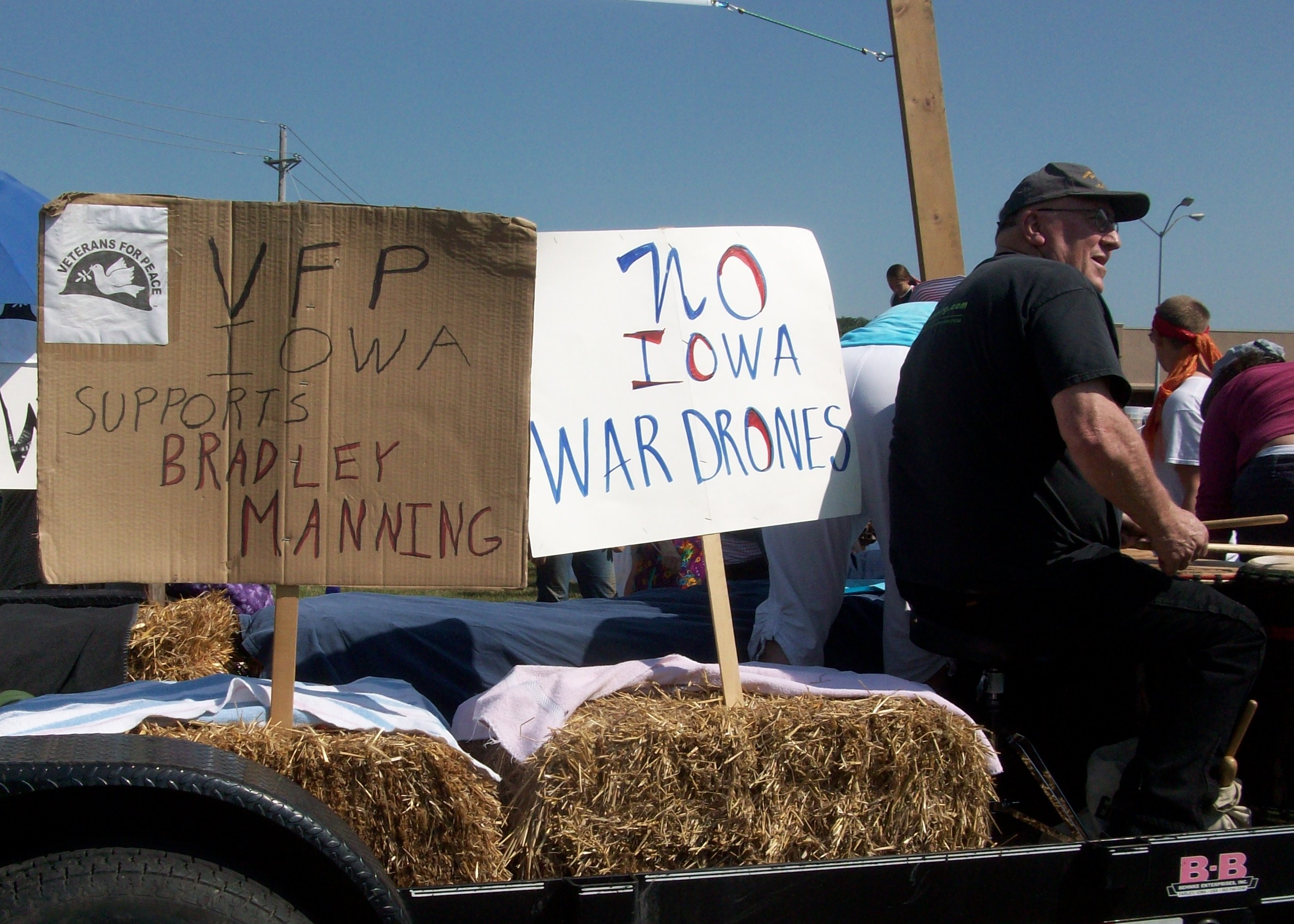
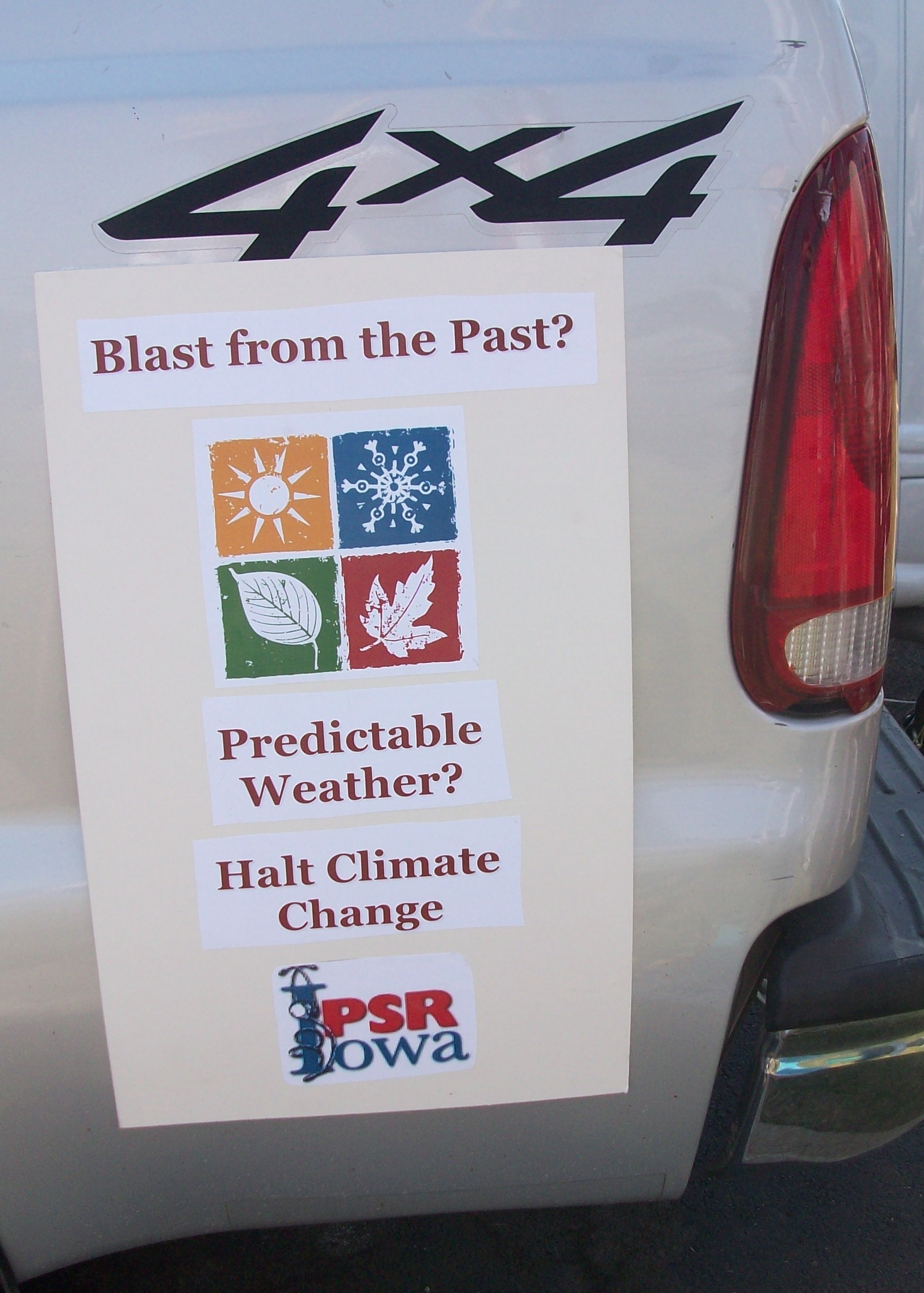
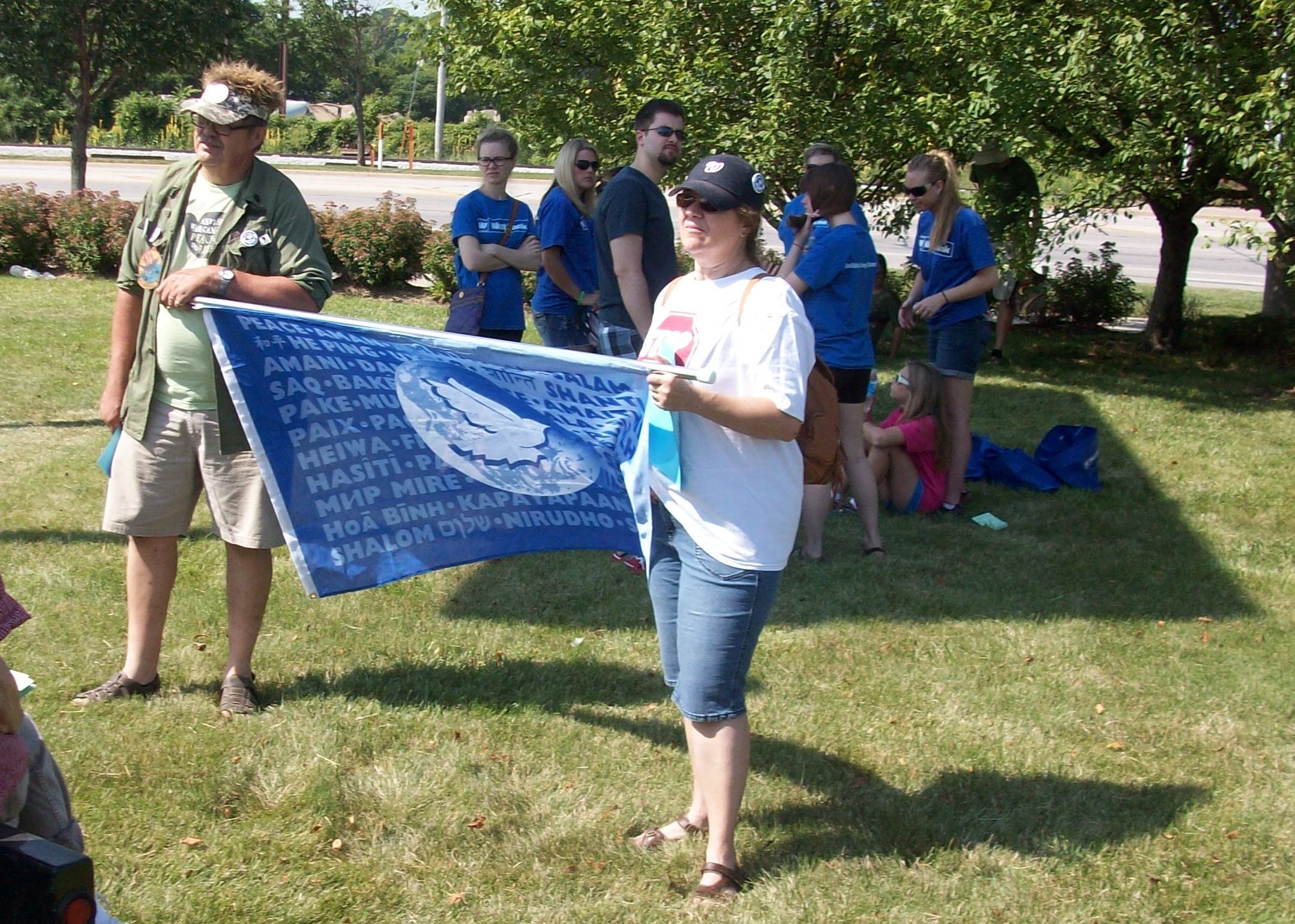
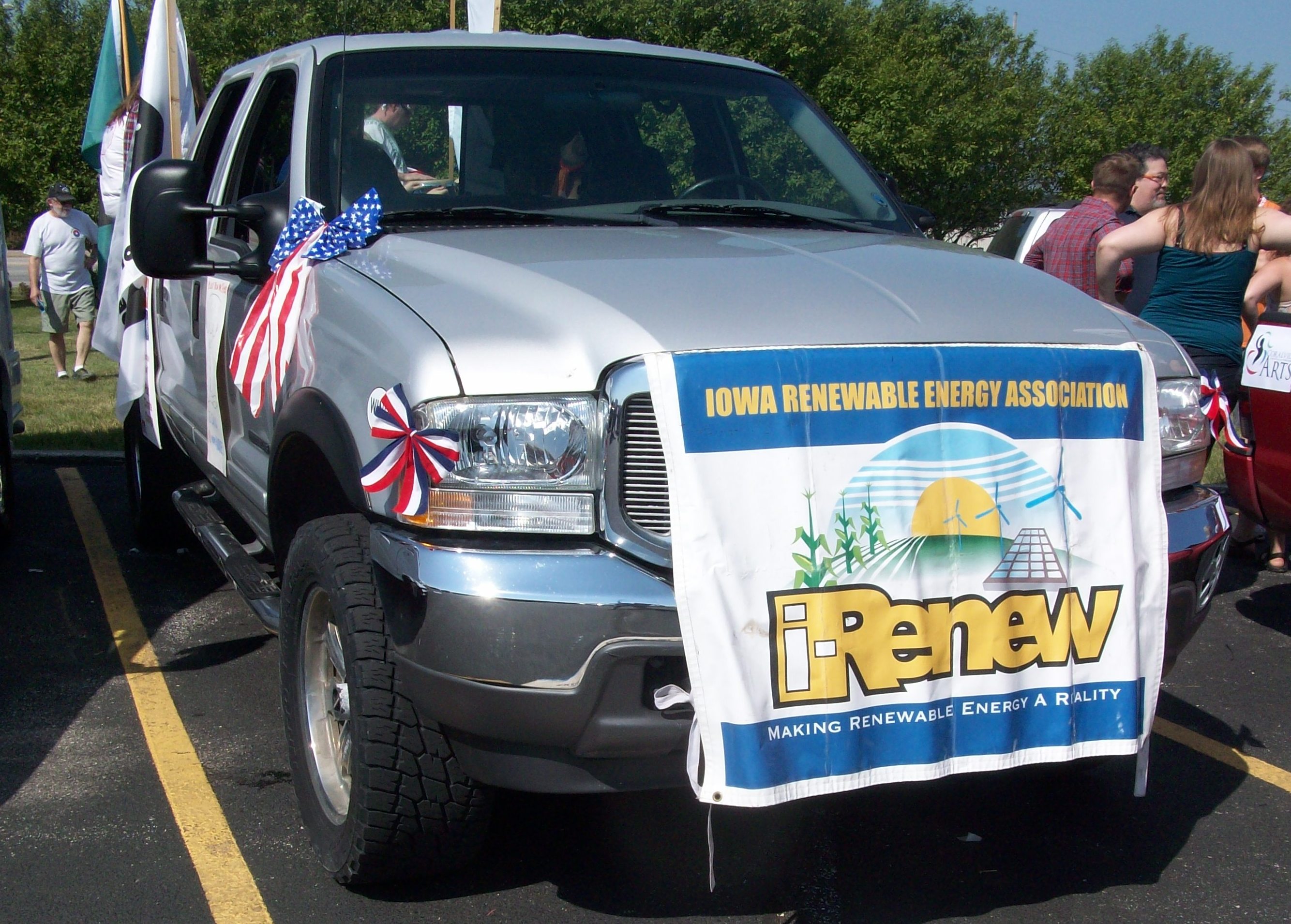
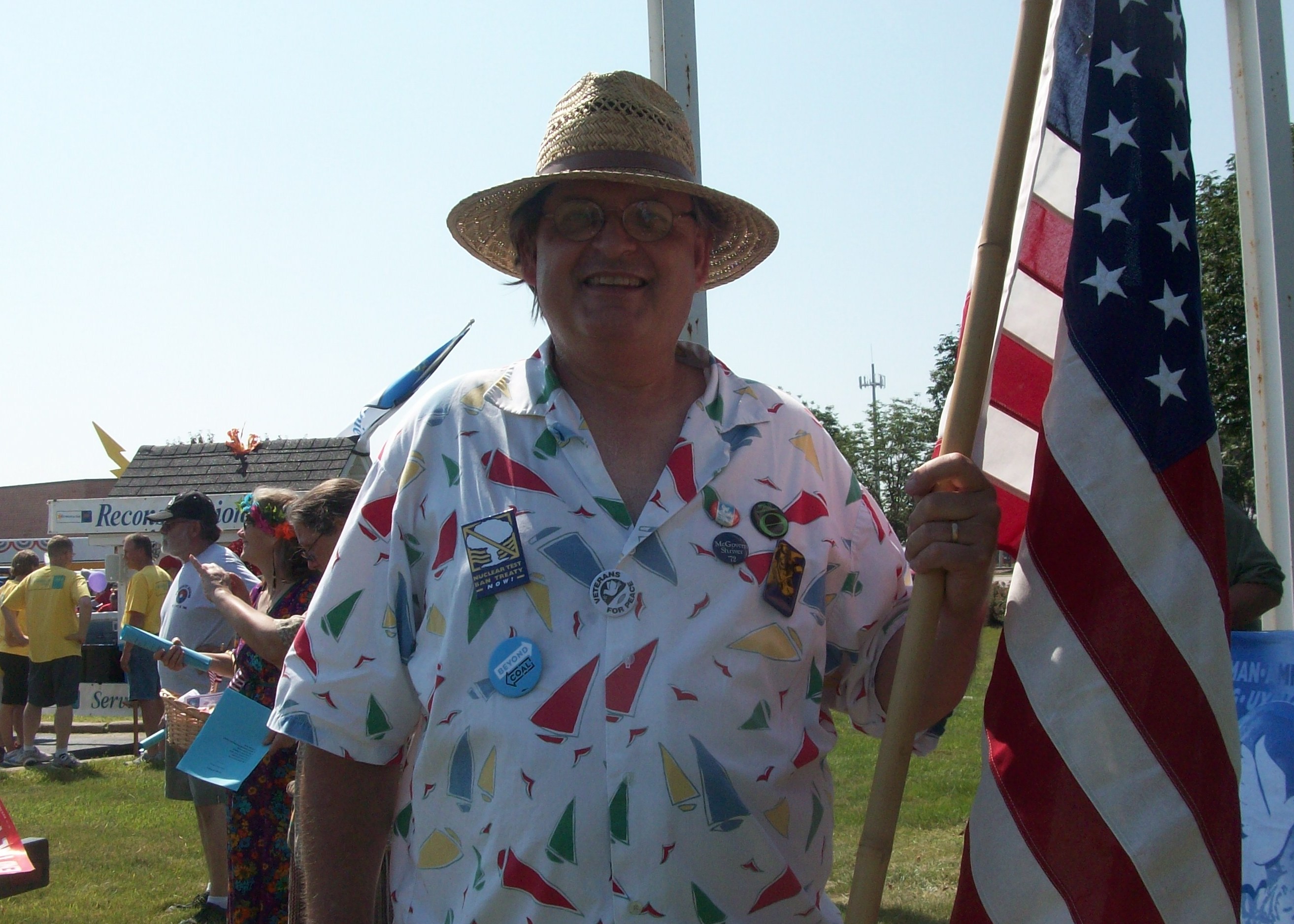
CORALVILLE— The Peoples’ Coalition for Social, Environmental and Political Justice walked in the July 4 parade here. The photos don’t include everyone, but you can get the flavor. The Peoples’ Coalition forms once a year for the purpose of getting peace and justice people together to interact with and get our messages to everyday people in the community. The parade entry was strong, with folks from Veterans for Peace, Iowa Physicians for Social Responsibility, PEACE Iowa, Yahoo Drummers, Green World Biofuels and others, all committed to peace, and social, environmental and political responsibility.
The Yahoo Drummers provided background during the entire parade route, and the group sang songs that included “We Shall Overcome,” “If I had a Hammer,” and “This Land is Your Land.” The songs were familiar and uplifting. Parade watchers joined in singing from time to time, and provided positive feedback to the group.
Contact Paul Deaton at paul.deaton@gmail.com if you would like to get involved with any of the groups, or be part of next year’s parade.
2013 Coralville Independence Day Parade.2013 Coralville Independence Day Parade. Theme was “Blast from the Past”2013 Coralville Independence Day Parade.2013 Coralville Independence Day Parade.2013 Coralville Independence Day Parade.2013 Coralville Independence Day Parade.2013 Coralville Independence Day Parade. Veterans for Peace was present in force.2013 Coralville Independence Day Parade. Theme for the parade was “Blast from the Past.”2013 Coralville Independence Day Parade.2013 Coralville Independence Day Parade.2013 Coralville Independence Day Parade. Biodiesel powered vehicle pulled the trailer.2013 Coralville Independence Day Parade.2013 Coralville Independence Day Parade. Michael, Dr. Maureen McCue and Dr. John Rachow, an anti-nuclear family.
LAKE MACBRIDE— I was accepted to become part of the Climate Reality Leadership Corps and signed the training agreement yesterday. Signing obligates me to deliver ten related activities during the next year. Ten is not many. A person has to deal with and act on the reality of climate change and this will be one way of doing that.
Al Gore and his team will conduct three days of training in Chicago. The staff includes Maggie Fox, CEO of the Climate Reality Project; Larry Schweiger, president and CEO of the National Wildlife Foundation; John Vezner, Grammy Award winning songwriter; Mike McCracken, science adviser; and Kim Wasserman, 2013 Environmental Goldman Prize Award winner. I don’t know any of these people, so there will be an opportunity for learning.
1970 Earth Day Button
About 1,000 people from around the globe will be converging at a place to be announced, and the networking alone has the potential to benefit attendees. It will be what we make of it, and I will meet as many people as possible. (Note to self: find business cards).
The energy from the group on Facebook is palpable. The project staff did a good job of instructing us how to post, so the content is relevant and engaging.
My origins in doing something about the environment were in the first Earth Day in 1970 when a group of us participated in local events. While my participation has been off and on during the last 43 years, confronting the deceit and misinformation about changing climate promulgated in the corporate media has risen as key work to be done regarding one of the most significant threats to humanity. I am looking forward to Chicago.
DES MOINES— Making my first trip to Des Moines this year, it occurred to me there is not a lot to distinguish Iowa’s largest city. The legislature meets here, some businesses headquarter here, and the downtown area continues to have light foot traffic despite the sprawl to West Des Moines, Ankeny, Clive, Altoona and Johnston. The capitol city attracts people and money and that is about it. Yesterday’s trip was mostly to meet with Ed Fallon, founder and director of the Great March for Climate Action and his director of operations.
The Great March for Climate Action is ambitious. It proposes “to change the heart and mind of other Americans and our elected leaders through mobilizing 1,000 people to march coast-to-coast to demand action on climate change.” The march will set-out from Los Angeles, Calif. on March 1, 2014, scheduled to arrive in Washington, D.C. on Nov. 1. Logistics will be a key consideration, and since I can’t afford a sizable donation, nor spare eight months away from Big Grove, I offered some help on the logistics of the march. The meeting went well.
While we were meeting in Des Moines, President Obama was giving a speech on climate change at Georgetown University in Washington. He said, referring to rising CO2 levels in Earth’s atmosphere,
“That science, accumulated and reviewed over decades, tells us that our planet is changing in ways that will have profound impacts on all of humankind.”
A warming and increasingly polluted planet is one of the key threats to the survival of humanity, and reasonable people can agree on that. There is an urgency to do something now about continuing CO2 emissions. As the president said,
“Today, about 40 percent of America’s carbon pollution comes from our power plants. But here’s the thing: Right now, there are no federal limits to the amount of carbon pollution that those plants can pump into our air. None. Zero. We limit the amount of toxic chemicals like mercury and sulfur and arsenic in our air or our water, but power plants can still dump unlimited amounts of carbon pollution into the air for free. That’s not right, that’s not safe, and it needs to stop.
So today, for the sake of our children, and the health and safety of all Americans, I’m directing the Environmental Protection Agency to put an end to the limitless dumping of carbon pollution from our power plants, and complete new pollution standards for both new and existing power plants.”
This is one part of a broader plan outlined yesterday by the president. If readers are interested in climate change, click on the link to read the entire speech.
Whether 1,000 people marching across the country, to win the hearts and minds of Americans about climate change, will culminate in a course of action seems uncertain at best. But we have to try everything we know to reduce global warming pollution and mitigate the impact of a changing climate. Our survival as a species depends upon it. One hopes Ed Fallon will be successful in raising the funds, organizing the march and recruiting marchers for the Great March for Climate Action. If you would like to learn more, check out the group’s website http://climatemarch.org/.
LAKE MACBRIDE— The garage door opened on a wet driveway. The rain had stopped, leaving a pool of water that crept under the door. I swept it outside. The nearby seedling trays were filled with rainwater, so I dumped them into the flowerbed and moved the trays into the garage. I need to plant the next iteration of leafy green vegetables soon. No damage was done to the plants by the hail that fell around 4 a.m.
President Obama spoke in Berlin this week, and I have been waiting to listen to the speech, doing so this morning. Friends have been talking about Obama’s call for a new series of steps toward nuclear abolition. One friend, who is not an Internet user, called and left a voice mail message saying he hoped that Obama’s speech would generate new energy around nuclear abolition within Veterans for Peace. I don’t know about that. The speech was less than inspiring, even if filled with lofty ideas, many of which have been heard from this president before. Referring to the global AIDS initiative, Obama spoke about peace with justice,
“Peace with justice means meeting our moral obligations. […] Making sure that we do everything we can to realize the promise– an achievable promise– of the first AIDS-free generation. That is something that is possible if we feel a sufficient sense of urgency.”
That last part, “a sufficient sense of urgency,” is always the problem in our consumer society, isn’t it? At the same time, we can’t ignore the president’s call for new energy around what threatens life as we know it— nuclear proliferation, a warming and increasingly polluted planet, and social injustice. Obama touched on all three in the speech.
The heavy lift of the New START Treaty between the United States and the Russian Federation was a signature achievement of Obama’s first term. I was proud to have been part of the effort toward ratification. There was a sense in the conference calls with key State Department leaders, even shortly after Russia’s parliament ratified the treaty, that it was the last big thing regarding nuclear abolition for this president. Maybe I’m wrong, but that’s how I heard it from people in a position to know.
Nuclear abolition matters, so it is important to consider the president’s announcement in Berlin, his plan to move forward in slowing nuclear proliferation. The U.S. will negotiate further reductions in deployed strategic nuclear weapons, by up to one third, with the Russian Federation; the U.S. will negotiate with Russia a reduction in tactical nuclear weapons in Europe; we must reject the nuclear weaponization that North Korea and Iran may be seeking; the U.S. will host a summit in 2016 to secure nuclear materials in the world; the administration will build support for ratification of the Comprehensive Nuclear Test Ban Treaty; and the president called on all nations to begin negotiations on a treaty that ends the production of fissile materials for nuclear weapons. These are all continuations of previous administration policies.
The day after the speech at the Brandenburg Gate, Daryl Kimball, executive director of the Arms Control Association, posted an article in Foreign Policy titled, “Death by Cuts to a Thousand.” He wrote, “while (the president’s) remarks are overdue and welcome, the pace and scope of his proposals for further nuclear reductions are incremental at best and changes in the U.S. nuclear war plan are less than meets the eye.” I met Kimball in Washington in Fall 2009, and he is a key person among the non-governmental organizations that work on nuclear weapons issues. One suspects he was putting the best face on what was a disappointing policy announcement.
Despite this, as Kimball wrote in the article, “doing nothing in the face of grave nuclear weapons threats is not an option.” My work with others toward nuclear abolition will go on. It is a core part of working toward sustainability in a turbulent world.
LAKE MACBRIDE— Herbs are abundant in the garden, so I have been making dishes that taste better with fresh herbs: red beans and rice with fresh thyme, pasta sauce with fresh basil, and bread with sun-dried tomato and fresh rosemary. Each iteration of a dish, prepared in a moment of time, has consequence in our lives. Every bowl of soup, sandwich and plate of pasta is different for a home cook. Sometimes the food is better than others— our homemade meals speak to who we are, what we want to be and what we can be.
The idea of local food Saturday is simple. In order for there to be a vibrant and sustainable local food system, individuals must want to find, purchase and cook with local food items. We have to make a market in the things we hold dear. That’s how I landed on the important role home cooks can play in sustaining a local food system. Saturday is a weekend choice that fits a lot of people. It’s not like I am the first to come up with this— I’m not.
It is possible, and rewarding, to change our outlook from a being a consumer who goes to market to being a producer of home cooked meals that includes local food. One could do as well to develop a meal plan that includes local food and local food outlets, since almost no one cooks all, or even most of their own food at home.
The act of buying is such a brief part of our lives. We should make the most of it by unchaining ourselves from the mega-mart and relegating grocery stores to a more proper role as supplemental sources of provisions. It costs nothing to change one’s perspective, and the financial and personal payoff can be superior.
What did I do with the items in the photo from last Saturday’s farmers market?
The turnips were an impulse purchase as I could have waited a week to get fresh from my garden. I cut and washed the greens, cutting about a cup into quarter inch strips for soup, and putting the remainder in a container to use as cooking greens later in the week. Using the bulbs, I made turnip soup that included a quart of homemade stock, carrot, onion, celery, the turnip greens and the finely sliced stalk of the broccoli in the photo. I added dried chervil, salt and a bay leaf to make four servings.
The kohlrabi was for an experiment cooking it with potatoes. There will be a number of kohlrabi from the CSA, and a couple are growing in the garden. I’m trying to figure out how to use them. They also go well in a salad, cut into raw, matchstick-sized bits.
The radishes, cucumbers and zucchini were for fresh salads. The garden and CSA are producing lots of lettuce, and we have salad almost every night— sometimes as a meal. Lettuce and other leafy green vegetables are an important part of a local food system, and because we produce our own, there are none in the photo. The yellow squash was to slice and cook with greens.
Broccoli was to steam with dinner as it is a favorite and the broccoli in the garden was not ready yet. One stalk is not much, so we also steamed the last of the fresh asparagus from the CSA. A vegetable side dish to soup and a salad seems a bit weird, but was delicious nonetheless.
Finally there is the local honey. I got it home and realized there was another open jar in the pantry. I made the previously mentioned bread with local honey, fresh rosemary, sun dried tomatoes and a custom mix of flours.
In all, I spent about two hours in the kitchen with local food preparation, not including the rising time of the bread. On average, people spend a lot less kitchen time in a day, but ganging up on the prep work on Saturday made for better meals later during the week.
The revolution in local food will come when we change our attitude from being a consumer of goods to a producer. There will be a time when our lives are more interesting than who gets booted on the television program “Chopped.” For some of us, that time is already here, at least on Saturday afternoons.
LAKE MACBRIDE— Few people who work in academia are as well known, admired and reviled as Michael Pollan. Safe to say that a vast majority of the people on the planet have never heard of him.
Readers of this blog should know a). an answer to the question who is Michael Pollan and what does he do; b). I am familiar with most of his books, along with some articles, speeches and particularly his tweets on twitter; and c). I am not a “Pollanite” as some derisively refer to his followers.
The dust jacket of his latest book, “Cooked: A Natural History of Transformation,” has the briefest of biographical snapshots and is likely the best. He is an author, a contributor to The New York Times, and Knight Professor of Journalism at Berkeley. In a bit of self-promotion, he added the sentence, “in 2010, Time magazine named him one of the one hundred most influential people in the world.” Maybe more people have heard of him than I thought. More information about Michael Pollan is available on his web site MichaelPollan.com, and his full biography and curriculum vitae are useful for getting a brief overview of the man and his work.
Where Michael Pollan influenced my thinking was in three of his books that are mentioned less often, beginning with his 1997 effort, “A Place of My Own: The Architecture of Daydreams.” The other two were “Second Nature: A Gardener’s Education” (1991) and “The Botany of Desire: A Plant’s-Eye View of the World” (2001). What impressed me about “A Place of My Own,” and was a bit irritating, was that the book was about building his personal study, tying in a number of disciplines to tell a story about a building on his property— how he planned and built it.
My first reaction to Pollan was that he was a narcissist. What he does well is to take a common activity, like building a study, hemp growing, whole hog barbecue, or growing and tending lawns, establish a personal experience that relates to it, and lay a foundation to transcend the narcissistic impulse to focus on broader points. His inclusion of so much of his personal activities is a literary device, although my immediate reaction prevented me from understanding that at first. Sometimes the device works well (Iowa corn growing ), and sometimes it doesn’t (North Carolina barbecue).
There is really little point in writing, as I have done, about trivial things like cooking buttermilk biscuits, pruning trees and downsizing my book collection unless there is something relevant to say about the rest of society. My takeaway from reading Michael Pollan’s books is that we can base broader social criticism in our personal experience. As an academic, and now famous author, Pollan has access to information that most of us do not. That, and the unique perspective he gained from years of study, are reasons to read him.
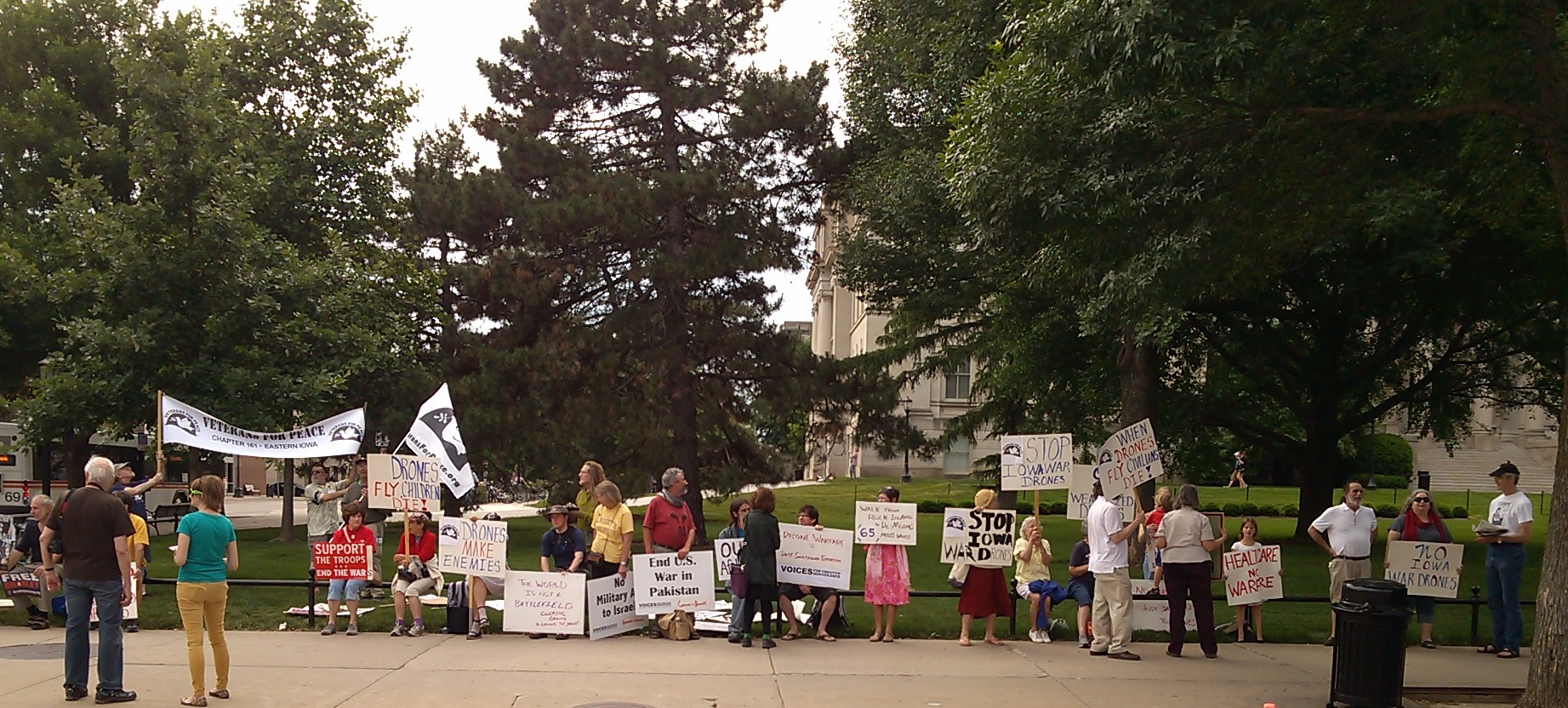
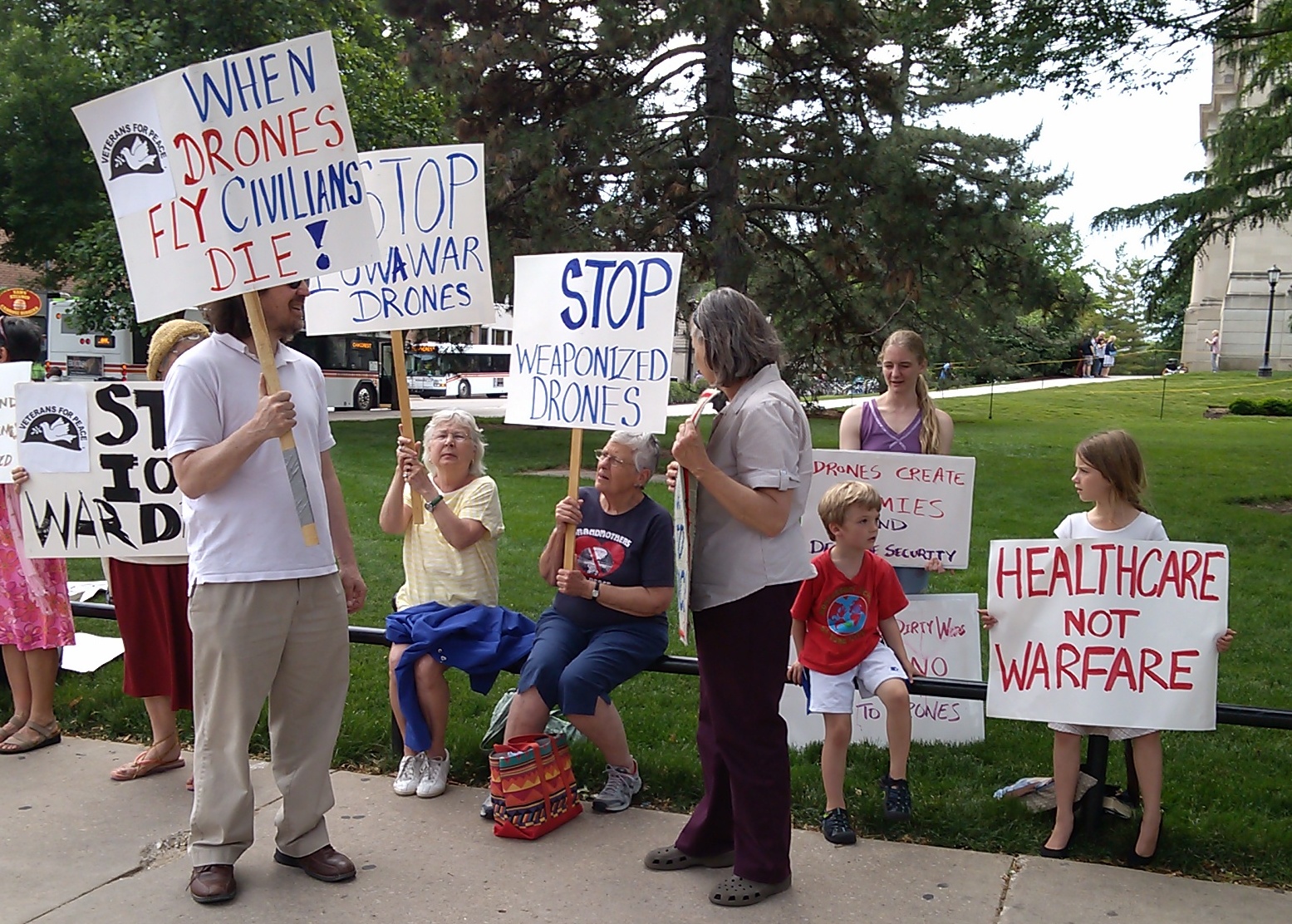
IOWA CITY— About 50 people gathered at the intersection of Clinton and Washington Streets to witness against our wars on Friday. Voices for Creative Nonviolence (VCNV) stopped by to join the vigil as part of their peace action called “Covering Ground to Ground Drones,” a 190-mile walk from the Rock Island Arsenal to the Iowa Air National Guard Facility at the Des Moines airport, planned site of a new drone command center. The purpose of the witness is to call attention to the fact of non-combatant casualties resulting from the U.S. weaponized drone program in Afghanistan, Pakistan and Yemen, something the corporate media has not adequately done.
The Central Intelligence Agency has acknowledged they don’t always know who their drone targets are, or what, if any connection they have to U.S. national security interests, so there is a specific and public reason for the protest. The information about drone targeting was only recently revealed after an investigation of classified documents by NBC News.
Kathy Kelly
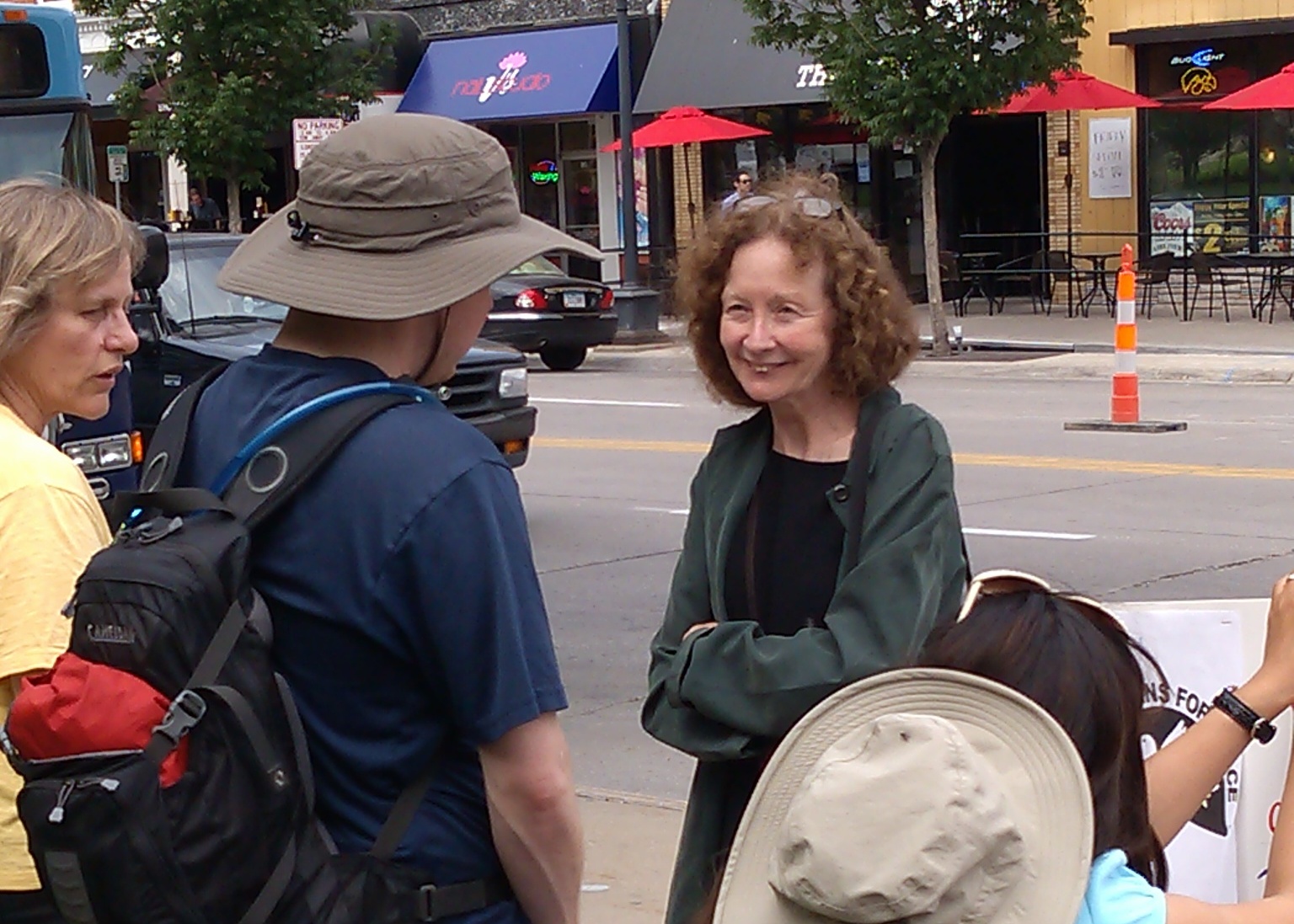
Voices for Creative Nonviolence coordinator Kathy Kelly was on hand at the vigil, chatting with people gathered. In a Sept. 8, 2010 article on Huffington Post, she summarized the challenge her group faces, “corporate media does little to help ordinary U.S. people understand that the drones that hover over potential targets in Afghanistan, Pakistan and Yemen create small ‘ground zeroes’ in multiple locales on an everyday basis,” comparing drone strikes to the terrorist attacks of Sept. 11, 2001. Kelly is one of a small number of people who made an effort to see the civilian perspective of the U.S. drone program by traveling to Afghanistan and Pakistan.
Veteran for Peace on the Telephone
In the background, a Veteran for Peace, his banner waving in the wind on the University of Iowa Pentacrest, coordinated his trial for trespassing at a drone piloting unit in New York state on his telephone. Several people at the vigil had previously been arrested for civil disobedience while protesting the drone program. The legal aspect of the peace movement is not insignificant, with its intentional arrests and trials. It is a drain on time and resources, but is part of the gig.
Brian Terrell Picking a Sign
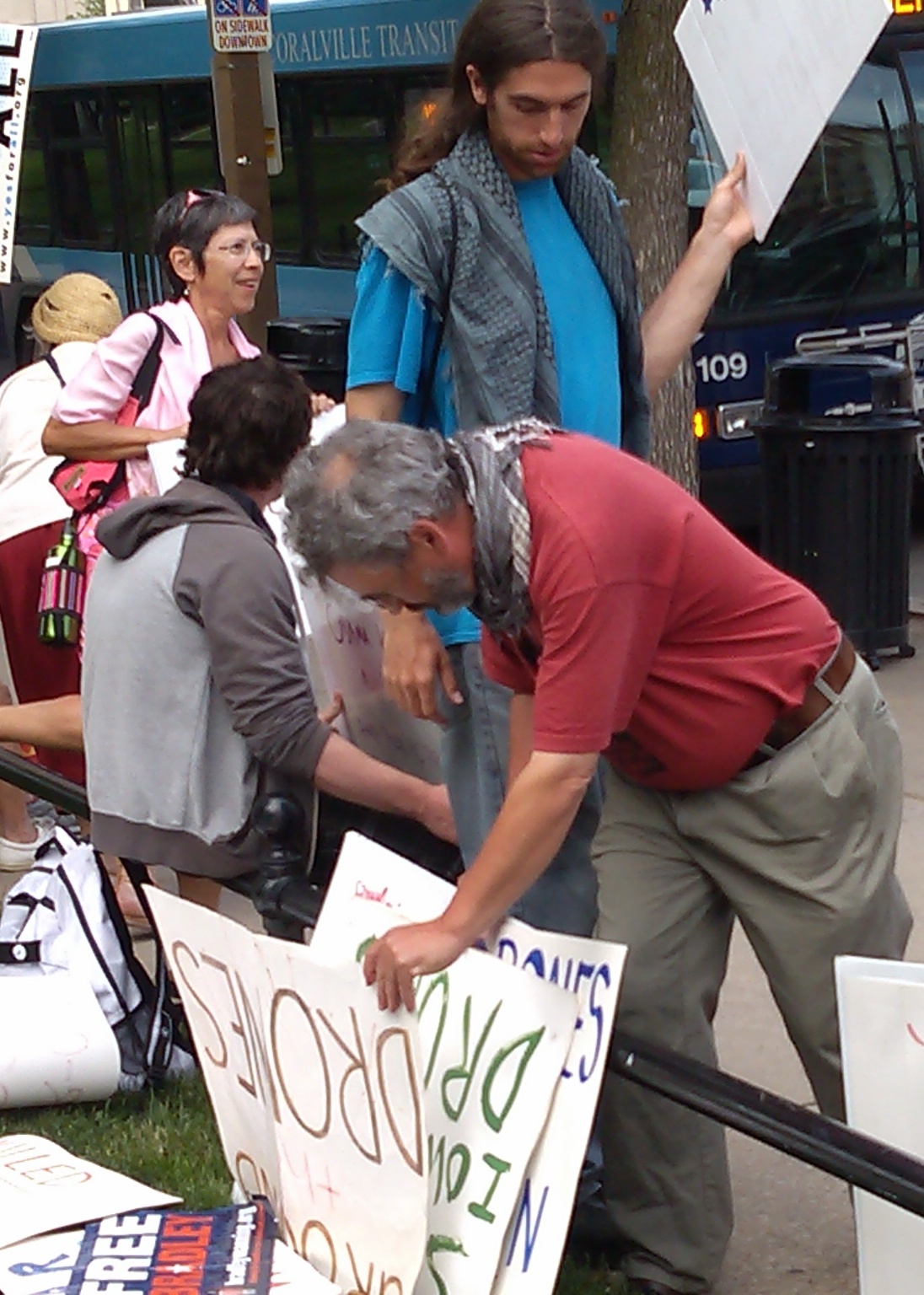
Peace activist and Catholic Worker, Brian Terrell was present. He had just been released from a six-month prison sentence for trespassing at Whiteman Air Force Base, Mo., where he attempted to deliver an indictment of the U.S. drone program to Brigadier General Scott A. Vander Hamm, the base commander. John Dear S.J. of the National Catholic Reporter wrote in a Jan. 8 story about Terrell, “they tried to make the case that dropping bombs on women and children in Afghanistan and Pakistan will not lead to peace— much less improve our own security— but will inspire thousands of people to join the violent movements against the United States.” Like on so many issues, neither the corporate media nor the public is paying much attention to the work of Voices for Creative Nonviolence, Catholic Worker, Veterans for Peace and others in the peace movement.
When we compare the U.S. anti-drone protests to other political unrest, it is pretty tame. Part of it is its nonviolent aspect. Part of it is the lack of underlying tensions in society like those that caused a nation-wide protest over the Gezi Park development in Istanbul, Turkey, where tens of thousands of people turned out in protest across the country. While one can have deep respect for nonviolent action against injustice, there is little depth to the current drone protests outside the core groups. This renders them ineffective at best, a drain on resources that could be more effectively applied to more significant targets at worst.
After the vigil, the group slow-marched to the Iowa City Public Library for a potluck meal and to hear speakers. In the end, it was another day in the county seat of the most liberal county in Iowa. Outside the small enclave of peace activists, few were paying attention, and that is unfortunate.
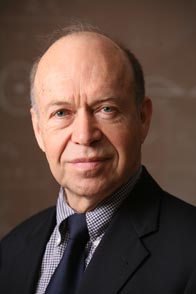
IOWA CITY— It’s hard to believe, but a lot of people don’t know who is James Hansen of Denison. He is a retired NASA scientist who took the first sentence of NASA’s mission statement, “to understand and protect the home planet,” to heart and explored the science of climate change. That is, it was the first sentence of the NASA mission statement until the George W. Bush administration removed it.
Hansen’s concern about the kind of world he will leave his grandchildren led him to continue to speak out about the need to mitigate increasing carbon dioxide and other greenhouse gases in the atmosphere— the cause of global warming.
I met Hansen on Jan. 27, 2008 in Iowa City, and his message hasn’t changed much, except maybe to express increased urgency about the need to mitigate rising temperatures related to burning fossil fuels before it is too late.
If readers don’t know about James Hansen, they should. Check out his brief bio at the Columbia University website here. In this 17 minute TED talk, from February 2012, http://on.ted.com/Hansen, Hansen presents, in easy to understand terms, the science of global warming and the urgent need to do something about it.
There is no debate about global warming. The debate is over what to do about it. According to Hansen, we should stop subsidizing the fossil fuel industry and implement a carbon tax. We should do it now.
BIG GROVE TOWNSHIP— The flood water is receding on the Atherton Wetland, bringing hope the Iowa River and Coralville Lake have crested despite today’s rain. It’s good news at a time we need it.
All hell is breaking out on the national scene, and it is not good. Where to start?
Sergeant Robert Bales’ cold-blooded killing of 16 non-combatant men, women and children in Kandahar province in Afghanistan came to light and defies reason. According to NBC News, Bales didn’t know why he did it. According to the article, “Bales’ lawyers have said the married father of two suffered from PTSD and brain injury after four combat deployments and was under the influence of drugs and alcohol the night of the raids on family compounds in Kandahar province.” There had to have been more wrong than this. The massacre points to another failure of military leadership.
There was news that the Central Intelligence Agency didn’t always know who it was targeting and killing with drone-launched Hellfire Missiles in Pakistan. The article reported, “about one of every four of those killed by drones in Pakistan between Sept. 3, 2010, and Oct. 30, 2011, were classified as ‘other militants’… The ‘other militants’ label was used when the CIA could not determine the affiliation of those killed, prompting questions about how the agency could conclude they were a threat to U.S. national security.” That non-combatants were the target of the CIA drone program was no surprise to those of us following reports from inside Pakistan, but the revelation was shocking nonetheless. The news makes timely the Covering Ground to Ground the Drones action this week in Iowa by Voices for Creative Nonviolence.
Finally, the news that the N.S.A. is monitoring metadata from our phone calls and information from a number of major Internet service providers was chillingly Orwellian. New York Times columnist Maureen Dowd quoted George Orwell’s 1984 yesterday, “there was of course no way of knowing whether you were being watched at any given moment. How often, or on what system, the Thought Police plugged in on any individual wire was guesswork. It was even conceivable that they watched everybody all the time. But at any rate they could plug in your wire whenever they wanted to.”
For one, I was prepared to be constantly monitored by God’s omniscience by my Catholic upbringing. The federal government is no one’s god, and this intrusion on privacy, while apparently supported by all three branches of the federal government, just isn’t right.
In a turbulent world, these national issues are a distraction from work toward sustainability. As the Ada Blenkhorn/J. Howard Entwisle song the A.P. Carter family used to sing goes,
There’s a dark and a troubled side of life;
There’s a bright and a sunny side, too;
Tho’ we meet with the darkness and strife,
The sunny side we also may view.
Here’s to keeping on the sunny side as it will help us every day and may brighten our way. At least the flood waters are abating… for now.
Pursuit of new nuclear power in Iowa was a bad idea when then governor Tom Vilsack began promoting it, and remains so. MidAmerican Energy’s announcement in the Des Moines Register today, that the utility “has scrapped plans for Iowa’s second nuclear plant and will refund $8.8 million ratepayers paid for a now-finished feasibility study,” was welcomed by people throughout the state. In the end, talk about nuclear power was a weird combination of the vaporous breath of politicians combined with a financially stable and well capitalized public utility owned by one of the richest men on the planet. The discussion Vilsack started is over for now.
In an email to members, Dianne Glenney, co-founder and communications contact for the grassroots organization S.A.F.E. (Saving America’s Farmland and Environment) wrote, “we have learned more about the dangers of nuclear energy than we ever wanted to know. But, we are much better informed now and an informed citizenry is primed to be a watchdog for future happenings, to report issues when they happen, and to take action.” While S.A.F.E. came into being only after the utility’s planned sites for a new nuclear power plant were recently announced in Muscatine and Fremont counties, Glenney’s words summed up the four-year process that stopped MidAmerican’s nuclear ambitions. Knowledge is power, and by 2013, the Iowa electorate had been educated about nuclear power.
As always, there is more to the story.
The idea that there was a nuclear renaissance in the United States was a product of the imagination of politicians, the nuclear industry, corporate media and the richest Americans. The nuclear disaster in Fukushima, Japan on March 11, 2011 brought the risks of nuclear power to the public’s attention. Shortly after the earthquake and tsunami that caused the failures, MidAmerican Energy’s Bill Fehrman asserted in an Iowa Senate Commerce Committee meeting that small modular reactors would solve some of the problems of Fukushima. The public wasn’t buying it, at least to the extent that they would support the legislation Fehrman said was necessary for the utility to get the financial backing of Wall Street to build a new nuclear power generating station. In today’s announcement, MidAmerican conceded that lack of an approved plan for a small modular reactor was problematic, citing as one of the reasons for pulling the plug, “there is no approved design for the modular nuclear plant it envisioned.”
A final decision by the Nuclear Regulatory Commission to deny a license to the Calvert Cliffs III nuclear reactor, slated for southern Maryland, is evidence that if there was a nuclear renaissance, it may be over from an NRC perspective.
Another part of the story is the abundance of natural gas resulting from increased exploration and discover using the hydraulic fracturing process. With the cost of natural gas going down, interest in more expensive nuclear power is waning. It is important that MidAmerican Energy noted the potential regulation of carbon as an impediment to building a natural gas power generating station, something that did not stop Alliant Energy from seeking approval for such a plant in Marshalltown.
The current solution to the radioactive nuclear waste produced by nuclear power generating stations is no solution at all. The plan is to store it on sites where it is generated until the federal government figures out what to do with it. Reasonable people can’t seriously consider adding new nuclear power capacity until this long standing deficiency is addressed.
Dianne Glenney of S.A.F.E. wrote last night, “no one should have to live under the strain of a potential nuclear power plant in their neighborhood, community, state and/or country. Someone is always downwind of every nuclear plant.” Now enough Iowans know this. Let’s hope we don’t forget.










 Journey Home


You must be logged in to post a comment.