Categories
Sustainability

New Year’s Eve 2024

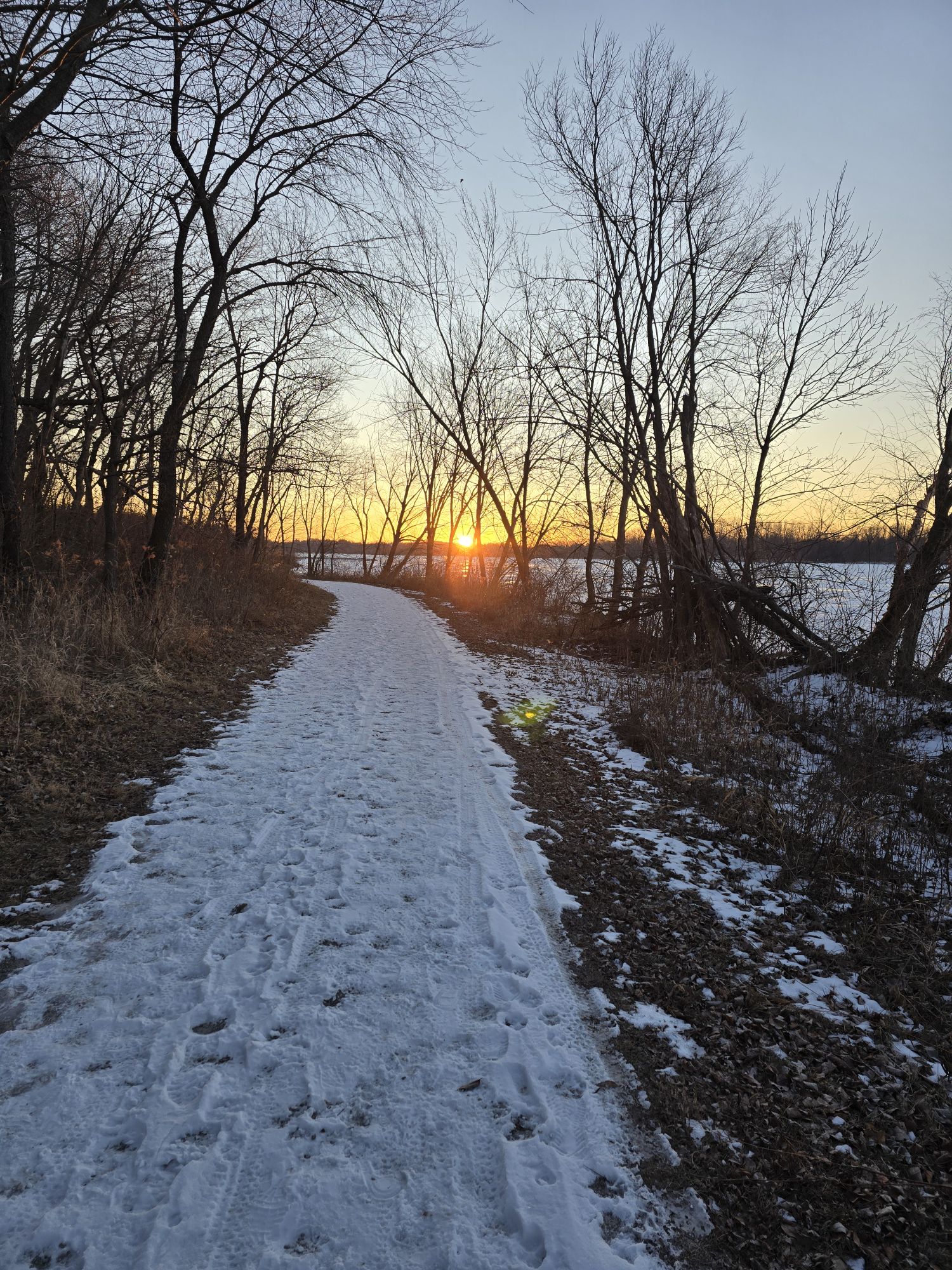
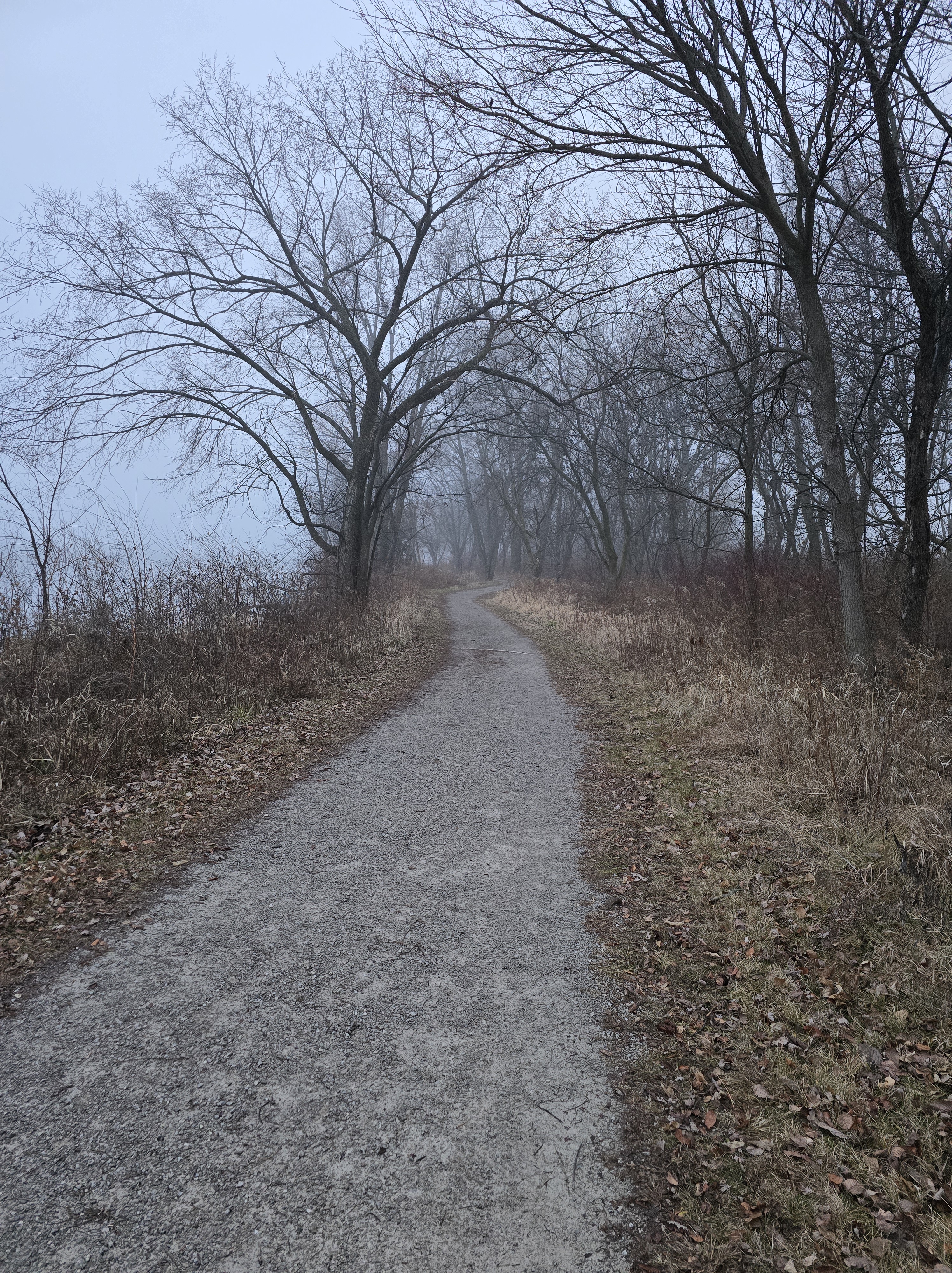
Trail walking in late December 2024.

The forecast was snow yet it isn’t cold enough. Instead, a light rain is falling… enough to keep me off the state park trail until it ends. Warm weather this time of year has become the norm thanks to increasing average, global, ambient temperatures. Climate change is cooking us on a slow roast.

I looked at my 2024 calendars and a few big projects kept me busy: politics and the general election, trips to deliver my spouse to her sister’s home in Des Moines, the summer high school class reunion, publishing my first book, and then getting and recovering from COVID-19. The usual daily chores of writing, reading, gardening, cooking, cleaning, and health maintenance took a lot of time. I had more medical appointments than usual this year. I existed as best I could.

I don’t make resolutions for the new year. I hope to gain perspective on my quotidian life and do better in each moment of consciousness in it. Shorter version: I’ll go on living.

My writing process is focused on finishing the second volume of my memoir this year. If all goes well, I’ll publish it in 2026. While waiting for feedback from the first volume, I’m weighing whether to make the book more available in book world by posting it where it can be purchased.

Our family is in three different cities this New Year’s Eve. I don’t mind being alone this holiday. I rarely stay up until midnight. Today’s main decision is whether I will visit the grocer to buy festive food. The more I think about it, the more likely I am to make do with what I have.

Many thanks to readers of this blog. Each visit, like, and comment is appreciated. Although I don’t post all the comments, I read them. I plan to continue to post here for at least another year. I’ll do the best I can to make it worth your time.

Categories
Sustainability

Duane Arnold Redux

Google Maps Image of Duane Arnold Energy Center

Editor’s note: This is a letter to the editor of the Solon Economist in response to Caden Bell’s opinion saying the Duane Arnold Energy Center nuclear power plant should be reopened.

I don’t understand the logic of reopening the Duane Arnold Energy Center because life is like a cartoon called The Simpsons. I’ve never seen an episode of that show, so maybe I’m missing something. What I do know is Caden Bell offers no logical reason to reopen the Duane Arnold Energy Center nuclear power plant in his Dec. 5 opinion in the Solon Economist.

First things first. The technology at Duane Arnold is old. The physical plant is old. Its permit has been renewed twice. There is a limit to the life of these facilities built in the 1970s. Why throw new money after old technology? We shouldn’t.

If Iowa were to do anything regarding nuclear power, we should at least wait until known problems have been resolved. Bill Gates is working on that. Gates received a permit for a small modular reactor in Wyoming. If there is a future for nuclear power in the energy mix, it is not in plants like Duane Arnold, but in small modular reactors if the bugs can be worked out. That is a big if. The future of nuclear power relies on such projects. Give Gates and company time to do the work.

Who will pay? The nuclear energy industry relies heavily on federal subsidies. Bell offers nothing about financing the return of nuclear power in Iowa. It remains a key issue with any electricity source. His opinion is useless without addressing who will pay.

My recommendation is Bell return to watching The Simpsons and keep opining about real-world issues like nuclear power among his university friends.

~ Published in the Dec. 12, 2024 edition of the Solon Economist.

Categories
Environment

After COP29

With Al Gore and Company in Chicago 2013. This is about half the attendees. I’m in there somewhere.

The 29th Conference of the Parties was a disappointment. Fossil fuel interests hindered the ability to accomplish constructive things since the beginning of the process. Now, they stopped anything except the most minimal action at COP29. Former Vice President Al Gore summarized the situation in this statement:

November 23, 2024

While the agreement reached at COP29 avoids immediate failure, it is far from a success. On the key issues like climate finance and the transition away from fossil fuels, this is — yet again — the bare minimum. 
 
We cannot continue to rely on last-minute half measures. Leaders today shirk their responsibility by focusing on long-term, aspirational goals that extend far beyond their own terms in office. To meet the challenge of our time, we need real action at the scale of months and years, not decades and quarter-centuries.
 
This experience in Baku illuminates deeper flaws in the COP process, including the outsized influence of fossil fuel interests that has hobbled this process since its inception. The Kingdom of Saudi Arabia has been particularly obstructive. Putting the future of humanity at severe risk in order to make more money is truly disgraceful behavior. Reforming this process so that the polluters are not in effective control must be a priority.
 
On climate finance, our primary task in the coming years must be to not only fulfill and build upon the financial commitments agreed to at COP29, but to unleash even larger flows of affordable and fair private capital for developing countries. 
 
Ultimately, coming out of COP29, we must transform disappointment into determination. We can solve the climate crisis. Whether we do so in time to meet the goals of the Paris Agreement will depend on what comes next.

The climate is changing. Do humans have the capacity to protect all we hold dear from the ravages of the climate crisis? Time will tell. The Conference of the Parties is our last, best hope to stave off the worst impacts of human-caused climate change.

Categories
Sustainability

COP29

Image of Earth 7-6-15 from DSCOVR (Deep Space Climate Observatory)

President-elect Donald Trump is expected to withdraw the United States from the Paris Climate Accords, as he did during his first term. His re-election cast a pall over the 29th Conference of the Parties which began Monday in Baku, Azerbaijan. The United States has been a world leader in mitigating the worst impacts of climate change. Trump’s direction of breaking down the international order where the United States is a leader seems clear.

Azerbaijan is the third consecutive petrostate to host the conference, and arguably intends to stop decarbonization if they can. The work must continue, yet it is expected to slow because of the prospect of the U.S. intentionally hobbling it. In an email this week, the Climate Reality Project said, “Wealthy petrostates and fossil fuel companies are misleading the public, lobbying country leaders, and taking over the COP process, trying to stop progress every step of the way.” Addressing the climate crisis will continue to be an uphill struggle.

Based on the seven days since the election, Trump seems better prepared to implement policies the Heritage Foundation handed him in the form of Project 2025. I must pick which parts of society in which to exert my personal influence. I need more dust to fall and settle before deciding what to do. The climate crisis ranks highly on my list.

Categories
Environment

Water Quality

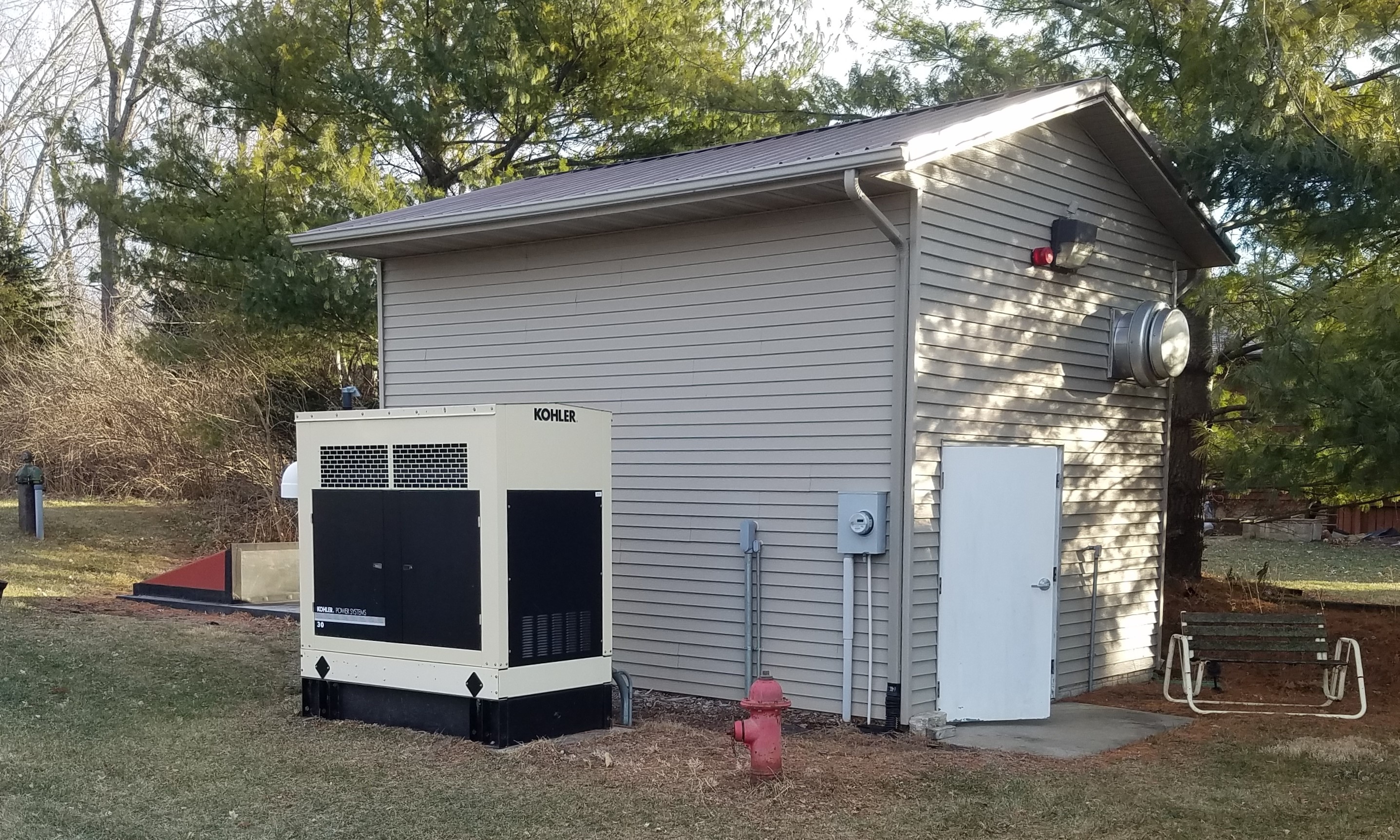
Public water system well water treatment building.

The annual meeting of my home owners association last summer was good. Thanks to all of our board members for their volunteer work. It was a pleasant evening in Randall Park. As is usual, very few members showed up for the picnic-style meal and conversation.

We discussed the association water system and the need to meet new compliance standards. The most recent compliance issue is inventorying the type of pipes bringing public water from the well to and inside our homes. I began following our public water system shortly after we moved here in 1993. We comply with new numbers as they come along. When we cannot get into compliance, we make an investment in extraordinary measures. For example, we spent $400,000+ to comply with revised arsenic standards.

I said this at the meeting and it bears repeating:

The water coming out of the well house into the community water pipes is fit to drink and use. It meets state and federal standards for a public water system. The board sent our annual water quality report in the last mailing. Read it!

We talked about water softeners. When Bob was president, he announced that water softeners were no longer necessary after installation of the new arsenic treatment facility. I’m not sure that information was adequately distributed at the time. However, the quality of water in a home is a matter of personal preference and expense.

Is the water delivered to our homes potable without treatment? Yes, it is. We have data to back that up. Do you want to wash your white clothes in untreated water? Maybe, maybe not. Since the new water treatment system was installed, there have been surges with heavy concentration of iron in it. A whole house filter combined with a water softener buffers users against such anomalies.

One set of data that assists in decisions about whether to treat water in our homes is a water hardness test. Those are locally available, usually for no cost, plus a volunteer in the association is willing to test your water without charge. If you have questions about using a softener, that is a beginning place.

The wastewater treatment facility was built in 1994. While it was maintained as things broke, there is a significant project in the near term future of refurbishing the physical plant. Chloride compliance is a different question. The reason for all the attention to chlorine and salt usage is in pursuit of a reduction in the amount of chloride entering the wastewater stream. Hopefully we can get chloride numbers into compliance and avoid doing something to divert effluent flow from Lake Macbride to somewhere else more acceptable to Iowa Department of Natural Resources.

Here is some additional information:

Iowa’s recent inventory of public water supply systems was 1,838. The percentage of systems in compliance with all health-based standards in 2022 was 96.2%, while the percentage of population served by systems compliant with all health-based standards was 98.9%. Not perfect, but good.

The other segment of well water, which is significant in Iowa, is the use of private wells for household water needs. Private wells fall under the jurisdiction of the Iowa Department of Natural Resources. There is a recommended testing and treatment program for private well owners that includes free annual testing, and money for shock chlorination, well plugging, well reconstruction, and the like. There is also a fully developed program on their website. I couldn’t find information about the level of compliance with the voluntary standards.

They say water is life, and it really is. It seems important to know what the standards are and whether what comes from the tap is safe to drink. In our community we invested a lot to make sure it is.

Categories
Sustainability

Block and Tackle

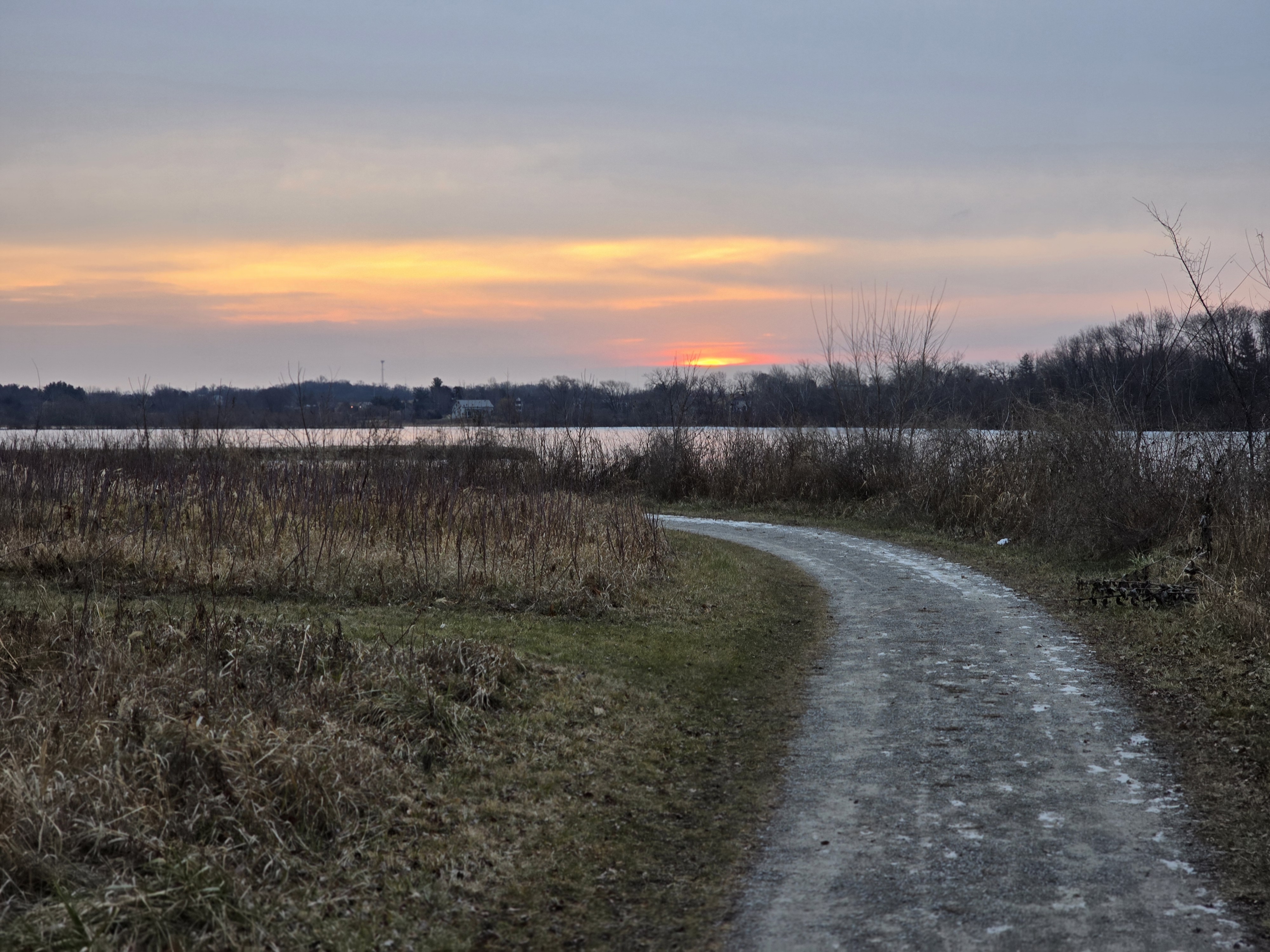
Wild flowers continue to arrive on the state park trail.

Last night I decided to work on sleeping through. Surprisingly, I was successful from 8 p.m. until 3 a.m. Seven straight hours of sleep is a rarity in my world. One hopes to make it less rare.

It’s 50 days until the Nov. 5 general election. I figured out how I hope to fit in with the campaigns. I have the plan, now to work it. Easy-peasy, lemon-squeezy.

As winter approaches, there is a lot to get ready. I’m thinking about writing the second volume of my memoir. Last time, during the coronavirus pandemic, our restricted movement helped keep me focused on writing. This winter I must figure a way to regain that focus and set aside a multitude of distractions in the non-pandemic life. With a little work, I can do that.

It was a good call to finish and print the first volume of my memoir. While it could be refined, the fact of spending the money to print it forces closure. It is what it is and now exists in the world. This week, I’m sending copies to a dozen people I have known a long while. Along with the book, I’m sending a reply card to collect a few sentences about their reaction to it. I have a vague notion about what happens next. Basically there is a decision whether to put it out in the world with intent to sell some copies. Thus far, people have been supportive of my work.

At mid September, the garden is reduced to a few items which continue to grow. The main undertakings are finishing the tomato harvest, clearing a plot to plant garlic, and cleaning this year’s garlic harvest for storage. Certain crops did well and others, not so much. There was enough home grown food to keep me away from the farmers’ market. I’m hoping to find more hot peppers when I go out to the garden today.

This year has been weird in that my spouse spent a lot of time away helping her sister. Maybe with some luck and planning, we can get back to normal.

Categories
Sustainability

Lilacs and the Climate Crisis

Lilacs in bloom on Sept. 13, 2024.

A sure sign the period of annual warm ambient temperatures expanded is the fact our lilac bushes are flowering a second time this year. I planted them some 30 years ago and only recently have we experienced a double bloom. The flowers are pretty, but the reasons behind their twice a year appearance are not.

The Intergovernmental Panel on Climate Change (IPCC) members are skeptical that warming will be limited to the Paris targets of well below 2 °C, but are more optimistic that net zero CO2 emissions will be reached during the second half of this century. What does that mean? We, as a society, are inadequately moderating the rise in atmospheric temperatures by getting to net zero fast enough. I don’t see any of my neighbors concerned about this, even if they should be. I doubt many of them even know what is net zero.

Whether we like it or not, large online retail sellers provide an efficient service. Not only do companies like Amazon compete on pricing, their distribution network prevents untold automobile trips to retail establishments. That may be a pox on smaller retail stores, yet Amazon is committed to achieving net zero carbon emissions by 2040, much sooner than society as a whole seems likely to achieve it. We citizens may be skeptical of Amazon’s Climate Pledge, but what else is there in a world increasingly controlled by large corporations?

A person can only do so much. Our combustion engine subcompact automobile remains parked in the garage five or six days each week. When we bought it, electric vehicles were simply not available when we needed one. I mow the lawn with my gasoline-powered mower only once per month. I set the thermostat for our HVAC system higher in summer and lower in winter. If everyone did these things, our aggregate actions might have an impact. Like with net zero, this is something our neighbors don’t talk much about. Whether they take similar action is sketchy at best.

To address the lack of awareness, I learned to interpret visual cues in the environment. Things like the second blooms of a lilac bush. It seems essential to do more than appreciate the beauty we find in nature. At the same time, we must question why long-standing botanical and animalia behaviors are changing. With few exceptions, such changes lead us back to new, polluting emissions since the Industrial Revolution.

We won’t undo the changes of the Industrial Revolution quickly enough. We, as a society, should be working on that. Imperfect though it may be, achieving net zero carbon emissions is a worthy goal. Midwestern lilac bushes seem to be adjusting to a changing climate. Now it’s our turn.

Categories
Sustainability

A Long Path Ahead

Trail walking in the state park.

The near-death experience that was my case of COVID-19, especially the hallucinations and becoming temporarily unhinged from reality, was a wake up call. Life can be snatched from us on a moment’s notice. I lived to tell the tale, and every day I wake in good health is a blessing.

What will I do with my remaining time? That is the wrong question. I will continue down the path I started so many years ago: to be a writer, to live a life where I enjoy good health, and where I have the stamina needed to take each next step. My relationships with family and friends are important, so is living in a just society. There is a whole separate life in this. I hope to embrace and cherish it.

The coronavirus upset my schedule to get back to work on the second part of my memoir. Once I get caught up in real life, I will take up that project. Publishing the first volume was an unexpectedly positive experience. Now I want to finish the second book so I can move on to other things.

Friedrich Nietzsche first said, “Out of life’s school of war — what doesn’t kill me, makes me stronger.” I’m not at the stronger part yet, although I’m building stamina as I walk the long path into the future.

Categories
Sustainability

Hiroshima Day 2024

Never again should humans detonate atomic munitions. It is 90 seconds to midnight according to the Bulletin of the Atomic Scientists Doomsday Clock. Read what you can do to mitigate the dangers in our nuclear armed world by clicking here.

Paper cranes
Categories
Sustainability

Equipment Failure

Mowing the Lawn

I had been mowing with my John Deere lawn tractor for about 15 minutes. Life was good as I prepared the yard to be more presentable when overnight guests arrived later in the day. I stopped, turned off the engine to move something, and when I returned to the driver’s seat the engine would not crank. After trouble shooting to see if I could resolve the issue, I called the repair shop and they picked it up that day. They said they would have it for three weeks, most likely, because of a backlog of work. I’ll have to hire someone to mow as the lawn will turn into a jungle of natural habitat if I don’t.

We brought the equipment home from my father-in-law’s estate before the turn of the millennium. When it breaks down, there is always a question of whether repair parts will be available. The company says, “Nothing runs like a Deere,” yet they no longer make or stock every part for every model going back to the company’s founding in 1868. Planned obsolescence has become part of their business strategy. If my tractor can’t be fixed because parts are not available, I’m not sure what I will do. There are several suitable models under a thousand dollars. I really don’t want to spend that kind of money to mow the lawn half a dozen times a year. There is a case to replace it now to avoid future price increases. I would rather have just finished mowing the lawn than deal with this now.

This personal experience feeds into the broader issue of Right to Repair. When we own something, like my John Deere tractor, we shouldn’t have to beg the dealership to have access to repair parts and fix it. I’m not that mechanical as a basic social skill so I rely on others for car, tractor, chainsaw, trimmer, home appliance, and other repairs. We are subjected to their rules, and one of those is availability of repair parts. I bought more than a few new appliances because repair parts were no longer manufactured or stocked. It’s a rook deal!

When I worked in transportation I became aware of increased technology used in mechanical devices, Class 8 vehicles particularly. This changed the landscape in multiple ways. Importantly, equipment developers sought technology to make things better or comply with new laws. It was one more component to include in an automobile or refrigerator that cost something, and when the initial sale was made, increased net margin for the seller and manufacturer. What is often forgotten is any new maintenance issue related to failure of electronic components. There are no work-arounds when a computer chip fails.

When my John Deere would not start, I quickly diagnosed the problem as an electrical failure. I’ve had the tractor long enough to recognized the layers of failure it demonstrates. When I was on the phone with the service writer they agreed. So now we wait.

We bought a quarter acre lot in 1993 because it was available. We liked the proximity to the state park hiking trail and the public school system. There was abundant room for a garden and an orchard. What we didn’t foresee then was the inability to get ahead financially enough to completely eliminate the lawn in favor of a giant garden. Such projects are the endeavor of youth, so I’ll be dealing with mowing for as long as we live here. We don’t plan to move. We’ll stay and deal with interactions from a variety of service technicians. I’d better maintain a friendly relationship with them. Life could be worse.