It is my minority opinion that avocados should be avoided in the United States. Don’t buy them, don’t eat them. The fruit has become popular, and because of it, Mexican growers can’t keep up with demand. This creates a problem.
To meet surging demand in the U.S., farmers in Mexico have cut down swaths of forest in the western state of Michoacán, one of the most important ecosystems in the country. By some estimates, as many as 20,000 acres of forest — the area of more than 15,000 American football fields — are cut down each year and replaced with avocado plantations. The rapid expansion of orchards will threaten forests in Mexico for years to come.
Dishes like guacamole, avocado toast and smoothies taste delicious. Refined oil from the fruit is popular among foodies and nutritionists because of its unsaturated fats. By one estimate, sports fans eat through 105 million pounds of avocados on Super Bowl Sunday. The deforestation problem is directly related to such consumer demand.
The immediate catalyst for this post was a project to reduce my cookbook collection. I found many recipes for guacamole and felt we needed a reminder to moderate consumption and address the deforestation their popularity causes. I can hear long-time readers asking, “Didn’t you cover this before?” Yes, I did in the post titled, “Can Hipsters Stomach the Truth about Avocados from Mexico?” Not much has changed.
What can consumers do about deforestation which creates high-margin avocado plantations? Solutions are complicated. Ecosystem Marketplace outlines some of the challenges here. In the meanwhile, go light on the guacamole and avocado toast, and find another oil for cooking.
It is something we can do to contribute to efforts to solve the climate crisis.
I drove across the Iowa hinterland on Saturday. Soybeans look to be harvested with corn not far behind. With dry ground, minimal wind, and cool temperatures, it was as good as it gets for a row crop harvest. Dozens of tractors, combines and grain wagons were deployed across the autumn landscape.
The trip took longer than expected because I stopped three times to check in with a political organizer. I had been done with door-to-door canvassing after the Hillary Clinton campaign, yet I’m working a couple of shifts this cycle because I feel it is needed. The organizer said he expected a lot of people to help this weekend. I’m going out this afternoon.
I have a bag full of cowboy cards to take along. Most candidates running in our district are in there. A door-knocker gets only a couple of sentences at each door. One of them is encouragement to vote on or before Nov. 8. This is paramount. Whether they will is uncertain, yet it is the best we can do in a free, midterm election.
Nine days remain before election day. Already I’ve turned to what will be next. On autumn days one thinks about the future. In a fleeting few days we will try to do something about the future by electing candidates who will pursue what is right for our community. Whatever the outcome, there will be life after the election.
The better question is whether it will be a better life. During this autumn day it is an open question.
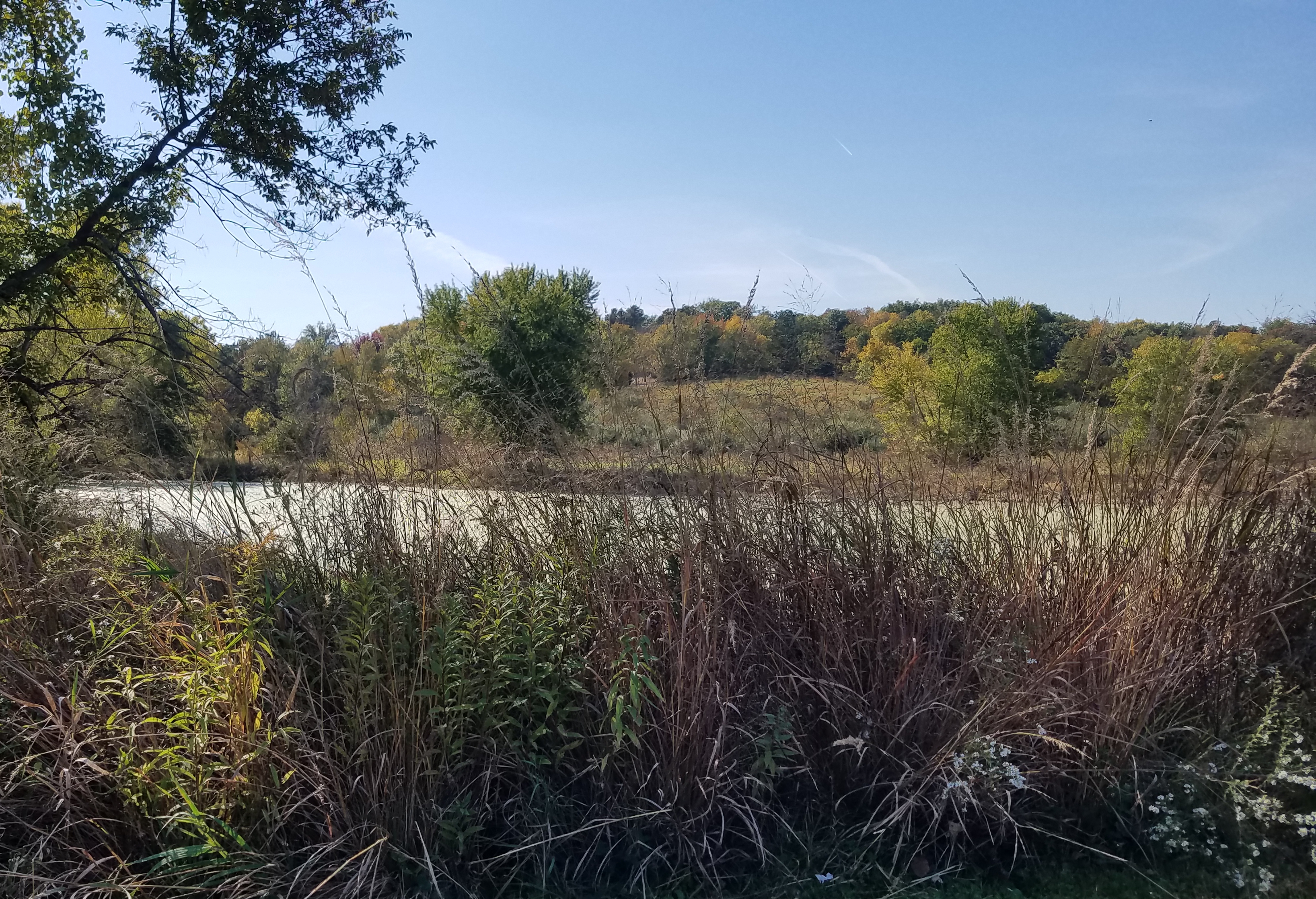
I occasionally hike a section of the Hoover Trail that branches from the North Shore Trail along Lake Macbride. It is a longer walk and with fall weather, I seek to spend more time outdoors. It was perfect for a long Sunday walk.
A couple of gray kittens were sunning on dirt next to the trail. “What are you doing here?” I asked. It was half a mile or more to the nearest building.
They were not just born yet still very young. I talked to them, but didn’t touch them. If I had a bag or backpack with me, I would have picked them up, brought them home, and had them checked out by a local veterinarian. Lacking suitable cat transportation, I left them where I found them, hoping for the best.
The next day, my spouse and I discussed the kittens and decided if I could find them again I would bring them home for processing and potential domestication. That is, as pets. We decided they were not yet feral cats, because if they were, they would have hidden when they saw humans on the trail. Our fear was that someone dumped them, a common occurrence in rural Iowa.
Grabbing an old moving box, I put a couple of old towels and a pair of gloves in it and walked back to the spot. It is inaccessible by automobile and took a half hour or more to make it back.
I stopped by the benches and bike racks near the pond to cool down. The sound of birds was all around. There were squirrels, grasshoppers and other insects on a bright afternoon. It was peaceful and restful. The kittens were nowhere to be found. I will assume that is good news although was a little sad when I left. The lesson is to pay attention to one’s surroundings. I doubt bicyclists noticed the kittens while they sped by.
We seek to do good in life, yet sometimes it works out differently.
I worked for seven seasons at what is now Wilson’s Orchard and Farm near Iowa City. At the time it was mostly an apple orchard with seasonal imports of cherries, peaches, raspberries, blueberries and blackberries from other farms.
During the coronavirus pandemic they expanded their offerings and yesterday announced they bought a 115-acre farm near Des Moines as a further expansion of what is proving to be a successful local food concept.
The grand opening of the Des Moines farm is spring 2023 with the strawberry season. Paul Rasch, owner and grand poobah of the farm described his first strawberry crop in Iowa City to me as “money.”
I don’t know if the proposed transition is possible, yet it may be our best hope to break the cycle of growing row crops in Iowa. Wilson’s Orchard and Farm is an idea whose time has come.
Here is the announcement video released this week that describes Paul’s vision of an Iowa food system transformed.
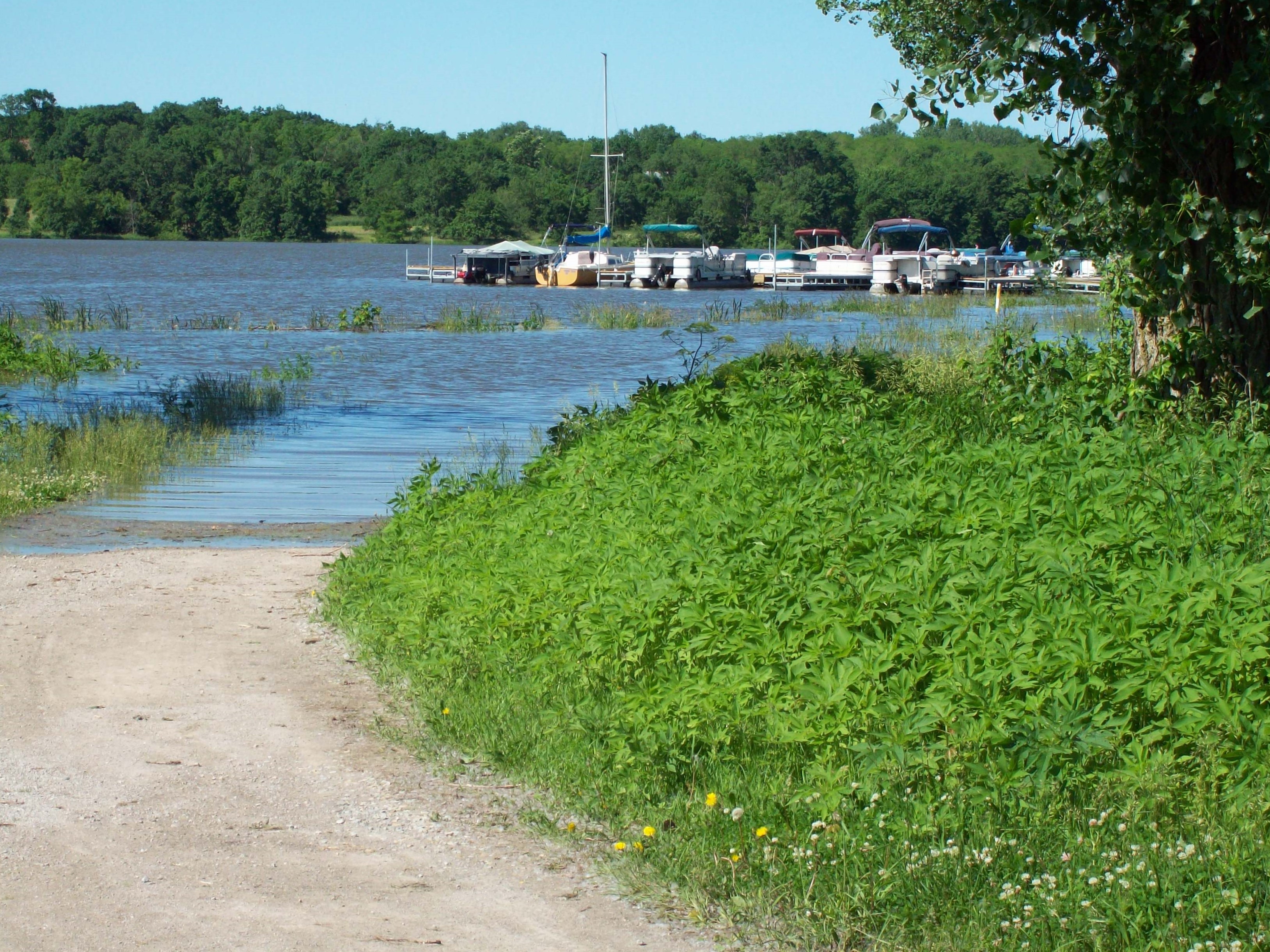
Flood water from Lake Macbride reached within 600 feet of our home on June 14, 2008
We did not fear the 2008 flood, even though it rendered roads and bridges near us impassible and destroyed significant parts of Cedar Rapids and Iowa City. There was a lesson to be learned from it.
As the water level rose, flowed over the Coralville Dam spillway on June 10, then back-filled Lake Macbride, it would have taken much more than there was to flood our home near the lake. When the flood crested on June 15, we were relieved.
Lake Macbride is part of the water storage system for the Coralville dam and the reservoir created behind it. 2008 flooding was greater than any in recorded history, yet the system worked as well as it could have given the volume of water. Because news media were focused on the natural disaster, we had plenty of information upon which to make decisions: Should we sand bag the house? Should we move everything to the upper level? Should we evacuate? By closely monitoring the news, we were able to survive with minimum disruption in our lives.
The Aug. 10, 2020 derecho was another catastrophic weather event, only this time, there was little advance warning. The City of Cedar Rapids may never be the same after much of the tree canopy was destroyed. Straight-line winds have become a repeating occurrence on our property. The 2013 event did more damage than the derecho, yet in the latter electricity was out for four days. It took time to recover from this event, have a tree service remove broken limbs, and clean up debris. Everyone in the neighborhood had piles of firewood after the storm.
To what extent were the 2008 flood and the 2020 derecho made worse by climate change? In his essay on the 2008 flood, Eugene S. Takle summarizes where we are.
When rare and extreme weather events seem to increase in frequency, either locally or regionally, both statisticians and thoughtful lay people begin to wonder if something unusual is going on. They ask not only whether climate change was involved, but also — and more urgently — whether such extreme conditions will be repeated soon or nearby. The question is much more than academic…
Was Climate Change Involved by Eugene S. Takle. Published in A Watershed Year: Anatomy of the Iowa Floods of 2008, edited by Cornelia S. Mutel.
Our troubles as a society lie elsewhere, outside the rational thinking of scientists.
The lesson learned from these natural disasters is to be alert and pay attention to what one can’t control. The lesson applies to more than natural disasters.
Sixty years ago I did not foresee where we would arrive in our politics and society. The idea that corporations could and would spend countless fortunes to manipulate voters to support candidates who did not serve their best interests is mind-boggling. Yet here we are.
Everything is corrupt, including political office holders, news media, law enforcement, our judiciary, our distribution system, and an extraction economy that impoverishes people who remain out of plain sight. It is a harsh judgment, yet is increasingly and undeniably true. We may have been able to survive floods, derechos, and straight line winds, yet our biggest problem is one we made for ourselves.
The approaching danger to be addressed is one of our politics. Republicans controlled both chambers of the Iowa legislature and the governorship after the 2016 election. They used their majority to advance policies that serve interests which align with right-wing conservatives and business concerns. At the same time, 45 of 150 Iowa legislative races have candidates running unopposed this cycle. The apparent lack of interest in running for office is as much a problem as the Republican trifecta.
This year, because of the recent U.S. Supreme Court decision on Dobbs v. Jackson Women’s Health Organization, which overturned Roe v. Wade, the number of female voter registrations is up. It is hard to know what this means, other than that women who value the right to an abortion, to make their own health care decisions without intervention of politicians, are taking action by registering to vote for candidates who support that right. Whether this movement will persist after the Nov. 8, 2022 election is an open question.
The American political system is far from perfect. If we want to address the dangers of climate change in the form of extreme weather events, as we must, that political system is our only, best hope. We must all get more engaged than we have been.
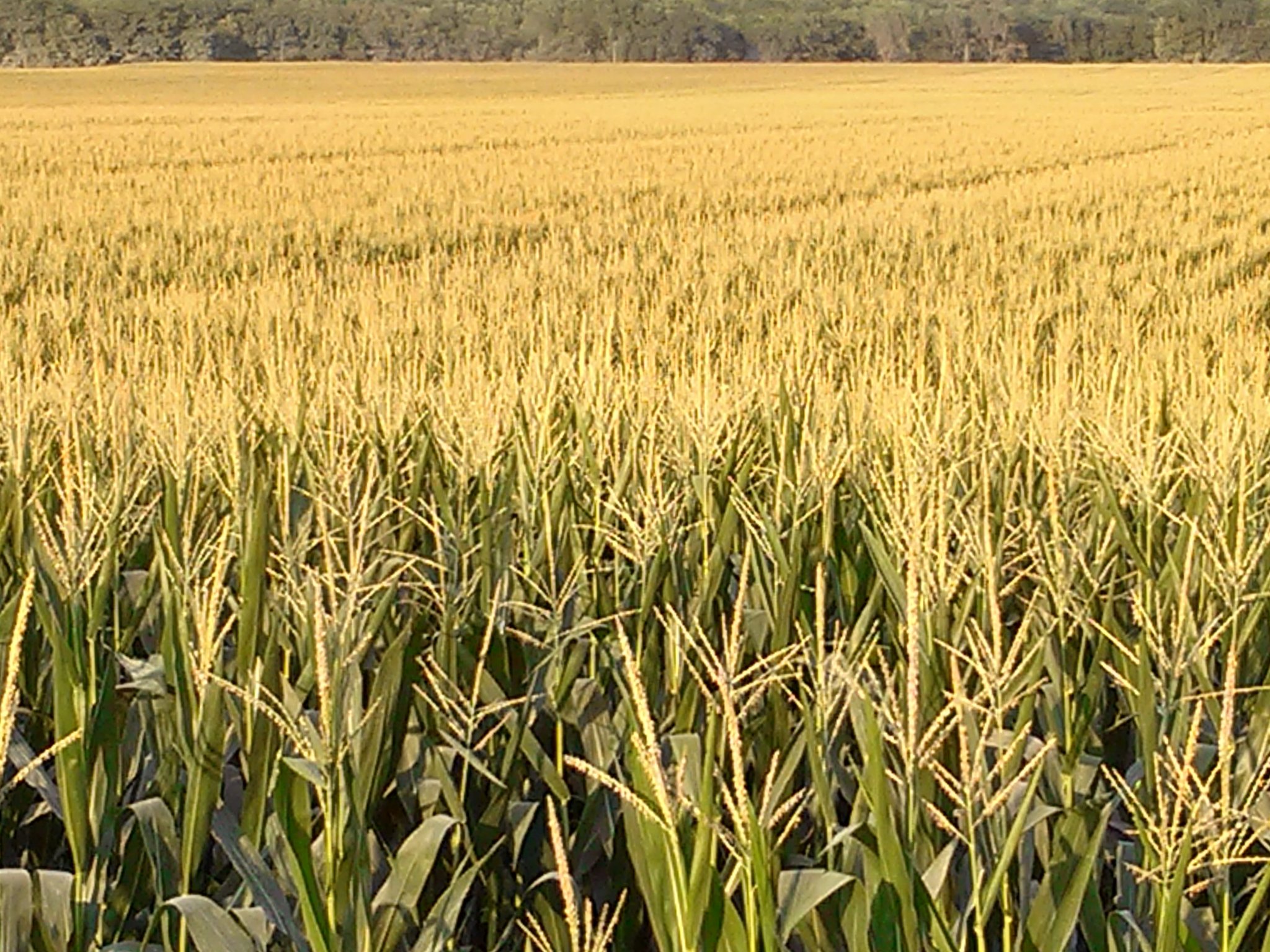
Drought-stressed corn crop in Cedar County, Iowa, 2012.
2022 has provided evidence in plain sight of the consequences of burning fossil fuels. The Greenland ice sheet is melting and expected to raise global sea levels by a foot. Such melting is already in motion and even if we stopped emitting greenhouse gases into the atmosphere today, it would have no effect on this destruction. A melting Greenland ice sheet cools the Northern Atlantic Ocean, which in turn slows the Atlantic Gulf Stream circulation and could lead to climate disruption on a massive scale.
From the American West to Europe to China, rivers are drying up. Our oceans are warming, causing fish and water-bound mammals to migrate to cooler places, disrupting fishing stocks. The upper Midwest is home to the largest global concentration of field corn. Continued high temperatures and lack of rainfall are expected to reduce yields. At $6.73 a bushel, corn is now roughly 50% above its 10-year average price.
None of this is good news. It is the truth.
In part, we got ourselves into this situation by ignoring scientists about the dangers of global warming. Here’s some more truth: President Lyndon Johnson, in a Feb. 8, 1965 special message to Congress, warned about build-up of carbon dioxide that scientists recognize today as the primary contributor to global warming.
“Air pollution is no longer confined to isolated places. This generation has altered the composition of the atmosphere on a global scale through radioactive materials and a steady increase in carbon dioxide from the burning of fossil fuels.”
There is little an individual can do. A solution will take governments addressing the physics of the issue at the highest level. It has become clear Republicans are the party of the fossil fuel industry and won’t take serious climate action. While some Democrats have fallen under the influence of fossil fuel interests and money, they were able to pass the Inflation Reduction Act which is the first legislation that addresses the climate crisis. We need more legislation to address the climate crisis, and that means electing more Democrats today.
The evidence of global warming is all around us. While everyone should get involved in what has become an obvious, global problem, the path forward in the United States is in retaining a Democratic controlled Congress and Executive Branch. No one wants to change their quality of life. However, life would be much better if we took action to control the changes caused by global warming by engaging in society.
Some days I’m thankful for the ability to walk the state park trail and see the ever-changing plant, animal and insect life. Being thankful is enough for this Saturday.
Hiroshima, Japan after U.S. Nuclear Attack. Photo Credit: The Telegraph
On the 77th anniversary of the United States dropping an atomic bomb on Hiroshima, Japan, hundreds of diplomats representing the states-parties to the 1968 nuclear Nonproliferation Treaty (NPT), along with representatives from civil society, are convening at United Nations headquarters in New York for talks that will shape the future of the international nuclear arms control regime at a time when the risks of nuclear proliferation and nuclear competition are growing.
Godspeed to the delegates!
I have been writing about nuclear arms reduction since the nuclear freeze days in the 1980s. We don’t seem to be getting anywhere. When the 45th president was in office, he contemplated re-introducing so-called tactical nuclear weapons into our military arsenal and would likely have withdrawn from the NPT if given the chance. He rejected the idea of the U.S. eliminating nuclear weapons.
Where do we go from here?
Nuclear weapons should never be used again. Conservative forces that came to power in the wake of Ronald Reagan’s election in 1980 have been steadily deconstructing the nuclear arms protocols that took so much work to put in place. Unchecked, they will continue their work. It seems clear people with common sense about nuclear weapons need a new narrative. This gets to be a worn sawhorse, but we need to elect politicians willing to reduce and eliminate nuclear weapons in accordance with Article VI of the NPT, an agreement the United States willingly signed and ratified. Who knows if the treaty could be ratified again in today’s polarized U.S. Senate?
So another year passed without progress on reducing our nuclear arsenals. If anything, the war between Ukraine and Russia heightened international tensions and has nations keeping their arsenals in place until we know the outcome.
Let’s hope the NPT Conference produces significant results and a viable plan for compliance with Article VI. The United States should lead this effort, although we have been recalcitrant about hanging on to our nukes.
Today we must consider what it will take to make needed change.
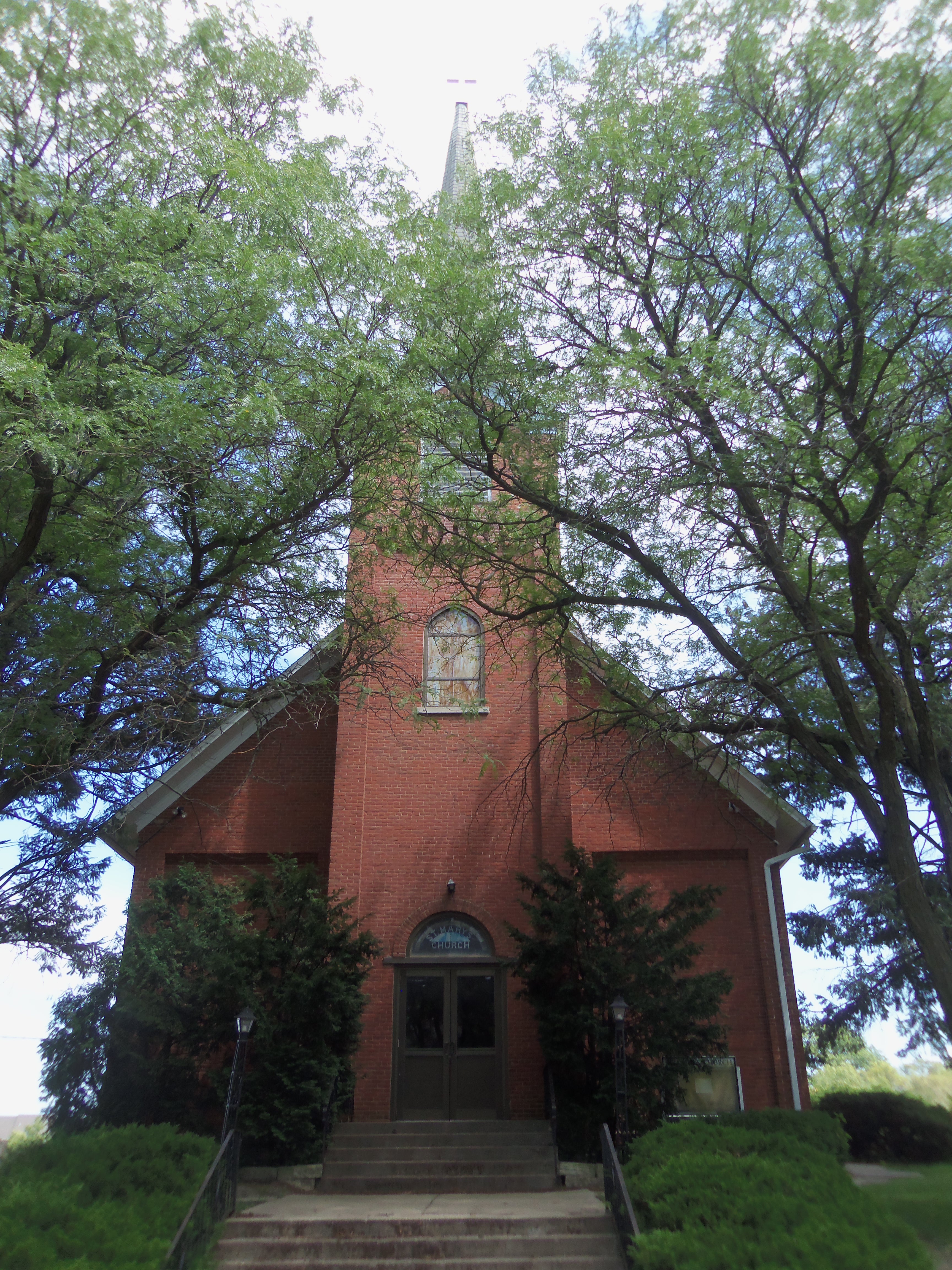
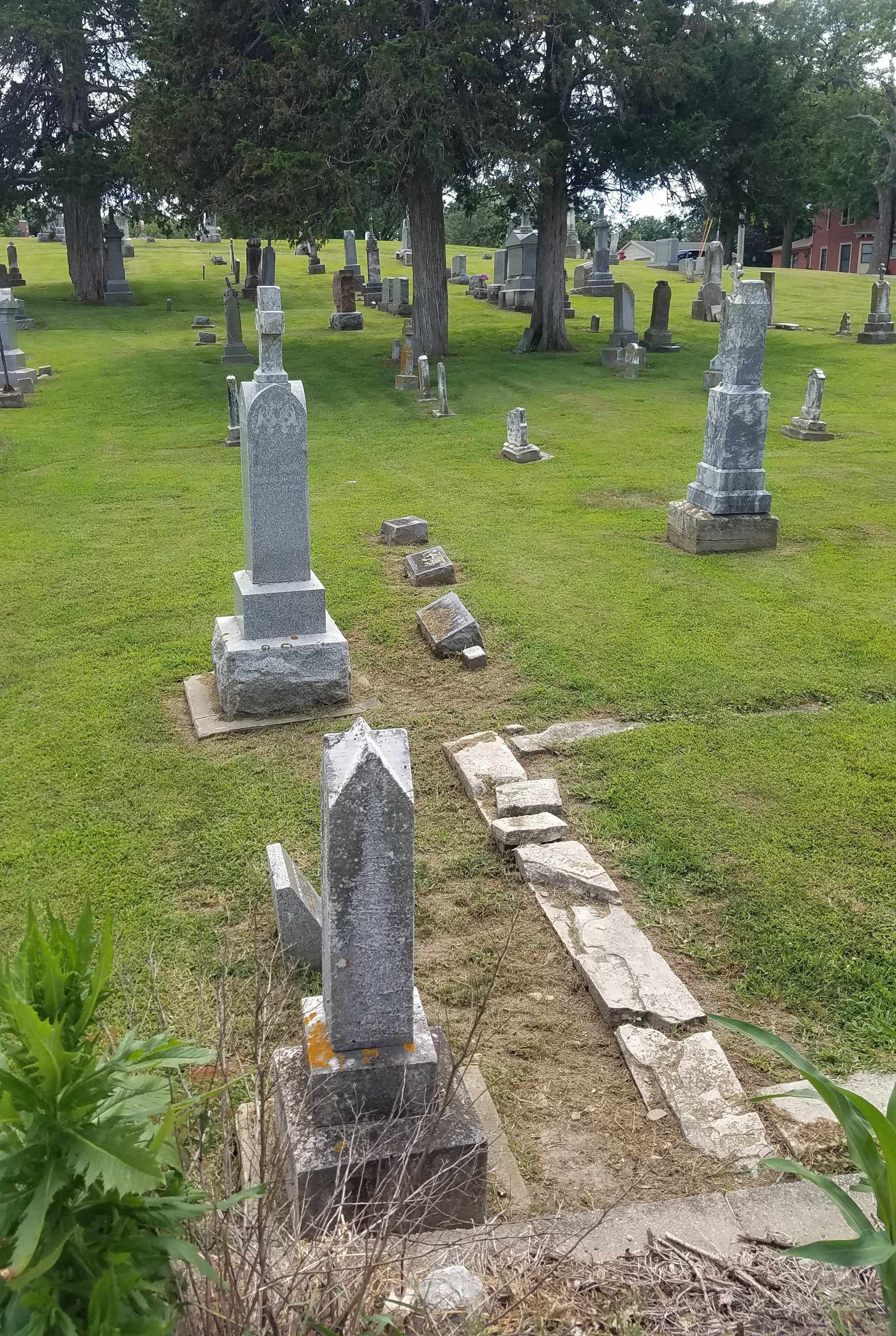
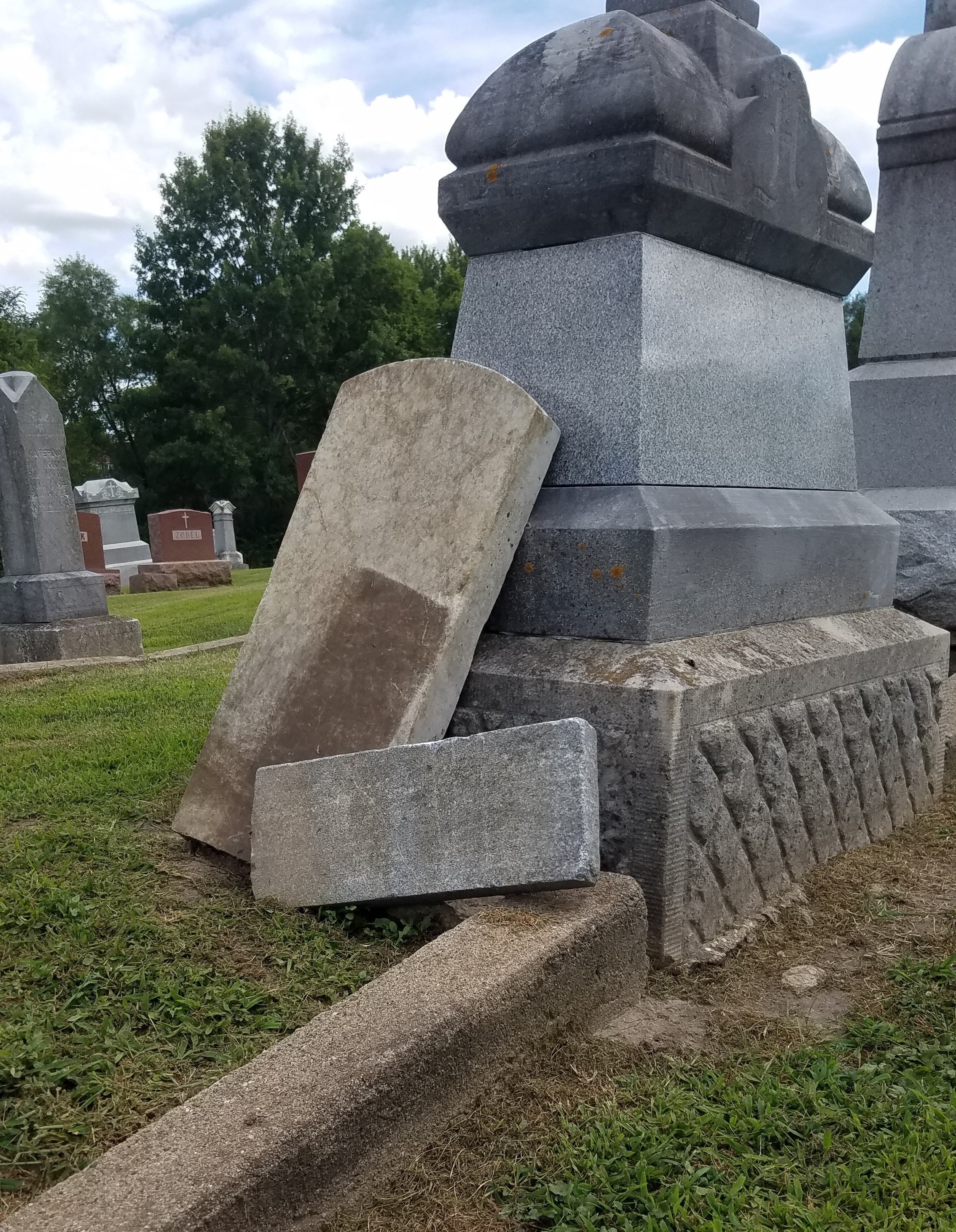
View of the Saint Mary’s Catholic Church cemetery in Solon, Iowa on July 30, 2022. Photograph of the now razed Saint Mary’s Catholic Church on Aug. 1, 2013. The cemetery was located around the church. Photo Credit – Wikimedia Commons.The cemetery has a look of not being maintained. The closer the view, the more markers are found damaged and askew. Broken tombstoneBroken tombstonesLeaning grave markersStacked, broken grave markers.
There are cemeteries like this across Iowa and the United States. I like the look of sunken and leaning monuments, and broken grave markers reflecting the passage of time. How is perpetual care done in places like these? Beyond mowing the lawn, not much is done except by family and volunteers. If I had family buried here, I’d maintain our burial site. What would happen after I’m gone? This cemetery is not featured on the current church website. I wouldn’t call it neglected, yet it is not a main part of the community.
Except for the image of the church, photography is by the author.
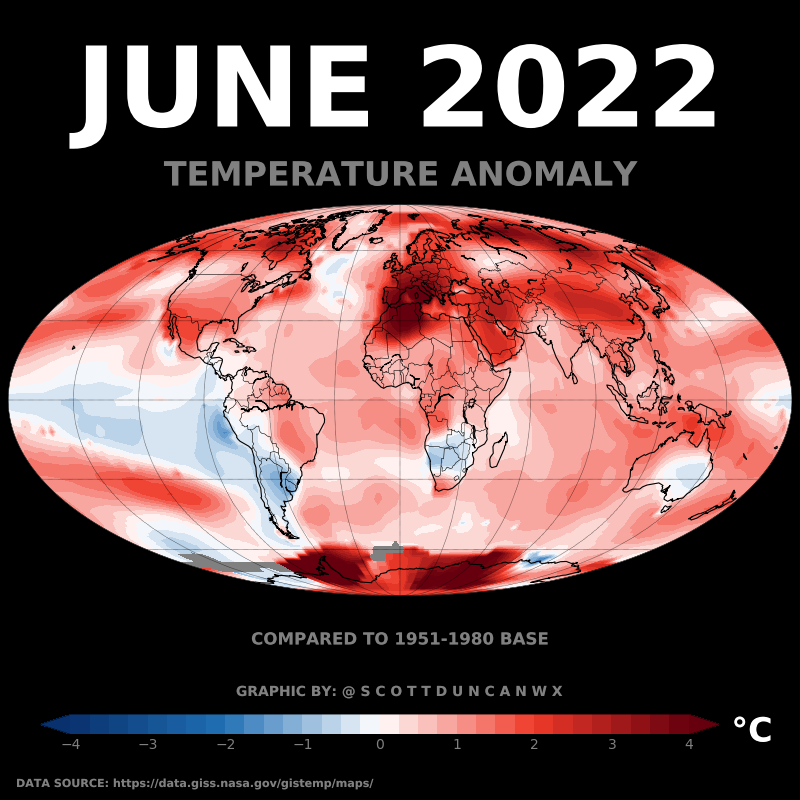
I’ve written about the environment on Blog for Iowa since my first post on Feb. 25, 2009. Never in the time since then has there been more happening regarding degradation of our environment. As Scott Duncan’s graphic above indicates, it is getting a lot hotter on most parts of Earth. Methane and carbon dioxide emissions are rising, the oceans are getting warmer, ice sheets at the poles are melting, and there is a general lack of political will in the United States and elsewhere to do enough reverse our course.
More than 40 percent of U.S. population lived in counties affected by climate disasters in 2021, according to Sarah Kaplan and Andrew Ba Tran of the Washington Post. In a report issued June 27, Kayrros, a firm that analyzes satellite data, said methane emissions have climbed despite the launch of the Global Methane Pledge at the U.N. climate conference in Glasgow, Scotland, last fall. The firm said that “global methane emissions so far appear to be going in the wrong direction.”
“Sadly, we have taken the ocean for granted, and today we face what I would call an ocean emergency,” U.N. Secretary General António Guterres told delegates at the June opening of the United Nations Ocean Conference in Lisbon, Portugal. “We must turn the tide. A healthy and productive ocean is vital to our shared future.”
Despite substantial evidence of environmental degradation that affects human life and society, President Biden’s plan to address the climate crisis fell flat in the Congress because there were not enough votes to pass it with a divided U.S. Senate.
“The reality we face implores us to act,” Al Gore said.
In Iowa we tinker around the edges of addressing the climate crisis. Decisions like the one I wrote about in 2009, which stopped Interstate Power and Light from building a coal-fired electricity generating station in Marshalltown, have been driven by economic factors rather than any concern about the environment. “You don’t like coal? Fine! We’ll use natural gas which is cheaper anyway,” they might have said. Neither the government nor industry in Iowa takes action on the climate crisis unless there is a positive, monetary effect on someone’s bottom line. Human health and well being has been a secondary consideration despite the warnings of public health officials like I was back in the day.
A lot of Iowa environmental activist bandwidth is being taken up by the fight to stop three different Carbon Capture and Storage proposals. Art Cullen cut to the chase in a July 15 editorial in the Storm Lake Times, saying, “The pipelines will get buried. The Iowa rainmakers will get theirs as we pretend that we are addressing the planet being on fire.” It is hard to give up on the fight against CO2 pipelines, even if it plays out like some of the other transportation proposals to take oil, electricity, liquefied CO2, or other commodities across county lines.
What is a climate activist to do? I would start by learning about big scale solutions and getting involved in electing candidates willing to take action on them. I reviewed The Decarbonization Imperative: Transforming the Global Economy by 2050 by Michael Lenox and Rebecca Duff here. It’s a good place to start. A couple of things seem clear. Individual action is unlikely to solve the climate crisis. Large scale solutions take technical skill to design and political will to implement.
I recommend readers become part of the solution to the climate crisis by getting involved in efforts to implement large scale environmental projects. In most cases, that begins at the ballot box with voting for candidates willing to do the work.








 Journey Home

You must be logged in to post a comment.