Categories
Environment

On Typhoon Haiyan

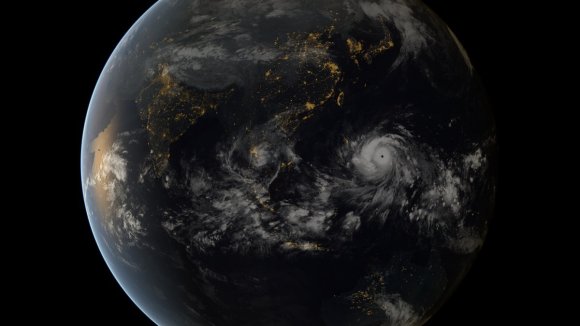
Typhoon Haiyan 2013 Photo Credit: EUMETSAT

LAKE MACBRIDE— The news about Typhoon Haiyan is horrifying. For the moment, it is hard to determine the exact damage, but these quotes from the corporate media provide preliminary estimates.

CNN: “No building in this coastal city of 200,000 residents (Tacloban, Philippines) appears to have escaped damage from Super Typhoon Haiyan.”

USA TODAY: “As many as 10,000 people are feared dead in one city alone after Super Typhoon Haiyan— one of the most powerful storms ever recorded— slammed into the central islands of the Philippines, officials said.”

CBS NEWS: “The central Philippine city of Tacloban was in ruins Saturday, a day after being ravaged by one of the strongest typhoons on record, as horrified residents spoke of storm surges as high as trees and authorities said they were expecting a ‘very high number of fatalities.'”

REUTERS: “The death toll is expected to rise sharply from the fast-moving storm, whose circumference eclipsed the whole country and which late on Saturday was heading for Vietnam.”

LOS ANGELES TIMES: “What may be the fiercest typhoon in recorded history smashed into the Philippines early Friday morning, carrying winds that make Superstorm Sandy look like a weak relative. Even Hurricane Katrina, the modern measure of nature’s disastrous force on the United States, pales when compared to the punch and expected devastation from Typhoon Haiyan.”

Typhoon Haiyan was the second category 5 typhoon in the Pacific Ocean this year. While we consider the damage, and what it means, it’s time for a moment of prayer for the dead, and for the survivors.

Categories
Environment Kitchen Garden

Adapting to Climate Change

Conference Welcome
Conference Welcome

RURAL CEDAR COUNTY— On a tour of an organic farm in Cedar County yesterday, talk turned to the impact recent unusual and severe weather events we have had. The story is similar to what others in the agricultural community have been saying.

Farmers are talking about two main weather events this year. The late, wet spring that delayed planting, and drought conditions during August and September. According to a recent gathering at the Farm Bureau, there will be more of the same during the next several years.

The late, wet spring caused some localized flooding on the property, but did not significantly impact the overall operations. They dealt with the weather. The apple crop was abundant because spring pollination conditions were almost perfect after a tough 2012, with the buds flowering after the last hard frost. A lot of apples were still on some of the trees.

Locally we lived through a period of six weeks without any rain. The effects of the summer drought on the vegetable crop were mitigated by irrigation using a drip tape system. There was plenty of water for irrigation, although like most farmers, he didn’t know how deep his well was dug. There was a farm pond should the well go dry.

Drought will reduce corn yield. We examined some ears on the stalk, and a second ear failed to form on many of them. What ears of corn were present did not fill out with kernels. Both conditions were attributable to the drought.

For the last several years, the ability to harvest vegetables later into the year exists because it was warmer later. Food can be harvested directly from the field, rather than drawn from storage and preserves during November and into December. My tour guide said he had only just begun to realize the persistent change, and was beginning to rethink his food planning for the 80 or so people who rely upon the farm for daily meals.

Farmers, more than most people, are sensitive to changes in the weather and climate. For 10,000 years the climate on earth has been stable, and this stability enabled the rise of agriculture, and along with it, our civilization. In Iowa, agricultural success is predicated on our assumptions about rainfall and the hydrological cycle. Things are changing, and what I saw yesterday is more evidence of that.

The era of climate stability is at an end, due largely to human activity. We continue to dump 90 million tons of CO2 pollution into the thin shell of atmosphere each day as if it were an open sewer. Without action on our part, adaptations like those on this farm will be ineffective over the long term. Whatever we were used to as normal has been disrupted by changing climate.

It may be evident to a farmer that the ecology of agriculture is changing in new ways. Yesterday’s farm tour was another example of why. Taking collective action to mitigate the causes of climate change has become the moral challenge of our time. We didn’t ask for this, but our personal involvement is as important as it has ever been as we work to sustain our lives in a turbulent world.

Categories
Environment

A Rising Challenge to Iowa Agriculture

DES MOINES— In the wake of 2013’s extreme weather roller coaster, marked by the wettest spring on record, followed by the second-driest July through September ever, a statewide group of leading Iowa science faculty and researchers released the Iowa Climate Statement 2013: A Rising Challenge to Iowa Agriculture at Drake University in Des Moines on Oct. 18. Below is the text of the statement. The document with the names of Iowa scientists endorsing it is here.

Iowa Climate Statement 2013: A Rising Challenge to Iowa Agriculture

Our state has long held a proud tradition of helping to “feed the world.” Our ability to do so is now increasingly threatened by rising greenhouse gas emissions and resulting climate change. Our climate has disrupted agricultural production profoundly during the past two years and is projected to become even more harmful in coming decades as our climate continues to warm and change.

Swings from one extreme to another have characterized Iowa’s 2013 weather patterns. Iowa started the year under the widespread drought that began in 2011 and persisted throughout 2012. But the spring of 2013 (March‐May) was the wettest in the 140 years of record‐keeping, creating conditions that hampered the timely planting of corn and soybean fields. During those months, sixty‐two Iowa counties experienced storms and flooding severe enough to result in federal disaster declarations.

By mid‐August, very dry conditions had returned to Iowa, subjecting many of the state’s croplands to moderate drought. These types of weather extremes, which are highly detrimental to Iowa’s crops, were discussed in our 2012 Iowa Climate Statement, where we also noted that globally over the past 30 years extreme high temperatures are becoming increasingly more common than extreme low temperatures. In a warming climate, wet years get wetter and dry years get dryer and hotter. The climate likely will continue to warm due to increasing emissions of heat‐trapping gases.

Climate change damages agriculture in additional ways. Intense rain events, the most notable evidence of climate change in Iowa, dramatically increase soil erosion, which degrades the future of agricultural production. As Iowa farmers continue to adjust to more intense rain events, they must also manage the negative effects of hot and dry weather. The increase in hot nights that accompanies hot, dry periods reduces dairy and egg production, weight gain of meat animals, and conception rates in breeding stock. Warmer winters and earlier springs allow disease‐causing agents and parasites to proliferate, and these then require greater use of agricultural pesticides.

Local food producers, fruit producers, plant‐nursery owners, and even gardeners have also felt the stresses of recent weather extremes. Following on the heels of the disastrous 2012 loss of 90 percent of Iowa’s apple crop, the 2013 cool March and record‐breaking March‐through‐May rainfall set most ornamental and garden plants back well behind seasonal norms. Events such as these are bringing climate change home to the many Iowans who work the land on a small scale, visit the Farmer’s Market, or simply love Iowa’s sweet corn and tomatoes.

Iowa’s soils and agriculture remain our most important economic resources, but these resources are threatened by climate change. It is time for all Iowans to work together to limit future climate change and make Iowa more resilient to extreme weather. Doing so will allow us to pass on to future generations our proud tradition of helping to feed the world.

Categories
Environment Home Life

Storm Cleanup is Finished

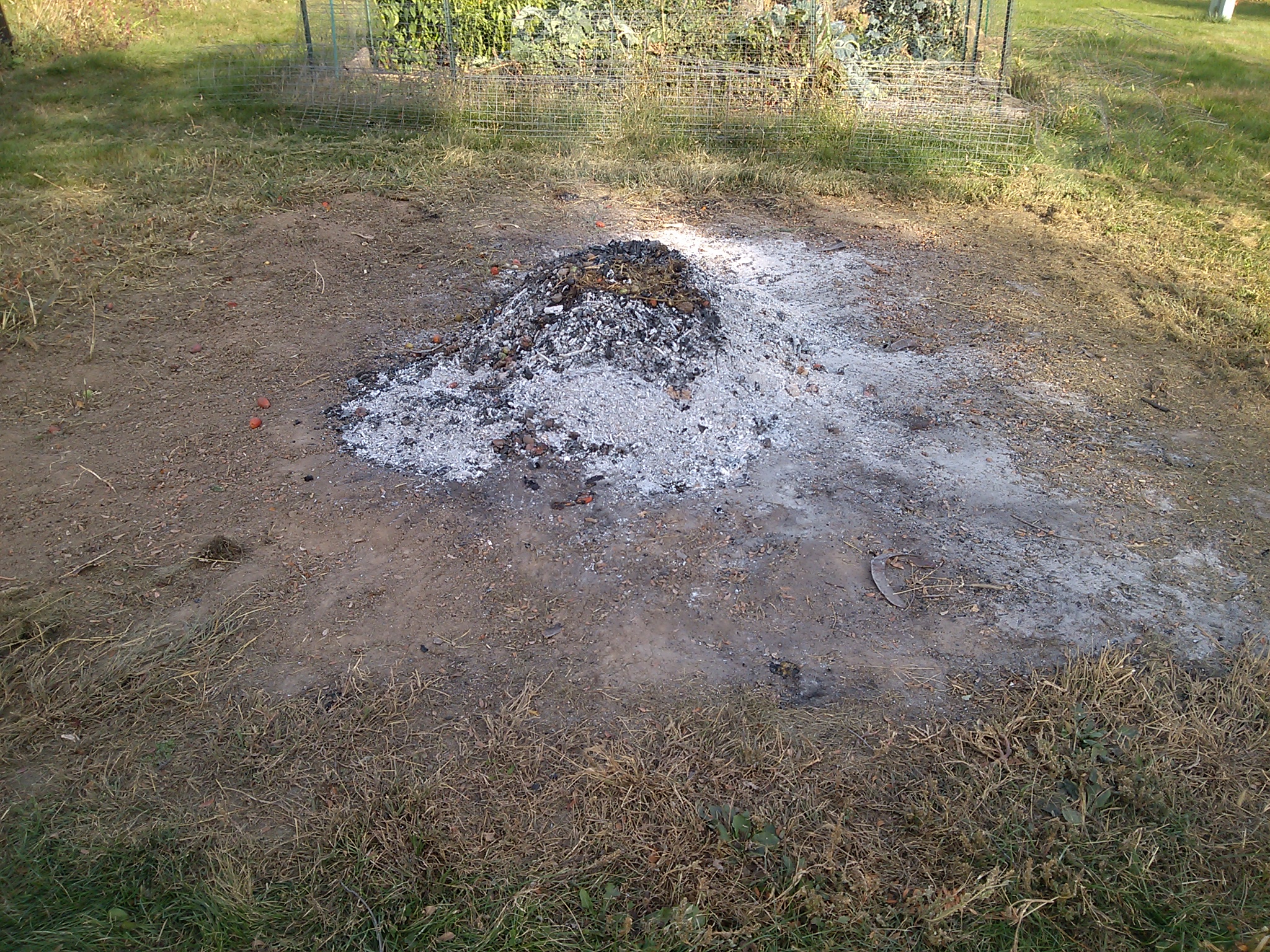
Ashes from the Brush Pile

LAKE MACBRIDE— Embers of the brush pile marked the final cleanup after the Sept. 19 storm. Uneven spots remain where the tree fell, but the lilac bushes retained a nice shape and appearance after trimming the damaged branches. Next order of business is to mow the lawn, which is still partly brown after the drought, and collect the grass clippings to use as mulch where the burn pile is now. It’s been two months since the lawn was mowed.

The season’s canning is mostly done, and I posted this to Facebook yesterday,

All the canning jars in the house have something in them, more than 30 dozen. Tomatoes, applesauce, hot peppers, soup stock, sauerkraut, dill pickles and hot pepper sauce. There is apple butter, pear butter, peach, raspberry and black raspberry preserves, and grape jelly. The freezer’s full too. Plenty of potatoes and onions. We will have the beginnings of plenty of winter meals. All was grown locally and organically. Think I’m done for this canning season.

Herbs are drying in trays in the dining room, and a lot of produce remains in the garden. The counters and bins in the house are full of tomatoes, winter squash, apples, onions and potatoes. By Monday we should have a hard frost which will end most of the growing season. The historical first hard frost is around Oct. 7, so the growing season extended by about two weeks this year. It’s not clear what weather history means any more, except to point out how different things are getting.

A farmer was talking about the weather last night, commenting that it has recently been extreme, with nothing in between. He was referring to the early snowstorm that killed an estimated 100,000 cattle in South Dakota earlier this week. What we want is a steady, soaking rain for about 48 hours to bring up the moisture level in the ground. It hasn’t happened, and we are left with heavy downpours, flooding and fires in the great plains and upper Midwest.

For some farmers, the soybeans are in. While they had the potential for a big crop, the average yield was about 40 bushels per acre. The pods formed but didn’t fill for want of rain. The corn crop is still coming in, so if it rains, nature could wait until the rest is in. The variation in yield is between 40 and 200 bushels per acre. There aren’t many places producing the high end of the range and average is coming in around 140. There is some hesitancy to say until it is all in, but yield will be better than last year during the record drought.

Everywhere in the farming community, people are concerned about the extreme weather. Weather is always a concern for farmers, but this is different. People seem worried like they haven’t been before. There has been no mention of climate change in these conversations, and I don’t bring it up. No need to assert my views when the connection between extreme weather and climate change will become obvious with the persistence of trouble, and the expansion of knowledge.

While our cleanup is finished, the extreme weather seems like it is only just beginning. We use the same language, developed over generations, to discuss farming. But there is a sense, a resonance of worry, unlike what has been present before. It will nag at people and hopefully result in action to mitigate the causes of climate change before it is too late.

Categories
Environment Home Life

Storm Cleanup Continues

Work Station
Work Station

LAKE MACBRIDE— After completion of the Sept. 19 storm cleanup, the monetary cost will be $230.50, including hiring an arborist to tend to two trees and a construction company to repair the fascia on the southwest corner of the house. It was not much, and a lot less expense than others in the neighborhood experienced.

I avoided the cost of disposing of the fallen branches by cutting them into two types: firewood to be sold, and brush to be burned. The cost is in time, with one or two more four hour sessions of cutting ahead, and at least two more burns when the wind dies down. We’ll evaluate the condition of the damaged trees and lilac bushes and make adjustments after the burning is finished. With pruning, the lilacs can be saved.

Burn Pile Site
Burn Pile Site

Beside our checking account and labor, and a share of the bill for the damage in our subdivision, another toll from the storm lingers— the idea that this worst in 20 years weather event, coupled with recent severe drought and terrible flooding, is just the beginning of the effects of climate change on our lives. Whatever severe weather we might have had was intensified by the effects of global warming. That a monetary value can be assigned is a sign of things to come.

Farm and newspaper work continues over the weekend, so the cleanup will wait until next week. Cleanup displacing other things to be done to advance our socioeconomic status in Big Grove. The storm cleanup reinforces the idea that climate change is real and happening now. We need to do something to protect what we hold dear, we can’t be effective alone, and the time to act is now.

Categories
Environment

The Cost of Carbon – 24 Hours of Reality

the-climate-reality-project-logoOn Oct. 22 and 23, The Climate Reality Project will connect the dots between carbon pollution and climate change with the global live-streamed broadcast “24 Hours of Reality: The Cost of Carbon.” here’s the link:

http://www.24hoursofreality.org.

In Iowa, men and women in the agricultural community are talking about the likelihood of four or five more years of continued drought. Harry Hillaker, Iowa state climatologist, indicated 2013 was the wettest spring on record. He confirmed this summer’s drought conditions in Iowa. Like this year, the prospect for coming years is wet springs combined with long summer periods of little or no precipitation.  There is no doubt human activity is contributing to this extreme weather, and that carbon pollution is the driving force behind it.

Not only are extreme weather events happening in Iowa, they are happening throughout the world. Extreme weather has a tangible cost in dollars, and in its impact on human society. 24 Hours of Reality will bring a global perspective to the climate crisis.

There are a lot of reasons to participate in 24 Hours of Reality, and here are three topics of interest in the program:

Chances are, you’re exposed to the cost of carbon pollution in ways you may not even realize— and the bill just keeps getting more expensive. 24 Hours of Reality will provide a tool to calculate the cost of carbon to individual communities.

Climate change can lead to rising food prices in wealthy nations, but in some regions, the consequences can be much more severe, threatening basic food security and leading to political instability in Somalia.

One of the greatest costs of climate change is what it means for our health. The broadcast goes to towns across Australia to witness the consequences of carbon pollution in terms of fire and flooding, and address what such changes mean for the health of ordinary people there and the world over.

24 Hours of Reality will address two key issues: protecting what we hold dear from the effects of climate change, and doing something to address the causes of our carbon pollution. Click here for a link to the 30 second trailer about 24 Hours of Reality.

I hope you will consider viewing part of 24 Hours of Reality on Oct. 22 and 23.

Categories
Environment

Climate Reality Presentation Sept. 30

the-climate-reality-project-logoPlease join

Senator Rob Hogg and

Paul Deaton

for a presentation and discussion about climate change and what we can do about it.

Monday, Sept. 30 at 6:30 p.m. at the Solon Public Library, 320 W. Main St., Solon Iowa.

The link between climate change and more frequent and intense weather events is no longer in doubt. Climate Change is real, it’s happening now, and we can and should do something about it. This hour-long event will present the science of climate change, discuss its causes and effects, and lay out ways to address the causes of climate change and prepare for it.

Iowa State Senator Rob Hogg is a fourth generation Iowan who represents the 33rd Senate District in the Iowa legislature. He is the author of the new book, “America’s Climate Century: What Climate Change Means for America in the 21st Century and What Americans Can Do about It.”

Paul Deaton is a native Iowan and Solon area resident since 1993. He is a member of the Climate Reality Leadership Corps, part of a global initiative with more than 5,000 leaders trained personally by former vice-president Al Gore.

Categories
Environment Home Life

Storm Damage Update

LAKE MACBRIDE— The sound of chain saws echoed through the neighborhood yesterday, including in our yard where a tree service climbed the Autumn Blaze maple tree and removed the broken branch high in the canopy. They also removed a large branch from the maple tree on the north side of the house. The branch was growing toward the structure, and could have fallen on it should another intense storm come through. It seems increasingly likely another intense storm will hit, sooner rather than later.

The storm peeled back the southwest corner of the metal facing on the roof. From the ground, it appears there is water damage to the underlying wood, it will have to be inspected and repaired. One can accept the reality of intense weather, caused by climate change, but it is much more than words on a web page. The work of recovery absorbs our resources and time, and portends more of the same. Dealing with disasters, even small ones like ours, is not how we intended to spend our life when we were in grade school.

On the plus side, there is a buyer for the firewood the disaster will produce, and finding an inexpensive tree service will be an asset going forward. I bartered some of the cut maple wood with a neighbor who will use it to smoke meat. In return, he will press some apples into cider. The storm’s wake left more neighboring than I can recall in a long time.

According to the U.S. Census, our household is above the median net worth for people our age. Not by much, but enough so that to say we are working poor is inaccurate. Poor people don’t have a net worth. At the same time, trying to make ends meet is challenging.

The reality of working seventy hours per week for less than a living wage, is there is less time, energy and resources for everything else. At the center of this life is the notion that we can maintain priorities and get the most important things done. Add disaster recovery, and the equilibrium is upset.

It’s approaching 5 a.m. in Big Grove, when I’ll depart for the newspaper, hoping to finish the week’s proof reading and catch the grand opening of a new restaurant in town before heading to the orchard for work. In the hour or two of daylight after my shift, I’ll glean a garden plot to make room for the disaster brush pile. Once that is done, organize for our presentation at the library on Sept. 30. We make plans, work the plan, and hope for the best— sustaining our lives in a turbulent world.

Categories
Environment Kitchen Garden

Letter to the Solon Economist

To the editor,

National Farm Bureau’s spokesman Mace Thornton was recently quoted by David Biello in Slate Magazine, “we’re not convinced that the climate change we’re seeing is anthropogenic in origin. We don’t think the science is there to show that in a convincing way.”

That a large national organization with strong Iowa roots would assert such a thing is ridiculous.

First of all, farmers experience the effects of changing climate directly. If they do not connect the dots between the increasing use of fossil fuels and the warming planet, it is the talk of bureaucrats and paid analysis not grounded in the science of the greenhouse effect and its relationship to climate.

Secondly, whether farmers are convinced that climate change is anthropogenic (i.e. caused in part by human activity), has become increasingly irrelevant. The USDA has already begun to incorporate climate change in its projections and outreach. According to Biello, “many American farmers— even those who would question whether climate change is man-made— are already doing exactly what efforts to combat climate change would require: precision agriculture to cut back on fossil fuel use, low or no-till farming, cover crops, biodigesters for animal waste, and the like.”

Climate change is real, and it’s happening now. If you would like to hear more about the science of climate change and what you can do to help remediate its causes, please attend a public meeting with me and Senator Rob Hogg on Monday, Sept. 30 at 6:30 p.m. at the Solon Public Library. All are welcome.

Footnote: Slate Magazine, July 16, 2013, Why Don’t Farmers Believe in Climate Change? by David Biello. Link to article here.

Categories
Environment

Hitting the Sweet Spot

View from the Pepper Patch

LAKE MACBRIDE— Yesterday’s presentation to a group of university students went well. In 30 minutes and 70 slides, a story of the climate crisis and its relationship to food systems unfolded in what felt like my most confident public speaking to date. The students seemed engaged in the narrative, and the questions at the end were thoughtful. Perhaps I have found my sweet spot.

One of the hopes for On Our Own: Sustainability in a Turbulent World has been to work through ideas and practices in local food systems. This included real world experience working on four farms, maintaining a large garden at home, and networking with people who play various roles in our local food system. The question has been, can one more person make a living producing, selling and promoting local food? The answer is yes, but I enjoy writing and speaking about it more, leaving a quandary regarding how to go forward.

My work with the Climate Reality Project requires a certain amount of public speaking and writing, but it is volunteer work. Local food system work, like any paid labor requires full attention and is physically challenging, leaving little room for other things. Balancing the two, and resolving the quandary, may be possible, but the path is not clear yet. That’s good news for readers of this blog as I reflect on this year’s local food system experience and work through how to spend next year during the coming weeks.