Categories
Work Life Writing

Life Minus Television

You Bet Your Life
You Bet Your Life

LAKE MACBRIDE— It has been a while, more than a year, since the television has been turned on with any regularity. I fired up the tubes to view President Obama’s address to the nation on the campaign in Syria, and occasionally we follow extreme weather, but mostly the set rests darkly in the corner, collecting dust.

That’s not to say we disconnected. We cut back the service to basic cable to save a few budget dollars, and maintained what we had for the bundling with Internet service. With the recent demise of my laptop, and acquisition of a desktop to replace it, I have less screen time generally. The computer has become a work station in a life with many of them— a post-television life of screen time.

Early on, I realized the boon to productivity that was word processing software. It’s hard to believe how much time was spent typing and re-typing a finished paper or article on my Smith Corona and Olympia machines. I kept the typewriters for sentimental reasons, and don’t know if I could find a new ribbon should I want to use them again. While we lived in Indiana, I bought a word processing machine and produced some documents that survive, including a journal— electronic word processing was a miracle.

On April 21, 1996 we bought an Acer home computer and logged on to the Internet at home for the first time. Making the decision to add the $25 monthly subscription to an already tight budget was a big deal. There’s no going back now, and communications services is a big chunk of our monthly budget, one I would like to cut back on.

Now there’s the hand-held mobile device with an Internet connection and many applications. It is used mostly to check email and news, and every once in a while, I make a phone call. Owning this machine has made a laptop less relevant, and communications with people who matter easier.

With the conversion of the industrial economy to one based more on services, the most important element, one that changed everything, has been constant human contact. At the warehouse, I interact with hundreds of people each day when working a regular shift. At the orchard, on a busy Saturday I will greet 500 people or more. It is this human contact we crave, despite how it drains energy from our day.

When we lived on Madison Street, before I entered first grade, I longed to stay up and watch “You Bet Your Life” with Groucho Marx on television. My parents would not allow it for reasons that have become obscure in the river of time. Partly they felt I should be in bed by 9 p.m. when the show aired, but there was more.

As I moved through the grades and left home, television viewing was always a second tier activity, one for after a day’s work was done, whether it be school work or a shift at a job. When I lived in Germany I bought a television late during my tour of duty, and got rid of it after a few months. There is no going back to television now. I’d rather spend my time with people, and see the diverse human experience for myself.
Categories
Work Life

Fall Arrived

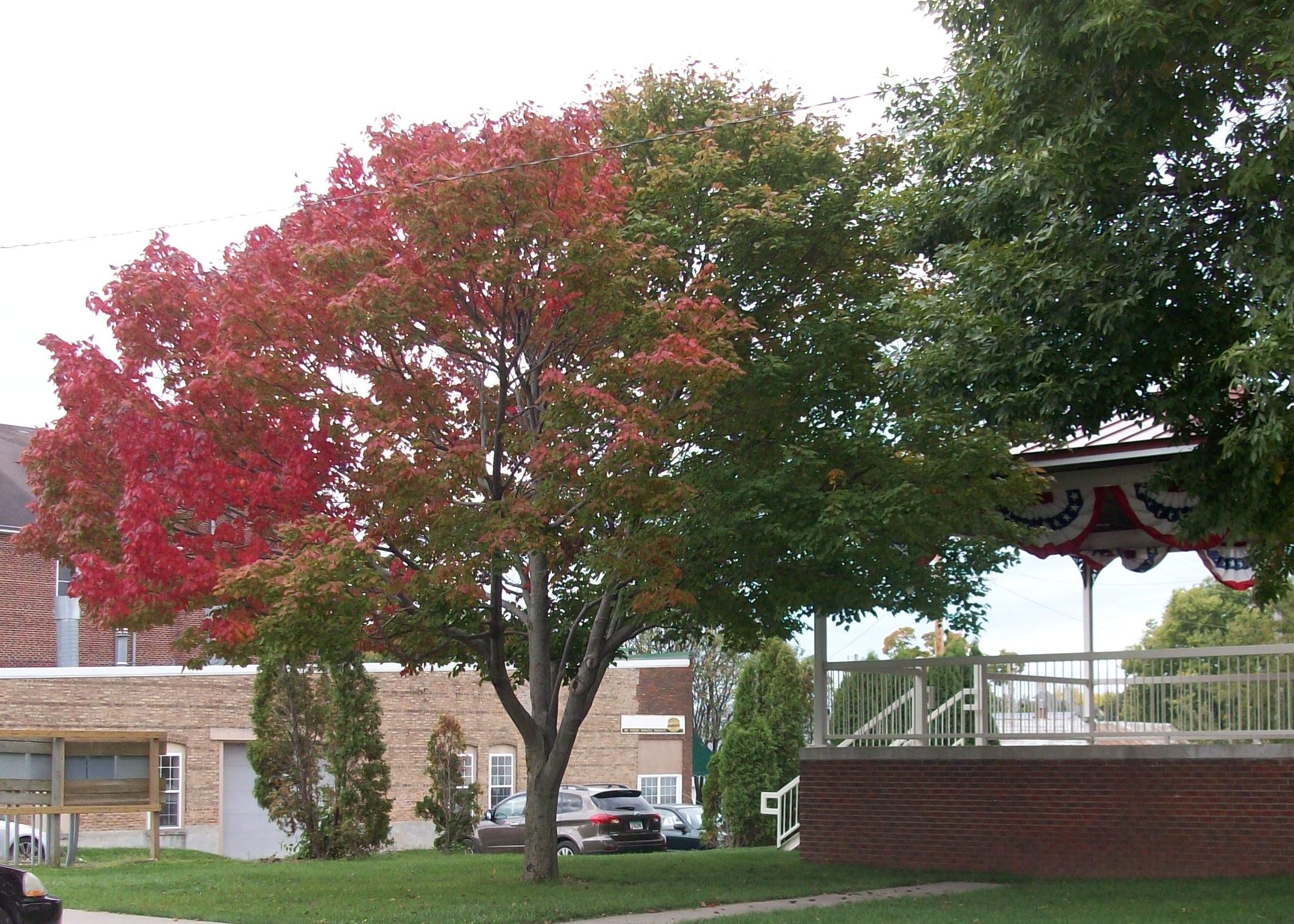
Band Stand
Band Stand

JOHNSON COUNTY— In a post-career life there is never a day off. I’m okay with that because days become a time to see the world through a new lens during and between existential errands.

Pepper Harvest
Pepper Harvest

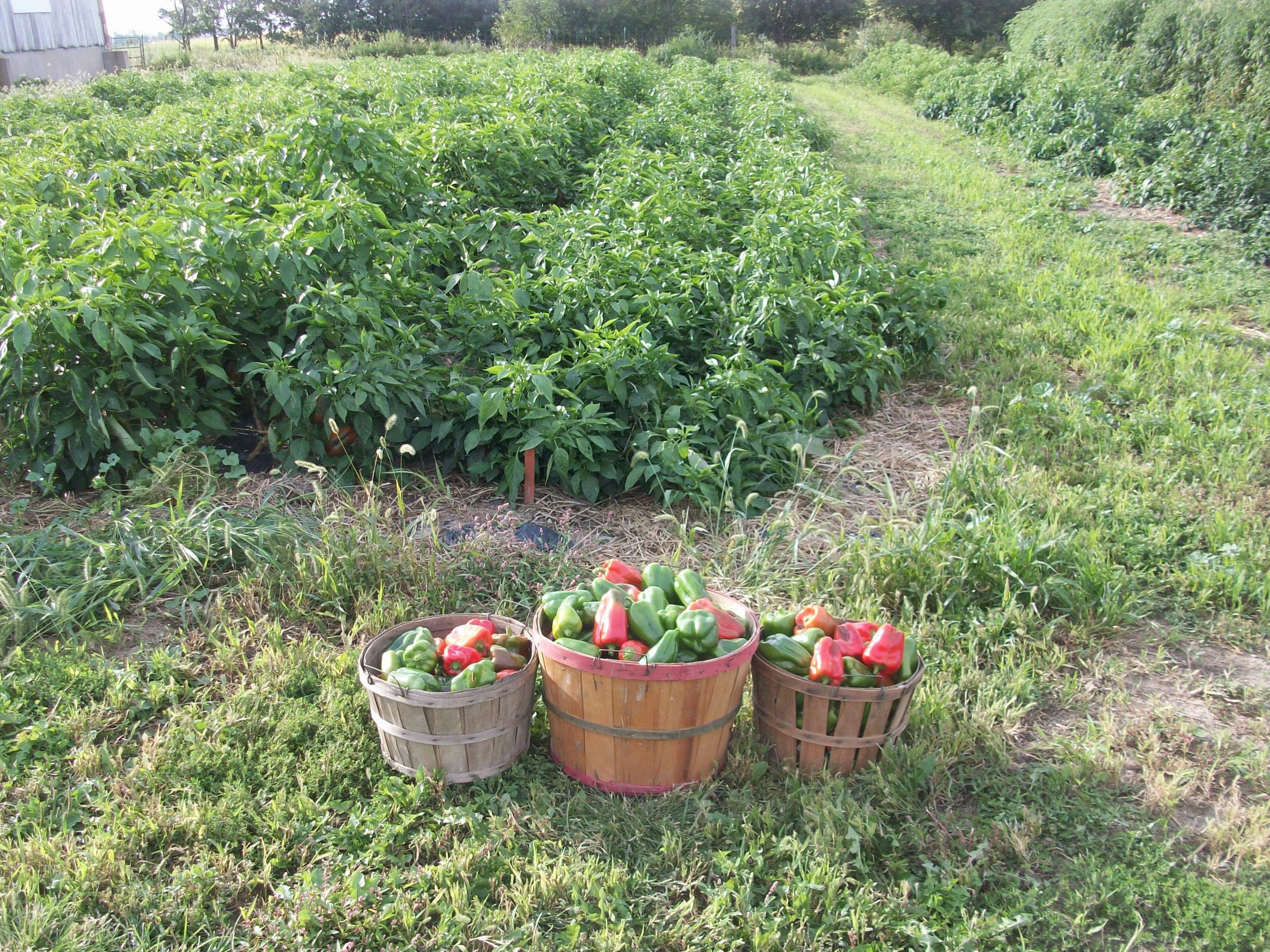
After morning chores, I drove to the CSA to pick two bushels of bell peppers for freezing. Next, I went to the orchard and picked two dozen apples. I wanted some Wolf River and there were plenty on the trees. I also picked Jonathan, Jonafree, Gala, Haralson, Kandil Sinap and Marshall’s McIntosh. I picked up a half dozen apple cider donuts and a half gallon of fresh cider. Next I stopped at the newly opened Casey’s General Store on Highway One. It had opened for the first time that morning. From there, I went to the newspaper office to report that it was open, and that the current store would be cutting back from 24 hours per day.

Cemetery Pump
Cemetery Pump

I took some photos of the band stand, the cemetery, the Mexican restaurant on Main Street, and of the Bangkok peppers in our garden. It was a tour of the local, and I relished each moment before getting back to work.

Today is the first day of early voting in Iowa, and political field organizers are trying to bank votes. The Democrats seem better at it than the Republicans, but the latter now recognize it is a thing. Most likely I will vote early, but there is more learning to do before I do. A level of participation in our government that matters, so some energy spent researching the candidates and issues is time well spent.

Now on with today’s priorities in this too short life on the plains.

Categories
Work Life

Day of Work Photos

From sunrise until sunset I made a retreat, preparing for winter.

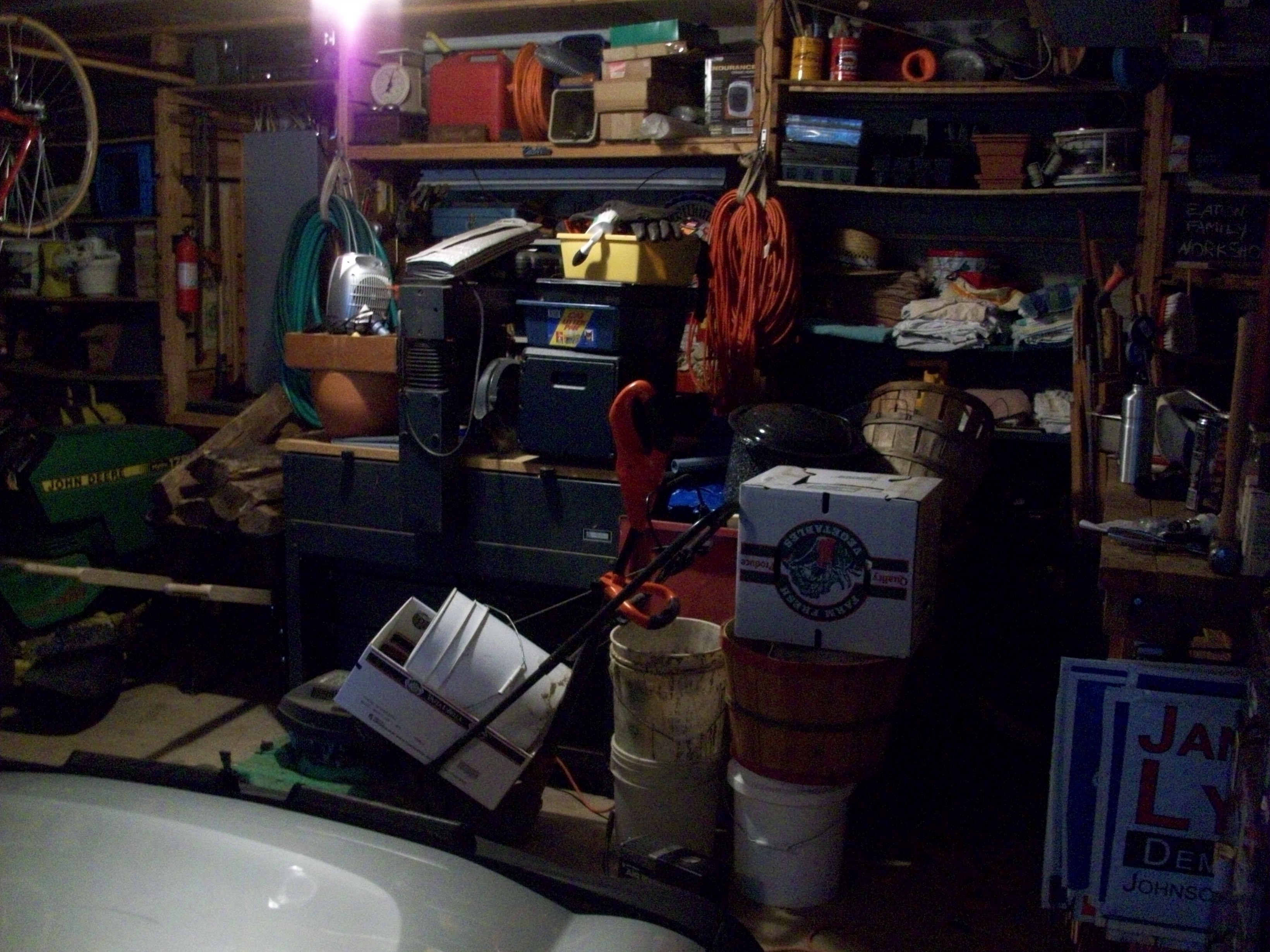
Preparing to Open the Garage Door Pre-dawn
Preparing for the Day Predawn
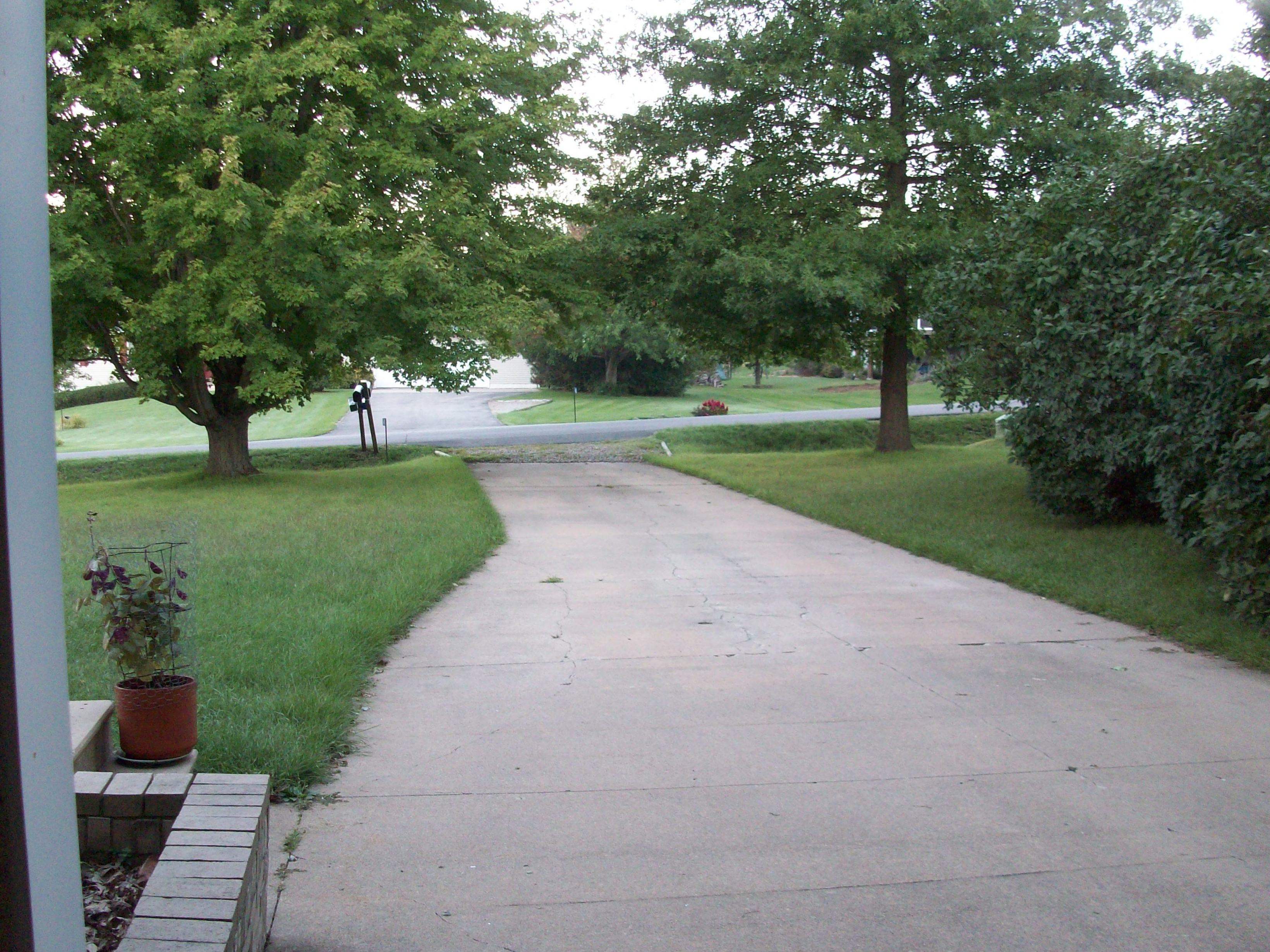
The Door is Open
The Door is Open
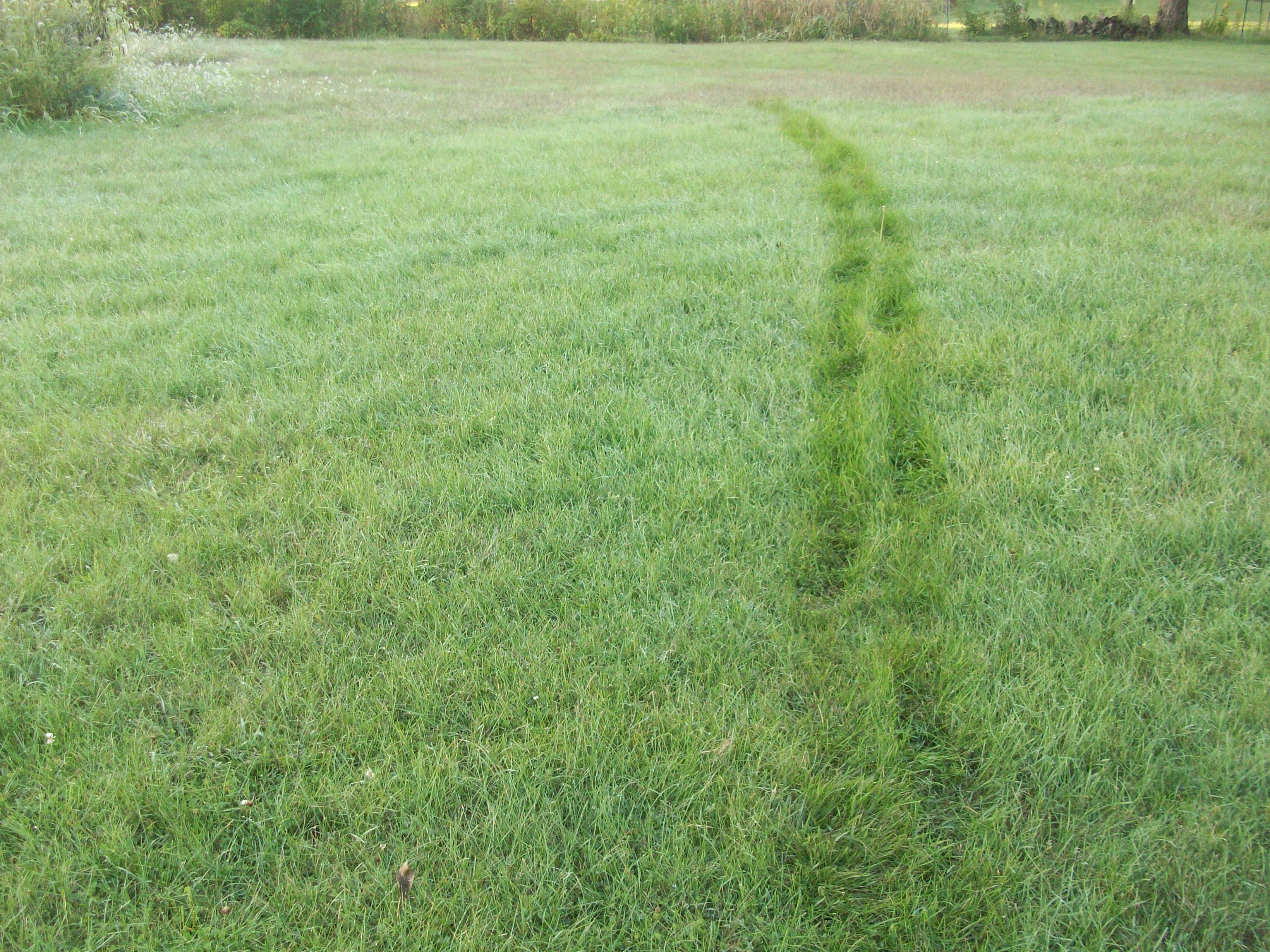
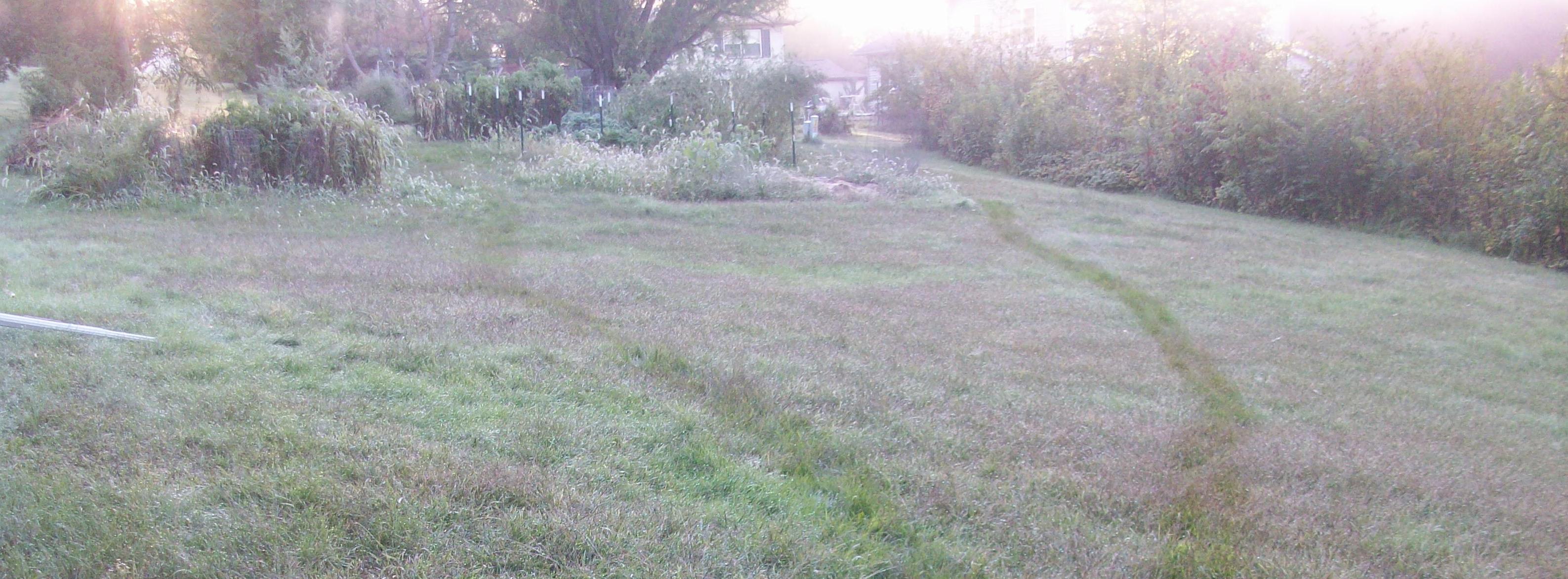
First Tracks in the Dew
Sunrise
Sunrise
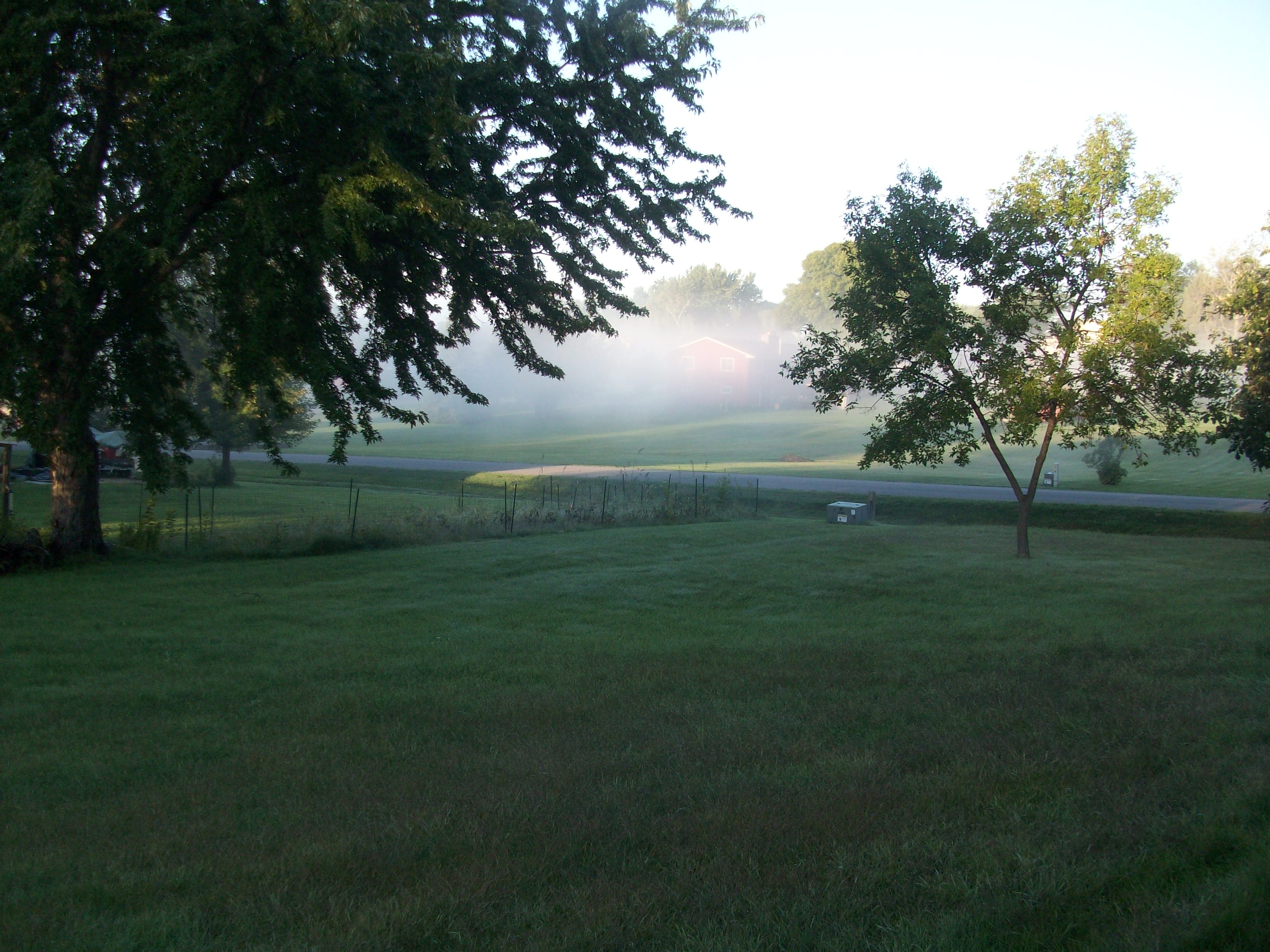
Fog Burning Off
Fog Burning Off
Foot Tracks
Foot Tracks
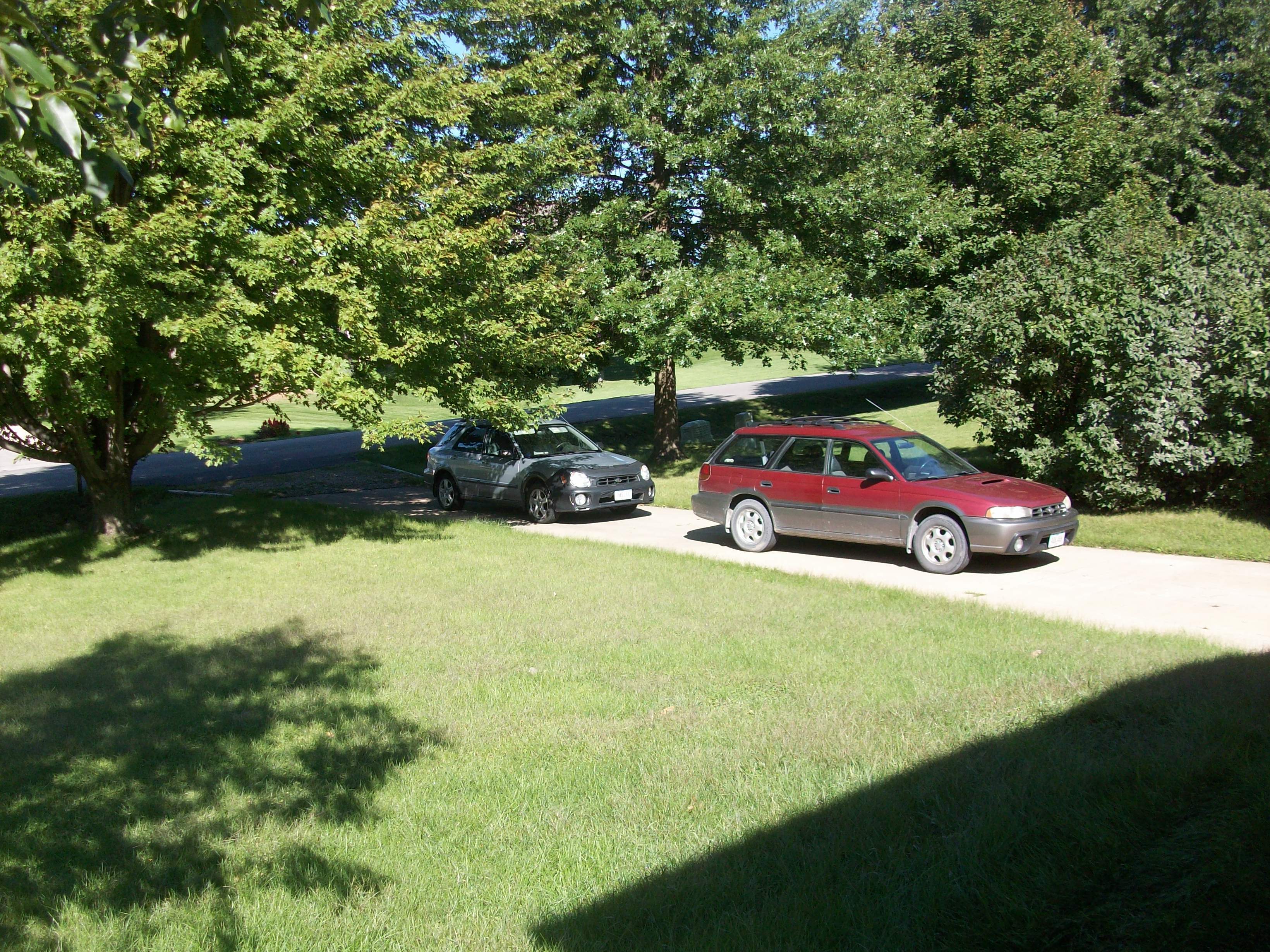
Moving the Cars Out of the Garage
Variegated Leaves
Variegated Leaves
Work Gloves
Work Gloves
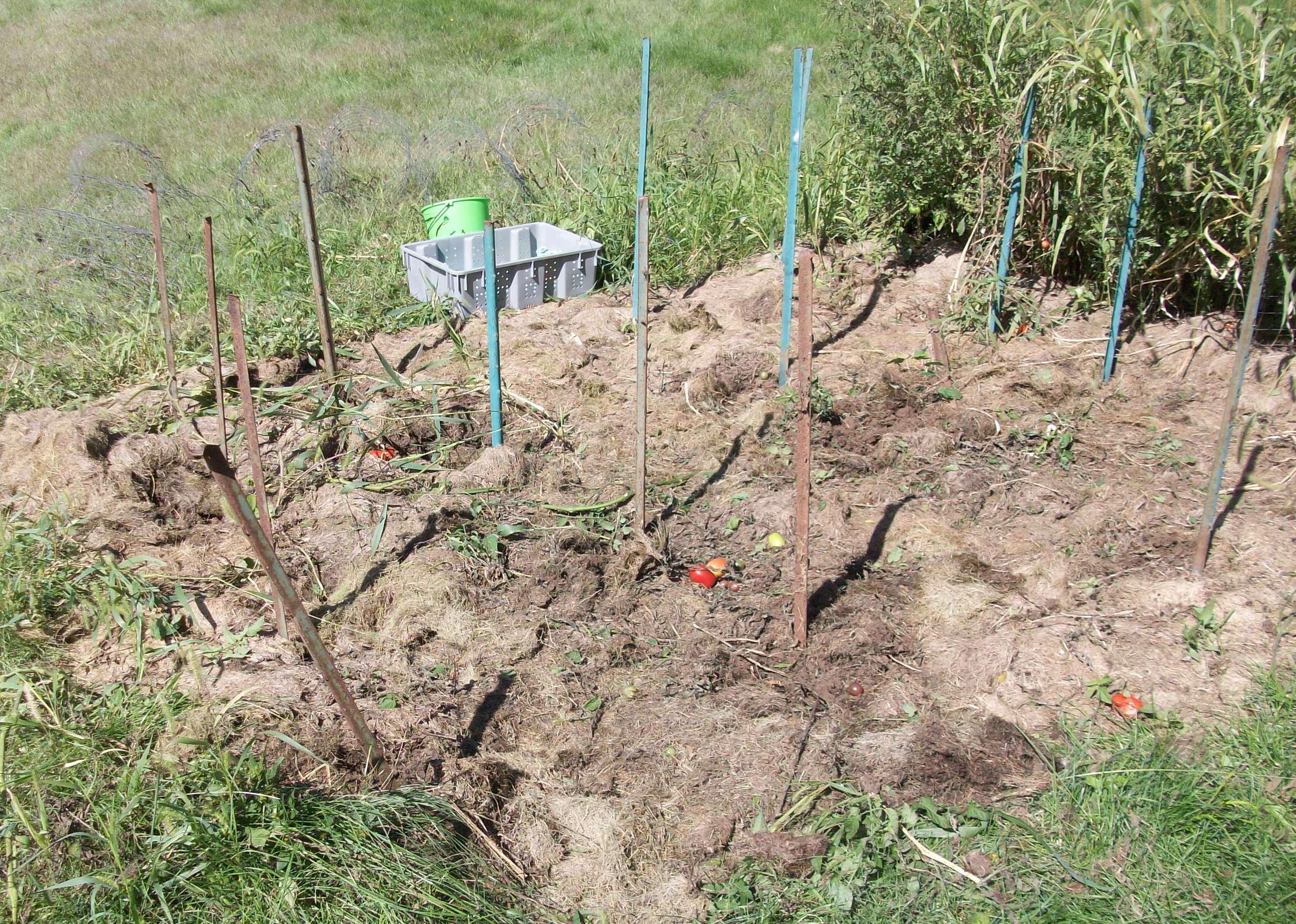
Former Tomato Patch
Former Tomato Patch
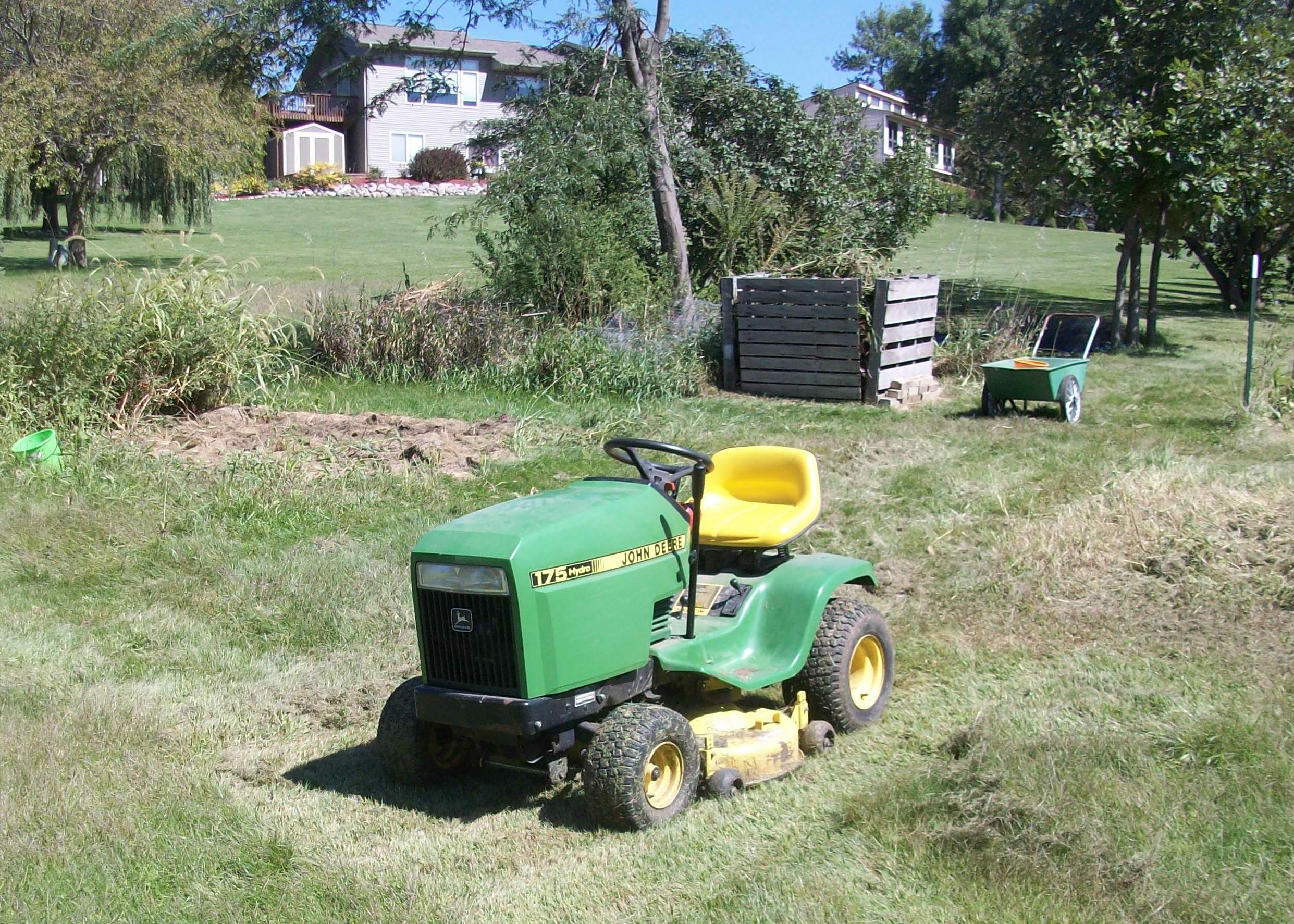
John Deere Tractor
John Deere Tractor
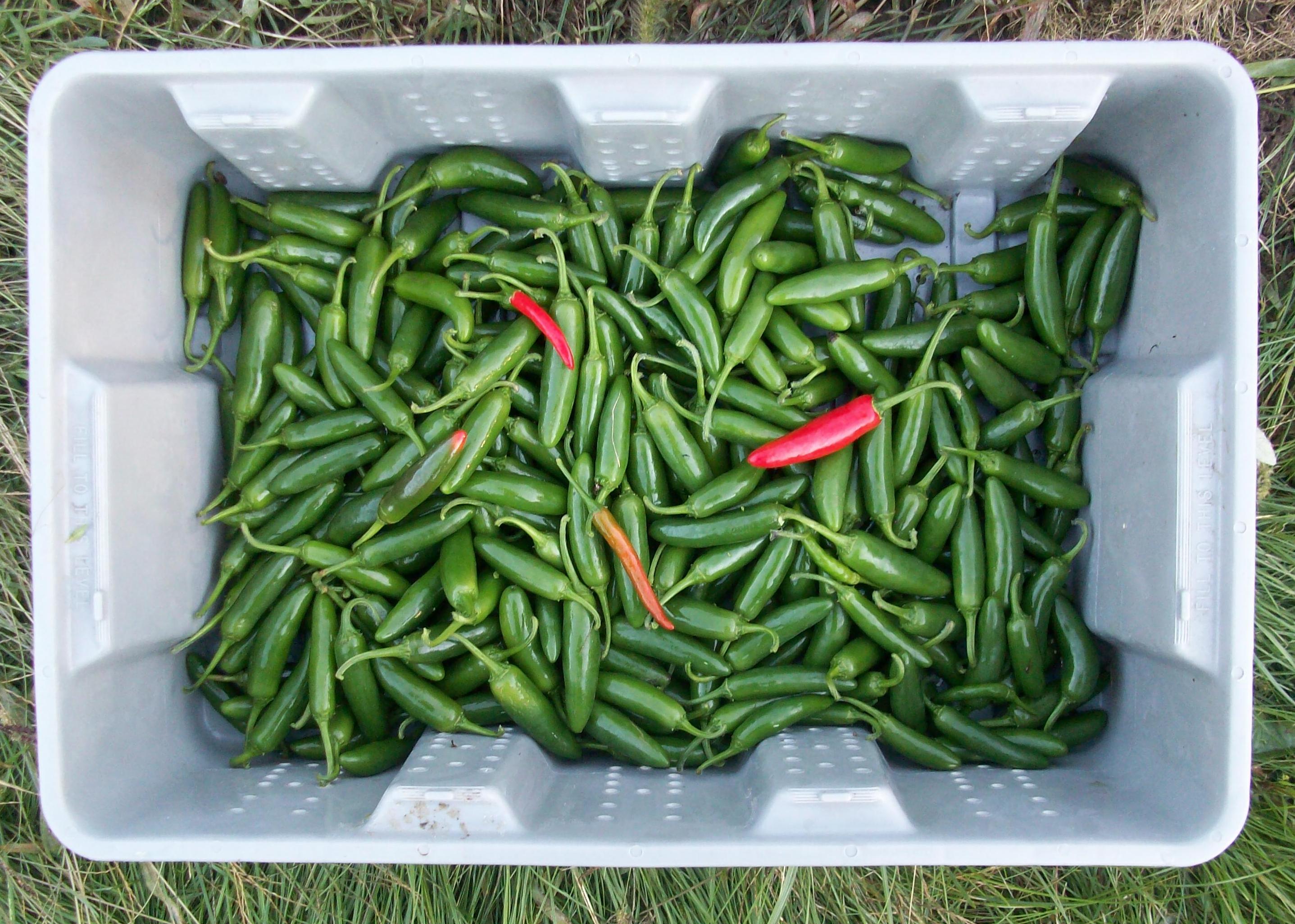
Serrano Peppers
Serrano Peppers
First Red Delicious Apple
Categories
Work Life

Low Wages and Maria Fernandes’ Fatal Nap

Photo Credit: Dunkin' Donuts
Photo Credit: Dunkin’ Donuts

LAKE MACBRIDE— What working person hasn’t taken a nap in their vehicle? Part time and temporary workers with multiple jobs are unlikely to get enough rest, so why not set the alarm clock and snooze after arriving early for a shift, or during a 30-minute lunch break? At the meat packing plant where I worked during summer breaks from college, there was competition for the prime snoozing spots before clocking in the regulation six minutes before starting a shift. One’s vehicle provides a level of security and privacy— it’s also convenient.

The story of Maria Fernandes, who died in her automobile while sleeping between part time jobs at three New Jersey and New York Dunkin’ Donut shops, hit the corporate media in full force last week, and they were atwitter. The best coverage I found was in RT, the Russian 24/7 news channel:

A New Jersey woman who worked four jobs, who sometimes “wouldn’t sleep for five days,” according to a co-worker, died Monday while napping between shifts in her car on the side of the road.

Maria Fernandes died in her 2001 Kia Sportage after inhaling carbon monoxide and fumes from an overturned gas container she kept in the car, according to the New York Daily News.

The 32-year-old Newark woman pulled into a WAWA convenience store lot in Elizabeth, New Jersey for a nap early Monday. She left the car running. The carbon monoxide and gasoline fumes were the likely cause of death, authorities said.

Fernandes was found dead in the car around eight hours later when EMTs responded to a 911 call of a woman found in a vehicle with closed windows and doors. Emergency workers sensed a strong chemical odor upon entering the vehicle, authorities said.

What will the story of Fernandes mean to broader society? Regretfully, not much once the news cycle is finished. Hers is one more sad story in the life of working people.

There is media discussion of Fernandes becoming emblematic for low wage workers, and some connect her death to the current political discussion about the need for an increase in the minimum wage. Advocates will likely use her story to make a case for unionization and other favored topics. But something is missing. Let’s follow the RT story down the rabbit hole:

About 7.5 million Americans are working more than one job, according to the U.S. Bureau of Labor Statistics. Those jobs often leave people short on income compared to full-time work, said Carl Van Horn, director of the John J. Heldrich Center for Workforce Development at Rutgers University.

“These are folks who would like to work full-time but they can’t find the jobs,” Van Horn said. “They wind up in these circumstances in which they are exhausted. More commonly it creates just an enormous amount of stress.”

Workers in the United States are earning an average of 23 percent less than earnings from jobs that were lost during the economic recession that began in 2008, according to a recent report, as wealth inequality in the U.S. has shot to record highs, according to various indicators. Many long-term unemployed are considering abandoning their job search following years of stagnant economic growth.

Maria Fernandes is not a victim of her own choices, except maybe the one to leave her car running while she slept in it. Closer to the truth is that many companies want part time or temporary workers to avoid paying benefits, and this runs contrary to the expectations built for those of us in the baby boom generation. The movement to part time and temporary work is an inexorable march toward stripping costs from business operations— something few in the corporate media have covered as it relates to Fernandes.

That she could work in three locations with the same corporate brand and wear the same uniform in each, yet not work for the same company, gets to a core issue. By its structure, Dunkin’ Donuts and companies like it, are designed to distance themselves from workers, and create gross margin and related profits that flow to the richest one percent of the population. In this case to the parent company, Dunkin’ Brands Group, Inc. (NASDAQ: DNKN), led by Nigel Travis. There are layers of distancing from the company, presumably related to the goal of avoiding the costs and troubles of lowly paid workers.

The circumstances around Maria Fernandes’ death captivated attention for a news cycle. One must ask the question what will we do about it, and hope there will be an answer.

Categories
Work Life

Labor Day 2014

Working the Garden
Working the Garden

LAKE MACBRIDE— Labor Day means a work day in Big Grove, and that’s fine with me.

Today began by finishing and filing two articles for the newspaper. After a session of garden work, and making juice from some apples I picked two days ago, I’ll work a shift at the orchard. Then, the CSA share will be ready for pickup, as they are working today as well. The new vegetables will need processing, so there will be a lot more to do before sleep comes again.

During my transportation career I made a point to go into the office on Labor Day. I felt that was my job, and a day to get caught up on work the exigencies of managing a multimillion dollar operation blocked out. Any more, it is a day to do work that in another life would just be called living.

This summer pushed the envelope of how much formal work can be crammed into a schedule. As many as eight paid jobs needed doing, and still they didn’t generate enough income to get past regular bills, a few emergency expenses, and paying down a small amount of debt. While it has been a struggle, worklife is also about framing.

I reject the class frame. Neither am I middle class nor working class, although if I were, the latter seems more appropriate. We’re not serfs either. Those frames belong to others. I look at myself as a writer in an Iowa City the City of Literature sort of way. Here’s what I mean.

What I do more now than ever is spend time writing. Everything else supports that work. A small bit of my income comes from writing, but alone, it is not sustainable. So I sign on to do specific part time or temporary work for pay. The few hours each morning at my desk it supports are what matters most.

Fame or notoriety will escape me most likely. The challenge these days is to find meaningful venues for my writing. For Labor Day, though, I just plan to work.

Categories
Work Life

Independence

Iowa Sotbean Field
Iowa Soybean Field

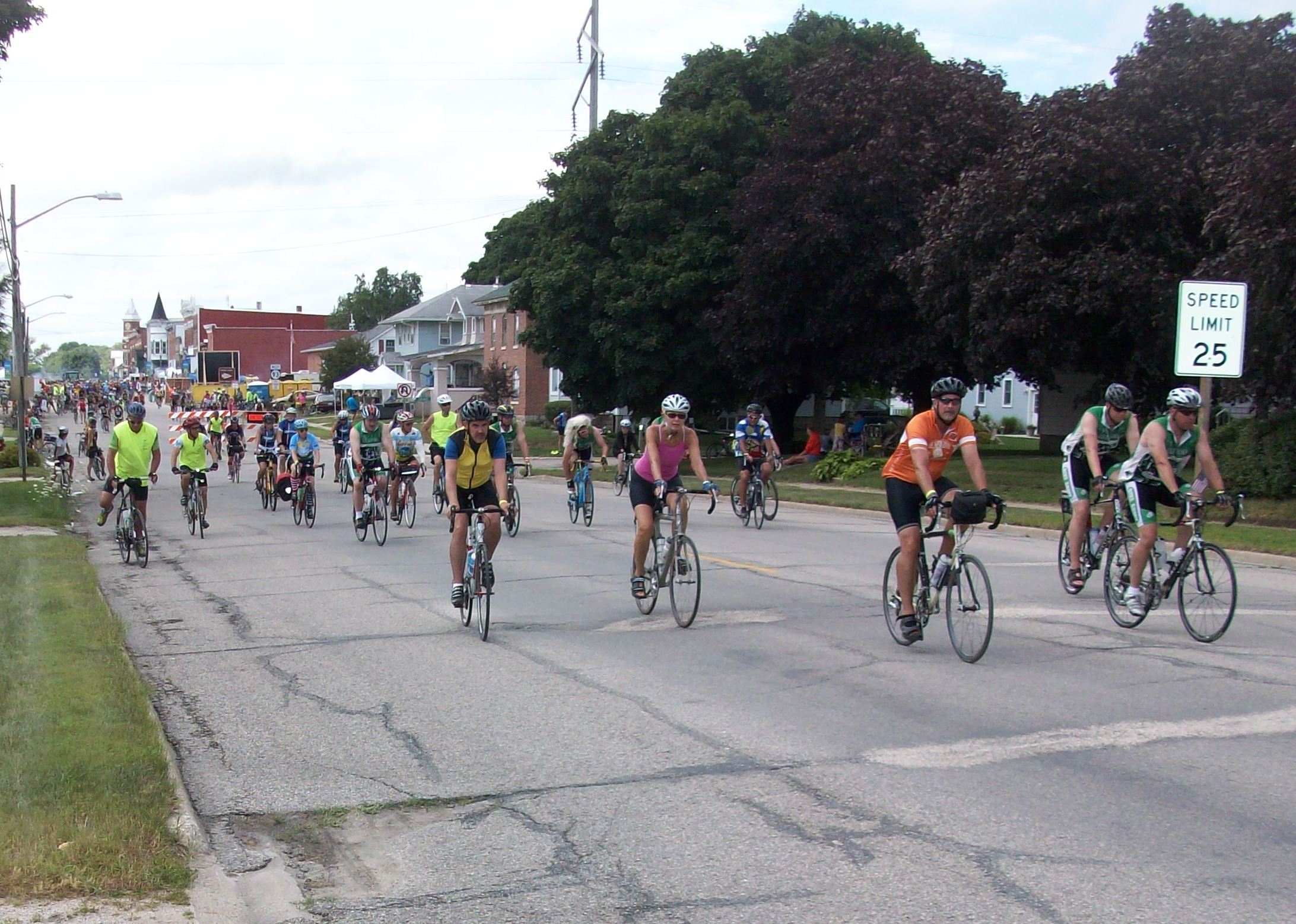
INDEPENDENCE— Friday was a mini-retreat from paid jobs as I drove support for a small team of riders on the Register’s Annual Great Bike Ride Across Iowa (RAGBRAI). The first ride was Aug. 26 through 31, 1973, when people got whatever bike was in the garage tuned up and headed to the Missouri River for what was to become an annual event with thousands of riders on more expensive bicycles.

The day began at 4 a.m., and I arrived to pick up my team in Waterloo around 6:30 a.m. We waited and watched weather radar maps for a couple of hours until the storms passed. Rain held back Friday’s morning start, but in the end, it was a great day for being outside, and in Iowa.

The support driver drops the riders off at the day’s starting point, which was in Waverly. We met in Sumner for lunch, and then I drove to Independence to pick them up. I was also on standby should something happen to one of our riders.

I spent a few hours at the public libraries in Sumner and Independence, and then sat on the front steps of the U.S. Post Office watching riders pass, and waiting for my team to finish for the day. It was time to do something different and get away.

We ended at a church spaghetti supper put on for the riders. It is a big deal for non-profits when RAGBRAI comes to town, and riders seek to carb up for the next day’s ride. After dropping the team at the motel, I headed home, making it back after 9 p.m. It was a long, thoughtful day.

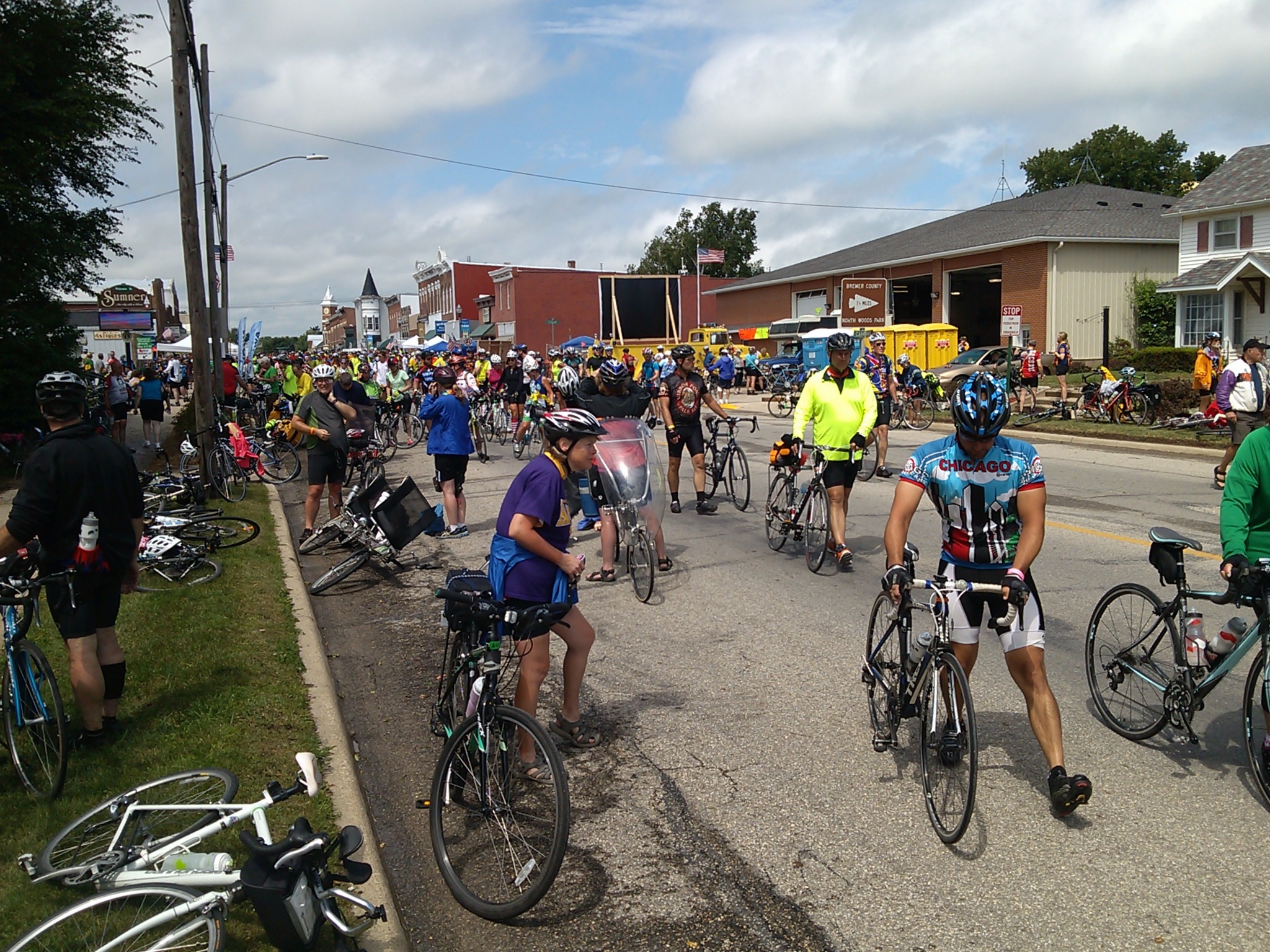
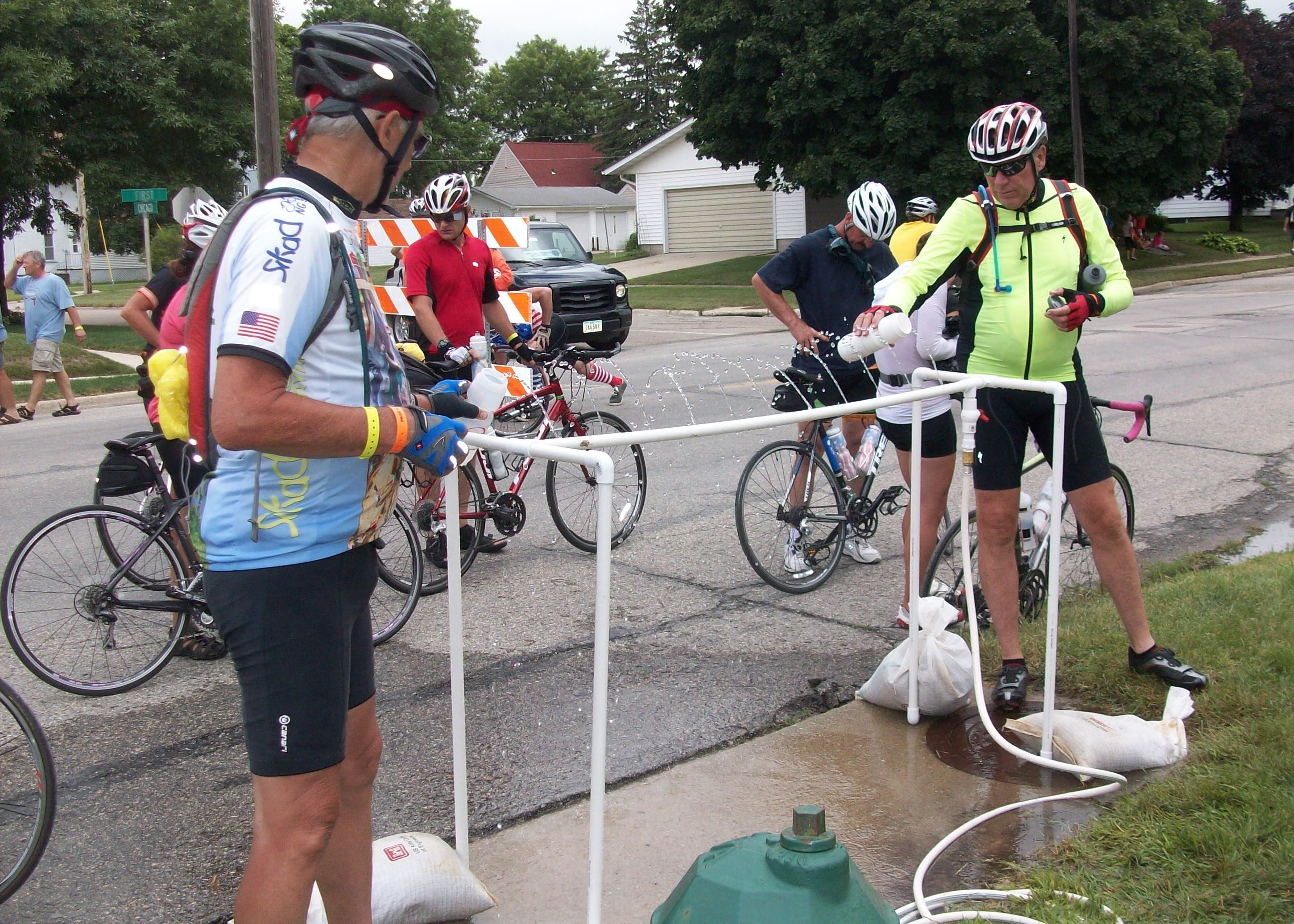
Here are some photos from the rest stop in Sumner, where we had lunch.

Meetup at the Post Office
Street Scene at Sumner
Letsche's Bike Shop Airs Tires
Letsche’s Bike Shop Airs Tires
Filling Water Bottles from a Hydrant
On Main Street
On Main Street
Street Pizza Makers
Street Pizza Makers
Political Pizza Server
Veggie Slice at Sumner
Leaving Sumner
Leaving Sumner

Categories
Work Life

After the Crash

Last Breakfast Before the Crash

LAKE MACBRIDE— When I returned to my computer after breakfast yesterday it crashed, disrupting the balance of the day.

It was a good, not great breakfast, and a familiar, but unwanted technical glitch in a life on the prairie.

Breakfast was in four layers: a mixture of cooked summer squash, onions, garlic scapes, salt and pepper on the bottom. Next, kale cooked after deglazing the pan with the juice of a lime, followed by scrambled eggs, and topped with grated cheddar cheese and chopped Italian parsley. It wasn’t my best work, but it served. I write about breakfast to avoid thinking about the work ahead today.

Luckily, I backed up in the early morning of July 8, my email resides in the cloud, and my photos and sound recordings are on my devices. There is about one week’s work on documents and spreadsheets that will have to be reconstructed. It could be worse.

After a shift at the warehouse, I stopped at our local technology store and sent the laptop off to be serviced. The prognosis is not good, with talk about the motherboard. I turned from the counter, walked over a few rows, and bought a new desktop CPU for $370.

Laptops seem to last about two years, and each of the last three of them was convenient to have, but crashed at an inconvenient time. Since 2012, when we got smartphones, having a laptop no longer seems necessary as I can check email and news stories on the go without one.

Like it or not, today will be struggling to get paying work done on the computer, and re-engineering this technology dependent life on the Iowa prairie. Having been through this twice previously, I know, but hate the drill.

Categories
Work Life

Thistles and Milkweed

Thistle and Milkweed

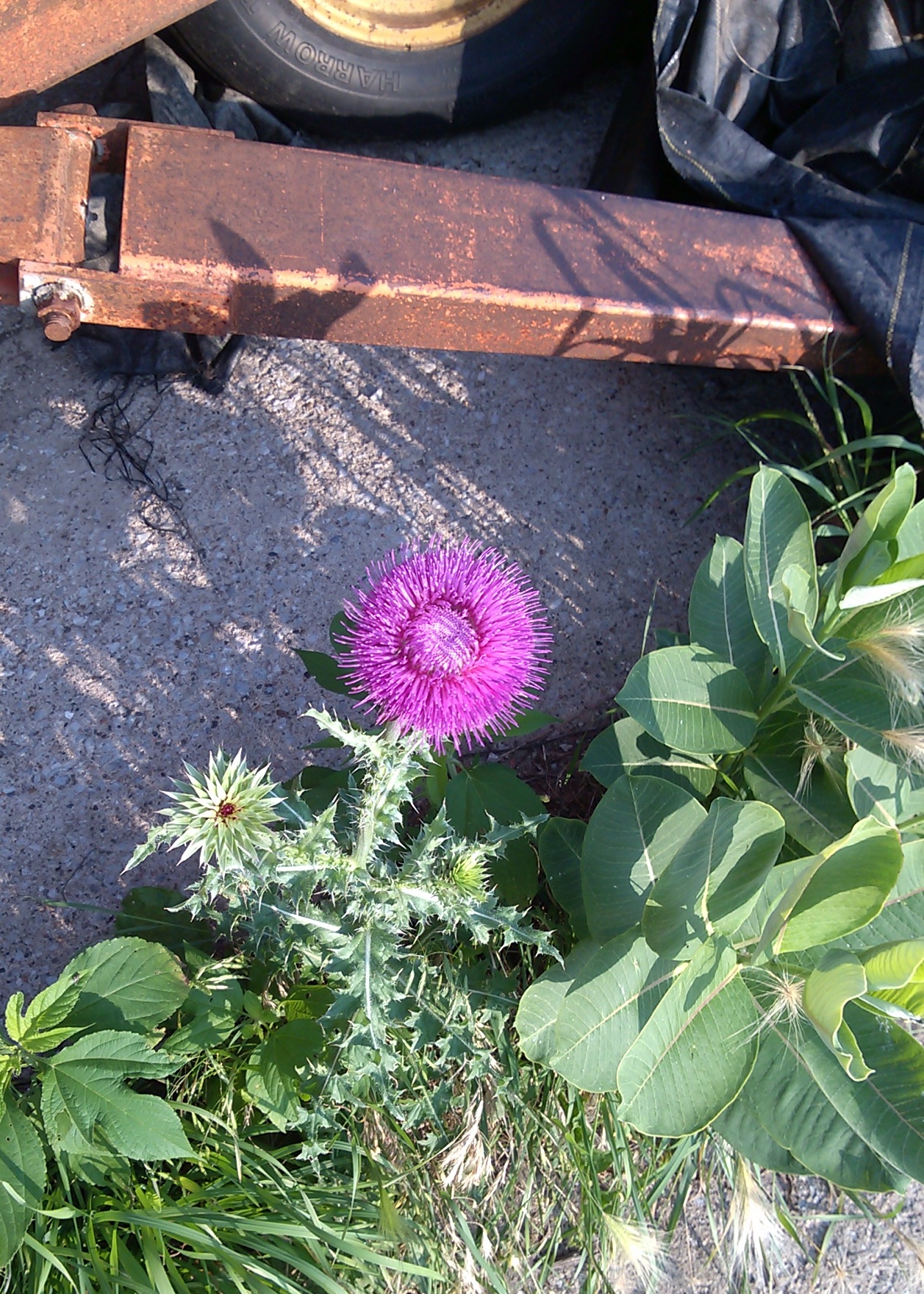
LAKE MACBRIDE— From a crack in the pavement, a thistle bloomed next to milkweed. The natural world lives in the increasingly human-made environment in which we attempt to adapt— plants, animals and people alike.

The weather report for the weekend is the return of the polar vortex, bringing rain and cool temperatures. Sun and warmth are the best help for gardens and farms, so the weekend will be a likely setback.

At the intersection of the industrial food supply chain and local cuisine I found a package of uncooked tortillas. Claiming to be “all natural,” the ingredients are recognizable— flour, water, oil, salt and sugar. The machine rolls them out thinner than I have been able to, and they cook quickly in a dry frying pan. A pack of 50 sold for $6.89, or about 14 cents each. They will be a welcome addition to the pantry for burritos, tacos, tortilla chips, quesadillas and casseroles as what I had been buying has ingredients not found in nature.

Thistle Flower
Thistle Flower

I’m busy all of the time these days, mostly with work. On a typical day, I work at three or four jobs, leaving little time for extra-curricular activities.

From time to time, it was possible to stand at the intersection of change for a while and smell the flowers. For that, I am grateful.

I am also grateful that after calculating my income for the year, it appears my federal taxes will fall in line, and that I sent enough, but not too much money into the Internal Revenue Service.

Categories
Work Life

Five Years On Our Own

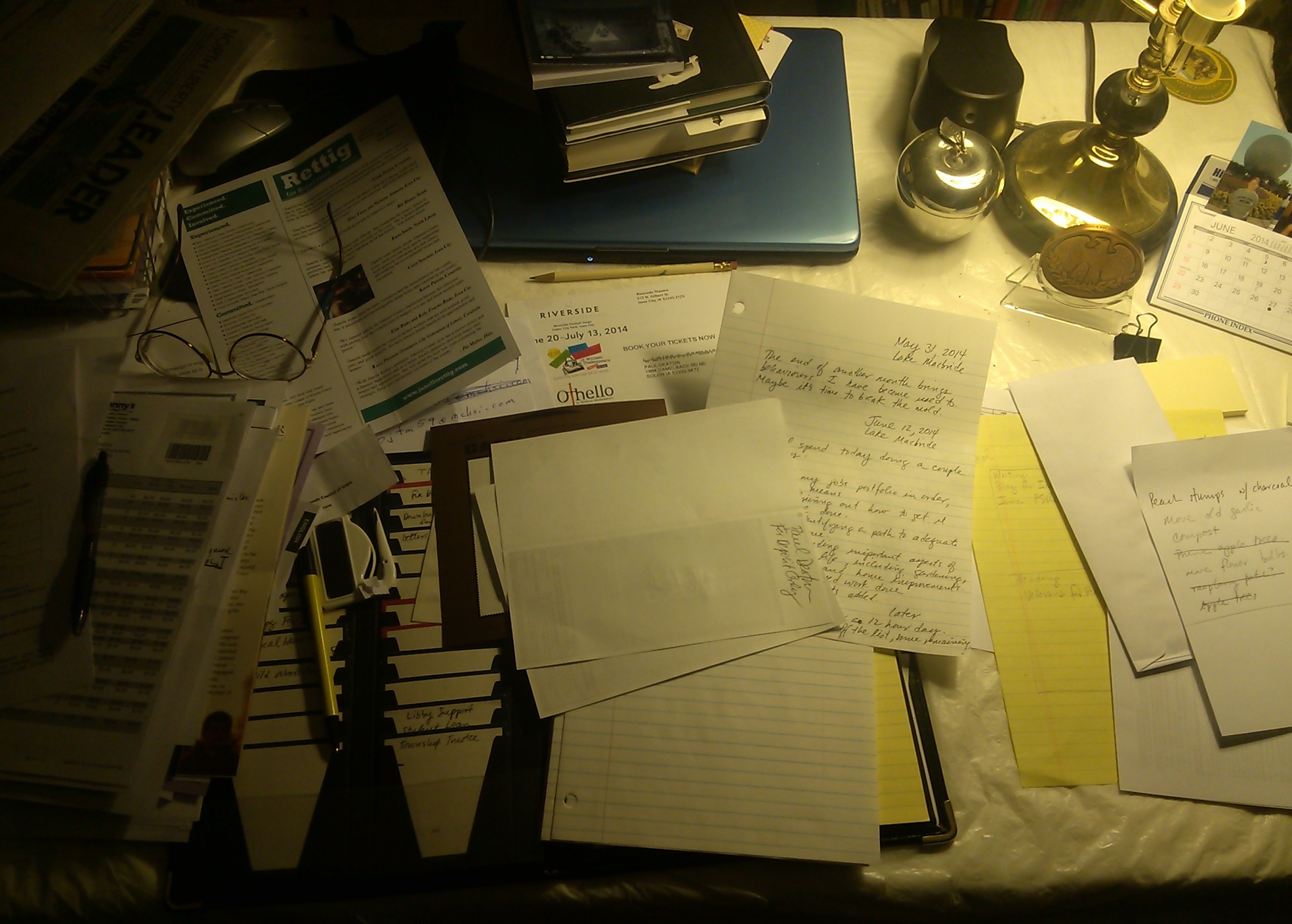
Desk Work
Desk Work

LAKE MACBRIDE— Five years ago today I drove out of the parking lot of CRST International in Cedar Rapids from a long career of transportation work into the unknown. There is no going back, nor would I. There is only forward.

Today, we have friends and family, food to eat, a home in which to live, and other accoutrements of modern life. We are doing okay. Compared to many, we are doing great. If the U.S. is not the greatest country on Earth, it is one of the greatest, at least according to a poll released today. That’s okay too.

Tomorrow the clevis and cotter pins bought at the hardware store will be installed on the grass collection attachment to the tractor. I will cut the full lawn to length for the first time this year. The garden is way behind, so I will abandon what isn’t planted and prepare the ground for the second growth of green beans, even though the first planting didn’t occur because things were so far behind.

Tomorrow will also be a culling of activities according to the Sumitomo model. Some of the barter work is nearing its end, some of it needs to go to make room for paid work. Contacts will be made about that.

Mostly, tomorrow will be a brief chance to examine who I am through tired eyes, and wonder at how we have survived in a turbulent world.

Then next steps, which will involve a chain saw and work in a pasture in sunlight.

Categories
Work Life

Plenty of Jobs

At Sunset
At Sunset

LAKE MACBRIDE— My patience is worn out with the talk of minimum wages, living wages, and all else hourly wage related. Depending on what one wants to do in life, the discussion matters a little or a lot. For me, not so much, as I previously explained.

I’ve written about worker engagement and dealing with low wages. A post illuminated low wages, and I wrote about my experiences assembling kits for Whirlpool Corporation for a very low wage, no benefit job in North Liberty. The practical result of all this thinking, writing and doing has been a focus on finding enough work to keep me busy and aggregate enough income in the form of wages, fees and bartered goods to sustain our lives on the Iowa prairie. I’ve found there are plenty of jobs.

Farm work

Working on farms and in our garden eliminates hunger. We continue to purchase dairy products, bakery-made bread, rice and sundry items from merchants, but since beginning work on two community supported agriculture projects there has been plenty to eat and enough to share with friends and neighbors in a micro-culture of food. There is a shortage of people willing to work on farms, and this creates an opportunity to meet a basic need.

Farm work can also be flexible. My sawyering work illustrates the point. There is a quarter mile fence line to clear of dead trees, and my initial estimate was a job of more than 225 hours. The property owner is not in a hurry, so I can work as I have time and weather permits. This job is paid in cash, but its flexibility provides a premium that fits into the broader picture of sustainability I am trying to paint.

Warehouse work

Large corporations have plenty of opportunities for low wage, part time help. Finding the right situation, one that provides a steady, reliable paycheck and accommodates my aging frame, took a while, but finally materialized in the form of warehouse work.

The physical demands of building kits for Whirlpool were too much. The minor supervisory role I now play at a warehouse club is better suited physically, and provides the flexibility I need to put the rest of a sustainable job portfolio together. One has to love the constant interaction with warehouse club members as a perquisite of the job.

Presently the wages from warehouse work make a substantial contribution to paying monthly bills like utilities, communications, fuel and debt servicing, accounting for more than half of our cash income needs. The long range plan is to replace this work with a better opportunity for income. Because the work is flexible, regularly and predictably paid, and has considerable social interaction with members and co-workers, it provides a stable platform for change.

Non-governmental organization work

I’ll sign a fourth contract with Iowa Physicians for Social Responsibility on Monday. The first was almost five years ago, shortly after exiting my highly paid, full time work in transportation and logistics. The work functions at a high intellectual level and is engaging in a way few other jobs are. For that reason, the project will receive high value in my jobs portfolio.

Like with corporations and farm work, NGOs are constantly seeking low wage workers to accomplish the deliverables of grants received each year. Because the work is contractually defined and the pay is predetermined, administrative variables are minimal, enabling a focus on the work.

The new contract is to organize a series of presentations on the humanitarian impacts of nuclear war to Rotary clubs over a six-month period. It is great work if one can get it, and because of the ebb and flow of the work process, there is adequate flexibility to accommodate the rest of my jobs portfolio.

Writing and editing work

Being a writer is a tenuous endeavor in the age of social media. It seems unlikely writing will pay enough to reduce the number of jobs in my portfolio, but there is beer money to be made if one is willing. Such income is still cash income, meager though it may be, and contributes to paying monthly bills not limited to summer beverages.

My main work is the unpaid writing at this site. There are currently three other distinct writing jobs for monetary compensation: proof reading for a local, regional newspaper, correspondent work for the same newspaper, and being summer editor of Blog for Iowa. As with the NGO work, these jobs function at a high intellectual level, and receive high value in my jobs portfolio. The thing about them is with each article I write, my skills improve, so the work feeds upon itself.

Business development work

In March, I described the process of business development and the  Sumitomo Quadrant. With the jobs listed in this post, there are enough to plug into the tool to figure out next steps. That is, next steps after figuring out how to get all the work these jobs are expected to generate finished over the coming six months. Business development, like gardening, has become a necessary, but important unpaid job in itself. One that most low wage workers I know don’t give adequate attention.

Conclusion

Plenty of jobs are available if one wants the work. Whether creation of a jobs portfolio will also make life sustainable is an open question. The aggregate monetary compensation of this portfolio is enough to get by. It doesn’t translate easily to a framework of minimum or livable wages and that’s the point. In order to sustain a life, we sometimes need to take chances, and work how the jobs become available. This includes uneven compensatory rates, bartering and organic work like gardening and business development.

To make the paradigm work, jobs that have flexibility and will contribute to financial and intellectual needs take priority. Above all else, a job has to enable me to go on living, or else what’s the point?